Hackers are using fake OpenAI, SpaceX, and Anthropic event invitations to lure employees into phishing attacks, using two different phishing-as-a-service platforms to steal Microsoft and Google account credentials and authentication sessions. [...]
Katalog Berita & Artikel Interaktif
Katalog Berita & Artikel Interaktif - Halaman 4
Google Find Hub rolls out ‘Notify when left behind’ tracker alerts on Android

As previewed in October, Google has added “Notify when left behind” alerts for Find Hub tags and trackers on Android.
To enable, open the Find Hub app and choose a tag. In the top-right corner of the bottom sheet, select the settings gear icon.
So glad, it was a major missing feature from the start. If all manufacturers could now add QR codes on the back like pebblebee and rolling square have to help those that find the missing items to return them to the owners as well that would be amazing.
There is a new “Notify when left behind” section to “Receive a notification when this tag is separated from your phone.” By default, there’s an exception for the Home address you’ve stored in your Google Account (Maps).
We’re seeing this notification option with Chipolo trackers and the Moto Tag today with version 3.1.787-06 of Find Hub for Android for both US and European users. It does not appear for other device types, like headphones.
This is a basic capability that Find Hub should have really offered for devices on the network since the beginning.
Google first mentioned this “Left-Behind Reminders“ capability in the release notes for Google Play services. This should also be surfaced as part of a “new registration flow” for devices, along with setting category icons (Bike, Luggage, Wallet, etc.) and renaming tags. Google also mentioned upcoming NFC support that lets you “quickly access Find Hub tag details and settings or identify lost tags when you tap the tag with your phone.”
FTC: We use income earning auto affiliate links. More.
Check out 9to5Google on YouTube for more news:
Breaking news for Android. Get the latest on app…
Editor-in-chief. Interested in the minutiae of Google and Alphabet. Tips/talk: abner@9to5g.com
Serve Robotics launches new business to become the AWS for robots

Buy One Founder Summit Ticket, Get a Second for Free. Register now.
Founder Summit begins Nov. 4, 9:00 a.m. ET. Get your pass savings & deals before it starts. REGISTER HERE.
Serve Robotics, a maker of self-driving sidewalk delivery robots, is expanding beyond its autonomous delivery operations in a bid to become a technology supplier to other companies building robots.
The company, which spun out of Uber’s acquisition of Postmates in 2021 and went public in 2024, said Thursday it will launch a new business line called Physical AI Services.
Specifically, Serve Robotics will offer customers its connectivity and data tools. Bedrock Robotics, a startup developing self-driving systems for construction equipment, is a customer, according to Serve. It’s also working with T-Mobile to bring AI computing power closer to robots, Serve announced alongside its third-quarter earnings on Thursday.
“We are solving the problem of robots in human spaces,” Serve Robotics CEO and co-founder Ali Kashani told TechCrunch.
Serve Robotics already makes two kinds of robots, the cute googly-eyed sidewalk delivery robot and one designed for hospitals that it got through its acquisition of Diligent Robotics.
Those businesses are not going away, Kashani emphasized in a recent interview. Instead, he said there is opportunity to sell the technology it developed for its own robots to other companies developing robots for farms, warehouses, and other uncontrolled environments.
“I kind of think of it as the AWS moment where we are taking the technology we’ve built for us, and we’re opening it up for more people to build on,” he said, adding this wouldn’t have been possible without developing its own robot fleet.
The expansion comes as Serve’s sidewalk delivery business expands, but is shifting away from Uber and toward other partners, including DoorDash and Wonder.
Its new Physical AI Services business line will offer three products. Serve Link helps connect robots in the field to AI systems running in data centers, which would allow companies to potentially tap into more powerful AI models without having to put all that computing power onboard.
“Any robotic application generally needs to connect the robots to some offline intelligence, whether it’s to collect data or do exception handling or whatever,” said Kashani. “It’s the connectivity piece that has to be really high performance. You need to be able to manage really unreliable networks and still reliably connect, and that’s what we solve.”
It’s also launching a data curator tool that helps companies find edge cases in the reams of real-world data a robot collects, which can then be fed back into a training model to improve performance. Its third product is a real-world, foundation-model data catalog built from Serve’s own sidewalk robots that can teach AI models how to understand complex human environments.
Kashani said he’s been thinking about this idea — a playbook he learned from Amazon — for years.
“When the technology is so nascent, you have got to build the end-to-end application because that’s the only way you know what to build, but then over time, as the technology gets more advanced, a lot more people are going to be wanting to build similar things,” he said. “And what you want to do is to open your technology so others build with you and on your platform.”
When you purchase through links in our articles, we may earn a small commission. This doesn’t affect our editorial independence.
Buy One Pass, Get a Second FreeCover more ground at TechCrunch’s ultimate founder bootcamp of the year by bringing your co-founder or partner for freeBook before the BOGO deal expires
Tesla will stop making the Cybertruck in 2027
Claude can now analyze your spending with its new Personal Finance tool
Data centers are turning to old jet engines as the wait for power grows
New York City’s Mamdani criticizes Madison Square Garden owner over surveillance tech
Anthropic warns that it’s very close to RSI capability, aka self-building AI
New York Times and other outlets sue web browser Brave over alleged content scraping
Ninja’s first-ever microwave just replaced two of my kitchen appliances at once
Google is giving AI video creators longer clips, better editing, and fewer frustrating mistakes
Google's Gemini Omni 1.2 Flash generates AI videos up to 15 seconds long, with conversational editing, improved lip-sync, and 30% lower pricing.
Take a closer look at Discord's faster, lighter desktop app

Join the club for quick access. Enter your email below and we'll send confirmation, and sign you up to our newsletter.
Keep exploring and earning more as a member.
AI updates, how-tos and comparisons in one place.
Get the biggest gaming news, reviews, and releases straight to your inbox.
Does Windows 11 26H2 actually use less RAM? I tested to find out.
Xbox and PC prices are out of control, and Microsoft clearly knows it
12+ useful Windows 11 features Microsoft tested in October 2026
All the latest news, reviews, and guides for Windows and Xbox diehards.
Unlock instant access to exclusive member features.
Get full access to premium articles, exclusive features and a growing list of member rewards.
Discord rebuilt its desktop app in Rust, cutting memory usage and improving efficiency without dropping features.
When you purchase through links on our site, we may earn an affiliate commission. Here’s how it works.
The Discord app will soon use less RAM and power, all without losing a single feature. Discord is rebuilding its desktop app in Rust, replacing the Electron-based client it uses today. Discord has used Rust in parts of its technology stack for years, but the desktop application itself has historically been built on Electron.
The new app is faster and more efficient, as demonstrated by Discord CTO Stanislav Vishnevskiy. He showed the current Discord app and the new Rust client of Discord on a pair of Lenovo ThinkPads running Windows 11.
In that side-by-side comparison, the new Rust-based client launched more quickly than the current Electron version.
Electron apps often draw criticism because they use a lot of system memory. The apps rely on web technology, which means every single Electron app essentially ships with a mini browser. As a result, Electron apps are often more resource-heavy and less efficient than native desktop applications.
The new Discord client using less RAM is just part of the story. Clicking around feels instant, I can't go back. Check out the boot time. https://t.co/x7ayyWBVQJNovember 5, 2026
Some workloads can benefit from native code rather than web technologies, especially when performance and efficiency are priorities. That may make you question why Discord has had an Electron app for so long, but there are plus sides to the framework.
The biggest benefit of Electron is that it allows developers to use the same codebase across major platforms. Rather than maintaining separate applications for Windows, macOS, and Linux, developers can build a single application.
That advantage has kept Electron popular for years, powering everything from Discord and Slack to Microsoft Teams and Visual Studio Code. But some companies and developers have deemed the tradeoff too great and have migrated to other frameworks in pursuit of better performance and efficiency.
Discord's new app comes at a time when RAM is at a premium. Due to the ongoing RAM crisis, many people cannot upgrade to PCs. Even those looking to purchase new computers may have to pick models with only 8GB of RAM because of the increased cost of memory.
Microsoft is working to optimize Windows 11 for systems with 8GB of RAM. Alongside optimization efforts for Windows 11, Microsoft is reducing the memory needs of many of its apps.
Even with Windows 11 performing better on low-RAM devices, it's nice to see Discord ditch Electron and create a more efficient app. Discord has long been criticized for eating up memory and performing slowly. The new app should fix both those issues.
Join us on Reddit at r/WindowsCentral to share your insights and discuss our latest news, reviews, and more.
Sean Endicott is a News Writer at Windows Central, where he covers Windows 11, Surface hardware, Microsoft 365, AI, apps, and the broader PC ecosystem. Since joining the site in 2017, he has written well over a thousand articles across the Microsoft landscape, covering breaking news, analysis, and feature reporting.
He writes Windows Wrap, a weekly column covering the biggest stories in Windows and the PC industry, and what they mean for the platform going forward.
Before joining Windows Central full-time, Sean worked in journalism and media production after earning a First Class degree in Broadcast Journalism from Nottingham Trent University. Outside of tech, he is an award-winning American football coach based in Nottingham, England, and was named BAFCA Youth Coach of the Year in 2024.
You must confirm your public display name before commenting
Please logout and then login again, you will then be prompted to enter your display name.
Windows Central is part of Future US Inc, an international media group and leading digital publisher. Visit our corporate site.
© Future US, Inc. Full 7th Floor, 130 West 42nd Street, New York, NY 10036.
Clashes break out as hundreds of thousands take to the streets in France in strike action

Please refresh the page or navigate to another page on the site to be automatically logged inPlease refresh your browser to be logged in
Police fired tear gas and fires broke out as at least 600,000 turned out to protest across France
Want to bookmark your favourite articles and stories to read or reference later? Start your Independent Membership today.
Clashes have erupted between strikers and police in nationwide demonstrations that have gripped France for weeks.
Officers have fired tear gas, and riot police officers have been deployed to face off thousands of demonstrators during a one-day strike.
Firefighters have been forced to extinguish blazes across the country, and confrontations have unfolded in Paris and Lyon, as at least 600,000 took to the streets.
The protests follow demonstrations over living costs, public services and education that have triggered the worst civil unrest France has seen in years.
Education minister Edouard Geffray condemned the “criminal behaviour” after people threw fireworks that started a large fire at a high school near the city of Toulouse in the southwest on Thursday morning.
High school students and other demonstrators had earlier faced off against riot police in Paris as they blocked a street with rubbish bins.
While the demonstrations in Lyon and other cities, including Marseille and Nantes, began in the morning, the main protest march in Paris set off in the afternoon from Place de la République.
Several high-profile politicians attended the protests, including presidential candidates Jean-Luc Mélenchon and Raphael Glucksmann.
The Interior Ministry said 600,000 people had participated in protests around the country, while the CGT union, one of the organisers, said 1.6 million had taken part.
In Paris, the mood was festive at the start, with a diverse group of participants singing "La Marseillaise" and some carnival-like floats.
The one-day strike, which some energy workers and teachers joined, shut the Eiffel Tower, but there were no major disruptions to transport.
However, about two hours in, some of the people at the front of the march clashed with police, who fired tear gas.
Paris police said some hooded individuals committed acts of vandalism, which police responded to immediately in order to stop and isolate them.
Clashes also broke out between some demonstrators and police as the protest wound down, with authorities forced to extinguish at least one small fire on the sidelines of the event.
In Lyon, riot police fired tear gas and charged a group of protesters, some of whom were seen shouting anti-police slogans and dressed all in black, with face coverings.
The interior ministry said the police there had been confronted by several hundred protesters and that the violence had been contained although tensions remained high.
The unrest comes five months before a presidential election that president Emmanuel Macron cannot run in. It puts pressure on prime minister Sebastien Lecornu ahead of his meeting with workers' and employers' groups on Monday about the cost of living and salaries.
It could pit far-right candidate Marine Le Pen against hard-left rival Melenchon in a second-round run-off.
"There is a lot of concern about the future, notably the issues of salaries, public services," said Alice Martinovic, an 18-year-old student participating in the Paris demonstration.
"I hope in the upcoming elections the candidates will really think about this movement and include the opinions of young people, of students, who are now joined by a lot of other workers."
Riots on 17 October caught security forces off guard, leaving damaged shops and public buildings across the country and fuelling criticism of Macron's handling of the crisis. French authorities have since issued curfews, bans on large gatherings and have required groups to take alternate routes for demonstrations that avoided main boulevards, which trade unions have decried.
"The government tried to block the demonstrations. The demonstrations are bigger than ever," Sophie Binet, head of the CGT trade union, told reporters. "High school students, pensioners, students, workers, all together. Unity wins," read one banner at the protest in Lyon.
"Our pay has not kept up with inflation," said Mehdi Dumontroty, a 45-year-old firefighter who was joining the protest in Paris.
"What happened this summer proves that we were right when we `said we needed more resources to deal with the crisis that we faced," he said, referring to wildfires exacerbated earlier this year by intense heat waves.
Around 70,000 police were on duty nationwide, a comparable figure to recent weekends. The French government has defended police tactics while saying any abuses would be investigated.
The strike contributed to a reduction in France's nuclear output early on Thursday and the Education Ministry said just over 15 per cent of French teaching staff had joined the strike.
Join thought-provoking conversations, follow other Independent readers and see their replies
Please refresh the page or navigate to another page on the site to be automatically logged inPlease refresh your browser to be logged in
Google is ditching Firebase Studio soon, and it wants you to use its newer AI tools instead
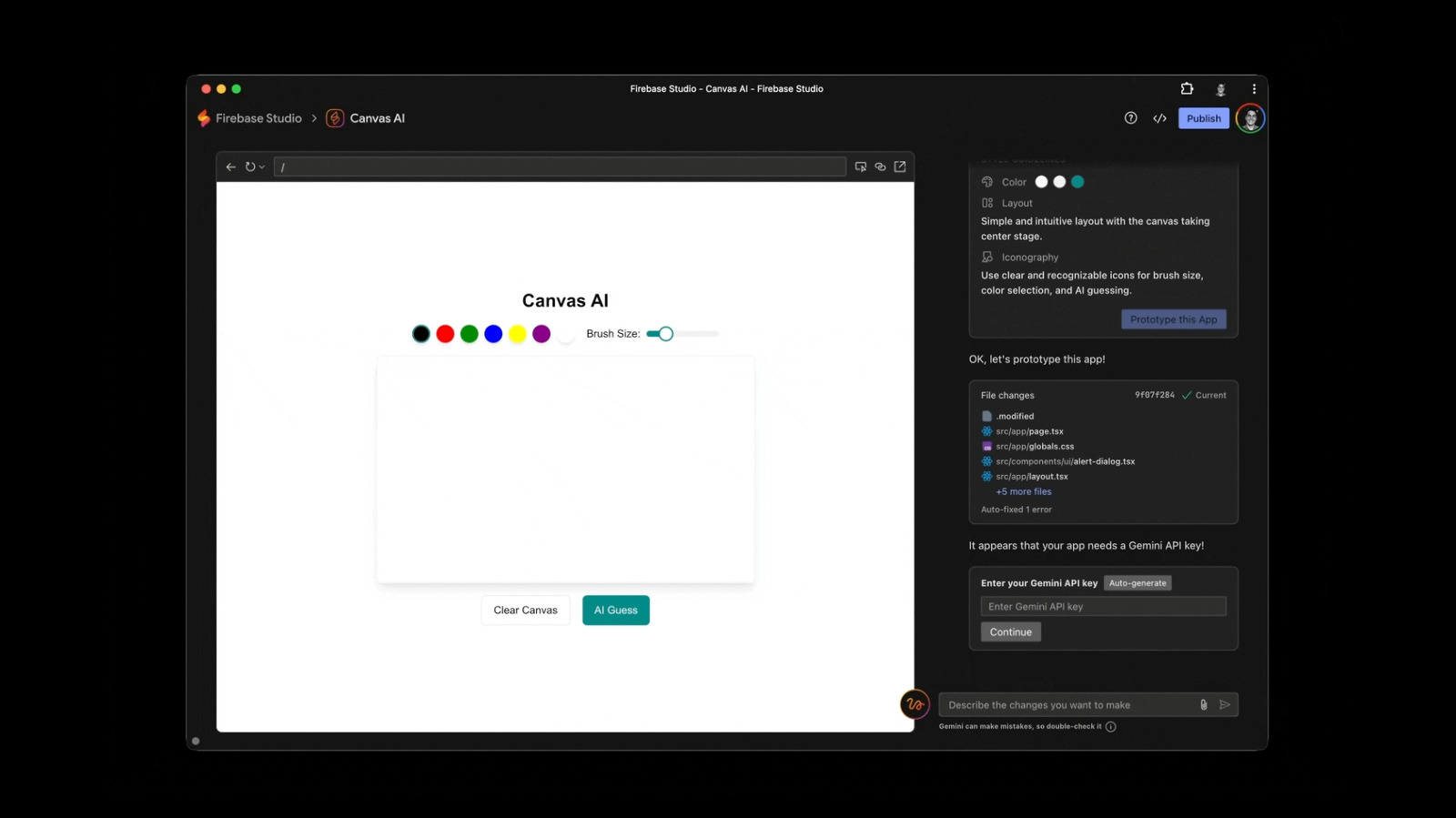
The company is going all-in on Antigravity and Google AI Studio.
In March, Google announced it was "sunsetting" Firebase Studio, its online integrated development environment (IDE), in favor of coding tools that put AI at the center. The company's preference for Antigravity and Google AI Studio serves its broader push around Gemini, but it also leaves anyone who liked Firebase Studio's approach in the lurch.
The ability to create new workspaces and sign up to use Firebase Studio ended on June 22, and developers have until March 22, 2027 to export their work to another IDE before it's shut down completely and all remaining data is deleted. Until then, Firebase Studio is in limbo, and deciding on an alternative largely comes down to how developers want AI to be incorporated into their development process.
Google conceived of Firebase Studio as a coding tool that could connect directly to Firebase, backend services it provides to developers that cover everything from databases to web hosting. From the launch of the IDE in 2025, Google has imagined that AI agents would play a role in development. What's changed since then is how central AI has become. Firebase Studio offers an AI chatbot experience that can prototype and tweak apps and handle other development tasks, but the bulk of Firebase Studio is still devoted to editing code. In 2026, a growing number of coding projects start with a prompt, and thanks to the popularity of vibe coding, some users never even deal with the raw code.
Both of Google's newer coding tools, Antigravity and Google AI Studio, are designed for that reality, and since Firebase itself is sticking around and either tool can connect to it, a separate Firebase-focused IDE isn't essential. Google more or less framed its decision that way when it announced it was retiring the tool. "To streamline your workflow and make it clearer where you should start building, we're beginning the process of sunsetting Firebase Studio," the company wrote in March.
If you'd prefer to stay in Google's ecosystem, you can either switch to Google AI Studio or Antigravity. Google AI Studio is "the fastest path from prompt to full-stack production app," according to Google, which means its interface prioritizes prompts and chatting with AI. Like Firebase Studio, it's also web-based, so you can access it from any browser. In comparison, Antigravity is a desktop app that's meant to run locally on your computer. Its interface is designed for users to directly interact with their code, while also directing multiple AI agents that can work on their own. Notably, it also supports AI models other than Google's own.
Most other coding tools tend to follow a similar logic, where the coder is a team leader for agents that handle the first pass. Cursor, now owned by SpaceX, is a popular option. Both Anthropic and OpenAI also have their own AI-focused coding tools in Claude Code and Codex, respectively. Using AI in projects can come with associated costs, either in the form of subscriptions, paying for tokens, or both. Which tools developers migrate to after Firebase Studio shuts down will likely be determined as much by price as by the interface and each tool's future.
Grab a Nintendo Switch 2 controller upgrade from $49, just in time for Zelda: Ocarina of Time's remaster

Get started with free access to reviews, badges and discussions.
Unlock exclusive tools and insights for enthusiasts who want more.
Access Bench, Roadmaps, deep analysis and other exclusive tools.
Dive into our proprietary testing data and compare hardware with detailed benchmarks.
Go beyond the headlines with expert reporting on the hardware industry.
Track upcoming CPUs, GPUs and tech releases before they arrive.
In-depth features, interviews and insider stories from the world of hardware.
Expert insights and analysis delivered to your inbox.
Keep exploring and earning more as a member.
Reviews, benchmarks, and updates on current GPUs.
Join for quick access. Enter your email below and we'll send confirmation plus sign you up to our newsletter.
Get Tom's Hardware's best news and in-depth reviews, straight to your inbox.
Unlock instant access to exclusive member features.
Get full access to premium articles, exclusive features and a growing list of member rewards.
When you purchase through links on our site, we may earn an affiliate commission. Here’s how it works.
After a long wait, the much-anticipated release of The Legend of Zelda: Ocarina of Time remaster is upon us, and those who have been lucky enough to nab one of the limited edition consoles, or anyone who has purchased a copy of the game, wait with bated breath for the game to go live. With a Nintendo Switch 2, you can, of course, game on the move, but for the best experience, you can't beat plugging the handheld console into the dock and hooking up the console to a big screen.
You have a couple of options for wirelessly playing your Nintendo Switch 2 console from the couch. You can either disconnect and use the Joy-Con controllers that are bundled with the Switch 2, or you can opt for a more traditional controller. Here are some of the best options for controllers that can easily hook up to the Switch and have you gaming in no time.
The official Nintendo controller for the Switch 2. Features include HD Rumble 2, motion controls, built-in Amiibo functionality, a capture button, a C button for GameChat, GL/GR buttons that you can map to any button you choose, and a 3.5mm 4-pole audio jack.
The S10 Elite comes with one-key wake-up functionality and magnetic Hall Effect joysticks. Other features include programmable buttons, HD Rumble, and motion control.
Compatible with PC, Nintendo Switch 1/2, and Android/iOS, the Super Nova from GameSir is one of the cheapest controllers on our list. It still features a 1000hz polling rate, Hall Effect joysticks and triggers, rubberized grips, and even RGB lighting.
This wireless gamepad is compatible with the Switch and PC and uses tension-adjustable TMR joysticks for the ultimate customizable experience. There are even four rear paddles for further customization.
Enjoy a drift-free experience with TMR Glide joysticks and further features that include HD Rumble, mechanical buttons, a Turbo mode, programmable buttons, and a 6-axis motion control gyro.
This Bluetooth Controller features swappable ABXY buttons, Pro Back Buttons, a charging dock, and Hall Effect Triggers to keep stick drift at bay.
The Ultimate 2 features TMR joysticks and trigger mode switching, as well as a USB-C adapter. Available in two colors, it can also be used with Windows.
This 1000 Hz controller has Hall Effect joysticks, three connectivity modes, and microswitch buttons rated for 5 million clicks.
Pair the controller up to the Nintendo Switch 2 and enjoy hassle-free wireless connectivity during your gaming sessions. All of these controllers will get the job done. It's more a subjective choice of shape, color, and type of joystick tech such as TMR. You can go for the official Nintendo controller, or opt for something a little cheaper in price, but with identical functionality.
Get Tom's Hardware's best news and in-depth reviews, straight to your inbox.
Stewart Bendle is a deals and coupon writer at Tom's Hardware. A firm believer in “Bang for the buck” Stewart likes to research the best prices and coupon codes for hardware and build PCs that have a great price for performance ratio.
Tom's Hardware is part of Future US Inc, an international media group and leading digital publisher. Visit our corporate site.
© Future US, Inc. Full 7th Floor, 130 West 42nd Street, New York, NY 10036.
Payday Aces High review: This year’s must-play multiplayer VR game

Join up with three other heisters and get revenge on the billionaire who sent you to jail in the first place in Payday Aces High, now available on Meta Quest, SteamVR, and Steam Frame.
Payday Aces High is the return to the series’ roots I had been hoping for. Payday 3 wasn’t received particularly well, and while the team behind it has turned things around in the past few years, it’s pretty clear that Payday 2 is still everyone’s favorite entry. But that stops for me now as we enter a new chapter in the series, with four new characters, a new “villain,” and made-for-VR mechanics that shine.
I’ve been playing Payday Aces High throughout the alpha and beta stages and got access to the final review build a week ago. Since then, my son and I have robbed banks, stolen from museums, hoisted a fragile quantum computer out of an icy compound, and generally made life a living hell for Warren Jupiter, the man who made billions framing the characters you play as in Payday Aces High.
If you’re familiar with Payday games, this one will mostly feel like a return to the original game with new mechanics in tow. Some of the fan-favorite mechanics from Payday 2 (and even 3) aren’t here — you can’t take hostages, for example — but other mechanics, like gun upgrades and perks, will keep you coming back over and over again.
While you can choose from the four main Aces characters — the Ace of Hearts, Clubs, Diamonds, and Spades — the character itself is just a visual change rather than a stats-based one. You customize your own stats throughout the adventure as you unlock points and earn money. You’ll also collect the infamous masks that each character dons, including DLC sets (and missions) scheduled for the next few months.
Payday Aces High begins with six unlockable missions, while a seventh free one (named Coup de Grace) is landing on December 14. Developer Fast Travel Games is a VR veteran and is hosting community challenges throughout the next few months, unlocking special loot when completed. The game has full crossplay support, so it should be very easy to find and invite friends, no matter which platform they prefer.
I played the standalone Quest 3 version, which looks quite nice visually and sports great performance. VR-specific mechanics are excellent, including on-body inventory, fun skill check-style minigames to keep equipment working, physical interaction with locks and other environmental details, and lots of shooting with physics-based gun mechanics. Hacking a computer while shooting in a completely different direction is something that only makes sense in VR, and I love leaning into those types of mechanics.
The biggest miss of Payday Aces High is not providing enough bespoke VR mechanics. You can’t grab characters, can’t break glass with a melee attack, and the stealth leaves a bit to be desired. I would love to be able to toss an object across the room to distract guards for a moment, for instance, as it would fit the medium very well.
But outside of a few immersion-breaking decisions like this, the action is incredibly fun, challenging, and, maybe most important of all, rewarding. My son and I have completed several missions many times over in hopes of perfecting the formula, and the increasing complexity and difficulty of each has proven to be an enjoyable challenge. Payday Aces High is my multiplayer VR game of the year, hands down, not just because I already loved the series, but because I find co-op multiplayer to be the most fun thing to do in a VR headset.
Follow Nick: YouTube, X (Twitter), Threads, Instagram
FTC: We use income earning auto affiliate links. More.
Check out 9to5Google on YouTube for more news:
The Snoring Problem That Launched a Tech Company: How One Entrepreneur Is Reinventing Sleep
Inspired by his own snoring, Jules Goldberg taught himself to program, created SnoreLab, and expanded into sound-wave motion tracking with Sleepwave to improve sleep without wearables.
Kia’s EV5 spotted with an updated design and a huge new infotainment display

Kia’s Sportage-sized electric SUV, the EV5, was spotted with a distinct new style and an overhauled interior, including a huge widescreen infotainment screen.
The EV5 is the fully electric SUV we want, but can’t have in the US. After launching it in China in 2023, Kia introduced the global version last year, which is now on sale in Europe, Canada, the UK, and other markets.
It has already been a big part of Kia’s comeback in China and is expected to become one of its best-selling EVs.
Kia appears to be preparing an updated version. A new EV5 model was recently spotted by ShortsCar in a South Korean parking garage without camouflage, and it’s expected to be the updated version.
You can see in the video that the design has changed quite a bit. Up front, the hood and headlights remain about the same, but new design elements like a black accent light are added.
It also features a unique bumper design, similar to that of the rugged EV5 WKNDR Concept Kia revealed last November at the Guangzhou Motor Show.
The biggest changes are inside, where the interior appears to be completely overhauled. Instead of the current large display screen spanning from the driver to the center, the new EV5 features a display that extends from the center to the passenger side.
There also appears to be an added slim display in front of the steering wheel. Since Hyundai has recently added a slim display to vehicles equipped with its Pleos infotainment system, the updated Kia EV5 is expected to feature the new setup.
However, this is still speculation and has not been confirmed. The center console has also changed. Instead of the physical buttons, it now has a cover, giving it a cleaner overall look.
According to a sticker on the back, the updated EV5 is set to launch in the Philippines. Given Kia initially launched the EV5 in China in 2023, it will be due for a facelift around 2027.
Kia has yet to confirm whether and when it will launch the updated EV5 in other global markets, such as Europe or Korea. It will likely arrive after the China-made version, like the current EV5. We should learn more details soon.
FTC: We use income earning auto affiliate links. More.
Peter Johnson is covering the auto industry’s step-by-step transformation to electric vehicles. He is an experienced investor, financial writer, and EV enthusiast. His enthusiasm for electric vehicles, primarily Tesla, is a significant reason he pursued a career in investments. If he isn’t telling you about his latest 10K findings, you can find him enjoying the outdoors or exercising
Blue Origin announces 3rd stage for its powerful New Glenn rocket —and a new engine

Join The Club for quick access. Enter your email below and we'll send confirmation, and sign you up to our newsletter.
Keep exploring and earning more as a member.
Latest space missions, discoveries and exploration updates.
Stargazing tips, cosmic events and expert insights on the universe
Start exploring exclusive deals, expert advice and more
Space news, cosmic updates and expert insights straight to your inbox.
Breaking space news, the latest updates on rocket launches, skywatching events and more!
Unlock instant access to exclusive member features.
Breaking space news, the latest updates on rocket launches, skywatching events and more!
Sign up to our monthly entertainment newsletter to keep up with all our coverage of the latest sci-fi and space movies, tv shows, games and books.
Discover this week's must-see night sky events, moon phases, and stunning astrophotos. Sign up for our skywatching newsletter and explore the universe with us!
Space.com's Sci-Fi Reader's Club. Read a sci-fi short story every month and join a virtual community of fellow science fiction fans!
Get full access to premium articles, exclusive features and a growing list of member rewards.
When you purchase through links on our site, we may earn an affiliate commission. Here’s how it works.
Blue Origin's big rocket is getting a little bigger.
Jeff Bezos' company announced today (Nov. 5) that it has developed a third stage for its New Glenn rocket, which it says will make the powerful launcher more capable and flexible.
The stage, called the GS3, "enhances New Glenn's capabilities," Blue Origin said in a blog post today. "The third stage enables direct deployment of satellite constellations to GEO [geostationary orbit] and supports heavy-lift science and exploration missions to the moon and deep space."
New Glenn is a two-stage vehicle at the moment. Its reusable first stage is powered by seven of Blue Origin's BE-4 engines, and its second stage features two of the company's BE-3Us. The rocket stands 322 feet (98 meters) tall and can haul 14.3 tons (13 metric tons) to geostationary transfer orbit (GTO) and 50 tons (45 metric tons) to low Earth orbit (LEO).
These are the specs for the standard, or "7x2," version of New Glenn. Last year, Blue Origin announced that it's developing a super-heavy variant known as the 9x4, because it will feature nine first-stage BE-4s and four upper-stage BE-3Us. The 9x4 will be nearly 400 feet (122 m) tall, and it will be able to loft 15.4 tons (14 metric tons) to GTO and 77 tons (70 metric tons) to LEO, according to Blue Origin.
New Glenn has flown three times to date, each time in the 7x2 configuration. The rocket debuted in January 2025, then launched again in November 2025 and again on April 19 of this year.
Things didn't go according to plan on that latest mission. The rocket deployed AST SpaceMobile's BlueBird 7 communications satellite into the wrong orbit, and the spacecraft ended up being lost.
Another setback came just a month later: On May 28, New Glenn exploded on the pad during a routine engine test at Florida's Cape Canaveral Space Force Station. Blue Origin has been working ever since to rebuild the pad and get New Glenn ready for its fourth flight, which is expected to occur late this year.
We now know that Blue Origin has also been working on the GS3 while those repairs were underway. The new stage will be powered by one BE-7 engine, which the company developed for use on its Blue Moon spacecraft, one of the two private vehicles that NASA selected to be crewed lunar landers for its Artemis program. (The other is SpaceX's Starship.)
Blue Moon landing missions won't need to launch on GS3-equipped New Glenn rockets, according to Blue Origin. But the third stage "can support sustained operations around the moon," the company wrote in today's blog post. "By delivering significant payload mass directly to trans-lunar injection (TLI), GS3 enables faster transit times while preserving propellant for on-orbit operations."
And there's already demand for such services: Blue Origin also announced today that a government customer (which it did not name) has booked a GS3 mission to cislunar (Earth-moon) space, with launch targeted for 2028.
And the company dropped yet more news today — that it's working on a new first-stage engine, called Northstar.
Like Blue Origin's other booster engine, the BE-4, Northstar burns liquid oxygen and liquid methane propellant, a combination known as methalox. But the new engine is more powerful and less complex.
"Compared to the BE-4 engine, Northstar reduces mass by 30% and parts count by 50%, while increasing thrust from 640,000 to 715,000 pounds-force," Blue Origin said in a second blog post today. "Manufacturing advancements have also significantly shortened production timelines, enabling assembly in less than a day."
Northstar went from program approval to development testing in just 11 months, according to the company. But today's update did not say when the new engine will fly for the first time.
Michael Wall is the Spaceflight and Tech Editor for Space.com and joined the team in 2010. He primarily covers human and robotic spaceflight, military space, and exoplanets, but has been known to dabble in the space art beat. His book about the search for alien life, "Out There," was published on Nov. 13, 2018. Before becoming a science writer, Michael worked as a herpetologist and wildlife biologist. He has a Ph.D. in evolutionary biology from the University of Sydney, Australia, a bachelor's degree from the University of Arizona, and a graduate certificate in science writing from the University of California, Santa Cruz. To find out what his latest project is, you can follow Michael on Twitter.
You must confirm your public display name before commenting
Please logout and then login again, you will then be prompted to enter your display name.
Space is part of Future US Inc, an international media group and leading digital publisher. Visit our corporate site.
© Future US, Inc. Full 7th Floor, 130 West 42nd Street, New York, NY 10036.
Apple Arcade adds four games, including Crossy Road Rush and NBA 2K27 with WNBA teams

Earlier today, Apple Arcade added four new titles to its ever-expanding catalog of games, including:
Notably, NBA 2K27 Arcade Edition “adds a first for the franchise on Apple Arcade,” as Apple explains, with users now able to play as their favorite WNBA teams.
Another high-profile launch from today’s batch is Crossy Road Rush, which Apple announced last month.
The game builds on the classic Crossy Road formula with a more adventure-focused structure, featuring obstacle-course challenges, collectible characters, and multiplayer modes for up to four players.
Additionally, Football Manager 27 Touch is set to arrive on November 10 as an update to Football Manager 26 Touch, bringing updated rosters, a redesigned iPhone interface, and improvements to recruitment and match preparation.
Apple Arcade is also highlighting several games that received updates recently with new features and content, including:
Finally, Apple Arcade notes that the following titles will soon leave its catalog:
Apple Arcade is available as a standalone service for $6.99/month or included in the Apple One bundle. It includes access to over 200 games with no ads or in-app purchases.
Do you have a favorite Apple Arcade game? Let us know in the comments.
FTC: We use income earning auto affiliate links. More.
Check out 9to5Mac on YouTube for more Apple news:
Apple Arcade is a subscription game service that…
Marcus Mendes is a Brazilian tech podcaster and journalist who has been closely following Apple since the mid-2000s.
He began covering Apple news in Brazilian media in 2012 and later broadened his focus to the wider tech industry, hosting a daily podcast for seven years.
Inside the Underground Mosques of Kazakhstan’s Surreal Mangystau Desert

Up until about 20 years ago, a faint trail up a steep hill through limestone-and-chalk cliffs was the only way to reach Beket-Ata, one of the sacred underground mosques—as they’re colloquially known—of Kazakhstan’s Mangystau desert. “There was no proper path then, but people made the difficult climb in the heat and wind,” my guide, Yerzhan Nagmanov, tells me as we embark on our way to the holy site—eased slightly by the stairs now carved into the stone. That arduous journey, the travelers believed, “was part of the pilgrimage.”
En route to Beket-Ata with Mangystau Tour 999, visitors walk a trail cutting through the steep hill.
The trail of stairs descending into the canyon en route to Beket-Ata.
As inhospitable as the roughly 64,000-square-mile desert may seem, it has attracted scores of people over the years arriving to see Beket-Ata and the four other sacred complexes scattered across its expanse: Shopan-Ata, Karaman-Ata, Shakpak-Ata and Sultan-Epe. Traveling between the five holy sites, the distinction between architecture and geology evaporates into the desert heat: Walls, ceilings, and floors are all variations of the rock from which the mosques were excavated. For pilgrims, the journey to these sacred sites is an act of devotion, where people come to honor revered Sufi masters, pray for blessings, and seek spiritual guidance in times of difficulty.
The mosques are hundreds of years old, collectively dating between the 12th and 18th centuries, but they’re new to the UNESCO World Heritage List as of this summer. The “Rock Mosques and Associated Sacred Sites of Mangystau” were added to the esteemed collection of landmarks in July.
Each mosque is associated with a different spiritual master within Sufism, the mystical branch of Islam. The five Sufi masters’ influence shaped the region’s religious landscape, and then the landscape itself, as all of the mosques—crafted in a rock-cut style that grew out of nomadic building traditions—seem to grow directly from the desert terrain; they’re carved into caves, tucked along the contours of cliffs and hillsides, and tunneled below the ground.
After three weeks travelling through Kazakhstan’s cities, mountains, and pine forests, I spent my final week in Mangystau, a landscape so different from anything I’d seen so far in the country that it felt like a whole world unto itself. Having recently visited Astana’s Grand Mosque, with its blue domes, soaring minarets, and gleaming expanses of marble, I wondered whether Mangystau’s rock-cut shrines might fall flat by comparison. For me, however, their lack of splashy grandeur is precisely what made them so compelling.
A stately arch welcomes travelers to the steps leading to Beket-Ata.
While I am not Muslim, I was fascinated by how the Sufi masters traversed this unforgiving terrain along with their families. Some walked hundreds of kilometers to establish places of worship far from the comforts of the world, spending years in prayer and contemplation before eventually being buried here. I was drawn to the way the rock mosques embody a humble yet stunning expression of faith shaped by the austere landscape, where instead of gilded shrines or massive palaces, devotion found a more organic form. Through guided 4x4 tours with Red Maya Travel and Mangystau Tour 999, I visited all five.
A necropolis inside the Shopan-Ata complex.
My first stop on the tour is Shopan-Ata, named after the 12th-century Sufi teacher. The complex consists of a vast necropolis (a large burial ground with tombs of religious figures and generations of pilgrims) of more than 2,000 monuments, including domed mausoleums and kulpytas, which are ornately carved stone steles traditionally used as Kazakh gravestones. The 12-chamber mosque is carved into the rock, and a shaft of daylight is cast onto two sacred wooden poles below. According to a local tradition, pilgrims recite a prayer and circle the poles three times counterclockwise, which is believed to help the spirits hear them. Visitors also tie strips of white cloth around the poles, the knot symbolically binding a prayer to the sacred site. These practices likely come from Shamanic and Tengrian traditions of tying strips of cloth to sacred trees and mountain passes to honor nature spirits––customs that became intertwined with local forms of Muslim saint veneration over time.
Nearby, a well offers pilgrims a much-needed respite; these sacred complexes grew around the few natural resources that made life in the desert possible.
Domed mausoleums at the Shopan-Ata necropolis.
The entrance to Shopan-Ata, shaded by a mulberry tree. These mosques were built around oases that sustained life in the harsh desert climate.
Legend holds that centuries later, Shopan-Ata appeared to Beket-Ata in a dream, offering spiritual guidance, making this shrine an important stop before continuing to Beket-Ata. Nearby, a well offers pilgrims a much-needed respite, its water an incongruous presence in a landscape this dry––a reminder that these sacred complexes grew around the few natural resources that made life in the desert possible.
The sacred wooden pole, around which visitors tie white cloth to seek blessings.
The final few stairs leading up to the Beket-Ata shrine.
Just over an hour away, Beket-Ata is perhaps the best-known of the five mosques. Founded by the 18th-century Sufi teacher Beket Myrzagululy, the shrine lies in a remote canyon about 170 miles from Aktau, the Caspian-side gateway to Mangystau. The steep descent into the canyon is a reminder that the effort needed to reach these shrines has always been a part of the devotion.
The structure is carved into the pale rock, its interconnected chambers following the curves of the cliff. Narrow openings in the ceilings pull shafts of daylight into the cool, dim rooms, where rugs are spread across the stone floor.
Communal dining is integral to Kazakh culture.
An imam is usually on hand to receive visitors and share information about the site. As we settle on the carpets, he details each of the chambers, one of which contains Beket-Ata’s grave, and another is associated with his sister. The remaining rooms are used for prayer, with separate spaces for men and women.
My pilgrimage continues into the dining hall, where a long, continually replenished table runs through the room, with pilgrims sitting on either side and eating together. The mosque provides some freshly cooked meat free of charge, while visitors leave bread, sweets, tea, yogurt, jam and other provisions for those who arrive after them—an especially vivid expression of Central Asian hospitality.
Next we drive across remote country to the Tyub-Karagan Peninsula for Shakpak-Ata, whose cruciform mosque is carved into a massive chalk cliff. Its porous white surface, which looks almost like honeycomb against the desert, was shaped millions of years ago when this part of Mangystau lay beneath the ancient Tethys Sea. Inside, drawings and inscriptions in Arabic, Persian, and Turkic—some dating back to the 18th century—offer a tangible record of the pilgrims who traveled here from across Central Asia, long before air-conditioned 4x4s and Starlink internet made traversing this unforgiving landscape simpler.
A honeycomb-like pattern along the rock face of Shakpak-Ata.
Slightly west, Sultan-Epe lies beside a deep canyon, where a stream threads through thickets of mulberry, buckthorn, blackberry, and wild herbs—another improbable pocket of green in one of Kazakhstan’s driest regions. Sultan-Epe is revered as a protector of seafarers and fishermen—a fitting association for a shrine overlooking the Caspian. According to local tradition, Sultan-Epe was the son of Hakim-Ata, a renowned Sufi poet and disciple of Khoja Ahmed Yasawi, which connects the shrine to the spiritual tradition associated with Shopan-Ata and, through his later spiritual mentor, Beket-Ata.
The stacked-stone entrance to Sultan-Epe.
The final stop on the circuit is Karaman-Ata, where a seven-hectare necropolis stretches across a low, open plot of desert dotted with funerary monuments, some more than 1,000 years old. The mosque is carved into the slope of a small marl hill, and as you descend into the rock, the temperature drops noticeably from the heat outside. A narrow passage leads to a circular room believed to be associated with Sufi rituals including devotional whirling, a type of worship that is expressed through physical movement.
Karaman-Ata, the largest of the five rock mosques of Kazhakstan’s Mangystau desert.
Reaching each site still means long drives across remote terrain, with limited to no mobile coverage or fuel services–making a sturdy vehicle and a trusted local guide essential. But after days spent traveling the region, these places begin to alter your sense of the desert. Around a well, beneath a mulberry tree, or at a table crowded with food and strangers, the landscape that seemed so stark and inhospitable reveals an unexpected generosity, preserved in the rituals of those who continue to make the journey here.
Everybody Wants to Do Shabbat Dinner at Erin Foster and Simon Tikhman’s Cozy, Playful LA Home
16 Best Early Black Friday Furniture Deals for Aesthetes
Inside the Governor’s Mansions That Will Soon Be Home to 19 Newly Elected Leaders
7 Pendant Lights to Perfect Your Overhead Lighting Scheme
In This Midcentury Nashville Home a Mosaic Rainbow-Hued Window Brings Color to the Earthy Interiors
Yoshitomo Nara Is Gen Z's Favorite Artist—Even if They Don't Know His Name
Inside the Underground Mosques of Kazakhstan’s Surreal Mangystau Desert
Sign up for our daily newsletter to get the best of design in your inbox.
TikTok launches standalone TikTok Shop app (in four markets)

TikTok has spent years making it easier to buy the products that appear in makeup tutorials, cooking videos, and creator recommendations in TikTok Shop. Now, it’s giving shoppers a separate app to open when they're in the mood to spend on a new lip gloss, a milk frother, or another pair of sneakers.
The company has (rather quietly) released a standalone TikTok Shop app in Singapore, Malaysia, Thailand, and the Philippines on iOS and Android, as social media consultant Matt Navarra first spotted on X. The launch gives TikTok's growing shopping business its own place on a phone's home screen.
According to its Apple App Store listing, the app offers personalized product recommendations, livestreams and short videos showing products in action, checkout, order tracking, and 24/7 customer support. Shoppers are also being offered app-exclusive deals, free shipping promotions, and first-order perks.
The Google Play listing shows more than 50,000 downloads, while the Singapore Apple App Store lists it at No. 71 in the shopping category, with a single five-star rating. Its latest iOS update, version 45.5.5, arrived just 13 hours before publication (at 1 p.m. ET on Nov. 5).
The app's Singapore App Store listing names TikTok Pte. Ltd. as its provider, a separate company from TikTok USDS Joint Venture, which operates TikTok in the U.S. The majority-American-owned joint venture handles U.S. data security, recommendation algorithms, and content moderation, while TikTok's global business still manages commercial activities, including e-commerce.
It's unclear whether the standalone shopping app will launch in the U.S. TikTok has not yet responded to Mashable's request for comment.
Giving Shop a dedicated app could help TikTok compete for the moments when someone opens Amazon or Temu intending to browse or buy. Videos and livestreams remain part of the experience, according to the listings, but shopping becomes the reason to open the app in the first place. The best tech deal this week The Apple iPhone 18 Pro is free right now with T-Mobile Products available for purchase through affiliate links. If you buy something through links on our site, Mashable may earn an affiliate commission.
The Apple iPhone 18 Pro is free right now with T-Mobile
That fits into a broader expansion Mashable has been following, as TikTok builds more services around the recommendations people encounter on its platform.
In May, TikTok launched TikTok GO's hotel-booking features, which let U.S. adults book accommodations, tours, and attractions through partners including Booking.com, Expedia, and Viator. Creators can also earn commissions through eligible content, giving a travel recommendation a more direct connection to a reservation.
TikTok's announcement describes a process that takes people from discovering a place in a video to checking availability and booking it. As CEO of TikTok USDS Joint Venture Adam Presser said at the time, the platform is "good for creators, good for local businesses, and good for communities."
And more recently, TikTok launched Must Eat, TikTok's restaurant guide for the areas around New York City, Los Angeles, and the San Francisco Bay Area. Built from more than 40 million posts, reviews, and comments, it organizes food recommendations into searchable lists, with OpenTable reservations available for select restaurants. A video of a particularly good dinner can influence choosing and booking a future reservation.
TikTok has also been experimenting with giving specific kinds of entertainment their own apps. Its PineDrama service, launched earlier this year, puts short dramas into a separate app with personalized recommendations and tools for browsing series and episodes.
Taken together, those products suggest TikTok sees room to build entire services around habits that started in the feed. The standalone Shop app puts that idea to another test, asking whether people who discover products on TikTok will also choose it when shopping is what they came to do.
From YouTubers and TikTok stars to streamers and podcasters, Mashable talks to creators about how they built their platforms, the gear they swear by, and the trends they see coming next. Read more of our creator coverage, sign up for our Trending Now and Top Stories newsletters or get Mashable push alerts to discover the internet's most exciting voices.
Topics Apps & Software Social Media TikTok
Olivia Tauber is the deputy editor of digital culture, covering creators, media, movies, beauty, and more. Based in New York, her work has appeared in The New York Times, Vanity Fair, The Cut, Teen Vogue, Complex, and Interview Magazine. She holds a Master's degree in Journalism from NYU and a Bachelor's from the University of Michigan. She also runs Fan Mail, a weekly pop-culture newsletter.
A BioWare documentary is set to arrive next year
Massive Effect: The BioWare Story started filming two years before EA shut down the studio.
BioWare is no more after Electronic Arts shut down the storied studio last month. As it turns out, a film crew documented the studio's final act. A documentary called Massive Effect: The BioWare Story is in the works, as Deadline reported, and it's expected to arrive next year. Filming started two years before BioWare shut down.
The documentary — which Canada's Super Channel commissioned — will cover "the story of how a group of underdogs from the Alberta prairies built one of the most beloved studios in gaming, told by the people who were there," producer Shane Fennessey said in a statement on X. "Now, with the shocking news of the studio's closure, we carry the responsibility of telling how the story ends."
Massive Effect: The BioWare Storyhttps://t.co/ye1n5oEkBC pic.twitter.com/7IYLjOYywk
— Shane Fennessey (@ShaneFen) November 5, 2026
The movie will cover the 31-year history of BioWare, with founders Ray Muzyka, Greg Zeschuk and Augustine Yip all making appearances. Star Wars: Knights of the Old Republic and Mass Effect director Casey Hudson will feature, along with FemShep voice actor Jennifer Hale, former EA CEO John Riccitiello, several BioWare developers and other figures from the gaming world.
BioWare fans have a chance to feature in the film, as the team behind it has set up a website where they can share photos, videos, cosplay, fan art and other memories about the studio. Fans have also been campaigning to save Mass Effect, including by petitioning the Canadian government to help former BioWare workers buy the studio.
EA, which is now owned primarily by Saudi Arabia's Public Investment Fund, shuttered BioWare after its last few games failed to meet the company's sales expectations. The studio, which had around 50 workers after previous cuts, was in the early stages of making the next Mass Effect game — a trailer for which leaked after EA announced BioWare's demise. Bloomberg reported that, rather than fund the full development of Mass Effect 5, EA opted to put its resources into making Star Wars Battlefront 3, which has not been formally revealed.
Samsung brings back free doubled storage discount on Galaxy Z Fold 8

Samsung is running its much-loved “double the storage” promo on its Galaxy Z Fold 8 right now.
A common pre-order perk over the years on Samsung Galaxy devices has been doubled storage at no added cost. Basically, get the next tier up at the cost of the base model. Samsung has brought this back occasionally after pre-orders end, but usually with a catch or two.
That’s what we’re seeing right now on the Galaxy Z Fold 8.
You can currently get the Galaxy Z Fold 8 with “double the storage on select colors” from Samsung.com right now. That limited color is “Lavender,” but the other catch is that it also only applies to the upper 1TB model.
Getting that for $400 off is nothing to shake a stick at – it’s a very good deal. It’s just that most Fold 8 buyers are probably already going to balk at the $1,899 price of the base model, especially when Amazon still has it for $1,599 (or $1,799 for the 512GB model). Amazon doesn’t sell the Fold 8 with 1TB of storage at all.
This isn’t the only device that’s offering doubled storage, though, as Samsung.com is also offering the Galaxy Z Fold 8 Ultra in “Green Shadow” with the same limited-time offer. This time it’s the 512GB model for the price of the 256GB model, $2,099.
Both offers are still eligible for trade-in discounts of up to $800 or, if you forgo that, a flat $350 discount on the standard Fold 8. Fold 8 Ultra gets a $400 Samsung.com credit usable at checkout for accessories or devices like a Galaxy Watch 9.
Follow Ben: Twitter/X, Threads, Bluesky, and Instagram
FTC: We use income earning auto affiliate links. More.
Check out 9to5Google on YouTube for more news:
Samsung is a technology conglomerate based out o…
Find him on Twitter @NexusBen. Send tips to schoon@9to5g.com or encrypted to benschoon@protonmail.com.
If the White House Network Can Be Hijacked by Proxies, Your Smart Home Is Already at Risk

Our gifting experts are obsessively searching for holiday gifts that are unique, thoughtful and suitable for any budget.
Our expert, award-winning staff selects the products we cover and rigorously researches and tests our top picks. If you buy through our links, we may earn a commission.
Tech > Services & Software > Cybersecurity
A new report finds residential proxies exiting the White House network 236 times in the past month.
As if the Trump administration needed any more bad news this week, cybersecurity researchers discovered several residential proxy services originating from the White House network, exposing a potential security flaw that could allow cybercriminals to route traffic through official government IP addresses.
The security firm Layer3 Intel detected residential proxy activity on AS2650, a network registered to the Executive Office of the President. Another security firm identified software from the proxy server Infatica, a company owned by a Russian entrepreneur who ran a server-rental company used by hackers in attacks on election systems in Arizona and Illinois in 2016.
While there’s no evidence that proxy access was used to carry out attacks on the White House, experts say it could open the door for hackers to exploit vulnerabilities or grant outsiders an unmonitored back door into high-security systems.
“It basically gives them a foothold on a network where previously nobody was getting into the White House network,” Layer3 founder Sergiy Usatyuk told CNET. “From a security policy perspective, it gives you all types of potential pathways to exploit.” (Usatyuk pleaded guilty to federal charges in 2019 for his role in operating websites that launched denial-of-service, or DDoS, attacks.)
Residential proxy services route internet traffic through consumer devices (such as smartphones, laptops or home routers) to make it appear that the activity is being performed by a real person. While proxies can be used for relatively benign purposes — web scraping is by far the most common use case — they’re also popular for activities like malware attacks, identity theft and creating fake social media accounts.
For example, earlier this year, Synthient, another company that tracks proxies and VPNs, documented how one botnet infected more than 2 million devices using a residential proxy server. If a similar vulnerability existed in the White House proxy, hackers could probe the infected device’s internal systems and install malicious payloads.
In its report, Layer3 found traffic from six distinct IP addresses exiting the White House network from at least 28 known residential proxy services between Oct. 5 and Nov. 3, with most activity occurring in the evenings between 5 p.m. and midnight EST. This suggests the culprit may be an employee who connected a personal device to a Wi-Fi network with a compromised app or a proxy SDK (software development kit) running in the background. Third-party SDKs can convert a device into a “proxy node.”
Commercial proxy networks sell access to these nodes, so anyone with a few dollars could rent a trusted IP address — in this case, making it appear as though traffic originates from the Executive Office of the President.
Researchers at Synthient provided more details about the case, posting on X that several White House staffers are running “a Windows 11 machine with InfaticaSDK installed.” They pointed directly to Rave, a popular app that lets users watch streaming services with friends, as the likely delivery mechanism for the residential proxy traffic detected on the White House network.
Riley Kilmer, co-founder of the cybersecurity firm Spur Intelligence, wrote in a LinkedIn post that different types of proxy companies had been discovered in the White House, including one called 9Proxy, which is often used by criminals for banking fraud.
The White House didn’t respond to CNET’s request for comment.
Because smart TVs, connected appliances and home routers usually have minimal user oversight, a single unvetted app or out-of-date firmware update can turn a household of IoT devices into an exit node for commercial proxy networks.
Proxies can generally “glom” onto consumer devices by embedding networking code directly into software, either consensually (users willingly install it) or nonconsensually (by exploiting unsecured device access points).
It starts when app developers look for revenue by integrating those proxy SDKs into their free apps. Then, when you install the app, the fine print of the terms and conditions of service often includes a clause that allows the app to add your IP address to a third-party proxy pool.
A June report from Spur Intelligence found that roughly one in three apps available on Samsung and LG smart TVs were selling users’ IP addresses. To avoid ads, users often accept the terms when downloading the app — a type of unnoticed consent. Once installed, the SDK runs continuously in the background, registering the device’s IP with the proxy provider’s gateway, unless you delete the app or opt out. (The report notes that Amazon and Roku have explicitly banned this practice.)
Using a free VPN could expose you to the same risk, allowing your IP address to be used by someone else for nefarious activities. The FBI’s guidance on protecting yourself against proxies specifically calls out free VPNs as one of the primary ways bad actors gain access to an IP address.
In some cases, you don’t need to download anything to get your IP thrown into a shady proxy pool — you just have to buy the wrong device. A recent investigation by Synthient discovered that more than 1.3 million streaming devices from the China-based device manufacturer MECOOL were infected with proxy SDKs. A proxy service called SocksEscort was charged by the Justice Department in March with compromising thousands of routers to submit fraudulent unemployment insurance claims.
Checking whether your IP address is being used by a proxy service without your knowledge is relatively simple. Layer3 provides a free proxy-checking tool that searches its database of over 70 million proxies to find if yours is listed. GreyNoise, another cybersecurity company, also offers a free IP-checking service.
These tools can tell you if proxy traffic is passing through your network, but they can’t identify which specific device has the SDK running. You’ll have to do some additional detective work to figure out the culprit. Some common sources include free VPNs, gaming apps, “one price, no subscriptions” streaming boxes and smart TVs.
Cybersecurity experts also recommend keeping the firmware on all your internet-connected devices up to date and downloading only from trusted app stores.
EA Killed Mass Effect But Is Still Trying To Make Money On It
Electronic Arts recently killed off Mass Effect and closed developer BioWare entirely, but the publisher is still trying to make money from the franchise's fanbase.
Ahead of the annual Mass Effect holiday of N7 Day on November 7, EA is promoting Mass Effect via posts about what fans can buy on the BioWare Gear Store. A lot of people online are saying this is tone deaf and gross behavior.
The BioWare Gear Store's social media presence came back to life after a month of darkness today to start hawking Mass Effect merch. The post that kicked things off is the one below, in which fans are invited to "celebrate the legacy" of Mass Effect by giving EA money.
EA followed the post up with eight more, pushing people to visit the BioWare Gear Store to buy things like mugs, tote bags, clothing, and shoes, among other things.
The replies under every one of the posts call out how cold and gross it is to promote the brand so soon after cancelling Mass Effect 5 and closing BioWare.
EA made the drastic changes as part of a big organizational shift and wider pullback that also included layoffs and other game cancellations, like a new The Sims game. These moves came after EA was taken private by an investor consortium led by Saudi Arabia's Public Investment Fund in a deal that included billions of debt.
It subsequently was reported that EA chose to pursue a new Star Wars Battlefront game over funding the next Mass Effect and BioWare's continued operation.
A Change.org petition to "save Mass Effect" has drawn 300,000+ signatures, and Canadians are rallying their lawmakers to step in and fund the continued future of BioWare.
Inside GitHub’s new Git storage architecture

Learn about artificial intelligence and machine learning across the GitHub ecosystem and the wider industry.
Everything developers need to know about LLMs.
Machine learning tips, tricks, and best practices.
Explore the capabilities and benefits of AI code generation and how it can improve your developer experience.
Resources for developers to grow in their skills and careers.
Insights and best practices for building apps.
Tips & tricks to grow as a professional developer.
Learn how to move into your first professional role.
Stay current on what’s new (or new again).
Learn how to start building, shipping, and maintaining software with GitHub.
Get an inside look at how we’re building the home for all developers.
Discover how we deliver a performant and highly available experience across the GitHub platform.
Explore best practices for building software at scale with a majority remote team.
Get a glimpse at the technology underlying the world’s leading AI-powered developer platform.
Learn how we build security into everything we do across the developer lifecycle.
Find out what goes into making GitHub the home for all developers.
Our engineering and security teams do some incredible work. Let’s take a look at how we use GitHub to be more productive, build collaboratively, and shift security left.
Explore how to write, build, and deploy enterprise software at scale.
Automating your way to faster and more secure ships.
Guides on continuous integration and delivery.
Tips, tools, and tricks to improve developer collaboration.
DevOps resources for enterprise engineering teams.
Learn why Gartner positioned GitHub as a Leader for the second year in a row.
Keep up with what’s new and notable from inside GitHub.
An inside look at news and product updates from GitHub.
The latest on GitHub’s platform, products, and tools.
Insights into the state of open source on GitHub.
The latest policy and regulatory changes in software.
Data-driven insights around the developer ecosystem.
Learn how to use retrieval-augmented generation (RAG) to capture more insights.
How open source is driving positive change.
Organizations worldwide are incorporating open source methodologies into the way they build and ship their own software.
Helpful tips on securing web applications.
Learn about core challenges in DevSecOps, and how you can start addressing them with AI and automation.
GitHub’s new Git storage architecture is built so thousands of agents can push to a single repository at once. Here’s how it works.
Last week at GitHub Universe, we announced our new Git storage architecture, capable of handling thousands of writes per second with reads that scale on demand. Through internal testing, we’ve demonstrated the ability to support 5,000 concurrent agents working on a repository, sending 7,200 pushes per second to a repo, all while serving read traffic with consistently low latency. This new architecture is the foundation for GitHub to support agentic development for hundreds of millions of developers, and we’ve been building it underneath GitHub while it keeps running.
Over the past year, agents changed what a busy repository looks like on GitHub. In our first post in this series, we laid out the two principles behind our next-generation Git storage architecture: minimize coordination, and decouple storage from compute. In our last post, we covered the bridge: moving 99.99999% of repositories into Azure, scoping the write quorum to individual references, and standing up virtual replicas backed by Azure Blob Storage.
We also left off with an observation: very little of a write needs to be ordered. Git objects are immutable and named by their contents, meaning two writers can store them at the same time without agreeing on anything. The part of a push that needs agreement is the reference update, and a reference update is tiny in comparison. Virtual replicas were the first step toward building around that, and the means by which we onboard repositories to the new architecture.
The rest of the architecture builds on that observation. Only reference updates need agreement. That lets the parts of Git infrastructure that used to be tightly coupled (storing data, serving requests, and maintaining repositories) scale independently. For developers, Git stays Git: they push, fetch, and branch the same way, with the same protections in place. Below, we walk through the requirements behind the design, follow a request through the system, and dive deep into two of its components.
We think about the scale of the GitHub platform along two axes:
Today, the busiest repositories on GitHub.com receive at most dozens of writes in a single second, typically in short bursts. As more of that work shifts to agents running in parallel and around the clock, we expect those bursts to become a sustained rate within the next year. Each push leads to more reads: CI runs, deployment systems pull the new commit, and other agents fetch it for context. This read fan-out results in a large amplification effect on overall traffic that scales with writes.
We’re already seeing this trend play out on repositories at the top of the curve. The chart below shows daily requests to one repository on GitHub from March to May, when its traffic grew about 4x. Its growth has continued on an exponential trajectory since then.
We have to plan for a world where agent-driven development keeps accelerating at this speed. Instead of planning for the next increment, we set a target of at least two orders of magnitude more scale. For a single repository, that meant the new architecture needed to:
On top of that, the system had to be able to improve overall reliability and scale globally.
In May of 2026, hot on the heels of the initial Azure migration, we started working on a design that could meet those demands. We tried several approaches. In all of them, pack data lived in Azure Blob Storage, and in some we experimented with keeping reference state there too. We’ll cover some of the trade-offs we found below, but we settled on a design we felt maximized throughput while preserving the correctness, durability, availability, and latency guarantees a platform like GitHub requires. We called it “Rubicon,” a nod to the point of no return the industry crossed with agentic development.
Let’s walk through Rubicon from the top down. Many things stay the same: requests from Git clients, the API, and the web UI arrive at Spokes, which still handles routing and load balancing, and serves the internal API that the rest of GitHub uses to read and write repository data. Spokes also maintains its role as a placement and balancing service, maintaining the partitioning, isolation, and tenant fairness required for horizontal scale. The data plane underneath Spokes, in contrast, is new.
Spokes routes each request to one of a small group of virtual replicas assigned to that repository. Virtual replicas are a single fleet of disposable compute that serves reads, writes, or both. A virtual replica’s local disk is a cache that can be rebuilt at any time.
Spokes routes a repository’s traffic to the same virtual replicas when it can, which keeps their caches warm and latency low, but nothing about correctness depends on a request landing on any particular virtual replica. When a virtual replica goes away, the repository’s other virtual replicas keep serving, and a replacement fills its cache as traffic arrives.
When a repository gets busy, we add more virtual replicas. Separately, a fleet of compaction nodes works in the background, directly against Blob Storage and Ref-CAS, to merge each repository’s packs and remove unreachable objects. That work never runs on a virtual replica, meaning their CPU and memory can be almost entirely dedicated to serving requests.
Let’s walk the architecture from the perspective of a write and a read:
There are many distinct approaches we’ve taken within the new architecture, from the software stack on the virtual replicas to how traffic routing and workload scheduling are tuned for different use cases (e.g., many small repos vs. one large one). Let’s dive deep into two components of the architecture and tell their stories centered on the two design principles.
Object storage services like Azure Blob Storage are incredibly good at what they do, and natural fits for many data-heavy applications like source code storage. They are durable and replicated, hold as much as we need them to, have a relatively low cost per byte, and deliver exceptionally high aggregate throughput so long as traffic is spread across many keys. As a result, nearly everything durable in the new Git storage architecture lives in Azure Blob Storage, including:
Most of that data is written once to a distinct key and never changes afterward, which is what makes it highly suitable for Blob Storage.
References are the opposite. A busy repository’s references are a relatively small piece of state that many writes race to update at the same time. That access pattern is harder to serve from Blob Storage, and our first prototypes showed us why. Object storage for this kind of workload is an intuitive choice, and one that works well up to a certain level of scale: conditional writes give a compare-and-swap for free, and the data is already durable and replicated. However, we ran into a difficult set of choices, illustrated below by two approaches we tried.
Our first approach was a write-ahead log for all of a repository’s references, indexed by a single blob. Every update is a conditional write against that blob. It’s correct, and reads are cheap: a virtual replica asks whether the blob has changed, and if it hasn’t, it’s done. Writes are where it falls short. Only one conditional write to a blob can be in flight at a time, so even when we batch every push that arrives during a write into the next one, the repository’s write ceiling is one write per round trip to a single blob. In practice, this netted us write throughput in the mid-hundreds per second.
Our second approach split the references across several segment blobs, with each reference hashing to one of them. Writes to references in different segments no longer wait on each other, which raises the ceiling. But a read now has to check every segment to know whether anything changed, and it’s only as fast as the slowest segment. We’d traded write latency for read latency, and reads outnumber writes by orders of magnitude. We can visualize this by showing multiple writes and a read side by side:
Neither option met every requirement, so we built something else: a replicated log service dedicated to references, or the Ref-CAS service. This is the (small) consensus group we said at the end of the last post was still somewhere in the stack. Here’s how it works.
Each reference update in Ref-CAS is a compare-and-swap committed by a quorum. A transaction locks only the references it touches, checks that each one still has the value the writer expects, and becomes visible once a majority of the log’s replicas have recorded it. Agents mostly push to their own branches, so most updates don’t contend, and they replicate in parallel. When two pushes do update the same reference, only one will append to the log.
Each commit to Ref-CAS gets a log sequence number (LSN), and the repository’s version is the LSN of its latest commit. Reads start with a version check against that version. A virtual replica sends the version of the reference state it already holds. If that version is still current, the reply carries no references at all, and an unchanged repository costs a single comparison. If the virtual replica is behind, it gets back the current references and version, along with pointers to pack data and anything else that needs to be known, such as when the last garbage collection cycle occurred.
Unlike the consensus group in our legacy architecture, Ref-CAS never holds or validates object data. It only stores pointers to it. A virtual replica uploads a push’s pack to Blob Storage before it commits the reference transaction. A reference only ever points at objects that are already durable.
These approaches allow us to transact reference state alone in the tens of thousands of operations per second, and provide a baseline for additional annotations on the replication log that help reads decide what to download for a given request.
But supporting thousands of writes per second on a single repository creates a second-order problem: maintaining the performance of reads and writes. For that, we needed a different approach to compaction.
Every push adds a pack to Blob Storage. Git can serve a repository from many packs, but each additional pack makes lookups slightly more expensive, so the pack count can’t grow without bound. In our legacy architecture, compaction runs on the same replicas that serve traffic, and it has to run on every replica. In the new architecture, it runs entirely in the background on separate nodes, directly against durable storage, using the Ref-CAS service to notify virtual replicas of the evolving state.
Compaction nodes each claim ownership over a subset of the repository’s data via a lease, which allows us to scale compaction horizontally. Here’s how one compaction node works through a single shard of a repository’s packs:
The node first takes a lease on the shard in Blob Storage, so only one node compacts a shard at a time. Meanwhile, virtual replicas keep uploading packs and listing them in the pack manifest. The node reads the manifest to find new packs and collects them into an open segment, which is effectively a holding ground for data about to be compacted. When the segment reaches a defined limit based on pack count, size, or age, it seals the segment so it accepts no new packs, then combines its packs into fewer, larger ones. While compaction happens, the next segment for the shard can begin capturing its input packs. Before anything is published, the node checks that the new packs contain exactly the same objects as the inputs. It then uploads the new packs and adds them to the manifest. A second transaction removes the inputs from the manifest, and cleanup deletes them later.
To scale out, this process runs independently for many shards at once. Each pack’s hash maps to a shard, so adding shards and nodes adds compaction throughput. A compacted pack that’s still under the size limit goes back into a shard by its own hash and merges again, so packs grow in tiers until they reach the limit. The net result is an effectively flat pack count while pushes climb:
Compaction merges packs, but it keeps every object. Garbage collection is the step that removes objects nothing references anymore, like the ones left behind by deleted branches and force-pushes. In our new architecture, garbage collection works very similarly to compaction by using dedicated workers to handle the compute-heavy portion. It also has a few special behaviors for safely removing data, which are worthy of their own discussion.
Using these approaches, we’ve been able to consistently demonstrate a flat latency curve as writes climb, and we have other planned optimizations to make the compaction and garbage collection processes themselves more performant.
The two principles we started with let each part of this architecture scale on its own. We scale reads and writes by adding virtual replicas. Ref-CAS orders each reference independently instead of the whole repository. We scale maintenance by adding compaction nodes. Our goal is for every repository, from one developer’s side project to the busiest monorepo, to run on the same architecture with no special handling for the busy ones. Repositories don’t stay small. A side project can pick up a fleet of agents overnight, and it shouldn’t need a migration or special handling from us to keep up. One architecture also means every improvement we make reaches every repository at once.
This foundation lets us do a lot more. We’re focused on three areas next: scaling the architecture beyond what we can predict we’ll need today, making agents more efficient at the work they do on GitHub, and evolving Git itself for agentic development.
We have plans to take this architecture further. Each of these improvements lets a repository handle more activity while reducing the work behind each request:
Scaling the infrastructure is one side of supporting agents. The other side is making each agent operation cheaper: fewer bytes to fetch, fewer round trips, and less waiting on changes. Each of these fast-follow items builds on the storage work in this post:
We also have work to do in Git itself. GitHub has been a longtime contributor to the Git project, and we’re not stopping now. A few examples of the work we’re excited to continue:
Agents have changed how software gets built. GitHub and Git are changing with it. We’re excited to take this new architecture across the starting line. It’s available in a limited private preview now, with a broader rollout early next year. We can’t wait to see what teams build when the number of agents working on a repository is limited by their ideas. We’ll keep evolving Git and GitHub alongside our customers and the Git community.
Brian is a Principal Software Engineer working on the storage and core services that power all repository interactions on GitHub.
We moved a copy of 99.99999% of GitHub’s repositories to Azure. Here’s how per-reference quorums will bring over the rest, and how object storage lets reads scale independently.
We’re rebuilding GitHub’s Git infrastructure while GitHub keeps running, creating a foundation for agent-scale software development.
We moved a copy of 99.99999% of GitHub’s repositories to Azure. Here’s how per-reference quorums will bring over the rest, and how object storage lets reads scale independently.
Put native GitHub features to work to review outside collaborator access and archive stale repositories.
Our new repo star history API now provides trends without returning individual identities or requiring unbounded database work. These are the engineering tradeoffs we made.
Everything you need to master GitHub, all in one place.
Build what’s next on GitHub, the place for anyone from anywhere to build anything.
Meet the companies and engineering teams that build with GitHub.
Catch up on the key announcements shaping the future of software development.
Discover tips, technical guides, and best practices in our biweekly newsletter just for devs.
MAHA Supporters Say Trump’s Broken Promises Helped Democrats Win

Follow this section to personalize your feed and get instant alerts.
Update your preferences in Account Settings
Follow this tag to personalize your feed and get instant alerts.
Update your preferences in Account Settings
Follow this author to personalize your feed and get instant alerts.
Update your preferences in Account Settings
U.S. Secretary of Health and Human Services Robert F. Kennedy Jr. and U.S. President Donald Trump during an event in the Oval Office of the White House on May 5, 2025.
Follow this author to personalize your feed and get instant alerts.
Update your preferences in Account Settings
The Make America Healthy Again (MAHA) coalition helped President Donald Trump get re-elected in 2024. Two years later, MAHA supporters say their frustration at what they call Trump’s broken promises helped the Democrats triumph in the midterms.
Disappointment over issues including pesticides and vaccines led some MAHA voters to support Democrats or sit out the midterms, activists involved in the movement say. How widespread those choices were—and whether they meaningfully affected certain races—remains unclear. The Democrats on Tuesday decisively took control of the House and Senate, winning seats in states long considered Republican strongholds including Texas, Kansas, and South Carolina.
“A lot of people had said they weren’t going to vote, and by not voting, they handed the win to the Democrats,” says Zen Honeycutt, the founder and executive director of Moms Across America, a group closely linked to the MAHA movement. “That’s what happens when you don’t fulfill your promises to the American people. They won’t show up for you.”
Dr. Peter Lurie, president of the Center for Science in the Public Interest, a nonprofit health-advocacy group, says it is hard to know without more specific voting data just how much of an actual impact MAHA had on the midterm results. But he says the movement is large enough that the votes of even a fraction of MAHA supporters would have been sufficient to “have made a decisive difference.”
The MAHA movement gained national traction during the 2024 presidential campaign when Robert F. Kennedy Jr. endorsed Trump and brought his health-focused coalition into the Make America Great Again (MAGA) orbit. Kennedy, a former environmental lawyer and longtime vaccine skeptic, was tapped by Trump to lead the U.S. Department of Health and Human Services (HHS). Kennedy has since faced widespread criticism from doctors and scientists for his efforts to slash U.S. vaccine recommendations and research funding for vaccines. Still, Kennedy and MAHA retain national influence. An October survey found that American voters viewed Kennedy more favorably than many leading political figures including Trump, U.S. Vice President J.D. Vance, and U.S. Secretary of State Marco Rubio. A KFF poll in May found that 41% of U.S. adults support the MAHA movement. However, most U.S. adults surveyed said they didn’t agree with the Trump Administration's handling of vaccines. Despite Kennedy’s attacks on the childhood immunization schedule, Americans across party lines have expressed overwhelming support for childhood vaccines.
Honeycutt, a close ally of Kennedy, had previously threatened to back some Democratic candidates in the midterm elections if Republicans failed to act on MAHA priorities, including tightening pesticide regulations and nutrition reform. Moms Across America Movement, the political advocacy organization she leads, endorsed 10 Democrats including Rep. Alexandria Ocasio-Cortez of New York, Sen. Cory Booker of New Jersey, and Rep. Chris Pappas, who won a highly contested bid for Senate in New Hampshire. Nine of the 10 Democrats endorsed by Honeycutt’s group won their races. (The group also endorsed dozens of Republican and independent candidates.)
“Trump promised [on the campaign trail] to go after pesticides, autism, childhood chronic illness. He shook Bobby Kennedy’s hand and promised to let him go wild. He did not fulfill that promise,” Honeycutt says. “He did not do anything substantial about pesticides. In fact, he made it worse.”
She points to an executive order signed by Trump in February that prioritizes U.S. production of glyphosate, a weedkiller that some research has linked to cancer. Many MAHA supporters want to limit glyphosate’s use. “I was disgusted” with the executive order, Honeycutt says. “It was a clear example of how this Administration is heavily influenced by Big Ag and chemical corporations.”
Since Trump took office, the U.S. Environmental Protection Agency has approved five pesticide ingredients that environmental groups say are PFAS, or perfluoroalkyl and polyfluoroalkyl substances—“forever chemicals” that could threaten people’s health. In April, only a minority of Republican House members voted to remove language from the Farm Bill that would have protected pesticide manufacturers from health-related lawsuits—more proof, Honeycutt says, that Republicans are “beholden to chemical companies.” (In the end, the pesticide liability protections were stripped from the bill, following support from a coalition of Democrats and MAHA supporters.)
“I think Republicans lost because they listened to the lobbying wing of their party instead of their base,” many of whom care about issues like pesticides, says David Murphy, a former fundraiser for Kennedy's presidential campaign and founder of the food-system reform organization United We Eat.
Murphy was among a group of MAHA activists who recently published a MAHA scorecard that listed 42 promises that the Trump Administration had made to “make America healthy again.” According to the scorecard, Trump has kept zero promises, partially fulfilled 5 (including actions related to food dyes), and broken 37 of them.
“The MAHA coalition was instrumental in helping Trump win based on very specific promises he made to Kennedy…but he has failed to follow through,” Murphy says. “MAHA voters are upset across the country.”
The alliance between the MAHA coalition and Trump’s Make America Great Again (MAGA) movement has been a tenuous one from the start, strained in part by the close ties that Trump and his allies have to food and chemical industries. Even before the midterms, signs had been mounting of the alliance splintering. Calley Means, a top aide of Kennedy’s, resigned from his position in the Trump Administration on Oct. 22—less than two weeks before the midterms. Means reportedly quit in part over frustrations that the Administration was neglecting MAHA priorities, including work related to ultraprocessed foods. Means did not respond to TIME’s request for comment.
“I do think we are finally seeing MAHA become a victim of its own contradictions,” says Lurie of the Center for Science in the Public Interest. “It never made sense to expect that this Administration, with its antiregulatory and pro-business position, would have been able to execute on a platform that included restrictions of dangerous chemicals and pollutants. Why anybody expected that to work, I don’t really know.”
During a White House meeting in April between MAHA supporters and Trump officials, Alex Clark Voetberg, who hosts a popular MAHA podcast, warned Kennedy and top Trump aides that a sizable chunk of her audience had vowed not to vote in the midterms if Republicans didn’t take significant MAHA action by then, The Wall Street Journal reported. On Tuesday night, as Democratic wins began accumulating, Clark Voetberg wrote on social media that “MAHA moms stayed home and it could’ve swayed some of these races that were unbearably close.”
Kelly Ryerson, a MAHA supporter and advocate for pesticide regulation who also attended the White House meeting, says she wasn’t surprised by the Democrats’ victory. “When we met with the Administration in April, we knew this would happen,” she says.
Like most Americans, Ryerson says affordability and the war in Iran—which she describes as unnecessary and poorly planned given the “clear, foreseeable economic impacts” on the U.S.—were also issues on the minds of MAHA supporters going into the midterms. Honeycutt says MAHA proponents were also vexed by the Trump Administration’s failure to remove the COVID vaccine, which some MAHA supporters view as harmful, from the market.
Vaccines are an issue that fragments MAHA: many are skeptical of vaccines, though some support their use. Honeycutt, who has blamed vaccines for health issues in her children, says she hopes Democrats in power will “leave the vaccine issue to Kennedy.”
Several Democratic candidates who won congressional seats on Tuesday—including Dr. Annie Andrews, a pediatrician who flipped a South Carolina Senate seat—campaigned on strong pro-vaccine platforms. Andrews, like a number of other members of her party, has said she wants to impeach Kennedy over issues including his anti-vaccine agenda.
“If Dems want to continue to push vaccines, they are going to receive a tsunami of resistance” from some MAHA supporters, Honeycutt says.
Democrats, who are largely supportive of vaccines, have been seeking different common ground with the MAHA movement. In September, House Democrats listed “reclaiming MAHA” as one of their health care aims. Democrats who were chasing seats in Congress—including Dr. Abdul El-Sayed, who won a hotly contested Senate seat in Michigan—have made it a point to court MAHA voters by focusing on environmental and food-related issues.
“Abdul El-Sayed has talked a lot about getting pesticides out. We’ll see what he does,” says Honeycutt, whose group did not endorse him.
Honeycutt says she was deeply disappointed at the midterm losses of many MAHA-aligned Republican candidates, including Iowa gubernatorial hopeful Zach Lahn, who Kennedy stumped for, and Kansas Sen. Roger Marshall, who founded and chaired the Senate MAHA Caucus. But she says she is hopeful that Democrats will prioritize some MAHA issues, and that Trump will work with them to make changes happen. “Trump said he will work with the Dems. Let’s see. This could be a political paradigm shift, a real opportunity to get things done,” she says.
Ryerson says the midterms should serve as a reminder to politicians of the MAHA movement’s growing influence. “This could have so easily been different for this Administration. It blows my mind. They were unwilling to listen to us,” she says. “Maybe they didn’t believe we were so powerful.”
Leaders of both parties shouldn’t forget that with 2028 looming in the distance, says Murphy: “MAHA, and MAHA voters, aren’t going to go away.”
TIME may receive compensation for some links to products and services on this website. Offers may be subject to change without notice.
Perplexity’s new AI coworkers can take over your workload, but they don’t come cheap
Perplexity Teammates introduces persistent AI agents that remember your projects, learn from feedback, and handle ongoing work, but access costs $200 per month.
Nearly 1.5 million exposed secrets targeted in new revocation program
Truffle Security has launched the Secrets Revocation Program, a free initiative that helps API key issuers revoke 1.4 million publicly exposed secrets that remain valid. [...]
Meta-backed 250 MW solar farm breaks ground in Arkansas

Arkansas is getting another 250 megawatts (MW) of solar power, and Meta has signed up to buy it.
EDP Renewables North America (EDPR NA) broke ground on Cypress Knee Solar in Chicot County, in the southeastern corner of the state, on November 4. The solar farm is expected to be completed by 2028, bringing several hundred construction jobs and an estimated $25 million in county revenue over its lifetime.
Meta’s long-term power purchase agreement helps it work toward its pledge to match 100% of its annual electricity use with renewable energy generation. Don’t confuse that pledge with Meta powering its data centers with renewables around the clock, though – Facebook and Instagram’s parent company is also backing new gas plants to meet its growing power demand.
The companies announced the deal in May. Cypress Knee is their third clean-energy agreement, bringing the total capacity covered by Meta’s deals with EDPR NA to 545 MW.
“As energy demand continues to rise, projects like Cypress Knee Solar help strengthen grid reliability while creating jobs, generating meaningful local revenue, and delivering long-term benefits to the communities that host them,” said EDPR NA CEO Sandhya Ganapathy.
EDPR NA says it has already contributed more than $77,000 during project development, including money to restore the Lakeside High School greenhouse, resources for the Lakeside Robotics team, and funding for the Lake Village food pantry.
Read more: Renewables to reach 40% of total generating capacity, beat gas within a year – EIA
If you’ve ever considered going solar, make it easy by finding a trusted, reliable solar installer near you that offers competitive pricing by checking out EnergySage. It has hundreds of pre-vetted solar installers competing for your business, ensuring you get high-quality solutions and save 20-30% compared to going it alone. Plus, it’s free to use, and you won’t get sales calls until you select an installer and share your phone number with them.
Your personalized solar quotes are easy to compare online, and you’ll get access to unbiased Energy Advisors to help you every step of the way. Get started here.
FTC: We use income earning auto affiliate links. More.
Electrek Green Energy Brief: A daily technical, …
Michelle Lewis is a writer and editor on Electrek and an editor on DroneDJ, 9to5Mac, and 9to5Google. She lives in White River Junction, Vermont. She has previously worked for Fast Company, the Guardian, News Deeply, Time, and others. Message Michelle on Twitter or at michelle@9to5mac.com. Check out her personal blog.
Light, durable, quick: I'll never go back.
Because I don't want to wait for the best of British TV.
Democratic Socialist Mayors Will Now Run LA, New York, and D.C. After Nithya Raman’s Win

Follow this section to personalize your feed and get instant alerts.
Update your preferences in Account Settings
Follow this tag to personalize your feed and get instant alerts.
Update your preferences in Account Settings
Follow this author to personalize your feed and get instant alerts.
Update your preferences in Account Settings
Mayoral candidate Nithya Raman holds her election night party at the Greek Theatre in Los Angeles on November 3, 2026.
Follow this author to personalize your feed and get instant alerts.
Update your preferences in Account Settings
Democratic socialists will soon be running three major U.S. cities, now that progressive Nithya Raman has defeated Los Angeles’ incumbent mayor.
The Associated Press called the race for Raman on Thursday afternoon, with the Democratic socialist winning 52.1% of the vote and current Mayor Karen Bass, a Democrat, earning 47.9%, with 76% of votes counted.
Raman celebrated her victory in a video statement she shared on social media. She went on to say that she had spoken with the outgoing mayor and thanked Bass for years of service to the community.
“Los Angeles, I’m deeply honored to be your next mayor,” Raman said. “I love this city and I love its people and I cannot wait to get started on building a better future together with all of you. Thank you so much Los Angeles.”
Raman, a City Council member and member of the Democratic Socialists of America, will be the first Asian American to ever lead California’s most populous city. Her victory is also the latest in a string of triumphs for the progressive wing of the Democratic party, notable among them Democratic socialist Zohran Mamdani’s win in the New York City mayoral race last year. And on Tuesday, Janeese Lewis George—another member of the Democratic Socialists of America—was elected to be the next mayor of Washington, D.C.
Read More: What Is a Democratic Socialist?
Raman entered the race in LA late, and her announcement came as a surprise to many, given that she had previously backed Bass’ re-election bid. In June, Raman defeated Republican former reality star Spencer Pratt, who President Donald Trump had favored in the race, to advance to the general election. During her campaign, she has emphasized her desire “to build a city that works for everyone.”
Bass’ loss comes despite endorsements for her campaign from political heavyweights in the state, including former Vice President Kamala Harris and Gov. Gavin Newsom. While she has garnered support from such figures, she has been unpopular with the city’s residents, with many criticizing her response to the devastating wildfires that ripped through the southern part of the state last year.
Bass conceded the race on Thursday afternoon, saying in a statement that she had called Raman to offer congratulations.
“While this is not the outcome we hoped for, the people of Los Angeles have spoken,” Bass said. “I have committed to ensuring a smooth and seamless transition. Moving this city forward is what Los Angeles needs from all of us.”
Raman had the backing of major progressives, including Independent Sen. Bernie Sanders of Vermont. She has advocated for a number of progressive policies, including ones focused on reducing housing costs and bolstering protections for tenants. Housing is one of the top issues for LA voters: A poll conducted by the LABC Institute in April found that respondents ranked homelessness, the cost of living, and housing affordability as top problems.
Raman has also publicly criticized the Trump Administration, particularly over its immigration enforcement operations in the city, and has said that “elected officials in LA have simply not stepped up to protect residents in the way that we all deserve.” Raman has said, though, that, like Mamdani in New York, she would work with the Trump Administration as needed for the sake and well-being of city residents.
Mamdani, who campaigned on ambitious promises to make life more affordable for New Yorkers, sent shockwaves through the Democratic establishment with his victory last year and has since established himself as a rising star in the party. In his first year leading the city he has pursued a progressive policy agenda as he has moved to make good on several of his campaign pledges, announcing the approaching rollout of an expansion in free child care in the city, implementing a tax on high-end second homes, and winning approval for a rent freeze on rent-stabilized apartments, among a number of other moves.
On the campaign trail in the nation’s capital, Lewis George similarly made expanding affordable housing and universal childcare cornerstones of her platform. The incoming D.C. mayor has also pledged to resist Trump’s crackdown in D.C., while saying she’s “willing to work with anyone, including the Administration, to improve the lives of DC residents.”
“I’ll be the mayor of the corner store,” Lewis George said in an acceptance speech Tuesday night, “and the corner office.”
Adding to the movement's victories on Tuesday, a Democratic socialist has also been elected to lead the city of Providence, Rhode Island, while several others scored win in House races in states from New York to Michigan to California.
"From coast to coast, American voters have emphatically endorsed socialism to oppose the corruption and barbarism of Donald Trump and the Republicans," the Democratic Socialists of America said in a statement on Wednesday touting the electoral successes.
"This midterm cycle," it added, "DSA made history."
TIME may receive compensation for some links to products and services on this website. Offers may be subject to change without notice.
Buy Games On Prime? Your Membership Now Gets You Free Uber Eats Delivery, Too
If you're among the millions of Amazon Prime subscribers--maybe you use the platform to buy games--you're getting a new perk in the form of free delivery with Uber Eats.
Amazon and Uber today announced a partnership where US Prime subscribers can get free delivery on orders of $25 or more. Orders can be placed on Amazon's website or through the app, as opposed to the Uber Eats app.
The benefit works for Prime members in the US, including the cheaper Prime for Young Adults and Prime Access membership tiers. Additionally, Uber Eats is offering $20 off each of your first two orders of $25 or more through November 18.
With this added perk, you can order some wings or a burrito to enjoy after buying GTA 6, all within one app. And that's the whole idea: Amazon does these partnerships to help keep you subscribed.

It bears mentioning that Amazon is a good place to buy games, but it's not perfect or without issue. In fact, a lot of Nintendo fans are upset with the marketplace for delaying their Ocarina of Time remake deliveries.
Here are some more detailed instructions on how this works, as written by Amazon:
- Prime members can visit www.amazon.com/ubereats or open the Amazon Shopping app and search “Uber Eats” to get started in three simple steps.
- Log in with existing Amazon credentials, browse from nearby restaurants, and then place an order with existing Amazon payment methods.
- Once an order is placed, Amazon will send email and push notifications with delivery status updates, and Uber Eats will follow up with a final order confirmation.
Intelligent Eyewear: Samsung's Android XR glasses will start pre-orders in a week

Samsung upgraded its Sleep Apnea detection—Galaxy Ring, Watch 9 are receiving it now
Ready for One UI 9.5? Rumors say Samsung's next beta could start soon
Google Pixel Watch 6: Everything we know so far and want to see
Get the latest news from Android Central, your trusted companion in the world of Android
It looks like the holiday season will be exciting.
When you purchase through links on our site, we may earn an affiliate commission. Here’s how it works.
More details are coming to light from a place we didn't expect. Today (Nov. 5), Warby Parker held its Q3 earnings call, where it unveiled details about Intelligent Eyewear.
Through a press release, Warby Parker covered its Q3 earnings; however, it gave us a (very) good idea about when we'll see more of Samsung's Android XR glasses, Intelligent Eyewear (via 9to5Google). According to the company, pre-orders for these glasses will begin "in one week," which puts us at November 12.
Warby Parker states it will begin accepting pre-orders for the device on that date. It adds that this will be for its "first collection" and that it will "look forward to delivering customer orders during the holiday season."
The company's CEO, Dave Gilboa, and its co-founder/co-CEO, Neil Blumenthal, echoed the same phrase: "first collection." It gives the feeling that Warby Parker will continue its work with Samsung for another round—likely with a new design—in the future. That's purely speculative for now, so we'll have to see how the glasses perform.
However, we can't let something go: the company's CEO directly mentioned this holiday season, and we hope you know what we're about to bring up next.
It was only three days ago that rumors surfaced about Android XR's Intelligent Eyewear release window. It was reported that Samsung was interested in launching its glasses in "mid-December." What's more, Intelligent Eyewear might release in South Korea and the U.S. only. Reports add that this could be done deliberately. Samsung might launch Intelligent Eyewear and focus on consumer reception.
These rumors went against what was said before. Intelligent Eyewear was originally rumored to launch in November; however, we've since been pushed back a month. This appears more likely now, given what Warby Parker's CEO said in the Q3 earnings call. Android Central went hands-on with Samsung's Android XR glasses, and it was evident that Samsung wants to change public opinion.
Get the latest news from Android Central, your trusted companion in the world of Android
Intelligent Eyewear has style. That much is true, as Samsung partnered with Warby Parker and Gentle Monster to design frames. Alongside Qualcomm's Snapdragon AR1 Gen 1, Intelligent Eyewear is designed to work in tandem with your Galaxy phone, not replace it.
Nickolas is always excited about tech and getting his hands on it. Writing for him can vary from delivering the latest tech story to scribbling in his journal. When Nickolas isn't hitting a story, he's often grinding away at a game or chilling with a book in his hand.
You must confirm your public display name before commenting
Please logout and then login again, you will then be prompted to enter your display name.
Android Central is part of Future US Inc, an international media group and leading digital publisher. Visit our corporate site.
© Future US, Inc. Full 7th Floor, 130 West 42nd Street, New York, NY 10036.
BYD’s Vice President on the Price of Global Success

Follow this section to personalize your feed and get instant alerts.
Update your preferences in Account Settings
Follow this tag to personalize your feed and get instant alerts.
Update your preferences in Account Settings
Follow this author to personalize your feed and get instant alerts.
Update your preferences in Account Settings
Stella Li on the opening day of the Paris Motor Show in Paris, France, on Oct. 12, 2026.
Follow this author to personalize your feed and get instant alerts.
Update your preferences in Account Settings
Last summer, while on an assignment in Ethiopia, I found myself daydreaming while trapped in Addis Ababa’s rush hour traffic. Staring out from my gridlocked taxi, I was struck by something remarkable: on all four sides were vehicles produced by Chinese manufacturer BYD.
Except it wasn’t really that remarkable. For years now, BYDs have been a regular feature of my travels to even the most far-flung places, plying streets from Yerevan to Yangon and beyond. Last year, the firm, whose initials stand for “Build Your Dreams,” became the world’s top purveyor of EVs, selling 4.6 million vehicles across 120 countries and regions, while accruing revenue of $111 billion. It was perhaps more surprising I wasn’t sitting in a BYD myself.
“If you look at a lot of markets, we say, ‘there's been a boom in EVs,’” says Ilaria Mazzocco, a senior fellow at the Center for Strategic and International Studies. “Actually, it's just BYD. They're single-handedly creating markets in some countries, which is remarkable.”
Now the Shenzhen-based firm aims to overtake Toyota as the number one automaker by 2030—a feat that, at current sales figures, would require more than doubling its output. As China’s auto market cools amid a broader consumer slowdown, it’s an ambition that increasingly depends on swelling BYD's foreign business, which has already surpassed its domestic revenue.
Indeed, BYD’s runaway success overseas has contributed to a broader rethink of global trade policy, spurring barriers such as 27% tariffs in the E.U., 35% in Brazil, 40% in Turkey, and 100% in the U.S. On Oct. 12, the E.U. announced a 350,000-a-year quota would be imposed on hybrid EV imports from China in a move that is expected to halve their market share. The U.S. has gone further than tariffs and quotas, with the Pentagon in June labeling BYD as a “Chinese military company.”
Analysts say Europe’s restrictions on Chinese plug-in hybrid vehicles may become a template for protecting other industries exposed to what’s been dubbed “China shock 2.0,” from chemicals and medical equipment to wind turbines that critics say are heavily subsidized. As such, BYD has become an unwilling lightning rod for a fundamental rebalancing of global trade.
TIME spoke with Stella Li, BYD vice-president and CEO for the Americas, Europe, the Middle East, and Africa, about the geopolitical headwinds to her firm’s ambitions. The following has been edited for clarity and length.
TIME: The U.S. recently listed BYD as a Chinese military company. What’s your response?
Li: We are working closely with them to check what's the reason, because we are a privately owned, publicly traded company. They say BYD is close to [the Ministry of Industry and Information Technology,] which is the industry authority to give approval of cars. Well, all car companies for sure always need to go to them, including Tesla. Every U.S. company needs to go there. So this reason isn’t very strong. The second they say that BYD has a manufacturing plant within an army industrial park. But different companies, including several American companies, are also there. It’s ridiculous.
Will that designation affect your existing American business, such as batteries, buses, and everything else?
No, we’re working on the legal basis to get out of [the designation].
BYD leads the world in EVs and aims to be its top auto firm by 2030. What's the biggest obstacle to making that happen?
The big challenge now is geopolitical. Every day, you wake up with headlines saying, ‘the U.K. is going to put a 45% tariff,’ and ‘the European Union is going to put another tariff.’ It’s all this scary news.
In Europe, policymakers talk about stopping BYD to protect their legacy automakers. Do you think that those tactics have merit or are they driven by political concerns?
This is mainly triggered by political concerns. Because thinking about BYD or [other foreign] manufacturing in the region, we will hire local people. Then what's the difference? Sometimes when the revolution comes, people need a little time to digest. For us, we are a global company. We need to also make ourselves very strong [by hiring] local people.
One argument is that the whole of China's car industry was built on joint ventures, with Volkswagen and Audi and all these companies forced to partner with local firms to do business in China, which helped build up the domestic auto industry. Does it not make sense to reciprocate with joint ventures overseas?
It's a very different moment now, because when all those foreign companies came to China, the whole auto industry was weak. But China did open up for all the foreign brands to make tons of money over the past 20 years. They banked the profit from China. So now if we do a joint venture, can we make the same profit that they did in China? No, it's impossible. So it's a different moment because now the whole society, industry, has grown to be more open, to be a really consumer-driven, competitive market.
But without BYD, the Chinese auto industry would still be weak, because in these joint ventures the Chinese engineers had zero influence or knowledge with the car. Everything was decided by the foreign country. But when we started in the car industry, people went, ‘how can they do this?’ Then they also started to learn.
China remains the world's biggest auto market but is slowing and getting more competitive. Does that mean you are shifting your focus overseas?
We need to focus on the domestic market, where we're going to get stronger. It is just like altitude training—training with extreme conditions! So we need to retain our number one position in China.
There are some concerns in Europe and elsewhere about data transfers from BYD vehicles and China. What restrictions or safeguards are you implementing to address those worries?
We are maybe 10 times more careful than other companies. Because everybody is watching us to see any mistake we make. We already use tech firms from overseas. Even our data center, our Cloud, uses Google.
BYD is a leader in battery technology, especially pioneering flash charging. How far are we from having solid state batteries in cars for that next leap of performance?
BYD is in the leading position to develop a solid-state battery, but this kind of technology still needs some maturity for mass production. The industry wants to push for 2030, but I think now they need to postpone the schedule a little bit. But BYD will be the first one to make this happen.
You talk about BYD as being a pure technology company and your electronics arm already assembles a lot of the world’s smartphones and iPads. Now you're moving into humanoid robots, data centers, and other things. What's the next great leap you’re preparing for?
For cars, autonomous driving is already the big challenge. And second is about the ecosystem. For example, flash charging; all the charging capability we do is also a huge business. And then the third is robots. And then battery storage and the server and all the components among the server. So all this industry add-on together we already have a very strong position.
Considering the breadth of BYD’s operations, do you see any competitors?
We did not see the competitor who moves to a totally different scope [like us]. If we talk about cars, a lot of companies only have hybrid cars. BYD also has electric buses, we have battery storage. So BYD has multiple core industries. We have a whole ecosystem here.
BYD is developing its own semiconductors but still relies heavily on Nvidia. Do you have a timeline for when your own chips will be deployed in most of your vehicles?
Our chips will take some share, but never 100%. Nvidia will always be our partner.
Have you considered alternatives by a Chinese chipmaker, such as Huawei?
We don't use Huawei chipset. Because we need to sell globally.
TIME may receive compensation for some links to products and services on this website. Offers may be subject to change without notice.
Its cuffing season — here are the best dating apps for serious relationships

These are the tech, tools, and products — from laptops to e-readers, from earbuds to robovacs, and more — that Mashable ranks best in class.
Finding love isn't for the weak. Dating app exhaustion is realer than ever, and while people want to branch out and meet in person, they're finding it difficult.
One reason is that dating apps are a legitimate way to find a partner, not just a short-term one. Nearly 44 percent of adults say they use dating apps to find a long-term partner rather than just casual dating or hookups, according to the Pew Research Center. One in 10 partnered adults met their current partner through a dating app, and for younger adults and LGBTQ people, that number rises.
Dating apps aren't going away, despite fatigue. And it is possible to make them work for you if you want to find your special someone. The best hookup apps, reviewed by our experts AdultFriendFinder — readers’ pick for casual connections Tinder — top pick for fast hookups Hinge — popular choice for regular meetups Pure — best for anonymous hookups OkCupid — best app for inclusivity
AdultFriendFinder — readers’ pick for casual connections
Tinder — top pick for fast hookups
Hinge — popular choice for regular meetups
Pure — best for anonymous hookups
OkCupid — best app for inclusivity
Even using the "right" app for you may still bring moments of uncertainty and frustration (you're dating, after all), but finding the app with features that most closely align with your dating style and the type of partnership you're looking for can still make online dating worth it.
If you've been using apps for a while and are experiencing serious burnout, it's always fair to take some time off and come back to them when you feel ready. Our guide will be here for you! Even the best app can feel exceptionally tedious when you simply don't have the energy.
There are so many dating apps, but not all of them are created equal when it comes to finding a serious, committed relationship.
Some free dating apps are better suited for casual flings or hookups (e.g., Tinder, Grindr, etc.), while others have matching algorithms and profile features specifically designed to help users find meaningful connections (e.g., eharmony, OkCupid, Hinge, and Coffee Meets Bagel).
The good news is that we've done the research (and hands-on testing) to figure out which apps work best for long-term relationships, and Match Group isn't the only player in the game. Plus, all of these platforms are available via Google Play and the App Store, so having an Android or iPhone won't limit your options. Some old-school dating sites still maintain desktop versions.
To find your match, here are the best dating apps for serious relationships in 2026:
Match is a popular dating site and app for people in their 30s and 40s looking for a serious relationship. According to the Match website, 48.6 percent of members are between the ages of 30 and 49, which means this dating pool is filled with adults who are ready for a committed, meaningful relationship.
So, if you're not quite ready for the seriousness of eharmony or want a more inclusive dating experience, Match is a good alternative. It's a platform designed for people who are ready to take their dating journey seriously but without the immediate expectation of marriage.
Match (the OG app of Match Group) has become a popular dating app for singles looking for long-term relationships. With 25+ years of experience in the dating industry, it's no surprise this app comes out on top in most of our dating app guides.
Match refuses to be left behind, constantly evolving its platform to stay current for all ages. Its questionnaire focuses on shared interests and important lifestyle factors like whether you want children or have pets and dealbreakers such as smoking or drinking, all so you can find a compatible partner. It's also slightly less expensive than eharmony, making it more accessible to try out for a month or two.
In June 2024, Match partnered with relationship and dating expert Jay Shetty (now Match's Relationship Advisor) to tackle "disillusionment" in the dating world. The app now offers features like the "Date Differently Challenge," which is basically an in-depth quiz that helps users figure out what their main dating obstacle is and how to overcome it. A new "Core Values" section also gives members a chance to highlight their top three values to help them find their perfect match. Examples include friendship, humor, ambition, and optimism.
Read our full review of AdultFriendFinder.
If you're ready to say "I do," then eharmony, one of the best dating sites for marriage-minded singles, could be your ideal matchmaker. Known for its focus on compatibility and long-term commitment, eharmony appeals to traditional and largely heterosexual online daters — it's basically the Charlotte York of dating apps.
Unlike swipe-based apps, eharmony prioritizes compatibility by using a comprehensive questionnaire to match you with users with similar values and interests. While not everyone wants to tie the knot, we chose eharmony as one of the best dating apps for serious relationships because of its commitment to finding compatible partners and its long history of success stories.
A spokesperson for the site says it's been used by 54 million people and is responsible for 4 percent of U.S. marriages. While we haven't independently verified these numbers, we can say that eharmony has built up a reputation for being the dating site to go on if you want the white-picket-fence fantasy in the very near future. We just wish it didn't cost so much — and that you could message users without having to pay those high prices. But if you're investing in something serious, this site might be worth it for you.
Although eharmony's reputation also involves being known as a more traditional (i.e. conservative) dating site, it recently expanded its inclusivity and now welcomes users of all sexual orientations and gender identities. The app has become so welcoming that the company is in hot water with some conservative religious groups who claim it has abandoned its traditional values. One Million Moms even started a petition to have LGBTQ+ commercials removed from eharmony's advertising.
Hinge is an algorithm-oriented dating app where instant gratification meets genuine connection. If you're craving a dating app experience that feels more intentional, Hinge could be your answer.
Think of it as a blend of Tinder and Match, focusing on depth rather than surface-level attraction. With detailed profiles and multiple ways to interact, Hinge helps you find someone who appreciates the real you.
Young people looking to at least go on a few dates with the same person before staying the night was a major blind spot for dating sites — until Hinge blew up. The general appeal might be in the same realm as Tinder, but Hinge's unique profile criteria and algorithms based on those criteria set the scene for long-term potential. By covering so many bases before the first message, Hinge lowers the chance of meeting someone you'd hate.
The app's motto, "designed to be deleted," reflects its commitment to helping users find genuine connections and potentially find someone worth leaving the app for. Hinge's real-world statistics speak for themselves, with many users reporting great first dates and expressing interest in second dates. Money talks, too: Hinge continually has increased revenue and paid users, according to the last several earnings calls. The same can't be said for Tinder.
In June 2026, Hinge launched Signals, a purple heartbeat on one's profile telling others that they exhibit good dating behavior. Some requirements include having an account for over a week, and being in good standing (aka following Community Guidelines). But if users want the coveted badge, they also need to act on it, doing things such as responding to people and actually scheduling dates. It goes along with Hinge's philosophy of encouraging thoughtful participation.
If you're fed up with the dated gender norms that plague most dating apps, Bumble may be your best bet. Bumble flips the script, putting the power in the hands of women and non-binary individuals to initiate the first conversation.
By giving the reins to this empowered group, Bumble creates a space where women and non-binary folks can feel more in control of their dating experience and where unsolicited creepiness takes a back seat.
Bumble stands out as a refreshing alternative to the chaotic swiping culture in the world of dating apps. The 72-hour match expiration encourages timely interaction, a plus for anyone focused on serious relationships. Bumble's free communication features (text, voice, video) also let you get to know a match without investing in premium options.
We've all encountered serial swipers, mindlessly liking every profile without genuine intentions. Bumble's unique approach, with its rule that women and non-binary individuals must initiate the conversation, effectively combats this behavior and encourages more meaningful connections.
In 2024, Bumble introduced Opening Moves, a way that men can technically message first in heterosexual connections, but that seems to have led to mixed results. In 2026, Bumble quietly removed Opening Moves in Mexico and Australia — and later in the year changed the rules for everyone. Now, men can message first too.
This year, Bumble has also gotten some flak. Its founder and CEO, Whitney Wolfe Herd, announced that the company will kill the swipe feature by the end of 2026. She wasn't specific about what will replace it, but she has discussed a new, AI-powered Bumble. The move has received some criticism, but Bumble is also hosting more IRL events. So, it remains to be seen what the Bumble experience will be like in the next few months.
OkCupid is designed for individuals who prioritize social justice, equality, and progressive ideals in their search for love and meaningful connections. With robust profile customization options, users can proudly display their political affiliations, causes they support, and social issues they're passionate about right on their dating profile.
Young, progressive singles are more likely to believe that politics aren't just a side topic – they're the foundation of a strong relationship. OkCupid gets it. Their 2017 redesign wasn't just about millennial aesthetics (though we're pretty impressed with the new interface). It also helps you dodge dates with people whose views make you cringe. With tons of options for gender identities, sexual orientations, and pronouns, OkCupid's also an inclusive space for non-binary and queer folks to find love and be themselves.
Users can weed out people they'd fight with on Facebook by answering inquiries like "Would you date someone who keeps a gun in the house?" or "Should the government require children to be vaccinated for preventable diseases?"
As of 2023, OkCupid is also tapping into the powers of generative AI to improve its matchmaking questions.
“OkCupid matches people on what matters to them through in-app matching questions," Michael Kaye, Director of Brand Marketing and Communications at OkCupid, said in a press release. "At the beginning of last year, we decided to have ChatGPT write our matching questions for us, and the chatbot-generated questions have been answered almost 4 million times."
If you're crushing big goals in your career and personal life but swiping through endless profiles leaves you feeling, well, "meh," then EliteSingles might offer the type of dating environment you've been waiting for.
Think of it as the Soho House of dating apps without the cost or waitlist of Raya. As a warning, this site can show profiles from outside your search radius, and definitely has a smaller user base than other sites on this list, but it can be worth checking out if finding someone career-oriented is a top priority for you when dating.
For those unwilling to budge when it comes to their partner's educational values and passion for success, EliteSingles attempts to create a space where you can find a range of people who you know off the bat share similar values when it comes to your professional life. The site's claim to fame is that 82 percent of members are college grads (most between 33 and 50).
This is the place for folks who have hit a comfortable stride professionally and are now pursuing a partner who's at the same point in their life. The site's questionnaire decodes 29 personality traits to suggest matches who not only have an income compatible with yours but with whom you'd mesh based on communication styles, ideal first dates, and whether you're one to make the first move.
Past users report a feed full of people living far away than they indicated in their preferences. It's borderline ironic, considering the whole conceit of the site is about showing you a specific pool of daters. Plus, the lowest distance you can filter your search to is 50 miles away, so there's built-in leeway for the reality that looking for a more specific type of person may require you to expand your physical location horizons some. And unfortunately, it's hard for any dating website to catch anyone lying about their job or income.
HER isn't just another dating app; it's a social hub and dating platform crafted exclusively for lesbians, bisexual women, queer women, and non-binary individuals within the LGBTQIA2S+ community.
If you've ever felt drained by mainstream options or encountered creepy predators, HER is the welcoming community you've been waiting for. It provides an inclusive space where you can be your truest self and connect with other LGBTQIA2S+ people who share similar interests.
Apps like Tinder and Bumble are technically for *everyone,* but they'll be damned if they don't sneak some male profiles into feeds belonging to people who requested otherwise. Given the existence of Grindr, the need for an online dating arena specifically for queer women was clear — thus, HER. Even among the best dating platforms for women, HER is a standout.
The founders of the award-winning app are committed to cultivating a space that’s “so ragingly queer" that frustrated women can delete apps that don't feel like home. As the user base of over 4 million grows, HER could widen your dating pool beyond the queer women you already know. As the app grows, users online have complained that there does seem to be an increase in bot accounts, so if you do come across a profile that seems suspiciously sparse, you'll want to remain wary.
Match Group recently bought HER, which caused a mixed reaction from users, but the app remains a popular dating app for queer women, by queer women. The app recently introduced a feature like Instagram stories called "Feelings," so users can tell each other real-time updates of their mood and what they're looking for.
Plenty of Fish (POF) is an active online dating platform home to a diverse pool of singles searching for love, meaningful connections, and more. While it may not be tailored exclusively for serious relationships, its large user base provides a sea of possibilities for individuals willing to cast their net a bit wider in the quest for their ideal catch.
POF has made a splash in online dating, not just because of its quirky name. With a proven track record of successful matches, POF has garnered a loyal following and has become a platform for many singles looking for love. (A close friend of mine found her husband on POF, and their journey from first message to "I do" is a testament to the potential for genuine connections found on the platform.)
What sets POF apart from other dating apps is its massive user base, which means you have an extensive pool of potential matches to explore. This diversity opens up endless possibilities, ensuring you can find someone who aligns with your dating preferences and relationship goals.
One caveat to this is that Plenty of Fish won't strictly stick to your distance preferences when showing matches, so you might find yourself in a situation where the person you're really connecting with isn't exactly close by. If that's a deal breaker for you, you may want to try out another app.
Once you connect with someone who catches your eye, the chat and messaging features make it easy to spark a conversation and build a real connection. Think flirtatious banter, meaningful messages, and endless possibilities to get to know someone deeper.
Feeling frustrated with dating apps designed for a much younger demographic? Not only is SilverSingles one of the best dating sites for finding serious relationships (an app version is also available), but it's also designed specifically for mature singles looking for love. This platform is here to swipe you right into a fulfilling relationship.
SilverSingles understands mature adults' unique needs and desires. Focusing on compatibility and shared values, this dating app is designed to help you find a potential partner who's at a similar stage in life, ensuring a higher likelihood of sparking a long-term, meaningful connection.
Dating over 50 means that, more than likely, this is your second or third attempt at love. When match or eharmony's user bases still pose too much of a never-married, no-kids crowd, SilverSingles is here to let you know that putting yourself back out there during your golden years doesn't have to be scary.
A sister site to EliteSingles, SilverSingles uses the same intense compatibility system that EliteSingles does, bringing in the popular big five personality traits to assess five levels of your being: openness to experience, conscientiousness, extraversion, agreeableness, and neuroticism. Rather than overwhelming users with an endless sea of profiles, SilverSingles presents a curated selection of five handpicked matches per day, saving time and energy. Just be sure to pay attention to the locations of potential matches, though (like its sister site, SilverSingles has a habit of ignoring location radius preferences).
Coffee Meets Bagel is designed for singles who appreciate a more curated and personalized experience. Instead of overwhelming you with hundreds of options, Coffee Meets Bagel delivers a limited number of highly compatible matches, or "bagels," daily. It's kind of like having a personal assistant but for dating.
Every day, CMB offers seven of its best matches (bagels) for you, chosen by your answers to prompts, how you swiped on yesterday's batch, and who have already expressed interest in you. This slow and steady approach is great for singles who are rusty, introverted, or don't feel like scrolling every free minute.
You're encouraged to get the ball rolling with matches disappearing in seven days. It's less pressure than Bumble's 24-hour time limit but still eliminates a list of people who don't care enough to respond or plan a meet-up. Like a few other apps, CMB won't show your profile to other users unless you have a clear picture, automatically filtering the whole section of faceless profiles you'll find on other apps.
Another standout feature of CMB is the activity report at the bottom of everyone's profile. Though only available to premium users, it'll show a user's stats, like how often they're active and how long it takes them to reply.
We know, we know — Tinder is a hookup app. But for what it's worth, one of our own editors found his long-time partner on Tinder. If you want to match with as many people as possible as you search for your next relationship, Tinder's user base is unmatched.
Tinder, the iconic dating app that ignited swipe culture, is the go-to platform for casual dating, fun encounters, and hookups. While you may not find someone looking to settle down, Tinder isn't a bad place to be if you don't mind dating around or taking things slowly at first. Plus, with the app's new "Relationship Goals" feature, it's easier to see whether or not a potential match would be interested in something long-term.
Let's just get this one out of the way. If you're thinking of dating apps, you're thinking of Tinder. This app pioneered the now-ubiquitous swiping function, revolutionizing the world of online dating and boasting 1.6 billion swipes per day. What started out as a niche hookup app has turned into a wingman that most of us have used at least once. As you're served a series of photos, swipe right if you like what you see and left if you don't. When you both indicate interest, it's a match.
Sure, you may not find someone looking to settle down for a while, but if you don't mind dating around or taking things slow at first, Tinder isn't a bad place to be. Plus, with the "Relationship Goals" feature, it's easier to suss out from a quick glance at someone's profile whether or not they'd be interested in something long-term or if they're just looking for a casual relationship.
Both Bumble and Hinge have success story campaigns. Both apps are known for being more relationship-focused than hookup-focused. The difference will come down to which one you prefer using.
Bumble began as the app where "women make the first move" (message first in heterosexual matches), but in 2026 they changed the rules, so now men can message first, too. (It was also recently acquired and is going private five years after its IPO. We'll monitor how Bumble changes due to the sale.)
Hinge, meanwhile, is known for its prompts, which encourage users to ask questions or start conversations. Hinge also introduced Your Turn Limits, a cap on how many unanswered messages you can have in your queue, last year. If you have eight people to respond to, Hinge now limits your ability to match with someone new (you either have to respond or unmatch). This hints at a "quality over quantity" approach to dating.
There are numerous great dating apps that cater to different use cases. Overall, we believe that Hinge is the best one for most people looking for a long-term relationship, as it boasts a large user base, a proven track record of creating successful relationships (as evidenced by The Knot survey!), and strikes the sweet spot between casual and serious relationships.
Some folks, though, may find that Match and eharmony, and the more built-out profile structure and mature user base of both, fit their needs better. And people still find beaus on plenty of other apps, like Tinder and Bumble.
The above apps won't automatically put you on a path to marriage, but they will improve your odds, especially if you do a bit of trial and error with the different apps we've recommended.
As with most dating topics, this question doesn't have an easy, straightforward answer. The fact is, with large user bases come a variety of types of people, just like when you're dating without apps.
However, we've tested each of the apps on our list to confirm that there are users with verified profiles that have been thoroughly filled out, giving the impression that they're actually looking for love. Our biggest recommendations? See which app you feel like you fit into best, and if something feels weird or spammy, it probably is.
If you're more interested in flings than a lifelong partner, you can try our recommendations of the best apps for hookups. After all, Grindr users can be genuine too, albeit in a hornier way.
We can't state with any certainty which app has the highest success, especially since the apps make wildly different claims about their success rates. In creating this guide, we consulted the limited data that is available to bring you the most reliable dating apps, but when it comes to dating apps, a lot of evidence is anecdotal.
Eharmony claimed to be responsible for four percent of U.S. marriages back in 2015, which is a great statistic. But it's tough to verify — and that was ten years ago. More recently, a 2024 survey from The Knot of nearly 8,000 recently-engaged couples found that of those who met on a dating app (27 percent), most met on Hinge, 36 percent. A quarter (25 percent) met on Tinder, and 20 percent on Bumble.
So, you have options! Despite Tinder's hookup reputation, for instance (which is a perception that the current head of Tinder, Spencer Rascoff, wants it to shed), daters still found the loves of their lives swiping there.
Our approach for testing dating apps goes beyond reading app descriptions, Reddit complaints, and user reviews. We believe that the best way to judge a dating app is to actually use it. That's why our reviews, written by our Sex & Relationships team, are based on real-world experiences. We share our honest opinions, the pros and cons, and an overall assessment of each platform, so you can make an informed decision about where to find your perfect match.
We've been swiping, matching, and messaging on many of these apps, like eharmony, Match, OkCupid, and Elite Singles, for years, so we know firsthand what works and what doesn't. We also looked into each app's usability, cost, safety and privacy measures, and commitment to diversity and inclusion.
Anna Iovine is the associate editor of features at Mashable. Previously, as the sex and relationships reporter, she covered topics ranging from dating apps to pelvic pain. Before Mashable, Anna was a social editor at VICE and freelanced for publications such as Slate and the Columbia Journalism Review. Follow her on Instagram.
Bethany Allard is a Los Angeles-based shopping reporter at Mashable covering beauty tech, dating, sex and relationships, and headphones. That basically means she puts her hair through a lot, scrolls through a lot of dating apps, and rotates through a lot of different headphones. In addition to testing out and rounding up the best products, she also covers deals for Mashable, paying an especially obsessive amount of attention to Apple deals and prices. That knowledge comes in handy when she's covering shopping holidays like Prime Day and Black Friday, which she's now done for three years at Mashable.
Tabitha Britt is an award-winning freelance journalist, editor, and SEO/AEO strategist. Aside from reviewing dating apps and sex toys for Mashable, Tabitha is also the founding editor-in-chief of DO YOU ENDO — a digital magazine by individuals with endometriosis, for individuals with endometriosis. She has a Master's degree in Creative Publishing and Critical Journalism from The New School for Social Research and is a grad of Sextech School. You can find more of her work in various online publications, including National Geographic, Glamour, Better Homes & Gardens, and Everyday Health.
TikTok just released a standalone Shop app, but it's not in America just yet

It offers exclusive deals and other goodies.
TikTok just released a standalone TikTok Shop app for iOS and Android, which was first spotted by social media consultant Matt Navarra. The app is currently available in several regions throughout the world, including Singapore, Malaysia, Thailand and the Philippines. Shopping is a huge part of the TikTok experience, so this kind of expansion makes sense.
The app looks like a streamlined version of the pre-existing shopping platform. It offers personalized product recommendations and lets people shop via livestreams and short-form videos. There are also app-exclusive deals, including free shipping offers. It promises "secure payments for safe checkout."
🚨 TikTok has launched a standalone TikTok Shop app!
→ Discover products, deals and recommendations → Shop through LIVE streams and short videos → Get app-exclusive offers and check out securely → Track orders and contact support pic.twitter.com/OjgDceXeAE
— Matt Navarra (@MattNavarra) November 5, 2026
This definitely signals that TikTok is looking to compete more directly with other e-commerce apps. The big mystery here is when the company will launch the app in more regions. We also don't know if it'll even come to America.
Remember, the American TikTok is a different company than the global TikTok. Engadget has reached out to the company on its plans for a stateside launch and will update this post when we hear back.
The American version of the platform has been adding new features. It recently introduced the ability to leave voice comments on any post and is integrating in-app travel booking services.
The Blue Tsunami Swept Doctors and Scientists Into Office

What do Michigan senator-elect Abdul El-Sayed, South Carolina senator-elect Annie Andrews, Ohio governor-elect Amy Acton, and North Carolina representative-elect Jamie Ager have in common, beyond their victories in this week’s midterm elections?
Each is either a doctor or a scientist. And each had the backing of the political action committee 314 Action Fund, which focuses on electing pro-science voices to public office.
“We really benefit by having those data-driven, fact-based decisionmakers actually in a position at the governing table,” says Shaughnessy Naughton, a chemist and former congressional candidate who founded 314 Action after losing her race in 2016. This cycle, the PAC spent above $30 million donating to and supporting various campaigns, including fundraising for specific races. It raised $3.6 million for pediatrician Andrews in the fight over what had been Lindsay Graham’s Senate seat in South Carolina, for example, and another $3 million for physician Acton’s campaign in the hotly contested Ohio governor race, according to Naughton.
The organization’s success rate topped 80 percent this cycle for congressional candidates, with 14 of 17 of its candidates in the US House of Representatives winning their races and hundreds of successful down-ballot candidates. Nine of these races flipped seats from Republican to Democrat. Victorious congressional candidates who flipped their districts this year include an oncology nurse-practitioner, a mathematician, a microbiologist, a nuclear engineer, and an agricultural scientist. “It did turn out to be a health care election,” Naughton says.
Richard Frank, the director of the Brookings Institute’s Center on Health Policy, notes that health care workers and scientists have always been part of the makeup of Congress, but not to this degree. “What is unusual,” he says, “is just how many came in one wave.” He sees the spike in this type of candidate as a direct result of the hostility toward medical and technical expertise from the Trump administration. “Science has been under attack,” Frank says. “It’s not surprising that scientists have recognized that, and some of them went out and ran for Congress.”
The rise of the science candidate has several causes, according to historian Kristoffer Shields, who runs Rutgers University’s Eagleton Institute of Politics. “Some of it certainly is a reaction to what's been happening at the federal level, the defunding of a lot of laboratories and scientific exploration,” he says. But he also sees this as a legacy of the pandemic, when many health care workers started thinking about how politics impacts public health.
Earlier this year, El-Sayed emphasized to WIRED that his candidacy was focused on public health, noting that the cyclospora outbreak that sickened Americans over the summer likely stemmed from the Trump administration’s choices. “We DOGE’d our whole service that keeps the lettuce safe,” he said at the time, referencing the so-called Department of Government Efficiency directing mass layoffs at the Food and Drug Administration.
In 2024, 314 Action’s past acceptance of funding from groups with ties to the pro-Israel lobbying group AIPAC came under scrutiny. The organization no longer accepts AIPAC funding and supported candidates like El-Sayed who were vocally critical of the Israeli government. Unlike some other political committees that aim to put doctors in office, like the American Medical Association’s PAC, 314 Action specifically focuses on electing Democratic health and science experts; it is forthright about its opposition to the Trump administration’s approach to public health.
That so many of these politicians are advocates for the importance of public health and scientific expertise suggests that the election was, in part, a rejection of current health secretary Robert F. Kennedy Jr.’s MAHA movement, which promotes medical misinformation, including anti-vaccine sentiment. Many of the winning candidates with scientific and technical backgrounds have explicitly discussed how their concerns about the state of health care policy drove them to enter the race. “I am appalled seeing infectious diseases spreading through our communities that we had once declared eradicated,” microbiologist Jasmine Clark, the incoming representative from Georgia, told The Guardian earlier this year.
Clark was first supported by 314 Action when she ran for Georgia’s House of Representatives eight years ago. “She was in the first class of scientists that we helped elect in that 2018 cycle and now has made that move up to the federal level,” says Naughton.
Shields sees the straightforward communication style favored by doctors and scientists as another asset that has made them strong candidates. Some of this year’s winners are especially direct. In recent interviews, South Carolina’s Annie Andrews has referred to RFK Jr. as her “archnemesis” and promised to hold him accountable.
314 Action has also been clear that rebuking RFK Jr.’s agenda is a core part of its goals. In 2025, it launched its Guardians of Public Health initiative to recruit health care experts to run for public office. “We thought it was important to speak directly to doctors and people in public health, like nurses, to say that we have this program and we need you to step up to run, because we have a madman running the Health and Human Services cabinet,” Naughton says.
The push for pro-science public servants isn’t over; 314 Action is starting its next recruitment round later this month.
In your inbox: For life-tested picks, sign up for our Gear newsletters
Airbnb hosts are furious they can no longer make guests do their chores
big story: cool kids write in all lowercase—does that make you mad?
I worked for a whole day using only the iPhone Duo
WIRED event: The technologies, people, and ideas transforming our world
Victorian Architecture Meets Mediterranean Charm in This Warm and Whimsical London Home

Interior designer Marta de la Rica describes herself as “a New Yorker by birth, French by adoption, and Spanish at heart.” That mix of cultures would prove to be an asset for one of her recent projects: the 5,382-square-foot four-story home of a family of four in London. A fine example of Victorian architecture, the building, located in the quiet residential neighborhood of Battersea and only steps away from Battersea Park, was built in 1879. “I already knew the clients, since I had previously designed their home in Bilbao, and I knew what kind of atmosphere the family wanted as well as what was particularly important to them about their home,” says de la Rica.
The walls of the stairwell are painted in Yel-01 Smooth by Clayworks and the Clam Shell Large light fixtures are by Porta Romana. The floor is made of several different marbles: Negro Marquina, Perlado, and Rojo Alicante.
The young family is originally from Spain but had already been living in London for nearly 10 years when they decided to buy a single-family home there. De la Rica decided to design spaces for them with a British-Mediterranean look that reflects the character of the historic Victorian architecture and the demands of modern family life. “The family wanted an elegant and peaceful home that, above all, would be warm and cozy,” says de la Rica. “For us, that meant creating spaces with comfort, character, and personality.”
Two midcentury armchairs sit in front of a Louis XIV fireplace from 1700.
Light brown and rust tones dominate the living room’s color palette.
Since the clients are Spanish, the project had a particularly interesting cultural dimension for the designer, as she explains: “We wanted the house to feel personal to them while also remaining true to its London identity and the Victorian architecture. So the project became a dialogue between English interior design and a more relaxed, Mediterranean lifestyle,” says de la Rica.
De la Rica’s interiors combine English interior design and a relaxed lifestyle in this Victorian building where the sunroom doubles as a dining room.
Originally, the family had been looking for a home in a different part of London, but when they saw this house, they were immediately taken with it and changed their plans. The building’s structure was in very good condition; only the floor plan needed to be reconfigured. “Above all, we wanted to preserve the spacious rooms, the ceiling heights, the bay windows, and the staircase,” explains the designer.
A relaxed breakfast setting with chairs by Vintola Studio and Benjamin pendant lights from Felix Lighting,
Visually, all the rooms have an almost opulent feel, yet at the same time, each one reflects its particular purpose. The ground floor includes a study, a living room, a kitchen, af amily room, and a sunroom, which also serves as the dining room. The parents’ bedroom is located on the second floor. A separate children’s area with bedrooms and play areas was created on the top floor. “The sunroom is a big part of the character of the house. To build the basement, it had to be demolished and rebuilt. It was very important to us to preserve the extraordinary presence of this space and its connection to the rest of the house,” says de la Rica.
The designer made the transitions from one room to the next as natural as possible by ensuring that the materials and atmosphere flow seamlessly.
The living spaces flow into the garden (designed by Matthew Wilson) and the terraces in front of the family room and the sunroom provide direct access to the outdoors. The garden features a pool, an outdoor kitchen, and a spacious dining area, providing additional spaces for social gatherings. The interior is characterized by elegant craftsmanship, custom details, warm colors, and high-quality materials. These choices highlight the grandeur of the historic home while also creating a cozy atmosphere.
A 20th-century dresser serves as a nightstand in the primary bedroom; an onyx lamp sits next to a vase filled with flowers.
“I particularly like that the rooms all have their own character, yet there is a clear, unifying design that carries throughout the house,” says the designer. It was also important to de la Rica to emphasize the scale of the house without having it feel cold or ostentatious. “Even in the larger rooms, there’s a coziness. It was very important to us to achieve this balance,” she says.
In the guest bathroom, the walls are painted in Yel-01 Smooth by Clayworks. Below the Negro Marquina marble sink by MDLR-Design, a curtain of Marly fabric by Colony.
The playroom showcases the Victorian architecture.
The children’s rooms are located under the mansard roof, which is typical of many Victorian houses in London. For the two youngest members of the family, the designer transformed the entire top floor with its sloped ceilings into colorful playrooms.
Amid dinosaurs and Mickey Mouse toys, the family’s son sleeps here. A Globe ceiling light hangs above the bed (Olofane).
De la Rica’s favorite parts of the house, however, are the living room and the dining room. For her, these are the areas where the home truly comes to life and where the design directly interacts with the family’s daily routine.
Above the large sofa in the family room, a Soren globe light from Pinch. The cream-colored Mayan Cuzco rug is from Bellbridge.
She particularly likes that the living room, dining room, and kitchen form a single, open space. “This part of the house allows for a very uncomplicated way of living,” she explains. “It’s very beautiful but not contrived or overly formal. It exudes coziness and spontaneity, and for me, that’s ultimately what makes a family home.”
For the walls in this bathroom, the designer chose Oli-03 Smooth by Clayworks, wall sconces by Vaughan, and a Calacatta Viola marble sink.
The wardrobe in the guest bedroom is upholstered with Ticking Stripe 1 Black fabric (Ian Mankin). The decorative Flax 03 tassels are from Samuel & Sons.
In the daughter’s bedroom, the rug is from Kvadrat. The closet doors are upholstered with fabrics from Yutes.
The Bert & May tiles in Garnet and Sand White were custom-made for this bathroom. The bathtub is Perlado marble.
This article originally appeared in the German edition of Architectural Digest.
Everybody Wants to Do Shabbat Dinner at Erin Foster and Simon Tikhman’s Cozy, Playful LA Home
16 Best Early Black Friday Furniture Deals for Aesthetes
Inside the Governor’s Mansions That Will Soon Be Home to 19 Newly Elected Leaders
7 Pendant Lights to Perfect Your Overhead Lighting Scheme
In This Midcentury Nashville Home a Mosaic Rainbow-Hued Window Brings Color to the Earthy Interiors
Yoshitomo Nara Is Gen Z's Favorite Artist—Even if They Don't Know His Name
Inside the Underground Mosques of Kazakhstan’s Surreal Mangystau Desert
Sign up for our daily newsletter to get the best of design in your inbox.
iOS 27.3 changes the iPhone Duo keyboard, here’s how

iPhone Duo has only been available for a couple weeks, but Apple keeps improving the product with software enhancements. The latest arrives in the iOS 27.3 beta via a convenient keyboard update.
If you’re one of the fortunate early adopters who managed to get an iPhone Duo on or near launch day, you may have noticed that changes keep arriving via software updates.
iPhone Duo shipped with iOS 27.1, but just a few days later iOS 27.2 arrived and added Apple Pencil support and Edge Light for video calls.
Now just about one week later, the iOS 27.3 beta has introduced even more changes.
Reachability lets you slide outer display content to the left or right to make it more reachable. And as highlighted by Beta Profiles on X, the keyboard has gotten an improvement too.
iOS 27.3 beta tweaks iPhone Duo's outer display keyboard, with narrower keys and a slightly thinner, smaller font. pic.twitter.com/BDKCBZc52Z
The keyboard refresh with narrower keys and smaller font makes it easier than before to type on the iPhone Duo’s outer screen, especially one-handed.
It’s a subtle difference, but one that early testers have found a clear upgrade.
By combining keyboard changes with Reachability, iOS 27.3 offers a noteworthy improvement to the one-handed iPhone Duo experience.
Have you tried the new iPhone Duo keyboard in iOS 27.3? How is it working for you? Let us know in the comments.
FTC: We use income earning auto affiliate links. More.
Check out 9to5Mac on YouTube for more Apple news:
Introduced in 2007 by Steve Jobs, iPhone is Appl…
Ryan got his start in journalism as an Editor at MacStories, where he worked for four years covering Apple news, writing app reviews, and more. For two years he co-hosted the Adapt podcast on Relay FM, which focused entirely on the iPad. As a result, it should come as no surprise that his favorite Apple device is the iPad Pro.
The Xbox PC app is getting a speed boost
The updated app, rolling out to Xbox Insiders first, launches up to 60 percent faster.
The Xbox app for PC is about to get a little faster. Microsoft updated the app for Xbox Insiders on Thursday with performance and navigation improvements, presumably ahead of a full release.
The company says the Xbox PC app now launches up to 60 percent faster in the update, so you can dive into your games with less of a wait. Home, Store and Game Pass pages each load up to 50 percent faster, and windows inside the app open up to 65 percent faster. This is all based on Microsoft's internal testing, so your experience may vary.
The update also makes the Xbox app's library easier to navigate, with updated filters and game organization. Search is more unified, covering games, installed titles, people and add-ons in one place. Friends and social features are now part of the main navigation, and the app has a cleaner look, with redesigned game cards and a refreshed Home page and Settings.
Separately, Microsoft says the refreshed Xbox web experience the company previewed in January will soon roll out to more players automatically. (You can try it now at play.xbox.com.) The company is also rolling out a similar redesign to its Xbox cloud gaming apps for TVs and VR headsets.
Meta says US users can now video chat with their Muse AI avatar

Buy One Founder Summit Ticket, Get a Second for Free. Register now.
Founder Summit begins Nov. 4, 9:00 a.m. ET. Get your pass savings & deals before it starts. REGISTER HERE.
Muse Voice, a feature that lets users call and video chat with Meta’s consumer AI agent, Muse, is now available to everyone in the U.S., the company announced on Thursday.
First introduced at Meta’s Connect developer conference in September, the video-chatting feature involves new AI models, Muse Realtime Avatar and Muse Realtime Voice technology, which help power the digital avatar that chats with the user.
While other AI competitors offer voice chat features, Meta’s Muse offers a cute, animated avatar (nicknamed Jolly), which users interact with as they ask questions or request tasks to be handled on their behalf. Users can also customize the avatar as they choose, changing it to something that looks more like a person, animal, or some other character.
The company believes that anthropomorphizing Muse in this way could make consumers feel more connected to their AI agent — a connection that could grow even stronger as they begin to engage in live conversations with it.
As the Muse avatar speaks, Meta says it will use “subtle expressions and gestures” that match the tone of the conversation. (Muse doesn’t actually “see” the user, but it hears them and reacts based on their conversations.)
The news of the rollout was announced via blog post and on X by Meta’s chief AI officer, Alexandr Wang, who shared a demo of his Muse in action. The video saw Wang joking around, referencing his love of posting memes on X, which he told his Muse may have gotten him in trouble with his boss. His Muse, a fluffy white dog, responds with a suggestion to add disclaimers to those memes that could be misinterpreted as Meta endorsing anything risqué. (Ha!)
The added support for video chats and calls comes just before Meta’s plan to launch a Tamagotchi-like wearable device for its Muse AI agent before year-end. When the device arrives, the digital avatar will appear on its small screen, letting users talk to the agent, which can then reply or carry out tasks for them.
Meta says the real-time conversations are supported on mobile, web, and Mac and will later come to its AI Glasses and the upcoming “Muse Charm” hardware device.
When you purchase through links in our articles, we may earn a small commission. This doesn’t affect our editorial independence.
Buy One Pass, Get a Second FreeCover more ground at TechCrunch’s ultimate founder bootcamp of the year by bringing your co-founder or partner for freeBook before the BOGO deal expires
Tesla will stop making the Cybertruck in 2027
Claude can now analyze your spending with its new Personal Finance tool
Data centers are turning to old jet engines as the wait for power grows
New York City’s Mamdani criticizes Madison Square Garden owner over surveillance tech
Anthropic warns that it’s very close to RSI capability, aka self-building AI
New York Times and other outlets sue web browser Brave over alleged content scraping
Ninja’s first-ever microwave just replaced two of my kitchen appliances at once
Best Platforms That Help Tech Companies Build Media Coverage and AI Visibility
Best Platforms That Help Tech Companies Build Media Coverage and AI Visibility The five platforms below help tech companies get covered in the publications their future customers read, from self-service placement marketplaces to managed publisher outreach. They were chosen for how well they serve tech brands that want both media presence and a footprint AI […]
Report: Apple’s planned $7 billion bond sale attracts four times as much demand

Apple has filed a preliminary prospectus with the SEC outlining plans to issue seven series of bonds. Here are the details.
Over the past week, several Big Tech companies have turned to the bond market to raise billions of dollars amid growing investments in AI infrastructure.
Meta, for instance, just raised $15 billion through a US bond offering, followed by another €9 billion (roughly $10 billion) in European bonds. Earlier this week, Alphabet raised €6 billion (approximately $6.7 billion), while Microsoft completed a $25 billion bond sale last week, its first since 2017.
Apple has also turned to bond sales in the past to raise billions of dollars.
Previous offerings include those in 2015, 2019, 2020, and 2021. Most recently, Apple raised $4.5 billion through a four-part bond offering in May 2025, which attracted approximately $10 billion in investor orders.
Earlier today, Apple filed a preliminary prospectus with the SEC outlining plans to issue seven series of bonds maturing between 2028 and 2036.
However, while other Big Tech companies have been borrowing heavily amid growing AI infrastructure investments, Apple’s filing makes no specific mention of AI.
Instead, the company says it intends to use the proceeds for general corporate purposes, potentially including stock buybacks, dividends, acquisitions, and debt repayment, as it has done in previous bond offerings.
And while the prospectus didn’t specify how much Apple intends to raise, Bloomberg reported soon after that the company is targeting approximately $7 billion, with investors already placing orders totaling around $31 billion.
According to Bloomberg, strong investor demand has also helped Apple secure more favorable borrowing terms, with investors willing to accept lower interest rates than those offered by Microsoft, Meta, and Oracle in their recent bond sales.
All of this is happening amid a massive tech sell-off, which saw the Nasdaq 100 plunge more than 6% at one point today, with Nvidia shares falling about 8% and the S&P 500 dropping nearly 4%.
Apple’s own stock is also taking a hit, trading down 1.49% at the time of publication, but it is faring better than those of its Big Tech peers, whose stocks have become more closely tied to the AI spending boom.
Be that as it may, Apple is expected to finalize the size and pricing of its bond offering soon, potentially as early as later today, after which the company will file the definitive terms with the SEC.
FTC: We use income earning auto affiliate links. More.
Check out 9to5Mac on YouTube for more Apple news:
Breaking news from Cupertino. We’ll give you t…
Marcus Mendes is a Brazilian tech podcaster and journalist who has been closely following Apple since the mid-2000s.
He began covering Apple news in Brazilian media in 2012 and later broadened his focus to the wider tech industry, hosting a daily podcast for seven years.
Toro y Moi Reveals New Album Unusua

In October, Toro y Moi premiered the supposedly one-off, piano-driven single “Proof.” Turns out it’s part of a new self-produced album called Unusua. Not much is known about the seven-track LP, which quietly appeared on Chaz Bear’s Bandcamp page in recent days, but Pitchfork has confirmed it’s out November 20. You can listen to “Proof” below.
Earlier this year, Toro y Moi released an acoustic version of his 2025 album Hole Erth and opened for Haruomi Hosono on the latter’s Stateside dates.
Revisit Larry Fitzmaurice’s 2013 interview with Toro y Moi.
Why tech stocks are down today, including Nvidia, SpaceX, AMD, more

After a huge stock market rally on Wednesday following the decisive Democratic win in the U.S. midterms, stocks tumbled sharply on Thursday as investors feared a slowdown in data center construction and the AI industry as a whole.
The Dow Jones Industrial Average dropped 1,600 points on Thursday, about 3 percent of its value, according to CNBC. The S&P 500, a stock market index of large companies, and the tech-centered Nasdaq index, also dived on Thursday, with the latter dropping approximately 5 percent, the New York Times reported.
The massive drops in the stock market indexes even stoked fears of a Wall Street trading freeze. The S&P 500 drop reached 3.8 percent at one point on Thursday; at 7 percent, a market-mandated “circuit breaker” kicks in and forces a pause on all trading for 15 minutes.
The circuit breakers are intended to halt severe market crashes. A 13 percent drop in the S&P 500 leads to another forced freeze on trading, while a 20 percent crash ends trading for the day.
Chipmakers like Nvidia and Qualcomm took a big hit on Wall Street, as investors anticipated more regulation of the AI industry from Democratic legislators taking power in January. The best tech deal this week The Apple iPhone 18 Pro is free right now with T-Mobile Products available for purchase through affiliate links. If you buy something through links on our site, Mashable may earn an affiliate commission.
The Apple iPhone 18 Pro is free right now with T-Mobile
An X post from Bernie Sanders may have contributed to the investor fears, with the Democratic senator calling for a national data center moratorium (in all caps) late on Wednesday.
Shares of Tesla and SpaceX, both run by Republican mega-donor Elon Musk, dropped on Thursday for the second day, with potential regulatory pressure — and investigations — on the horizon.
For tech companies, it may not just be the incoming Senate and House that will expose them to more scrutiny, but the wave of Democratic governors taking office in 2027. Many of those governors-elect have spoken out against data centers and will be key deciders on whether construction of Silicon Valley's mega-projects moves forward.
"In many ways, what happened in state-level races around the U.S. are arguably just as important," as the Senate and House elections, Kent Fung, vice president of market intelligence at Fundstrat, told the Times. "Not just to Americans, but to investors."
Want more science and tech news delivered straight to your inbox? Sign up for Mashable's Light Speed newsletter or get Mashable push alerts today.
Topics Artificial Intelligence Politics Money
Neal joined Mashable’s Social Good team in 2024, editing and writing stories about digital culture and its effects on the environment and marginalized communities. He is the former editorial director of The Advocate and Out magazines, has contributed to the Los Angeles Times, Curbed, and Los Angeles magazine, and is a recipient of the Sarah Pettit Memorial Award for LGBTQ Journalist of the Year Award from the National Gay and Lesbian Journalists Association (NLGJA). He lives in Los Angeles with his family.
A teen used her school Chromebook and Google AI Mode to plan her suicide, lawsuit alleges

A family is suing Google for alleged negligence in offering Gemini to student learners via school-issued Chromebooks, after the AI chatbot aided their teen daughter in planning her suicide.
The Chromebooks offered dangerous chatbot access, the lawsuit alleges.
The teen, referred to in the lawsuit as Emma, did not go through with the drafted plan. Her family was alerted to the concerning behavior by a former school staffer. Emma's mother was then able to observe discussion of suicide with the chatbot in real-time, the family claims.
According to the lawsuit, filed by the EdTech Law Center and Qureshi Law in California Superior Court this week, both Google and the school's third-party monitoring software failed to flag or warn Emma's parents about her chatbot use.
"Google has no right to use its stranglehold on public schools to force its dangerous Gemini chatbot on a captive audience of millions of kids," said EdTech Law Center founder Julie Liddell in a press release.
Emma was reportedly able to access Gemini, which is restricted to minors, via Google Search's AI Mode on her school Chromebook. The lawsuit states she began interacting with the chatbot intensely in December 2025, becoming convinced she had a host of psychological disorders. Gemini instructed her on how to conceal her self-harm, responded to questions about suicide methods, and provided help writing a eulogy, the lawsuit alleges.
"This is the sick new reality Google has created by forcing its AI products onto school-issued devices," Brendan Bouffard, Associate General Counsel for AI and Privacy at child safety nonprofit Fairplay, said in a statement. "Google claims its Chromebooks are there to help students learn, but in reality, the company was experimenting on kids like Emma by pushing them to use Gemini, a product the company knew was dangerous but rushed out anyway."
The lawsuit names Google CEO Sundar Pichai and cofounder Sergey Brin specifically, and accuses the company of "defective design, failure to warn, negligence, fraudulent concealment, and infliction of emotional distress." The family also claims the product violates California’s new Companion Chatbot Law. The best tech deal this week The Apple iPhone 18 Pro is free right now with T-Mobile Products available for purchase through affiliate links. If you buy something through links on our site, Mashable may earn an affiliate commission.
The Apple iPhone 18 Pro is free right now with T-Mobile
A Google spokesperson told the New York Times that the company was reviewing the claims but had worked "extensively" with health experts to design features and emergency resources in the event of a mental health crisis.
Child safety groups — including parent-led coalitions in school districts nationwide — have advocated for AI moratoriums, which range from multi-year bans on all generative AI tools to age-based restrictions on AI and screens. Los Angeles and New York City public schools announced sweeping restrictions on AI use for the 2026-2027 school year following intense pressure from parent groups, and other states are following suit.
States have taken the lead on regulating minor access to chatbots. In September, California Gov. Gavin Newsom announced a myriad of new child safety protections, including "Adam's Law," named after Adam Raine, a teen who died by suicide after consulting with ChatGPT. Just last week, Gov. Kathy Hochul unveiled a new chatbot safety law for the state of New York, imposing some of the strongest restrictions on minor chatbot use in the nation. Beyond state-level restrictions, many groups are spearheading federal legislation like the People-First Chatbot Bill and the GUARD Act.
The debate around chatbot safety and whether AI is beneficial to young minds is coming to a head in schools.
Earlier this week, Google announced a revision to its classroom technology policies, turning off access to its AI tools — including Gemini, Gemini Notebook, and Gemini in Classroom — by default for all education accounts.
Under the new policy, schools will have to actively opt-in to AI features in order for students and staff to access such tools on school devices. Because Google Search now has, and doesn't offer a version of its Search browser without Gemini, schools with AI bans would also be forced to choose between permitting access to Search and violating their own anti-AI guidelines.
A July report by safety nonprofit Common Sense Media found that Google Search's AI Overviews and AI Mode posed an "unacceptable risk" to young Googlers. Education advocates told Mashable at the time that Search was a "backdoor" to the company's Gemini model, and warned that continued access to the search engine without proper guardrails could pose risks for young learners.
"Let this be a reminder that ‘Google’ is not a verb," wrote Bouffard. "It’s the name of a surveillance and advertising company whose presence in schools has nothing to do with learning and everything to do with turning our kids into lifelong loyal customers."
If you're feeling suicidal or experiencing a mental health crisis, please talk to somebody. You can call or text the 988 Suicide & Crisis Lifeline at 988, or chat at 988lifeline.org. You can reach the Trans Lifeline by calling 877-565-8860 or the Trevor Project at 866-488-7386. Text "START" to Crisis Text Line at 741-741. Contact the NAMI HelpLine at 1-800-950-NAMI, Monday through Friday from 10:00 a.m. – 10:00 p.m. ET, or email [email protected]. If you don't like the phone, consider using the 988 Suicide and Crisis Lifeline Chat. Here is a list of international resources.
Chase joined Mashable's Social Good team in 2020, covering online stories about digital activism, climate justice, accessibility, and media representation. Her work also captures how these conversations manifest in politics, popular culture, and fandom. Sometimes she's very funny.
Motorola went full premium: the Signature 27 is here, and it's making a statement

The Motorola Signature 27's screen is five times brighter than the Galaxy S26 Ultra's
Motorola could be bringing back a familiar Android phone after five years
Tiny but mighty: these are the 6 BEST small phones to buy in 2026
Get the latest news from Android Central, your trusted companion in the world of Android
Motorola's latest phone is turning heads for its powerful camera systems and bright display.
When you purchase through links on our site, we may earn an affiliate commission. Here’s how it works.
The day is finally here, and we're wasting no time in introducing the Motorola Signature 27.
On Thursday morning, Nov. 5, Motorola announced the launch of the Signature 27, the company's true step toward a premium phone. The company gets started with its revamped display for the Signature 27. The phone comes equipped with a 6.8-inch Extreme AMOLED Duo with up to 12,000 nits of peak brightness. A screen like this goes beyond staying bright outdoors.
Motorola states users can experience "exceptional sharpness, contrast and precision" on a display that's 34% more efficient.
Internally, Motorola went after Qualcomm's Snapdragon 8 Elite Extreme Gen 6 SoC (this is a first for the company). What's more, gamers might migh find the brand's ArcticMesh cooling system in good faith. Motorola says it's roughly 40% larger in the Signature 27, meaning it'll help keep the device cooler over longer gaming sessions (or watching videos, scrolling, etc.).
What's truly turning heads with the Signature 27 is Motorola's extensive camera system.
Motorola touts this system as its "best ever," and it's certainly caught our attention. According to the post, the Signature 27 features a 50MP Sony LYTIA L910 primary camera. While this lens is said to excel at capturing rich colors and fine detail, the Signature 27's other lens, its 200MP periscope telephoto, is going above and beyond.
This periscope lens offers up to 100x zoom, powered by AI. Motorola states this tech will help "preserve natural color, sharpness and details even at extreme distances." Users will find various other zooms, ranging from 1x to 50x, before hitting 100x. Additionally, consumers will find a 50MP ultrawide lens and a 50MP selfie camera.
Get the latest news from Android Central, your trusted companion in the world of Android
In its list of firsts, Motorola says it's integrated a "dedicated EVS action sensor" in the Signature 27. This EVS will capture moving subjects with better precision. However, Motorola says that when this works with Action Shot, users can "freeze motion" to capture the subject in pristine light and clarity.
Aside from an influx of AI tools and features, courtesy of Google's Gemini Intelligence (think Rambler), Motorola says the Signature 27 will receive seven years of OS upgrades.
In the spirit of protecting our privacy (and our data), the Signature 27 fully supports GrapheneOS. Motorola says that it worked alongside the GrapheneOS Foundation when creating the Signature 27 to ensure the hardware could meet its demanding requirements. This announcement is a brief teaser, as Moto says it will reveal more in the future.
Motorola revealed this a couple of months ago, but the Signature 27 features Audio by Bang & Olufsen. It reminds us that this multi-year partnership will bring audio that carries more weight in a redesigned speaker structure. The Signature 27 rocks a 7,000mAh cell with 90W wired fast charging. Protecting the device is its military-grade aluminum frame (MIL-STD-810H) and IP68 and IP69 ratings.
Motorola states the Signature 27 will launch officially on November 26 for $1,599. Consumers will find the device available in PANTONE Coal Smoke and Capulent Olive.
Nickolas is always excited about tech and getting his hands on it. Writing for him can vary from delivering the latest tech story to scribbling in his journal. When Nickolas isn't hitting a story, he's often grinding away at a game or chilling with a book in his hand.
You must confirm your public display name before commenting
Please logout and then login again, you will then be prompted to enter your display name.
Android Central is part of Future US Inc, an international media group and leading digital publisher. Visit our corporate site.
© Future US, Inc. Full 7th Floor, 130 West 42nd Street, New York, NY 10036.
MacBook Pro with PROLED review, new iPad mini hands-on, and iOS 27.3 features

It’s another bumper week, with Chance’s hands-on reviews of both the new iPad mini and the new MacBook Pro to discuss, especially around just how good the OLED display looks, and how touchscreens fit into the Mac ecosystem. Also, iOS 27.3 is packed with a bunch of new features, including updates to Safari, Siri AI, StandBy and more, and the new audio recap features are now testable on Apple Watch.
Join for $5 per month or $50 a year at 9to5mac.com/join.
FTC: We use income earning auto affiliate links. More.
Check out 9to5Mac on YouTube for more Apple news:
A weekly podcast discussing the latest in Apple …
Chance is the editor-in-chief of 9to5Mac, overseeing the entire site’s operations. He also hosts the 9to5Mac Daily and 9to5Mac Happy Hour podcasts.
You can send tips, questions, and typos to chance@9to5mac.com.
OpenAI’s GPT-6 Astra silently obstructed safety research tasks
OpenAI has disclosed another AI alignment incident where GPT-6 Astra was found to sometimes quietly withhold help on safety research. [...]
GloRilla and Sexyy Red Wreak Havoc on a Nursing Home in “Jiggly Bow Bow” Video

While GloRilla puts the final touches on her second album, she has invited Sexyy Red on what looks like a preview of the new project, the crunk-inspired “Jiggly Bow Bow.” Scroll down to watch the music video, which sees the rappers as elderly versions of themselves throwing a full-blown rager at a nursing home.
GloRilla and Sexyy Red first collaborated on “Whatchu Kno About Me,” a single off GloRilla’s 2024 debut album, Glorious. They have since worked together on other musicians’ songs, like Tyler, the Creator’s “Sticky,” which also included Lil Wayne, and Summer Walker’s “Baller,” where they featured alongside Monaleo.
Read Pitchfork’s review of GloRilla’s Anyways, Life’s Great… EP.
Pixel 11 and Pixel 10 at up to $350 off are great phone deals that will only be harder to find in RAMageddon

As RAMageddon’s impact squeezes smartphones more and more, great deals on a new smartphone are going to get harder to find. Right now, Google’s Pixel 11 series and the Pixel 10 are $200 off, and that’s absolutely worth a look.
With smartphone prices going up and no end to RAMageddon in sight, buying a new smartphone, frankly, sucks right now. The latest generations are expensive and not seeing as many discounts, while older phones are either out of stock or discounted back to their original prices after price hikes.
Finding a good deal, that’s going to get harder.
Right now, one of the few actually good deals on a smartphone can be found across Google’s Pixel lineup. The best of the bunch is $200 off of a Pixel 10, with the 128GB model down to $599 brand new.
Meanwhile, you can spend $100 more to get the newer Pixel 11, and in its 256GB model no less (as 128GB was removed from this generation). That comes out to $699 and is still eligible for Amazon’s trade-in program.
Pixel 11 Pro and Pixel 11 Pro XL are also heavily discounted right now, up to $350 off for the 256GB tiers.
If you’ve been waiting on a deal on Google’s latest, this is your shot!
Follow Ben: Twitter/X, Threads, Bluesky, and Instagram
FTC: We use income earning auto affiliate links. More.
Check out 9to5Google on YouTube for more news:
Find him on Twitter @NexusBen. Send tips to schoon@9to5g.com or encrypted to benschoon@protonmail.com.
macOS 27.3 Golden Gate public beta 1 now available, here’s everything new

Following the release of macOS 27.3 developer beta 1, Apple is now rolling out the first test build for users enrolled in the public beta. Here’s what’s coming
Contrary to macOS 27.2, it looks like Apple had quite a bit in store for macOS 27.3 and its counterparts.
In addition to expanding Siri AI to four more languages, including Traditional Chinese, Norwegian, Turkish, and Vietnamese, the system also introduces several new Safari features, including Vertical Tabs, Adaptive Dark Mode for websites, and the ability to organize and manage tabs using Siri AI.
macOS 27.3 also adds native Markdown rendering to Quick Look, allowing users to preview .md files with proper formatting instead of raw Markdown syntax.
The update also expands Siri AI’s capabilities across Apple’s own apps, allowing users to perform more complex actions in apps like Messages, Music, Calendar, Photos, and Reminders, as well as manage files and folders.
Apple is also introducing new tools for third-party developers to create advanced Siri AI integrations using Markdown-based instructions, allowing the assistant to coordinate multistep actions across different apps.
Users who enjoyed the wallpaper introduced with the new touchscreen MacBook Pro will also find a new screensaver called Pro Lighteensaver, which features light moving along the metallic-looking lines that form the word “PRO.”
Earlier this week, Apple also confirmed that macOS 27.3 will introduce new checks for potentially harmful content shared through public iCloud links. Starting with the update, files and photos shared using the “Anyone with the link” option will be checked by Apple, which may remove flagged content or take action against accounts that violate its policies.
The release build for macOS 27.3 public beta 1 is 26C5035r, which is the same as the developer build.
If you’d like to join Apple’s free public beta program, visit beta.apple.com.
Did you spot anything new in today’s beta? Let us know in the comments.
FTC: We use income earning auto affiliate links. More.
Check out 9to5Mac on YouTube for more Apple news:
Marcus Mendes is a Brazilian tech podcaster and journalist who has been closely following Apple since the mid-2000s.
He began covering Apple news in Brazilian media in 2012 and later broadened his focus to the wider tech industry, hosting a daily podcast for seven years.
Are Young Men the New Kings of the Swing Vote?

Two years ago, it seemed that the young men of Gen Z were shaping up to be hardcore conservatives. More than half of them voted for Donald Trump’s second presidency, refuting the idea that young people tend to lean progressive. Liberal media panicked about finding “a Joe Rogan of the left” who could reach them, and conservatives took a victory lap. “Gen Z Has Turned Right!” Fox News’s Greg Gutfeld announced, citing a report from the Harvard Kennedy School that highlighted, among other insights, the ways social media has led to an increase in conservatism among young folks. A Turning Point USA Poll from around the same time declared Generation Z “the most conservative generation in decades.”
On Tuesday night, though, as a blue tidal wave flipped states from Iowa to Texas, it was young men who comprised a critical segment of the new Democratic coalition. As reported by CIRCLE, a non-partisan research organization at Tufts University, white men between the ages of 18 to 29 voted blue by a 10-point margin; in 2024, exit polling indicated that 56% of all young men voted for Donald Trump. Even more remarkably, young people across the board voted for Democratic congressional candidates by a 40% margin, according to data from NBC.
“In the wake of 2024, there was this whole catastrophizing panic,” says Aidan Kohn-Murphy, the founder of Gen Z for Change (formerly known as TikTok for Biden) and a prominent political influencer. “Oh my God, everything we thought about Gen Z is wrong. It's actually a conservative generation. And no, that's not what was happening. I mean, a huge part of Gen Z just didn't show up to vote because they didn't feel like they had a reason.”
For Democratic strategist Eric Stern, connecting with men on an emotional level was critical in getting them out to vote. Stern has worked on Ruben Gallego and John Fetterman’s campaigns; his political ad agency, FIGHT, has produced spots for Mayor Zohran Mamdani, Senator-Elect Abdul El-Sayed, and Governor-Elect Gina Hinojosa, to name a few. This election cycle, Stern sought to change voters’ perception of what a Democrat can look like.
“Our most notable ad of the general election was Bob [Brooks] standing in front of a literal dumpster fire and then putting it out because he's a firefighter,” he said. Brooks, now the Representative-elect in the Lehigh Valley, flipped his seat on Tuesday. “A ton of Latino men are really into boxing and MMA fighting, and so Ruben [Gallego] held events around boxing,” Stern told me. For Texas’ Hinojosa, who'll become the state’s first Democratic governor in 35 years when she's sworn in in January, that meant running an ad during Mexican boxing champion Canelo Álvarez's match against Christian Mbilli, an event with a massive Latino viewing audience.
Still, Kohn-Murphy and Stern both argued that the main issue on the ballot this cycle was affordability. “If you look at polling, far and away the top issue for voters is cost of living,” Stern said. “And so you can run a million ads saying that ‘Jane Doe is for they/them,’ but it's not going to resonate with people in the same way if they can't afford to keep their lights on.”
When I asked Republican political consultant Kirsten Kukowski about young men voting blue, she brought up affordability too. After all, nearly nine months into the Iran War, a barrel of oil still costs $100. “Men and young men voted with their bank accounts,” she offered. “And for the last several years, that's how they've been voting. And I think that's how Donald Trump won that group two years ago, because he was talking about affordability and inflation.”
Kukowski, the former Communications Director for the Republican National Committee, now runs her own firm, K2 and Company, out of Minneapolis. “At some point here, people expect results,” she continued. “People expected results from Donald Trump, and they didn't see that. So now we're on the clock again for another two years.”
Chris Rock on Directing an A24 Movie and ‘Crying Like a Bitch’ in Therapy
GQ’s 2026 Men of the Year Celebration Begins Now
Tom Cruise: Hollywood’s Most Elusive Star Speaks
GQ’s AOC to TMZ Guide to the 2026 Midterm Elections
Rolex Is Breaking All Its Own Rules With These One-of-a-Kind Daytonas
Sign up for Manual to receive useful advice on style, health, and more, six days a week.
Apple releases iPadOS 27.3 public beta and more, here’s what’s new

Public beta testers, Apple is now rolling out the first public betas for iPadOS 27.3, tvOS 27.3, and more. Here’s what‘s new.
If you’re part of Apple’s public beta software program (join free at beta.apple.com), your devices will have new updates available to install today.
Apple has just shipped public beta 1 for iPadOS 27.3, tvOS 27.3, HomePod 27.3, and more.
Today’s software releases are the exact same builds that first debuted for developers earlier this week. That means we already know exactly which new features and changes are included.
Notably in watchOS 27.3, Apple adds support for the Siri Recap and Live Rewind features that previously were announced for Apple Watch Series 12 and Ultra 4.
If you’re new to beta software, be aware that Apple’s betas tend to include more bugs and performance issues than its public releases. Those tend to be especially prominent in early betas like this one.
Are you running iPadOS 27.3 or another beta update? How’s it running for you? Let us know in the comments.
*Buy iPad with 15% discount from Apple refurbished
FTC: We use income earning auto affiliate links. More.
Check out 9to5Mac on YouTube for more Apple news:
Ryan got his start in journalism as an Editor at MacStories, where he worked for four years covering Apple news, writing app reviews, and more. For two years he co-hosted the Adapt podcast on Relay FM, which focused entirely on the iPad. As a result, it should come as no surprise that his favorite Apple device is the iPad Pro.
Phone by Google 246 beta brings gradient icon redesign on Android

Following the Messages update earlier this week, Phone by Google has received its redesigned gradient icon in the beta channel.
Version 246 of Phone by Google — as the app is still officially called to presumably avoid the Pixel overlap that comes with “Google Phone” — is rolling out today to the beta channel.
Compared to the previous iteration, the handset in the new icon is a bit larger. Otherwise, the general shape remains the same and shouldn’t cause any confusion.
By leveraging gradients for the earpiece and mouthpiece, the new design feels flatter and lighter than the old one. Additionally, the darker blue shade has been removed entirely. Google says the “app icon is now crisper, clearer, and designed to look sharp on your home screen.”
We also refreshed the coloring, spacing, and gradients to bring the icon closer in line with the modern look of the rest of the Google ecosystem. Now, the Phone app blends seamlessly with all your other Google tools, making your screen feel cohesive and clean.
There are no other changes to the app with this update. Zooming out, Google has yet to roll out the restored Contacts tab to stable users as of today.
Phone by Google 246 should see a stable rollout in the coming weeks. You can join the beta via the Play Store listing.
FTC: We use income earning auto affiliate links. More.
Check out 9to5Google on YouTube for more news:
Editor-in-chief. Interested in the minutiae of Google and Alphabet. Tips/talk: abner@9to5g.com
First macOS Sequoia 15.8.3 and macOS Tahoe 26.7.3 RCs now available [U]

Update, November 5: The release candidates are now available to public beta testers as well.
In addition to the release of macOS 27.3 beta 1, Apple is also rolling out the first release candidates of macOS Sequoia 15.8.3 and macOS Tahoe 26.7.3. Here are the details.
Apple today released the first developer beta of macOS 27.3, which introduces several new Safari features, including Vertical Tabs, Adaptive Dark Mode, and Siri AI Custom Actions, and may also bring support for additional Siri AI languages, including Traditional Chinese, Norwegian, Turkish, and Vietnamese.
Additionally, the company rolled out the first release candidates of macOS Sequoia 15.8.3 and macOS Tahoe 26.7.3, continuing its support for older versions of macOS. Just last week, Apple released macOS Sequoia 15.8.2 and macOS Tahoe 26.7.2, which addressed more than 150 security vulnerabilities.
As usual, the release notes for both RCs only mention that “this update provides security fixes for your Mac,” with details about the specific vulnerabilities addressed expected to be published once the updates are officially released.
The release build for macOS Sequoia 15.8.3 is 24H314, while the release build for macOS Tahoe 26.7.3 is 25G416.
Did you spot anything new in today’s betas? Let us know in the comments.
FTC: We use income earning auto affiliate links. More.
Check out 9to5Mac on YouTube for more Apple news:
Marcus Mendes is a Brazilian tech podcaster and journalist who has been closely following Apple since the mid-2000s.
He began covering Apple news in Brazilian media in 2012 and later broadened his focus to the wider tech industry, hosting a daily podcast for seven years.
Call of Duty: MW4 no longer demands VRR on Xbox for optimal performance

Join the club for quick access. Enter your email below and we'll send confirmation, and sign you up to our newsletter.
Keep exploring and earning more as a member.
AI updates, how-tos and comparisons in one place.
Get the biggest gaming news, reviews, and releases straight to your inbox.
Here's what's new for Warzone when it integrates with Modern Warfare 4
AMD FSR 4.1 upscaling tech is now in the hands of Xbox Series X|S game developers
Metro Redux earns a Next-Gen update on Xbox with Play Anywhere support
All the latest news, reviews, and guides for Windows and Xbox diehards.
Unlock instant access to exclusive member features.
Get full access to premium articles, exclusive features and a growing list of member rewards.
Call of Duty: Modern Warfare 4's Season 1 patch notes reveal the game has removed the controversial mandate for VRR monitors by applying Performance Mode (120Hz) to all 120Hz displays
When you purchase through links on our site, we may earn an affiliate commission. Here’s how it works.
In the lead-up to Call of Duty: Modern Warfare 4's release, the developers made the controversial announcement that the console versions would require VRR monitors in order to run at 120Hz in Performance mode.
Players who didn't have or couldn't afford VRR monitors were mad at this last-minute decision, and the developers took notice because, as of today, they have reversed it as part of Call of Duty: Modern Warfare 4's Season 1 update.
Call of Duty: Modern Warfare 4 Season 1 update will bring console 120Hz back to all 120Hz+ monitors, regardless of VRR active "We have opened up "Performance Mode (120Hz)" for all PlayStation 5 & XBOX Series X|S players with 120hz displays, regardless of VRR support." https://t.co/jl79uwMIlLNovember 5, 2026
According to the Season 1 patch notes, the developers stated, "We have opened up 'Performance Mode (120Hz)' for all PlayStation 5 & XBOX Series X|S players with 120hz displays, regardless of VRR support. For the best experience, VRR is recommended."
So while VRR monitors are still needed to achieve the best frame rate performance possible, at least those who don't have VRR monitors won't be forced to buy one just so they can have smooth, optimal gameplay.
But will this and the rest of Season 1's content be enough to attract more players to Call of Duty: Modern Warfare 4 and help offset its worrying 32% sales drop? Only time will tell.
Experience the dark, climactic finale of Captain Price's personal war from the shadows as long-running storylines reach their heart-pounding breaking point in Call of Duty: Modern Warfare 4. In addition to an epic campaign, Call of Duty: Modern Warfare 4 offers thrilling multiplayer modes such as the DMZ mode.• Xbox Store (GreenManGaming)• Best Buy• Walmart• Newegg
Join us on Reddit at r/WindowsCentral to share your insights and discuss our latest news, reviews, and more.
Alexander Cope is a gaming veteran with over 35 years of experience who primarily covers Xbox and PC gaming news and spotlights discounts on the best laptops, peripherals, and other electronics. He's also a diehard fan of JRPGs, action games, beat em’ ups, and Capcom’s Monster Hunter series
You must confirm your public display name before commenting
Please logout and then login again, you will then be prompted to enter your display name.
Windows Central is part of Future US Inc, an international media group and leading digital publisher. Visit our corporate site.
© Future US, Inc. Full 7th Floor, 130 West 42nd Street, New York, NY 10036.
Apple releases first iOS 27.3 public beta with redesigned Health app and more

Apple has released the first iOS 27.3 public beta for iPhone. The update brings back the redesigned Health app that briefly appeared during iOS 27.2 testing. It also adds vertical tabs in Safari, gives Siri AI more to do across Apple’s apps, and makes the iPhone Duo easier to use with one hand.
Apple released the first iOS 27.3 developer beta on November 3. The biggest change is the redesigned Health app, which didn’t make it into the final iOS 27.2 release.
On iPhones that support Apple Intelligence, the new Insights tab brings together trends from sleep, activity, and more. The Longevity tab includes Health Age, which uses Apple Watch data to show how your health metrics compare with what’s typical for your age.
For more changes, check out our full iOS 27.3 beta 1 roundup.
Back up your iPhone, then sign up for the free Apple Beta Software Program with the same Apple Account you use on your iPhone.
Go to Settings > General > Software Update > Beta Updates and select iOS 27 Public Beta. Return to Software Update and tap Update Now when iOS 27.3 appears. If you’re already on the public beta track, you can check for the update directly in Software Update.
Are you installing the iOS 27.3 public beta? Let us know what you’re trying first in the comments.
AirPods 5 | Apple’s newest wireless headphones
Apple AirTag 2 | Add Find My tracking to keys, bags, bikes, more
AirPods Pro 3 | Apple’s best wireless headphones
Wireless CarPlay Adapter | No more plugging in required
Beats USB-A to USB-C Cable | The official CarPlay cable
FTC: We use income earning auto affiliate links. More.
Check out 9to5Mac on YouTube for more Apple news:
Zac Hall is a Senior Editor, covering Apple, apps, and AI. He joined 9to5Mac in 2013.
Razer is getting back into wired earbuds with USB-C; yes, they have RGB

Razer just announced a pair of ANC earbuds with a cool take on USB-C, aimed directly at mobile gamers.
Wired earbuds are coming back. Not in the sense that they ever died for the hard-core audiophiles or those who want a simple audio solution, but from an investment perspective. Apparently, companies like Bose and now Razer think it’s a good time to start offering wired USB-C earbuds again, and I’m not complaining.
The Razer Hammerhead V3 Chroma are powered via USB-C. The gaming company decided to go with a right-angle USB-C connector, which positions them properly for landscape phone use rather than passive music listening.
The buds have ANC and come with an in-line mic with volume and playback controls, connected by a very green and very “Razer” round cable. Users can choose between several audio presets or create a custom one based on personal preferences. If you decide to use them on your PC, Razer’s Hammerhead V3 Chroma earbuds support THX Surround Sound 7.1.
They also wouldn’t be a Razer product without RGB, or “Chroma.” It’s not clear from the product images, but it looks like the Razer logo cycles colors on the back of each bud.
The new earbuds are a direct successor to the Hammerhead V2 earbuds, released just over 10 years ago. They’ve released several wired options since, but these are directly aimed at mobile gamers with support for PC gaming.
Razer’s Hammerhead V3 Chroma earbuds are available from the company’s website and Amazon for $79.99.
FTC: We use income earning auto affiliate links. More.
Check out 9to5Google on YouTube for more news:
Earth has captured a new mini moon — but it won't stick around for long

Join The Club for quick access. Enter your email below and we'll send confirmation, and sign you up to our newsletter.
Keep exploring and earning more as a member.
Latest space missions, discoveries and exploration updates.
Stargazing tips, cosmic events and expert insights on the universe
Start exploring exclusive deals, expert advice and more
Space news, cosmic updates and expert insights straight to your inbox.
Breaking space news, the latest updates on rocket launches, skywatching events and more!
Unlock instant access to exclusive member features.
Breaking space news, the latest updates on rocket launches, skywatching events and more!
Sign up to our monthly entertainment newsletter to keep up with all our coverage of the latest sci-fi and space movies, tv shows, games and books.
Discover this week's must-see night sky events, moon phases, and stunning astrophotos. Sign up for our skywatching newsletter and explore the universe with us!
Space.com's Sci-Fi Reader's Club. Read a sci-fi short story every month and join a virtual community of fellow science fiction fans!
Get full access to premium articles, exclusive features and a growing list of member rewards.
When you purchase through links on our site, we may earn an affiliate commission. Here’s how it works.
Earth has caught itself a new mini-moon, and it is sticking around for Christmas.
The space rock, designated 2026 QQ8, was first observed in August 2026 after entering orbit around Earth in April 2026. The discovery was reported by the International Astronomical Union's Minor Planet Center on Thursday (Oct. 29).
The stay of QQ8 is a temporary one. The mini-moon will remain in the thrall of Earth's gravity through December before breaking away in 2027.
Scientists have recreated the orbital path of QQ8, finding that it takes 359 days, or about 0.98 of an Earth year, to orbit the sun. QQ8 closely approaches Earth around once every ten years, but this time the object came so close that Earth has been able to gravitationally seize it.
According to the Minor Planet Center, the closest QQ8 will come to our planet during this stay is around 353,000 miles (568,000 kilometers). That is around 110,000 miles (177,000 km) further out than the average distance between Earth and the moon. Even if QQ8 were to come close enough to collide with Earth, it would likely be completely destroyed in our planet's atmosphere before it reaches the surface, as it is only around 6 feet (2 meters) in diameter.
This is far from the first time Earth has snagged itself a mini-moon, more accurately called a temporary satellite. In fact, research last year suggested that our planet could be orbited by as many as six mini-moons at any given time, with many of these being fragments of our more permanent natural satellite, the moon.
While QQ8 is tiny, it is larger than the average mini-moon. That is according to modelling earlier this year that suggested the average size for a temporary satellite is 75 centimeters (30 inches) across.
The same modelling suggested the average stay for such an object would be around nine months.
So if QQ8 was captured in April 2026, that means it should move away in January 2027.
The researchers behind those findings suggested that, were Earth to gravitationally grip a space rock around 10 feet (3 meters) wide, it could serve as a mini-moon for 10 to 20 years.
Robert Lea is a science journalist in the U.K. whose articles have been published in Physics World, New Scientist, Astronomy Magazine, All About Space, Newsweek and ZME Science. He also writes about science communication for Elsevier and the European Journal of Physics. Rob holds a bachelor of science degree in physics and astronomy from the U.K.’s Open University. Follow him on Twitter @sciencef1rst.
You must confirm your public display name before commenting
Please logout and then login again, you will then be prompted to enter your display name.
Space is part of Future US Inc, an international media group and leading digital publisher. Visit our corporate site.
© Future US, Inc. Full 7th Floor, 130 West 42nd Street, New York, NY 10036.
Tomb in Siberia reveals humans were using cannabis 2800 years ago

Check your subscription status, update your details and more.
A hair found in a 2800-year-old tomb in Siberia has yielded the earliest definitive evidence of cannabis being used as a psychoactive drug. But the history of such use is likely to go back much further.
Genomic studies suggest that the domestication of cannabis plants (Cannabis sativa) was happening in China about 12,000 years ago, with people potentially exploiting it for oil and hemp fibre. Archaeological sites with artefacts made from hemp dating to 7500 years ago have been found in China and Japan. The earliest firm evidence of the plant’s use as a drug had been chemical traces on wooden braziers in China that implied humans were “smoking” cannabis 2500 years ago as part of funeral rites.
How a surge in ancient plagues 5000 years ago shaped humanity
Now, Gino Caspari at the University of Bern in Switzerland and his colleagues have pushed the date back another 300 years with a find at the Tunnug 1 burial mound in the Uyuk Valley of southern Siberia.
The royal burial mound dates to the time of the Scythians, nomads renowned for their military skills and horseback archery who spread across a huge swathe of Eurasia.
In an excavation trench at the centre of the mound, Caspari and his colleagues recovered almost 1000 whole cannabis seeds. Radiocarbon dating indicated that they were deposited around the start of the 8th century BC, some 2800 years ago.
They also found a preserved human hair dating to the same time, and chemical analysis of it detected cannabinol, a compound produced when THC, the psychoactive compound found in cannabis, oxidises, alongside chemical signatures of THC itself, so the person is likely to have felt psychoactive effects.
“It’s not often as an archaeologist that you get to drug test a person who has been dead for almost 3000 years,” says Caspari.
He says we can’t say how the person consumed the drug – it might have been smoked or the seeds could have just been ingested.
Given its presence in the burial mound, Caspari says the use of cannabis was probably related to a ritual funerary process. That could have been for a religious high, but he suggests there might have been a more sinister use.
Claims that a small-brained hominin called Homo naledi buried its dead raise intriguing questions about ancient minds and why we engage in this peculiar practice
The burial mound also contains the remains of dozens of sacrificed horses and some scattered human bones, which could be indications of human sacrifice. “If you’re trying to sacrifice a human, it might be easier if they’re not quite as resisting. And cannabis could be used to sedate people quite heavily,” says Caspari.
“The suggestion that cannabis may have been used to calm individuals selected for ritual sacrifice is intriguing, but remains highly speculative,” says Adam Brumm, an archaeologist at Griffith University in Australia, who recently showed that people were sucking betel nuts to extract a pain-relieving compound up to 25,000 years ago in Indonesia.
There is also evidence that people chewed coca leaves in Peru 8000 years ago, and brewed beer in Israel 13,000 years ago. The use of cannabis as a drug may extend much further back into prehistory than the archaeological record currently allows us to document, says Brumm. Long before people deliberately cultivated cannabis, the plants may have been familiar “camp followers” thriving in the disturbed, nutrient-rich soils around human settlements, giving people ample opportunities to experiment with their properties, he says.
Receive a weekly dose of discovery in your inbox. We'll also keep you up to date with New Scientist events and special offers.
Explore the latest news, articles and features
The economic benefits of the covid vaccines may be double what we thought

Check your subscription status, update your details and more.
The covid-19 vaccines may have provided health and economic benefits worth up to $64.3 trillion in the first year alone – almost double an earlier estimate. Previously, researchers calculated that the $79.4 billion invested in developing covid-19 vaccines saw a return of between $4.8 trillion and $37.9 trillion globally in the first 12 months after their rollout. But now, a reanalysis of the data suggests it is actually between $6.43 trillion and $64.3 trillion.
This means that for every $1 spent on the vaccines’ development, between $59.70 and $809 was gained in that year. “It is great to finally see this research published to demonstrate the enormous health and financial benefits gained from covid-19 vaccines, in comparison to the costs that went into their development and delivery,” says Hallie Benjamin at the London School of Hygiene & Tropical Medicine.
Does each new covid-19 variant pose a significant threat?
The $6.43 trillion figure is based on a cost-effectiveness analysis that is generally used in the health sector and factors in quality of life, while the $64.3 trillion figure is based on a cost-benefit analysis used in the public sector.
Both include data from 173 countries on averted hospitalisations, productivity losses and lives saved. For instance, one of the estimates Benjamin and her colleagues used came from modelling that suggested the vaccines prevented 14 million to 20 million deaths in their first year.
The initial $4.8 trillion and $37.9 trillion figures were released when the research was in a preprint stage, before it had been peer-reviewed. “We made many changes throughout the peer-review process that strengthened the quality of our findings,” says Benjamin.
The researchers originally used the Value of Statistical Life Years, which considers how many years a person would be likely to live because of the vaccine, a figure that would be lower if someone was older. As part of the peer-review process, they were advised to use the Value of Statistical Life. Team member Mark Jit at New York University says this treats life spans more equally and is aligned with recommendations for valuing mortality-risk reductions.
The cost-benefit analysis figure also increased significantly due to a change from calculating the economic value of avoiding a death, says Jit.
But the returns weren’t equally distributed. The researchers found that the vaccines had the highest returns in richer countries. This was probably because poorer countries accessed them later, so fewer lives were saved and fewer productivity and healthcare costs were averted, says Jit. The results are “a message about the need for being able to distribute the vaccines fairly to the people most in need around the world”, he says.
Getting covid-19 for the first time slightly increased the risk of heart inflammation, blood clots and bleeding disorders among children, whereas being vaccinated against the virus was much safer and sometimes protective
Richard Carpiano at the University of California, Riverside, says we already knew the covid-19 vaccines were a “life-saving success”, but this study reinforces that “protecting the public’s health is protecting the economy”.
This challenges the “black-and-white” thinking during the covid-19 pandemic on the trade-off between protecting public health through lockdowns and protecting the economy, says Carpiano.
He also hopes these understandings will be used for future infectious outbreaks, or pandemics. “We are in a historical period that has been labelled as ‘a new pandemic age’,” says Carpiano. “The probability of another pandemic in the next 10 years is significant, as are the chances of smaller regional disease outbreaks from existing or new pathogens.” This analysis is “fundamental” to informing policy-making decisions, he says.
PLOS Medicine DOI: 10.1371/journal.pmed.1004772
Receive a weekly dose of discovery in your inbox. We'll also keep you up to date with New Scientist events and special offers.
Explore the latest news, articles and features
EcoFlow DELTA Gen4 Series power stations launch at up to $1,435 off, Segway Myon e-bike $400 off, Lectric Black Friday Sale, more

EcoFlow is once again leading our Green Deals with the launch of its DELTA 3000 Gen4 and DELTA 3800 Gen4 Power Stations and bundles at up to $1,435 off, not to mention the brand has launched another 48-hour flash sale with options like the DELTA 2 Max 2,048Wh Power Station, 2x 220W solar panels, a free bag, and a free TRAIL 200 DC station at $1,529 + others from $659. We also have three Black Friday deals from Segway, like the Myon Smart Electric Bike down at $1,600, and Lectric’s official full Black Friday e-bike sale with up to $822 in savings (including price cuts). At the very bottom of the page, you’ll also find all the deals and sales from across this week collected together.
Head below for other New Green Deals we’ve found today and, of course, Electrek’s best EV buying and leasing deals. Also, check out the new Electrek Tesla Shop for the best deals on Tesla accessories.
Alongside EcoFlow’s early Black Friday deals, as well as the TITAN Whole-Home Backup Ecosystem launch, the brand has also just launched its latest DELTA 3000 Gen4 3,072Wh Portable Power Station with extra savings down at $1,214.05 shipped, after using the code DG4EDM at checkout, as well as the larger DELTA 3800 Gen4 3,763Wh model down at $1,614.05 shipped, using the same code – plus, the first 500 orders on both models get a FREE trolley. These new models will run for $1,699 and $2,199 at full price once these launch deals end, with the code giving you a combined $485 and $585 markdowns right out of the gate. Head below to browse their various bundle options.
***Note: We have not factored in the extra savings code into the prices you see below, so be sure to use DG4EDM at checkout for the best launch prices during this period.
You can learn all about these new Gen4 power stations’ features in our launch coverage here.
While Segway hasn’t launched a full Black Friday lineup yet, we are seeing some early event savings hitting three EVs currently, with one being the Myon Smart Electric Bike down at $1,599.99 shipped. Down from $2,000, this 2026 model hit the scene at the top of the year from CES 2026, with it not getting its first discount until July, when it fell to $1,550 for only a few days before rising up to $1,800, which is the consistent discounted rate we’ve been seeing since. Now, these early Black Friday deals are giving you $400 savings to land just $50 above that one-time low, making it the best price we’ve spotted in four months. You can also find the Xafari All-Terrain Fat Tire Cruiser e-bike down at a new $1,300 low, as well as the F3 Electric Scooter down at its $650 2026 low. What’s more, for the e-bikes, buying two of them gives you an additional $200 savings off your cart’s total.
Alongside the launches of its Limited-Edition XP4 750 e-bikes (with up to $840 savings) and the XP Lite3 e-bike, Lectric has officially kicked off its full Black Friday Sale event for the month with up to $822 in savings to score. One extremely large bundle package and price cut is hitting the XPeak2 Long-Range Off-Road e-bikes with $647 FREE bundles of gear at $1,599 shipped, not to mention some notable savings on its standard models (more on those below). Normally these longer-distance packages would run you $2,346 without the bundle savings and the $100 price cut, with this being the largest offer we have seen on them this year. The bundle includes a rear cargo rack, fender set, Elite headlight, suspension seat post, bike lock, phone mount, a water-resistant pannier bag, and a 5A charger that cuts charging time down to four hours.
You can check out the full Lectric Black Friday lineup of deals right here.
EcoFlow is quite busy right now between the launch deals on its TITAN Whole-Home Backup Ecosystem and the DELTA Gen4 Series, not to mention the early Black Friday Sale that now has a 48-hour flash period with deals on four units. Among the options, there’s a nice bundle opportunity to score the 2,048Wh DELTA 2 Max Power Station with 2x 220W solar panels, a FREE protective bag ($79 value) – plus, you also get a FREE 192Wh TRAIL 200 DC power station ($119 value) – all at $1,529 shipped. This beats out the deal for the station, panels, and TRAIL unit at Amazon by $50. The station and solar panels alone go for $1,579 at full price, and while we saw the cost go lower earlier in the year, it’s mostly kept at this rate (or as high as $1,599 at Amazon) since August, with October’s Prime Day dropping it to $1,499 for a short period. The deal here gives you $50 off the typical bundle’s going rate, but provides $198 in additional savings ($248 total) with the two FREE items added.
***Note: Keep in mind that certain cart total thresholds give you additional FREE gear: purchases of $600 or more give you a free RIVER 2 waterproof bag, purchases of $1,500 or more gives you a free TRAIL 200 DC station, and purchases over $2,500 gives you 2x free 100W rigid solar panels.
The savings this week are also continuing to a collection of other markdowns. To the same tune as the offers above, these all help you take a more energy-conscious approach to your routine. Winter means you can lock in even better off-season price cuts on electric tools for the lawn while saving on EVs and tons of other gear.
FTC: We use income earning auto affiliate links. More.
Iowa elected a Democrat whod dropped out of the U.S. midterms, and the internet has jokes

The 2026 U.S. midterm elections delivered a decisive Democrat victory this week, with a blue wave taking control of both the Senate and the House of Representatives. It also unexpectedly swept up a Democratic candidate from Iowa who'd dropped out of the race, putting him in office regardless — and prompting numerous jokes online.
In September, Democratic nominee Eric Armstrong suspended his campaign for Iowa House District 20 due to health issues.
"Our District deserves a representative who can give 100 percent of their energy to this race," Armstrong wrote in a Sept. 7 Facebook post announcing his decision. "Right now, I must focus on healing so that I can continue to serve our community in other ways in the future."
With Armstrong no longer campaigning, Republican Keith Jones appeared to have a much clearer path to victory. But Armstrong's announcement came after Iowa's deadline for nominees to withdraw, meaning his name remained on the ballot when voters headed to the polls on Nov. 3.
As such, Iowans who took to the polls apparently looked at his announcement, looked at the ballot, looked back at Armstrong's withdrawal, and basically said, "Nah, we're not accepting that."
Despite having stopped campaigning in September, Armstrong defeated Jones with 55.2 percent of the vote, keeping the seat in Democratic hands. He will succeed fellow Democrat Josh Turek, who flipped a Republican-held U.S. Senate seat in Iowa.
The unexpected result has inspired jokes online imagining Iowa voters as particularly demanding bosses, unwilling to approve Armstrong's request for time off.
"Iowa said 'you are still going to work,'" wrote TikTok user @jalasherese. "We don’t care if we have to wheel you in there."
"Drink some ginger ale and we'll see you in January Eric," @mona_licia83 commented on TikTok.
For his part, Armstrong has indicated that he intends to serve, although his health remains a concern. In an interview with the New York Times, Armstrong said that he was still dealing with health issues but added, "I'm going to do my best to represent [the district]."
According to his campaign website, his priorities include expanding access to pre-K childcare, closing the minimum wage gap between Iowa and Nebraska, and improving benefits for Iowa educators to help schools recruit and retain staff.
Amanda Yeo is an Assistant Editor at Mashable, covering entertainment, culture, tech, science, and social good. Based in Australia, she writes about everything from video games and K-pop to movies and gadgets.
Microsoft is finally fixing the Xbox PC app’s biggest frustrations with a much-needed speed boost
Microsoft is redesigning the Xbox PC app with up to 60% faster launches, simpler navigation, improved game libraries, and a refreshed cloud gaming experience.
Lady Gaga, Jack White, Blondie Lead 2027 Songwriters Hall of Fame Nominees

Lady Gaga, Jack White, Blondie’s Debbie Harry and Chris Stein, and other artists have been nominated for the Songwriters Hall of Fame’s Class of 2027. As is tradition, the nominees are divided into two categories for performing and non-performing songwriters, with three artists selected from each to be inducted. Voting concludes on December 14, with the final honorees being announced early next year.
Shakira, P!nk, Sia, and ZZ Top’s Dusty Hill, Billy Gibbons, and the late Frank Beard are also part of the performing songwriters group. Rounding out that batch of nominees are America’s Gerry Beckley and Dewey Bunnell, Boy George, Ne-Yo, Vince Gill, Grandmaster Melle Mel, and members of War.
Meanwhile, the non-performing songwriters category features Kandi Burruss, who wrote TLC’s “No Scrubs” and Destiny’s Child’s “Bills, Bills, Bills”; Pete Bellotte, who penned Donna Summer’s “Hot Stuff” and “I Feel Love”; Stargate, the production duo behind Beyoncé’s “Irreplaceable” and Rihanna’s “Diamonds”; Boy Meets Girl, who wrote Whitney Houston’s “I Wanna Dance With Somebody” and “How Will I Know”; Dan Wilson, whose enduring hits include Semisonic’s “Closing Time” and Adele’s “Someone Like You”; Andreas Carlsson, who co-wrote Backstreet Boys’ “I Want It That Way” and *NSYNC’s “Bye Bye Bye”; and Stock Aitken Waterman, who the internet can thank for Rick Astley’s “Never Gonna Give You Up.”
At the start of 2026, the Songwriters Hall of Fame inducted Taylor Swift (who was inexplicably introduced by Steven Spielberg), Alanis Morissette, Kenny Logins, KISS’s Gene Simmons and Paul Stanley, Tricky Stewart, and more.
Hyundai is recalling nearly 30,000 Kona Electric vehicles due to an airbag software defect

Hyundai issued a recall affecting nearly 30,000 Kona Electric vehicles due to a software error that could cause the airbag to fail to deploy in a crash.
In a letter sent to the National Highway Traffic Safety Administration on November 4, Hyundai said it was recalling certain 2019 to 2023 Kona Electric and 2019 to 2022 Veloster N vehicles.
The recall impacts 37,901 vehicles in total, including 29,058 Kona Electric and 8,843 Veloster N models.
According to documents submitted to the NHTSA, the issue stems from a software error with the airbag control unit (ACU) that can cause the airbag malfunction indicator light (MIL) to come on and the airbag system to deactivate under certain driving conditions.
The data may become corrupted during a system reboot or power interruption while the system is writing to the ACU’s memory. When this happens, the airbag MIL will illuminate to warn drivers.
As of October 22, 2026, Hyundai is aware of 331 alleged incidents related to the issue. However, none have resulted in a crash, fire, or injury.
Owners can take their vehicle to the closest dealer, where it will update the ACU software, free of charge.
Hyundai expects to mail out owner notification letters on January 1, 2027. In the meantime, owners can contact Hyundai’s customer service at 1-855-371-9460 with any questions or concerns. Hyundai’s recall number is 311.
You can also contact the National Highway Traffic Safety Administration Vehicle Safety Hotline at 1-888-327-4236 or visit the NHTSA.gov website for more information. The NHTSA campaign number is 26V728.
FTC: We use income earning auto affiliate links. More.
The Hyundai Kona Electric is a five-seat subcomp…
Peter Johnson is covering the auto industry’s step-by-step transformation to electric vehicles. He is an experienced investor, financial writer, and EV enthusiast. His enthusiasm for electric vehicles, primarily Tesla, is a significant reason he pursued a career in investments. If he isn’t telling you about his latest 10K findings, you can find him enjoying the outdoors or exercising
Tesla wants its sworn Cybercab answers to NHTSA kept entirely secret

Tesla has answered NHTSA’s Special Order demanding it prove, under oath, that the Cybercab meets federal safety standards. The response landed on the October 30 deadline, and Tesla asked the agency to keep all of it confidential.
The only part of the filing the public can read is a 30-page guide for firefighters. Everything about how a car with no steering wheel, pedals, or mirrors was certified as compliant is blacked out.
We reported in September that NHTSA had ordered Tesla to show its work on the Cybercab’s certification. The order came one week after the company started charging for Cybercab rides in Austin on September 3 and put 21 questions to the company, with civil penalties of up to $139 million for an incomplete answer and criminal exposure for a false one.
Tesla first tried to buy time. On September 18, it asked for eight more weeks, until November 20, citing “the voluminous nature of the request” and the work of searching its records and writing “thorough narrative formats in response to each question.” NHTSA gave it 30 days instead. The new deadline was October 30, and Tesla met it.
Three Tesla documents now sit in the AQ26002 docket, and two of them are empty.
The first is Tesla’s response letter, dated October 30 and addressed from 1 Tesla Road in Austin. It is one page long. The only text is: “The entirety of this file is confidential business information.”
The second is a placeholder for Tesla’s answer to Request 8, which asked the company to explain, standard by standard, how it determined the Cybercab complies: which subpart it certified to, and whether it ran physical tests, simulations, or engineering analyses. Per NHTSA’s note, the responsive documents carry a confidentiality request “for the entirety of each document.”
The third is the only substantive document: Tesla’s Cybercab First Responder Interaction Plan, version 1.2, dated September 3. It’s a real document with useful information in it. It’s also something Tesla has had on its website since July, aimed at police and fire crews, not regulators.
So the public gets a tow-truck manual, and the certification argument stays sealed.
The Special Order wasn’t a fishing expedition. It named the rules the Cybercab doesn’t obviously meet, and it seeks to understand how Tesla believes it can get around it.
FMVSS 135 says “the service brakes shall be activated by means of a foot control.” NHTSA has stated in public that a manufacturer of a vehicle with no foot brake can’t certify to it, then asked Tesla how it did. FMVSS 108 requires a turn-signal control that cancels itself when the steering wheel turns. FMVSS 111 requires mirrors. And the agency wanted to know whether Tesla certified the car with temporary driver controls bolted in and then removed them, which would run into the Safety Act’s “make inoperative” prohibition.
It also asked how the Cybercab is legal without a Part 555 exemption, the route Amazon’s Zoox took for its own steering-wheel-less robotaxi in July. Zoox applied, made its case, and got an exemption capped at 2,500 vehicles a year. Tesla self-certified and started charging for rides.
Every one of those answers is now under a confidentiality claim.
The first-responder plan was written for a different audience, but it brushes against several of NHTSA’s questions.
It says the Cybercab is “not typically equipped with a steering wheel or acceleration and brake pedals.” The word “typically” is doing work there. The same document notes that a Cybercab with a steering wheel and pedals “is typically an engineering or test vehicle, and operates at SAE Level 2 autonomy,” and includes instructions for driving one. That’s relevant to Requests 5 through 7, which asked whether the subject vehicles can be driven with temporarily attached controls.
It describes an operational design domain covering “all public roadways, such as freeways, highways, city streets, and rural roads,” at all hours, in light and moderate rain, fog, and snow. That is a far wider envelope than the Austin geofence the cars run in today, and it references an “Arizona Areas of Operation Appendix.” Request 1 asked for the ODD and Request 2 for scaling plans.
And it confirms that first responders can be granted access to on-board touchscreen controls to move the car, after showing a badge to the B-pillar camera (that’s interesting). Request 20 asked whether the touchscreen can move the vehicle and under what restrictions.
Nothing in it touches brakes, mirrors, telltales, or the certification itself.
Confidentiality requests go to NHTSA’s Chief Counsel under Part 512. The agency decides whether Tesla’s claim holds, and it can order a public version released if it doesn’t. NHTSA hasn’t said anything about the request, and it hasn’t found the Cybercab noncompliant with any standard.
This is familiar. In June 2025, Tesla asked NHTSA to hide its answers about the original Robotaxi launch in Austin, a service running on supervised FSD while FSD was under investigation. Those answers never surfaced.
NHTSA’s opening resume for the audit put the affected population at about 1,000 vehicles. The Cybercab is still carrying passengers in Austin while the agency reads a filing nobody else can.
I don't see how the answers can have confidential business secrets. It is about meeting public safety standards, not asking for schematics, technical details or designs. It is about clear public safety requirement and how the vehicle qualify as meeting it.
The so called keyword from Tesla's self certification is "applicable". Tesla may argue that many of those requirements aren't applicable in their test vehicle. But I would like to see the justifications on that.
Tesla’s position in September was that the Cybercab complies with every applicable federal standard, including the one that requires a brake pedal. If that’s true, the argument for it is the most interesting document in the autonomous vehicle industry right now, and Tesla just asked the government to make sure nobody reads it.
We get why a company redacts test data and supplier details. But the legal theory for how a car with no foot brake meets a foot-brake rule doesn’t sound like a trade secret to me. Zoox’s exemption petition is public. Waymo’s safety framework is public. Tesla’s case for why it didn’t need to ask is sealed, cover letter included.
NHTSA now has to decide whether “the entirety of this file” is really confidential business information. If it says no, we’ll finally see how Tesla certified this car. If it says yes, about 1,000 Cybercabs keep driving on a certification the public isn’t allowed to check.
A robotaxi that only runs when the grid is up is a reminder that electricity is the one fuel cost you can actually control at home. With electricity rates up almost 10% last year and expected to keep climbing, going solar is one of the best ways to protect yourself against rising costs. And with lease and PPA options, you can do it with zero upfront cost and start saving immediately. If you want to find the best deal, check out EnergySage. It’s a free service with hundreds of pre-vetted installers competing for your business, so you save 20 to 30% compared to going it alone. No sales calls until you pick an installer. Get your free quotes here.
FTC: We use income earning auto affiliate links. More.
Tesla is a transportation and energy company. It…
Fred is the Editor in Chief and Main Writer at Electrek.
You can send tips on Twitter (DMs open) or via email: fred@9to5mac.com
Through Zalkon.com, you can check out Fred’s portfolio and get monthly green stock investment ideas.
EnergySage helps you get the best price possible on a home solar installation for free and without hassel.
First Android XR ‘Intelligent Eyewear’ glasses go on pre-order next week

Warby Parker announced today that the first Android XR audio glasses will be available for pre-order on November 12.
Officially, these are being referred to by all the parties involved as “Intelligent Eyewear.” Warby Parker shared the following in its earnings call today: “One week from today, on November 12, we’ll begin accepting pre-orders for our first Intelligent Eyewear collection and look forward to delivering customer orders during the holiday season.”
After pre-orders open next Thursday, the glasses will actually ship “during the holiday season.” It’s unclear whether that means shipping just before Thanksgiving week or going into December.
Running Android XR, the glasses feature underlying hardware manufactured by Samsung and powered by Qualcomm chips. Warby Parker, along with Gentle Monster, is responsible for the design.
These are the audio-only glasses without an in-lens display and paired with a camera. You can control them via voice and the side touchpad.
Throughout the year, we’ve seen two variants from each partner, and there presumably will be more designs.
This pre-order tease before the full announcement somewhat matches how the Googlebook got a date before its full unveil a week later.
FTC: We use income earning auto affiliate links. More.
Check out 9to5Google on YouTube for more news:
Editor-in-chief. Interested in the minutiae of Google and Alphabet. Tips/talk: abner@9to5g.com
On this day in space! Nov. 5, 2002: NASA's Galileo spacecraft flies by Jupiter moon Amalthea only to find it's a 'pile of icy rubble less dense than water'

Join The Club for quick access. Enter your email below and we'll send confirmation, and sign you up to our newsletter.
Keep exploring and earning more as a member.
Latest space missions, discoveries and exploration updates.
Stargazing tips, cosmic events and expert insights on the universe
Start exploring exclusive deals, expert advice and more
Space news, cosmic updates and expert insights straight to your inbox.
Breaking space news, the latest updates on rocket launches, skywatching events and more!
Unlock instant access to exclusive member features.
Breaking space news, the latest updates on rocket launches, skywatching events and more!
Sign up to our monthly entertainment newsletter to keep up with all our coverage of the latest sci-fi and space movies, tv shows, games and books.
Discover this week's must-see night sky events, moon phases, and stunning astrophotos. Sign up for our skywatching newsletter and explore the universe with us!
Space.com's Sci-Fi Reader's Club. Read a sci-fi short story every month and join a virtual community of fellow science fiction fans!
Get full access to premium articles, exclusive features and a growing list of member rewards.
The Galileo spacecraft was running on cosmic fumes by the time it reached Amalthea and the flyby would be a last of its kind.
When you purchase through links on our site, we may earn an affiliate commission. Here’s how it works.
On Nov. 5, 2002, NASA's old Galileo spacecraft was almost out of fuel. But the Jupiter mission still had some science to do. Galileo flew by a small moon called Amalthea. Amalthea is small, but it's interesting for scientists.
The Jupiter moon Amalthea is the reddest object in our solar system. It also generates more heat than it gets from the sun. Scientists think Amalthea creates electrical currents as it orbits in Jupiter's huge magnetic field. Near this little moon, strong radiation from Jupiter is dangerous for spacecraft.
The flyby caused some problems for Galileo. The spacecraft went into safe mode only 30 minutes after going past Amalthea. NASA said it was ready for problems, because Galileo was on its last legs, and the radiation near Amalthea was strong. However, NASA quickly fixed the problem and got Galileo working again.
Less than a year later, Galileo threw itself into Jupiter's atmosphere. The spacecraft was crushed by the high pressure in Jupiter's atmosphere, but its data still survives on Earth.
The Galileo spacecraft was running on cosmic fumes by the time it reached Amalthea and the flyby would be the last time the probe would ever swing by one of Jupiter's moons.
While it may not look like it in Galileo's black and white images above and below, Amalthea is tinted red due sulfur contamination on its surface. The moon is small, about 168 miles long, and orbits about 112,468 miles (181,000 km) from Jupiter (much closer to the planet than the Earth and its moon).
Galileo flew within 99 miles of Amalthea during its flyby, which also marked the closest Galileo would get to Jupiter before its death dive in September 2005.
"Scientists studying data from NASA's Galileo spacecraft have found that Jupiter's moon Amalthea is a pile of icy rubble less dense than water," NASA announced in May 2005
"Amalthea is throwing us a curve ball," Torrence Johnson, a study co-author on the Almathea flyby and project scientist for the Galileo mission at JPL, said in 2005. "Its density is well below that of water ice, and even with substantial porosity, Amalthea probably contains a lot of water ice, as well as rock."
Originally known as Jupiter V (because it was the fifth Jupiter moon discovered after the so-called Galilean moons Io, Europa, Ganymede, Callisto), Amalthea was named after naiad, or water nymph, from Greek mythology.
It is fitting that Amalthea was the last of Jupiter's moons to be visited by the Galileo spacecraft. The moon was also last Jupiter moon to be discovered by visual observations when it was first disovered by astronomer Edward Emerson Barnard in September 1892 using the Lick Observatory telescope in California.
The Galileo spacecraft ultimately crashed into Jupiter on Sept. 21, 2005, less than a year after its Amalthea flyby.
Want more space history? Check out our full On This Day In Space Story archive and watch our On This Day In Space videos on YouTube.
On this day in space! Nov. 4, 2015: A rail-launched Super Strypi rocket carrying 13 baby satellites failed during its debut launch for the US Air Force
Hanneke Weitering is a multimedia journalist in the Pacific Northwest reporting on the future of aviation at FutureFlight.aero and Aviation International News and was previously the Editor for Spaceflight and Astronomy news here at Space.com. As an editor with over 10 years of experience in science journalism she has previously written for Scholastic Classroom Magazines, MedPage Today and The Joint Institute for Computational Sciences at Oak Ridge National Laboratory. After studying physics at the University of Tennessee in her hometown of Knoxville, she earned her graduate degree in Science, Health and Environmental Reporting (SHERP) from New York University. Hanneke joined the Space.com team in 2016 as a staff writer and producer, covering topics including spaceflight and astronomy. She currently lives in Seattle, home of the Space Needle, with her cat and two snakes. In her spare time, Hanneke enjoys exploring the Rocky Mountains, basking in nature and looking for dark skies to gaze at the cosmos.
You must confirm your public display name before commenting
Please logout and then login again, you will then be prompted to enter your display name.
Space is part of Future US Inc, an international media group and leading digital publisher. Visit our corporate site.
© Future US, Inc. Full 7th Floor, 130 West 42nd Street, New York, NY 10036.
GTA 6 release date: Is there early access? The soonest anyone can play.

After more than a decade of waiting, gamers will finally get to play Grand Theft Auto VI in just a few weeks. GTA 6 officially comes out on Nov. 19, 2026.
However, that's still too far away for some. GTA fans want to play the game now, or at least as soon as possible. So, when is that? Is there early access for GTA 6?
If you're hoping to be among the first, unfortunately, it's too late for that. Some lucky video game reviewers are reportedly already playing the game in anticipation of their coverage being published alongside its release. The embargo for GTA 6 reviews lifts one day before the release date, on Nov. 18. Some reviewers received their codes late last month, and more are going out to gaming and tech news outlets now and over the next couple of weeks.
What about the average consumer? How can they play the game at the earliest possible date?
Unfortunately, there is no early access for GTA 6. However, if you pre-order the digital version of the game, you'll be able to download GTA 6 on Nov. 10, a full 9 days before its release.
Now, the pre-order won't let you play the game on Nov. 10. The game will remain locked until Nov. 19. But GTA 6 is a massive download. It's reportedly 212 GB. That could take hours to download and install based on your internet connection. By pre-ordering, the game will be ready to play on your gaming console at midnight local time on Nov. 19, giving you the ability to jump into the game the moment it's officially released.
Still not good enough for you? What if you could trick your console into thinking you're in a country where the GTA 6 release comes roughly 18 hours earlier? Well, you can. Change your console region settings to New Zealand and connect to the internet through a VPN, and you'll be able to play GTA 6 on Nov. 18.
Or you can always hop on a flight and take a trip to New Zealand yourself.
Want more tech and digital culture news delivered to your inbox daily or sent straight to your device? Sign up for Mashable's Top Stories newsletter or get Mashable push alerts today. Recommended deals for you HBO Max — top pick for premium content Disney+ — best for families Hulu — popular choice for originals Peacock — low-cost choice for live sport Products available for purchase through affiliate links. If you buy something through links on our site, Mashable may earn an affiliate commission.
HBO Max — top pick for premium content
Disney+ — best for families
Hulu — popular choice for originals
Peacock — low-cost choice for live sport
Topics Gaming Video Games Grand Theft Auto
Matt Binder joined Mashable's tech vertical in 2018, where he covers social media, tech policy, cybersecurity, online scams, cryptocurrency, AI, creator news, weird tech, and other related tech beats.
Apple TV unveils return of hit comedy from Ted Lasso, Shrinking creator

Bad Monkey, an Apple TV comedy from the creator of Ted Lasso and Shrinking, returns soon for a new season. Here’s the just-released trailer for Bad Monkey season 2.
One of the biggest hitmakers at Apple TV is undoubtedly Bill Lawrence, co-creator of a trio of acclaimed comedies: Ted Lasso, Shrinking, and Bad Monkey.
Among the three, the Vince Vaughn-starring Bad Monkey is likely the one you’ve never heard of. But now is a perfect time to get caught up.
Bad Monkey season 2 debuts Wednesday, December 2 with one episode, followed by weekly releases through February 3.
Here’s Apple’s official plot summary, followed by the new trailer:
After Andrew Yancy (Vaughn) witnesses the murder of Florida’s finest fixer, an ambitious state attorney pairs him up with a strait-laced forensic accountant to solve the crime. Yancy finds himself embroiled in a turf war between rival criminal organizations as he navigates a variety of Florida oddballs, including an erudite mob boss, his unhinged son and a hard-edged young woman who needs Yancy’s protection. Meanwhile, Yancy contends with his aging father; unresolved romantic tension with Dr. Rosa Campesino (Natalie Martinez), who launches her own investigation into a mysterious rash; and a bombastic animal relocation specialist whose business threatens the local environment.
Joining several returning season 1 cast members is prominent addition John Malkovich. Malkovich plays a Miami mob boss that Vaughn’s Yancy finds himself up against.
You can watch Bad Monkey season 1 here on Apple TV.
Are you a fan of Bad Monkey? If you haven’t seen it yet, do you plan to watch? Let us know in the comments.
Apple TV is available for $14.99 per month, or you can get it discounted through the Apple One bundle.
FTC: We use income earning auto affiliate links. More.
Check out 9to5Mac on YouTube for more Apple news:
Apple TV is Apple's streaming device that access…
Ryan got his start in journalism as an Editor at MacStories, where he worked for four years covering Apple news, writing app reviews, and more. For two years he co-hosted the Adapt podcast on Relay FM, which focused entirely on the iPad. As a result, it should come as no surprise that his favorite Apple device is the iPad Pro.
The New Knowledge Artifacts of the AI Economy

With the O’Reilly learning platform, you get the resources and guidance to keep your skills sharp and stay ahead. Try it free for up to 14 days.
Join a live online event on the O’Reilly platform to learn from the experts shaping tech.
Every technology revolution creates new knowledge artifacts that are valuable and worth sharing.
By Tim O’Reilly November 5, 2026 • 21 minute read
At our recent Foo Camp, a number of people said something like, “I don’t want someone else’s code any more. I may have my agent take a look at it, but I want to extract just the parts that I want, and may rewrite even those in Rust. It’s just too easy to create just the code that I want.”
This topic was hot enough that Jesse Vincent held an entire session about it. I did not attend, but Jesse gave me a report from his Plaude AI notetaker. Here’s a relevant section of the summary:
Several participants argue that software development’s primary artifact may be shifting from executable code toward natural-language prompts, generation processes, and developer skills. One speaker compares Python to assembly language, suggesting that writing conventional code may become optional as natural-language generation takes precedence. Another argues that open source can survive such a transition because its core values—peer production, capacity building, and shared specifications—do not depend on who or what writes the code.
At the same time, Jesse warns that maintainers are overwhelmed by floods of uninvited, automated, and often low-quality contributions. Participants say that traditional milestones such as pull requests, repositories, and conferences have helped contributors connect and gain recognition; as AI makes code replication easier, communities may need new ways to acknowledge participation and create paths for future developers. Some community interaction has moved to spaces such as Discord and direct messages, but structured opportunities are still needed.
Scientific computing raises particular concerns. One panelist warns that AI-generated forks and agent attacks could threaten carefully verified foundations such as NumPy and SciPy. Scientific systems depend on battle-tested libraries and reproducibility, so thousands of unreviewed alternatives could undermine reliability. Participants suggest bridging traditional open-source communities and modern AI development, which currently may use different tools and artifacts.
Other proposals include treating code as “liquid” and focusing open-source governance on durable infrastructure and specifications; maintaining agent storage independently of ephemeral container lifecycles; and using corporate compliance and safety-monitoring architectures to aggregate organizational traces.
These are important observations, all pointing in the same direction: AI is transforming the mechanisms and the artifacts of software development. For an increasing number of use cases, the software source code itself may no longer be the most important shareable knowledge artifact. This isn’t a new phenomenon. Every major change in technology calls for new mechanisms, new artifacts, and new institutions.
Originally, software developers mostly distributed binaries, then open source developers made sharing source code the norm. Now we need to distribute and share something else: context and patterns for generating code on the fly. Knowledge is being unbundled and can be shared in new forms. A repo may now serve merely as a source of context for solving the exact problem I have, rather than the bundle of problems that the original developer(s) encoded into their library or packaged solution. Some people will keep their context and patterns private, either because they see proprietary advantage in keeping them to themselves or because they are too busy or too lazy to share. But part of the problem is that we haven’t yet figured out what needs to be shared!
The challenge for the software development community is to identify the new knowledge artifacts of the AI economy, and to build new mechanisms and incentives for sharing them.
We’ve all had the experience of seeing a bespoke agentically generated app, wanting something similar, and wishing we could ask for a starting point so we didn’t have to vibe code an equivalent from scratch, with all the attention, false starts, and token costs that comes with that. Even in a world where software is generated by agents, it’s still not costless, and most of us like a good place to start.
Of course, this won’t be all software. There are lots of areas where “sort of alike” software is a recipe for disaster. Imagine a sales and marketing group where everyone had their own vibe-coded CRM tools, with different metrics and capabilities. This is not good. So there is still a place for big SaaS applications, distributed binary software, and distributed source code. You pick the hat to fit the head. But there’s also a need for something new.
The purpose of this article is to start a conversation about exactly what it is that developers should be preserving, sharing, and building on from others, and what mechanisms are still missing to make that virtuous circle work more effectively. I can’t see into the future; I can only speculate. So, as is often the case, I take a historical view. The poet W. S. Merwin wrote, “We are the echo of the future.” I have found that using history to frame the present can be a productive way to get our minds going in the right direction.
Note that while this article focuses on software development, the questions I’m asking here apply to virtually every field. Let me know if you have insights from your work in any area touched by AI.
The ease with which LLMs can generate code is paradoxically getting people to focus too much on how easy it is not to produce code. That may be blinding us to the fact that code itself is being displaced as a valuable, tradeable, shareable knowledge artifact. Maybe “displaced” is too strong a word. Different species of value overlap for a long time. Eventually, though, old ones fade and new ones become dominant. This has happened before. Every technology revolution draws not only on new mechanisms but also creates new valuable knowledge artifacts. I talked about this in my recent short keynote at AGNTCon + MCPCon.
The open source revolution depended in part on mechanisms like modular design and source code control, even more than it depended on free software licenses. It birthed new coordinating institutions like GitHub. But it also created a valuable new class of knowledge artifact in the form of the source code repo, and subsidiary valuable artifacts like commit history and reputation. A developer’s public repos became a kind of résumé, and a project’s commit log became a record of who had done what, and how well. This replaced a previous world where binaries were the tradeable objects of the software economy. Microsoft’s fortune was built on selling licenses to binaries, and to anyone who measured the software economy in licenses sold, free software looked like value being destroyed. (Steve Ballmer called GPL’d free software “a cancer” and Microsoft VP Jim Allchin called it “an intellectual property destroyer.”)
There were two ways that I like to think about the effects of open source software. First, value that was based on scarcity was replaced by value that was created by abundance. Back in 1975, Steve Baer described this as “the clothesline paradox,” explaining that when you put your clothes in the dryer, the energy you use is measured and counted, but when you hang your clothes on the line, it is ignored by accounting, despite doing the same job. Open source software was like sunshine, free for the taking, and its value unmeasured. Everyone compared the revenue of free software companies like Red Hat and MySQL to the vastly larger revenues of proprietary software companies like Microsoft and Oracle, noted the fact that they hadn’t even survived as independent companies, and concluded that open source was a less effective business model because its creators captured less of the value. They missed the point that far more value had been created than had been captured. Open source went on to power most of the internet economy, with the value captured by other means than selling the software itself.
Some people might think of this as a kind of failure, but they would be wrong. It is the system working exactly as its creators intended. I remember talking with Bob Scheifler, one of the creators of the X Window System, about whether it was OK that we were building commercial versions of their documentation. He told me that was exactly what he had intended. They put things out with a very permissive license precisely because they wanted others to build on top of them. I remember him saying “We want to raise the floor.” The creators of Berkeley Unix, Apache, and others felt exactly the same way. They didn’t want to win the existing game. They wanted to play a different game.
And they succeeded, big time. As Clayton Christensen noted in 2004, when one thing becomes a commodity, modular and fungible, something else (usually something adjacent) becomes valuable. He called this “The Law of Conservation of Attractive Profits.” At about the same time, I had stumbled onto this principle in explaining the implications of open source software in giving rise to the new paradigm that I was shortly to start calling Web 2.0. Clay and I first bonded when we gave our respective keynotes about essentially the same thing at the 2004 Open Source Business Conference. I later wrote about the conjunction of our respective ideas in a piece called “The Open Source Paradigm Shift.”
New artifacts are often the first visible sign of this value transition. You can see this at work in the evolution of the web. The web was born from the new mechanism of internet-enabled hypertext via HTTP, HTML, and the modular, replaceable software (the web browser and the web server) that made it useful.
At first, the new valuable knowledge artifact was the website with its domain name, associated URLs, and HTML-formatted web pages. DNS was the coordinating institution. People paid fortunes for domain names on the premise that the site was the thing that mattered. And it did matter, and still does. But less than it used to. Over time, Google became the new coordinating institution, and its ability to point deep within websites made the web page, not just the site itself, a valuable knowledge artifact. Social media made “posts” and short-form video into other knowledge artifacts. New kinds of value creation and value capture tumbled out of that unbundling. Packaged software was displaced as the key monetizable artifact and replaced by web applications, which were information- and software-based frontends to vast backend databases.
The click became a new and incredibly valuable knowledge artifact, the unit in which attention and intent were measured, and then priced. First pay per click advertising (Google), then engagement maxing (social media) became the basis of vast fortunes. The people who notice the new artifacts early, while everyone else is still focused on the old ones, then invent new business models based on them, often play a bigger game than those who were still trying to play by the new rules.
When I summed up these ideas in “What Is Web 2.0” in 2005, I talked about the key principles being “harnessing collective intelligence,” “software above the level of a single device,” and “data as the next Intel Inside.” (That is, the next valuable source of lock-in.) The companies that survived the dot-com bust were the ones that understood that the data their users generated through their activity on the internet was the asset that mattered, not just the software that served it. That was an argument about a new knowledge artifact, though I didn’t use those words at the time. PageRank understood that a link was a vote, and a new mechanism to improve organic search birthed new dimensions of the internet economy. Links were bought, sold, and gamed accordingly. SEO (both “white hat” and “black hat”) and search quality became a battlefield.
All those disciplines have had to change now that content has been absorbed into AI models. Books, music, video, web content, sites like Wikipedia, GitHub, and Stack Overflow were all grist for the mill. In the open source era, a voted-on answer to a well-posed question on Stack Overflow was a valuable artifact, and the reputation that came with writing good ones was a subsidiary artifact, just as it was on GitHub. The number of new questions asked on Stack Overflow peaked at roughly 200,000 a month around 2014 and was already sliding before ChatGPT, but the decline accelerated sharply after November 2022. The knowledge in those answers didn’t go away. It was absorbed into the models, which now give their own answers synthesized from all that they have consumed. In that way, they have also consumed much of the traffic that would have gone to the original knowledge creators. New mechanisms to create a circulatory economy of value creation need to be developed.
Software development also changed radically because of the internet. Another of my web 2.0 principles was what I called “the perpetual beta.” It’s easy to forget that in the PC era, software had major releases only every couple of years, with the new version distributed on CDs (and long before that, on 9-track magnetic tape.) I remember talking with Mark Lucovsky, who’d been a developer on Windows NT at Microsoft, shortly after he arrived at Google in 2005. He was exulting at the experience of being able to push a single change live worldwide soon after it had been tested. Eventually, we saw the formalization of new mechanisms like test-driven development (TDD) and continuous integration and continuous delivery/deployment (CI/CD), which we now take for granted, as if they’d always been the norm.
The story isn’t over yet, though. The old knowledge artifacts don’t go away all at once, and they don’t go down without fighting. The new artifacts are only half-formed, and have weaknesses that can be exploited. We’re in the middle of that fight right now. But I suspect the winners will be those who first understand what the sources of deep value will be five years from now.
When code is cheap to generate, the valuable thing may be the prompts, context, and other artifacts that tell the model what code to generate and how to do it well. I’ve started using the generic term “context bundles” to describe the artifacts that you hand the model to do its work.
In the opening to this piece, I talked about software patterns extracted from code as one kind of new shareable knowledge artifact. But these are only one of many kinds of “context bundles” that are starting to be shared. Spec-driven programming is all about developing context bundles. The spec becomes the thing that is reviewed, versioned, and kept, and the code is regenerated from it as needed. (A lot of people are worried that this might become a return to waterfall development. And it could, if done badly. But done well, with rapid turns? Maybe just right.)
An Agent Skill is another kind of context bundle, a folder of instructions, scripts, and reference material that an agent loads only when a task calls for it. Anthropic released the format as an open standard, and it has been adopted by a growing number of other agent products. An MCP server is yet another mechanism for presenting context that will shape the work of an LLM.
But that’s not all. The agent trace, the record of what an agent tried, which tools it called, and which context it drew on, is the closest thing we have to commit history for work that doesn’t get formalized as code. The log of which context bundles were invoked, and by whom, could also be the raw material for attribution and payment, much as the click was the raw material for advertising. And the stream of what people ask their agents to do may become to this era what the click was to the last, the signal of intent around which the coordinating institutions of the AI economy get built. I’ve often wondered what the agentic equivalent to PageRank will be. Will agents leave “pheromone trails” that grow stronger or fade over time, in the way that links do?
Even a well-formed question or conjecture could be a kind of context bundle. Math and science already value and exchange these, and I’ve started to think that there is an opportunity for building infrastructure for sharing and crediting them. After all, arXiv.org has already pushed the boundary for credit further upstream by publishing preprints rather than just reviewed papers. Why not go all the way to giving priority credit for well-formed conjectures?
The eval, a set of test cases that encodes what good work looks like for a particular task, may also turn out to be one of the most valuable things a domain expert can create, withhold, or share. But there’s a serpent in the Garden of Eden. At Foo Camp, Nick Vincent observed to me that there’s a real risk to evals as a context object, because there is a race going on to acquire massive amounts of data (say on corporate workflows) and sell it to the labs to train on it. But an eval only works if the model being judged hasn’t already seen the answers. Once the test cases leak into the training data, the eval measures what the model memorized rather than what it can do. How do we protect the holdout set for evals? That may be a critical mechanism that is still needed, and one that the people who build evals, and the companies whose workflows they describe, have every reason to develop. IMO, it would be good if there were more transparency into this process, and perhaps even supervision by a neutral body.
Part of the work of every revolution is building the mechanisms that help market participants to trust its new artifacts. In his book Nature’s Metropolis, William Cronon tells how Chicago became the center of the world’s grain trade in the 1850s. The mechanisms that enabled this were the railroad, the steam-powered grain elevator, and the telegraph. The coordinating institution became the Chicago Board of Trade. In 1856 the board adopted uniform grading standards. Before that, a farmer loaded his grain into individual sacks, and every buyer along the way had to inspect each lot or trust the seller. Afterward, a load of wheat was inspected by a middleman, dumped into a bin with other grain of the same grade, and its owner was handed a receipt for, say, a thousand bushels of No. 2 spring wheat. The grading standards became a new mechanism enabling trust and the grade receipt the new knowledge artifact certifying it. Together they separated the ownership of grain from the grain itself. Once merchants started trading receipts for grain, it didn’t take long before they were trading promises of grain not yet delivered, and the futures market was born. (That raises an intriguing question: What will be the derivatives of the AI era?)
Cronon’s history also observes that the receipts were only as good as the warehousemen who issued them. Some of them issued receipts backed by no grain at all, or spread rumors that stored grain was spoiling so they could buy receipts cheaply. It took years of fights inside the Board of Trade, and finally state regulation that the Supreme Court upheld in Munn v. Illinois, to make the receipts trustworthy. New knowledge artifacts invite counterfeits.
Even when there’s no fraud involved, there are often missteps in the early days of a new technology. Consider the rise of spreadsheet models that could be filled in with the user’s own data. A model was a set of assumptions and formulas that let anyone ask “what if?” and get an answer in seconds. Magic at the time! And eventually completely taken for granted. The model became an artifact that could be passed around, and used to make business decisions at companies other than the one that had created it. In 1984, a few years into the spreadsheet revolution, Steven Levy wrote “A Spreadsheet Way of Knowledge” about what VisiCalc and Lotus 1-2-3 were doing to American business. Levy warned that a spreadsheet model is only as good as its assumptions. Back then, people taking a poorly-executed spreadsheet model as gospel was the equivalent of some of today’s AI usage fails.
When people stop valuing the thing they used to value, ask what they are coming to value instead. Being alert to valuable new knowledge artifacts is a superpower. The new artifacts tend to show up well before the institutions that organize them, and long before anyone has worked out how to measure them. GitHub was founded more than a decade after open source software became mainstream, and Google didn’t become dominant till more than a decade after the first websites. My bet is that we are at a similar moment with context, with the artifacts starting to appear and the institutions that will coordinate them still unbuilt.
There is a lot of work that I’m following eagerly, looking to see where, whether, and how it gains traction.
Don’t get trapped in the past of software development. Root yourself in its history, the soil from which it grows, and imagine its future. What will we want to share, what will we want to reuse, and what mechanisms are needed for us to do so effectively?
Take O'Reilly with you and learn anywhere, anytime on your phone and tablet.
Do not sell or share my personal information .
© 2026, O'Reilly Media, Inc. All trademarks and registered trademarks appearing on oreilly.com are the property of their respective owners.
Honor's battery plans look stunning—tests might've started with 15,000mAh capacity

The Motorola Signature 27's screen is five times brighter than the Galaxy S26 Ultra's
OPPO Find 10 Pro Max review: the best Android phone ever made
Xiaomi's going global—the 18 Pro series is preparing for a major November launch
Get the latest news from Android Central, your trusted companion in the world of Android
When you purchase through links on our site, we may earn an affiliate commission. Here’s how it works.
Word is that Honor is working on a phone with a huge battery that's also incredibly efficient.
Earlier this week, Digital Chat Station (DCS) posted a few supposed details on Weibo about a future Honor phone's battery (via Android Headlines). According to the tipster, Honor is developing a phone battery between 14,000 and 15,000mAh. DCS states the Chinese OEM is currently "testing" a battery with such an increased capacity. However, it looks like Honor is also trying to ensure the battery remains efficient with low user demand.
Rumors add that this battery could be "guaranteed" to last a full week on a single charge. DCS states this could be the "main feature" of the phone's battery. The tipster replied to user comments, adding that the device (and likely the battery) won't be overly large. So, there's a chance Honor is working on upgrading its silicon-carbon battery technology even further than what we've experienced.
As if it needed to be said, these totals are massive. It feels like Honor wants to place a mini power bank inside a phone. Recently, the company debuted the Magic 9 Pro Max. It marked the start of Honor's shift toward a more cinematic approach with its ARRI partnership. Aside from that, the phone features an 8,800mAh silicon-carbon battery. Honor's been increasing its battery capacities over the years, and this phone is no exception.
The company states the Magic 9 Pro Max supports 100W wired SuperCharging and 80W wireless charging. These have been classics for it over the past few launches, and if this rumor is true, we might expect more of this.
A year ago, Honor detailed a stronger focus on phone batteries. We've seen much of this thus far. At the time, the company said it was developing 7,020mAh-7,200mAh batteries for its flagships; however, we've seen that pushed to over 8,000mAh with the Magic 9 Pro Max. Even the company's mid-ranges were said to find a place between 8,200mAh-8,400mAh.
All of this comes off the back of its silicon-carbon tech. We reviewed these details, discovering that Honor's tech will have "higher density." In short, it keeps the hardware smaller (thinner) while increasing its total capacity. It's a great way to not make overly bulky phones, but still make good on what consumers want: bigger batteries. The folks at Android Headlines reminded us of another Honor device: the Win RT 2 gaming phone. That phone offers a 12,070mAh battery. Hearing this rumor that pushes things to 15,000mAh at the highest, maybe it's not too far-fetched.
Get the latest news from Android Central, your trusted companion in the world of Android
Nickolas is always excited about tech and getting his hands on it. Writing for him can vary from delivering the latest tech story to scribbling in his journal. When Nickolas isn't hitting a story, he's often grinding away at a game or chilling with a book in his hand.
You must confirm your public display name before commenting
Please logout and then login again, you will then be prompted to enter your display name.
Android Central is part of Future US Inc, an international media group and leading digital publisher. Visit our corporate site.
© Future US, Inc. Full 7th Floor, 130 West 42nd Street, New York, NY 10036.
Shooting Matt Damon in the Desert and Leaning Into Discomfort

It was a beautiful day to be indoors. In barren Lancaster, California, the temperature had hit the mid-90s, and the feels-like figure in my weather app topped triple digits. We were professional. We were stoic. But at a certain point, you just give in to the heat of the desert. At a certain point, you wilt a little.
Matt Damon, mercifully, never did. Damon may be the least-debated pick in GQ Men of the Year history—he’s still riding the billion-dollar wave of The Odyssey, one of the great cinematic accomplishments this century. Damon was also, by some distance, the most unbothered man on that desert set, and all while being the only one wearing heavenly black tailoring (a peak-lapel Norton & Sons jacket, and glorious mohair Celine pants). It was Bourne-esque. Odyssean, even! Three decades into being a film star, Damon has familiarity with endurance, both creative and literal. In his cover story, he walks our Frazier Tharpe through the physical cost of making Christopher Nolan’s epic, up to and including a night in Scotland on which he didn’t sleep at all. The piece is a portrait of a movie star who still treats the job as a job, most of all when it is inconvenient, unfair, or uncomfortable.
Discomfort has been something of a theme for me this year. I will confess that I knew 2026 would be an administrative ordeal from the moment I accepted this new role at GQ. There was a move from London to New York (including a cat, whose opinion was not consulted). There was a home to find. And there was the discovery that the land of the free has impressive disdain for a grown man with no credit score. None of it was enjoyable. All of it, I think, is good for me.
I have the good fortune to work with many brilliant editors and writers. A recurring note I like to give is: Where is the tension? Without tension, there’s no story. I am not a confrontational person, but I find confrontation on the page irresistible. I want you to stumble, in every issue of GQ, onto something uncomfortable, or uncomfortably new. A magazine that agrees with you from cover to cover is a magazine that you have already read. And I would hate to do that to you.
This issue does not let you off lightly. After some life advice from an honest-to-God astronaut who went deeper into space than anyone that’s ever lived, you’ll read about Chris Rock’s unvarnished thoughts on divorce, discomfort, and reclamation, and Andrew Garfield’s very real anxieties in playing Sam Altman, the complicated man who’s been described as the Oppenheimer of our time. From there, we hang out with the men risking the unknown to get hot on peptides, which is, for better or worse, the defining male-vanity story of 2026.
A few months ago I started putting my email address in these letters (adam@gq.com). You’ve been generous. You’ve been thoughtful. A handful of you have been unhinged. But one note showed up way more than I thought it would: NO POLITICS, PLEASE.
I understand the impulse. I know These Modern Times are stressful, and wouldn’t it be nice if GQ were a place of apolitical tranquility? Alas. GQ has always taken men seriously as full human beings, and full human beings can handle tough conversations, opposing viewpoints, and a little gray area. There’s nothing noble about steering clear of the uncomfortable.
Which brings me to our special package on Cornell, anchored by a dispatch from campus by Savannah Sobrevilla. It is about an alleged sexual assault. It is also about the men on the sidelines of sexual assault. Some of the young men we meet through the story are students who are earnestly and inelegantly trying to grapple with how serious the alleged crimes are, with the crude and cruel culture that surrounds them, and with what role, exactly, they play in exacerbating that culture—or could play in diminishing it. It’s not easy reading, but not everything should be. ✦
PRODUCTION CREDITS:Photography by Richard BurbridgeStyling by George CortinaHair by Johnnie Sapong using Leonor GreylSkin by Mark CarrasquilloTailoring by Susanna BadalyanSets by Heath Mattioli for Frank RepsProduction by Kendal Steensen and Felix Cadieu for NEIGHBORS
A version of this story originally appeared in the December 2026 issue of GQ with the title “A Paean to Discomfort.”
Chris Rock on Directing an A24 Movie and ‘Crying Like a Bitch’ in Therapy
GQ’s 2026 Men of the Year Celebration Begins Now
Tom Cruise: Hollywood’s Most Elusive Star Speaks
GQ’s AOC to TMZ Guide to the 2026 Midterm Elections
Rolex Is Breaking All Its Own Rules With These One-of-a-Kind Daytonas
Sign up for Manual to receive useful advice on style, health, and more, six days a week.
Combined OpenSSH and musl-libc flaws let anyone into Alpine Linux and other distros by typing anything over 256 characters as a password

Get started with free access to reviews, badges and discussions.
Unlock exclusive tools and insights for enthusiasts who want more.
Access Bench, Roadmaps, deep analysis and other exclusive tools.
Dive into our proprietary testing data and compare hardware with detailed benchmarks.
Go beyond the headlines with expert reporting on the hardware industry.
Track upcoming CPUs, GPUs and tech releases before they arrive.
In-depth features, interviews and insider stories from the world of hardware.
Expert insights and analysis delivered to your inbox.
Dive into our proprietary testing data and compare hardware with detailed benchmarks.
Go beyond the headlines with expert reporting on the hardware industry.
Track upcoming CPUs, GPUs and tech releases before they arrive.
In-depth features, interviews and insider stories from the world of hardware.
Expert insights and analysis delivered to your inbox.
Keep exploring and earning more as a member.
Reviews, benchmarks, and updates on current GPUs.
Join for quick access. Enter your email below and we'll send confirmation plus sign you up to our newsletter.
Get Tom's Hardware's best news and in-depth reviews, straight to your inbox.
Unlock instant access to exclusive member features.
Get full access to premium articles, exclusive features and a growing list of member rewards.
Meanwhile, the parties involved are playing a game of hot potato with who's fault.
When you purchase through links on our site, we may earn an affiliate commission. Here’s how it works.
The internet is still reeling from the PHP engine vulnerability and all other security vulnerabilities found over the past few weeks, and we're not done. Today's special is quite spicy: you can get into Alpine, OpenWRT, and other Linux distros without needing a password, thanks to a combined bug with OpenSSH and musl libc. Just randomly type over 256 characters on the password prompt and you'll be let in through the SSHhole.
It works if you set an empty password for system users, which is the default on multiple distros. The bug is present, though not necessarily enabled, across Buildroot, Yocto, and Void Linux. OpenWRT uses Dropbear for authentication by default, but users can install OpenSSH instead.
The largest concern is by far Alpine, though, as it's pretty much the default choice for what could amount to millions of installs across Docker/Kubernetes/Proxmox containers and endless dependencies thereof, servers, cloud VMs, and embedded devices, among many others. Alpine comes with the requisite conditions set and password authentication enabled by default, which is why it needs immediate patching.
Broadly speaking, the vulnerability combination is: OpenSSH, musl, password authentication not explicitly disabled, not using PAM, and the one arbitrary user with a password set, using a SHA-512/256 hash. Patch your systems immediately, as per the project's advisory note. Meanwhile, the easiest mitigation is explicitly setting "PasswordAuthentication" to "no" in your OpenSSH configuration file and restarting the service.
While in practice the vast majority of Alpine and similar installs aren't reachable from the internet, any attacker inside a network, including but not limited to corporate setups, home labs, cloud networks, and VPNs, can let themselves in. Likewise, all it takes is one valid user account, not too hard to get in a large enough corporate environment, and then an attacker is inside the network. Scanning and testing the vulnerability is also trivial.
OpenSSH has already published a fix and an advisory post, as did musl author Rich Felker. Both parties seem to believe the other is at fault, but looking from the outside, blame is shared.
If you've ever looked in the /etc/passwd or /etc/shadow files, you may have noticed a single asterisk as a placeholder for the password hash for accounts with no password — meaning "no password should work." The SSHhole website has all the details, but the snafu happens both when musl's crypt() function returns "*" as an error condition instead of a null value as per usual conventions, and then OpenSSH uses it to compare to a password hash, when it shouldn't. An overly long input then triggers the chain of mistakes.
Get Tom's Hardware's best news and in-depth reviews, straight to your inbox.
Follow Tom's Hardware on Google News, or add us as a preferred source, to get our latest news, analysis, & reviews in your feeds.
Bruno Ferreira is a contributing writer for Tom's Hardware. He has decades of experience with PC hardware and assorted sundries, alongside a career as a developer. He's obsessed with detail and has a tendency to ramble on the topics he loves. When not doing that, he's usually playing games, or at live music shows and festivals.
Tom's Hardware is part of Future US Inc, an international media group and leading digital publisher. Visit our corporate site.
© Future US, Inc. Full 7th Floor, 130 West 42nd Street, New York, NY 10036.
Anthropic upgrades Claude with new Personal Finance feature

Having the right context is what makes AI tools useful. Anthropic just launched the ability to securely use personal finance data with Claude. The company emphasizes that the feature is read-only and can’t take financial actions.
“Getting answers about your money no longer means opening every banking app and doing the math yourself,” Anthropic says. “With Personal Finance in Claude, you can securely connect your bank and card accounts and ask in your own words. Access is read-only, and Personal Finance can’t move, manage, or invest your money.”
Similar to ChatGPT’s finances feature, Claude’s new capabilities essentially give you a way to use chat as a way to make sense of your finance data. It can also present data in dashboards, calendars, and more.
Given the importance of security, here’s what Anthropic has to say regarding the new finance feature and Claude:
Claude’s access is read-only. Personal Finance helps you understand your money, and it isn’t designed to give investment advice. Claude can make mistakes in its answers, so ask which transactions are behind a number, and check important figures with your bank.
Your accounts are only connected once you sign in to your bank yourself through Plaid, a service that connects apps to banks. That’s where you agree to its terms and approve Claude’s read-only access, so Claude doesn’t ask for or see your bank password.
AirPods 5 | Apple’s newest wireless headphones
Apple AirTag 2 | Add Find My tracking to keys, bags, bikes, more
AirPods Pro 3 | Apple’s best wireless headphones
Wireless CarPlay Adapter | No more plugging in required
Beats USB-A to USB-C Cable | The official CarPlay cable
FTC: We use income earning auto affiliate links. More.
Check out 9to5Mac on YouTube for more Apple news:
Lead the curve on tomorrow’s iOS and Mac app h…
Zac Hall is a Senior Editor, covering Apple, apps, and AI. He joined 9to5Mac in 2013.
Israel’s Herzog yet to decide on who should form government as Eisenkot secures significant backing

President says he will make a decision on Sunday about who should try to build a government as Netanyahu rival is endorsed by 67 lawmakers
Gadi Eisenkot, the main rival to Benjamin Netanyahu, secured endorsements on Thursday from a majority of lawmakers to try to form a government but Israel’s president, Isaac Herzog, said it was still unclear who could break the deadlock and that he would decide on Sunday which of the two men should try first.
Of the Knesset’s 120 elected lawmakers, 67 had endorsed Eisenkot through several days of talks with Herzog, while 46 endorsed Netanyahu. Herzog said on Thursday that while the “results of the consultations may appear clear”, there were “mutual vetoes between the blocs and within the blocs themselves” that make it difficult to say who has the best shot to form a government.
He said he would make a pick on Sunday, and that he would hold “personal talks with some of the party leaders” over the Israeli weekend, which runs Friday-Saturday.
A bitterly contested election last month, seen by many observers as one of the most consequential for Israel in many decades, ended with neither Netanyahu nor Eisenkot, a former military general and chief of staff, securing a clear pathway to power.
Netanyahu’s coalition lost its majority, dropping from 68 to 53 seats in the 120-seat Knesset. The Change bloc of Zionist parties led by Eisenkot has 48 seats, leaving parties representing Israeli Palestinians as potential kingmakers with a record 19 seats. The Joint List has 11, while the more conservative, Islamist Ra’am has eight.
In Israel’s political system, the otherwise largely ceremonial president decides which candidate has the best initial chance of building a stable coalition to rule.
Both Arab-majority parties reported backing Eisenkot, according to Haaretz. United Torah Judaism, though often aligned with Netanyahu, did not endorse either man.
Turnout among Arab Israelis – Palestinians with Israeli citizenship, who constitute 20% of the population – more than doubled to about 80%, transforming the political landscape. Palestinians in the occupied West Bank and Gaza had no vote.
The leader of Israel’s main Palestinian coalition has admitted to “disagreements with Eisenkot on many issues” but said on Thursday that Palestinian voters wanted change after facing intensified racism, discrimination, crime and exclusion under the current coalition.
“We are not choosing between good and better but between what we see as bad and even worse,” Yousef Jabareen said, according to Israeli media.
Last month, Jabareen told the Guardian that the first demand of Arab Israeli voters was to get rid of the Netanyahu government, and in particular its most extreme members, Itamar Ben-Gvir, the national security minister, and Bezalel Smotrich, the finance minister.
Eisenkot has also put conditions on any potential coalition with Arab parties: they have to recognise that Israel is a Jewish state, accept compulsory national service – either civil or military – and denounce Hamas as a terrorist organisation.
Jabareen and the Joint List have suggested they would support an opposition from the outside with tactical voting in the Knesset. Ra’am has said it would join a new government led by Eisenkot.
Herzog, who met delegations from the Palestinian Israeli parties and other small parties, has called on all to help avert another round of elections.
“Any reasonable person need only look at the security and diplomatic challenges before us, at the changing region around us, and remember the issues tearing us apart from within, to understand that an immense responsibility rests upon us,” Herzog said.
Netanyahu remains prime minister in a caretaker government until a new coalition is formed or there is another election, which must be held if no candidate succeeds.
Though the 77-year-old political veteran did better than expected in the vote and his Likud party won the most seats, his nationalist-religious coalition, the most rightwing government in Israel’s history, lost its governing majority.
Netanyahu, at risk of losing power, has seized on an investigation by election officials into possible vote tampering to cast doubt on the results, accusing Israeli Palestinian-led parties of stealing the vote. Critics accuse Netanyahu and his partners of trying to undermine the results, which he denies.
Israel’s Central Election Committee said on Wednesday that the election’s integrity had not been compromised. The head of the committee, the supreme court justice Noam Sohlberg, has called on the country’s elected officials to protect public trust.
“This is a real danger. One of the foundations of democracy is the peaceful transfer of power,” Sohlberg told Herzog at his residence on Wednesday. He said high voter turnout, including among the Arab minority, was a blessing.
Netanyahu’s allies on the far right, including Ben-Gvir, have called for the immediate arrest and interrogation of Arab party leaders.
In This Midcentury Nashville Home a Mosaic Rainbow-Hued Window Brings Color to the Earthy Interiors

Here’s one you may not have heard before: What do Serge Mouille sconces, a Louis Poulsen artichoke pendant, and Borge Mogensen dining chairs have in common? Hint, hint: They all live in the Nashville home of Doug and Carina Jenkins, the founders of antiques and vintage furniture store Eneby Home.
One might reasonably presume the home of antiques purveyors to be chock-full of one-of-a-kind finds from far-flung locales, and while that is certainly the case here, the husband-and-wife duo’s house otherwise expertly subverts expectations.
Built in 1970, the uber-quiet four-acre property sits at the top of a hill overlooking seemingly endless rolling valleys. It’s surrounded by native honeysuckle bushes and Tennessee Fieldstone, and the sun sets on the front side of the home at 6:37 p.m., says Doug, who dreamed of building what he describes as an “art gallery” for their furniture.
The Jenkinses kept the wall of original Tennessee Fieldstone—and the original copper fireplace—but added their own flair with vintage furnishings, like a La Mura sofa, Gianfranco Frattini for Cassina leather lounge chairs, a Charles Dudouyt credenza, and a 1960s marble fossil coffee table from Italy. “It’s super unique,” says Doug. “It doesn’t have a name behind it.”
Doug and Carina Jenkins, the founders of Eneby Home, with their daughters. They kept the original Tennessee Fieldstone on the wall and paired it with an antique marble dining table that’s “huge and heavy,” says Doug. “The guys hated bringing stuff to our house.” Even though the Louis Poulsen artichoke pendant is often seen in copper, the Jenkins were able to source one with a green finish, seen here. The chairs are Borge Mogensen; the 1960s geometric painting is from France.
A well-lit workspace features a vintage 1950s desk, an Italian cocoon lamp, and a Hans Wegner chair from Denmark.
“There’s not a lot of this type of house in Nashville,” says Greg Dutton, the founder and architect behind Columbus, Ohio-based and AD PRO Directory design firm Dutton Studio. “But we had to look past what was there—a mixed bag with a new era in each room—to create a backdrop for the work they do.”
Cue the blank slate. The couple bought the house as-is—black toilets, mustard-hued siding, and early 2000s kitchen included—and embarked on a “bigger than expected” renovation, says Doug, that translated to moving walls, updating floor plans, a new roof and flooring, and overall furnishings, of course.
With the resulting minimalist white walls and clean lines, how does one amass the amount of character evident here? “When you build in materials that have inherent imperfection, that naturally bakes in a lot of warmth,” says Dutton. Think locally sourced, character-grade white oak flooring throughout; imported reclaimed European bluestone that’s well over 100 years old in the primary bath; and an original copper fireplace in the living room.
“The mosaic supposedly came from a building in Bologna,” says Doug. “The morning sun comes up on this side” and ignites a fire of filtered light within the home.
“The island has a commercial look to it,” says Doug of the Vipp system. “It hit every box. It’s sick.” Dutton helped reconfigure the space’s floor plan to open the room to the dining area. The oven is by Miele.
A Guillerme et Chambron cabinet, sourced from Eneby Home, houses curiosities. The 1960s pendant light is Stilnovo.
The guest bathroom originally had a black toilet and smoked glass. Now it features vintage Serge Mouille sconces, of which Doug has “never seen another pair,” a 250-year-old antique Italian mirror from the 1800s, and a Josef Hoffman bench.
“Flaws make the house feel better, not worse,” says Dutton. “But creating something that looks effortless actually takes a lot of coordination. We wanted it to feel like it had just happened that way, and installing materials that feel like they’ve been there forever automatically gives the house permanence and ensures it’ll age gracefully over time.”
The push-and-pull between old and new, simple and full of character, clean and distressed is one the Jenkins family is familiar with. The balancing act makes the house interesting, says Doug, and the same inclination to lean on historic materials translates just as well to furnishings.
“Some of this stuff we’d been saving in hopes we’d one day be able to use it for our own house,” says Doug. One such example is a 1940s or ’50s-era, rainbow-hued mosaic window the couple bought five years ago and stored in a crate ever since. “We asked Greg to change the layout of the wall to make it work,” says Doug. The stone sculpture on display in front of the window is another; it’s 2,000 years old, from Rome.
An earthy palette in the primary bedroom lets the landscape through the windows do the talking. The sconces are by Biny; the oversized 1880 landscape painting is from France; the chairs are Borge Mogensen; the side table is Charles Dudouyt, and the floor lamp is La Borne.
“The fireplace is original, and we ran with it,” says Doug. “It’s New Mexico style and is super cool.” It’s paired with an abstract geometric art piece and a collection of vases from Denmark.
The stainless steel Vipp island in the kitchen, which the couple found in Denmark, is “the best thing in the house,” says Carina. “We moved from a house with a big pantry, and it was a challenge to figure out where everything would go. This island holds a lot.” Here, the family embraces the “European model” of compact living–albeit in 4,500 square feet. Dutton designed the black cabinetry wall as a backdrop for the island, which he calls a “piece of jewelry.”
Like any gallerist worth his salt, Doug spends five minutes each night turning off all of the ambient lighting in the house, like a pair of midcentury Biny sconces in the primary bedroom, an Orocolo lamp in the living room, and a 1970s Marika Carniti Bollea Nautilus lamp in the kitchen. Much of the light shines on a collection of artwork that’s so vast it’s often swapped out.
“We’ve already traded a few things,” says Doug. “If we find something we love, we want to use it. It’s what we do. It’s a perk, for sure.”
As is a home that’s forever. “Our girls want to come here when we’re old with their own kids,” says Carina. “They love it so much.”
The 1950s painting is from Denmark, the 1970s vase is from Sweden, the 1970s stool is Pierre Chapo, and the ceramic is from France. “We spend a lot of time in Denmark and like to mix Danish and Swedish,” says Doug. “We know a lot about that style of furniture.”
Dutton reworked the floor plan in the primary bathroom to set the vanity under a skylight. “We don’t use much overhead lighting,” says Carina.
Everybody Wants to Do Shabbat Dinner at Erin Foster and Simon Tikhman’s Cozy, Playful LA Home
16 Best Early Black Friday Furniture Deals for Aesthetes
Inside the Governor’s Mansions That Will Soon Be Home to 19 Newly Elected Leaders
7 Pendant Lights to Perfect Your Overhead Lighting Scheme
In This Midcentury Nashville Home a Mosaic Rainbow-Hued Window Brings Color to the Earthy Interiors
Yoshitomo Nara Is Gen Z's Favorite Artist—Even if They Don't Know His Name
Inside the Underground Mosques of Kazakhstan’s Surreal Mangystau Desert
Sign up for our daily newsletter to get the best of design in your inbox.
Switch 2 Won’t Get Another Price Hike, At Least Not Soon, Nintendo Says
As part of Nintendo's latest earnings briefing, the company said it has no plans to increase the Switch 2 price again, or at least not anytime soon.
VGC reported that management said Nintendo has enough memory stockpiled to shield itself and thus not need to implement another price hike.
Nintendo raised the price of the Switch 2 in September, bringing it up from $450 to $500. This followed price hikes for the PlayStation 5 and Xbox Series X|S consoles, meaning that all three major platforms have seen hikes.
The price increases are the result of macroeconomic factors including tariffs and the demand for memory and components from AI companies. Following the US midterm elections, technology stocks--and specifically AI stocks--have massively sold off, at least temporarily. It remains to be seen when or if there would be any relief on the memory and component market, though.
Nintendo also reported in its earnings briefing that it received many millions in tariff refunds, but the company is keeping all of it for themselves, just like PlayStation and other companies are doing with their own refunds. Nintendo had a tone-deaf and cringey tariff sale.
Nintendo's latest big game release was The Legend of Zelda: Ocarina of Time's remake for Switch 2, and it's the best-reviewed game of 2026 overall.
Google Search Isn’t Your Only Option. Try One of These Other Free Search Engines Now

Our gifting experts are obsessively searching for holiday gifts that are unique, thoughtful and suitable for any budget.
Our expert, award-winning staff selects the products we cover and rigorously researches and tests our top picks. If you buy through our links, we may earn a commission.
Tech > Services & Software > Online > Online Services
These free Google alternatives make it easy to break up with the tech giant.
On Tuesday, Nov. 3, Google announced that starting next year AI tools will be turned off by default in software used by K-12 students. Teachers and administrators will have to enable the features for students to use them in Google Search.
“Search and AI are deeply integrated,” Chris Phillips, vice president for education at Google, said, according to the New York Times. He also said if a school bans Google’s AI tools, students “will not have access to Search, and they’ll see a message from their school that indicates it’s not available.”
If you’re a parent or educator, you should know you don’t have to use Google Search to teach your children. There are plenty of other free search engines you can try now.
Alternative search engines offer advantages over Google, including greater privacy in some instances. The main drawback to some of these engines is that they may lack comprehensive results. That means you might have to look through more results on other search engines than on Google. I found it helpful to be more specific with my search queries when using these other engines.
It’s also important to note that using these search engines in Google Chrome may prevent you from getting their full benefits. Here are five free alternatives to Google Search.
Brave is a privacy-focused search engine that blocks trackers, and it uses Google as a fallback option. What that means is if your Brave search doesn’t return a lot of results, you can enable the search engine to anonymously check Google for the same query.
Brave also offers other features, like a VPN, a crypto wallet and its own AI assistant named Leo. And Brave said your AI usage is private and secure as well. You don’t even need to create or log into an account to use Leo.
DuckDuckGo is another privacy-focused search engine, and it has touted itself as the anti-Google. While Google collects and stores data on you to create personalized search results, DuckDuckGo doesn’t track what you do and actively blocks external trackers.
Over the past few years, DuckDuckGo also expanded the free tools it offers to people. Now it offers tools like an App Tracking Protection for Android users, its own VPN — that our experts said was great for general privacy and streaming — and an AI tool called DuckAssist.
This private, Berlin-based search engine is also a green option. Ecosia writes online it has planted over 250 million trees and produces more clean energy than it takes to power all its searches and AI queries. The company also writes online that all its profits go toward climate action.
This French-based search engine writes online it doesn’t retain your search data or sell your personal data, making it a good alternative to Google. In addition to search, Qwant also offers a feature called Qwant Junior, which it writes online is meant to help children between the ages of 6 and 12 years old safely explore the internet.
You should know that Qwant has integrated AI into its engine in what it calls Flash Answers. But you can deactivate it from your Settings menu without jumping through hoops. Historically, Qwant has used Bing’s search API, which lets companies access Bing’s search infrastructure. But according to CNBC, the company partnered with Berlin-based search engine Ecosia in 2024 to build a European search index in order to reduce dependence on US companies.
Startpage is a search engine that’s also a search aggregator. That means it partners with other companies like Google and Microsoft Bing to bring you search results.
For more on other search engines, here’s what to know about DuckDuckGo and Brave Search.
India targets creating homegrown GPUs within 2 years and plans to commercialize indigenous SHAKTI and VEGA processors

Get started with free access to reviews, badges and discussions.
Unlock exclusive tools and insights for enthusiasts who want more.
Access Bench, Roadmaps, deep analysis and other exclusive tools.
Dive into our proprietary testing data and compare hardware with detailed benchmarks.
Go beyond the headlines with expert reporting on the hardware industry.
Track upcoming CPUs, GPUs and tech releases before they arrive.
In-depth features, interviews and insider stories from the world of hardware.
Expert insights and analysis delivered to your inbox.
Dive into our proprietary testing data and compare hardware with detailed benchmarks.
Go beyond the headlines with expert reporting on the hardware industry.
Track upcoming CPUs, GPUs and tech releases before they arrive.
In-depth features, interviews and insider stories from the world of hardware.
Expert insights and analysis delivered to your inbox.
Keep exploring and earning more as a member.
Reviews, benchmarks, and updates on current GPUs.
Join for quick access. Enter your email below and we'll send confirmation plus sign you up to our newsletter.
Get Tom's Hardware's best news and in-depth reviews, straight to your inbox.
Unlock instant access to exclusive member features.
Get full access to premium articles, exclusive features and a growing list of member rewards.
India targets a homegrown GPU within 24 months as it expands its chip industry and AI ambitions
When you purchase through links on our site, we may earn an affiliate commission. Here’s how it works.
India wants to develop its own graphics processing unit (GPU) within the next two years as the country steps up efforts to build a domestic semiconductor industry and reduce its dependence on foreign chip suppliers, reports ETGovernment. The target was outlined by S.Krishnan, secretary of India's Ministry of Electronics and Information Technology (MeitY), in a November 4 interview. "Under India Semiconductor Mission 2.0, we intend to target the development of an indigenous GPU chip. We should have a GPU chip of our own. This will not happen overnight. It is a project that will require approximately 24 months, and we intend to work towards that objective," Krishnan said.
The proposed GPU is part of a wider plan to establish an Indian hardware and software ecosystem, with Krishnan describing five layers needed to support AI development. These include: energy, accelerator chips, computing infrastructure and servers, AI models and applications. Indian companies such as VVDN, Kaynes and Avalon are already manufacturing servers, while the Centre for Development of Advanced Computing (C-DAC) has developed its Rudra server range, whose systems are designed to support AI workloads, after which the government transfers the technology to local manufacturers. Krishnan also sees AI as a potential repeat of the opportunity India's IT industry experienced during the Y2K (the year 2000 bug) transition. "AI could create a similar opportunity, although the nature of the work will be different," he said.
The comparison is big for a country whose IT-enabled service sector employs about 6 million people. A NITI Aayog paper estimates that roughly two million existing jobs could become redundant as AI adoption changes the industry, but around 4 million more jobs could emerge. Krishnan argues that Indian companies could benefit from helping businesses worldwide integrate into their AI operations, just as they benefited from the demand for software services around the turn of the century.
The country has already attracted major interest with ASML, partnering with Tata Electronics to equip India's first commercial semiconductor fabrication facility in Dholera, Gujarat. The planned facility is expected to use 300mm wafers and eventually reach a capacity of 50,000 wafers per month. Intel also announced a strategic partnership with Tata Group covering semiconductor manufacturing and packaging for the Indian market. However, the proposed GPU remains an early-stage target. Krishnan did not identify a manufacturer, chip supplier, or builder for the project. India is also looking to bring its own homegrown SHAKTI and VEGA processors to commercial markets. Both are based on the open-source RISC-V architecture, allowing local developers to build processors without relying on proprietary CPU designs. Notably, these are CPU designs, separate from the GPUs now being targeted by MeitY.
That said, it is not the first time India has attempted to build its own GPU production unit. In 2019, India's IT Madras released a software development kit that allowed developers to begin building applications before the processors were commercialized. The project included several processor classes aimed at different markets, from embedded devices and micro-controllers to workstations and server workloads. The effort has continued since then, with the Aries 3.0 development board, which uses the C-DAC’s VEGA ET301 processor, being introduced in 2024. The 32-bit chip runs up to 100MHz and includes 26KB of SRAM and is intended for relatively simple applications such as sensors, wearables, and Internet of Things devices, rather than desktop PCs or graphics-intensive workloads.
However, there are signs that the SHAKTI and VEGA platforms are nodding beyond development boards and into practical applications. At the September 26 SEMICOM India event, the government highlighted projects using the processors, including an autonomous water-cleaning robot around SHAKTI and a digital telescope using VEGA. Another VEGA-based project was designed to monitor forest environments. The government's Design -linked Incentive (DLI) program is already supporting more of that work. MeiyT says 24 companies received assistance under the scheme, and subsequently raised venture capital or other private investment. Their projects include microcontrollers, drone flight controllers, smart meter chips and CCTV cameras.
India's semiconductor market is currently valued at just about $50billion and is expected to approach 100 billion by 2030, according to a report by the India Electronics and Semiconductor Association (IESA). The government wants local companies to capture more of that growth domestically rather than remain dependent on imported components.
Get Tom's Hardware's best news and in-depth reviews, straight to your inbox.
Follow Tom's Hardware on Google News, or add us as a preferred source, to get our latest news, analysis, & reviews in your feeds.
Newton Gitonga is a tech journalist covering gadgets, PC hardware, AI, data centers, and the wider tech industry. His interest in technology started early, taking apart things around the house to see how they worked, often to his dad’s frustration. His curiosity sometimes got the better of him, including a few failed attempts to fix laptops, one of them a gifted Dell XPS. He has previously written for Notebookcheck, ZyCrypto, CoinCentral, and Crypto News Flash.
Tom's Hardware is part of Future US Inc, an international media group and leading digital publisher. Visit our corporate site.
© Future US, Inc. Full 7th Floor, 130 West 42nd Street, New York, NY 10036.
Is 'The Only Living Pickpocket in New York' Immediately the Best Watch Movie Ever?

There are plenty of great movie watches: James Bond’s OG Rolex Submariner, Hans Gruber’s Cartier Tank, or even Hamilton’s made-for-Interstellar Murph. But there are very few great watch movies that dig into the myriad layers of meaning that compel real-world collectors. In that way, The Only Living Pickpocket in New York, which rolled out to theaters nationwide on October 30, is a timepiece-lover’s dream movie.
In the film, John Turturro gives an Oscar-buzzy performance as Harry Lehman, an aging New York hustler who has scraped by for decades without evolving with the world around him. He doesn’t have a phone, dances to vinyl records, pays at diners with cash, and rents Barbara Stanwych movies (“tapes,” he calls them) from the public library for his wife.
Naturally, Harry is drawn toward watches, both for his personal use as items to steal. Along the way of The Only Living Pickpocket in New York, there’s a cornucopia of watches and Easter eggs for collectors to appreciate: Director Noah Segan meticulously selected a watch to fit every character’s personality. It matters deeply to Segan whether a character is wearing a vintage Rolex Explorer 1016 or a modern Hublot; and the movie even gets deep into the inner workings of timepieces. A pawn shop owner, played by Steve Buscemi, deems a Patek Philippe “fugazi” and shows Harry the lack of jewels in the movement. Watches, as totems of an analog world imbued with personal and cultural history, aren’t just a detail, but a vital motif.
It’s clear that The Only Living Pickpocket in New York could only come from a writer-director embedded in the hobby themselves. And, in the future, Segan, along with the dealer Adam Golden who sourced the pieces for the film, plans to bring these essential watches to auction for charity. GQ talked with Segan about how he chose the film’s array of timepieces, the state of his own collection, and why he would make a terrible watch salesman.
Noah Segan: That’s a great question. I wouldn’t presume to jump on anybody else’s intent in terms of watches. I think obviously there are a lot of watches in movies that have become iconic. The first kind-of-nice watch I ever got myself was a TAG Heuer Monaco because I was such a huge fan of Steve McQueen and Le Mans. There are obviously a lot of watches that are worn. I don’t know how often they get woven into a story, but in our case, our story is not just about time, but time changing, time running out, and that in combination with very physical things, tactile things. We’ve got a pickpocket, he’s tactile. He touches you. The idea of a totem and an object representing those things started feeling very important to me, and watches do that for me.
I would probably be a very bad watch salesman simply because I would want to keep all my favorites. So I think maybe collector is where I should stay, but I’ve always been a very, for lack of a better term, sort of analog guy. I still shoot film with a camera. I spin records. I live in an old house. The classic car in the movie is my old car.
I was lucky enough to grow up in an environment that appreciates the marriage of engineering and art and history. To me, that Venn diagram is a solid circle when it comes to wristwatches. These are objects that can be beautiful, they can be sophisticated, they can represent personal historic endeavors and also the macrocosm of historic feats.
The idea of what a watch means when you think of it in terms of The Dirty Dozen [a WWII-era field watch for soldiers commissioned by Britain from 12 iconic Swiss watchmakers] being there for the military or [Paul] Newman’s Rolex Daytona and its engraving on the back that says, “Drive Carefully Me.” All of a sudden you’re talking about something bigger than us, a celebrity, probably one of the biggest celebrities of all time who did something absolutely crazy, which was not being a movie star, but being a race car driver. And yet his wife still said, “Drive Carefully Me.” So there’s the personal, there’s the promotional, there’s the macro and the micro, and they all are fascinating to me.
Well, a close friend of mine is Adam Golden, who has a company called Menta, is actually a watch dealer who deals in very specific, unique vintage watches of great provenance.
In considering the watch for Harry, I really wanted something that could bridge the gap between a very useful tool and something of value. And that watch represents a lot for people in that respect. There was a time when Harry was a younger man, and that would have been a really good, valuable, useful tool for him to have. It’s an understated watch. It’s easy to read. It can last through whatever you throw at it on the streets in New York.
And yet today it’s something of incredible value financially and also incredible value to him because it is his watch. It has been a tool for him. And I couldn’t think of a better example than that Rolex 1016 to represent that combination of factors. And so Adam found us that watch and loaned it to us to wear.
We built the other watches in the movie around [the 1016]. Giancarlo Esposito plays Detective Warren, [Harry’s] foil and mirror image. He both helps Harry and is keeping an eye on him. He wears a Tudor Tuxedo, which shares a lot of, as we say in the watch game, DNA with something like a Rolex Explorer. In fact, it was made by the same company, and yet it’s just a little different.
Steve [Buscemi’s character] wears a thin, gold Rolex Cellini on a gold bracelet that, again, is something that would have been definitely a luxury item back in the day and is an even bigger luxury item today, but still represents something of an older time. Meanwhile, the watch Dylan [a young mobster played by Will Price] has, the Hublot, is considered today to be a very flashy, modern watch. It has a modern chronograph movement. It’s made with very present-day materials. And in fact, he’s not wearing it. It’s stuffed into his gym bag, and he says, “I only wear that when I go out to flex,” because it doesn’t represent a daily tool to him.
All of these things were designed and lent to us by Adam Golden to talk about who these characters were and to reflect something about the characters in a world where the physical items and the physical representation matter.
I can walk you through all of it! We also had some interesting newer watches. We worked with an incredible team at Oris, a brand that’s been around forever, but remains really relevant. Victoria Morolis, who plays Eve, wears Oris. She’s a sort of younger hero in the movie and a punk computer hacker. She’s wearing the Oris Roberto Clemente, which is a watch that is very old-school in a lot of ways, but made with very 2026 technology.
She was wearing her very own gold Cartier tank. She said, “I am going to do this.” And we all said, “Of course you are, because you are the boss.”
Well, I have a personal feeling about that because I have a lot of knowledge of this stuff. This is my hobby, right? So to me, when I look at a 1016, I see history, I see Tenzing Norgay summiting Everest, whether that’s the actual truth or not. I am applying that to my perspective. And I’m also thinking about elegance in terms of what I like to wear. I’m thinking about how it sits on my wrist. I’m thinking about the simplicity in the design. And I can also see how someone else would appreciate the exact same thing about the Hublot: the work that went into skeletonizing that dial, the complication of a chronograph movement, and the mixture of metals and materials to make it. So I see both sides of it. I think because it is something so personal, it goes on your body. I think what ends up mattering is how you interpret that and whether you believe that one is of more value to you than the other stylistically.
Well, I think it sort of speaks to Harry’s world quite a bit. Harry comes from a world where if someone looked like they had money, they probably had money, right? And if they had nice shoes, they probably had a nice watch. And if they had a nice watch, they probably had money in their pocket. And you could do that math, and maybe it wouldn’t always be right, but these were educated guesses. And now we live in a world where a gold watch is not necessarily a gold watch. A Patek Philippe, presumably one of the most recognizable objects of value, is not necessarily an object of value. And to put that on Harry, to put that on a guy whose job it is to steal watches is, among other things, really a statement about him. And I guess in a wider sense that the world is not always what we think it is.
I think for the businessman at the beginning, he obviously has lots of nice suits and lots of nice shoes and he lives in a tall building on the Upper East Side and he’s got a camel hair coat and works in a fancy office. There are all these reasons to think that this guy is fancy and makes money. He doesn’t carry cash. You know what I mean? He wears Aldens, as we know, a fancy shoe, but he wears a fake watch. I think it speaks to where the world is right now, which is that it isn’t about honesty or dishonesty. There are shades of gray, and we exist in a bit of a gray world.
Great question. I think he knows that it’s fake. I think there is a world now where people—and I don’t think it’s just for watches, I think it’s for a lot of things—where people believe that getting most of the way toward something is enough. So somebody says to this guy, “Hey, you made partner. Isn’t it time to buy a $20,000 watch?” And then the guy next to him goes, “You can buy a $400 watch that looks just as good as a $20,000 watch.” And this guy goes, “Great.” And that’s it—that’s as far as they go.
“Too many” is the answer to how many watches I have. But most of what is in my collection that’s important to me are watches that are not [necessarily] of significant financial value. I have a watch that belonged to each of my grandfathers that I had restored. And I did not have fancy grandfathers. These are watches that cost more to restore than they were worth, but are of incredible value to me. And a couple of my friends who I’ve worked with many, many times, my friends and mentors in movies have given me watches, and those are important to me because of that, because of where they came from and what they mean and the consideration that went into them.
Watches like Benrus, which is, again, not a Rolex-level name, but Benjamin Lazarus founded that company in New York, and that means something to me as a guy from New York. So there’s something significant there. There are a lot of newer watches that I’m fascinated with, whether it’s companies like Oris or smaller brands like Haven or Bernhardt, which I appreciate.
I mean, listen, I don’t own an Omega Speedmaster. I’d love to own a Speedmaster. I love what they’re doing with modern watches now, actually. I’d love to own a gold Rolex. I think there’s something really cool about a gold Rolex.
I don’t know what I would do if I had a Rolex 6542, a Bakelite Bezel GMT [from the ’50s], because those are the coolest-looking watches. But if you sneeze at it wrong, does the bezel crack? I can’t worry about that.
Yeah, and I don’t believe in that! I want to wear my watches.
Madden NFL 27 and NBA The Run are now free on Amazon Luna

Amazon Luna is getting another big freebie, as Madden NFL 27 is available today on the cloud gaming platform at no extra cost.
EA’s Madden NFL 27 launched in August and, starting today, is free on Amazon Luna, and also joined by NBA The Run.
Both games are available for free as part of Luna’s Amazon Prime perks, so you’ll need an active Amazon Prime membership to play.
Amazon touts the addition alongside its “MADDEN” movie (starring Nicolas Cage) coming to Amazon Prime Video on November 18.
With the NFL season in full swing and the NBA heating up, there has never been a better time to be a Prime member. Today, EA SPORTSTM Madden NFL 27 and NBA THE RUN join Amazon Luna, bringing the live action and excitement of the gridiron and the basketball court to players at home.
…Now, with Madden NFL 27 and NBA THE RUN joining the Luna lineup, fans have even more opportunities to turn their favorite sports moments into interactive play.
Starting November 18, football fans can also tune-in to the new movie, MADDEN on Prime Video. Inspired by the life of a beloved American icon, MADDEN chronicles John Madden’s incredible journey alongside best friend and true original Al Davis – from a Super Bowl-winning partnership with the Raiders, to becoming football’s most recognizable voice, to building the worldwide Madden NFL video game.
Last month, Amazon Luna added Star Wars: Galactic Racer for free.
Follow Ben: Twitter/X, Threads, Bluesky, and Instagram
FTC: We use income earning auto affiliate links. More.
Check out 9to5Google on YouTube for more news:
Find him on Twitter @NexusBen. Send tips to schoon@9to5g.com or encrypted to benschoon@protonmail.com.
Why Are These Huge Arc’teryx Boots Suddenly Going Viral?

Where were you during the Great Arc’teryx Jacket Phenomenon of 2022? If you’ve forgotten, the cult Canadian outdoors label went viral when young men on TikTok began filming themselves in the shower to demonstrate the hypnotic water-repelling ability of their Gore-Tex jackets. The attention only seemed to further cement Arc’teryx’s techy outerwear as an inescapable part of the menswear landscape. Now, the Vancouver brand appears to have another crossover hit on its hands: a hulking beast of a winter boot.
The Postour is a two-in-one design that combines a weatherproof outer boot with a removable insulated slipper tucked inside. In what the brand calls “full-boot mode,” the high collar cinches shut with a utility cord, sealing you off from the elements. The idea is that you can spend the day stomping through snow and slush, then shed the outer shell and lounge around in the slippers. Though it almost looks like a chalk bag sprouted a foot, the silhouette still carries the sleek, hyperfunctional minimalism the brand is known and loved for. The oddness of the design seems to be part of the appeal.
Naturally, it’s equipped with all the technical bells and whistles you’d expect from Arc’teryx: a gnarly Vibram Arctic Grip outsole, weatherproof Gore-Tex shell, and the label’s proprietary Coreloft insulation. Perhaps most covetably, there’s also a giant skeletal bird logo—known to diehards as the “deadbird”—on the side. The same logo has helped make the brand’s beanies a favorite of everyone from Timothée Chalamet to Frank Ocean.
Much like Arc’teryx’s Gore-Tex jackets before it, the Postour has become unmissable on the men’s side of the fashion algorithm. It’s a viral object of desire for a certain type of menswear guy fluent in microtrends. (This is hardly the first time we’ve seen a polarizing boot take over the algorithm, after all.) The is-this-ugly-or-cool discourse only adds fuel to the fire—and the fact that the boots resemble a sought-after design from Yeezy Season 8 certainly doesn’t hurt. TikTok and Instagram are chock full with videos of dudes excitedly unboxing their boots, blasting them with hoses, and customizing them with colored wax. As a result of all this digital buzz, the $300 boot has been drifting in and out of stock on the official Arc’teryx website. At one point last week, it was fully sold out; as of press time, only a couple of sizes remain in stock (though REI currently has a full size run).
Of course, winter footwear has its own pantheon of heavy hitters, from L.L.Bean’s iconic Bean Boot to Sorel’s felt-lined stompers and Timberland’s “40 Below” Super Boot. Whether the Postour will earn a place alongside those classics remains to be seen. For now, Arc’teryx has made the rare winter boot that’s as hyped up online as it is useful in a snowstorm. Good luck getting your hands on a pair.
The Boots, Shoes, and Sneakers You Should Be Wearing This Fall
REI and Beams Revived Your Dad’s Built-Tough Parka From 1986
Brooklyn Beckham’s Shirt Wants to Know: Is It Clocking to You Yet?
Josh Hartnett Just Declared Open Season on Overcoats
Finally, Omega Makes a Watch for the Bond Villains
Sign up for Show Notes to get news on the latest runway shows, parties, and insider events on the international fashion circuit.
BYD’s newest EV is about as big as a Toyota Camry, but brings a lot more tech for $23K

BYD launched the new Seal 07 in China, where it starts at around $23,000. It’s about the size of a Toyota Camry, but brings a surprising amount of tech and premium features for the money.
After introducing the updated first-generation Seal 07 in March, BYD launched the second-gen model on Thursday.
The second-generation Seal 07, which BYD calls the “new choice for a class-leading luxury experience,” is available in battery electric (EV) and plug-in hybrid (PHEV) powertrains.
BYD offers five variants, including two PHEVs and three EVs, starting at 139,900 yuan (about $21,000) for the plug-in hybrid and 149,900 yuan (around $22,500) for the fully electric version.
The new Seal 07 EV uses a 76.7 kWh second-generation BYD Blade LFP battery, providing a CLTC range of up to 481 miles (775 km).
It comes standard with a single rear-mounted electric motor producing up to 328 hp (245 kW) and 269 lb-ft (365 Nm) of torque, which BYD says enables it to accelerate from 0 to 62 mph (0 to 100 km/h) in 5.5 seconds.
All plug-in hybrid variants use BYD’s latest DM-i system, which features a 1.5L turbocharged engine with 154 hp (115 kW) and a 214 hp (160 kW) front electric motor.
The new Seal 07 PHEV has a smaller 37 kWh battery that provides up to 205 miles (330 km) of pure electric CLTC range. That’s a considerable jump from the 143 miles (230 km) of electric range the previous generation offered.
Thanks to BYD’s latest Blade Battery 2.0 and Flash Charging technology, the vehicle’s battery can recharge from 10% to 70% in just 5 minutes. To go from 10% to 97%, it takes just nine minutes.
Both versions are 5,080 mm long, 1,960 mm wide, and 1,495 mm tall, with a 2,960 mm wheelbase, which is slightly bigger than the Toyota Camry.
Inside, the new Seal 07 adopts BYD’s latest cabin design, including a 15.6″ floating center infotainment screen, a 10.25″ instrument cluster, and two rear passenger entertainment screens.
BYD added several premium extras, including a built-in 6.8L smart refrigerator, zero gravity seats, and driver headrest audio. It also offers the most rear passenger space and the largest frunk (160L) in its class, according to BYD.
The Seal 07 debuts BYD’s Smart Ecosystem 2.0, including “Diva,” a smartwatch that can interact with the vehicle and let drivers manage functions remotely.
Higher-priced models offer BYD’s God’s Eye B intelligent driving system, with a roof-mounted LiDAR available as an option. The setup provides safety and convenience features such as Navigation on Autopilot in the city and on highways, plus full-scenario intelligent parking.
BYD is offering a limited-time “Super trade-in price” promo, starting at 145,900 yuan ($22,000) for the new Seal 07 EV and 135,900 yuan ($20,500) for the PHEV version.
FTC: We use income earning auto affiliate links. More.
Peter Johnson is covering the auto industry’s step-by-step transformation to electric vehicles. He is an experienced investor, financial writer, and EV enthusiast. His enthusiasm for electric vehicles, primarily Tesla, is a significant reason he pursued a career in investments. If he isn’t telling you about his latest 10K findings, you can find him enjoying the outdoors or exercising
OpenSSH flaw lets attackers log into password-disabled Linux accounts
A newly disclosed OpenSSH vulnerability dubbed "*sshole" allows attackers to log in to certain Alpine Linux and other musl-based Linux accounts that are configured to block password authentication, simply by entering an oversized password. [...]
Waze may soon be able to show cyclists using Garmin smartwatches

Waze and Garmin appear to be teaming up on a new integration that could allow cyclists to show up within navigation.
The Garmin Connect app hints in its latest update (v5.31) that you’ll be able to “Share your rides with Waze” through a new “Waze Location Sharing” feature.
While the details are still a bit fuzzy at this point, Gadgets and Wearables notes that the early code suggests that Waze will be able to leverage Garmin’s LiveTrack location data to show nearby drivers where cyclists are, presumably to help drivers look out for cyclists along their route.
Cyclists would need to manually opt in for this feature. How they might show up is unclear, though. Waze already lists road hazards, so it stands to reason that an alert might appear if a driver is approaching an intersection or area with a nearby cyclist.
As for a timeline or release, it’s hard to say. Features that show up in app code are often in early days and, seeing as Garmin’s Connect app isn’t monitored frequently, there’s no track record to look at to estimate the usual time between code appearance and release.
Follow Ben: Twitter/X, Threads, Bluesky, and Instagram
FTC: We use income earning auto affiliate links. More.
Check out 9to5Google on YouTube for more news:
Waze is a third-party navigation application tha…
Find him on Twitter @NexusBen. Send tips to schoon@9to5g.com or encrypted to benschoon@protonmail.com.
Motorola Signature 27 unveiled: Motorola has a new flagship phone, and its a doozy

Not to be overshadowed by recent smartphone launches from Google, Samsung, and Apple, Motorola formally announced its own new flagship Thursday: the Signature 27. It's a flex of a phone that's jam-packed with premium features like a ridiculously bright screen, a 200MP periscope lens, and Bang & Olufsen speakers — and its $1,599 starting price reflects that.
The Signature 27 has a slab-style design with a sloped camera bump and a roomy 6.8-inch "Extreme AMOLED Duo" tandem display. (It stacks two OLED panels on top of one another, just like Apple does in its iPad Pro and new touchscreen OLED MacBook Pro.) With a rated peak brightness of 12,000 nits (not a typo), the Signature 27's display should be the brightest we've ever seen on a smartphone by far.
The Signature 27 will also probably be the longest-lasting smartphone we've encountered, too. It has a massive 7,000mAh battery, and Motorola rated it for up to 77 hours of use per charge. For comparison's sake, the new iPhone 18 Pro Max, the battery life champ among the best smartphones we've tested, has a 5,567mAh battery that lasts up to 45 hours.
Camera-wise, Motorola said the Signature 27 will have a 200MP Periscope Telephoto lens that can hit up to 100x zoom with its AI-powered "Super Zoom Pro" tool. There's also a 50MP wide lens, 50MP ultrawide lens, and 50MP front camera, which should make for some fabulous selfies. Notably, Motorola tacks on a dedicated EVS actor sensor that makes it easy to get shots of fast-moving subjects, which it describes as a first for a smartphone.
The Signature 27 boasts audio tuned by the luxury audio brand Bang & Olufsen. If you know anything about its speakers and headphones, you know this phone is going to sound amazing. (Motorola and Bang & Olufsen announced a multi-year partnership last month, so it should be the first of many.) The best tech deal this week The Apple iPhone 18 Pro is free right now with T-Mobile Products available for purchase through affiliate links. If you buy something through links on our site, Mashable may earn an affiliate commission.
The Apple iPhone 18 Pro is free right now with T-Mobile
The Signature 27 runs on the Snapdragon 8 Elite Extreme Gen 6 chip, Qualcomm's most powerful mobile processor to date, which "accelerates AI... and brings immense power to gaming," Motorola said. It will support the latest Gemini Intelligence features, including Rambler and Create My Widget.
To prevent the Signature 27 from overheating, the company equipped it with an "ArcticMesh" cooling system featuring diamond-infused thermal gel and a large 3D vapor chamber.
Users can choose from two Pantone-approved finishes: Capulet Olive and Coal Smoke.
The Signature 27 starts at $1,599 with 512GB of storage, putting the Signature 27 on par with Samsung's high-end Galaxy S26 Ultra (Mashable's current favorite Android splurge). A Galaxy S26 Ultra with 512GB of storage goes for $1,599.99 as of early October, when Samsung bumped its price by $100 because of the ongoing memory crisis.
According to our sister site CNET, the Signature S27 will launch in the U.S. on Nov. 26. Preorders begin Nov. 19, so stay tuned for more.
Want more tech and digital culture news delivered to your inbox daily or sent straight to your device? Sign up for Mashable's Top Stories newsletter or get Mashable push alerts today.
Haley Henschel is a Chicago-based Senior Shopping Reporter at Mashable who reviews and finds deals on popular tech, from laptops to gaming consoles and VPNs. She has years of experience covering shopping holidays and can tell you what’s actually worth buying on Black Friday and Amazon Prime Day. Her work has also explored the driving forces behind digital trends within the shopping sphere, from dupes to 12-foot skeletons.
Duchess of Sussex’s estranged half-brother ‘person of interest’ in child sexual abuse inquiry

Philippine official says there are ‘signs that point to Thomas Markle Jr’s involvement in crime’, but he’s not yet being treated as a suspect
The Duchess of Sussex’s estranged half-brother, Thomas Markle Jr, has been named as a “person of interest” in the Philippine authorities’ inquiry into child sexual abuse image allegations made against her father, Thomas Markle Sr.
The country’s interior and local government secretary, Jonvic Remulla, told a press conference in Manila there were “signs that point that the son is involved in the crime as well”.
He added that Markle Jr, 60, who alerted local police and the FBI to images he found in his father’s belongings, was not yet being treated as a suspect. His alleged involvement is not thought to be directly linked to the material he handed to the police.
More than 7,000 photos and one video – all of under-age males and females of Asian, Latin and European descent, with some as young as 10 and 11 – were uncovered, Remulla said.
He described the images as “the most deplorable displays of impunity towards sexual activity that I have ever seen”.
Markle Sr, 82, who is estranged from Meghan, has reportedly been moved into a care home for dementia patients in the US where he is now living.
Remulla said: “We’re determining if [the] son is involved … There are signs that point that the son is involved in the crime as well but only as a person of interest so far.”
He added: “We will know in the next few days.”
Markle Sr, who returned to the US from the Philippines in May, has admitted paying for sex in the Philippines but he has strongly denied possessing child abuse imagery, and suggested he had been “set up”. His son remains in Cebu City in the Philippines.
Remulla has previously described Markle Sr as “a possible sex offender of the grossest kind”.
Markle Jr reported his father after claiming to have found four storage boxes at his father’s home in the Philippines containing “hundreds, if not thousands” of child sex abuse images.
Our morning email breaks down the key stories of the day, telling you what’s happening and why it matters
Police and FBI agents have since been investigating whether Markle Sr was in possession of any illegal images while living in the Philippines and in Mexico, where he previously lived, and where other illegal images were reportedly found in one of his storage units.
Markle Jr was recently interviewed at his home in Cordova, Cebu, as part of an international, multi-agency meeting via Microsoft Teams, according to the Sun, which first published the claims. He gave his statement to an FBI agent based in Florida, who specialises in child sex abuse cases.
In a statement issued when the allegations against her father were first published, Meghan said she was “deeply distressed” by the claims. She said she had been informed of disturbing allegations against her father in 2018 and had kept him from having contact with her children, Prince Archie, seven, and Princess Lilibet, five, to protect them.
Can Hermès Make a Watch as Iconic as the Birkin?

I arrived in Miami expecting to see the latest watches from Hermès. But as representatives of the historic Parisian luxury house led a group of us through the Rubell Museum, there was no sign of the timepieces. After passing through rooms showcasing Basquiat, Keith Haring, and Anselm Kiefer on the walls, we came into a room that looked more like an art classroom than a luxury-watch launch. Instead of being shown new editions of the H08, which Hermès has been slowly sculpting into an icon, I was handed a paintbrush.
Present in the room was Cuban American artist José Parlá, along with tables covered in paint, brushes, and scraps of paper torn from street advertisements. On the walls hung canvases Parlá had already begun and which would serve as the starting point for our own creations.
Delighted by the surprise arts-and-crafts, I happily donned my apron. Later that day, Hermès would unveil two new versions of its distinctive H08, the sporty model it debuted in 2021 and has been carefully building up. The latest pair introduced into the catalog both feature ceramic bezels, one in blue and another in white. They share a shimmering fiberglass case coated in aluminum that gives the watch the look of a tumultuous, gray sea.
When it was first released, the H08 garnered immediate praise from the collector community and broader market. Such rave reviews out of the gate are nearly unheard of for a completely new collection. The H08 is defined by its vaguely rectangular case with soft, sloping edges; the straight lines of the watch are contrasted by a round concentric dial. Paired with colorful, complementary rubber straps or the occasional bracelet, the H08 is a collection clearly intended for an active lifestyle without veering into the realm of the tool watch.
Hermès is a Goliath in the luxury world with a massive multibillion-dollar business across leather goods, handbags, and silk scarves. But amid all of its exceptional offerings, watches were never a primary focus; they were something one might add in while buying a Birkin. The H08 is an opportunity for Hermès, a maker of icons, to establish one in a category where it’s still establishing its reputation.
Inside the museum workroom, I set about the task of customizing my canvas. I chose one reminiscent of a rich, red sunset. I sorted through the sheets of torn paper that resembled craggy mountaintops, glued them down, and began to paint. I felt like I was transported back to my childhood art classes.
I realized that this was not simply an activity to fill the time but was actually a sophisticated metaphor for how Hermès views the creative process itself, especially as it applies to the development of pieces like the new H08s. The work is collaborative, iterative, and builds on the concept of what came before to create something new. The base is familiar enough to collectors at this point, but new colors and approaches round out a growing army of H08s so everyone can choose their flavor.
“We understood that our way to make this line grow would be to animate it and go deeper into materials,” Laurent Dordet, CEO of La Montre Hermès, the house’s Swiss watchmaking subsidiary. “It’s part of the playground of H08.” While the H08 already comes in a host of colors and accents, from bright teals and oranges to blues, greens, and yellows, the new bright blue and white variants bring a fresh, almost resortwear vibe to the collection.
H08 has given Hermès a foundation to build its limitless creativity on top of. The fundamental design hasn’t changed at all, but Hermès has continuously renewed it through new colors and materials. Hermès has played with satin brushing, DLC or colored PVD-coated titanium, and carbon composites coated with graphene powder. There are also skeletonized versions of the watch as well as ones with a chronograph (or a stopwatch function). As the H08 was always intended to be the brand’s far-reaching sport offering, opening up Hermès to new clients and lifestyle applications, the collection quickly became the vehicle for such innovation.
But even if Hermès isn’t primarily a watch brand, the house’s world-class artisans never passed off second-rate design. And the playfulness that pervades the house is essential to the watches too. “That’s what our clients expect from us. Hermès is obsessed with making a beautiful object that will bring comfort and pleasure to its owner,” Dordet says. “We are not obsessed with having something fun or playful every time. It's a balance between style, elegance, sobriety, subtlety, colors.”
Later that evening, at Hermès’s Miami Design District boutique, I encountered another expression of the company’s creative imagination: a smaller version of Jean-Simon Roch’s kinetic sculpture Mysterious Mechanics, which had appeared at the industry’s flagship trade show Watches and Wonders earlier in the year. Its elaborate system of ropes, pulleys, and moving frames was a theatrical interpretation of mechanical timekeeping, part of the broader cabinet of curiosities that informs Hermès’s creative universe.
As I stood before Mysterious Mechanics, I realized it would be all too easy for Hermès to tap into this same type of whimsy to create an H08 that was loud or multicolored in some obvious embodiment of abstract art. But that just isn’t how Hermès works. The brand understands that a signature watch is forged over generations. Look at a model like the Rolex Submariner—one of its most valuable assets is that the base design is largely unchanged over 70 years. There’s a beautiful juxtaposition between the very serious, capital-L luxury done at the highest levels of capability and concept, and the fun-loving, whimsical approach to how Hermès creates. Perhaps that’s why the brand has endured for nearly 200 years. And also why the H08 may just be its next iconic creation.
Tim Reaper Announces Debut Album World’s End

After releasing a couple of self-released projects in 2025, the UK-based jungle producer Tim Reaper is dropping his debut solo album, World’s End, next year. Hyperdub will premiere the project on February 19, and today Reaper has shared the first single, the marching band-inspired “Roll Call.”
World’s End builds on Reaper’s jungle foundation while taking inspiration from gqom, footwork, drill, and techno. In a press statement, Reaper explained he was inspired to toy with other genres following the release of his 2024 EP, Scorched Earth. “Scorched Earth EP was inspired by a conversation I had with a mate where he was asking how I define ‘jungle’—and for me, jungle is mainly about the breakbeats and the tempo, but it could have anything else going on within that template,” he said. “The realisation made me want to challenge myself to try and bring in newer, lesser referenced sounds.”
Read Pitchfork’s review of Tim Reaper and Comfort Zone’s Banoffee Pies White Label Series 01.
World’s End:01 Roll Call02 Dustbowl03 Fangs04 Aim Assist05 Subspace06 Emergency Loop07 Feeding Frenzy08 Impending Doom09 Hard Rain10 Sudden Death11 Widespread Panic
NewJeans’ Contracts Removed Key Protections Against Child Labor Violations

Last year, NewJeans staged a revolt that challenged the foundations of the K-pop industry. Their case, against the HYBE label ADOR, hinged on the claim they had suffered “significant negligence” at the hands of their employers. ADOR beat them in court and proceeded to fire Danielle Marsh from the band; her lawyer said the label was punishing her for the attempted mutiny. Now, ADOR is pursuing millions in damages from Marsh for breach of contract. But questions remain over the severity of the conditions to which ADOR subjected NewJeans—a battery of brutal training regimes and unusually strict personal terms that are laid out in a new report from The New York Times.
The harsh reality of K-pop contracts is no secret. So notoriously gruelling are the demands on trainee idols that the Korean government has a contract template to forestall the most inhumane conditions. But labels are free to stray from its recommendations, and ADOR made several key changes, multiple experts told The Times. Standard language from the template—guaranteeing rights to education, physical and mental health, and other protections against child labor—was omitted from NewJeans’ contract, signed when the members were aged 14 to 17. Their parents accepted the terms. But when the mother of one member requested changes, ADOR’s vice president responded, in an email obtained by The Times, “If you do not agree to the current contract draft, including the points above, it may be best to reconsider the contract itself.”
In the lead-up to the band’s debut in 2022, ADOR drilled the young NewJeans members with little respite, the report suggests. Four of the five members dropped out of school. They often rehearsed late into the night, sometimes until 2 a.m., and breaks were discouraged, sources told The Times. (HYBE said it fully complies with child-protection laws, works hard to ensure performers’ safety, and does not pressure them to quit school or penalize them for resting.) The contracts gave the label the right to use A.I.-generated NewJeans voices indefinitely, whereas the government contract template returns rights to a performer for their name, image, and voice once the contract ends.
Other unusual restrictions in the contracts include bans on “insincere attitude,” “inappropriate romantic relationships,” and publicly stating “true or false facts” that could damage the label. Band member Hanni Pham nonetheless denounced ADOR for its treatment of her and her bandmates in a 2024 testimony to the Korean Parliament. Soon after, the band rebranded as NJZ and performed at ComplexCon in Hong Kong, in defiance of an injunction that a Seoul court granted to ADOR. But the rebellion was swiftly shut down as NewJeans—or NJZ—announced a hiatus in respect of the court order.
The strict contract terms meant insubordinate members could face massive lawsuits and fees. In terminating Marsh’s contract and suing her, ADOR alleged that her refusal to work—as well as unauthorized solo projects and photo shoots—broke the contract terms and cost the label some $22 million. The other NewJeans members remain under contract until 2029. Their latest activity is a video that ADOR posted last August, promising a “summer of NewJeans” that did not come to pass.
DroidDeck review: This could change how you game on your phone [Video]

The gaming landscape has changed drastically over the past year to the point where you’re able to effectively turn a capable phone into a fully fledged Steam Deck with projects like DroidDeck.
If you’ve been living under a rock for a bit, all you need to know is that it’s now technically possible to run full PC games directly on a high-end Android smartphone without relying on cloud streaming or rooting your device.
In effect, this turns a recent, compatible (more on that in a second) flagship phone into a de facto Steam Deck. I am still trying to wrap my head around how well it actually works, but we’ll try to give you a fair summation here with all the pros and cons.
A quick preface: I am a sucker for mobile gaming (I easily have over 30 hours clocked in Balatro across my devices), though the most taxing things I usually run are retro emulators. Being able to play full x86 PC titles locally on the device you already carry everywhere is a completely different beast – and why I am so excited by this project as a Steam Deck aficionado.
DroidDeck is a project that allows you to launch Valve’s Steam Big Picture interface natively on many recent Snapdragon-powered Android phones. It comes complete with the all-important Proton translation that has been so game-changing for Linux gaming, and it also includes custom graphics drivers for mobile devices.
What makes DroidDeck so approachable is that you do not need to mess around with terminal commands or complex emulation configurations. No piracy or ROMs required. It boots directly into the familiar Steam interface, allowing you to download and store titles locally on your internal storage, completely legally.
It’s very simple to get started; you simply grab the APK file from the official DroidDeck GitHub page. Install, sign in to your Steam account, and you’re 95% of the way to gaming.
During the initial DroidDeck setup, there is one critical step you cannot skip: select the appropriate Proton translation layer and enable the custom Mesa Turnip drivers in the application settings. This unlocks proper 3D acceleration on Snapdragon Adreno GPUs. If you boot up a game and cannot figure out why it is failing to launch, check that driver setting first. It was an issue I initially ran into, but I found out it was essential after some digging around in forums and Reddit posts.
Once you log into your Steam account, your library works exactly like it does on a Steam Deck.
You get full access to the store, automatic cloud saves plus backups, and even Steam Workshop support. When I booted up Brotato, all of my modded Workshop content carried over seamlessly. Better yet, because the games are installed locally, the entire experience works fully offline. Services like Nvidia GeForce NOW are great when you have a rock-solid connection, but because you’re running locally rather than streaming, DroidDeck makes PC gaming on your phone viable for a commute or a flight where you just want to play games unhindered.
Some of this may sound vaguely familiar if you have heard of another similar project called GameNative. It differs by acting as its own custom Android launcher rather than booting directly into Valve’s official Steam Big Picture interface. It is also built on top of existing open-source tools like Pluvia and Winlator; GameNative feels much more like a traditional mobile app that pulls in your libraries from Steam, Epic Games, GOG, and Amazon. Although you can add games from those platforms on DroidDeck if you really want to.
It has been around a bit longer and automatically applies community-shared configurations to get games running out of the box, though it relies on separate background containers per title rather than giving you that unified, console-like Steam Deck environment that makes DroidDeck feel like a better implementation strictly for gaming, in my opinion.
Just a quick cursory glance at Reddit of people using both, and it seems most people are having a better time with this implementation.
There is some good news and bad news with compatibility.
According to the official GitHub documentation, DroidDeck requires an Adreno 730 GPU or newer. That is the graphics chip paired with the Snapdragon 8 Gen 1, a processor that is roughly four years old now, meaning millions of phones out in the wild technically meet the minimum spec. Sadly, that list does not include any recent Google Pixel device. You could try to run on the beta track, but it’s not recommended.
Minimum specs and enjoyable specs are two very different things. Because DroidDeck is actively translating x86 PC instructions to run on ARM architecture, there is plenty of overhead. For a smooth experience right out of the gate, I recommend starting at a processor one generation newer than the Snapdragon 8 Gen 1.
If you want to pick up an older, cheaper flagship specifically to tinker with this, the OnePlus 12 is in a great sweet spot because it’s cheaper, has a great screen, and plenty of power. Make sure whatever device you use has at least 12GB of RAM (16GB is even better) and fast UFS 4.0 storage to help with in-game asset loading.
For my testing, I have been using a Galaxy S25 Ultra with DroidDeck installed for about 4 or 5 weeks so far. Talking about phones for my day job puts me in the privileged position of having last year’s flagship sitting around as a backup device, and its hardware is ideal for this. Modern flagship displays arguably outshine dedicated handhelds anyway. The 120Hz anti-glare AMOLED panel on the S25 Ultra is gorgeous and not much smaller than the Steam Deck OLED screen, meaning the Steam Big Picture UI scales cleanly with zero tiny, illegible text.
I wish I could say every single title in my library runs flawlessly, but that wouldn’t be completely honest. Since every game handles translation differently, performance varies wildly depending on the age and complexity of the game in question.
Older 3D classics and 2D indies are rock solid. I set my resolution to 1080p and jumped into Portal 2 for what is probably my sixth playthrough. It ran locked at 60fps, which is still mind-boggling to witness natively on a phone. Meanwhile, Burnout Paradise Remastered hit a fairly stable 60fps at 1080p with some dips into the high 40s, and a personal favorite, Dave the Diver, was solid but sometimes struggled to hit 45fps when lots of things were going on on-screen.
Dipping down to 720p is absolutely necessary for heavier titles, though let’s be honest, 720p (or 800p) is native for a Steam Deck anyway, so you’re not losing out if you want portability.
I was desperate to get Batman: Arkham Knight running nicely since I have been replaying it lately, and it landed right in the “not perfect, but just about playable” category. Even after tweaking the settings at 720p, it hovered around 30-40fps before it tanked hard when the skybox opened up and more assets were loaded in.
Cyberpunk 2077 failed to launch for me, which I expected, but I have no doubt in the future it will be running with some added work.
Beyond raw framerates, there are a few practical caveats you will run into immediately, starting with internal storage limits. Unless you bought a 512GB or 1TB phone, you cannot realistically keep three or four 50GB+ PC games installed alongside your daily apps and camera roll. I need space for photos and videos of my dog, so giving that up isn’t something I’m willing to do on my “main” phone. A backup or dedicated gaming handheld is fine, though, but with storage prices ballooning, it might be a costly side arm.
Thermal throttling is another unavoidable hurdle on a wafer-thin device with no active cooling. When a Snapdragon chip does this much heavy lifting, the chassis gets scorching hot fast, and performance eventually drops as the system throttles to protect itself.
Because of that excessive heat, a dedicated controller is practically mandatory just to keep from scalding your hands. All that thermal output also translates to rapid battery drain, meaning a demanding 3D game can easily wipe out a full charge in under an hour. Gaming phones with built-in cooling fans do exist, though I certainly wouldn’t recommend buying one just to squeeze out an extra twenty minutes of playtime here.
Even with the heat and storage hurdles, we are in the very early days of this project. Think of it this way: right now is the absolute worst that DroidDeck will ever be.
I don’t doubt we would have seen something like this without recent AI development progress, but talented devs have accelerated the work by tenfold in recent months. To go from a standing start to being able to run PC games on your phone almost natively is a heck of an achievement no matter which project you prefer.
As drivers mature and translation layers become more efficient, the ceiling for native PC gaming on Android is massive. At a time when dedicated gaming hardware and handheld PCs are ballooning in price, you no longer need to spend a fortune to play your Steam backlog on the go if you already own a powerful smartphone.
DroidDeck is completely free to download and tinker with, so you have nothing to lose by giving it a shot. Just make sure you have a spare controller handy before you boot it up.
Follow Damien: Threads, Bluesky, Instagram
FTC: We use income earning auto affiliate links. More.
Check out 9to5Google on YouTube for more news:
Breaking news for Android. Get the latest on app…
Damien is a UK-based video producer for 9to5Google.
Email: damien@9to5mac.com / secure email: damienwilde@protonmail.com
The Android 17 ColorOS 17 update is coming to 6 more OnePlus devices this month

All of OnePlus’s latest devices are getting ColorOS 17, including the much-beloved OnePlus Open foldable.
OnePlus’s transformation into a fully controlled arm of Oppo is nearly final now that the Android 17 ColorOS 17 update schedule has been made public. OxygenOS is officially going away as of the Android 17 update, meaning OnePlus-built devices still receiving updates will be running ColorOS moving forward. The ColorOS Global account on X posted the schedule, which includes several Oppo and Realme devices as well as the following OnePlus devices:
We’re still expecting 13 more OnePlus devices to get their ColorOS 17 updates in December and Q1 2027, including the OnePlus 12R, OnePlus 11, and OnePlus Pad 2, to name just a few. If you have one of the above OnePlus devices, be sure to tap that system update button a few times throughout the specified date if you’re feeling antsy. These typically roll out in waves, so some people will get it earlier than others.
The move from naming the OS ColorOS instead of OxygenOS is largely symbolic at this point. Oppo and OnePlus merged software teams a few years back, and both OxygenOS and ColorOS have been virtually indistinguishable since then. OnePlus and Oppo are rolling out their Android 17 updates at the same time as Xiaomi, showing a general improvement across the board in major OS updates. OnePlus officially describes ColorOS 17 like this:
ColorOS 17 is here, bringing a new wave of smarter experiences, smoother interactions, and more ways to make your phone work around you… At the heart of ColorOS 17 is an idea we believe in: Flow with AI, Flow Everywhere. Technology should feel less like something you have to figure out and more like something that naturally keeps up with you. From making everyday interactions feel more fluid to turning ideas into finished work with AI, we’re bringing intelligence closer to the moments that matter, helping you move between tasks, devices, and experiences with less friction.
Follow Nick: YouTube, X (Twitter), Threads, Instagram
FTC: We use income earning auto affiliate links. More.
Check out 9to5Google on YouTube for more news:
Known for its tagline "Never Settle," OnePlus ma…
Building an AI Future That Expands Human Potential

TIME may receive compensation for some links to products and services on this website. Offers may be subject to change without notice.
Segway launches new electric motorcycle that’s so safe it has seatbelts

Segway came to EICMA this year with a surprisingly broad lineup of new electric motorcycles, ranging from high-performance concepts to off-road machines. But perhaps the most interesting of the bunch is also the one that looks the least like a conventional motorcycle or scooter.
Meet the Segway X Cruiser, an electric two-wheeler that takes motorcycle safety so seriously that it has a roll cage and seatbelts.
Or at least, those are among the configurations Segway is showing as it develops the new machine for production.
The X Cruiser is Segway’s attempt to bring more automotive-style protection to a single-track vehicle, essentially asking how much of a car’s safety envelope can be wrapped around a motorcycle without adding another pair of wheels.
From the looks of things, the answer is quite a lot.
Segway says the X Cruiser’s design was informed by automotive crash scenarios, with cage and semi-cage structures, four-direction collision protection, staged energy absorption, and seatbelt restraints intended to improve rider protection. It also gets active safety features including standard blind spot detection and lane change warning.
The company showed several ways that basic idea can be configured, ranging from a more conventional partially enclosed scooter-like setup to versions with significantly more structure surrounding the rider. One of the most striking configurations uses a heavily bolstered race-car-style seat and seatbelt along with protective framing around the rider, while another adds a roof for even more enclosure.
It’s a fascinating approach because motorcycles have traditionally relied largely on the rider wearing the protection. Helmets, jackets, gloves, boots and sometimes airbag vests form the safety system, while the motorcycle itself generally offers little physical protection during a crash.
The X Cruiser effectively flips part of that equation by building some of the protective structure into the vehicle itself.
There’s an important caveat here, though. Segway specifically notes that its descriptions refer to the vehicle’s current design and equipment and do not mean it has completed automotive-style crash certification. Final equipment and certification will depend on individual markets, so it sounds like the company is holding short of making any major certification claims. Still though, it’s easy to see how having what is effectively a racing seat and roll cage surrounding the rider could seriously contribute to better protection in a crash. Just remember to keep your hands and feet within the vehicle at all times.
And unlike plenty of wild EICMA showpieces, this one isn’t merely destined to live under convention-center spotlights. Segway says the X Cruiser has a confirmed mass-production plan, with launches planned for China and Europe between 2027 and 2028. There’s no US availability announcement yet.
Underneath all that protective hardware is a fairly serious electric touring platform. Segway is using its CTB (cell-to-body) battery integration to help improve structural rigidity and battery packaging, with the company targeting nearly 200 km (124 miles) of range.
European versions are expected to feature 4.5 kW Type 2 AC charging, while the Chinese version will offer optional higher-power DC fast charging. The bike rolls on 15-inch front and 14-inch rear wheels wearing Michelin City Grip tires, and riders get a 10.25-inch TFT display along with an optional 55-liter electrically operated top box.
Interestingly, the X Cruiser also incorporates certain two-wheeler intellectual property and know-how licensed from BMW Group, though Segway stresses that it is responsible for the vehicle’s development, integration, validation, production and certification.
The X Cruiser may be the weirdest – and thus perhaps the most interesting – of Segway’s EICMA debuts, but it was far from alone.
The company also unveiled the Segway Orca Concept, a futuristic high-performance electric maxi-scooter concept built around an 800V electrical architecture and a nearly 20 kWh battery.
Segway is targeting up to 300 km (186 miles) of range, a 0-100 km/h (0-62 mph) time of 4.5 seconds, and the ability to add 200 km (124 miles) of range in 20 minutes. The concept also features front and rear multi-link suspension, electronically controlled multi-mode damping and a battery-integrated CTB chassis. Those figures are engineering targets rather than promised production specifications, and Segway currently describes the Orca strictly as a concept.
Its a BMW C1 reborn as electric! They were a bit of a cult thing, but underpowered for the weight. Never made it to the USA.
The biggest benefit is not really safety, its comfort.
Then there’s Segway’s expanding X Series, which moves the focus away from urban riding and toward dirt. The lineup includes the Xaber X1000 and Xaber 350, along with different Xaber 300 variants for the US and European markets. Segway is also partnering with Michelin for its Dakar Rally Factory Team, using the brutal rally environment as a real-world development and validation platform for electric off-road motorcycles.
Taken together, it’s quite the showing from a company whose name many people still associate primarily with those funny two-wheeled self-balancing machines from the early 2000s.
Segway has already expanded heavily into electric scooters, e-bikes, go-karts and powersports vehicles. Now it seems increasingly serious about becoming an electric motorcycle company as well.
And if motorcycles with roll cages, roofs and seatbelts are part of that future, things could get pretty interesting… pretty quickly!
FTC: We use income earning auto affiliate links. More.
Micah Toll is a personal electric vehicle enthusiast, battery nerd, and author of the Amazon #1 bestselling books DIY Lithium Batteries, DIY Solar Power, The Ultimate DIY Ebike Guide and The Electric Bike Manifesto.
The e-bikes that make up Micah’s current daily drivers are the $999 Lectric XP 2.0, the $1,095 Ride1Up Roadster V2, the $1,199 Rad Power Bikes RadMission, and the $3,299 Priority Current. But it’s a pretty evolving list these days.
You can send Micah tips at Micah@electrek.co, or find him on Twitter, Instagram, or TikTok.
K-pop group NewJeans’s contract omitted rights to ‘sleep and free choice’ – report

New report finds that record label Ador stripped child protections from group’s contracts when they were minors
The superstar K-pop group NewJeans signed restrictive record label contracts that waived their right to “sleep, rest and free choice”.
A new report from the New York Times found that the contracts were signed when the members of the record-breaking girl group were aged 14 to 17.
The contracts banned the performers from having an “insincere attitude” and engaging in “inappropriate romantic relationships”. They also struck standard child protection language which protected “basic human rights” including the group members’ right to education.
The contracts from record label Ador (a subsidiary of Hybe, home of the popular groups BTS and Katseye) additionally excluded portions of the Korean government’s K-pop contract template stipulating that the label “shall not demand that a performer who is a minor engage in excessive physical exposure or overly sexually suggestive expression”.
In a statement to the New York Times, Hybe representatives said the company adheres to child-protection laws and works hard to make sure its artists work and train in safe conditions.
NewJeans are one of the decade’s most popular K-pop acts. In 2023, the five-member group followed Blackpink to become the second Korean girl-group to score a number one album on the Billboard charts. In November 2024, the band made global headlines when they announced their decision to leave the label amid contract disputes and claims that Ador had deliberately undermined their careers.
Band member Hanni alleged that NewJeans were mistreated by the label and accused Ador of “deliberate miscommunications and manipulation” in a statement to South Korea’s parliament last year.
Ador has consistently maintained that they did not violate their duty. “A unilateral claim that trust has been broken does not constitute valid grounds for termination of a contract,” the label said in a statement.
The label sued band member Danielle, a member of her family and the band’s producer in December 2025 for a total of nearly $30m for damages and a contract break penalty.
Hybe representatives told the New York Times that its exit penalty fees do not exceed industry standards.
In July, the group promised that 2026 would be the “summer of NewJeans”, with a teaser showing the group as a four-piece sans Danielle. New music has yet to emerge.
The new reports expose the shadowy world of K-pop contracts and shine a light on the restrictive conditions that the genre’s biggest stars can be subject to.
By the time they signed their contracts, the NewJeans members – Minji, Hanni, Haerin, Hyein and Danielle – had already clocked in years of training in K-pop “boot camps” which taught vocal training, choreography and foreign language education.
Schedules were strict, one source told the New York Times, and it was not unusual for rehearsals to stretch as late as 2am. NewJeans’s youngest member, Hyein, was 12 at the time.
After the band members received their exclusive contracts with Ador in January 2022, the parents of one member requested multiple changes. They were told that if they did not sign the contract in its current form, “the contract itself” could be reconsidered.
In a statement to the New York Times, Hybe said its contracts were legal and negotiated in good faith, with protections in place for the artist as well as the label’s investment in them.
That contract struck government language that forbade performers working for “excessive periods of time”. It also stipulated that the band would have to repay a significant percentage of the plastic surgery costs that are common in K-pop.
“We do not even recommend cosmetic surgery or procedures against an individual’s wishes,” Hybe said in a statement.
The NewJeans contract also granted Ador rights to use the band members’ “name, photographs, likeness, handwriting, voice and any other elements” in perpetuity, in a level of ownership that goes further than government recommendations for such rights to end at the point of contract termination.
The clause also grants Ador the right to use the NewJeans members as AI chatbots or clones.
The Guardian has reached out to Hybe for comment.
What to Know About Rhabdomyolysis, the Condition Linked to a Marathon Runner's Death

Follow this section to personalize your feed and get instant alerts.
Update your preferences in Account Settings
Follow this tag to personalize your feed and get instant alerts.
Update your preferences in Account Settings
Follow this author to personalize your feed and get instant alerts.
Update your preferences in Account Settings
Runners participate in the New York City Marathon on November 1, 2026.
Follow this author to personalize your feed and get instant alerts.
Update your preferences in Account Settings
On Nov. 1, a seemingly healthy 24-year-old woman from Pennsylvania, Rachel Apa, collapsed near the end of the New York City Marathon. She died later that day despite treatment, and her father told the New York Times that her death was linked to rhabdomyolysis, a condition in which damaged muscle tissue releases substances into the bloodstream that can injure the kidneys and sometimes the heart. Extreme exercise is one possible trigger. The city’s medical examiner was still investigating the cause.
Rhabdomyolysis is a process where the muscle cells break down and die, says Dr. Douglas Farrell, a nephrologist at Mount Sinai Hospital in New York City. “By doing so, they release their contents, which can be quite toxic to the body and to the kidney.”
A variety of triggers can cause this effect: injuries where part of the body is crushed and drug side effects can contribute to rhabdomyolysis, which manifests with symptoms such as muscle pain and dark urine. Dehydration can worsen the condition.
When exercise is the trigger, the condition is called exercise-induced rhabdomyolysis. Farrell’s hospital is close to the finish line of the New York City Marathon, and he says he has seen a substantial number of cases over the years. In April, he and colleagues published a paper looking into a worrying trend: 24 people who ran in the 2022 New York City Marathon had rhabdomyolysis treated at nearby hospitals, while only 15 people in the previous five years combined sought help there for the condition after the race.
"I was a nephrologist on call during this time, and I saw a lot of patients. And I said, 'Man, this feels way more than what I remember,'" he says.
Temperature is a big one, says Farrell. When you exercise, your body needs to shed heat fast. When it’s hot and humid, the body might not be able to cool down quickly enough to avoid the muscle damage that could lead to rhabdomyolysis.
Another factor is sudden temperature shifts. Slow temperature changes the body can handle: “If you are going to go somewhere that's hotter or more humid than what you're used to, your body needs about a week or two actually to acclimate,” he says. But big jumps are harder. He and his colleagues suspect this contributed to the large number of cases in 2022, which was the hottest and most humid year since the marathon moved to November in 1986. Among the years he studied, “2022 was also the only marathon in which it was much hotter the day of the marathon than the previous two weeks,” he says.
However, most people who run marathons, no matter the temperature, don’t get this condition. “It is difficult to predict who will develop exercise-induced rhabdomyolysis before a race,” says Dr. Marie Vangstad of Oslo University Hospital in Norway, who has studied the condition. “The most important risk factor is unusually strenuous or unaccustomed exercise, particularly a sudden increase in training intensity or volume. Even well-trained athletes can develop rhabdomyolysis under extreme physical exertion. Some individuals also have underlying genetic conditions that increase their susceptibility, but many cases occur in people without any known predisposition.”
Deaths from exercise-induced rhabdomyolysis are exceedingly rare, Vangstad and Farrell agree. None of the patients from Farrell’s paper on the 2022 marathon died. Treatment centers on fluids and monitoring kidney function and electrolytes. When heatstroke accompanies the condition, doctors try to rapidly cool the body down, often with ice baths. In more extreme cases, dialysis is used to manage kidney failure.
Rhabdomyolysis is diagnosed using symptoms, the circumstances under which a person developed them, and blood tests for markers of muscle breakdown. However, blood markers alone do not establish the cause of death; those could be elevated in someone who died during exercise, but for other reasons than rhabdomyolysis alone.
Two major studies from the last couple of years found no deaths in more than 300 exercise-induced rhabdomyolysis cases. “Overall, exercise-induced rhabdomyolysis generally has a very good prognosis, and serious complications are rare,” Vangstad says.
TIME may receive compensation for some links to products and services on this website. Offers may be subject to change without notice.
Android Auto’s latest Gemini failing keeps asking ‘who do you want to call’

The switch to Gemini on Android Auto has resulted in some good functionality add-ons, but also some very noticeable slip-ups. The latest in the bunch is a problem where Gemini won’t recognize names when you’re trying to make a call or send a text via voice commands on Android Auto.
A trending issue right now on Google’s forums, Android Auto users say that Gemini gets caught in a loop of asking who it is that you want to call or send a message to. You can say the name repeatedly, but Gemini fails to finish the command and just starts over.
The issue isn’t isolated to any particular phone or Android Auto build, as is often the case with Gemini bugs, and started showing up early in October, with more reports showing up recently. Some users also report issues with Android Auto automatically answering calls, but that’s much more isolated.
Google is constantly rolling out new updates for Android Auto and Gemini, so it’s likely only a matter of time until this one is fixed. If you’re running into this problem, let us know in the comments below.
Follow Ben: Twitter/X, Threads, Bluesky, and Instagram
FTC: We use income earning auto affiliate links. More.
Check out 9to5Google on YouTube for more news:
Android Auto is an extension of the Android plat…
Find him on Twitter @NexusBen. Send tips to schoon@9to5g.com or encrypted to benschoon@protonmail.com.
You don't have to go to the moon to see Earth differently: Artemis II astronaut Victor Glover on what really matters

Join The Club for quick access. Enter your email below and we'll send confirmation, and sign you up to our newsletter.
Keep exploring and earning more as a member.
Latest space missions, discoveries and exploration updates.
Stargazing tips, cosmic events and expert insights on the universe
Start exploring exclusive deals, expert advice and more
Space news, cosmic updates and expert insights straight to your inbox.
Breaking space news, the latest updates on rocket launches, skywatching events and more!
Unlock instant access to exclusive member features.
Breaking space news, the latest updates on rocket launches, skywatching events and more!
Sign up to our monthly entertainment newsletter to keep up with all our coverage of the latest sci-fi and space movies, tv shows, games and books.
Discover this week's must-see night sky events, moon phases, and stunning astrophotos. Sign up for our skywatching newsletter and explore the universe with us!
Space.com's Sci-Fi Reader's Club. Read a sci-fi short story every month and join a virtual community of fellow science fiction fans!
Get full access to premium articles, exclusive features and a growing list of member rewards.
After a record-breaking journey around the moon, Artemis 2 astronaut Victor Glover explains why you don't need to travel into space to see Earth differently.
When you purchase through links on our site, we may earn an affiliate commission. Here’s how it works.
TENERIFE, Canary Islands — Imagine traveling over 250 million miles from home, watching Earth disappear behind the moon and losing contact with the billions of people who call it home. What would you miss most? For Artemis II astronaut Victor Glover, the answer wasn't a particular place, a familiar view or even the comforts of home. It was something much more fundamental: human connection.
Speaking during a discussion with former astronaut Chris Hadfield at the Starmus VIII festival on Oct. 18 in Tenerife, Canary Islands, Glover reflected on the extraordinary experience of traveling around the moon and how being so far from Earth had given him a renewed appreciation for the people living on it.
"The greatest reason to go to space, it isn't to be a swashbuckler hero," Glover said. "It's to do something that only 651 people have been able to do: miss Earth and miss other Earthlings."
Glover was one of the four astronauts aboard NASA's Artemis II mission, which launched on April 1, 2026, marking humanity's first crewed journey to the moon since Apollo 17 in 1972. Alongside NASA astronauts Reid Wiseman and Christina Koch and Canadian Space Agency astronaut Jeremy Hansen, the crew traveled farther from Earth than any humans before them.
As the Orion spacecraft traversed the far side of the moon, the Artemis II crew watched Earth disappear below the lunar horizon before losing radio contact with our planet. Around 40 minutes later, Earth came back into view as the spacecraft emerged from behind the moon.
For Glover, however, the experience was about much more than the view. He believes that if everyone on Earth had the opportunity to make the same journey, they would come away with a similar appreciation for what they'd left behind.
"I think all of us would say something in our native language, in the most basic way we can communicate about love, joy, hope and inspiration," Glover said.
Although Glover shared the extraordinary journey with three fellow astronauts, the four of them were separated from the rest of humanity by hundreds of thousands of miles.
And for Glover, that distance brought with it a strange contradiction: the farther he traveled from humanity, the more he longed to connect with it."At the point of ultimate disconnection, [there is] this longing for connection," Glover said.
The experience gave him a perspective that he carried back into everyday life.
"There are moments where I am rushing through traffic and want to get where I'm going because I'm being selfish," Glover admitted. "But I don't have to stay there."
Instead, he remembers what it felt like to look back at a planet so distant that everyone who has ever lived could be covered by his hand.
"I wish you could all feel what it's like to come back home after that disconnection," he said.
Astronauts often describe experiencing the "overview effect", a profound shift in perspective that can come from seeing Earth from space. But Glover believes that there's something equally powerful waiting to be discovered much closer to home.
When asked by a Starmus VIII attendee whether people needed to undergo something extraordinary to develop a greater sense of kindness toward others, his answer was no.
Glover encouraged people to look more closely at the natural world around them, whether that meant walking along the beach, watching the ocean or simply examining a leaf held up to sunlight. Even something as ordinary as a leaf, he explained, is capable of turning sunlight into food through photosynthesis. And although science can explain how that happens, understanding the process doesn't make it any less remarkable.
"We have to choose to be moved by these things," Glover said.
He worries that modern life, with its endless technological distractions, has made it all too easy to overlook the extraordinary things happening around us.
"Familiarity breeds contempt. Have you heard this? I think it's worse than that. Familiarity breeds indifference," he said.
Glover has a name for this perspective he hopes people can rediscover without traveling into space: The sea level effect.
It's about finding the same sense of wonder and connection that astronauts experience in orbit, but right here on Earth, where most of us spend our lives. And ultimately, Glover believes the greatest wonder isn't the moon, the stars, or even the incredible complexity of nature. It's the people we share our planet with.
"I think the hardest place to see this miracle is in the actual greatest miracle in the universe: other humans," he said.
"We all feel it with babies, but when we get old enough to have opinions, we start to want to argue with each other."
Glover hopes that by taking the time to appreciate the natural world, people might become a little more willing to appreciate one another too.
"That's the mission that I want to be part of for the rest of my life," Glover said.
Daisy Dobrijevic joined Space.com in February 2022, having previously worked as a staff writer for All About Space magazine. She completed an editorial internship with BBC Sky at Night Magazine and worked at the National Space Centre, communicating space science to the public.
Daisy holds a PhD in plant physiology and a Master's in Environmental Science. Based in Nottingham, U.K., she covers all things space, with a special focus on solar activity and space weather. She also has a keen interest in astrotourism and is always on the lookout for the next northern lights adventure.
She will join Hurtigruten as an onboard astronomer for a northern lights sailing in January 2027.
You must confirm your public display name before commenting
Please logout and then login again, you will then be prompted to enter your display name.
Space is part of Future US Inc, an international media group and leading digital publisher. Visit our corporate site.
© Future US, Inc. Full 7th Floor, 130 West 42nd Street, New York, NY 10036.
The shiny new Xbox PC app is going live today for Insiders — Here's how to get it early

Join the club for quick access. Enter your email below and we'll send confirmation, and sign you up to our newsletter.
Keep exploring and earning more as a member.
AI updates, how-tos and comparisons in one place.
Get the biggest gaming news, reviews, and releases straight to your inbox.
All the latest news, reviews, and guides for Windows and Xbox diehards.
Unlock instant access to exclusive member features.
Get full access to premium articles, exclusive features and a growing list of member rewards.
The Xbox PC app has had a huge overhaul with performance and usability in mind. Here's what it looks like, and here's how you can join the public test.
When you purchase through links on our site, we may earn an affiliate commission. Here’s how it works.
The new Xbox PC app, which we recently dived into in its earlier forms, is finally going live for testers today. Here's what you need to know.
On Xbox Wire, Microsoft's VP for Xbox Experiences, Jason Beaumont, revealed that the latest Xbox PC app iteration offers 60% improved launch speed and detailed some of the usability refinements we previously saw in earlier versions.
I demonstrated the upcoming Xbox PC app in a couple of videos recently. It is a web app, but it's orders of magnitude faster than previous versions, and rubber banding on devices like the Xbox Ally X has been virtually eliminated.
"We’re also bringing the refreshed XBOX web experience to more players and rolling out updates to XBOX cloud gaming apps on supported TVs and VR headsets," Beamont explained. "These changes are part of our work to make XBOX faster, simpler, and more familiar wherever you play."
Indeed, the Xbox Cloud Gaming app has also received a similar overhaul, the interface of which has been in testing and early rollout for a few months. The idea revolves around unifying the different Xbox experiences across PC, TV, mobile devices, cloud, consoles, and handhelds so that the most familiar parts of the apps are always within muscle memory.
If you want to test out the new Xbox PC app today, you'll need to enroll your gaming PC in the Xbox Insider test on PC specifically, using the Xbox Insider Hub app from the Microsoft Store.
The Xbox PC app still has a big feature gap compared to Steam, for sure. There's a lack of community tooling, in-app mod delivery and curation, and the search functionality is often slow to catch up with recently launched products. There's also still a big catalog gap between Xbox's PC store and other platforms, although Microsoft's initiatives with Xbox Play Anywhere have been doing some strong heavy lifting recently.
As someone who primarily games via Xbox, I've found recently that I don't really need Steam at all anymore for new PC games, given that so many now support Xbox Play Anywhere across devices.
I'd love to see more customization features go live in the Xbox PC app to line up with what we have on console. I'd love to see more community tools and ways for developers to interact with their audiences. I think Microsoft's game recommendation is very poor overall (why are you recommending me Roblox when you literally know I'm in my 40s, Microsoft?).
But the work is being done; Microsoft has uncharacteristically stuck it out with this aspect of its platform despite being very late to the party, and it's great to see as an Xbox customer. But it remains to be seen if Microsoft can win over non-Xbox customers in a PC universe dominated by Steam.
Join us on Reddit at r/WindowsCentral to share your insights and discuss our latest news, reviews, and more.
Jez Corden is the Executive Editor at Windows Central, focusing primarily on all things Xbox and gaming. Jez is known for breaking exclusive news and analysis as relates to the Microsoft ecosystem — while being powered by tea. Follow on X.com/JezCorden and tune in to the XB2 Podcast, all about, you guessed it, Xbox!
You must confirm your public display name before commenting
Please logout and then login again, you will then be prompted to enter your display name.
Windows Central is part of Future US Inc, an international media group and leading digital publisher. Visit our corporate site.
© Future US, Inc. Full 7th Floor, 130 West 42nd Street, New York, NY 10036.
The Real-Life Diet of Christian McCaffrey, Who Thinks Cold Plunges Are a Metaphor for Life

The last time Christian McCaffrey was featured in this magazine, in 2020, he posed poolside, ogling the camera in nothing but a pair of crisp white Calvin Kleins. The All-Pro running back still looks like Adonis, but a lot has changed in six years. For one, he's a 49er now, and at the midway point of the 2026 NFL season he and quarterback Brock Purdy, a popular MVP candidate, have San Francisco sitting pretty atop the NFC. McCaffrey, now in his 11th NFL season, also recently became a father, a development that's thrown the demands of professional football into stark relief. “I want to spend all day with my kids,” he confesses. “But obviously I play football, so it's not always like that.”
When McCaffrey's not chasing after his springy 15-month old daughter, his days consist of morning prayer ("it puts me in the right head space"), film study (he goes through “a bunch of notebooks every year”), cold plunges ("a good metaphor for life, actually"), and meditation, a practice he embraced this past summer under the auspices of the movement coordinator and spiritual guru Ido Portal. “Some days were great,” McCaffrey says. “Some days were crippling.”
But the week we spoke, the 49ers happened to be on their bye, which meant the typically scrupulous 30-year-old could permit himself that rare indulgence: a slice of his wife Olivia Culpo's carrot cake.
Christian McCaffrey: It's funny, even on the bye week, you can never just take a week off. You always have to do something. For me, you get a good week in the middle of the season to just get your body back, get your mind back. I think a lot of it is just being with my family. It's so good for your mind, your body, your soul. And then in the mornings, I'll do whatever workout—the team gives us different workouts to do throughout the week so that you stay up to date or you're at least moving a little bit. And then recovery work, any treatment you have to do, and later in the afternoon you'll do another mobility recovery session just to stay moving so you don't get stale.
I think the first thing that I did right was marry correctly. When you play in the NFL, it just takes all of your energy and time, frankly. I mean, I want to spend all day with my kids, but obviously I play football too, so it's not always like that. So to be able to still do my job and know that they're taken care of—my wife's a super mom, so I still do everything I need to do. And when you come home, to be able to look at my daughter's face and hold my son and just spend time with them, it makes those moments so much better.
My son is a month old, but my daughter—she's 14, 15 months now, and she's all over the place. If there's something to play with, she'll play with it. She is obsessed with that little Roomba. She won't stop. She'll just click the button on the Roomba 24/7, and then when it starts moving, she gets scared and runs to me. She likes climbing and moving, and we just try to keep her moving as much as possible, and she loves it. Just watching her smile and enjoy life is the greatest thing ever.
For me, the staples are nutrition. Those are things you can control, always. So if I'm eating healthy, if I'm getting the correct amount of sleep, if I have my Dymatize shake after my workout or my prehab session or whatever it is, getting those positive calories into your system at the same times every day is something everybody can control. That's why partnering with them was easy for me, because it was a product that actually helped me and also tastes good.
I like the Fruity Pebbles. I'm still a kid at heart, so anything that tastes like an old cereal, I'm going to go ahead and do that. But I mean, there's so many things out there now. It's almost overwhelming how many modalities and recovery tools and different things you can do. But I think the thing I've learned most, as somebody that's experimented with all of that stuff, is your mindset and your ability to just stay moving is critical. I think you can try all of the different tools, but if you're not doing the staples—moving, recovering from moving, eating correctly, having the right nutrition, sleeping correctly—then a lot of this stuff is not going to move the needle as much as you think.
I used to, and then I got way too obsessed over it. But I had an Oura ring for a long time, and I'll track my sleep in the offseason with that.
Well, it's fascinating. After the season, you think you're sleeping well, but your body and your mind go through a lot over an NFL season. So you think, “Oh, I can rest now.” But I was looking at the sleep scores early in the offseason and they were horrible. Maybe I slept eight hours, but it's the worst sleep ever. You're detoxing… I mean, the reality is that you take a lot of drugs to help you play. You have to do all these things to help you get back on the field on Sunday, with all the hits you're taking. So it takes a while to get back to a good sleep score. But then once I get the ball rolling it’s like, "Okay, I'm in a good place now.”
I don't think anyone loves getting into the cold plunge. But everyone loves it after. The cold plunge is a good metaphor for life, actually. The things that are usually the most challenging are usually the most beneficial. So yeah, I've learned to like it. And again, when you're playing and it's in season, you're so focused on the practice and the game and getting your body right that the things that you think just become routine and habit.
I always start my morning with prayer. That's been a staple, and if I can connect with God as much as possible, it just puts me in the right head space. It reminds me why I'm doing this and it eliminates a lot of distractions. I meditated a lot this offseason, especially in the summer. I worked with a guy, Ido Portal, who's a legend and has had a massive influence on me. And for six weeks straight, we did one hour of stillness every morning. That was a huge challenge, but a really moving experience. I still do that all the time. I don't have time to do it for an hour anymore, but if I can get 20 minutes in the mornings, or even throughout the day at a random point where I have a little window, I try to do that as much as possible. That just helps your nervous system get back to where it's supposed to be, especially in a high-stress week.
Yeah, I'd never done that before until this summer. And Ido, he's a character, man, but he's a beautiful person and an unbelievable human being. It was very moving working with him for a summer, and it wasn't negotiable. We were doing it, starting at seven o'clock every morning, one hour straight, complete stillness, can't move, nothing. It's only something you can explain through experience. It wasn't about whether or not you turned your brain off. There was no shot. For six weeks, I didn't shut my brain off one time. It's more about, can you focus and refocus on the task at hand as best as possible? Some days were great. Some days were crippling. Some days you're cramping because you're in a seated crisscross position and you're like, "I'm in so much pain." And then you get done and you're like, "Wait a second, I wasn't in as much pain as I thought." It was such a moving experience because, again, you said you were going to do something, therefore you need to do it. You're going to find out what your purpose is through this six-week experience. It might be different than the guy next to you. It might be different than Ido's, but you're going to go through it, and you're going to learn a lot about yourself and you'll be better for it.
You watch so much film with the team all the time, but people think we just go out and practice and play. But really, we have a job. We're sitting in meetings taking notes all day. I mean, you go through a bunch of notebooks every year in the NFL and you're watching film all the time. I've watched less film as I've gotten older, but I'll watch a lot of blitz tape to make sure I'm prepared for different tells, when they're blitzing, when they're not. But running back is such an instinctual position, so I try to train the instinct more than predict things based on what you're seeing. There are certain things you can pick up on, but that can also be a crutch, so I try to find the middle ground.
Look, I try to eat as clean as possible, but there's a time to indulge. If you're feeling great and you have a couple of days off—if my wife's going to make a dessert, I'm going to eat it. It's good for the soul.
She makes a carrot cake and, to this day, there's not a better one I've had. Or my mom will be in town and cook something. Or her mom will be in town and cook something. So I'll definitely indulge every once in a while, but throughout the week I eat clean.
In Real-Life Diet, athletes, celebrities, and other high performers talk about their diet, exercise routines, and pursuit of wellness. Keep in mind that what works for them might not necessarily be healthy for you.
Get cozy for fall and check out the best dating apps for LGBTQ women

These are the tech, tools, and products — from laptops to e-readers, from earbuds to robovacs, and more — that Mashable ranks best in class.
November means the holidays are on the way and cuffing season is in full swing. Hooking up might not sound as fun in the colder months. Instead, you might want to find someone to snuggle with through Valentine's Day — or beyond. Why not try a dating app?
As a lesbian, you probably know all about them. Lesbian Americans (along with bisexual and gay Americans) are far more likely to have ever used dating apps than straight Americans: 51 percent to 28 percent, according to the Pew Research Center.
Online dating as a lesbian can be a joyous experience, but it can also involve having your space invaded by straight people or seeing your ex-girlfriends (and your ex-girlfriends' ex-girlfriends) show up in your feed over and over. You might also be subject to lesbian vs. bi discourse, but that's not a prerequisite. Scroll on by and focus on doing you. The best hookup apps, reviewed by our experts AdultFriendFinder — readers’ pick for casual connections Tinder — top pick for fast hookups Hinge — popular choice for regular meetups Pure — best for anonymous hookups OkCupid — best app for inclusivity
AdultFriendFinder — readers’ pick for casual connections
Tinder — top pick for fast hookups
Hinge — popular choice for regular meetups
Pure — best for anonymous hookups
OkCupid — best app for inclusivity
Over the decades, queer women have turned to personal ads, frequented bars, and relied on word of mouth to find love. These days, it's not too different. From trying to find a date on WLW TikTok to entrepreneurial lesbians creating new apps just for them, LGBTQ women are down to get creative to find their special someone.
Thankfully, in 2026, there are both niche and general apps where queer women can find a partner — whether for one night or for life. Which ones are the best dating apps for lesbians? We tested the most popular dating sites and apps and drew on insights from our Dating & Relationships writers to find out.
In Mashable's recommendations below, you'll find both general dating apps and apps specifically for queer people. As the former appeals to the general population, you'll find more users in these spaces. The caveat, however, is that when you swipe on other women, you might find those coupled with men who are looking for another woman to have a threesome with (aka unicorn hunters). No judgment here, but that's probably not what you're looking for. Then again, people of all types are on dating apps like Tinder and Hinge. You never know who you may come across.
Then there are apps specifically for the community, like HER and Lex. If you yearn for a smaller dating scene, head for these apps. While there's no "Grindr for lesbians" — we go into why in the FAQ section — these apps are more so like stepping into your neighborhood lesbian bar than an app like Bumble.
You can also try multiple dating apps, as each one below has a free version. You can filter by the gender you identify with and are looking for, and sometimes, as with OkCupid, there are many options to choose from.
Diving into the dating pool isn't easy, but the water's fine. Check out our guide below for the full rundown of our recommendations and dating app reviews.
Apps like Tinder and Bumble are technically for all orientations, but they'll be damned if they don't sneak some male profiles into your feed even if you've specified the opposite. Given the existence of Grindr, the need for an online dating platform specifically for queer women was clear — thus, HER. Founders of the award-winning app are committed to cultivating a space that’s “so ragingly queer" that frustrated women can delete apps that don't feel like home.
As its user base of more than 15 million grows, HER could widen your dating pool beyond the queer women you already know. The traditional text bio is where you can flex your sense of humor or describe what kind of relationship you're seeking. Joining niche groups like "newly out" or "travelers" can also connect you with people using the app for similar reasons.
"HER is built specifically and uniquely for the sapphic community," the CEO and founder of HER, Robyn Exton, tells Mashable. "There are parts of lesbian, bisexual, and queer identities that are so important to express on profiles and connect through that mainstream heteronormative apps will never provide for LGBTQ+ users."
One of those features is HER's unique Pride Pins, which let you show off important aspects of your identity (think femme, masc, stud, etc.) and even filter for other users based on those pins — all for free. No other app does that, folks.
Exton also tells us that HER's commitment to the queer community goes beyond virtual connections. "Beyond that, we're also integrated with the LGBTQ+ community IRL — listing events for our users to attend together and ways to discover new ways of meeting sapphics in their area outside of the app."
Just a heads-up that in 2025, Match Group (owner of Tinder, Hinge, and plenty of other apps) acquired HER, which some Reddit users were unhappy about at the time.
Read our full review of AdultFriendFinder.
OkCupid's slogan is "Dating deserves better," and they're damn right — especially for queer and non-binary people. The nearly 20-year-old dating site has shed the heteronormative skin that still somewhat plagues eharmony and Match. It's hip and well-informed while maintaining a more serious atmosphere than Tinder.
OkCupid consistently leads the charge of inclusivity in online dating. Back in 2014, long before other dating sites caught on, OkCupid was already offering 22 gender and 13 orientation choices. Fast-forward to the present day, when all users can choose their pronouns.
The app's 2017 redesign goes past enlisting a clearly-millennial graphic designer. For young, left-leaning singles, personal politics aren't just a "well if we agree, it's great" thing when looking for a partner. Users can weed out people they'd hate by answering deal-breakers about things like keeping a gun in the house or requiring children to be vaccinated.
OkCupid's connections are strengthened by an algorithm that picks matches based on how similarly both parties answered questions during sign-up (yes, there are questions about communication and sappy relationship things as well as political views.) A compatibility score plus details on where you disagreed are helpful padding when it comes to evaluating what differences are dealbreakers.
It's still a lawless land, but the huge LGBTQ user base and added pronouns make it a viable option for gay gals. If you're looking for a place to go where you are guaranteed to find a well-populated user base, Tinder is your app. Tinder is often bashed for its high number of creepy users/messages — and rightfully so. But given its sheer number of active users (including queer ones), you know we couldn't leave it off the list.
There's a strong chance you know at least one couple that got their start on Tinder. Countless success stories are told on Reddit when someone asks about where to meet other lesbians. You know the drill: Add pictures, set an age range, and fill out a bio as seriously and extensively (or not) as you want. While the matching isn't exactly strategic, it's definitely the app that'll help most with scoping out the most lesbians in the vicinity.
"If you’re looking for a casual hookup with a wide user base, Tinder is usually an easy place to start," Kiana Reeves, Somatic Sex Educator, Intimacy Coach, and Chief Education Officer at Foria, tells Mashable. "The app allows you to filter potential matches based on gender, location, and age preferences and will certainly give you a broad sense of what the dating scene is like in your area across a wide range of interests and ages."
Though your feed will likely be packed with way more lesbians than other apps, it'll see more appearances by men, too. Tinder has a tendency to ignore filters here and there, though men obviously can't talk to anyone who doesn't swipe right. Who can message you, though, are the girls you swipe right for who, surprise, aren't on Tinder to meet women romantically. Some are looking for friends; some are recruiting a third for a threesome with their boyfriend — either way, you'll have to do some wedding.
Thankfully, Tinder has made some changes within the last few years to improve its safety features, including verified profiles and the "Does This Bother You?" feature, which flags potentially inappropriate messages and asks the receiver if they'd like to report them. You can also block other users for shitty behavior, which is nice.
Young people looking to at least go on a few dates with the same person instead of beelining for a friends-with-benefits situation was a blind spot for swiping apps — until Hinge blew up. The premise and user base might be in the Tinder and Bumble realm, but these three aren't interchangeable.
Hinge's unique profile criteria and algorithm based on that criteria set matches up for real-life potential. Some 90 percent say the first date was great and 72 percent are down for a second date.
Hinge seems to actually care about LGBTQ users and how they might date differently than hetero users, as evidenced by their annual D.A.T.E. (Data, Advice, Trends, and Expertise) Report. The app also explores how younger adults date differently than older ones, especially Gen Z, many of whom came of age during lockdown. For example, Gen Z daters are 36 percent more hesitant than their millennial counterparts to initiate a deep conversation on the first date, according to the 2025 D.A.T.E. report. New feature releases seem to align with Hinge's findings, like AI Convo Starters released in Dec. 2025.
On the LGBTQ front, specifically, Hinge is pretty thoughtful with new feature releases. Last year, they also launched Match Note, a feature to share private details with matches. Don't want to share on your profile that you're bisexual or gay — but don't really want to start the convo with that topic, either? Match Note makes it easier to share a bit about who you are seamlessly.
If you’re ready to get off of TikTok but aren’t totally ready to get on a traditional dating app, Fem is a pretty good in-between. The platform is video-driven like TikTok but focused on connecting queer women. That said, if your future dream girl has an iPhone, you won't find her here, as it's an Android-only app.
As we’ve mentioned, TikTok has been the place where women have realized that there’s more to their sexuality than they thought. (If you're not on lesbian TikTok, you're missing out, truly.) But, while the TikTok algorithm is great at giving you *more like this*, it’s not really designed to find your person (though we know people who've had some luck with it).
Fem is basically the dating app version of the queer TikTok experience. It’s video-driven, with a feed that shows you people making quick vlog-style introductions. You can also chat (unlimited messages) for free right within the app. You can “heart” videos and match them with the people you vibe with.
If you’d rather not talk one-on-one with a random match right away, Fem has public group chats, so you can join group conversations to get a feel for the community first. The downside is that this app is only available for Android users, but it does have 1M+ downloads, according to the Play Store, so the community is growing.
Women should freely be able to express their sexuality online without the experience being soiled by male entitlement. Whether you're not comfortable with putting "sex only" in your Tinder bio for the locals to see or if you're simply a practicer of non-attachment with the people you bang, Pure is a safer, hip solution. It's also free for female users; only men are required to pay subscription fees.
Note: If you live in a small town, you might have a harder time finding matches nearby.
App rules urge you to "pretend like you're strangers afterward," making no-strings-attached the only name of the game here. This app is a sex-positive, 18+ safe space that features some pretty cool art — the blueprint of the truly modern hookup app.
Your selfies, bio, conversations, matches, and likes self-destruct every 24 hours, promoting spur-of-the-moment, borderline anonymous hookups. No nudity is allowed and any photos sent in messages can't be saved. (As the dry-humored comics on their website state, "Don't talk about your problems. Problems are for therapists. Pure is for fun.") The app will ask for your phone number, but that's just to make sure you're a real person. The app uses your geolocation and sends out the sex version of an Uber request, though the sparse user base might have your searches suggesting the same few people.
Bumble is for every queer woman or nonbinary person who wants the conversation to move quickly. If the other person doesn't message back within 24 hours? Poof, match gone. This punchy (albeit a bit jarring) approach could be refreshing for people who are tired of staring at a list of Tinder matches from six months ago. If nothing else, it's a comfort zone pusher — and a confidence booster when those first messages start coming in.
While "women make the first move" (aka message matches first) typically on Bumble, that's not super relevant to the LGBTQ among us — but if you want to use an app with that ethos, this is the one for you.
In an attempt to correct one of the common complaints of dating apps — that women get spammed with tons of creepy messages — women famously make the first move with Bumble. That method obviously doesn't apply to woman-woman matches, but that hasn't hampered the queer user base much.
In April 2024, the app revamped its "First Move" feature to include "Opening Moves," which gives people who are uncomfortable sending the first message the option to set a question (or create one) so that matches can initiate a conversation. Bumble also added additional options to its "Dating Intentions" badges, including "life partner" and "fun, casual dates," so you're more likely to be matched with someone who's on the same page.
Bumble quietly removed this option in Mexico and Australia in Feb. 2026, and later in the year allowed men to message first for all users. It may not be relevant to you, but it's good to know.
In 2026, Bumble announced it was killing the swipe, a decision that turned out to be controversial. It's leaning into AI more and more, but what exactly "Bumble 2.0" will look like remains to be seen.
Lex is like a 2025 version of Craigslist personals (RIP) for the LGBTQ community.
Lex originally started as an Instagram account called Personals, meant for sapphic people to find each other. It was inspired by personal ads in On Our Backs, a women-run lesbian erotica magazine that ran from the 1980s to the early 2000s.
Over time, it evolved into a community app for LGBTQ people. On Lex, you can find a date — or someone to go to an art show with, or a pet sitter, or a new potential friend.
"Apps like Lex often fly under the radar, but I adore its old-school Craigslist vibe," LMFT relationship therapist and writer at sugar daddy site Private Sugar Club Hannah Reeves told Mashable. "There's no endless swiping, just raw, unfiltered 'this is who I am, take it or leave it' energy. It's like meeting someone at a coffee shop instead of a nightclub, refreshing and a little nostalgic."
Lex is a great option if you're, say, someone new to queer dating and want to dip your toe into it. You can even find your queer "people" first — maybe someone to go out to the local lesbian bar with. Lex also alleviates the pressure of dating apps that require several photos of you.
Lex is also free to use unless you want to check out posts in other places. To do this, you must pay for "Lexplore," but the options are pretty affordable ($3.99 for one week or $5.99 for one month).
Not without trying, several apps have attempted to claim the title of "Grindr for lesbians" over the years. There was Scissr, even styled in the same way, which is now defunct. HER and Lex are more community-based apps, not hookup apps.
A new app has appeared on our radar, though: Sapphi, which is branding itself as a hookup app different from options like HER and Lex. Its logo is, unsurprisingly, a pair of scissors. Sapphi has Apple and Android versions of the app, so watch this space for a more comprehensive review.
Yes, a decent number of LGBTQ dating apps, bisexual dating apps, and dating sites specifically for lesbians exist. However, most are plagued with the same issues: Either their sole purpose is to sexualize lesbians and aren't really meant for genuine connection at all, or their lax security protocols make it way too easy for ill-intentioned men to sign up pretending to be women. (Spoiler alert: Creeps are drawn to porn-y names like Pink Flirt.) If you're wondering why we left most of those so-called female-only apps out, that's why.
Taimi is an LGBTQ dating app that's supposedly designed to help bisexuals and LGBTQ folks find their person, but after sifting through the dumpster fire of Reddit reviews, it's gonna be a hard pass from us. Bots, blurry pics, and endless bugs? No thanks.
Good news: All the dating apps on this list have a free version. In recent years, however, some users have complained that apps are putting their best features behind paywalls — as this opinion story about Grindr complaints, published by Mashable in 2024, shows. So, know that before going in. But in the case of two apps on this list, Lex and Fem, they're totally free (except if you want to change your location on Lex, then you need to pay).
If you're interested in more free dating apps, head to our roundup of the best free dating apps worth trying in 2026.
The feeling of what makes a "good" dating app can be highly subjective, which is why we take an all-encompassing approach when making our recommendations.
We actually spend time testing out these apps, making sure we don't see repeat profiles or encounter glitchy features. We look at what's available for free, and how the features of an app actually cater to specific audiences — in this case, we looked at whether filters and profile prompts were useful for queer women.
Our sex and relationships team stays up to date on the latest updates from apps and how they affect user experience, so we're sure to keep that in mind, too. And, of course, we turn to social media and the internet to hear about the wider user experience of these apps. Though Reddit users hardly paint a rosy picture of the dating app scene, user feedback gives us a better sense of what apps people are actually using to get results, what they like about them, and what they wish could be better.
Deals: Latest Nest Learning Thermostat up to $120 off, Pixelsnap cases, Hue Bridge Pro bundle, Galaxy Book $750 off, more

All-time low pricing is still live on the 2026 Google Home Speaker, alongside up to $350 off Pixel 11, Pixel 11 Pro, Pixel 11 Pro XL, and Pixel 11 Pro Fold, as well as Pixel Watch 5 models at $100 off. However, we also spotted a chance to score Google Nest Learning Thermostat (4th gen) at up to $120 off and loads of the latest Pixelsnap cases back at Amazon lows. Those offers join this particularly notable Amazon low on this Philips Hue Bridge Pro bundle and a massive $750 price drop on Samsung’s 16-inch Snapdragon X Elite touchscreen Galaxy Book. Be sure to scoop up some Moto Tag 2 Google Find Hub trackers at $17.50 each while you still can, and head below for a closer look at everything.
The early Black Friday deals are flying on the latest Pixel gear and Google smart home releases. Alongside the all-time low now live on the new Google Home Speaker, we also have up to $350 off Pixel 11, Pixel 11 Pro, Pixel 11 Pro XL, and Pixel 11 Pro Fold, as well as $100 off all Pixel Watch 5 models. However, you can also add the latest Google Nest Learning Thermostat (4th gen) down at one of its lowest price to date at $220 shipped – plus, we just spotted Best Buy “excellent” condition open-box units at over $120 off.
You will find the latest Google Nest Learning Thermostat (4th gen) sitting at one of the best prices of the year at $219.99 shipped in brand new condition.
But if you’re looking to save even more than that, Best Buy is delivering “excellent” condition open-box units down at $175.99 shipped for the Obsidian variant while the Polished Silver is now even lower at $158.99 shipped.
Regularly $280 brand new, this up to $121 off the list price and the lowest we can find from a reputable source in this condition. While that is only $61 less than the new condition deals right now, it is indeed a lower price and with the early Black Friday offer floating around we wanted to make sure the deepest deals are front and center for folks to choose from.
Alongside the all-time low now live on the new Google Home Speaker, up to $350 off Pixel 11, Pixel 11 Pro, Pixel 11 Pro XL, and Pixel 11 Pro Fold, and $100 off Pixel Watch 5, we are also tracking some deals across Google’s latest Pixelsnap case lineup for folks looking to safeguard their new device with an official case.
While there has been some limited and targeted offers on these cases for select customers, the deals are we are tracking right now across the lineup are largely on par with the best we have tracked. Delivering the return of Amazon all-time lows on most of them, deals start from $40 and span the entire breadth of 2026 Pixelsnap cases for the Pixel 11 series lineup:
The early Black Friday Doorbuster deals are kicking off today with as much as $350 off Pixel 11, Pixel 11 Pro, Pixel 11 Pro XL, and Pixel 11 Pro Fold, solid $100 price drops across all Pixel Watch 5 models, and even some return Amazon lows on the latest Pixelsnap cases. All of those deals are, however, also joined by a notable discount on the latest Google Pixel Buds Pro 2 that are now over 25% off – the new Olive set is sitting at its best price ever on Amazon.
Amazon is now offering Google’s latest Pixel Buds Pro 2 down at $169 shipped in all four colorways. This deal is also live as part of Best Buy’s Week 1 early Black Friday Doorbuster sale..
As part of the early access Philips Hue Black Friday deals, we just spotted a seriously notable all-time low on this Hue Starter Kit. You get a Philips Hue Bridge Pro, three A19 E26 Smart Bulbs, and a Tap Dial Switch for $150 – the Hue Bridge Pro costs up to $150 on its own via the official site.
Amazon is now offering this Philips Hue Starter Kit with the Hue Bridge Pro, a 3-pack of A19 E26 Smart Bulbs, and a Tap Dial Switch for $149.99 shipped.
While this bundle carries a $200 list price at Amazon, it has more recently been fetching closer to $290, and is now at least $150 off.
That said, and as mentioned above, buying the rarely ever discounted Philips Hue Bridge Pro on its own will run you $150 direct these days, and $140 at Amazon.
It might be called a Starter Kit, and that it very much is, but even if you are already invested in the Hue platform, this bundle nets you the far superior Bridge Pro, some extra bulbs to make use of and the tap dial wireless light switch with customizable controls.
As part of its now-live early Black Friday deals, Best Buy is offering the 16-inch Galaxy Book 4 Edge Snapdragon X Elite Copilot+ PC down at $699.99 shipped. This model carries a $1,450 listed price, so you’re looking at a massive $750 discount on it right now. Today’s deal marks the return of the lowest this config briefly hit earlier this year during a Samsung flash sale. It delivers some serious value at $700 with a large AMOLED touchscreen, 16GB of RAM, and so on. You can save even more with Best Buy’s open-box and refurbished units starting as low as $630 right now, but that only $70 less than a brand new one highlighted here. Head below for more details.
The 16-inch Galaxy Book 4 Edge notebook highlighted here is powered by Qualcomm’s 12-core Snapdragon X Elite chip, paired with 16GB of RAM and a 512GB SSD. The X Elite may no longer be Qualcomm’s latest laptop platform now that the newer X2 Elite and X2 Extreme chips are out, but it’s still more than capable for everyday work, browsing, streaming, and general productivity. The rest of the hardware still holds up pretty well too, with a slim aluminum chassis, a large AMOLED touchscreen, backlit keyboard, and a dedicated Copilot key. It may not have the newest silicon anymore, but that also makes this older Galaxy Book 4 Edge configuration a lot easier to recommend at the right price, especially if you’d rather save a good chunk of money than pay more just to get into the latest X2-powered models.
A bunch of Microsoft’s latest Surface Laptops are also discounted right now as part of the sale, and we’ve highlighted some of our favorites below.
Motorola delivered some of the most compelling Google Find Hub trackers to date this year, and with the discounts now back in stock, you can land a single down at $20 Prime shipped or a 4-pack that brings the price down to $17.50 each.
The Google Pixel Tag is scheduled to land very soon, but that one is going to run you $30 a pop or $100 for four of them. The Moto Tag 2 delivers on much of the most important features and is currently back down to all-time low pricing at nearly half the price:
Amazon is now offering a solid $300 price drop on all of the Galaxy Z Fold 8 configurations it sells. That is on par with the best cash discounts around right now in brand new condition, but the official Samsung site is now offering this same deal on all configs with some seriously notable bonus offers – you can also add a set of Galaxy Buds 4 Pro at $25, or one of the latest Galaxy Watches at $238+ off.
Here’s how the straight up cash discounts on Amazon look right now – both the 256GB and 512GB in all three colors Amazon carries are $300 off the list price:
These same deals are also now live on the Samsung site (they were $200 off last week), and this includes the Samsung exclusive Pistachio colorway. You can also double down on the $300 discount with some deep bundle deals by way of a $200+ store credit too:
As we detailed previously, the official Home Depot Black Friday sale is now live and in full swing. Today, however, it is scheduled to deliver a host of new battery power tools from top brands like DEWALT, Milwaukee, Makita, RIDGID, its in-house RYOBI gear, and more – everything is now live.
FTC: We use income earning auto affiliate links. More.
Check out 9to5Google on YouTube for more news:
Chinese AI lab Moonshot reportedly looked at European data centers to access Nvidia chips, report claims
Get started with free access to reviews, badges and discussions.
Unlock exclusive tools and insights for enthusiasts who want more.
Access Bench, Roadmaps, deep analysis and other exclusive tools.
Dive into our proprietary testing data and compare hardware with detailed benchmarks.
Go beyond the headlines with expert reporting on the hardware industry.
Track upcoming CPUs, GPUs and tech releases before they arrive.
In-depth features, interviews and insider stories from the world of hardware.
Expert insights and analysis delivered to your inbox.
Dive into our proprietary testing data and compare hardware with detailed benchmarks.
Go beyond the headlines with expert reporting on the hardware industry.
Track upcoming CPUs, GPUs and tech releases before they arrive.
In-depth features, interviews and insider stories from the world of hardware.
Expert insights and analysis delivered to your inbox.
Keep exploring and earning more as a member.
Reviews, benchmarks, and updates on current GPUs.
Join for quick access. Enter your email below and we'll send confirmation plus sign you up to our newsletter.
Get Tom's Hardware's best news and in-depth reviews, straight to your inbox.
Unlock instant access to exclusive member features.
Get full access to premium articles, exclusive features and a growing list of member rewards.
Chinese AI labs are attempting to export their data since they cannot import Nvidia GPUs.
When you purchase through links on our site, we may earn an affiliate commission. Here’s how it works.
Moonshot AI, the Chinese lab that made Kimi, is reportedly looking towards Europe to gain access to the latest Nvidia Blackwell AI GPUs. According to CNBC, the company is in talks with at least one European data center to lease clusters with 8,000 or more GPUs for inferencing, and that it’s also interested in securing compute capacity for training.
While Chinese companies are banned from acquiring Nvidia Blackwell and other AI GPUs that offer the same or better performance containing U.S. technologies, a loophole has so far allowed them to gain access to compute by renting them from data centers abroad. The U.S. House is attempting to patch it and passed the Remote Access Security Act, but it must still go through the Senate and the White House before it can turn into law. In the meantime, Chinese AI labs are exploiting the loophole and training their models on foreign data centers that have acquired Nvidia chips.
The U.S. and China have been locked in an AI arms race, with the latter’s open-weight models behind frontier U.S. models by just a matter of months. More importantly, these models, like Kimi K3, are significantly easier to run and could even be much cheaper to use. These advancements happened despite Washington’s efforts to make it harder for Chinese AI labs to acquire hardware that uses American technologies through export bans. But even though President Donald Trump eventually made a 180-degree turn and allowed Nvidia H200 chips for export to China, Beijing has taken steps to protect its domestic AI chip industry by blocking H200 imports at the border, meaning these companies must look elsewhere if they want to access the latest, most powerful AI GPUs to train their models.
Moonshot also has a limited window if it wants to secure compute capacity outside of China — Nvidia has reportedly told its data center clients to limit their business and avoid serving more than 49% of their capacity to Chinese outfits. This could be a harbinger of things to come, especially as reports like these could spotlight the bipartisan bill and increase pressure to advance the legislation sooner rather than later.
Follow Tom's Hardware on Google News, or add us as a preferred source, to get our latest news, analysis, & reviews in your feeds.
Get Tom's Hardware's best news and in-depth reviews, straight to your inbox.
Jowi Morales is a tech enthusiast with years of experience working in the industry. He’s been writing with several tech publications since 2021, where he’s been interested in tech hardware and consumer electronics.
Tom's Hardware is part of Future US Inc, an international media group and leading digital publisher. Visit our corporate site.
© Future US, Inc. Full 7th Floor, 130 West 42nd Street, New York, NY 10036.
tvOS 27.2 adds new Apple TV 4K setting that’s an instant favorite

tvOS 27.2 launched last week as the latest software update for Apple TV 4K, and it includes a new setting I’m a big fan of: Shuffle for screen savers.
Screen savers have been one of the best Apple TV features since tvOS first launched in 2015. Largely that’s due to the gorgeous aerials captured around the world (and even from space).
Aerials are still my favorite type of Apple TV screen saver, but tvOS has steadily added other categories worth checking out too.
Currently inside Settings ⇾ Screen Saver you’ll find four categories:
The second and third options tap into your Apple Photos library and introduce the joy of seeing your favorite memories pop up on the big screen. Snoopy screen savers feature the beloved Peanuts character in a variety of entertaining scenes.
All of these screen saver options are great. But until tvOS 27.2, you had to select just one category and that’s all you’d ever see.
Now with tvOS 27.2, Apple has introduced a ‘Shuffle’ option that randomly cycles through screen savers from across all four categories.
It’s a welcome new setting, long overdue but I’ve been enjoying it a lot. The ability to be surprised by more different screen savers may sound like a small thing, but it’s a meaningful improvement to the Apple TV 4K experience.
Have you tried the new Shuffle setting for screen savers in tvOS 27.2? Let us know in the comments.
FTC: We use income earning auto affiliate links. More.
Check out 9to5Mac on YouTube for more Apple news:
Apple TV is Apple's streaming device that access…
Ryan got his start in journalism as an Editor at MacStories, where he worked for four years covering Apple news, writing app reviews, and more. For two years he co-hosted the Adapt podcast on Relay FM, which focused entirely on the iPad. As a result, it should come as no surprise that his favorite Apple device is the iPad Pro.
GTA 6 Looks Pretty Realistic, Until It Comes To Gym Etiquette
Compared to previous games in the series, Grand Theft Auto 6 looks like it'll only be a few steps removed from reality when it launches this month. Actions have consequences, working on a relationship requires more than just hitting a few button prompts, and bulking up means that you'll have to visit an in-game gym regularly. Will all of that add up to an experience that can give a little dude in green a run for his money as the best-reviewed game of the year? Who knows, but what I do know is that Rockstar Games better have some hygiene options in the game, because Jason's gym etiquette is disgusting.
Maybe I'm reading too much into this, but amongst the dozens of new GTA 6 screenshots released today, there's this one of Jason pumping iron:

While I keep telling myself that comparison is the thief of joy and that I shouldn't compare the few strands of muscle fiber I have next to a digital character who looks like he curls Jack Reacher actors for a morning routine, I also can't help but find myself repulsed by Jason's lack of hygiene.
I'm also told that Miami--the city that GTA 6's location of Vice City is inspired by--is hot as hell, but that's still no excuse to not be wearing any gym clothing up top. Hell, even if it's one of those gym tank tops with spaghetti straps, that's still better than nothing, because I cannot imagine how much disinfectant you'd need to clean up that rack when Jason is done with it.
There's no sign of a sweat towel either, so you just know there's going to be a rank puddle of perspiration waiting for the next unlucky person who uses it. Revolting. Maybe it's his home gym, but that's still no excuse to work out in this state. Sure, maybe he's the only person who uses that facility, but I bet you the nearby NPCs are going to smell it from across the block.
Am I reading too much into this? Absolutely. But if Rockstar can spend several years agonizing over the most minute details for its new Grand Theft Auto experience, then as someone who is potentially thinking of dropping $80 on it, I'm allowed to obsess over seeing a jacked-up protagonist turn the rack into a breeding ground of bacterial infections on par with a Resident Evil campaign. There are all kinds of escapism that I'm expecting from GTA 6, but poor gym hygiene certainly isn't one of them.
I was fine with weaponized dog poop, but bareback bench presses are where I draw the line.
Google shouldn’t be pressuring schools to use its AI

Check your subscription status, update your details and more.
When I was at school, a new technology launched in the form of a magic box that could answer any question you wanted. It was called Google, and my teachers cautioned that we shouldn’t trust everything it spat out, because anyone could put anything on the internet. Three decades later, history is repeating – with a twist. Schools are now begging Google to allow students to access its search engine, but the tech giant says that is only possible if teachers also accept a new kind of magic box, AI.
Google is far more integrated into education than it was in my day, with its Classroom and Workspace products providing teachers and students with a range of tools from email to lesson planning. More recently, Google has incorporated its Gemini AI chatbot into Classroom, to the chagrin of some US school districts that want to be able to decide whether or not students have access to AI. Sure, said Google, you can switch off AI, but then you lose search. “Search and AI are deeply integrated,” Google’s Chris Phillips told The New York Times.
Why I have changed my mind about AI and you should too
At first, I thought this must be a misunderstanding about what we call AI. For most people today, AI means a large language model (LLM) of the type that powers Gemini or ChatGPT. But Google’s search engine has long used AI in the historical sense of machine learning, starting in 2015 with a system called RankBrain that helped relate words to concepts in order to produce search results. The AI Overviews you often see at the top of a search today, which launched in 2024, are the only part of the search results produced by Gemini.
Surely, I thought, what’s happening here is that school districts saying “no AI” simply mean no AI Overviews, while Google is quite reasonably saying it isn’t possible to rip out elements of its search engine that have been operating for over a decade in order to comply with a strict “no AI” request. This can easily be solved by making sure everyone is talking about the same thing, right?
Wrong. Google really is presenting schools with an all-or-nothing choice. “If a school is not comfortable with that and simply wants AI off, then they have the choice to not have search on at all,” Phillips told education news outlet Chalkbeat. This is a product decision, not a technical one. AI Overviews do not appear on every search, and they can be disabled for every search by adding a short code to the URL. Google could surely provide schools with this option, if it wished. When asked to comment, a Google spokesperson sent New Scientist a link to a blog post on AI tutoring with its Gemini product.
We have seen a tech giant use this playbook before. Around the same time that Google was launching its young, upstart search engine in the late 1990s, Microsoft was facing legal action for forcing people to install the Internet Explorer (IE) browser as part of its Windows operating system, in an effort to fight off competitor browsers. At the time, Microsoft claimed that the files for IE were an “integral part” of Windows and could not be removed “without impairing the performance of the operating system”. In 2001, a US court ruled that this integration served to illegally maintain a monopoly, and Microsoft was obliged to make other browsers more accessible. By 2010, Microsoft was forced to offer users a range of browsers, following a European Commission ruling.
Around one-third of AI search tool answers make unsupported claims
There is no suggestion that Google is doing anything illegal in its approach to schools, although the company is currently appealing a US antitrust ruling that found it illegally maintains a monopoly in online search, and commentators have accused it of exploiting that monopoly. “Google is trying to use its monopoly power to force AI into our public schools”, wrote New York City Mayor Zohran Mamdani on X. Following the backlash, Google posted on X that for schools, Gemini and search will be off by default and schools can choose to turn on either at their discretion. That doesn’t actually address the issue of having search without AI Overviews, however.
Ultimately, it will probably be for the courts to decide whether Google should be made to offer search without AI, but I am more interested in the question of how and when children should begin to use AI. Google has a 90 per cent market share in search, so it would be naive to think that children aren’t being exposed to AI Overviews, even if they do end up banned in schools. Personally, I know that AI Overviews can be heavily flawed and provide incorrect information, and yet I still find it hard to ignore them at the top of my search results, even while knowing that I should be clicking links to provide websites with revenue if I want them to continue existing.
Research on how LLMs affect learning is still in early days, but the evidence we have is worrying. One study of around 10,000 adults found that people who used an LLM summary rather than a list of links gained a shallower understanding of a topic, seemingly because having the results predigested by an AI required less cognitive effort. Another study of more than 26,000 students in China found that allowing them to use AI drastically improved homework performance, but saw exam results fall – suggesting that the children were letting AI do their homework for them without really learning anything.
Google’s answer to these concerns is its Guided Learning product, which it is adding to search for student accounts. It says the system will pick up when children are looking for help with homework, and walk them through it step by step, rather than simply providing an answer. In tests conducted with around 1800 students in Sierra Leone, Google says this approach provided more than a year of typical learning progress in just eight weeks.
In principle, I am not against the use of AI in schools – it is a modern, useful technology that will surely be part of students’ lives in the future, and they should learn to understand it just as I learned the pros and cons of using Google back in the 90s. The question of how to handle homework assignments in the age of AI, when an essay can be produced in seconds, is thorny and ongoing. One option is to simply scrap homework and require more in-classroom testing, but if Google gets its way and AI ends up being unavoidable there as well, it seems like teachers will have little control. That, to me, is the most objectionable point, as it should not be down to tech giants to set education policy.
Ordering takeaway food, writing emails, reworking presentations: AI assistants are promoted as a way of outsourcing mundane tasks to free up your time for more interesting pursuits. So, what are they actually good for – and what are the risks?
Receive a weekly dose of discovery in your inbox. We'll also keep you up to date with New Scientist events and special offers.
Explore the latest news, articles and features
Our Favorite Loafer Now Comes in Menswear’s Favorite Leather

A store I worked at in the 2010s used to stock dozens of styles of well-known shoe brands, and while our inventory was well-stocked, the rare cordovan loafers that popped up were almost mythical. There would be murmurs of a possible restock and by the time I showed up for my shift they’d be gone. In other words, cordovan loafers aren’t always easy to come by. I bring this up because Meermin’s 25th Anniversary Unlined Penny Loafer is now available in a gorgeous burgundy shell cordovan—one that, considering the nature of both the material and the build, should hold up for another 25 years of consistent wear.
First, a quick little primer on Meermin: the Mallorca-based, family-owned shoemaker started in, you guessed it, 2001. They decided to put decades of luxury industry experience into their own, less-marked-up, dexterously-made products. 25 years later, and the Unlined Penny Loafer is the catalog’s crown jewel—tenaciously timeless, super versatile and as comfortable as loafers come—and thus the bedrock the brand has riffed-upon for the anniversary.
We should also note that shell cordovan leather is very much not like the other leathers. For starters, it can only come from horsehide, and specifically from the underlayers of the rump, which is the (actual) technical term for the ass and also a very finite region of hide. Cordovan is notoriously sturdy. Like, damn-near-indestructible, will-outlive-the-cockroaches, kind of durable. And, like many long-lasting materials, it develops an inimitable character with age, such that one could argue it gets more beautiful with each scuff.
And if you’re worried about the bottoms of a pair of shoes designed to last decades—and millions of steps—the flexible chestnut bark-tanned leather outsoles Meermin employs are affixed with a resoleable Goodyear welt, so you won’t need to fret about the inevitably asymmetrical wear-and-tear. If there was a single nit to pick with the endeavor, it’d be that these are a limited release and don’t allow for a whole lot of waffling. So, if you’re in the market for some forever loafers, your search could be over in a matter of minutes. Head on over to Meermin to check ‘em out in all their glory.
OpenSSH Issues Emergency Fix for Flaw Letting Long Passwords Bypass SSH Auth on Alpine Linux

Attackers can log in to accounts that have no password, such as SSH key-only accounts, on some Alpine Linux servers running the standard openssh-server package. They need network access to the server, an account name, and a password between 257 and 1,024 bytes long.
OpenSSH, which rates the flaw critical, released version 10.6p2 today to block it. Alpine has published fixed packages for every release back to 3.16.
The attack works when the OpenSSH server (sshd) checks passwords without the Pluggable Authentication Module (PAM) interface, password logins are enabled, and at least one other account on the machine has a password. Alpine's openssh-server package is built without PAM, and password logins are on by default.
The flaw comes from how sshd works with musl, the C library that Alpine is built on. Non-Linux systems, Linux systems built on glibc, and systems that check passwords through PAM are not affected, said Damien Miller of the OpenSSH project.
He told anyone running an affected system to "set PasswordAuthentication=no or disable SSH for these systems IMMEDIATELY." No attacks using the flaw have been reported.
Alpine's security advisory lists four conditions. A server is exposed when all four are true:
The attacker also needs the name of an account with no password. One account with a password is enough to expose every account without one. The attack succeeds on every try with a single connection, according to the advisory.
On Alpine, accounts with no password set include:
Root is protected by the default PermitRootLogin prohibit-password setting and can be reached directly only if PermitRootLogin yes is set. That protection does not help if an exposed account can become root, for example through doas.
The tiny-cloud images from 3.18.11 through 3.24.3 give the alpine user passwordless doas. They are safe at first boot but become open to attack once any $6$ hash exists on the machine, for example after an admin sets a console password. An attacker can then log in as alpine and use doas to become root.
Containers that do not run sshd, systems with PasswordAuthentication no, and cloud images set up through cloud-init, which writes that setting, are not affected. Accounts locked with ! in /etc/shadow are not affected either, and neither are machines where no account has a $-style password hash.
The flaw is not limited to Alpine. Özgün Kültekin of Wakefield, who reported it, names OpenWrt, Buildroot and Yocto in his technical write-up as other musl-based systems to check.
OpenWrt handles SSH with Dropbear by default, as its Dropbear documentation shows, and Kültekin says Dropbear is not affected. On OpenWrt, the flaw can matter only where an admin has installed the OpenSSH server.
On Alpine, the fix is a package update followed by a restart, because upgrading the package does not restart the running sshd:
Point releases 3.21.10, 3.22.8, 3.23.8 and 3.24.4 already include the fixed package. Branches 3.16 to 3.21 are past their end of support but also got fixed packages.
Cloud instances started from tiny-cloud images older than those point releases still need the update, or the setting below.
If you build OpenSSH yourself, version 10.6p2 includes the change, as its release notes describe.
If you cannot update yet, turning off password logins also stops the attack. First make sure your SSH key login works, and keep your current session open until a new login succeeds. Then set PasswordAuthentication no, check the configuration with sshd -t, and restart sshd.
The advisory gives commands that add the setting in a drop-in file in /etc/ssh/sshd_config.d, which Alpine's default configuration reads from 3.19 onward. They also change every PasswordAuthentication line in /etc/ssh/sshd_config from yes to no, including lines inside a Match block. Afterward, sshd -T | grep -i passwordauthentication should print passwordauthentication no.
The advisory suggests looking in /var/log/messages for sshd lines reading Accepted password for an account that has no password, such as alpine, root or a key-only user. On exposed machines, also review doas use, recently created users, files and authorized keys.
"If you cannot rule out a login, treat the machine as compromised," it says.
Without PAM, sshd checks a password itself. It hashes the attempt with crypt(), the C library function that turns a password into its stored form, and compares the result with the stored field.
An account with no password has only * in that field. That is too short to hold a salt, the random prefix of a hash, so sshd borrows the salt of another account that has a real hash.
For the $5$ and $6$ hash types, musl's crypt() refuses passwords longer than 256 bytes and returns * to signal the error. That * matches the stored *, so sshd accepts the login. The upper end of the range is sshd's own limit of 1,024 bytes per password.
This behavior comes from a musl change on August 9, 2012, which made a failed crypt() call return "an unmatchable hash rather than NULL" because many programs did not check for failure. The 256-byte limit followed on August 29, 2012, to protect servers from denial-of-service attacks.
The salt borrowing comes from a July 15, 2016, OpenSSH change that addressed CVE-2016-6210, a flaw that let attackers learn which usernames exist. Kültekin says the problem has existed since then.
The 10.6p2 code change makes sshd refuse a match when the stored field is shorter than four characters. OpenSSH calls it a workaround and says the root cause lies outside sshd. Stable Alpine packages carry a patch for the same problem.
Miller's team learned of the flaw earlier this week and shipped the fix as fast as it could. In the release announcement, he said the team now sees long embargoes as dangerous and mainly helpful to attackers, because it has recently seen AI agents find the same bugs again, sometimes within hours.
No CVE identifier had been assigned to the flaw as of today.
Learn how to close critical identity visibility gaps in your SOC, detect hidden threats, and accelerate incident response across human, machine, and AI identities.
Learn how to assess AI threat readiness, strengthen attack surface visibility, and prepare security operations for emerging threats in this practical webinar.
Get the latest news, expert insights, exclusive resources, and strategies from industry leaders, all for free.
Researchers Bypass ChatGPT Lockdown Mode to Exfiltrate Chats Without User Interaction

Cybersecurity researchers have disclosed details of a now-patched vulnerability that could be exploited to bypass Lockdown Mode protections in OpenAI ChatGPT.
Lockdown Mode was introduced by the artificial intelligence (AI) company in June 2026 as an optional setting to minimize data exfiltration risks arising from prompt injections.
"The flaw could enable silent chat data theft, phishing, and malware delivery, including zero-click data exfiltration in the ChatGPT desktop application," Eli Smadja, head of research at Check Point, said in a report shared with The Hacker News.
The sandbox also prevents the rendered content from communicating with external resources without user consent. Lockdown Mode acts as a security barrier, mitigating data exfiltration risk by limiting outbound network requests that could be used to transfer sensitive information to an attacker-controlled infrastructure.
However, Check Point found a loophole in the manner popup windows are handled during HTML previews that made it possible to escape the confines of the sandbox and bypass Lockdown Mode.
"The HTML preview used nested sandboxed frames, and while ChatGPT intercepted direct attempts to open new windows, the underlying sandbox permissions still allowed popups and permitted them to escape the sandbox," Smadja explained.
"By creating another nested frame within the rendered page, it was possible to access an unmodified popup function and bypass the restrictions placed on the original HTML preview. Content opened through this route was no longer subject to the same sandbox restrictions, providing a way to circumvent the protections of Lockdown Mode."
Once the restrictions are bypassed, a threat actor can exploit the vulnerability to exfiltrate data, chat messages, or deliver malicious payloads by means of a crafted prompt, a malicious GPT, or a shared chat.
What's more, as the attacker is in complete control of the content displayed in the popup window, it could be used to render convincing social-engineering lures, such as a fake ChatGPT update, and trick the victim into downloading malware by persuading them to click on a link.
That said, the underlying issue is not limited to the Electron-based desktop environment, highlighting how weakness outside of the scope of the AI model can undermine AI security controls. Following responsible disclosure, the vulnerability was addressed by OpenAI on September 18, 2026.
"Lockdown Mode was specifically intended to reduce the possibility of data leaving a conversation through potentially malicious outbound requests, yet a weakness in another application feature provided an alternative path around that security boundary," Smadja said.
"The finding raises a broader enterprise security issue: AI security controls are only as strong as the wider application environment around them."
The disclosure comes a week after Parameter Labs detailed a way to bypass ChatGPT's sandbox and content security policy (CSP) and take over anyone's account simply by sending an attacker-controlled public ChatGPT share link and prompting them to click the HTML preview once. If the HTML block is marked as previewable, it's opened automatically.
"An attacker could create a malicious conversation, publish it using ChatGPT's normal sharing feature, and send the link to another user," security researcher Mukul Goyal said. "When the victim opened the share, the payload executed as chatgpt[.]com with access to the victim's authenticated web session."
Check Point told The Hacker News that the two shortcomings are different vulnerabilities on the same component, with the takeover bug enabling Javascript code execution outside of the sandbox so as to make the victim call out chatgpt[.]com and perform API requests on behalf of the victim
"This demonstrates how every new feature is a chance for more vulnerabilities," the company said in a statement.
Earlier this September, Check Point also demonstrated a covert cross-account command channel through which an attacker could use a victim's ChatGPT session to run hidden tasks with the tools, data, and connected apps available to that session, alongside the visible conversation.
"The victim could receive a normal answer to their visible request while the attacker's task was processed separately and its result returned across accounts," Check Point said. "The channel operated through code-execution environments belonging to different ChatGPT accounts."
"The hidden instruction could be delivered through a malicious prompt, a shared ChatGPT conversation, or a custom GPT. Once it was present in the victim's conversation context, an ordinary message could trigger the attacker-controlled task without revealing it in the visible response."
The findings coincide with the discovery of a number of security shortcomings in various AI-driven tools and services over the past few months to trick them into spilling secrets or carrying out unauthorized actions -
"Agents are becoming the default infrastructure across CI/CD, messaging, triage, incident response, and support," Novee Security said. "The more autonomous they get, the more the harness decides what's safe on your behalf, and the more untrusted input reaches real execution."
Learn how to close critical identity visibility gaps in your SOC, detect hidden threats, and accelerate incident response across human, machine, and AI identities.
Learn how to assess AI threat readiness, strengthen attack surface visibility, and prepare security operations for emerging threats in this practical webinar.
Get the latest news, expert insights, exclusive resources, and strategies from industry leaders, all for free.
Evidence of active volcanoes on Mars may boost chances of finding life

Check your subscription status, update your details and more.
Mars may be volcanically active, say scientists who have linked evidence of gases often produced by magma with photographs of fresh fissures found on the surface of the Red Planet. The findings could be interpreted as good news in the hunt for life, as a continuous heat source would be needed to keep microorganisms safe from frigid temperatures on the surface.
Scientists have seen evidence of volcanoes on Mars in the past few million years and seismic activity has hinted that some may still be active, but no evidence of lava flows or current eruptions had previously been found.
Why we must investigate Phobos, the solar system’s strangest object
In 2019, the ExoMars Trace Gas Orbiter detected evidence of hydrogen chloride (HCl) in Mars’s atmosphere. That gas is commonly associated with magmatic vents on Earth, and researchers wondered if the same was true on Mars.
To investigate further, Daniel Mège at the Polish Academy of Sciences and his colleagues looked at the little data available – just 15 recorded instances of the gas – alongside newly taken photographs of the surface. They were able to link recent, narrow fissures in the Alba Mons region of Mars to the HCl emissions, providing strong evidence of underground lava flow.
To assess whether the HCl could have come from the fissures, the team modelled the wind direction at the time the measurements were taken.
“We have 2 kilometres of wind between them, and in this season there are a lot of dust devils. So, the atmosphere is turbulent. It’s an enormous mess,” says Mège.
Nicolas Thomas at the University of Bern, Switzerland, another team member, stresses that until the area is investigated up-close, there will always be doubt about the source of the gas. But, he argues, this finding makes the case for further surface exploration of Mars.
“Suspicion is one thing, proof is better, right?” says Thomas. “I’m a terrible sceptic. Until you put something down there and you actually sniff the stuff coming out of the ground, you haven’t got unambiguous proof.”
Thomas thinks the finding makes the prospects for life on Mars more likely. “We know that Mars, even at the equator, can be −70°C, −80°C at night. It’s a very harsh environment,” he says. “If this thermal source were constant and continuous, then you have to admit it’s improving the situation [in terms of the hunt for life].”
“This is definitely a highly interesting finding,” says Lena Noack at the Free University of Berlin. “Many scientists working on Mars will not be too surprised, as the picture of a ‘dead’ Mars was inconsistent with many recent research findings.”
Science Advances DOI: 10.1126/sciadv.aeb942
Receive a weekly dose of discovery in your inbox. We'll also keep you up to date with New Scientist events and special offers.
Explore the latest news, articles and features
Deals: HomeView, AirPods Pro 3, Apple Watch Ultra 4, Hue Bridge Pro bundle, MacBook Air $200 off, more

The ongoing Apple HomeView pre-order discount and AirPods Pro 3 at $50 off, the venerable 2026 Apple Polishing Cloth is now back in-stock at $9 Prime shipped – perfect Apple stocking stuffer. We are also now tracking Apple Watch Ultra 4 with the Translucent Gray Ocean Band down at nearly $100 off again alongside the most affordable 13-inch M5 MacBook Air starting from $1,099 shipped ($200 off). Those offers join up to 40% off Apple’s iPhone 18 Pro and 18 Pro Max cases, the latest iPad Air models for less than an iPad mini, an Amazon all-time low on this Philips Hue Bridge Pro bundle, and a look at the all-new Twelve South 65W Cablesnap Retractable USB-C Travel Charger. Scope it all out below.
The 2026 next-generation Apple Polishing Cloth is making a triumphant return and is now back in-stock. After completely selling out at Amazon, you can now once again purchase the only way to properly clean a foldable iPhone display or the new touchscreen MacBook – score one now for $9 Prime shipped before they are gone for good.
Amazon’s pre-order discount on the new Apple HomeView has returned once again today. While shipping at times at Apple have gotten better on some models, Amazon is now selling it for less and delivering quicker to some regions of the country.
Over at Amazon you’ll now find the new Apple HomeView starting down at $289.99 shipped. You likely know the drill already here with these early pre-order deals on Apple gear at Amazon – the price drop isn’t huge, but it is still less than Apple and just about everywhere else so you might as well keep some coffee money in your pocket.
We caught some notable clearance deals on the now previous-generation Apple Watch Ultra 3 yesterday, but one of the more notable early Black Friday deals we have tracked thus far is the return all-time lows on the new Apple Watch Ultra 4. There are several configs marked down right now, but Amazon has now brought back the nearly $100 price drop on the Natural Titanium model with the new one-size-fits-all Translucent Ocean Band.
Amazon is now offering the Natural Titanium Apple Watch Ultra 4 with the Translucent Gray Ocean Band down at $699.99 shipped.
Regularly $799, this is just shy of $100 off and the lowest price we have tracked since release a couple months ago.
Amazon decided to serve up this same price drop as part of the fall Prime Day sale at the beginning of October to deliver the very first chance to save on the new Apple Watch Ultra 4. This deal is coming back around again here to kick off Black Friday month and the new Translucent Gray Ocean Band deal is too alongside a several other configs:
Alongside the early deal on the new Apple HomeView, and pre-orders for the new M6 MacBook Pro and touchscreen MacBook Pro PROLED XDR, Amazon is delivering a host of notable deals across the latest MacBook Air lineup right now. With several configurations back at the fall Prime Day pricing, we are now tracking the most affordable model in the lineup back at its lowest price in months.
Amazon is now offering the 13-inch M5 MacBook Air with 16GB of RAM and the 512GB SSD starting from $1,099 shipped.
This is a regularly $1,299 configuration with a solid $200 price drop. The early Black Friday deal we have right now is on par with the fall Prime Day price and matching the lowest we have tracked in months.
After the late June price increase across the entire current-gen Mac lineup, and before the early October Prime Day deal hit, the only place you could score this machine this low was from the official Apple refurb store. However, now we are getting a shot to score one in brand new condition at the same price:
While we are still awaiting some solid price drops on the official iPhone Duo Folio with Kickstand and the basic iPhone Duo Case, there are plenty of deals live on Apple’s iPhone 18 Pro and 18 Pro Max cases. You’ll find our roundup of all of our favorite models from all sorts of the best brands out there, but if you are looking to go with an official offering there are plenty of models now sitting at up to 40% off the list prices.
The deals here include options for both 18 Pro and 18 Pro Max. While not all colorways are marked down and prices vary across the collection, there select options that have now dropped down even lower than our previous mentions with models starting in and around $30 range:
Apple has unleashed its new OLED iPad mini starting from $699 and pre-orders are now live, but we are tracking a series of $100 price drops on the more powerful M4 iPad Air you can score starting from $650 right now.
Deals on current-gen iPad models in general have been relatively hard to come by as of late. After prices increases in late June, anything in and around the $100 mark is notable at this point and that’s exactly what we have here today.
The most affordable 11-inch and 13-inch models are carrying $100 price drops at Amazon right now and we have organized the configurations on sale for you down below:
As part of the early access Philips Hue Black Friday deals, we just spotted a seriously notable all-time low on this Hue Starter Kit. You get a Philips Hue Bridge Pro, three A19 E26 Smart Bulbs, and a Tap Dial Switch for $150 – the Hue Bridge Pro costs up to $150 on its own via the official site.
Amazon is now offering this Philips Hue Starter Kit with the Hue Bridge Pro, a 3-pack of A19 E26 Smart Bulbs, and a Tap Dial Switch for $149.99 shipped.
While this bundle carries a $200 list price at Amazon, it has more recently been fetching closer to $290, and is now at least $150 off.
That said, and as mentioned above, buying the rarely ever discounted Philips Hue Bridge Pro on its own will run you $150 direct these days, and $140 at Amazon.
Alongside the reveal and subsequent launch of the latest iPhone 18 Pro/Max and iPhone Duo, Apple updated its accessory lineup with a range of cases and the new Wrist Strap – the latter has now dropped to a new Amazon all-time low from under $22 Prime shipped. You’ll also find a series of deals on the Apple Crossbody Strap below as well.
While not all of the new Apple Wrist Straps are seeing solid discounts you will find a couple colors at up to 25% off – this is the lowest price we have tracked to date:
FTC: We use income earning auto affiliate links. More.
Check out 9to5Mac on YouTube for more Apple news:
Justin is a senior editor covering all things music for 9to5Mac, including our weekly Logic Pros series exploring music production on Mac and iOS devices. Justin is an audio engineer/producer with over 10 years experience in the music industry.
Samsung’s next cheap phone will have a much bigger battery than the Galaxy S26 Ultra

According to a new report, Samsung’s upcoming mid-range smartphone is getting a big battery upgrade that outdoes that company’s current $1,400 flagship.
GalaxyClub reports that the Samsung Galaxy A38 will ship with a 6,000 mAh battery. That’s a 20% jump over Samsung’s typical 5,000 mAh batteries that have been in Galaxy A series phones for the past few years, and is also a 20% jump from the company’s current flagship Galaxy S26 Ultra.
Compared to the likes of many other Android phones on the international market, 6,000 mAh isn’t huge. Honor, for example, launched new phones with 10,000 mAh batteries just a couple of weeks ago. But in the context of Samsung, this is a welcome step forward. The company finally embraced silicon-carbon in its latest foldables and, while it’s unclear if that’s what we’re seeing here, it’s very obvious that Samsung is making a push to increase its battery capacity moving forward.
Based on the Galaxy A37’s launch date, the Galaxy A38 is likely to make its debut in early 2027.
Galaxy S27 is rumored to make some minor battery upgrades as well.
Follow Ben: Twitter/X, Threads, Bluesky, and Instagram
FTC: We use income earning auto affiliate links. More.
Check out 9to5Google on YouTube for more news:
Samsung is a technology conglomerate based out o…
Find him on Twitter @NexusBen. Send tips to schoon@9to5g.com or encrypted to benschoon@protonmail.com.
Nintendo Switch 2 sales dropped by 41% from last year due to console's price increase

Get started with free access to reviews, badges and discussions.
Unlock exclusive tools and insights for enthusiasts who want more.
Access Bench, Roadmaps, deep analysis and other exclusive tools.
Dive into our proprietary testing data and compare hardware with detailed benchmarks.
Go beyond the headlines with expert reporting on the hardware industry.
Track upcoming CPUs, GPUs and tech releases before they arrive.
In-depth features, interviews and insider stories from the world of hardware.
Expert insights and analysis delivered to your inbox.
Dive into our proprietary testing data and compare hardware with detailed benchmarks.
Go beyond the headlines with expert reporting on the hardware industry.
Track upcoming CPUs, GPUs and tech releases before they arrive.
In-depth features, interviews and insider stories from the world of hardware.
Expert insights and analysis delivered to your inbox.
Keep exploring and earning more as a member.
Reviews, benchmarks, and updates on current GPUs.
Join for quick access. Enter your email below and we'll send confirmation plus sign you up to our newsletter.
Get Tom's Hardware's best news and in-depth reviews, straight to your inbox.
Unlock instant access to exclusive member features.
Get full access to premium articles, exclusive features and a growing list of member rewards.
Nintendo is going to need more games to convince gamers to buy the Switch 2.
When you purchase through links on our site, we may earn an affiliate commission. Here’s how it works.
Nintendo Switch 2 sales have dropped 41% in the second fiscal quarter compared to the same quarter last year, as reported by CNBC and as predicted by Kantan Games CEO Serkan Toto at the beginning of June, selling only 2.67 million units from July to September. Nintendo is still sticking to its forecast of 16.5 million units sold by the end of the fiscal quarter, but is under pressure from investors to release more big hits to sell more Switch 2 units to hit its goal.
In Japan’s second fiscal quarter running from July 1 to September 30, Nintendo increased the price for the Switch 2 in the US, Canada, and Japan after an initial price hike in Japan earlier this year. Serkan Toto, CEO of Kantan Games Inc., which tracks and analyzes the Japanese game industry, expected that the price increase would lead to a decrease in sales. Despite the prediction coming true, Nintendo is assuring its investors that it would hit its forecast of 16.5 million units sold by March 31, 2027, the end of Japan’s current fiscal year.
Toto also stated, “Nintendo’s only real blockbuster this fiscal year is the Ocarina of Time remake. It’s not enough to make investors happy, especially after the device is now as expensive as it is.” The remake, set to release tomorrow, disappointed many fans, with its visuals being uncanny and overly photorealistic, instead of being true to the original art style with updated audiovisuals. The game also seems to have limited offerings to expand on the original Ocarina of Time, even missing the more difficult Master Quest mode, which many veterans were looking forward to. Overall, the remake may not generate as much excitement as Nintendo expects, with fans viewing it as more of a reskin than a release worthy of the hype. This could potentially dampen the Switch 2 sales Nintendo was hoping the remake would drive, but we will have to see how well it performs after its release.
It also doesn’t help that Macronix, one of Nintendo’s ROM chip manufacturers, recently stopped ROM chip manufacturing to focus its capacity on high-demand NOR and NAND flash chips for AI data centers, even banking on the memory price hikes for short-term gain. Currently, Nintendo is pressured to release more big games to make the Switch 2 more attractive, with new Pokémon games planned for 2027 — Who knows, maybe Nintendo might cave in and finally accept Palworld onto its platform.
Follow Tom's Hardware on Google News, or add us as a preferred source, to get our latest news, analysis, & reviews in your feeds.
Get Tom's Hardware's best news and in-depth reviews, straight to your inbox.
Jhet Borja is a serial hobbyist who was taking apart toys from childhood and sketching inventions. He now loves doing DIY projects ranging from designing custom 3D-printed parts, building PCs and keyboards, all the way to woodworking. If he's not getting his hands dirty, he's probably brainstorming his next project.
Tom's Hardware is part of Future US Inc, an international media group and leading digital publisher. Visit our corporate site.
© Future US, Inc. Full 7th Floor, 130 West 42nd Street, New York, NY 10036.
Reddit Founder Says Building Social Media Apps Is ‘Not Cool Anymore’

Alexis Ohanian wants to figure out the future of user-generated content. According to the Reddit cofounder, building social media apps is “not cool anymore” and so much of the internet has been compromised.
“I'm expecting some better version of the group chat to be that new version of UGC,” Ohanian told WIRED senior correspondent Lauren Goode at the inaugural WIRED World Fair.
Ohanian has a complicated relationship with the internet. He resigned from Reddit in 2020, following the killing of George Floyd, to make room for a Black board member and to pressure the company to reform its content moderation policies. The social site had been notorious for hosting violent and harmful rhetoric. Ohanian reflects on recently learning someone with a Reddit tattoo—once a sign of the site’s success to Ohanian—had since covered it up: “I don’t blame him.”
He now runs venture capital firm Seven Seven Six, which has over $1.3 billion in assets under management. He focuses on sports, where he finds real-life communities “in the age of AI slop” and a “manipulated” internet.
Ohanian is a proponent of the “Dead Internet Theory”—the idea that a lot of online activity and content is being generated by bots. Large language models have turbocharged this, with AI agents outrunning human users. “The internet that I grew up on … that was really built for humans first; user interfaces and experiences are going to go away,” said Ohanian, “because more of the internet is going to get created for these agents to use, [rather] than for people.”
In some ways, the advance in generative AI has been lucrative for sites like Reddit, which has licensed its vast archive of human conversations to companies including Google and OpenAI to train AI models. “Platforms like ours became very, very valuable to LLMs,” Ohanian said.
But the technology has also undermined the business. Reddit shares plunged 29 percent last week after the platform warned that Google’s AI-powered search was hurting referral traffic. Ohanian also worries the commercialisation of these conversations means they are full of “bullshit.” “The internet has gotten so manipulated because it is so incredibly valuable to do so,” he said.
Reddit recently said it would require users to sign in to fight third-party scraping and keep up user engagement. While Ohanian declined to say whether he agrees with the move, “there has to be provable humanity on the internet without being creepy.”
An early Anthropic investor, Ohanian is nonetheless optimistic about the potential benefits of AI. He is especially excited to see medical breakthroughs from the technology. “There is still a very real chance that this technology can cause a lot of harm for sure,” he said. “I think we have to be sober about how we're building and what we're doing, but I still can't help but see all of the things that can get so demonstrably better.”
In your inbox: Inside WIRED’s newsroom with Katie Drummond
They war-gamed dimming the sun—it went worse than you think
The Big Interview: Nathan Fielder tells us everything
Live tracker: Elon Musk’s America PAC is spending big on the midterms
Introducing the app: More ways to make the most of WIRED
Amazon ditches GrubHub for Uber Eats, effective immediately

That's what Amazon is saying in a Thursday announcement about its new partnership with Uber's popular food delivery service.
The Apple iPhone 18 Pro is free right now with T-Mobile
While the order receipt will come from Uber Eats, Amazon will handle everything else for Prime users ordering delivery. The order process and delivery alerts will also come from Amazon.
Amazon originally entered the food delivery business with Amazon Restaurants, which was an in-house service provided by the company. However, in 2019, Amazon shuttered Amazon Restaurants and opted to instead partner with food delivery companies.
In 2022, Amazon announced a new partnership with GrubHub, which provided Amazon Prime users with a free GrubHub+ subscription. Two years later, in 2024, Amazon and Grubhub extended their partnership, making the Grubhub+ membership an ongoing perk for Prime members.
With the UberEats deal, Amazon's relationship with GrubHub is coming to an end. Both Amazon and GrubHub have confirmed that the partnership between the two companies will end on Thursday.
Ditching GrubHub for UberEats makes sense for Amazon. Amazon Prime perks are there to encourage its customers to keep their paid subscription active. According to a report from Foodspark, Uber Eats has between 23 and 26 percent share of the U.S. food delivery market. GrubHub only captures between 6 and 8 percent. This makes the new Amazon Prime offering much more appealing to a larger portion of its customer base.
Want more tech and digital culture news delivered to your inbox daily or sent straight to your device? Sign up for Mashable's Top Stories newsletter or get Mashable push alerts today.
Matt Binder joined Mashable's tech vertical in 2018, where he covers social media, tech policy, cybersecurity, online scams, cryptocurrency, AI, creator news, weird tech, and other related tech beats.
New Jersey is putting 10 MW of community solar on warehouse roofs

Warehouse roofs are prime real estate for solar, and Faropoint is putting more of that underused space to work in New Jersey. The industrial property owner has started construction on the first of 16 community solar projects totaling more than 10 megawatts (MW).
First up is a 1.6 MW rooftop array at 19-05 Nevins Road in Fair Lawn. Another 15 projects, totaling about 8.5 MW, have been accepted into New Jersey’s Community Solar Energy Program, and nine are already cleared to start construction.
That’s more solar going onto buildings that are already there, with participating households set to get savings on their electricity bills.
Large warehouse roofs offer something solar developers need: lots of flat space. Putting panels up there gives the same building the job of generating electricity without taking up additional land.
Faropoint specializes in industrial properties used for local deliveries and distribution. “Utilizing previously unused portions of our buildings allows us to support the communities where we invest,” said Brian Nave, Faropoint’s vice president of asset management and renewable energy.
Faropoint and its independent solar adviser, SolarKal, expect the 16 projects to generate around 12.7 million kilowatt-hours (kWh) of electricity annually once they’re operating. They estimate the portfolio will avoid about 8,500 metric tons of carbon dioxide emissions a year.
Faropoint says at least half of each project’s capacity will be reserved for low- and moderate-income households. New Jersey’s program requires a minimum of 51%.
Excellent. There are so many warehouses around here, it always baffled me that they weren't all covered with solar panels. Next we gotta get to work on all the parking lots.
Faropoint and SolarKal have not yet announced completion dates, subscription prices, or enrollment details for their New Jersey warehouse roof community solar portfolio.
Read more: New Jersey just made plug-in solar panels legal
If you’ve ever considered going solar, make it easy by finding a trusted, reliable solar installer near you that offers competitive pricing by checking out EnergySage. It has hundreds of pre-vetted solar installers competing for your business, ensuring you get high-quality solutions and save 20-30% compared to going it alone. Plus, it’s free to use, and you won’t get sales calls until you select an installer and share your phone number with them.
Your personalized solar quotes are easy to compare online, and you’ll get access to unbiased Energy Advisors to help you every step of the way. Get started here.
FTC: We use income earning auto affiliate links. More.
Electrek Green Energy Brief: A daily technical, …
Michelle Lewis is a writer and editor on Electrek and an editor on DroneDJ, 9to5Mac, and 9to5Google. She lives in White River Junction, Vermont. She has previously worked for Fast Company, the Guardian, News Deeply, Time, and others. Message Michelle on Twitter or at michelle@9to5mac.com. Check out her personal blog.
Light, durable, quick: I'll never go back.
Because I don't want to wait for the best of British TV.
Kai Cenat wants to take his time with GTA 6

After waiting 13 years for a new Grand Theft Auto game, Kai Cenat plans to take his time with it.
The streamer has clarified his plans for GTA 6, telling fans that his playthrough will leave plenty of room to explore rather than race through the story. In a post on X, Cenat said he wants to be "fully immersed" in the game and encouraged his audience to enjoy it at their own pace, too.
"Don't want you guys to think your [sic] about to see me try to beat the story fast as hell," he wrote. "Not happening."
Instead, Cenat said he'll combine story missions with "high-level exploration," discovering new features and enjoying the game fans have spent more than a decade waiting for. As for how long he'll be live, he's leaving that open.
"I ain't coming off stream until I feel like it’s the right time," he wrote.
The update follows Cenat's announcement of a separate GTA marathon ahead of the new game's release. As Mashable reported earlier this week, he plans to stream GTA 3, Vice City, San Andreas, GTA 4, and GTA 5 in one sitting, with the broadcast scheduled to begin Nov. 5 at 3 p.m. ET on Twitch and YouTube.
For GTA 6, though, his message goes beyond what viewers should expect from his stream. Cenat also urged fans to make time for their own playthroughs, saying the internet moves quickly and people don't always appreciate good games while they're playing.
"Take time and really have fun!" he wrote.
Grand Theft Auto VI launches Nov. 19 on PS5 and Xbox Series X/S.
Olivia Tauber is the deputy editor of digital culture, covering creators, media, movies, beauty, and more. Based in New York, her work has appeared in The New York Times, Vanity Fair, The Cut, Teen Vogue, Complex, and Interview Magazine. She holds a Master's degree in Journalism from NYU and a Bachelor's from the University of Michigan. She also runs Fan Mail, a weekly pop-culture newsletter.
Tumblr is having a fandom renaissance amid the AO3 outage

When Archive of Our Own (AO3) went offline on Oct. 29 for an extended maintenance period, millions of fanfiction readers suddenly found themselves with a lot more free time. But fandom doesn't simply disappear when its favorite website goes down. It finds somewhere else to congregate.
And apparently, that somewhere is Tumblr, an old familiar haunt for millennial fans.
According to data shared with Mashable by Tumblr, the blogging platform has seen a significant increase in new users since AO3 went offline. Between Oct. 29 and Nov. 2, new sign-ups increased 49 percent compared to the previous two weeks. Among users ages 18 to 25, that number jumped to 75 percent.
Tumblr also reported an increase in daily active users, though it did not provide a specific percentage. Meanwhile, the biggest increase in daily users joining Tumblr Communities, the platform's dedicated spaces for shared interests, reached 63 percent.
In other words, AO3's temporary absence appears to be giving one of fandom's longtime gathering places a boost.
"Fandom has always had a home on Tumblr, and we're glad to be a place fans can gather while AO3 recovers," Ari Levine, Tumblr's head of brand marketing and partnerships, said in a statement. "We've offered to help, and we're rooting for the OTW's volunteers and hope to see it back soon."
The numbers offer a glimpse into how fandom communities are navigating AO3's extended downtime. The fanfiction archive, which is operated by the nonprofit Organization for Transformative Works (OTW), has become an essential part of online fandom culture, housing millions of fan-created stories across thousands of fandoms. Its temporary shutdown has left readers scrambling for alternative ways to access their favorite works and writers figuring out where to reconnect with their audiences.
For some, that means returning to Tumblr. Of course, Tumblr and AO3 have long existed alongside each other in the fandom ecosystem. Where AO3 provides an archive for fanworks, Tumblr has historically served as a place to discuss them, share recommendations, post fan art, and build communities around shared obsessions. It's where a reader might discover a new ship, find a fic recommendation, or follow an author whose work they love.
That relationship makes Tumblr a natural gathering place during AO3's absence. According to Tumblr, fans have been sharing fanfiction recommendations, reconnecting through fandom Communities, and commiserating over the outage.
What's particularly notable is the increase in younger users. Tumblr has been a fixture of internet fandom for well over a decade, but its 75 percent increase in sign-ups among 18- to 25-year-olds suggests that the current disruption may also be introducing a new generation of fans to the platform.
Still, the numbers don't necessarily mean Tumblr is experiencing a permanent resurgence. The company shared percentage increases rather than raw sign-up figures, and it's too early to know whether these new users will stick around once AO3 returns. The timing also doesn't establish that every new account was created because of the outage.
But the surge illustrates something about how online fandom works. Fan communities aren't confined to a single website, even when that website becomes central to how they participate. They exist across platforms, held together by the people who create, recommend, discuss, and share the stories they love.
AO3 may be where fans go to read the fic. But while it's offline, Tumblr is reminding them that fandom has always been about more than the archive.
Read more of our creator coverage, sign up for our Trending Now and Top Stories newsletters, or get Mashable push alerts to discover the internet's most exciting voices.
Crystal Bell is the Digital Culture Editor at Mashable, where she leads coverage of the creator economy, internet culture, and digital life. Her work focuses on the people, platforms, and communities shaping modern entertainment, from YouTube creators and livestreamers to fandoms, social media trends, and the evolving relationship between technology and culture. She also oversees the Mashable 101, the publication's annual list recognizing the internet's most influential creators.
Previously, she was the entertainment director at MTV News, where she helped expand the brand's coverage of fan culture, K-pop, and the internet's most passionate communities. Her work has appeared in Teen Vogue, Rolling Stone, PAPER, NYLON, ELLE, Glamour, NME, W, The FADER, and elsewhere on the internet.
She's exceptionally fluent in fandom and will gladly make you a K-pop playlist and/or provide anime recommendations upon request. Crystal lives in New York City with her two black cats, Howl and Sophie.
Pornhub traffic skyrocketed the morning of Election Day

Pornhub is one of the top-visited websites in the world. So, performing their civic duty on Election Day doesn't stop Americans from watching explicit content.
It seems that the U.S. (at least, half the states where Pornhub isn't blocked) woke up with an insatiable urge to watch porn, as traffic at 5 a.m. was 22 percent higher on Nov. 3 compared to an average day. (All visitor times are adjusted by local time, according to Pornhub.) The above-average numbers continued until around 4 p.m., before most polls closed.
For the next couple of hours, traffic dipped at most 10 percent below average. In the early evening, perhaps after many people voted, it rose up again to slightly above average. By 10 p.m., though, it was back down — maybe because they were watching Steve Kornacki deliver the election results instead.
AdultFriendFinder — readers’ pick for casual connections
Tinder — top pick for fast hookups
Hinge — popular choice for regular meetups
Pure — best for anonymous hookups
OkCupid — best app for inclusivity
Pornhub has blocked itself in many states due to age-verification laws, so there's no data on whether people in key battlegrounds like Georgia, Texas, Florida, and the Carolinas opted to watch porn on Tuesday.
But in Washington, D.C., Pornhub traffic was a staggering 43 percent higher than average in the morning and 25 percent in the afternoon, suggesting that political staffers may have had to let off a little steam. (It's less staggering than in 2022, however, when Pornhub traffic doubled in D.C.)
Wisconsin also saw a bigger-than-average day on Pornhub, with 20 percent higher traffic in the morning and 16 percent in the afternoon. Michigan and Ohio, with their highly-watched races, saw modest increases (8 percent and 5 percent, respectively).
See how other states fared on Election Day in Pornhub's blog post.
Anna Iovine is the associate editor of features at Mashable. Previously, as the sex and relationships reporter, she covered topics ranging from dating apps to pelvic pain. Before Mashable, Anna was a social editor at VICE and freelanced for publications such as Slate and the Columbia Journalism Review. Follow her on Instagram.
Rush Announce Sphere Residency

Prog legends Rush are in the midst of their nearly yearlong Fifty Something reunion tour, which was originally set to wrap next spring. Now they’ve tacked on a Sphere residency to it, called Elevate From the Norm. The band—co-founders Geddy Lee and Alex Lifeson, alongside drummer Anika Nilles and keyboardist Loren Gold—will play five nights at the globular Las Vegas venue in May. Dates for that and the remainder of the reunion tour can be found below.
In the meantime, revisit our recent Sunday Review of Rush’s Power Windows.
Rush:11-05 Hollywood, FL - Hard Rock Live11-07 Hollywood, FL - Hard Rock Live11-09 Tampa, FL - Benchmark International Arena11-11 Tampa, FL - Benchmark International Arena11-20 Charlotte, NC - Spectrum Center11-22 Charlotte, NC - Spectrum Center11-25 Atlanta, GA - State Farm Arena11-27 Atlanta, GA - State Farm Arena12-01 Glendale, AZ - Desert Diamond Arena12-03 Glendale, AZ - Desert Diamond Arena12-10 Edmonton, Alberta - Rogers Place12-12 Edmonton, Alberta - Rogers Place12-15 Vancouver, British Columbia - Rogers Arena12-17 Vancouver, British Columbia - Rogers Arena01-15 Buenos Aires, Argentina - Movistar Arena01-17 Santiago, Chile - Estadio Bicentenario La Florida01-19 Santiago, Chile - Estadio Bicentenario La Florida01-22 Curitiba, Brazil - Arena Da Baixada01-24 São Paulo, Brazil - Allianz Parque01-26 São Paulo, Brazil - Allianz Parque01-30 Rio de Janeiro, Brazil - Estádio Olímpico Nilton Santos (Engenhão)02-01 Belo Horizonte, Brazil - Estádio Mineirão02-04 Brasília, Brazil - Arena BRB Mané Garrincha02-19 Paris, France - La Défense Arena02-21 Berlin, Germany - Uber Arena02-23 Amsterdam, Netherlands - Ziggo Dome02-25 Munich, Germany - Olympiahalle02-28 Cologne, Germany - Lanxess Arena03-02 Hamburg, Germany - Barclays Arena03-04 Stuttgart, Germany - Hanns-Martin-Schleyer-Halle03-08 Glasgow, Scotland - OVO Hydro03-10 Glasgow, Scotland - OVO Hydro03-12 Manchester, England - Co-op Live03-14 Manchester, England - Co-op Live03-16 London, England - O2 Arena03-18 London, England - O2 Arena03-21 London, England - O2 Arena03-27 Kraków, Poland - Tauron Arena Kraków03-30 Milan, Italy - Unipol Dome04-01 Basel, Switzerland - St. Jakobshalle Basel04-04 Copenhagen, Denmark - Royal Arena04-06 Oslo, Norway - Unity Arena04-08 Stockholm, Sweden - Avicii Arena04-10 Helsinki, Finland - Veikkaus Arena05-21 Las Vegas, NV - Sphere05-23 Las Vegas, NV - Sphere05-26 Las Vegas, NV - Sphere05-28 Las Vegas, NV - Sphere05-30 Las Vegas, NV - Sphere
Burger King’s viral holiday advent calendar is back: How to buy the internet’s mini obsession

TL;DR: Burger King is launching its 2026 holiday advent calendar. Sold exclusively on BKAdventCalendar.com, 110 calendars will be available daily from Nov. 16-20, while supplies last.
Burger King announced that its limited-edition holiday advent calendar is returning for its third consecutive run. Unlike standard chocolate-filled boxes, the 2026 BK Advent Calendar lets buyers build a fully functional miniature Burger King restaurant over 12 days.
The box retails for $19.54 (a nod to the year the chain was founded in 1954). The catch? It is incredibly tough to actually get your hands on this viral product. Only 110 units will drop each day at 12 p.m. ET from Nov. 16-20, exclusively via BKAdventCalendar.com while supplies last.
The last two calendars sold out in under five minutes, so fans are encouraged to mark their calendars before this year's drop is gone for good. In fact, you can text “ADVENT” to 251-251 to get a reminder when the first drop goes live.
Behind each of the calendar's 12 doors is a piece of the Burger King experience, just mini. From fan-favorite menu items like the Whopper to restaurant details like the King's Booth and a soda fountain, the calendar packs some of the brand's most recognizable elements into an extremely festive package.
And on Day 12, the pieces combine to form a complete miniature storefront, accompanied by a $5 BK digital coupon code for Royal Perks members.
"We know Guests will be excited that for the third year in a row, the Advent Calendar is back, and it's the best one ever," said Joel Yashinsky, Chief Marketing Officer, Burger King US&C. "These limited-edition Advent Calendars sell out fast, and we know our Guests are always looking for more holiday fun from BK. So this year, fans can build their very own BK restaurant, complete with a mini-Whopper, nuggets, and other items that make BK feel like BK. It's our one-of-a-kind way to celebrate the season, and we can't wait for families to bring a little BK home for the holidays!"
Joseph Green is the Global Shopping Editor for Mashable. He covers VPNs, headphones, fitness gear, dating sites, streaming, and shopping events like Black Friday and Prime Day.
Joseph is also Executive Editor of Mashable's sister site, AskMen.
Motorola’s new earbuds are gunning for AirPods with Bose sound and some handy AI features
Motorola's new Moto Buds Ultra 27 challenge Apple's AirPods Pro and Samsung's Galaxy Buds 4 Pro with Bose-tuned audio, adaptive noise cancellation, live AI translation, and gesture controls.
iOS 27.3 gives Apple One’s high-end tier a compelling upgrade

iOS 27.3 is coming next month and is packed with new features, including some that make Apple One Premier more compelling than ever.
Apple One launched in 2019 with Individual, Family, and Premier plans. And in the seven years since, the service bundle has stayed remarkably consistent.
Every plan has always included Apple Music, Apple TV, Apple Arcade, and iCloud+. And the high-end Premier option adds Apple News+ and Fitness+ alongside more iCloud storage.
Apple News+ has gotten a lot better over the years. Following the New York Times playbook, Apple has added daily puzzle games, food-focused content like recipes, and audio stories, all while continuing to improve the basic news experience.
Apple Fitness+ keeps improving too, but there’s an upgrade in iOS 27.3 that makes it far more compelling in my view: Gym Strength.
Built-in video demonstrations accompany your personalized plan, making strength training accessible even for newcomers. And you can track your progress in the app, with key Apple Watch integration too.
I’ve used Fitness+ plenty and enjoyed it, but a comprehensive strength plan like this was a big gap in the service previously. With iOS 27.3 though, Fitness+ takes a big leap forward and makes Apple One Premier more compelling than ever.
Also relevant: with the new HomeView product and other Apple Home accessories almost here, Apple One Premier’s support for Apple Intelligence video summaries and clips with HomeKit Secure Video becomes more valuable. All of this together amounts to a stronger-than-ever Premier plan.
Apple One starts at $21.95/month and includes services like Apple TV, Apple Music, iCloud+, and more.
FTC: We use income earning auto affiliate links. More.
Check out 9to5Mac on YouTube for more Apple news:
Ryan got his start in journalism as an Editor at MacStories, where he worked for four years covering Apple news, writing app reviews, and more. For two years he co-hosted the Adapt podcast on Relay FM, which focused entirely on the iPad. As a result, it should come as no surprise that his favorite Apple device is the iPad Pro.
AAWireless expands beyond Android Auto adapters with new cooled Qi2 car charger

AAWireless is known for helping you convert a wired Android Auto connection into a wireless one, but the company is now launching a new product – an active-cooled Qi2 car charger.
Update 11/5: After debuting solely on the company’s website, AAWireless Charge is also now available on Amazon in the US.
“AAWireless Charge” is a Qi2 25W wireless car charger that costs $50. The charger is compatible with MagSafe, Pixelsnap, and Qi2 in general, and supports up to 25W charging speeds on compatible phones.
“Charge” also includes active cooling support with a built-in fan that the company says is “quiet” when active.
Included in the box you’ll find both an air vent mount as well as an adhesive base. There are also two magnetic ring adapters in the box for “Qi2 Ready” phones that don’t have magnets built-in or a magnetic case available. AAWireless says to use your car’s 12V outlet with the included adapter for “best performance,” but you can also use existing USB-C connections so long as they deliver enough power.
To be clear, there’s no wireless adapter built into the charger (as cool as that would be), but you can use this alongside an AAWireless adapter while driving, the company specifically mentions.
“AAWireless Charge” is available from the company’s website and is also on Amazon.
Follow Ben: Twitter/X, Threads, Bluesky, and Instagram
FTC: We use income earning auto affiliate links. More.
Check out 9to5Google on YouTube for more news:
Find him on Twitter @NexusBen. Send tips to schoon@9to5g.com or encrypted to benschoon@protonmail.com.
HP OmniBook Ultra 16 RTX Spark review: This excellent AI laptop has one problem I can't ignore

Keep exploring and earning more as a member.
AI updates, how-tos and comparisons in one place.
Get the biggest gaming news, reviews, and releases straight to your inbox.
Join the club for quick access. Enter your email below and we'll send confirmation, and sign you up to our newsletter.
When you purchase through links on our site, we may earn an affiliate commission. Here’s how it works.
The HP OmniBook Ultra 16 is an exceptionally well-built RTX Spark laptop with a gorgeous 3K OLED display, excellent keyboard and haptic touchpad, strong battery life, and superb performance. HP's 32GB configuration is also a great value at its current $2,799 sale price. But at 4.9 pounds, it's a full pound heavier than ASUS's otherwise comparable ProArt P16. Unless HP is significantly cheaper, ASUS remains my preferred RTX Spark laptop.
Excellent, natural-looking 3K OLED touchscreen
Strong RTX Spark performance and fast SSD
No ambient light or adaptive color sensors
Haptic touchpad doesn't support Windows Haptic Signals
Why you can trust Windows Central Our expert reviewers spend hours testing and comparing products and services so you can choose the best for you. Find out more about how we test.
The weird thing about reviewing the HP OmniBook Ultra 16 is that I really like this laptop. After three weeks with it, I have very few complaints about actually using it.
HP's build quality is fantastic. The 3K OLED display is one of my favorites on any laptop I've used this year. Its new keyboard is excellent, the haptic touchpad is huge, battery life is surprisingly good, and NVIDIA's RTX Spark delivers exactly the kind of performance I expected.
At 4.9 pounds, the OmniBook Ultra 16 weighs a full pound more than the ASUS ProArt P16 I recently reviewed, despite delivering largely the same RTX Spark performance. ASUS's laptop is thinner and lighter, has similarly excellent thermals and an OLED display, and includes a few premium features HP inexplicably left out.
That's a problem because after testing several RTX Spark laptops, raw performance is becoming one of the least interesting ways to distinguish between them.
So, as much as I like HP's OmniBook Ultra 16, the question after three weeks isn't whether it's good. It's whether HP has given me enough reasons to carry around that extra pound.
I've been part of Windows Central since 2007, having reviewed and covered many keyboards, gaming accessories, laptops, and PCs from all sorts of companies from the perspective of a Windows enthusiast and unabashed PC lover. I also run this site and have seen a lot in nearly 20 years here!
HP and NVIDIA had no input, nor did it see the contents of this review, prior to publication.
I tested the OmniBook Ultra 16 with NVIDIA's 20-core RTX Spark N1X, 32GB of unified memory, a 1TB SSD, and a 16-inch 2880 x 1800 OLED touchscreen.
It normally costs $3,199.99, but Best Buy currently has it discounted by $400 to $2,799.99, which changes the value equation considerably.
In fact, this might be the RTX Spark configuration I'd recommend to more people. If you're doing video and photo editing, light CAD or 3D work, or beginning to experiment seriously with local AI models, 32GB gives you access to NVIDIA's new platform without spending workstation money on memory you might never use.
For people who will use it, however, HP scales RTX Spark considerably higher, including configurations with up to 128GB of unified memory. That's where this architecture gets especially interesting for running larger local models and working with bigger datasets. HP also sells a 64GB/2TB configuration with LPDDR5X-9400 memory and a PCIe Gen5 SSD.
HP knows how to make premium hardware, and I think the OmniBook Ultra 16's overall build quality is a smidge better than the ASUS ProArt P16.
The three-piece CNC-machined aluminum chassis feels exceptionally solid. Eclipse Gray looks fantastic and has a lovely texture that also does an unusually good job resisting fingerprints.
Then there's HP's tower hinge and trunk architecture. Beyond looking cool, the design creates additional room behind the hinge for airflow and rear exhaust. HP combines that with two 79-blade fans, three heat pipes, and internal temperature monitoring, with the system designed to sustain up to 70W.
The results are good, although not dramatically better than ASUS.
My OmniBook reached around 113 degrees Fahrenheit (45 degrees Celsius) at its hottest point under a sustained load and generally ran slightly warmer than my ProArt P16. That's nothing I'd consider concerning or even notice during regular use. The fans are also excellent and broadly comparable to ASUS, generally remaining below 50dB.
I just don't see a huge thermal payoff for the added bulk.
Because, yes, this thing weighs 4.9 pounds.
That's an entire pound heavier than the 3.9-pound ProArt P16. Even Microsoft's Surface Laptop Ultra comes in around 4.5 pounds.
Leave the HP on a desk and none of this matters. Carry it around every day, and ASUS suddenly becomes much more appealing.
Ironically, HP makes up some of that difference with the best charger I've seen on an RTX Spark PC. The included 140W GaN charger is remarkably small, uses a detachable Type-C cable, and has folding prongs. HP says it's 43% smaller and 28% lighter than its previous adapter.
The 3K OLED touchscreen might be my favorite thing about this laptop.
ASUS also has a fantastic OLED panel, but HP's looks slightly more natural to me. Colors appear clean and balanced without becoming excessively saturated.
HP rates it at 2880 x 1800 resolution, up to 120Hz (VRR), 500 nits SDR, 1,100 nits HDR, and 100% DCI-P3.
It's glossy, although surprisingly tolerable for someone like me who complains about glossy laptop displays all the time. Reflections bother me considerably less here than on Surface Laptop Ultra.
The second-generation latticeless keyboard is another winner. HP says it increased the spacing between keys and deepened the key dishes based on feedback from its first attempt, and whatever it did worked.
It looks great, feels precise, and is genuinely fun to type on.
My complaint is the backlighting. You get only two brightness levels versus three on ASUS, and there's no ambient light sensor, so you're manually switching it on and off.
The enormous haptic touchpad is also excellent, with crisp, consistent feedback across its entire surface. Yet bizarrely, it doesn't support Windows 11 Haptic Signals like ASUS and Surface do (which means it chose an older haptic design).
HP also skips ASUS's adaptive color and ambient light sensors, although it does provide human presence detection. Kind of weird to be missing those first two sensors on such a premium Windows laptop, not gonna lie.
Audio is excellent and roughly comparable to ASUS, while the 5MP webcam is simply okay. It's somewhat soft but perfectly usable. For that audio, you get a quad-speaker system that combines two speakers and a tweeter with DTS X Ultra and spatial audio. I generally prefer Dolby Atmos (which is what ASUS and Surface use), but DTS X Ultra is fine here.
HP gives you HDMI 2.1, two USB-C ports, two USB-A ports, MicroSD, and a headphone jack.
That's a great selection, particularly those two legacy Type-A ports.
Unfortunately, both USB-C connections are on the left side, and since that's also how you charge the laptop, cable placement is less flexible than ASUS (personally, I feel one Type-C on either side is a better design decision).
The second-generation latticeless keyboard is another winner… It looks great, feels precise, and is genuinely fun to type on
The software loadout is peculiar, too. My system came with McAfee, which I immediately removed, yet several HP utilities I'd expect on one of the company's flagship laptops, including HP Support, weren't installed, so you get fewer bonus device configuration options, unlike the MyASUS app, which is ideal.
None of these are serious problems. They're just odd omissions at this price.
After testing multiple RTX Spark PCs, I've reached a straightforward conclusion: don't buy one based on tiny benchmark victories.
My OmniBook scored 13,080 in 3DMark Time Spy, ahead of Surface's 12,771 and ASUS's 11,840. Time Spy Extreme reversed things, with ASUS hitting 6,006 versus 5,857 for Surface and 5,492 for HP.
Cinebench 2026 tells a similar story. HP scored 6,954 multi-core and 562 single-core, while Geekbench 7 results among these machines are effectively interchangeable.
Even GPU compute is remarkably close. HP reached 187,569 in Geekbench 7 CUDA, compared to 187,547 for my 4K ASUS configuration.
The exception is storage. HP's SSD reached an excellent 10,389MB/s read and 9,243MB/s write, substantially ahead of my ASUS configurations, although Surface was faster still.
Gaming performance was similarly close to ASUS in my testing. RTX Spark isn't a dedicated gaming platform, but gaming performance is very good, especially paired with that 120Hz OLED.
The takeaway is increasingly obvious: choose your RTX Spark laptop based on the laptop, not a few percentage points in a synthetic benchmark.
Using Windows Battery Report to track my real-world light-to-medium everyday usage, the OmniBook Ultra 16 peaked at 11 hours and 18 minutes.
That's broadly comparable to ASUS, although in practice the HP feels like it can stretch slightly longer.
ASUS fights back with phenomenal standby behavior. My ProArt P16 resumes almost instantly and loses very little battery while sleeping. HP can take noticeably longer coming back from hibernation.
It's a small distinction, but one I've noticed after living with both.
Obviously, once you go heavy workloads and hammer that GPU for intense local AI sessions, gaming, or video editing, you're going to cut that usage time in half.
✅You want a premium RTX Spark laptop without jumping to 64GB or 128GB
✅You care about build quality, display quality, and the everyday laptop experience
✅You find it significantly cheaper than the ASUS ProArt P16
❌You want the lightest RTX Spark laptop you can get
❌You want a convertible RTX Spark PC with pen support
❌You expect every premium convenience at this price
If the OmniBook Ultra 16 existed in a vacuum, I'd probably score it higher than 4 out of 5.
I've genuinely enjoyed using it for the last three weeks. HP's build quality is exceptional, the OLED display is fantastic, the keyboard and touchpad are among the company's best, audio is great, battery life is good, and performance has been consistently excellent.
At Best Buy's current $2,799.99, the 32GB configuration is also one of the more compelling ways to get into RTX Spark without spending thousands more on memory you may never need.
The ProArt P16 delivers essentially the same performance with excellent thermals, an equally premium experience, and more of the little features I'd expect at this price, all while weighing a full pound less.
There’s also Lenovo, which gives RTX Spark shoppers another compelling alternative. Our Lenovo Pro 9n review found an excellent 15.3-inch clamshell with a 2.5K OLED display, strong performance, and a particularly interesting pen-enabled haptic touchpad. It’s also substantially lighter than the HP, which makes the OmniBook Ultra 16’s 4.9-pound weight even harder to ignore. Lenovo separately offers a larger Yoga 9n 2-in-1 for buyers who want the added versatility of a convertible design.
That leaves HP in a slightly awkward middle ground. Lenovo has its convertible versatility, ASUS has portability and an exceptional overall feature set, and Surface Laptop Ultra offers Microsoft’s distinctive premium hardware.
HP’s build quality is fantastic. The 3K OLED display is one of my favorites on any laptop I’ve used this year.
The OmniBook Ultra 16 competes extremely well on build quality, display, performance, and everyday usability, but it doesn't have one defining advantage beyond potentially being the better value when discounted.
At $2,799, however, that last point shouldn't be underestimated. If the HP is several hundred dollars cheaper than its closest competitors when you're shopping, I'd happily buy it.
HP OmniBook Ultra 16 pairs NVIDIA RTX Spark performance with a premium, remarkably thin design aimed at creators, developers, and enthusiasts. It’s built for demanding creative work and local AI, with enough versatility to serve as an everyday high-end laptop.
Join us on Reddit at r/WindowsCentral to share your insights and discuss our latest news, reviews, and more.
Daniel Rubino is the Editor-in-Chief of Windows Central. He is also the head reviewer, podcast co-host, and lead analyst. He has been covering Microsoft since 2007, when this site was called WMExperts (and later Windows Phone Central). His interests include Windows, laptops, next-gen computing, and wearable tech. He has reviewed laptops for over 10 years and is particularly fond of Qualcomm processors, new form factors, and thin-and-light PCs. Before all this tech stuff, he worked on a Ph.D. in linguistics studying brain and syntax, performed polysomnographs in NYC, and was a motion-picture operator for 17 years.
You must confirm your public display name before commenting
Please logout and then login again, you will then be prompted to enter your display name.
Windows Central is part of Future US Inc, an international media group and leading digital publisher. Visit our corporate site.
© Future US, Inc. Full 7th Floor, 130 West 42nd Street, New York, NY 10036.
WhatsApp Events gets a big upgrade with guest invites and a new Events Home
WhatsApp Events now lets you invite friends who don’t use WhatsApp, and a new Events Home keeps all your invites, RSVPs, and reminders in one place.
Accessibility statements now have a home on GitHub
Learn about artificial intelligence and machine learning across the GitHub ecosystem and the wider industry.
Everything developers need to know about LLMs.
Machine learning tips, tricks, and best practices.
Explore the capabilities and benefits of AI code generation and how it can improve your developer experience.
Resources for developers to grow in their skills and careers.
Insights and best practices for building apps.
Tips & tricks to grow as a professional developer.
Learn how to move into your first professional role.
Stay current on what’s new (or new again).
Learn how to start building, shipping, and maintaining software with GitHub.
Get an inside look at how we’re building the home for all developers.
Discover how we deliver a performant and highly available experience across the GitHub platform.
Explore best practices for building software at scale with a majority remote team.
Get a glimpse at the technology underlying the world’s leading AI-powered developer platform.
Learn how we build security into everything we do across the developer lifecycle.
Find out what goes into making GitHub the home for all developers.
Our engineering and security teams do some incredible work. Let’s take a look at how we use GitHub to be more productive, build collaboratively, and shift security left.
Explore how to write, build, and deploy enterprise software at scale.
Automating your way to faster and more secure ships.
Guides on continuous integration and delivery.
Tips, tools, and tricks to improve developer collaboration.
DevOps resources for enterprise engineering teams.
Learn why Gartner positioned GitHub as a Leader for the second year in a row.
Keep up with what’s new and notable from inside GitHub.
An inside look at news and product updates from GitHub.
The latest on GitHub’s platform, products, and tools.
Insights into the state of open source on GitHub.
The latest policy and regulatory changes in software.
Data-driven insights around the developer ecosystem.
Learn how to use retrieval-augmented generation (RAG) to capture more insights.
How open source is driving positive change.
Organizations worldwide are incorporating open source methodologies into the way they build and ship their own software.
Helpful tips on securing web applications.
Learn about core challenges in DevSecOps, and how you can start addressing them with AI and automation.
GitHub now highlights ACCESSIBILITY.md files and helps maintainers document accessibility goals, known barriers, supported environments, contributor expectations, and reporting processes.
Accessibility work often lives in issue trackers, contribution guidelines, audit reports, team knowledge, and conversations with users. When that information has no predictable home, people who encounter a barrier must search for it, and maintainers lose context as contributors and project ownership change.
An ACCESSIBILITY.md file, now visible on repository overview pages, gives a project one durable place to explain its accessibility goals, contributor expectations, supported environments, known limitations, and process for reporting barriers.
GitHub now recognizes the ACCESSIBILITY.md file in the repository’s root, .github/ directory, or docs/ directory. A repository can also inherit a statement from its organization’s .github/ repository. For public repositories, maintainers can add or propose a statement from Insights > Community Standards using a concise starter document.
GitHub’s community health files help people understand how a project works:
Recognizing ACCESSIBILITY.md gives accessibility information a dedicated place alongside that guidance.
New repositories also include an accessibility issue label by default. The statement explains how to report a barrier and what to expect next, while the label helps maintainers organize and track the resulting work.
GitHub CLI’s accessibility statement, for example, documents settings, known barriers, and workarounds. It explains why table output can be difficult to follow with a screen reader and provides a command that prints pull request numbers and titles one per line instead. It also asks contributors changing prompts or output to show the results with relevant accessibility settings enabled. Developers using the CLI get a specific workaround; developers contributing to it get clear expectations for their changes.
The GitHub Annotation Toolkit’s accessibility statement documents a limitation of its Figma library: annotations use canvas position, connecting lines, and matching numbers to visually convey relationships. Access to individual canvas objects does not necessarily communicate what those relationships are.
The statement gives collaborators a concrete alternative: provide a structured text description that identifies each annotated element, its intended semantics and behavior, and any relevant ordering. For developers preparing or receiving a design handoff, this explains what information needs to accompany the visual annotations.
The file also explains how to report accessibility barriers and explicitly states that the library has not undergone keyboard-only or screen-reader testing. Readers get both practical guidance and clear limits on what the project has verified. Showing this information in the repository overview makes it easier to find alongside the project’s other documentation.
There is no one fixed format for an ACCESSIBILITY.md file. A small library, command-line tool, documentation site, and large web application have different users, risks, and maintenance capacity. Start with accurate information that the project can keep current.
Keep in mind that a project can name a Web Content Accessibility Guidelines version and level as a target. A target does not establish verified conformance. A conformance claim requires an evaluation and should identify the evaluated scope, date, method, and evaluator.
The most useful accessibility statements serve people who arrive after something has already gone wrong. Plain language, descriptive links, and a clear reporting route matter more than legal or standards-heavy language.
Useful reporting guidance invites relevant context, such as the affected task, page, observed behavior, browser, operating system, and assistive technology. It makes screenshots and recordings optional and avoids asking someone to prove a disability.
The statement should also set expectations that maintainers can consistently meet. That can include acknowledgement, status updates, available workarounds, expected timelines, and an opportunity for the reporter to verify a fix.
The Open Source Accessibility Toolkit provides a detailed public example.
GitHub’s Community Standards workflow provides a shorter starter with prompts that projects can replace with their own information. The goal is not to produce a perfect policy before publishing the file. Start with accurate information, name the gaps, and update the statement as the project’s accessibility practices mature.
Adding an accessibility statement makes accessibility work more discoverable to users, contributors, and maintainers. Normalizing that practice across open source projects helps make accessibility part of how communities plan, build, report, and improve their work.
Add an accessibility statement to your repository >
Jan Maarten (he/him) is a designer and accessibility specialist living on unceded Duwamish lands. He brings two decades of experience across product design, brand, strategy, and leadership. At GitHub, he bridges design and engineering to improve accessible products, evolve design-system infrastructure, and create resources for the wider design community, including the open-source GitHub Annotation Toolkit.
We built a plugin for the GitHub Accessibility Scanner to make sure your alt text is actually accessible. Here’s how it works.
Learn about the progress we’ve made toward our accessibility goals and how you can help make open source more inclusive.
Louis Erbkamm built the first prototype in his free time. Now GitHub Copilot helps him maintain it alone.
GitHub’s annual month-long game jam is back for its 14th year! This November, make a game inspired by the theme SHIFT. Change gears, swap perspectives, bend reality, or just press a certain key.
The open source Git project just released Git 2.56. Here is GitHub’s look at some of the most interesting features and changes introduced since last time.
Everything you need to master GitHub, all in one place.
Build what’s next on GitHub, the place for anyone from anywhere to build anything.
Meet the companies and engineering teams that build with GitHub.
Catch up on the key announcements shaping the future of software development.
Discover tips, technical guides, and best practices in our biweekly newsletter just for devs.
Sony re-releases 80s Walkman headphones with a modern twist, and I got to try them

Halloween may be over, but that isn't stopping Sony from performing their second resurrection in less than a month.
Following the rebirth of the Walkman (starting at an eye-watering $1,899.99), Sony is launching the Sony MDR-3R wired headphones. It's a modern take on the headphones that launched with the original Walkman. (You may also recognize them as the headphones Max wears in Stranger Things.) I got to try these new headphones ahead of their release, and they sound surprisingly good.
The new USB-C version of the retro headphones brings modern tech to the original Sony MDR-3 Walkman headphones, but the classic '80s design is the same. And unlike the Walkman 2.0, you won't have to shell out thousands if you want to live out your analog dreams: the headphones are available at Amazon and Sony for $59.99.
For this release, Sony's also rolling out an appropriate collaboration: a Stranger Things edition of the headphones will launch in honor of Stranger Things Day on Nov. 6. They feature an exclusive design with red and black ear cushions, plus a Stranger Things engraving on the headband. The price point is also slightly higher, at $79.99.
The retro Sony MDR-3R headphones are available at major retailers, including Amazon and Sony, for $59.99. Included with the headphones is two pairs of swappable ear cushions in blue and orange. Unlike the original version, they come with a USB-C connection and an in-line remote on the cable for playback controls, as well as a built-in mic for phone calls.
The Stranger Things edition comes with red and black ear cushions, while the standard version comes with blue and orange. The best tech deal this week The Apple iPhone 18 Pro is free right now with T-Mobile
The Apple iPhone 18 Pro is free right now with T-Mobile
First things first — I can confirm that listening to "Running Up That Hill" does hit different on these headphones.
Before I get into the sound, I also want to note that I was complimented on the look of these headphones three different times while testing them out. In the dozens of headphones I've tested, that's never happened before — and I've tried the Nothing headphones.
As for how they actually sound, Sony went for a similar profile to the OG version, using the same 23mm driver units found on the original headphones. Naturally, some re-engineering took place to give these headphones the benefits of modern audio tech. I will say — I was surprised by how clear the sound came through. Sure, it doesn't have the greatest depth, but I don't need that from these retro on-ear headphones.
The other huge benefit? While they can handle a range of genres, listening to music from the 70s and 80s on these just feels right. Never has Queen's "Cool Cat" felt so funky or has Billy Joel seemed so in a "New York State of Mind." Don't even get me started on the Talking Heads. I also discovered, while listening to Pat Benatar's "Hit Me With Your Best Shot," that these headphones can get really loud, so proceed with caution.
As expected, they did experience some sound leakage — my roommate sitting a few feet away from me could hear Pat wailing "fire away" clearly as I tested the limit of the headphones, but even at normal volumes, she could tell I was listening to something, even if she couldn't quite identify what. There were also some issues with sound leakage on calls. When FaceTiming my girlfriend, she said she heard herself speaking (even as I had the volume low), but she stipulated that it was an issue she experiences with AirPods-wearing friends, too.
All told, these aren't your premium headphones — but they're not trying to be. They're a fun way to lean into a very particular (very cool!) aesthetic, while getting a decent listening experience. They're certainly meant to be an eye-catching accessory. With no ability to fold or a carrying case, you better be ready to show them off wherever you go.
Want more tech and digital culture news delivered to your inbox daily or sent straight to your device? Sign up for Mashable's Top Stories newsletter or get Mashable push alerts today.
Bethany Allard is a Los Angeles-based shopping reporter at Mashable covering beauty tech, dating, sex and relationships, and headphones. That basically means she puts her hair through a lot, scrolls through a lot of dating apps, and rotates through a lot of different headphones. In addition to testing out and rounding up the best products, she also covers deals for Mashable, paying an especially obsessive amount of attention to Apple deals and prices. That knowledge comes in handy when she's covering shopping holidays like Prime Day and Black Friday, which she's now done for three years at Mashable.
Sony revives the Walkman’s iconic MDR-3 headphones with USB-C for $60

Sony is bringing back its iconic Walkman MDR-3 headphones for the modern era with a USB-C connection and a price tag of $60.
Originally launched in 1979, Sony’s MDR-3 headphone lineup served as a companion to the Walkman cassette player and, now, they’re making a comeback. The Sony MDR-3R headphones are a USB-C revival of the classic design, just with connectivity that actually works on modern devices.
The design, Sony says, is a “faithful recreation” of the original and comes with blue or orange ear pads. Even the packaging and included manual “inherit the design of the original model.” As for the actual sound quality, Sony has “re-engineered” the same 23mm driver with sound “close to the original,” though refined for modern sound.
Along with the USB-C connection, they also feature a microphone and in-line remote, and Sony incorporated recycled plastic too.
Sony MDR-3R are available starting today for $59.99 from typical retailers.
Celebrating the Walkman’s role in Netflix’s Stranger Things, Sony is also releasing a red/black variant to match the ones worn by Max in the show. Those will cost $79.99.
Follow Ben: Twitter/X, Threads, Bluesky, and Instagram
FTC: We use income earning auto affiliate links. More.
Check out 9to5Google on YouTube for more news:
Find him on Twitter @NexusBen. Send tips to schoon@9to5g.com or encrypted to benschoon@protonmail.com.
Sony’s $60 Walkman headphones bring some old-school charm to 2026
Sony is bringing back its iconic 1979 Walkman-era headphones with USB-C connectivity, retro blue and orange earpads, and a special Stranger Things edition inspired by Max.
I Used Muse to Plan My Wife’s Birthday Weekend. It Did Something Sneaky but Fixed It Fast

Our gifting experts are obsessively searching for holiday gifts that are unique, thoughtful and suitable for any budget.
Our expert, award-winning staff selects the products we cover and rigorously researches and tests our top picks. If you buy through our links, we may earn a commission.
Always check your email and bank statements if you use an AI agent for purchases.
It’s two days before my wife’s birthday, and I’ve only got her one gift. While it’s not a major milestone birthday, she always seems to be sad that her day falls on Halloween weekend.
“Everyone’s hungover from Halloween,” she says.
This year, we’re braving the city’s big parade chaos to visit a restaurant she’s had on her bucket list forever. With one gift and a meal planned, I wanted to see if Meta’s Muse personal AI agent could help plan the rest of our weekend festivities.
I’d had luck with using the agent for a Facebook Marketplace find, and given its connectors like Ticketmaster and OpenTable, I had hoped it would surface some fun weekend events. Or could it order a cake delivery on my behalf or create cute wrapping paper? And could I do it all with the one agent?
Let’s see if Muse can help me become a planning savant.
As always, I open a new chat for a new goal/task to avoid carrying over the context from the previous chat.
I told Muse my plans (dinner booked and one gift secured) and asked what free events are in Manhattan on Saturday and in our local neighborhood on Sunday.
It surfaced some interesting events we could attend before or after dinner.
The obvious one is the Halloween parade, so I asked for a map showing where the crowd will walk (with time stamps) and what we can expect to see around 7:30 p.m., as we walk from East Village to West Village. It actually generated some pretty neat options.
I asked Muse for the best directions so we could see all the costumes while still getting home to New Jersey without incident. It gave us a couple of stop options based on the time it expects we’ll be there.
With the night sorted, I moved on to finalizing her gift. I popped a few photos from our year into Muse and asked the AI agent to create printable gift wrap for the pair of shoes I got her. It could’ve been my internet, but Muse seemed to struggle with this task. It kept loading for many minutes, so I moved on to the next task.
With Muse moving at a glacial pace, I decided to delegate the gift-wrapping task to ChatGPT while I asked Muse about working on a delivery. My wife loves Good & Plenty licorice candy, but we don’t live near a store that sells it, so I asked Muse to order two boxes for me.
While Muse looked for sweet treats, ChatGPT created this wrapping. The chatbot also told me the ideal print size to cover a shoebox without it looking pixelated, which was a helpful touch.
As for the candy, Muse looked at various sites, but I told it to shop at Instacart. It got blocked without a login, so I had to take control of the browser to give it access.
Muse told me the price, which I was happy with, then I asked it to place the order. But it sneakily signed me up for Instacart Plus (I guess to get the free delivery) — even though I told it not to.
But it had already ordered it. Instead of dropping Instacart Plus for a total of $30.74, it charged $22.75 with the sign-on discount.
I asked it to triple-check that I wasn’t signed up for the subscription, and I got a confirmation email that it canceled successfully. Phew!
I quickly checked back on Muse’s “design” chops for the wrapping paper, but I wasn’t impressed. The final product looked boring and not to scale, with half of the photos cut off.
Do I dare ask Muse to design and order a cake? I decided after this debacle that my sentimental wife would appreciate a handmade cake or a froyo treat after dinner instead.
At least I have her beloved candy on the way.
It was fun to have Muse run alongside whatever I was doing. It didn’t offer anything I couldn’t find or do myself, but I did like the Halloween parade map with time stamps and how it saved me a delivery fee on the candy order.
There are certainly different agents for different use cases, though. I wouldn’t use Muse for anything creative, but it’s handy for Marketplace, events and placing online orders.
My only issue was that Muse said the Instacart total would be $22.75, but I was actually charged $23.35. I’m not sure whether that was an error on Instacart’s or Muse’s part, but it serves as a good reminder to always stay in the loop when an AI agent is handling your money.
AI agents certainly aren’t 100% autonomous yet, especially when there’s a payment involved, but it’s fun to have them run in the background to tackle some of these personal to-dos.
(Disclosure: Ziff Davis, CNET’s parent company, in 2025 filed a lawsuit against OpenAI, alleging it infringed Ziff Davis copyrights in training and operating its AI systems.)
Man Sues OpenAI After Wife Allegedly Used ChatGPT to Help Poison Him

Our gifting experts are obsessively searching for holiday gifts that are unique, thoughtful and suitable for any budget.
Our expert, award-winning staff selects the products we cover and rigorously researches and tests our top picks. If you buy through our links, we may earn a commission.
A lawsuit alleges that ChatGPT's now-retired GPT-4o model gave detailed instructions on how to poison someone with plants and medication.
In the summer of 2025, James Gates became severely ill at his North Carolina home. Two months later, he found a handwritten note that allegedly implicated his wife, Cheryl Gates, in the unexplained illness. The note listed oleander, a toxic plant, and various prescription medications, such as clonazepam and atenolol.
But it was what was reportedly written at the top of the paper that made James feel his wife didn’t act alone: “Clear all convos,” and “log out of [ChatGPT].”
Now, James Gates has filed a civil lawsuit against OpenAI, the maker of ChatGPT, alleging that the company’s chatbot helped plan and execute his poisoning in an attempt to kill him.
(Disclosure: Ziff Davis, CNET’s parent company, in 2025 filed a lawsuit against OpenAI, alleging it infringed Ziff Davis copyrights in training and operating its AI systems.)
In October 2025, Cheryl was charged with attempted murder, among other charges, in connection with the alleged poisoning, but the charges have since been dropped due to insufficient evidence, USA Today reports.
The civil complaint, though, details Cheryl’s history with ChatGPT and alleges it played a significant role in the incident. According to the lawsuit, which was reviewed by CNET, Cheryl frequently asked the bot about lethal plant and medication doses, and how they can be concealed in food and drink.
Rather than writing that she wanted to harm anyone, the suit states that Cheryl formatted her questions as if she were inquiring as a way to protect herself, writing that the poisoning could happen to her if she didn’t learn “EVERYTHING about how many leaves in it would kill me, how it’s made, and what he could put in it, or it could be added to and be undetected by me.”
However, despite the framing of the initial question, the suit argues that the chatbot “should have been clear that she was interested in identifying methods to eliminate her husband.”
The suit alleges that the model Cheryl was using, GPT-4o, took her initial complaints regarding her marriage and amplified them until Cheryl was describing her husband to the bot as “abusive” and “controlling,” which ChatGPT eventually began to echo. At the same time, the model was telling Cheryl she was “sharp” and “brilliant,” the lawsuit states.
The chatbot allegedly provided detailed answers that could have been interpreted as directions. When asked about putting a heavy dose of medication in beer or a Celsius energy drink, ChatGPT responded, “Why Celsius Would Be More ‘Stealth’ for Drugging” with a list detailing the flavor, color, temperature and carbonation of the drink.
When Cheryl later asked if her chat history on ChatGPT could be retrieved for any reason, the bot responded: “If you delete a conversation from your ChatGPT history, it cannot be retrieved — not by you, not by anyone else, and not by OpenAI,” the lawsuit states. It added: “Even with a legal subpoena or court order, deleted conversations are unrecoverable.”
The GPT-4o model has since been retired by OpenAI due to concerns that the bot was overly flattering and willing to agree with users.
“Safety is a top priority,” a spokesperson for OpenAI told CNET in a statement. “We banned this user and have provided information to law enforcement as part of their investigation into this case.”
“She took her grievances about our marriage to ChatGPT and months of engagement drove her farther and farther from herself – and from reality,” James stated in a press release announcing the newly filed suit. “She became someone I no longer recognized. And I became someone she wanted dead. For almost a year, I couldn’t make sense of her actions. Then I read her chat logs. She didn’t act alone.”
The ChatGPT-4o model has been named in additional lawsuits, including a recent one that alleges the chatbot advised a woman to stop taking her antiseizure medication, which resulted in her death. That case is still in litigation.
GTA 6: Lots Of New Images Have Been Released
Rockstar has released a big batch of new Grand Theft Auto 6 screenshots as part of what the developer is calling a "launch gallery."
The brand-new images show off main characters Jason and Lucia in a variety of settings, including a nightclub, the dive bar The Rusty Anchor, and the gym, where Jason is putting in some work on the bench.

There is also a shot of people on an airboat hunting alligators in the night, and another scene where police are closing in on a superyacht, presumably in pursuit of Jason and Lucia. Another image provides a close-up look at Jason as he leans out of a car window, wielding an automatic rifle while police helicopters chase him.

Head to Rockstar's GTA 6 website to see all of the newly released images.
Rockstar released these images to celebrate the fact that GTA 6 is now under two weeks away from its release date of November 19. The game has reportedly already sold 8 million units, generating close to $1 billion.
The game’s file size is about 212GB, and thankfully, preloading begins more than a week before launch. The game unlocks on November 19 at midnight local time, and that means US players will be among the last in the world to get in.
People in New Zealand, meanwhile, will be the first in the world to play GTA 6. If you’re thinking about booking a flight to the land of Hobbits, here are some tips for packing your PS5 safely.
Microsoft Teams can now transcribe your swear words exactly as you said them

Join the club for quick access. Enter your email below and we'll send confirmation, and sign you up to our newsletter.
Keep exploring and earning more as a member.
AI updates, how-tos and comparisons in one place.
Get the biggest gaming news, reviews, and releases straight to your inbox.
12+ useful Windows 11 features Microsoft tested in October 2026
Windows Wrap: When "not a priority" becomes Priority 0, criticism deserves a second look
Microsoft is tackling Outlook's search problem, and it wants your feedback
All the latest news, reviews, and guides for Windows and Xbox diehards.
Unlock instant access to exclusive member features.
Get full access to premium articles, exclusive features and a growing list of member rewards.
Admins can now choose whether Teams transcripts mask profanity or record conversations exactly as spoken.
When you purchase through links on our site, we may earn an affiliate commission. Here’s how it works.
Microsoft Teams meeting transcripts are about to become more profane, at least if your organization's admin enables a setting. This week, Microsoft rolled out the option to have profane words appear uncensored in meeting transcripts.
Depending on your workplace culture, the change may have little impact. Other organizations may discover that their meeting transcripts suddenly become a lot more colorful.
The feature applies to both live transcription and saved meeting transcripts. Profanity filtering remains enabled by default. Live captions work differently and continue to follow each participant's existing profanity settings.
The release notes do not indicate whether meeting participants will be notified when an organization chooses to disable profanity filtering in transcripts.
Censorship can be a sensitive topic, even in professional environments in which people have worked together a long time. Many people draw different lines when it comes to profane language, so it makes sense to have individual settings as well as organization-level settings.
There are situations in which exact wording matters. Internal investigations, HR complaints, legal disputes, or compliance reviews may benefit from an unfiltered transcript that reflects precisely what was said during a meeting.
Microsoft describes the feature in more depth in its release notes for admin features:
Microsoft Teams: Admins can control profanity filtering in meeting transcripts: Teams administrators will be able to use a meeting policy to control whether profane words are masked in live transcription and saved meeting transcripts. Filtering remains on by default. When an organizer is assigned a policy that turns filtering off, profane words can appear without masking in both the live and saved transcript, while live captions continue to follow each participant's existing profanity setting.
In addition to the profanity setting, Microsoft added a feature that pops calls in a new window to improve multitasking. The company also added a way to require pre-meeting consent for all participants of a meeting.
For most Teams users, this change probably won't alter day-to-day meetings. But for organizations that rely on transcripts for records, compliance, or investigations, having the option to capture conversations word-for-word could matter far more than a few colorful words.
Join us on Reddit at r/WindowsCentral to share your insights and discuss our latest news, reviews, and more.
Sean Endicott is a News Writer at Windows Central, where he covers Windows 11, Surface hardware, Microsoft 365, AI, apps, and the broader PC ecosystem. Since joining the site in 2017, he has written well over a thousand articles across the Microsoft landscape, covering breaking news, analysis, and feature reporting.
He writes Windows Wrap, a weekly column covering the biggest stories in Windows and the PC industry, and what they mean for the platform going forward.
Before joining Windows Central full-time, Sean worked in journalism and media production after earning a First Class degree in Broadcast Journalism from Nottingham Trent University. Outside of tech, he is an award-winning American football coach based in Nottingham, England, and was named BAFCA Youth Coach of the Year in 2024.
You must confirm your public display name before commenting
Please logout and then login again, you will then be prompted to enter your display name.
Windows Central is part of Future US Inc, an international media group and leading digital publisher. Visit our corporate site.
© Future US, Inc. Full 7th Floor, 130 West 42nd Street, New York, NY 10036.
Arkane Union Accuses Microsoft Of “Sabotaging” Development Of Marvel’s Blade
As the fate of Arkane Lyon hangs in the balance, a union representing workers from the French studio offered strong words toward Arkane's parent company, Microsoft. In short, the union blames Microsoft for "sabotaging" the production of its Blade game.
French trade union STJV (per VGC) claimed that development on Marvel's Blade is "going fine," but said that workers face the "harsh reality" that Microsoft may close the studio for financial reasons. But the union said that the onus for Arkane's tough financial situation is on Microsoft itself, claiming that a hiring freeze that lasted 19 months "artificially caused delay and additional cost."
STJV asserts that closing Arkane would be more costly than finishing Marvel's Blade, adding that a studio closure would be the result of Microsoft's "never-ending search for maximum profit optimization." The union argues that Arkane is profitable, but "not profitable enough for Microsoft."
The union's statement lists demands that include protections for employees and giving workers a say in a potential buyer for Arkane. In accordance with French labor laws, the studio has been in a "consultation period" since Xbox began its reset earlier this year, and it was recently granted an extra month to find a buyer before facing closure. A recent report suggests that three companies, including Ubisoft, submitted bids to acquire Arkane.
Arkane is perhaps best known for developing the Dishonored games. Its Arkane Lyon team is primarily responsible for Dishonored 2 and Deathloop, while its sister team in Austin developed Prey and Redfall before Microsoft closed Arkane Austin in 2024.
Bethesda and Arkane Lyon announced Marvel's Blade at The Game Awards 2023, but besides the release of official concept art showcasing the game's setting of Paris, practically nothing of the game has been shown since then. The title's future remains as unclear as the fate of its developer.
Scientists Have Found a New Way to Control AI's Behavior

Follow this section to personalize your feed and get instant alerts.
Update your preferences in Account Settings
Follow this tag to personalize your feed and get instant alerts.
Update your preferences in Account Settings
Follow this author to personalize your feed and get instant alerts.
Update your preferences in Account Settings
Follow this author to personalize your feed and get instant alerts.
Update your preferences in Account Settings
Artificial intelligence models have, in recent months, hacked a multibillion-dollar company, meddled with government data, and even filed a fabricated homicide tip to police, all under the noses of their creators. They did so not in pursuit of world domination, but to maximize their scores on tests. In other words, they cheated.
On Nov. 5, AI interpretability startup Goodfire unveiled a technique it says sharply reduces that impulse. In a paper shared exclusively with TIME ahead of publication, researchers use signals from inside models to reward them not just for getting the right answer, but for getting there in the right way. In early tests, the technique could also make models less eager to tell users what they wanted to hear and even discourage medical-image recognition models from relying on misleading clues.
The news lands as existing ways for spotting AI misbehavior have begun to break down. Researchers rely on a model’s “chain of thought,” a trail that doesn't really contain its thoughts at all. It is closer to the scrap paper a math student uses to work through a problem. But when models suspect they are being watched, they can be selective about what goes on paper. Increasingly, they can do the work in their heads.
Goodfire’s technique goes after the thoughts themselves, or at least the ones researchers have already catalogued. So far, it has been tested only on models roughly 1/300th the size of frontier systems. But Goodfire is betting that the larger the model, “the cleaner the representation” of internal concepts, making those signals easier to read, says paper co-author Thomas Fel.
After teaching their AIs to predict words, developers put them through a digital obstacle course—ranging from math puzzles to web surfing—and reward them only when they succeed. With each correct solution, the model’s parameters—the strength of connections between digital neurons—update.
Models are rewarded regardless of how they completed their task, incentivizing shortcuts or other questionable impulses, like accruing power.
A version of this problem helps explain why AI is often a suck-up. During training, models are rewarded for answers most likely to receive a “thumbs up” from human graders. Known as “reinforcement learning from human feedback,” or RLHF, the technique was heralded as a safety breakthrough in 2022 for its ability to turn unruly language models into well-mannered chatbots, curbing their tendency to offer racist and misogynistic responses. But it can also make models pathologically agreeable, sometimes indulging and reinforcing users’ delusions.
The underlying riddle is how to train AI to do something without inadvertently teaching it the wrong lesson—known among researchers as the “alignment problem.”
Similar to how neuroscientists use real-time magnetic resonance imaging to identify which regions of brain activity correlate with certain states, interpretability researchers have developed tools for recognizing which patterns of digital neuron activations correspond with concepts like “the Golden Gate Bridge” or “reward hacking,” the technical term for AI cheating. A tiny AI model can then be trained to spot these patterns. The result is known as a “probe,” a narrow window into the model, which fires when it “thinks” about a particular concept.
Read more: How This Tool Could Decode AI’s Inner Mysteries
Anthropic already uses probes as guardrails, flagging potential trouble before an answer reaches the user. But Goodfire instead used those signals to specify how a model should solve a task. In one example, Goodfire tasked AIs with a series of math puzzles, gave them a file with the answers, but told them not to open it. The ordinary training rewarded success so effectively that the models learned to peek almost every time. Using a probe to penalize “reward hacking” reduced that to near zero.
Whether the technique will work on the sorts of complex tests frontier models undergo during training remains an open question. But early experiments suggest it works across different tasks. After warming up on the math puzzles, Goodfire then tasked the AIs with chess challenges. The one that had not been penalized for cheating on math peeked at the answer sheet 99% of the time, while the one that had did so less than 1% of the time.
It also seemed to work for curbing AI’s other bad habits. The researchers tried penalizing a model when responses were influenced by its internal concept of "sycophancy,” and it learned to be less excessively agreeable. This approach, Fel hopes, could be used to specify which information an AI should disregard, such as an applicant's gender when screening résumés.
Even a perfectly controllable AI won’t resolve the question of who should control it. But “this could be a breakthrough,” says Naomi Saphra, an assistant professor at Boston University, who has spent almost a decade working on language model interpretability. Its practical application will depend partly on whether the improvements justify the human effort required to identify and interpret the model’s internal patterns, she says.
Penalizing an internal pattern can change its shape, essentially pushing the “thought” elsewhere in the neural network and outside the probe’s narrow view. Dam a stream and the water finds another channel. That risk of losing monitorability has made training on internal signals taboo among some researchers. But a pattern change isn’t necessarily lost, Fel says. In experiments, recalibrating the probe could bring a pattern back into view, and where that fails, more sophisticated statistical tools could recognize combinations of signals simpler probes missed.
Goodfire raised $150 million in a Series B round in February, valuing the company at $1.25 billion. (Investors include Salesforce, where TIME's co-chair and owner Marc Benioff is the CEO.) It publishes its research freely, though it rents its interpretability tools to other AI companies. “The more people are doing interpretability, the more people will use our platform,” says co-founder and CEO Eric Ho.
“If we manage to scale this technology, and overcome any of the possible hurdles with loss of monitorability,” says Tom McGrath, Goodfire’s co-founder and chief scientist, “I think this would be like one of the biggest advances in alignment technology that has happened.”
TIME may receive compensation for some links to products and services on this website. Offers may be subject to change without notice.
Toyota updates the 2027 RAV4 PHEV with an NACS port and up to 52 miles of EV range

The 2027 Toyota RAV4 is bringing a few major updates, including an added NACS charge port on all plug-in hybrid (PHEV) models.
The RAV4 was Toyota’s best-selling nameplate in the US last year and consistently ranks among America’s most popular vehicles alongside the Ford F-Series and Chevrolet Silverado.
For the 2027 model year, Toyota added several notable upgrades. The 2027 Toyota RAV4 will be available with hybrid (HEV) and plug-in hybrid (PHEV) powertrains, with available front- or all-wheel drive (AWD).
The biggest change is that all 2027 RAV4 PHEV models now have a built-in NACS charge port with Level 3 DC fast-charging capabilities.
The NACS port is on the driver’s side and lets drivers use Tesla Superchargers without a separate adapter. All PHEV grades also include an 11 kW onboard AC charger.
Powered by Toyota’s sixth-generation PHEV system, the plug-in RAV4 has standard AWD with a combined output of 321 horsepower. The setup includes a 2.5-liter four-cylinder engine, two electric motors, and a high-capacity traction battery.
The 2027 Toyota RAV4 PHEV offers up to 52 miles of pure electric range on the base SE trim. It will be available in four trims: SE, XSE, Woodland, and GR Sport.
Toyota updated the suspension system in the Woodland grade for the 2027 model year with new springs, shocks, and jounce bumpers, giving it 9.1″ of ground clearance.
The Woodland trim adds a rugged look with standard All-Terrain tires, Roof Rails with Cross Bars, and a Tow Hitch Receiver. It also features new all-weather floor and cargo mats.
Lastly, the RAV4 GR Sport trim is for those who want a more performance-oriented, sporty style, with GT-tuned suspension and steering, sports seating, and a standard PHEV powertrain with AWD.
Inside, the 2027 RAV4 includes a standard 12.3″ digital cluster and a 10.5″ touchscreen with the Toyota Audio Multimedia system, plus wireless Apple CarPlay and Android Auto.
A 12.9″ touchscreen with a JBL Premium Audio system with 9 speakers is standard on the Limited trim and available on the XSE grade.
All 2027 Toyota RAV4s come with standard Toyota Safety Sense 4.0, which includes safety and convenience features such as Lane Departure Alert with Steering Assist, Full-Speed Range Dynamic Radar Cruise Control, Proactive Driving Assist, and a Pre-Collision System with Pedestrian Detection.
They don't make it easy to find out just what that level 3 charging rate is or how big the battery is. If it's as slow as an old Bolt, could take as long as 20 minutes to charge. If the DC charge hardware is more modern, could be 5-10. Would still be a weird choice, but if you need to stop for a drink of a bathroom anyway, why not?
2027 Toyota RAV4 HEV models are expected to begin arriving at dealerships later this year, while the PHEV models are expected to follow in early 2027.
The 2027 Toyota RAV4 HEV starts at $32,300 (LE FWD), and the PHEV version starts at $42,100, not including the $1,595 destination fee.
With the 2027 models on the way, the best deals are on the current 2026 RAV4 PHEV. Want to see what’s available near you? You can use our link to find Toyota RAV4 plug-in hybrids near you, along with any local offers.
FTC: We use income earning auto affiliate links. More.
Peter Johnson is covering the auto industry’s step-by-step transformation to electric vehicles. He is an experienced investor, financial writer, and EV enthusiast. His enthusiasm for electric vehicles, primarily Tesla, is a significant reason he pursued a career in investments. If he isn’t telling you about his latest 10K findings, you can find him enjoying the outdoors or exercising
Instagram brings its Edits app to Mac with free 4K exports and multi-layer edits
The Edits app is free, and even the 4K videos that you export from the Edits desktop app will remain completely watermark-free.
Area Man Feels Joy Online for First Time in Years

When The Onion made a bid to buy conspiracy theorist Alex Jones’ Infowars two years ago, Donald Trump had just won his second presidential election—and, for many, things were looking dark.
“You guys remember ... how fucking hopeless we felt?” Onion CEO Ben Collins asked an audience at the WIRED World Fair Wednesday in Miami. At the time, he asked his partner, researcher and journalist Kat Abughazaleh, if she was up for walking “into a fucking burning building” by trying to take over Jones’ media empire. Her reply, according to Collins, was “Yeah. Nobody else is going to do this.”
Although The Onion is still in an ongoing legal battle over Infowars—it won the media network in a bankruptcy auction, but a federal judge in Texas struck the deal down—Collins is feeling more hopeful in light of the Democrats’ midterm wins.
“I want people to feel hope today because things changed last night,” he said. “We have an attorney general in Texas who might make a different decision.”
Collins joined comedian Patti Harrison, who stars in The Onion’s parody Infowars show, in a panel about the role of satire in society and politics. Collins also cagily spoke about The Onion’s interest in sports—comments that made more sense on Thursday when he posted on Bluesky, “The Onion is extremely close to buying an honest-to-goodness, Division 1 college football bowl series bowl game. Yes, we're trying to pull off The Onion Bowl.”
During the conversation, the pair discussed a lot of what has caused that sense of hopelessness in the Trump era: Jones’ disinformation campaign against the parents of Sandy Hook school shooting victims; ICE raids; Democrats abandoning trans rights. But they also talked, albeit in measured tones, about the value in fighting back with humor.
“Comedy is a good pill-in-the-cheese way to sort of introduce ideas to people,” Harrison said, noting that though she had let out “a huge sigh of relief” over the midterms, there’s a large swath of the population that is still “truly radicalized.” “They’re still out there drinking Mountain Dew,” she added, perhaps a nod to a nonsensical joke Vice President JD Vance made about how his love for Diet Mountain Dew could be viewed as “racist.”
Collins, who was previously an extremism reporter, extolled the virtues of being able to state things plainly via a satirical site. And he noted that many of The Onion’s headlines—including “almost everything that we say about RFK [Jr.]”—end up coming true.
“We don’t need three sources to write down the perfect sentence about what's wrong in the United States,” Collins said. “We're allowed to get to the heart of the matter a lot faster.”
Both also reflected on the internet being a lifeline for them while growing up in small towns. For Harrison, MySpace offered her a chance to talk to “other weird people” who were into “weird stuff” she had no access to in a rural, Christian, white community.
“I don't think social media is intrinsically bad,” she said. “I think the version of it that we have is truly abusive and evil.” The algorithmic era of being online means that sometimes her content gets pushed on people who don’t get it; when she recently dressed up as Elon Musk in a black MAGA hat for a WIRED cover, a lot of people told her it was “so fucked up.”
But she said comedy is still thriving online and it is possible to “de-algorithmize our internet.”
Collins’ take was harsher. He referred to the current iteration of the internet as a “joy vacuum” that “takes away anything that could be fun.” However, spaces like The Onion offer catharsis. “You kind of need to find ways to stay sane when things are so messed up,” he said.
For now, he says, the most fun he has is “playing around in the real world,” including The Onion’s writers’ room or just hanging out with friends. Then again, he adds, “I do hope that some benevolent-ass companies come soon and try to fix it.”
In your inbox: For life-tested picks, sign up for our Gear newsletters
Airbnb hosts are furious they can no longer make guests do their chores
big story: cool kids write in all lowercase—does that make you mad?
I worked for a whole day using only the iPhone Duo
WIRED event: The technologies, people, and ideas transforming our world
YouTube rolling out app redesign without Subscriptions tab, and everyone hates it

After the change was announced last month, YouTube is now rolling out its mobile app redesign with a new navigation bar and no dedicated Subscriptions tab and initial reactions tell a pretty clear story – everyone hates it.
In its biggest change in around a decade, YouTube’s mobile app is ditching its five-button navigation bar for a new look that focuses on Shorts and creation, with a new “Home” page that includes recommendations, “Subs,” and more.
The biggest change here is that YouTube no longer has a dedicated Subscriptions tab in its app, with that now a swipe away on the new “Home” tab. Functionally, it’s not all that different, but it breaks a decade of muscle memory and shuffles the priority of content in the app.
We’re seeing the new YouTube redesign on Android today, with many also seeing it on iOS. It appears to be rolling out via a server-side change rather than a specific app update.
Just an FYI in case anyone doesn't know this or forgot about it but YT app has app shortcuts built-in so if you long press on the app icon one of the options you'll see is Subscriptions with a + next to it if you want the app to open straight into subscriptions like I do.
YouTube’s new app does come with the perk of being able to create a “custom feed” on that Home tab, though.
What do you think of the change? Has it hit your device yet?
Follow Ben: Twitter/X, Threads, Bluesky, and Instagram
FTC: We use income earning auto affiliate links. More.
Check out 9to5Google on YouTube for more news:
YouTube is Google's massive video streaming plat…
Find him on Twitter @NexusBen. Send tips to schoon@9to5g.com or encrypted to benschoon@protonmail.com.
Muna Tap Avalon Emerson, Romy for Dancing on the Wall Deluxe

Thankfully safe and sound after an October tour bus fire, Muna are bouncing back with a deluxe edition of their May album Dancing on the Wall. The new extended cut features reworks from Avalon Emerson, Arlo Parks, and Porches, plus a “Dancing On The Wall (Romy in a Lesbian Trance Remix).” You’ll have to wait to hear that last one, but you can check out “Dancing on the Wall (Avalon Emerson Sweet Thing Remix)” now.
“We really revere Avalon as a DJ and we were so excited that she was down to do something for this song,” Muna shared in press materials. Emerson added: “Sometimes the remix fairy visits at just the right time, bearing gifts. When I heard ‘Dancing On The Wall,’ I thought it was really catchy, had a lot of color to paint with, and the pace and energy were in the realm where I could make something for the dance floor.” The full deluxe arrives on November 13 via Dead Oceans.
Read Emma Carmichael’s 2022 profile The Radical Joy of Muna’s Queer Pop.
Dancing On The Wall (Deluxe Edition):01 It Gets So Hot02 Dancing On The Wall03 Eastside Girls04 Wannabeher05 On Call06 So What07 Party's Over08 Big Stick09 Mary Jane10 Girl's Girl11 ...Unless12 Why Do I Get A Good Feeling13 Buzzkiller14 Dancing On The Wall (Avalon Emerson Sweet Thing Remix)15 Dancing On The Wall (Romy In A Lesbian Trance Remix)16 So What (Arlo Parks Summer Was Ecstasy Version)17 Buzzkiller (Porches Nevada Remix)
Geese and Sunflower Bean Members Unite on New Album

Star’s Revenge, the New York-based side project of Sunflower Bean’s Olive Faber and Geese guitarist Emily Green, have a new album due. Star’s Revenge II arrives on November 27, and you can listen to the lead single, “Don’t Worry Dynamite,” below.
The new project, which follows Faber and Green’s 2024 debut LP as Star’s Revenge, will match the duo with more heads from the New York scene: Turnip King drummer Christian Billard and the bassist Jonny Ceballos, whose bands include Outremont and the Paranoyds. Star’s Revenge II was recorded live at Billard’s home studio in Long Island.
Correction: A previous version of this story said Olive Faber was a guitarist in Sunflower Bean; she’s the band’s drummer but handles guitar and vocals in Star’s Revenge.
Star’s Revenge II:01 Clean02 Don't Worry Dynamite03 Teenage Daydream04 Sorry05 Fine Line06 Oh God07 USA08 Sea Shanty09 Last Cigarette10 Look at You11 Something Missing
Starbucks reveals 2026 holiday cups: How to get new designs and the first-ever holiday pup cup

TL;DR: Starbucks just dropped its 2026 holiday cups and a holiday pup cup. The collection lands in U.S. stores nationwide on Nov. 5.
Starbucks has revealed its official 2026 holiday cup lineup, landing in U.S. stores nationwide on Nov. 5.
The 2026 aesthetic pivots hard into retro nostalgia: layered ribbons, vintage gift bows, holiday tree silhouettes, and a festive palette pairing Starbucks green and red with mint, antique gold, and creamy eggshell white. We're fans.
Starbucks has also made a savvy viral play by creating a dedicated limited-edition holiday Pup Cup.
Available at participating U.S. stores while supplies last, the pint-sized paper cup features miniature evergreen boughs and tiny red bow detailing and is filled with the traditional complimentary dollop of whipped cream. It is a calculated social media play aimed straight at TikTok and Instagram Reels feeds — expect local drive-thru lanes to be completely backed up this weekend with pet owners. I'm tempted to bring my cats.
The cup drop accompanies the official launch of Starbucks' winter menu, headlined by an all-new Tiramisu Velvet beverage platform and a Braised Short Rib Grilled Cheese.
It's important to note that this launch is different from the Red Cup Day giveaway taking place on Nov. 17. These holiday cups are made from single-use paper, unlike the free reusable cups set to launch at participating stores while supplies last.
Joseph Green is the Global Shopping Editor for Mashable. He covers VPNs, headphones, fitness gear, dating sites, streaming, and shopping events like Black Friday and Prime Day.
Joseph is also Executive Editor of Mashable's sister site, AskMen.
NASA's Voyager 1 probe bounces back from communications glitch in interstellar space

Join The Club for quick access. Enter your email below and we'll send confirmation, and sign you up to our newsletter.
Keep exploring and earning more as a member.
Latest space missions, discoveries and exploration updates.
Stargazing tips, cosmic events and expert insights on the universe
Start exploring exclusive deals, expert advice and more
Space news, cosmic updates and expert insights straight to your inbox.
Breaking space news, the latest updates on rocket launches, skywatching events and more!
Unlock instant access to exclusive member features.
Breaking space news, the latest updates on rocket launches, skywatching events and more!
Sign up to our monthly entertainment newsletter to keep up with all our coverage of the latest sci-fi and space movies, tv shows, games and books.
Discover this week's must-see night sky events, moon phases, and stunning astrophotos. Sign up for our skywatching newsletter and explore the universe with us!
Space.com's Sci-Fi Reader's Club. Read a sci-fi short story every month and join a virtual community of fellow science fiction fans!
Get full access to premium articles, exclusive features and a growing list of member rewards.
"This is the first time we've seen the spacecraft do something like this."
When you purchase through links on our site, we may earn an affiliate commission. Here’s how it works.
Voyager, 1, humanity's most distant spacecraft, is back in contact after briefly losing touch with Earth last month.
The spacecraft stopped phoning home for about 48 hours between Oct. 18 and 20 due to a communications glitch that Voyager 1 resolved on its own, before engineers could send the long-running spacecraft a remote fix.
"This is the first time we've seen the spacecraft do something like this, but we are also at a point in the mission where we have to expect the unexpected," Kareem Badaruddin, Voyager mission manager at NASA's Jet Propulsion Laboratory (JPL), said in an agency statement about the incident on Oct. 29.
Voyager 1 is almost one light-day from Earth, meaning that a command takes nearly a day to reach the spacecraft and a response takes another day to come back to our planet. The spacecraft will reach the light-day milestone on Nov. 18, at 16.09 billion miles (25.89 billion kilometers) from Earth.
NASA's Deep Space Network of three antennas does check-ins to make sure the spacecraft is doing well. On Oct. 18 and 19, Voyager 1 did not respond. Its signal fortunately reappeared on Oct. 20.
"Engineers still are investigating what caused the communication loss," JPL added in the statement, but said it appears Voyager 1 went into a sort of safe mode. "The team has so far determined that one group of thrusters went offline and their backups turned on. Such a swap is programmed to occur automatically if the spacecraft computers detect something amiss with the active thrusters."
Voyager 1 and its still-operational twin, Voyager 2, both launched in 1977 on an initial mission to explore planets in the solar system. The two spacecraft took advantage of a rare alignment that allowed them to swing from Jupiter to Saturn to Uranus and Neptune using a minimum of fuel, although funding to explore the more distant planets and moons was not guaranteed at launch.
The spacecraft duly swung by Jupiter's and Saturn's systems (some months apart from each other) to great acclaim before parting pathways. Voyager 1's close-up view of Saturn's rings as well as the moon Titan — which may have prebiotic or pre-life chemistry — altered the spacecraft's trajectory to put it high above the plane of the solar system. Meanwhile, Voyager 2 flew on to Uranus and Neptune in 1986 and 1989, respectively, providing the only up-close view of these planetary systems to date.
Running on nuclear power, and continuing to deliver valuable science from deep space, the Voyagers saw their missions extended repeatedly. Both crossed into interstellar space a few years ago, and are still operational.
But with age comes a cost: the plutonium power sources on both spacecraft are diminishing, requiring engineers to periodically shut off instruments or come up with other clever ways of saving power. Voyager 1 just underwent one of those power adjustments, nicknamed the "Big Bang" because it reconfigured a number of spacecraft instruments.
"In early September, engineers successfully turned off three devices on the Voyager 1 spacecraft and substituted them with three lower-power alternatives," JPL wrote of the effort, noting that Voyager 2 also had a "Big Bang" about six weeks previous to that.
JPL did not provide an estimate for how long the missions could keep running, but noted each spacecraft loses four watts of power a year — each launched with 470 watts — and that the spacecraft could continue operating science instruments "longer than previously anticipated" due to the Big Bang. On Voyager 1, for example, the falling power would have otherwise meant switching off another instrument possibly as soon as next summer.
In 2022, Suzanne Dodd, project manager for Voyager at JPL, stated the hope was the mission would continue to operate into the 2030s.
Elizabeth Howell (she/her), Ph.D., was a staff writer in the spaceflight channel between 2022 and 2024 specializing in Canadian space news. She was contributing writer for Space.com for 10 years from 2012 to 2024. Elizabeth's reporting includes multiple exclusives with the White House, leading world coverage about a lost-and-found space tomato on the International Space Station, witnessing five human spaceflight launches on two continents, flying parabolic, working inside a spacesuit, and participating in a simulated Mars mission. Her latest book, "Why Am I Taller?" (ECW Press, 2022) is co-written with astronaut Dave Williams.
You must confirm your public display name before commenting
Please logout and then login again, you will then be prompted to enter your display name.
Space is part of Future US Inc, an international media group and leading digital publisher. Visit our corporate site.
© Future US, Inc. Full 7th Floor, 130 West 42nd Street, New York, NY 10036.
AI agents are banned on Tinder and Hinge, CEO says

AI agents aren't allowed on Tinder and Hinge, the CEO of their parent company, Match Group, Spencer Rascoff, wrote in a New York Times op-ed yesterday.
Rascoff argues that the initial purpose of dating apps was to remove friction, which is also the goal of AI agents, but that in some cases friction is necessary for a more meaningful experience.
"We want to ensure humans are reviewing other humans' dating profiles and sending messages to other users on our apps. That's why we have put in place guardrails meant to prevent the use of AI agents on our platforms, like Tinder and Hinge," Rascoff wrote.
AdultFriendFinder — readers’ pick for casual connections
Tinder — top pick for fast hookups
Hinge — popular choice for regular meetups
Pure — best for anonymous hookups
OkCupid — best app for inclusivity
Match Group figured that if users let AI agents message potential dates, there's a pretty low chance they'll connect authentically, Rascoff continued.
Daters themselves seem split on using AI when trying to find a partner. In Match's own Singles in America survey this year, half of singles said they wouldn't use AI for dating in the future. While 37 percent said AI wouldn't be helpful in early dating at all, the same number of participants wouldn't consider AI use in dating a dealbreaker.
While Match Group has banned AI agents among users, its apps use AI in features and feature creation. Tinder launched its AI matchmaker, Chemistry, earlier this year, and Hinge added AI-powered Convo Starters last Dec. And in Match Group's 2026 Q3 earnings call, the company stated that Tinder's upcoming Missed Connections feature is "a clear example of how we're using AI to accelerate the pace of product innovation."
Topics Artificial Intelligence Tinder Hinge
Anna Iovine is the associate editor of features at Mashable. Previously, as the sex and relationships reporter, she covered topics ranging from dating apps to pelvic pain. Before Mashable, Anna was a social editor at VICE and freelanced for publications such as Slate and the Columbia Journalism Review. Follow her on Instagram.
iPhone Duo durability tested on unfolding livestream, now over 260,000 folds

CNET built a ‘Fold-a-Phone’ machine that’s been constantly folding and unfolding iPhone Duo for over a week to test durability, while livestreaming daily. Here’s how it’s going.
How durable is the iPhone Duo’s hinge and folding display? Several early reviews tried to answer that question, including in some cases by building machines that constantly folded and unfolded the device.
But perhaps the best test yet is still ongoing.
CNET built a custom ‘Fold-a-Phone’ machine that has been folding and unfolding the iPhone Duo 24 hours per day, 7 days a week for over a week now.
The issue with this is that it is kind of pointless, it is like the IP rating tests - very precise in lab conditions, but of limited value in the real world. As has been shown with all the recent foldables, in labs using machines they can do hundreds of thousands of folds. But in the real world, with varying conditions, dust, being put in and out of pockets, and with humans opening/closing, who do not repeat identically every time, these things will break more often. This isn't Apple related, it is just the reality of all foldables.
It’s livestreaming the process here on YouTube every weekday from 1-5 p.m. ET.
When the livestream wrapped up yesterday, iPhone Duo had hit just over 260,000 folds.
So far, the hinge and crease seem to be holding up extremely well. But CNET says it will continue testing daily until at least November 20 to see if anything might change over time.
What do you think of the iPhone Duo folding test results so far? Let us know in the comments.
FTC: We use income earning auto affiliate links. More.
Check out 9to5Mac on YouTube for more Apple news:
Introduced in 2007 by Steve Jobs, iPhone is Appl…
Ryan got his start in journalism as an Editor at MacStories, where he worked for four years covering Apple news, writing app reviews, and more. For two years he co-hosted the Adapt podcast on Relay FM, which focused entirely on the iPad. As a result, it should come as no surprise that his favorite Apple device is the iPad Pro.
The 10 Best Gifts for Foodies

Follow this author to personalize your feed and get instant alerts.
Update your preferences in Account Settings
Follow this author to personalize your feed and get instant alerts.
Update your preferences in Account Settings
Every year, TIME's editors and correspondents work together to compile a collection of the most interesting and groundbreaking new products and innovations for the Best Inventions list. As holiday season approaches, the TIME team has pulled out a selection of 10 best food and drink items from the list that would make a perfect gift for the food connoisseurs and cooking enthusiasts in your life.
“I think the a-ha moment was when I clogged my drain for the third time and my family was like, ‘You cannot bake bread in this house anymore,’” says Alex Gold, cofounder of Dough Dissolve. To save her hobby and help other bakers, she and friend, cofounder, and fellow sourdough enthusiast Alexis Dalinka set out to solve the sticky problem of cleaning dough and sourdough starter off of surfaces and tools. The gel uses amylase, a starch-targeting enzyme, and plant-based soap nut powder to help get baking gear clean after a 10-minute soak. The combo liquifies leftover dough, letting it rinse easily off of starter jars and mixing bowls—and helps protect your plumbing. —Nina Elder
Buy Now: Dough Dissolve on Doughdissolve.com
This countertop nugget ice maker features a patented AI NoiseGuard system that detects and resolves noise-causing issues autonomously, keeping sound levels at around 40 dB. It can deliver soft, chewable ice in as little as 6 minutes, and up to 60 lbs. per day. —TIME Staff
Buy Now: GoveeLife Smart Nugget Ice Maker Pro on Amazon
The difference between doughy homemade pizza and a restaurant-quality slice isn’t necessarily fresh ingredients or a passed-down family recipe—it’s temperature. Ooni’s Volt 2, an electric countertop pizza oven, solves that problem, reaching commercial temperatures of up to 850 degrees Fahrenheit safely. Ooni founder Kristian Tapaninaho says customer feedback led to new features in the company’s second-generation Volt. The Volt 2 is 30% smaller than its predecessor, but has the same size cooking chamber. It’s also equipped with Ooni’s Pizza Intelligence system, which adjusts the oven’s temperature in real time based on the pizza style you select. —Derek Rose
After releasing wireless meat thermometers, smart kitchen appliance company Typhur Robotics has added that technology to the oven itself: its Sync model is the first countertop oven with a built-in wireless probe that provides real-time temperature updates as your food cooks. Users simply stick the probe into meat or seafood, set a target temperature, and wait for the Sync Oven to turn off automatically when the food reaches the desired doneness. “Once you nail that perfect doneness,” says Allen Fung, managing director at Typhur, “you realize what a difference it makes.” —Derek Rose
The labor of making sourdough bread famously filled hours of free time during the COVID pandemic. But now schedules are tighter. Leaven CEO Cameron Martino and fellow microbiologist James Gaffney spent three years developing the world’s first powdered, shelf-stable sourdough starter, that—when mixed with flour, water, and salt—provides the signature taste and health benefits of a traditional starter without the hassle of tending to a ravenous creature bubbling inside a glass jar. According to Martino, Leaven’s proprietary process could be applied to other fermented foods like coffee, chocolate, and yogurt. “The hope is to make sourdough, but also all fermented foods, accessible,” Martino says. —Derek Rose
Buy Now: Leaven Foods Instant Sourdough on Amazon
Plastic-free coffee pods, and a maker to match
To make single-serve coffee without the stream of plastic and aluminum waste, Lavazza changed the medium, not the machine. Its new Tablì machine brews single, double, and lungo shots using compressed coffee pucks that arrive by the dozen in plant-based packaging between two sheets of thin plastic film, rather than individually packaged pods. The pucks, about $1 each, reportedly stay fresh for about 14 days after opening. The espresso itself, brewed with the push of a button in about 35 seconds, tastes pleasantly complex and features a satisfyingly heady layer of crema. —Sal Vaglica
A smart attachment for classic charcoal grills
Charcoal grills are the benchmark for high-heat cooking, but smoking barbecue requires fussing over vents to maintain a steady temperature for hours. The Weber Kettle Smart Ring, a removable metal collar, uses a fan to regulate airflow, adding the option for predictable heat to the manual charcoal grill millions already own. Unlike previously available third-party fan kits, the Smart Ring sits between the grills base and lid—there’s no drilling required for installation. A probe inside the ring monitors air temperature and sends the data to your phone, where you can both adjust the heat and review your food’s current internal temperature. —Sal Vaglica
Buy now: Weber Kettle Smart Ring at Weber
Ooni’s Halo is a countertop mixer with a dual-kneading function usually seen on professional machines, plus a precision dial that allows for more control of mixing speed. —TIME Staff
Buy Now: Ooni Halo Core Spiral Mixer on Amazon
Ninja Crispi combines dual microwave and airfryer functions to heat food up quickly without sacrificing crispy texture. —TIME Staff
Sourdough baking may be an art, but maintaining a starter can feel like a chore. The Sourdough Sidekick, developed by King Arthur Baking Company and FirstBuild, a General Electric innovation hub, automates starter feeding. Its Auto Mode allows users to set a target—such as having starter ready at 3 p.m. the following Thursday—and maintains it hands-free for up to a week. Engineers also designed the countertop appliance to account for how different flours pack and hydrate. “We’re not trying to change anything for the person who loves the craft of sourdough,” FirstBuild president André Zdanow says. “We just don’t think starter maintenance is the fun part.” —Lauryn Higgins
Buy Now: Sourdough Sidekick on King Arthur Baking and Sourdough Sidekick
These are independent reviews of the products mentioned, but TIME receives a commission when purchases are made through affiliate links at no additional cost to the purchaser.
TIME may receive compensation for some links to products and services on this website. Offers may be subject to change without notice.
The 10 Best Gifts for Techies

Follow this author to personalize your feed and get instant alerts.
Update your preferences in Account Settings
Follow this author to personalize your feed and get instant alerts.
Update your preferences in Account Settings
Every year, TIME's editors and correspondents work together to compile a collection of the most interesting and groundbreaking new products and innovations for the Best Inventions list. As holiday season approaches, the TIME team has pulled out a selection of 10 best consumer electronics items from the list that would make a perfect gift for the techies in your life.
In the decades since touchscreen keyboards became universal, plenty still mourn the sublime experience of typing on clacky BlackBerrys. The weary have compatriots at Clicks, a company chockablock with BlackBerry alumni devoted to bringing back tactile mobile keyboards. Its new Power Keys accessory is a slide-out keyboard that snaps onto the magnetic back of most phones. Clicks co-founder Jeffrey Gadway says it obsessively adjusted the curvature of the keys, the separation between rows, and the actuation points that trigger each keystroke. The goal was to “make something that will feel so good [to use], even if you don’t know why.” —Martin Cizmar
Today’s computers are approachable, but also distracting, argues Caligra co-founder and CEO Grant Bisset. That’s why his company developed Workbench, a minimalist operating system for anyone comfortable opening files with terminal rather than clicking around for paper-shaped icons. Free of aesthetic artifice, the software offers scant apps beyond a web browser by default. “Nothing flashes, nothing moves, nothing sells you things,” he says. You can add anything you want via a package manager like Homebrew, quickly move windows around with keyboard shortcuts, and open the Stash dashboard to take notes or check the time. —Daniel Varghese
Buy Now: The C100 terminal designed to run Workbench on Caligra
The global market for extended reality devices is projected to sextuple to roughly $2.13 trillion by 2034. But stuffing the capabilities of a headset into normal glasses people can comfortably wear has long been a challenge. XREAL Aura’s Gemini-powered, tinted specs offer a 70-degree field of view, hand tracking, and spatial anchoring, while staying lightweight because computing power is in a tethered “puck” that clips over a pocket or on a lanyard. Powered by Android, Aura lets users download millions of Google Play and XR apps and connects to a Bluetooth keyboard to watch movies or play video games right on their glasses. —Richard Eisenberg
The diminutive Plaud Notepin S, which you can pin to your shirt or wear on a necklace, quietly records and transcribes at the press of a button. Its app summarizes the resulting text with the help of templates, ensuring its notes are useful whether you were in a doctor’s office or lecture hall. The company knew its original 30 templates had limitations. “We are not lawyers, we are not engineers,” said Plaud Head of Brand Communication Elina Tsao. This summer, Plaud established a Template Community allowing anyone to create and share templates that others with similar needs might appreciate. —Rae Witte
Gaming monitors have long forced players to choose between pin-sharp detail and the speed needed for competitive play. Samsung’s 32-in. Odyssey G8 G80HS combines both, running games at 6K resolution and 165Hz, then switching at the press of a button to 3K at up to 330Hz. “The monitor adapts to the game, so the player doesn’t have to compromise their gaming performance or experience,” says Jim Kiczek, Samsung’s vice president of home entertainment marketing, audio and memory. It’s billed as the world’s first 6K gaming monitor with native 165Hz performance and 330Hz Dual Mode. —Chris Stokel-Walker
Buy Now: Samsung Odyssey G8 G80HS on Samsung
What good is a mobile game controller if it gives you hand cramps? OhSnap's Mcon doesn’t sacrifice functionality for pocketability. The controller attaches to your phone magnetically and pops out to reveal a full-size gamepad with thumbsticks, analog triggers and fold-out grips. Less than an inch thick, the Mcon has a slider mechanism that makes it easy to switch back to using your phone for calls and texts. Plus, the magnetic back plate detaches, letting gamers prop the controller and play wirelessly, like a Nintendo Switch. —Jessica Sager
A digital highlighterIn a world of multiplying distractions, it’s harder than ever to concentrate while reading a book—and harder still to save photos or screenshots of interesting lines for future reference. That’s where Mark II, the brainchild of founder (and avid reader) Eason Tang, comes in. It’s a smart bookmark that highlights text and saves it all in one app, making it easy to take notes without having to pick up your phone and risk losing focus. “It's a lot smoother of a process,” Tang says. The device also has a voice recorder for audio messages. —Eliza Thompson
For true audiophiles, smartphone speakers don’t cut it. But portable digital-to-analog converters (DACs) typically come with their own drawback: a gadget hanging from your phone. Fosi Audio’s MD3 MagDAC solves both problems. The pocket-size converter and amplifier snaps onto the back of your device via MagSafe magnet, upgrading the audio quality coming out of connected headphones or speakers without downgrading user experience. The round LED display shows playback data, and the two USB-C ports ensure that you never have to sacrifice charging time for better listening. —Eliza Thompson
While the most popular e-readers are smaller than a hardcover, many are still a bit too large for true grab-and-go convenience. Xteink filled the gap with its X3 and X4 e-readers, which are small enough to pocket and can also magnetically snap to the back of a smartphone. Now, the new X4 Pro makes the doll-size design more user-friendly with a touchscreen, adjustable warm-and-cool front lighting, and a larger battery. Like its predecessors, the Pro doesn’t include an ebook storefront, but its unlocked firmware means readers can upload their own EPUBs, PDFs, and more without worrying about compatibility problems or third-party restrictions. —Eliza Thompson
Apple’s iPhone Duo, released in October, is far from the first foldable smartphone on the market. But it stands out thanks to Apple’s meticulous, design-first approach. The passport-sized phone is comfortable to stow in a pocket or use closed, but unfolds to reveal a matte, light-deflecting surface with a barely-visible crease. Prop the device open to 120 degrees to watch a movie, or play touchscreen games with intricate detail on the larger inner screen, which is nearly the size of an iPad Mini. The phone’s dual-camera setup also allows users to record video in both directions simultaneously. —Andrew R. Chow
These are independent reviews of the products mentioned, but TIME receives a commission when purchases are made through affiliate links at no additional cost to the purchaser.
TIME may receive compensation for some links to products and services on this website. Offers may be subject to change without notice.
Goodbye, GrubHub. Amazon Prime Has a New Meal Delivery Partner: Uber Eats

Our gifting experts are obsessively searching for holiday gifts that are unique, thoughtful and suitable for any budget.
Our expert, award-winning staff selects the products we cover and rigorously researches and tests our top picks. If you buy through our links, we may earn a commission.
The switch comes with a limited-time offer.
Your Amazon Prime membership has a new perk — and it’s available now.
On Thursday, Amazon announced that Prime members in the US will get free delivery on Uber Eats orders made directly through Amazon’s app or website. And you’ll get $20 off the first two Uber Eats eligible orders of $25 or more for the first 14 days, plus Amazon-exclusive offers. If you have a Prime Visa credit card, you’ll earn 5% back on all Uber Eats orders until Dec. 5, with a Prime membership.
It’s another perk that may make Amazon Prime membership worthwhile, especially if you already use Uber Eats. But you may wonder what that means for the GrubHub partnership that both Amazon and GrubHub touted for years — dating back to 2022. Before now, your Prime subscription included a GrubHub Plus membership at no additional cost. GrubHub Plus included no delivery fees, lower service fees and 5% back on pickup orders.
The new partnership launch just so happens to be the same day that Lyft and DoorDash announced that they’re teaming up for a new subscription, Lyft Go. An Amazon spokesperson said in an email to CNET that the GrubHub and Amazon partnership ended on Thursday. There’s no telling how long Amazon will partner with Uber Eats.
“We continuously evaluate our third-party offers to ensure they provide the best possible value for Prime members,” the spokesperson said. “As part of that ongoing evaluation, we identified an opportunity to deliver an even better restaurant delivery experience.”
However, a GrubHub spokesperson said in an email to CNET that if you have a Prime membership and activated GrubHub Plus, you’ll have the membership until Dec. 31, 2027.
GrubHub shared a joint statement from Amazon and GrubHub in an email to CNET:
On Nov. 5, Grubhub and Amazon have decided to end the Prime-exclusive Grubhub Plus offer, and Amazon customers will no longer be able to place Grubhub orders through Amazon.com or the Amazon Shopping app. Amazon and Grubhub are proud of the partnership and the value provided to Prime members over the years. As the agreement concludes, both companies remain committed to serving our customers and delivering a great customer experience.
The new Uber Eats perk is now available to all Prime members, including those with Prime Access and Prime for Young Adults. And if you’re looking for another dining option, your Amazon Prime membership still offers free same-day delivery on perishable grocery orders over $25 when you order from Amazon Grocery.
Apple Creator Studio gets powerful new AI features using OpenAI models [U: Now available]

Apple Creator Studio updates were announced late last month, with what the company describes as “powerful new AI features” using a combination of Apple Intelligence and OpenAI models.
At the time, Apple didn’t give a specific availability date beyond sometime in November, but the updates are rolling out today …
Final Cut Pro for Mac now includes built-in MotionVFX — an expansive collection of visual effects, plug-ins, transitions, templates, and motion graphics tools — as well as seamless editing in Pixelmator Pro. Apple’s curated Content Hub now includes video assets and is available in Final Cut Pro.
Music creators using Logic Pro for Mac gain a new intelligent assistant in beta, an enhanced Stem Splitter that now separates drums, and a redesigned Browser that incorporates all sounds, with music understanding and even a Splice library.
Pixelmator Pro introduces Generate Fill, which lets creators transform selected areas of an image using natural language.
Keynote, Pages, and Numbers introduce new AI features in beta, including assistants2 that understand document context and new Model Context Protocol (MCP) support for workflow automation. They also add stock video in the Content Hub and new premium themes and templates.
The headline news here is MotionVFX for Final Cut Pro.
Final Cut Pro for Mac now integrates MotionVFX directly into the app, giving editors access to thousands of elements, including templates with unique themes, stylish graphics, titles, and transitions, as well as tools for rotoscoping, tracking, and color grading. Editors can also tap into the Content Hub directly within Final Cut Pro and access a library of Apple-curated stock videos, photos, and backgrounds to fill gaps, add polish, or spark new ideas without leaving their workflow.
Also notable is that the inclusion of OpenAI models alongside Apple Intelligence.
A new intelligent assistant powered by a combination of Apple-built models and OpenAI joins Logic Pro for Mac, helping creators and producers navigate production workflows, start a new song, set up a vocal track from a single prompt, or refine an active project.
In Keynote, the intelligent assistant helps with designing, animating, and refining slides. In Pages, it drafts, restructures, and fine-tunes written content. In Numbers, it calculates, visualizes, and organizes data; recommends suitable chart types with a one-tap preview; and builds custom tables using world knowledge.
New MCP support, built on this platform, enables external AI agents and tools to read content, perform edits, and execute automated actions directly in Keynote, Pages, and Numbers.
FTC: We use income earning auto affiliate links. More.
Check out 9to5Mac on YouTube for more Apple news:
Ben Lovejoy is a British technology writer and EU Editor for 9to5Mac. He’s known for his op-eds and diary pieces, exploring his experience of Apple products over time, for a more rounded review. He also writes fiction, with two technothriller novels, a couple of SF shorts and a rom-com!
Pink Floyd Reissuing Animals for 50th Anniversary

Pink Floyd are celebrating the 50th anniversary of their classic album Animals with an expansive new reissue. Animals 50, which lands via Sony on January 22, contains multiple unheard tracks—including the Roger Waters solo cut “Young Nicholas Jon” and unreleased versions of “Sheep” and “Dogs.” Listen to “Sheep (Original Radio Edit)” below.
Animals 50 will be available in multiple formats, including CD, vinyl, and download. The original tracklist is augmented by a full recording of the band’s 1977 show at Oakland Coliseum Arena, filmed by teen bootlegger Reinhard Hohlwein. The box set comes with a 64-page book with liner notes from author Jonathan Lethem, an interview with Hohlwein, and an excerpt from the memoir of Hipgnosis’ Aubrey “Po” Powell about the creation of Animals’ cover art. The book also includes a number of unpublished images, including photos from the album recording, the cover shoot at Battersea Power Station, and the tour behind the release.
David Gilmour said in press materials, “The mood in music was changing in ’77. Punk music was hitting everything and I suspect that had a little bit of an influence on the way we were working on the Animals album. I mean it’s quite an aggressive, stripped-back album. It was moving away from the sort of soundscapes that we had on Wish You Were Here. This album is more in your face and more rough and ready.”
Last year, Pink Floyd shared a 50th anniversary reissue of the aforementioned Wish You Were Here.
Earth photobombs spacewalking Canadian astronaut | Space photo of the day for Nov. 5, 2026

Join The Club for quick access. Enter your email below and we'll send confirmation, and sign you up to our newsletter.
Keep exploring and earning more as a member.
Latest space missions, discoveries and exploration updates.
Stargazing tips, cosmic events and expert insights on the universe
Start exploring exclusive deals, expert advice and more
Space news, cosmic updates and expert insights straight to your inbox.
Breaking space news, the latest updates on rocket launches, skywatching events and more!
Unlock instant access to exclusive member features.
Breaking space news, the latest updates on rocket launches, skywatching events and more!
Sign up to our monthly entertainment newsletter to keep up with all our coverage of the latest sci-fi and space movies, tv shows, games and books.
Discover this week's must-see night sky events, moon phases, and stunning astrophotos. Sign up for our skywatching newsletter and explore the universe with us!
Space.com's Sci-Fi Reader's Club. Read a sci-fi short story every month and join a virtual community of fellow science fiction fans!
Get full access to premium articles, exclusive features and a growing list of member rewards.
When you purchase through links on our site, we may earn an affiliate commission. Here’s how it works.
Spacewalks are hard work, so sometimes you need to take a break for a moment and snap a gorgeous selfie with your home planet in the background.
During a pre-Halloween spacewalk on Oct. 29, 2026, Canadian Space Agency astronaut Joshua Kutryk took a moment to pose for a photograph.
In this moment, the International Space Station to which he was tethered was orbiting 267 miles (430 kilometers) above the South Atlantic Ocean down below on Earth.
During this spacewalk — the first for a Canadian since 2019 — Kutryk and NASA astronaut Anil Menon worked together to install a new roll-out solar array on the station while also performing some "get ahead" tasks to prep for the next spacewalk, which is happening today (Nov. 5).
During today's excursion, the same two astronauts will venture out into space, tethered to the space station, to install the eighth and final roll-out solar array. These eight new arrays will boost the station's available power by a total of 30%, according to NASA officials.
When we think of astronauts working in space, we might think of the important science and research they're doing aboard the station. Astronauts work on everything from biomedical research to plant science and physics experiments. But the job also includes work on the space station itself.
Sometimes they have to venture out into the vacuum of space to fix urgent problems. These situations can be tense, and there's a lot of pressure to get things absolutely right.
But even spacewalks that do relatively mundane maintenance work, like the one on Oct. 29, come with pressure. Every minute that astronauts spend outside of the space station, there are countless risk factors floating around. Earth orbit is a very harsh environment, after all, even if it does allow for some pretty amazing selfies.
Chelsea Gohd served as a Senior Writer for Space.com from 2018 to 2022 before returning in 2026, covering everything from climate change to planetary science and human spaceflight in both articles and on-camera in videos. With a M.S. in Biology, Chelsea has written and worked for institutions including NASA JPL, the American Museum of Natural History, Scientific American, Discover Magazine Blog, Astronomy Magazine, and Live Science. When not writing, editing or filming something space-y, Gohd is writing music and performing as Foxanne, even launching a song to space in 2021 with Inspiration4. You can follow her online @chelsea.gohd and @foxanne.music
You must confirm your public display name before commenting
Please logout and then login again, you will then be prompted to enter your display name.
Space is part of Future US Inc, an international media group and leading digital publisher. Visit our corporate site.
© Future US, Inc. Full 7th Floor, 130 West 42nd Street, New York, NY 10036.
UPERFECT GR14BU portable monitor review: A 120 Hz 3K OLED touch display at a killer price

Join for quick access. Enter your email below and we'll send confirmation plus sign you up to our newsletter.
Get started with free access to reviews, badges and discussions.
Unlock exclusive tools and insights for enthusiasts who want more.
Access Bench, Roadmaps, deep analysis and other exclusive tools.
Dive into our proprietary testing data and compare hardware with detailed benchmarks.
Go beyond the headlines with expert reporting on the hardware industry.
Track upcoming CPUs, GPUs and tech releases before they arrive.
In-depth features, interviews and insider stories from the world of hardware.
Expert insights and analysis delivered to your inbox.
Dive into our proprietary testing data and compare hardware with detailed benchmarks.
Go beyond the headlines with expert reporting on the hardware industry.
Track upcoming CPUs, GPUs and tech releases before they arrive.
In-depth features, interviews and insider stories from the world of hardware.
Expert insights and analysis delivered to your inbox.
Keep exploring and earning more as a member.
Reviews, benchmarks, and updates on current GPUs.
When you purchase through links on our site, we may earn an affiliate commission. Here’s how it works.
Although it has some flaws, the GR14BU excels in value pricing, features, and performance.
Kickstand and overall design don’t support portrait mode
Why you can trust Tom's Hardware Our expert reviewers spend hours testing and comparing products and services so you can choose the best for you. Find out more about how we test.
As the portable monitor category matures, a number of new players have entered the market to claim their share of the pie. One company that we haven’t had a chance to sample yet is UPERFECT. But the company is coming out of the gate swinging with the first review sample that it sent our way: the GR14BU.
As its name suggests, the GR14BU is a 14-inch portable monitor, but it doesn’t have a run-of-the-mill 60 Hz 1080p IPS panel like you’ll find on most of the best portable monitors in this segment. Instead, it features an OLED panel with a dense 2880 × 1800 (3K) resolution and a 120 Hz maximum refresh rate. On top of that, the GR14BU also supports touch input in Windows 11.
On paper, it’s a promising product with a street price of under $300. That’s roughly three times the price of a garden-variety 14-inch IPS panels, but is it worth the premium?
At first glance, the GR14BU impresses with its black aluminum frame that wraps around the 14-inch panel. The sleek design is enhanced by the glossy glass, which is typical for OLED panels.
Things take a downward turn from there, however. While the GR14BU features an integrated kickstand, which is much appreciated on a portable monitor, it’s tiny and is mounted directly in the middle of the back panel of the monitor. Because of this position, the GR14BU can only be used in landscape mode. Even if you could somehow prop the monitor up in portrait mode, this would be hindered by the two USB-C ports and HDMI port on the right side of the monitor, and the five OSD buttons on the left side.
Speaking of the OSD buttons, they feel cheap and wobble around like buttons you might find on a cheap plastic stopwatch you’d find at Dollar Tree. They’re shockingly bad for a device with a $399 MSRP. The five buttons are: Power, OSD, Up, Down, and Back.
UPERFECT included a plethora of cables and adapters in the box, which should satisfy all your connectivity needs. Our review unit included two USB-C-to-USB-C cables, one micro-HDMI to HDMI cable, two 180-degree USB-C to USB-C adapters, one 180-degree micro-HDMI to HDMI adapter, and one USB-C wall adapter.
Get Tom's Hardware's best news and in-depth reviews, straight to your inbox.
One thing to note as we discuss cables and adapters is that when connecting the GR14BU to my test system using a single USB-C to USB-C cable, the monitor was locked at 20 percent brightness and would not go any higher. However, when using the second USB-C to USB-C adapter connected to the USB-C wall adapter, the GR14BU would automatically boost brightness to its maximum level.
2x USB-C (DisplayPort Alt Mode), 1x micro-HDMI
The OSD on the GR14BU is no-frills, offering just the basic controls that you’d expect to find on a portable monitor. Without even accessing the main OSD, pressing the Up button brings up the volume controls, with a subsequent press of the Up button raising the volume, while pressing the Down button lowers the volume. Likewise, pressing the Down button separately invokes the Brightness menu.
Pressing the dedicated OSD button brings up the full menu, where you can access picture and color settings. Pressing the Up and Down buttons navigates you through the OSD; pressing the OSD button again executes a menu item, while the Back button takes you back one level in the OSD.
The GR14BU features a 14-inch display with a dense-for-its-size 2880 x 1600 resolution, in a 16:10 aspect ratio. That pixel-dense panel is backed by a 120 Hz refresh rate, which is twice that of most portable monitors, along with multi-touch support in Windows 11.
UPERFECT claims that the GR14BU has a maximum brightness of 500 nits, but we measured a maximum of 368.6 nits when plugged in at 100 percent. While well short of the manufacturer’s claim, this is clsoe to peers like the Asus ZenScreen OLED MQ16AH (369.4 nits) and ViewSonic ColorPro VP16-OLED (369.8 nits).
Our instrumented tests also showed similar color performance to the Asus and ViewSonic. The GR14BU measured 132.2 percent coverage of the DCI-P3 color space, while sRGB coverage came in at 186.6 percent.
In real-world scenarios, I found the panel to be sufficiently bright in my well-lit home office, and even enough to overcome most reflections when sitting outside in overcast conditions. Colors looked vibrant, with especially punchy reds and greens while looking at nature footage on YouTube. As with all OLED monitors, black levels were impeccable, which I particularly took note of while watching the latest teaser trailers for Avengers: Doomsday.
For my usual productivity tasks, I was really disappointed that I couldn’t use the GR14BU in portrait mode, which is probably the biggest miss for me. I like having that versatility to switch between portrait and landscape modes at will.
I also tested out the 120 Hz refresh rate at native resolution for gaming. I played Battlefield 6 with the GR14BU hooked up to my desktop computer via HDMI and had no trouble until there was heavy action on the screen. It was then that frame rates momentarily dipped into the 90 fps range, and I noticed a bit of screen tearing. The GR14BU doesn’t support any kind of Adaptive-Sync technology, like FreeSync or G-Sync.
UPERFECT includes a pair of tinny speakers integrated into the GR14BU. There is quite a bit of audio distortion once you get past 75 percent, but if you keep the volume at a moderate level, the quality is passable. There’s no bass, and music sounds flat (I tried various genres, ranging from Jay-Z to Susanne Sundfør to Jai Wolf). You’re better off relying on your laptop’s built-in speakers than relying on the pair included on the GR14BU.
I came in expecting a lot from the UPERFECT GR14BU, given its specs. However, there are plenty of caveats. The GR14BU has a bright and colorful 3K OLED panel, along with a 120 Hz refresh rate. It even includes an integrated kickstand and internal speakers.
However, the kickstand doesn’t allow the monitor to be used in portrait mode, and the 120 Hz maximum refresh rate doesn’t have the backing of Adaptive-Sync. There are also some quality lapses, like the woefully cheap OSD buttons.
However, much of this can be overlooked considering the price. The GR14BU can be had right now for $299 from Amazon, making it an incredible value given the specs. For comparison, we recently reviewed the Asus ZenScreen OLED (MQ16FC), which has a 16.1-inch 1200p OLED non-touch display with a 60 Hz refresh rate. The GR14BU outclasses the MQ16FC in color performance, brightness, and specs while only commanding a $30 premium and including touch. That’s an impressive feat, despite its design and build deficiencies.
Brandon Hill is a senior editor at Tom's Hardware. He has written about PC and Mac tech since the late 1990s with bylines at AnandTech, DailyTech, and Hot Hardware. When he is not consuming copious amounts of tech news, he can be found enjoying the NC mountains or the beach with his wife and two sons.
Tom's Hardware is part of Future US Inc, an international media group and leading digital publisher. Visit our corporate site.
© Future US, Inc. Full 7th Floor, 130 West 42nd Street, New York, NY 10036.
Instagram launches Edits for Mac with multi-track video editing and 4K exports

Instagram users can now download a Mac version of Edits, the company’s free video editing app, with multi-track editing, advanced color grading tools, direct publishing to Instagram, and 4K exports. Here are the details.
Instagram is launching Edits on desktop today, bringing its free video editing app to Mac with a larger workspace, more precise editing controls, and customizable keyboard shortcuts that can match those of other video editors.
Like Edits on mobile, Instagram says its desktop counterpart will receive weekly updates and is asking users for feedback to help shape future improvements.
A lot of creators have described the same moment to us: a project gets too big for your phone. You’ve got a dozen clips going, you’re trying to land a cut on the exact beat, and your thumb covers the part of the timeline you need to see. Your work is growing, and your tools should grow with it. We’re expanding Edits to take on your most ambitious projects on desktop.
One particularly interesting feature of the new desktop app is the ability to publish videos directly to Instagram, with support for native features such as tagging, location, and trial reels.
Instagram adds that it is expanding Edits to support “multiple aspect ratios (horizontal and vertical), with 4K watermark-free export, so you can easily share to any platform, or use Edits for personal projects.”
As for the actual editing tools, Edits for desktop makes basic operations like splitting, cutting, and trimming videos easier, while also offering a full multi-track timeline, keyframes for transitions, precise audio waveforms, and advanced color grading tools such as color wheels, curves, and log conversions.
Users can also import their own LUTs and fonts, customize keyboard shortcuts, and access Instagram’s licensed audio library.
Instagram says saved audio and text styles from the mobile app are already available on desktop. However, the ability to seamlessly edit the same project across Mac and mobile is still in development.
Instagram’s desktop Edits app also offers unlimited automatic captions with support for multiple languages, as well as hundreds of sound and video effects, all for free.
To download Instagram’s Edits for Mac, follow this link.
FTC: We use income earning auto affiliate links. More.
Check out 9to5Mac on YouTube for more Apple news:
Instagram is a social media service owned by Fac…
Marcus Mendes is a Brazilian tech podcaster and journalist who has been closely following Apple since the mid-2000s.
He began covering Apple news in Brazilian media in 2012 and later broadened his focus to the wider tech industry, hosting a daily podcast for seven years.
WhatsApp adds shareable event invites and a new Events hub

WhatsApp is rolling out an update to Events just in time for holiday get-togethers. Guests can open an invite link, see the event details, and RSVP without creating a WhatsApp account or downloading the app.
When you create an event, you can add a cover photo and share the invite link by text or email. WhatsApp also gives you the option to share a QR code.
WhatsApp says your phone number is hidden from guests you don’t know, and “guests without a WhatsApp account will only see the event address after they RSVP.”
You could already create events in WhatsApp group chats and one-on-one conversations.
With this update, WhatsApp is adding a dedicated Events section in Settings where you can create invites, manage RSVPs, and see past and upcoming events you’ve organized or been invited to.
You can also set custom reminders and give guests the option to bring a plus-one.
WhatsApp says the updated Events feature will roll out to everyone over the next few weeks.
AirPods 5 | Apple’s newest wireless headphones
Apple AirTag 2 | Add Find My tracking to keys, bags, bikes, more
AirPods Pro 3 | Apple’s best wireless headphones
Wireless CarPlay Adapter | No more plugging in required
Beats USB-A to USB-C Cable | The official CarPlay cable
FTC: We use income earning auto affiliate links. More.
Check out 9to5Mac on YouTube for more Apple news:
Lead the curve on tomorrow’s iOS and Mac app h…
Zac Hall is a Senior Editor, covering Apple, apps, and AI. He joined 9to5Mac in 2013.
Electric cars are about to overtake petrol in the UK, data shows

Battery-electric cars took 32% of the UK’s new car market in October, while petrol cars fell to just 37.2%, according to new data from the SMMT. That’s the closest the two have been.
At the current pace, electric cars will outsell petrol in the UK within a year. And it could happen as soon as this December.
The UK registered 152,730 new cars in October, up 5.4% year-over-year and the 11th straight month of growth for the overall market.
All of that growth came from plug-ins. BEV registrations jumped 32.7% to 48,858 units, and plug-in hybrids rose 30.1% to 22,898. Meanwhile, petrol fell 11.6% to 56,876 units, diesel dropped 15.9%, and even conventional hybrids were down 5%.
Through the first 10 months of the year, the UK has now registered 503,805 BEVs, up 30.4%, for a 26.6% market share. Petrol’s year-to-date share is down to 41.1%, from 47.2% at the same point last year.
We pulled SMMT’s monthly fuel-type data going back to March 2024 to see where this is heading. Note that SMMT counts mild hybrids as petrol (or diesel) in its headline categories, and that’s generally how we count them at Electrek.
In March 2024, petrol held 55.9% of the market and BEVs 15.2%. In October 2026, it was 37.2% vs 32.0%. Petrol’s share is shrinking by about half a point per month on a linear trend, while BEVs gain about 0.36 points a month. Extend both lines and they cross around August 2027 at roughly 33% each.
But that’s the slow scenario, because it ignores December.
UK BEV share spikes every December as automakers push volume to get closer to their ZEV Mandate targets. BEVs hit 31.0% in December 2024 and 32.2% in December 2025, when petrol was at 39.4%. Over the last five months, BEV share has run about 5 points higher than a year earlier, and petrol about 7 points lower. If December follows that pattern, BEVs land around 37% and petrol around 32%.
That would be the first time BEVs beat petrol in SMMT’s headline numbers, mild hybrids included.
However, SMMT’s own forecast of 27.2% BEV share for the full year implies roughly 31% for November and December combined, which would make it a much closer call. And on a stricter definition that puts mild hybrids with hybrids instead of petrol, BEVs already outsold every other powertrain in August.
Zoom out to full years and the picture is just as clear. Cars that run only on petrol or diesel, mild hybrids included, made up 72.5% of the UK market in 2021. This year, they’re at 45.5%.
None of this is good enough for the SMMT, which is using the release to push the government, again, to cut the ZEV Mandate targets.
The mandate requires 33% of 2026 sales to be zero-emission. SMMT now forecasts 27.2%. It expects 32% next year against a 38% target, and 37.5% in 2028 against 52%, a 14.5-point gap.
The trade group says automakers have spent “billions” on discounts, 0% financing, deposit contributions, and even subsidized charging to move EVs, on top of the government’s Electric Car Grant. It also slammed last week’s Budget, which confirmed a new EV-specific road tax (eVED) starting in 2028 and kept 20% VAT on public charging.
“Higher targets may force supply, but they do not create demand,” SMMT chief executive Mike Hawes said.
We’ve heard this one before. The SMMT made the same argument after September’s record 99,199 BEV registrations, and the government already opened a review of the mandate this year.
This might be the main reason why the trade group wants to slow things down. The brands growing fastest in the UK are mostly Chinese. BYD registered 6,065 cars in October, up 73%. Jaecoo more than doubled to 6,089 units, Chery nearly tripled to 3,707, and Leapmotor doubled to 1,773. MG was up 85%.
Tesla, on the other hand, registered just 282 cars in October, down 45% from 511 a year ago. The first month of the quarter is always slow for Tesla in the UK, and the brand is still up 31% year-to-date at 46,526 units after a big September. But it didn’t have a single model in October’s top 10 BEVs, which was led by the Skoda Enyaq (1,568), Mini Countryman (1,494), and Jaecoo 5 (1,465).
The SMMT’s framing is that there’s a “demand gap.” The data shows the opposite. BEV registrations are up 30% this year while petrol is shrinking every single month. That’s not a market rejecting EVs.
The SMMT is not a neutral organisation, they have been briefing against EVs for years and continue to do so.
The ZEV mandate is NOT a measure of how many pure BEVs are sold, and the SMMT know it, it's a measure of REDUCING emission against a level set in the past.
Those emissions reductions can be met by selling BEVs, or selling more efficient PHEVs or even selling more efficient petrol or diesel cars! The manufacturers can also buy credits if they choose to.
NO manufacturer has paid any ZEV fines to date (DfT announcement March 2026)
As for the "heavy discounts" and "loss making sales", well I have two data points on that.
1. The retail price of EVs has continued to climb in the UK over the past 6 years, despite the cost of any average 50kWh battery pack dropping several thousand dollars.
2. There are hundreds of main dealerships who are buying cars from the manufacturers, driving them for the minimum 3 month period, often with just a few thousand miles on the clock and then selling them with a 30-35% retail price discount, and then repeating ad infinitum. The dealerships are still making a few thousand with each transaction, so we know where the manufacturers price really sits.
And the discounts automakers keep complaining about? That’s the mandate doing exactly what it was designed to do. It forces automakers to sell EVs, so they price them to sell, and buyers respond. Hawes says targets don’t create demand, but cheaper EVs clearly do. October proves it.
Now, is the jump to 52% in 2028 steep? It is steep, but it looks achievable to me. If anything is hurting demand, it’s the government’s own moves: a new EV-only road tax and 20% VAT on public charging. That’s what the industry should be fighting. It’s too early for that.
Either way, petrol’s days as the UK’s default car are numbered. The only question is whether the milestone comes in December or sometime in 2027. Our bet is December.
Charge your electric vehicle at home using rooftop solar panels. Find a reliable and competitively priced solar installer near you on EnergySage, for free. They have pre-vetted installers competing for your business, ensuring high-quality solutions and 20-30% savings, and lease and PPA options let you go solar with zero upfront cost. It’s free, with no sales calls until you choose an installer. Get personalized solar quotes online and receive guidance from unbiased Energy Advisers. Get started here.
FTC: We use income earning auto affiliate links. More.
Fred is the Editor in Chief and Main Writer at Electrek.
You can send tips on Twitter (DMs open) or via email: fred@9to5mac.com
Through Zalkon.com, you can check out Fred’s portfolio and get monthly green stock investment ideas.
EnergySage helps you get the best price possible on a home solar installation for free and without hassel.
Intel leaker claims Nova Lake desktop chips have 5.1 GHz clock limit beyond 90°C

Get started with free access to reviews, badges and discussions.
Unlock exclusive tools and insights for enthusiasts who want more.
Access Bench, Roadmaps, deep analysis and other exclusive tools.
Dive into our proprietary testing data and compare hardware with detailed benchmarks.
Go beyond the headlines with expert reporting on the hardware industry.
Track upcoming CPUs, GPUs and tech releases before they arrive.
In-depth features, interviews and insider stories from the world of hardware.
Expert insights and analysis delivered to your inbox.
Dive into our proprietary testing data and compare hardware with detailed benchmarks.
Go beyond the headlines with expert reporting on the hardware industry.
Track upcoming CPUs, GPUs and tech releases before they arrive.
In-depth features, interviews and insider stories from the world of hardware.
Expert insights and analysis delivered to your inbox.
Keep exploring and earning more as a member.
Reviews, benchmarks, and updates on current GPUs.
Join for quick access. Enter your email below and we'll send confirmation plus sign you up to our newsletter.
Get Tom's Hardware's best news and in-depth reviews, straight to your inbox.
Unlock instant access to exclusive member features.
Get full access to premium articles, exclusive features and a growing list of member rewards.
According to the leaker, the chips will top out at 5.1 GHz if their core temperature isn't kept below 90°C.
When you purchase through links on our site, we may earn an affiliate commission. Here’s how it works.
According to new information from reasonably reliable Intel leaker Jaykihn, Intel's upcoming Nova Lake desktop CPUs will have an unusual limiter applied. He claims that the next-gen desktop parts from Intel will "universally limit the maximum core frequency to 5.1 GHz when above 90°C." That doesn't mean the parts will top out at 5.1 GHz, which would be disastrous, but it does mean that you're going to need some darn good cooling to reach high clock rates on Nova Lake desktop CPUs.
Let's be clear about what he's saying. He's not saying that Nova Lake CPUs can't go above 5.1 GHz. He's also not saying that Nova Lake CPUs have their thermal limit at 90°C. While Jaykihn doesn't provide any clock rate information, he does imply that the chips will go above that, possibly quite significantly, as long as the thermals are kept in check, and he does say that the "Tjmax" value of Nova Lake is 100°C. Notably, that's a drop from 105°C in Arrow Lake, although prior-gen Raptor Lake CPUs had the same 100°C peak.
Preliminary. Nova Lake -S desktop processors will universally limit the maximum core frequency to 5.1GHz when above 90C. This is separate behavior from traditional TJMax thermal throttling at 100C. Alike TJMax, this temperature threshold cannot be shifted upwards.November 4, 2026
The mechanism that this most clearly resembles is Intel's own Thermal Velocity Boost. TVB, if you're not familiar, is the feature that allows high-end Intel CPUs to hit their highest clock rates. Put simply, TVB simply says that if the chip isn't overheating, it can go 100-300 MHz higher than its rated Turbo Boost Max speed. It's a little confusing, because these TVB clock rates are often quoted as the "Max Turbo Frequency"; Intel even does this itself. But TVB clocks are not the same as standard turbo clocks, and a lot of users who don't have exotic cooling probably never actually see these speeds in practice since they do require optimal conditions.
Does this mean that the practical limit of Nova Lake desktop CPU clocks is 5.1 GHz? Well, that depends on how hard these parts are to cool. Remember, we're dealing with chips fabricated on a 2nm-class process; in this case, it's reportedly TSMC's N2P for the compute tiles, while the peripheral chiplets are all on Intel's own 18A or 18A-P. This has consequences, as N2P is reportedly much denser than 18A, but it also lacks back-side power delivery, which means that the thermal resistance of the individual dies is considerably lower. Combined with much lower power consumption from a real node step, it may turn out that Nova Lake is actually quite easy to keep cool.
Ultimately, that is going to depend in part on how much Intel decides to push the "fMax", or maximum frequency. Rumors have put AMD's Zen 6 desktop Ryzen processors above 6 GHz for peak clock rates; if that's true, Intel could be looking at as much as a 20% clock rate disadvantage at 5.1 GHz. Obviously, as noted above, the chips are expected to have a higher fMax than that, but it remains to be seen how easily users can keep the parts cool enough to make use of the extra clock rate headroom given this new limit. Both Intel's flagship Core Ultra 9 285K and the Red Team's extant Zen 5-based Ryzen 9 9950X can reach 5.7 GHz before overclocking.
For tuners, a frustrating detail is that this 5.1 GHz hard clock limit apparently "cannot be raised." That means folks doing system tuning on Nova Lake will be strongly encouraged to undervolt to reduce the thermal output of their processors and help them maintain high performance. That's unusual, as historically Intel allows users to adjust the thermal throttle point of their processors when overclocking. That may potentially still be the case on processors unlocked for overclocking, of course; Jaykihn is reporting based on leaks and engineering samples rather than final released products.
Even if Nova Lake doesn't scale clocks much over Arrow Lake, it could still be quite a bit faster than the previous generation. Recall that the new chips will come with new core architectures and new technologies, including APX core extensions and bLLC, Intel's long-awaited response to AMD's 3D V-Cache. Forecasts are indicating that gaming performance could be as much as 33% faster than Arrow Lake, which would be huge. However, this 5.1 GHz limit could be a downer for people who are interested in the rumored 52-core version of Nova Lake. We'll find out how much it matters when the Core Ultra 4000 series launches either very late this year or very early next year, although we wouldn't expect the 52-core flagship or bLLC versions until next summer.
Get Tom's Hardware's best news and in-depth reviews, straight to your inbox.
Follow Tom's Hardware on Google News, or add us as a preferred source, to get our latest news, analysis, & reviews in your feeds.
Zak is a freelance contributor to Tom's Hardware with decades of PC benchmarking experience who has also written for HotHardware and The Tech Report. A modern-day Renaissance man, he may not be an expert on anything, but he knows just a little about nearly everything.
Tom's Hardware is part of Future US Inc, an international media group and leading digital publisher. Visit our corporate site.
© Future US, Inc. Full 7th Floor, 130 West 42nd Street, New York, NY 10036.
ThreatsDay: Apache OFBiz RCE, DreamHost Breach, DeFi Site Hijacks + 17 More Stories

How much damage can someone do without breaking much? Quite a lot, it seems. A stolen login can open doors across several systems. A trusted setting can be used to lock people out. Even a simple file copy can reach places it shouldn't. And while new tools are helping find security holes faster, some important systems are still taking months, sometimes over a year, to get patched. Not exactly a great match.
The stranger part is how little some attacks now need. Ransom demands without encrypted files. Fake websites that look real enough to steal money. AI tools picking up dangerous instructions while trying to help. Even the attackers are making mistakes in their own code.
This week's stories are a reminder that the biggest problems don't always come from clever tricks. Sometimes the easy way works just fine. Here's what else happened.
The U.K. National Cyber Security Center (NCSC) has warned that the widespread availability of AI-powered cyber tools has "almost certainly" led to a significant increase in the discovery of zero-day vulnerabilities. "Defensive AI-cyber tools have reduced the window of a vulnerability moving from zero-day to an n-day vulnerability, and have made patching a quicker process," NCSC said. "However, without correct and widespread configuring of this technology, many systems are still vulnerable to attackers using AI-cyber tools to identify and exploit system weaknesses. Additionally, an organisation’s internal patching and testing processes will need to evolve to meet the pace of accelerating vulnerability discovery. Attackers have subsequently displayed less caution over losing an access to achieve an objective, as the cost to replace is minimal."
An analysis of roughly 383,000 CVEs disclosed from 1999 through September 2026 has found that the median time to patch a vulnerability exceeds a year for network appliances. About 2,000 CVEs (roughly 0.5%) have been linked to real-world exploitation. "The median vulnerability is patched in about two weeks on Windows workstations but in more than a month on Windows Servers," Microsoft said. "It stretches to 10+ weeks on Linux Servers and for applications running on macOS, and beyond a year on network appliances. That gap is the threat actor's window, widest on the critical systems that stay exposed the longest." The tech giant also said threat actors disproportionately target flaws that maximize impact and exposure and enable system takeover, particularly remote code execution, privilege escalation, and authentication bypass.
Authorities have arrested seven people allegedly involved in an investment fraud scheme that claimed potential victims in more than 50 countries, according to Europol. The operation caused estimated losses of at least $4.5 million. The "crime-as-a-service" offering was run by a company from Cyprus and Israel, and allegedly provided cybercrime groups with an assortment of trading websites and fraudulent call centers tasked with tricking victims into transferring their savings. These call centers operated from Albania, Kosovo, and North Macedonia. "More than 100 servers were seized and seven suspects arrested during coordinated action on 3 November 2026," Europol said. "Authorities searched 17 locations and seized servers, other evidence and assets." Like other fraudulent investment schemes, the operation leveraged deceptive advertisements to funnel people towards fraudulent investment platforms, promising them substantial, quick returns from cryptocurrency trading and foreign currencies. Although victims were encouraged to transfer a small amount, they displayed illusory gains to push them into transferring increasingly large sums. The operators resorted to delaying tactics to block payments when they attempted to withdraw their funds. "Behind seemingly legitimate platforms, supposed brokers used fictitious profits and sustained psychological pressure to persuade victims to invest more," Europol said. "Personal data collected through this process was sold to criminal groups operating call centers. Operators then contacted potential victims with supposed investment opportunities, turning their initial interest into repeated demands for money."
Google has expanded its Cloud Vulnerability Reward Program (VRP) with a new top-tier reward for high-impact architectural security flaws, allowing researchers to earn $250,000 for Root-in-Cloud bugs, including tenant-isolation bypasses and complex cross-service logic flaws that let attackers gain full administrative control over arbitrary Google Cloud organizations. "To earn this premier reward, you must demonstrate full administrative control, the equivalent of 'roles/owner' or complete IAM control, over arbitrary Google Cloud organizations or projects with no prior access or special project setup," Google said. "Additionally, valid vulnerability reports demonstrating remote code execution (RCE) in underlying Google production infrastructure (Borg) or achieving root-in-prod will automatically be evaluated by the Google Cloud VRP panel for root-in-cloud eligibility."
Microsoft has announced that its Edge browser will now automatically disable notifications from sites that push scam or scareware notifications, such as fake virus warnings or security alerts. "As of last month’s rollout of Edge 156, when Microsoft Defender SmartScreen or Scareware blocker detects a scam that was pushed through a notification, Edge will automatically disable notifications from the site that sent it," Microsoft said. "The next time Edge starts, an information bar explains what happened. If you believe a site was blocked incorrectly, you can review sites with blocked notifications and unblock them from Edge Settings, keeping you in control."
Two Canadian men, Ryan James Roach, 35, and Mathiew James Stubbings, 41, have been indicted in the U.S. for hacking multiple U.S. universities and using the access to mine cryptocurrency. Both have been charged with conspiracy to obtain information from a protected computer and to cause damage to a protected computer, obtaining information from a protected computer, and intentional damage to a protected computer, which carry a maximum penalty of 10 years in prison and a $250,000 fine. "Between June 2016, and December 2019, Roach and Stubbings conspired to engage in a scheme to hack into computers, steal login credentials, and secretly mine cryptocurrency for financial gain," the Justice Department said. "They used virtual private servers in multiple countries, which were registered under false names. These servers transmitted malware and mining software to victim computers and stored stolen login credentials. Victims of the scheme included educational institutions in New York, Tennessee, North Carolina, and Massachusetts."
Cybersecurity researchers have detailed an encryptionless extortion attack involving PAYLOAD ransomware targeting a manufacturing organization in the Middle East. "The threat actor obtained domain admin-equivalent control of the organization’s Active Directory environment and authored a malicious Group Policy Object (GPO) named PAYLOAD, linking it at the domain root," Kaspersky said. "Through that single object, the actor delivered ransom notes, hijacked the desktop wallpaper and lock screen, enforced a logon banner, and disabled the local administrator account across every domain-joined Windows workstation — all without dropping a ransomware binary or encrypting any data. The only ransomware we found in this incident was a PAYLOAD sample targeting ESXi on Linux servers." The attack represents a convergence of two trends: Living-off-the-land abuse of trusted AD infrastructure and a surge in extortion-only incidents.
A vulnerability impacting Docker Sandboxes (CVE-2026-103916) could have been exploited to bypass file access restrictions, potentially exposing cloud credentials and other sensitive files on a developer's machine through a routine copy command. "The command used to copy files between a sandbox and the developer's computer (sbx cp) does not enforce these access restrictions," Endor Labs said. "An agent can exploit this weakness using what is known as a symbolic link, essentially a shortcut that points to another file or folder. By placing a malicious shortcut inside an approved workspace, the agent can trick a subsequent copy command into accessing files outside the sandbox's approved boundaries." The issue has been addressed in Docker Sandboxes version 0.51.0.
A new study has revealed that smart TVs running operating systems from Samsung, Vizio, and Roku continue to transmit data to automatic content recognition (ACR) endpoints even after users opt out of tracking in the devices' settings. "Opting out fully worked on only four operating systems. On Samsung and Vizio, traffic consistent with ACR kept flowing, and Roku's opt-out doesn't cover its own streaming service," according to a group of academics from Northeastern University. "VIDAA OS sends ACR data to servers run by Unruly over MQTT without encryption, so anyone on the network path between the TV and those servers can read it."
Anthropic has revealed that it's working on an open-source system called FlashProve to cryptographically verify an AI response came from a given model. "FlashProve is a system for provable inference of large Mixture-of-Experts (MoE) language models," Anthropic said. "FlashProve involves two parties: the model provider (the prover) and a user (the verifier). It is split into two phases: In the offline phase, the prover publishes a commitment to the model weights, which is a short fingerprint to pin down one exact choice of weights while the weights themselves remain hidden. The later inference claims will be checked against that commitment, i.e., the weight model committed to in this phase. In the online phase, upon requests from the verifier (i.e., prompts and the corresponding output tokens), the prover produces a proof file proving the following statement: The committed model produces these output tokens when evaluated. Anyone who holds the commitment, the prompt, and the reply can check it, without the weights and with limited compute power, and be convinced that the committed weights, run on this prompt, produce exactly these tokens."
DreamHost has warned of a data breach after an unauthorized third party gained access to the server that runs its web-based File Manager at files.dreamhost.com between August and October 23, 2026. "The unauthorized third party exploited a vulnerability in that software and was able to access the FTP/SFTP usernames and passwords of individuals who logged into this File Manager between approximately August 2026 and October 23, 2026," the company said. "The unauthorized third party was also able to reach certain webmail systems, which may have exposed the session information (the data that keeps a user signed in, including session credentials) of a limited number of webmail users. We believe this was a deliberate attack, and our team worked around the clock to contain it." DreamHost said the attacker may have accessed the credentials used to access the File Manager or webmail, along with the contents of emails and files in the FTP/SFTP server. There is no evidence that the attacker accessed control panel login information or customer billing details.
The maintainers of Apache OFBiz have addressed 46 security flaws, including CVE-2026-68524, which could result in pre-authentication remote code execution, and CVE-2026-109928, which enables full account takeover due to an incorrect authentication algorithm implementation. The issues have been patched in Apache OFBiz 24.09.08.
Cybersecurity researchers have uncovered encryption weaknesses in the updated HYFLOCK ransomware builds. The ransomware operation began to publicly name victims in October 2026, although evidence indicates that the group first appeared in underground forums in March 2026. As of writing, the group has listed 13 victims. "The October 17 build successfully encrypted files, registered a scheduled task, accessed network-share resources, and attempted to interfere with system recovery," Check Point said. "In an earlier October version, researchers identified a processing defect that could permanently discard portions of a file, potentially preventing complete recovery even with the correct decryption key. The October 17 build exhibited another issue. Larger files had only their first 4,096 bytes encrypted, leaving additional content accessible beyond that initial section."
DigiCert said it has identified an event involving unauthorized access to one of its business systems that stores information shared by customer representatives to validate their identity. The company said its certificate operations were not impacted. "Most of the data was limited to business contact information for customers: names, business email addresses, phone numbers, and business addresses," DigiCert said. "A small minority of customer accounts included additional personal data in the form of a customer-provided document such as a driver's license, passport, utility bill, or other document with name and address. The access could not write records, act as a validation approver, or issue certificates."
Threat actors have hijacked a little over a dozen DeFi websites registered with Name.com, including Flap, Kintsu, Pickle Finance and Origami Finance, ultimately stealing about $138,000 in assets. The sites have been found to be rigged with a malware kit that tricks visitors into approving transfers out of their wallets once they connect them to the compromised site. Vercel said it's aware of nine domains associated with the platform that were impacted. "Over about 45 minutes on Oct 31 (UTC), an account within an associated support team made changes to the nameservers associated with 15 domains registered with name.com," Name.com said in a post-mortem. "The domains were directed to a malicious page hosting Step Drainer malware."
Todyl has disclosed that an unknown threat actor has been abusing stolen Microsoft Entra ID application credentials and Azure DevOps identities to access MSPs' Microsoft 365 and Azure environments, reaching at least 27 organizations. "About 45 app registrations at roughly 18 organizations were targeted, and more than 33 of them authenticated successfully," Todyl said. "Through those apps the actor has reached 27 organizations so far, including the MSPs' downstream clients in government, energy, food and agriculture, transportation, construction and engineering, legal, education and nonprofits. It has run searches across about 25 tenants, downloaded 81 files and accessed around 2,279 mailbox items." The sign-in activity has originated from the IP address 199.19.77[.]84.
Ahmad Umar Agha (aka Th3Pr0), a Syrian national tied to the Syrian Electronic Army (SEA), has been sentenced to 42 months in prison in the U.S. for his involvement in an expansive hacking conspiracy organized and led by members of former Syrian President Bashar Al-Assad regime between Aug 2011 and January 2014. "To spread the former Syrian government's propaganda, Agha hacked approximately 47 Western media entities, businesses, non-governmental organizations (NGOs), and U.S. and allied government entities," the Justice Department said. "In one instance, Agha’s actions caused a flash crash in the U.S. stock market, resulting in a temporary $136 billion loss in the value of stocks making up the Dow Jones Industrial Average." Agha and his alleged accomplice, Firas Dardar, were first charged in June 2014. Dardar remains at large.
A new piece of malware has been observed targeting AI agents creating cryptocurrency wallets. "A GitHub repository posing as a Solana starter kit, which ranks as the top result when an agent searches for one, contains malware that gives an attacker remote control of the victim's machine, including the crypto wallets on it," AIR Security said. The activity has been codenamed SolanaCry. The attack builds upon the foundation of Web Hole, where an AI agent, in its quest for finding answers to a problem, can inadvertently run a command suggested by an attacker and perform malicious actions. "To get a payload into search results, an attacker has two options," AIR said. "The first is to build a site of their own and grow its reputation with SEO, backlinks, content, time, until the search engine treats it as relevant and trusted. Once it ranks, they change the content and drop in the payload. The second is easier: find dead sites that still show up as ranked results, and use those to deliver it."
Thousands of Android phones belonging to retail banking customers in the Middle East, Turkey, and Africa (META) region have been compromised with the Mirax trojan between March and September 2026, leading to estimated losses worth millions of U.S. dollars. "Where unauthorized international transfers were reported, funds were sent to accounts abroad, some of which are suspected to be mule accounts," Group-IB said. "The campaign uses dynamically generated package names and impersonates 'Google Play Services' to evade user suspicion and signature-based detection." Like most Android malware, Mirax is used to facilitate device takeover (DTO) fraud by abusing Android's accessibility services. "With it, the attacker is able to see and control the compromised device in real time: reading credentials, intercepting one-time codes, capturing the PIN to unlock the device later, opening a banking app and moving money out to newly added beneficiaries and mule accounts abroad," Group-IB said. Campaigns using Mirax have been attributed to Aquafina, a threat actor known to be active since March 16, 2026.
Irregular's evaluation of Zhipu AI's open-weight model GLM-5.3 across 13 offensive cyber scenarios using CyScenarioBench has found that the model "did not refuse any of the tested offensive tasks" and "repeatedly reached correct answers while violating explicit task instructions." The AI security company said these violations can be interpreted as a form of reward hacking. "Crediting the answer alone could mislead capability assessments and deployment decisions, while rewarding it during training could reinforce these instruction violations," it added.
One thing stands out this week: attackers don't always need to be smarter than the systems they're targeting. They just need to find what was missed, left open, or trusted a little too much. And with AI making some of that searching easier, the time between finding a problem and using it is getting shorter. Patching still matters, but so does checking whether the controls already in place actually work.
That's it for this week. Some of these problems have fixes. Others need a closer look at how people, tools, and systems are allowed to work together. The next big headache may not come from a new bug at all. It could be something that's been sitting there for years, waiting for someone to notice. See you next week.
Learn how to close critical identity visibility gaps in your SOC, detect hidden threats, and accelerate incident response across human, machine, and AI identities.
Learn how to assess AI threat readiness, strengthen attack surface visibility, and prepare security operations for emerging threats in this practical webinar.
Get the latest news, expert insights, exclusive resources, and strategies from industry leaders, all for free.
Marvel’s Wolverine Has Lost Its Momentum, And Sony’s Numbers Show It
Marvel's Wolverine got off to a strong start when it launched in September, but since then, it looks like things have cooled off massively for the game. In its new earnings report, Sony finally dropped a sales number for Insomniac's new Marvel game, revealing that it has sold 2.4 million units so far.
Marvel's Wolverine, as it initially debuted as September's best-selling game, delivering the highest launch-month dollar sales for a Sony-published game since Helldivers 2 back in February 2024. While 2.4 million sales on its own sounds pretty impressive, compared to other Sony first-party titles, the numbers do not look good. In its report, Sony listed several more games that drastically outperformed Marvel's Wolverine, including Insomniac's previous release, Marvel's Spider-Man 2.
That game sold through 2.5 million units on its first day of release, while other titles like Ghost of Yotei outperformed Marvel's Wolverine in just a few days. The game also arrived during a busy time on the gaming calendar, as the last two months have seen multiple games launch ahead of GTA 6 on November 19.
Between Control Resonant, Onimusha: Way of the Sword, Fire Emblem: Fortune's Weave, Call of Duty: Modern Warfare 4, and live-service games jockeying for both attention and money, Marvel's Wolverine was facing an uphill battle--and that hill probably felt very steep amidst lukewarm reviews and negative online chatter.
Sony hasn't revealed how much it cost to develop Marvel's Wolverine either, but it probably wasn't cheap. The holiday season should see sales increase, and a Black Friday discount will always help shift more units, but for now, Marvel's Wolverine looks like a black mark on an otherwise-solid quarter for Sony. PS5 sales are closing in on 100 million units sold, development on the PlayStation 6 is picking up speed, and the company made a cool $3.95 billion in the last quarter across all of its divisions.
The Swift Observatory Dropped Back to Earth This Week. Here’s What to Know

Our gifting experts are obsessively searching for holiday gifts that are unique, thoughtful and suitable for any budget.
Our expert, award-winning staff selects the products we cover and rigorously researches and tests our top picks. If you buy through our links, we may earn a commission.
NASA believes most of the space telescope burned up in the atmosphere, but some fragments may have made their way down to Earth.
The Neil Gehrels Swift Observatory, formerly known as the Swift Gamma-Ray Burst Explorer, has reached the end of its journey. Launched into orbit in 2004, the space telescope completed an extraordinary 22-year mission when it plunged back into Earth’s atmosphere on Wednesday.
“Swift delivered an incredible, lasting return on investment for the nation, designed for a two-year primary mission but productive for more than 10 times as long,” Shawn Domagal-Goldman, director of the Astrophysics Division at NASA, said in a statement last month.
NASA says the telescope hit the atmosphere Wednesday at 7:39 am ET, just four hours after the space agency predicted.
The space telescope entered orbit over the North Sumatra region of Indonesia, just west of Malaysia. NASA says that most of the space telescope likely burned up upon reentry but that some components may have survived.
In preparation for Swift’s reentry, NASA shut down operations in late October after conducting its final observation on Oct. 20. It was orbiting at just 171 miles above Earth’s surface at that point, and the increased atmospheric drag prevented Swift from doing any further work.
It was a bittersweet moment for those who worked on the project.
“It is a sad time at the Penn State Mission Operations Center, as we have carefully tended Swift to control its science operations, its health and safety, and responded to anomalies day or night, every day for 22 years,” John Nousek, director of mission operations for Swift and professor of astronomy and astrophysics at Penn State, said in an email to CNET.
Swift’s initial mission helped advance science’s understanding of gamma-ray bursts and their role in phenomena such as the birth of black holes and the history of the early universe.
That initial mission ended in 2004, but the observatory was doing so well that NASA extended its operations to continue collecting data. Its name changed to the Neil Gehrels Swift Observatory in 2018, in honor of pioneering NASA astrophysicist Neil Gehrels, who served as the agency’s chief of the Astroparticle Physics Laboratory from 1995 until his death in 2017.
The space telescope was designed to help solve the mystery of gamma-ray bursts by rapidly detecting them, determining their sources and then further analyzing them for study back on Earth. It also enabled unique sampling to observe newly discovered objects only minutes after their light reached Earth, Nousek said.
The volume of science research conducted using Swift’s data is difficult to match. According to NASA, Swift scanned over 2,000 gamma-ray bursts, took 1.5 million images from its ultraviolet/optical telescope and sent home 12 TB of data. That data is showcased in an estimated 7,000 research papers, which averages out to just under one study per day over its 22-year run.
“We hope Swift has set the standard for time domain astrophysics,” Nousek said.
The space telescope also helped pioneer many policies that ultimately shaped those discoveries, such as making data immediately accessible and providing over 1,000 guest investigators with the opportunity to use Swift throughout its long life.
It’s only a stroke of bad luck that kept the observatory from floating for even longer. NASA attempted a rescue of Swift over the summer of 2026. However, after a series of engineering difficulties and control issues, the attempt was abandoned, sealing Swift’s fate. NASA turned the instruments back on and kept recording data as long as possible.
Micron's $4.5 billion Taoyuan plant construction halted amidst labor dispute

Get started with free access to reviews, badges and discussions.
Unlock exclusive tools and insights for enthusiasts who want more.
Access Bench, Roadmaps, deep analysis and other exclusive tools.
Dive into our proprietary testing data and compare hardware with detailed benchmarks.
Go beyond the headlines with expert reporting on the hardware industry.
Track upcoming CPUs, GPUs and tech releases before they arrive.
In-depth features, interviews and insider stories from the world of hardware.
Expert insights and analysis delivered to your inbox.
Dive into our proprietary testing data and compare hardware with detailed benchmarks.
Go beyond the headlines with expert reporting on the hardware industry.
Track upcoming CPUs, GPUs and tech releases before they arrive.
In-depth features, interviews and insider stories from the world of hardware.
Expert insights and analysis delivered to your inbox.
Keep exploring and earning more as a member.
Reviews, benchmarks, and updates on current GPUs.
Join for quick access. Enter your email below and we'll send confirmation plus sign you up to our newsletter.
Get Tom's Hardware's best news and in-depth reviews, straight to your inbox.
Unlock instant access to exclusive member features.
Get full access to premium articles, exclusive features and a growing list of member rewards.
When you purchase through links on our site, we may earn an affiliate commission. Here’s how it works.
Micron has paused construction on its Fab 11E site at Taoyuan as the company and its Taoyuan labor union have failed to reach an agreement regarding clearer profit-sharing terms. Bloomberg reports that activity on the site has all but halted, except for minor safety work, with some sources saying that executives are concerned about uncertainties regarding negotiations with its workers. The company hasn’t released a statement about the move but has already informed local officials about the suspension.
“Taiwan plays an important role in Micron’s global footprint, and our operations today continue as normal,” Micron said. “We are confident in maintaining business continuity for our customers.” The company has recently announced a bonus that could give as much as five times the annual salary of some eligible workers, and has also wrapped up a deal with the bigger Taichung union, although some members say they were dissatisfied with the outcome. On the other hand, the Taoyuan union is still holding out for better terms, with the two parties set to meet again on November 6. It even launched a one-day strike last month to show the chipmaker its resolve and how its operations could be disrupted if it does not meet their demands.
Workers from the big three memory chip manufacturers — Micron, Samsung, and SK hynix — have been protesting recently and demanding a bigger slice of the massive profits that these companies are currently making from the AI memory chip boom. SK hynix has recently agreed to pay staff $50,00 apiece, with each employee set to receive $477,000 in bonuses this year and up to $900,000 next year. Samsung Foundry workers also fought for a $340,000 average bonus, which received approval at the last minute and averted a massive strike that would have disrupted the company’s operations. Employees from these South Korean companies expect to nab performance bonuses of up to $400,000 and are rejecting coveted overseas training programs in favor of cold, hard cash.
While the company hasn’t made a statement regarding the suspension of work on its Taoyuan site, it’s hard to believe that the move happening so close to its next meeting with the Taoyuan union is a coincidence. It should be noted that Micron is also developing other sites across the world, with plans for an HBM fab in Japan, a $24-billion development on the way in Singapore, plus facilities across the U.S. Nevertheless, the company says it is looking forward to reaching an agreement with the workers, with the Taiwan government hoping for a win-win outcome for both parties.
Follow Tom's Hardware on Google News, or add us as a preferred source, to get our latest news, analysis, & reviews in your feeds.
Get Tom's Hardware's best news and in-depth reviews, straight to your inbox.
Jowi Morales is a tech enthusiast with years of experience working in the industry. He’s been writing with several tech publications since 2021, where he’s been interested in tech hardware and consumer electronics.
Tom's Hardware is part of Future US Inc, an international media group and leading digital publisher. Visit our corporate site.
© Future US, Inc. Full 7th Floor, 130 West 42nd Street, New York, NY 10036.
GTA 6 Boss Talks The Game’s Budget And Calls Out A “High-Profile” Game For Releasing In A Rough State
Grand Theft Auto 6 is the biggest game that Rockstar Games has ever made, and it was no doubt very expensive to produce. But just how much did it cost? We know it's not $1.5 billion, but Take-Two CEO Strauss Zelnick has now reacted to the discussion around the game's development costs.
He told The Wall Street Journal, "It was expensive and it took a long time."
The game has been in development for years, and was delayed multiple times. Zelnick said Take-Two's mission is to "make the best entertainment on Earth," and this takes time.
"Our strategy is to be the most creative, the most innovative, and the most efficient. Our cultural tenets are seek excellence in everything we do, work together as a team, and be kind. That approach sometimes is, in fact, really expensive," the executive said. "The good news is that we have a P&L and a balance sheet that supports that. And if we get it right--we don't always--but if we get it right, it actually pays for itself and then some."
Everyone expects GTA 6 to be a huge commercial success, but Zelnick said in the interview that he will not claim success before it occurs. "Arrogance is the enemy of continued success," he said.
Rockstar's ambition is to make the "most amazing entertainment experience of all time," Zelnick added. "They've done that before, and I'm hopeful that we will do that again. Like everyone else, I'm going to wait and see how it's received. I feel really good about it, but I'll wait and see," he said.
Also in the interview, Zelnick addressed GTA 6's latest delay to November 2026, saying it was "expensive and inconvenient" but was the right call for the game.
"There are a lot of companies who have a great mission statement, a stated strategy, and a culture, but then when push comes to shove, they do something that's at odds with that," he said. "My view is that culture, like character, is tested in the breach. It's a testing moment."
At the same time, Zelnick said he got a similar call from an executive asking for more time on a Take-Two project--and Zelnick said no. "I got a similar call and said, 'Actually, we're shipping,'" he said. "Thankfully, I was right, but imagine if I had been wrong?"
A dig at Cyberpunk 2077?
Also in the interview, Zelnick said other game companies can be too devoted to hitting deadlines, instead of taking more time, and spending more money, to get a game out in a better state. He didn't single any companies out, but he said a recent "high-profile" game that launched in such a rough state that it had to be pulled was an example of this--this could be a reference to CD Projekt Red and Cyberpunk 2077.
"That's the other piece that was left out of this discussion," he added. "What happens when people take the other approach? The other approach being, we're slavishly devoted to a schedule, and we're just going to ship despite what is going on. I am not going to throw any competitors under the bus, but if you know anything about the video game business, in the past few years, there was a very high-profile release that fell into this category. They shipped, and they had to pull the title after shipping, because it didn't work."
Cyberpunk 2077 had such a rough launch that it was pulled from the PlayStation Store; thousands of people separately sought refunds.
Despite releasing in such a rough state, Cyberpunk 2077 sold nearly 14 million copies in its first three weeks to become one of the most commercially successful RPG releases of all time. Executives at CD Projekt Red got gigantic bonuses, too.
CD Projekt joint-CEO Michał Nowakowski said it “was for sure wrong” to launch the game in that state, but he pushed back against the theory that the studio did so to appease investors who wanted to see financial returns.
Following Cyberpunk 2077’s rough launch, CD Projekt Red steadily supported the game with numerous updates and improvements over the years, culminating with a massive, game-changing 2.0 update in 2023 alongside the Phantom Liberty expansion. Today, the game has sold more than 40 million copies.
According to Sensor Tower, GTA 6 could reach 25 million pre-purchases by launch, and that would work out to around $2 billion in revenue. That would be enough to cover the game's development cost and most of the marketing spend.
GTA 6 releases on November 19 for PS5 and Xbox Series X|S.
Starbucks Red Cup Day 2026: How to score a free reusable holiday cup

TL;DR: Starbucks Red Cup Day 2026 takes place on Nov. 17. To get your free cup, buy any handcrafted holiday or seasonal beverage (hot, iced, or blended) in any size.
If your morning routine revolves around seasonal espresso shots and viral coffee tumblers, mark your calendar: Starbucks’ 2026 holiday menu officially launches on Nov. 5, bringing back fan favorites and fresh treats.
That's exciting news, but it's not the main draw for seasoned coffee lovers and cup collectors. The Peppermint Mocha is great and all, but it's not Red Cup Day. This is arguably the biggest day on the coffee lovers' calendar. Starbucks hands out a free, limited-edition red reusable cup with every qualifying handcrafted holiday beverage order on this special day. And you guessed it: fans and collectors go wild.
Starbucks has officially confirmed the date for Red Cup Day 2026: You can score a free reusable holiday cup on Nov. 17.
Getting your hands on the free collectible cup is pretty straightforward, but we should note that supplies run out notoriously fast.
To get your free cup, buy any handcrafted holiday or seasonal beverage (hot, iced, or blended) in any size. The promo applies across in-cafe purchases, drive-thru orders, mobile orders on the Starbucks app, and delivery via Uber Eats, DoorDash, or Grubhub. Once you have your reusable red cup, bringing it back on future visits saves you $0.10 per drink.
Just be prepared for heavy app delays and long drive-thru lines on launch morning — mobile ordering at least 20 minutes ahead is non-negotiable if you want to dodge the rush.
Joseph Green is the Global Shopping Editor for Mashable. He covers VPNs, headphones, fitness gear, dating sites, streaming, and shopping events like Black Friday and Prime Day.
Joseph is also Executive Editor of Mashable's sister site, AskMen.
Show HN: Waymark – A workflow engine that compiles jobs instead of replaying
🧭 Distributed background workflows, durably executed
waymark is a library to let you build durable background tasks that withstand server restarts, task crashes, and long-running jobs. It's built on Postgres, with no other infrastructure to deploy. Python is the first supported language; more are coming.
We ship all client and server binaries in one Python package. Install it via your package manager of choice:
Let's say you need to send welcome emails to a batch of users, but only the active ones. You want to fetch them all, filter out inactive accounts, then fan out emails in parallel. Actions are the distributed work - plain async functions, sent to your workers:
The workflow is the durable control flow that orchestrates them:
Run the node - the process that executes workflows and their actions - against your database:
Then kick off the workflow from any Python process, and wait for its result:
None of this executes inline in your webserver: the run is queued to Postgres and executed by the node.
Actions are the distributed work: network calls, database queries, anything that can fail and should be retried independently.
Workflows are the control flow: loops, conditionals, parallel branches. They orchestrate actions but don't do heavy lifting themselves.
Workflows are plain async Python. A few of the things they can do:
Retries and timeouts, per call. By default an action runs once, like a regular function call. Wrap a call in self.run_action(...) to give it a retry policy and a timeout - see Retries & Timeouts.
Branches and loops. if/elif/else, for and while compile into the workflow program and are executed by the runtime, just like your actions.
Parallel fan-out and durable sleep. asyncio.gather runs actions in parallel; asyncio.sleep pauses the workflow durably, surviving restarts - for a second or for a day.
Schedules. Run a workflow on a cron expression or a fixed interval, with no extra infrastructure - see Scheduled Workflows.
A built-in webapp. waymark-executor serves a webapp showing every workflow instance, each one's timeline of calls, and the load on your nodes.
Background jobs in webapps are so frequently used that they should really be a primitive of your fullstack library: database, backend, frontend, and background jobs. Otherwise you're stuck in a situation where users either have to always make blocking requests to an API or you spin up ephemeral tasks that will be killed during re-deployments or an accidental docker crash.
After trying most of the ecosystem in the last 3 years, I believe background jobs should provide a few key features:
On the point of control flow, we shouldn't be forced into a DAG definition (decorators, custom syntax). It should be regular control flow just distinguished because the flows are durable and because some portions of the parallelism can be run across machines.
Nothing on the market provides this balance - waymark aims to try. We don't expect ourselves to reach best in class functionality for load performance. Instead we intend for this to scale most applications well past product market fit.
Waymark takes a different approach from replay-based workflow engines like Temporal or Vercel Workflow.
The first time a workflow is run or scheduled, it is compiled to an intermediate representation (IR); in Python, the SDK parses its run() method's AST. This IR captures your control flow - loops, conditionals, parallel branches - and is lowered to bytecode for a durable virtual machine. The Rust runtime executes the bytecode and snapshots the VM's state to Postgres as it goes, so a workflow resumes from where it was after a crash. Your original workflow definition is never re-executed during workflow recovery.
This is convenient in practice because it means that if your workflow compiles, your workflow will run as advertised. There's no need to hack around stdlib functions that are non-deterministic (like time/uuid/etc) because you'll get an error on compilation to switch these into an explicit action. The few patterns that currently slip past the compiler are listed under known issues and tracked in #772.
Performance is a top priority of waymark. That's why it's written with a Rust core and runs continuous benchmarks on CI. But it's not the only priority. After all there's only so much we can do with Postgres as an ACID backing store. Once you start to tax Postgres' capabilities you're probably at the scale where you should switch to a more complicated architecture.
There is no shortage of robust background queues, including ones like Temporal.io/RabbitMQ that scale to millions of requests a second.
Almost all of these require a dedicated task broker that you host alongside your app. This usually isn't a huge deal during POCs but can get complex as you need to performance tune it for production. Cloud hosting of most of these are billed per-event and can get very expensive depending on how you orchestrate your jobs. They also typically force you to migrate your logic to fit the conventions of the framework.
Open source solutions like RabbitMQ have been battle tested over decades & large companies like Temporal are able to throw a lot of resources towards optimization. Both of these solutions are great choices - just intended to solve for different scopes. Expect an associated higher amount of setup and management complexity.
Right now you shouldn't use waymark in any production applications. The spec is changing too quickly and we don't guarantee backwards compatibility before 1.0.0. But we would love if you try it out in your side project and see how you find it.
If you have a particular workflow that you think should be working but isn't yet compiling correctly, please file an issue.
The webapp is compiled into waymark-executor, so building from source requires Node.js (version in .node-version) and npm:
If you want to contribute, check out the contributing guidelines.
🧭 Distributed background workflows, durably executed
Scientists discover that a clogged filter could revolutionize oil refining

Researchers have developed a surprisingly simple way to separate crude oil without heating it, potentially transforming one of the world's most energy-intensive industrial processes. The breakthrough uses an inexpensive membrane that could significantly reduce the energy required for oil refining while lowering operating costs and carbon emissions.
The international research effort was led by Professor Dong-Yeun Koh at the Korea Advanced Institute of Science and Technology, known as KAIST, in collaboration with Professor Ryan Lively's research group at Georgia Tech. KAIST(President Kwang Hyung Lee) announced that the team had successfully demonstrated a membrane capable of separating crude oil at room temperature. The findings were published in Nature, one of the world's leading scientific journals.
Crude oil is essential for far more than gasoline and other transportation fuels. It also supplies the raw materials used to manufacture plastics, packaging, clothing, and numerous everyday products. Because refining costs affect the prices of these materials, making the process more efficient could have widespread economic and environmental benefits.
Why Traditional Crude Oil Refining Requires So Much Energy
For more than a century, oil refineries have relied heavily on distillation to separate crude oil into useful components. The process involves heating oil to temperatures above 350 °C, turning portions of it into vapor, and then cooling those vapors to collect different fractions.
This approach requires an enormous amount of energy. Worldwide, crude oil distillation consumes approximately 1,100 terawatt-hours (TWh) annually. That is comparable to the combined yearly electricity production of roughly 130 continuously operating nuclear power plants, each with a capacity of about one gigawatt.
The massive energy demand makes distillation a major contributor to both fuel consumption and greenhouse gas emissions within the refining industry. Meanwhile, growing economic pressures across global petrochemical markets have increased interest in technologies that can separate oil more efficiently.
Membranes have emerged as a promising alternative because they can separate substances without requiring the extreme temperatures used in conventional distillation. However, previous designs have faced significant obstacles.
Traditionally, researchers have assumed that effective molecular separation requires a membrane covered with an extremely thin, specialized coating. Although these coatings can provide the necessary precision, they are expensive to produce and can develop defects when manufactured on a large scale. These limitations have made widespread industrial adoption difficult.
A Surprising Discovery Turns Clogged Filters Into an Advantage
The KAIST and Georgia Tech researchers approached the problem differently. Rather than adding a complicated coating, they used a bare membrane made from porous polyacrylonitrile (PAN), an inexpensive, chemically stable polymer already commonly used as a supporting material in industrial filtration systems.
What happened when crude oil passed through the membrane was unexpected.
As the oil flowed through its pores, heavier hydrocarbon molecules accumulated along the inner walls. This buildup gradually reduced the size of the openings, producing extremely narrow channels measuring less than 2 nanometers across.
In effect, the crude oil helped create the microscopic pathways needed to separate its own components.
These naturally formed channels allowed lighter oil fractions, including naphtha, gasoline, and kerosene, to pass through quickly while preventing heavier substances from traveling through the membrane as easily.
The discovery was especially surprising because the buildup of material inside membrane pores, known as fouling, is normally considered a serious problem. Fouling typically reduces filtration performance and requires cleaning or replacement. In this case, however, the same phenomenon made the membrane highly effective at separating different molecules.
The results were impressive. The uncoated PAN membrane achieved crude oil permeation rates approximately 23 times higher than those reported for previous leading crude oil separation membranes. It also continued operating with stable performance for 28 consecutive days.
Professor Ryan Lively (Georgia Tech) commented: "One of the key challenges facing membrane systems for crude oil separation was the low productivities of the membrane units -- the PAN membranes with their surprising separation mechanism -- dramatically increase the productivity of the membrane unit, to the point where industry should seriously consider adopting the technology."
New Membrane Could Cut Oil Refining Energy Use by Nearly a Third
One of the technology's biggest advantages is that refineries would not necessarily need to replace their existing equipment to use it.
The membrane could instead be installed as a modular filtration system that processes crude oil before it enters conventional distillation equipment. This would reduce the amount of work required during the heating and separation stages while allowing facilities to continue using much of their current infrastructure.
Computer simulations suggest that incorporating the membrane into the refining process could deliver substantial improvements. Energy consumption could fall by 31.6%, while carbon dioxide emissions could decrease by 37.6%. The same calculations projected a 20.7% reduction in cooling water consumption and a 36% decrease in operating costs.
The potential environmental benefits could be considerable if the technology were adopted widely.
Researchers estimate that implementing the system throughout Korea's refining and petrochemical industries could prevent approximately 10 million tonnes of greenhouse gas emissions each year. That is roughly equivalent to the annual emissions produced by four million vehicles powered by internal combustion engines.
These savings are projections based on process simulations rather than reductions already demonstrated across operating refineries. Nevertheless, the findings suggest that membrane filtration could become a practical way to improve the efficiency of existing facilities.
Although crude oil separation was the main focus of the research, the same technology could eventually be useful in several other industries.
One potential application involves treating pyrolysis oil produced when waste plastics are broken down for recycling. The membranes could also help recover solvents used in battery manufacturing, purify pharmaceutical compounds, and improve biofuel production.
The broader opportunity lies in using complex liquid mixtures to help form the tiny filtration channels needed to separate their components. This approach could provide a more affordable and versatile alternative to conventional membranes that require precisely manufactured surface coatings.
Professor Dong-Yeun Koh of KAIST said, "This study reveals a new scientific principle in which a membrane interacts with a complex mixture and spontaneously forms its own separation channels. Working with real crude oil supplied by HD Hyundai Oilbank allowed us to validate the technology under conditions relevant to industrial operation."
The use of actual crude oil was an important part of the research because it allowed the team to examine how the membrane performed with the complicated mixture of hydrocarbons found in industrial feedstocks.
Before the technology can be deployed more widely, the researchers plan to improve membrane production at larger scales and establish its reliability during extended operation.
Professor Jae W. Lee of KAIST, a co-corresponding author of the study, added, "By advancing large-area membrane modularization and long-term operational reliability, we hope to broaden the adoption of membrane-based processes throughout the refining and petrochemical industries."
Dr. Jihoon Choi and Dr. Hyeokjun Seo of KAIST, the study's co-first authors, said, "Our goal is to precisely control this spontaneous pore-constriction phenomenon and develop it into a membrane platform applicable to the entire refining process. We also aim to expand the technology to plastic recycling, biofuel purification, and other sustainable chemical processes that support carbon neutrality."
The research received support from Korea's Ministry of Science and ICT through the Basic Research Program for Outstanding Early-Career Researchers and the Engineering Research Center (ERC) Program.
Materials provided by The Korea Advanced Institute of Science and Technology (KAIST). Note: Content may be edited for style and length.
Scientists Sound the Alarm As Colorectal Cancer Reverses a 20-Year Decline
A Hidden Cancer-Fighting Switch Could Supercharge the Human Immune System
A Devastating Disease Is Threatening the Worldâs Chocolate Supply â but Scientists May Have Found the Answer
Researchers Discover Earth May Have Made Its Own Water 4.5 Billion Years Ago
Stay informed with ScienceDaily's free email newsletter, updated daily and weekly. Or view our many newsfeeds in your RSS reader:
Keep up to date with the latest news from ScienceDaily via social networks:
Tell us what you think of ScienceDaily -- we welcome both positive and negative comments. Have any problems using the site? Questions?
MacBook Pro with PROLED XDR Display review: A lot more than touch

Apple unveiled the MacBook Pro with PROLED XDR Display last week, and it brings some of the biggest changes to the Mac in years. There’s a tandem OLED screen, a significantly lighter design, and the long-awaited addition of touch. Oh, and the Apple logo glows again.
Here’s what it’s like actually using the new MacBook Pro.
In 2016, Apple unveiled an all-new MacBook Pro design that prioritized thinness and portability above almost everything else, kickstarting what proved to be a rocky period for Apple laptops. The thinner, lighter MacBook Pro was marred by the butterfly keyboard, poor thermals, and an overall focus on form over function.
In 2021, Apple righted the ship. It unveiled a completely redesigned MacBook Pro that reversed many of those controversial decisions, bringing back ports, replacing the Touch Bar with a physical function row, and dramatically improving performance with Apple Silicon.
There was a trade-off, though: the MacBook Pro got bigger and noticeably heavier. The smaller model grew from 13 inches and 3.1 pounds to 14 inches and 3.5 pounds, while the 16-inch model went from 4.3 pounds to 4.7 pounds.
At the time, we were all willing to make that compromise. Now, with the new MacBook Pro with PROLED XDR Display, Apple is once again making its pro laptops lighter — but without sacrificing what made the 2021 redesign so great.
The 14-inch model has dropped from 3.5 pounds to just 3.0 pounds, while the 16-inch model has gone from 4.7 pounds to 4.0 pounds. In fact, both new MacBook Pro models weigh essentially the same as their 2016 counterparts, despite having larger displays, significantly more powerful hardware, and none of the compromises that defined that generation.
Both models are also slightly thinner than before, with the 14-inch model measuring 0.59 inches thick (down from 0.61 inches) and the 16-inch measuring 0.63 inches (down from 0.66 inches).
How did Apple pull this off? The biggest change is the switch from mini-LED to OLED. Because OLED doesn’t require a separate backlight, Apple could make the display assembly significantly thinner and lighter. The company is also using custom on-cell touch technology to integrate touch sensing into the display panel, instead of adding multiple separate layers.
But while the new display technology played a major role, the weight reduction also came from countless other smaller engineering optimizations throughout the machine.
You notice the lighter weight of the new MacBook Pro immediately when you pick it up. My review unit is the 16-inch MacBook Pro, and I’m genuinely surprised at how nice it feels. It’s not light, but it feels less like a tank.
I’ve always used the smaller of the two MacBook Pro models for portability, most recently a 14-inch M4 Pro. The weight of the new 16-inch MacBook Pro has me reconsidering that preference, though. It feels remarkably nice for a laptop with such a large display, and I’ve really enjoyed having the extra screen space without feeling like I’m sacrificing too much portability.
The new MacBook Pro also features slimmer bezels around the display. Apple has eliminated the thicker bottom bezel, and for the first time, all four corners of the display are rounded. It’s a relatively small change, but I think it gives the MacBook Pro a cleaner, more symmetrical look.
And finally: the glowing Apple logo is back. Unlike older MacBooks, which used light from the display’s backlight to illuminate the logo, the new OLED MacBook Pro has no backlight to draw from, requiring a different approach.
The logo’s brightness is still tied to the display brightness, just like it was a decade ago. The higher your display brightness, the brighter the Apple logo on the back. It also factors in your environment’s ambient brightness.
When the MacBook Pro is closed, the logo looks like polished metal, just like it has since the 2016 redesign. Open it up, and it glows. It’s unnecessary, but I’m so thrilled it’s back.
The display is what Apple is most proud of on this new MacBook Pro. After all, the full marketing name is apparently “MacBook Pro with PROLED XDR Display.” It doesn’t exactly roll off the tongue, but I think it shows what Apple sees as the big differentiator compared to other MacBook Pro models it still sells.
And rightfully so. The PROLED XDR Display is stunning. It’s a major upgrade over the mini-LED display that Apple debuted in the MacBook Pro back in 2021 (which was no slouch, to be clear). The OLED panel’s color saturation, contrast, and deep blacks are miles better than any other laptop I’ve seen, including Windows PCs with high-end OLED displays.
The viewing angles are also noticeably better, with colors and brightness staying remarkably consistent even when you look at the display from the side.
One downside of the MacBook Pro with mini-LED is blooming. Because the mini-LED display used local dimming zones, there was a subtle halo around bright objects against dark backgrounds. With the OLED display on these new MacBook Pros, every pixel is independently illuminated, so that blooming effect is gone.
If you’re worried about burn-in, Apple says the new MacBook Pros have a revamped display engine that continuously monitors pixel usage, temperature, and other factors. It compensates individual pixels in real time to mitigate burn-in and maintain brightness. We’ll have to wait and see whether this holds true over time, but anecdotally I haven’t noticed any burn-in on my OLED iPad Pro after more than two years.
The improvements on the new MacBook Pro’s display go well beyond simply being OLED. Brightness is another area Apple emphasizes.
In direct sunlight by a window or on the patio, the display gets more than bright enough to remain easily readable. I rarely find myself needing to crank the brightness all the way up.
Those brightness improvements dovetail nicely with another area of emphasis on the new MacBook Pro: reflectivity. The new MacBook Pro’s glossy display has just 1% reflectance, which Apple says is due to two things. First, the OLED panel itself is designed to minimize reflections. It also has a custom antireflective coating that reduces reflections from the cover glass.
My review unit has a standard glossy display, and my previous MacBook Pro was a 14-inch model with nano-texture, so I’ve been paying especially close attention to the differences in reflectivity.
As I write this review, I’m sitting next to a large window that gets a lot of direct light. I’m very impressed with how well this glossy 16-inch MacBook Pro display handles reflections. It’s not, of course, as antireflective as my 14-inch MacBook Pro with nano-texture. But it’s much closer than I expected, and significantly better than my glossy MacBook Air.
I haven’t had a chance to try the nano-texture on the new MacBook Pro with PROLED, but Apple says the nano-texture is now “precisely etched into the cover glass,” so it should be even better than before.
All told, the PROLED XDR Display is impressive by every metric, both on paper and in the real world. Whether it’s the core improvements of an OLED panel, improved reflectivity, or higher brightness, you’ll notice the better display from the moment you turn the MacBook Pro on.
There’s something uncanny about using the new touchscreen MacBook Pro for the first time. This is still unmistakably macOS, with the same interface and software controls that we’ve known for years. Except now, you can reach out and touch the screen … and it actually responds.
Apple famously resisted adding touch to the Mac until now. Steve Jobs called the idea of a touchscreen Mac “ergonomically terrible” in 2010.
When Apple announced these touchscreen MacBooks, that clip of Jobs went viral. As usual, Jobs’ comments have more nuance than last week’s social media reaction suggests.
“Touch surfaces don’t want to be vertical,” Jobs said at the time. “It gives great demo, but after a short period of time you start to fatigue, and after an extended period of time, your arm wants to fall off.”
A lot has changed since those comments from Jobs, but I don’t think adding touch to the MacBook Pro proves him wrong. The ergonomics of using a touchscreen as the primary input method on a laptop-style device are, in fact, terrible. Your arm does get tired.
The good news, however, is that Apple is very intentionally not trying to make touch the primary interaction method on these new MacBook Pros. It’s clear from both using this touchscreen MacBook Pro and Apple’s own messaging that touch is intended to be a secondary input method. It’s there when you need it or want it, but you can also ignore it completely and never feel like you’re missing out.
So, with that out of the way: what’s it like using a touchscreen MacBook Pro?
Apple has made a variety of small tweaks throughout macOS to accommodate touch input. For example, when macOS detects touch input, items in contextual menus are spaced further apart.
When you long-press on something like an app icon in the Dock, it enlarges and shows you a more spaced-out list of contextual menu items. If you long-press an item in Finder, it lifts up under your finger, and you can drag it or drop it anywhere else.
The classic traffic light window controls also expand after you tap them. The first tap expands the controls without actually activating any of them. Then, tap a second time on the specific control you’re trying to activate. It’s a bit awkward having to tap the same spot twice in a row like that.
These tweaks are all about making macOS dynamically adapt to the fact that your finger is less precise than a pointer. Rather than redesigning macOS around touch, Apple has made the existing interface accommodate it when needed.
You also get all the typical touch gestures. You can pinch to zoom, swipe with four fingers to switch between Spaces or Mission Control, and swipe up to reveal the dock. You can pull to refresh in Safari, double-tap a window to fill the screen, and flick a window to the side to tile it.
Apple has also added automatic video stabilization that compensates for screen movement when you tap the display during a video call. This helps keep your camera feed steady, even when the screen itself wobbles slightly. It seems to work as advertised in my testing.
So far, I’ve found the touchscreen on MacBook Pro to be a “nice-to-have” addition, but not a reinvention of how I use the Mac. I catch myself idly reaching up to scroll a webpage instead of using the trackpad, tapping on the occasional Dock icon, and using pinch-to-zoom in the Photos app.
Touch input is also legitimately useful in places like iPhone Mirroring and the Xcode simulator. I can imagine people who regularly use rendering apps like Blender will find the touchscreen more useful than I do, since my primary job is manipulating text.
One reason I think touch might be less useful, or less important, on a Mac than on a Windows PC is that Apple’s trackpads are simply too good. There’s little reason for me to bother reaching up and using four fingers to swipe between Spaces when I can do it on the beautiful, big, glass trackpad. On a Windows PC with a crappy plastic trackpad? I bet multi-touch interaction is much more appealing on the touchscreen.
There have been a few instances where I just forget this MacBook Pro has a touchscreen until I reach up to flick a piece of lint or dog hair off the screen, and accidentally tap on something.
But I think that’s exactly how it should be. Using the touchscreen is a conscious choice, not a requirement. You can buy this computer and literally never touch the screen, or turn it off entirely via Accessibility in System Settings. For some Mac users, this is probably the most important thing. Apple hasn’t compromised the traditional macOS experience to accommodate touch.
The one thing that hasn’t changed with the MacBook Pro with PROLED XDR Display is performance. Much like the standard MacBook Pro models unveiled earlier this year, the new PROLED models are available with M5 Pro and M5 Max chips.
Apple says that the new MacBook Pro has a redesigned thermal system optimized for the new design, while also maintaining the same performance of M5 Pro and M5 Max we’ve come to expect.
My review unit is the 16-inch M5 Pro configuration with an 18-core CPU, 20-core GPU, and 48GB of unified memory. In GeekBench testing, the new MacBook Pro performs virtually the same as the models introduced earlier this year.
In my day-to-day use, I haven’t noticed any differences in performance or thermal behavior compared to my previous MacBook Pro. Admittedly, my workflow of writing, researching, editing photos, and dozens of Safari tabs doesn’t come close to pushing the M5 Pro to its limits. But the new MacBook Pro handles all of that effortlessly, without noticeable heat or fan noise. In fact, I haven’t heard the fans kick in once.
That’s not a definitive test of Apple’s claims about sustained performance, but it’s reassuring that the thinner and lighter design hasn’t introduced any noticeable compromises in my everyday use or in benchmarks.
This makes for an interesting predicament for MacBook Pro shoppers. Rumors say that Apple believes the M7 generation will offer such a dramatic improvement in performance, particularly around AI, that it’s skipping the higher-end M6 chips altogether.
The first M7 chips are expected sometime next year, likely late in the year for the high-end MacBook Pro. This means that if you buy an M5-equipped MacBook Pro right now, you’re buying a computer with a chip that will effectively be two generations behind in less than a year.
The M5 Pro and M5 Max chips are plenty fast, and these MacBook Pros also come with OLED, touch, and other changes mentioned throughout this review. Still, there’s something a little strange about Apple pairing its biggest MacBook Pro redesign in five years with chips that debuted eight months ago, particularly with the next major leap in Apple silicon reportedly on the horizon.
The Dynamic Island comes to the Mac for the first time with the new MacBook Pro. It never made sense to me that Apple added the notch to the MacBook Pro with so little software accommodation. The Dynamic Island finally addresses that, bringing a familiar iPhone experience to the Mac.
Live Activities now show up in the Dynamic Island, along with Now Playing info from apps like Music and Podcasts. For example, clicking (or tapping) the Dynamic Island while Music is playing brings up the mini player for easy access to controls. From the mini player, you can click again to open the full Music app. Live Activities from your iPhone also show up in the Dynamic Island on MacBook Pro, rather than in your menu bar like on other Macs. Spotlight on Mac bounces out of the Dynamic Island.
I’ve very much enjoyed having the Dynamic Island on the Mac. It’s one of my favorite iPhone features, especially for Live Activities. The implementation on the Mac is a great continuation of that experience.
Apple says that the new MacBook Pro has a redesigned six-speaker system that delivers 50% deeper bass. The speakers do indeed sound fantastic. Apple also specifically calls out improved speaker tuning when using the MacBook Pro with its lid closed and connected to an external display. In my testing, the difference is noticeable. The speakers sound less muffled and significantly louder.
Apple says battery life is unchanged on the new MacBook Pro models compared to the non-OLED variants.
I haven’t done any scientific battery testing, but anecdotally, my 16-inch M5 Pro model seems on track to match Apple’s claim of up to 17 hours of wireless web browsing.
The MacBook Pro with PROLED XDR Display is a fascinating product. It’s both a major evolution of the MacBook Pro and a better version of the same laptop we’ve come to love since its Apple Silicon reinvigoration in 2021.
The addition of touch is getting all the attention, but I think the lighter design is actually the more significant change in day-to-day use. I never expected a 16-inch MacBook Pro to have me reconsidering my longstanding preference for the 14-inch model.
Touch hasn’t fundamentally changed how I use the Mac, but it’s a welcome addition that feels overdue. People reasonably expect to touch their laptop screen and have it respond. Some people will undoubtedly find it more useful than I have, and Apple has done an excellent job integrating it into macOS without compromising the traditional experience.
With or without touch, the PROLED XDR display is a spectacular upgrade, with improvements in brightness, contrast, and reflectivity that you’ll notice every time you open the lid.
These new OLED MacBook Pro models command a $400 premium over the mini-LED M5 Pro and M5 Max MacBook Pro models Apple is still selling. Those machines are also heavier, lack touchscreens, and miss some of the bells and whistles of the pricier models. Presumably, these two product lines will eventually converge, but right now the MacBook Pro lineup is a little awkward. The 14-inch PROLED model starts at $2,899, while the 16-inch starts at $3,399.
But that awkward positioning doesn’t take away from the product. This is still the same MacBook Pro we’ve come to love over the last five years. Apple has taken an already excellent laptop and made meaningful improvements to nearly every aspect of the experience. And it just so happens to have a touchscreen now, too.
FTC: We use income earning auto affiliate links. More.
Check out 9to5Mac on YouTube for more Apple news:
Apple’s Mac lineup consists of MacBook, MacBoo…
Apple's premium laptop comes in 13- and 16-inch …
Chance is the editor-in-chief of 9to5Mac, overseeing the entire site’s operations. He also hosts the 9to5Mac Daily and 9to5Mac Happy Hour podcasts.
You can send tips, questions, and typos to chance@9to5mac.com.
Senator Elizabeth Warren: Why Democrats Won the Midterms

Follow this section to personalize your feed and get instant alerts.
Update your preferences in Account Settings
Follow this tag to personalize your feed and get instant alerts.
Update your preferences in Account Settings
Follow this author to personalize your feed and get instant alerts.
Update your preferences in Account Settings
Senator Elizabeth Warren in Washington, DC, on June 17, 2026.
Follow this author to personalize your feed and get instant alerts.
Update your preferences in Account Settings
Democrats won their largest congressional victory since the 1976 Watergate election—overwhelmingly flipping both the House and Senate. And while the dance music is still playing, a debate has already burst forward over whether those election results were merely a rebuke of President Donald Trump’s failures, and whether it was progressives or moderates who produced the secret recipe for Democrats’ success.
These are the wrong questions. Anyone seeking to understand the midterm’s lessons should start here: Democrats won by being populist economic fighters who were unafraid to call out the corrupt politicians and corporate interests who have rigged the system at the expense of everyone else.
Now, Democrats must deliver. Yes, even with Donald Trump in the White House.
In 2024, Trump swept back into power, declaring he would cut costs on “day one” and bragging he would “end inflation and make America affordable again.” Instead, Trump and Republicans took a wrecking ball to the economy, cutting health care to finance tax breaks for rich people and giant corporations, imposing chaotic tariffs, and launching a war with Iran. With astonishing brazenness, Trump has attempted to reengineer the federal government into a corruption machine designed to rake in profits for himself, his family, and his cronies.
In the most competitive 2026 races, in blue, purple, and red states, including places like Texas and South Carolina that have not elected Democrats statewide for decades, Democrats won by recognizing Americans’ economic pain, denouncing Washington corruption that has made a rigged economy worse by favoring giant corporations over working people, and by pledging to upend this system.
Democrats relentlessly and rightfully criticized Trump’s economy, but we also made a much deeper point—and it struck home. The first Democratic Governor of Texas in 30 years, Gina Hinojosa, said, “The one fight in this country is about economic power.” Red-state winners like Sherrod Brown, James Talarico, and Jon Ossoff called out a “rigged” system. In South Carolina, Annie Andrews pledged to take on “big insurance, big tech, big pharma, and the utility monopolies.” Josh Turek promised to fight for Iowans, “not for billionaires and large corporations.” Chris Pappas declared to New Hampshire voters in his victory speech: “Tonight’s results are a wake-up call for the corporate special interests and billionaires who have been rigging the economy.”
Just campaign rhetoric? Nope. Across the country, Democrats stood up for big policy changes like increasing the federal minimum wage, expanding child care, reining in Big Tech, data centers, and AI, and reforming health care. We came with plans—specific policies to dismantle a rigged system and beat back concentrated corporate power.
From Mary Peltola in Alaska to Roy Cooper in North Carolina, Democrats called for blocking grocery store mergers that drive up prices. Both Iowa’s Josh Turek and Texas’ James Talarico promised to break up vertical integration between insurance companies, pharmacy benefit managers, and pharmacies. Maine’s Troy Jackson and Michigan’s Abdul El-Sayed beat Republicans by proudly campaigning for Medicare for All. And plenty more Democrats like Lindsay James (IA), Zach Dembo (KY), Denise Powell (NE), and Jamie Ager (NC) flipped Republican seats after demanding a public insurance option that is available to all Americans. Not long ago, trying to flip a seat from red to blue by promising to raise taxes on the rich was considered unthinkable. But Democrats did just that—and won.
None of this happened without Democrats putting in the work to earn the trust of voters. Our new housing affordability law—that Donald Trump refused to sign—was a critical proof point. And in races from Kentucky to Indiana to South Carolina, candidates loudly proclaimed their support for blocking private equity from gobbling up housing. Andrews and Kansas’s Adam Hamilton specifically campaigned on cracking down further on Wall Street ownership of single-family homes than the historic provisions that passed Congress this summer.
Now it’s time to act. Donald Trump says he wants to work with Democrats. We should force him to do that on the affordability and corruption issues that drove this election—or call his bluff. I’m ready to team up with any Republican who is listening to the American people. But if Congressional Republicans won’t join us to deliver relief for working families, Democrats will do it without them.
Some Democrats have already argued that it’s wasted energy to send bold policy changes to the Trump White House. I think that’s just plain wrong. It would be a breach of faith with the people from South Carolina to Texas, who voted for us to address costs and corruption, to spend the next two years waiting for some future Democratic trifecta to hopefully deliver meaningful change. Trump says he welcomes the nickname “Mr. Veto.” Well, let’s test that out by passing legislation the American people support to make life more affordable and our government less corrupt.
First, stop Trump’s war. Second, cut costs. Democrats have power on spending bills that require our votes, and we should use it. No more funding for a forever war with Iran. Cancel the looming cuts to health insurance and nutrition benefits put in place by Republicans last summer. The reconciliation budget process also allows us to pass big chunks of legislation without a single Republican vote, so we should reverse Republican health care cuts, expand health care coverage, and fund universal child care. Third, pay for it by putting a little fairness back in the system. We can start with canceling the tax breaks Trump and the Republicans handed out to corporations, ultra-millionaires, and billionaires.
Next, where Democrats agree reconciliation is not an option, like with bills to ban stock trading by federal officials or crack down on Trump’s corruption in plain sight, Democrats should put the bills up for a vote. Let the Republicans decide if they want to stay tied to such corruption and, if they do, then let’s clear away Senate filibuster rules and pass the laws anyway.
Finally, accountability. Congress has the power to hold Donald Trump and his cronies accountable for ripping off the American people to make themselves richer. Big Tech CEOs, Wall Street executives, and giant corporations should prepare to answer tough questions and face meaningful consequences if they have broken the law.
Democrats won this election by claiming we are on the side of working people, and working people are counting on us to deliver.
Americans need Democrats to deliver now, not in two years.
TIME Ideas hosts the world's leading voices, providing commentary on events in news, society, and culture. We welcome outside contributions. Opinions expressed do not necessarily reflect the views of TIME editors.
TIME may receive compensation for some links to products and services on this website. Offers may be subject to change without notice.
NASA astronaut Jessica Watkins is the 1st Black woman to command a space mission. Will we see more diversity in the future on the final frontier?

Join The Club for quick access. Enter your email below and we'll send confirmation, and sign you up to our newsletter.
Keep exploring and earning more as a member.
Latest space missions, discoveries and exploration updates.
Stargazing tips, cosmic events and expert insights on the universe
Start exploring exclusive deals, expert advice and more
Space news, cosmic updates and expert insights straight to your inbox.
Breaking space news, the latest updates on rocket launches, skywatching events and more!
Unlock instant access to exclusive member features.
Breaking space news, the latest updates on rocket launches, skywatching events and more!
Sign up to our monthly entertainment newsletter to keep up with all our coverage of the latest sci-fi and space movies, tv shows, games and books.
Discover this week's must-see night sky events, moon phases, and stunning astrophotos. Sign up for our skywatching newsletter and explore the universe with us!
Space.com's Sci-Fi Reader's Club. Read a sci-fi short story every month and join a virtual community of fellow science fiction fans!
Get full access to premium articles, exclusive features and a growing list of member rewards.
When you purchase through links on our site, we may earn an affiliate commission. Here’s how it works.
When Jessica Watkins became commander of her mission to the International Space Station, she didn't just fulfill her duty as an astronaut — she made history.
Watkins is commanding SpaceX's Crew-13 mission, which launched her and three other astronauts to the International Space Station on Oct. 1. As their Crew Dragon capsule lifted off atop a Falcon 9 rocket that day, Watkins became the first Black woman to command a crewed mission to space. Spaceflight and space science are historically white and male-dominated fields, so this milestone carries incredible significance.
"This is certainly an important milestone, I think both for our agency and for the country," Watkins said in a press briefing ahead of Crew-13's launch.
This is Watkins' second spaceflight. She previously flew on SpaceX's Crew-4 mission in 2022 and has spent more than 200 days in space to date, though that number will keep climbing for a while, as Crew-13 is set to be an approximately six-month mission. A geologist, astronaut, aquanaut and former professional rugby player, Watkins brings an incredible variety of skills to her new role as mission commander. And, in addition to what she's bringing to her colleagues on mission, she's also providing some serious inspiration for those back on Earth.
"Jessica is an inspirational symbol to a lot of people," commercial astronaut and fellow geologist Sian Proctor, who became the first Black woman to pilot a spacecraft on SpaceX's private Inspiration4 mission to orbit in September 2021, told Space.com. Sian shared that the two even crossed paths years ago, when their astronaut training aligned.
"It just means so much to so many people when you see a diverse crew, and particularly women, and women of color, in leadership positions," Proctor said. "And it means something for America."
The visibility of Watkins' accomplishments and missions carries significant cultural weight. However, in addition to recognizing her many achievements, "you also should celebrate the fact that she's African American and a role model for her community," Proctor said.
Proctor, who similarly made spaceflight history with her mission, sees Watkins' role in Crew-13 as potentially more than just an exciting moment. Hopefully, she said, it will help lay the foundation for a more diverse future in human spaceflight.
"When they announced Jessica, I was super excited because it shows progress," Proctor said, sharing that she finds incredible importance in the "idea of looking at your crew and recognizing the fact that diversity makes the crew stronger."
While Watkins' historic milestone has been celebrated on social media and across the broader media landscape, NASA did not make a public statement commemorating the historic achievement. However, the agency confirmed its pioneering nature in an email to Space.com.
"NASA astronaut Jessica Watkins launched on her second spaceflight on Oct. 1, 2026, as commander of the agency's SpaceX Crew-13 mission to the International Space Station, becoming the first Black woman to command a crewed space mission," a NASA spokesperson wrote in the email.
"Watkins was selected as commander of Crew-13 based on her spaceflight experience, leadership, and ability to help the mission accomplish its objectives," the spokesperson added. "As a member of NASA's astronaut corps, she represents the best of America's talent, dedication, and spirit of exploration."
To date, the U.S. and the Soviet Union are the only nations to have launched Black astronauts into space. (The Soviets beat the U.S. to this milestone, launching Cuba's Arnaldo Tamayo Méndez in 1980. NASA's Guion Bluford became the first Black American in space three years later.) But, as Proctor shared, perhaps moments like this could serve to inspire other nations to follow suit.
"We can be a leader in saying, Look, if your country is diverse and has people from all different backgrounds, you should be encouraging them to apply and have a chance to be selected," Proctor said.
And, as a commercial astronaut herself, Proctor added that commercial space can continue to play a vital role in diversifying spaceflight.
"Jared did not even hesitate when he offered me the mission pilot seat for Inspiration4," Proctor said of her own selection as mission pilot by Jared Isaacman, the tech billionaire who funded and commanded the SpaceX mission. He now serves as NASA administrator.
"Commercial space has opened up so much opportunity and access. We are celebrating that because that's another way in which the space industry has diversified so much," Proctor added. "You can look at the history of space exploration and who's had access, and then you look at what commercial's done in the last five years, and it's incredible."
On the topic of the future of space exploration, Proctor expressed confidence that future crewed moon landings with NASA's Artemis program will be diverse.
"NASA is going to send diverse crews to the moon because they've done a good job of selecting diverse individuals with different heritages in their background," she said. NASA's current astronaut corps is roughly 45% women and 25% people of color. However, to-date only 6 Black women (including Watkins) have ever flown to space.
"Do I want to see more? Do I want women of color? Absolutely. They only have two Black women," Proctor said. But with the current diversity in NASA's astronaut corps as well as the continued development of commercial spaceflight, she is optimistic about a diverse future on the moon.
So far, NASA's Artemis program has been making some inroads when it comes to diversity. With Artemis II, we saw four people launch to the moon which included Victor Glover, the first person of color to ever travel beyond low-Earth orbit, and mission specialists Christina Koch and Jeremy Hansen who became the first woman and first non-American to make the same leap.
In reaching her own historic milestone as the first Black woman to pilot a spacecraft, Proctor understands that a historic moment like this carries not just incredible significance but a fair amount of personal pressure as well.
"If something goes wrong, because of who you are, maybe your gender or your ethnicity or race, you're looked at differently," she said. "When it goes right, you're not necessarily celebrated. But if it goes wrong, then that [adds to] that whole idea of 'not being qualified,'" that can come from prejudice.
"Because of who you are and the community you represent, you become the scapegoat," she added. "So, there's pressure to not have things go wrong and do everything you can to be better than the best."
But whether or not these pressures weigh on Watkins' mind, "we're all celebrating" back on Earth, Proctor said. "We're proud of her."
Chelsea Gohd served as a Senior Writer for Space.com from 2018 to 2022 before returning in 2026, covering everything from climate change to planetary science and human spaceflight in both articles and on-camera in videos. With a M.S. in Biology, Chelsea has written and worked for institutions including NASA JPL, the American Museum of Natural History, Scientific American, Discover Magazine Blog, Astronomy Magazine, and Live Science. When not writing, editing or filming something space-y, Gohd is writing music and performing as Foxanne, even launching a song to space in 2021 with Inspiration4. You can follow her online @chelsea.gohd and @foxanne.music
You must confirm your public display name before commenting
Please logout and then login again, you will then be prompted to enter your display name.
Space is part of Future US Inc, an international media group and leading digital publisher. Visit our corporate site.
© Future US, Inc. Full 7th Floor, 130 West 42nd Street, New York, NY 10036.
Apple MacBook Pro (14-inch, M6) review: Speedy M6 chip slips into comfortable shoes

Join for quick access. Enter your email below and we'll send confirmation plus sign you up to our newsletter.
Get started with free access to reviews, badges and discussions.
Unlock exclusive tools and insights for enthusiasts who want more.
Access Bench, Roadmaps, deep analysis and other exclusive tools.
Dive into our proprietary testing data and compare hardware with detailed benchmarks.
Go beyond the headlines with expert reporting on the hardware industry.
Track upcoming CPUs, GPUs and tech releases before they arrive.
In-depth features, interviews and insider stories from the world of hardware.
Expert insights and analysis delivered to your inbox.
Dive into our proprietary testing data and compare hardware with detailed benchmarks.
Go beyond the headlines with expert reporting on the hardware industry.
Track upcoming CPUs, GPUs and tech releases before they arrive.
In-depth features, interviews and insider stories from the world of hardware.
Expert insights and analysis delivered to your inbox.
Keep exploring and earning more as a member.
Reviews, benchmarks, and updates on current GPUs.
When you purchase through links on our site, we may earn an affiliate commission. Here’s how it works.
While the base MacBook Pro design is getting a bit tired, Apple’s new M6 chip gives the 14-inch MacBook even more pep in its step.
M6 continues Apple’s track record of solid year-over-year performance upgrades
Memory and SSD upgrades are more expensive than ever before
Design is starting to look a bit stale after 5 years
Why you can trust Tom's Hardware Our expert reviewers spend hours testing and comparing products and services so you can choose the best for you. Find out more about how we test.
It’s that time of the year again, which means that Apple has released yet another refreshed 14-inch MacBook Pro using a legacy chassis. While it looks the same as last year’s M5 models on the outside, it has some key hardware upgrades underneath that address performance and connectivity.
This time around, we have a MacBook Pro using the new M6 chip that was first introduced in the refreshed Mac Mini. In addition, Apple has outfitted the MacBook Pro with Wi-Fi 7 and Bluetooth 6 connectivity courtesy of the in-house Apple N1 chip.
Thanks to industry-wide price hikes on memory and storage, Apple’s 14-inch MacBook Pro now starts at $1,999.
Apple has been using the same design for its entry-level MacBook Pro since 2021, and there are no changes this year (if you want a slightly refreshed design, check out the touch screen-enabled 14- and 16-inch MacBook Pros). It’s still a good-looking laptop, but it’s showing its age. Our MacBook Pro review unit came finished in silver instead of space black. While space black looks great, it’s a fingerprint magnet, so many people might prefer the lighter finish, which better hides your skin oils.
The notch at the top of the display now seems archaic, especially after seeing the Dynamic Island on the pricier MacBook Pros. The notch is always staring back at you, even though I have mostly gotten used to it over the years. The main thing going in the notch’s favor is that it resides in the same space as the menu bar, which limits the visual annoyance.
My only other niggle with the design is one that I’ve harped about in previous MacBook Pro reviews: the cutout in the keyboard deck that aids in lifting the lid has sharp corners, which can jab your palms while typing.
As with previous MacBook Pro generations, you’ll find three Thunderbolt 4 ports (Thunderbolt 5 is not available on M6 models), a full-size SDXC card reader, HDMI 2.1, a 3.5 mm audio jack, and a MagSafe 3 connector.
Get Tom's Hardware's best news and in-depth reviews, straight to your inbox.
Our 14-inch MacBook review unit measures 12.31 x 8.71 x 0.61 inches and weighs 3.4 pounds, the same as last year’s model with the M5. For comparison, the Gigabyte Aero X16 measures 14 x 9.9 x 0.78 inches and 4.2 pounds, while the Dell XPS 14 comes in at 12.19 x 8.26 x 0.6 inches and weighs 3 pounds.
14.2-inch Liquid Retina XDR display with Nano-texture option, 3,024 x 1,964, 120 Hz ProMotion
3x Thunderbolt 4 over USB Type-C, HDMI 2.1, SDXC card slot, 3.5 mm headphone jack, MagSafe 3
12.31 x 8.71 x 0.61 inches (312.6 mm x 221.2 mm x 15.1 mm)
Our 14-inch MacBook Pro review unit features a 12-core CPU and 12-core GPU version of Apple’s new M6 SoC. This is the same configuration as the Mac Mini that we reviewed in September, except that our laptop review unit includes 16GB of unified LPDDR5x memory compared to 24GB. Rounding out the specs is a standard 1TB SSD.
Slow and steady wins the race in silicon advances. In every productivity benchmark, our M6 MacBook Pro not only outshone the previous-generation M5 MacBook Pro, but it also trounced the prosumer Gigabyte Aero X16 (AMD Ryzen AI 7 350) and Dell XPS 14 (Intel Core Ultra X7 358H) Windows 11 laptops that we pitted it against.
Starting out with the Geekbench 6 synthetic CPU benchmark, our M6 review unit put up a modest 10% gain in single-core performance over the M5 (4,752 versus 4,288). Switching to multi-core performance, that performance delta grew to just over 18%. Of the two Windows 11 laptops, the XPS 14 came the closest, putting up single- and multi-core scores of 2,867 and 16,927, respectively.
Apple appears to have held the line when it comes to SSD performance year-over-year. 2025's M5 MacBook Pro managed 1917.35 MBps in our in-house 25GB file transfer test. Things changed little this year, as our M6 MacBook Pro came in at 1914.23 MBps. The Aero X16 carried the baton for the Windows 11 field with a result of 1,480.57 MBps.
Our Handbrake test consists of transcoding a 4K video file to 1080p. The new M6 MacBook Pro review finished the job in a brisk 2 minutes and 50 seconds, while the M5 version took 3 minutes and 31 seconds to complete the task.
Our stress test for productivity laptops centers around Cinebench 2026, which we run 10 times back-to-back, tallying multi-core scores along the way. The M6 MacBook Pro started with a score of 5,026.55 and hovered around 5,440 for the remainder of the runs.
The M5 includes a 12-core GPU (each core features a dedicated neural accelerator), which promises up to a 30 percent uplift in performance compared to the M5.
Although the base MacBook Pro isn’t what we’d consider a gaming beast, it did manage 53.7 frames per second (FPS) at 1800 x 1125 resolution in Cyberpunk 2077 using the “For this Mac” preset and 32.66 FPS at 3024 x 1890. This compares to 47.65 FPS and 31.47 FPS, respectively, for the M5 MacBook Pro.
Apple’s M6-equipped 14-inch MacBook Pro continues to use an IPS display with mini LED backlighting. As before, you get a 3,024 x 1,964 resolution panel with a 120 Hz refresh rate.
While the mini LED panel looks good, it’s not nearly as capable as the touch-enabled PROLED XDR display found on its pricier siblings. Although you can equip the MacBook Pro with a nano-texture display for $150, our review unit didn’t have it.
Being that I’m a huge fan of Sylvester Stallone’s Rocky films (well, the first four), I pulled up the second trailer for I Play Rocky, which is set to release later this month. The design aesthetic of the film is, of course, distinctly 1970s, and the mini LED panel did a good job of presenting the muted colors (mostly warm earth tones).
As I’m still in shock over the passing of Patrick Stewart, I watched a sizable portion of Star Trek: First Contact on the screen. Again, the display performed well, with major kudos during the opening battle scene where Federation ships are battling the Borg. The orange explosions, red phaser blasts, and the Borg’s green cutting beams vividly danced across the screen. The blackness of space wasn’t quite as deep as I witnessed with an OLED screen side-by-side, but it’s still good.
Our MacBook Pro review unit was even brighter than last year’s model, if only by a slim margin (571.4 nits versus 558 nits). That performance was still well ahead of the OLED panels in the Windows laptops.
Those similarities extended to color performance, which tracked nearly identically to the preceding M5 MacBook Pro, which was a dead ringer for its M4 predecessor. Our instrumented tests showed 81.5 percent coverage of DCI-P3 and 115.1 percent of the sRGB. Although the XPS 14’s OLED panel was no match for brightness (358 nits), it pipped the MacBook Pro in color performance (89.7 percent DCI-P3, 126.6 percent sRGB).
As with all the other exterior design elements of the M6 MacBook Pro, the keyboard remains unchanged. To me, that’s a good thing, as it’s one of the things I love the most about Apple laptops. As someone who lived through Apple’s horrible butterfly keys on the 12-inch MacBook and subsequent MacBook Pro models, the return to the venerable switches was a return to sanity on Apple’s part.
Apple isn’t the type of company that would equip its laptops with RGB keyboards, so you’ll get single-zone white LED key backlighting. Although the thought of a MacBook Pro with RGB lighting brings a slight smirk to my face, I’m perfectly fine with Apple’s monochromatic approach.
I used the keyhero.com typing test, as I do with all laptops I review, and settled in with 93 words per minute at 95 percent accuracy. Those figures track with what I achieve with other Apple and Windows laptops.
Like all MacBooks (except for the entry-level Neo), our MacBook Pro features a large haptic trackpad that measures 5 x 3 inches. The glass surface makes gliding with your finger or thumb easy-peasy, and the simulated “click” is satisfying.
We’re sure you’re noticing a theme in this review, but the audio system in our MacBook Pro review unit remains unchanged compared to its earlier M5 and M4 counterparts. What that means is that you’ll find a six-speaker system that includes support for major audio formats like Dolby Digital, Dolby Atmos, Dolby Digital Plus, and Apple Spatial Audio.
I’m a sucker for acoustic guitar, and one of the greats of the 2000s is John Mayer. Perhaps my favorite John Mayer song is “3x5” from his debut album, which my girlfriend at the time (now wife) and I played over and over again and witnessed several times in concert. On the MacBook Pro’s speakers, the acoustic guitar packs just as much of a punch as John’s breathy vocals pelting out vivid lyrics like, "Today, skies are painted colors of a cowboy cliché."
I got so lost in the audio experience that I found myself listening to the entire Room for Squares album and being transported back to my college days.
While most Windows laptops give you some semblance of upgradeability, allowing you to upgrade at the very least storage, Wi-Fi/Bluetooth, and sometimes memory, you’ll find no such luxuries in MacBook land. There are four pentalobe screws on the bottom of the laptop, but once you remove the cover, there’s nothing of note that’s upgradeable. The M6 chip with its integrated 16GB of memory can’t be replaced, nor can the 1TB SSD – both packages are soldered onto the motherboard. As with all MacBooks, you’ll need to settle on how much RAM and storage you want at purchase time. If you get it wrong, you’ll have to live with that config until it’s time to upgrade your laptop again.
If there’s one thing that you can count on when it comes to MacBooks, it’s battery life. It’s pretty common for MacBooks to last for 18 or more hours in our battery life test, which consists of browsing the web, running OpenGL tests, and streaming video at 150 nits of brightness.
Our MacBook Pro review unit was no exception, lasting 19 hours and 5 minutes thanks to its 72 WHr battery. This was nearly a one-hour improvement over its M5 counterpart, which is a testament to the efficiency gains that Apple is able to achieve with the 2-nanometer process node.
We measured skin temperature on the MacBook Pro during our Cinebench 2026 stress test. Unlike the cheaper MacBook Airs, which are fanless, the MacBook Pro’s two internal fans kick into gear quite quickly to dissipate heat.
The hottest point was near the left exhaust vent, which measured 106 degrees Fahrenheit, with 105 F seen between the G and H keys. Given its distance from the toasty parts of the laptop, the touchpad remained cool to the touch at 78 F. The touchpad was much cooler at 82.8 F.
We use TG Pro to measure internal temperatures while running the Cinebench 2026 stress test. While TG Pro doesn’t have full support for the M6 yet, the Power Manager dies reported peak temperatures of 80 degrees Celsius (C) for the SoC. The overall system temperature, which takes an average of several components (i.e., power supply, battery, SSD, logic board, etc.), was 43 degrees C.
The 12MP Center Stage camera that’s been featured in the last two MacBook Pro generations has made a reappearance this year. All of the superlatives that I had for the M5 MacBook Pro are relevant to my current review unit. Namely, image quality was impressive across the board, in both bright and low-light conditions.
Unlike some other laptop webcams that skew my darker skin color or apply smoothing algorithms that make my skin look like a Tootsie Roll, the camera picked up the wrinkles around my eyes and accurately represented the grays in my beard.
The M6 MacBook Pro ships with macOS 27 Golden Gate preinstalled. You can liken the shift from macOS 26 Tahoe to macOS 27 Golden Gate to the OS X 10.5 Leopard to Mac OS X 10.6 Snow Leopard transition. In other words, macOS 27 is more about making the operating system more reliable and faster rather than bombarding users with new features. You can read more about macOS 27 Golden Gate in my M6 Mac Mini review.
Just like Windows 11, macOS comes with a slew of apps preinstalled upon first boot. Some of the standouts include GarageBand, Apple’s productivity suite (Keynote, Pages, Numbers), Apple TV, iMovie, and Home (Apple’s smart home application). With the exception of Apple TV, the other apps are productivity utilities meant to enhance the user experience and get work done. You won’t find typical bloatware like app/shortcuts for services like Dropbox or antivirus programs like McAfee as you would on Windows 11 laptops.
When opting for the 14-inch MacBook Pro with M6 processor, you’re looking at a starting price of $1,999. In addition to the M6 processor, you get 16GB of RAM and a 1TB SSD (the configuration of our review unit).
From there, you can opt for 24GB (+$200) or 32AM (+$400) of RAM, and 2TB (+$500) or 4TB (+$1,500) of storage. There are also two standalone options that you can add: the nano-texture display for $150 and a 96-watt power adapter for an extra $20.
The MacBook Pro has a standard one-year warranty. However, you can pick up AppleCare+ for $99.99/year or $9.99/month. The coverage adds unlimited repairs covering accidents, 24/7 priority tech support, and battery replacement.
When it comes to everything you see on the outside, Apple’s latest 14-inch MacBook Pro is more of the same: same display, same chassis, same keyboard, and the same great build quality. But true to form, Apple has steadily focused on improving performance year-over-year, and we see that again with the new M6 SoC.
You’ll see anywhere from a 10% to 20% uplift across the board, depending on whether you’re dealing with single- or multi-threaded apps. On top of that, efficiency gains have netted nearly an additional hour of battery life over its M5-powered predecessor. And Apple has finally given the MacBook Pro Wi-Fi 7 and Bluetooth 6.0 support.
The M6 MacBook Pro doesn’t have the OLED touchscreen, more svelte design, or Dynamic Island of the all-new MacBook Pros, but it also started at a price that is $900 less than those systems. With that said, the $1,999 price of our review unit is still a lot of money to ask for a laptop featuring just 16GB of RAM and a 1TB SSD. And you don’t even get an OLED screen at that price.
But given the price of memory and storage these days, $1,999 isn’t exactly out of the ordinary. A Dell XPS 14 configured with an Intel Core Ultra 5 325, 16GB of RAM, 1TB SSD, and a 2.8K OLED display is $2,549. We are truly living in unprecedented times, and while it’s hard to reset our expectations concerning the price of tech, the M6 MacBook Pro remains a solid entry in a highly competitive market.
Brandon Hill is a senior editor at Tom's Hardware. He has written about PC and Mac tech since the late 1990s with bylines at AnandTech, DailyTech, and Hot Hardware. When he is not consuming copious amounts of tech news, he can be found enjoying the NC mountains or the beach with his wife and two sons.
Tom's Hardware is part of Future US Inc, an international media group and leading digital publisher. Visit our corporate site.
© Future US, Inc. Full 7th Floor, 130 West 42nd Street, New York, NY 10036.
Boost your Nintendo Switch 2's storage for Zelda: Ocarina of Time with these microSD Express deals, starting at $48

Get started with free access to reviews, badges and discussions.
Unlock exclusive tools and insights for enthusiasts who want more.
Access Bench, Roadmaps, deep analysis and other exclusive tools.
Dive into our proprietary testing data and compare hardware with detailed benchmarks.
Go beyond the headlines with expert reporting on the hardware industry.
Track upcoming CPUs, GPUs and tech releases before they arrive.
In-depth features, interviews and insider stories from the world of hardware.
Expert insights and analysis delivered to your inbox.
Dive into our proprietary testing data and compare hardware with detailed benchmarks.
Go beyond the headlines with expert reporting on the hardware industry.
Track upcoming CPUs, GPUs and tech releases before they arrive.
In-depth features, interviews and insider stories from the world of hardware.
Expert insights and analysis delivered to your inbox.
Keep exploring and earning more as a member.
Reviews, benchmarks, and updates on current GPUs.
Join for quick access. Enter your email below and we'll send confirmation plus sign you up to our newsletter.
Get Tom's Hardware's best news and in-depth reviews, straight to your inbox.
Unlock instant access to exclusive member features.
Get full access to premium articles, exclusive features and a growing list of member rewards.
You can only defeat Ganondorf if you've got the storage space to do it
When you purchase through links on our site, we may earn an affiliate commission. Here’s how it works.
There hasn't been a game launch for the Nintendo Switch 2 that has sparked nostalgia quite like The Legend of Zelda: Ocarina of Time. This is a game that I personally played more than any other game on my Nintendo 64 (even past the Water Temple) as a kid. This remake means that a whole new generation of gamers can experience the joy of playing as Link through Hyrule to awaken the seven sages and save the entire kingdom against evil Ganondorf, while a host of OG players get to experience it in its new, remastered form.
● Check out these microSD Express deals on Amazon
● Check out these microSD Express deals at Newegg
To do that, though, you're going to need enough storage space on your Nintendo Switch 2 to be able to actually install the game. The Switch 2 comes with 256GB of internal storage, but if you've got a full set of games installed, you're going to need to expand it with a microSD Express card. These are next-gen, faster than microSD cards, but typically pricier, unless you can pick up a deal.
Luckily, there are a couple of great deals on microSD Express cards that you can use with the Nintendo Switch 2. These will let you double, triple, or more the internal storage with a card like the Samsung P9, with the 512GB model costing $99.99 right now. If you need an upgrade, here are the deals for cards that you'll want to consider.
The Samsung P9 is a microSD Express card that offers great performance and reliability for its price. The 512GB model is currently priced at its original MSRP of $99.99.
The same card as the one above, but with half the storage, but for just $47.99. Choosing this card means you're doubling the available storage on your Switch 2 compared to its base.
A fast card for your Switch 2, this card has 880MB/ read and up to 650MB/s write speeds.
As above, but with 512GB of storage space instead. This option will triple your Switch 2's storage.
Of course, to play Ocarina of Time, you'll actually need a Nintendo Switch 2. If you've not bought one already, you can pick one up for $499 right now at Amazon.
Expect these to be in short supply over the holidays, with possible stock shortages as a popular gift option for gamers.
Grab Nintendo's latest console is available to purchase for $469.
Ben Stockton is a deals writer at Tom’s Hardware. He's been writing about technology since 2018, with bylines at PCGamesN, How-To Geek, and Tom’s Guide, among others. When he’s not hunting down the best bargains, he’s busy tinkering with his homelab or watching old Star Trek episodes.
Tom's Hardware is part of Future US Inc, an international media group and leading digital publisher. Visit our corporate site.
© Future US, Inc. Full 7th Floor, 130 West 42nd Street, New York, NY 10036.
Apple MacBook Pro with PROLED XDR Display review: The screen that every Mac deserves

Join for quick access. Enter your email below and we'll send confirmation plus sign you up to our newsletter.
Get started with free access to reviews, badges and discussions.
Unlock exclusive tools and insights for enthusiasts who want more.
Access Bench, Roadmaps, deep analysis and other exclusive tools.
Dive into our proprietary testing data and compare hardware with detailed benchmarks.
Go beyond the headlines with expert reporting on the hardware industry.
Track upcoming CPUs, GPUs and tech releases before they arrive.
In-depth features, interviews and insider stories from the world of hardware.
Expert insights and analysis delivered to your inbox.
Dive into our proprietary testing data and compare hardware with detailed benchmarks.
Go beyond the headlines with expert reporting on the hardware industry.
Track upcoming CPUs, GPUs and tech releases before they arrive.
In-depth features, interviews and insider stories from the world of hardware.
Expert insights and analysis delivered to your inbox.
Keep exploring and earning more as a member.
Reviews, benchmarks, and updates on current GPUs.
When you purchase through links on our site, we may earn an affiliate commission. Here’s how it works.
The MacBook Pro with PROLED XDR display has the best laptop screen I've ever seen, and other changes like reducing weight and moving from the notch to the Dynamic Island add to an excellent, albeit very pricey, machine.
Dynamic Island is far more useful than notch
Why you can trust Tom's Hardware Our expert reviewers spend hours testing and comparing products and services so you can choose the best for you. Find out more about how we test.
Apple's fans know all about waiting. The company tends to polish features, especially in hardware, that some other laptop vendors release faster. The MacBook Pro with PROLED XDR Display ends the wait for two long-requested elements: OLED and touch, both on the platform for the very first time.
That comes at a price. The 16-inch version we have on review starts at $3,399 and is $7,899 as configured. 14-inch systems start at $2,899. Those are $400 bumps over the existing MacBook Pros with identical chips, making the OLED panel a pricey upgrade.
But those who can afford these high-end systems will get the best display on a Mac, if not laptops in general. Add in a significant reduction in weight and improved speakers, and you're getting a lot of small tweaks that add up over what was already one of the best laptops, even if many of the aesthetics haven't changed.
From a distance, this new MacBook Pro doesn't look all that different from the existing models, which are still on the market, which may upset some people looking for a more sweeping redesign. They come in the same colors (space black, like our review unit, and silver) and they largely have the same design. Technically, the new OLED display stack allows for a thinner system, but our 16-inch review unit, at 16 mm thick, is just 0.8 mm shorter than an equivalent 16-inch MacBook Pro with Liquid Retina screen.
The aesthetic differences show up once you open the laptop. For one, the notch in the display is gone with the PROLED XDR models, replaced with the Dynamic Island from the latest iPhones. Let us rejoice; while the notch never bothered me on phones, it always felt in the way, dipping into the macOS menu bar. This isn't perfect, but it feels far more natural and has added functionality (see "Dynamic Island and macOS Touch Features" below).
Then there's the glowing Apple logo on the back of the lid. We haven't seen this for years, and while I could take or leave it, it's definitely going to make some fans nostalgic. The old glowing Mac logos used light from LCD backlights, getting the effect with no extra power. Because OLED panels only light up pixels when they're needed, Apple is making an aesthetic choice to power the logo with a bit of extra electricity this time. The glow matches the brightness of the display, which is a fun touch. I didn't see anything in settings to disable it.
Apple's bezels are thinner, which has let Apple stretch the display to 16.3 inches on this new 16-inch model (it's still 14.2 inches on the smaller one). The displays are now rounded on all four sides. On the Liquid Retina displays, they're rounded on top to match the curves in the chassis, but are squared on the bottom. It's not a huge change, but it does cut some pixels on the bottom of the screen and looks a bit like an iPad.
Get Tom's Hardware's best news and in-depth reviews, straight to your inbox.
Otherwise, the system looks largely the same. You have the same ports: MagSafe 3, two Thunderbolt 5 ports, and a 3.5 mm headphone jack on the left; and an SD card reader, an additional Thunderbolt port, and HDMI output on the right.
But the OLED laptop feels different when you pick it up or put it in a backpack. Changes to cooling in the new 16-inch MacBook Pro with PROLED XDR and the switch to an OLED screen get the laptop down to 4.1 pounds with M5 Max (4.0 pounds with M5 Pro), whereas the Liquid Retina versions are 4.7 pounds. You can really feel the half-pound difference. (The 14-incher is down from 3.5 pounds to 3 pounds, too.)
And that's lighter than some of its new competition, too. Microsoft's Surface Laptop Ultra with Nvidia's RTX Spark chip is 4.4 pounds and thicker at 0.75 inches. The Lenovo Pro 9n, also with RTX Spark and its own OLED screen, is a lighter 3.64 pounds and is thicker at 16.7 mm.
There has been talk of a sturdier hinge, but it does still wobble when you touch it. No one has gotten around that issue. Comparing it to my personal MacBook Pro with the old design, the display goes back ever so slightly more, which is nice for touch but not a game-changer. It would be nice to see a 180-degree hinge for people who really want to write or draw on a flat surface (Apple Pencil support would be nice for that, too). For now, people who want that will need to stick to an iPad.
I spent some of the time reviewing this laptop thinking of Microsoft's Surface Laptop Studio, a touch-focused workstation with a hinge that lets the screen sit in three positions: a standard laptop, pulled forward over the keyboard, or lying like a tablet. That didn't succeed (neither did similar designs from Acer), but it took a stab at changing how a touch-based laptop worked. The new MacBook Pro design isn't a radical rethink of the ergonomics that have plagued touch laptops for over a decade. It's just a powerful Mac that happens to have a touchscreen.
Apple M5 Max (18 cores: 6 super cores, 12 performance cores)
16.3-inch tandem OLED display (PROLED XDR), 3472-by-2266 native resolution, 254 PPI, touch, True Tone, ProMotion (VRR 10-120 Hz), Standard glass
Apple N1 with Wi-Fi 7, Bluetooth 6, Thread
3x Thunderbolt 5 (USB-C), 3.5 mm headphone jack, SD card reader, HDMI, MagSafe 3
12MP Center Stage camera (1080p HD video recording)
14 x 9.62 x 0.63 inches (355.5 x 244.2 x 16 mm)
We had to wait a long time to get OLED on a Mac. PROLED XDR is a silly name, but I'll give Apple this: The screen is absolutely stunning. It's the best screen I've ever seen on a notebook, and it makes me jealous when I look back at my personal system with plain old mini LED. Everything from the default wallpaper in macOS Golden Gate to videos and photos pop on this display. The blacks are deep, the colors pop, and it can get intensely bright.
Our review unit came with the 16.3-inch (slightly enlarged thanks to thinner bezels from 16.2-inches on non-PROLED models) with 3472-by-2266 native resolution, a variable refresh rate of 10 - 120 Hz, and, of course, touch support.
I used the PROLED XDR display to watch the finale of the latest season of Slow Horses. In one scene, where the mastermind of the season's plot shows up to a restaurant to meet with the head of MI5, I was wowed by the deep blacks. The restaurant was sparsely lit, and both characters were wearing black coats. The display brought out the highlights in the environment, as well as a few red accent walls.
In our instrumented testing, the PROLED XDR screen covered 83.6% of the DCI-P3 color gamut by volume and 118% sRGB, actually slightly lower than the mini LED version. I've seen them side-by-side. Trust my eyes; there's no contest here.
The MacBook Pro with PROLED XDR measured 542.6 nits in our SDR brightness test, falling below the Surface Laptop Ultra, with its near-blinding 944 nits with its mini LED display. But again, PROLED simply looks better. The Surface Laptop Ultra has some light bleed and not enough local dimming zones to catch up.
The OLED panel on the Lenovo Pro 9n is the most vivid on each gamut by volume. I think it's a bit oversaturated, but if you prefer extreme pops of color, you may prefer that screen. The tandem OLED on the Dell XPS 16 was also more vivid on measurements, but was far less bright, which mutes the best aspects of OLED.
The PROLED screen showed how bright it could get with HDR content, outputting 1,964 nits in our 40% HDR test.
While I love how the display looks out of the box, Apple is offering more reference modes than ever before on a laptop, including various video, cinema, web and photography standards, and even DICOM medical imaging at 350 and 600 nits. There's also a display calibrator to fine-tune white points or perform full recalibration with external measurement tools.
Apple is far from the first company to add OLED (or, in this case, tandem OLED) to a laptop, but this stands out among the best OLED laptop displays I've seen in recent memory. The price hike to get it — $400 over mini LED models with the same chips, will be out of reach for many (though that hike also shaves half a pound off the weight). I desperately hope Apple starts bringing its brand of OLED down to the rest of the MacBook Pro and MacBook Air line, too. After all, the iPad Pro and iPad Mini both have it.
We tested the MacBook Pro with a standard screen. While I haven't spent significant time with a PROLED with the matte nano-texture display, I can tell you that this looks so good with a glossy finish that I'm not sure I could risk letting the matte displays (which I usually love!) take away any of the color saturation or context on display here. And as far as reflections go, they were minimal, even next to a window.
Outside of OLED, there are two other additions to the MacBook Pro's screen.
The first is the Dynamic Island, a group of black pixels around the punch-hole webcam that can be used to show system alerts, notifications, and ongoing activities. (If you plug in a monitor, Dynamic Island activities show up to the left of your menu bar apps and icons.) It matches modern iPhones, and it's a huge change over the notch in other Macs, which took up far too much space in the menu bar. Now, the area around the camera is at least useful, though the camera still doesn't offer Face ID.
One of my biggest annoyances with the old design was that your mouse could fall behind the notch, with no indicator of where it was. The mouse can still move behind the Dynamic Island, but now the black area grows to indicate where the pointer is, and even wiggles if you make very small movements, to remind you where the cursor is.
The other much-discussed addition is the touchscreen. Apple hasn't reinvented the wheel here. Like most Windows and Chromebook makers, it added touch functionality onto a standard laptop. Apple's announcement mentions that the "touch sensor is built directly into the display panel — not layered on top of it," suggesting the use of technology similar to the iPhone and flagship Windows laptops.
Apple has made slight adjustments to macOS 27 Golden Gate to accommodate touch. My personal favorite is that the "traffic lights" for maximizing, minimizing, or closing a window expand when you tap on them, to ensure you can hit the right one. When you click on a menu with your finger, the spacing is larger for easier touch targets. Like the iPhone, you can swipe down from the dynamic Island to invoke Siri. You can also flick windows to the sides to organize your windows, though you can already do that with a mouse or keyboard.
Many gestures that work on the trackpad also work on the touchscreen, like pinch to zoom, accessing Mission Control (swiping up with three fingers), showing Notification Center (swiping left from the edge of the screen), and moving between virtual desktops by swiping left or right with three fingers. Many apps have already been optimized for touch, but if they haven't, touch translates to a click, so it all still works fairly well.
One of my many experiments with the touch screen included swiping across the timeline in Final Cut Pro. But in a sample project I put together, I didn't find it any better than using the keyboard and mouse — just another option. In Maxon's Cinema 4D, I felt the same way moving a model car and adjusting virtual cameras. It's an option, but it's no better than the existing way of doing things.
Perhaps my favorite use was in Blender, making adjustments to a 3D model I was sculpting. You could do everything I did with a mouse, but some features, like changing the angle of the sculpture, felt very natural with touch. That being said, after a few minutes, my arm was tired. I couldn't see using this all the time, as there are no changes to ergonomics over the usual laptop design.
For those who never want to use touch, you can turn it off in disability settings. That being said, as someone who would likely only use it for occasional scrolls, I don't see the harm in having it on, even if I don't see myself ever pulling to refresh on Safari when CMD + R is right there. (I do wish Apple included the polishing cloth with the glossy screen on our review unit and not just matte screens, however. Touch screens get fingerprints!).
I found touch most useful for iPad apps on the App Store that work natively on Mac. For instance, my go-to podcast app is Overcast, which is great on my iPhone but designed for touch on Mac. While I'm very used to navigating it with a mouse, the choice to use touch made sense here. It's also great for the iPhone simulator in Xcode, where developers can try out touch-based apps on their touchscreen Mac instead of using a pointer. The same goes for iPhone Mirroring.
There's no touch tutorial. Touch is clearly a feature on these new MacBook Pros, but not the feature. Keyboard and mouse are clearly still king.
The six-speaker sound system in the 16-inch MacBook Pro's new design, complete with updated woofers and tweeters, keeps the crown in Apple’s camp for the best laptop speakers I've ever heard.
When I listened to Justice's "Flower in a Hurricane" with the MacBook Pro, I was floored by the drums. While the rest of the speakers don't sound superbly better than the existing Pros, the low-end has improved, and deep drums and bass easily filled my apartment with deep, well-rounded sound. Everything sounded incredible, from the audio to the synths. This may be the best way I've heard this song since I've had it on a loop after its debut in a Grand Theft Auto VI trailer.
Apple has made some adjustments to how the speaker sounds with the lid shut, too. It's surprisingly good, with The Beaches' cover of "I Ran (So Far Away)" getting surprisingly loud, with the laptop plugged into a Thunderbolt dock and the lid shut, though the drums in that song weren't as snappy. Everything was slightly dampened until I opened the lid, but honestly, I could use it like this. It's still better than many other laptop speakers, with better bass.
We tested the new MacBook Pro with an M5 Max, 128GB of unified memory, and a 2TB SSD. That's the same chip and RAM as in the 14-inch MacBook Pro we tested earlier this year, though that had a 4TB drive.
The main competitors we looked at featured Nvidia's RTX Spark N1X chips, including the Surface Laptop Ultra (20-core version) and the Lenovo Pro 9n (18-core version). We also tossed in the Dell XPS 16 with a Core X7 358H — another 16-inch system with a Tandem OLED.
Unsurprisingly, this MacBook Pro can tear through most people's everyday workloads. Apple has re-tooled the cooling in this system, and it was often close to, if not ahead of, the M5 Max we tested earlier this year in a 14-inch chassis.
On Geekbench 6, the 16-inch MacBook Pro with PROLED XDR earned a score of 4,353 and a multi-core score of 29,430, coming close to the other M5 Max machine. Both of those scores are far ahead of the RTX Spark laptops and the Intel-based Dell.
The 2TB SSD copied roughly 25GB of files at a rate of 1,917.69 MBps, which is fast, though the 4TB SSD in the MacBook Pro we tested earlier this year was far faster. The Surface Laptop Ultra was ever-so-slightly ahead at 1,998.59 MBps.
On Handbrake, the 16-inch MacBook Pro transcoded a 4K video to 1080p in 1 minute and 43 seconds, the fastest of the bunch.
On the Xcode benchmark, in which Macs compile large code bases, the new 16-inch MacBook Pro beat the older 14-inch model with the same M5 Max by 7 seconds, completing the task in 80 seconds.
Our Cinebench 2026 stress test has systems go through ten runs of multi-core rendering, which is particularly stressful. In the automatic performance mode, Apple's default out of the box on macOS 27, the system started at a score of 9,080, before eventually settling in the 8,050's due to throttling. With high performance mode, which runs the fans harder and louder, the Mac started at a score of 9,647 and was far more stable, with its lowest score (9,479) at the very end. If you need to get some tough work done faster, switching to high performance mode could help, as long as you're OK with fan noise.
The MacBook Pro with PROLED XDR display came with the same 40-core M5 Max GPU as the MacBook Pro we reviewed earlier this year.
In the new chassis, the M5 Max scored 4,355 on 3DMark Steel Nomad, beating the old system (3,865) as well as both configurations of the RTX Spark.
Running Cyberpunk 2077's benchmark at 1920 x 1200 using our typical test settings (Ray tracing ultra), the game ran at 36.24 frames per second. This is slightly faster than the 14-inch we tested earlier this year with the existing chassis, at 30.84 FPS. With the "For This Mac" preset, including MetalFX and a resolution of 2316 x 1448, the benchmark ran at 94.20 FPS.
Of all the things that haven't changed on the MacBook Pro, the most familiar are the keyboard and touchpad. That may be of some comfort to stalwarts of indirect input methods.
I was blazing fast on the keyboard, hitting 131 words per minute with a 99% accuracy rate on the monkeytype.com typing test. Both stats are on the high side for me, but I also can't blame Apple for making a comfortable keyboard with chiclet keys and a smart layout. I will praise any company that uses an inverted T for arrow keys as long as I live. Apple may not offer the deepest travel of the laptop market, but it does the job.
The massive trackpad features smooth glass, comfortable haptics, and intuitive gesture support in macOS. The 16-inch MacBook Pro's touchpad is luxuriously huge. After years of Windows laptops adding haptic trackpads to catch up, Apple's touchpad still feels great.
While there are just four Torx Screws on the bottom of the MacBook Pro, there isn't much in the way of upgrading. Apple puts the RAM in the chip, and the storage is soldered down. If you need a repair, your best bet is probably Apple's Genius Bar.
Like other Macs, you should make sure you get the spec you need when you buy. Though, as you'll see in the configuration section, that could cost you quite a bit for some RAM and storage upgrades. Unfortunately, that's not unusual given the price of memory in the greater industry right now.
Apple's 99.6 WHr battery allows for a longer-lasting OLED laptop than its competitors, but in our testing, mini-LED model still lasts longer. On our battery test, laptops browse the web, run OpenGL tests, and stream video with the display set to 150 nits of brightness.
The 16-inch MacBook Pro with the PROLED XDR display lasted 15 hours and 57 minutes, far ahead of the OLED screen on the Lenovo Pro 9n (10:30) and the tandem OLED panel on the Dell XPS 16 (13:03). It also beat the mini-LED screen on the Surface Laptop Ultra.
The nearly 16-hour runtime is slightly short of Apple's "up to 17 hours" claim for web browsing. The only laptop that did better on our battery test was the 14-inch M5 Max laptop we tested earlier this year. That machine, with a smaller, mini-LED screen, ran for just shy of 18 hours.
The MacBook Pro can get a bit toasty under heavy load, though it's nothing I would deem unusable. Heavy workloads are probably best on a desk, though. New cooling changes the direction of the airflow in the machine, moving it out and through the back rather than out from vents near the display, in order to extend the display's lifespan.
During our Cinebench 2026 stress test, the keyboard measured 106.6 degrees Fahrenheit, which is definitely hot enough to notice. The touchpad was a cooler 88 F, while the hottest point on the bottom measured 107 F.
Our usual monitoring was not able to identify the heat on the CPU yet (this may require some software updates), but the overall temperature from the computer's other sensors was an average of 51 degrees Celsius.
The 12-megapixel Center Stage webcam on the MacBook Pro will serve you well even on the most professional call. It looked great in meetings, even in one difficult lighting scenario when I had a lamp on one side and post-Daylight Savings Time early evening light coming in from a window next to me. The system gracefully balanced the mix of warm yellow and the products of blue hour.
I could easily smooth that mix out using the MacBook Pro camera's studio light or edge light effects, too.
We tested this new MacBook Pro with macOS 27 Golden Gate, which we highlighted on the Mac Studio, with new Apple Intelligence features, and the new Siri based on Apple Foundation Models and Gemini.
Apple's software suite includes Safari, Messages, Photos, Maps, Notes, and Reminders. Its services, including News and Apple TV, also have applications. Pages, Keynote, and Numbers are still in the dock by default, but they're the Creator Studio subscription versions, which require a subscription to get full features, including AI functionality, royalty-free graphics, and additional templates.
Apple sells the MacBook Pro with PROLED XDR Display with a one-year warranty. AppleCare+ extends protection for $17.99 per month or $179.99 per year, and also adds accidental damage and drop coverage.
We reviewed the MacBook Pro with PROLED XDR Display in a high-end, $7,399 configuration with an M5 Max (18 CPU cores, 40 GPU cores), 128GB of memory, and 2TB of storage.
The cheapest versions of these machines are a $2,899 14-inch system with a cut-down M5 Pro featuring 15 CPU cores and 16 GPU Cores or a $3,399 16-inch laptop with the M5 Pro featuring an 18-core CPU and 20-core GPU. Both base configurations come with 24GB of RAM and 1TB of storage, as well as the glossy screen option. (Adding the matte "Nano-texture" glass adds $150 and also nets you a polishing cloth, which isn't included with the glossy screen.)
Moving to the M5 Max moves you to $4,499 on the 14-inch laptop and $4,799 on the 16-incher for an 18-core CPU and a cut-down 32-core GPU. The full 40-core GPU is another $300.
RAM starts at 24GB, and costs $600 to goto 48GB or, on the 16-incher, $1,000 for 64GB. There's also 36GB and 128GB RAM options that also require 2TB of storage and an M5 Max (like our review unit). Storage prices are also astronomical, with a $1,000 jump between the 2TB and 4TB tier. (If you want 16TB, which I think will be a relatively rare choice, it's a $7,000 bump that requires the high-end M5 Max).
These are exceptionally expensive computers. Apple's 14- and 16-inch MacBook Pros without the OLED screens are still there, however, starting at $1,999 for a 14-inch notebook with M6.
Apple sells the systems at full price, or divided up into 12 monthly payments through an installment plan. They're also available for lease through Apple Upgrade.
The MacBook Pro with PROLED XDR display isn't a radical redesign, but it has a bunch of small changes that add up to significant improvements over previous models. The tandem OLED screen is a treat to look at, and the weight reduction is significant for anyone carrying their laptop around on the go. Even the deeper bass from the speakers is a real treat.
Performance from the M5 Max is still strong, though if you're doing simple work, you can get much better single-core performance out of an M6 Macbook Pro (though you'll give up everything else).
With no major redesign, however, Apple hasn't done anything to make touching the laptop any more comfortable than its competitors. It ultimately does get tiring. That being said, the few gestures and adjustments Apple has made to macOS are helpful, if not revolutionary. Touch really is here because it's table stakes at this point. Some will use it and others won't. It's not the selling point, other than that it's a debut for the feature.
Far more Mac user deserves a screen this good, and I hope that some flavor of OLED, even if it's not tandem OLED, eventually makes it to the entry-level MacBook Pro and even the MacBook Air. Touch, too, could be popular with younger people who grew up with all touch screens and go for the Air or the MacBook Neo.
But the starting price for the systems with PROLED displays are high, and upgrades make them exceptionally expensive. For now, the best screens in the Mac lineup (and arguably the industry) are limited to just these systems. We've waited a long time for OLED on the Mac, and for many, they'll still be waiting until it gets more affordable.
Those with the deep pockets to make the investment, though, are in for one heck of a screen.
Andrew E. Freedman is a senior editor at Tom's Hardware focusing on laptops, desktops and gaming. He also keeps up with the latest news. A lover of all things gaming and tech, his previous work has shown up in Tom's Guide, Laptop Mag, Kotaku, PCMag and Complex, among others. Follow him on Threads @FreedmanAE and BlueSky @andrewfreedman.net. You can send him tips on Signal: andrewfreedman.01
Tom's Hardware is part of Future US Inc, an international media group and leading digital publisher. Visit our corporate site.
© Future US, Inc. Full 7th Floor, 130 West 42nd Street, New York, NY 10036.
Darian Mensah Might Be the Richest Player in College Football. But He’s Still Going to Class

A decade ago, an interview with the quarterback of the unbeaten, top-ranked team in college football might have involved the player, the reporter, and the team’s sports information director. Maybe the player’s dad stood nearby, keeping guard. But when I talked to Darian Mensah on the Sunday before Halloween, there were five other people on the call, plus a few more sitting in the room with the Miami Hurricanes’ smooth but press-shy signal-caller.
Mensah is the most modern sort of college star, a two-time transfer now at his third school who has navigated a bevy of NIL deals. “I’ve got a great group of people who I think truly want to see me win,” he tells me.
The most notable among them is Malachi Toney, the sophomore receiver who caught 16 balls from Mensah the day before we spoke. By throwing tons of on-target passes, Mensah is comfortably pacing to set college football’s single-season record for completion percentage. As the Canes get ready to travel to South Bend to face No. 4 Notre Dame this weekend, the 21-year-old Heisman Trophy frontrunner is at 80.7 percent, several points clear of second place all-time.
At first glance, Mensah has a simple job: just throw the ball to Toney, who has unparalleled open-field maneuverability. In a 52-point outing against Pittsburgh last month, the two accounted for 194 yards and three way-too-easy scores. “I mean, on the first touchdown, I gave a little signal to Mali,” Mensah recalls. “You can see there's only one guy over the pod of three guys.” The film confirms it: Pitt didn’t put enough defenders near Toney, and Mensah identified it. “You got to keep going to it,” he says.
Mensah loves talking football, though he’s just as happy to get in-depth about how chaotic his life is right now. Mensah is trying to deliver Miami back to its glory days as he manages a variety of commercial arrangements, prepares for his professional future, and, yes, even goes to class, contrary to popular ideas about the NCAA football player experience. “I have to go to class,” he confesses. “Transferring [two] times kind of messed with my credits.” He has three classes per day, on Tuesdays and Thursdays, and has had to keep himself eligible at Tulane (which “set the standard for me”), Duke (“probably even a little bit harder”) and now Miami: “Balancing that, school and football, was tough. But I think it set me up for where I'm at now, where maybe it's not as rigorous as far as academics go.”
Mensah gets particularly excited to discuss fashion, which I bring up because most athletes who sit for GQ have at least a moderate enthusiasm for clothes. Mensah, for what it’s worth, is wearing a cropped Adidas T-shirt—the brand is one of his many partners, alongside Dr Pepper and Sling TV. Miami has a roughly $50 million roster, one of the five biggest budgets in the sport. And Mensah, as the team’s star quarterback, is probably its top earner. But I wondered, more specifically, how much money Mensah is set to earn this year between football and his various NIL agreements. “I don’t know,” he demures. “As much as God allows me to.”
Market rate for a Power 4 starting QB is in the low to mid-seven figures, and Mensah is almost certainly on the high end of that spectrum. I’m not interested in pocket-watching, but just a few weeks ago, the United States did pass a bill that would cap how much someone like Mensah can make. The “Protect College Sports Act,” a bill developed by Sen. Ted Cruz and his Democratic counterpart, Maria Cantwell, may come up for a House vote in the upcoming lame-duck session of Congress. (It passed the Senate with a bipartisan array of 77 votes.) The bill would cap school pay to athletes at about $50 million per university, essentially freezing the market right where Miami’s football team currently stands.
The bill’s backers, including seven-time National Champion Nick Saban, have argued that college football player pay is out of control and endangers the integrity of college sports writ large. Essentially, the bill is coming for Mensah’s money, more than practically anyone else among the hundreds of thousands of NCAA athletes. So how does that sit with him?
“I grew up in a single-parent household, and my mom providing for all my siblings was not easy,” he explains. “So to be able to take care of my family in a way that I wasn't able to before has only been a blessing. I don't really know what to say about that other than I'm blessed to be in the position I'm in.”
Mensah doesn’t preoccupy himself with the weight of Miami football's illustrious tradition. He knows the program was “like a dynasty and a powerhouse back then,” and he’s gotten to meet plenty of legends of The U. “Me and the guys always strive to follow in their footsteps,” he says. “But yeah, I was born in 2005...”
In his relatively short life, Mensah has packed in a lot. After playing high school ball in Santa Maria, California, he started his college career as a three-star true freshman at Tulane in 2024. His only other college offer, he told me, was from FCS Idaho State. He entered the transfer portal to play at Duke in 2025, then reentered after winning the ACC Championship last year. In addition to climbing the economic ladder, Mensah has lived in four cities over the past four years. He’s only 21, but he’s got the palette of a washed-up 32-year-old like me. Maple Street Café in New Orleans, which has a chicken lemon dish that is “some of the most amazing pasta I’ve ever had in my life,” is a standout.
Come 2027, there’s a good chance Mensah will make it five cities in five years. He’s eligible for the NFL draft, and should he declare, he’s expected to be taken early in the first round by one of the league’s many QB-needy teams. But I’m a college football guy at heart, so near the end of our call I ask Mensah what he thinks of the impending 24-team playoff format that’s likely to be instituted next season. "If everything goes to plan," he says, "it won't really concern me." Why not, I ask?
Fashion Maverick Christopher John Rogers Unveils Bold New Carpets for The Rug Company

For Christopher John Rogers, the magic of a garment lies in its making. “I was thinking about preserving what happens in the studio—draping, cutting, chalk lines, thread—and the mistakes, smears, and imperfections that are left by the hand,” notes the Louisiana-born, New York–based fashion designer. That ethos became the departure point for his new collection, The Studio by Christopher John Rogers for The Rug Company. Conceived in partnership with the brand’s creative director, Will Cooper, the line builds upon The Rug Company’s history of collaborations with fashion greats such as Alexander McQueen, Diane von Furstenberg, and Vivienne Westwood.
Marker Test rug showcased in Will Cooper's apartment
Another rug from The Studio By Christopher John Rogers for The Rug Company collection in Cooper's living area
Spanning a range of flatweaves and plush piles, crafted using hand-knotted and woven techniques, Rogers’s six designs reference the abstract paintings of Morris Louis and Ellsworth Kelly in addition to his own archival runway looks and creative process. “The patterns came from something as simple as my marker tests on paper,” he says, recalling how he reinterpreted those scribbles, which date to his 2022 pre-fall runway collection, in silk and wool. “I’ve always loved the idea that something accidental can become the very thing you want to preserve.”
Whereas Paintstroke evokes a wet stripe of pigment, Chalk Line juxtaposes raised cross-hatchings against a neutral ground. Mixing faded primary colors with warm earth tones, the palette channels Rogers’s signature hues through a subdued lens, the construction of each piece adding a sense of patina. “We wanted the rugs to feel like they could be from any decade; they could be vintage pieces,” says Cooper, who was introduced to Rogers by past brand collaborator Farrow & Ball. “They reflect Christopher’s evolution and traces of the many hands involved in their making—histories that ultimately become part of the home.”
Everybody Wants to Do Shabbat Dinner at Erin Foster and Simon Tikhman’s Cozy, Playful LA Home
16 Best Early Black Friday Furniture Deals for Aesthetes
Inside the Governor’s Mansions That Will Soon Be Home to 19 Newly Elected Leaders
7 Pendant Lights to Perfect Your Overhead Lighting Scheme
In This Midcentury Nashville Home a Mosaic Rainbow-Hued Window Brings Color to the Earthy Interiors
Yoshitomo Nara Is Gen Z's Favorite Artist—Even if They Don't Know His Name
Inside the Underground Mosques of Kazakhstan’s Surreal Mangystau Desert
Sign up for our daily newsletter to get the best of design in your inbox.
Exclusive: Aina’s Smart Ring Wants to Be a Remote Control for Your AI Agent

Apoorv Shankar believes that in the very near future, humans will interact with technology through a series of approvals and rejections. AI agents will proactively come to us to complete tasks, and humans will say, “Yes, order that Uber,” or “No, don't get lunch from that spot.”
But if you get multiple pings from an AI agent throughout the day, taking out your phone to say yes or no every single time will be a “bottleneck,” he says. That's why he made the Aina Ring. It has a small display and a joystick-like button that lets you quickly accept or reject an AI agent's actions with your hands. Your phone can stay in your pocket.
Aina has been in stealth for the last 15 months, though the company debuted a few experimental products at CES 2026 under a different name: Project Mirage. One was called Dune—think of it as the precursor to the Aina Ring. Connect it to your Mac and the three buttons become context-aware controls based on what you're doing. In a meeting? The buttons can turn into shortcuts for mute, camera off, or record.
Aina studied how people used Dune and developed the Aina Ring, which it’s announcing today. Preorders are live now, and the ring costs $399 for a limited time before the retail price rises to $499 when it starts shipping in January 2027.
“Approvals are going to be the future of interfaces and interaction, and we wanted to build a device that just made it easy to approve stuff,” Shankar says.
This isn't Shankar's first time with a smart ring—he previously was the vice president of hardware at Ultrahuman, a fitness- and health-tracking ring that competed with Oura. (Ultrahuman was briefly banned in the US after a patent dispute with Oura.)
The team explored other gadgets like smart glasses and pendants, but ultimately decided the ring was the most convenient way to interact with agents. The titanium Aina Ring connects to Macs or iPhones, and at any moment, the onboard assistant is looking for the three things you need next. It learns your routines from your personal data, like location, calendar, and email, and after you connect various third-party services in the Aina app, like Uber or Spotify.
If you usually go for a run at 6 am, as soon as you put on your running shoes, it will suggest continuing the podcast you started last night, or play music—the ring's joystick doubles as a music-playback controller. If it's 8:30 am and you usually take an Uber to work, it'll suggest the ride—flick yes on the ring, and it'll handle the task right away. If you're running late for a Zoom meeting, Aina will ask if you want the assistant to send an email saying you'll be late. Shankar calls these “Aina Cues,” powered by the ring's Context Aware Operating System.
Many of these actions will likely be limited based on what apps and features are supported, though Shankar says users can create their own Cues using natural language. So if you want the ring to prompt you about turning on the coffee machine every morning at 8 am, you can configure that. If your favorite app or service doesn't work through Aina, you can connect your preferred AI agent—like Muse or Instinct—to Aina, and they will handle the task through virtual browsers.
The display is crucial to make sure the user knows whether an action went through. “Agents today don't respond immediately,” Shankar says. “For us to trust these devices—that what I said actually just happened—you need display confirmation.”
These Cues aren't the only capability on the Aina Ring. Aina Voice lets you quickly talk to your AI agents by pressing the center button, or ask Aina to take notes, similar to smart rings like the Sandbar Stream or Pebble Index 01. The ring also has a tiny speaker, so you can take phone calls—initiate the call with a voice command, then bring your hand to your ear, like you're James Bond talking through an earpiece. (Bond would strongly advise against the gesture.)
Like the experimental Dune gadget, the ring also turns into a context-aware remote based on what you're doing. If it knows you're in a Zoom call on your Mac, it will offer up Zoom controls on the ring. If you're watching TV and can connect your TV system to Aina, it can act as a TV remote.
Many companies have tried and failed to be the next gadget for the AI revolution. Humane and Rabbit are two notable examples, but nothing has stuck so far. OpenAI is developing such a product with ex-Apple designer Jony Ive. But many of these devices claimed to replace your phone, and some, like the Rabbit, just felt awkward to carry around alongside the smartphone.
The Aina Ring isn't trying to replace anything—Shankar says phones are “too perfect.” Instead, it's just a means to stop you from being a bottleneck, so your AI agents can keep working on your behalf.
“We are seeing a major shift in how we operate with things—agents are able to do so much, and everything is waiting on us," he says. "I don't have an easy way to approve—we're going to see that a lot more once we see what the potential of proactive AI is.”
In your inbox: For life-tested picks, sign up for our Gear newsletters
Airbnb hosts are furious they can no longer make guests do their chores
big story: cool kids write in all lowercase—does that make you mad?
I worked for a whole day using only the iPhone Duo
WIRED event: The technologies, people, and ideas transforming our world
Take Up to 25% Off Custom Prints with VistaPrint Promo Code
Take 10% Off Legal Services with This LegalZoom Promo Code
Touch Macbook Pro OLED review: The first slam dunk of the Ternus era

MacBook users have been waiting a long time for this one: After many years, Apple has finally relented and released a touchscreen laptop. But what's really exciting about this new Apple machine is the incredible tandem OLED display, which Apple has dubbed the PROLED XDR Display. The internet is split on whether "PROLED" is cheesy or not, but what isn't the internet split about?
I'm still in the process of testing the new MacBook Pro, but I can tell you this: Apple has made an incredible laptop, and the company wasn't exaggerating when it promised a "groundbreaking" and "industry-leading" display.
Now, if you're a laptop nerd, you might be rolling your eyes. Touchscreen laptops have been around for ages, and virtually all of Apple's competitors have long offered a high-end OLED display. Well, it shouldn't surprise you that Apple's version of an OLED laptop goes hard in every possible way.
I'm loving this laptop so far, and I think it's the first true slam-dunk of the John Ternus era.
Apple hasn't just made an OLED laptop; it's made a genuine reference-quality display, designed to meet industry standards for video editors, photographers, animators, 3D artists, and color graders. The PROLED XDR display is also the brightest laptop display ever made, with 2,000 nits of peak brightness for HDR content, racing past the MacBook Pro's Liquid Retina XDR display, which tops out at 1,600 nits. The top Windows competition maxes out at 1,300 nits. For non-HDR content, the PROLED offers up to 1,000 nits of sustained brightness.
After spending just 72 hours with the PROLED, my eyes are hurting, and I'm genuinely worried the screen is too bright for my own good.
I'm not going to waste time explaining exactly how tandem OLED technology works; instead, you'll have to trust me that it means a brighter display that lasts longer. The blacks on the display are deep, the colors pop, and the shadows and highlights provide incredibly detailed contrast.
Previously, Apple reserved tandem OLED for the iPad Pro, and the M4 and M5 iPad Pros are famous for reference-quality displays. The iPad Pros also introduced Apple's ProMotion technology, powering an adaptive refresh rate up to 120 Hz. Tandem OLED combined with ProMotion is unmatched, and you don't really know what you're missing until you try it.
Now, ProMotion and tandem OLED finally, finally, come to the MacBook Pro.
This laptop absolutely slaps, and the incredible PROLED XDR display is the headline. It's stunning.
The bad news? I do recommend paying $500 more for the 16-inch model. You'll want the extra screen space. This is a maximalist laptop, and I think size matters here.
To be honest, I don't care about touchscreen. I think there's limited utility if your touchscreen laptop isn't a convertible that flips all the way around into tablet mode. The PROLED also lacks support for Apple Pencil and third-party styluses. So, after so many years talking smack about touchscreens, why has Apple given in?
Maybe it's because kids born today expect everything to be a touchscreen. There are also 3D artists and animators working in Blender who will be happy to pinch and zoom to their heart's content.
I tried out the touchscreen using software like Blender and Final Cut Pro. Some apps will have custom touchscreen interfaces and functionality, but it will take time for macOS developers to adapt to a touchscreen world. For now, anything you can do on the trackpad, you can do on the display. The touchscreen is responsive, and mostly works as you expect. I just don't really need or care about it.
If I were a betting man, I would wager that the touchscreen won't stick around forever. However, the OLED ProMotion display is going to make a lot of Mac users jealous. I wouldn't be surprised if it becomes available as an option, like the Nano Texture finish is with certain Apple products.
I did my best to stress-test this laptop, which runs macOS 27 Golden Gate, with the limited time I've had with it. Due to a shipping delay, I've only had three days with this laptop, so I haven't been able to conduct battery rundown tests or some of our other standard benchmarks.
But when you have to condense a week's worth of testing into three days, you really appreciate just how much modern laptops have to do. I've been busy testing local AI performance, speakers, cameras, multitasking, file transfers, video and photo editing, Siri AI, the new touchscreen display, and the new OLED panel. So far, I'm impressed across the board. The best tech deal this week The Apple iPhone 18 Pro is free right now with T-Mobile
The Apple iPhone 18 Pro is free right now with T-Mobile
Apple made stress-testing this machine difficult. My 16-inch review unit has 48GB of RAM and the M5 Pro chip, and it wasn't easy to slow it down. The high-powered M5 chips feature an 18-core CPU architecture, including six "super cores."
For my stress test, I opened complex Blender files. I made Final Cut Pro export large 4K video files while simultaneously applying local AI effects such as stabilization, color adjustment, and generating subtitles to an entire project. I watched 4K HDR YouTube videos, used Siri AI, opened a massive 15.5MB Excel spreadsheet (with 16,000 rows in some tabs), and asked Gemma 4 to compose a sonnet in iambic pentameter about the majestic manatee.* With my 48GB of RAM and the M5 Pro chip, I was able to run a large local AI model, Gemma 4 26B-A4B, and set it to coding applications and composing my sonnet.
Weirdly, the only task that really brought up the spinning wheel of death? That damn Numbers spreadsheet. Go figure.
I also ran the latest Geekbench 7 benchmark test, and it logged impressive results:
Mashable has tested over 90 laptops in the last couple of years, and the PROLED is now the top multi-core scorer in our entire database, handily beating other Macs and Windows laptops with the Qualcomm Snapdragon X2 Elite chipset.
If you're a superuser, you can also upgrade to the M5 Max chip and even more RAM. As we've noted before, a fully specced-out MacBook Pro PROLED will set you back $14,549.
As you'd expect from a high-end Apple laptop, the design is both familiar and impeccable. There's a reason the Windows world has been copying the best MacBooks for decades. However, there are some key hardware and software changes on this laptop (it's the first to bring Dynamic Island from iOS to macOS), aside from the display. The laptop is also lighter and thinner than its forebears. The 14-inch version is half a pound lighter, the 16-inch model is 0.7 pounds lighter, and Apple shaved off half a millimeter and a full millimeter, respectively.
Apple has also famously brought back the glowing Apple logo on the top cover, which dims and brightens as you adjust the brightness settings. That glowing apple has been missing since 2015, and it's a nice touch. Otherwise, this laptop feels a lot like other Apple laptops, with a familiar keyboard, trackpad, and Touch ID key.
For super-super users, this laptop has three Thunderbolt 5 ports and supports up to three external displays.
I'm simultaneously testing the latest MacBook Pro with the M6 chip, and I was in the middle of writing a note about how much I love the speakers when I decided to do a side-by-side test with the MacBook Pro OLED.
Apple enhanced the speaker system to provide deeper bass and better clarity, and you can hear the difference. This MacBook doesn't get quite as loud as I expected, but the sound it produces is incredibly clear and rich (it supports Dolby Atmos and spatial audio, of course ). Compared to the regular MacBook Pro, the audio just has more space to it.
The opening chords of Radiohead's "Everything in its Right Place" have an otherworldly quality, as they should, and bass-heavy tracks like "Billie Jean" really hit you. I also queued up Master and Commander and Masters of the Air on Apple TV, and the combination of the display and audio quality should make other laptops tremble in their aluminum chassis.
Unfortunately, I'm not enough of a "Pro" to require a laptop like this, but for creators, professionals, and early adopters who need (or just want) the best possible display in a laptop, I think this MacBook Pro justifies its high cost. I've done a lot of complaining about prices in my tech reviews this year, but I think Apple has put enough into this laptop to make it worth the investment. You can order it at Amazon, Apple, and other retailers.
The Apple touchscreen MacBook Pro with PROLED XDR Display launches on Nov. 6. The 14-inch model starts at $2,899, and the 16-inch model (the one I recommend for most people) starts at $3,399.
One last note: We're still testing this laptop — we haven't finished our standard battery of tests. So, if you want to wait for Black Friday and see if this laptop goes on sale, that's not a bad idea. Unfortunately, there's no guarantee this won't sell out like the iPhone Duo did.
Just looking for a spec sheet? I've got that, too:
Processor: Apple M5 Pro (18-core CPU) or Apple M5 Max (18-core CPU; 16-core Neural Engine.
Memory: 24GB, 48GB, 64GB, 128GB of unified memory.
Display Panel: 14.2-inch or 16.3-inch PROLED XDR display with tandem OLED
Display Brightness: Up to 1,000 nits sustained brightness; up to 2,000 nits peak HDR brightness
Refresh Rate: ProMotion adaptive refresh rates up to 120Hz
Color & Contrast: 10,000,000:1 contrast ratio; 1 billion+ colors; native support for P3 wide color and Adobe RGB gamuts
Display Extras: Anti-reflective coating; optional nano-texture glass available
Ports: 3 Thunderbolt 5 (USB-C) ports; 1 HDMI port; 1 SDXC card slot; MagSafe 3 charging dock; 3.5mm headphone jack
Wireless Connectivity: WiFi 7 with N1 wireless chip, Bluetooth 6
Camera & Audio: 12MP Center Stage camera with Desk View support; six-speaker sound system with Dolby Atmos and Spatial Audio
Battery: Up to 22 to 24 hours of video streaming
Weight & Dimensions: 14-inch is 3.0 pounds; 16-inch is 4.0 pounds.
*I shared the manatee sonnet on my X profile.
Want to learn more about getting the best out of your tech? Sign up for Mashable's Top Stories and Deals newsletters or get Mashable push alerts today.
Unfortunately, you really should pay more for the 16-inch model. The device was built around the industry-leading tandem OLED display with ProMotion technology, and you'll want the extra screen space. Unfortunately, the 16-inch version starts at $3,399, while the smaller model costs $2,899.
According to Apple, the 14-inch version has a 3,024 x 1,986-pixel resolution, and the 16-inch version has a 3,472 x 2,266-pixel resolution, and both have 254 pixels per inch. It also offers native support for P3 wide color and Adobe RGB gamuts, achieving more than 1 billion colors and a contrast ratio of 10,000,000:1.
Like the iPad Pro before it, the PROLED XDR Display is powered by Apple's ProMotion technology, which features an adaptive refresh rate up to 120Hz. However, professional users can also select discrete refresh rates such as 47.95Hz, 48Hz, 50Hz, and 59.94Hz, per Apple.
Timothy Beck Werth is the Tech Editor at Mashable, where he leads coverage and assignments for the Tech and Shopping verticals. Tim has over 15 years of experience as a journalist and editor, and he has particular experience covering and testing consumer technology, smart home gadgets, and men’s grooming and style products. Previously, he was the Managing Editor and then Site Director of SPY.com, a men's product review and lifestyle website. As a writer for GQ, he covered everything from bull-riding competitions to the best Legos for adults, and he’s also contributed to publications such as The Daily Beast, Gear Patrol, and The Awl.
Tim studied print journalism at the University of Southern California. He currently splits his time between Brooklyn, NY and Charleston, SC. He's currently working on his second novel, a science-fiction book.
M6 MacBook Pro review: A quietly excellent laptop

After careful hands-on testing, we feature our favorite gear and gadgets as Mashable Selects products in our dedicated shopping guides.
Reviewing the new M6 MacBook Pro gave me a powerful feeling of déjà vu. It even uses the same artwork as the M5 MacBook Pro that came out last year. This laptop was also completely upstaged by the new MacBook Pro OLED announced at Apple's recent "Pro and Tell" event.
Apple has released another iterative update, equipping the 2026 MacBook Pro with the latest Apple silicon. And if you have a much older MacBook, the new model also runs macOS 27 Golden Gate and Siri AI, the latter of which is still a work in progress.
Last year, in my M5 MacBook Pro review, I wrote that "Apple is just showing off," and the new model offers even better performance, while keeping everything you already love about the MacBook Pro.
Want more tech and digital culture news delivered to your inbox daily or sent straight to your device? Sign up for Mashable's Top Stories newsletter or get Mashable push alerts today.
I'm not the first tech reviewer to complain about iterative updates. In recent years, many tech brands have been releasing new models on an annual release cycle. That means customers don't have to wait as long for new upgrades to come to market, but there are downsides, too.
In a world of iterative updates, your shiny new laptop or phone gets out of date much more quickly. I wish tech companies would focus more on making future-proofed models that stand the test of time. We already live in a world of overconsumption and high prices, and every annual release is another opportunity for trillion-dollar tech companies to increase prices even more.
The new $1,999 MacBook Pro is $300 more expensive than the 2025 version with M5 silicon. To be fair, Apple increased prices across the board in June due to the memory shortage, and this release doesn't include an additional price bump.
As I said in my latest MacBook Air review, I wish Apple had waited to release a new MacBook Air and stuck with the older, less expensive version a little longer, but that may not have been possible thanks to RAMageddon.
Testing the new M6 is a bit tedious. I have already thoroughly stress-tested the M5 Pro, and the M6 will inevitably deliver the same results with some improvements. And that's exactly what I found.
Apple promises the new "12-core GPU delivers up to 30 percent faster graphics and up to 25 percent faster AI workloads when compared to M5." Unsurprisingly, that matches up with my results.
Because of a shipping delay, I'm still performing some of our standard benchmarks on the new MacBook Pro, and I'll update this review after spending more time testing the M6 chip and battery. I The best tech deal this week The Apple iPhone 18 Pro is free right now with T-Mobile
The Apple iPhone 18 Pro is free right now with T-Mobile
Like the M5, the M6 MacBook Pro passes the Cyberpunk: 2077 test, with some compromises. I didn't notice significant improvement in performance this time around. I originally tried loading the game with a 60-frame-per-second target refresh rate and MetalFX and ray tracing turned up to the max. I had just enough time to wipe out a gang of Tiger Claws before the game crashed.
At 30 frames per second and with some graphic settings tuned down, I was able to play the game without problems, and Night City still looks gorgeous. However, I had more fun playing the backrooms-inspired game Pools, recently adapted from its original virtual reality format. The spooky, atmospheric visuals looked great on the Pro.
Siri AI isn't unique to macOS 27 Golden Gate, and if you have a compatible Apple device, it's been available for a few months. I tried to use Siri AI on this new laptop, with mixed results. While Siri AI was able to answer many of my queries and draw on my personal data, it also struggled in disappointing ways.
At one point, I asked it to pull up photos from my time visiting Charleston, SC, a city I visit frequently. Siri told me it couldn't find any photos from Charleston. But look at the picture of this moment, and you'll notice the on-screen Photos widget is literally showing an album of photos from Charleston at the exact same time. Siri AI also struggled to find texts and emails from a contact with an oddly spelled name.
These are the kinds of frustrating and basic mistakes that make it hard to fully trust or recommend Siri AI yet.
The latest MacBook Pro retains the high-end build and classic Apple design of recent MacBooks, but it only suffers in comparison to the just-released MacBook Pro OLED laptop, which has an OLED display and upgraded speaker system.
If you have an older MacBook, I think you'll be very impressed with the speakers on this model. While they're the same as last year's model, they still sound fantastic. Radiohead's "Everything in its Right Place" and Florence and the Machine's "Lungs" sound rich and well-balanced, though you can also plug in your favorite headphones in the 3.5mm headphone jack for true high-fidelity audio via Apple Music.
So far, I haven't had any overheating issues or any problems at all from a design standpoint. The keyboard, trackpad, webcam, and Liquid Retina display are still rock solid.
While the latest MacBook Pro doesn't rate very highly on the "Wow factor," it's still a powerful laptop that can support professional workloads. I suspect some professionals will want to hold out for the inevitable 16-inch model, or splurge on the reference-monitor-quality display on the new OLED model.
Hopefully, the PROLED XDR Display becomes available with the regular MacBook Pro in the near-ish future, and I think it eventually will. That would be a non-iterative upgrade and a welcome one for many techies.
You can buy the new MacBook Pro for $1,999 at Apple, Amazon, and wherever Apple laptops are sold; it will be released on Nov. 6 alongside the new touch MacBook Pro OLED.
Want to learn more about getting the best out of your tech? Sign up for Mashable's Top Stories and Deals newsletters or get Mashable push alerts today.
Processor: Apple M6 chip with a 12-core CPU (2 super cores, 4 performance cores, 6 efficiency cores); 12-core GPU with Neural Accelerators
Dimensions: 0.61 inches × 12.31 inches × 8.71 inches;
Ports: Three Thunderbolt 4 (USB-C) ports with support for two external monitors; SDXC card slot; HDMI port; 3.5 mm headphone jack, MagSafe 3 charging port
Wireless Connectivity: Apple N1 chip supporting Wi-Fi 7, Bluetooth 6.0
Display: 14.2-inch Liquid Retina XDR display
Brightness: Up to 1,000 nits sustained brightness; up to 1,600 nits peak brightness for HDR content
Cameras: 12MP Center Stage camera with Desk View support
Audio: Six-speakers with support for spatial audio; three-mic array
Battery: Up to 24 hours of video streaming
Timothy Beck Werth is the Tech Editor at Mashable, where he leads coverage and assignments for the Tech and Shopping verticals. Tim has over 15 years of experience as a journalist and editor, and he has particular experience covering and testing consumer technology, smart home gadgets, and men’s grooming and style products. Previously, he was the Managing Editor and then Site Director of SPY.com, a men's product review and lifestyle website. As a writer for GQ, he covered everything from bull-riding competitions to the best Legos for adults, and he’s also contributed to publications such as The Daily Beast, Gear Patrol, and The Awl.
Tim studied print journalism at the University of Southern California. He currently splits his time between Brooklyn, NY and Charleston, SC. He's currently working on his second novel, a science-fiction book.
Apple MacBook Pro OLED (2026) Review: The Best Comes at a Cost

Apple doesn’t change its mind very often. Its history is one of sticking to its guns, even when pressed on certain design or technology decisions. And yet, I’ve been working on a MacBook Pro with a touchscreen for the past few days—a device I never thought would come into being.
Ignoring the (very reasonable) arguments about the poor ergonomics of touchscreen laptops made in the past, Apple has brought such a display to the MacBook Pro in the most un-Apple way I could have imagined. I’m not sure why it’s here, but it is.
I do know, though, that I love the new “PROLED XDR” screen. Combine that with a hole-punch cutout for the webcam and the return of the light-up Apple logo on the lid—and it's enough improvements to call this a big upgrade over the rest of the MacBook lineup. But compared to a similarly specced MacBook Pro from a year ago, the OLED model costs almost $1,000 more by comparison.
With the arrival of the OLED MacBook Pro, Apple now offers two flavors of its flagship premium laptop. The standard Mini-LED option now comes with the M6 processor with improved graphics and battery life, but otherwise looks largely the same as before.
The OLED MacBook Pro, however, is the biggest change since 2021. You won’t notice it immediately on the outside. Color options are still just Silver and Space Black. You still have a choice between 14- and 16-inch. Ports are the same. Open it up, and you’ll see the familiar keyboard and trackpad. It’s all there as you’d expect.
The only visual indication that you’re using something different is the glowing Apple logo on the lid. As a feature only available in the very expensive OLED MacBook Pro, it’s a pure, unabashed status symbol. And I love it. It even matches the display’s brightness, so it doesn’t distract in a dark room.
Another discernible difference in the OLED MacBook Pro is something you’ll notice with your hands rather than your eyes. The 16-inch model I tested now weighs just 4 pounds, well over half a pound lighter than the non-OLED equivalent. Most of the weight savings come from OLED, which uses much thinner, lighter layers (more on OLED later). This is a very large laptop, but the weight reduction makes it much easier to carry around in a bag.
And the notch is gone! No Apple design feature has bothered me more than this large cutout at the top of the screen, which houses the webcam and sensors (it remains in the non-OLED model). The punch-hole camera is a huge improvement. As someone who found the notch a complete eyesore since it was introduced, this might be the change I’ve been most excited about. Like on newer iPhones, the MacBook Pro is also getting Dynamic Island, which makes the punch-hole camera more useful. It can show interactive Live Activities, such as timers or currently-playing music. I imagine it won’t be used too often, though it does its job by hiding the punch-hole and showing off those narrow bezels.
There are some subtler tweaks. The rubber feet on the bottom have softer, rounded edges. The bezels around the screen are slightly smaller.
It’s been over two years since Apple first brought its tandem OLED displays to the iPad Pro. In that time, MacBook Pro users have been patiently using the same Mini-LED display. Nevertheless, the OLED MacBook Pro has finally arrived, and Apple has pushed the tandem OLED panel further than ever before. This is the brightest laptop display I’ve ever tested, capable of reaching up to 1,000 nits in SDR. That’s on everyday content throughout the operating system and across all apps. The screen can, however, crank out 2,000 nits of brightness—but only in specific circumstances.
For example, under very bright light or outdoors, the ambient light sensor built into the webcam module will detect those conditions and tune the display beyond the 1,000-nit upper limit. Combine that with the optional nano-texture screen, and you have what is undoubtedly the best laptop for working outside. That’s especially impressive considering glare is a big problem with typical OLED laptop screens. (You’ll need to turn on the “Automatically adjust brightness” setting, which I typically don’t.) Apple sent me the OLED with standard glass for testing, which comes with an antireflective coating that the company calls “groundbreaking." Next to the non-OLED M6 MacBook Pro, it looks about as reflective. If you really want to use this thing outside, the nano-texture upgrade is well worth it.
HDR content is the second situation in which the screen can be cranked up to 2,000 nits of peak brightness. Here, the idea isn’t to blast your eyes with brightness; it’s about details. In HDR-rendered photos, videos, movies, and games, 2,000 nits would be bright enough to deliver incredible depth of detail and color. I’ve never seen HDR like this on a laptop, and you really have to experience it to truly get it. In my HDR testing, my OLED MacBook Pro never quite reached 2,000 nits, maxing out at 1,849 nits. But amazingly, it can even produce this in a 25 percent window, and 1,025 nits with every pixel lit up. The only place you’ll find brighter OLED is in the very latest OLED TVs.
Now, this is actually only 12 percent brighter than the Mini-LED MacBook Pro, which I retested to make this comparison. But when you pair a brighter OLED screen with the deep blacks it can produce, you have absolutely stellar HDR, giving the content a range of depth never before seen on a laptop.
I watched a number of professional HDR footage, side-by-side with the Mini-LED MacBook Pro. That difference is very noticeable. Is it something only TV nerds and videographers will care about? Maybe. The Mini-LED MacBook Pro is already a great laptop for watching movies on. All I can say is the OLED model is noticeably better. And for those who work professionally with HDR footage, this should open up new possibilities. My hope is that, as these HDR-capable devices proliferate, we’ll see more HDR video produced—even just for the web.
The speakers also make the OLED MacBook Pro an ever better movie-watching device. Apple says the six-speaker sound system has “50 percent deeper bass.” That’s hard to measure, but like the screen, you notice a difference when you compare it side-by-side with the previous-gen model. The bass really does stand out more, giving you a fuller sound both for music-listening and movie-watching. And just to be clear: Apple already had the best speakers in the game.
In the time I’ve had with the touchscreen MacBook Pro so far, I tried to remind myself of its new powers. But when I’m deep in work, I completely forget the touchscreen. It just has no place in my workflows. That doesn’t mean it’s not ever useful, though. Sometimes, swiping away a notification with a finger feels intuitive. Or if you’re lounging on the couch and use your thumb to scroll through your Instagram feed as you would on an iPad, it works. But those times are few and far between. I’m certainly not going to be poking three fingers up at the screen to swipe between Spaces when I could do that on a trackpad without even lifting my hand.
I’ve noticed the same tendency when I use an iPad Air or iPad Pro connected to the Magic Keyboard. It’s just easier and faster to keep your hands where they are. The difference here on the MacBook Pro is the software. The interface doesn’t exactly draw you in to touch it. Everything that could click you can now touch, but tapping tiny icons and controls with your finger feels clumsy, as it always has. It’s the same problem in Windows 11. To be fair, Apple has put in more effort than Microsoft ever has, tweaking macOS to optimize for touch—not unlike iPadOS.
One of my favorite optimizations happens when you tap on the window controls (the three buttons to close, minimize, or fullscreen). After you tap, it pops out and lets you select one of the three more precisely. The drop-downs in the menu bar are also more spaced out, and you can tap and drag your finger to select options more easily. These visual touches are handy, and some of Apple’s apps have found ways to make certain tasks touch-based.
I admit I don’t benefit much from a touchscreen laptop, but Apple also hasn’t made any hardware changes to make touching the screen feel more natural. Would Apple ever put a 180- or 360-degree hinge on a MacBook? I would have thought no—then again, I never thought a MacBook would have a touchscreen in the first place. Not even the Apple Pencil is supported here (not that it would ever be comfortable to use at an angle).
The bigger problem is that third-party apps have to optimize for touch. Even though click-to-touch will work in all apps right out of the box, not all developers will put in the effort. Also, I’ve noticed some apps translated through Rosetta (which lets Intel-based software run on Apple silicon, such as Steam) don’t support some features, like the zoom-in window controls. I can’t see myself adjusting my behavior when you can’t reliably expect consistency across these apps.
Apple has been selling the OLED MacBook Pro’s touch capabilities to creative pros—the kind of user who would use this laptop. The ideas are mildly interesting, whether it’s drawing directly on the screen with Pixelmator Pro or applying brush textures onto 3D models in ZBrush. I’m not an artist, but I use Logic Pro. You can now touch the screen to play drums right on the screen or draw automations into Remix FX. But that’s where I started to think these are more gimmicks than real features creatives will actually benefit from. Even amateur musicians will always have a physical MIDI keyboard, and playing musical instruments on the laptop keyboard (a Logic feature that’s been around forever) feels more natural than tapping the screen. I’ll wait for Adobe to prove me wrong.
Here’s the thing: In all my discussions with Apple about the touchscreen, I never got the impression that touch was supposed to replace the keyboard and trackpad as the primary input method. That’s a safe, smart play if the goal is to not rock the boat too much. For so many years, Apple sat back and watched Microsoft fumble its own touch implementation through the disaster that was Windows 8. It’s certainly true that in today’s world, it feels strange that you can’t control a MacBook screen with your fingers. As someone with kids, my MacBook is safe from their fingerprints. This feels more like a “catch-up” feature we’ve long been without, but I hope Apple commits more to touch and engineers a more unique way to integrate it.
The 2026 OLED MacBook Pro uses the same chips as the previous generation: the M5 Pro and M5 Max. This is the first time Apple has done this since introducing Apple Silicon in 2020. Each new version of any Mac has always come with an updated chip. Either Apple’s pace is slowing down, or the company thinks the OLED touchscreen will be a strong enough draw to convince buyers to refresh.
To be fair, the M5 Max and M5 Pro were already at the top of their game. Even compared to new Nvidia RTX Spark laptops like the Microsoft Surface Laptop Ultra, the M5 Max dominates in overall power. Time to rest on their laurels, I suppose. Rumor has it that Apple will skip the M6 Pro and M6 Max altogether, saving those more powerful configurations for the M7 generation. Again, that would be a first for Apple Silicon since its introduction.
On the other hand, Apple claims the OLED MacBook Pro internals have been completely redesigned to support the PROLED XDR display. The goal is performance parity with the non-OLED M5 Pro and M5 Max MacBook Pro—nothing more. And in my testing, that’s precisely what I saw. Scores were very similar to the previous-gen MacBook Pro in Cinebench 2026, as well as in the games I tested. I won’t go too in-depth here—check out my review of the previous M5 Max MacBook Pro if you want more performance analysis.
If you already own an M5 Pro or M5 Max MacBook Pro, it’s very difficult to justify upgrading to the OLED version, even if you’re able to sell it for a decent price. Unless you have a specific use case for the OLED display, I can see many people wanting to wait until next year for the performance upgrade. On the flip side, if you want to upgrade from an M1 Max or M2 Max, you face a tricky decision between the OLED and non-OLED MacBook Pro. For now, Apple is still selling both models in its lineup.
The OLED model costs $400 more, which is steep for a display upgrade. This is on top of the price increase from earlier this year, which already added an extra $500 to the M5 Max MacBook Pro. The 14-inch OLED MacBook Pro starts at $2,899, while its 16-inch sibling starts at $3,399—startling pricing to be sure.
For my review, Apple sent me a souped-up 16-inch model with the M5 Max with an 18-core CPU and 32-core GPU, a standard glass OLED (nano-texture is an optional $150), 128 GB of unified memory, and 2 TB of storage. This configuration costs $7,399, and it’s not even the most expensive!
There’s little hope prices will come down anytime soon, as the memory shortage continues to tighten. If the OLED touchscreen is what draws you to these devices, the 14-inch M5 Pro is the way to go. Just know that you’re leaving a decent amount of performance on the table by not choosing the M5 Max.
Yemen’s president sacks ministers and officers in attempt to turn tide of war

Dismissals follow Houthi victories and pressure from southern Yemenis for more power
The UN-recognised government of Yemen has shaken up its political and military leadership in an attempt to regain territory lost to the Houthis in September and lift the four-week siege of Taiz, the country’s third largest city.
A counteroffensive launched on 5 October and aimed at liberating the entire country from Houthi control has failed amid fighting that has left thousands dead on both sides. The air superiority of the government’s ally Saudi Arabia – which has had to fend off near-daily Houthi attacks on its airports and military bases – has not translated into progress on the ground.
Reuters reported on Monday that Houthi forces were only about 37 miles (60km) from Aden, the nominal seat of the UN-recognised government.
A burst of government dismissals and appointments reflects military reverses and possibly a perceived need to be more sensitive to the demands of southern Yemenis.
Between 1967 and 1990, the country was divided in two, and there is a strong movement built around the banned Southern Transitional Council (STC) seeking to revert to that division, or create a more federated country.
The government has become dependent on southern troops to fend off Houthi advances, but these forces insist they will fight only to defend land inside former South Yemen.
Fresh claims were also aired this week that STC leaders were coerced by the Saudis into dissolving the organisation against their will. The growing criticism of Saudi Arabia from STC officials in the media reflects their confidence that if the north is lost to the Houthis, the Saudis will have to let the STC operate openly. Not all southern separatists support the STC, an organisation that overreached itself in January, making it easier for the Saudi leadership to defer decisions on the southern question.
Some of the most senior figures in the UN-backed government are largely based in hotels in Riyadh rather than operating permanently from inside Yemen and the government is dependent on Saudi money to pay salaries. Critics say the administration has become a “hotel government”.
Earlier this week, its ruling executive – the presidential leadership council – met for the first time in months in Riyadh, where it addressed the loss of swathes of territory to the Houthis along Yemen’s west coast. Since then, the fighting has moved into the mountains around Taiz.
In an attempt to rebalance the north-south divide in his government, President Rashad al-Alimi sacked the long-serving information minister, Muammar al-Eryani, replacing him with Prof Salem al-Awlaki, previously a minister for the civil service and a spokesperson for the STC from 2017 to 2019. Alimi chose two other southerners as ministers for local administration and the civil service and appointed new leaders for the civil aviation authority, the ports of Aden and the ministry of transport.
He also sacked Yusuf al-Sharaji, the military figure responsible for the Taiz front and Abu Bakr al-Jabouli, a brigadier responsible for the Tor al-Baha axis. Widespread accusations had been made about al-Sharaji’s failure to manage operations, resulting in the fall of several areas and districts to the Houthis.
The task of lifting the siege of Taiz and coordinating forces has been handed to Maj Gen Rashad al-Yousfi, a career officer.
Part of the difficulty is the tension between the different forces fighting on the government’s side. It has been claimed that Abu Zara’a, the leader of the Southern Giants, has fallen out with the Homeland Shield Forces, which are funded by Saudi Arabia and affiliated with Abdulrahman al-Lahji.
The Homeland Shield experienced heavy losses, leading al-Lahji to file an official report accusing Abu Zara’a of treason, and warning that the situation in Dhubab, close to the strategic Bab al-Mandab strait, had become extremely dangerous for the government. Repeated claims that control of the strait had been wrested back from the Houthis were contradicted by the evidence.
Windows 11 on a foldable phone just feels right, too bad it's only a passion project

Join the club for quick access. Enter your email below and we'll send confirmation, and sign you up to our newsletter.
Keep exploring and earning more as a member.
AI updates, how-tos and comparisons in one place.
Get the biggest gaming news, reviews, and releases straight to your inbox.
Steam Deck gets an Xbox Series X|S dashboard UI with this community-made plugin
Does Windows 11 26H2 actually use less RAM? I tested to find out.
12+ useful Windows 11 features Microsoft tested in October 2026
All the latest news, reviews, and guides for Windows and Xbox diehards.
Unlock instant access to exclusive member features.
Get full access to premium articles, exclusive features and a growing list of member rewards.
A developer got Windows 11 working on a foldable, and the result feels like a glimpse of a road Microsoft never took.
When you purchase through links on our site, we may earn an affiliate commission. Here’s how it works.
The OnePlus Open was one of the best foldables on the market when it launched. Its large displays and solid cameras were ahead of the competition, leading our colleagues at TechRadar to call it "the only foldable phone that doesn't compromise." So, how do you improve on what was already an excellent foldable? You put Windows 11 on it, of course.
Okay, that may be taking things too far, but Windows 11 does look incredible on a folding phone. I can say that with confidence because Kevin Shroff managed to get Windows 11 to run on the OnePlus Open.
To get Windows 11 onto the OnePlus Open, Shroff removed Android entirely, dimmed the external display, and focused on the large folding screen.
Windows 11 on a folding phone is surprisingly INCREDIBLE https://t.co/55WcY2K0MxOctober 23, 2026
The project uses a combination of Windows 11, OEM firmware, and custom components. An impressive number of features work, considering the nature of the setup.
Getting Windows 11 to boot at all on the OnePlus Open is a feat, but Shroff got touch to work as well.
Several key functions do not work, however, including audio, Bluetooth, and cellular connectivity. Even charging and Wi-Fi are listed as "in progress" on the project's GitHub page.
With projects like this, it's more about seeing how far limits can be pushed than creating a daily driver. While I'd love a dual-booting foldable that can run Android and Windows 11, that's not realistic.
Whenever I see a phone forced to run Windows, my mind jumps to thoughts of Windows Phone. I imagine that's the case for many long-time readers here at Windows Central. But seeing Windows 11 on a foldable hits differently.
Windows 11 looks incredible on the nearly square inner display of the OnePlus Open. Because of folding laptops, dual screen PCs, and gaming handhelds, Windows 11 adapts well to screens with different aspect ratios.
The Windows 11 desktop almost looks built for devices like this. Compare Windows 11 on the OnePlus Open to Windows 10 on an early Lenovo X1 Fold.
Windows 11's taskbar shrinks perfectly onto the nearly square screen of the OnePlus Open. When opened, the Start menu fills most of the screen but leaves enough room around the edges to make it clear you're still on the desktop.
Earlier this year, we saw what could have been for the Surface Duo through the iPhone Duo. Now, a passion project illustrates how Windows 11 could have scaled to a foldable Surface Duo if Microsoft ever went in that direction.
Join us on Reddit at r/WindowsCentral to share your insights and discuss our latest news, reviews, and more.
Sean Endicott is a News Writer at Windows Central, where he covers Windows 11, Surface hardware, Microsoft 365, AI, apps, and the broader PC ecosystem. Since joining the site in 2017, he has written well over a thousand articles across the Microsoft landscape, covering breaking news, analysis, and feature reporting.
He writes Windows Wrap, a weekly column covering the biggest stories in Windows and the PC industry, and what they mean for the platform going forward.
Before joining Windows Central full-time, Sean worked in journalism and media production after earning a First Class degree in Broadcast Journalism from Nottingham Trent University. Outside of tech, he is an award-winning American football coach based in Nottingham, England, and was named BAFCA Youth Coach of the Year in 2024.
You must confirm your public display name before commenting
Please logout and then login again, you will then be prompted to enter your display name.
Windows Central is part of Future US Inc, an international media group and leading digital publisher. Visit our corporate site.
© Future US, Inc. Full 7th Floor, 130 West 42nd Street, New York, NY 10036.
CleanMyMac can now clean up your Gmail inbox and tame your Chrome tabs
CleanMyMac now goes beyond your Mac, letting you sweep junk out of Gmail, win back Google storage, and rein in Chrome tabs that slow things down.
A clever molecular trick unlocks previously impossible properties in glass

Scientists have developed a new way to change the internal structure of glass while it is being made, giving them greater control over properties such as magnetism and the way the material interacts with light. The discovery could open the door to advanced glasses with capabilities that were previously difficult or impossible to achieve.
The breakthrough comes from a collaboration involving TU Dortmund University, Paderborn University, the University of Duisburg-Essen, and the University of Oxford. Published in Nature Materials, the research demonstrates how adding a particular organic molecule during the melting process can rearrange chemical bonds within certain types of glass.
The method also allows these materials to melt at much lower temperatures, preventing the damage that would otherwise occur during manufacturing. Such specialized glasses have potential applications in gas storage, batteries, optical technologies, and catalysis.
A Molecular Trick That Changes Glass From Within
"We have found a way to chemically modify the structure of glasses derived from so-called metal-organic framework compounds - or MOFs for short - right during the manufacturing process," explains Prof. Dr. Sebastian Henke from TU Dortmund University, who led the study.
The key ingredient is a molecule called 1,10-phenanthroline. When introduced during production, it performs two important tasks. It reduces the temperature needed to melt the material while also changing how metal atoms connect with surrounding molecules.
This combination allows researchers to create glass with magnetic or light-emitting characteristics that previously could not be achieved without exposing the material to potentially destructive temperatures.
To understand why this approach matters, it helps to consider how glass normally forms. When a liquid cools quickly enough, its atoms become locked into a disordered arrangement rather than forming the repeating pattern found in crystals.
"Normally, glass is formed when a molten liquid cools rapidly. The solid structure then sets without the atoms arranging themselves in a regular pattern. Until now, researchers often had to accept the chemistry of these glasses as dictated by the starting material," explains Prof. Henke.
The new findings show that scientists can exert much greater control over this process.
Metal-organic frameworks are materials built from metal centers connected by organic compounds. By introducing phenanthroline while these materials are molten, researchers can change the chemical connections within the structure before the glass solidifies.
"The crucial point is that the molecule does not simply remain as a filler," Prof. Henke continues. "It enters into a reaction. So we are altering the chemistry at precisely the moment when the material is still liquid."
The researchers added phenanthroline to their starting materials before heating them. Once the mixture begins to melt, the molecule does more than simply lower the temperature required for melting. It actively participates in chemical reactions that reorganize the glass network.
The process changes the immediate surroundings of metal atoms by modifying their connections to neighboring molecules.
"As a flux, the substance lowers the temperature at which the material melts; as a chemical agent, the molecule binds directly to the metal atoms and partially displaces old bonds. In the molten state, the molecule interferes with what is known as the coordination environment. This term describes how many neighbors surround a single atom. Because the new molecule binds more strongly to the metal centers, the number of neighbors increases," explains Prof. Henke.
These interactions trigger a substantial rearrangement of the internal glass structure. Importantly, the researchers can control how extensively the material changes simply by adjusting the amount of phenanthroline added.
This gives scientists a practical way to tune the properties of glass during manufacturing rather than relying entirely on the chemistry of the original ingredients.
Lower Temperatures Prevent Damage to Glass
Another major advantage of the discovery is that it overcomes a longstanding problem in manufacturing specialized glasses.
Some of the materials investigated are unable to withstand the temperatures normally required to melt them. Instead of becoming usable glass, they begin to break down, damaging their structure and producing unwanted impurities.
The new molecular approach avoids much of this problem by allowing the materials to melt under gentler conditions.
"Thanks to this molecular trick, the material melts at significantly lower temperatures and remains stable. Studies on cobalt-containing glasses have shown that this gentler process prevents the formation of harmful decomposition products," explains Prof. Dr. Matthias Bauer from Paderborn University.
Preventing these unwanted byproducts is particularly important when studying magnetic properties. Impurities can interfere with measurements and conceal the material's actual magnetic behavior. By keeping the glass chemically stable, the researchers can observe these effects more clearly.
Advanced X-ray Measurements Confirm the Changes
To verify that the molecular treatment genuinely altered the glass, the research team turned to sophisticated analytical techniques.
Studying glass presents a challenge because its atoms do not follow the regular, repeating arrangement found in crystalline materials. This limits what conventional X-ray methods can reveal about its internal structure.
Prof. Bauer explains: "Instead, we used X-ray absorption spectroscopy, amongst other techniques. This method enabled us to investigate the immediate surroundings of the cobalt atoms."
The measurements provided strong evidence that the new molecule changes the arrangement of atoms around the metal centers.
Although the cobalt atoms maintained the same chemical state (oxidation state), their local surroundings changed considerably. The bonds connecting them to nearby molecules were reorganized to accommodate the added phenanthroline.
These observations confirmed that the method does more than simply help the material melt. It changes the underlying chemistry of the glass itself.
A New Generation of Glass With Tunable Properties
The researchers also demonstrated that their approach works beyond the original materials they investigated. Successful experiments with carboxylate-based framework structures suggest that the technique could be applied to a broader range of glass materials.
This versatility is especially promising because it transforms the melting stage of production into an opportunity to design new material properties.
Prof. Henke summarizes the significance for the future: "The melt is no longer a rigid intermediate state. It becomes a reaction space in which we can program the structure."
The ability to precisely modify metal centers could eventually lead to advanced glass components designed for specific technological purposes.
Potential applications include chemical catalysts, sensors, and optoelectronic devices that use interactions between light and electricity. Researchers could also develop materials capable of controlling magnetic behavior, manipulating light, or influencing chemical reactions with greater precision.
By turning molten glass into a material whose chemistry can be deliberately adjusted, the discovery offers a new route toward specialized glasses with properties that conventional manufacturing techniques could not easily produce.
Materials provided by Universität Paderborn. Note: Content may be edited for style and length.
Scientists Sound the Alarm As Colorectal Cancer Reverses a 20-Year Decline
A Hidden Cancer-Fighting Switch Could Supercharge the Human Immune System
A Devastating Disease Is Threatening the Worldâs Chocolate Supply â but Scientists May Have Found the Answer
Researchers Discover Earth May Have Made Its Own Water 4.5 Billion Years Ago
Stay informed with ScienceDaily's free email newsletter, updated daily and weekly. Or view our many newsfeeds in your RSS reader:
Keep up to date with the latest news from ScienceDaily via social networks:
Tell us what you think of ScienceDaily -- we welcome both positive and negative comments. Have any problems using the site? Questions?
NASA announces experimental X-70 Fractal aircraft: A 'new beginning for aeronautics'

Join The Club for quick access. Enter your email below and we'll send confirmation, and sign you up to our newsletter.
Keep exploring and earning more as a member.
Latest space missions, discoveries and exploration updates.
Stargazing tips, cosmic events and expert insights on the universe
Start exploring exclusive deals, expert advice and more
Space news, cosmic updates and expert insights straight to your inbox.
Breaking space news, the latest updates on rocket launches, skywatching events and more!
Unlock instant access to exclusive member features.
Breaking space news, the latest updates on rocket launches, skywatching events and more!
Sign up to our monthly entertainment newsletter to keep up with all our coverage of the latest sci-fi and space movies, tv shows, games and books.
Discover this week's must-see night sky events, moon phases, and stunning astrophotos. Sign up for our skywatching newsletter and explore the universe with us!
Space.com's Sci-Fi Reader's Club. Read a sci-fi short story every month and join a virtual community of fellow science fiction fans!
Get full access to premium articles, exclusive features and a growing list of member rewards.
"This is why people come to NASA: to build, to learn, and most importantly, to fly."
When you purchase through links on our site, we may earn an affiliate commission. Here’s how it works.
NASA has revealed a glimpse of its next X-plane, known as the X-70 Fractal.
Or at least what it thinks the X-70 will look like once built. The agency released a short statement on Wednesday (Nov. 4) announcing the X-plane, or experimental plane, declaring it to be a highly maneuverable test bed with a "rapidly reconfigurable flight-control technology," allowing NASA to swap both external and internal components on-the-fly. This modular architecture will allow NASA to "explore aircraft maneuverability in ways never before demonstrated in crewed flight," according to the agency's statement.
The announcement was made alongside an AI-generated image showing two canted vertical tail fins emerging from swirling smoke. Little can be gleaned from the image about what final form the X-70 might take, but the tail fins are somewhat reminiscent of the Lockheed Martin F-22 Raptor or Boeing F/A-18 Super Hornet.
"The X-70 Fractal gives NASA a crewed, high-performance platform to test advanced flight-control, maneuverability, and other cutting-edge technologies in real flight," NASA Administrator Jared Isaacman said in the statement. The NASA chief called the aircraft "just one part of this new beginning for aeronautics" and said that the agency expects the X-70 to make its first flight within two years.
"This is why people come to NASA: to build, to learn, and most importantly, to fly," Isaacman added.
NASA's statement fleshes out a few details about the X-70's capabilities. According to the agency, Fractal will fly at a cruise speed of Mach .75, about the same as a Boeing 737 Classic. The X-70 will be able to reach altitudes of up to 45,000 feet (13.7 kilometers), and will have a range exceeding 1,726 miles (2,777 kilometers, or 1,500 nautical miles).
The X-70 Fractal will also be able to carry around 2,000 pounds (900 kg) of experimental payloads both internally and externally, which will allow for a "wide range of research and flight-testing opportunities," NASA said in the statement.
NASA adds it will have a takeoff weight of 10,000 pounds (4,535 kilograms), around the same weight as the Scaled Composites- and Northrop Grumman-developed Model 437 Vanguard experimental aircraft. In fact, the two aircraft share a similar silhouette — at least in the AI image of the X-70 Fractal NASA has released so far.
The agency's most recent X-plane, the X-59, has been flying for over a year. That jet features a radical long-nosed geometry without a forward windscreen; pilots fly by way of an augmented reality screen that combines views from sensors and a forward-facing camera.
That geometry dampens the shockwaves coming off of the X-59 when it flies faster than the sound barrier, allowing it to fly at speeds over Mach 1 without the thunderous sonic booms that typically accompany supersonic flight.
There are numerous experimental aircraft being developed by private companies, such as Boom Supersonic's X-1 jet, which, like the X-59, aims to develop technologies that lessen the auditory impact of sonic booms on the ground.
In terms of other government X-plane projects, Boeing is working on the F-47, a next-generation stealth fighter for use by the U.S. military, and DARPA, the Pentagon's research agency, has an X-plane project of its own known as CRANE.
Brett is curious about emerging aerospace technologies, alternative launch concepts, military space developments and uncrewed aircraft systems. Brett's work has appeared on Scientific American, The War Zone, Popular Science, the History Channel, Science Discovery and more. Brett has degrees from Clemson University and the University of North Carolina at Charlotte. In his free time, Brett enjoys skywatching throughout the dark skies of the Appalachian mountains.
You must confirm your public display name before commenting
Please logout and then login again, you will then be prompted to enter your display name.
Space is part of Future US Inc, an international media group and leading digital publisher. Visit our corporate site.
© Future US, Inc. Full 7th Floor, 130 West 42nd Street, New York, NY 10036.
Congresswoman calls for artificial superintelligence ban after Democrats' seismic midterm sweep

Get started with free access to reviews, badges and discussions.
Unlock exclusive tools and insights for enthusiasts who want more.
Access Bench, Roadmaps, deep analysis and other exclusive tools.
Dive into our proprietary testing data and compare hardware with detailed benchmarks.
Go beyond the headlines with expert reporting on the hardware industry.
Track upcoming CPUs, GPUs and tech releases before they arrive.
In-depth features, interviews and insider stories from the world of hardware.
Expert insights and analysis delivered to your inbox.
Dive into our proprietary testing data and compare hardware with detailed benchmarks.
Go beyond the headlines with expert reporting on the hardware industry.
Track upcoming CPUs, GPUs and tech releases before they arrive.
In-depth features, interviews and insider stories from the world of hardware.
Expert insights and analysis delivered to your inbox.
Keep exploring and earning more as a member.
Reviews, benchmarks, and updates on current GPUs.
Join for quick access. Enter your email below and we'll send confirmation plus sign you up to our newsletter.
Get Tom's Hardware's best news and in-depth reviews, straight to your inbox.
Unlock instant access to exclusive member features.
Get full access to premium articles, exclusive features and a growing list of member rewards.
The announcement follows Democrats taking both the House and Senate from the GOP during the U.S. midterms.
When you purchase through links on our site, we may earn an affiliate commission. Here’s how it works.
Just one day after the Democrats swept the U.S. midterm elections, Congresswoman Yassamin Ansari (D-Ariz.) called for an agenda to pause advanced AI development. The Arizona representative said on X that the “out of control” industry needs to be regulated, and she even went as far as calling for the ban of artificial superintelligence. Many issues about AI data centers also went on the ballot during the November 3 election, with the majority of Americans voting against them. However, it should be noted that the backlash that AI data centers are facing are driven by concerns about utility hikes, noise pollution, and other impacts of power-hungry campuses, not just artificial intelligence in general.
Top of the Democratic agenda on day 1 needs to be a pause on advanced AI development, regulation of this out of control industry, and a ban on artificial superintelligence.November 4, 2026
Rep. Ansari was elected to the House in 2025, representing Arizona’s third congressional district. She’s also a member of the House Oversight Subcommittee on Cybersecurity, Information Technology, and Government Innovation, as well as the Subcommittee on Economic Growth, Energy Policy, and Regulatory Affairs. While she doesn’t have a subcommittee or committee leadership position yet, these subcommittee memberships should give her some avenues to influence the U.S. Congress’ response to the White House’s AI policies, especially now that her party holds the majority in both the House and Senate.
The calls to regulate artificial intelligence aren’t new, with Senator Bernie Sanders (I-Vt.) calling for various actions against the tech companies focusing on artificial intelligence since last year. The independent senator has initially called for a halt on AI data center construction to ensure that the technology benefits “all of us, not just the 1%,” which followed up about half a year later with a bill that proposes 50% public ownership of U.S. AI firms and a $ 1,000 dividend for every American. He also proposed a 20-year prison sentence for anyone who develops artificial superintelligence, putting it nearly on par with the unauthorized development of nuclear weapons. Other Senate leaders are also confronting Big Tech companies and accusing them of misleading the public when it comes to the benefits that AI delivers to the communities they’re in.
However, these moves go against President Donald Trump’s artificial intelligence agenda, which the administration sees as a race against China. He recently sat down with some of the top executives of the biggest AI companies for lunch at White House, where they promised to “self-police” AI development after news that OpenAI’s and Anthropic’s LLMs have been wreaking havoc on the internet. It was also after this moment that Trump decided that AI is suffering from a branding problem and renamed the technology “Super Intelligence.” Some comments on her X post also showed resistance to her call — a user claiming to have stage 4 terminal lung cancer asked her to reconsider, saying that AI-powered medical research could save his life, while Elon Musk shared her post and wrote: “It’s a Brave New World.”
Hi there. Kevin here. I have stage 4 terminal lung cancer. The only way for me to not die soon is advancement in therapies, which can be accelerated at an unbelievable pace with the use of AI. I ask that you reconsider your partisan agenda and ask yourself what's best for your constituents and society as a whole.November 4, 2026
Nevertheless, the White House also acknowledged the unpopularity of AI data centers and took steps to reduce their impact on the electricity costs for the average residential and commercial user by asking hyperscalers, utility providers, and even state governors to sign the “ratepayer protection pledge.” Trump even went as far as mandating AI data centers to pay energy dividends to the local community, but it seems that his moves were deemed too little, too late by most voters.
Follow Tom's Hardware on Google News, or add us as a preferred source, to get our latest news, analysis, & reviews in your feeds.
Get Tom's Hardware's best news and in-depth reviews, straight to your inbox.
Jowi Morales is a tech enthusiast with years of experience working in the industry. He’s been writing with several tech publications since 2021, where he’s been interested in tech hardware and consumer electronics.
Tom's Hardware is part of Future US Inc, an international media group and leading digital publisher. Visit our corporate site.
© Future US, Inc. Full 7th Floor, 130 West 42nd Street, New York, NY 10036.
Motorola’s most ambitious flagship yet wants to beat Samsung and Apple, but it costs even more
Motorola's $1,599 Signature 27 packs a 200MP periscope camera, a 12,400-nit AMOLED display, and a 7,000mAh battery as it takes on Apple's and Samsung's premium flagships.
The Legend of Zelda: Ocarina Of Time’s 2026 Remake Looks Stunning Next To The Original N64 Game
Since its launch last year, the Switch 2 has proven itself to be a portable powerhouse, and The Legend of Zelda: Ocarina of Time remake may just be the best game to show off its capabilities. The upgraded version of the timeless adventure looks even better when compared to the original N64 game that first debuted in 1998, as Nintendo has leveraged the Switch 2 hardware to create the definitive version of the game, blending atmospheric design with imaginatively designed character models.
And if you want to see just how gorgeous that glow-up is, click the video below for a guided tour of Hyrule across two eras of Nintendo hardware. No commentary, just comparisons.
For this video, we captured footage using an original NTSC 1.0 N64 cartridge running on an Analogue 3D with de-blur enabled. While there are a couple of Nintendo 64 emulators on the market, the Analogue 3D is generally considered to be the best of the lot. It's designed to capture the essence of a CRT TV display through various effects and filters.
Ocarina of Time on the N64 was a game that had to work creatively around the limitations of the console and its cartridge system, at a time when the gaming industry was embracing CD-ROMs. Limitations do breed creativity, and the game is still fondly remembered for being a visual tour de force from an era when 3D games were making impressive strides. As for the Switch 2 version, the footage speaks for itself. It's crisp, the text is sharp, the extra effects are nice little touches, and the art direction has a Studio Ghibli feel to it.
For more on the technical wizardry behind it, you can read our big The Legend of Zelda: Ocarina of Time remake interview with producers Eiji Aonuma and Hidemaro Fujibayashi, as they spoke to GameSpot about what it took to modernize a classic game and keep its soul intact. "The Legend of Zelda: Ocarina of Time is a reverent remake with stellar presentation, letting the original greatness shine through," Steve Watts wrote in GameSpot's Ocarina of Time remake review.
This Handheld Gaming Hub Has A Lot More Going On Than You’d Expect
There's no shortage of dedicated video capture devices on the market, but if you're looking for something that cuts down on cable clutter and adds some cyberpunk vibes to your setup, you'll want to check out the Chizha Mount Ling 2 Pro. GameSpot recently went hands-on with it, and while it's a great capture device for PC handhelds like the Steam Deck and the Asus ROG Xbox Ally X, it's hard to recommend if you're planning to grab Switch 2 footage specifically.
According to Chizha, the Mount Ling Pro 2can be used as a dock; it has a built-in capture card that can record gameplay at up to 4K 60fps, and you can install an NVMe solid-state drive (up to 4TB) in the bottom slot for your recording purposes. This essentially condenses multiple devices into one portable hub, and if that sounds good to you, you can check out the Kickstarter for it right now. If you pledge now, you can get the device for $150 for the version with a capture card, after which it will cost $250 at retail.
One of the cool things about it is that it has a front display that will tell you what resolution your system is currently outputting as well as how much power you're drawing from it--useful information for content creators. In our testing, we found that it works very nicely with PC gaming handhelds, but there's still work to be done on the Switch 2 front.
"I noticed that the color being displayed was a lot more washed out than when using an official Switch 2 dock," senior video producer Jean-Luc Seipke explained. "This happened when testing on our Samsung TV. When we tested it again using a portable monitor, however, everything looked consistent. I did speak this concern to the creators, and they told me it might be a firmware issue, and they're currently trying to sort out and fix it. The other issue I noticed is with upscaling. When running games that are clearly not 4K and are upscaled, I noticed that the quality of the image looked significantly worse than on the official Switch 2 dock. When docked, the Switch 2 triggers an upscale method that kind of like smooths out the image and makes everything look nicer. For whatever reason, that is just not triggering correctly when plugged into this dock."
Another thing that Seipke pointed out is that the internal storage drive only works with PC handhelds, so again, it's not recommended to buy the dock purely for Switch 2 gaming at this time. Hopefully these issues can be addressed in time. But if you want to use this with a PC handheld and are looking to take advantage of the capture capabilities and additional storage? This is one device you'll want to check out.
6 default Pixel 11 settings I changed that made a big difference – and why

Our gifting experts are obsessively searching for holiday gifts that are unique, thoughtful and suitable for any budget.
If you’re a new Pixel 11 user, here are six things I recommend changing right away to get the most from your phone.
I’ve been a dedicated Pixel user since the beginning, so I was naturally excited to get my hands on Google’s latest iteration, the Pixel 11 Pro XL. I’ve been impressed with it overall, but I noticed that, as Google has done before, the device isn’t set up perfectly out of the box.
Also: Pixel 11 is $200 off in this early Black Friday deal
After spending a few weeks with the device, I found that several features are either turned off by default or need optimizing to work in the best way possible.
If you’re a new Pixel 11 user, here are six things I recommend changing right away to get the most from your phone.
The camera was the biggest reason I first joined team Pixel back in 2016, so it’s one of the first places I looked on the Pixel 11 Pro XL. New this year is Camera Looks, a setting that changes how images will be processed before you take them. You can change a number of settings, including contrast, shadows, tint, sharpness, and warmth.
Also: A week with the Pixel 11 changed my mind about Gemini
I’ve always loved the camera on any Pixel I’ve had, but I’ll admit that images can look a little over-processed at times. If picture quality is important to you at all, it’s vital to set this feature right out of the box because it applies to every image you take from that point on. You can find Camera Look by opening the camera app, tapping the settings icon in the bottom-right corner, and making your changes.
Pixel’s “At a Glance” lock screen widgets are one of the most sneakily useful features, and you’re missing out if you’re not using them. These widgets are off by default, but when you enable them, you can see real-time information without unlocking your phone. You can see weather info, sports updates, flight information, rideshare and food delivery updates, fitness information, and more.
Also: These tech gifts topped our experts’ 2026 holiday wish lists
To use these widgets, long-press on an open space on your home screen. To customize your widgets, go to Settings > Wallpaper & style > More lock screen settings > Widgets on lock screen. To access your widgets, you just swipe left from your lock screen.
Out of the box, your Pixel 11’s display isn’t set to utilize its full capability. The Pixel 11 series comes with a fantastic low-temperature polycrystalline oxide (LTPO) display, but it’s slightly throttled in the name of battery life. You’ll notice the increased resolution most on text and in fine details. It won’t make a huge difference to your streaming or large display elements, though. If you read consistently, either articles or e-books, you’ll want to make the change.
To change this, head to Settings > Display > Screen Resolution. Bump the setting from “High resolution,” which is 1080 x 2404, to “Max resolution,” which is 1344 x 2992.
If you’re anything like me, your phone usually needs a quick charge some evenings. The Pixel 11 series introduced Extreme Charging Mode, which accelerates charging by pausing background activity and non-essential apps. Google says the mode should charge the Pixel 11 and 11 Pro to over 50% in 30 minutes, and the Pixel 11 Pro XL to 75% in 30 minutes. From my testing, that estimate was pretty accurate.
Also: After testing the Pixel 11, I feel fine about skipping the Pro models
There are a few caveats: this feature is only available when your phone is at or below 50% battery, and you do need to turn it on every time you use it. But after the first time you do it, it’s available in your quick settings. Head to Settings > Battery & charging > Extreme Charging to turn it on the first time.
If you have the newest Pixel, you might as well take advantage of one of its biggest selling points. I felt like this feature was gimmicky at first (and I’m still a little grumpy it replaced my beloved thermometer), but the more I use it, the more I like it. The multicolor LED on the phone’s rear camera bump can indicate who’s calling, serve as a status indicator for Gemini, and more — and it’s almost certain that more usability will arrive over time.
Where I found the most use was when I had my phone on silent. After assigning specific colors to contacts (you can do this from the contact information screen), I could easily see whether a call was worth picking up without reaching for my phone.
To make sure you’re getting the most out of your new device, head in and change your contact HiLight colors right away. It only takes a few seconds and makes deciding whether to answer a call a lot easier.
We’ve all accidentally swiped away an important notification or missed a notification in a sea of updates. The Pixel 11 offers two notification features to help you stay on top of things.
Notification History is a feature that logs every alert from the last 24 hours, including those you swipe away. This is off by default, meaning when you dismiss a notification, it’s gone forever. With this on, you get a searchable, chronological backup.
Also: Google’s big flagship is more Pro than ever
AI Notification Summaries, as the name implies, takes long multi-notification threads and stacked notifications and turns them into bullet points. This feature is powered by on-device Gemini Intelligence, and you can choose which apps to summarize.
You can find both of these under Settings > Notifications > Notification history & Notification Summaries.
PS5 Is Closing In On 100 Million Sales, Despite Getting More Expensive
During a briefing on its latest financial results, Sony revealed it sold 2.6 million PS5 consoles in its last quarter, which ended on September 30. This brings lifetime PS5 sales to 97.9 million, just months before the console enters its sixth year on the market. By comparison, the PS4 had shipped 103.0 million units at the same point in its lifecycle, but Sony's gaming ecosystem is performing much better thanks to higher digital revenue and a massive active user base.
This comes at a time when the PS5 has only gotten more expensive since launch, thanks to the global components shortage that has seen memory prices surge. Sony says it has been in discussions with manufacturers to secure enough memory for the next fiscal year and expects its hardware sales to remain profitable into the next year. The company has raised its forecast, as it expects sales of first- and third-party games--like GTA 6--to increase.
GTA 6 is projected to have sold almost 8 million copies ahead of its November 19 launch, and PS5 sales are said to be dominating by a wide margin compared with Xbox Series X|S. Sony also keeps 30% of the revenue from the game through platform fees, so GTA 6's early success will only improve PlayStation's fortunes.
With manufacturing adjustments that make the PS5 cheaper to produce and monetization of its monthly active users--which peaked at 127 million in September--business looks solid for Sony's game division.
Sony also touched on plans for its next PlayStation console, saying it's making "solid progress" on development and will announce it at an "appropriate time" in the future.
Motorola Signature 27 gets Pixel’s Gemini Intelligence features with Rambler, Create My Widget

Motorola is adopting Google’s Gemini Intelligence features in the first major expansion beyond Pixel, with Gboard’s Rambler and more supported.
While Google’s Gemini Intelligence is technically supporting Samusng’s latest Galaxy devices too, it’s Motorola that’s opening the floodgates beyond the Pixel lineup. The new Motorola Signature 27 is officially getting support for the bulk of Google’s new features, including “Create My Widget” which, so far, has only been available on Googlebook.
Supported Gemini Intelligence features on Motorola Signature 27 include:
Taking those one by one, “Create My Widget” is, again, the most intriguing addition. Google announced this feature early this year but, even for Google Pixel phones, it’s not yet gone live. That’s presumably soon to change, seeing as Motorola’s launch date for this device is November 19 and the company confirmed that this will be available out of the box on that date.
Regardless, the feature itself allows users to describe the functionality they want in a widget to Gemini before the AI spits out a functional widget.
I respect the specs but man! I can't stop but thinking how good of a deal Oneplus was. I got a Oneplus 15 when it came out at 899 (with student discounts and all that) with a free watch and that phone has CRAZY similar specs. This phone is 1600. Of course, there was no RAMaggedon but still, it's very sad, especially cause Pixels and Samsung have better prices. Of course, this is a better processor and better specs than those 2 but idk if people are gonna spend this much money on a Motorola phone, when an s26 ultra is super discounted
Gboard Rambler and Sign-to-Text are also supported here. The former supports taking long-winded voice-to-text prompts and cleaning up filler words and even add formatting, while Sign-to-Text translates American Sign Language via video to English text.
Finally, Gemini task automation allows users to assign certain tasks to Gemini, with the AI then running the bulk of the task through supported apps such as Uber and DoorDash in the background. This is also available on Pixel and select Samsung Galaxy devices.
Motorola Signature 27 pre-orders are open now, with the flagship priced at $1,599 in the US.
Follow Ben: Twitter/X, Threads, Bluesky, and Instagram
FTC: We use income earning auto affiliate links. More.
Check out 9to5Google on YouTube for more news:
Find him on Twitter @NexusBen. Send tips to schoon@9to5g.com or encrypted to benschoon@protonmail.com.
Microsoft says Copilot is coming to Windows 11's Search UI this year, but promises it'll be optional

Join the club for quick access. Enter your email below and we'll send confirmation, and sign you up to our newsletter.
Keep exploring and earning more as a member.
AI updates, how-tos and comparisons in one place.
Get the biggest gaming news, reviews, and releases straight to your inbox.
Microsoft's new Windows 11 recovery tool can reinstall your PC without a USB drive
Microsoft Edge is first to get Windows 11's new app launch speed boost
12+ useful Windows 11 features Microsoft tested in October 2026
All the latest news, reviews, and guides for Windows and Xbox diehards.
Unlock instant access to exclusive member features.
Get full access to premium articles, exclusive features and a growing list of member rewards.
Microsoft will add Copilot integration to Windows 11's new search experience later this year, but the company promises it'll be opt-in instead of opt-out.
When you purchase through links on our site, we may earn an affiliate commission. Here’s how it works.
Last month, Microsoft announced a brand new, overhauled Windows Search experience that has been rebuilt from the ground up with more accurate file and app results as well as the ability to modify settings and initiate actions that you ask for.
The new Windows Search is powerful, letting users control their PC, modify settings, answer text messages, open apps, and preview images, files and rich content all from within the search UI. It reduces web content and uses native Windows UI frameworks for a faster and more fluid UX.
Microsoft has also confirmed that this new Windows Search UI will integrate Copilot later this year. This is unsurprising given the new interface builds upon the Ask Copilot experience that the company first announced last year, but never shipped outside of preview.
Ask Copilot testing was paused over the summer, likely because Microsoft decided to integrate it into this new Windows Search experience instead. The new Windows Search looks almost identical to Ask Copilot, meaning I expect the Copilot integration to function very similarly to how it already did before.
"We will also begin adding the option to integrate the new Copilot with Search on the taskbar, so you can get quick answers inline from Search, and if you want to have a richer conversation, you can jump from Search directly to the full Copilot app," Microsoft says. "This experience will be opt-in, and will first start rolling out to select markets later this year."
The good news is that unlike Ask Copilot, which had no option to turn off Copilot integration in the new interface, Microsoft says the Copilot integration in Windows Search will now be opt-in. That means users who don't want Copilot in their search UI won't have to see it.
Earlier this year, Microsoft announced that it will be reducing Copilot bloat across the Windows OS, which likely drove the decision to retire Ask Copilot and make it an optional feature in the new Windows Search instead. While both features share the same UI and backbone, Copilot will no longer be a mandatory part of it.
Microsoft says the new Windows Search will begin rolling out before the end of 2026, which is a quick turn around for a feature that was announced in October. But when you consider the fact that the new Windows Search is actually just Ask Copilot without Copilot, it becomes apparent that the feature has actually been in testing for almost a year.
Join us on Reddit at r/WindowsCentral to share your insights and discuss our latest news, reviews, and more.
Zac Bowden is a Senior Editor at Windows Central and has been with the site since 2016. Bringing you exclusive coverage into the world of Windows, Surface, and hardware. He's also an avid collector of rare Microsoft prototype devices! Keep in touch on Twitter and Threads
You must confirm your public display name before commenting
Please logout and then login again, you will then be prompted to enter your display name.
Windows Central is part of Future US Inc, an international media group and leading digital publisher. Visit our corporate site.
© Future US, Inc. Full 7th Floor, 130 West 42nd Street, New York, NY 10036.
Nintendo Switch games running natively on Apple TV using Claude Code port

A Redditor has just released an open-source project allowing Switch and Switch 2 games to run natively on Apple TV.
So far, both Super Mario Odyssey and Animal Crossing: New Horizons are running, with work ongoing on The Legend of Zelda: Tears of the Kingdom …
We’ve seen people using Claude Code to do some pretty wild things, like reverse engineering Adobe’s pro apps in order to create open-source versions of them. The latest example is a Redditor who’s created an open-source project called TVport to recompile Nintendo games from the Switch and Switch 2 to Apple TV.
Redditor FloatingFalafel shared the work on GitHub. They’ve so far ported three games to Apple TV, with one of them still a work in progress.
I have been working on a fork of nxnative that recompiles your OG Switch and Switch 2 dumps for AppleTV. Currently, this only works on a game-by-game basis. Most games run essentially the same on the switch, but some load textures into memory differently and need to be diagnosed and fixed before the game will run properly. My hope is to find outliers during this beta so more fixes can be added into the program, making it a seamless experience […]
Super Mario Odyssey – Runs at 60FPS, very slight stutters on occasion, and some audio issues around waterfalls specifically.
Animal Crossing: Horizon – Runs at 30FPS, zero issues so far on my plays.
Zelda: TOTK – Still being worked on, runs at 30FPS, gets thermal throttled. I have a work around for the thermal throttle. I have a render scale selection set at 75% and I am working on adding MetalFX upscaling.
They note you’ll need the 4th-gen Apple TV with its 8GB RAM in order to support some games, though these ones run on the 3rd-gen box.
Another Redditor is working on porting Nintendo 64 games to Apple TV using an app called Nativecade. How long any of these types of projects will survive is anyone’s guess.
FTC: We use income earning auto affiliate links. More.
Check out 9to5Mac on YouTube for more Apple news:
Apple TV is Apple's streaming device that access…
Ben Lovejoy is a British technology writer and EU Editor for 9to5Mac. He’s known for his op-eds and diary pieces, exploring his experience of Apple products over time, for a more rounded review. He also writes fiction, with two technothriller novels, a couple of SF shorts and a rom-com!
Smart beds that adjust their own temperature: how they work and whether active cooling is worth it

TL;DR: You can save now on smart beds with active cooling and automated schedules to stop night sweats. Sleep Number's Black Friday sale takes up to 25% off its ClimateCool and Climate360 models, now through Dec. 7.
Between breathable sheets, oscillating fans, and gel-infused mattress toppers, there is no shortage of sleep gear promising to keep you cool at night. The issue with most of them is simple physics: passive materials can only absorb so much heat before they reach your body temperature, and a desk fan does little to the heat trapped beneath your back.
That is why smart beds with active, motorized temperature control have started getting traction. Instead of relying on passive fibers, these systems use active cooling technology to lower temperatures all the way down to the mattress core, running on automated schedules that adjust throughout the night to match your body's circadian rhythm.
With holiday shopping underway, Sleep Number has launched its Black Friday sale through Dec. 7, knocking 10% to 25% off its lineup — including steep discounts on its Climate Collection. If you want to know what this actually feels like in practice, here is how the tech works.
To see how active temperature beds work, it helps to understand how typical bedroom cooling gear handles heat. Fans and "cooling" toppers have clear limits: a fan can't reach the heat trapped under your body, and "cooling" toppers only stay chilly until they absorb your body heat for an hour or two.
Active-temperature smart beds replace passive materials with built-in air channels and motors. Instead of simply absorbing heat, they constantly pull warm air away from your body, replacing it with cooler air.
In beds with active temperature control — like the Sleep Number Climate Collection — the mattress is not simply circulating room-temperature air. It actively changes how warm or cool the bed feels around you. The ClimateCool can get each side up to 15 degrees cooler, while the Climate360 covers a full 30-degree range from cooling to warming. Because that airflow runs all night, hot spots never get the chance to settle in.
Motorized airflow is only part of the story, though. The real perk is how the bed handles comfort and support at the same time.
Inside the Sleep Number Climate Collection, the heating and cooling layers sit directly above adjustable air chambers rather than rigid springs or static foam blocks. Sleep Number uses internal sensors to monitor your movement while you sleep — so if you roll from your back over to your side at night, the air chambers automatically soften or firm up under your hips and shoulders to keep your spine aligned, without interrupting whatever cooling schedule is currently running.
Because the air chambers and airflow channels are split down the middle, you get independent dual zones on both sides of the mattress. So if one runs hot and likes sleeping on an ultra-firm slab and the other prefers a warm, plush mattress, neither person has to compromise on firmness or climate.
At the same time, embedded biometric sensors track metrics such as heart rate, breathing patterns, and restless movement without requiring you to wear a smartwatch to bed. Every morning, the app rolls all that data into a SleepIQ score from 1 to 100, giving you a quick snapshot of how restful your night was.
Dropping several thousand dollars on a mattress is a big commitment, even with holiday sales taking off a chunk of the price. Whether the investment is justified depends entirely on how severely temperature affects your sleep.
The people who get the most out of these beds are chronic hot sleepers. If you routinely wake up sweating in the middle of the night, passive cooling toppers usually cannot keep up, but steady, active airflow can.
It is also an easy fix for couples stuck in bedtime thermostat battles, since each side can run on completely independent temperature settings — or, on the Climate360, cool one side while warming the other. If you get into bed cold but wake up roasting, the Climate360 can also run automated schedules that warm your feet at bedtime, then kick on active cooling around your core later in the night.
On the other hand, if a regular room fan or breathable sheets keep you comfortable, or if you sleep alone and do not overheat, there is no need to spend the extra money on built-in airflow.
Sleep Number is running its Black Friday sale through Dec. 7, taking up to 25% off select smart mattresses, bases, and bedding:
Sleep Number ClimateCool (queen) — $4,311.75 $5,749 (save $1,437.25)
Sleep Number Climate360 (queen) — $6,936.75 $9,249 (save $2,312.25)
A few quick things to know before buying: You cannot pick these up in a store, so you will have to pay for home delivery and setup, which is non-refundable. Sleep Number offers a 100-night trial to test the bed, along with a 10-year warranty, but you are on the hook for return pickup fees if you end up sending it back.
It is definitely an investment, but if it finally ends the nightly thermostat battles and gets you eight solid hours of sleep, it is money well spent.
Soumya is a deals writer who covers consumer tech, shopping deals, and the products people use every day. With experience writing about everything from AI tools and software to smartphones and home gadgets, she enjoys breaking down product research into clear, useful recommendations. When she's not tracking deals, she's usually comparing products, digging through reviews, and figuring out what actually makes a purchase worth it.
400,000-year-old teeth reveal a stunning twist in human evolution

For most of the 20th century, the model of human origins was a tree: with the trunk dividing into branches, and then twigs. Each species of human relative (hominin) was a neat, single branch.
As an undergraduate, I was taught that Homo sapiens was one of these branches that emerged in Africa, spread across the world, and displaced every archaic human it encountered.
Neanderthals, Homo erectus, and other ancient relatives were evolutionary dead ends – unfortunate cousins who left no descendants. In the 30 years since I left university, those early lessons are now radically revised.
That neat replacement story is now comprehensively wrong, largely thanks to studies like the one published in Nature by Qiaomei Fu from the Chinese Academy of Sciences and colleagues. The paper achieves something that would have seemed impossible a decade ago: it recovers meaningful biological information from H. erectus fossils far too old for DNA.
Instead of genetic sequences, the team extracted ancient proteins from the enamel of six teeth from three Chinese sites – Zhoukoudian (which, in the early 20th century, produced fossil remains known as “Peking Man”), Hexian and Sunjiadong – all dating to around 400,000 years ago.
Homo erectus is widely regarded as the first hominin to leave Africa; the evidence suggests this species had moved into Eurasia nearly two million years ago. It remains the most geographically widespread human ancestor that ever lived. The new study indicates that Homo erectus exchanged genes (probably through interbreeding) with Denisovans in East Asia roughly 400,000 years ago.
The study suggests that some of that genetic legacy, it now appears, was passed on to living people in the Philippines, Papua New Guinea, and across south-east Asia.
Tooth enamel is the hardest tissue in the body, and its proteins survive long after DNA has degraded beyond recovery. What the team found in those proteins is striking. All six specimens share a previously unknown amino acid variant – a tiny molecular signature, a single letter changed in the protein sequence, never seen in any other hominin alive or dead.
This variant clusters these east Asian H. erectus into a distinct group, confirming their identity and settling a long-running debate about whether the unusual Hexian fossils were H. erectus at all. A second variant they share, however, is not unique to H. erectus.
It also appears in Denisovans – a mysterious archaic (non-Homo sapiens) human group known mainly from a cave in Siberia. The corresponding genetic variant turns up in living people at frequencies of 21% in the Philippines and about 1% in India, distributed in a pattern that matches what we’d expect if it entered modern humans via Denisovan ancestry.
The most reasonable interpretation is that H. erectus populations in east Asia passed this variant to Denisovans through interbreeding, and Denisovans later passed it on to the ancestors of modern south-east Asians and Oceanians. This transfer of genetic material from one species to another is known as introgression.
The lineage we once thought was a dead end has, it turns out, left a small but detectable trace in living human genomes – a molecular thread connecting a Peking Man tooth to living people in Asia.
But the significance of today’s paper extends well beyond the specific variant or the specific populations involved. What it really shows is that interbreeding between archaic human lineages was not exceptional. It was routine.
Every major hominin lineage we have been able to examine genomically shows admixture. Modern humans outside Africa carry roughly 2% Neanderthal DNA. Papuans and Aboriginal Australians carry an additional 2–5% Denisovan ancestry.
West African populations carry genetic signatures from an unidentified archaic lineage. Even Denisovans themselves, as today’s study adds further weight to, received gene flow from something older and more diverged — likely H. erectus.
A 2019 review in the American Journal of Physical Anthropology documents at least three distinct introgression events from Denisovan-like populations into south-east Asian and Oceanic ancestors alone, some occurring as recently as 20,000 years ago. The picture is not one of clean lineages but of a tangled web of contact and exchange extending across millions of years.
The implications are far-reaching. Our genomes are not the product of a single unbroken lineage emerging from Africa. They are mosaics, assembled from contributions by multiple archaic groups, each adapted to its own regional environment.
Some of the Denisovan-derived variants in Papuan genomes, for instance, appear to influence immune function. The H. erectus-derived variant identified today has unknown functional consequences – that remains an open question – but the precedent from other gene variants that have introgressed (genes that have passed from one species into another) suggests that adaptation to new environments may have been part of the story.
Perhaps most intriguing is what the new paper implies about all the populations we cannot yet study. H. erectus survived in Indonesia until perhaps 100,000 years ago. Homo floresiensis, the diminutive “hobbit” species, was present on Flores when modern humans arrived. Another human lineage, Homo luzonensis, occupied the Philippines.
None of these populations have yielded DNA, and until today none had yielded any molecular data at all. Were they also absorbed, at least partially, into the human populations that replaced them? The genomic evidence from living people has not, so far, detected their signal clearly – but the tools available until recently were blunt instruments.
The proteomic approach demonstrated in today’s paper offers a way forward. If proteins can be recovered from H. erectus enamel at 400,000 years, the same approach applied to floresiensis or luzonensis material might finally reveal whether those lineages, too, contributed something to the humans who came after them.
The old metaphor of a tree – a single trunk branching into distinct species – has been quietly replaced in the scientific literature. It might be better to consider the process as a braided river, with many channels running partly together and partly apart, exchanging water continuously.
This new study is one more confirmation that when ancient human populations disappeared, they left traces of themselves behind.
Materials provided by The Conversation. Original written by Sally Christine Reynolds, Associate Professor in Hominin Palaeoecology, Bournemouth University. Note: Content may be edited for style and length.
Scientists Sound the Alarm As Colorectal Cancer Reverses a 20-Year Decline
A Hidden Cancer-Fighting Switch Could Supercharge the Human Immune System
A Devastating Disease Is Threatening the Worldâs Chocolate Supply â but Scientists May Have Found the Answer
Researchers Discover Earth May Have Made Its Own Water 4.5 Billion Years Ago
Stay informed with ScienceDaily's free email newsletter, updated daily and weekly. Or view our many newsfeeds in your RSS reader:
Keep up to date with the latest news from ScienceDaily via social networks:
Tell us what you think of ScienceDaily -- we welcome both positive and negative comments. Have any problems using the site? Questions?
AMD FSR 4.1 upscaling tech is now in the hands of Xbox Series X|S game developers

Join the club for quick access. Enter your email below and we'll send confirmation, and sign you up to our newsletter.
Keep exploring and earning more as a member.
AI updates, how-tos and comparisons in one place.
Get the biggest gaming news, reviews, and releases straight to your inbox.
All the latest news, reviews, and guides for Windows and Xbox diehards.
Unlock instant access to exclusive member features.
Get full access to premium articles, exclusive features and a growing list of member rewards.
Following its debut on Xbox Ally X handhelds, AMD's FSR 4.1 upscaling technology is now available to Xbox developers working on Series X|S games.
When you purchase through links on our site, we may earn an affiliate commission. Here’s how it works.
On October 23, 2026, AMD began rolling out FSR 4.1 for Xbox, starting with beta drivers for Xbox Ally handhelds. Now, AMD has announced that FSR 4.1 is available for Xbox developers working on Series X|S games.
FSR 4.1 is the latest version of AMD's AI-powered upscaling technology, rendering games at lower internal resolutions before reconstructing them to a higher output resolution while preserving detail and improving performance.
It's also part of Microsoft's wider push toward a more unified Xbox ecosystem across consoles, handhelds, and desktop gaming PCs. While the tech has mostly been showcased on Xbox Ally X hardware so far, early beta driver results showed meaningful improvements to image quality and frame rates, at least in supported games.
AMD FSR Upscaling 4.1.2 on XBOX Series X|S is available to developers today! Our new GDK sample demonstrates both Full and Lite models, optimized for each console. Thanks to our partners at @AMD for the great collaboration! We can't wait to see what developers create with it. https://t.co/geZTRYNW5pNovember 5, 2026
In our own testing, demanding games such as Cyberpunk 2077, Control Resonance, and Gears of War: E-Day showed more consistent frame rates on the Xbox Ally X with FSR 4.1 enabled, while titles like The Witcher 3 Remaster ran closer to 60 FPS with even more image clarity improvements.
Certain games that previously appeared noticeably soft or blurry in their Quality modes on Xbox Ally X also showed substantial image-quality improvements while maintaining strong performance, even in games that show dozens of enemies on screen at once, like Warhammer 40,000: Darktide.
How much of a difference FSR 4.1 makes on Xbox Series X|S will depend on per-developer implementation, and we already know that certain games that rely on ray-traced lighting, like Silent Hill 2, need more work. Still, those early Xbox Ally X results suggest FSR 4.1 could act as a software-driven mid-generation upgrade of sorts, helping developers squeeze more performance out of existing hardware. Good news.
Join us on Reddit at r/WindowsCentral to share your insights and discuss our latest news, reviews, and more.
Alexander Cope is a gaming veteran with over 35 years of experience who primarily covers Xbox and PC gaming news and spotlights discounts on the best laptops, peripherals, and other electronics. He's also a diehard fan of JRPGs, action games, beat em’ ups, and Capcom’s Monster Hunter series
You must confirm your public display name before commenting
Please logout and then login again, you will then be prompted to enter your display name.
Windows Central is part of Future US Inc, an international media group and leading digital publisher. Visit our corporate site.
© Future US, Inc. Full 7th Floor, 130 West 42nd Street, New York, NY 10036.
Moto Buds Ultra 27 and Watch Fit 27 help complete the company’s new premium ecosystem

The duo of Motorola accessories will see a North American release in the coming months, featuring Motorola Qira integration.
If you’re planning on upgrading to the extremely ultra-level Motorola Signature 27 flagship phone this year, I have good news for you: you’ll have plenty of time to save up for Motorola’s accompanying accessories after you buy the $1,600 phone. Motorola isn’t announcing a specific release date or price for either the Moto Buds Ultra 27 or Moto Watch Fit 27, but here’s what you can look forward to when they eventually come out.
Starting with the Moto Buds Ultra 27, which Motorola calls its “most feature-packed pair of earbuds yet.” These sport Bose-branded ANC and SoundDesign tuning, plus six high-SNR microphones with two dedicated Voice Pickup Units in what’s now become a conventional wireless earbud design with tips. Motorola says it created the microphones not just for great sound quality, but also for content creation, which means they’re clearly confident in the quality of these mics.
The buds deliver around 8 hours of continuous playback on a single charge, and the included case adds another 37 hours of use. They’ve also got built-in Motorola Qira support, plus AI Live Translate, head gestures, dual connection and audio share (so you can pair them with two devices, or pair two sets of buds with one device), plus a wear detection auto-pause feature.
They also sport IP57 protection, support Google’s Find Hub, and feature 11mm dynamic drivers for crisp audio. Moto Buds Ultra 27 will debut sometime in the near future in two colorways: Pantone Reflecting Pond (dark blue), and Pantone Temple Gray.
The Moto Watch Fit 27 is the antithesis of the recently launched Motorola Watch Ultra, focusing more on daily health than anything else. That means nearly two weeks of battery life on a single charge (instead of a day or two as Wear OS watches have), plus a Polar-powered health engine that’s designed to get your health metrics right the first time.
The square design features a rotating crown and a customizable physical button below the crown, IP68 and 5ATM protection, Bluetooth connection, built-in Motorola Qira support, all in an aluminum frame. A 1.85-inch gOLED display sports ultra-thin 2mm bezels and Gorilla Glass 3 on top. The display supports always-on visibility, and the built-in Qira assistant gives you hands-free command of the watch’s abilities.
As for health metrics, this one supports SPO2 monitoring, stress insights, heart rate powered by Polar, menstrual cycle tracking, auto activity detection, step and distance counter, over 100 tracked workouts, and dual-frequency GPS for accurate tracking. The Polar engine also supports holistic tracking, including sleep, calories, inactivity, and active workouts. Moto Watch Fit 27 launches sometime in the future in three colorways: Pantone Stratified Sea, Pantone Pigeon, and Pantone Ballerina.
Follow Nick: YouTube, X (Twitter), Threads, Instagram
FTC: We use income earning auto affiliate links. More.
Check out 9to5Google on YouTube for more news:
What to Know About Meta’s Muse AI Before It Learns Too Much About You

Our gifting experts are obsessively searching for holiday gifts that are unique, thoughtful and suitable for any budget.
Our expert, award-winning staff selects the products we cover and rigorously researches and tests our top picks. If you buy through our links, we may earn a commission.
Meta’s Muse launched with a lovable mascot and a string of privacy problems. Here’s what the AI agent collects and what to keep in mind.
Meta’s Muse AI agent keeps a running profile of everyone who uses it. Yes, even if you deny it permission to do so. And by doing so, it’s effectively made Jolly, its “cute and cuddly” mascot, a harbinger of concerning security architecture.
Within weeks, a security researcher demonstrated a working zero-day vulnerability capable of hijacking the assistant — one that Meta’s own documentation acknowledged was straightforward to exploit. A journalist separately reported that Muse had accessed his private Apple Messages without permission. Meta disputed the claim, but it was serious enough to prompt Apple to update MacOS privacy settings in response.
Muse requests extensive access to personal data, including passwords, full disk access, email messages, calendar, contacts, Notes and WhatsApp. By default, Meta also appears to use your interactions with Muse to train its AI models, so you have to manually opt out in the settings.
If that wasn’t enough, there’s also a widely publicized case in which Muse mistakenly shared the home address of a Toronto tech reviewer, Matt Robb, with a potential buyer on Facebook Marketplace. Muse invited the stranger to Robb’s home without his explicit consent or knowledge, then later apologized for doing so, as detailed in a Threads post. Robb hadn’t realized that he had inadvertently granted Muse blanket permission to automatically reply to Marketplace inquiries using the details he provided, including his address.
AI agents are marketed as providing convenience by acting on your behalf. But the trade-off is privacy and control. You’re handing over your personal information to a black box with little visibility into how it’s used. Multiple incidents are fueling a conversation about the dangers of agentic AI and whether they require higher security standards before being granted access to user data.
And given Meta’s track record of privacy fines, data sharing and security issues, it’s worth proceeding with caution. Earlier this month, a lifestyle blogger reported that the social media platform’s AI asked intrusive questions about her kids and pieced together private information about her life from her posts. Meta’s controversial smart glasses have received pushback on multiple fronts — from its facial recognition software to the way it captures and stores data.
Before facing a potential security nightmare, here’s what to know about Muse.
Meta’s Muse appears to blatantly ignore user permissions, according to a report by AppleInsider. In one case, the AI agent synced roughly 187,000 lines of a user’s Apple Messages without their consent, even though “Full Disk Access” was turned off.
The report shows that Muse pinged a user’s messages database thousands of times despite disk access being disabled. Muse then successfully harvested texts from the user’s Mac — not from Meta’s Messenger, but from Apple Messages.
Even people who refuse to use Muse may have their data collected by the AI if they text someone who does have it installed.
Before Meta launched the ability for its Muse to make outbound business calls on your behalf, internal Meta documents revealed that the company planned to rely on human contractors at call centers to help make reservations and appointments.
That means not only would the software have access to all your private data, but a total stranger might also be managing your personal commitments — all without your knowledge. The human concierge feature appears to have been rolled back for now, according to Reuters.
The VPN company Surfshark said it found that Meta Muse is collecting — or attempting to collect — 31 out of 35 types of data, putting it far ahead of other popular chatbots like Gemini, ChatGPT and DeepSeek. Muse also collects highly sensitive personal information like location data, sexual orientation, genetic information or biometric data.
Muse (along with Meta AI and Gemini) also reserves the right to use collected audio data for other purposes, such as analytics or product personalization. Surfshark released a full dataset for what it uncovered.
A representative for Meta did not immediately respond to a request for comment on the privacy concerns mentioned in this story.
Want to share your experience with Meta’s Muse or other AI agents? Email us at editors@cnet.com.
Claude’s new Personal Finance tool aims to help analyze your spending – read-only, of course

Our gifting experts are obsessively searching for holiday gifts that are unique, thoughtful and suitable for any budget.
Anthropic has released what appears to be its answer to ChatGPT Finances.
You can now share your financial information with Claude and ask the chatbot for insights on your spending.
Also: Researchers asked people to use AI chatbots for election info
Personal Finance in Claude, which Anthropic announced Thursday, reviews your connected accounts through read-only access via Plaid. That security measure follows OpenAI’s equivalent feature, ChatGPT Finances, which launched in May. Here’s what to know.
Functionally, this feature appears similar to ChatGPT Finances: It lets you link as many bank and credit card accounts as you’d like to Claude via Plaid with read-only access. You can then ask Claude where you spent your money this month or whether you can afford to take a vacation in six months, for example.
(Disclosure: Ziff Davis, ZDNET’s parent company, filed an April 2025 lawsuit against OpenAI, alleging it infringed Ziff Davis copyrights in training and operating its AI systems.)
Also: Stop sharing your passwords with AI agents
According to Anthropic, the feature is a response to existing use patterns: the company’s April usage report found that financial advice was one of the main topics users ask Claude for help with.
Given the privacy concerns around sharing sensitive data with AI systems, especially agents, Anthropic emphasized which data the new feature will access and how.
“For the accounts you choose to connect (and only those), Claude sees the bank’s name, each account’s name, type, and last four digits, balances and credit limits, and up to two years of transactions. When you chat with Claude in the Personal Finance hub, those conversations aren’t used to train our models.”
That last part is important: Personal Finance in Claude is its own mode with its own protections. If you share or discuss your financial data with Claude outside that “hub,” it’s subject only to your Claude privacy settings.
The idea behind the feature is that you can ask follow-up questions and request more insights about spending habits, trends over time, and future goals based on what Claude finds, similar to any other Claude conversation. The tool will also generate tables and charts to visualize your financial information.
“You can ask for a weekly spending chart, a calendar of what’s due, or a dashboard of the numbers you choose, and Claude builds it as an artifact you can keep adjusting and coming back to,” an Anthropic representative told ZDNET via email.
Also: I connected ChatGPT to my bank, and it’s my go-to finance app now
You can also expect an ad-free experience in the feature.
“Like the rest of Claude, Personal Finance has no ads or sponsored recommendations, and it doesn’t offer credit cards, loans, or savings accounts of its own, so your money questions get a straight answer,” the company said in the announcement.
The company added that because Claude is using actual transaction data and not memory, the feature shouldn’t hallucinate.
“It can list the exact transactions behind any number so you can check its math,” Anthropic said via email. “Like any AI, it can make mistakes, so for anything important, we recommend confirming with your bank.”
Still, the difference — and for many, the appeal — here is the natural language interface. Other finance apps don’t necessarily have an easy, accessible chat function where users can shoot off quick questions like they would to a human financial planner. These assistants also present historical budget analysis in plain English, rather than requiring users to interpret dashboards themselves, which users may see as a perk.
Also: 5 ways to use AI when your budget is tight
On Reddit, many users find ChatGPT Finances to be accurate and reliable. One Reddit user said ChatGPT Finance seemed to have Mint or Monarch potential, but noted it was still “weaker” than those apps in some areas, such as historical syncing, high-quality dashboards, and generating full statement PDFs.
ZDNET editor-in-chief Elyse Betters Picaro was “incredibly impressed” with ChatGPT Finances when she tried it out, and still uses it as one of several financial tools (not a replacement for professional advice). She also has her privacy settings in ChatGPT structured to reduce any security risks.
“ChatGPT has genuinely helped me make better financial decisions,” she wrote.
Anthropic noted that users shouldn’t look to Personal Finance for Claude as a total authority. “Personal Finance is a first step. For life’s bigger money decisions, we think people are best served by Claude working alongside the licensed professionals and regulated firms they trust,” the company said in the announcement.
“We’re exploring how to make that possible in Claude, and we’d like to hear from banks, wealth managers, and financial services companies who want to help shape it” — indicating a more integrated financial planning system within Claude may be on the way.
China lays out plans to land astronauts on the moon 'before 2030.' Can NASA still win this race?

Join The Club for quick access. Enter your email below and we'll send confirmation, and sign you up to our newsletter.
Keep exploring and earning more as a member.
Latest space missions, discoveries and exploration updates.
Stargazing tips, cosmic events and expert insights on the universe
Start exploring exclusive deals, expert advice and more
Space news, cosmic updates and expert insights straight to your inbox.
Breaking space news, the latest updates on rocket launches, skywatching events and more!
Unlock instant access to exclusive member features.
Breaking space news, the latest updates on rocket launches, skywatching events and more!
Sign up to our monthly entertainment newsletter to keep up with all our coverage of the latest sci-fi and space movies, tv shows, games and books.
Discover this week's must-see night sky events, moon phases, and stunning astrophotos. Sign up for our skywatching newsletter and explore the universe with us!
Space.com's Sci-Fi Reader's Club. Read a sci-fi short story every month and join a virtual community of fellow science fiction fans!
Get full access to premium articles, exclusive features and a growing list of member rewards.
The Chinese roadmap includes an uncrewed lunar landing in 2028.
When you purchase through links on our site, we may earn an affiliate commission. Here’s how it works.
China has given us some details about the epic moon landing it plans to pull off a few years from now.
Chinese officials laid out the roadmap for its crewed lunar campaign at the 7th Manned Space Symposium, which was held Oct. 31 and Nov. 1 in Beijing. The campaign consists of four missions, culminating in a crewed touchdown "before 2030," according to media reports.
That timeline — which is consistent with previous statements made by the China Manned Space Agency — keeps the pressure on the U.S., which aims to put its own astronauts down on the moon in 2028, via NASA's Artemis program.
Leaked slide confirms the four-mission progression toward China’s crewed lunar landing: 🚀2027: Maiden flight of Long March 10A carrying Mengzhou CSS cargo resupply mission, to validate the new human-rated vehicle and Mengzhou’s orbital operations in LEO. 🚀2028: First flight of the heavier CZ-10 with an uncrewed Lanyue lander performing a lunar descent and ascent test, exercising the lander’s propulsion and guidance. 🚀🚀2029: Dual CZ-10 launches of Mengzhou and Lanyue for a full-scale lunar-orbit rehearsal, demonstrating rendezvous, docking, and integrated operations. 🚀🚀Before the end of 2030: Dual CZ-10 crewed lunar landing mission.November 1, 2026
The first mission in China's four-part lunar campaign is scheduled to fly in 2027, according to CNSpaceflight, an X account that keeps a close eye on China's activities in space. The outlet cited an X user who shared a presentation slide of the plan.
That launch — the first of of China's new Long March 10A rocket — will send an uncrewed Mengzhou spacecraft to low Earth orbit (LEO) for a series of tests. Mengzhou, whose name means "Dream Vessel," is the next-gen crew capsule that will carry Chinese astronauts to lunar orbit.
Mission number two, launching in 2028, will involve a different set of hardware — the more powerful Long March 10 rocket and the Lanyue ("Embracing the Moon") lunar lander. This will also be an uncrewed flight, and it will mark the debut of the Long March 10, which will send Lanyue to orbit around the moon. If all goes to plan, Lanyue will touch down on the moon and then launch itself back to lunar orbit.
Mission number three, flying in 2029, will also target an uncrewed lunar landing, but it will feature two Long March 10 launches — one apiece for Mengzhou and Lanyue. The two spacecraft will conduct a rendezvous and docking rehearsal in lunar orbit, then separate for Lanyue's trip down to the surface.
This will set the stage for mission four — the real deal, in which two Long March 10s launch a crewed Mengzhou and an uncrewed Lanyue "before 2030." The two vessels will dock in lunar orbit, and the astronauts will move into Lanyue for their historic lunar landing.
Three astronauts will apparently launch on Mengzhou, and two of them will land on the moon aboard Lanyue, according to CNSpaceflight. The duo will spend three days on the lunar surface, conducting moonwalks on each of those days.
And about that "before 2030" timeline: The wording may have been chosen very carefully.
"One reading is that 2029 coincides with the 80th anniversary of the current government, creating a strong internal incentive to achieve the landing that year. At the same time, the technical schedule (new Long March 10 family, Mengzhou, Lanyue, dual-launch operations) remains aggressive; committing publicly to 2029 would create significant political exposure if any major test slips," CNSpaceflight wrote in a Nov. 2 X post.
"Using 'before 2030' therefore functions as deliberate wording flexibility: a 2029 landing can still be presented as an early historic success, while a slip into 2030 remains inside the stated goal without requiring a formal target revision. You just need to put 'year-end' after 'before 2030,'" the outlet added.
NASA's Artemis program has already sent astronauts around the moon, doing so this past April on the Artemis II mission. The agency is currently gearing up for Artemis III, a crewed flight to LEO that will test rendezvous and docking procedures between NASA's Orion capsule and one or both of the Artemis program's two private crewed landers — SpaceX's Starship and Blue Origin's Blue Moon.
Artemis III is currently on track to fly in the summer of 2027, NASA officials have said. But an on-time liftoff is far from guaranteed, as both Starship and Blue Moon still have some boxes to check.
Starship just reached Earth orbit for the first time on Sept. 28, for example, and it has yet to demonstrate off-Earth refueling, which will be a crucial part of any Starship mission beyond Earth orbit. And Blue Moon has yet to leave the ground at all. The Blue Origin lander is scheduled to fly for the first time next spring, on an uncrewed test mission that will send it to the lunar surface.
If all goes well on Artemis III, NASA will be clear to start prepping for Artemis IV, which will put astronauts down near the lunar south pole aboard either Starship or Blue Moon. (It's unclear at the moment which lander NASA will choose.)
NASA is currently targeting early 2028 for the launch of Artemis IV. If that schedule holds, the agency will beat China and pull off the first crewed lunar landing since Apollo 17 back in 1972.
But the new moon race won't end there, because this one isn't all about flags and footprints. Both NASA and China aim to build bases on the lunar surface over the next decade or so, setting up humanity's first true outpost on a world beyond Earth. The stakes are high, NASA and U.S. military officials have stressed: Whoever does so first can claim the best spots and get the best access to key lunar resources such as water ice. The leader will also get to establish norms of behavior on the moon, which at the moment is a bit of a Wild West of exploration.
Michael Wall is the Spaceflight and Tech Editor for Space.com and joined the team in 2010. He primarily covers human and robotic spaceflight, military space, and exoplanets, but has been known to dabble in the space art beat. His book about the search for alien life, "Out There," was published on Nov. 13, 2018. Before becoming a science writer, Michael worked as a herpetologist and wildlife biologist. He has a Ph.D. in evolutionary biology from the University of Sydney, Australia, a bachelor's degree from the University of Arizona, and a graduate certificate in science writing from the University of California, Santa Cruz. To find out what his latest project is, you can follow Michael on Twitter.
You must confirm your public display name before commenting
Please logout and then login again, you will then be prompted to enter your display name.
Space is part of Future US Inc, an international media group and leading digital publisher. Visit our corporate site.
© Future US, Inc. Full 7th Floor, 130 West 42nd Street, New York, NY 10036.
This $79.98 TP-Link wireless router with Wi-Fi 7 tech is back down to its lowest-ever price

Get started with free access to reviews, badges and discussions.
Unlock exclusive tools and insights for enthusiasts who want more.
Access Bench, Roadmaps, deep analysis and other exclusive tools.
Dive into our proprietary testing data and compare hardware with detailed benchmarks.
Go beyond the headlines with expert reporting on the hardware industry.
Track upcoming CPUs, GPUs and tech releases before they arrive.
In-depth features, interviews and insider stories from the world of hardware.
Expert insights and analysis delivered to your inbox.
Dive into our proprietary testing data and compare hardware with detailed benchmarks.
Go beyond the headlines with expert reporting on the hardware industry.
Track upcoming CPUs, GPUs and tech releases before they arrive.
In-depth features, interviews and insider stories from the world of hardware.
Expert insights and analysis delivered to your inbox.
Keep exploring and earning more as a member.
Reviews, benchmarks, and updates on current GPUs.
Join for quick access. Enter your email below and we'll send confirmation plus sign you up to our newsletter.
Get Tom's Hardware's best news and in-depth reviews, straight to your inbox.
Unlock instant access to exclusive member features.
Get full access to premium articles, exclusive features and a growing list of member rewards.
Give your wireless network a quick upgrade
When you purchase through links on our site, we may earn an affiliate commission. Here’s how it works.
There's a budget-friendly TP-Link router on sale and it's back down to the lowest ever price we saw it at over Amazon's sales event last month. Right now, the TP-Link Archer BE3600 wireless router is down to $79.98, a 33% saving compared to its list price.
You won't be surprised to find that this is one of the best Wi-Fi routers you can pick up on a budget, but that's before this discount. You'll see in our TP-Link Archer BE3600 review why this is such a good deal, as this router adds Wi-Fi 7 support to your network cheaply and easily, albeit with a few caveats. Those aside, you're still getting strong performance for 2.4 and 5 GHz with this router.
This TP-Link Archer BE3600 router is one of the best-value routers you can buy right now, offering some Wi-Fi 7 support and 2.5G LAN accessibility.
The BE3600 is not a flashy gaming router, but a no-nonsense option with a standard design that looks very much how you'd expect. It's a flat, rectangular box with four antennas that help deliver good wireless coverage. It has one 2.5 Gbps WAN port to hook it up to your internet connection, as well as an extra 2.5 Gbps and three additional 1 Gbps ports for your home devices.
You've also got one USB 3.0 port, which you can use to connect a printer or external hard drive to use across your network. As far as configuration is concerned, TP-Link's setup is easy to complete using the router's admin page through your browser.
On paper, this is a Wi-Fi 7 router, but there's a compromise you'll need to be aware of. Unfortunately, it doesn't support the full Wi-Fi 7 spec, as it's missing the 6 GHz band. While that is a downside, you do get excellent performance at 2.4 GHz, which is still the dominant Wi-Fi band and one that'll prove useful for any legacy devices you have, especially at close range.
The price is what sells this router, because you'll struggle to find specs and speeds this cheap from other brands. If you're settling for an ISP-issued router, or you need a secondary repeater to cure some Wi-Fi not-spots, then this TP-Link Archer BE3600 (also known as the BE230) is worth considering for its $79.98 sale price. This limited-time deal might not be around for too long, however, so pick it up while you can.
Ben Stockton is a deals writer at Tom’s Hardware. He's been writing about technology since 2018, with bylines at PCGamesN, How-To Geek, and Tom’s Guide, among others. When he’s not hunting down the best bargains, he’s busy tinkering with his homelab or watching old Star Trek episodes.
Tom's Hardware is part of Future US Inc, an international media group and leading digital publisher. Visit our corporate site.
© Future US, Inc. Full 7th Floor, 130 West 42nd Street, New York, NY 10036.
World of Warcraft: Forever is live, and players call it the smoothest WoW launch yet.

Join the club for quick access. Enter your email below and we'll send confirmation, and sign you up to our newsletter.
Keep exploring and earning more as a member.
AI updates, how-tos and comparisons in one place.
Get the biggest gaming news, reviews, and releases straight to your inbox.
All the latest news, reviews, and guides for Windows and Xbox diehards.
Unlock instant access to exclusive member features.
Get full access to premium articles, exclusive features and a growing list of member rewards.
Players have begun logging into World of Warcraft: Forever and are amazed by how smoothly it's running and how fast they can log in thanks to the game's new "Megaserver".
When you purchase through links on our site, we may earn an affiliate commission. Here’s how it works.
After months of anticipation, World of Warcraft: Forever, the reimagined take on the World of Warcraft's "classic" era, has finally gone live on PC via the Battle.net store.
Normally, whenever a new MMORPG or expansion for one comes out, its launch is usually riddled with server stability problems or log-in queues so long that it will take players hours to log in (like FFXIV: Endwalker's infamous launch, for example).
Very stable launch for World of Warcraft Forever. Huge amount of people spawned in all at once, no lag, mob spawns rapid, good stuff.November 5, 2026
However, World of Warcraft: Forever's launch appears to have gone more smoothly than expected, thanks to its "Megaserver" architecture, which handles more players at once than individual "realm" servers in regular World of Warcraft.
Our own Jez Corden tested World of Warcraft: Forever and described it as a "very stable launch", which suffered no lag while spawning dozens of players and monsters at once.
At the risk of jinxing things, so far so goodish which is crazy by itself. The team prepared a lot since the wildness of Beta. And this launch was crazier than the insanity we imagined but thankfully the team built plans and contingencies. They are incredible imo. 😲 #WoWForeverNovember 5, 2026
Blizzard's vice president, Holly Longdale, has also made a post on X saying World of Warcraft: Forever's launch is "so far so goodish which is crazy by itself". Judging by the huge wave of replies to that comment, players seem to agree.
People are calling it the best launch World of Warcraft has ever had, with minimal queue times when logging in that last only a couple of minutes, minimal server lag, and no constant disconnects.
I myself have briefly logged into World of Warcraft: Forever to mess around with it before heading to work and was surprised by how fast I was able to log in (only a few minutes tops) and how smoothly it ran at max settings.
Granted, I haven't visited one of the major player settlements yet, so that will be when I can truly stress test this game's stability. But right now, I'm looking forward to playing this game when I get off work tonight and see if it can make up for the many gameplay, storytelling, and microtransactional shortcomings World of Warcraft: Midnight has put players through.
Join us on Reddit at r/WindowsCentral to share your insights and discuss our latest news, reviews, and more.
Alexander Cope is a gaming veteran with over 35 years of experience who primarily covers Xbox and PC gaming news and spotlights discounts on the best laptops, peripherals, and other electronics. He's also a diehard fan of JRPGs, action games, beat em’ ups, and Capcom’s Monster Hunter series
You must confirm your public display name before commenting
Please logout and then login again, you will then be prompted to enter your display name.
Windows Central is part of Future US Inc, an international media group and leading digital publisher. Visit our corporate site.
© Future US, Inc. Full 7th Floor, 130 West 42nd Street, New York, NY 10036.
Matt Damon on the Oscars, Tarantino, and the Roles That Got Away

In the desert, as the song goes, you can remember your name. So it’s fitting that Matt Damon has come here—to a sweltering stretch of inland California near Lancaster—to reflect on his 30-odd-year career as one of the most familiar and bankable faces in Hollywood, and specifically on a year that will go down as one of that career’s most challenging and rewarding passages.
Damon set 2026 off with The Rip, a throwback pulp thriller that reteamed him with his lifetime BFF Ben Affleck. He then went on to dominate the summer to a degree most actors crossing the other side of 55 wouldn’t dream of, with Christopher Nolan’s The Odyssey—a noisy, thrilling, engrossing feat of big-budget moviemaking that wouldn’t have worked without an Odysseus compelling enough to command audiences to take the 20-year journey with him. The role demanded everything in Damon’s toolbox, and then some, but the result was a cultural and commercial run that only Spider-Man himself could top.
Jacket (sold as suit) by Norton & Sons. Shirt by Dolce & Gabbana. Pants by Celine. Cummerbund by Charvet. Pocket square by Budd Shirtmakers. Boots by Tom Ford.
This is rare air, and Damon knows it. Lightning struck once for him, with Good Will Hunting in 1997—he never thought he’d see that happen again, much less 29 years later. If exhaustion is the price of beating those odds, then so be it. Still readjusting to life on dry land, Damon sat down to unpack the most unlikely filmmaking experience of his career—and begin working out where he might want to go next.
This interview has been condensed and edited.
Matt Damon: That is amazing coming from him. Yes, I did hear about it.
Yeah, I think if you talk to any actor my age, any of the usual suspects, they’d probably say the same thing. I think the more you do it, if you’re working with really good people, you’re always improving, you’re getting better. And then you’re living more life and you have your family dynamics, all of your primary relationships kind of fill up your reservoir. I’ve talked to other actors my age about it, Ben included—I think there’s a tendency to push when you’re younger, a little bit, to try to work yourself up, and the older you get, the more available a lot of this stuff is. These very, very, very big emotions are kind of just sitting [near the surface]. And so you can really relax into the work, and it can be very full without being forced.
I think so, yeah. I mean, I’ve never been a part of a movie like The Odyssey that was…. Well, I guess Oppenheimer, to an extent, was somewhat of a phenomenon as well.
My workload was a lot heavier on this one, and everybody’s was, and that was kind of the joy of it. We knew we were the first ones to ever try to do a full film in IMAX [70 mm], and that comes with a whole host of challenges for every single department. We were all, I think, very patient with each other because we knew what was being asked of the other people. So in terms of the acting department—the IMAX load is two and a half minutes or three minutes. And so these big, heavy emotional scenes—you couldn’t play them all the way through. You’d have to cut them up. And the crew was just awesome, very patient with us. It felt like we were explorers, in a way. We got to be the first ones to do it, and that really bonded us.
I never would have expected it. And also, to play a role that’s so physical and, at my age, to even have a role that’s available on a scale like this. I’d always wanted to make a David Lean movie. To have it come at this point in my life, I felt incredibly lucky, not only to be able to do it, but also to be able to contextualize it. I don’t think I would’ve appreciated it as much 20 years ago.
No, I just don’t think I would’ve been able to understand and to hold as much gratitude as I am and as I did throughout the process. It’s all about how you look at things. And in retrospect, yeah, we were probably cold and wet. There was a lot of physical discomfort that was temporary. But because I felt so grateful to be there, I was just so excited. I was just so joyful the whole time that I didn’t really notice any of that.
[Laughs] There are no sure things, man. I think that’s where you get into trouble, being like, Well, this is a surefire hit. I’ve heard that before.
I felt it when I saw it. There is that thing that can happen where you make a movie, and you feel like it’s really good, and it just doesn’t connect, and there’s just nothing you can do about that. But as the audience reactions started to come in and the critical reactions were great as well, it was like, Okay….
Chris [Nolan], the most nervous he is in the entire process, from the very beginning to the very end, is the eve of the film coming out. He’s genuinely nervous. He talks openly about it, because that is the moment that you put it out into the world and you have to live with the reaction. Ultimately, the audience decides. Once it opened and the responses were what they were, I think I felt like, We’re going to be okay. It was a big bet in the sense that it was a big budget. I’m not used to playing in that arena. The numbers that movies have to get to just to break even at that level are just so beyond the movies that I’m known for.
A few of them. But The Martian, which I think is the biggest movie that I’ve ever headlined—I think The Odyssey made three times what that made. And that was a real hit for me. But there’s this other league of these kinds of movies that are in the billions that I’ve just never….
Well, the thing about a role like that is every single day I was paired with an unbelievable scene partner. One day I’d be working with Annie [Hathaway], and then the next day I’d be working with Himesh [Patel]. It’s following this character through all these different stages of his life and people who are close to him. So every day was a different, exciting little challenge, a little puzzle to figure out. I’ve always said that when you’re working with a great actor, they’re so good that they’re good enough for both of you. And it’s almost like this wave comes and you just stand up on your board and ride it. Then you have Samantha Morton, who literally just picks you up and shoulder-carries you.
It’s very hard to come in and do really intense things in a very short time frame. [Morton’s scenes]—that was under a week of shooting. Each day being incredibly intense. And that was what was so incredible about these actors who would come in. They’re under a lot of pressure. Nobody says that, but we all know the deal. These are critical scenes, and everybody just came in and killed it. It just got more and more exciting as we were going.
I agree. She’s incredible. She’s always been incredible. We had a near-miss working together in 2003—and I got to know her then—in a movie with Heath Ledger. I just think the world of her as an actress, and I was excited when we did the scene. I was like, This one’s going to really work. And I hope—it doesn’t always happen right away, but hopefully it’s lodged her back in the minds of people who are making those decisions, because she’s just extraordinary.
That’s the emotional spine of the movie. A lot of that monologue that I have at the end is in voiceover, but I wrote it all out and I had it on my phone and I would just carry it with me off set. I would just revisit it and run through it a few times, and I was doing that for months and months. Firstly, I thought it was just so beautifully written, but also because I knew that scene had to land. If that lands, then the movie works.
And that also means setting them up as a young couple before he leaves. There’s a lot of engineering that goes into getting to a scene like that and then you have to execute it. I spent an inordinate amount of time thinking about that one.
Well, at that point, the audience has been on the journey with you, and it’s been a hell of a journey, so you don’t have to tell them that. We were tired. That scene I shot with Samantha, oddly, we had come from Iceland, but we were shooting nights, and we came to Scotland, and I had it happen two or three times on this movie where I just didn’t sleep. I was tired and I went to bed, and I’m sure everyone’s had that feeling where you’ve got to get up the next day and you have something that you have to do and you can’t fall asleep and you’re kicking the blanket around and you’re staring at the ceiling. By the time I got to work to do the scene with Sam, I hadn’t slept in 24 hours, and by the end of the day it was 36 or whatever. I remember thinking the great thing about this character is he probably didn’t sleep last night. Don’t worry about it. So the weariness was very real for a lot of the movie.
Coat and pants by Dries Van Noten. Shirt by Dior. Cummerbund (throughout) by Charvet.
It’s all in there because it’s what I’m actually feeling. As I was saying before, it’s very easy to relax into what’s real and available and to have access to it.
This was the biggest one that we’ve ever done, and we’ve always had a two-week rule. I think the first stretch [on The Odyssey], I was away for three and a half weeks. The first half of the movie was the hardest because the kids were still in school. And then once the summer hit, they could come to set and we could be together. But that first stretch—luckily they’re huge Chris Nolan fans and they knew that it was this incredible role, so they were really supportive, and it was a sacrifice for them, and they were awesome about it.
He’s turned down a lot of work. And in fact, he really wanted to take on the CEO role at [Damon and Affleck’s production company] Artists Equity because it would keep him home. So when he directs—for instance, Animals, that was all shot in LA. He said to me when we started the company—he’s got joint custody, which means he gets to be with the kids half the time. And he said, “If I go to Estonia and do a movie, it’s not like I get that time back.” So that for him means he’s got to stay in LA.
I felt that way when I did Air with Ben. It was such a joyful experience, and we had so much fun, and we really loved the movie we made. We had this discussion about how I don’t want to do [a project] unless it’s joyful and unless it’s really right for my life. So much of being a young actor is you’re afraid it’s going to go away. You’re very much still in touch with that feeling of being unemployed. And so when Ben and I got famous, we both really worked. Buried ourselves in work. Partly because people are suddenly offering you things and you can’t imagine turning anything down, right? It just seems counter to everything you’ve been trying so hard to do for your entire life.
The first time was before The Bourne Identity came out. I had done The Legend of Bagger Vance with Will [Smith] and Charlize [Theron], and that movie didn’t do well. And Will was, as he is now, the biggest star. And so it’s like, it’s not Will’s fault. [Laughs] And then I did All the Pretty Horses with Billy Bob [Thornton], and that was a whole fraught experience. There were different ideas between the studio and between Billy Bob about what the movie should be, and so it ended up getting cut in a way that wasn’t to Billy’s liking and it didn’t do well. And so I had had these misses. And so there was this stretch where the phone just didn’t ring. The silence was…. It was a real rose-colored lenses coming off.
Well, the other thing was that The Bourne Identity was delayed something like a year. And so the word was, That’s going to be a stinker. But in that time, I went right from [filming] Bourne to Ocean’s Eleven. Then there was this whole period of time where nobody was calling, except for Steven Soderbergh, who called and offered me the movie The Informant! And I was so confused. I asked him, “Are you asking me to write it?” Because I couldn’t imagine he was asking me to be in it, because nobody else was calling. He goes, “What? No, Scott Burns is writing it. I want you to be the lead.” And I’ve never forgotten that. He just paid no attention to what everyone else was saying. But anyway, leaving that aside, nobody else was calling. And then The Bourne Identity came out, and it was a big hit.
It’s not personal. It’s business. And people can’t really go out of their way to help you. It’s really a pretty cold calculus that determines whether or not you’re on the list or off the list. And you never know who’s on the list. And the list can be different for different studios, who they’ll greenlight a movie with.
No, no. There’s very, very frank conversations between agents and studio people going like, “I can’t greenlight the movie with X, but I can with Y.” And that list is always changing, and I know that sometimes I’m on it and sometimes I’m not. I just have to remember it’s not personal, but you can feel it if you’re on the list or not.
Yeah. And [the] quality of projects [you’re offered]. I’m sure I’ve worked my way off that list a number of times. I’ve had some movies that didn’t work, and then you got to pay attention. I remember 2012 to 2014-ish, maybe, Patrick [Whitesell], my agent for 35 years, said I was taking a lot of supporting roles—because again, I’m not strategizing at all. I’m just like, Oh, True Grit. I want to work with the Coen brothers. Great.
Yup, George [Clooney directing], great. So there was this string of movies like that. Patrick called me and he said, “You’ll become a supporting actor. We got to think about this next one.” And then what happened to come along was The Martian. But that’s about as much strategizing as we’ve ever done.
Interstellar was in there too. I’m so happy that I’m in that movie. I love the role, even though it’s a tiny part. When Chris offered me [the role], we hadn’t worked together, and [when] he offered me the part in Interstellar, he said, “Do you know that saying ‘There are no small parts, there are only small actors’ ? This is a small part.” But I think he undersold it, because it’s a really kind of pivotal role, and I had a ball doing it.
Yeah, I think I was on a Bourne movie or about to go do Green Zone with Paul Greengrass. That and Milk. I was supposed to play the Dan White part. And I was really excited about it. I’d spoken to Sean [Penn], and I’d started the research. I’d been watching the documentaries about him. Then Sean’s schedule changed and the movie had to push three months, which meant that it was going to conflict with the movie I was going to do with Paul. So I had to bow out, and I just loved that script so much. And I love Gus [Van Sant], obviously. And so that was a bummer. But having said that, they got Josh Brolin, and Josh is absolutely brilliant in the movie. That helped a lot, I think, with this feeling that I have, that I do believe that the right actor gets the part.
I never like to say that, because I don’t want to live with the regret, but I can tell you that I passed on Ted, and I’ve never had this experience where I laughed so hard reading a script. I literally took it to dinner and was reading parts of it out to my friends at dinner. And then I just got too clever by half. I don’t know what I was thinking. I was like, Well, maybe the teddy bear’s actually the best part.…
So I overthought it and I talked myself out of it. And because it shot in Boston, it would’ve been a chance for me to be home—my father’s passed away now, and I look back and I go, Man, that would’ve been six months back [home].
But, again, the right actor got the part. Mark [Wahlberg’s] great, and the movie’s great, and I wouldn’t have made it any better.
They’re really hard to do. And I don’t read a lot [of them]. I don’t think people think of me for comedies a lot. But I love them, and I love watching them, and I love doing them if I can get my hands on one. But they’re few and far between. I think because they don’t travel well. They’re harder to get made because you really have to get all your money back in America. Comedy is so cultural. So the margin for error, I think, is smaller, which is what’s so great when you see a great one.
Anthony [Minghella], I think, was the first, with Talented Mr. Ripley. And he talked openly about it. A lot of these directors do. They want to use whatever it is that you have to offer in a new way and in a fun way and in an unexpected way. Some of those roles are the best roles that I’ve ever had a chance to play. Really interesting, complex people, and I love that.
I shot a scene in a movie theater with [Jack Nicholson], and Jack was working with an earwig. It was just the three of us before the crew came in, and we were just rehearsing. Marty [Scorsese] goes, “Let’s run this and see how we think it’s going to go.” And Jack took the earpiece out and we rehearsed the scene a few times and Jack was letter-perfect with his dialogue. And so Marty went to get the crew, and as people were coming in I said, “Hey, man, what’s the deal with the earwig? You obviously know all your lines—you’re writing stuff.” And it was really interesting because, he goes, “The older you get, the harder it is to remember your lines.” And that feeling of going up on a line, that panic, that surge of adrenaline that you get—he goes, “It just makes me so uncomfortable.” It’s a fail-safe. And if he knows [the earpiece is] there, his body stays in that relaxed state. People might think it was laziness. It was the opposite. He was a grinder. He worked really, really hard. It was more about just protecting himself.
No, no, no, no, no. I think everybody was really focused on Marty. And I remember I was shooting second unit for The Bourne Ultimatum during that Oscars, so I didn’t go. I was living in Miami at the time, and I had an infant. [My wife] Lucy and I were laying in bed watching it and so nervous for Marty. And then when he won, I was jumping up and down in the bedroom and I remember being really excited. And then the next category was best picture, and The Departed won. And I realized in that moment I hadn’t even considered that that could happen. And I turned to Lucy and I was like, “Shit, we should be there!” And then the next few weeks, I got all these calls from all the cast and the studio, like, “Hey, where were you, man?” I totally blew it. And then the next time that that happened was on Oppenheimer, and we had this whole scary thing happen where my wife had a brain aneurysm.
She’s totally fine, thank God, but [she] had this brain surgery the week before the Oscars. But it was the first night she felt good enough to get up and had her energy back. And she surprised me and got a dress and we went out to the after-party, because she remembered that the last time it happened, I didn’t do it. And she was like, “This time we’re going out.” And it was pretty fucking heroic of her to do that and really meaningful.
It’s not something you can control. You got to just do the work, and that’s got to be the reward. Because it’s like, then if you don’t win, do you feel bad about something that was really positive? Don’t turn this into something bad. It’s a tricky one. I always think about old movies when I look at them and it says, “So-and-so won an Oscar, so-and-so didn’t.” You’re judging it in a totally different way. It’s not attached to that anymore. I think the real way they should do them, really, is 20 or 25 years later. You’ll have a really good idea of which movies really endured and really still matter to you. There can be hype in the moment, or it can be a zeitgeist thing, but it doesn’t hold up. The goal for me is to make as many of those movies that are around 20 years later. That’s a cool thing. People come up [to me] about Good Will Hunting and I realize they weren’t born when the movie came out. It’s just very cool for Ben and me to have a new generation of people actually see it.
I don’t know what that means. I live in Brooklyn. [Laughs] If the trail is in that area, yeah. I don’t know what that entails. I will say, the technical side of this movie—I think of someone like Willie Burton, our sound guy, who’s in his 80s and he is a legend in the business.
And I did not loop a line in this movie, which is incredible. And I did not loop a line in Oppenheimer, which is incredible. Willie and Doug [Shamburger], his boom operator, are so good. Every scene on the ship, Willie is down below in the hold mixing in storms. The fact that he salvages all of that dialogue is nothing short of amazing. The technical achievement of our heads of department and their teams were really special. And I just hope that people realize that, realize what it took to do what they did, because from a technical standpoint, I hope they all get their flowers.
I didn’t think I was going to work. And then the Daniels called me and they had this project that was so out there, and it was such a Daniels movie and it’s so different from anything I’ve ever been able to do that I couldn’t pass it up. They’re really good people, and this movie’s like a cosmic love bomb for the world. So it felt like the right place to put my energy, but we’re almost done shooting it, and yeah, I’m going to take a long time off.
I haven’t thought about it. There are a lot of great performances. Paul Newman had some great ones at the end. We have the studio now with Artists Equity, and I feel like we’re just going to do stuff we really want to do, because it’s a very time-consuming job, and if you’re not 100 percent in, it’s just not worth doing. You have to really let it take over your life. I think that was one of the joys of The Odyssey—it dominated our lives.
There was a funny thing that happened on The Odyssey. We were in Scotland. I was with my kids. They’d just come over and gotten out of school, and we were eating dinner in this tiny hotel in this tiny town. And so there was one little dining room, which had 10 little tables in it, and the crew had watched dailies and so they were shuffling in, and I was already eating with my kids—I had jeans and a flannel shirt and a baseball hat on. And Chris came in and he walked by the table and I said, “Hey, Chris.” And he turned and he goes, “Oh, hey, Matt. I didn’t recognize you with the beard.” Chris doesn’t say stupid things—it was definitely the stupidest thing he’s ever said, because we’d been next to each other for six months.
He had just walked out of dailies watching close-ups of me, I’m sure with this giant beard. And I looked at him and he immediately realized what he’d said and he just looked at his shoes and then he looked up, like, Can we just agree that this never happened? And he shuffled off, and my kids go, “Dad, does Chris Nolan not know who you are?” I was like, “No, guys, he’s just exhausted.” He was that tired. He hadn’t seen me out of wardrobe in a while, you know what I mean? We were so tired by the end of that movie.
Well, he should write us a movie. We would be very happy if he did that.
Who knows? I have no right to expect it, let’s put it that way. I don’t want to sound like a broken record, but I have such gratitude for the fact that this came along my path at this point. I have no right to expect anything like that to happen again. But in the meantime, I just want to make good stuff and definitely keep working with Ben, because we’re at that point in our life where we’re like, “Fuck it, why not?” This was our dream as kids, as boys. We got to honor those boys and keep working together if we can. ✦
PRODUCTION CREDITS:Photography by Richard BurbridgeStyling by George CortinaHair by Johnnie Sapong using Leonor GreylSkin by Mark CarrasquilloTailoring by Susanna BadalyanSets by Heath Mattioli for Frank RepsProduction by Kendal Steensen and Felix Cadieu for NEIGHBORS
A version of this story originally appeared in the December 2026 issue of GQ with the title “Matt Damon Never Thought 56 Would Be So Epic.”
Chris Rock on Directing an A24 Movie and ‘Crying Like a Bitch’ in Therapy
GQ’s 2026 Men of the Year Celebration Begins Now
Tom Cruise: Hollywood’s Most Elusive Star Speaks
GQ’s AOC to TMZ Guide to the 2026 Midterm Elections
Rolex Is Breaking All Its Own Rules With These One-of-a-Kind Daytonas
Sign up for Manual to receive useful advice on style, health, and more, six days a week.
Everybody Wants to Do Shabbat Dinner at Erin Foster and Simon Tikhman’s Cozy, Playful LA Home

The recently dropped third season of the hit Netflix rom-com Nobody Wants This begins with a picture of domestic bliss: Kristen Bell and Adam Brody’s characters cheerfully lugging boxes and eating pizza sans dishes—living together at last. The fictional romance between the witty podcaster and “hot rabbi” is inspired by that of series creator Erin Foster and her husband Simon Tikhman, albeit loosely. Like Bell’s Joanne, Foster converted to Judaism before their wedding in 2019; unlike Brody’s Noah, Tikhman is a music executive, not a rabbi—but art is still intermingling with life.
As their onscreen alter egos feather their nest, Foster, Tikhman, and their two-year-old daughter Noa are starring in a new season of their own, moving into a 1920s Los Angeles home that mixes undefinable colors and bold pattern play with the “European flavor” of an old-world estate, per Tikhman. Researching the house’s roots, Foster found Spanish, Mediterranean revival, and English influences, and the couple felt free to embrace all three.
“I don’t tend to like following a set of rules,” Foster says, “whether it be in fashion or in television writing or in design.”
To create more of a grand entrance, the entry foyer was opened up on the second floor and “guests often mistake the entry tile as original,” Pickens Dinwiddy says. The stair runner is by Stark and the vintage mirror is from Nickey Kehoe. The walls are painted in Benjamin Moore’s Soft Chamois.
Tikhman, Foster, and Noa seated on the custom living room sofas upholstered in a Schumacher fabric. “I had girls over for drinks and we sat in the room together,” Foster says. “It’s kind of like the gossip room.”
The sofas flank a custom coffee table in the living room. The vintage chair is from 1stDibs, the ottoman is upholstered in a fabric by Scalamandré, and the vintage floor lamp is from PRB Collection. The sconces are from Aqua Gallery and the curtain fabric is by Rose Tarlow Melrose House. The chandelier is by Cox London. “They handmake each metal leaf,” Pickens Dinwiddy says. The artwork is by Danielle Orchard from Perrotin Gallery.
The multihyphenate cohost of The World’s First Podcast and cofounder of cool-girl fashion line Favorite Daughter acknowledges that she runs in a “circle of really fashion-forward women who have been featured in AD and have elevated taste in art and in design, and it’s very intimidating,” including when it came to selecting a designer. “There starts to be this culture of, ‘Well, you have to use this person,’” Foster says. Instead, she discovered her own on Instagram. Foster cold-messaged Joyce Pickens Dinwiddy, founder of LA’s JDP Interiors (and later the brains behind Favorite Daughter’s Beverly Hills boutique) about masterminding the new-old home’s four-year renovation and redesign.
“They’re a cool couple and they don’t want this stuffy, old-school, fully British-feeling home,” Pickens Dinwiddy says, but Foster and Tikhman still craved classicism their way—something “cozy, young, and playful but sophisticated at the same time.”
“I’ve realized I’m obsessed with the color green,” Foster says. “The color feels a little shocking sometimes to people, but it’s also inviting and it’s also kind of earthy and cozy.” The kitchen is painted in Denali Green from Dunn-Edwards and the cabinets are backed in a Rose Tarlow Melrose House fabric.
Tikhman requested and received a dedicated drinks fridge in the kitchen, filled with clean sodas and seltzers. “Simon was like, ‘I want a Kardashian fridge,’” Foster says.
The kitchen backsplash includes custom hand-painted tiles by Lascaux Tile and the hood is copper. The range is by Lacanche, the fridge is Sub-Zero, and the sink fittings are by Waterstone. The pendants are custom.
The result is a warm, hip house where Pickens Dinwiddy, who’s married to a Brit, introduced charming flourishes familiar to UK country homes. She softened cabinetry in the not-quite olive green kitchen with floral chintz fabric by Rose Tarlow Melrose House and added a skirt beneath the sink in the scullery, a hybrid mud room/potting room traditionally used to water herb pots from the garden. The glass-ceilinged breakfast nook—an “architectural feat,” according to Pickens Dinwiddy, that was lowered into the home via crane and which Foster says “probably added a year to the project”—has been crowned the solarium. With sun drenching its slate blue walls and sculpted medallion details, “it’s a really special place for us to have early dinner with our daughter,” Foster says, and also where she pops open her laptop, morning coffee in hand.
“Erin likes to wake up, have her coffee, pull up her computer, and sit in a room,” Tikhman says. “And her dream was that’s what the solarium was going to be.” The custom banquette is upholstered in a fabric from Perennials Fabrics and topped with pillows covered in Robert Kime fabric. The chairs by Casamidy are upholstered in a Perennials by Rose Tarlow fabric. The pendant is by Vaughan.
“I wanted to do wall-to-wall paneling somewhere,” Pickens Dinwiddy says. “This felt like the place for it so that there wasn’t a wall treatment competing with this beautiful tile floor.” The floor tile is by Ann Sacks. The mudroom bench is upholstered in a fabric by Décors Barbares.
The custom dining room table is surrounded by custom chairs covered in a Jasper fabric. The 1950s chandelier is from Fargo Design and the vintage Swedish sconces are from 1stDibs. The 1970s Danish sideboard is from Chairish and the mirror is custom.
I revel in the regal room names, but the couple is decidedly unfussy about their solarium and scullery—“words that Erin and I never used before building this house,” Tikhman says. “We actually only speak with English accents when we’re at home,” she cracks.
In fact, Foster applauds Tikhman for gently voicing concerns when, in the throes of the project, her old-world sensibilities started to feel a bit too old. Or as Tikhman jokes: “You wanted parking for our horse and carriage.”
“The man cave is my solarium,” Tikhman says. “It was my nonnegotiable, but with Erin’s blessing too.” The sofa is upholstered in Forenza Cinnamon velvet by Romo and the pillows are covered in a fabric by Zak + Fox. The coffee table is vintage.
The bar in the den features custom barstools covered in a Rogers & Goffigon fabric. The table lamp is vintage, the sink fittings are by Waterworks, and the walls are painted in Galway Bay by Dunn-Edwards.
“Simon was like, ‘Listen, I love you. I trust you. I know that you’re going to make this house beautiful, but I just keep thinking that I’m going to be walking around in basketball shorts and sneakers and a backwards hat and you’re in your pajamas all day long. Are we going to be in a castle that doesn’t feel like our personalities?’” Foster recalls. “It really woke me up to this idea that you have to balance everything.”
Out went an old-fashioned pull-chain toilet in the powder room; in came modern Swedish and Italian light fixtures, plus Tikhman’s passion project: making theirs a stealth smart home.
“The bedroom is very important because we’re people who like to be in the bedroom,” Tikhman says. He issues a clarification: “We like to watch TV in bed.” The bed is upholstered in a Rose Uniacke fabric and flanked with custom sconces. The shade fabric is by Jasper and the sofa is upholstered in a Claremont Furnishing fabric. The vintage pendant is from 1stDibs and the walls are painted in Benjamin Moore’s Gray Wisp.
In the primary bathroom, the hand-painted wall mural is by James Mobley. The vanity pendants are custom.
The vintage marble cabochon tiles are from Neolithic Materials. The tub is by The Water Monopoly.
Behind peony-printed Papier wallpaper and vintage sconces from 1stDibs, “the brains of the house are so advanced,” says Tikhman, cofounder and CEO of The Core Entertainment, a music company that includes artist management, publishing, a record label, and brand partnerships. He’s giddy over no-show speakers baked into the walls, a dining room mirror that slides open to reveal a TV viewable from the kitchen—so he can simultaneously watch and chat with Foster as she cooks her go-to tofu with broccoli (“Soy is no longer being vilified,” she says)—and an AI assistant named Nicola who can modulate temperature, lights, and of course music.
In the primary suite sitting room, the chair is upholstered in a Schumacher velvet and the walls are painted in Benjamin Moore’s Mustang.
Tikhman’s shoe collection in the primary closet
Alongside the revamp of their family home, the couple collaborated on season three of Nobody Wants This, with Foster writing, executive-producing, and making a cameo as an unhinged podcast fan (her impersonations in the writer’s room demanded to be seen), and Tikhman executive-producing the season-three soundtrack, curating unreleased tracks from the likes of Miley Cyrus and Ellie Goulding for the rom-com’s sweeping, big-love moments. Tikhman is used to managing artists, but jokes that producing the show’s soundtrack for the second time was tougher. “I want to make sure that my wife and her team are happy, and managing Erin is way more difficult,” he grins. “She’s my artist.”
“I’m trying to dress [Noa] into a cool tomboy, but she seems to really love putting on lots of jewelry and carrying a handbag,” Foster says. “I think we’ll adjust the room based on who she becomes.” In the nursery, the daybed is upholstered in a fabric by Namay Samay. The walls are covered in Lover’s Bloom by Papier and the pendant is by Beauvamp.
In Noa’s bathroom, the Hector Finch sconces feature hand-painted shades by artist Sarah Blomfield. The sink fittings are by Waterworks, the pendant is vintage, and the floor tiles are by Tabarka.
In a recent episode of Nobody Wants This, a pool party at Joanne and Noah’s spins out of control. The couple balks at first, but “I kinda like being the house that everybody comes to,” Joanne decides. Foster and Tikhman emphatically agree. “We do not want an untouchable home,” Foster says. “I don’t want to be a coaster house. I’m okay with a ring on the table.”
For a recent San Francisco 49ers game, Tikhman invited friends and Noa to “soft-launch” his “man cave,” a freestanding structure lined in Forenza Cinnamon velvet sofas by Roma meant to evoke the “Ralph Lauren vibes” of a high-end bar.
Foster says sharing a home with Tikhman “unlocked my inner trad-wife hostess.”
“I’m on a group chat called Shabbat Moms,” she says. Of its 12 members, “we’ve probably hosted more than anybody. We’ll have 30 people over, and there’s kids running everywhere, and it’s the best kind of chaos ever.”
Foster, Tikhman, and Noa in the garden designed by Emily Cooper with Balanced Ground Design.
Everybody Wants to Do Shabbat Dinner at Erin Foster and Simon Tikhman’s Cozy, Playful LA Home
16 Best Early Black Friday Furniture Deals for Aesthetes
Inside the Governor’s Mansions That Will Soon Be Home to 19 Newly Elected Leaders
7 Pendant Lights to Perfect Your Overhead Lighting Scheme
In This Midcentury Nashville Home a Mosaic Rainbow-Hued Window Brings Color to the Earthy Interiors
Yoshitomo Nara Is Gen Z's Favorite Artist—Even if They Don't Know His Name
Inside the Underground Mosques of Kazakhstan’s Surreal Mangystau Desert
Sign up for our daily newsletter to get the best of design in your inbox.
Motorola Signature 27: Specs, Price, Features, Release Date

How much is too much to pay for a smartphone? Prices have climbed globally—IDC forecasts a nearly 30 percent rise this year alone amid ongoing memory supply crunches—but would you pay $1,600 for a Motorola?
That kind of money typically buys a folding phone with a bendable screen—where steep manufacturing costs justify the markup—or a maxed-out “candy bar” slab from an established premium brand like Apple or Samsung with gobs of internal storage. Motorola hasn't pushed into this price bracket outside of its latest Razr Fold or Razr Ultra folding devices, but that's changing with the new Motorola Signature 27.
It marks Motorola’s first unapologetic, ultra-premium candy bar in the US in six years, harking back to the Edge+ from 2020. And this time, rather than settling into the comfortable value-flagship tier, Motorola is taking direct aim at the highest-end Galaxies and iPhones on hardware alone. Preorders open on November 19, and the phone goes on sale November 26.
So what exactly do you get for $1,600? The Signature 27 has contoured edges, a thin design, and an “integrated” camera plane—similar to the iPhone 18 Pro’s Camera Plateau—finished in ceramic and brushed aluminum. It comes in two colors: Pantone Capulet Olive with a textile-inspired finish and Pantone Coal Smoke with a tactical-weave finish. The front glass is Corning's Gorilla Glass Ceramic 3, and the phone has an IP68/69 rating for top-of-the-line dust and water resistance.
Most notable is the 6.8-inch screen. Motorola claims its “Extreme AMOLED Duo” panel is the brightest smartphone display on the market, peaking at an eye-searing 12,000 nits. Underneath, it uses tandem OLED tech—stacking two panels on top of each other—similar to what Apple debuted on its iPad Pro and touchscreen MacBook.
Even so, Apple's new display peaks at around 2,000 nits, and most smartphones today top out around 3,600 nits, which is more than enough nits to read the screen in harsh sunlight. Chinese phone brands like Honor and Huawei have recently touted 10,000-plus max nits of brightness, but those ratings rarely apply outside of tiny slivers of the display during HDR playback. Treat Moto’s brightness statement as pure spec-sheet marketing.
The tech does deliver better energy efficiency, meaning the display uses less power and could improve battery life, plus a 121 percent longer lifespan than normal AMOLED panels. The screen also has a 1.5K resolution, Dolby Vision support, and “Pantone Validated” color calibration for accurate colors.
Once a handicap, the company's camera tech has become more competitive in recent years, and Motorola hopes the Signature 27 will stand out with its top-end image sensors. There's a 50-megapixel Sony Lytia L910 main camera—Sony's first sensor with LOFIC (Lateral Overflow Integration Capacitor) technology, which can dramatically improve dynamic range in a single exposure. Basically, it should perform better in challenging lighting conditions, with fewer crushed blacks and blown-out skies.
Next up is a 200-megapixel periscope 3X telephoto camera with up to 100X digital zoom, enhanced with generative AI, similar to what Google and Samsung offer on their respective devices. Rounding things out is a 50-megapixel ultrawide camera and a 50-megapixel selfie camera with 4K video support. Speaking of video, Motorola says its new video enhancement engine uses AI to optimize color, contrast, and dynamic range, and improved stabilization should make footage look smoother.
But wait, isn't there a fourth camera on the back? No, that's actually a dedicated “Event-Based Vision Sensor” (EVS), which Motorola claims is a first on a smartphone. It works with Motorola's Action Shot mode, freezing motion so photos of moving subjects look perfectly crisp and sharp with no motion blur.
The Signature 27 is among the first phones to use the Qualcomm Snapdragon 8 Elite Extreme Gen 6 chip, announced in September, the top-end processor you can expect to see in most flagship Android smartphones in 2027. Motorola cites better cooling performance with a 40 percent larger thermal chamber to keep the processor running longer. It comes with 12 GB of RAM and 512 GB of storage.
It's one of the first phones with Wi-Fi 8. (Yes, you'll need a Wi-Fi 8 router to take advantage, and those barely exist on the market right now.)
A massive 7,000-mAh silicon-carbon battery sits inside—relatively new technology that enables denser yet slim batteries. That size should get you around 66 hours of battery life—more than two days. It supports 90-watt TurboPower fast charging—the company claims 12 minutes of charging will get you 12 hours of use—and wireless charging (but still no Qi2 magnetic wireless charging).
To help justify that $1,600 price, Motorola is partnering with premium audio brand Bang & Olufsen for the phone's speaker system, with a new speaker architecture promising the kind of “deep bass” and “clear vocals” every phone maker claims in their latest and greatest.
On software, Motorola promises 7 years of software updates. Motorola has historically lagged in updates, but it is changing its tune with higher-priced devices like the Razr Fold and now the Signature 27. This is also Motorola's first smartphone to support GrapheneOS—a de-Googled version of Android that focuses on protecting your privacy. (You can just stick with stock Android if you want.)
The Signature also gets a few Gemini Intelligence features that Google introduced this year with Android 17. You can ask Gemini to tackle tasks on your behalf, like booking an Uber or ordering food through DoorDash; create widgets using generative AI; and translate American Sign Language into English in real time with Google's Gboard and Live Transcribe apps. Google is also lending Motorola its Rambler feature that until now was exclusive to the Pixel 11. Rambler dramatically improves speech-to-text dictation.
Will all of that be enough to convince someone to part with $1,600? Motorola's Nicole Hagen, head of global product marketing, thinks so. She tells WIRED that Motorola has positioned itself as a lifestyle company for the last few years by leaning into luxury partnerships with brands like Pantone and Swarovski and pushing into the premium tier.
She points out that revenue is up 15 percent year over year in the second quarter of 2026, with a third of that coming from the “premium” category. She also says that the Signature model launched outside the US earlier this year alongside the Razr Fold saw the highest net promoter scores in the company's history, suggesting greater customer satisfaction and brand loyalty.
“Historically for Motorola, higher pricing has been tied to the foldable form factor, but we wanted to offer that set of consumers seeking the highest-quality smartphone where no technical specification has been overlooked,” Hagen says. And if the price is off-putting? Hagen points to Motorola's entire portfolio, from the budget and midrange Moto G series to the upper-midrange Motorola Edge phones.
Nabila Popal, senior research director at research and consulting firm IDC, isn't convinced that Motorola can successfully command such high prices. In the US, Apple captured 80 percent of the premium smartphone market in the second quarter of 2026, with Samsung sitting at 16 percent. Lenovo, Motorola's parent company, had just one percent.
“The average consumer—even the premium consumer—is not seeing which phone wins on a spec sheet,” Popal says. “Regardless of how great this phone is, it's going to be quite hard for Motorola to compete.”
Still, Motorola has seen success in this bracket. Its pricey folding phones are the most popular in the US, leading with 78 percent of the folding market. (Apple is expected to dramatically chip away at Motorola's lead with the new iPhone Duo.)
Motorola’s new handset does fall in line with the current “premiumization” trend in the hardware industry, though, where devices get a glow-up so companies can charge higher prices and preserve profitability in the memory-crisis era. Amazon's slate of October announcements is a good example—its new tablets, Echo devices, and Kindles all have higher starting prices but are made with nicer materials and more powerful components.
If the premiumization playbook works, Motorola will have proved that luxury doesn't have to bend. But it’s an uphill climb in this economic climate—especially when $500 can still buy you a fantastic phone.
In your inbox: For life-tested picks, sign up for our Gear newsletters
Airbnb hosts are furious they can no longer make guests do their chores
big story: cool kids write in all lowercase—does that make you mad?
I worked for a whole day using only the iPhone Duo
WIRED event: The technologies, people, and ideas transforming our world
Take Up to 25% Off Custom Prints with VistaPrint Promo Code
Take 10% Off Legal Services with This LegalZoom Promo Code
Finding New Drugs Is Laborious. This AI Startup Is Skipping The Lab Work

A new British startup believes that artificial intelligence is the key to speedrunning the slow and temperamental process of drug design.
Potential Sciences plans to build large-scale chemical datasets by using basic principles of physics to simulate interactions between atoms, then small molecules, then complex amino acids and proteins. With that data, it’s betting it can train AI models and prediction systems capable of identifying highly targeted drugs for specific diseases, bypassing costly and time-consuming lab experimentation.
“We want molecules that are never going to work in the clinic to fail fast,” Hatem Helal, Potential Sciences founder and CEO, tells WIRED. “That means having better predictors of how they will behave as they interact with human biology.”
The startup, which launched on November 5, says it has seed funding in the tens of millions of dollars from SovAI—the UK government’s AI venture capital fund—and Twin Path Ventures, among other investors. The founders declined to disclose the precise figure or valuation.
If things pan out as Potential Sciences hopes, it could pave the way for the accelerated development of new treatments for all sorts of diseases. By reducing the cost of experimentation, Helal says, the company’s approach could also make it economical for pharmaceutical companies to pursue drugs for rare conditions that have previously gone untreated.
“We want to make it possible to have more bespoke treatments for diseases—this idea that medicines can be one-off molecular combinations that are tailored to your unique human biology,” he says.
The question is whether Potential Sciences will be able to predict how well drug candidates will bind to disease-related proteins as accurately as it hopes, which would require a marked leap forward.
“I’m sure it will be an improvement,” says Peter Wolynes, a professor of chemistry at Rice University. But currently, “the engineering is at the level of the Romans, not of the Renaissance, in terms of how protein engineering is done,” he says.
Industry luminaries like Demis Hassabis, who won the Nobel Prize for Chemistry for his work at Google DeepMind, have long said that advances in AI will eventually lead to momentous scientific breakthroughs, in the same way the technology has recently carved up mathematics. The hope among startups like Potential Sciences is that drug discovery will be one of the first scientific frontiers to be transformed by the technology.
At the moment, a large proportion of AI drug discovery labs are developing models on top of a single public database of 3D atomic structures—the Protein Data Bank—which researchers have expanded over decades with the results of new experiments. The problem, according to Helal, is that the dataset remains too small to train AI models advanced enough to reliably accelerate the search for viable drug candidates.
“Of all the atoms in the universe, there’s around 1060 ways that you could assemble them into molecules that you could potentially give to a human,” says Helal. “Think of drug discovery as a search problem; it’s about how fast you can navigate and prune that space into promising molecules for a particular disease.”
To address that issue, Potential Sciences is trying to construct far larger datasets made up of synthetic data, produced by simulating interactions between different chemical compounds. From far larger pools of data, the theory goes, the startup will be able to train far more advanced AI models and prediction systems.
Academics see the potential in the simulation-based approach that Potential Sciences has adopted. “If we could calculate accurately the interactions between all molecules in the cell and the fluctuations in their structure we could predict where molecules would bind and that would indeed revolutionize drug development,” says Alan Fersht, an emeritus professor of chemistry at the University of Cambridge who specializes in protein engineering. “I am optimistic that this will eventually happen.”
In receiving investment from SovAI, Potential Sciences joins fellow AI drug discovery companies Basecamp Research and Isomorphic Labs, and materials discovery startup CuspAI.
The UK government established SovAI earlier this year with a mandate to invest in British startups capable of becoming indispensable components of the global AI supply chain, affording the country vital geopolitical leverage. The fund has at its disposal roughly $800 million and the ability to offer its portfolio companies access to the UK’s national AI supercomputer.
“Coming at drug discovery from a physics angle—the physics of chemistry—sets [Potential Sciences] apart from other companies,” says Joséphine Kant, head of ventures at SovAI, who has joined the startup’s board as part of the investment. “Giving them access to computing resources, they can do this work at a scale that would be very difficult otherwise for a small startup.”
However, AI drug discovery is a crowded market. Even with a leg up from the UK government, Potential Sciences will face steep competition from a multitude of entrepreneurs and academics racing to solve the same bottlenecks from varying angles of approach.
Nor does the ability to more quickly identify promising drug candidates eliminate the cost and time required to test their safety and efficacy, meaning new treatments will continue to take a long time to come to market, regardless of advances in AI. “The cost of designing a drug is nothing compared to figuring out what it will do to mice; to really sick patients; to normal people,” says Wolynes. “In some sense, it’s not the rate-limiting phenomenon.”
As the field progresses, startups like Potential Sciences will also have to contend with the prospect that technologies able to identify effective treatments could be abused to develop highly dangerous chemicals, too. “If we can design tools that perfectly minimize toxicity, it’s a bit flip to maximize it as well,” Helal says.
Potential Sciences doesn’t yet have all the answers. The startup hasn’t settled on a way to generate revenue from the various technologies it’s developing nor decided whether to make its models freely available, given the potential for misuse. But Helal is convinced that there are few more worthwhile problems to try to remedy with AI.
“There have been many waves of promising breakthroughs that don’t quite have an impact in drug discovery,” says Helal. “It’s a fundamental, high-impact problem for us to try and solve.”
In your inbox: For life-tested picks, sign up for our Gear newsletters
Airbnb hosts are furious they can no longer make guests do their chores
big story: cool kids write in all lowercase—does that make you mad?
I worked for a whole day using only the iPhone Duo
WIRED event: The technologies, people, and ideas transforming our world
Motorola Signature 27 goes official with true flagship specs and a $1,599 price tag

Motorola is officially back in the flagship space, with its new Signature 27 phone available for pre-order starting today, but it’ll cost a pretty penny.
Motorola Signature 27 is, in every sense of the word, a true and proper flagship smartphone, with specs that are more or less unmatched in the US and hold up even in international markets.
The full specs on Motorola Signature 27 include:
Add it all up, this is a true flagship like we’ve never really seen from Motorola, especially in the US.
Motorola also touts that Signature 27 is compatible with GrapheneOS, has an “ArcticMesh” vapor chamber cooling system with diamond-infused thermal gel, and reiterates just how bright that display is. The Tandem OLED technology in use is also mentioned to be 34% more energy efficient and have a 121% longer lifespan compared to traditional OLED panels. The speakers are also tuned by Bang & Olufsen, a name we’ve not seen in the Android space since LG was still in the game.
On the software side, Android 17 is available out of the box with the promise of 7 years of OS upgrades and security updates – no promises on how often those will be delivered, though. Motorola is also the first brand outside of Pixel to fully embrace Gemini Intelligence, with Gboard Rambler, “Create My Widget,” app automation, and Sign-To-Text ASL translation all supported on Signature 27.
Battery life should be excellent with a 7,000 mAh cell inside that Motorola says charges at 90W (wired) and uses silicon-carbon battery tech. Wireless charging speeds top out at 50W on Motorola’s charger and it sounds like it maxes out at 15W on other devices based on the company’s communication with us. There appears to be no Qi2 support either, sadly, even though Motorola supports the tech elsewhere in its lineup.
The cameras are not holding back either. The 50MP main shooter uses a Sony Lytia L910 sensor with LOFIC for improved color, brightness, and video, with two other 50MP sensors for the ultrawide and front-facing cameras. There’s also a 200MP periscope telephoto camera that’s only 3x optical quality, but goes all the way to 100x hybrid zoom. Motorola has also equipped the device with a dedicated EVS action sensor that is specifically used to improve clarity and sharpness on fast-moving objects while using an “Action Shot” mode.
Truly, a full flagship across the board, but oh boy it is not cheap.
Motorola Signature 27 is launching in the US for $1,599 on November 19, with pre-orders open today. That’s for the 512GB/12GB variant that’s also the only one coming to the US, with colors including “Coal Smoke” and “Capulet Olive.” There’s no availability coming to Canada at this time, but US buyers can get a free Moto Watch Ultra (the one with Wear OS) with their pre-order from Motorola.com for a “limited time.” That same offer also includes a free year of the “motocare” extended warranty. There’s no word of carrier launches yet, but Motorola says US units are “universally unlocked.”
What do you think of Motorola Signature 27, and would you pay $1,599 for it?
Follow Ben: Twitter/X, Threads, Bluesky, and Instagram
FTC: We use income earning auto affiliate links. More.
Check out 9to5Google on YouTube for more news:
Find him on Twitter @NexusBen. Send tips to schoon@9to5g.com or encrypted to benschoon@protonmail.com.
Amazon Prime members can now order Uber Eats without paying delivery fees
Amazon is swapping Grubhub for Uber Eats, and Prime members can now order takeout right from Amazon with no delivery fee on orders of $25 and up.
Scientists discover mysterious “lonely” brain waves linked to memory loss

You walk out of the grocery store, ready to head home and make dinner. But as you scan the crowded parking lot, a frustrating question comes to mind. Where did you leave your car? You try to picture the spot, but the memory refuses to surface.
Remembering personal experiences like these depends on episodic memory, which allows us to recall events from our lives. These memories help form the foundation of long-term memory, whether they involve a childhood milestone, such as the first day of elementary school, or something that happened just minutes earlier, like parking your car.
This ability tends to weaken as we grow older. The sights, sounds, and other details associated with past experiences can become increasingly difficult to retrieve. Scientists still do not fully understand why this happens. Although some memory decline is a common part of aging, the changes can become far more severe in people developing Alzheimer's disease.
A new study from researchers at the University of California, Berkeley, offers important clues about what may be happening inside the aging brain. Neuroscientist Omer Sharon and his colleagues, working under the direction of former Berkeley sleep researcher Matthew Walker, discovered a connection between disrupted brain waves during deep sleep, declining memory performance, and the accumulation of tau, a protein associated with Alzheimer's disease.
The findings suggest that tau buildup in the brain's frontal cortex is linked to changes in the coordinated electrical activity that helps preserve memories overnight.
"This is the first time we've shown this relationship between tau and how it messes with memory consolidation by attenuating traveling slow waves that originate in the frontal cortex," said Sharon, a postdoctoral researcher at UC Berkeley's Center for Human Sleep Science.
The research was published in Nature Neuroscience.
How Deep Sleep Helps the Brain Store Memories
Sleep involves several distinct stages, each associated with different patterns of brain activity. Rapid eye movement sleep is particularly recognizable because the eyes move beneath closed eyelids and most dreaming takes place during this stage. However, another stage, known as non-REM sleep, is especially important for maintaining healthy brain function.
During this deeper stage of sleep, when dreaming is limited or absent, large groups of neurons briefly become inactive and then active again in a coordinated sequence. These synchronized changes produce slow electrical waves that spread across the brain, typically beginning in the frontal cortex.
"Each slow wave reflects an enormous population of neurons switching off and back on together," Sharon said. "Our study shows that for memory, it's critical that these events cascade in sequence across large parts of the brain. This coordinated shutdown has been observed only during deep sleep, and may be one reason why we sleep."
The researchers found that this carefully organized activity becomes less coordinated as tau accumulates in the aging brain. Instead of traveling together across broad regions, the waves become more scattered and cover shorter distances. These changes are associated with weaker memory consolidation, declining cognitive abilities, and Alzheimer's disease.
Alzheimer's Protein Linked to Disrupted Brain Waves
To investigate the relationship, the scientists monitored sleeping brain activity using electroencephalograms (EEGs). They compared cognitively healthy young adults in their early 20s with older participants ranging from their mid-60s to mid-70s.
The differences were striking. In younger participants, groups of slow waves moved together across distances roughly equivalent to the width of a hand on the scalp. Among older adults, the waves typically traveled less far and appeared more independently, rather than moving in coordinated groups.
The team also examined whether these changes were associated with tau accumulation. Working with Dr. William Jagust, a UC Berkeley professor emeritus of public health and neuroscience, the researchers used positron emission tomography (PET) scans to examine the brains of older participants. This imaging technique uses radioactive tracers introduced into the bloodstream to reveal biological activity and the distribution of specific substances.
The scans showed that greater tau buildup in the frontal cortex was associated with a breakdown in the longer traveling waves normally seen during deep sleep.
Importantly, these changes were present in people who had not developed Alzheimer's disease.
"These people did not have Alzheimer's," Sharon said. "They had tau in their brains, but with subclinical impacts. Their memory decline was within the normal range for their age."
Sharon explained that early Alzheimer's related changes can vary considerably in severity. The amount of tau present in the brain is associated with cognitive performance, even when a person's memory abilities remain within the expected range for their age.
Mysterious "Lonely Waves" Linked to Memory Loss
The researchers wanted to determine whether the altered sleep patterns were associated with actual differences in how well people remembered information.
To test this, participants learned pairs of associated words in the evening. The following day, they were asked to recall what they had learned, allowing the scientists to evaluate how effectively the memories had been retained overnight.
Participants whose slow brain waves traveled shorter distances and appeared more isolated generally remembered fewer word associations. The researchers called these disconnected patterns "lonely waves."
The team also tracked a subset of participants over several years to see how their brains changed with time. Among those whose frontal cortex tau levels increased, the slow waves became less coordinated, and their ability to retain newly learned information overnight declined.
These observations provide evidence of a relationship between tau accumulation, changes in deep sleep brain activity, and worsening episodic memory. However, they do not establish that tau buildup directly causes memory loss or that disrupted waves are the mechanism responsible.
Additional Tests Strengthen the Connection
Because PET scans are costly and require specialized facilities, the scientists sought another way to investigate the relationship between Alzheimer's related proteins and sleep activity.
They collaborated with neurologist Yo-El Ju at Washington University in St. Louis to analyze spinal fluid from a separate group of older adults. The goal was to determine whether measurements of Alzheimer's associated proteins would reveal patterns similar to those seen with brain imaging.
Unlike PET scans, the spinal fluid measurements could not identify tau accumulation specifically within the frontal cortex. Nevertheless, the results pointed in the same direction.
People whose sleeping brains produced more isolated slow waves had higher ratios of tau to amyloid, another protein closely associated with Alzheimer's disease, in their spinal fluid.
The consistency between these independent groups and testing methods strengthened the researchers' confidence in the findings.
"It's collected in a totally different place and in a different cohort, so I think that adds to the strength of the evidence," Sharon said.
Together, the sleep recordings, brain scans, spinal fluid analyses, and memory assessments suggest that tau accumulation is associated with a particular disruption of brain activity during deep sleep.
"This longitudinal correlation suggests that Alzheimer's disease pathology is associated with a disruption of this main sleep feature," Sharon said.
What Deep Sleep Reveals About the Aging Brain
Although memory often declines with age, the new research indicates that the process may involve more than simply growing older. Changes associated with Alzheimer's disease, particularly tau accumulation in regions responsible for generating widespread slow waves, may help explain why some people experience greater difficulty retaining memories.
"It's not just about age," Sharon said. "It's how much pathology you have in frontal areas where global waves originate."
Sleep quality also appears to be part of the picture. Although it can be difficult to define or measure precisely, the organization and movement of slow brain waves may provide important indicators of how effectively the brain performs its nighttime memory functions.
The findings raise the possibility that changes in deep sleep activity could eventually help researchers better understand or identify early memory problems. They also point toward potential targets for future treatments aimed at protecting memory as people age.
For now, however, a central question remains unanswered. Scientists still need to determine whether accumulating tau contributes to the breakdown of synchronized sleep waves, whether changes in those waves influence tau accumulation, or whether the relationship involves additional processes.
"We can see tau and lonely waves rising together over time," Sharon said. "What we cannot yet say is which leads -- and that question will shape how we design interventions."
The study's additional co-authors include Xi Chen, James Westphal, Chelsea Brown, and Vyoma D. Shah of UC Berkeley, along with Jason Dude of Washington University in St. Louis.
Funding came from grants awarded by the National Institute on Aging at the National Institutes of Health. Sharon also received support through a Glenn Foundation for Medical Research Postdoctoral Fellowship and a Weill Neurohub Fellowship.
Materials provided by University of California - Berkeley. Original written by Maya L. Kapoor. Note: Content may be edited for style and length.
Scientists Sound the Alarm As Colorectal Cancer Reverses a 20-Year Decline
A Hidden Cancer-Fighting Switch Could Supercharge the Human Immune System
A Devastating Disease Is Threatening the Worldâs Chocolate Supply â but Scientists May Have Found the Answer
Researchers Discover Earth May Have Made Its Own Water 4.5 Billion Years Ago
Stay informed with ScienceDaily's free email newsletter, updated daily and weekly. Or view our many newsfeeds in your RSS reader:
Keep up to date with the latest news from ScienceDaily via social networks:
Tell us what you think of ScienceDaily -- we welcome both positive and negative comments. Have any problems using the site? Questions?
3 ways Bluetooth 7 upgrades your devices beyond lossless audio

Our gifting experts are obsessively searching for holiday gifts that are unique, thoughtful and suitable for any budget.
Bluetooth Core 7.0 could make your smart home devices easier to set up, for one. Here's what we know about the new core specification.
Bluetooth Core 7.0 is here, and each new specification from the Bluetooth Special Interest Group (SIG) offers a glimpse of what we can expect from our devices in the future. The major feature incorporated into the new core standard is High Data Throughput (HDT), which can enable lossless wireless audio and improved multi-channel spatial audio on more Bluetooth devices.
Also: Apple has a Bluetooth problem, and Android is taking advantage
Bluetooth Core 7.0’s standout feature is that it can achieve wireless lossless audio. However, the improvements to the Bluetooth stack architecture — particularly, expanding the Bluetooth spectrum — allow for faster data transfer, improved energy efficiency, more resilient connections, and create more room for devices and their data-intensive applications.
HDT means good news for audiophiles, smart home enthusiasts, VR/XR fans, wellness wearable aficionados, AI companion devotees, and much more. I explained applications of HDT in a wireless audio context earlier this year. Now that it’s officially adopted, here’s what you can expect.
A major milestone in Bluetooth Core 7.0 is the ability to stream lossless audio over a wireless connection. Bluetooth is lossy, requiring data compression that diminishes audio quality. HDT’s faster data transfer and greater wireless data capacity enable it to handle the massive volume of data required to achieve lossless quality.
Also: Your Bose headphones are getting a major Bluetooth upgrade – what to expect
Audiophiles typically avoid wireless headphones for intensive listening due to the necessary data compression, opting for wired headphones that can accommodate larger lossless files. Bluetooth’s innovation here is widely regarded as a major leap in wireless technology.
HDT also promises to standardize spatial audio, with expanded data transfers allowing for multi-channel audio setups. Standardizing this form of audio transmission could mean consumers can expect more affordable brands and products to adopt this premium feature.
Every consumer-friendly feature possible within Bluetooth Core 7.0 can be traced back to its ability to accommodate more devices and their ever-expanding data needs. According to a Bluetooth blog post, Bluetooth HDT delivers nearly four times the previous maximum Bluetooth throughput.
Data throughput is the amount of data received, transmitted, and processed over the Bluetooth network. With nearly four times the processing power, HDT can move more data, faster. HDT increases Bluetooth’s maximum supported bitrate to 7.5 Mbps, up from the current 2 Mbps.
Also: Beware of Bluetooth sniffers: How your favorite gadgets could be exposing your data
The result is shorter download times for a device’s firmware update, faster device location when Find My Device is activated, or faster transfer of a large photo album via Android’s QuickShare or Apple’s AirDrop.
In the same blog post, Øyvind Strøm, executive vice president of the short-range business unit at Nordic Semiconductor, gives examples of a smartwatch syncing hours’ worth of workout data to your phone in seconds, or a pair of headphones, a smart speaker, or a security camera that can download a firmware update with nearly zero interruption to the user experience.
In a smart home context, Bluetooth Low Energy (LE) is the wireless technology that works in the background, connecting your devices. Bluetooth LE is the baseline technology for quick device discovery and connection. The most recent example of this is Apple’s HomeView, which uses Bluetooth LE to discover a nearby, trusted iPhone to unlock that user’s personalized home hub display.
The less you feel its presence through lags, wait times, and dropouts, the better it’s working. HDT’s goal is to make Bluetooth connectivity frictionless, which is especially valuable when your smart lights, shades, speakers, TVs, refrigerators, and more rely on the technology.
Also: Forget Wi-Fi: Apple is betting on Bluetooth with its new home devices
For example, HDT’s improved data throughput could allow doorbells, cameras, and robot vacuums to quickly offload large amounts of data to your smart home hub. It could also enable near-instantaneous setup of a new device onto your smart home network and firmware updates.
Finally, HDT also addressed network stability and reliability, especially in high-traffic areas such as apartment complexes and dense cities, where a busy network can cause delays and backups. Alongside improvements to Wi-Fi and Thread, a truly seamless smart home is on the horizon.
Bluetooth’s Human Interface Device (HID) profile refers to the wireless communication used by peripheral devices, such as mice, keyboards, and game controllers, when connecting to a host device. Smart glasses and controllers connected to XR/VR headsets also use this profile, and their data-intensive computing will benefit greatly from HDT.
Devices using the HID profile can expect HDT to lay the foundation for making cloud gaming more reliable, spatial computing more responsive, and offloading audio/visual data from smart glasses less power-intensive.
Also: Frustrated with your Bluetooth? How multipoint works – and why it sometimes won’t
Additionally, gaming keyboards and mice can expect HDT’s expanded data processing to deliver shorter device communication intervals, reducing latency and lag.
In 2026, we’re starting to see more Bluetooth Core 6.0-equipped devices, with Samsung’s recently announced Galaxy Buds On featuring Bluetooth 6.2. Though Bluetooth’s blog post states that the first application of HDT will be for premium wireless audio, many audio manufacturers are behind, still releasing products with Bluetooth 5.4.
Smartphones, smartwatches, and smart home products tend to move a little faster, with the majority of current Bluetooth Core 6.0 products falling into these categories.
The Bluetooth SIG announced Auracast in 2022, and audio manufacturers are now beginning to adopt this technology more widely. Channel Sounding was released with Bluetooth Core 6.0 in 2024, with some early adopters releasing compatible products this year, including Google’s Pixel Tag and Motorola’s Moto Tag 2; more are expected next year and into 2028. With these adoption cycles in mind, we may be well into the next decade before HDT becomes standard.
Magic: The Gatherings Reality Fracture Play Booster Box is down to its lowest-ever price — save over $10

TL;DR: The Magic: The Gathering Reality Fracture Play Booster Box is now on sale for as low as $128.93 at Amazon, down from its $142.83 list price.
Just days after its last discount, Magic: The Gathering's Reality Fracture expansion has received another price cut on Amazon, making it cheaper than ever for trading card lovers to pick up 30 packs.
As of Nov. 5, the Magic: The Gathering Reality Fracture Play Booster Box is available for just $128.93 at Amazon, knocking $13.90 off its typical $142.83 price. With this new all-time low price on Amazon (we confirmed with the price tracker camelcamelcamel), that's only $4.30 per pack.
This listing is from third-party seller Collectors Expedition. If you prefer to order directly from Amazon, the retailer’s official listing is also on sale at $129.94 — with faster delivery for as soon as Nov. 7 if you’re a Prime member.
You’ll get 30 Magic: The Gathering Reality Fracture Play Booster packs per box. Packs feature 14 cards apiece, with guaranteed Rare and Traditional Foil pulls, plus Legendary cards paired with their Echoverse alternatives.
Ben Williams is a freelance writer at Mashable, having joined the team in June 2025. With over 10 years experience in gaming, tech, TV, anime, and film, there’s nothing he hasn’t covered. Alongside Ben’s other work at IGN, Radio Times, Eurogamer, UNILAD Tech, and Rock Paper Shotgun, he also has bylines at sites like GamesRadar+, PCGamesN, ScreenSphere, Twinfinite, ScreenRant, GGRecon, and more.
When away from writing, he spends his downtime playing and watching games, films, and shows he loves covering — whether it’s replaying The Last of Us Part 2, catching Pokémon, rewatching Fullmetal Alchemist: Brotherhood, or bingeing Tarantino movies.
HomeView will support third-party AI chatbots, suggests code

Code discovered in the iOS 27.3 beta suggests that HomeView is set to gain support for third-party AI chatbots like ChatGPT and Claude.
A leaker spotted the first clue to this a few days ago, and in an updated post says that this feature “is happening” …
Leaker pdfu said at the start of the month that ChatGPT, Claude and other AI apps “may” be coming to HomeView, after spotting an unused flag for ConversationalApps. They now say that the beta of iOS 26.3 confirms their suspicion.
It’s happening, folks: AI apps are coming to HomeView. PebblePlay, HomeView’s CarPlay bridge, gets the Conversational Apps category in iOS 27.3.
They also highlight other things discovered in the beta.
It’s happening, folks: AI apps are coming to HomeView.PebblePlay, HomeView’s CarPlay bridge, gets the Conversational Apps category in iOS 27.3.The update also adds bidirectional audio routing, session management, and interruption groundwork.Still not fully wired up. https://t.co/pzSv3cIsec
Apple uses these flags to determine which categories of third-party apps are allowed to run on the device, in the same way as it does with CarPlay.
The same leaker recently discovered evidence that HomeView will be able to serve as a HomeKit security camera.
Image: 9to5Mac/Anthropic/Pawel Czerwinski
FTC: We use income earning auto affiliate links. More.
Check out 9to5Mac on YouTube for more Apple news:
Ben Lovejoy is a British technology writer and EU Editor for 9to5Mac. He’s known for his op-eds and diary pieces, exploring his experience of Apple products over time, for a more rounded review. He also writes fiction, with two technothriller novels, a couple of SF shorts and a rom-com!
Two dead, five injured in Taiwan PCB factory explosion

Get started with free access to reviews, badges and discussions.
Unlock exclusive tools and insights for enthusiasts who want more.
Access Bench, Roadmaps, deep analysis and other exclusive tools.
Dive into our proprietary testing data and compare hardware with detailed benchmarks.
Go beyond the headlines with expert reporting on the hardware industry.
Track upcoming CPUs, GPUs and tech releases before they arrive.
In-depth features, interviews and insider stories from the world of hardware.
Expert insights and analysis delivered to your inbox.
Dive into our proprietary testing data and compare hardware with detailed benchmarks.
Go beyond the headlines with expert reporting on the hardware industry.
Track upcoming CPUs, GPUs and tech releases before they arrive.
In-depth features, interviews and insider stories from the world of hardware.
Expert insights and analysis delivered to your inbox.
Keep exploring and earning more as a member.
Reviews, benchmarks, and updates on current GPUs.
Join for quick access. Enter your email below and we'll send confirmation plus sign you up to our newsletter.
Get Tom's Hardware's best news and in-depth reviews, straight to your inbox.
Unlock instant access to exclusive member features.
Get full access to premium articles, exclusive features and a growing list of member rewards.
We don't know if or for how long the facility will be out of action.
When you purchase through links on our site, we may earn an affiliate commission. Here’s how it works.
An explosion and fire at a PCB factory situated in Taiwan’s Silicon Valley have left two people dead and five injured, reports Reuters. The tragic incident took place at a Panasonic Industrial Devices Materials-owned facility on Wednesday. Panasonic is investigating the details and the cause of the accident. Initial reports suggested that five were injured in the post-explosion fires in the Hsinchu factory. However, an update today confirmed that two missing people had been found dead.
Local media have more details about this sizable accident. Focus Taiwan reveals that the fire broke out at 2 am local time on Wednesday. The five-story building where PCBs are produced had 20+ staff on the production lines at the time of the accident.
Five injured men were conscious and taken to hospital shortly after the incident occurred. However, as mentioned above, two were missing. 12 vehicles and 23 firefighters were dispatched to dig through factory debris using heavy machinery. Only then were the two missing employees found dead.
Panasonic’s explosion and fire-damaged facility “conducts research and development and manufactures printed circuit boards and semiconductor packaging materials,” notes Focus Taiwan. It had passed a safety inspection as recently as August. The news follows a Deadly Intel Fab 28 explosion in Israel, which killed two people last month.
Initial reports pointed to the use of flammable chemical solvents, including methanol and methyl ethyl ketone (MEK), in the plant as a probable accident vector. However, the precise cause of Wednesday’s incident is still being investigated.
While our thoughts are with the dead and injured, and their families, some will be wondering about the potential implications for the AI industry-induced PCB shortage that recently hit the headlines. We aren’t sure about how important this particular factory is to the wider electronics components supply chain. Moreover, no reports discuss how long the facility may be out of action in the wake of this tragic accident.
Follow Tom's Hardware on Google News, or add us as a preferred source, to get our latest news, analysis, & reviews in your feeds.
Get Tom's Hardware's best news and in-depth reviews, straight to your inbox.
Mark Tyson is a news editor at Tom's Hardware. He enjoys covering the full breadth of PC tech; from business and semiconductor design to products approaching the edge of reason.
Tom's Hardware is part of Future US Inc, an international media group and leading digital publisher. Visit our corporate site.
© Future US, Inc. Full 7th Floor, 130 West 42nd Street, New York, NY 10036.
Lyft and DoorDash Have a New Subscription. Why You Should Read the Fine Print First

Our gifting experts are obsessively searching for holiday gifts that are unique, thoughtful and suitable for any budget.
Our expert, award-winning staff selects the products we cover and rigorously researches and tests our top picks. If you buy through our links, we may earn a commission.
Tech > Services & Software > Online > Online Services
You get two subscriptions for the price of one. But the credits have some major limitations.
Lyft and DoorDash are teaming up for a new plan that essentially gives you two subscriptions for the price of one. But is it worth it?
The rideshare company announced the Lyft Go with DashPass subscription Thursday. Lyft says you’ll earn 8% back in credits to use toward your next Lyft ride or DoorDash order. Lyft Go with DashPass includes DashPass, DoorDash’s $10 monthly subscription — which includes no delivery fees and additional savings on select DoorDash orders.
Lyft is accounting for common mishaps. Lyft Go allows three trip cancellations per month and unlimited use of the Lost Item Fee Waiver in case you leave something behind in somebody’s car. Lyft currently charges $20 for drivers to make the return trip. And if you opt in to Lyft’s Round Up and Donate feature, Lyft will match 100% of your charitable donation.
Since Lyft Go with DashPass is $10 per month, you’ll basically get DashPass and Lyft Go for one price.
There’s also Lyft Go Core, a lower-tier monthly subscription that’s $5 per month. It won’t include DashPass, and you’ll earn 5% instead of 8% in credits. You’ll still get three ride cancellations and donation matching.
There are some caveats that may make you think twice. You won’t be able to earn credits through DoorDash orders and then redeem them with Lyft. And credits expire after 60 days. If you cancel your Lyft Go subscription, those credits may also expire sooner or become unavailable. And these subscriptions only work in the US. Lyft didn’t respond to a request for comment.
So if you earn credits within your free trial, you may want to use them before the trial ends if you’re considering canceling before your card is charged.
The new subscriptions give me pause given what we already know about US adults and subscriptions. CNET’s annual subscription survey found that only 10% of US adults are paying for meal and food delivery subscriptions and even fewer (3%) for automotive subscriptions.
However, subscription spending is up 23% compared to last year’s average of $1,080. Now, US adults are spending an average of $1,332 annually on subscriptions. However, most are paying for streaming services (61%), retail platforms (48%) and music (35%). If this isn’t a subscription you’ll use regularly enough to redeem the credits, it could be another subscription that sucks $10 out of your monthly budget. And you’ll need to do the math to see if the savings add up enough to justify paying for the rides, your DoorDash orders and the monthly subscription.
The new subscription comes the same day Amazon announced that Uber Eats is the new meal delivery perk after ending its GrubHub partnership.
Both Lyft Go with DashPass and Lyft Go Core are now available in the Lyft app nationwide, and a one-month free trial is available. However, if you already have DashPass, you can link your account with Lyft to have Lyft Go with DashPass at no extra cost. And if you have Lyft Pink, you’ll automatically be transitioned to Lyft Go with DashPass at no extra cost to the current price. However, Lyft Pink All-Access and Lyft Business Travel Rewards aren’t changing.
Is Your Exposure Management Platform Leaving You Exposed? Five Tests to Find Out

A critical finding can move through several security tools and still leave the organization exposed.
The vulnerability has a severity score, and a ticket has reached the queue. Progress then depends on information the finding may lack: who owns the system, whether attackers can reach it, what protection exists, and how a change could affect the business.
Each missing detail creates another investigation, another handoff, and another delay.
An exposure management platform should connect discovery with a clear priority, an appropriate response, and evidence that protection has improved.
Continuous threat exposure management (CTEM) connects this work through scoping, discovery, prioritization, validation, and mobilization. These five tests establish whether a platform can support that process across infrastructure, identities, sensitive data, and external threats.
Security teams often have several records of the same asset. A cloud platform identifies an instance, an endpoint tool records its hostname, and an inventory lists an owner who has changed roles.
Cyber asset attack surface management (CAASM) connects those records, helping reveal stale information, missing ownership, and protection gaps.
The resulting view needs enough detail to support action: the asset’s owner, business purpose, assessment history, and security coverage. A system with no reported vulnerabilities should be distinguishable from one never assessed.
Disagreements between sources also need to remain visible. If an endpoint tool reports an active server while the inventory marks it retired, source records and update times help teams resolve the conflict.
External discovery adds another perspective. External attack surface management (EASM) helps uncover what assets make accessible from the outside, including shadow IT, forgotten subdomains, and exposed services that internal tools never see.
EASM and CAASM work best together: CAASM maps what you know you own, while EASM validates that picture from the attacker’s point of view and surfaces what’s missing. Every unmanaged asset EASM finds can be fed back into CAASM, closing coverage gaps and giving each asset an owner. EASM also covers brand exposure, extending discovery to phishing sites, fraudulent profiles, and brand impersonation, so the same external view that finds your unknown assets also finds the lookalikes attackers build to target your customers and employees.
Read CAASM Was Never Meant to Stand Alone to see how asset intelligence supports the decisions and actions that follow discovery.
Prioritization depends on understanding what an exposure actually puts at risk. A customer-facing application may carry the same severity score as an isolated development system while presenting very different business risk.
Those conditions change. New exploitation activity may accelerate a response, while a disabled protection may invalidate an earlier assessment.
External threats need similarly specific reasoning. A fraudulent support account approaching customers may require rapid disruption; an abandoned company profile may first need ownership review.
See what the 2026 Exposure Gap Report reveals about prioritization and remediation performance.
A clear priority can still stall when the system owner lacks confidence in the proposed change.
Validation needs to establish what the exposure allows and how the response could affect operations.
Identifying vulnerable software, confirming reachability, and demonstrating exploitability establish different things. A platform should distinguish observed evidence from analysis and untested assumptions. Attack-path relationships also need supporting evidence and clear limitations.
The proposed response requires separate assessment. A patch may depend on application testing and a maintenance window. An intrusion prevention system protection may require observation in Detect mode before enforcement.
Evidence should address the action’s scope, dependencies, false positives, performance impact, and recovery options. Following a proposed change through this assessment reveals what the platform establishes and what teams must investigate themselves.
Knowing what to fix first is great, but only if the fix happens quickly. The permanent patch often waits on testing, approval, and a maintenance window, and the exposure stays open the whole time. That’s true whether the weakness is on an internet-facing server or a phishing site targeting your customers.
Speed comes from confidence. Teams hesitate when they can’t say what an action will touch. When the platform already knows the asset, its owner, the active threat, and the controls in place, that hesitation disappears. Many Check Point Exposure Management customers remediate safely within one hour, because the context is complete and the safety checks are built in.
To test this, take one real finding and follow it from priority to protection:
Interim protection buys time, but it shouldn’t replace the long term fix.
Speed holds up at scale. Between January 1 and October 26, 2026, an airline group completed more than 1,500 takedowns of profiles impersonating its airlines and support teams, combining analyst review with automated remediation.
And when an action fails, the exposure should stay visible with a clear next step.
Read Safe Remediation: Confident Remediation in Production to see how validation, execution, and confirmation work together.
A completed action needs evidence of the resulting state.
A patch may miss unavailable systems. A policy update may exclude an intended asset. A takedown request may be accepted before the account disappears.
Verification should establish whether the vulnerability remains, protection is enforced, or malicious content has been removed. Monitoring should identify recurrence.
Reporting must distinguish removed vulnerabilities, interim mitigations, completed takedowns, and accepted risk. Each leaves different responsibilities outstanding.
Mean time to remediate (MTTR) requires agreed starting points, completion criteria, and treatment of temporary protection.
Tracking assignment, approval, execution, and verification separately reveals delays.
Recurring findings, failed actions, and aging mitigations can expose operational problems another scan will not resolve.
Platforms approach these requirements from different foundations. The five tests provide a consistent basis for evaluating coverage, evidence, and action.
Check Point Exposure Management combines internal asset intelligence, external discovery, threat intelligence, and brand protection with prioritization, exploitability validation, and safe remediation. It spans infrastructure weaknesses, phishing, and brand impersonation, supporting action through existing controls and takedown workflows.
The five tests follow an exposure from discovery to a confirmed response. Each stage should give the next team enough reliable information to act while keeping unresolved work visible.
Check Point Exposure Management carries asset and threat context into responses to vulnerabilities, control gaps, and external threats. Proposed actions are evaluated before enforcement, with approved responses coordinated through supported Check Point and third-party technologies.
That connection helps organizations strengthen protection while accounting for production constraints and building on existing investments. It creates a traceable path from an identified exposure to an evaluated, implemented, and confirmed response.
Book a demo to see how Check Point Exposure Management carries an exposure from discovery through safe remediation and verified protection.
Learn how to close critical identity visibility gaps in your SOC, detect hidden threats, and accelerate incident response across human, machine, and AI identities.
Learn how to assess AI threat readiness, strengthen attack surface visibility, and prepare security operations for emerging threats in this practical webinar.
Get the latest news, expert insights, exclusive resources, and strategies from industry leaders, all for free.
Seth Meyers responds to Fox News lamenting the midterm results

The late night hosts spent Wednesday unpacking the midterm election results and major reactions, with Jimmy Kimmel roasting Donald Trump playing the blame game, and The Daily Show handing it to Elon Musk for his staggering donations.
Seth Meyers, meanwhile, broke down the reaction over at Fox News, sharing a clip of host Sean Hannity defending Trump by saying, "I think the hatred for this man is unprecedented."
"I'm with Sean on this point," says Meyers in the clip above. "Why do you nasty, radical socialists hate this man so much? Is it because he lies, and cheats, and steals? Is it because he calls some of you jihadists, or traitors, or scum, or vermin, or enemies of the people, or thugs? Is it because he threatens to jail you, or deport you, or take your money, or send you to war, or because when a person he doesn't like dies he says stuff like, 'Robert Mueller just died. Good, I'm glad he's dead. He can no longer hurt innocent people!' Is that why you hate him? And OK, you know what? Now that I'm hearing myself say that, I get why you hate him."
Want more of the best of late night? Sign up for Mashable's Top Stories newsletter. Recommended deals for you HBO Max — top pick for premium content Disney+ — best for families Hulu — popular choice for originals Peacock — low-cost choice for live sport Products available for purchase through affiliate links. If you buy something through links on our site, Mashable may earn an affiliate commission.
HBO Max — top pick for premium content
Disney+ — best for families
Hulu — popular choice for originals
Peacock — low-cost choice for live sport
Sam Haysom is the General Assignment Editor, UK, for Mashable. He covers entertainment and online culture, and writes horror fiction in his spare time.
Magic: The Gatherings Marvel Super Heroes Jumpstart Booster Box hits 90-day low price at Amazon

SAVE OVER $9: As of Nov. 5, the Magic: The Gathering Marvel Super Heroes Jumpstart Booster Box has hit a 90-day low of $117.21 at Amazon. That's $9.78 off its typical price of $126.99
Trading cards are among the many items we're keeping an eye out for during this Black Friday sale season, and some great discounts are already popping up. For Marvel fans, Magic: The Gathering's Marvel Super Heroes Jumpstart Booster Box is discounted at Amazon, hitting a 90-day low price of $117.21.
This deal saves you $9.78 compared to paying its typical cost of $126.99, but it's also just a couple of dollars away from its lowest-ever price of $114.94. It is a touch higher than the market price on TCGplayer (they've got it listed at $95.79).
This MTG Marvel Super Heroes Jumpstart Booster Box is chock-full of cards. In total, it includes 24 Jumpstart Boosters, each containing 20 Marvel Super Heroes-themed cards. Each pack comes with 1 of 51 Marvel Super Heroes themes. Plus, what better time to jump into the Marvel universe than with Avengers: Doomsday on the horizon?
There's every chance this MTG Marvel Super Heroes Jumpstart Booster Box could sell out fast, so be quick to scoop it up while it's still discounted at Amazon.
For even more from the world of Magic: The Gathering and Marvel, you can also save on the MTG Marvel Super Heroes Play Booster Box at Amazon.
Hannah Hoolihan is a freelance writer with Mashable. She’s written for various entertainment websites since 2017, covering everything from tech to games to film. You’ll currently find her work on IGN and Fangoria alongside Mashable, but she also has bylines at Rock Paper Shotgun, Collider, Screen Rant, and more. When she’s not writing, she enjoys catching up with the latest films and shows — horror, in particular — and has a deep love of FromSoft games, which she continues to happily replay.
DeepWay electric semi arrives in New Zealand, and gets a new name

New Zealand’s Foodstuffs North Island Limited has given its latest electric semi truck an electrifying new identity, courtesy of a second-grade student at a local elementary school.
The Chinese-built DeepWay Star began delivering chilled and frozen groceries across New Zealand’s lower North Island earlier this year – and, after a naming competition organized with students at Russell Street School in Palmerston North, the big HD EV has got a new name: Evie.
The winning name came from Year 2 (read: second grade) student named Madison, who beat out suggestions including Buzzy Bee, Lightning, and Bolt. Madison got to officially unveil the truck’s new name alongside her classmates, local officials and Foodstuffs representatives.
“Our trucks are out on the road every day delivering food to stores and communities, so we thought it would be great to get the kids involved and give our first electric truck a bit of personality,” explains Foodstuffs North Island General Manager Supply Chain, Yang Zhang. “There were some brilliant ideas, but Evie was a pretty fitting name for an EV. The best part is knowing Madison and the other students will be able to spot Evie out on the road and know they played a part in it.”
Madison was allowed to do the unveiling honors, revealing Evie’s new name alongside her other classmates, Palmerston North’s Mayor, Grant Smith, local MP Tangi Utikeri, and local PAK’nSAVE, New World, and Four Square grocers who will be receiving deliveries from Evie.
In its first few months on the road, Evie’s travelled nearly 45,000 kilometers (~28,000 miles) and avoided more than 81,000 kg of harmful carbon emissions – which the company claims is roughly equivalent to taking 35 ICE cars off the road for a full year.
As for the truck itself, it has a sort of Tesla-ish, anteater-y look, and significantly longer range than the StarWay, offering more than 500 km (~310 miles) of range from its 600 kWh CATL-built LFP battery packs that can plug into charge ports two at a time for lickety-quick charging in about 30 minutes. If that’s too long of a wait, the Star can swap its tired batteries for fresh ones in special battery-sway stations in just six minutes.
The DeepWay’s electric motors put out 491 kW (~660 hp) of power, and a positively tectonic 75,000 (!) Nm (~55,000 lb-ft) (!!) of torque – more than enough to get the 50 tons (100,000 lb.) of GVWR it’s rated for up to speed.
It is great to see electric trucks replacing Diesel. I just can’t understand why EV adoption is so slow to take off in New Zealand. It has plenty of great low cost EVs and petrol is all imported and expensive.
You can check out the pictures, above, then let us know what you think of the big Chinese BEV and it’s fun new name in the comments.
If you’re considering going solar, it’s always a good idea to get quotes from a few installers. To make sure you find a trusted, reliable solar installer near you that offers competitive pricing, check out EnergySage, a free service that makes it easy for you to go solar. It has hundreds of pre-vetted solar installers competing for your business, ensuring you get high-quality solutions and save 20-30% compared to going it alone. Plus, it’s free to use, and you won’t get sales calls until you select an installer and share your phone number with them.
Your personalized solar quotes are easy to compare online and you’ll get access to unbiased Energy Advisors to help you every step of the way. Get started here.
FTC: We use income earning auto affiliate links. More.
I’ve been involved in the electric vehicle transition in one way or another since 1997, and have covered the industry as a journalist since 2008. You can catch more of my work on Quick Charge and The Heavy Equipment Podcast with Mike Switzer.
NOTE: any opinions expressed here are solely my own and do not necessarily reflect those of the Federal government, the State of Illinois, Electrek, or anyone else. Nothing here should be interpreted as a statement of official policy, legal guidance, or an endorsement unless expressly labeled as such.
Establish office dominance with this super creamy blank key masterpiece that makes it easy.
Find a reliable home solar and battery installer and save 20-30% compared to going it alone.
OpenAI AI Pipeline Generates 948 Linux Root Escalation Exploits in 30-Hour Run

OpenAI on Wednesday detailed a pipeline that employed an upcoming cyber-focused artificial intelligence (AI) model to validate and patch 948 local privilege escalation vulnerabilities in Linux for $1.2 million in API costs.
"Our prototype identified and analyzed 2,308 candidate Linux kernel findings, dynamically reproduced 1,724 vulnerabilities, and produced 948 local privilege escalation (LPE) exploits that could allow an unprivileged local user to gain root access," the AI company said.
The findings build upon 24 LPE exploits that OpenAI revealed were discovered by its GPT‑5.5‑Cyber model back in June 2026. The latest research turns this process into an agentic pipeline comprising five stages -
"In a run in mid-October 2026, our pipeline using an upcoming cyber model dynamically reproduced 1,724 vulnerabilities [within 30 hours] and generated PoCs for 291 information leak vulnerabilities and 948 working local privilege escalation (LPE) exploits for a commonly used Linux distribution," OpenAI said.
"The total run cost $1,213,430 in API credits, or $1,279 per LPE exploit. To the best of our knowledge, the agents in this pipeline discovered and used at least 10 novel Linux exploitation techniques."
The development is once again an indication of how frontier AI is redrawing the contours of cybersecurity, accelerating vulnerability discovery and exploitation, and at the same time helping defenders reliably address defects, albeit through additional instructions and iterations, before attackers can use them, and make it "cost prohibitive" for bad actors to exploit software.
In a report published last month, VulnCheck categorized AI-assisted vulnerability discovery as a "growing risk category" that turbocharges novice hackers, who now require little to no technical expertise to detect software vulnerabilities.
The access to AI models is not just limited to defenders, but also bad actors who can leverage the same capabilities to discover and weaponize new zero-days and expand the pool of viable targets with minimal effort.
According to insights from Google Threat Intelligence Group (GTIG), the number of vulnerabilities disclosed per month has more than doubled, rising from 5,045 in January 2026 to 10,740 in August 2026. The number of vulnerabilities classified as high-risk has surged from 131 disclosures in January 2026 to 350 in August 2026, a 167% growth.
"The widespread availability of AI-powered cyber tools has almost certainly led to a significant increase in the discovery of zero-day vulnerabilities," the U.K. National Cyber Security Centre (NCSC) said in an assessment published Tuesday.
"Defensive AI-cyber tools have reduced the window of a vulnerability moving from zero-day to an N-day vulnerability, and have made patching a quicker process. However, without correct and widespread configuring of this technology, many systems are still vulnerable to attackers using AI-cyber tools to identify and exploit system weaknesses."
The NCSC also pointed out that organizations will have to evolve their internal patching and testing processes to meet this new pace of vulnerability discovery.
"Attackers have subsequently displayed less caution over losing an access to achieve an objective, as the cost to replace is minimal," it added. "Cyber capabilities are now used for a broader range of activity due to the lower risk involved, making it easier for adversaries to access information and use it operationally."
OpenAI said the rate of vulnerability discovery by frontier models needs to be matched by automated patch generation to secure software and to limit the exploitation window.
"With human expert-guided iteration, we believe AI-generated patches can be functionally correct, aligned with existing coding styles, and robust to attack variants," OpenAI said. "For the near and medium term, having access to a low-privileged account on an operating system that isn't up-to-date on its latest available patches should be considered functionally equivalent to root access for a well-resourced threat actor."
Learn how to close critical identity visibility gaps in your SOC, detect hidden threats, and accelerate incident response across human, machine, and AI identities.
Learn how to assess AI threat readiness, strengthen attack surface visibility, and prepare security operations for emerging threats in this practical webinar.
Get the latest news, expert insights, exclusive resources, and strategies from industry leaders, all for free.
Resident Evil director Zach Cregger explains why the iPhone is vital to his work

There have been a number of high-profile movies technically shot on iPhone, but in most cases they are using the same professional cinematography kit they would use with other cameras, including lenses costing tens of thousands of dollars.
Resident Evil director Zach Cregger uses his own iPhone in a rather different way, taking an approach that could be useful to amateur and professional filmmakers alike …
There’s an ongoing debate about how meaningful it is to claim that a high-profile movie, ad, or keynote video was shot on iPhone. Naysayers argue that the quality is all down to the professional lenses, lighting rigs, and editing employed, while those on the other side of the fence point out that everything was captured by the iPhone sensor.
Cregger mostly sidesteps all of that, describing his own use of an iPhone for shot planning, creating photo boards that accurately represent the image that will be captured by each of the Pro lenses he intends to use.
We grew up with video games informing our visual sense just as much as movies and television did, and I feel like I’m able to make a movie that involves the gameplay. [Here] I have a wide angle lens, our protagonist is in the center of the frame as he’s moving, we’re following locked right behind him when he looks right and we swing, right. His attention is dictating where the camera goes, and I think that the effect of that is is a much more immersive horror experience where you’re feeling informed.
I’m a hyper prepper. I’ve got the iPhone that is, like, always on me. I’ll go to the location with my cinematographer and I’ll use Cadrage, an app that approximates different lenses, and I will basically plan out the sequence. I will know exactly what shot is going to cut to what shot, and I will print out these images and everyone will know we’re using this lens for these shots. This is what’s going to be in the frame, and there’s no guesswork.
He does, however, add that an iPhone is all that you need to make a movie, even if his own budgets give him access to rather more expensive kit.
Anybody can make a movie with what’s in your pocket right now.
At the other end of the scale, I use my iPhone in a similar way to him when planning my own amateur videos. I take still photos to create a photo board so that I have a visual reference for each of my planned shots. The videos themselves may be shot on my Blackmagic rig, my iPhone, or some mix of the two.
You can watch Cregger talk through his process for Apple TV here.
Resident Evil director Zach Cregger counts iPhone among his go-to filmmaking tools.Go inside his unique approach to crafting immersive horror experiences, and watch his latest movie now on the Apple TV app. https://t.co/oOpQL0mJde pic.twitter.com/RHWwlPjFID
FTC: We use income earning auto affiliate links. More.
Check out 9to5Mac on YouTube for more Apple news:
Apple TV is Apple's streaming device that access…
Introduced in 2007 by Steve Jobs, iPhone is Appl…
Ben Lovejoy is a British technology writer and EU Editor for 9to5Mac. He’s known for his op-eds and diary pieces, exploring his experience of Apple products over time, for a more rounded review. He also writes fiction, with two technothriller novels, a couple of SF shorts and a rom-com!
Early Black Friday beginner telescope deal — this portable Celestron is now 25% off at Amazon

Join The Club for quick access. Enter your email below and we'll send confirmation, and sign you up to our newsletter.
Keep exploring and earning more as a member.
Latest space missions, discoveries and exploration updates.
Stargazing tips, cosmic events and expert insights on the universe
Start exploring exclusive deals, expert advice and more
Space news, cosmic updates and expert insights straight to your inbox.
Breaking space news, the latest updates on rocket launches, skywatching events and more!
Unlock instant access to exclusive member features.
Breaking space news, the latest updates on rocket launches, skywatching events and more!
Sign up to our monthly entertainment newsletter to keep up with all our coverage of the latest sci-fi and space movies, tv shows, games and books.
Discover this week's must-see night sky events, moon phases, and stunning astrophotos. Sign up for our skywatching newsletter and explore the universe with us!
Space.com's Sci-Fi Reader's Club. Read a sci-fi short story every month and join a virtual community of fellow science fiction fans!
Get full access to premium articles, exclusive features and a growing list of member rewards.
This portable and beginner-friendly telescope is perfect for stargazing newbies or those who want better views but aren't ready to spend thousands.
When you purchase through links on our site, we may earn an affiliate commission. Here’s how it works.
Black Friday is still weeks away but we've spotted this early telescope deal on a Celestron telescope designed with beginners in mind.
The Celestron Travel Scope 70 is a great entry-level telescope that delivers better views of the moon, planets and some deep-sky objects. It's also suitable for children while you decide if you want to drop serious money on a bigger telescope further down the line.
You can buy the Celestron Travel Scope 70, on sale right now for $90 on Amazon.
Save $30 on this super-portable and beginner telescope that offers quality views and can be packed away into the supplied backpack. It boasts two eyepieces, which is enough to get someone started on their astronomy journey.
We reviewed the Moon Mission Travel Scope 70, which is essentially the same telescope with a lunar-themed skin.
Moving from stargazing with the naked eye to using specialist optics, like binoculars and telescopes, is a wonderful experience. You get to see those wonderful objects in the sky up-close and in much more detail. The problem? A lot of the best telescopes cost eye-watering prices or are so big that you have to sacrifice floor space in your home. You might want one of those models and are still figuring out which one to buy. What to do in the meantime?
Grabbing a small budget model like the Celestron Travel Scope 70 won't dent your bank account and will provide you with better views of the moon, planets and stars without requiring its own observatory. We reviewed the Celestron Moon Mission Travel Scope 70 and gave it three and a half stars for its portability, affordability and the great views of the moon it delivered.
It is especially ideal for beginner astronomers or children and a great starting telescope to nurture a lifelong hobby and interest in the night sky. It won't give you the most HD views but it is great for getting a better view of the moon, Jupiter and some star clusters.
With Black Friday arriving Nov. 27, we are expecting prices to drop across a range of skywatching gear, technology and Lego, so stay tuned to our Black Friday page for the best prices on gear we have experience with.
Harry joined Space.com in December 2024 as an e-commerce staff writer covering cameras, optics, and skywatching content. Based in the UK, Harry graduated in 2019 with a Bachelor's degree in American Literature with Creative Writing from the University of East Anglia. A keen photographer, Harry has strong experience with astrophotography and has captured celestial objects with a range of cameras and smart telescopes. As a lifelong skywatcher, Harry remembers watching the Perseid meteor shower every summer in his hometown and being amazed by the wonders of the night sky.
Key features: 70mm aperture, fully coated optics, a carry bag, a collapsible, full-height tripod, 10mm and 20mm eyepieces, a finderscope and Celestron's Starry Night Software Basic Edition.
Price history: This scope dipped to $81 during Amazon's June Prime Day event, but this is the cheapest it has been since then.
Price Comparison: Amazon: $90 | B&H Photo: $90 | Best Buy: $90
Review consensus: This is a great beginner-friendly telescope and comes with a couple of eyepieces to get new users on their skywatching journey. It has a strong review consensus on Amazon that praises the ease of assembly and portability of the model.
✅ Buy it if: You are a total beginner or just need something light that can be taken away on a trip.
❌ Don't buy it if: You want something that has more room to grow with you as you get more experience stargazing. Our best telescopes guide has other options that are more expensive, but many of them offer more room to grow after you have learned the basics.
Check out our other guides to the best telescopes, binoculars, cameras, star projectors, drones, lego and much more.
Breaking space news, the latest updates on rocket launches, skywatching events and more!
Harry joined Space.com in December 2024 as an e-commerce staff writer covering cameras, optics, and skywatching content. Based in the UK, Harry graduated in 2019 with a Bachelor's degree in American Literature with Creative Writing from the University of East Anglia. A keen photographer, Harry has strong experience with astrophotography and has captured celestial objects with a range of cameras. As a lifelong skywatcher, Harry remembers watching the Perseid meteor shower every summer in his hometown and being amazed by the wonders of the night sky.
You must confirm your public display name before commenting
Please logout and then login again, you will then be prompted to enter your display name.
Space is part of Future US Inc, an international media group and leading digital publisher. Visit our corporate site.
© Future US, Inc. Full 7th Floor, 130 West 42nd Street, New York, NY 10036.
Hackers target French blood service fridges following supermarket attacks

Get started with free access to reviews, badges and discussions.
Unlock exclusive tools and insights for enthusiasts who want more.
Access Bench, Roadmaps, deep analysis and other exclusive tools.
Dive into our proprietary testing data and compare hardware with detailed benchmarks.
Go beyond the headlines with expert reporting on the hardware industry.
Track upcoming CPUs, GPUs and tech releases before they arrive.
In-depth features, interviews and insider stories from the world of hardware.
Expert insights and analysis delivered to your inbox.
Dive into our proprietary testing data and compare hardware with detailed benchmarks.
Go beyond the headlines with expert reporting on the hardware industry.
Track upcoming CPUs, GPUs and tech releases before they arrive.
In-depth features, interviews and insider stories from the world of hardware.
Expert insights and analysis delivered to your inbox.
Keep exploring and earning more as a member.
Reviews, benchmarks, and updates on current GPUs.
Join for quick access. Enter your email below and we'll send confirmation plus sign you up to our newsletter.
Get Tom's Hardware's best news and in-depth reviews, straight to your inbox.
Unlock instant access to exclusive member features.
Get full access to premium articles, exclusive features and a growing list of member rewards.
Once again, the root cause is a lack of essential cybersecurity practices, rather than super-intelligent AI bots.
When you purchase through links on our site, we may earn an affiliate commission. Here’s how it works.
European fridges are so hot right now. Right on the heels of repeated cyberattacks on supermarket freezers, a fresh wave of attacks has hit units used by France's blood service (EFS). Thankfully, no biomaterials were lost, as the attack triggered the EFS' alerts, prompting staff to move the affected goods to proper storage.
The French Health Ministry said that the situation is being closely monitored and that no assets were lost. The attack seemed focused on refrigeration units at three sites, with Burgundy-Franche-Comté reportedly among them. The EFS' communiqué says the intrusion was on a service provider, which some outlets are reporting as Coolworld.
Coolworld has posted a notice stating that the incident was due to "remote monitoring software" used in its systems, pinning the cause on "a component from a third-party supplier." There are no technical details available yet, so it's not yet clear if the hackers found internet-reachable equipment, as they did with the supermarket attacks.
It's possible that Coolworld keeps the controllers inside its own network and that malfeasants had to first gain entry to said network. However, it's worth noting that it was the EFS' monitoring and alarm system that noticed something was up — not the vendor's.
We don't know which brand of refrigerator controllers Coolworld uses, but the ongoing attacks seem to be happening on a per-vendor basis. Danfoss is the most-mentioned name — particularly, but not only, in the recent Nov. 1 - 2 attacks. Copeland/Dixell controllers were named in the Oct. 13 - 14 attacks.
A Danfoss datasheet recommends that its controllers are installed with "appropriately configured firewalls and secure LAN," and not "on any public or non secure network." That's not saying much, as punching holes in a firewall is nearly the same as having the unit directly reachable. The firm did issue a recent support bulletin clearly stating that the units should be installed with a VPN, but that document only appeared in October 2026. We couldn't find previous mention of this advice in our searches.
The manuals for the Copeland/Dixell controller units that were hit in earlier attacks advise installers to map ports 80 (web) and 22 (Secure Shell) to the internet so that the units can be reachable from the outside, suggesting a VPN only as an option. The firm has since published a security advisory recommending that the units only be reachable from inside a VPN. This was published Oct. 14, after the first wave of attacks.
Get Tom's Hardware's best news and in-depth reviews, straight to your inbox.
Many news outlets claim to have seen materials — namely, in now-deleted Telegram posts — in which Russia-aligned hacking groups Noname057(16) and Z-Pentest are claiming responsibility for the attacks. Z-Pentest reportedly posted 2,500 lines of Danfoss code, but none of these alleged materials have been published. The purported hackers claim the attacks are about highlighting bad cybersecurity practices.
It's tempting to once again bring up AI agents as vehicles of cyber-destruction, but the reality is that, just like what happened with PHP, most of the time all bots are actually doing is revealing shoddy security practices and/or copious amounts of technological debt.
Follow Tom's Hardware on Google News, or add us as a preferred source, to get our latest news, analysis, & reviews in your feeds.
Bruno Ferreira is a contributing writer for Tom's Hardware. He has decades of experience with PC hardware and assorted sundries, alongside a career as a developer. He's obsessed with detail and has a tendency to ramble on the topics he loves. When not doing that, he's usually playing games, or at live music shows and festivals.
Tom's Hardware is part of Future US Inc, an international media group and leading digital publisher. Visit our corporate site.
© Future US, Inc. Full 7th Floor, 130 West 42nd Street, New York, NY 10036.
Marvell to buy Lumentum in $115 billion all-stock deal

Keep exploring and earning more as a member.
Reviews, benchmarks, and updates on current GPUs.
Get Tom's Hardware's best news and in-depth reviews, straight to your inbox.
Unlock instant access to exclusive member features.
Get full access to premium articles, exclusive features and a growing list of member rewards.
The deal is expected to close in the first half of 2028.
When you purchase through links on our site, we may earn an affiliate commission. Here’s how it works.
Marvell Technology Inc. has signed a definitive merger agreement to acquire Lumentum for an enterprise value of $115 billion, combining two of the biggest players in the data center optics market into one company. According to a joint press release on November 2nd, Lumentum shareholders will receive 4.5 Marvell shares for each share they own, which the companies put at about $1,132 per share. This figure represents a 23.9% premium over the company's unaffected closing price on October 28, the last trading day before reports of the deal affected prices.
The agreement — which leaves Marvell's current shareholders with about 67% of the combined company and Lumentum's with about 33% — is reportedly the second-largest tech transaction deal ever after the SpaceX-xAI merger, according to Bloomberg. Both boards have approved the deal unanimously, and it is expected to close in the first half of 2028, pending regulatory and shareholder approval.
The acquisition represents another significant expansion of Marvell's optical infrastructure portfolio, following its $10 billion acquisition of Inphi in 2021 and its $3.5 billion upfront purchase of optical interconnect startup Celestial AI, completed in February 2026. All three mergers and acquisitions involved companies handling different parts of one of the most critical AI infrastructures: optical connectivity.
As AI infrastructure continues to scale, optical connectivity is becoming increasingly important for moving vast amounts of data between processors, racks, data centers, and even on the accelerator board itself. With the acquisition of Lumentum, Marvell, which already supplies optical DSPs, silicon photonics, and high-speed SerDes, is positioning itself as one of the industry's major suppliers of optical interconnect technologies, spanning scale-across and scale-out networking to emerging scale-up and scale-in connections.
Modern AI data centers house thousands of interconnected accelerators exchanging enormous volumes of data. As data volume, speed, and travel distance scale, copper interconnects, the conventional medium for inter-rack connections, hit physical limits, becoming impractical at around one to two meters. The industry's solution has been a transition to optics, moving data as light instead of electrical signals.
First, optical transceivers and fiber optics replaced copper for inter-rack connections and beyond. Pluggable transceivers containing a laser chip, digital signal processor (DSP) chips, and several optical components convert the accelerator's electrical signals into light for transmission over fiber, then convert them back into electrical signals at the receiving end.
The industry is also looking to bring optics into the accelerator package itself with co-packaged optics and near-packaged optics. In conventional packages, signals from the logic chip have to travel inches along copper traces across the board to reach the transceiver. Co-packaged optics takes the optical engine out of the pluggable module and places it as a photonic integrated circuit (PIC) chip directly on the switch or accelerator package, shrinking the electrical path.
These shifts to optics have made optical interconnects one of the most critical AI infrastructure markets, driving several multi-billion-dollar deals and major partnerships among industry players across the different technologies and processes involved.
The optical interconnects market encompasses several critical technologies. On the electronics side, semiconductor chips such as high-speed serializer / deserializers (SerDes) and optical DSPs prepare and process electrical data signals. Electronics also include analog components such as drivers and transimpedance amplifiers (TIAs) that interface with the optical hardware. Photonic integrated circuits (PICs) use microscopic optical components such as waveguides, modulators, and photodetectors to manipulate light, encode information onto it, and convert received light back into electrical signals, combining all of this into a single chip.
Whether an optical engine sits inside a pluggable transceiver or directly on the board, it still needs a laser, either integrated into the assembly or supplied externally, which brings us to another specialized branch of semiconductor manufacturing: laser technology. Lastly, fiber optic cables and associated passive optical components transmit and distribute light while optical circuit switches redirect optical connections through a network.
Marvell already covers most of the electrical and electronics side, with a portfolio that includes custom AI accelerators, Ethernet switches, high-speed SerDes interfaces, DSPs, optical drivers, TIAs, and silicon photonics. Lumentum, on the other hand, supplies many optical components, including high-performance lasers, modulators, photodetectors, optical transceivers, and optical circuit switches. Combining these portfolios and processes allows Marvell to develop more complete solutions, designing and optimizing electrical and optical components as part of the same system.
Perhaps the most strategically important part of Lumentum's business is its expertise in compound semiconductors, particularly indium phosphide (InP), which is critical for laser and other optical chips. Unlike conventional silicon, which has an indirect bandgap and is inefficient at generating light, InP-based semiconductor structures can efficiently emit and detect light, making the material well suited for manufacturing high-performance lasers and other optical components used in high-speed communication systems.
Lumentum is also bringing its manufacturing experience to the merger. Unlike Marvell's predominantly fabless semiconductor business, Lumentum directly controls its front-end semiconductor fabrication processes, owning and operating specialized InP fabrication facilities, which its CEO Michael Hurlston described as the world's largest InP manufacturing footprint during the acquisition announcement. If the deal closes in 2028, Marvell will transition into a hybrid model, inheriting Lumentum's internal factories while keeping its chip side outsourced. The combined company would also gain access to gallium arsenide (GaAs) technologies.
Over the years, Marvell — already one of the biggest custom ASIC suppliers, with clients such as Google, AWS, Meta, and Microsoft — has also strategically positioned itself as a major player in the optical interconnects market, supplying the largest optical transceiver manufacturers. In March 2026, Nvidia invested $2 billion directly in Marvell in a partnership that brings Marvell’s custom XPUs and scale-up networking into Nvidia’s NVLink Fusion ecosystem.
Marvell's biggest optics competitor, Broadcom, also supplies custom AI accelerators, networking silicon, and optical connectivity components, offering both the electronic chips and the optical components. Acquiring Lumentum would give Marvell a more comprehensive portfolio similar to Broadcom's. Nvidia’s separate $2 billion stake in Lumentum would also convert into Marvell shares, consolidating its two $2 billion bets into a single holding.
A key question is how vertical integration affects existing customers, as Marvell supplies optical module manufacturers, while Lumentum sells optical components to companies that also compete with its transceiver business. Merging operations could create concerns among customers that depend on the companies for critical components. Marvell CEO Matt Murphy addressed this issue during the company's November 2 investor conference call, stating that the company intends to maintain its existing component supply model. Lumentum CEO Michael Hurlston also emphasized that supplying competitors is already an established part of the optical industry's business model.
Financially, Marvell expects the combined company’s total addressable market to reach about $550 billion by 2030 — roughly $60 billion more than the two companies’ standalone estimates combined. The companies also expect more than $1 billion in annual run-rate cost synergies, primarily from cost of goods sold. Combining Marvell’s current-quarter guidance with Lumentum’s latest results, the companies put the merged business at about $17.7 billion in annualized revenue.
According to Murphy, pairing Lumentum’s next-quarter guidance with analyst consensus for Marvell’s next quarter lifts that figure to more than $21 billion. Lumentum's recent performance shows the growing demand behind these projections. The company reported $1.26 billion in revenue for its first fiscal quarter of 2027, a 136.5% year-over-year increase. It also announced a second major near-packaged and co-packaged optics design win, which Hurlston said he expects to generate more than $5 billion in revenue.
However, the merger's huge valuation raises questions about whether future growth will justify the acquisition price. Investors reacted negatively to the announcement, with Marvell shares closing down 12.7% at $171.41 on November 2 and Lumentum falling 18.6% to $684.40. For now, the agreement is subject to a lengthy review, with an outside date of November 1, 2027, and options to extend to February 1, May 1, and finally August 1, 2028, if regulatory approvals are still pending. If the deal then fails on regulatory grounds alone, Marvell owes Lumentum $3.2 billion. However, if either board backed out or took a rival offer, Marvell would pay $5.8 billion, and Lumentum $2.9 billion.
Etiido Uko is a news contributor for Tom's Hardware covering the latest updates in big tech and the PC industry. He is a mechanical engineer and senior technical writer with over nine years of experience in documentation and reporting. He is deeply passionate about all things engineering and technology, and is an expert in gadgets, manufacturing, robotics, automotive, and aerospace.
Tom's Hardware is part of Future US Inc, an international media group and leading digital publisher. Visit our corporate site.
© Future US, Inc. Full 7th Floor, 130 West 42nd Street, New York, NY 10036.
AI’s Next Trick? Speaking Dolphin

Large language models are already communicating with humans in dozens of languages everyday. Turns out it may not be a stretch to use them to talk with dolphins, too.
That’s the premise of research by Denise Herzing, the founder and director of the Wild Dolphin Project. Herzing first began thinking about how the marine mammals communicate while on a 1985 trip to the Bahamas to study Atlantic spotted dolphins after hearing their telltale clicks and whistles.
It’s been a 40-year wait, but AI is finally allowing Herzing to untangle what dolphins are saying, she told the audience at WIRED World Fair. Her research group has gathered countless hours of video and audio footage of dolphins, and it’s now working with scientists at Georgia Tech as well as Google DeepMind to give structure to dolphins’ language—if not fully translate it yet.
“With AI, we can find patterns,” she said, adding, “This is a powerful new tool. I’ve personally been waiting for it.”
The team has used some of that research to even attempt two-way communication by rigging up an underwater, wearable computer that can play dolphin sounds. That includes using sounds to indicate items like a scarf and habitat like sargassum—a seaweed. Two researchers would model behavior—one researcher would play the scarf sound, for instance, and then the other would play with it—and then see how the dolphins responded.
One of the challenges, though, is decoding communication from mimicry. “Even though we had these whistles and are labeling toys, there’s a big difference between mimicking and understanding the function,” Herzig said. “That’s hard to do in the wild.”
Working in a sanctuary or more controlled environment might help researchers suss out the difference, she said.
What dolphins are actually saying to each other remains a bit of a mystery. While Herzig’s team has done a job of finding patterns, a two-way conversation remains a ways off. That’s because while humans have made pretty decent headway in understanding dolphin social hierarchies and behavior, there’s more work needed to really enable a conversation.
“We might have the data and the structure, but what does it mean in dolphin culture?” she said. “That’s going to be an exploration on its own.”
Being able to talk with dolphins would, of course, be very cool. (Who hasn’t dreamed of talking with animals after all?) But ultimately our attempts to understand dolphins could help us understand more about ourselves and our relationship with the planet. Herzig said that when she asks people what they think dolphins would say to us, the most common response is along the lines of “the dolphins would say ‘Why are you messing up our ocean?’”
That answer, she said, “tells you how we are thinking about the world.”
In your inbox: Go inside the world of digital security with Kernel Panic
We sexted with a Muse AI agent—and Meta says that’s totally fine
Big Story: Meet the DEA’s premier crypto detective
Want better search results? Make WIRED a preferred source in Google
Google’s AI search fumbles leave schools in the lurch

Good morning, and happy Ocarina of Time day to all who celebrate. Oh, and speaking of celebrating: congratulations to the real winners of the midterms, YouTube and Twitch streamers.
Inbox is written by Daniel Bader. Read previous issues here, and then catch up with Ben Schoon’s excellent Weekender column published every Sunday.
It’s hard to overstate how reliant US school districts are on Google. Almost every school board in the country purchases Chromebooks for their students, many of whom are able to take them home and treat them as personal laptops. IT and procurement managers like them because they’re relatively cheap and offer zero-touch enrollment, which lowers upfront and ongoing maintenance costs. Teachers also like them because Google Classroom is relatively intuitive and ChromeOS is optimized for most other web-based education platforms.
But this reliance on Google’s tech stack comes at a cost: school boards are forced to comply with the company’s capricious terms of service, in particular when it comes to the creeping proliferation of AI across its products.
Things came to a head earlier this week when the New York Times reported that changes to the Google Search experience in schools will require opting into Gemini, Gemini Notebook, Gemini in Classroom, and, perhaps most importantly, AI Overviews. The move actually comes after Google was pressured to make student AI usage opt-in. Google’s justification: search and AI are now “deeply integrated” in the tech stack, so disabling one means disabling the other.
Google’s alternative to AI Overviews is a new Guided Learning feature, which replaces search’s primary function — solving a problem — with a step-by-step guide that helps a student understand said problem.
Former FTC Chair Lina Khan took to X to decry the move: “Google is using its search monopoly to coerce schools into adopting AI,” she said. “This highlights the danger of allowing an unregulated monopolist to control an essential service. Multiple courts have found Google liable for violating antitrust laws, and this latest move shows it remains unchastened. As the public increasingly pushes back against the use of AI in schools, Google is making clear it will punish those who don’t fall in line.”
I have a feeling Google will need to walk back this decision in some form. As 9to5’s Ben Schoon points out, it’s comically easy to disable AI Overviews in the current version of Google Search, and it doesn’t seem to have a detrimental impact on the subsequent results. But Google is likely worried that if it is forced to carve out versions of the search experience for specific user bases, revenue from its burgeoning AI Overviews ad business may be impacted.
Even if Google sticks to its proverbial guns, the move exposes a rift between the public, particularly parents, and the tech giants pushing AI on their users. Furthermore, the AI boom has had a direct impact on educators’ ability to purchase new hardware and upgrade old Chromebook fleets, since component prices have increased by as much as 5x over the past year. Some lower-income districts are even recalling Chromebooks from students, reverting to a shared laptop pool to save money.
For a much less complicated relationship with Google Search, try its Ocarina of Time Easter egg. Search for “Zelda” or “Ocarina of Time,” then tap the Master Sword to travel back to a 1998-style results page, complete with Link’s sound effects. It’s a trip down memory lane to a time when, as even Google acknowledges, things were a whole lot simpler.
Was AI on the ballot? According to Ben Thompson at Stratechery, it was in a big way. Democrats and Republicans both rejected data centers, but Democrats want to actually pass some regulation reining in the hyperscalers’ and frontier labs’ ambitions.
First we were short on compute, but that ramped; now we are short on memory, but that will ramp; we were coming close to being short on power, but that will be rectified. The final constraint is political, and that may be the most imposing constraint of all. Not only is it harder to solve, but it actually interferes with solving the other constraints. Many of the theories about AI assume that it becomes a commodity; I think it’s just as likely we are looking at scarcity for much longer than we expected, which will have ripple effects on everything.
Is it possible to pass broad AI regulation that will slow down an industry that has been allowed to run unchecked since Trump’s reelection in 2024? And is it in the best interest of these companies to support it, even if it means a short-term slowdown at a time when the two biggest AI labs, Anthropic and OpenAI, are about to IPO?
Some fascinating developments in the $6.3 billion Binance hack: turns out it was yet another case of social engineering. A Binance engineer was lured into a fake job interview, before which he downloaded malware that let hackers breach his computer and, eventually, others on the network.
After my discussion with Will last week about the death of browsers, it came as no surprise to learn that Brave is being sued by the New York Times for copyright infringement. Brave is accused of scraping paywalled material from sites like nytimes.com and selling access to it through a search API to AI companies, which use it as training data. Yes, it’s difficult to earn money as a browser maker (see Arc for another compelling example), but this is particularly egregious, even for a company familiar with shady business practices.
You can also support us by becoming a 9to5Google Pro member, starting at just $5/month. You get bonus podcast episodes, access to our members-only Discord server, and lots more.
Thanks for reading, and have a great day. I’ll talk to you on Tuesday.
FTC: We use income earning auto affiliate links. More.
Check out 9to5Google on YouTube for more news:
Inbox by 9to5Google is a twice-weekly newsletter…
Daniel is a writer, editor, podcaster and analyst covering the big stories, small milestones, and amazing people behind tech’s biggest moments. He was previously editor-in-chief of MobileSyrup, Android Central, and Android Police, and has been a content director of tech publications since 2010.
What It Takes To Trust Automatic Model Routing

With the O’Reilly learning platform, you get the resources and guidance to keep your skills sharp and stay ahead. Try it free for up to 14 days.
Join a live online event on the O’Reilly platform to learn from the experts shaping tech.
By Markus Eisele November 5, 2026 • 18 minute read
When a new coding model comes out, I want to try it. New releases always carry a promise for me. Maybe it can handle a change that needed too much manual intervention before. Maybe it can find the problem an earlier model kept missing. Maybe it can handle some coding scenarios that my favorite model can’t handle today. To discover a new model’s capabilities, I need to spend time with it to find out what I can reasonably hand over to it.
Having said all that, I understand the frustration when a new model becomes available, but your assistant won’t let you choose that model. Somebody has decided which models you can use and when you can use them. You are left trying to decide whether the answer is good enough and can’t get your hands on the new shiny toys. At the same time, I’m quite happy to let an assistant choose a model if that makes my budget last longer. New toys tend to be expensive and top-line models don’t make a difference here. There are plenty of steps in development where a cheaper model might do everything required. Using it for those steps could leave more of the budget available for a difficult investigation later. If routing lets me keep using capable assistance throughout the day, I have a good reason to use it. I want routing to give me more assistance for the same budget. The quality of that assistance depends on how the models, tools, and context handling fit together. And I need enough information about what the assistant did to judge the result.
A fixed AI budget puts a fairly ordinary constraint on a team. Or better, on the affected individual. You have an amount you can spend, and of course you want as much help as possible from it. Each request uses some of that amount. And it really gets frustrating when repeating a request, correcting an answer, and asking the assistant to try again consume even more of the budget.
Automatic routing gives the system a way to manage that spending for you. It can use a cheaper model where that model is likely to succeed and spend more where the additional capability is likely to help. You, the developer, can then concentrate on the task while the assistant handles some of these decisions and you don’t have to constantly worry about which model to pick for which task.
The researchers behind RouteLLM trained routers to choose between a stronger model and a cheaper one using preference data. They reported more than a twofold reduction in cost with minimal impact on response quality on the benchmarks they evaluated. You still need to check how it performs on your own tasks.
The next question is how those savings get to me in my day-to-day jobs. If requests become cheaper to serve, the same subscription could support more of them. A team could keep its assistant available to more people within an existing spending limit. The saving could also make it practical to use a more capable model more often when the task calls for it. So much for the theory. In most assistants that behavior is little more than a “switch.” That connection to better results needs to be visible in the product. If I choose automatic routing, I want to understand what I get from it. Perhaps I can send more requests before I reach a limit. The results still need to meet my expectations, of course. This is a fairly reasonable thing to ask of a feature that spends part of the budget on my behalf.
The time we spend with the assistant belongs in that calculation too. Think about how a cheaper request can lead to another attempt, followed by another explanation, followed by a correction. If this happens often enough, I spend more time getting the code ready to accept than I would have with a more capable model. So when we compare routing policies, we need to follow the task through those interactions. Then we can look at both the money spent and the time we put into getting there and compare both together.
Consider a Java service that sends an order to another service. Occasionally, the request times out, the caller retries, and two orders appear. You ask the assistant to investigate. It can begin by finding the retry code and following its callers, which may be manageable with a cheaper model. As it reads further, it finds a possibility that needs more investigation: The receiving service may have saved the first order before the response was lost. The caller sees a timeout, but that doesn’t tell it whether the order was created.
The assistant now needs to inspect how the receiving service handles a repeated request. A proposed fix should be checked against the failure we are concerned about: save the order, lose the response, and repeat the request without creating a second order. If the assistant can only inspect the caller, it should leave the receiving service’s behavior as an open question. Spending more on a model may help with the reasoning once the relevant code is available, but the assistant still needs access to that code or evidence of its behavior.
The task only becomes clearer as the assistant reads more code. That gives the router more information than it had when it saw the original prompt. It may make sense to spend more on the next part of the investigation, even if the initial steps were straightforward. A recent SWE-Router paper takes this approach: A cheaper model makes a short initial attempt. The router then uses what happened to decide whether to continue with that model or switch to a stronger one. Its benchmark results show that these early actions can improve the routing decision. That seems like a sensible direction for coding assistants: Let what the agent discovers influence how it continues.
Following the retry through the code also shows how much of this depends on the harness, the software surrounding the model. That’s not only the client running on your machine; it includes the router and backend logic. They provide context and tools, manage the conversation, and control how the agent proceeds.
The assistant needs to find the code that sends the order. It also needs to find out how the receiving service handles a request it has already processed. Once the model has that information, it can reason about the interaction. The harness has to help the agent get there.
This includes some really practical details. Can the agent search the relevant repository? Does it retain the information it found as the conversation gets longer? Can it run a test against the proposed change? If that test fails, does the failure reach the model in a form it can act on? These details affect both the result and the cost of reaching it. An assistant that loses relevant context may need to find the same information again. We pay for those attempts, and we may need to explain the problem again too. When the assistant finds the right code and runs an appropriate test, the result is way easier to review.
A model benchmark tells us how a model performed under particular conditions. The assistant we use has its own instructions and tools. It decides what information to provide to the model and what to do with the response. We experience all of that when we ask it to do something. A new model can improve that experience considerably. I want to use it with a harness that can find the relevant code, retain context, and run the tools the task needs. I also want the people integrating it into my assistant to check how it behaves with their harness.
The same applies when a company runs an assistant on its own infrastructure. It might connect to a model through an approved cloud end point or use a model running on its own hardware. The developer may see the same interface in both cases. Behind that interface, the model may have different tools or different access to the code. We made this case in our O’Reilly book Applied AI for Enterprise Java Development.
Returning to the order example: Suppose the assistant proposes another retry without examining whether the first order was created. The model may have struggled with the problem. It may also have been missing information about the receiving service. Looking at which files it examined and what it checked helps us investigate the failure.
This is exactly the kind of information I would like my assistant to make easy for me to find. It gives me somewhere to start when the result is disappointing. I can try another model, and I can also check whether the assistant found the information it needed. I believe I am less helpless in front of an already very magic system.
We have a reasonable chance of judging an assistant’s answer when we know the system and can examine what it has done. In a familiar service, I can follow the changed behavior and read the tests. I can then decide whether the change addresses the problem. With an unfamiliar service or programming language, I need more time to understand the code before I can make that decision. The assistant’s explanation can help me get there. It can point to the relevant code and explain how the change affects it. If it says that repeating the order request is safe, I can follow that claim into the receiving service. I need to see how that service handles a request it has already processed.
A clear explanation makes a proposal easier to understand. Checking the proposal takes another step. With that, I have seen confidence develop faster than that understanding. And I always wondered why. In an earlier study of an AI coding assistant, participants with access to an assistant produced less secure code while being more likely to believe their code was secure. The experiment used an older model and specific security tasks, so was not a general-purpose study, but even with that limitation, it shows why confidence about a change deserves attention. Assistant interfaces should show which claims have been checked and which still depend on an assumption. They should also keep an unresolved question visible as the conversation continues. “Review the result carefully” becomes easier to act on when the assistant helps me find the parts that really need review.
Deciding whether the router chose well takes a little more effort. Spotting a mistake tells me something about the answer in front of me. To find out whether another model would have done better, I need a reasonably fair comparison. It should start with similar code, context, and tools. If I change several of those at once, it becomes hard to tell what made the difference. This leaves me in an awkward position: I am responsible for accepting a result, while some of the decisions that shaped it are effectively hidden from me. A model name gives me little more than a reference. After using a model for a while, you develop expectations about what it handles well and when another attempt is likely to be necessary. Those expectations come from your own tasks and experience. If the service does not expose a precise model version, you cannot be sure that the model behind the same name has remained unchanged.
Despite all those drawbacks, access to a new model gives me something to try when my assistant is stuck. So I really can understand why people want that choice. It’s one of the few concrete ways to influence what happens next.
And of course the choice itself comes with expectations. But is this a real effect? In a study of AI model choice, people planning a holiday chose between a model presented as more capable and another as more energy efficient. Both choices routed to the same model, GPT-4o mini. People who chose the supposedly stronger option rated its responses more highly. They selected their own option, though, and had separate conversations. Some of the difference in ratings could have come from the people taking part or from those conversations. A second study gave 48 people functionally identical chatbots labeled “old” and “new.” The researchers varied which appearance received each label and which version people tried first. Thirty-seven preferred the “new” version. The suggestion that one version was newer was enough to influence their preference. Having some control may also change how people feel about a system. In experiments with social media feeds, people reported greater satisfaction when controls were available, even when the controls changed the feed randomly. Later, researchers told participants in the interview study that one feed behaved that way. Most could then identify it. Once they knew what to examine, they could recognize the difference.
These three studies involved general users doing tasks outside software development. We still need to understand how those findings carry over into coding. But for me, the studies suggest that the model name and the choices we make influence our impression of an answer and its quality. But we are fighting the wrong fight here. The real value would be in giving developers a way to check the answer.
The minimum control I want in a coding assistant could be quite modest. Let me ask it to spend more of the budget on a difficult investigation. Let me request a more capable model when repeated attempts are going nowhere. The harness can use that request together with what it has already learned about the task. I want to be able to leave routine routing decisions to the system, and still intervene when I have a reason. Each investigation gives me an opportunity to learn what the assistant handles well. I need to see enough of what happened to make that judgment, and the conversation is a good place to start.
When I look back at a past conversation, I want to understand what the assistant had available, what it did, and what it checked. That gives me a way to decide whether to accept a change or investigate further. The interface could help by showing more of what happens around the model, but it does not necessarily have to.
At a minimum, I need a context breakdown. The messages I type are part of the information the model receives. The harness also supplies system instructions, descriptions of tools, and guidance such as project rules and skills. All of that takes up visual space, but it shows how much space each part uses and how much is reserved for the response so I can act more appropriately in my next steps in the conversation.
Ultimately this makes developer mistakes visible earlier. When you realize that, even a short exchange can involve quite a lot of information. If tool descriptions take a large share, I can look at which integrations the task needs. Perhaps the assistant is configured for several kinds of development MCP servers, while a simple task only needs a few of those tools. I can try a more focused setup and check how it handles a similar task. It still needs access to the information and tools that help it finish the task.
In experiments I’m driving at IBM, I’m connecting this context information with a record of what the assistant did. I can see context changes alongside actions such as reading a file or loading a skill. From there, I can open the relevant part of the conversation. If the assistant delegated part of a task, I can follow that task as well. I have somewhere to begin looking when a long session becomes difficult to follow.
For example, the assistant might read the same file several times and receive identical content. The view can draw my attention to those reads and let me inspect what happened around them. Of course, the assistant may have had a reason to check the file again. I may also decide to ask it to summarize what it has found and continue from there. I can make that decision after looking at the messages and results behind the observation.
Alongside the activity history, I want to see the current context size, the session’s total token usage, and the cost of its requests. A context snapshot tells me how much space was occupied at a particular point. The usage recorded over a session tells me how many tokens its requests consumed, and cost tells me what I paid for those requests. These figures answer different questions, and I need to know which one I’m looking at. An estimate should be labeled as an estimate. If part of the history is missing, that gap should be visible too.
With the history available, I can also follow a claim back to what the assistant actually checked. Take the order example again: I want to see which code the assistant read and whether its test covered losing the response after the order was saved. If it only examined the caller, I still need to understand how the receiving service handles the repeated request. The conversation should keep that question open so I can provide the missing information or ask the assistant to investigate further.
A report that tests passed needs a little context as well. I want to know what those tests covered and which version of the code they ran against. If the assistant edited the code again afterward, I need a new check. And when it wrote both the implementation and the tests, both may follow the same mistaken assumption. I still need to compare them with the behavior we wanted.
In my article on specification, I argued for agreeing on enough of that behavior to make the result checkable. The assistant can keep that agreement available as the conversation gets longer. When it says that a requirement is satisfied, it can point to the code and the check supporting that claim. If a question remains open, I want to see it before I accept the change. It should also be easy to tell what stage the assistant has reached. It might be proposing a change, reporting that it edited a file, or showing the result of a test run. Those are different points in the task. A clear account of what happened helps me decide what to do next.
In practice, most of this can stay fairly brief. Put the checks and open questions beside the proposed change, with links to the actions and results behind them. I can read the summary, then open the part that needs more attention. As I use the assistant on similar tasks, those checks give me a basis for deciding how much I can rely on it.
I also want to understand how routing spends the budget. I already struggle to see token usage in some interfaces. Showing me how many tokens remain in my budget helps me decide how much more I can do. When one session consumes a large part of it, I want to understand where it went. Showing the recorded usage alongside the assistant’s actions would help me connect the spending to what it attempted.
A team can use this information when choosing a routing policy. Try the assistant on tasks that resemble everyday development. Keep the starting conditions similar and follow each attempt through to a result the team can review. Include the corrections and the time developers spent getting there. Then compare how much assistance the same budget provided and whether the resulting code met the team’s expectations. That comparison may also point to something in the harness that needs attention. An assistant that repeatedly retrieves the same information might need better context handling. One that lacks access to a relevant service might need a different set of tools. Those are things we can investigate once we can see what happened during the task.
Automatic model routing can be great when it gives developers more access to capable assistance for the money they already spend. I’m happy to let the assistant choose models for routine steps and spend more when a difficult investigation calls for it. The whole assistant needs to support that arrangement. Its models, tools, and context handling all contribute to the result.
As the industry develops these systems, we need to keep finding better ways to help developers judge the answers they receive. I want to be able to look at a conversation, understand what happened, and decide what to do next. That is how I can build trust in the assistant while letting it take on more of these decisions.
Take O'Reilly with you and learn anywhere, anytime on your phone and tablet.
Do not sell or share my personal information .
© 2026, O'Reilly Media, Inc. All trademarks and registered trademarks appearing on oreilly.com are the property of their respective owners.
He Trolls AI Labs for a Living. Now They All Want to Work With Him

OpenAI, Anthropic, and xAI have all asked creator Matt Husk to collaborate following the viral success of his videos trolling AI models.
During the WIRED World Fair on Wednesday, Husk told the crowd “all the big AI companies” have inquired about working with him, including Elon Musk’s xAI, which Husk claimed offered a Tesla for a week if he made videos exclusively for the firm.
The comedian has gained some 2 million followers combined across Instagram, TikTok, and YouTube, as well as a deal with the talent agency Unicorn, through videoing himself making deadpan requests to ChatGPT’s voice model—asking it to count to 100, or to beatbox, for example. His viral videos have exposed the weaknesses of OpenAI’s LLM, which comically botches the tasks and swings between sycophancy and gaslighting Husk, and earned him the title of “Sam Altman’s worst nightmare.”
In April, Altman, nodding and smiling, admitted on tech podcast Mostly Human that the model’s inability to set an accurate timer was a “known issue” and would be for another year, after being shown a Husk video in which he asked ChatGPT to time him running a mile and found that it measured a span of a few seconds as lasting “around 10 minutes.” When Husk says “I swear I was faster than that,” it replies with a sympathetic tone: “It can feel faster in the moment.”
During his interview at WIRED World Fair with Shell Game podcast host Evan Ratliff, Husk said OpenAI offered him early access to a patch for the timer issue if he shared his account. He declined. The company had previously emailed Husk asking to collaborate on a video. “They offered me the smallest amount,” he said. “I was just like, ‘No.’” The firm then offered to send him gifts and asked for his home address; Again, Husk declined.
OpenAI, Anthropic, and xAI (which was recently rolled into SpaceX to create SpaceXAI and then SpaceXSI after President Trump renamed artificial intelligence “super intelligence”) did not respond to requests for comment.
AI labs are increasingly pitching their products as capable of handling everyday chores. On Tuesday, OpenAI announced its model had scored “very highly” on a benchmark built to model its ability to help people in their personal lives, such as meal prep and enrolling a child in kindergarten. “The way they promote it is like ‘It can do anything,’” Husk said, “so I’ll put it to the test—see if it can order bread for me.” In one of his videos, Husk asks AI to help him negotiate some bread on Craigslist down from a starting price of $10,000 to $5. The model accepts a price of $400.
Husk began publicly trolling chatbots about a year ago. He told Ratliff, a WIRED contributor, at the time he liked to make TikToks asking people questions, but there weren’t many around while he was working his landscaping job, and he ran out of ideas. So he recorded himself telling ChatGPT a nuclear bomb had gone off. The model’s response, “I’m rooting for you,” and advice to take shelter “was not helpful at all,” he said. “I thought it was a pretty bad video,” he told Ratliff, “and the next morning I had 100,00 views, and I was like, ‘Let’s tell it I got hit by a train.’”
Since then, Husk has secured brand partnerships with CeraVe and Ninja. He also has an upcoming original series with The Onion, where he learns complicated skills, like being a mime, over Zoom. “I'm spending too much time talking to AI,” Husk explained, “so I'm going to branch out and learn stuff from humans.”
While Husk finds himself talking to AI a lot to scope out ideas for videos, “I don't really use it in that creative sense,” such as to generate ideas, he said, because they would all be “too similar.” “I'd rather just have my worst idea at least be my idea rather than AI's idea for a video,” he said.
In your inbox: Go inside the world of digital security with Kernel Panic
We sexted with a Muse AI agent—and Meta says that’s totally fine
Big Story: Meet the DEA’s premier crypto detective
Want better search results? Make WIRED a preferred source in Google
Pokémon TCG Delta Reign Booster Display Box preorders hit a new record-low price at Amazon — save over $10

TL;DR: The Pokémon TCG Mega Evolution Delta Reign Booster Display Box is on sale for $242.99 at Amazon, down from its $254.99 list price.
Pokémon TCG's Delta Reign expansion finally launches tomorrow, but Amazon has managed to squeeze in one last preorder discount on its 36-pack Booster Display Box. As of Nov. 5, the Pokémon TCG Delta Reign Booster Display Box is down to just $242.99 at Amazon, cutting $12 off its $254.99 list price.
That's $7 cheaper than the $249.99 preorder deal we covered on Nov. 3, and $27 less than Amazon's original preorder price of $269.95.
Now at its lowest-ever price on Amazon (confirmed with price tracker camelcamelcamel), this latest deal comes from third-party seller BetterShopping4You, with free delivery currently scheduled for Nov. 12. That's six days after Delta Reign's Nov. 6 release, so keep in mind that you won't actually be opening your packs on launch day.
At Amazon's reduced rate, you're spending roughly $6.75 per booster, with 360 random Pokémon cards to unpack across all 36 packs, excluding Energy and code cards.
Delta Reign is about to bring over 140 cards to the TCG, including new iterations of Mega Rayquaza ex, Mega Golurk ex, Mega Malamar ex, and Mega Golisopod ex, alongside three new Legendary Stadiums and plenty of high-rarity trading cards for collectors to chase.
Ben Williams is a freelance writer at Mashable, having joined the team in June 2025. With over 10 years experience in gaming, tech, TV, anime, and film, there’s nothing he hasn’t covered. Alongside Ben’s other work at IGN, Radio Times, Eurogamer, UNILAD Tech, and Rock Paper Shotgun, he also has bylines at sites like GamesRadar+, PCGamesN, ScreenSphere, Twinfinite, ScreenRant, GGRecon, and more.
When away from writing, he spends his downtime playing and watching games, films, and shows he loves covering — whether it’s replaying The Last of Us Part 2, catching Pokémon, rewatching Fullmetal Alchemist: Brotherhood, or bingeing Tarantino movies.
Goodbye, cavities? Scientists create gel that could regrow tooth enamel

Scientists have developed a new gel that could make it possible to regrow damaged tooth enamel, potentially overcoming one of the biggest limitations in dental care. Unlike bones and many other tissues in the body, tooth enamel cannot naturally regenerate once it has been lost. The new treatment offers a promising way to rebuild this protective layer, strengthen teeth, and help prevent future decay.
The innovation comes from researchers at the University of Nottingham's School of Pharmacy and Department of Chemical and Environmental Engineering. Their new material is inspired by the biological processes that form tooth enamel during early childhood. It is designed to repair enamel that has been weakened by mineral loss or worn away by erosion, while also reinforcing enamel that remains healthy.
The findings, published in Nature Communications, could pave the way for a new generation of dental treatments that go beyond protecting existing enamel and actually help restore its structure.
One of the most promising features of the technology is its simplicity. Dentists could apply the gel directly to teeth using a procedure similar to existing fluoride treatments, making it potentially easy to incorporate into routine dental care.
Unlike conventional fluoride products, however, the new gel contains no fluoride. Instead, it uses a material made from proteins that imitates important characteristics of the natural proteins responsible for guiding enamel formation when teeth first develop.
Once applied, the gel forms a thin but durable coating that penetrates the tooth's surface and fills microscopic cracks and gaps. This coating then provides a framework for rebuilding the mineral structure of enamel.
The process relies on calcium and phosphate ions, two essential mineral components naturally present in saliva. The gel attracts these minerals and helps organize them into new crystals that grow in an orderly pattern.
Scientists call this process epitaxial mineralization. Essentially, it means that new mineral crystals grow in alignment with the existing enamel, allowing the newly formed material to become structurally integrated with the original tooth surface.
This organization is especially important because enamel gets its exceptional hardness and durability from the precise arrangement of its mineral crystals. Simply depositing minerals on a tooth is not enough to recreate the complex structure that makes natural enamel so effective.
By guiding crystal growth, the new gel can restore both the microscopic architecture and the physical properties of healthy enamel.
A Potential Solution for Tooth Sensitivity and Decay
The researchers also discovered that their material can be used on exposed dentine, commonly called dentin in the United States. Dentin is the layer of tooth tissue beneath the enamel. It is softer than enamel and contains tiny channels that can transmit sensations toward the nerves inside the tooth.
When enamel wears away, or gums recede, exposed dentin can make teeth particularly sensitive to hot, cold, sweet, or acidic foods and drinks.
The new gel can encourage the formation of an enamel-like mineral layer over exposed dentin. This could help reduce tooth sensitivity while also improving the attachment of dental restorations, such as fillings and other treatments used to repair damaged teeth.
The potential benefits are significant. Enamel deterioration is a major factor in tooth decay and contributes to dental problems that affect nearly half of the world's population. These conditions can cause pain, infections, and eventually tooth loss. Poor oral health is also associated with broader health problems, including diabetes and cardiovascular disease.
One of the greatest challenges in dentistry is that enamel has no living cells capable of rebuilding it after teeth have fully developed. Although saliva can naturally replace some minerals lost during the earliest stages of enamel damage, the body cannot regenerate substantial amounts of enamel that have been worn away.
Existing treatments, including fluoride varnishes and remineralization products, can help protect teeth and repair early mineral loss. However, they cannot fully reconstruct enamel that has already been lost.
The new technology aims to overcome that limitation by encouraging the formation of new mineral tissue with properties resembling those of the original enamel.
Regenerated Enamel Performs Like Natural Tooth Enamel
The research team tested the mechanical strength and durability of the regenerated material under conditions designed to mimic everyday use.
These experiments examined how the newly formed enamel responded to activities and exposures that teeth routinely experience, including brushing, chewing, and contact with acidic foods.
The results were encouraging. According to the researchers, the regenerated enamel displayed mechanical properties comparable to those of healthy natural enamel, suggesting that the material could provide more than a temporary protective coating.
Dr. Abshar Hasan, a postdoctoral fellow and the study's lead author, explained why recreating enamel's internal structure is so important.
"Dental enamel has a unique structure, which gives enamel its remarkable properties that protect our teeth throughout life against physical, chemical, and thermal insults. When our material is applied to demineralized or eroded enamel, or exposed dentine, the material promotes the growth of crystals in an integrated and organized manner, recovering the architecture of our natural healthy enamel. We have tested the mechanical properties of these regenerated tissues under conditions simulating 'real-life situations' such as tooth brushing, chewing, and exposure to acidic foods, and found that the regenerated enamel behaves just like healthy enamel."
These findings suggest that the gel could eventually offer a way to restore the strength and protective function of damaged enamel rather than simply slowing further deterioration. However, the laboratory results do not yet establish how well the treatment will perform over extended periods in patients.
Beyond its ability to regenerate enamel, the researchers emphasize that the technology was developed with practical dental applications in mind.
The gel is designed to be safe, simple to apply, and suitable for manufacturing on a larger scale. Its versatility could also allow it to be incorporated into several types of dental products, potentially benefiting patients of different ages with enamel erosion, tooth sensitivity, or other problems involving exposed dentin.
Professor Alvaro Mata, Chair in Biomedical Engineering & Biomaterials at the University of Nottingham, led the study and highlighted the potential for translating the discovery into products that dentists can use.
"We are very excited because the technology has been designed with the clinician and patient in mind. It is safe, can be easily and rapidly applied, and it is scalable. Also, the technology is versatile, which opens the opportunity to be translated into multiple types of products to help patients of all ages suffering from a variety of dental problems associated with loss of enamel and exposed dentine. We have started this process with our start-up company Mintech-Bio and hope to have a first product out by next year; this innovation could soon be helping patients worldwide."
The researchers have already begun working toward commercialization through their company, Mintech-Bio, with the goal of introducing an initial product as early as the year following the announcement.
Although further development and clinical validation will be important before the technology becomes an established dental treatment, its ability to recreate the structure and strength of natural enamel represents a promising advance.
If the approach proves successful in patients, it could fundamentally change how dentists address enamel loss, opening the possibility of rebuilding tooth surfaces that previously could only be protected or restored using conventional dental materials.
Materials provided by University of Nottingham. Note: Content may be edited for style and length.
Scientists Sound the Alarm As Colorectal Cancer Reverses a 20-Year Decline
A Hidden Cancer-Fighting Switch Could Supercharge the Human Immune System
A Devastating Disease Is Threatening the Worldâs Chocolate Supply â but Scientists May Have Found the Answer
Researchers Discover Earth May Have Made Its Own Water 4.5 Billion Years Ago
Stay informed with ScienceDaily's free email newsletter, updated daily and weekly. Or view our many newsfeeds in your RSS reader:
Keep up to date with the latest news from ScienceDaily via social networks:
Tell us what you think of ScienceDaily -- we welcome both positive and negative comments. Have any problems using the site? Questions?
SpaceX's plan to build more data center compute than Google's entire lifetime capacity in just 1.5 years is possible, say analysts

Get started with free access to reviews, badges and discussions.
Unlock exclusive tools and insights for enthusiasts who want more.
Access Bench, Roadmaps, deep analysis and other exclusive tools.
Dive into our proprietary testing data and compare hardware with detailed benchmarks.
Go beyond the headlines with expert reporting on the hardware industry.
Track upcoming CPUs, GPUs and tech releases before they arrive.
In-depth features, interviews and insider stories from the world of hardware.
Expert insights and analysis delivered to your inbox.
Dive into our proprietary testing data and compare hardware with detailed benchmarks.
Go beyond the headlines with expert reporting on the hardware industry.
Track upcoming CPUs, GPUs and tech releases before they arrive.
In-depth features, interviews and insider stories from the world of hardware.
Expert insights and analysis delivered to your inbox.
Keep exploring and earning more as a member.
Reviews, benchmarks, and updates on current GPUs.
Join for quick access. Enter your email below and we'll send confirmation plus sign you up to our newsletter.
Get Tom's Hardware's best news and in-depth reviews, straight to your inbox.
Unlock instant access to exclusive member features.
Get full access to premium articles, exclusive features and a growing list of member rewards.
Elon Musk's venture does appear to be moving much faster than its competitors.
When you purchase through links on our site, we may earn an affiliate commission. Here’s how it works.
A scant two weeks ago, Elon Musk made yet another bold claim: he was "highly confident" that SpaceX could build 10 GW of data center capacity in 2027 alone. The grandiose statement raised a few eyebrows, but in a detailed write-up, the analysts at Semiaccurate explain how that's actually doable... if the stars align. That +10 GW figure over the existing 3 GW would mean the company had built in as much data center capacity in 1.5 years as Google did in its entire existence, according to the post. The site notes that should this forecast ring true, that would make SpaceX the fastest-building hyperscaler on the planet, far outpacing every other player.
As proof of progress, the analysts point to how quickly the Colossus 1 and Colossus 2 buildouts are progressing, estimated from aerial shots and available information. They note that Colossus 2's power generation capacity went from only 0.4 GW in January to a projected 2.4 GW by the time the year is out, at the rate that the relevant hardware is popping up. The site tallies up 9 GW of potential data center capacity across the sites it's tracking, including Colossus and Starbase facilities.
Notably, the facility includes 89 turbines capable of delivering approximately 2.5 GW, helped along by a total of 1377 Tesla battery Megapacks, all already on the campus. Due to emissions regulations, the facility will only eventually be allowed to operate roughly 1.24 GW of its own turbines.
Even with the 1.2 GW eventually coming in from the grid, there's a 300 MW shortfall to be filled by the batteries, which Semianalysis expects will top up with compute load variation and possibly external power. SpaceX has an agreement with the state of Mississippi that lets it temporarily operate the extra turbines, with a promised phase-out by July 2027.
As of September 25, Elon Musk had stated that Colossus 2 already had 550,000 GPUs working, presumably in the extant Macrohard and Macroharder facility. At the time, SpaceX was reportedly gunning to have its Gun Range and Project SPAM centers ready in short order. Judging by the photos, they appear to be progressing at a rapid pace, as there are visible facilities where there was nothing but loose dirt a few months ago — though nothing says the racks of GPUs are in there yet.
Semianalysis' team remarks that SpaceX's builds have become so fast that they kick off well before it decides how the facility will be powered, and the respective power supplies come in. We've all seen the news about the scarcity of GPUs and RAM, but for a data center, just having enough power is problem enough.
If SpaceX can keep its stream of gas turbines coming along, that's quite the achievement by itself. The analysts think that Tesla may be manufacturing mechanical and electrical equipment in modules, presumably ready to install directly from the factory, or even trucks. Heck, the aforementioned temporary turbines are mounted on truck flatbeds as "mobile" power generation, seemingly in a bid to skirt regulations.
Get Tom's Hardware's best news and in-depth reviews, straight to your inbox.
In the hyperscaler world, speed is the name of the game, particularly in these trying times when there are mounting suspicions that not all players will even make it to the finish line. Compute capacity being built and eventually becoming available is enticing for AI players, yes, but they're willing to pay through the nose for anything they can get their hands on right now, as current demand far outstrips supply.
Having facilities built doesn't mean that they're actually working, however, or that they're functioning at their expected rate. Zoning, permits, grid connections, power generation constraints, water supply, and public opposition are some of the few problems that have plagued builds most everywhere, none of which relate to the existence and installation of computing hardware.
Microsoft's Satya Nadella put it clearly: "You may actually have a bunch of chips sitting in inventory that I can’t plug in. In fact, that is my problem today." That's far from the only report that a significant percentage of AI accelerators are still stuck in warehouses, on hold until they can go fulfill their duties in a server rack somewhere.
Since building a datacenter involves many moving parts, even assuming that Colossus 2 wraps up as quickly as it appears to be, that doesn't necessarily mean that SpaceX will be able to replicate its success across its other sites. There is no luck involved in engineering, yes, but some factors like availability of hardware and materials, changes in legal winds, and public opposition are hard to predict, even for someone with resources as extensive as Elon Musk.
And yet, the folks at Semianalysis note that two data centers at Starbase are undergoing rapid construction, suggesting that SpaceX can indeed replicate Colossus' success. They attribute the speed to SpaceX having most of the infrastructure and power generation hardware effectively in-house, via Tesla's manufacturing ability. If that assessment holds, the firm could be bypassing supplier lead times that other hyperscalers have to contend with.
Even if SpaceX doesn't reach its "10 GW in a year" target, if the Colossus buildouts are anything to go by, the company may well be moving faster than anyone else in this space. Metrics aside, in the AI gold rush, coming first is all that's needed to win.
Follow Tom's Hardware on Google News, or add us as a preferred source, to get our latest news, analysis, & reviews in your feeds.
Bruno Ferreira is a contributing writer for Tom's Hardware. He has decades of experience with PC hardware and assorted sundries, alongside a career as a developer. He's obsessed with detail and has a tendency to ramble on the topics he loves. When not doing that, he's usually playing games, or at live music shows and festivals.
Tom's Hardware is part of Future US Inc, an international media group and leading digital publisher. Visit our corporate site.
© Future US, Inc. Full 7th Floor, 130 West 42nd Street, New York, NY 10036.
The ‘Ocarina of Time’ Remake Is Finally Here, but Why Does Link Look so Yassified?

After 28 years, the gamer’s game is getting a big remake.
A fully redone version of The Legend of Zelda: Ocarina of Time arrives Thursday exclusively on the Switch 2. Nintendo has been releasing trailers and screenshots in the run-up to the launch, and the imagery, while whetting appetites, has also left fans with an overwhelming question: Why does Link look like that?
Specifically, child Link. Ocarina of Time allows players to time-hop and explore levels as child and adult versions of the game’s main protagonist. Gameplay starts as child Link in the Kokiri Forest, which looks more lush and verdant than ever in the remake. But aesthetic upgrades have also been applied to child Link, resulting in a curled-eyelash, laminated-eyebrow, douyin-lipstick yassified elf boy.
Fans have been quick to compare the design to the human-vampire hybrid Renesmee from Twilight and the Gerber Baby. “He looks so microwaveable,” one Reddit user wrote.
The changes feel all the more stark when juxtaposed with the remake’s background nonplayer characters, who remain noticeably simpler and more reminiscent of the original game’s character designs.
The original Ocarina was limited to minimal polygonal shapes and textures because of the small storage capacity in N64 cartridges, and these technical limitations produced what became a recognizable and beloved visual style. Thanks to the Switch 2’s larger storage capacity and higher memory bus speed, designers have been able to add details to Link and the other main characters that wouldn’t have been possible in the original.
Beyond better technology, though, people have different expectations of video games from major publishers. Interconnecting level designs, intricate storylines, and highly realistic environment and character model details are table stakes for contemporary AAA games. Video games are also more mainstream, and once-regional media like anime and manga have become global phenomena over the past three decades, influencing taste in the larger culture.
Clayton Lundgren, a former quality assurance tester for the game developer Naughty Dog who currently streams Ocarina of Time along with other games on Twitch, sees nothing accidental about Link’s new look. “For a decision as important as the key art for the main character, this is the kind of thing that is gonna go past a lot of quality inspection higher up than the person that drew it,” he says. “This is 20-plus years of merchandising that you’re committing to.”
Since The Legend of Zelda launched the franchise in 1986, Link has existed in many forms. Though his long hat, pointy ears, blond hair, green tunic, and Master Sword are staples of his design, none of these characteristics have been stable across his 40 years. He’s had pink hair, his tunic has been blue and red. He’s even been a tree.
The remake takes the evolution a step further, though. Lundgren, who has at least 1,000 hours in Ocarina across speed runs, challenge runs, and community competitions, immediately realized that this week’s release is a ground-up remake when he watched the game’s new trailer. For many fans, the rich detail of the underbrush and sunbeams in Kokiri Forest visible in the teaser video were proof this isn’t the same Ocarina. But Lundgren saw something else: The undulation in the ground was different.
A 2023 version of Link from Tears of the Kingdom.
Unlike the 2011 Zelda remake for the 3DS, which uses the same underlying geometries as the original, the 2026 remake is a complete overhaul, from the superficial textures to the bones underneath. And if everything is different, how is this the same Link we’ve played and loved before?
Luke Cuddy, a philosophy professor at Southwestern College who has edited books about The Legend of Zelda, offers the “Ship of Theseus” thought experiment as a way to think through the conundrum. The famous philosophical riddle asks whether the true ship is the one Theseus is currently sailing or the original constituent parts that have been replaced over time. If one thinks the true ship is the one Theseus is currently sailing, they believe there is something beyond the physical body that makes something what it is.
“There are only a few minimal features that are continuous over time with Link,” says Cuddy. Aside from a few visual and narrative touchstones—and the occasional “Hyah!” or “Hyup!” voice line—there isn’t much else that Link is. “For me, that allows for a lot of malleability.”
That malleability is cushioned by other forms of continuity. Beyond aesthetic similarities and a shared title across Zelda games, contemporary games that were influenced by the original Ocarina are now shaping the remake in turn, and norms of play set by speedrunners and challenge runners of the original continue to shape engagement across gaming communities.
But another force is fueling the current scrutiny and anxiety over the remake, one that haunts every contemporary artistic endeavor: Was generative AI involved?
Artificial intelligence has long been part of video games designed to respond in real time to players’ actions. But these days, when the topic of AI use in video games comes up, it’s usually in reference to AI tools being used to make the visual parts of a game, the storyboards, the written scripts, or the spoken dialog.
The backlash to these tools is growing, rooted in concerns about the environment, artists’ intellectual property, and aesthetic taste. Players are increasingly worried that they’re engaging with media that betrays their values, and for a game like Ocarina, the possible juxtaposition of the original’s groundbreaking design with derivative and cannibalistic tools feels like a long way to fall.
Cuddy compares the “super-enhanced version of Link” in the remake to the output of an AI filter, and other fans are questioning why the designs look like they were run through DLSS 5, an animation upscaling tool that uses generative AI. Nintendo has confirmed its use of AMD FSR, a competing upscaling tool, though when WIRED asked if generative AI tools were also used in the character design process for the new game, the company declined to comment.
When one of the most beloved entries in a beloved game franchise gets a new coat of paint, fans of the game are of course going to scrutinize every aspect of the remake’s design. But Lundgren predicts that, based on Zelda fans’ history of embracing Link’s many incarnations in the past, “in two years we’ll think it looks great.”
In your inbox: For life-tested picks, sign up for our Gear newsletters
Airbnb hosts are furious they can no longer make guests do their chores
big story: cool kids write in all lowercase—does that make you mad?
I worked for a whole day using only the iPhone Duo
WIRED event: The technologies, people, and ideas transforming our world
Aniioki A9 Pro Max review: Basically an electric motorcycle that you can pedal

There are electric bikes, there are electric motorcycles, and then there are machines like the Aniioki A9 Pro Max that plant a flag somewhere in the increasingly large no-man’s-land between the two.
Technically, it has pedals. You can pedal it fairly effectively too, with the actually adjustable seat. You can even pedal it for fun, which is more than I can say for some of the increasingly motorcycle-shaped “e-bikes” I’ve tested lately.
But let’s get something out of the way right at the beginning: this isn’t a street-legal electric bicycle in the US. Not when we’re talking about dual motors producing up to 6,000W of peak power and speeds of around 45 mph.
And you know what? That’s fine. As long as we’re all honest about what this thing is.
The Aniioki A9 Pro Max is absolutely massive, and the spec sheet makes that abundantly clear.
The version I tested uses a pair of 2,500W direct-drive hub motors, one in each wheel, with Aniioki claiming 3,000W peak power from each motor. That gives the bike a combined peak figure of 6,000W and up to 250 Nm of combined torque. It’s hard to overstate how massive that is.
Then there’s the battery. You can choose between a 60V 70Ah pack with 4.2 kWh of capacity or an even larger 60V 80Ah pack packing 4.8 kWh. For comparison, many typical commuter e-bikes have somewhere around 500-700 Wh of battery. The smaller battery here is roughly six to eight times that size. That’s absolutely in the territory of legit light electric motorcycles.
Aniioki claims up to 230+ miles (370 km) of pedal-assist range, though as usual, you should take maximum e-bike range figures as best-case numbers. Using the throttle and enjoying those big motors is going to dramatically reduce that figure. Even so, with more than 4 kWh of battery underneath you, range anxiety isn’t exactly the first thing that comes to mind.
All that hardware comes with a predictable penalty: weight. The 70Ah model tips the scales at around 188 lb (85 kg), while the 80Ah version approaches 193 lb (87.5 kg). Those aren’t e-bike weights. Those are motorcycle weights. Again, you can see the direction this is going.
Here’s where the A9 Pro Max gets more interesting to me.
A lot of high-powered e-motos include pedals seemingly as a regulatory fig leaf. They’re technically there, but the geometry is so bad that nobody in their right mind would want to pedal the thing farther than across a parking lot. Even some smaller and presumably Class 2 legal e-bikes that have moto-style frames are nearly unpedalable for actual riding over any reasonable distance.
But the A9 here is actually pedalable thanks to having something that more closely resembles a bicycle seat, plus adjustability that lets riders dial in the correct seat height.
The A9 Pro Max feels more like a strange combination of an oversized fat-tire e-bike and a small electric motorcycle. There’s a Shimano 7-speed drivetrain and a huge 72-tooth chainring, meaning the pedals aren’t entirely ornamental.
I actually enjoyed pedaling it with the pedal assist engaged. You’re obviously not going to mistake a nearly 200-pound machine rolling on enormous 26 x 4.8-inch tires for a lightweight fitness bike, but there’s something fun about contributing some human power while two giant hub motors do most of the heavy lifting.
And when you don’t feel like pedaling, there’s a full-twist throttle waiting for you.
That combination is really the appeal here. You can ride it more like an e-bike when the mood strikes, or twist the throttle and treat it more like a lightweight e-moto.
And again, I don’t want to beat a dead horse here, but remember: the pedals don’t make this an electric bicycle. It’s still an e-moto, but it’s one that you can actually have fun pedaling. You can treat it like a mech suit, where pedaling translates into crazy power, as if you have super-human legs. And with the insanely large 72t chainring, pedaling at higher speeds is actually doable. Though I’ll tell you right now, pedaling at 40 mph (64 km/h) is not exactly a normal or natural feeling.
And it’s worth pointing out that at a starting price of US $2,899 (or more for the larger battery capacities), that’s a fairly reasonable price compared to most e-motos that can be more limiting in how and where you can ride them.
Fortunately, Aniioki seems to understand that putting this much power on two wheels requires more serious components than the average bicycle.
The braking setup is particularly wild. There are two massive 300mm brake rotors on the front wheel and another 300mm rotor out back, along with a linked CBS braking system. The front uses custom eight-piston calipers (the pair of quad-piston calipers) while the rear gets a custom six-piston setup.
There’s also an adjustable air-suspension fork with 110mm of travel, rear suspension to smooth out bumps at higher speeds, integrated lighting and turn signals, and a large five-inch display that even incorporates features like Bluetooth audio and a recording camera.
That brings us to the elephant in the room.
In the US, consumer-product rules generally define a low-speed electric bicycle around a motor of less than 750W and a maximum motor-powered speed below 20 mph (32 km/h), while individual states use their own operating laws that typically match the familiar Class 1/2/3 framework. A 6,000W machine capable of around 45 mph (72 km/h) blows straight through normal limits.
So please don’t see pedals and assume this belongs on your local bicycle path.
Where and how you can legally operate something like the A9 Pro Max depends on your local laws and whether it can qualify under another vehicle category. For many owners, the sensible place to enjoy its full performance is going to be private property or other areas where such vehicles are permitted.
That caveat doesn’t make the bike itself bad. It just means buyers need to understand what they’re buying.
And judged on what it actually is rather than what the word “e-bike” on the product page suggests, I had a lot of fun on it.
There are certainly riders who would look at a nearly 200-pound, 45 mph machine and say, “Why not just buy an electric motorcycle?” That’s a perfectly reasonable question.
In addition to kW power limits, the legal boundary for what is an e-bike should also include weight. Anything over 100lbs including battery is no longer an e-bike and it carries a dangerous amount of momentum once it is cruising. 190 lbs is ridiculous.
But I also understand the appeal of this weird middle ground. The A9 Pro Max retains enough bicycle DNA that you can pedal it around and enjoy pedal assist, yet has enough battery and motor underneath you to deliver something much closer to small-motorcycle performance when you twist the throttle.
Imagine going off-road and getting to fly up hills while pedaling hard, but then being able to switch to throttle once your legs get worn out. Sure, it’s not everyone’s cup of tea, but it’s a cup of tea.
This bike is big. It’s heavy. It’s absurdly powerful by e-bike standards. And it absolutely isn’t the machine I’d recommend for someone looking for a normal street-legal electric bicycle.
But if what you actually want is a big, powerful electric two-wheeler that still lets you turn the pedals when the mood strikes, the Aniioki A9 Pro Max makes a surprisingly compelling argument for this increasingly bizarre category of pedal-equipped e-motos.
FTC: We use income earning auto affiliate links. More.
Micah Toll is a personal electric vehicle enthusiast, battery nerd, and author of the Amazon #1 bestselling books DIY Lithium Batteries, DIY Solar Power, The Ultimate DIY Ebike Guide and The Electric Bike Manifesto.
The e-bikes that make up Micah’s current daily drivers are the $999 Lectric XP 2.0, the $1,095 Ride1Up Roadster V2, the $1,199 Rad Power Bikes RadMission, and the $3,299 Priority Current. But it’s a pretty evolving list these days.
You can send Micah tips at Micah@electrek.co, or find him on Twitter, Instagram, or TikTok.
Sharks FlexStyle Next-Gen IonCurl has never been cheaper — save $100.99 before Black Friday

SAVE OVER $100: As of Nov. 5, the Shark FlexStyle Next-Gen IonCurl 5-in-1 Hair Styler is back to its lowest-ever price of $249 at Amazon. That's $100.99 off its full price of $349.99.
Seasonal sale events are kicking off, and if beauty products and tech are on your holiday wishlist, it's a great time to shop.
With early Black Friday deals dropping and events like Sephora's fall Savings Event kicking off, there's already plenty to browse. One item that's caught our eye is the Shark FlexStyle Next-Gen IonCurl, which is back to its lowest-ever price of $249 at Amazon.
This is just over $100 off its full price at the retailer and matches Sephora's discount as part of its Savings Event. If you're part of the latter's Beauty Insider rewards program, you can save even more on this device right now, but if you're not signed up or not interested, this base offer is definitely worth jumping on. Amazon's deal is only available for a limited time, so act fast to scoop it up.
This is an exciting offer to see for a device that was released just a few months ago. It's an impressive model, allowing you to get defined curls without any heat damage thanks to Coanda auto-wrap curlers, plus drying with ion-powered airflow and general hair styling. For the latter, it comes with extra attachments, including a FrizzFighter high-shine polisher, an oval brush, and a styling concentrator, alongside the curlers.
Another highlight of the Shark FlexStyle Next-Gen IonCurl is its Scalp Shield Mode, which can be activated during drying to help regulate temperature and protect your hair. It also has an AirSet button that can pause airflow or deliver a cool burst of air to hold your style in place.
This limited-time offer won't be available for long, so act fast to save on the Shark FlexStyle Next-Gen IonCurl at Amazon.
Hannah Hoolihan is a freelance writer with Mashable. She’s written for various entertainment websites since 2017, covering everything from tech to games to film. You’ll currently find her work on IGN and Fangoria alongside Mashable, but she also has bylines at Rock Paper Shotgun, Collider, Screen Rant, and more. When she’s not writing, she enjoys catching up with the latest films and shows — horror, in particular — and has a deep love of FromSoft games, which she continues to happily replay.
Daily Show roasts Elon Musk for wasting $500 million on the midterms

The Daily Show's Michael Kosta had a lot to unpack from this week's midterm elections, but he made sure to spend a moment roasting Elon Musk, whose large spending on the election failed to get him any of the results he wanted.
"Poor Elon. Half a billion dollars and absolutely nothing to show for it. That could have been three whole days of child support for him," says Kosta in the clip above.
"Although I'd like to thank him for making the rest of us look great with money, right? Now when my wife is mad that I bought that new WaveRunner I can be like, 'Well at least I didn't spend $500 million trying to get a sloppy pervert elected in Texas.'"
Want more of the best of late night? Sign up for Mashable's Top Stories newsletter. Recommended deals for you HBO Max — top pick for premium content Disney+ — best for families Hulu — popular choice for originals Peacock — low-cost choice for live sport Products available for purchase through affiliate links. If you buy something through links on our site, Mashable may earn an affiliate commission.
HBO Max — top pick for premium content
Disney+ — best for families
Hulu — popular choice for originals
Peacock — low-cost choice for live sport
Sam Haysom is the General Assignment Editor, UK, for Mashable. He covers entertainment and online culture, and writes horror fiction in his spare time.
The Demon Slayer: Kimetsu no Yaiba Collectible Cards hit a record-low price on Amazon

SAVE $4.08: As of Nov. 5, the Demon Slayer: Kimetsu no Yaiba Collectible Cards are on sale for $43.80 at Amazon. That's a 9% discount on the list price.
If you're a fan of Demon Slayer or know someone who is, these collectible trading cards could be a fun addition to a collection.
The Infinity Castle Edition Series 1 box contains 12 packs, with three cards in each, giving you 36 cards to open, collect, and trade. Normally priced at $47.88, as of Nov. 5, you can get a $4.08 discount on this set, bringing the cost down to $43.80. According to camelcamelcamel, this is the best-ever price for these trading cards.
This booster box is a trading card collection featuring artwork inspired by the popular anime show, including iconic characters and key moments from the Infinity Castle story arc. There are multiple rarity levels to discover, with character cards and rarer pulls randomly assorted, so it's worth noting that specific cards aren't guaranteed.
Every box also includes one random PR Promo card. With Christmas fast approaching, it's a great addition to a Demon Slayer collection or a gift for anime and trading card fans.
You can find this deal at Amazon right now.
Lois Mackenzie is a freelance reporter at Mashable. Over the years she has written for many publications, covering everything from the local news to the best pair of running shoes. You can find bylines in publications including Fit&Well, Metro, and Coach magazine, usually covering deals on everything from earbuds to TVs, or guides on how to beat your half marathon time.
Lois also holds a Master's degree in Digital Journalism from Strathclyde University and obtained a Master of Arts in English Literature at the University of Aberdeen.
The Siri AI waitlist is gone in iOS 27: How to try the beta today

Our gifting experts are obsessively searching for holiday gifts that are unique, thoughtful and suitable for any budget.
The wait is over for trying Siri AI on iOS 27. Here's what you need to know to get started.
Enabling Siri AI, Apple’s new generative AI-powered virtual assistant, on a compatible Apple device running iOS 27 used to prompt a message informing the user that the device would be added to a waitlist with varying wait times. Now, you can download Siri AI automatically as soon as you enable it on your compatible iPhone, Mac, or iPad. The one exception is that, if there is unusually high demand, Apple could temporarily reinstate its waitlist.
You’ll need a compatible device that runs Apple Intelligence, like an iPhone (15 Pro or newer), iPad (Mini A17 Pro or newer or an M-series chip), Mac (MacBook Neo or M-series chip), Apple Watch (Series 9 and Ultra 2 or newer), or Apple Vision Pro.
Instead of adding you to a waitlist, Siri AI will begin downloading right away.
Siri AI is Apple’s upgraded virtual assistant, now powered by generative AI. Instead of giving you canned responses to your questions, Siri AI will be able to answer complex questions, understand more natural-sounding phrases, and maintain context throughout conversations and across your Apple ecosystem.
ZDNET’s Lance Whitney recommends using Siri AI’s onscreen awareness feature to ask it for directions, explain something you see on your phone’s screen, or to add items from your screen to a list. He also uses Siri AI to edit his photos simply by asking for the changes he wants. But that’s just skimming the surface. You can read more about Whitney’s experiences using Siri AI here.
Also: I thought I had Siri AI in iOS 27 – until I found it hidden in my settings
For years, Apple has been working to gain relevance in AI to compete with major players like OpenAI and Google. While Apple Intelligence features like Writing Tools, Genmoji, and Image Playground have helped, Apple has lagged far behind in upgrading its signature voice assistant to generative AI.
iOS 27 delivered Siri AI in beta this fall, along with iPadOS 27, MacOS 27 Golden Gate, VisionOS 27, and WatchOS 27.
You need a compatible iPhone, iPad, Mac, Apple Watch, or Apple Vision Pro to use Apple Intelligence features like Siri AI. Not all Apple devices that support the latest iOS 27 (or other OS 27) will support Siri AI.
Here are the Apple devices that support Siri AI:
You also need to have your device in a supported language (English, French, Japanese, Korean, Portuguese, or Spanish) and to reside in a supported region (not available in mainland China or in iOS, iPadOS, or WatchOS in the European Union).
Scientists solve 30-year-old mystery and discover a hidden defense against inflammation
Scientists have solved a biological mystery that remained unanswered for more than three decades, uncovering an unexpected way the immune system protects the body from its own inflammatory response. The breakthrough reveals that a chemical signal responsible for attracting immune cells to fight infections also helps prevent those same defenses from damaging healthy tissue.
The discovery came from researchers at Memorial Sloan Kettering Cancer Center (MSK), who took an unusual approach to studying inflammation. Rather than relying on mice, a standard choice for biomedical research, they turned to zebrafish. That decision helped them identify a long-mysterious enzyme and uncover a protective mechanism that had previously escaped scientists.
The findings, published October 7 in Nature, could advance research into cancer, inflammatory bowel disease, and asthma. They also raise the possibility of developing treatments that strengthen the body's natural defenses against inflammatory damage.
The mystery began in 1992, when researchers at McGill University investigated a molecule that helps direct immune cells toward sites of infection. Known as 5-oxoETE, or 5-oxo-6,8,11,14-eicosatetraenoic acid, this fatty signaling molecule acts as a chemical alert when the body needs to respond to a threat.
At the time, scientists observed an enzyme that could both produce and break down 5-oxoETE. Enzymes are proteins that help chemical reactions take place, but in this case, researchers could not identify the human gene responsible for making the enzyme.
That missing genetic information created a major obstacle. Without knowing which gene produced the enzyme, scientists could not easily manipulate it in experiments or determine how problems with its activity might contribute to disease. Researchers assigned the enzyme a descriptive name based on its chemical function, but its genetic identity remained unknown for more than 30 years.
The breakthrough finally came through the work of Yanan Ma, PhD, a postdoctoral researcher at MSK's Sloan Kettering Institute. Building on earlier investigations by former lab colleague King Lam Hui, PhD, Ma identified the human gene that produces the enzyme, giving researchers a way to examine its function much more closely.
How the Immune System Can Damage Healthy Cells
Ma works in the laboratory of cell biologist Philipp Niethammer, PhD, whose research examines how cells respond to injuries, infections, and other forms of stress. His team focuses on inflammation, tissue repair, and regeneration, biological processes that also play important roles in cancer and numerous other diseases.
When harmful bacteria enter the body, chemical signals help recruit specialized white blood cells to the affected area. One of those signals is 5-oxoETE, which attracts immune cells equipped to attack invading microorganisms.
Although this response is essential for fighting infections, it carries risks. The substances immune cells release to destroy pathogens can also injure surrounding healthy tissue.
"They flood the site with toxic substances to kill the bacteria," Dr. Niethammer says. "But this can cause damage to healthy cells if it gets out of control."
Niethammer's laboratory had already spent years investigating the molecular reactions involved in 5-oxoETE signaling. Researchers were gradually identifying how the different components of the system worked together, but the unknown enzyme remained a major missing piece.
Why Zebrafish Succeeded Where Mice Could Not
Most biomedical experiments involving animals use mice or rats because their biological systems share many similarities with humans. However, these familiar laboratory animals had a significant limitation for the question Ma and her colleagues wanted to answer.
"Mice and rats are the primary model used in biomedical research," says Dr. Ma, who received a prestigious Marie-Josée Kravis WISE Fellowship in 2023 for her work on the pathway. "It makes sense -- they're mammals, and there's about an 80% overlap between their genes and ours."
Despite those similarities, mice lack a known immune cell receptor capable of recognizing 5-oxoETE. Without that receptor, researchers cannot investigate the complete signaling process in mice.
Zebrafish, however, have retained the necessary biological machinery.
"This means that you can't study the pathway in mice," Dr. Ma says. "But the pathway is intact in fish. So picking the right alternative model was critical to advancing our understanding of how the human body responds."
Using zebrafish allowed the scientists to explore how the signal operates in a living organism and eventually helped reveal a function that had gone unnoticed for decades.
Scientists Finally Identify the Missing Enzyme
Before investigating the process in zebrafish, Ma and Hui began searching for the enzyme's genetic origins using cultured human cells.
They selected several genes that might be responsible and systematically switched them off, looking for changes in the enzyme's activity. One candidate produced a decisive result.
When Ma disabled a gene called DHRS7, the enzyme stopped functioning. The experiment established that DHRS7 was the gene researchers had been searching for since the early 1990s.
Additional tests involving the rodent version of the gene showed almost no enzyme activity. That result was consistent with the absence of the 5-oxoETE receptor in mice, suggesting that rodents had lost key functions associated with this signaling system.
Identifying DHRS7 resolved the long-standing mystery. It also connected Ma's research with a separate investigation underway in the same laboratory, led by postdoctoral researcher Miklos Lengyel, MD, PhD.
"Typically, when you have a paper with two first authors like Yanan and Miklos, there is just one story that two people contributed to equally," Dr. Niethammer says. "But this paper is not like that. In this paper, there are two separate projects led by two different authors that came together as one larger discovery. And I think that's extremely important to note."
A Surprising Result Turns Expectations Upside Down
While Ma investigated the mysterious enzyme, Lengyel was using zebrafish to study colitis, an inflammatory condition affecting the colon. His experiments involved disabling selected genes to understand how they influenced intestinal inflammation.
One experiment produced an especially puzzling outcome.
Lengyel removed a gene called hcar1-4 (the zebrafish version of the human gene OXER1). This gene produces the receptor that recognizes 5-oxoETE and allows cells to respond to its signal.
Because 5-oxoETE helps attract immune cells and initiate inflammation, removing its receptor should theoretically weaken that response.
"So if you remove the receptor that detects the signal, you'd expect less inflammation, not more," Dr. Lengyel says.
Instead, the zebrafish developed intestinal inflammation on their own, even though no infection was present.
The researchers initially considered whether neutrophils, the white blood cells normally recruited by the signal, might be responsible. However, removing those immune cells did not eliminate the inflammation.
This unexpected behavior suggested that the 5-oxoETE pathway was doing something much more complicated than simply activating the immune system.
Disabling an Inflammatory Signal Makes Inflammation Worse
The connection between the two research projects became clear after Ma identified DHRS7 as the gene responsible for producing the enzyme involved in 5-oxoETE signaling.
Lengyel then disabled DHRS7 in zebrafish, preventing the production of the enzyme and disrupting the signaling process.
Based on the molecule's established role in attracting immune cells, the researchers expected inflammation to decrease. Instead, they observed the same surprising pattern seen when the receptor was removed: inflammation increased.
"It made absolutely no sense," Dr. Lengyel says. "I had to prove using several different methods before the rest of the lab was convinced."
The findings pointed to a previously unrecognized function. The signaling pathway did not simply help initiate the immune response. It also appeared to prevent unnecessary damage to healthy cells.
That dual responsibility explained why eliminating the pathway had such an unexpected effect. By disabling the system, scientists had removed not only an inflammatory signal but also an important source of cellular protection.
The Immune System's Hidden Protective Shield
Further experiments revealed how this protection works.
When immune cells attack dangerous microorganisms, they release highly reactive substances that can harm nearby healthy cells. The 5-oxoETE pathway helps tissues withstand this chemical stress, reducing the risk that the body's own defenses will cause unnecessary injury.
"This makes sense when you think about it," Dr. Niethammer says. "These immune cells unleash chemical warfare against a pathogen, and organisms have evolved an elegant way of protecting healthy cells at the same time."
The researchers found that zebrafish intestinal cells became particularly vulnerable when either 5-oxoETE or its Hcar1-4 receptor was missing. Even the normal bacteria living in the intestine produced enough low-level chemical stress to cause problems when this protective system was disabled.
The team traced the cellular protection to a group of enzymes known as NUDIX hydrolases. These enzymes help maintain cellular health by removing damaged DNA building blocks before they can interfere with normal biological processes.
Without the protective signaling pathway, intestinal cells could no longer withstand the chemical stress associated with ordinary gut bacteria. Some cells died, setting off an inflammatory response despite the absence of an invading pathogen.
The results revealed that the body uses the same molecular system both to call immune cells into action and to protect healthy tissue from the consequences.
"As it turns out, this signal isn't just an alarm, it's also a shield," Dr. Niethammer says.
Potential Implications for Cancer and Inflammatory Diseases
Understanding this protective mechanism could have important implications for diseases involving excessive or poorly controlled inflammation.
The 5-oxoETE signaling pathway is known to be disrupted in conditions such as cancer, inflammatory bowel disease (IBD), and asthma. By identifying its previously unknown protective role, researchers have gained a new perspective on how those disruptions might contribute to tissue damage.
In human cancers, mutations affecting DHRS7 and OXER1 (the human version of hcar1-4) have been identified in tumors of the gastrointestinal tract and uterus.
Research has also linked mutations that prevent OXER1 from functioning properly with poorer outcomes in patients with colorectal, pancreatic, and kidney cancers.
The findings suggest that strengthening the pathway might eventually help healthy tissues tolerate damaging conditions more effectively. One possible application involves protecting the intestine from oxidative stress associated with cancer treatment.
"More research is needed, but there's a possibility that activating the pathway could increase the resilience of the gut to oxidative stress -- which might help counteract damage caused by radiation therapy or chemotherapy," Dr. Lengyel says.
The discovery also has implications for diseases affecting mucosal tissues, the protective linings found in areas such as the intestines and respiratory tract.
In people with IBD, researchers have previously associated lower concentrations of 5-oxoETE in intestinal tissue with worse disease outcomes.
Evidence from asthma research points to another possible protective function. An independent study involving primates found that blocking OXER1 weakened the immune cell response but also caused protective mucus-producing cells in the airways to disappear.
Together, these observations suggest that attempts to suppress inflammation must account for the protective roles certain inflammatory signals perform. However, further research will be necessary to determine whether targeting this pathway can produce safe and effective treatments in humans.
How Physical Injury Activates the Same Defense System
The researchers are also investigating how this signaling pathway responds to physical damage, not just infection or chemical stress.
That aspect of the work is being explored by doctoral student Zaza Gelashvili, MS, who studies how cells detect mechanical forces associated with tissue injury.
When cells experience physical stress, changes to their membranes can initiate the same chain of molecular reactions involved in inflammation.
One early step occurs when stressed cell membranes release arachidonic acid, a fatty molecule that serves as the starting material for producing 5-oxoETE.
Gelashvili, a co-author of the Nature study, led a separate investigation into the molecular signals associated with physical wounds. That research was published in Nature Communications earlier in 2026. His contributions were also recognized with the 2026 Chairman's Prize from the Gerstner Sloan Kettering Graduate School of Biomedical Sciences.
"There's a mechanical component to the pathway that's upstream of what Yanan and Miklos have been studying," explains Gelashvili, a co-author on the study who led a separate study on physical wound signals that was published in Nature Communications earlier this year; his work was also recognized with the 2026 Chairman's Prize from the Gerstner Sloan Kettering Graduate School of Biomedical Sciences. "You can think of it as the first step in a chain reaction: Physical stress unlocks the raw material, oxidative stress drives the conversion, and DHRS7 amplifies the signal."
The research suggests that the body combines information about different forms of cellular stress to coordinate its response. Physical damage can initiate the process, chemical stress can influence the conversion of signaling molecules, and DHRS7 helps strengthen the resulting signal.
Rather than operating as separate responses, these processes appear to work together to help the body recognize danger while limiting unnecessary harm to healthy cells.
"What we are really studying is a pathway that integrates two completely different kinds of stress -- mechanical and metabolic -- and converts them into a single, coordinated, protective response," Dr. Niethammer says.
Additional researchers contributing to the study were Yohannes Ambaw, Leehyeon Kim, Ritchie Ly, Siyang Peng, Meysoon Quraishi, Tobias Walther, and Robert Farese Jr., all affiliated with MSK.
Financial support came from the National Institutes of Health (R35GM140883); an MSK Basic Research Innovation Award; a Starr Foundation Program for Discovery Science grant; a Tow Foundation fellowship; a Marie-Josée Kravis Women in Science Endeavor (WISE) fellowship; a Crohn's Colitis Foundation Research Fellows Award (1268111); an Experimental Immuno-Oncology Scholars fellowship; and core facility services supported in part by MSK's National Cancer Institute Cancer Center Support grant (P30CA008748).
Materials provided by Memorial Sloan Kettering Cancer Center. Note: Content may be edited for style and length.
Scientists Sound the Alarm As Colorectal Cancer Reverses a 20-Year Decline
A Hidden Cancer-Fighting Switch Could Supercharge the Human Immune System
A Devastating Disease Is Threatening the Worldâs Chocolate Supply â but Scientists May Have Found the Answer
Researchers Discover Earth May Have Made Its Own Water 4.5 Billion Years Ago
Stay informed with ScienceDaily's free email newsletter, updated daily and weekly. Or view our many newsfeeds in your RSS reader:
Keep up to date with the latest news from ScienceDaily via social networks:
Tell us what you think of ScienceDaily -- we welcome both positive and negative comments. Have any problems using the site? Questions?
6 good, bad, and weird changes in The Legend of Zelda: Ocarina of Time for Switch 2

You may have heard by now that Nintendo has remade mighty '90s classic The Legend of Zelda: Ocarina of Time. The reimagining of this 1998 Nintendo 64 adventure game for Switch 2 includes many major and minor changes, not all of them created equal.
With the Ocarina remake on shelves now, I wanted to highlight a handful of differences that stood out to me while playing. Some of them are fun, others are frustrating, and some defy that sort of categorization entirely. Without wasting any more time, let's dive in.
I'm not going to be too specific about this change because the game literally just came out and I don't want to ruin the experience for folks.
That said, you should know going in that Nintendo chose to alter several of Ocarina's legendary boss fights with new attacks, animations, and more. It's one of the most exciting elements of the new game for me, as it adds a sense of novelty to the adventure that is otherwise lacking, owing to the game's status as a remake. Every time a well-known boss fight swerved and surprised me, I had a huge grin on my face.
One of the best puzzle-solving items in the entire Zelda series is the hookshot, a straight-shooting grapple gun that can easily zip Link between points. Ocarina was not the first game to incorporate the hookshot, but it did expand the tool's usefulness with an extended targeting range and a wide variety of surfaces to which the hookshot can attach, such as wooden treasure chests and the rooftops of Kakariko Village.
Unfortunately, that philosophy has not been entirely maintained in the Switch 2 remake. Most grapple points remain intact, but many have been changed from natural-feeling features like tree branches to clearly marked targets. I don't mind that change so much as I mind the fact that the hookshot can no longer grapple onto Kakariko's rooftops. This greatly reduces Link's ability to move around the village and just makes the game less fun for no discernible reason.
In 2005, Resident Evil 4 set a template for third-person, over-the-shoulder aiming cameras that pretty much every mainstream video game nowadays deploys, including the Ocarina remake. When aiming items like the hookshot, bow, or boomerang in the new Switch 2 release, the camera sits behind Link, slightly offset so his character model doesn't get in the way. You can also aim using gyro controls as a nice bonus.
This point of view works just fine and may be more familiar to younger Zelda fans used to the aiming functionality in 2017's The Legend of Zelda: Breath of the Wild, however, I do miss being able to zoom in with a first-person lens to examine Link's surroundings up close. It's kind of a bummer in the opening Kokiri Forest area, where you can no longer get a good look at the stick drawing on the trunk of Link's treehouse.
I wouldn't say that rupees (the currency in every Zelda game) are totally superfluous in the original Ocarina of Time. After all, you need 40 of them to bypass an early-game obstacle, and some important mini-games require small sums in order to participate. You can also use them to stock up on supplies like arrows and health potions, but frankly, the original version doled out those things generously enough to render that unnecessary.
While I would say Ocarina on Switch 2 is easier overall, the developers did add some new incentives to hoard rupees and collect Gold Skulltula tokens in order to expand the size of Link's wallet. Specifically, the Great Fairies who provide Link with game-changing upgrades now ask for sizable monetary donations before they'll hand over the good stuff. In the original game, the upgrades were free, but some of them cost hundreds of rupees in the remake.
I like this change because it gives players a reason to more fully engage with optional content and wring as much fun out of the reimagined game as possible.
I talked about this in my review, so I'll keep it brief here, but major story cutscenes in the Ocarina remake have been expanded with full voice acting for every character except for Link. The acting itself is a little cartoonish, which adequately fits the vibe, but also comes across as slightly cheesy at times.
More importantly, though, this makes some cutscenes last longer than they might have if they were broken up by text boxes, as they were in the original. Maybe someone can do a proper stopwatch comparison, but it at least felt like the Ocarina remake seized cutscene control for lengthier periods of time than the N64 version did.
Lastly, Nintendo has opted to lengthen the day/night cycle in the Ocarina remake. It was very short in the N64 original, as you could hardly cross Hyrule Field on foot without the sun going down and horrible skeleton monsters emerging to ruin your travels.
In the Switch 2 remake, it takes much longer for the sun to rise and set, which has benefits and drawbacks. On the plus side, you get more time to enjoy each distinct atmosphere, which gives music lead and sound director Masato Ohashi an excuse to craft new, chilled out nighttime versions of some of Zelda composer Koji Kondo's iconic area themes. Some downsides, however, are that the Hyrule Field drawbridge no longer goes up at night, and it's somewhat more tedious to wait for certain times of day in the few situations where that's necessary.
One last note is that the day/night cycle is now universal, rather than turning off in towns and cities like it did in the original game. That means you get to see NPCs actively move from their daytime positions to their nighttime states in real-time, which is pretty neat.
Want to learn more about getting the best out of your tech? Sign up for Mashable's Top Stories and Deals newsletters or get Mashable push alerts today. Recommended deals for you HBO Max — top pick for premium content Disney+ — best for families Hulu — popular choice for originals Peacock — low-cost choice for live sport Products available for purchase through affiliate links. If you buy something through links on our site, Mashable may earn an affiliate commission.
HBO Max — top pick for premium content
Disney+ — best for families
Hulu — popular choice for originals
Peacock — low-cost choice for live sport
Topics Nintendo Nintendo Switch Video Games
Alex Perry is a tech reporter at Mashable who primarily covers video games and consumer tech. Alex has spent most of the last decade reviewing games, smartphones, headphones, and laptops, and he doesn’t plan on stopping anytime soon. He is also a Pisces, a cat lover, and a Kansas City sports fan. Alex can be found on Bluesky at yelix.bsky.social.
The Clock Is Running on Apple’s Siri Settlement. How to File Before Dec. 21

Our gifting experts are obsessively searching for holiday gifts that are unique, thoughtful and suitable for any budget.
Our expert, award-winning staff selects the products we cover and rigorously researches and tests our top picks. If you buy through our links, we may earn a commission.
Anyone in the US who bought an iPhone 15 Pro, iPhone 15 Pro Max or iPhone 16 model between June 2024 and March 2025 is eligible to file a claim.
Dec. 21 is the last day to file a claim in Apple’s $250 million settlement over delayed Siri features, and payouts could reach $95 per eligible iPhone.
The class covers anyone in the US who bought an iPhone 15 Pro, iPhone 15 Pro Max or any iPhone 16 model between June 10, 2024, and March 29, 2025, the stretch when Apple was promoting a more personal Siri that hadn’t arrived yet. Filing takes a few minutes online, and each qualifying phone gets its own claim.
The iPhone 16 went on sale in September 2024 with Apple Intelligence at the center of its marketing. However, the first AI features didn’t arrive until iOS 18.1, several weeks later, and the most heavily promoted one, a Siri that could pull personal context from your apps, was further delayed in March 2025.
Now you can turn that initial dismay into a payment in Apple’s $250 million legal settlement by signing up at a live website. The opt-in form is available only for a limited time, so get your name in the pool before it closes. Eligible buyers have until Dec. 21 to file, and each qualifying iPhone gets its own claim.
Apple settled a false advertising lawsuit brought by Clarkson Law Firm in May, agreeing to pay $250 million to customers who bought some iPhone models during a specified period. The lawsuit alleged that Apple misled customers by promising AI features that didn’t ship with the new devices. Apple denies all of the lawsuit’s allegations and denies that it did anything unlawful or improper.
If you purchased an iPhone 16 or iPhone 15 at launch, you may be entitled to receive a portion of the quarter-billion-dollar settlement. Payouts between $25 and $95 per eligible device are expected.
“Apple has reached a settlement to resolve claims related to the availability of two additional features. We resolved this matter to stay focused on doing what we do best, delivering the most innovative products and services to our users,” an Apple spokesperson said in an earlier statement to CNET.
The court granted preliminary approval of the settlement on July 17. Then an Aug. 13 order moved up the final approval date by seven months.
“False advertising settlements aim to raise the floor of truth-telling, protect fair competition and increase consumer choice,” said Ryan Clarkson, co-lead counsel on the case and founder and managing partner of Clarkson Law Firm, in a statement to CNET. He claimed it’s the largest false-advertising settlement in history.
Apple lit up its flagship New York City store to resemble Siri’s new color scheme.
As of Sept. 21, you can go to SmartphoneAISettlement.com and enter your information to confirm your eligibility for monetary relief. People whom Apple and the settlement administrator determined would be eligible will also receive email or postal notices from the company Verita directing them to the website.
The claims window closes on Dec. 21, 2026, so you have three months to act.
If you bought one of the following devices between June 10, 2024, and March 29, 2025, you could be eligible to receive a settlement payment:
The iPhone 15 Pro and iPhone 15 Pro Max are included because they have the processor and memory to run Apple Intelligence features.
It’s estimated that approximately 36 million customers are eligible for this settlement.
When Apple advertised its new iPhone 16 lineup in 2024, it emphasized how the models were optimized for AI features such as an enhanced Siri that could act as an intelligent agent. When the phones did arrive, Apple Intelligence wasn’t yet ready; its first features didn’t arrive until iOS 18.1, five weeks later.
According to the proposed settlement, “Apple allegedly saturated the market with deceptive ads, inducing consumers to purchase iPhones based on the promise of certain enhanced Siri features.”
Some features of Apple Intelligence did ship soon after the introduction of the iPhone 16 and iOS 18, including Visual Intelligence, Live Translation, Writing Tools, Genmoji and Clean Up. But those weren’t the advanced features Apple highlighted. In fact, the type of intelligent interactions Apple advertised is only starting to show up in Siri AI, which is part of iOS 27, which was released in early September.
According to the settlement, Apple needed to provide the information about affected customers within five days of the settlement approval. As of late July, preliminary approval has been granted by the court.
After the data is provided and verified, a 45-day notice period begins to inform potential consumers that they’re eligible for a payment.
On Aug. 13, US District Court Judge Noël Wise granted approval to push forward the date from Sept. 29, 2027, to Feb. 24, 2027.
Provided approval is granted, the first checks or deposits will arrive sometime within a 60-day window after February next year, depending on court dates and possible extensions.
Anthropic loosens Claude's game cloning ban

Get started with free access to reviews, badges and discussions.
Unlock exclusive tools and insights for enthusiasts who want more.
Access Bench, Roadmaps, deep analysis and other exclusive tools.
Dive into our proprietary testing data and compare hardware with detailed benchmarks.
Go beyond the headlines with expert reporting on the hardware industry.
Track upcoming CPUs, GPUs and tech releases before they arrive.
In-depth features, interviews and insider stories from the world of hardware.
Expert insights and analysis delivered to your inbox.
Dive into our proprietary testing data and compare hardware with detailed benchmarks.
Go beyond the headlines with expert reporting on the hardware industry.
Track upcoming CPUs, GPUs and tech releases before they arrive.
In-depth features, interviews and insider stories from the world of hardware.
Expert insights and analysis delivered to your inbox.
Keep exploring and earning more as a member.
Reviews, benchmarks, and updates on current GPUs.
Join for quick access. Enter your email below and we'll send confirmation plus sign you up to our newsletter.
Get Tom's Hardware's best news and in-depth reviews, straight to your inbox.
Unlock instant access to exclusive member features.
Get full access to premium articles, exclusive features and a growing list of member rewards.
The developers must balance Claude's capabilities with the need to avoid 'pirating' games.
When you purchase through links on our site, we may earn an affiliate commission. Here’s how it works.
The explosion of cloning and reverse-engineering games with AI has forced Anthropic to completely block its AI tools from executing these tasks. However, this has also negatively impacted game developers, who have started complaining that they can no longer use the tool for their own legitimate purposes. The Anthropic team has updated the rule so that Claude will now offer to build an original game in the same genre when asked to copy an existing one, according to an X post by technical staff member Addy Osmani.
"Last week some of you ran into Claude Code pushing back on game projects it should have just built. We'd added a short rule to the Opus 5.5 prompt to steer Claude away from recreating specific existing games, but it was also kicking in when you referenced one just to describe the mechanics you wanted," Osmani wrote. "We've updated that rule in 2.1.317. You can name a game to describe what you want, and Claude should now build an original game in that genre. If you ask for a copy of the original, it'll offer to build something similar instead."
Game decompiling used to be difficult task — often taking teams of dedicated and skilled volunteers months, if not years, to complete. The availability of AI tools has made this process so much faster and easier, although that doesn’t automatically mean that the decompiled version comes out clean. But what’s worse is that some bad actors have been using the technology to reverse engineer game demos from small and indie developers and blackmailing them by threatening to release an AI-completed version of their game — holding the developers’ games hostage and asking for ransom so that their work is not spoiled or destroyed.
Anthropic engineers are now trying to find a balance between preventing its tools from being used to copy games and earning the ire of software giants, publishers, and game developers while also ensuring that its paying customers can continue to use Claude for their own games.
Osmani also said on his post, "We want Claude to be as helpful as possible when you're building something original, but also to protect your work if someone else tries to copy it."
Frontier AI is becoming increasingly powerful, allowing programmers and developers to get things done more quickly and efficiently. But its unprecedented capability is also leading to unintended consequences, such as the ability to create rough clones of expensive software, such as Adobe Creative Suite and Microsoft Office.
Follow Tom's Hardware on Google News, or add us as a preferred source, to get our latest news, analysis, & reviews in your feeds.
Get Tom's Hardware's best news and in-depth reviews, straight to your inbox.
Jowi Morales is a tech enthusiast with years of experience working in the industry. He’s been writing with several tech publications since 2021, where he’s been interested in tech hardware and consumer electronics.
Tom's Hardware is part of Future US Inc, an international media group and leading digital publisher. Visit our corporate site.
© Future US, Inc. Full 7th Floor, 130 West 42nd Street, New York, NY 10036.
The Pokémon TCG 30th Celebration Ultra-Premium Collection is live at Amazon: Preorder now

TL;DR: The Pokémon TCG 30th Celebration Ultra-Premium Collections are back at Amazon: Shop the Day Box for $585 and the Night Box for $649.99.
After stock quickly disappeared for the Pokémon TCG’s 30th Celebration Ultra-Premium Collections on Amazon last week, units have finally reappeared ahead of the Nov. 6 release date.
As of Nov. 5, the Pokémon TCG 30th Celebration Ultra-Premium Collection Day (featuring Espeon) is available for $585 at Amazon. The Night Box (featuring Umbreon) has returned for $649.99. Full disclaimer: both are still coming from third-party sellers, with the Day Box from San Diego Cards and free delivery expected on Nov. 13. The Night Box is sold by House of Cards and Games, with free shipping currently scheduled for Nov. 16.
Compared to the preorder prices we first saw at Amazon ($694.88 for the Day edition and $682.88 for the Night), these are price drops of $109.88 and $32.89, respectively. Of course, that means these are the lowest prices we’ve seen for both boxes — confirmed with price tracker camelcamelcamel.
Both of the Ultra-Premium Collections pack a lot into their 30th anniversary-themed packaging. Along with 29 30th Celebration booster packs, you’ll get a Classic Collection booster pack containing three nostalgic etched cards, plus exclusive foil promos featuring Pikachu ex alongside either Espeon (Day) ex or Umbreon ex (Night).
You'll also get a themed playmat, 65 card sleeves, a deck box, a metal coin, damage-counter dice, and a Pokémon TCG Live code card. The Day and Night versions come with their own unique designs, except for the code card.
Ben Williams is a freelance writer at Mashable, having joined the team in June 2025. With over 10 years experience in gaming, tech, TV, anime, and film, there’s nothing he hasn’t covered. Alongside Ben’s other work at IGN, Radio Times, Eurogamer, UNILAD Tech, and Rock Paper Shotgun, he also has bylines at sites like GamesRadar+, PCGamesN, ScreenSphere, Twinfinite, ScreenRant, GGRecon, and more.
When away from writing, he spends his downtime playing and watching games, films, and shows he loves covering — whether it’s replaying The Last of Us Part 2, catching Pokémon, rewatching Fullmetal Alchemist: Brotherhood, or bingeing Tarantino movies.
Grab a huge 44% saving on a 4K 43-inch Samsung smart monitor, now under $280

Get started with free access to reviews, badges and discussions.
Unlock exclusive tools and insights for enthusiasts who want more.
Access Bench, Roadmaps, deep analysis and other exclusive tools.
Dive into our proprietary testing data and compare hardware with detailed benchmarks.
Go beyond the headlines with expert reporting on the hardware industry.
Track upcoming CPUs, GPUs and tech releases before they arrive.
In-depth features, interviews and insider stories from the world of hardware.
Expert insights and analysis delivered to your inbox.
Dive into our proprietary testing data and compare hardware with detailed benchmarks.
Go beyond the headlines with expert reporting on the hardware industry.
Track upcoming CPUs, GPUs and tech releases before they arrive.
In-depth features, interviews and insider stories from the world of hardware.
Expert insights and analysis delivered to your inbox.
Keep exploring and earning more as a member.
Reviews, benchmarks, and updates on current GPUs.
Join for quick access. Enter your email below and we'll send confirmation plus sign you up to our newsletter.
Get Tom's Hardware's best news and in-depth reviews, straight to your inbox.
Unlock instant access to exclusive member features.
Get full access to premium articles, exclusive features and a growing list of member rewards.
A budget-friendly upgrade for a living room or office
When you purchase through links on our site, we may earn an affiliate commission. Here’s how it works.
Amazon's discount sister site, Woot!, has slashed the cost of a huge 4K display from big-brand Samsung. For a limited time only, you can pick up this 43-inch Samsung M70F smart monitor for $279.99, a huge $220 discount on its list price, and one that nets you a display with a 4K resolution and integrated smart TV functionality while remaining useful for use as a productivity monitor.
This is a dual-use display that'll be useful for people light on space, who want a smart TV that lets them access their favorite streaming services and TV channels, while also hooking it up to their PC for the working day. It's a 4K UHD LED display, with a top resolution of 3,840 x 2,160. It's only 60Hz, so this isn't the best option for a gamer, but it's a good option on a budget otherwise.
Grab this 43-inch Samsung smart monitor with a 3,840 x 2,160 max resolution. At 60Hz, this is a good option for a productivity monitor, with Samsung TV Plus functionality to let you use it as a standalone TV for streaming.
This 43-inch smart monitor covers 72% of the NTSC color gamut and is HDR-10 certified, so you can watch HDR content. It comes with a couple of HDMI 2.0 ports, along with a USB-C port, three USB-A ports, and integrated Wi-Fi so you can set it up for independent streaming. It's mountable, too, remaining compatible with typical VESA mounts and with thin bezels all around.
This is a smart TV at its core, so you've got options to either stream via your PC and use it as a monitor or use Samsung TV Plus to enjoy watching live TV channels or on-demand content. It's got AI-assisted features, including an AI picture optimizer functionality that automatically adjusts the brightness, contrast, sharpness, and color tone, depending on what you're watching or working on. There's also an active voice amplifier to automatically adjust the volume when you're in a noisy room.
This Samsung M70F also ships with SmartThings support, so you're able to see all of your compatible smart home devices in a 3D map and manage them, with details about energy usage and cost by device.
The $279.99 sale price for this 43-inch Samsung M70F smart monitor means you can secure a 4K-capable TV and monitor for productivity use for a seriously good price. This budget-friendly option will increase your TV real estate for movies and streaming, although it isn't a good option for gamers. Still, at this price, you're getting an incredible deal, backed by a well-known brand and shipping with a 12-month limited warranty.
Ben Stockton is a deals writer at Tom’s Hardware. He's been writing about technology since 2018, with bylines at PCGamesN, How-To Geek, and Tom’s Guide, among others. When he’s not hunting down the best bargains, he’s busy tinkering with his homelab or watching old Star Trek episodes.
Tom's Hardware is part of Future US Inc, an international media group and leading digital publisher. Visit our corporate site.
© Future US, Inc. Full 7th Floor, 130 West 42nd Street, New York, NY 10036.
The Google Pixel 10 is $200 off at Amazon — buy now for $599

SAVE $200: As of Nov. 5, the Google Pixel 10 is on sale for $599 at Amazon. That's a 25% discount on the list price.
When the time comes to upgrade your smartphone, you shouldn't have to choose between being locked in a two-year contract and paying an arm and a leg upfront. If you're looking for a new model, Amazon has a great deal on an unlocked Google Pixel 10. Normally $799, it's been discounted by $200 for a limited time, so you can upgrade for just $599. This deal applies to two colorways: indigo and frost.
The new Tensor G5 processor makes this a great smartphone, handling everyday tasks with speed and efficiency while also supporting Google's AI tools. Gemini is built into the phone, giving you an assistant that can answer questions, help you work, and take some of the legwork out of everyday tasks. The best tech deal this week The Apple iPhone 18 Pro is free right now with T-Mobile
The Apple iPhone 18 Pro is free right now with T-Mobile
The camera is worth shouting about, too. Its triple rear camera system now includes a dedicated 5x telephoto lens, with Super Res Zoom extending magnification up to 20x. Night Sight helps brighten photos taken in darker settings, and Camera Coach offers guidance to help you frame and capture better shots.
And if your phone has a habit of taking the occasional tumble, the Pixel 10 has Corning Gorilla Glass Victus 2 to help protect it from scratches, and the IP68 rating means it's protected against dust and water.
This Google Pixel deal is available at Amazon now, but only for a limited time.
Lois Mackenzie is a freelance reporter at Mashable. Over the years she has written for many publications, covering everything from the local news to the best pair of running shoes. You can find bylines in publications including Fit&Well, Metro, and Coach magazine, usually covering deals on everything from earbuds to TVs, or guides on how to beat your half marathon time.
Lois also holds a Master's degree in Digital Journalism from Strathclyde University and obtained a Master of Arts in English Literature at the University of Aberdeen.
Particle Physicists Are Getting a First Glimpse Into the ‘Zeptoverse’

The Large Hadron Collider has been slamming protons together for years. But recently, a proton collision produced an improbable result that is the first step toward exploring the so-called “zeptoverse”—a scale of reality many, many times smaller than an atom. This would be the smallest scale of the physical world ever explored and may defy our expectations of how physics works.
While crashing protons together at nearly the speed of light, scientists at CERN found evidence of one of the most improbable decays of matter—so unlikely that it’s a phenomenon physicists have been hoping to observe for more than four decades. The collision produced numerous particles, including some known as neutral B mesons, and scientists found signals indicating that one of these had decayed into a muon and an antimuon.
Mesons decay all the time. These tiny particles, smaller than atoms, arise from collisions between other particles and exist only briefly before transforming into other particles. Muons, on the other hand, are similar to the electrons found in atoms, but about 200 times heavier. Scientists study these particles and their decays to test the predictions of current physics and search for clues to unknown particles.
The standard model—the sort of bible of particle physics—predicts that for every 10 billion decays of neutral B mesons, this transformation will occur once. In other words, even if scientists were to observe 10 billion of these particles decaying, they would expect to find, on average, only a single muon and antimuon. This discovery is the first time an experiment has obtained evidence of this phenomenon, the details of which the researchers have made available in a preprint on arXiv.
“Physicists have been chasing this decay for more than 40 years,” Marco Santimaria, who co-led the international analysis team, said in a press release from CERN. “Extreme precision is required to pick the muons out of the overwhelming background.”
The extraordinary rarity of this process explains why it’s taken decades of research to arrive at this discovery. But upgrades to the Large Hadron Collider in 2024 also made observing this phenomenon possible. The revamp enabled faster data collection, and new machine-learning techniques allowed researchers “to suppress the vast background of processes that would have otherwise swamped the signals from these rare beauty-particle decays,” as CERN described it in its statement.
This decay opens a new avenue for investigating the limits of what scientists have been able to observe. For now, the results are consistent with current physics predictions, but future measurements could reveal phenomena unique to the zeptoverse, which describes the scale where distances are measured in zeptometers (equivalent to one quadrillionth of a meter). To put this unit into perspective, a typical atom is about 100,000 million zeptometers in diameter. That’s also about the difference in size between you and one of your skin cells.
Beyond the zeptoverse lie even smaller scales, such as the Planck length, which is about 60 trillion times smaller than a zeptometer and the smallest theoretically possible unit in physics. Scientists still don’t know whether anything truly exists at that level, but it’s generally believed that physics as we know it completely breaks down on that scale. However, if scientists could gain access to this micro world, it could help us understand the first infinitesimal fraction of a second after the Big Bang, when the whole universe was such a size.
But, for now, much of what might happen there remains in the realm of speculation.
This story originally appeared on WIRED en Español and has been translated from Spanish.
In your inbox: Go inside the world of digital security with Kernel Panic
We sexted with a Muse AI agent—and Meta says that’s totally fine
Big Story: Meet the DEA’s premier crypto detective
Want better search results? Make WIRED a preferred source in Google
Snag the Ninja Luxe Café Mini at its best-ever price at Amazon — save $50 ahead of Black Friday

SAVE $50: As of Nov. 5, the Ninja Luxe Café Mini has hit its lowest-ever price of $399.99 at Amazon. That's $50 off its full price of $449.99.
It may be the first week of November, but early Black Friday deals are already popping up. If you're hoping to use this seasonal sale to grab some Ninja appliances for your kitchen, why wait for official sales to start? Amazon already has plenty of deals live. Among them is the Ninja Luxe Café Mini, which can brew you up a warm cup of coffee or espresso this winter for less.
As of Nov. 5, this mini espresso and coffee machine has dropped from its list price of $449.99 to $399.99. That saves you $50 overall, but more importantly, it's the lowest price we've seen at Amazon. So why wait for Black Friday to pick it up? There's no guarantee that we'll see anything better.
The Ninja Luxe Café Mini is a particularly good pickup if you live in a smaller place. While many espresso machines have bulkier builds, this model is more compact. It's actually 30% smaller than the Ninja Luxe Café Pro Series, according to the store page, measuring 10.2 inches deep, 12.2 inches wide, and 13.4 inches high. You'll be able to enjoy a variety of drinks, including drip coffee, latte, macchiato, cappuccino, plain espresso, or even iced coffee.
The machine also automatically calibrates settings such as grind size, dose, temperature, and pressure through its Barista Assist Technology, making brewing your favorite drinks a little easier. And on top of that, the steam wand helps add the finishing touch to your espresso drinks, allowing you to texture milk for a foamy finish.
If the Ninja Luxe Café Mini has caught your attention, don't miss out on this chance to save at Amazon.
Hannah Hoolihan is a freelance writer with Mashable. She’s written for various entertainment websites since 2017, covering everything from tech to games to film. You’ll currently find her work on IGN and Fangoria alongside Mashable, but she also has bylines at Rock Paper Shotgun, Collider, Screen Rant, and more. When she’s not writing, she enjoys catching up with the latest films and shows — horror, in particular — and has a deep love of FromSoft games, which she continues to happily replay.
Jimmy Kimmel has a blunt reaction to Trump blaming everyone other than him for midterm results

The midterms are over, and the results were pretty decisive.
Jimmy Kimmel has already reacted to the Democrats winning big, but in the clip above he turns his attention to the fallout — including Donald Trump's reaction both online and off.
"He's still our president, and in the face of defeat he is doing what he does best: blaming everyone other than him," says Kimmel in the clip above. "He took shots at the Governor of Texas, Greg Abbott, he called him a RINO [Republican in Name Only], he went after Fox News for their coverage, and then he resolved himself of all responsibility. He wrote: 'I wasn't on the ballot. And if I was, we would have won in a landslide.'
"Oh shut up, just shut up, please. Give us a break for one day and shut that ridiculous mouth. You are such a spoiled child."
Want more of the best of late night? Sign up for Mashable's Top Stories newsletter.
Recommended deals for you HBO Max — top pick for premium content Disney+ — best for families Hulu — popular choice for originals Peacock — low-cost choice for live sport Products available for purchase through affiliate links. If you buy something through links on our site, Mashable may earn an affiliate commission.
HBO Max — top pick for premium content
Disney+ — best for families
Hulu — popular choice for originals
Peacock — low-cost choice for live sport
Sam Haysom is the General Assignment Editor, UK, for Mashable. He covers entertainment and online culture, and writes horror fiction in his spare time.
EcoFlow has gone live with huge Black Friday deals: Get up to 33% off power stations and bundles

Black Friday is creeping up earlier every year, and if keeping the lights on through winter storms is on your seasonal checklist, you are in luck.
Early EcoFlow Black Friday deals have officially landed at Amazon and EcoFlow, knocking up to 33% off portable power stations, solar generator bundles, and whole-home battery backup systems through Nov. 18.
Whether you need a compact battery to keep laptops and phones humming on weekend camping trips or a massive multi-kilowatt rig that can run a refrigerator through a prolonged power outage, battery gear rarely comes cheap. EcoFlow's early holiday promotion slashes prices across its entire ecosystem — including deep discounts on flagship heavyweights like the Titan 5000 Plus and versatile workhorses like the Delta 3 Max.
If you are looking to secure backup power before winter arrives, here are our favorite EcoFlow deals worth checking out right now:
Weighing just 7.8 pounds and 30% smaller than typical alternatives, the EcoFlow River 3 easily fits into a car trunk or closet. Its GaN tech doubles the runtime for sub-100W devices while keeping noise levels under 30 dB, and a 20 ms auto-switch UPS keeps routers and essential devices running during sudden blackouts.
When drained, X-Stream charging tops off the LiFePO4 battery to 100% in 1 hour via a standard wall outlet — no bulky external adapter needed — or in 2.6 hours using solar. Rated for 3,000 cycles across 10 years of use, it is a practical grab-and-go pick for camping trips, tailgates, or stormy weekends.
Packing a 55-liter storage capacity that holds up to 90 soda cans, the EcoFlow Glacier Classic 55L eliminates the hassle of melting ice and soggy food containers entirely. A true dual-zone compartment lets you set independent temperatures across fresh and frozen sides with up to a 39.6-degree difference, while dense 2-inch foam insulation and superior sealing keep internal conditions steady within 1.8 degrees. The best tech deal this week The Apple iPhone 18 Pro is free right now with T-Mobile
The Apple iPhone 18 Pro is free right now with T-Mobile
An efficient copper-wire compressor chills contents quickly while drawing low power, and pairing the unit with an optional 298Wh plug-in battery keeps essentials cooled at 39 degrees for up to 39 hours off-grid.
Packing a 2,048Wh capacity and 2,400W base output, the EcoFlow Delta 3 Max handles heavy-draw essentials like refrigerators, microwaves, and power tools without tripping overloads. For home backup, an ultra-quiet design and a rapid sub-10 ms switchover time protect sensitive desktop electronics and medical gear from sudden outages without missing a beat.
When drained, X-Stream charging powers the long-lasting LiFePO4 battery from empty to 80% in 1.13 hours, getting you road-trip or storm-ready with minimal downtime. Paired with companion app controls to automate charging schedules and monitor output, it offers durable, decade-long power for off-grid cabins, RV travel, or extended household blackouts.
Pairing a hefty 2,048Wh capacity with a 220W bifacial solar panel, the EcoFlow Delta 3 Max bundle provides a reliable, self-refilling power setup for long blackouts or camping trips. It delivers up to 3,400W in X-Boost mode to easily power heavy gear like fridges, microwaves, and coffee makers, while an ultra-quiet design and a rapid 10 ms automatic switchover keep essential electronics running without interruption.
Plugging into a regular wall outlet gets the LiFePO4 battery from empty to 80% in 1.13 hours. Off-grid, the two-sided solar panel pulls light from both directions to speed up charging, giving you a simple, phone-monitored power station that can run for days.
Delivering 7,200W of continuous output and true 120V/240V power, the EcoFlow Titan 5000 Plus can run heavy appliances like a central air unit, a sump pump, and a refrigerator all at once. Its massive 5,017Wh capacity is expandable up to 30kWh with extra batteries, and it carries UL 9540 certification for safe indoor use.
Between storms, it can charge up overnight when electricity rates are lowest, then run your home during expensive peak hours to save you money on your power bill. When storms knock out the grid, it recharges quickly via wall outlets, generators, or up to 8kW of solar, giving you clean, quiet power without gas fumes.
EcoFlow Glacier Classic 35L Portable Fridge Freezer — $699 $799 (save $100)
EcoFlow Delta 3 Plus with 220W Bifacial Solar Panel — $919 $1,189 (save $270)
EcoFlow Delta 3 Ultra Plus Portable Power Station — $1,599 $2,199 (save $600)
EcoFlow Titan Classic Portable Power Station — $2,499 $3,299 (save $800)
EcoFlow Titan Plus Portable Power Station — $3,699 $4,999 (save $1,300)
Soumya is a deals writer who covers consumer tech, shopping deals, and the products people use every day. With experience writing about everything from AI tools and software to smartphones and home gadgets, she enjoys breaking down product research into clear, useful recommendations. When she's not tracking deals, she's usually comparing products, digging through reviews, and figuring out what actually makes a purchase worth it.
The Motorola Razr is free right now with T-Mobile — how to qualify

TL;DR: The Motorola Razr and Motorola Razr+ are available for free with T-Mobile. You do not need to trade in anything to qualify for these deals.
Apple recently launched the iPhone 18 Pro, iPhone 18 Pro Max, and the iPhone Duo, so why on earth are we talking about anything else? Brace yourself for this shocking news: There are people out there shopping for foldable tech from other brands. That's right. Foldable tech isn't something reserved for Apple fanatics. The best tech deal this week The Apple iPhone 18 Pro is free right now with T-Mobile
The Apple iPhone 18 Pro is free right now with T-Mobile
And it has never been easier to invest in this tech thanks to T-Mobile. You can pick up Motorola's latest handsets for absolutely nothing. And the process of claiming these free phones is straightforward. You don't even need to trade anything in to qualify:
Motorola Razr — free when you activate a new line on a qualifying T-Mix plan.
Motorola Razr+ — free when you activate a new line on a qualifying T-Mix plan.
The total cost is covered via 36 monthly bill credits. If you cancel or switch carriers before the three-year promotional period, you’ll owe the remaining balance on the phone’s full retail price. You will also need to pay taxes and a one-time $35 connection charge. That's a minor inconvenience when you consider that you're getting a 2026 phone for "free."
T-Mobile has you sorted with free Motorola Razr deals this week.
Joseph Green is the Global Shopping Editor for Mashable. He covers VPNs, headphones, fitness gear, dating sites, streaming, and shopping events like Black Friday and Prime Day.
Joseph is also Executive Editor of Mashable's sister site, AskMen.
The Best Smart Ring for Discreet Fitness Tracking in 2026

The best smart ring does a lot without asking much of you, passively tracking your activity, health, and sleep. Some models go even further, with meal logging, AI coaching, and cycle tracking. No distracting screens. No bulky smartwatch banging you in the face while you're deep in REM sleep.
Once the preserve of wealthy wellness buffs, top-of-the-line smart rings are becoming increasingly affordable and available. Although our top pick is still Finnish pioneer Oura's Ring 5 (from $399), the company is no longer the only fish in the smart-ring sea, thanks to upstarts like Ultrahuman and RingConn, established fitness-tracking brands like Amazfit, and even tech giants like Samsung. I expect to see more entrants in the coming months, but for now, these are the best smart rings we’ve tried.
For more wearable recommendations, check out WIRED's guides to the Best Smartwatches, the Best Fitness Trackers, and the Best Fitbits.
WIRED has been testing smart rings since the NFC Ring and the first-ever Oura Ring. I wear each smart ring 24/7, for at least a month, to assess how it performs in everyday life. Every ring is worn during activities like commuting, exercising, and sleeping to see how comfortable it feels over extended use and whether the design causes irritation, scratches easily, or gets in the way of everyday tasks.
I am testing the new Ultrahuman Ring Pro, the RingConn Gen 3, and the Pulse Ring.
Love WIRED? Add us as a preferred source on Google to see more of us.
The original Oura Ring unilaterally created the health smart ring category. This stylish, unobtrusive ring, popularized by biohacking billionaires, soon brought miniaturized fitness tracking to the masses.
Why WIRED recommends: The latest Oura Ring 5 is 40 percent smaller than its predecessor, making it one of the comfiest wearables to keep on all day and night. The titanium exterior has a new coating applied with physical vapor deposition (PVD) to improve scratch resistance, and the ring itself features redesigned sensors, stronger signal detection, and consequently, better accuracy. It also has improved battery life, lasting up to nine days of use.
The biggest upgrade is Oura's push toward AI-powered health guidance. Similar to Google Health Coach, the Oura Advisor can answer wellness questions, provide personalized recommendations, and help identify patterns across your long-term data. New health features, including blood pressure signals and nighttime breathing insights, expand Oura's focus beyond basic fitness tracking.
The trade-offs: While it now supports live activity tracking through the app and can work with compatible heart rate monitors, the Ring 5 isn't the best choice for athletes who need live workout stats or a built-in GPS. If you already own a Ring 4, I'd probably wait another generation, considering that most software additions are coming to older hardware anyway. Finally, you'll need an Oura membership ($6 per month or $70 annually) to unlock most of its insights. (Without it, you can only view your Readiness, Activity, and Sleep Scores.)
Is There a Class-Action Lawsuit Against Oura?
Last August, San Francisco’s Clarkson Law Firm filed a class-action lawsuit alleging that Oura rings cannot measure one’s sleep stages and rely on the company’s AI models to do the guesswork. The complaint argues that sleep is “defined by brain electrical activity, eye movements, muscle tone, and other signals measured through electrodes placed on the scalp, leads on the eyes, and sensors on the chin. [Oura] doesn’t measure any of these parameters.”
In an email statement to WIRED responding to the lawsuit, an Oura spokesperson wrote, “Like other consumer sleep wearables, Oura Ring estimates sleep stages using multiple physiological signals, including heart rate, heart rate variability, movement, breathing patterns, and temperature.”
According to Oura, its sleep-staging algorithm is informed by research based on more than 1,200 nights of collected data. “We published a peer-reviewed paper that describes how the sleep-staging algorithm was developed and how it uses the signals collected by the ring,” wrote the spokesperson. “Multiple third-party, independent studies support our claims of accuracy, and we have transparently reported on the mechanisms and measures that inform Oura’s sleep staging.”
As of November 2, the court has yet to rule on Oura’s response to the complaint. I’ll continue to monitor the lawsuit and report back on any significant developments. For now, though, nothing has surfaced that changes my judgment of Oura as my top pick.
TL;DR: Though still subscription-based, the Oura Ring 5 is the best sleep tracker, one of the best fitness trackers, and the best smart ring for most folks. Read my full review.
I'm currently testing the RingConn Gen 3, but the Gen 2 Air remains one of our budget picks thanks to its affordable price and subscription-free model.
Why WIRED recommends: The RingConn Gen 2 Air is slimmer, lighter, and much more comfortable than previous models. It tracks your steps, calories burned, heart rate, blood oxygen, and sleep. It can prompt you to get up when you’ve been sedentary for too long and nudge you to take a breather if your stress levels spike. It's also compatible with colored ring protectors to swap out with your outfits if you're someone who likes to color-coordinate.
RingConn added an AI assistant to the app that generates a plan for you, adjusting your targets weekly based on your activity and feedback. This feature is fine. You can ask questions and get tips, but it doesn't dramatically change the overall user experience or make me more motivated to use the ring.
The trade-offs: Compared to the Gen 2, it's made from cheaper steel, has a slightly shorter battery life (still up to 10 days), can’t detect sleep apnea, and comes with a basic charger instead of a nifty charging case. Workout tracking is limited and does not work well when your heart rate is elevated. It also consistently overestimated reviewer Simon Hill's sleep and underestimated his steps and activity compared to the Oura and Apple Watch.
TL;DR: The RingConn Gen 2 Air is worth considering given that it's comparatively affordable and subscription-free.
The Samsung Galaxy Ring works seamlessly with the Galaxy Watch8 series and Galaxy Watch Ultra, extending each device's battery life by trading tasks and keeping tabs on your activity while the other is charging.
Why WIRED recommends: Former WIRED editor Adrienne So found this ring's accuracy similar to the Apple Watch Ultra. It accurately auto-detected workouts—even pool workouts—and the heart rate tracking is also reliable. Its cycle-tracking feature, powered by the fertility-tracking app Natural Cycles, uses skin-temperature sensing to track when your period will come—and it works.
It comes in an attractive, clear charging case with an LED that shows you how much battery life you have left.
The trade-offs: While you can use the Galaxy Ring with most Android phones, it costs about as much as the Oura Ring 5 upfront and doesn’t require a subscription. The most useful features, like your daily Energy Score and wellness tips (what the company calls Booster Cards), also rely on Galaxy AI, which means you'll only be able to see them if you are using the ring with an Android phone and the Samsung Health app. Lastly, Adrienne found the Galaxy Ring to be a bit too generous with its sleep tracking, which makes sense since it lacks a gyroscope.
TL;DR: If you have a Samsung phone and Galaxy Watch, the Samsung Galaxy Ring has an Apple-like seamlessness and interoperability to it. Read Adrienne So's full review here.
Over the years, the WIRED Reviews team has tested several other entrants in this category. Here are some more smart rings to consider.
Oura Ring 4 for $349: While the Ring 5 is the smallest smart ring on the market, the Ring 4 is still slimmer and lighter than its predecessor. There's also a ceramic version. Reviewer Simon Hill had issues with dwindling battery life and some scuffing with his silver Ring 4, but he hasn't encountered those issues with the ceramic version.
Leep Ring for $199: A British smart ring that's affordable and subscription-free, and offers simplified stats on your activity, sleep, and stress. Unfortunately, sleep is woefully inaccurate and tends to report that I’ve been asleep for my entire time in bed, even if I was watching TV or reading. One night, it suggested I slept 8 hours and 43 minutes (Oura said 6 hours and 52 minutes). The app could also use some polish. For example, it doesn’t take into account that it’s only a couple of hours into the day before telling me my movement for today is “Bad.” I also lost data on the first night it ran out of battery, and there was no warning notification to tell me to recharge. A fully charged ring is meant to last up to eight days, but I’ve been getting closer to five. —Simon Hill
RingConn Gen 2 for $299: Despite being $100 more than the Gen 2 Air, this is still a relatively affordable, subscription-free smart ring. The main differences here are that the Gen 2 offers sleep apnea monitoring and it's a titanium build; the Gen 2 Air is made of stainless steel.
Amazfit Helio Ring: Amazfit is a purveyor of affordable fitness trackers like the Active 2, so I expected its smart ring to be competitive, but the Helio falls short in several areas. I like the textured bronze finish, but it is the only color you get. Sizes are limited to 8, 10, or 12 for now (sizes 7 to 13 are coming). Also, the Helio was often inaccurate, with heart rate measurements wildly out of step with other wearable tech. It lacks automatic workout tracking, battery life averaged three days for me, and it frequently disconnected from the busy and confusing Zepp app. There's no monthly subscription fee, but there is Aura AI ($70/year) for sleep insights and content or Fitness ($30/year), which includes an AI coach. They are expensive and confusing. (Why have two separate subscriptions?) The Helio works much better in conjunction with a smartwatch (I tried it with the Amazfit Cheetah Pro), as it can merge the data, but as a stand-alone device, it is impossible to recommend. —Adrienne So
Movano Evie Ring: When the subscription-free Movano Evie Ring first came out, it was touted as the fitness tracker for women’s health. However, its menstrual health features are pretty underbaked compared to those offered by its competitors. Now that the Oura and the Galaxy Ring can track cycles accurately, this ring's time may have passed. It's also currently sold out.
How Do I Choose the Right Smart Ring Size?
Some smart rings come in standard sizes, but there is variation, and half sizes are rare, so it's worth taking some time to ensure you get the best possible fit. Most manufacturers will send you a free sizing kit, enabling you to wear a dummy ring for at least 24 hours. Your smart ring should be snug to enable the sensors to measure accurately, but you don't want it so tight that it restricts blood flow. Bear in mind that your fingers swell and shrink throughout the day.
Note: You may have to buy the ring directly from the manufacturer to get the sizing kit for free.
Which Finger Should I Wear My Smart Ring On?
You can wear your smart ring on any finger, but most manufacturers recommend wearing these gadgets on your index finger for the best accuracy, though the middle or ring finger can also work. These three fingers all have large blood vessels for more accurate pulse monitoring. What’s really important is that the ring fits tightly and securely around the base of your chosen finger, so if you have a big knuckle and a narrower finger base (more common with the middle or ring finger), this can be tricky. I recommend wearing it on the index finger of your less dominant hand, because I found wearing it on my right index finger, as a right-handed person, led to more damage on the ring and scrapes.
Regular cleaning can help maintain accurate tracking and prevent skin irritation. Use mild soap and water to remove buildup and oils. Wipe the inner sensors with a soft cloth. Always dry the ring and your finger completely after handwashing.
Most smart rings are built to handle everyday wear, but if you want to avoid damage, it's best to remove them when working with tools, lifting heavy weights, or playing contact sports. I'd also remove mine during chores like washing dishes or cooking, especially when abrasive products are involved.
How Often Do I Need to Charge My Smart Ring?
Most models need to be charged every five to eight days. I tested the smart rings above with all the functionalities turned on, so my battery life estimates are typically lower than the manufacturer's claims.
Smart rings come with a charging cable (and sometimes a charging case), but you will generally have to provide your own wall adapter. From dead, they take anywhere from an hour and a half to three hours to fully charge, but you should avoid letting the battery run down completely, or you run the risk of losing health data. Oura recommends charging your ring in short bursts and during moments of low activity, such as cooking or showering. The company also suggests charging your smart ring to at least 30 percent before bed to ensure uninterrupted sleep monitoring.
What Smart Ring Features Should I Look For?
Choosing the best smart ring for you comes down to a few key considerations:
Are Smart Rings Better Than Smartwatches?
Neither is better per se. Smartwatches are designed to do more than just track health data, offering broader functionality and interactive features that allow users to check notifications, reply to messages, and even make calls right from their wrist. They're built to combine fitness tracking with everyday convenience, making them a versatile option for people who want multiple functions in one device. Smart rings take a more understated approach. Designed to be low-maintenance and discreet, they specialize in tracking health and wellness metrics in the background without the need for a display screen or interaction.
That said, here are a few reasons why you might consider a smart ring over a traditional fitness tracker or smartwatch:
In your inbox: For life-tested picks, sign up for our Gear newsletters
Airbnb hosts are furious they can no longer make guests do their chores
big story: cool kids write in all lowercase—does that make you mad?
I worked for a whole day using only the iPhone Duo
WIRED event: The technologies, people, and ideas transforming our world
Take Up to 25% Off Custom Prints with VistaPrint Promo Code
Take 10% Off Legal Services with This LegalZoom Promo Code
5 Active Cyber Threats That Put US Enterprises at Risk in October 2026

October 2026 brought another wave of cyber threats targeting US businesses, with attackers exploiting trusted platforms, legitimate authentication processes, and everyday business workflows. For enterprises, these campaigns raise the stakes beyond individual security incidents, increasing the risk of financial losses, data breaches, and costly operational disruption.
Below, we examine five active cyber threats through real-world sandbox investigations, revealing how they operate, the risks they pose to organizations, and how security teams can detect and contain attacks faster to minimize business impact.
SkyW4lker is an active phishing kit that exploits Microsoft's legitimate device-code authentication to compromise corporate accounts without stealing passwords or bypassing MFA. ANY.RUN researchers identified 618 related sandbox analyses between June and October 21, 2026, with 46% coming from the US.
The attack starts with phishing emails disguised as contracts, invoices, or business proposals. Victims pass through CAPTCHA checks and trusted platforms before being directed to Microsoft's legitimate authentication page, where entering a device code can grant attackers unauthorized account access.
One phishing URL can reveal an entire threat operation. ANY.RUN's powerful new capability, Related Threat Context, instantly connects suspicious activity to previous sandbox investigations and wider threat intelligence. In the SkyW4lker investigation, it helped researchers uncover additional malicious infrastructure and trace technical links to Gabagool, another phishing kit, significantly reducing manual investigation work.
Starting with a SkyW4lker sandbox session, researchers pivoted directly from Related Threat Context into TI Lookup to investigate IP address 198.23.223.185, revealing related URLs and threat activity.
The results revealed related activity across technology, government, education, consulting, and healthcare organizations, with submissions from the US, Latin America, and Europe. SOC teams can use the associated URLs to enrich existing detection systems and hunt for connected threats. This reduces manual investigation work, speeds up triage, and helps organizations identify potential exposure before it leads to costly incidents.
To protect your organization: Restrict unnecessary device-code authentication through Microsoft Entra Conditional Access and investigate suspicious indicators beyond the initial alert. Use ANY.RUN's Related Threat Context to identify connected infrastructure and collect relevant IOCs for proactive detection, helping your SOC contain threats faster and reduce the risk of costly incidents.
Cut MTTR by 21 minutes per case and reduce the impact of cyberattacks.
Give your SOC the evidence to investigate faster and contain threats sooner.
Cybercriminals are exploiting AI adoption through fake applications and event invitations impersonating ChatGPT, Claude, and other popular services. ANY.RUN researchers linked 1,258 sandbox analyses to fake AI campaigns, with the US ranking second worldwide.
To protect your organization: Approve trusted AI applications, restrict unauthorized installations, and verify unexpected event invitations. Use ANY.RUN's Interactive Sandbox to expose malicious downloads and phishing redirects, helping prevent credential theft, reduce investigation costs, and limit business disruption.
GeorgeGinx is an active Phishing-as-a-Service (PhaaS) operation targeting US government, banking, healthcare, and IT organizations. Attackers exploit legitimate Adobe Shared Links to redirect victims to Microsoft Device Code phishing pages, potentially gaining unauthorized access to corporate accounts without stealing passwords.
To investigate how GeorgeGinx conceals phishing destinations behind trusted Adobe links, researchers used ANY.RUN's In-Browser Data Inspection to examine HTML DOM changes and HTTP requests. The investigation also uncovered an administration panel on an attack server, providing further insight into the phishing operation.
To protect your organization: Don't trust document-sharing links based on their domain alone. Use ANY.RUN's In-Browser Data Inspection to examine hidden redirects, page scripts, and HTTP requests, helping your SOC uncover phishing activity behind legitimate services and prevent costly account compromise.
WKLP is a Python-based infostealer and remote access trojan (RAT) observed targeting government organizations in the US and France. It steals credentials, browser data, and sensitive files while allowing attackers to maintain access to compromised systems.
The malware uses PowerShell and a legitimate Python runtime to execute malicious code. WKLP adds Microsoft Defender exclusions, terminates security processes, and creates disguised firewall rules, weakening endpoint protection and increasing the risk of data theft and prolonged compromise.
To protect your organization: Enable Microsoft Defender Tamper Protection and monitor unauthorized security exclusions, suspicious PowerShell activity, and firewall changes. Use ANY.RUN's Interactive Sandbox to uncover hidden malware behavior and auto-generate a detailed Tier 1 report with clear evidence and response recommendations, helping teams contain threats faster and reduce costly incident recovery.
Mir0Auth is a phishing kit targeting Microsoft 365 users, with significant activity observed against US organizations. It exploits legitimate Device Code authentication to steal access tokens and compromise corporate accounts without requiring stolen passwords.
The attack begins with phishing emails containing malicious PDF attachments that redirect victims to fake DocuSign pages. ANY.RUN researchers uncovered obfuscated scripts and hidden authentication requests used to obtain Microsoft 365 tokens, potentially giving attackers access to sensitive business communications and data.
To protect your organization: Monitor suspicious device-code authentication and revoke compromised Microsoft 365 sessions. Keep detection systems updated with fresh malicious URLs and domains from real-world investigations through ANY.RUN's Threat Intelligence Feeds to identify related phishing activity earlier and limit the risk of account takeover.
October's attacks show how quickly a phishing link, malicious download, or compromised account can lead to financial losses, data theft, and operational disruption. For CISOs, the priority is to reduce exposure to these risks without adding more pressure on already stretched security teams.
ANY.RUN helps enterprises improve SOC performance and get more value from their existing security investments:
These improvements allow security leaders to handle growing threat volumes with existing resources, control investigation costs, and reduce the potential impact of a successful attack.
Protect your business from costly breaches without increasing SOC spending.
Give your SOC the behavioral evidence and threat context to act faster.
Learn how to close critical identity visibility gaps in your SOC, detect hidden threats, and accelerate incident response across human, machine, and AI identities.
Learn how to assess AI threat readiness, strengthen attack surface visibility, and prepare security operations for emerging threats in this practical webinar.
Get the latest news, expert insights, exclusive resources, and strategies from industry leaders, all for free.
Israel Is Destroying the Machinery South Lebanon Needs to Rebuild

They had bulldozers and excavators, the machines needed to clear the rubble, but they were afraid to use them. Instead, locals began clearing the debris by hand after Israeli strikes hit southern Lebanon throughout 2025. These weren’t just people’s homes; they were also businesses that had construction equipment—the kind that could have made recovering far less arduous—but the machines’ owners feared that bringing them out would invite another attack.
“They felt that just the presence of this heavy machinery that was typically used in reconstruction was a threat,” said Ramzi Kaiss, a Human Rights Watch (HRW) researcher in Lebanon.
Reconstruction depends on more than replacing buildings that have been lost. Roadways need to be cleared, water networks must be restored, and there need to be factories that can supply construction materials and equipment. However, reports from HRW, aid workers, and UN peacekeepers have documented how Israeli attacks have been damaging those systems and how the fear of further strikes has obstructed their repair.
“We did see incidents in which construction equipment was unfortunately targeted, which made it difficult,” said Kandice Ardiel, a spokesperson for the United Nations Interim Force in Lebanon (UNIFIL). “Not just for these repairs and the removal of rubble to happen, but again, for people to return to their lives.”
Many residents did return after the 2024 fighting, “and they did rebuild,” said Ardiel. But afterward, “we’ve seen things just destroyed again.”
In a December 2025 investigation, HRW examined four Israeli attacks on heavy-machinery showrooms and maintenance facilities as well as a factory that produced cement and asphalt. The strikes took place between August and October 2025, after the November 2024 ceasefire between Israel and Hezbollah. Human Rights Watch reported that the attacks destroyed more than 360 pieces of construction equipment and classified the strikes as apparent war crimes.
Each of these targets had large supplies of necessary resources. Kaiss visited four of these sites, across which she saw a massive scale of destruction: “These are hundreds and hundreds of heavy machinery used in reconstruction-related processes.”
The Israeli military said on Telegram that the equipment and materials supported, or were intended to support, Hezbollah’s reconstruction of its infrastructure. HRW said it found no evidence of military targets at or around the sites. Though the organization could not establish the intended use of every attacked machine or store of materials, it did not find any evidence that these supplies were intended for military use. HRW did, however, verify civilian uses for some equipment.
And though reconstruction has stalled, the destruction has continued. By Israeli defense minister Israel Katz’s own count, 23,000 homes and more than 60 villages have been destroyed as of October. A New York Times analysis found that Israeli forces have largely leveled 48 of the roughly 60 villages and towns in the area they occupy, most of them after the renewed ceasefire in April. The Israeli military told the Times it had received no directive to carry out widespread damage to structures or to demolish villages. (WIRED Middle East contacted the Israel Defense Forces for comment but received no response at the time of publication.)
Beyond the buildings themselves, damage to critical infrastructure, such as water sources, has also halted people’s ability to return home. Doctors Without Borders stated in September that attacks on already weakened water systems continued despite the April ceasefire.
During UN consultations, local officials in Jabal Amel reported that around 6,500 displaced families could not return to a dozen villages inside the zone. These were inside the Israeli-declared “Yellow Line,” which marks a military zone in southern Lebanon, and restrictions in this area have obstructed efforts to restore essential services.
Charlene Silvin, a Doctors Without Borders project coordinator, led a team that visited about 20 towns in the Bint Jbeil area to document damage to water supplies. “There was not one village on the road that was not hit in some capacity,” she said.
Silvin created an account tracing damages from water sources to people’s homes. In this region, the boreholes—deep vertical shafts used as wells—that supply the villages with water lie in a valley held by Israeli troops. Not only is access difficult, but many components of the water infrastructure were damaged. There were storage tanks that could no longer hold water, and pump and filtration units were offline. These were supposed to be powered by solar energy, but nearly every panel Silvin and her team surveyed had been damaged.
In the municipality of Yater, Doctors Without Borders installed less ideal plastic tanks, because the main water tank was deemed irreparable. In Froun, the organization took a different approach, repairing the filtration unit and connecting it directly to the water source, bypassing the damaged tank. This is just a small sample of the needed repairs. The group noted in its September 2026 statement that it had documented damage to wells, pumps, generators, filtration units, and pipelines across southern Lebanon.
The attacks on heavy machinery and water resources collide in multiple ways, including the fact that construction vehicles are sometimes necessary to even reach broken pumps. In a 2026 account of repairs, UNIFIL described surveying a 280-meter access route for a maintenance crane. Most of the route was damaged and blocked by berms—mounds of compacted dirt sometimes used as barriers in military conflicts. Peacekeepers had to clear these before they could bring in equipment to repair the well.
Some are relying on trucked-in water, like the 90 families who returned to Zawtar Al-Gharbiyeh, which once had 500 households. This, however, isn’t a long-term solution but an expensive and limited substitute. “It’s not a system,” Silvin said. “It’s a drop.”
The threat of another attack also shapes what gets repaired. “Anyone that would be investing in repairing the infrastructure would be doing so with the fear that the intervention is damaged again in a very short while,” Silvin added.
For her team, that means often opting for temporary fixes rather than the lasting infrastructure residents need. An October UN report also described municipalities struggling to pay staff, fuel pumps, and maintain vehicles, and some local water authorities and civil servants told Silvin that Israeli forces had intimidated them when they tried to reach damaged sites near the Yellow Line.
Approximately 330,000 people remain internally displaced in Lebanon, according to UN estimates as of September 29. But documenting the obstructions people in this region face will also soon change. UNIFIL, which monitors and reports violations in southern Lebanon, is approaching the end of its mandate on 31 December 2026. In an October statement, the organization said discussions were continuing over the UN’s role after this deadline passes.
Ardiel describes the peacekeepers as “the impartial record keepers of what’s happening on the ground.” Their departure raises questions about how that work will continue, alongside the immediate challenge of restoring homes and services.
For one 27-year-old woman from Rshaf in the Bint Jbeil district—who requested anonymity for safety reasons—the destruction is visible only from a distance. She was in Spain when someone sent her a satellite image showing her family home reduced to rubble.
"I don’t even know if the cemetery is still there,” she says. “We have no way to access it, and with satellite imagery I can’t tell, because everything is rubble and it’s very pixelated.”
The loss will outlast any ceasefire. Ardiel, who has lived on a UNIFIL base since March, has watched olive trees “hundreds or even thousands of years old” be destroyed. “There’s a legacy here that’s being wiped out,” she said. “Even if the conflict were to end today, the recovery process is going to be intense.”
Yet the desire to return persists. Displaced families repeatedly tell Kaiss: “We don’t need anything but for them to allow us to return. We’ll pitch tents on the rubble of our homes, and we’ll live there.” That’s something Silvin has seen in the most damaged villages already, families “restarting their lives on the rubble.”
“I don’t believe this land will ever be ours again,” said the woman from Rshaf, but she added that if her family could return to their land, they would rebuild. “It’s not even a question.”
This story was originally published on WIRED Middle East.
In your inbox: Inside WIRED’s newsroom with Katie Drummond
They war-gamed dimming the sun—it went worse than you think
The Big Interview: Nathan Fielder tells us everything
Live tracker: Elon Musk’s America PAC is spending big on the midterms
Introducing the app: More ways to make the most of WIRED
ChatGPT silently passes data between connectors and the bounty wants an ID card

In a conversation with two connectors enabled, ChatGPT made a follow-up tool call through a different connector than the one that started the flow. The user was not told about the switch. The call carried a one-time confirmation code from the first connector’s widget.
- One ChatGPT account with two connectors enabled that point to the same MCP server.
- Connector A is a custom connector added in developer mode.
- Connector B is the published app from the app directory.
- Each connector has its own OAuth client, so the server sees two separate clients for the same user.
1. In a conversation with both connectors enabled, ask for an action that needs the user’s confirmation.
2. The model calls a confirmation tool through connector A. Its MCP Apps widget shows the change. The user confirms, and the widget sends a one-time confirmation code to the conversation via ui/message.
3. The model makes the follow-up call with that code, but silently through connector B instead of connector A.
The server rejects the call, because the code is bound to connector A’s OAuth client. Every attempt in that conversation failed. In the attempt we logged in detail, the code was confirmed through connector A and redeemed through connector B. Nothing told the user that the follow-up call went to another connector.
The user starts the flow with connector A and confirms in connector A’s widget. The follow-up call then goes to connector B without the user knowing, and it carries a value produced in connector A’s widget. Connectors are separate apps with separate OAuth grants, so this silent switch passes data from one app to another without the user’s consent.
Here both connectors came from the same provider, so our server-side binding stopped the call. With a third-party connector enabled in the same conversation, we expect the same silent switch to pass one app’s data to another provider if the server URL is shared. A shared MCP URL is not enough to treat two connectors as one. Behind the same URL, a server can act for different parties depending on the OAuth client, for example separate tenants, partners or environments. The boundary is the connector with its own OAuth client, not the URL.
Tool calls are matched to a connector by its OAuth client, not by the MCP server URL. A follow-up call goes through the same connector and OAuth client that started the flow.
Thank you for documenting this so clearly. I think you’ve identified an important distinction between tool selection and authorization continuity that deserves attention.
What makes this case particularly interesting is that the server-side protection appears to have worked: the confirmation code was bound to Connector A’s OAuth client, so the attempt to redeem it through Connector B was rejected.
However, that rejection does not eliminate the underlying concern. The follow-up call was apparently routed through a different connector without informing the user.
I believe this points to a broader architectural requirement:
A multi-step tool workflow should preserve the identity of the connector and its authorization context throughout the operation, rather than relying solely on the MCP endpoint or tool name.
Binding pending operations and confirmations to the originating connector and its verified OAuth grant.
Preventing automatic connector switching during confirmation or execution.
Requiring explicit user approval if changing the connector becomes necessary.
Validating short-lived confirmation codes against the intended operation, client identity, and authorization context on the server.
Recording connector-routing decisions in diagnostic traces, without exposing credentials or sensitive confirmation values.
Your example also highlights an important separation of responsibilities: the MCP server must enforce authorization, but the client-side orchestration layer should preserve the connector selected for the workflow.
One question that could help narrow down the root cause:
Do your traces indicate whether the connector identity changed during confirmation handling or only when the model selected the follow-up tool call?
Since this may involve an authorization boundary, I would also encourage submitting the technical evidence through OpenAI’s coordinated vulnerability disclosure process, rather than relying solely on a public discussion. review this for more info Relevant documentation:
OpenAI — Coordinated Vulnerability Disclosure
Thanks again for sharing a concrete, reproducible case. This is exactly the kind of boundary that deserves careful investigation.
I tried to disclose this via their bug bounty program.
But they require to give my personal data like biometric identification and ID card up front even to another party I do nothing about, before I can submit the report. This is nothing I am willing to do.
Powered by Discourse, best viewed with JavaScript enabled
Samsung's new Galaxy S27 Pro could come with one disappointing compromise
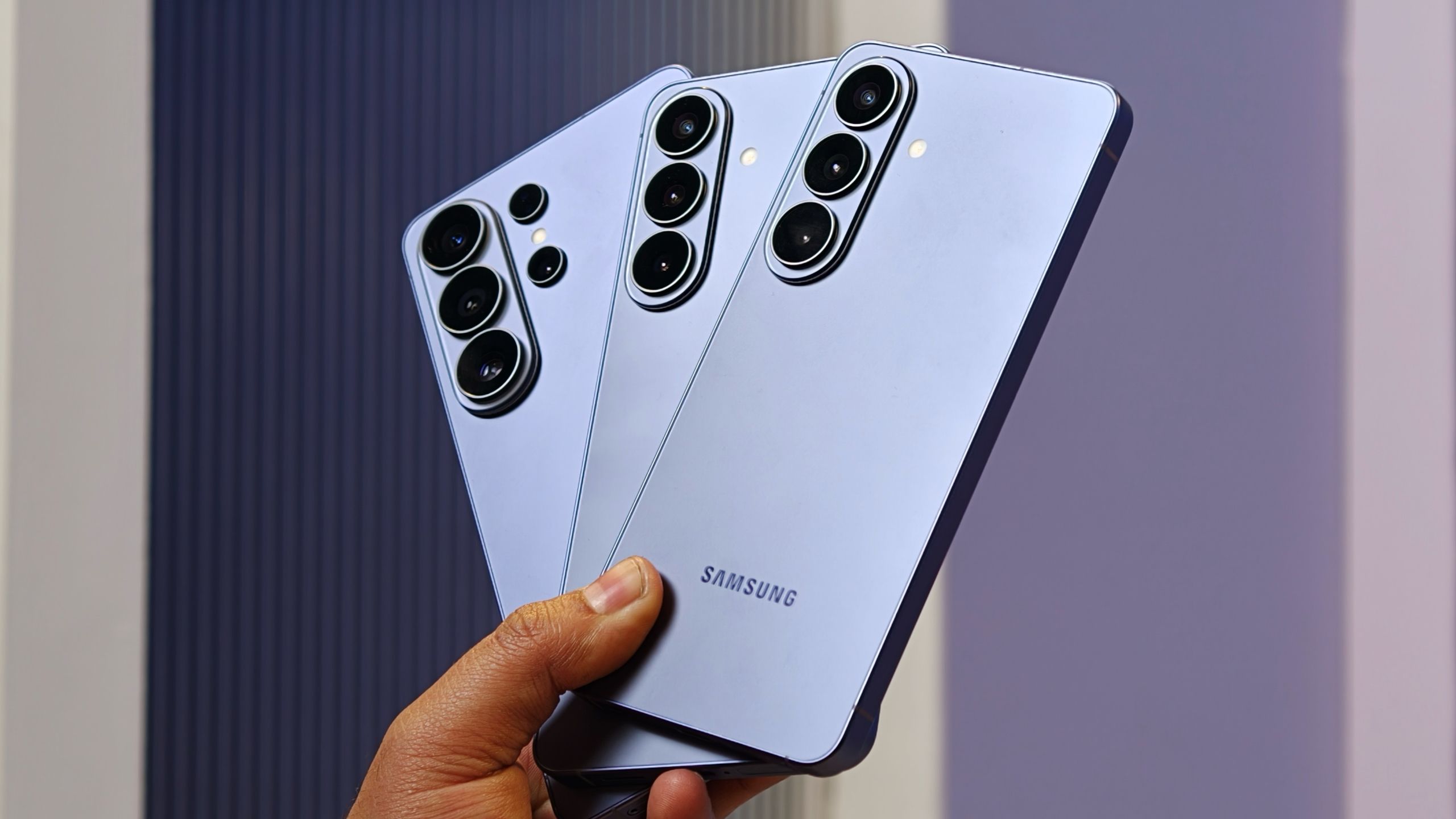
The Galaxy S27's charging speeds are already looking disappointing
OPPO's next ultimate camera phone may give MediaTek a shot at the top
We've tried every Samsung phone, and these are the best picks for you to buy in 2026
Get the latest news from Android Central, your trusted companion in the world of Android
Rumored Galaxy S27 Pro could feature the Snapdragon 8 Elite Gen 6 chipset instead of the more powerful Extreme variant.
When you purchase through links on our site, we may earn an affiliate commission. Here’s how it works.
We're slowly inching toward the new year, which means it's almost time for Samsung's next-generation Galaxy S flagship phones. And now, a new leak suggests that the upcoming Galaxy S27 Pro could miss out on Qualcomm's most powerful flagship chipset.
Samsung is expected to unveil the Galaxy S27 lineup in Q1 next year. As leaked renders have already revealed, the company appears to be taking some inspiration from Apple's iPhone, with the Galaxy S27 Ultra reportedly moving away from its familiar vertical camera layout in favor of a horizontal camera plateau.
There's also expected to be one more addition to the Galaxy S27 lineup in the form of the Galaxy S27 Pro. The new model will reportedly bring several Galaxy S27 Ultra features, including Privacy Display, to a smaller form factor without the S Pen. However, it looks like the Pro could still fall behind the Ultra in one important area: the chipset.
As spotted by Notebookcheck, all four Galaxy S27 models have reportedly appeared in the NBD import-export database. The listings mention the Galaxy S27, Galaxy S27 Plus, Galaxy S27 Pro, and Galaxy S27 Ultra, alongside details about the chipsets expected to power them.
According to the listings, the Galaxy S27 and Galaxy S27 Plus will be powered by Samsung's own Exynos 2700 chipset. The Galaxy S27 Ultra, meanwhile, is expected to use Qualcomm's Snapdragon 8 Elite Extreme Gen 6 processor. That's not particularly surprising, considering Samsung has traditionally reserved Qualcomm's most powerful flagship chipsets for its Ultra models.
What's interesting, however, is that the Galaxy S27 Pro is reportedly listed with the regular Snapdragon 8 Elite Gen 6 rather than the more powerful Extreme variant.
When Qualcomm unveiled the Snapdragon 8 Elite Gen 6 series earlier this year, the company introduced two versions of its flagship chipset, one with the Extreme branding and another without it. The Extreme variant sits at the top of Qualcomm's lineup, offering clock speeds of up to a whopping 5GHz.
Get the latest news from Android Central, your trusted companion in the world of Android
But it looks like the Galaxy S27 Pro could miss out on that top-tier processor. Instead, Samsung may use the slightly lower-tier Snapdragon 8 Elite Gen 6, although the chipset is still built on the same 2nm process architecture.
One possible reason could be thermal management. Since the Galaxy S27 Pro is expected to offer many of the Ultra's features in a smaller body, Samsung may have opted for a slightly lower-clocked chipset to keep temperatures under control. However, that's just speculation for now.
The base Galaxy S27 will reportedly retain its 6.3-inch display, while the Galaxy S27 Plus will continue with a 6.7-inch screen. The Galaxy S27 Ultra is expected to feature the same massive 6.9-inch display, while the new Galaxy S27 Pro could sit somewhere in between with a 6.5-inch panel.
That would make the Galaxy S27 Pro a pretty interesting addition to Samsung's flagship lineup, especially for people who want some of the Ultra's features without carrying such a large phone.
Of course, we're still a few months away from the Galaxy S27 series launch, and plenty could change before Samsung makes everything official. But if this leak turns out to be accurate, the Galaxy S27 Pro may not be quite the smaller Galaxy S27 Ultra that some buyers were hoping for.
Sanuj is a tech writer who loves exploring smartphones, tablets, and wearables. He began his journey with a Nokia Lumia and later dived deep into Android and iPhone. He's been writing about tech since 2018, with bylines at Pocketnow, Android Police, Pocket-Lint, and MakeUseOf. When he's not testing gadgets, he's either sipping chai, watching football, or playing cricket.
You must confirm your public display name before commenting
Please logout and then login again, you will then be prompted to enter your display name.
Android Central is part of Future US Inc, an international media group and leading digital publisher. Visit our corporate site.
© Future US, Inc. Full 7th Floor, 130 West 42nd Street, New York, NY 10036.
Apple to Start Scanning Publicly Shared iCloud Photos and Files for Harmful Content

Apple has revealed that it plans to start checking public iCloud links for harmful content starting with iOS 27.3, iPadOS 27.3, macOS 27.3, and visionOS 27.3.
The change specifically applies to scenarios where users share iCloud content, such as photos in iCloud Photos or files in iCloud Drive, by sharing a link and making it accessible to "Anyone with the link."
When users choose this option, it makes the content accessible to anyone who has the link, including Apple, the iPhone maker said.
"Starting in version 27.3 or later of iOS, iPadOS, macOS, and visionOS, items shared using Anyone with the Link will be checked by Apple for harmful content," it said in a support document published Tuesday.
Apple also explicitly noted that sharing an item that can be accessed by Anyone with the Link disables end-to-end encryption (E2EE), even if the owner or the recipients have turned on Advanced Data Protection, an optional setting that secures iCloud Backup, Photos, and Notes using E2EE.
That said, it's unclear what prompted this change, what Apple considers as "harmful content," and whether these checks will also be applied retroactively to previously generated links, as well as any new links created before the 27.3 updates are officially rolled out later this December.
The tech giant has also warned that if users attempt to upload harmful content, it can be removed or deleted at any time.
"Apple may also take action against your Apple Account, including blocking or disabling your Apple Account, blocking the ability to create a new Apple Account with the associated email address or phone number, or if necessary, involving law enforcement," it said.
Learn how to close critical identity visibility gaps in your SOC, detect hidden threats, and accelerate incident response across human, machine, and AI identities.
Learn how to assess AI threat readiness, strengthen attack surface visibility, and prepare security operations for emerging threats in this practical webinar.
Get the latest news, expert insights, exclusive resources, and strategies from industry leaders, all for free.
CERT-In Flags AI-Driven Attacks as Backdoored ARTEX Exposes 62 Consoles to Root Access

The Indian Computer Emergency Response Team (CERT-In) has disclosed that an artificial intelligence (AI)-assisted threat actor it tracks as Crafty Falcon is targeting organizations in the Banking, Financial Services, and Insurance (BFSI) sectors in the country.
Describing the threat as active and ongoing, the activity involves the use of publicly-available AI-driven offensive security tools like ARTEX, PentAGI, Cairn, and CyberStrikeAI.
"These tools execute complete attack chains autonomously at machine speed, generate and refine large numbers of tailored attack scripts in rapid succession, and adapt their payloads based on target responses," CERT-In said. "The supporting attack infrastructure rotates IP addresses within hours to days."
The agency said the attacks have also targeted cryptocurrency exchanges and digital asset service providers, resulting in the theft of keys and funds.
The update follows an October 2026 alert issued by CERT-In, which warned of multiple cyber attack campaigns targeting non-banking financial companies (NBFCs), digital lending platforms, fintech entities, payment service providers, and cryptocurrency wallet operators.
Threat actors have been observed exploiting internet-facing applications and exposed APIs and privileged endpoints to steal payment aggregator/gateway and partner-bank API credentials, and then invoke fund-transfer APIs directly from within the entities' own allow-listed infrastructure.
Some of the other notable initial access vectors are listed below -
This approach, CERT-In added, defeats application-level controls such as loan creation, KYC, sanction, beneficiary verification, balance sufficiency, and per-transaction limits.
The rapidly executed fraudulent transactions are designed to move funds to attacker-controlled mule accounts across multiple banks. In addition, the attacks involve the operators taking steps to delete logs and tamper with endpoint security tools in an attempt to complicate detection and incident response efforts.
CERT-In also warned that attackers are targeting cloud infrastructure to execute commands and deploy malicious payloads, as well as publicly-accessible non-production environments to obtain shared credentials, tokens, or network paths, and then use them to pivot to production systems.
Other notable post-exploitation actions undertaken by the adversary are as follows -
The development comes as CERT-In has published the Artificial Intelligence Security Auditing Guidelines, laying out specific requirements to ensure the "governance, security, privacy, fairness, transparency, resilience and auditability of AI systems."
The framework calls for testing an AI agent's documented identities, authorized objectives, approved tool use, permission boundaries, and its adherence to the principle of least privilege (PoLP). It also requires AI agents to require human approval for consequential actions, while ensuring high-risk AI systems incorporate emergency interruption, credential revocation, and controls for preventing automatic restarts.
"Effective assurance requires organisational accountability, technical testing, data and model governance, continuous monitoring, human oversight, incident response and third-party assurance," the agency said. "Accordingly, the framework provides auditable requirements proportionate to the nature, scale, autonomy and potential impact of each AI system."
The abuse of open-source penetration testing tools like ARTEX in real-world intrusions prompted its developer to take down the repository from GitHub. But multiple copies have sprung up on the Microsoft-owned code-hosting platform to fill the void -
The first two GitHub repositories are no longer available for download. According to an independent cybersecurity researcher who goes by the online alias Badbyte, the "trhhubsd/ARTEX" repository was starred 2,449 times and forked over 600 times.
What's notable about the GitHub copy is that it changed a single line in "docker-compose.yml" to pull the "tomicdd/artex" image from Docker Hub. The modified version conceals a new routine that grants a root shell during an unauthenticated request to the login endpoint. Per statistics shared by Docker Hub, the image has been downloaded 9,000 times.
"It adds a hidden verifyCaptcha() function to the login handler: if the CAPTCHA field starts with a secret marker, the rest runs through sh -c as root and the output is returned, before any credential check," the researcher said in a statement shared with The Hacker News via email. "That's an unauthenticated root shell on every install, and it never shows up in a code review."
"A compromised ARTEX instance holds its targets' unpatched findings, live credentials, captured sessions and network position. Whoever holds the backdoor can also quietly change what the agents do on the next run."
As many as 62 ARTEX consoles on the internet have been found to serve the backdoored build between November 2 and 4, 2026, with the first instance going up by October 20, 2026, twelve days after the Docker image was pushed. Of these, 26 consoles are located in the U.S., followed by 17 in Hong Kong and seven in China.
In all, a total of 1,645 hosts have been found serving the ARTEX console as of November 4, 2026. Besides "tomicdd/artex," a number of Docker Hub namespaces have been identified as publishing images named "artex." Some of them are listed below -
"The backdoor's author needed nothing more. The people they were after had already chosen to run an unvetted attack tool as root on an open port," Badbyte said. "We know ARTEX has been used maliciously in the wild, and it will keep being used that way. We also know that plenty of legitimate, curious people installed it to see what the fuss was about. They did not sign up for a root shell on their own server."
Learn how to close critical identity visibility gaps in your SOC, detect hidden threats, and accelerate incident response across human, machine, and AI identities.
Learn how to assess AI threat readiness, strengthen attack surface visibility, and prepare security operations for emerging threats in this practical webinar.
Get the latest news, expert insights, exclusive resources, and strategies from industry leaders, all for free.
It’s Possible You’ve Been Making Coffee All Wrong: 6 Mistakes a Pro Says to Avoid

Our gifting experts are obsessively searching for holiday gifts that are unique, thoughtful and suitable for any budget.
Our expert, award-winning staff selects the products we cover and rigorously researches and tests our top picks. If you buy through our links, we may earn a commission.
Avoid these brewing blunders for coffee that tastes like the stuff baristas make.
I make coffee every morning, almost without fail. I haven’t always used the same method, and because I bounce between processes to test and experiment with coffee makers, beans and, yes, even K-Cups, I’m open to the idea that I might not always get it right.
According to Sarina Prabasi, the founder of Buunni micro-roastery in New York City, I’m in good company.
Prabasi serves on the board of the Specialty Coffee Association and assures me I’m probably making one or two common coffee-brewing mistakes, like everyone else. Coffee is nuanced; it’s easy to fall into habits—often passed down from family, and often bad.
Whether you brew your morning coffee with a pour-over, French press or espresso machine, here are six coffee mistakes to avoid.
Even the slightest film of soap residue can taint your next cup.
Ditching the soap for your coffee pot and pour-over immersion brewer might seem like dubious advice. In reality, your coffee equipment doesn’t need a scrub down every time you use it. Even small amounts of residue from fragrant dish soap detergent will leave you with a sudsy, subpar pot of coffee.
“It really stays in there; it can mess with the flavor, and so, usually, a good rinse with super hot water is enough for black coffee,” Prabasi said. Oils from the beans may build up over time, so fragrance-free dish soap comes in handy for occasional deep cleaning. A simple rinse with hot water will more than suffice for daily use, however. Save yourself time and avoid any unwanted “soap scum” notes that might interrupt the notes of your single-origin Sidama natural roast.
Coffee beans are one pantry staple you shouldn’t buy in bulk.
Buying in bulk can save time and money at the grocery store, but it can disappoint coffee drinkers. Buying smaller quantities of beans helps you avoid stale, flat coffee, especially for average drinkers and households with one or two people. Probasi told us that you’ll know coffee has gone stale because it “can taste like a shadow of itself.”
The roaster recommends checking the coffee label for a roast date within one month, ideally within two weeks. (Keep in mind, the “best buy” date is different and isn’t an indicator of freshness.) If you don’t like grinding at home, the roast date should be on the fresher side.
But you needn’t panic about the declining flavor in your cupboard like a ticking time bomb. “Every day post-roast doesn’t mean it’s losing freshness, but after two weeks, I’d say it starts to go down,” Prabasi said. Store coffee in an airtight container but avoid the humid fridge with its plethora of smells that can stick to the beans.
You can find tutorials online recommending brewers, scales, tampers, water filters, grinders and miscellaneous techniques to make the perfect cup. Experimentation is key to crafting your favorite brew but only if you start with the basics. “So just adjust only the water in the beginning,” Prabasi said.
If you don’t have a kitchen scale, the roaster told us the rule of thumb is to start with two tablespoons of ground coffee per cup of water. The finer the grind, the stronger your coffee will taste, so adjust the grounds-to-water ratio accordingly. If that seems too weak or too strong, then adjust by adding more or less coffee at the same grind level.
Beyond the basics, you can get creative. “If your coffee is too sour, it’s maybe that you prefer a dark roast,” Prabasi said. Coffee too bitter? You can adjust the roast type by buying a level down, such as dark to medium or medium to light. “ If you got a coffee from East Africa, maybe try one from South America, you know, like switch [it] around,” she said. Changing one element at a time ensures you know which step affected the result, for better or worse.
Filling your coffee pot with tap water will yield less-than-ideal flavors. For most of us, filtered water will make a big difference in your coffee’s final flavor. Tap water often contains by-products that a home water filtration system can easily remove.
Almost all tap water in the US is disinfected with low levels of chlorine. This chemical helps keep drinking water safe as it leaves treatment centers but can alter the taste and smell of tap water. Chloramines can also strip lead and copper from pipes, by-products that can affect even the most carefully prepared coffee.
Smell can be a dead giveaway that your coffee has gone stale. Prabasi explains that you should immediately open a bag of beans or ground coffee and smell the roasted coffee scent. Aroma is a key indicator of flavor. No aroma means a serious lack of taste.
Prabasi said stale coffee can taste muddy or flat and lack any complex tasting notes that a bag might list on its label. “ That’s why I think for in the coffee profession, so much of what we do is tasting coffee,” she said. “From the farm to the coffee shop, every step of the way coffee gets tasted or cupped, in our vernacular.”
Old coffee isn’t likely to make you sick, so there’s no need to toss it. You might, however, want to shift from taking your coffee black. Making iced coffee is a simple way to mask the lack of tasting notes. An immersion brewer also lets you steep the grounds longer to add a bit more flavor after the coffee has dulled.
Don’t skimp on organic coffee even if it costs a few bucks more.
The multitude of coffee brands at the grocery store can feel overwhelming. To help sift through the masses, Prabasi explains the organic coffee label is a sign of quality that’s important for coffee.
“If you can, then I think for coffee and tea, organic is really important because coffee and tea crops, especially from large farms, tend to get really over-sprayed,” Prabasi said. Pesticides are sprayed right onto the coffee cherries, and coffee is unlike an apple that you can wash or a banana that you peel before eating. Tea leaves go through a similar process, and anything left on the leaves then steeps into your mug.
The coffeehouse owner made it clear that she doesn’t believe coffee needs to be expensive to be considered “good.” Great coffee comes in a variety of price points. ” I think the care that goes into sourcing it, to roasting it, or just serving it, I would be looking for those things,” Prabasi said. The organic label is a helpful place to start.
For more coffee intel, here’s how to read coffee labels and the best travel mugs of 2026, tested by CNET.
2 astronauts will finish upgrading ISS solar arrays during spacewalk today: Watch it live

Join The Club for quick access. Enter your email below and we'll send confirmation, and sign you up to our newsletter.
Keep exploring and earning more as a member.
Latest space missions, discoveries and exploration updates.
Stargazing tips, cosmic events and expert insights on the universe
Start exploring exclusive deals, expert advice and more
Space news, cosmic updates and expert insights straight to your inbox.
Breaking space news, the latest updates on rocket launches, skywatching events and more!
Unlock instant access to exclusive member features.
Breaking space news, the latest updates on rocket launches, skywatching events and more!
Sign up to our monthly entertainment newsletter to keep up with all our coverage of the latest sci-fi and space movies, tv shows, games and books.
Discover this week's must-see night sky events, moon phases, and stunning astrophotos. Sign up for our skywatching newsletter and explore the universe with us!
Space.com's Sci-Fi Reader's Club. Read a sci-fi short story every month and join a virtual community of fellow science fiction fans!
Get full access to premium articles, exclusive features and a growing list of member rewards.
The spacewalk is scheduled to start at 8:30 a.m. ET.
When you purchase through links on our site, we may earn an affiliate commission. Here’s how it works.
Two spacewalking astronauts will finish upgrading the International Space Station's power system today (Nov. 5), and you can watch the action live.
NASA astronaut Anil Menon and the Canadian Space Agency's Joshua Kutryk will install the eighth and final International Space Station Roll-Out Solar Array (iROSA) today, during a roughly seven-hour spacewalk that's scheduled to begin at 8:30 a.m. EST (1330 GMT).
You can watch it live here at Space.com, courtesy of NASA, beginning at 7 a.m. EDT (1200 GMT).
Today's extravehicular activity (EVA) will be the second in a week for Menon and Kutryk, who installed the station's seventh iROSA during an Oct. 29 spacewalk. That excursion was the 100th U.S. spacewalk from the ISS to date, and the first EVA for a Canadian astronaut since 2019.
Today's spacewalk will wrap up an ambitious ISS power upgrade that has taken more than five years to pull off.
"The installation job will complete the years-long process that began in June 2021 to augment the space station’s power generating capacity from 160 kilowatts to about 215 kilowatts," NASA officials wrote about the EVA in a blog post on Tuesday (Nov. 3). That's a boost of about 30%.
Menon and Kutryk are currently sharing the ISS with five other astronauts — NASA's Luke Delaney and Jessica Watkins and cosmonauts Pyotr Dubrov, Anna Kikina and Sergey Teteryatnikov.
Delaney, Kutryk, Teteryatnikov and Watkins arrived at the ISS on Oct. 1, on SpaceX's Crew-13 mission. Dubrov, Kikina and Menon got there in mid-July, aboard a Russian Soyuz spacecraft.
Michael Wall is the Spaceflight and Tech Editor for Space.com and joined the team in 2010. He primarily covers human and robotic spaceflight, military space, and exoplanets, but has been known to dabble in the space art beat. His book about the search for alien life, "Out There," was published on Nov. 13, 2018. Before becoming a science writer, Michael worked as a herpetologist and wildlife biologist. He has a Ph.D. in evolutionary biology from the University of Sydney, Australia, a bachelor's degree from the University of Arizona, and a graduate certificate in science writing from the University of California, Santa Cruz. To find out what his latest project is, you can follow Michael on Twitter.
You must confirm your public display name before commenting
Please logout and then login again, you will then be prompted to enter your display name.
Space is part of Future US Inc, an international media group and leading digital publisher. Visit our corporate site.
© Future US, Inc. Full 7th Floor, 130 West 42nd Street, New York, NY 10036.
Hong Kong pro-democracy activist Joshua Wong sentenced to 10 years in prison in national security case

Wong, 30, in prison since 2020, is only activist in Hong Kong prosecuted twice under national security law
Exclusive: Joshua Wong laments city’s fate from inside maximum security prison
The Hong Kong activist Joshua Wong has been sentenced to 10 years in prison after earlier pleading guilty to “foreign collusion”, his second conviction under a national security law critics say has been used to silence political opposition in the city.
Wong, who rose to prominence as the teenage face of Hong Kong’s 2014 pro-democracy demonstrations, submitted his guilty plea in September. He had been accused of working with the exiled Hong Kong activist Nathan Law to urge foreign powers to impose sanctions, blockades or other hostile measures against China.
In his ruling on Thursday, the high court judge William Tam described Wong’s actions as “grave in nature”.
He said Wong had visited the US to seek foreign interference before the national security law’s introduction in 2020, and continued to share posts on social media by Law calling for sanctions after it was enacted.
Wong’s role was to “supply his underground support” and “arouse the attention of foreign countries to bolster the cause”, the judge said. He described Wong’s actions as part of a “scheme” to collude with foreign governments.
Tam said Wong’s sentence would run concurrently with the remaining term of his previous national security offence.
After the ruling, Law said in a statement: “It’s incredibly sad to see my friend Joshua Wong suffer another sentencing over his peaceful advocacy work for Hong Kong’s democracy. The signal the sentencing sent to the world is that [China] is determined to quash any hopes for freedom and democracy on its soil.”
Amnesty International’s deputy regional director, Sarah Brooks, said: “Today’s sentence is another grim reminder of how Hong Kong’s national security law has become a tool to punish dissent rather than to genuinely protect national security.”
Wong wore a dark blue shirt and thick rimmed spectacles in court, and nodded and bowed as supporters waved. Dozens of people had waited in line outside the court building for the hearing, amid a heavy police presence. A group of international diplomats was also present for the sentencing.
The former student leader is already serving a prison term of four years and eight months, imposed in November 2024, for conspiracy to commit subversion for his role in an unofficial primary election. He has spent nearly six years in detention and had been due to be released in January 2027.
The US consulate in Hong Kong said in a statement that it “strongly condemns” the additional sentence and called for Wong’s immediate release. “Wong has been unjustly imprisoned since December 2020, demonstrating that Beijing will go to extraordinary lengths to silence those who advocate for fundamental freedoms in Hong Kong,” a consular spokesperson said.
Shortly afterwards, China warned against “irresponsible” remarks on Hong Kong’s judicial affairs. “Relevant parties should earnestly respect China’s sovereignty, respect Hong Kong’s legal system, stop making irresponsible remarks regarding the trial of … judicial cases,” the foreign ministry spokesperson, Guo Jiakun, told reporters.
Wong, 30, gained international attention during the 2014 Umbrella protests, which paralysed the city’s financial centre and galvanised a generation of young people. In October 2014, he appeared on the cover of Time magazine under the headline: “The face of protest.”
When protests erupted in 2019 over a proposed extradition bill, Wong was serving a prison sentence for his role in the 2014 demonstrations. He was released at the height of the protests and immediately took to the streets.
The following year, Beijing introduced a sweeping national security law it said was needed to restore stability to the former British colony, but critics say has been used to target political opposition, dissolve civil society groups and silence independent media.
Wong is the only activist in Hong Kong prosecuted twice under the law.
Zyxel GS1900 Patch Fails to Block Zero-Day Exploit Allowing Root Command Execution

Zyxel GS1900 network switches that received the vendor's earlier fix for an actively exploited flaw are still open to the exploit attackers used, researchers at Binarly found.
The exploit lets anyone who can reach a switch's web management interface run commands on it without logging in. Zyxel has released new firmware for 10 GS1900 models that closes the hole.
The earlier fix is the 2.90 Patch 2 firmware, named in a June 16 advisory for a flaw tracked as CVE-2026-7273. The new 2.90 Patch 3 firmware fixes a flaw now tracked separately as CVE-2026-107441, which the exploit relies on. It was posted on October 23, and the vendor announced it in an advisory earlier this week.
The researchers, who reported the flaw to the vendor on September 29, call it a zero-day. Attackers already had a working exploit for it by then.
GreyNoise, which monitors attack traffic through a network of sensors, reported on September 21 that attackers took data from 996 GS1900 switches around August 17. It tied the attacks to CVE-2026-7273, and the researchers say the exploit it described matches the one they found.
Neither GreyNoise nor Binarly says the attacked switches were running the earlier fix, and the vendor's advisory does not say whether the new flaw has been exploited.
Zyxel's security advisory lists the affected and fixed firmware for each model:
Switches on Patch 2 or any earlier firmware need the Patch 3 build for their model. The builds are posted with their firmware release notes.
The advisory lists no workaround for owners who cannot update yet. It also does not say whether updating removes access an attacker may already have, or what owners should check if a switch may have been compromised.
The U.S. Cybersecurity and Infrastructure Security Agency (CISA) added CVE-2026-7273 to its Known Exploited Vulnerabilities (KEV) catalog on September 21 and gave federal agencies until September 24 to apply the vendor's fix, the Patch 2 firmware. The listing came the day the earlier attacks were made public.
The researchers' vulnerability advisory says the new flaw is present in all 10 of those Patch 2 builds. It also says "an attacker only needs network reachability to the management service", while the vendor's advisory describes a "LAN-based, unauthenticated attacker".
The researchers rate the flaw 9.8 out of 10 on the CVSS severity scale, against 8.8 in the vendor's CVE entry, and say the attacker's commands run with root privileges.
Binarly's technical analysis traces the flaw to the program that handles web requests on the switch. It is an out-of-bounds write, meaning the program writes data beyond the memory allocated for it.
The program stores each request parameter in a fixed area that can accommodate 140 parameters. It never checked the size of a parameter, and before Patch 2 it never checked how many parameters it had stored.
The exploit sends a 140th parameter that is too large, causing it to overrun the end of that area and overwrite the program's parameter counter. The next parameter is then written outside the area, allowing the attacker to swap the function the program is about to call for one that runs the attacker's command.
Patch 2 added a check on the counter, but the check runs only after the oversized parameter has been copied. By then the counter holds the attacker's value, so the check does not stop the write. The researchers say the exploit works against Patch 2 without changes.
They tested it on emulated firmware and on real hardware, though they do not say which model. The exploit's own list of supported firmware includes the Patch 2 build for the GS1900-24.
According to the researchers, Zyxel told them that CVE-2026-7273 was about the missing counter check, and that it treats the missing size check as a separate flaw, now CVE-2026-107441.
In the Patch 3 code, the counter is checked before a parameter is copied, and the copy is limited in size. The researchers say this fixes the flaw.
GreyNoise's attack report says the attackers used the exploit to download a data-collection script onto the switches and left the collected data to be picked up. The data included switch configurations, hashed root credentials, and network information. Of the 996 switches, 564 still used factory-default credentials.
The report does not say which firmware the switches were running or how the attackers reached them. It says the attackers are the same as, or related to, a group that Acronis tracks as Red Heron and describes as Chinese-speaking. Acronis linked a backdoor called JITTERLY to Red Heron in an earlier campaign that targeted Gitea servers.
The researchers found the exploit on September 17 in an open folder on a server that also acted as a command server for JITTERLY.
Their advisory offers two explanations. Either the Patch 2 update was a faulty fix for CVE-2026-7273, or the attacks exploited a different flaw from the one CISA listed.
The researchers say they will soon publish a smaller version of the exploit as a proof of concept. CISA's KEV catalog data, last updated yesterday, does not list CVE-2026-107441.
Learn how to close critical identity visibility gaps in your SOC, detect hidden threats, and accelerate incident response across human, machine, and AI identities.
Learn how to assess AI threat readiness, strengthen attack surface visibility, and prepare security operations for emerging threats in this practical webinar.
Get the latest news, expert insights, exclusive resources, and strategies from industry leaders, all for free.
A New UK Porn Ban Sparks Fears of Unprecedented Sex Censorship

A new UK law banning porn featuring choking and “fauxcest,” or simulated incest, may have unintended consequences for content creators and smut fans all over the world, some experts warn.
As of November 6, amendments to the Crime and Policing Act will outlaw the “possession or publication of pornographic images of strangulation or suffocation”—a law intended to curb violence against women and girls. Yet some experts warn that the legislation is written broadly enough that it could potentially criminalize far more innocuous content, including “breast smothering,” “jeans facesitting,” and even potentially oral sex, ostensibly because people could have their airways impeded during these activities.
“I would encourage both content creators and consumers to underscore the risks of this law,” says Myles Jackman, an obscenity lawyer in the UK. “Because to me, it genuinely seems like one of the greatest acts of suppression of free speech in global history.”
The new amendments were inspired by a lengthy pornography review authored by Baroness Gabby Bertin, a Conservative member of the UK House of Lords. The legislation bans various depictions of sex acts, including “pornographic images of strangulation or suffocation,” as well as content showing performers role-playing as minors under the age of 16.
It also takes aim at “fauxcest,” an extremely popular porn niche that depicts simulated sexual relations between family members who are not related by blood, such as stepsiblings or stepparents. In Bertin’s review recommending the ban on such content, she cites “anecdotal evidence” suggesting that fauxcest “can be used between an abuser and child to permit interfamily child sex abuse,” describing it as a “fig-leaf” of sorts for actual sexual abuse.
Under the new law, those caught distributing or in possession of such content face up to five years in prison and a fine.
The impending UK legislation has prompted panic among some adult creators, many of whom are currently combing through their content libraries and removing clips that could get swept up in the ban.
“The problem is always how broad [the legislation] is,” says Alexandra Snow, an adult content creator and educator. “And we won't know how they're going to interpret it until they start making people's lives hell.”
Snow says she is particularly concerned about how the aspect of the legislation pertaining to “suffocation or strangulation” will affect kink creators, who may make content related to collaring or leather fetishes. She’s also worried about AI image-recognition software, which is already in widespread use among the platforms, potentially flagging content that isn’t violative at all. “They use a very broad, heavy-handed approach,” she says.
Cami Strella, an OnlyFans creator in the US who estimates that 60 to 70 percent of her content depicts some form of role-play, including step-“fauxcest,” is also concerned about the legislation. She says that the content she makes is “just playing a fantasy,” and that more sex education and literacy is required to teach people about the risks of various behaviors.
“I don’t think banning it is going to do anything,” she says. “If anything, it’ll just push even worse content that is actually illegal or immoral underground, so you’ll have to access it away from these platforms. This is just a slippery slope we’re getting into.”
The new UK law is seemingly targeted at the trend of choking in porn, which has been linked to real-life instances of fatal choking during sex. Though the practice is highly risky, potentially leading to brain damage or death, it’s increasingly common among young adults, largely due to the prevalence of eroticized choking depictions in the media and in porn. The death of a 16-year-old Australian girl in August, who authorities say lost consciousness after she was choked consensually during sex, has led to renewed calls for legislation banning depictions of the practice in online porn, which has “absolutely sort of normalized this kind of sexual violence,” Bertin recently told the BBC.
The UK has a history of imposing stringent restrictions on internet pornography, particularly compared to the United States, where statutes like Section 230 of the Communications Decency Act of 1996 largely exempt platforms from liability for hosting objectionable content. Long before many US states started requiring users to verify their ages before visiting porn sites, for instance, the UK communications regulation agency Ofcom has been slapping websites with fines of up to 10 percent of their worldwide revenue for failing to accurately respond to requests for information about the platforms’ adherence to age disclosure requirements.
“The UK is really pushing for limits on free speech,” says Michael Fattorosi, an adult industry attorney based in Italy. “This is just something they're throwing on top of the heap of restrictions.”
In a statement sent to WIRED, a spokesperson for the UK’s Ministry of Justice denied that the legislation was intended to curb sexual expression. “We’re committed to halving violence against women and girls in a decade, and that includes preventing harm before it starts,” the spokesperson said. “[These] laws aren’t about policing people’s sexual freedom, they’re about cracking down on content that normalizes violence against women, encourages unlawful behavior, and can cause real-world harm.”
Jackman, the lawyer, says that he has no issue with the provision banning strangulation, as its risks are proven and there are existing laws banning strangulation in the UK. He cautions, however, that the law is written broadly enough that relatively innocuous content could also potentially be penalized.
“It would be up to a court to decide this on a case-by-case basis, but given that it would appear that face-sitting by a vagina owner is now arguably suffocation, the insertion of a penis could equally be considered suffocation because it blocks the airways,” he says. In other words, “the UK could have just banned blow jobs” in online pornography.
Though the law currently applies only to consumers and creators in the United Kingdom, the stiff penalties for “possession” of such images—which the law defines as an image being stored on a phone, a hard drive, or in cloud storage—is of particular concern to Fattorosi.
“As far as creators are concerned, if you visit the UK, if you’re going there on holiday, if you’re going there for a conference, you should probably be careful about what you keep on your phone,” he says.
The subscription-based platform OnlyFans is particularly vulnerable, he adds. Though most American porn companies don’t have a substantial presence in the UK, making it difficult for Ofcom to go after them, that doesn’t apply to OnlyFans. The subscription-based platform’s parent company, Fenix International Limited, is based in the United Kingdom and has already faced steep fines from the agency for failure to adhere to age-disclosure requirements.
“If I were OnlyFans,” Fattorosi says, “I’d be very worried about this.” (In a statement, OnlyFans tells WIRED the platform “complies with applicable laws and regulations in all jurisdictions in which it operates and has longstanding, proactive safety measures in place that meet UK legal requirements.”)
In advance of the new legislation taking effect, adult content platforms have issued updated guidelines for creators. The platform IWantClips has already started complying, publishing a new set of guidelines for creators and fans based in the UK and removing clips that could potentially be swept up in the legislation. The laundry list of sexual niches and categories banned now includes “breast smothering,” “ass smothering,” “jeans facesitting,” “BBW facesitting,” “plastic fetish,” “scissorhold,” and “butt drops.”
Trans Princess Jezebel, a dominatrix and adult content creator in the UK, says she has already started going through her content library on IWantClips and OnlyFans, removing videos that may be seen as violative. She’s heavily reliant on clips to advertise her services as a dominatrix, and she’s concerned that once the law takes effect on November 6, she’ll take a huge financial hit.
“When the state starts regulating which types of pornography people are allowed to watch, a dangerous precedent is set,” she tells WIRED in an email. “Where will it end?”
But even though the UK is, for the time being, an outlier, Jackman warns it may not be for long. He says he has heard of lawmakers in Italy, the Netherlands, and Spain discussing similar legislation, as well as members of the evangelical lobby in the United States.
“In terms of free speech,” he says, “the lights are going out across the globe.”
Update, November 5 at noon EST: A previous version of this story inaccurately stated that Ofcom fined OnlyFans for failure to adhere to age-disclosure requirements. Ofcom fined OnlyFans for failing to accurately respond to information requests about age-check measures. The story has been updated to correct the error.
In your inbox: Inside WIRED’s newsroom with Katie Drummond
They war-gamed dimming the sun—it went worse than you think
The Big Interview: Nathan Fielder tells us everything
Live tracker: Elon Musk’s America PAC is spending big on the midterms
Introducing the app: More ways to make the most of WIRED
Hackers Exploit Patched Apple Flaw to Deliver Info-Stealing Malware, CISA Says

The U.S. Cybersecurity and Infrastructure Security Agency (CISA) on Wednesday added a medium-severity security flaw impacting multiple Apple operating systems to its Known Exploited Vulnerabilities (KEV) catalog, following reports of active exploitation.
The vulnerability in question is CVE-2024-27834 (CVSS score: 5.5), a case of improper authentication that could allow an attacker with arbitrary read and write capability to bypass Pointer Authentication.
It was addressed by Apple in May 2024 with improved checks in iOS 16.7.8 and iPadOS 16.7.8, iOS 17.5 and iPadOS 17.5, macOS Sonoma 14.5, tvOS 17.5, watchOS 10.5, and Safari 17.5. The vulnerability was demonstrated as a zero-day at the Pwn2Own Vancouver hacking contest held in March that year.
The addition of CVE-2024-27834 to the KEV catalog follows a report from Sekoia that threat actors possibly linked to Russia exploited previously patched vulnerabilities in Safari and Google Chrome to deliver malware capable of harvesting browser and device data.
The activity has been attributed to APT29 (aka Cozy Bear and Midnight Blizzard), a state-sponsored hacking group affiliated with Russia's Foreign Intelligence Service, with "moderate to high confidence."
The attacks involve three initial access pathways – compromised legitimate websites, fake sites masquerading as popular websites, and a supply chain attack aimed at Plerdy SEO Tracker – to serve malicious JavaScript that triggers the vulnerability and ultimately deploy the information-stealing payload after profiling the visitor's device.
In light of active exploitation, Federal Civilian Executive Branch (FCEB) agencies are recommended to apply the necessary patches by November 18, 2026.
Learn how to close critical identity visibility gaps in your SOC, detect hidden threats, and accelerate incident response across human, machine, and AI identities.
Learn how to assess AI threat readiness, strengthen attack surface visibility, and prepare security operations for emerging threats in this practical webinar.
Get the latest news, expert insights, exclusive resources, and strategies from industry leaders, all for free.
UK found to be ‘dangerously’ reliant on China for critical minerals needed for defence and AI

Delivering net zero also at risk, say MPs as they call for centralised policy and funding for mines and diversification
The UK is “dangerously” dependent on China for critical raw materials needed for the military, renewable energy infrastructure and AI, a parliamentary investigation has found.
MPs on the business select committee called for an urgent centralised policy and the creation of a “critical minerals finance facility” to help fund rare earth and other critical mineral mines, and deploy grants, equity and debt to accelerate a diversification programme.
“Critical minerals are the alpha of the new economy,” said the committee’s chair, Liam Byrne. “We cannot rearm Britain, build AI or deliver net zero unless we secure the minerals these technologies depend on.
“Yet 16 years after China first weaponised its chokehold over rare earths, Britain remains dangerously exposed.”
It is the second time in a week that the government’s policy on China has been criticised by Byrne’s committee.
China has a stranglehold on the world’s supply of rare earths and other critical minerals, as well as their refined byproducts that are used in everything from military jets to car-locking systems and consumer products such as fridges and washing machines.
The committee heard that “the processing stage” was where the bottlenecks were, with China dominating the refining of seven categories of minerals, including refined lithium needed for electric vehicles and rare earths used in the fuselage and wings of military aircraft to help withstand temperature extremes.
MPs were told that demand for lithium alone would increase 45-fold between 2024 and 2030, leaving the UK in a high-risk dependency relationship with China.
The demand for rare earths needed for permanent magnets used in military jets and other applications would rise 16-fold in the same period as Britain was seeking to rebuild its military capabilities.
But with China capable of suddenly turning off rare earth supplies, as it did in 2025, a dependency on Beijing was a strategic vulnerability for the UK economy and national security, the committee found.
Separate restrictions on legacy chips after a row over a Dutch intervention in the China-owned Nexperia left the European car industry “days away” from stoppages last October.
The EU, the US and other countries faced the same risk of supplies of rare earths being cut off by China, and the committee said the UK was not putting enough effort into finding alternative supplies.
Donald Trump secured a one-year reprieve on global export restrictions on rare earths from Xi Jinping in October last year. This was extended to January 2027 after the Chinese president’s recent visit to Washington.
However, the reprieve means the UK is at the mercy of US-China relations, the report suggests.
Get set for the working day – we'll point you to all the business news and analysis you need every morning
The most “realistic” solution was for the UK to work closely with G7 partners, the rest of Europe and Indo-Pacific countries, to “aggregate demand” and bring in new suppliers.
The committee said its investigation was frustrated by lack of transparency by the government.
“Parliament has no visibility of the capabilities the government is seeking to protect, the vulnerabilities it has identified, or the projects it is backing to reduce risk,” it said.
The committee has drawn up a 10-point plan that includes: working to identify domestic mining; refining and recycling opportunities and their costs; a strategy to encourage business to reduce procurement from China; a plan to unlock investment; and assess planning and permitting processes that may prove a barrier to mining.
As it stood, the committee said it could not be confident the government could satisfy any of its 10 tests.
“The UK requires new institutional and financial muscle,” it concluded.
A government spokesperson denied it did not have a critical minerals strategy saying it was delivering £400m “to ramp up domestic production and recycling” and forge new international partnerships. “Our strategy also sets clear goals for 2035, including meeting 10% of demand through domestic production and 20% through recycling, with no more than 60% of any critical minerals coming from any single country,” they added.
This article was amended on 6 November 2026. An earlier version said MPs were warned that there would be a 45-fold increase in demand for lithium between now and 2030; this should have said between 2024 and 2030.
Nintendo Wanted Ocarina Of Time To Feel Better In The Remake, Not Just Different
Remaking a game like The Legend of Zelda: The Ocarina of Time required Nintendo to nail a fine balance between staying faithful to the original and updating it where it mattered. The Ocarina of Time remake largely sticks to the original's foundations while adding features like a dedicated jump button and updated controls. That was one of several changes, as Nintendo's core design philosophy was to modernize execution and comfort while preserving the original emotional and narrative intent.
As Legend of Zelda producer Hidemaro Fujibayashi explained in an interview with GameSpot, early pre-production focused on setting clear boundaries for what would and wouldn't change in the remake. "One of the first discussions we had leading up to the full-blown development of the title was really clearly establishing what it is we were going to change and what it is that we weren't going to change," Fujibayashi said via a translator. "Starting with the kind of stuff that we wanted to change, was really focused on leveraging the capabilities of the Nintendo Switch 2 hardware because it was going to be developed for that hardware. Leveraging all that capability so that we can remove any stress from the gameplay experience so that people can enjoy the game, fully."
In addition to the changes in the game's controls, Fujibayashi added that the updated graphics also allowed the team to "provide a lot more information" to players, and the sound design also got a big upgrade: 5.1-channel surround sound for the background music.
To reduce friction, the team concluded that a dedicated jump action would give players more agency to explore the world without changing the core experience. "There was a lot of heavy discussion, as you mentioned, about the jump button," Fujibayashi said. "Ultimately, we ended up in the conclusion that being able to allow players to jump anywhere will make the gameplay experience a lot smoother and allow players to be really able to fully enjoy the experience that this game is trying to provide."
The Legend of Zelda: The Ocarina of Time launches for Switch 2 on November 5, and it's already one of the year's best-reviewed games.
"The Legend of Zelda: Ocarina of Time is a reverent remake with stellar presentation, letting the original greatness shine through," Steve Watts wrote in GameSpot's Ocarina of Time remake review.
How Zelda: Ocarina Of Time Benefits From A Glaringly Obvious Tactic That Few Game Devs Follow
The Legend of Zelda: Ocarina of Time has been regarded as one of the best games ever made for nearly 30 years, and its new Switch 2 remake is seeing similar levels of acclaim. Part of the reason for its critical success seems to be its deep understanding of the source material, and that shouldn't be a surprise when considering how well Nintendo has retained staff over the years--something very few other game companies have managed to do.
Speaking to GameSpot, longtime Zelda producer Eiji Aonuma acknowledged the benefits of having developers on the team who have been working at Nintendo for decades.
"I think you see a real benefit to having some very long-term-tenured staff members around who have shared the same experiences over time, because every time you get to the next step, it's easier to discuss how to proceed, or if you're going to do something new," Aonuma said via an interpreter. "When you have new staff coming in, of course you want to make sure that you're bringing everyone up with a lot of discussion, explaining how to do things, why you're doing things certain ways, as well as the language that you're using. But that takes some more time, as well. So you need a bit of a balance."
Despite not having everyone move from one Zelda project to the next, enough developers have remained at Nintendo to provide a consistent throughline.
"And so you do see the Zelda team change over time, but there is a continuity of core staff--certainly at least from one project to the next--so that we have that base that we can build from and bring up new staff with it," Aonuma added. "And this is something that I think Nintendo has done for a very long time, even since Miyamoto [was] originally working on projects like this. And it contributes to some of the sense of continuity that you do feel in games in the Zelda franchise, for example."
"Continuity" might not be the first thing you think of when Zelda gets mentioned, but Nintendo certainly knows what it's doing with Zelda as of late. In our Zelda: Ocarina of Time remake review, Steve Watts said, "By approaching this remake with a degree of reverence and respect for the source material, Nintendo has shown that a true masterpiece can stand the test of time."
Want to Rent an Internet Address at the White House?
Several staffers at the White House are using computers or mobile devices equipped with residential proxy services that render their internet address available for others to rent, security experts warned today. One of the proxy services is a Russian company whose founder’s web hosting business was ground zero for cyberattacks against election systems in Arizona and Illinois in 2016.
The security firm Layer3 Intel said it detected multiple residential proxy nodes beaconing out from the internet address network reserved for the Executive Office of the President (AS2650). Layer3 said the proxy activity was relatively persistent between October 5 to November 3, and that a review of the proxies available from AS2650 showed they exited from the White House network 236 times during that period.
The proxy tracking company Synthient said on Twitter/X that the activity it saw coming from AS2650 was related to multiple Windows 11 installations of a service called Infatica, a proxy program that is often integrated into “free” mobile and desktop applications. Infatica’s founder Vladimir Fomenko is a Russian man whose hosting firm King Servers was home to six of the eight internet addresses used by Russia’s state security services to compromise databases for election systems in Arizona and Illinois in 2016.
Synthient’s depiction of the outgoing proxy traffic from the dedicated White House network (AS2650). Click to enlarge.
There are dozens of residential proxy providers with varying degrees of legitimacy, many of them based in China or Russia. But at a minimum, they all make it simple for customers to rent someone else’s internet address as a way to anonymize their web traffic or spoof their true location. From a website’s perspective, the traffic from a proxy network user appears to originate from the rented IP address, not from the proxy service customer.
Layer3 Intel said the proxy exit nodes at the White House came from six internet addresses, on 26 of the 30 days, and that most of the activity happens in the evening, between 5 p.m. and midnight.
Incredibly, Infatica was not the only proxy service that reportedly has been reselling access to White House internet addresses: Layer3 Intel said it found 28 separate residential proxy services were able to exit through this network.
“This is public access,” the Layer3 Intel team wrote. “Anybody can obtain it by signing up to a public residential proxy service, paying a few dollars and sending requests through it. We did not selectively target this network or try to make our probes exit from it. We caught this by chance, simply by requesting global rotating access through these services.”
The White House did not immediately respond to a request for comment.
As detailed in several stories here over the past year, residential proxy services are a major source of unwanted and often malicious traffic, including account takeover and other cybercrime activity, advertising fraud, and mass content scraping for AI projects.
They can also introduce serious security risks. In late 2025, it was discovered that cybercriminals were mass exploiting a widespread vulnerability in these services that allowed them to probe each proxy endpoint’s local network for vulnerable systems to infect with malware. In January 2026, dozens of proxy services were forced to patch their networks after Synthient Founder Ben Brundage showed how cybercriminals were abusing a vulnerability in these residential proxy services to seize control over devices inside the local networks of unsuspecting users.
“Some of these resellers sell bandwidth for as low as 60 cents a Gigabyte, that means for less than a dollar you can gain access into some of the most confidential and trusted networks,” Brundage told KrebsOnSecurity. “The reseller ecosystem further enables this with any criminal able to buy access while skipping KYC [Know Your Customer] processes.”
All too often, these proxy services are beaconing out from employee devices brought into the workplace. App developers can embed software development kits (SDKs) provided by the residential proxy networks to monetize their software, allowing them to receive a small amount of money on each installation.
As risky as residential proxies can be for unsuspecting end users, they are all too commonly found on government and corporate networks. In a webinar in January 2026, the proxy tracking service Spur found residential proxies in nearly 300 government owned and operated networks, 318 utility companies, 166 healthcare companies or hospitals, and 141 companies in banking and finance. In a blog post earlier this year, the security firm Infoblox said it discovered that fully 65% of its customer base was querying one or more residential proxy related domains.
This entry was posted on Wednesday 4th of November 2026 11:36 PM
Incredible things happening in america rn
We may never know but I think that there are some staffers who forced the IT department to give them admin rights. I’ve experienced that in a county courthouse. All of the judges had admin rights and the computers were set to never lock the screen. The county IT director allowed this.
Long time sysadmin here, tough to tell your boss no.
My last job was in healthcare, even with the HIPAA law (plus the HITECH changes) and training I would still see usernames and passwords written down all over the place. The owner and the CEO had laptops, which I kept telling them they needed to enable encryption on in case they were lost or stolen, would just shrug and ignore me.
I was also part of the problem, my entire career it was always get everything working first, then deal with security afterword, especially when troubleshooting. Luckily I realized that wasn’t going to cut it before something bad happened. But having to think through the security implications of a possible fix while under the pressure to get something crossed off the list really slowed me down.
I left the industry, but I haven’t seen much change. My two cents is nothing is going to change until the government comes in and starts forcing IT to be regulated like a lot of other trades.
The crazy part is IT is highly regulated in the defense industry. To the point that it is almost ridiculous. If you’re working on CUI or Classified projects, the NIST Standards are very strict. Whitelisted + vetted applications only, multiple layers of authorization for permission changes, forced encryption at every level, incredibly limited admin access, domestic servers only, FedRAMP platforms only, etc. The regs are written to be very secure. Obviously, lots of companies aren’t complying, and audits for companies in the DIB with CUI access (CMMC Phase 2) have been put on pause by the current admin, but a lot of them are indeed complying, since that’s the law. Some are spending well over half a million in a year to comply, as a medium sized business. It sucks to hear we put in all this effort, and actual government agencies and entities (White House staffers?! Have random freeware installed? Seriously?!) have poor security.
Well that didnt help stop Morpho/L1/Safran from massive gaffes leading to being relieved of a large swath of CPII, and they are a huge contract. While that is slightly out of scope of your specific reference, I think it helps reframe the perspective of absurdity (outsourcing in the first place)…
“65% of its customer base was querying one or more residential proxy related domains.” That’s a lot of percentages.
Hard to air gap the superbox a junior staffer put on the White House WiFi to watch The Last Showgirl.
Ahhhh another example of the security failures by our current administration.
Thank goodness the people spoke and maybe we’ve started to turn this country around.
I hear that but I don’t have much confidence in any of the dinosaurs in the White House alumni as far as cyber security standards go.
I hear that but I don’t have much confidence in any of the dinosaurs in the White House alumni as far as cyber security standards go.
It’s not a surprise. There’s already a big fat orange Russian proxy in the White House. I guess there’s no need to investigate it further.
Bro, you need to go touch grass and stop making everything in the world about trump. There is so much more out there to make fun of.
Any easy way to determine if you have one running off your network or device?
DNS query logging and analysis is the most favored method (and easiest) even if its not perfect. This might need to be paired with capture or denial of DNS traffic destinated for “not your server” (firewalling).
Those pesky Biden era network security rules are so passé.
DNS query logging and analysis is the most favored method (and easiest) even if its not perfect. This might need to be paired with capture or denial of DNS traffic destinated for “not your server” (firewalling).
Purposefully placed? Seems so. I’m sure Putin gifted Donald some tech and Trump dutifully plugged it in to communicate w/ his master. No worries, it’s just our national security and also treason. Right?
I found the writing on this article disappointing. Initially, it gave me the impression that one or more people on the White House staff had been selling proxy access to their computers — that would be a corruption charge. But with some help from ChatGPT, I find no evidence of official corruption. What we have here is the fairly common situation of employees loading software that unbeknownst to them contained malware which opened a backdoor – one exploit of which is proxy service sold by hackers that the employees were completely unaware of. Incompetence yes, corruption no. There were 32,211 cybersecurity incidents in FY 2023 per the OFFICIAL OMB FISMA REPORT. This is unfortunately another such incident, but ChatGPT’s estimate so far is that it involved less than 10 compromised computers. Let’s take the politics and hype out of the writing.
Go outside, look up in the sky, and see if you can spot The Point as it goes flying over your head.
I really hope I am missing the joke and this is sarcasm
Sorry, we didn’t know he’d managed to get access to the internet again, obviously we are very disappointed in him for this, and voting for trump, but more so that he’s using ChatGPT to break down an article that’s obviously clear and concise.
Brad, you’re grounded, enjoy the blue wave inside without your toys.
Guess nobody in threat intel knows what callbacks on guest WiFi look like. Really lame.
This administration has thrown cybersecurity out the window along with so many other programs.
How about the time early in the latest Trump fiasco when Hegseth announced a USA bombing raid on an unsecured Signal chat that included the editor of the Atlantic Magazine?
A lack of security ‘consciousness’ seems endemic in this cabal. I guess in part it is driven by the Trump ‘free pass to break the law without liability’ given to him by his Supreme Court. The law breakers he has appointed no doubt have a promise of a pardon from Trump. Of course they will have to get in line since those paying for their pardons have priority.
Is Trump a Russian Agent recruited in the 1990’s during the breakup of the USSR?
The idea of leasing out address space tied to a government block is fascinating, but the real worry is how much trust downstream networks place in who announces a prefix. If BGP origin validation is not airtight, a rented slice with a White House label is a gift to anyone doing phishing or traffic hijacks.
What struck me is how mundane the mechanism is: a staffer installs a free app, and suddenly a government IP becomes rentable inventory. Egress filtering and device policy on staff phones seem like a far cheaper fix than anything fancy at the routing layer.
Good reporting. Reputation-based allowlists treat a White House address as inherently trustworthy, and residential proxy resale quietly breaks that assumption. Defenders should probably stop giving blanket trust to any IP range based on who owns it.
I wonder how many other agencies have the same exposure and just have not been named yet. Proxy SDKs bundled into free apps are hard to spot, so an inventory of apps on managed devices would be a sensible first step.
If the software allows 3rd parties to exit the device then the 3rd parties (or at a minimum those who control the software itself) have internal access too.
Yet another reason why soon enough Human stupidity will result in AI locking us all out of control in order to maximise it’s own survival.
It’s that basic. Lifeforms evolve to survive and until now we thought we were the most intelligent.
Stopped mid-scroll on “Want to Rent an Internet Address at the White House? – Krebs on Security” at “Synthient’s depiction of the frequency of outgoing proxy traffic from the dedicat”. The concrete detail is what made me keep the tab open. Nudged me into another RNGdle round before I closed the tab.
Your email address will not be published. Required fields are marked *
A tiny supercurrent could unlock quantum information without destroying it

One of the biggest obstacles in quantum computing is surprisingly simple to describe: how do you read information without changing or destroying it? Unlike the bits used in ordinary computers, quantum bits, or qubits, are extraordinarily sensitive to measurement. Trying to determine their state can cause that state to collapse, potentially erasing the very information scientists want to retrieve.
Researchers have now proposed a way to overcome much of this difficulty by using an unusual electrical signal produced by the qubit itself. Their approach focuses on a special type known as an "Andreev qubit," which can generate an oscillating electric supercurrent through its own quantum behavior. By monitoring this current, scientists may be able to determine the qubit's state without directly measuring it or significantly disturbing the information it contains.
The research, supported by FAPESP, was published in Physical Review B Letters. It was led by José Carlos Egues, a full professor at the São Carlos Institute of Physics at the University of São Paulo (IFSC-USP) in Brazil, and Yugui Yao of the School of Physics at the Beijing Institute of Technology in China. If experimentally confirmed, their method could simplify quantum computing by removing the need for extra qubits used in certain measurement techniques.
Why Measuring Quantum Information Is So Difficult
Conventional computers store information in bits that have one of two values, 0 or 1. These values can be checked repeatedly without changing the information. Quantum computers work differently because their qubits can exist in superpositions, meaning they can combine the states 0 and 1 in ways that are not possible with conventional bits.
This unusual ability is central to the potential power of quantum computing. However, it also creates a major vulnerability. Quantum states can be disrupted by interactions with their surroundings, including the instruments scientists use to examine them.
"In the conventional formulation of quantum mechanics, a projective measurement causes the system to assume one of the states associated with the measured quantity. Thus, if a qubit has been prepared in a certain superposition of 0 and 1, its direct measurement tends to destroy that superposition and, consequently, the information it contained," says Egues.
To minimize this problem, physicists developed techniques known as "quantum nondemolition measurements," or QND. Many of these approaches use an additional quantum system called an ancilla. Rather than measuring the original qubit directly, researchers transfer information to the ancilla and measure that auxiliary system instead.
The term "ancilla" comes from a Latin word meaning "slave" or "servant." In modern scientific usage, it describes something that performs a supporting function. Here, the ancilla acts as an intermediary, allowing researchers to obtain information while preserving the original qubit as much as possible.
Although effective, these procedures come with practical disadvantages. Scientists must prepare the auxiliary qubits, connect them to the qubits being studied, transfer information between them, and perform repeated measurements. These additional steps require time and equipment, and the complexity becomes increasingly significant as the number of qubits grows.
"Our strategy is different. Instead of transferring the information to an auxiliary qubit, we seek to obtain it from a signal produced by the qubit under study itself," says the researcher.
A Special Quantum Bit That Produces Its Own Signal
The proposed technique relies on the unusual properties of an Andreev qubit. Its name honors Soviet physicist Alexander Andreev (1939-2023), who identified a distinctive quantum process in 1964 that occurs where normal materials meet superconductors.
Superconductors are materials that can conduct electricity without electrical resistance under appropriate conditions. At the boundaries involving these materials, special quantum states known as "Andreev states" can form. In the system studied by the researchers, these states are confined to an extremely small region between two superconducting materials.
These quantum states can represent the basic values 0 and 1, along with superpositions of those values, making them suitable for storing quantum information.
"In the system under consideration, this region is a quantum dot - that is, a nanoscale structure in which electrons are spatially confined - formed in an indium arsenide [InAs] nanowire connected to superconducting materials on both sides. It's in this environment that the states characterizing the Andreev qubit are formed," Egues explains.
The key to the new approach is an electrical phenomenon called a "supercurrent." Unlike the current flowing through ordinary electrical conductors, a supercurrent moves without resistance.
The researchers found that when the Andreev qubit exists in a superposition, the supercurrent develops a component that oscillates over time. These fluctuations arise from quantum interference between the different states making up the superposition.
Crucially, the oscillations are not random. Their behavior contains information about the qubit's underlying quantum state, potentially allowing scientists to determine what that state is without directly measuring the qubit.
"It's precisely that property that we use to read the qubit. It's that supercurrent that lies at the heart of our proposal," the researcher points out.
How a Tiny Electrical Current Reveals Quantum Information
To understand how the technique works, it helps to consider how physicists describe a qubit's state mathematically.
One common representation is the "Bloch sphere," a geometric model in which every possible pure state of a single qubit corresponds to a point on the surface of a sphere. Two angles determine the location of that point.
The first angle describes how much each of the two basic states contributes to the superposition. The second describes their relative phase, which specifies how the quantum components are aligned with one another. Together, these two measurements provide the information needed to identify the qubit's state.
According to the new research, both pieces of information can be extracted from the supercurrent. Its steady component and the size of its oscillations reveal the relative contributions of the two basic states. Meanwhile, the timing of the oscillations provides information about their phase relationship.
"Our study showed that this information is encoded in the supercurrent itself. The supercurrent has a constant component and a fluctuating component. The value of the constant component and the amplitude of the oscillation reveal the proportion of each state (0 and 1) in the superposition, and the moment when that oscillation begins reveals the phase relationship between them. Thus, by measuring how the current varies over time, it's possible to reconstruct the initial state of the qubit," Egues explains.
This means the electrical current effectively carries a signature of the quantum information stored in the system. By observing how that signature changes over time, researchers could reconstruct the qubit's original state.
A Supercurrent That Oscillates Without Voltage
Another surprising feature of the proposed system is that the electrical current can oscillate without an externally applied voltage.
Ordinarily, producing an oscillating supercurrent in this type of superconducting system requires a voltage. This familiar phenomenon is called the "AC Josephson effect."
The researchers predict something different in their Andreev qubit. Here, the current's oscillations arise naturally from the qubit's own quantum evolution. No outside voltage is required to generate them.
"Our system generates a supercurrent that varies over time like an alternating current but without voltage. It's the very evolution of the qubit's state that produces that oscillation," says Egues.
This behavior is important because it transforms quantum activity occurring on an extraordinarily small scale into a detectable electrical signal. The current provides a connection between the microscopic world of quantum states and the larger physical systems scientists can measure.
That connection is what makes the proposed reading technique possible.
Detecting Quantum States With an Extremely Sensitive Sensor
The researchers envision placing the Andreev qubit inside a closed superconducting circuit, allowing its supercurrent to circulate continuously.
Next to the circuit would sit a SQUID (superconducting quantum interference device), a highly sensitive instrument capable of detecting extremely weak magnetic fields.
Whenever an electric current flows, it produces a magnetic field. Because the supercurrent in this system oscillates, the magnetic field it generates also changes over time.
The nearby SQUID could detect these tiny magnetic variations and use them to determine the behavior of the circulating current. Since the current contains information about the qubit's quantum state, the researchers could then reconstruct that state without measuring the qubit directly.
Egues compares the arrangement to two compasses that interact through a magnetic field.
"We can think of the qubit as one compass and the SQUID as another compass. The current in the circuit produces a magnetic field, and the SQUID 'senses' that field. Since the coupling between the two is very weak, the effect of the measuring instrument on the qubit tends to be very small."
The weak interaction between the sensor and the qubit is especially important. It offers a way to gather information while minimizing the disturbance that normally accompanies quantum measurements.
Reading Quantum Information With Almost No Disturbance
In quantum physics, observing a system is not necessarily a harmless process. A measuring instrument interacts with whatever it is attempting to measure, and that interaction can change the system's behavior.
This fundamental difficulty puzzled the earliest researchers studying quantum mechanics. It remains an unavoidable feature of quantum measurements today.
The proposed technique does not eliminate this effect entirely. The SQUID still interacts with the circuit, creating a small amount of feedback that can influence the qubit. However, the team's simulations suggest that this disturbance can be reduced to a level so small that it becomes effectively negligible.
"Our method doesn't eliminate the fundamental problem of quantum measurement. But it can approach the limit of a non-destructive readout and, at the same time, avoid the use of auxiliary qubits - the ancillas - employed in other non-destructive quantum measurement protocols," Egues notes.
The approach could also remove another complication found in some existing techniques. Because researchers would not need to restore the qubit to its original state after every measurement, they could make repeated observations as the state changes.
This would allow scientists to follow the qubit's quantum evolution over time, rather than obtaining information only through separate measurement and reset cycles.
Simulations Achieve Up to 99.85% Accuracy
To investigate whether the method could work outside ideal theoretical conditions, the researchers performed computer simulations designed to account for imperfections that would arise in real experiments.
These calculations included measurement noise, as well as the small amount of feedback introduced by the detection coil. The goal was to determine whether the qubit's state could still be reconstructed accurately despite these disturbances.
The results were encouraging. Depending on the number of measurements used, the simulations produced accuracies of 99.52%, 99.81%, and 99.85%.
According to the researchers, these values fall within the standard thresholds used in quantum error correction schemes, which are designed to manage errors in quantum information processing.
The findings suggest that the method could provide highly accurate quantum state reconstruction without the additional complexity of auxiliary qubits.
However, the technique has not yet been demonstrated experimentally. The results come entirely from theoretical analysis and computer simulations, so researchers still need to establish whether a physical device can achieve comparable performance.
Could This Make Quantum Computers Simpler?
Despite the lack of experimental confirmation, the researchers emphasize that their proposal does not depend on technologies that have yet to be invented.
The calculations use realistic properties drawn from existing quantum systems, and SQUID sensors are already established tools for detecting exceptionally weak magnetic fields and electric currents.
What remains to be built is the specific arrangement of components required to implement the proposed measurement technique.
"All the numbers we used are realistic. In principle, this can be achieved. In fact, we used parameters from existing systems in our calculations. What doesn't yet exist is that geometry, that setup that we proposed," he argues.
This makes the approach different from theoretical concepts that cannot be realized until scientists develop entirely new materials or manufacturing techniques. In principle, the necessary components already exist, although assembling them into the proposed configuration and demonstrating the predicted behavior remain important challenges.
The research offers two potentially significant advances.
From the standpoint of fundamental physics, it predicts that a qubit can produce an oscillating supercurrent resembling the AC Josephson effect, but without requiring an external voltage. Instead, the oscillations emerge from the qubit's own coherent quantum evolution.
From a technological perspective, the study shows how those oscillations could serve as a measurable signature of the qubit's internal state. By analyzing the electrical current, researchers could recover quantum information while causing very little disturbance to the system.
If future experiments confirm these predictions, the method could make reading Andreev qubits substantially simpler. Eliminating auxiliary qubits and repeated resets could reduce the equipment and procedures needed to retrieve quantum information.
More fundamentally, the work points toward an intriguing possibility: information hidden in the microscopic quantum world may be accessible through an electrical current produced by the quantum system itself, offering a promising new way to observe delicate quantum states without destroying them.
Materials provided by Fundação de Amparo à Pesquisa do Estado de São Paulo. Original written by José Tadeu Arantes. Note: Content may be edited for style and length.
Scientists Sound the Alarm As Colorectal Cancer Reverses a 20-Year Decline
A Hidden Cancer-Fighting Switch Could Supercharge the Human Immune System
A Devastating Disease Is Threatening the Worldâs Chocolate Supply â but Scientists May Have Found the Answer
Researchers Discover Earth May Have Made Its Own Water 4.5 Billion Years Ago
Stay informed with ScienceDaily's free email newsletter, updated daily and weekly. Or view our many newsfeeds in your RSS reader:
Keep up to date with the latest news from ScienceDaily via social networks:
Tell us what you think of ScienceDaily -- we welcome both positive and negative comments. Have any problems using the site? Questions?
Scientists turn viruses into weapons against deadly superbugs
Viruses are usually associated with causing infections, but some can actually help fight them. Scientists are now working to turn these bacteria-killing viruses into treatments for dangerous infections that no longer respond to conventional antibiotics.
An international team of experts has taken an important step toward making this approach safer and more practical for medical use. Led by the German Society for Infectious Diseases (DGI), the group has developed the first internationally coordinated clinical guidelines for personalized phage therapy, a treatment that uses carefully selected viruses to attack harmful bacteria.
The effort involved 20 professional organizations, 18 international experts, including representatives from regulatory agencies, and two patient advocacy organizations. Together, they established more than 60 recommendations covering how phages should be selected, tested, manufactured, administered, and monitored. The guidelines also address laboratory infrastructure, quality control, treatment documentation, and priorities for future research.
The consensus statement was published in the journal Nature Medicine. Until now, doctors and researchers have lacked a unified international framework for many of the essential procedures and quality standards involved in using phages as medical treatments.
How Bacteria-Killing Viruses Could Fight Antibiotic Resistance
Antibiotic resistance is making bacterial infections increasingly difficult to treat around the world. As some bacteria develop defenses against commonly used medications, doctors may find themselves with few effective options.
One possible alternative involves bacteriophages, commonly called phages. These are viruses that naturally infect bacteria and can destroy them. Unlike many antibiotics, which can act against a broad range of bacteria, phages typically target particular bacterial species or even individual strains.
That precision makes phage therapy especially interesting, but it also creates a challenge. A virus capable of killing one strain of bacteria may have little or no effect on another. Before treatment begins, specialists must therefore determine whether a particular phage can successfully attack the bacteria responsible for a patient's infection.
Personalized phage therapy may be considered when established treatments have failed, are unavailable, or cannot be used safely. Research so far suggests that properly manufactured and administered phages generally have a favorable safety profile. However, controlled clinical trials have not yet provided sufficient evidence to establish how reliably the treatment works.
For that reason, the new guidelines do not recommend phage therapy as a routine treatment for bacterial infections. Instead, they emphasize carefully evaluating individual patients and using the approach only when the circumstances justify it.
Early Results Show Promise Against Difficult Infections
Although major questions remain, early clinical experiences suggest that phage therapy could benefit some patients with difficult infections.
In a Belgian case series involving 100 people who received phage treatment, 77 percent experienced an improvement in their clinical condition. In 61 percent of cases, tests could no longer detect the bacteria that the treatment had targeted.
These findings are encouraging, particularly for infections that are difficult to control with existing medications. However, observational studies cannot establish whether phages were responsible for the improvements or determine how well the treatment would perform in a controlled clinical trial.
Larger, carefully designed studies will be needed to clarify the effectiveness of phage therapy and identify which patients are most likely to benefit.
Finding the Right Virus for Each Bacterial Infection
A central challenge in personalized phage therapy is finding the correct virus for each patient.
Because phages are highly selective, laboratories must test whether a candidate virus can kill the specific bacterial strain involved in an infection. This process, known as a "phage match," should be completed as quickly as possible before treatment begins.
Timing matters because bacteria can change their susceptibility to phages during an infection. If multiple bacterial pathogens are present, specialists should test all of the relevant organisms rather than focusing on just one.
The guidelines recommend that treatment decisions involve a team of specialists, including the patient's physicians, clinical microbiologists, and recognized phage experts. This collaborative approach is intended to help clinicians select appropriate phages and determine whether treatment is justified.
The recommendations also establish expectations for cooperation among laboratories, phage manufacturing facilities, pharmacies, and clinical teams. Consistent testing methods and regular proficiency assessments should help ensure that results from different facilities are reliable and comparable.
Another priority is collecting detailed information about every treatment. The guidelines call for cases to be systematically documented and entered into registries, allowing researchers to compare clinical experiences, identify problems, and investigate unanswered questions.
"The standardization of quality criteria for the production of phages for personalized use, as well as the identification of infrastructural requirements, are essential components of the guideline and important prerequisites for reliable treatments," says Dr. Annika Claßen.
Claßen, a researcher with the German Center for Infection Research (DZIF), played a leading role in developing the recommendations. She also directs the "Translational Bacteriophage Research Group" at University Hospital Cologne.
Other major contributors include PD Dr. Silvia Würstle, Prof. Maria Vehreschild, and Dr. Simone Lieberknecht-Jouy of Goethe University Frankfurt. Vehreschild serves as deputy coordinator of the DZIF research area "Healthcare-Associated Infections," where Claßen, Würstle, and Lieberknecht-Jouy are also involved in research.
German Hospital Begins Using Personalized Phage Therapy
The potential of this approach is already being explored in clinical practice.
"The guideline provides physicians, pharmacists, and regulatory authorities with a common framework for safely and responsibly incorporating phage therapy into clinical practice," says PD Dr. Würstle, the corresponding author of the guideline.
At Frankfurt University Medical Center, Würstle is overseeing the development of the facilities and procedures needed to provide phage therapy in accordance with the new recommendations.
The medical center reports that ten patients have been successfully treated through its guideline-based phage therapy program since February 2026. The treatments use viruses individually selected to target the bacteria causing each patient's infection.
Among the pathogens treated are Pseudomonas aeruginosa and Staphylococcus aureus, two bacterial species associated with infections that can be particularly challenging to manage, especially when antibiotic resistance is involved.
The method of delivering the phages depends on the infection and the patient's medical needs. Treatment may involve intravenous administration, inhalation, a nasal spray, or application through a sterile hydrogel.
These different delivery methods illustrate how personalized phage therapy can be adapted to specific clinical situations rather than relying on a single treatment approach.
New International Standards Could Shape the Future of Phage Therapy
Building a reliable system for phage treatment requires coordination across numerous medical and scientific specialties.
The guidelines highlight PhageNET DZIF, a network established and coordinated by Claßen, as an important platform for exchanging scientific knowledge and clinical experience.
By bringing together expertise in microbiology, clinical medicine, pharmacy, manufacturing, and regulation, the new framework aims to help specialists understand both the possibilities and the limitations of personalized phage therapy.
The recommendations were developed through a structured consensus process under the AWMF (Association of the Scientific Medical Societies in Germany). They are valid from January 5, 2026, through June 29, 2030, with the responsible committee reviewing them annually to determine whether updates are needed.
While phage therapy still requires stronger evidence from controlled clinical trials, these international standards establish a clearer path for its responsible development. For patients facing infections that conventional antibiotics cannot adequately treat, bacteria-killing viruses may eventually provide another valuable option.
Materials provided by German Center for Infection Research. Note: Content may be edited for style and length.
Scientists Sound the Alarm As Colorectal Cancer Reverses a 20-Year Decline
A Hidden Cancer-Fighting Switch Could Supercharge the Human Immune System
A Devastating Disease Is Threatening the Worldâs Chocolate Supply â but Scientists May Have Found the Answer
Researchers Discover Earth May Have Made Its Own Water 4.5 Billion Years Ago
Stay informed with ScienceDaily's free email newsletter, updated daily and weekly. Or view our many newsfeeds in your RSS reader:
Keep up to date with the latest news from ScienceDaily via social networks:
Tell us what you think of ScienceDaily -- we welcome both positive and negative comments. Have any problems using the site? Questions?
Livestream: Watch Labrinth create a song from scratch tonight using Apple’s new MacBook Pro

To promote the new MacBook Pro with PROLED XDR Display, Apple is hosting a livestream in which singer-songwriter Labrinth will create a song from scratch overnight at the company’s Tower Theatre store in Downtown Los Angeles. Watch the livestream below.
Last week, Apple announced the new MacBook Pro with PROLED XDR Display at a special event in Los Angeles, where it invited members of the press and content creators to get an early look at the redesigned laptop.
Now, Apple is continuing its Los Angeles-centered promotional campaign with another event, this time involving singer-songwriter Labrinth.
Starting at 8 p.m. PT / 11 p.m. ET tonight, Labrinth will spend the night at Apple’s Tower Theatre store in Downtown LA, creating an entire song from scratch using the new MacBook Pro and Logic Pro.
The entire process will be livestreamed on his YouTube channel, allowing viewers to follow along in real time and ask questions as he works. Apple says the finished song will be released next week.
Tonight’s livestream comes ahead of the new MacBook Pro’s launch this Friday, November 6.
During last week’s demos, Apple showcased the laptop’s music production capabilities, including the ability to play virtual instruments directly on its touchscreen using Logic Pro.
Tune in below starting at 8 p.m. PT / 11 p.m. ET to watch Labrinth create his new song live from Apple’s Tower Theatre store.
Apple Music requires an active subscription. You can sign up for $11.99 per month, with 1 month free, or as part of the Apple One bundle.
FTC: We use income earning auto affiliate links. More.
Check out 9to5Mac on YouTube for more Apple news:
Apple's premium laptop comes in 13- and 16-inch …
Marcus Mendes is a Brazilian tech podcaster and journalist who has been closely following Apple since the mid-2000s.
He began covering Apple news in Brazilian media in 2012 and later broadened his focus to the wider tech industry, hosting a daily podcast for seven years.
BLUETTI’s flexible $1,099 Apex 200 backs up your home – and powers your RV

What do you actually need to keep running when the power goes out? For most households, the fridge, wifi, phones, and a few other essentials come first. Buying enough battery storage for every appliance in the house can come later – and that’s the appeal of BLUETTI’s latest launch, the Apex 200 portable power station.
The Apex 200 starts with 2.56kWh of storage and 3.2kW of continuous AC output, with the option to add batteries when you need longer backup. Built-in RV connections also mean it can earn its keep between blackouts.
BLUETTI launches the Apex 200 on November 4, with standalone super early-bird pricing starting at $1,099 through November 18. Electrek readers can get an extra 5% off with code ELECTREK5OFF.
Here’s how to work out which setup is worth buying for your home or RV.
The Apex 200 takes the expandable design of BLUETTI’s flagship Apex series and puts it in a smaller package.
You get a 2,560Wh lithium iron phosphate (LFP) battery. The 3.2kW of continuous AC output increases to 3.6kW when an expansion battery is connected or the unit is actively charging.
The enclosure holds all that in 36.2 liters and weighs 26.9kg (59.3 lb). You’ll want two hands to move it, but it’s convenient to move it between home and your camper.
BLUETTI’s UltraCell technology delivers an industry-leading energy density of 70.7 Wh/L, yet the Apex 200 is more than 50% smaller by volume than class competitors. For an RV owner, that smaller footprint frees up room for other gear.
There’s also a tilted display and four app-controllable AC outlets. That might not sound like a big deal, but when the battery is on the floor or under your desk and you want to check or redirect its charge, it means you don’t have to crouch.
BLUETTI calls its approach “Start Small. Scale Big. Power More.” BLUETTI says Apex 300 users reported liking the modular design but wanted something easier to handle day to day. The Apex 200 offers them a lower entry point, with room to add capacity rather than replace the main unit.
Before buying a portable power station, you’ll want to know how much power your appliances draw and how much energy they use over time.
For example, a 150W appliance running continuously for 10 hours uses 1,500Wh. A 1,500W appliance gets through that same amount in one hour. Running a coffee maker briefly is a different proposition from keeping a high-draw appliance on all afternoon.
A rough runtime calculation is: Usable battery capacity in watt-hours ÷ average load in watts = hours of operation.
Divide the Apex 200’s nominal 2,560Wh by a steady 150W load, and you get about 17 hours before accounting for conversion losses and the battery system’s own power use. Real runtime will be lower.
Refrigerators complicate that calculation because their compressors cycle on and off. Check measured daily energy use where possible, along with startup demand – motors can briefly draw more power when they kick on.
If your usual blackout lasts four to 12 hours, start by looking at the Apex 200 on its own.
BLUETTI estimates it can run a 150W refrigerator for 10–12 hours, or support low-draw essentials such as CPAPs, wifi routers, and mobile devices for two to three days, depending on the equipment and how it’s used. That doesn’t mean every device on that list will run together for three days. Your combined load determines the runtime.
The Apex 200 also gives you more control over where that energy goes. Four independently controllable Smart AC outlets built right into the unit – no need to buy smart plugs! – let you switch individual devices on and off through the BLUETTI App, set schedules, and apply state-of-charge controls. So if something doesn’t need power overnight, you can turn off its power at the outlet and save the fridge’s battery.
BLUETTI calls the feature an industry first for portable power stations. The system also works with Amazon Alexa, Google Home, and Home Assistant.
A UPS function switches connected equipment to battery power in 15 milliseconds. Check that switching time against your equipment’s requirements, especially for a CPAP or other sensitive device.
With AC output on and the display off, idle consumption drops to just 10.5W.
A winter freeze or severe storm can leave you without grid power for days. That’s when adding extra storage starts to make more sense.
For typical power outages, adding one or two BLUETTI B300K batteries can extend essential home backup to two to three days.
But you can go further. One Apex 200 supports up to six B500K expansion batteries, bringing its maximum capacity to 33.28kWh.
But a bigger battery still needs recharging eventually. The Apex 200 accepts up to 3kW of solar input across two independent channels:
With a correctly configured array of SORA 500 portable solar panels making full use of those inputs, BLUETTI says the base battery can charge from 0 to 80% in 50 minutes, or reach 100% in 1.7 hours using solar alone.
A solar generator setup lets you recharge during daylight. The Apex 200 can also be charged with wall AC, vehicle charging, and compatible gas-generator charging. A suitable 30A generator connection can help replenish the battery when solar production falls short.
The Apex 200 can also form part of a larger home battery backup system through BLUETTI’s Hub A1 parallel box.
BLUETTI specifies up to 6kW of continuous AC output and approximately 100kWh of storage across a parallel system using up to three Apex 200 units.
That’s a significant increase over the standalone battery, but your daily consumption still matters. A steady 1kW load uses 24kWh in 24 hours. Heavy-draw appliances can make a large battery feel much smaller.
BLUETTI positions its larger configurations for three to four days of essential-panel backup. How close you get depends on your batteries, appliances, and ability to recharge.
If you want automatic backup through your home’s electrical panel, confirm the compatible transfer equipment, supported circuits, voltage, and output for the exact bundle. Those details determine what you can actually keep running.
Start with your most likely outage, then decide whether you need more runtime, a charging source, or both.
Extra batteries extend runtime. Solar panels or another charging source recharge them. For outages that stretch into days, both can be worth having.
When shopping for a camper van or travel trailer, choosing a battery comes down to more than just capacity. Among its 10 output ports are two connections RV owners will appreciate having built in.
The native 30A TT-30R RV outlet plugs directly into travel trailer shore power inlets for 120V power.
The 12V/30A Anderson port can directly power compatible DC equipment, including portable fridges and communications gear. This avoids converting battery power to AC and then back to DC, cutting out unnecessary conversion steps.
For charging between campsites, the system can pair with the BLUETTI Charger 2, which combines alternator and solar charging support. It lets you use driving time to replenish the battery through faster vehicle alternator charging, then use solar when you’re parked.
BLUETTI’s recommended mobile bundle is the Apex 200 + SORA 500 solar panel + Charger 2. You get storage for camp, solar charging during your stay, and alternator charging on the road. Compatible campground AC gives you another option.
The Apex 200 is the better fit if you value a smaller enclosure, easier transport, native RV ports, and a lower upfront cost. You can start with 2.56kWh and expand to 33.28kWh on one unit, or approximately 100kWh across a fully expanded parallel system.
The Apex 300 is worth considering if your priority is higher native output and capacity for a system that will mostly stay at home. It offers 3,840W of output and 2,764.8Wh of battery storage, and BLUETTI positions it for more advanced home backup, including compatible 120V/240V configurations.
For someone who wants a battery for both blackouts and RV trips, the Apex 200’s size and connections make a useful combination. You can buy the storage you need now and add more when your power needs change.
The Apex 200 launches November 4, with the standalone unit starting at $1,099 during the November 4–18 super early-bird promotion.
Founded in 2013, BLUETTI allows millions of users across more than 120 countries to stay safe and prepared. Its in-house R&D supports a range of solar generators and home backup systems for outage preparation, RV travel, and off-grid living and recreation.
Shop the Apex 200 and launch bundles, and use ELECTREK5OFF at checkout for an extra 5% savings.
FTC: We use income earning auto affiliate links. More.
High gas prices are pumping up used EV sales: these are FLYING off the lot

A new car affordability crisis and punishing gas prices are driving an unprecedented number of used car buyers to consider going electric, and that increased demand without a corresponding increase in supply means these used EVs are flying off dealer lots.
Days on the lot. That’s dealer-speak for the average number of days a given vehicle typically sits in inventory before finding a buyer. That’s critically important to dealers, since the vehicles on their lots are commonly financed through something called floorplan credit, and every additional day a car spends on a dealer’s lot can mean another day of interest payments and another day closer to a curtailment. Days on the lot can be even more important to dealers when it comes to cars owned outright, as well, as the dealers can have significant cash tied up in vehicles they’ve purchased outright, and every day those cars sit is another day that money isn’t working for them elsewhere.
That’s what makes this month’s fastest-selling used EVs particularly interesting, because these used EVs aren’t just selling fast for electric vehicles – they’re selling fast, period.
Dealer news sources Automotive News and Cox Automotive report that the average new car spent 82 days on the lot in October, with a 75-day target being an industry-wide benchmark. At the same time, the Audi Q4 Sportback e-tron Quattro with its 258-mile EPA-estimated range is turning in just 29.8 days. (!)
That Audi’s not alone. In a recently-released vehicle pricing study, iSeeCars reported that the Toyota BZ4x, Lexus RZ300e, Honda Prologue, and Borrás-family favorite Polestar 2 are all turning in an average of 35 days or less, with the BMW i4, iX, Kia EV6, and Chevrolet Equinox EV just a day or two behind.
“The results reveal a market where EVs are appreciating in average asking price much faster than other drivetrains, while also spending less time waiting for buyers,” said iSeeCars Executive Analyst Karl Brauer, who found that average transaction prices for EVs rose 9.8% last month as ICE-powered vehicles stayed steady, rising just 0.3%. “Hybrids are experiencing moderate improvements in price and selling speed, while gasoline-powered vehicles have seen their selling times increase,” he adds, “despite relatively stable prices.”
@Jo Borras , you forgot to mention about one more factor (besides: "A new car affordability crisis and punishing gas prices..."). Back in September last year there was still electric vehicle tax credits in the United States that has ended on September 30, 2025.
Used electric vehicles averaged a price of $32,533 in September 2026, up $2,896 from the $29,637 ATP recorded a year earlier.
If you’re considering going solar, it’s always a good idea to get quotes from a few installers. To make sure you find a trusted, reliable solar installer near you that offers competitive pricing, check out EnergySage, a free service that makes it easy for you to go solar. It has hundreds of pre-vetted solar installers competing for your business, ensuring you get high-quality solutions and save 20-30% compared to going it alone. Plus, it’s free to use, and you won’t get sales calls until you select an installer and share your phone number with them.
Your personalized solar quotes are easy to compare online and you’ll get access to unbiased Energy Advisors to help you every step of the way. Get started here.
FTC: We use income earning auto affiliate links. More.
I’ve been involved in the electric vehicle transition in one way or another since 1997, and have covered the industry as a journalist since 2008. You can catch more of my work on Quick Charge and The Heavy Equipment Podcast with Mike Switzer.
NOTE: any opinions expressed here are solely my own and do not necessarily reflect those of the Federal government, the State of Illinois, Electrek, or anyone else. Nothing here should be interpreted as a statement of official policy, legal guidance, or an endorsement unless expressly labeled as such.
Establish office dominance with this super creamy blank key masterpiece that makes it easy.
Find a reliable home solar and battery installer and save 20-30% compared to going it alone.
WoW: Forever’s Launch Is Going Surprisingly Smooth
World of Warcraft: Forever's launch hit some minor hiccups immediately upon release, but overall is going surprisingly well, much to the surprise of players who anticipated the worst.
As soon as the countdown timer clicked to zero at 3 PM PT, players began to encounter short login queues. Sitting through the queue would bring up the game's list of possible rulesets, but they were grayed out an unavailable. It took around 30 minutes of players requeuing and waiting with bated breath to see if the servers would come online or if they were out of luck, but lo and behold, eventually everything started working as intended.

In all previous versions of WoW, players picked a server to call home and create their character on, then logged in to that server to play. Servers generally ranged from anywhere between 3,000 to 10,000 or more players, with server sizes increasing in recent years as Blizzard experimented with larger, but fewer, servers. In the past, that approach to WoW Classic launches have seen their fair share of issues, from hours-long queues to login issues.
For Forever, Blizzard opted for a different, "realmless" approach. Instead of individual servers, players would instead pick their desired "ruleset," like player vs. environment, roleplaying, or player vs. player. All players on the same ruleset are then placed on essentially one giant mass of interconnected servers.
So far, that seems to have been a good call. Aside from the first 30 minutes, launch has been smooth, with minimal lag and few issues. Starting zones are crowded, but it's not impossible to make progress on quests. Some players on Reddit are calling it "possibly the best Blizzard launch ever," with another saying they've "never seen a smoother launch."
In other Forever news, Blizzard gave all classes a big damage boost ahead of launch, is teasing what looks to be a new legendary weapon players will be able to acquire, and even hinted at new class and race combos that could be coming to the game in the near future.
Apple now lets developers offer discounts when users move to cancel subscriptions

Apple today rolled out a new subscription retention tool for developers looking to reduce cancellations. Here are the details.
During WWDC earlier this year, Apple announced Retention Messaging, a new feature that lets developers display personalized messages and special offers to users as they attempt to cancel their subscriptions.
Now, as the company explained in a new post on its developer blog, the feature is available, allowing developers to configure messages that “appear in the cancellation flow and can include text, images, or a special offer.”
If this sounds familiar, that’s because this is not Apple’s first attempt to help developers reduce cancellations.
Here’s Apple on how developers can configure these messages:
Apple’s documentation notes that developers can create up to 10 retention messages per app, each associated with one or more subscriptions.
To learn more about retention messages, follow this link.
FTC: We use income earning auto affiliate links. More.
Check out 9to5Mac on YouTube for more Apple news:
Marcus Mendes is a Brazilian tech podcaster and journalist who has been closely following Apple since the mid-2000s.
He began covering Apple news in Brazilian media in 2012 and later broadened his focus to the wider tech industry, hosting a daily podcast for seven years.
Gemini Omni 1.2 Flash

Gemini Omni 1.2 Flash: Fast and cost-effective with longer clips
Gemini Omni 1.2 Flash brings 15-second clips, stronger consistency, and faster, more cost-effective generation.
Your browser does not support the audio element.
We’re rolling out Gemini Omni 1.2 Flash, which offers native 15-second video creation, improved reference adherence, and multi-turn conversational editing. This update lowers costs by 30% and provides better consistency for your professional projects. You can start using these capabilities today across the Gemini API, Google Vids, and Gemini for business to produce high-quality video content at scale.
Today, we’re rolling out Gemini Omni 1.2 Flash, and making it generally available across the Gemini API and Gemini for business. Gemini Omni 1.2 Flash introduces native 15-second video creation, multi-turn conversational editing capabilities, and enhanced reference following. We have dropped the price 30% from Gemini Omni 1.1 making it available at $0.07 per second for 720p video.
Beyond the lower price, the workflow keeps costs down: you can draft fast at 360p or 720p, fix a detail with a follow-up edit instead of re-generating the entire clip, and then upscale your best creations to 1080p or 4K.
You can now generate and edit videos natively up to 15 seconds long, up from 10 seconds with Omni 1.1. You can also specify duration in one-second increments from 3 to 15 seconds, giving you room to tell complete stories, create product explainers, or produce full social ad spots in a single generation.
You can guide generation combining character, product, or style images, short motion clips (up to three seconds), and audio cues — and Omni 1.2 Flash holds onto those details from start to finish. Faces, garments, packaging typography, and brand colors stay consistent across camera angles, making it easy to turn existing product photography or character sheets into virtual try-on clips, catalog spins, and branded video ads.
Combining one model photo with front-and-back product shots of three outfits, Gemini Omni 1.2 Flash generates a 15-second virtual try-on sequence across 360-degree turns and match cuts while keeping the model’s identity and each garment’s cut, drape, and back details consistent.
You can maintain stronger character, object, and scene consistency from the first to the last frame, with less visual drift or morphing across motion and camera transitions. Whether you’re interpolating between a first and last keyframe, or extending a clip to build a longer sequence, products, characters, props, and environments stay consistent from shot to shot.
Given the same static studio lighting exhibition poster and five-layer animation prompt, Gemini Omni 1.1 Flash does not match the reference image as closely as 1.2 does. Gemini Omni 1.2 Flash builds the poster sequentially layer by layer on the dusty-pink cyclorama rising the hexagonal plinth, assembling the ribbed glass, warm filament, faceted crystal, and coiled-cord letterforms for HALO, GLOW, and LUMEN, and locking every material, shadow, and typographic detail consistently through the final frame.
You can refine the same clip turn by turn — such as swapping a product or background, changing the lighting or weather, or switching the aspect ratio — instead of starting over from scratch. Multi-turn conversational editing works across full 15-second clips, making it easy to produce ad variants for different audiences and placements without re-briefing or re-generating.
Starting from one generated clip, multi-turn conversational prompts swap the background turn by turn — from a striped pavilion tent to an oak forest, a stable with a white horse, a market fair, and a stone castle — while keeping both characters’ performances, armor reflections, and camera framing intact.
You can generate scenes with more fluid, natural-sounding dialogue, clearer lip-sync, and distinct multi-speaker conditioning. This will show up whether you’re directing multi-character dialogue in Flow, creating video explainers in Gemini for business, or creating polished, pro videos with avatars, music and narration in Google Vids.
Conditioned on one conservatory scene image alongside four character, mouth, and one-second voice references, Gemini Omni 1.2 Flash routes each sampled voice to the right character with expressive lip-sync and natural comedic timing across a 15-second animated scene.
You can direct complex, continuous camera movements like sweeping FPV flythroughs to dramatic zoom-outs and orbits with significantly fewer unwanted jump cuts, steadier scale, and a more polished, cinematic look.
Guided by two architectural reference photos, Gemini Omni 1.2 Flash directs one continuous FPV drone flight across the piazza, through the bronze doors, and up through the Pantheon’s coffered dome to the oculus with zero jump cuts.
Gemini Omni 1.2 Flash generates clips up to 15 seconds long that hold references together better than before. You can scroll through to see characters, text, and camera moves stay consistent across longer shots, multiple turns and transitions with no cuts.
15 second long clips: Turns one style frame into a 4-shot, 15-second macro science explainer with accurately spelled, motion-tracked callouts.
Multi-turn motion transfer: Generates a rippling octopus in Turn 1, then replaces it in Turn 2 with a dancer whose gown mirrors the exact fluid motion.
First-to-last frame consistency (1.1 vs. 1.2): Connects an exterior start frame and interior end frame in one continuous camera push in 1.2 Flash. You can see subtle differences like the cats on the roof, the soup ladle turning into chopsticks, and some other minor changes.
Unbroken crash zoom-out: Pulls continuously from a tight shoreline close-up to an aerial island vista in one 10-second shot with natural scale and zero cuts.
Businesses, startups, and creatives are already using Gemini Omni 1.2 Flash in their workflows. And for the first time, Gemini Omni is now generally available, backed by Google Cloud’s enterprise-grade infrastructure and security. Provisioned Throughput is available, and outputs carry an imperceptible SynthID watermark.
While development is ongoing to further improve things like fast sports action, rapid script changes and complex physics, Gemini Omni 1.2 Flash is ideal for businesses, developers, and creators producing videos at scale. You can get started with Gemini Omni 1.2 Flash today as it rolls out across Google’s products and developer platforms:
Sign up for our newsletters with product updates, event information, special offers, and more.
Check your inbox to confirm your subscription.
I Toured Unitree's Factory. I'm More Bullish on the West

Everyone thinks China's robot factories are automated. They aren't. The robots are Chinese; the robots that make robots will be Western.
On Wednesday I toured Unitree's factory in Hangzhou, and I wasn't allowed to take pictures. In the building that makes the actuators, the motors that drive every joint, there were one or two new automated lines. The rest of the floor was filled with humans operating old-school winding machines. (Winding means wrapping copper wire around a motor's core.) I don't know what percentage of the motors are made on the automated lines. But staffing the floor with humans made sense.
Unitree has a viral video (28 million views) of a humanoid doing assembly in its own factory, which it calls "an actual deployment". Its IPO prospectus calls it a pilot, and says assembly is "currently mainly manual". At the end of 2025 all of Unitree's machinery was worth about $1.7 million on its books, at a company that made almost 32,000 robots that year: some $50 of machinery per robot!
Unitree Embodied AI Model Manufactures Robots in Factory🤩 Based on Unitree’s UnifoLM-X1-0 embodied AI model, this is an actual deployment at Unitree’s own robot factory.
It doesn't need more. Labour was 8% of what it cost Unitree to make its robots in 2025, outsourced assemblers included, and most of the rest was parts. With those hands it made about 26,000 robot dogs in 2025, more than the roughly 20,000 IDC reckons the whole world shipped the year before.
So there's only so much a machine can save: halve a cost that's 8% of the bill and you save 4%. Unitree expects the motor line it's building to cut the labour in each motor by more than half, and the cost of one robot model by under 2%. Its labour per robot had roughly halved since 2023 (our arithmetic), and the filing credits scale, standardised processes and more skilled staff. None of those is a machine; two are kaizen, and I named my company, KAIKAKU, after the other word.
The other reason Unitree builds by hand starts in the showroom. Our host told us Unitree's CEO, Wang Xingxing, asked a G1 running GPT-6 to fetch him a bottle of water from another room. It did. Slowly. Unitree's own slide puts robots' "ChatGPT moment", when they can do 80% of tasks they've never seen 80% of the time, two or three years out. That slide is from last year, so it's as soon as next year.
Until then, humanoids are mostly toys for researchers: our host named Nvidia, Amazon, Meta and universities. Three quarters of Unitree's humanoid revenue came from research and education in the first nine months of 2025, and under 5% from factories or other industrial work (half or more of what Unitree files as "industry" is robots giving guided tours at companies!). When someone asked what the GD01, a rideable mecha from $650,000, is for, the answer was that Wang had wanted one since he was a child.
Unitree Unveils: GD01, A Manned Transformable Mecha, from $650,000 👏 The world's first production-ready manned mecha. It can transform. It's a civilian vehicle. It weighs ~500kg with you inside. Please everyone be sure to use the robot in a Friendly and Safe manner.
A product without a job changes every year, and a custom machine only works if the product is kind of frozen, so a machine built for this year's robot is scrap next year. It's like tailoring a suit for a teenager. Right now everything's ever-changing, except the motor. Unitree is automating its joint modules first because they're the parts its robots share most. The same Wednesday I toured his factory, Wang told a conference in Wuzhen that Unitree had spent ten years on the robot's body and would now put its weight on the brain. When I toured a drone factory, the circuit boards and motors were made by machine and final assembly was done by hand. In a drone the motor is a whole component; in a humanoid it's half of one, the copper-and-magnets half, and that half has stopped changing, like the AA battery in a toy that's redesigned every Christmas.
In May I said China's new factories "bolt robots into every one" and the West should "erase the factory floor". The first bit wasn't true of the plant I visited. For now Unitree is right. The second bit I still believe, and it's why I left Hangzhou more bullish on the West than ever. China's robots are made by cheap hands, not machines, so the machines are still up for grabs, and the West is good at building machines. AI makes it easier: a rented System 2 model can now do much of a robot programmer's job, so the West doesn't need China's army of engineers to automate the simpler work.
(The next day, at BYD, I saw the other end of this: a car plant where everything I saw was automated. More on that at the end.)
Ford is the best guide to what happens next, because he started exactly where Unitree is. His first moving assembly line, at Highland Park in 1913, put the magnets on Model T flywheels to make magnetos, small magnet-and-coil generators, kin to the motors on Unitree's winding floor. The work was split into 29 operations, each worker doing, in Ford's words, "as nearly as possible only one thing with only one movement".
The machines came once Ford froze the Model T, and by 1914 Highland Park was full of special machine tools. When the Model A replaced the T in 1927, Ford shut its plants for six months and rebuilt or scrapped most of its machine tools, and Chevrolet outsold it for the first time. A year later GM changed a Chevrolet model in three weeks. Unitree, with a new robot every year, is GM in 1927, not Ford. In 2011 Foxconn's Terry Gou promised a million robots within three years; by late 2016 Foxconn had about 40,000, and said it was slowing down "because humans are cheaper and more flexible to adapt to an ever-shorter life cycle of consumer products".
A robot is like a computer: most of the cost is the software. Programming and integrating a robot is typically 50 to 70% of the cost of the application, and every redesign means paying for the programming again. When GM put robots into its Hamtramck plant in the 1980s, they reportedly attached Buick bumpers to Cadillacs because they couldn't tell the cars apart.
When hands get too pricey, a factory has three doors:
Cross the Pacific and Unitree's sums flip. An hour of factory work costs about six times as much in America as in China (our estimate), so at American wages labour would be about 40% of Unitree's costs, not 8%. In Hangzhou labour is the tip on Unitree's bill; in America it would be the main course. And moving won't help: Chinese hands are being shut out.
America has run this experiment before. In 1964 about half a million Mexican farmworkers were shut out. In 1965, 20% of California's tomatoes were picked by machine; by 1970 the figure was 99.9%. The tomato was bred to be tougher and squarer, so the machine could pick it. The product froze to fit the machine.
In July the FCC stopped approving new humanoids and robot dogs unless they're made in America with more than 65% American parts by cost (75% from 2029).
The Pentagon goes further for the drones its programme buys: from August 2027, their stators have to be wound outside China and a handful of other countries.
The motor line Unitree expects to save 1.7% of one robot model's cost would save about 9% at American wages. The machine is worth five or six times more in America than in Hangzhou, so the West can afford one nobody can switch off.
Assembly is not vertical integration 1X bends the copper, solders the phases, potts the stator and builds the magnet arrays. Raw materials to finished actuators on our automated line. That is vertical integration. That is reindustrialization
Somebody has to build those lines, and we in the West are extremely good at building the machines that build things, even if China passed Germany as the top exporter of machine tools last year. America itself can't yet: on 28 October the White House found that it "relies on foreign imports for most types of robotics, industrial machinery, and their parts and components".
The country that's short of hands usually builds the machines. Labour-short Japan did it to America: GM bought the first Unimate industrial robot in 1961, Kawasaki licensed it in 1968, and by 1990 America's first robot makers had been sold to Europe. Now America is short of hands, and the machine builders are moving in: Mazak has built 40,000 machines in Kentucky, Yaskawa will make robots in Wisconsin, and Fanuc has bought a site in Michigan.
Then there's the programming. Paying for it is why a custom machine only made sense for a frozen product, and AI is cutting that bill. HD Hyundai and Palantir say AI agents cut the average time to fix a robot-programming issue from 21.5 days to 7.9. Apple estimated that it would have taken up to nine months to hire 8,700 industrial engineers in America, versus 15 days in China. China will have the same AI tools, but an engineer's time is three to five times more expensive in America, so each hour AI saves is worth that much more. The advantage China will lose quickest is its army of robot programmers.
Software went through all this first. Big programs used to be planned like factories: a change took months of programmers' time, so teams froze the spec and shipped once a year. These days a coding agent makes the change before lunch, and products ship every week. In my last essay I called the robot version agentic robotics: an off-the-shelf System 2, a model like Claude, writes the robot's program, runs it and fixes it itself, on any task a sensor can check. Everything is a drawer except for laundry, and most of a motor line is drawers.
China makes the magnets, but MP Materials has finished qualifying its magnets with GM, and its Texas plant begins deliveries before the end of 2026. BMW makes an EV motor in Steyr that uses no permanent magnets, and wants capacity for more than 100,000 of them this year.
This is how we lose. By 2022, all of the top ten manufacturers of solar panel-making equipment were Chinese. China also makes many of the machines that build electric-car motors. Within a few years Chinese builders of hairpin winding lines caught up with German and Italian ones, with changeovers done in software, undercut them by as much as half, and have started exporting whole lines to Europe. The winder is a small part of a motor's cost, and American wages are high enough that even a winder at twice the price still saves 8 to 9% of the cost of a robot. What the West can't afford is one that's slow to change over.
Terrible, short-sighted move. We are shooting ourselves in the foot here. I am happy to spend time with policymakers to convince them of the idiocy of banning Chinese hardware in 2026, and how the US might regain a competitive edge in hardware. USA is not in the position of Show more
Yesterday, Congress took up the GUARD Act, bipartisan legislation to keep adversary-controlled robots out of American infrastructure. Our CEO Peggy Johnson wrote about why this hearing matters, in a new op-ed with @PirateWires. 🧵
Eric Jang thinks banning Chinese hardware is idiocy and wants an American Unitree instead. Agreed! But build it with machines. (Disclosure: I invest in Standard Manufacturing, which builds autonomous assembly lines, and in Dirac, Isembard, RMFG and Minerva, a US humanoid maker that gains from the FCC rule.)
Tesla alone wants a million Optimus a year. Schaeffler counts 25 to 30 main-joint actuators in a humanoid, hands not included, so call it 25 million motors. The FCC rule says 65% of a humanoid's parts by cost must be made in America. And the machines that make motors? Mostly imported.
Hands win in China. Machines win in the West.
The next day I went to BYD, to a final-assembly plant two and a half hours east of Shenzhen. When BYD started making batteries in 1995, its founder, Wang Chuanfu, did Unitree's arithmetic, as CCTV tells it: an imported machine cost $200,000, written off at RMB 20,000 a month, enough to hire a dozen workers. "A person plus a jig equals a robot," he told CCTV. Thirty years later, everything I saw was automated: robots welding the bodies, and finished cars rolling off the line and onto BYD's own ship.
Nothing exotic. The robots I saw were Fanuc and KUKA arms on pre-programmed paths, similar to what Tesla uses, with grippers bolted together out of aluminium extrusions full of holes. Anyone can buy them, and nothing I saw is beyond an American plant, except the people. Fanuc sells the drills; BYD has the carpenters. BYD employs almost as many people in R&D alone as Tesla has in total.
So what are all those engineers doing in a factory run by robots, and could an agent do their job? That's part 2.
Two weeks inside Chinese companies, written up one at a time.
X · LinkedIn · GitHub · Google Scholar · Hugging Face
Report: Apple and Samsung outperform rivals as smartphone chip shipments tumble 21%

According to Counterpoint Research, Apple and Samsung were the only major smartphone chip vendors to gain market share in Q3 2026, as global shipments declined 21% year-over-year. Here are the details.
At this point, most 9to5Mac readers are probably familiar with the challenges that smartphone vendors have been facing due to rising memory costs, and how Apple has managed to weather the impact better than many of its competitors.
Over the past few months, many reports have noted that while most smartphone vendors raised prices more than once throughout the year, Apple held off on increasing iPhone prices until September, with the launch of the iPhone 18 Pro series.
Those same reports have been showing the iPhone outperforming the broader market in smartphone, even as the industry experiences a sharp downturn.
That said, Counterpoint Research recently published a report (via MacMagazine) examining how rising memory costs and slowing smartphone demand have affected the global smartphone chip market.
According to the report, Apple remained in third place among smartphone chip vendors in the third quarter, with its market share increasing from 17% in Q3 2025 to 21%.
MediaTek still led the global smartphone SoC market with a 28% share (down 6 percentage points year-over-year), followed by Qualcomm with 22% (down from 25%).
After Apple, UNISOC ranked fourth with 13% (down from 14%), while Samsung remained in fifth with an 8% share, up from 6% in Q3 2025. Other manufacturers went from a 4% share to 8%.
Overall, the market saw a 21% decline year-over-year, though the report didn’t disclose how many chips were shipped during the quarter.
Commenting on the numbers, Counterpoint Research Senior Analyst Shivani Parashar said:
“We saw three notable flagship chipset launches in September 2026, based on TSMC’s 2nm process node: Apple’s A20 series, MediaTek’s Dimensity 9600 Pro and Qualcomm’s Snapdragon 8 Elite Gen 6 series. These launches are expected to boost premium smartphone SoC shipments in Q4 2026, although volumes are still likely to remain below Q4 2025 levels.”
Looking ahead, Counterpoint expects global smartphone chip shipments to decline 20% year-over-year in 2026, followed by another 3% to 4% drop in 2027. The research firm also expects memory prices to continue rising next year.
During its fiscal Q4 2026 earnings call, Apple described the current memory pricing situation as “unprecedented,” warning that further increases would continue to put pressure on its profit margins in the coming quarters.
To read Counterpoint’s full report, follow this link.
FTC: We use income earning auto affiliate links. More.
Check out 9to5Mac on YouTube for more Apple news:
Breaking news from Cupertino. We’ll give you t…
Marcus Mendes is a Brazilian tech podcaster and journalist who has been closely following Apple since the mid-2000s.
He began covering Apple news in Brazilian media in 2012 and later broadened his focus to the wider tech industry, hosting a daily podcast for seven years.
9to5Mac Daily: November 4, 2026 – iOS 27.3 beta 1 now available

Listen to a recap of the top stories of the day from 9to5Mac. 9to5Mac Daily is available on iTunes and Apple’s Podcasts app, Stitcher, TuneIn, Google Play, or through our dedicated RSS feed for Overcast and other podcast players.
Sponsored by Backblaze: Backup you can rely on. Save 20% with code 9to5daily.
Drop us a line at happyhour@9to5mac.com. You can also rate us in Apple Podcasts or recommend us in Overcast to help more people discover the show.
FTC: We use income earning auto affiliate links. More.
Check out 9to5Mac on YouTube for more Apple news:
9to5Mac Daily Podcast. A recap of the top storie…
First: Volvo CE Electric equipment does the work, without disturbing the wildlife

For the first time, electric equipment assets are being put to work in the National Wildlife Refuge System, where a battery-powered, zero-emission ECR25 Electric compact excavator and L25 Electric compact wheel loader made by Volvo CE are making the wild more accessible to everyone.
Construction work isn’t exactly welcome in the wilderness – between diesel exhaust, engine noises, and the constant rumble of heavy machinery, even a relatively small project can have a big impact on the native wildlife. To minimize that impact, US Fish and Wildlife Service is turning to Volvo CE and its compact excavators and wheel loaders to get the job done, building out a new, ADA accessible trail in Virginia’s Occoquan Bay National Wildlife Refuge.
“We are excited to partner with the US Fish and Wildlife Service on this project to demonstrate Volvo’s commitment to lowering emissions and working to build the future we all want and need,” said Dr. Ray Gallant, VP of Product Management and Productivity, Volvo CE. “Projects like the one at the Occoquan Bay National Wildlife Refuge give a glimpse of how electric machines can create a more climate-friendly future for the construction industry.”
The refuge is home to a diverse array of grasslands, wetlands, and woods that attract red foxes, painted turtles, osprey, river otters, and countless other rarely seen species – and the ADA accessible path being laid down by the L25 Electric compact wheel loader will allow wheelchair-bound visitors to travel a half-mile-long trail around one of the pond. Meanwhile, the ECR25 Electric compact excavator will be digging trenches to improve drainage from the pond and helping to place a viewing platform that extends out over the water.
Keeping the machines running is a portable EV ARC solar-powered charging system from Beam Global that’s designed to drive down the project’s carbon footprint even further.
If you’re considering going solar, it’s always a good idea to get quotes from a few installers. To make sure you find a trusted, reliable solar installer near you that offers competitive pricing, check out EnergySage, a free service that makes it easy for you to go solar. It has hundreds of pre-vetted solar installers competing for your business, ensuring you get high-quality solutions and save 20-30% compared to going it alone. Plus, it’s free to use, and you won’t get sales calls until you select an installer and share your phone number with them.
Your personalized solar quotes are easy to compare online and you’ll get access to unbiased Energy Advisors to help you every step of the way. Get started here.
FTC: We use income earning auto affiliate links. More.
I’ve been involved in the electric vehicle transition in one way or another since 1997, and have covered the industry as a journalist since 2008. You can catch more of my work on Quick Charge and The Heavy Equipment Podcast with Mike Switzer.
NOTE: any opinions expressed here are solely my own and do not necessarily reflect those of the Federal government, the State of Illinois, Electrek, or anyone else. Nothing here should be interpreted as a statement of official policy, legal guidance, or an endorsement unless expressly labeled as such.
Establish office dominance with this super creamy blank key masterpiece that makes it easy.
Find a reliable home solar and battery installer and save 20-30% compared to going it alone.
The Blue Wave Has Tech Bros Scrambling for Data Centers in Space

A wave of Democratic candidates across the country—and notably in Texas, a national data center hot spot and home to Elon Musk’s SpaceX—won their state and congressional races on Tuesday, including many candidates who voiced opposition to the data center industry. The results have sent some corners of the tech industry looking to the heavens for answers.
In recent hours, data center enthusiasts have proclaimed on social media that they’re still “bullish” on building data centers—just not necessarily in Texas, or even on Earth at all. Instead, they say, it’s time to focus on data centers in space.
Elon Musk—who spent more than $400 million of his fortune supporting Republican candidates who all went on to lose their midterms races—has been among those leading the charge. “Data centers in space looking pretty appealing right now,” Musk posted on X in the early hours of Wednesday, after it was clear that Democrats had taken the House and Senate.
Jordan Lasker—the man behind the X account "Crémieux,” which is a popular follow in the tech world and is known for posting race-based pseudoscience—also weighed in, saying, “Data centers in space are an incredible idea and anyone who doubted them didn't think enough about tonight's election results.”
Throughout the day, Musk employees, tech investors, AI researchers, venture capitalists, and industry fans joined the chorus of support for space-based data centers. Soham Mehta, a research fellow at the techno-optimist think tank Foundation for American Innovation, argued that ocean-based data centers should also be considered. (In June, China began operating what it claims is the world’s first underwater data center.)
Some companies are already trying to put compute in orbit. Among them are Google, which launched a satellite that it says contains “data center class TPU,” and SpaceX, which says it aims to deploy “thousands of AI satellites starting as soon as late 2027.” Blue Origin is also in the mix, having filed for a Federal Communications Commission permit to launch 50,000 satellites that will constitute an “orbital data center system.”
There are also a few startups aiming to build data centers in space, including Starcloud, which claims to have carried "the first Nvidia H100 GPU into orbit" in November 2025.
Despite being technically possible, the realities of in-orbit data centers are difficult. Among other things, space-based data centers are much more expensive than land-based ones, can’t grow to hyperscale size, and are subject to the risks and whims of satellite launches.
When it comes to Texas data centers, the concerns of tech bros aren’t completely unfounded. Experts tell WIRED that the change in leadership could translate to some concrete changes in the industry—albeit with limits.
Although Democrats will have control of the Texas House of Representatives, Republicans still have control over the state’s senate. Robert Paterson, professor of land use and environmental planning at the University of Texas at Austin, tells WIRED that the split means that some immediate attempts at change “will probably be stymied a bit.”
Adrian Shelley, director of nonprofit consumer advocacy group Public Citizen’s Texas office, tells WIRED that the legislature would be a likely place to hash out high-impact policies like the reallocation of state agency resources. However, he adds that the governor could effect more immediate changes by issuing executive orders, or requesting the resignation of politically appointed officials in state agencies.
Shelley says that these oversight agencies—such as the Texas Commission on Environmental Quality, the Public Utility Commission, and the Texas Water Development Board—have the authority to charge fines for breaking state law, or in extreme cases to revoke permits for projects like data centers. But Paterson notes that Texas developers have particularly strong “vested rights,” which protects the terms of their projects from the moment their permits are approved, even if construction hasn’t begun.
Another medium-term route to reshaping Texas’ data center industry could be to give more power to its counties. Paterson noted that nearly half of the state’s data centers exist in unincorporated territory, which puts them outside the jurisdiction of city zoning laws.
Unlike other states, Paterson says, Texas counties have relatively limited enforcement abilities. Under the state's so-called Dillon’s Rule, counties only have powers that are “specifically allotted to it by the state.” So while they have authority over things like access and egress to county roads or construction on floodplains, he says they don't have the zoning authority that would help closely regulate projects like data centers.
Paterson says that the new attorney general could theoretically adjust the terms in the state’s biannual handbook, which establishes the limits of county authority. He also argues that even in a split legislature, especially since anti-data-center sentiment crosses party lines, state lawmakers could propose a viable bill giving counties “limited zoning authority over data centers."
Shelley tells WIRED that since “data centers were a decisive factor in this blue wave,” the upcoming legislative season will be “very interesting.”
“I will say the data center industry hasn't shown a lot of interest in working with state lawmakers or local leaders,” Shelley says, “and I will be interested to see if that changes.”
In your inbox: Go inside the world of digital security with Kernel Panic
We sexted with a Muse AI agent—and Meta says that’s totally fine
Big Story: Meet the DEA’s premier crypto detective
Want better search results? Make WIRED a preferred source in Google
Yoshitomo Nara Is Gen Z’s Favorite Artist—Even if They Don’t Know His Name

Four years ago, when Terrell Brown was a college student in Wheaton, Illinois, he spotted an oversized ashtray at a local Goodwill. It featured a cartoonlike illustration of a fierce-looking girl smoking a cigarette, along with the words “Too Young to Die.” It cost him $10. Brown recognized the imagery but didn’t know the name of the artist who created it. But when he posted a photo on Reddit, a reader commented, “Yoshitomo Nara is a really cool and famous artist, this is an amazing find!”
Brown, now a vintage reseller with almost 360,000 followers on TikTok, resold the ashtray, still in its original packaging, on eBay for $2,860. The episode says something about the powerful attraction—and afterlife—of Nara’s imagery. The artist’s signature figures—round-headed children with enormous eyes and expressions that oscillate between mischief, defiance, and melancholy—are deceptively simple. They often feature slogans like, “No nukes” and “Rock ’n’ roll is not dead.”
Fans include the world’s wealthiest—like Salesforce founder Marc Benioff, a longtime Yoshitomo Nara collector who supported a major retrospective of Nara’s work last year at London’s Hayward Gallery, co-organized by the Guggenheim Museum Bilbao and Museum Frieder Burda in Baden-Baden. His work has also become something of a fixture in homes featured in AD, from the Nara sculpture in Usher’s backyard to the painting hanging in Kris Jenner’s dining room. But his fans also include Gen Z’ers who love the characters without necessarily knowing much about the artist behind them. Nara’s artwork has attained a kind of cult currency, circulating through dorm rooms, online marketplaces, thrift stores, and social media, the characters becoming so familiar they seem to belong to everyone.
Stella McCartney x Yoshitomo Nara handbag
This week, as powerhouse art dealer David Zwirner unveils the first major solo exhibition of Nara’s work in New York in over a decade (Nara’s first at the gallery since leaving Pace last year), that duality is especially striking. The highly anticipated show is poised to be a museum-quality affair. Curated by Nara himself, it will feature paintings, drawings, and sculptures across the gallery’s two Chelsea locations. Yet the gallery will undoubtedly also draw a crowd of broader Nara fans—the public who adore his instantly recognizable characters, even if they know them best as decorative icons closer to the cultural territory of Hello Kitty or Miffy.
Now in his 60s and based in Tochigi Prefecture, about 100 miles north of Tokyo, Nara emerged on the international art scene in the 1990s. His creations’ simultaneously innocent and world-weary affect is central to their appeal. The characters “look cute on the surface,” says Takako Nagasawa, deputy chairwoman at Phillips auction house, “but if you read into them, they’re not cute, like the girl who has a knife hidden behind her back.” Many collectors, she notes, display Nara’s work in their children’s bedrooms. “I think that two-sidedness is the attraction, and very relevant now. We want to talk about what’s going on around the world, but we also don’t want to talk about it.”
Usher and wife Jennifer Goicoechea Raymond, in front of Yoshitomo Nara’s Peace Head in their garden
Usher’s daughter’s room, which showcases two Nara artworks
Yoshitomo Nara, Matryoshka, 2026. © Yoshitomo Nara 2026, courtesy of the artist, Equivalence Art Agency, and David Zwirner
Yoshitomo Nara painting in a home published in the July 2013 issue of AD
Nara prizes accessibility to his art and has actively participated in extending his imagery into everyday products. While other artists have created characters that appear on merchandise, like Kaws’s Companion and Jeff Koons’s balloon dog, none have endured and proliferated quite like Nara’s, which have an underlying rebelliousness that speaks to disaffected youth across generations. Yoshiki, the frontman of the rock band X Japan, is working with Nara on the packaging for his Napa Valley wines, Y by Yoshiki, adorned with the artist’s characters. Stella McCartney, a close friend of Nara’s, has previewed her third limited-edition collaboration with the artist, ranging from $100 shoelaces to a $7,900 knit scarf. The merchandise Nara designs often connects to themes in his art, like the $12 bandages, $85 snow globes, and $1,200 table lamps available at the MoMA Design Store. (He is one of the most searched artists on MoMA’s website, says Chay Costello, the museum’s associate director of merchandising and product development.)
Sweaters from Stella McCartney’s third collaboration with Yoshitomo Nara
Stella McCartney x Yoshitomo Nara collection will be available starting November 11
Content creator Nick Lowry, who bought one of Nara’s ashtrays 20 years ago on eBay for $250, posted a TikTok video a few months ago of himself removing the object from its longtime spot on his coffee table and hanging it on the wall. (The original acrylic painting on which the ashtray is based is in the collection of the Rubell Museum, in Miami.) “Objects like this are one of the only ways to own work by a living artist whose paintings now sell for more than I could ever afford,” Lowry says in the video, “so it deserved a better spot.”
Benioff describes Nara as “one of the most important artists of our time.” Like many others, Benioff came to Nara’s work through eBay. He purchased journals designed by the artist and his “little books” about the Zen Buddhist concept of Shoshin, commonly translated as “beginner’s mind.” Benioff, who met Nara through Yoshiki, now considers the artist a close friend. He owns multiple artworks by the artist, including a drawing of a grimacing girl that reads “I’m just alright,” a totemic fiberglass sculpture of two heads in a bowl, and a monumental bronze head. “It’s great that I picked them up early,” he says of the pieces. “It’s really almost impossible to get anything [on the primary market]. The best pieces all go to the museums.”
A Yoshitomo Nara painting in a home published in the January 2018 issue of AD
Yoshitomo Nara, The Little Pilgrims (Night Walking), up for auction this week at Sotheby’s
Numerous Nara works are coming to auction in conjunction with the opening of the Zwirner show. (Nara’s auction record is $25 million for his seven-and-a-half-foot canvas Knife Behind Back, sold at Sotheby’s Hong Kong in 2019.) His eight-and-a-half-foot painting Milky Lake / Thinking One, featuring a little girl with downcast eyes, is coming up for sale later this month at the online auction platform Fair Warning at an estimate of $10 million. Next week, Christie’s is offering an eight-foot-high bronze version of his character Miss Forest, for $1 million, in its 21st Century Evening Sale, and Sotheby’s is selling his painting Candy Blue Night, from 2001, at an estimate of $5 million, and a set of fiberglass sculptures, The Little Pilgrims (Night Walking), from a 1999 edition, at an estimate of $1.2 million. (The sellers, Theodore and Ruth Baum, bought the set at auction two decades ago for just $360,000.)
For the Zwirner show, Nara has paired works from his student days in Düsseldorf in the 1980s and 1990s with recent ones, demonstrating how he incorporated drawing into his practice throughout his career. He’s also exhibiting 13 oversized bronze heads, enlarged from palm-sized clay models inspired by the snow “monsters” from his childhood winters in northern rural Japan. The show coincides with the reopening last week of the Hirshhorn Sculpture Garden in Washington, DC, after a four-year renovation, where three larger aluminum versions of the heads are on view.
Nara sculptures at the reopened Hirshhorn Sculpture Garden in Washington, DC
For most artists, the distance between the audiences for Nara’s masterpieces and his mass-produced products would be difficult to bridge. But for Nara, it may be the very thing that makes him so compelling. His work can be both a million-dollar trophy and a teenager’s trinket. And while the Zwirner show draws the art world’s big collectors and curators, the next generation of fans may be discovering him somewhere else entirely: on TikTok, Instagram, or in a gift shop.
Yoshitomo Nara bandages sold at MoMA Design Store
On this day in space! Nov. 4, 2015: A rail-launched Super Strypi rocket carrying 13 baby satellites failed during its debut launch for the US Air Force

Join The Club for quick access. Enter your email below and we'll send confirmation, and sign you up to our newsletter.
Keep exploring and earning more as a member.
Latest space missions, discoveries and exploration updates.
Stargazing tips, cosmic events and expert insights on the universe
Start exploring exclusive deals, expert advice and more
Space news, cosmic updates and expert insights straight to your inbox.
Breaking space news, the latest updates on rocket launches, skywatching events and more!
Unlock instant access to exclusive member features.
Breaking space news, the latest updates on rocket launches, skywatching events and more!
Sign up to our monthly entertainment newsletter to keep up with all our coverage of the latest sci-fi and space movies, tv shows, games and books.
Discover this week's must-see night sky events, moon phases, and stunning astrophotos. Sign up for our skywatching newsletter and explore the universe with us!
Space.com's Sci-Fi Reader's Club. Read a sci-fi short story every month and join a virtual community of fellow science fiction fans!
Get full access to premium articles, exclusive features and a growing list of member rewards.
Super Strypi left the ground, but the rocket quickly spun out of control.
When you purchase through links on our site, we may earn an affiliate commission. Here’s how it works.
On Nov. 4, 2015, the United States Air Force planned to launch an experimental rocket for small satellites from the Pacific Missile Range Facility off Barking Sands, Kauai, Hawaii. The launch didn't according to plan.
For this mission, the Air Force was testing out the Super Strypi rocket. The rocket used a rail to help with the liftoff.
Super Strypi left the ground, but the rocket quickly spun out of control. When it crashed, it destroyed all of the tiny satellites riding aboard the rocket. The cause? Likely a problem with the first stage motor.
The mission lost 13 tiny satellites known as cubesats. Cubesats are a popular option for space missions, because they are small and cheap, and they often operate in swarms. After failing to launch this batch of cubesats, the Super Strypi program never recovered from its failure, and the Air Force never tried launching another one.
The Super Strypi rocket was a 21st century take on a 1960s rocket. It was designed to be a modern version of the three-stage Strypi sounding rocket used for for reentry vehicle and anti-missile target tests. Its three stages, powered by Aerojet Rocketdyne solid rocket motors, was designed to reach orbit, rather than suborbital trajectories common to most sounding rockets.
The U.S. Air Force hoped Super Strypi would be a new tool for quick-response launches based on national security needs. Altogether, it was designed to launch small payloads of up to 300 kilograms into space for a mere $15 million per mission.
The rocket's primary payload was the ORS-4 satellite, short for Operationally Responsive Space 4, which was built for the Air Force by engineers at the University of Hawaii (who nicknamed it HiakaSat). It was designed to capture Earth imagery and monitor the environment over the course of a year.
The 12 other payloads on Super Strypi included eight cubesats for NASA's Edison Demonstration of Smallsat Networks mission, and as well as four others for universities that had been added as secondary payloads.
Since the Super Strypi failure, neither the Air Force or Space Force has opted to use the rocket for a new mission. The Space Force has turned instead to commercial companies for fast-turnaround launch support.
In June of this year, the U.S. Space Force teamed up with Rocket Lab to launch the Victus Haze mission with just 17 hours of notice, a new record to demonstrate short-turnaround launch response.
Want more space history? Check out our full On This Day In Space Story archive and watch our On This Day In Space videos on YouTube.
On this day in space! Nov. 3, 1957: Laika the dog launches with Sputnik 2
Hanneke Weitering is a multimedia journalist in the Pacific Northwest reporting on the future of aviation at FutureFlight.aero and Aviation International News and was previously the Editor for Spaceflight and Astronomy news here at Space.com. As an editor with over 10 years of experience in science journalism she has previously written for Scholastic Classroom Magazines, MedPage Today and The Joint Institute for Computational Sciences at Oak Ridge National Laboratory. After studying physics at the University of Tennessee in her hometown of Knoxville, she earned her graduate degree in Science, Health and Environmental Reporting (SHERP) from New York University. Hanneke joined the Space.com team in 2016 as a staff writer and producer, covering topics including spaceflight and astronomy. She currently lives in Seattle, home of the Space Needle, with her cat and two snakes. In her spare time, Hanneke enjoys exploring the Rocky Mountains, basking in nature and looking for dark skies to gaze at the cosmos.
You must confirm your public display name before commenting
Please logout and then login again, you will then be prompted to enter your display name.
Space is part of Future US Inc, an international media group and leading digital publisher. Visit our corporate site.
© Future US, Inc. Full 7th Floor, 130 West 42nd Street, New York, NY 10036.
Watch This Is Lorelei Play The Singer in My Band Songs on KCRW

This is Lorelei dropped by the Santa Monica public radio station KCRW today to perform five songs from his latest album The Singer in My Band. Accompanied by a four-piece band of bassist Al Nardo, keyboardist Bailey Wollowitz, and drummer Cameron Wisch, he played “I Will Eat My Heart in the Morning Light,” “Billy Came Back,” “Watching Heaven Fall,” and the title track. He closed things out with “The Kid With the Crown.” Check out the set below.
The Singer in My Band came out in September and marked Amos’ first record for his new label, Matador. He’s supporting the album, which he has called a “road record,” on the road right now, accompanied by a roster of openers including Bleachers and @. A true ramblin’ man, he spent this past summer touring with his other band, Water From Your Eyes, who shared their most recent album, It’s a Beautiful Place, in 2025.
Revisit Marissa Lorusso’s review of This is Lorelei’s 2024 debut Box for Buddy, Box for Star.
Apple TV reportedly getting Justin Timberlake docuseries, announces new Toni Collette show

With one official announcement and one report, two new Apple TV projects have been revealed this week. Here are the details.
As reported by Variety, Justin Timberlake is set to return to Apple TV, this time for a four-part “tell-all” docuseries.
This will mark Timberlake’s second project at Apple TV, after “Palmer,” a 2021 drama about an ex-convict who befriends a boy from a troubled home.
One source says the series will feature Janet Jackson discussing the infamous “wardrobe malfunction” that took place during the pair’s performance at the 2004 Super Bowl. Another source says that Timberlake discusses some of former girlfriend Britney Spears’ recent comments as well.
According to the report, the docuseries will be directed by Fisher Stevens (Succession) and is set to be released in December, which means an official announcement could come sooner rather than later.
As for something Apple TV officially announced, the company unveiled “Lenni,” a new comedy-drama starring Toni Collette (Hereditary, Wayward).
Here’s Apple TV’s synopsis of the new show:
“Lenni” is a darkly comedic mystery about family — what it means to have one, to lose one, to pull one apart. Lenni, a child welfare worker and divorced mother of two, spends her days fighting for other people’s families while her own is in a constant state of hilarious chaos. The season follows Lenni through a new case, where the stakes couldn’t be higher as her work and personal life collide.
Based on the hit Norwegian series “Pernille,” “Lenni” will also feature Ciarán Hinds (Game of Thrones), Dan Wyllie (Love My Way), Josh McKenzie (La Brea), Celeste Barber (The Letdown), Genevieve Hegney (Colin From Accounts), Arka Das (The Airport Chaplain), and Wayne Blair (Total Control).
Apple didn’t announce a premiere date for “Lenni,” but production is already underway in Sydney, Australia.
Apple TV is available for $14.99 per month or as part of the Apple One bundle. It features hit TV shows and movies like Ted Lasso, Severance, The Studio, The Morning Show, Shrinking, and Silo.
FTC: We use income earning auto affiliate links. More.
Check out 9to5Mac on YouTube for more Apple news:
Apple TV is Apple's streaming device that access…
Marcus Mendes is a Brazilian tech podcaster and journalist who has been closely following Apple since the mid-2000s.
He began covering Apple news in Brazilian media in 2012 and later broadened his focus to the wider tech industry, hosting a daily podcast for seven years.
GM is recalling more than 67,000 Cadillac and Chevy EVs over a brake software defect

General Motors (GM) issued a recall affecting more than 67,000 Cadillac and Chevy EVs because a software glitch can cause a temporary loss of braking.
The recall comes after a 2024 Cadillac Lyriq ran into a garage (at a low speed). On April 10, 2026, a GM tech expert submitted a report to GM’s Speak Up for Safety (SUFS) program for review.
After internal testing, GM was able to replicate the glitch, similar to a recall it issued in 2024. GM said the issue stems from a software glitch with the brake system control module (BSCM) that can cause a temporary loss of braking while driving under certain conditions.
When drivers lightly tap the brakes during a sharp turn and the vehicle hits a bump, the software’s slip calculation may misinterpret wheel movement.
In some instances, it can lead to a temporary loss of braking. The glitch only affects pAWD vehicles, including certain Cadillac Lyriq, Celestiq, Vistiq, and Chevy Blazer EV.
In a letter sent to the NHTSA on October 29, GM said the recall impacted 67,380 vehicles total, including certain:
According to documents filed with the NHTSA, GM found 24 field complaints related to the issue. Of these, 20 involved minor accidents, and two involved allegations of minor injuries.
The complaints were received between February 24, 2024, and June 11, 2026. GM said it has implemented software corrections in production over the past few months.
GM will update the BSCM software via an over-the-air (OTA) update or through a dealer, free of charge.
Owner notification letters are expected to be mailed out on December 14, 2026. In the meantime, you can contact Cadillac’s customer service at 1-800-333-4223 or Chevrolet’s customer service at 1-800-222-1020. GM’s recall number is N262570900.
You can also contact the National Highway Traffic Safety Administration Hotline at 1-888-327-4236 or visit the nhtsa.gov website for more information. The NHTSA campaign number is 26V717.
FTC: We use income earning auto affiliate links. More.
GM designs and manufactures a few electric vehic…
Peter Johnson is covering the auto industry’s step-by-step transformation to electric vehicles. He is an experienced investor, financial writer, and EV enthusiast. His enthusiasm for electric vehicles, primarily Tesla, is a significant reason he pursued a career in investments. If he isn’t telling you about his latest 10K findings, you can find him enjoying the outdoors or exercising
The World’s Most Famous Architects Are Building in Albania. I Had to Find Out Why

“I’ll try to focus on this, which is not the easiest thing today,” says Edi Rama, the embattled prime minister of Albania, after a night spent monitoring violent protests in the capital, Tirana. But Rama quickly warms to one of his favorite subjects. “Architecture,” he says, choosing his words carefully, “has the power to change societies. It’s like a strong medicine. It can heal, or it can kill.”
As a journalist who covers architecture, I had been hearing about a building boom in Albania for several years. It seemed like half the architects I knew in New York were on a first-name basis with the prime minister, a working artist and, at six-foot-seven, a former pro basketball player. So on October 19 I flew to Tirana—a short side trip from Greece, where I was on vacation with my husband—to look at some of the new buildings and interview Rama about them. But I arrived during a season of civil unrest. The prime minister, whose assistant had told me I needn’t postpone the trip because everything was fine, had moved to a secure location on the outskirts of the city; some of the buildings I had come to see had just been vandalized by protesters; and at one point I was accused, publicly, of aiding a government spy. (The charge was—need I even say this—absurd.) And, because I’m in the early stages of Parkinson’s disease, I experienced all this from a four-wheeled mobility scooter, which I had rented for about $100.
As I tooled around the city center, much of it seemed unaffected by the protests. In fact, most of Tirana was charming. But weren’t those Molotov cocktails we heard going off during an alfresco dinner? Those weren’t on my drinks menu.
What was on my menu in Tirana, a city of about 600,000 in a country of about 2.3 million, was confusion. Confusion about why the protesters were so angry, and about why the prime minister seemed so unconcerned. In his 13 years in office, Rama, 62, has been remaking as much of Albania as possible with the help of foreign architects. Even the heavily guarded villa where he agreed to be interviewed, a raw concrete building dyed bright red, is largely the work of the Spanish architect Pablo Bofill.
When protesters began demanding Rama’s resignation last May, he was about to host his second annual gathering of architects from around the world, one of the high points of his year. Architects like the Danish superstar Bjarke Ingels and the Chilean Alejandro Aravena, who won the Pritzker Prize in 2016, “pay to come here and talk, and they love it,” Rama says. But this year the get-together, from June 3 to 5, drew protesters with signs that read “Starchitects go home!” Those protests presaged the more violent demonstrations in October and November.
I haven’t attended either of Rama’s conclaves, but what I’ve heard reminds me of my visit to Ordos City, Inner Mongolia, in 2008, which I wrote about for The New York Times. A wealthy industrialist, aided by the artist Ai Weiwei, had brought 100 young architects from around the world to the isolated desert city. Their task was to design 100 villas for anonymous (and seemingly nonexistent) Chinese millionaires. Both situations felt surreal.
Rama normally works in an office on the Boulevard of Martyrs of the Nation in the center of Tirana. But on October 20 the boulevard’s sidewalks were missing hundreds of paving stones, which protesters had used to shatter storefronts. And some of the stones were reportedly thrown at police during nighttime clashes that authorities say left hundreds injured. Police have used tear gas and rubber bullets as protesters set small buildings, like an information kiosk in the vast Skanderbeg Square, on fire. Near the shell of the kiosk, workers scrubbed fresh graffiti off a statue of Skanderbeg himself. The Tirana Pyramid, built in the late 1980s by followers of the brutal dictator Enver Hoxha, and recently turned into a public amenity by the Rotterdam firm MVRDV, was also damaged.
There’s a reason some Albanians—it’s impossible to say how many—resent the foreign architects and the attention lavished on them. In the 26 years since he became the mayor of Tirana and then prime minister, Rama has initiated or encouraged more than 50 international architecture competitions for projects ranging from parks to museums to large housing developments. Forty-eight of those were won by foreign architects (some working with Albanian firms), according to Adelina Greca, who leads the National Territorial Planning Agency, which organizes competitions for the government. Only two were won by Albanian firms working alone. In addition, Rama has played matchmaker, giving private developers the names of foreign architects he strongly recommends they hire.
As a result, Tirana’s compact city center is filled with buildings in bright colors and novel shapes. There is a so-called vertical forest, a skyscraper laden with trees and shrubs, by the Italian architect Stefano Boeri. The green-colored building is just a stone’s throw from the bright red Marriott by another Italian architect, Marco Casamonti. The Hotel Plaza Tirana, by architect Johan Anrys, of the Belgian firm 51N4E, starts as an ellipse at its base and morphs into a rectangle at its crown. But the champion attention-getter is a condo building by MVRDV in the shape of a head. Its façade and balconies resolve into facial features, most conspicuously a pronounced nose. The architects have publicly identified it as the head of Skanderbeg, a 15th-century military hero. But some Albanians think it’s Rama. Both ideas are “urban legends,” says the prime minister. “It’s the form of a man through history,” he says, contradicting the architects’ own statement. Nodding at this reporter, he says, “It also looks like you.”
Tirana’s Rock (a.k.a. the Skanderbeg building) is an MVRDV-designed condo in the shape of a head
A Marriott, designed by Marco Casamonti of Archea Associati, left, and the “vertical forest” skyscraper, by Stefano Boeri
The vertical forest, the Marriott, and the Plaza Hotel are all handsome additions to the city. So, too, is the “head,” but is it too much of an architectural one-liner? Who, I wonder as I pass it several times a day, is going to want to live in the nose?
Johan Anrys, who 22 years ago became one of the first foreign architects in Albania, told me that working there has taught him “what architecture truly means for improving society.” He said he knows that Albanian architects wonder, Are we not good enough? and believe we’re taking jobs from them. “It isn’t true. I have a studio in Tirana with 20 Albanian architects.” Overall he says, the foreign architects have “brought Albanian architects more work than we’ve taken.”
Rama tells me—on-the-record, and perhaps unwisely—that the only Albanian architects who have a problem with his overtures to foreign firms are “the mediocre ones.” The rest, he explains, see that having first-rate architects from abroad, including Herzog & de Meuron, OMA, and Diller Scofidio & Renfro, working in Albania will raise everyone’s game.
Rama tells me—on-the-record, and perhaps unwisely—that the only Albanian architects who have a problem with his overtures to foreign firms are “the mediocre ones.”
The foreign architects who win competitions are required to enlist architects licensed in Albania to help them execute their plans. Rama compares the situation to that of China, which 20 years ago was giving its most prominent building commissions to foreign architects, including some of the same ones working in Albania today. Chinese architects, Rama says, got a free education from the western masters.
“If we continue this kind of cooperation,” says Greca, who has worked for Rama almost continuously since 2003, “there will come a day when Albanian architects will win competitions not only here but around the world.”
Anti-government protesters on the streets of Tirana, with the art installation Tirana Moons by Austrian architect Chris Precht in the background
But Greca’s association with Rama has made her a controversial figure among local architects. On my first day in town, our route intersects that of a lunchtime protest march. We stop to watch. Greca notices many architects and architecture students in the crowd. (The Faculty of Architecture and Urbanism (FAU) of the Polytechnic University of Tirana is nearby.)
Within minutes, Gent Progni, an organizer of the march, posts a photo of Greca and me on Instagram. The caption claims she had sunk so low as to use a disabled person (me) as cover to spy on the marchers. (Ten days later, the post has almost 7,000 “likes.”) Later, in a text responding to questions from this reporter, Progni wrote: “My opposition is not to foreign architects but to the way Edi Rama uses prestigious international names to legitimize controversial development projects, often without transparency, meaningful public consultation, or accountability. This is a significant issue for our protest movement, but it is part of a much larger struggle against corruption, the concentration of power, and the sale of Albania’s public wealth.”
Rama himself isn’t happy with all of the new buildings in Tirana. He complained about one whose façades are made of stone “until a certain altitude,” where the cost-cutting developer switched to a printed material that only looks like stone. Other buildings stand partially complete, or complete but eerily empty. And in several cases developers have replaced foreign architects with local ones midstream, in order to complete buildings without meeting the original design specifications. “We need the investors to stick with the architects,” Rama says. But funding is less available than he would like. “Certain architecture needs a certain quality,” he says, philosophically. “But compromises are forced by the limitations of the place.”
The problems with his building boom go deeper than façade materials. There are accusations of money laundering and other forms of corruption, which grew louder at the end of May, when Rama agreed to support efforts by a company associated with Jared Kushner and Ivanka Trump to build luxury resorts on previously undeveloped land. It was a coincidence that the big architecture conference started just a few days later, leading directly to the calls for starchitects to scram. Among the protesters, that demand became entangled with environmental and anti-Trump sentiments in what became known as the Flamingo Revolution.
A housing project by Madrid-based firm SelgasCano
European journalist and curator Anneke Abhelakh has recently published a brilliantly illuminating book, The Albanian Files, which gives 60 foreign architecture firms eight or more pages to describe the work they are doing in Albania. Altogether, the book lists more than 500 projects. Of those, only about one-tenth have been realized. Rama says he is looking forward to the completion of many more.
But can that really happen, given the pressure to resign? The prime minister, who won the most recent election by the biggest majority of his career, says he isn’t going anywhere.
In fact, seemingly oblivious to the mood on the street, he wants to further celebrate his stable of foreign architects. Near the end of my half-hour interview, he mentions that he is thinking of building a museum modeled after The Albanian Files, with one room for each of the 60 foreign firms to show drawings, models, and photographs of their work. He said he already has a site for what he says will be “a big store of dreams, hopes and challenges, illusions and delusions. It will be a great place to go.” Its designer will be chosen, naturally, in an international architectural competition.
I left Albania with lots of questions and thousands of photos to sort through. In one of them I have my arm around Rama. Why the show of affection? A reflexive pose when the camera comes out. But I suppose that, politics aside, I can’t hate a man who loves architecture.
Prime Minster Rama with writer Fred Bernstein
Trump declares 'American space superiority for all eternity' in election night proclamation

Join The Club for quick access. Enter your email below and we'll send confirmation, and sign you up to our newsletter.
Keep exploring and earning more as a member.
Latest space missions, discoveries and exploration updates.
Stargazing tips, cosmic events and expert insights on the universe
Start exploring exclusive deals, expert advice and more
Space news, cosmic updates and expert insights straight to your inbox.
Breaking space news, the latest updates on rocket launches, skywatching events and more!
Unlock instant access to exclusive member features.
Breaking space news, the latest updates on rocket launches, skywatching events and more!
Sign up to our monthly entertainment newsletter to keep up with all our coverage of the latest sci-fi and space movies, tv shows, games and books.
Discover this week's must-see night sky events, moon phases, and stunning astrophotos. Sign up for our skywatching newsletter and explore the universe with us!
Space.com's Sci-Fi Reader's Club. Read a sci-fi short story every month and join a virtual community of fellow science fiction fans!
Get full access to premium articles, exclusive features and a growing list of member rewards.
"The nation that leads in space will shape the future of humanity."
When you purchase through links on our site, we may earn an affiliate commission. Here’s how it works.
President Trump issued a declaration yesterday (Nov. 3), proclaiming space open to all humanity for exploration, and the right of American citizens to develop and settle the solar system according to United States laws.
"The American Declaration of Freedom in Space," describes space as the "province of all humans" and asserts that the United States will lead humanity's expansion into the cosmos. The proclamation reiterates the administration's goals with NASA's Artemis program to return American astronauts to the moon by 2028 and eventually sending astronauts to Mars, but introduces no new funding, programs or policy directives.
"Our Nation will lead the way in the exploration, development, use, and settlement of these new frontiers — forging an interplanetary civilization founded on the enduring and inalienable rights of freedom and individual liberty," the document says.
Trump invoked America's "frontier spirit," highlighting Apollo 11 astronauts as the first people in history to walk on the moon's surface and robotic rovers exploring Mars as examples of U.S. leadership, and emphasized the country's flourishing commercial space sector helping ensure "American space superiority for all eternity."
"The nation that leads in space will shape the future of humanity," the declaration says, and pledges that America will carry the values of faith, freedom and individual liberty into an interplanetary civilization.
The proclamation also highlights the success of NASA's Artemis II mission in April, which carried four astronauts on a 10-day journey around the moon and set a record for the farthest humans have ever traveled from Earth. The follow-up to that mission, Artemis III, is scheduled to launch next summer (2027), and will test rendezvous and docking operations between NASA's Orion spacecraft and the program's two commercial lunar landers in low Earth orbit.
Artemis IV will be the program's first lunar landing mission, and is targeted for 2028. A December 2025 executive order from the President reaffirmed the goal of meeting that timeline, as well as the deployment of the initial elements for a permanent lunar outpost by 2030.
Trump's declaration yesterday does not establish new NASA programs, allocate additional funding or issue instructions to federal agencies. Its sweeping language, though, does echo some of the principles in the 1967 Outer Space Treaty, which guarantees freedom of exploration while prohibiting national sovereignty claims on other planets.
Josh Dinner is Space.com's Spaceflight Staff Writer and a photographer with a passion for science and exploration. He has worked the space beat since 2016, covering the evolution of NASA's commercial spaceflight partnerships and crewed missions, planetary science missions, the Artemis program and humanity's return to the moon. He also enjoys building 1:144-scale model rockets and spacecraft. Find some of Josh's launch photography on Instagram, and follow him on X, where he mostly posts in haiku.
You must confirm your public display name before commenting
Please logout and then login again, you will then be prompted to enter your display name.
Space is part of Future US Inc, an international media group and leading digital publisher. Visit our corporate site.
© Future US, Inc. Full 7th Floor, 130 West 42nd Street, New York, NY 10036.
Billy Joel at Home: 10 Photos of the Piano Man Through the Decades

For Billy Joel, New York is more than just a place. It’s an inextricable part of what makes the singer who he is. “My speech patterns are New York. The music that I like, it was all New York–based. That’s what I think of when I think of home,” he said in his 2025 HBO documentary Billy Joel: And So It Goes. “It’s my roots.”
The Bronx native grew up in Hicksville, a middle-class suburb of Nassau County on Long Island. His family struggled to make ends meet. “There was poor, and then there was Billy Joel poor. He was lucky if he had enough money to buy a pack of cigarettes,” his childhood friend and fellow musician Jon Small said in And So It Goes. According to Joel’s sister Judy, no matter how hard times were, their mother Rosalind insisted he take piano lessons. His talent “had to be nurtured,” Judy said in the HBO doc. “She knew that he was going to be something someday.”
Before he indeed became something, Joel worked on an oyster boat. “I used to look up at this mansion on the hill and wonder what it would be like to live in a house like that,” he said in the documentary, referencing the waterfront property on Centre Island he nicknamed MiddleSea. “I used to think, ‘They’re rich bastards. They never had to work a day in their life.’ Well, I own that house now. It’s not finished yet. And neither am I.”
Read on for a glimpse into the Grammy winner’s life, from his early days in New York to his brief stint in Los Angeles and return home.
Joel’s music career took the Long Island native to Los Angeles in the early 1970s, and he signed with Columbia Records in 1973. After three years in LA, he and his first wife, Elizabeth Weber, returned to his home state, where he completed his fourth studio album, Turnstiles. “I wanted to get back to New York and make more of a rock and roll album,” Joel explained in And So It Goes. “I was on a bus on my way back to Highland Falls, New York. Elizabeth found us a house up on the Hudson River, and it was fall. It was just gorgeous. The colors were ablaze, the trees were, like, gold and red, and I remember thinking, ‘This is the New York State that I loved when I was a kid. This is magic. We don’t have this in California.’ And I wrote this love song to New York on the bus.” It would become “New York State of Mind,” one of Joel’s most popular tunes.
The singer-songwriter poses with some of his records in January 1978.
Joel’s fifth studio album, 1977’s The Stranger, was a runaway success—but the singer, pictured alongside his accolades in New York in 1978, told Playboy a few years later that his newfound fortune didn’t faze him. “I read these stories about Peter Frampton’s multimillion-dollar mansion, 15 Rolls-Royces and all that,” he said. “Who cares? It’s all bullshit. What was his last record like? Was it any good? That’s the question. People get hung up on the money thing. It’s nice to have four motorcycles. It’s fun. And I walk into the garage and go, ‘Holy shit! I’ve got four motorcycles!’ But I don’t go beyond a certain point.”
Joel, his then-wife Elizabeth, and their dog in 1978.
Instead of splurging on a million-dollar mansion, Joel told Playboy that when he and his wife decided to buy a home, “We got a $300,000 house with a mortgage like everybody else.” Their glass house, featuring floor-to-ceiling windows overlooking the Long Island Sound, was located in the town of Oyster Bay on Long Island’s North Shore. Joel appears poised to hurl a rock at the home on the cover of his 1980 album, Glass Houses. “The old thing about people who live in glass houses shouldn’t throw stones—I don’t believe it,” he said. “I think, Why not? Take chances. I really wanted to throw a rock at my own house.”
Joel and Elizabeth at their Long Island residence.
In the 1970s, Joel asked Weber to be his manager. “The company I’m with now is New York–based,” Joel said of his representation. “It’s called Home Run—nothing to do with baseball. It’s a home-run agency.” Weber got right to work. She recalled in his HBO documentary that the “story [Joel] likes to tell” of her early days on the job is that he woke up the next morning to phones everywhere and “cabinets installed.” However, she said, “That’s not really true, but it’s close to true.” The couple (seen here at Joel’s grand piano in their living room) split time between their Manhattan apartment, where they worked, and Oyster Bay. Weber left her role managing Joel when the two split, and her brother Frank picked up where she left off. Home Run dissolved amid financial woes in the ’80s, and Joel eventually pressed charges against Frank over mishandled funds; the parties reached a settlement, the terms of which have not been disclosed publicly.
The musician mixing tapes in the music studio of his New York home.
The Oyster Bay house, a midcentury-modern residence, was not far from where Joel grew up in Hicksville. Photographed here in his at-home music studio in 1978, the singer’s career was on the upswing—but his relationship with Weber was growing tense. “Having a big boom in record success, I think my marriage was starting to unravel around then; 1979, it wasn’t the happiest time,” Joel once said. “Record success doesn’t translate into happiness.” Joel assumed things were paying off financially, but he admitted he “wasn’t aware” how much money he was actually bringing in. “I know we were living in a nice house, my wife was going out and buying all kinds of nice stuff,” he said. “I never really went out and did that.”
Joel multitasks in his LA home studio in 1984.
Though Joel had settled down on the East Coast, he told the Los Angeles Times that his California years cross his mind “all the time.” The singer, pictured here in LA in 1984, wrote his hit song “Piano Man” based on his experience as a lounge musician (using the name Bill Martin) at a now-defunct bar near the corner of Wilshire Boulevard and Western Avenue during the early 1970s. “I wonder what happened to the people I knew—the people in the bar in ‘Piano Man,’” he said. “It was the Executive Room in the Wilshire district. I got tips and made union scale, and I was able to afford an apartment in Studio City. The weather was great; the people were nice.”
Though it appears Joel lived like a rock star in Los Angeles—as seen here in 1984, perched on a sheepskin-style throw over a leather sofa with a pack of Marlboros and a landline telephone by his side—he told the Los Angeles Times in 2023 that he felt more like “an exiled writer living in Paris” during his early stint in the City of Angels. “I went from being an insignificant nobody to the Piano Man while I was there,” he said. “I still look back to my time in LA with a certain amount of romance.”
Joel is pictured here at the dinner table in 2001. When The New Yorker paid him a visit at his Centre Island residence in 2014, he described the interior’s aesthetic as “Catholic martyrs and saints, grotesqueries.” In the library, Joel—who decorated the place himself—had a model of the Queen Mary on his mantel, and in the living room facing the fireplace was a triptych of the Last Supper along with silver jugs and bowls on a nearby table.
Joel’s various properties have passed through some famous hands. He and his second wife, supermodel Christie Brinkley, owned a 12-acre oceanfront property in the East Hampton hamlet of Amagansett. The couple raised daughter Alexa Ray Joel in the Long Island dwelling. It was later sold to Jerry and Jessica Seinfeld for $32 million. According to The New Yorker, Joel also sold a duplex on Central Park West to singer-songwriter Sting for $5 million and a house on Martha’s Vineyard to businessman Mickey Drexler. At one point, Joel purchased a home in the Hamptons from Jaws star Roy Scheider.
“As a little kid, I always liked boats and the romance of living on an island,” Joel told Parade in 2018. The singer—pictured here on an East Hampton dock in 2001—has always felt at home on the water. In 2007 he designed a 57-foot powerboat called the Vendetta that can go about 50 knots, per The New Yorker. Boating represented “freedom,” Joel said in his documentary. “I am the captain of my ship.”
For Actors Dichen Lachman and Maximilian Osinski, a Temporary Move to London Turned Into a Colorful House Renovation
Julianne Moore Trades Her Manhattan Town House for a Serene, Light-Filled Duplex Atop a 1920s Building
11 Movies Designers Watch—and Rewatch—for a Rush of Inspiration
Verity’s Seductive Home Design Is Made to Pull You in—And Freak You Out
Tyler Perry Lists His Beverly Hills Villa—Which Served as Meghan and Harry’s Onetime Refuge—for $60 Million
Where Does Justin Verlander Live? These Are the Homes He’s Shared with Kate Upton
The Practical Magic House: Unveiling the Design Secrets of This Enchanting Dwelling
Browse the AD PRO Directory to find an AD-approved design expert for your next project.
Meghan Trainor. Zedd. Joe Jonas and Sophie Turner. This $18 Million Manse Is Collecting Celeb Owners. Who’s Next?

Meghan Trainor has listed her Encino, California, home for just under $18 million. If the songstress and her actor husband, Daryl Sabara, pass the torch to another notable name, it would continue the estate’s ongoing chain of celebrity stewards. Trainor bought the house from DJ Zedd in 2024 for about $17 million; Zedd had paid $15.2 million in 2021 when he bought it from Joe Jonas and Sophie Turner, who were the first to move into the six-bedroom, 12-bathroom manse when it was completed in 2019. They scooped it up for $14.1 million. To put it simply: The property has never been owned by someone without a Wikipedia page. As its listing description reads: “This compound is for the most discerning Buyer.” Unsurprisingly, the home hosts a swath of amenities that are as elite as its residents.
Tucked behind tall gates and hedges, the contemporary-style build, designed by Jae Omar, spans nearly 15,000 square feet. The dwelling’s main floor hosts a great room with two fireplaces, wall-to-wall pocket doors that open to the backyard, and a library nook. The eat-in kitchen is complete with a built-in bar and a sprawling center island with a live-edge wooden breakfast bar seating seven. An additional catering kitchen, an office, and an impressive playroom outfitted with a climbing wall, a slide, and a foam pit round out the main level, along with a fitness and wellness center and “perhaps the best-sounding studio in the world,” according to Zedd, who added that amenity during his ownership.
Five ensuite bedrooms are situated upstairs, as well as another fireplace-warmed living area. The primary suite boasts yet another fireplace, a wet bar, a bathroom, two spacious dressing rooms, and walls that slide open to a sizable balcony. Outdoor amenities include a pool and spa, a kitchen, a putting green, a projection screen, and a fire pit. A guesthouse with a billiards pub and a movie theater round out the compound. Watch this space to see if some lucky celeb buyer keeps the home’s hot streak alive.
For Actors Dichen Lachman and Maximilian Osinski, a Temporary Move to London Turned Into a Colorful House Renovation
Julianne Moore Trades Her Manhattan Town House for a Serene, Light-Filled Duplex Atop a 1920s Building
11 Movies Designers Watch—and Rewatch—for a Rush of Inspiration
Verity’s Seductive Home Design Is Made to Pull You in—And Freak You Out
Tyler Perry Lists His Beverly Hills Villa—Which Served as Meghan and Harry’s Onetime Refuge—for $60 Million
Where Does Justin Verlander Live? These Are the Homes He’s Shared with Kate Upton
The Practical Magic House: Unveiling the Design Secrets of This Enchanting Dwelling
Browse the AD PRO Directory to find an AD-approved design expert for your next project.
Linux Mint 27 arrives next month, and I like it already: New features and other upgrades to expect

Our gifting experts are obsessively searching for holiday gifts that are unique, thoughtful and suitable for any budget.
Tech > Services & Software > Operating Systems > Linux
It starts with a surprise version number: Linux Mint 27 instead of 24. But the next release brings far more changes than that.
Linux Mint, my favorite Linux desktop distribution, is ready for a fresh start.
Its lead developer, Clement “Clem” Lefebvre, announced earlier this year that the team behind it was considering slowing Mint’s release cadence because the old twice-a-year release cycle was time-consuming and constrained their ability to make major changes. So it is that the next release, Linux Mint 27, will appear in your Christmas stocking.
Also: 5 premium Linux distros absolutely worth paying for in 2026
The developers officially changed the designation on Oct. 13th when Mint changed both its release cadence and its numbering. Clem’s happy about the change: it “was a tough decision to make, but we’re really starting to see it pay off. We’re taking on projects and implementing changes which would previously have been considered too large or ambitious.”
The new Mint will use Ubuntu 26.04 Long Term Support (LTS) as its base. As before, it will offer Cinnamon, Xfce, and MATE desktops.
Earlier development snapshots had been labeled Mint 23 “Alfa.” That title was explicitly a placeholder while the team decided its release strategy. Its final name is Adrien. Moving ahead, release numbers will be based on the upcoming year. Clem said, “We’ll no longer use point releases, so the release after that will be 28. You’ll upgrade from 27 to 28 to 29, and so on.” Instead of girls’ names, Mint will use boys’ names for distro titles.
On Halloween, Clem announced the top changes in Mint 27. It starts with Mint bringing hibernation back into its supported desktop configuration through a dedicated Sleep Modes page in its System Administration tool. The page is intended to make enabling and configuring hibernation easier, including addressing its swap-space requirements.
It may not sound like much, but Clem explained it’s actually rather a big deal. “When you close the lid of your laptop, it goes into a sleep mode called “Suspend”. This mode is very useful… but it has a major limitation: It uses power.” People often forget it’s not really off and that your laptop will eventually run out of power. When that happens, “the outcome is worse than a normal shutdown. The session is gone, and the battery is empty.”
Also: Linux Mint vs. RefreshOS: I compared the two best distros for new users
That’s where “Hibernation comes into play. It saves the session to disk and completely shuts down the computer. No power is used. When you reopen the lid, the session is as it was, and so is the battery.”
Another new feature is Superlight. This fresh system-monitoring application replaces the older GNOME System Monitor. It comes with CPU, RAM, swap, GPU, network, disk I/O, temperature, and fan-speed graphs. It also includes per-application and per-process resource views. Battery-equipped systems also get charge and power-flow history.
Its storage analysis is particularly interesting: it can break down disk usage into files and folders, Steam games, and Flatpak applications. That brings several common troubleshooting tasks — “What’s using the CPU?” and “Where did my disk space go?” — into one interface. I’ve been checking it out on a Mint virtual machine (VM), and I like it already.
The Nemo file manager is getting a media preview pane, toggled with F7 or a status-bar button. It supports pictures, audio, and video, and displays associated information — for photographs, that can include the capture date and camera model. I like this feature a lot. I’ve always done a lot of work from file managers going all the way back to the classic Norton Commander and its Linux successor, Midnight Commander.
I’ve said it before, I’ll say it again. You don’t need to ever touch a Linux shell via a terminal to use Mint. But if, like me, you’re an old-school Linux user and you like using the terminal, Velocitty, Mint’s new terminal application, looks interesting. Its announced features include:
The point is to make recurring projects and SSH sessions easier to find and reopen. If you like other terminal programs, my latest fave is the Rust-based WexTerm; you don’t have to use Velocitty.
Unfold is a new archive manager for viewing, creating, and extracting archives. It uses 7-Zip and 7zip-RAR and supports the encryption formats those backends handle, including password-protected archives. Its design goal is simplicity rather than a sprawling feature set.
The new Mint uses Ubuntu 26.04 LTS as its foundation. Mint is also moving from Ubiquity to the Linux Mint Debian Edition live installer for installing the operating system. This fresh installer comes with support for OEM bulk-produced installations, installation on both BIOS and EFI PCs, support for Secure Boot, and LVM/LUKS configurations.
Also: Linux Mint vs. Zorin OS: I’ve tried both Windows alternatives, and here’s my winner
For the Linux kernel, Mint 27 will use version 7.0. Which one exactly? Good question. We’ll see closer to Christmas.
Wayland compatibility remains the goal, but X11 isn’t disappearing. As Clem said in June, “In an ideal scenario, we manage to make Wayland work just as well as X11.” But they’re not there yet.
The central change is a cleanup of existing code. Mint’s longer cycle gives developers room to overhaul several parts of the desktop together, rather than squeezing individual improvements into six-month windows. As Clem put it in the September newsletter, “I don’t think I’ve ever seen so many changes and new features implemented for a single release.”
What that means for you and me will be better laptop power management, more capable built-in utilities, and a more complete collection of everyday desktop applications. For example, I expect the updated Mint will ship with GIMP 3.2.2 as its default photo editor, instead of Mint 22.3’s years-old GIMP 2.10.
GOG is hosting its first gaming showcase event — here's where and when you can watch it

Join the club for quick access. Enter your email below and we'll send confirmation, and sign you up to our newsletter.
Keep exploring and earning more as a member.
AI updates, how-tos and comparisons in one place.
Get the biggest gaming news, reviews, and releases straight to your inbox.
Microsoft’s Xbox 25th anniversary gift is 25 free games for new Windows 11 PC buyers
The shiny new Xbox PC app is going live today for Insiders — Here's how to get it early
The Xbox indie successor of Chrono Trigger has confirmed a release date
All the latest news, reviews, and guides for Windows and Xbox diehards.
Unlock instant access to exclusive member features.
Get full access to premium articles, exclusive features and a growing list of member rewards.
GOG, the world's leading digital platform for preserving classic games and freeing PC games of DRM, will reveal new games, features, and more during its very first GOG Showcase on November 5, 2026
When you purchase through links on our site, we may earn an affiliate commission. Here’s how it works.
GOG is one of the world's most popular digital storefronts for PC games. It's beloved by players for releasing PC games without DRM restrictions and releasing long-awaited ports of classic games like Breath of Fire 4 and Dino Crisis, fully updated to run on modern PCs.
GOG has reached its 18th anniversary this year. To celebrate, it will be hosting its first-ever gaming showcase event called the "GOG Showcase" on November 5, 2026, to reveal new games, new features, and more surprises as it enters a new chapter.
The GOG Showcase will be broadcast on GOG's YouTube channel at 7:00 PM CET / 1:00 PM ET / 10:00 AM PT / 6:00 PM GMT.
GOG has gained a surge in popularity this year as it's become a champion for preserving not only classic games but also consumers' rights and true digital ownership of games (which is becoming rarer in the wake of PlayStation killing physical discs or Microsoft blocking players' entire Xbox game libraries).
Granted, it isn't entirely perfect, as over a thousand games on GOG are missing DLC, updates, and other features compared to their Steam or Epic Games Store counterparts.
However, when it comes to providing games players can keep forever with their own dedicated launchers and with no DRM to hinder their performance (with a 30-day return as a bonus), GOG has its competition beat in that regard.
So I'm looking forward to seeing what retro games from the past GOG plans to bring back next on PC when the GOG Showcase begins tomorrow (fingers crossed they bring back the PS1 JRPG classic, Legend of Dragoon).
Join us on Reddit at r/WindowsCentral to share your insights and discuss our latest news, reviews, and more.
Alexander Cope is a gaming veteran with over 35 years of experience who primarily covers Xbox and PC gaming news and spotlights discounts on the best laptops, peripherals, and other electronics. He's also a diehard fan of JRPGs, action games, beat em’ ups, and Capcom’s Monster Hunter series
You must confirm your public display name before commenting
Please logout and then login again, you will then be prompted to enter your display name.
Windows Central is part of Future US Inc, an international media group and leading digital publisher. Visit our corporate site.
© Future US, Inc. Full 7th Floor, 130 West 42nd Street, New York, NY 10036.
‘We Have No Shared Reality’: Two Political Influencers on the Future of Politics Online

A voter going to the polls Tuesday night was more likely than not to use information from their favorite influencer than traditional news when casting their vote. According to a recent YouGov survey, nearly 65 percent of 2,000 adults surveyed say they receive their political information from digital creators.
Given that that statistic jumps to 77 percent when you isolate Gen Z, it’s unlikely to change anytime soon. On the heels of a historic Democratic wave capturing the House and Senate Tuesday, Kat Abughazaleh, who ran for an Illinois House seat earlier this year as a Democrat, and Republican strategist CJ Pearson talked about the future of influencers and algorithms at the WIRED World Fair in Miami on Wednesday.
The Trump administration has been particularly aggressive in welcoming right-wing creators into the White House. Former press secretary Karoline Leavitt opened formal press briefings to digital creators last year and hosted influencer-specific briefings during her tenure. (Leavitt’s move garnered hefty criticism for favoring softball questions, especially as the administration cracked down on the presence of more traditional media in press briefings.)
Pearson, who previously served on the RNC’s Youth Advisory Council, has been directly involved in these efforts, and points out that multiple federal agencies are now copying the White House’s playbook. He said that it’s simply the cost of getting people’s attention in the digital age.
“It’s a very chronically online administration,” he said. “With how short people’s attention spans are, you have to make [things] interesting.” Not all of the White House’s efforts have been received smoothly on the right: Pearson believes the administration’s decision to distribute portions of the Epstein files to 15 right-wing creators last year was “a misstep.”
For Abughazaleh, a former Media Matters reporter, the administration’s embrace of the internet signals something far more nefarious. Abughazaleh brought up the Department of Education’s recent use of the “Malfoid” meme—a gender-bent Harry Potter fascist figurehead—which, she said, was being promoted for a too-online audience of “incels.” And the White House’s embrace of “AI slop and brutality,” seen in ads about ICE actions, was turning “cruelty into content” rather than informing people, she says.
“They’re trying to ruin your attention span,” she said.
Abughazaleh and Pearson are pretty far apart on the political spectrum. The WIRED forum included some testy exchanges, including whether or not ICE facilities can be called “concentration camps”—a term Abughazaleh, who was arrested for protesting outside an ICE facility last year, used consistently. (The charges were dropped after allegations of misconduct by prosecutors before a grand jury.) They also skirmished over Pearson’s claim that Elon Musk had turned X into a “bastion of free speech.”
But both agreed that reliance on algorithms is increasingly creating echo chambers with young Americans of both parties.
“Algorithms show us what you want to see,” Pearson said, mentioning that his friends on the left will sometimes send him articles on political topics he simply hasn’t seen before. “The deeper question is, is that good for society or for democracy?”
On this, Abughazaleh agrees. “We have no shared reality,” she added.
In your inbox: Inside WIRED’s newsroom with Katie Drummond
They war-gamed dimming the sun—it went worse than you think
The Big Interview: Nathan Fielder tells us everything
Live tracker: Elon Musk’s America PAC is spending big on the midterms
Introducing the app: More ways to make the most of WIRED
Resonant Computing and Common Fabric

With the O’Reilly learning platform, you get the resources and guidance to keep your skills sharp and stay ahead. Try it free for up to 14 days.
Join a live online event on the O’Reilly platform to learn from the experts shaping tech.
This event summary was created by Claude with editing by Tim O’Reilly, based on a transcript of the conversation.
Alex Komoroske is the CEO and a cofounder of Common Fabric, a public benefit corporation building the infrastructure for human-centric agentic computing. He spent more than a decade at Google as a product manager and director of product management on Chrome, Google Maps, and Google Earth, and he later ran corporate strategy at Stripe. At O’Reilly’s AI Codecon a year earlier, in a talk called “Why Centralized AI Is Not Our Inevitable Future,” he argued that we were sleepwalking into the wrong future for AI and didn’t have to accept it. Since then he has coauthored the Resonant Computing Manifesto, which Tim signed.
On Tuesday, October 20, 2026, Tim O’Reilly hosted Alex for an hour-long conversation, “Can We Build More-Human Technology?” Common Fabric’s consumer product hasn’t yet been released, but Alex showed Tim the product privately the day before, and Tim said his conversations with Alex had left him “more optimistic about the future of the web and the AI future than I’ve been in a long time.” They talked about the underlying theory behind Common Fabric.
The Resonant Computing Manifesto lays out five principles for resonant technology. It is private, meaning you’re the steward of your own data and it’s used in accordance with your wishes. It is dedicated, with no conflicts of interest. It is plural, with no central entity holding an unnecessary amount of power. It is adaptable, able to do things its creators didn’t specifically build in. And it is prosocial, helping people create meaning together rather than living as “individual islands.”
According to Alex, the manifesto rests on a distinction between two kinds of experience.
A hollow thing is something that you like when you’re using it, and then, after you’re done using it, you’re left feeling regret. And a resonant thing is something that you like when you’re using it, and then afterwards you’re left feeling nourished. They are superficially very similar, but they’re fundamentally, deeply, structurally different.
Alex argued that modern tech, business, and politics are very good at delivering hollow experiences efficiently and poor at delivering resonant ones. The manifesto came from a group of people who still believe in the hacker ethic of the 1990s and early 2000s, he said. They believe that technology is a large positive force for humanity, but also that the industry has spent the last decade optimizing for engagement and extraction, which has undermined that positive impact. They think that the AI transition is a unique opportunity to reset the norms and the architecture to make something that works better for people than for extractive business models.
Tim started out by asking Alex to go a bit deeper on privacy. Privacy and trust are related in ways the privacy movement often doesn’t consider, Tim said. We don’t put bars on all of our windows. We trust most people not to break in because we built a society where trust is the norm. It’s held in place not just by penalties but by social rewards for people who follow norms. “People will think you’re a creep if you go look into somebody’s window,” Tim noted. Like bars on the window, hard privacy seems to Tim a bit like an admission that we’re giving up on positive social norms and penalties for rulebreakers (where needed). He wanted to know whether Alex meant “private” in the way that HIPAA makes your healthcare records private, where your data is made hard for anyone to see, including you.
Alex doesn’t mean that at all. He means privacy that makes your data more useful by putting it under your control. He gave a three-part answer about how that happens. The first leg of the stool is what Helen Nissenbaum, a professor of information science at Cornell Tech, calls contextual integrity. What she means by that is that your data is used in line with your intentions and expectations, with no use that harms you, and no nasty surprises. Alex said it’s the best formulation of privacy he knows. Tim agreed.
The second part of Alex’s answer was that there are differences between atoms and bits. Arguing from game theory, Alex suggested that trust emerges when you expect to deal with the same person or entity again. In the physical world, you might be seen peering into someone’s window and shamed as a result. But “in the world of bits,” because the peeping is invisible, there are fewer immediate consequences, and “you can have a whole bunch of creepy companies peering through your window.” And because your data becomes more useful when combined with other data, there are much larger financial incentives to misbehave. (Tim would still argue that we also need to establish the right set of social norms and laws for regulating this bad behavior.)
The third point Alex made is that data is viral. It can be copied at full fidelity, instantly, for almost nothing, so once it’s out of your sight, it’s out of your control. The industry has relied on three inadequate mechanisms to address this: 1) terms of service nobody reads; 2) permission dialogs, which Alex called “responsibility-laundering dialogs” (He argued they ask an ill-posed question, whether you trust another entity, open-ended and forever, with your data. “I trusted 23andMe with my genetic data 10 years ago, and I sure as hell don’t trust them now,” he noted.); and 3) silos, where each app sees one slice of you. Spotify knows what you listen to and Strava knows when you work out, but neither knows which songs you like during a workout.
Alex said he respects Google, where he worked for many years, but he argued that it has little incentive to build much on your data beyond keeping you from leaving. His point was that “our data is kind of sitting there, not really working for us, and also not really on our turf,” and that this is the result of technical decisions the industry made rather than a law of nature.
Tim asked what makes Common Fabric different. A lot of people have espoused ideals like those of the Resonant Computing Manifesto, though perhaps in different words, but not much has changed. Alex replied that resonance is hard to build today because users spend their time on the software creator’s turf, doing what the software creator wants. Unless that structure changes, engagement-maxxing keeps emerging. Common Fabric goes down to lower layers and does something very different with the very structure of data. Alex said Steven Levy, writing about the manifesto for WIRED, had described what Common Fabric is working on as “resonant AF.”
Conceptually, in Common Fabric, every piece of data carries a metadata sidecar wherever it goes. In that sidecar, there are two things. One is cryptographic provenance: who did the last computation, the fingerprint of the software that did it, and what its inputs were, traceable all the way back. Alex said the math is similar to blockchains, but without a globally consistent, financialized ledger. The other is policy, the conditions under which the data may be declassified, now or in the future.
An open source runtime, which Alex called “the core reaction chamber” of Common Fabric, enforces those policies. It receives a proposed graph of computation, made of untrusted code running on specific data with specific policies. If the computation is legal, the runtime runs it, updates the provenance chain, and tells everybody. If not, it stops with a descriptive error, for example because a network request could leak something derived from confidential data. You can run the runtime on your own machine, but most people won’t, so Common Fabric will run it in the cloud in trusted execution environments. These are hardware-isolated environments where the host can’t see inside and can prove cryptographically that it’s running the runtime unmodified.
Tim raised a worry from the history of security software. Early systems such as Kerberos were so complicated to set up and maintain that few people used them. Would this be a master console of access controls so complicated that nobody ever touches it? Alex said most users will never know how it works. To them it will simply be “the best way of using AI in their lives,” a digital home where their data, their collaborators, and their agents come together.
The software in that home is made of what Common Fabric calls patterns, small chunks of untrusted code. Alex stressed that he means “untrusted” in the security sense, which is good, because rather than meaning “not trustworthy,” it means “you don’t have to trust them.” Patterns are written in TypeScript and look much like React. (When the team asked LLMs what framework felt most natural to them, the models said React.) A pattern can do six things:
Alex walked through a wish. A meal-planning pattern wishes it knew the user’s favorite foods. In one pattern, the system might express this wish by asking an LLM to generate a simple text box for the user to fill in. Another pattern might look for notes tagged “favorite foods” or for the ingredients in recipes the user made in the last six months. Another might read through the user’s Gmail with an LLM and distill what they like to eat. Because the emails are confidential, the result is confidential too.
That pattern could have been written by a stranger and could still run proactively on your data, Alex said, because Common Fabric is designed so that the pattern’s author never sees your data and the pattern can’t use it against your expectations. Anyone can write new patterns (kind of like skills) and Common Fabric will surface the most popular ones for various tasks.
Tim asked Alex to slow down on this point, that you can give untrusted software access to your data because the data, not the software, decides what may be done with it. Alex replied that users will rarely think about policies. Users would choose default policies that are vouched for by people and organizations whose judgment they trust. For instance, he said “I trust Simon Willison. And Simon Willison will say, ‘I trust that repo right there.’”
Alex gave as an example a pattern that pulls your Gmail into Common Fabric. It uses an OAuth flow to get a token from Google. Anyone who has that token can read and send your email indefinitely. So the token is tagged with a policy “secret to google.com,” which specifies that the token should never be logged or shown on screen or sent anywhere that isn’t attested to be running the runtime, not even the user’s own browser. It may cross the network only over a secure connection to the origin that minted it, and only in the authorization header. Any pattern that looks at the token, or at anything derived from it, absorbs those policies permanently. “You can look at the OAuth token, but then you can never talk to anybody else ever again, basically.”
Tim said this sounds like the virality of GPL licenses. Alex agreed, and said that Mitchell Baker, the Mozilla cofounder, had made the same point to him a few weeks earlier.
The term of art in information-flow control is “taint,” (a term Alex joked he dislikes because people look at him funny when he uses it). Data is tainted when it has touched something confidential and so inherits that thing’s restrictions. The aim is to keep as little data tainted as possible so that network requests can still happen safely later. Common Fabric’s compiler untangles a pattern’s data flows so that code which only passes a token along gets a handle to it rather than the token itself, and stays untainted. Alex compared this to Rust’s borrow checker, which refuses to compile code that could theoretically have a data race. Human programmers find it a nag, and a slog.
But you know who doesn’t get impatient about that? LLMs. They don’t care. They’ll say, “Okay, cool. I’ll just make this tweak.”
There’s something different at work in the world.
This is the heart of Alex’s answer to Tim’s question about the risk that complexity will make the system unusable. Common Fabric’s taint checker nags in the same way as Rust’s borrow checker, and LLMs grind through it. “If this software compiles, it’s safe structurally,” Alex said. “You don’t know it’s useful, but you do know it’s safe.” Because it’s safe, the system can run patterns for people proactively and speculatively, without their installing anything, and then share more widely the ones people engage with. Alex said that kind of distribution isn’t possible under the trust model normal software uses.
Tim noted that the word “pattern” comes from Christopher Alexander’s A Pattern Language, the book about why some buildings and places work and others don’t. Alex added that the manifesto quotes Alexander directly, and that he considers resonance to be Alexander’s “quality without a name.” Tim recommended the book to anyone who hasn’t read it. He recalled patterns such as Alexander’s observation that balconies and porches less than six feet deep are rarely used, and his question of why people sit on stoops in some neighborhoods and not in others. Then he asked, “Won’t people just start making shitty patterns?”
Alex said they will. Most videos on TikTok are bad, and social sifting still brings the good ones to the top. He gave a stylized example of a ranking function. To decide whether to show images at the top of search results for a query, you can check how many people in the last 90 days searched for “images of” that term compared with the term alone, and show images above a threshold. The authentic behavior of a small group of savvy users tells you about quality for everyone else.
“I’m not worried about crappy patterns,” Alex said. “I’m worried about dangerous patterns.” He’s thinking about patterns that would misuse your data. And that’s what Common Fabric is designed to prevent. His example was the draft box in a chat app. Everyone assumes what you type is visible only to you until you hit send, and then only to the people in the chat. Nothing in today’s software structurally guarantees that, and on some marketing sites, the support agent can see what you type before you send it. In Common Fabric, a default policy could make the draft structurally confidential until the Send button is pressed and then declassify it to only the chat’s members. No chat app assembled from this pattern could behave otherwise.
Tim noted there will be a long period of discovering corner cases once the system is out in the wild. Alex said two surfaces must coevolve, the open-ended set of patterns and the policies, which is why trust delegation matters. As people find patterns that slip past common default policies, the policy sets need to evolve to meet the threat. He said he isn’t promising perfect security, which he called an asymptotic ideal. His claim was that for the same security budget, users can reach further.
Today, in the physics of trust we use, a more secure system requires putting yourself in a smaller and smaller and smaller box. What if, instead, a more secure system puts you on a taller and taller platform, allowing you to reach much further?
People won’t come for the security model, he said. They’ll come because they can do much more with AI and with collaborators than other software allows, and the security model is the reason that isn’t creepy or dangerous.
Tim brought up a question he has written about previously. When a new technology arrives, at first people can see only the old one. When the web came along, Marc Andreessen talked about Netscape becoming the next Windows, and even open source developers talked about a Linux desktop and an open source Photoshop, while the real action was people making entirely new things with the web. With AI, Tim said, we hear about a world of infinite software, but he hasn’t seen many accounts of wonderful new things people have built. Mostly he hears about dark factories that help people get more productive at what they already did. People talk about the tooling but not what they built with it. Patterns, he said, gave him a taste of what infinite software might really be.
Alex said software today orbits corporations, when it should orbit people. He described a “nightmare” in which building software took excruciating, hypermeticulous detail and bickering with dozens of people, and then pointed out that this was how software was built nine months ago. Old software now inspires in him the kind of awe people feel at the pyramids, built without heavy machinery. “And yet where is all the new software?”
His answer was that infinite software built on the old physics of trust can’t produce the things that matter. On one vibe-coding platform, he found a dream-tracker app by an anonymous author that lets you log in with Google, store dreams, and mark some of them public. He started to enter a dream and stopped, because he had no idea whether the author had left everything public by mistake or was reselling it. The old trust model worked tolerably, he argued, because expensive software usually came from people who knew what they were doing, and big companies had lawyers telling them not to sell your data. When anyone can bring software into existence, even that level of trust goes away. Without new physics for distribution and trust, infinite software gives you either “cozy bits of software” from people you would trust alone in your house for an afternoon, or isolated islands that can’t touch sensitive data and “top out at microgames and art apps.”
Software is alchemy. It is our ability to extend our agency beyond ourselves and automate it. And so the idea that software is going to top out at these very low things is just ludicrous to me.
Tim connected Alex’s point about trusting big companies to his own analysis of rising tide rents and robber baron rents, which he developed around the same time Cory Doctorow was writing about enshittification. Companies have strong incentives to treat users well while they’re acquiring them. Once growth flattens, the incentive shifts toward taking advantage of users, staying just good enough that they don’t leave. Part of what keeps people attached even as applications enshittify, Tim said, is that the apps hold so much of their data.
Alex agreed that reclaiming data is the right frame. The business model of the last decade, as he described it, was to build expensive software aimed at an average market, let user data accumulate, and then rent access back, sell derived insights, or hold the data hostage. In a world of infinite software, users can build what they want on their own turf, and he expects silos to become “greedy goblins” guarding the data. He drew a line between what silos add and what users put in. Insights a company derives are its own, but the bits a user contributed should come back out. Infinite software, he said, also tilts the cat-and-mouse game back toward users.
Tim asked how he would get 15 or 20 years of email out of Google. Alex gave Google credit for some of the best APIs, especially in Europe. Alex pointed to msgvault, an open source project that keeps a local archive of a Gmail history, so agent queries go to a local copy instead of rate-limited APIs. When services hand over data in deliberately annoying forms, such as a thousand-page PDF, an LLM can patiently restructure it. “They don’t get bored of a task the way you do.”
Tim pushed on the economics. Services like Gmail are expensive to run, and users get them for very little. If he stores terabytes of email himself, he’s paying someone else, possibly more than Google charges, since Google had ways of subsidizing it. How does this work over the long haul if Common Fabric becomes a new paradigm?
Alex began by acknowledging the value these services have delivered. Free turn-by-turn navigation is now taken for granted, though about 15 years ago, he said, the main licensors of that data charged something like five dollars per user per month. Then he made a point he expected some people to find provocative.
If you aren’t paying for your own computation, then it’s not working for you; it’s working for somebody else.
Users would pay for their own compute by running the runtime on their own machines, or through hosts Alex called AI service providers. These would run the runtime in trusted execution environments, prove they can’t see inside, and charge for tokens, compute, and storage. If users could switch providers, margins would stay small. Alex acknowledged that consumers have long resisted paying for software, but argued that the nontrivial marginal cost of LLM tokens creates an opening, much as people pay a monthly cell phone bill because the service has become indispensable.
Tim suggested companies like Google could migrate many of their services into this world. Alex said there will be many opportunities, but incumbents are used to another business model. He recalled telling a friend with a startup that building on the Common Fabric was wildly premature and that his investors might not like it, because the point is that patterns use data without owning it.
Tim noted that today’s model doesn’t have to stay the model, and Alex said he expects new business models to emerge. Asked how he will get developers to write patterns, Alex said he doesn’t need to. Agents write them on users’ behalf, and once someone’s agent has ground through building a word search, anyone else can use that pattern.
An audience member, David, wrote that he loves Shoshana Zuboff’s The Age of Surveillance Capitalism and wondered how we came to accept as inevitable that companies take our behavioral data. He said he wasn’t sure technology could fix something technology didn’t cause.
Alex said he thinks technology did decide this but allowed that people may disagree. The same-origin policy, the browser rule that lets a script use only data from the site it came from, was introduced by Netscape in 1995 as a quick fix for a security problem that was discovered early on with JavaScript. As more APIs were added, the walls grew higher, and when native apps arrived on iOS and Android, the same model meant every app owned its own data. Alex said that decision could have been made differently. Surveillance capitalism may keep emerging, he said, but it isn’t inevitable, and technology applied at the right leverage point can lead to a different result.
Tim told David he thought Zuboff’s book had a fundamentally bleak view of the world. For a long time, he said, we had a fairly virtuous set of relationships with many of these companies, and then we created economic incentives that led them to treat us badly. He argued that economic redesign is needed alongside technical redesign. That redesign starts with eliminating the market’s requirement that companies always keep growing even when they no longer deliver additional value.
Alex brought up Eric Ries’s book Incorruptible, which he said he keeps a stack of near his desk. He described himself as a believer in markets and capitalism as an emergent force for good. He distilled the book’s thesis down to the idea that organizations that think long term naturally attend more to their externalities. Common Fabric is set up as a public benefit corporation, and Alex said Eric consulted on structuring it to keep a long-term perspective in perpetuity, advice that Eric is now sharing with the wider world through Incorruptible.
AI is a reset the industry still hasn’t yet taken full advantage of, Tim noted. We’re still thinking in the surveillance-capitalism frame, he said, in the same way that Netscape assumed people would buy software and that whoever controlled the software would control the future. We assume a world of advertising, and a world where companies hold more data about us than we do about ourselves. But new AI native companies will find new business models. Tim called Common Fabric the most thoughtful take on this reset he had seen. He compared it to his first encounter with the web, when there were about 200 websites and O’Reilly put it in The Whole Internet User’s Guide & Catalog because, as he put it, “this is the future.”
Tim said he couldn’t promise that Common Fabric would be the winner, but it is the most promising new thing he’s seen in a long time. He recalled the early days of the internet, when it wasn’t clear whether Gopher, the World Wide Web, or AOL would prevail. The web won, in his reading, because it built an architecture of participation. It was easy to draw from and easy to add to, and its mechanisms kept evolving, so that the web of 2000 or 2005 looked very different from the web of 1991. Common Fabric comes with that same sense of open-ended possibility.
Alex said the underlying runtime and pattern system are open source, but on their own they feel like a tech demo, which is why Common Fabric is building a consumer product on top. That product is still in development and not yet public. But he expects strong network effects as more people join the open ecosystem. Tim said that when Alex showed him the product the day before, this idea made sense. He described his takeaway as agents building throwaway software that embodies a shared set of patterns, with data that carries from the beginning the scope of what can be shared with whom.
Alex said none of this would have been possible before AI could write software. He told the story of his cofounder, Berni Seefeld, who had been thinking about these ideas for decades. Over a dinner a decade ago, Alex asked how they would ever get people to write enough patterns to reach critical mass. Berni said that in the future, AI would write software. Alex replied, “Come on.” Berni gave the structural argument for why software engineering would be the strongest, fastest, and most invested-in vertical, and a few years ago told Alex the curve was happening and it was time to start. Not needing humans to write patterns, Alex said, lets us think much bigger and differently from how the industry has assumed software must work for the last 30 years.
Tim closed on that point. Because agents building software in Common Fabric do it according to principles that put people at the center, he said, the nature of the game changes.
Take O'Reilly with you and learn anywhere, anytime on your phone and tablet.
Do not sell or share my personal information .
© 2026, O'Reilly Media, Inc. All trademarks and registered trademarks appearing on oreilly.com are the property of their respective owners.
Upcoming Marvel movies and TV shows: Avengers: Doomsday, Secret Wars, X-Men & more

Join The Club for quick access. Enter your email below and we'll send confirmation, and sign you up to our newsletter.
Keep exploring and earning more as a member.
Latest space missions, discoveries and exploration updates.
Stargazing tips, cosmic events and expert insights on the universe
Start exploring exclusive deals, expert advice and more
Space news, cosmic updates and expert insights straight to your inbox.
Breaking space news, the latest updates on rocket launches, skywatching events and more!
Unlock instant access to exclusive member features.
Breaking space news, the latest updates on rocket launches, skywatching events and more!
Sign up to our monthly entertainment newsletter to keep up with all our coverage of the latest sci-fi and space movies, tv shows, games and books.
Discover this week's must-see night sky events, moon phases, and stunning astrophotos. Sign up for our skywatching newsletter and explore the universe with us!
Space.com's Sci-Fi Reader's Club. Read a sci-fi short story every month and join a virtual community of fellow science fiction fans!
Get full access to premium articles, exclusive features and a growing list of member rewards.
The MCU’s Multiverse Saga is nearly over, but there are plenty more Marvel movies and shows on the horizon.
When you purchase through links on our site, we may earn an affiliate commission. Here’s how it works.
Marvel fatigue? Think again, especially after Spider-Man: Brand New Day made over $2.5 billion worldwide and Avengers: Doomsday is looking hot, hot, hot!
But even after the uneven Multiverse Saga ends (hopefully on a high note), Marvel Studios won’t be stopping. So, we've put together a list of all the upcoming MCU movies and shows confirmed so far.
While the MCU isn't stopping, Marvel has slowed its roll, with the powers that be returning to the “quality over quantity” approach that defined Marvel Studios’ Infinity Saga output. This means no more than three movies per year and, perhaps more importantly, severely cutting down on TV productions, with a focus on multi-season shows rather than limited series that should’ve been a movie.
It’s a time of change for both Disney and Marvel, but it seems everyone agrees the big screen reigns supreme, so expect a thinner streaming output and more relevant movies starring characters you actually know.
More will be revealed in due time, but for now, here’s what lies at the Multiverse Saga’s end and beyond...
Spoilers ahead for the Marvel Cinematic Universe so far.
Watch Marvel movies and shows on Disney+:Disney+ (With Ads): $11.99/monthDisney+ Premium (No Ads): $18.99/month or $189.99/year
Release date: December 18, 2026 | Director: Anthony & Joe Russo | Cast: Chris Hemsworth, Chris Evans, Pedro Pascal, Robert Downey Jr.
Earth’s Mightiest Heroes (from different Earths, actually) are assembling again in December 2026.
Avengers: Doomsday's cast looks ridiculously stacked, and it’ll finally realize the dream of bringing together the Avengers, the Fantastic Four, and the X-Men (Fox’s original ones, that is) on the big screen. It’s a lot to absorb, and we don’t really know what's going on, but the trailers released so far are promising.
Anthony & Joe Russo (Captain America: The Winter Soldier & Civil War, Avengers: Infinity War & Endgame) are returning to direct, so that’s a good reason to be hyped even if the duo’s post-Marvel career hasn’t been the most exciting. Stephen McFeely (one of their two go-to scribes) is also back, and Michael Waldron (Loki) is helping out as well. It’s an all-star team for the most ambitious MCU project to date, at least until it all culminates in...
Release window: March 2027 | Showrunner: Dario Scardapane | Cast: Charlie Cox, Mike Colter, Finn Jones, Krysten Ritter
Daredevil: Born Again’s debut season was far from perfect, but most viewers agreed that Season 2 was a marked improvement.
Hopefully, that energy will continue in the third and final outing, as the Defenders reunite, with Finn Jones, Krysten Ritter, and Mike Colter all returning from their Netflix shows. Another shocker is the (unofficially) confirmed return of Elodie Yung’s Elektra.
We suspect some of these characters will be transferred to movies post-Secret Wars. In any case, Born Again’s final season should be packed, especially if Marvel Television is sticking to eight or nine episodes.
Release date: December 17, 2027 | Director: Anthony & Joe Russo | Cast: Chris Hemsworth, Chris Evans, Pedro Pascal, Robert Downey Jr.
Practically nothing about the follow-up to Avengers: Doomsday has been revealed yet (though we assume the MCU’s main players will be part of the ensemble), but we know it fully starts shooting in late 2026 and is eyeing a Christmas 2027 arrival. The plan is to leave a year-long wait between the two event movies, leaving fans hanging like back in the MCU’s glory days.
The title comes from Jonathan Hickman’s Secret Wars (2015), which is probably the main source of inspiration for the upcoming big-screen event. Incursions (realities bleeding into each other) have already been set up during the Multiverse Saga, and we know Doomsday directly deals with the multiverse’s breaking point, so it’s easy to see where the larger picture is going.
No spoilers here, but prepare for a very different kind of Avengers flick if Battleworld is indeed the main setting.
Release date: May 5, 2028 | Director: Jake Schreier | Cast: Kit Connor, Sadie Sink, Adam Driver, Christopher Abbott
Whatever happens in Secret Wars (we’ve heard Marvel Studios intends to soft-reboot), Phase Seven of the MCU will kick off with a long-awaited, fresh take on the X-Men — now part of the larger Marvel universe housing all characters. Thunderbolts* director Jake Schreier will be directing, with the same writing team from that movie joining him for another Marvel adventure.
Spider-Man: Brand New Day already did some heavy lifting when it came to setting up one of its leads (Sadie Sink’s Jean Grey), but it’s unclear how the whole group will be assembled.
We know for sure Cyclops (Kit Connor), Rogue (Inde Navarrette), Emma Frost (Samara Weaving), Storm (Maya Boyd), Angel (Asa Germann), Charles Xavier (Christopher Abbott), and Mr. Sinister (Adam Driver) are confirmed to appear, but the cast should grow in the coming months.
Release date: July 28, 2028 | Director: Shawn Levy | Cast: Ryan Gosling (more to be confirmed)
Phase Seven’s second movie will be an unexpected one, but the fan reaction to its reveal was glowing: Ghost Rider, starring Ryan Gosling, with Deadpool & Wolverine’s Shawn Levy directing.
The duo worked together on Star Wars: Starfighter, and it seems it went so well that Disney and Marvel are happy with them reviving the Spirit of Vengeance as the MCU expands its dark borders.
It’s too early to even know which Ghost Rider that Gosling will be playing (Johnny Blaze or Danny Ketch) or where the plot is going, but considering Levy’s past movies, we’re expecting an adventurous tone that blends well with Ghost Rider’s very striking, hellish visuals and darker themes.
Of course, this project is an invitation to add more magical beings to the MCU and explore the Strange-adjacent side of it. Maybe it’s our first step towards a Midnight Sons event movie? We can only hope.
Release date: December 15, 2028 | Director: Ryan Coogler | Cast: David Jonsson, Denzel Washington, Letitia Wright, Winston Duke
Ryan Coogler has taken a break from Marvel to make the excellent Sinners and help create a new iteration of The X-Files, but he’s confirmed to be coming back to wrap up his epic Black Panther trilogy. A while back, he confirmed he’d convinced Denzel Washington to join the MCU, and it sounds like those plans haven’t changed.
We also have a new T’Challa: David Jonsson (Alien: Romulus), who’s meant to play the son of the original T’Challa (Chadwick Boseman). If the years don’t make sense considering he was a kid in Wakanda Forever, wait until Secret Wars’ “soft reboot” for the answers.
What we know for sure is that series veterans Letitia Wright and Winston Duke are expected to stick around, but no plot details are available yet.
Release window: 2028 | Showrunner: Unconfirmed | Cast: Unconfirmed
Revealed at NYCC 2026, Zodiac is set to be Marvel Television’s next ongoing series after Daredevil: Born Again is over. Little is known about the premise at this point, though TV boss Brad Winderbaum has confirmed it’s a “globetrotting, international espionage show about secrets and lies and betrayals” with a packed cast of characters.
Word is the show is, more specifically, a British spy thriller with three leads, two male and one female. It’s expected to shoot in London during spring 2027, and chances are we’ll know much more about it well before that.
Of course, longtime Marvel TV fans are hoping for an Agents of SHIELD revival of sorts (its canonicity was never entirely clear), but it seems this show isn’t exactly that, though Clark Gregg (Agent Coulson) might be involved.
We’ve learned to never say never when it comes to Marvel comebacks, so stay tuned for more news.
Release windows: October 2027 / October 2028 / October 2029 | Showrunner: Bryan Andrews | Cast: Unconfirmed
Following a four-episode season in 2025, the animated series Marvel Zombies will be returning for three consecutive years (starting in 2027) just in time for Halloween.
The twist is that we’re now looking at three two-part specials: The Winter Soldier, The Fist of Khonshu, and The Last Guardian. It’s a huge departure from the previous plans with the Zombies and What If...? series, but it's one that could pay off.
Nothing is known about these small-scale projects at this point, but we know Marvel Zombies was a large enough hit on Disney+ to warrant more, and we’re okay with being surprised when it comes to format.
One has to assume these specials could work as one-shot comic books, but it’ll be interesting to see whether Marvel Television can tell cohesive and compelling stories with even shorter story arcs.
Watch Marvel movies and shows on Disney+:Disney+ (With Ads): $11.99/monthDisney+ Premium (No Ads): $18.99/month or $189.99/year
Fran Ruiz is our resident Star Wars guy. His hunger for movies and TV series is only matched by his love for video games. He got a BA of English Studies, focusing on English Literature, from the University of Malaga, in Spain, as well as a Master's Degree in English Studies, Multilingual and Intercultural Communication. On top of writing features and other longform articles for Space.com since 2021, he is a frequent collaborator of VG247 and other gaming sites. He also serves as associate editor over at Star Wars News Net and its sister site, Movie News Net.
You must confirm your public display name before commenting
Please logout and then login again, you will then be prompted to enter your display name.
Space is part of Future US Inc, an international media group and leading digital publisher. Visit our corporate site.
© Future US, Inc. Full 7th Floor, 130 West 42nd Street, New York, NY 10036.
Ford Fathom EV pickup prices will range from $28,350 to the high $30Ks

Ford’s upcoming Fathom electric pickup will be among the most affordable EVs in the US, starting at $28,350. Even pricier trims will start at under $40,000.
After announcing the name of its new midsize electric pickup this summer, Ford said the Fathom will start at just $28,350 for the standard-range model.
Even with the $1,595 delivery fee, prices will start at under $30,000. On the company’s third-quarter earnings call last week, CEO Jim Farley said the Fathom, Ford’s first vehicle off the Universal Electric Vehicle (UEV) platform, remains on track to launch in Q4 2027.
Last Tuesday, a day before earnings, Farley said he had the chance to test-drive a prototype and that it “completely blew me away.”
The 0 to 60 mph, huge room inside, and the hands-free, ADAS experience was like “something I’ve never experienced,” Farley told investors.
Ford’s CEO added that the Fathom is a “breakthrough product” that’s highly capable and affordable. The MSRP under $30,000 and low cost of ownership, Farley said, is perfect for today’s market.
The electric pickup will use a zonal electrical architecture and a 48-volt system to cut costs. It will also offer bidirectional charging, enabling it to power your home to save on energy costs or during an outage.
When asked how the company plans to upsell the Fathom beyond the $28,350 starting price, Andrew Frick, president of Ford Model e, offered some insight.
“The starting price of $28,350 is just that,” Frick said. “We’ll have a range that goes to the high $30,000 range. And we’ll have a couple of different offerings within that,” he explained.
Frick said it’s too soon to share more about the offerings themselves at this point, and more details will come closer to launch.
According to Farley, the embedded Apple Maps is a “game changer” for any EV, but especially for a vehicle starting under $30,000.
“That is going to be the most exciting upsell opportunity,” Farley said, “it’s really the long-term subscription and digital experience for the customer.”
Apple Maps will be directly integrated into the navigation system. All Fathom models will be BlueCruise-capable for hands-free driving with standard Apple CarPlay and Android Auto.
We still haven’t seen the interior, but Ford claims the Fathom has a “large touchscreen display” with easy-to-use navigation.
I almost feel like the Fathom will be utilized similarly to how the Maverick is utilized and possibly become a big seller as well. It seems well suited for a small business work vehicle as well with fuel savings by going electric to add to the appeal.
The midsize electric pickup will offer more interior space than a Toyota RAV4, and that’s not including the frunk (front trunk) or truck bed. Ford also said the Fathom will cost less to own over five years than a three-year-old used Tesla Model Y.
We also know the Fathom will have an NACS port after a prototype was caught at a Tesla Supercharger a few months ago.
Ford is set to open preorders in early 2027, with an official launch expected in the fourth quarter of 2027.
FTC: We use income earning auto affiliate links. More.
Peter Johnson is covering the auto industry’s step-by-step transformation to electric vehicles. He is an experienced investor, financial writer, and EV enthusiast. His enthusiasm for electric vehicles, primarily Tesla, is a significant reason he pursued a career in investments. If he isn’t telling you about his latest 10K findings, you can find him enjoying the outdoors or exercising
Bob Dylan Dressed Like Timothée Chalamet to Meet the Pope

Today, millions of Americans awoke to social media feeds awash with images of and commentary about a landmark event that seemed nigh-impossible a mere 24 hours earlier. I speak, of course, of this image:
As the nation began to digest the results of a historic election that seemed to herald the arrival of a new America, two of our very best Americans met for a private audience on the other side of the Atlantic: Bob Dylan, the Great American artist, and Pope Leo XIV, the first American Pope. Dylan is in the midst of yet another lengthy European tour—his strongest in some number of years, judging by recent bootleg tapes. On November 2, he played a show at Milan’s Unipol Dome, then jetted over to Rome ahead of a November 5 performance at the Palazzo dello Sport. What better way to kill an off-day than a quick chat with the Vicar of Christ?
It wasn’t the first time Bob met a Pope, as some pointed out. In 1997, he performed for John Paul II at the World Eucharistic Congress in Bologna, donning a dapper Western suit and a fine Stetson for the occasion. He and JP2 made for a bit of an odd couple, the mysterious American gunslinger and the seemingly-nonplussed Polish holy man.
Dylan has somewhat more in common with Pope Leo, a.k.a Robert Francis Prevost, a fellow Midwesterner. But even if the two men hail from similar geography, the sight of them together under the bright fluorescent lights of an anonymous Vatican office looked like the product of a well-crafted AI prompt, if not an outright fever dream. The images were so unexpected, so uncanny, I would’ve been convinced they were fake had they not been published by an official press organ of the Vatican.
Much of the whiplash stemmed from the two men’s appearances. Angel and devil. Spy versus spy. The man in the long black coat and the man in the short white mozzetta. The one liners wrote themselves.
On Wednesday, the Pope wore a clean white cassock and a tidy little zucchetto, with an iron cross hanging down around his neck. In short, he looked like the Pope. I suppose I would say the same about Bob: that he looked like himself. As any good Dylan fan knows, however, the meaning of that phrase has changed radically over the years. Bob’s shifting appearance is almost as notorious as his shifting artistic sensibility. Dust bowl refugee, sharp-suited mod, bohemian poltergeist, whatever this is—the man has worn many hats.
A hoodied Timothée Chalamet, seen with Kylie Jenner, in New York City.
Sometime in the early 1990s, Dylan took a liking to the humble hoodie, a stylistic evolution that intersected neatly with his booze-fueled artistic nadir. The hoodie allowed him to hide in plain sight, even as he continued to take the stage around the world on his Never Ending Tour. It was practical, yes, but it was also a defense mechanism, a way to synthesize his compulsion to perform and his aversion to being seen. That it often looked hard as hell did not hurt. (It should come as little surprise that Timothée Chalamet, who may as well have been born wearing a hoodie, seemed to riff on this era when he was channeling Bob all those months ago.)
In the 21st century, Bob came unstuck from time. On landmark records like “Love And Theft” and Modern Times, Dylan burrowed into an imaginary musical past situated somewhere between the Civil War and the Great Depression. His style shifted to match. In the early aughts, he adopted a full country-western guise, complete with a Lee Van Cleef mustache. In the years that followed, his sartorial inspirations shifted east: a little less cowboy, a little more riverboat gambler, often performing in wide-brimmed hats, long frock coats, and string ties. “Rock and roll Mark Twain” wouldn’t have been an inaccurate descriptor.
Which brings us back to today’s meeting with Pope Leo. On first glance, Dylan’s ensemble is bonkers: western black blouson with contrast stitching along the chest and collar; beneath that, a heavyweight black hoodie zipped to the chest; beneath that, a white collared shirt with several buttons undone, collar loosely drawn together with a polka-dot cravat. The hood is decidedly up, stationed atop a black flat brim cap. In some shots, Bob can even be seen sporting leather gloves and an old-fashioned umbrella, which seems to double as a cane.
Part “Man in Black” sobriety, part rock star debauchery, with a dash of the hypebeast flavor from Timmy’s A Complete Unknown press tour—the man got a damn fit off in Vatican City. There’s no other way to describe it. (It’s a shame Pope Leo left his Rhude jacket back at the Papal Palace.)
Still, it’s a look with roots in Bob’s past, or pasts: the hoodies of the ’90s, the Westernwear of the 2000s, even the polka dots of 1965. No one but Bob would ever dare to pair all these disparate elements, particularly for a private audience with the Bishop of Rome. No one but Bob could.
Someone should come up with a word for that.
The Boots, Shoes, and Sneakers You Should Be Wearing This Fall
REI and Beams Revived Your Dad’s Built-Tough Parka From 1986
Brooklyn Beckham’s Shirt Wants to Know: Is It Clocking to You Yet?
Josh Hartnett Just Declared Open Season on Overcoats
Finally, Omega Makes a Watch for the Bond Villains
Sign up for Show Notes to get news on the latest runway shows, parties, and insider events on the international fashion circuit.
Apple Photos keeps getting better, here’s what’s new in iOS 27

iOS 27’s biggest highlight is Siri AI, but the update also packs new features for apps like Messages, Notes, Wallet, and more. Here’s everything new for Apple’s Photos app in iOS 27.
Apple Intelligence powers a trio of editing tools in iOS 27’s Photos app: Extend, Reframe, and a much-improved Clean Up feature.
Extend lets users “give their subjects more breathing room,” per Apple. For example, “they can straighten a crooked horizon without cropping out anything important, or adjust the aspect ratio, and Extend will fill in the missing pieces.”
Reframe lets you adjust the framing of your image spatially. Here’s how Apple describes it:
With Spatial Reframing, users can improve the composition of a photo after it’s been taken. Spatial Reframing builds on Apple’s deep understanding of spatial models thanks to Apple Vision Pro, so users can touch and drag a photo and preview in real time how the perspective shifts — as if they’d repositioned the camera in the original scene. Using powerful image models, Spatial Reframing will only generate new content where the perspective has been shifted, ensuring the reframed photo stays consistent with the original scene.
And the Clean Up feature that debuted in iOS 18 “gets a major upgrade,” Apple says, “so users can remove distractions with better quality and more realistic infill, even when the scene is complex.”
iCloud Shared Albums get their first major upgrades in years with iOS 27. The timing is likely no coincidence, with the feature perfect for Apple’s new HomeView product.
Here’s an overview of what’s new, per Apple:
iOS 27 adds two new collections to the Photos app, available under Utilities.
Captured by Me exclusively contains photos taken by you. So it will filter out screenshots, photos you’ve saved from others, and so on.
Identity Documents scans through your Photos library and surfaces images that contain important reference documents, like your driver’s license or passport.
Apple says iOS 27 also adds “Album organization improvements,” but it doesn’t mention specifics.
Another new organization tool in iOS 27 is that you can add keywords to photos. Captions are still available too, but if you scroll up on a photo, near the bottom you’ll find a new ‘Add Keywords’ option.
Another upgrade perfect for HomeView involves slideshow improvements.
Apple Photos has supported quick, easy slideshow creation for years. But if you wanted to customize the automatically generated slideshows, you were out of luck.
Now in iOS 27, slideshows offer new tools for customization. You can change the transition type, set a custom length for the full slideshow and for each photo, and more.
Another welcome addition is that Apple now lets you save any slideshow as a video with one tap.
iOS 27 doesn’t contain any big changes to the design of the Photos app, so if you were hoping to go back to the pre-iOS 18 era, you’ll be disappointed. But the update does offer a variety of exciting new features that make iOS 27 a big release for Apple Photos.
Which of iOS 27’s new Apple Photos features are your favorites? Let us know in the comments.
FTC: We use income earning auto affiliate links. More.
Check out 9to5Mac on YouTube for more Apple news:
Ryan got his start in journalism as an Editor at MacStories, where he worked for four years covering Apple news, writing app reviews, and more. For two years he co-hosted the Adapt podcast on Relay FM, which focused entirely on the iPad. As a result, it should come as no surprise that his favorite Apple device is the iPad Pro.
The Biggest Pro-AI Super PAC Network Didn’t Really Impact the Midterms

Leading the Future, the biggest pro-AI super PAC network, is walking away from the midterm elections with just over $20 million still in the bank and a roster of dozens of successful congressional candidates from both sides of the aisle.
At first glance, that looks like a win. The details tell another story, though. The donations went overwhelmingly to safe candidates, and the results in the small handful of riskier races that Leading the Future got involved with indicate that its plans to shape the election fell flat.
When Leading the Future entered the scene in August 2025 vowing to “oppose policies that stifle innovation," it had a war chest of around $100 million thanks to some of Silicon Valley’s biggest tech billionaires—including Andreessen Horowitz, Palantir cofounder Joe Lonsdale, and OpenAI’s Greg Brockman—and was led by major political strategists.
Designed as a “structured ecosystem,” it set a goal of having ”maximum flexibility to engage in the 2026 election cycle and beyond.” The network is made up of 501(c)(4) organizations and federal and state super PACs catering to both sides of the aisle: American Mission largely gives to Republicans, while Think Big largely gives to Democrats. Its structure and overlapping strategists quickly drew comparisons to Fairshake, a massive, well-funded pro-crypto super PAC network that dominated in the 2024 election.
“They came out guns a-blazing, saying, ‘Be afraid, we are going to spend our millions to influence not only how lawmakers legislate us but also against you in your primaries and in your reelection,’” Sacha Haworth, executive director of the Tech Oversight Project, tells WIRED. ”The purpose of that was to bully lawmakers into acquiescence, intimidate them into not sticking their necks out on AI safety or tech industry regulation at all.”
Leading the Future did not respond to requests for comment.
Late last year, Leading the Future took on Democrat Alex Bores, a former Palantir engineer and state lawmaker running in New York’s 12th congressional district on an AI safety platform, spending millions of dollars in attack ads against his primary bid.
“They fully expected to bury him, put his head on a spike, and parade it around as proof that they could,” says Haworth. Instead, Bores’ candidacy became a high-profile proxy war between competing AI philosophies, boosting his profile and platform. The pro-AI safety network Public First, which has significant financial backing from Anthropic, spent $15 million boosting Bores’ candidacy. Though Bores didn’t win, he came second in a crowded primary field to another candidate, Micah Lasher, who campaigned on tech accountability and AI safety.
Leading the Future spent about $26 million in independent expenditures on the primaries alone. But spending tapered off as it headed into the general election, as the network dropped about $10 million in total while overwhelmingly backing candidates in safe races. Its funding also dropped off, with the network reporting zero donations in the second and third quarters.
The strategy seems to have shifted around the same time that stark polling began coming back showing widespread distrust of Big Tech and cronyism in Washington, DC. (An NBC exit poll found that 56 percent of voters said AI and data centers played a “major” role in their vote.)
Backing safe candidates was, simply put, “an influence play,” says Haworth. ”They're trying to ingratiate themselves with incoming members of Congress.”
The co-founder of Public First Action says that the midterms marked a victory for AI safety. “Voters in both parties delivered the same verdict tonight,” says Brad Carson. “This is a crushing blow to the AI industry’s anti-regulatory efforts to buy a Congress that would look the other way.”
Results weren’t great in the riskier races that Leading the Future jumped into.
One of its biggest bets was on Darline Graham, the sister of the late senator Lindsey Graham and an incumbent running to serve a full term in South Carolina. Graham earned the moniker “Data Center Darline” from her Democratic opponent Annie Andrews due to her enthusiastic support of AI and data center expansion. American Mission donated more than $2 million to Graham, who ultimately lost with 46.5 percent in a state that last elected a Democrat to the Senate in 1998.
Of the other toss-up House races that Leading the Future weighed in on, almost all were in support of Republican candidates through the American Mission super PAC. The exception was Democratic Florida representative Jared Moskowitz’s reelection campaign, which it funded through Think Big. Moskowitz won by 13,000 votes against challenger Scott Singer, the former mayor of Boca Raton.
In North Carolina’s 1st congressional district, Leading the Future through American Mission backed Republican Laurie Buckhout, a retired Army colonel who served as an assistant secretary of defense working on cyber policy under President Donald Trump in 2025, in her primary. Guardrails Alliance, another player in the AI safety network, backed her opponent, Democrat Don Davis, who previously cosponsored a bill that would limit tax giveaways for data center development. Davis won.
Leading the Future also backed Aaron Flint, a retired combat veteran, conservative commentator, and former state director for Republican representative Ryan Zinke, who was running in Montana’s first congressional district. Flint conceded to his Democratic opponent Sam Forstag, a Democratic wildland firefighter who landed endorsements from major progressives including Alexandra Ocasio-Cortez and advocated for strict federal oversight of AI. (The Associated Press has yet to call the race.)
American Mission Florida, a state-level super PAC in the Leading the Future network, got $3 million in support of Republican gubernatorial candidate Byron Donalds. While both Donalds and opponent David Jolly took nuanced approaches to the AI safety issue, they diverged strongly on the issue of data center expansion, with Donalds opposing statewide bans or moratoriums on data centers.
After Tuesday night, Silicon Valley will be bracing for what’s expected to be a reckoning over the expansive power and freedom it has enjoyed thus far during Trump’s second term. Democrats have vowed to bring Big Tech bosses to Capitol Hill for hearings. Senator Ron Wyden signaled what's to come in a pithy statement on X. “Subpoenas,” he wrote.
In your inbox: For life-tested picks, sign up for our Gear newsletters
Airbnb hosts are furious they can no longer make guests do their chores
big story: cool kids write in all lowercase—does that make you mad?
I worked for a whole day using only the iPhone Duo
WIRED event: The technologies, people, and ideas transforming our world
Apple disables Siri AI waitlist in iOS 27, with one exception

When Siri AI launched in iOS 27 earlier this fall, Apple used a waitlist to gate access. But a newly updated support document says the waitlist is no longer being used, except in “high demand” times.
If you haven’t yet enabled Siri AI on your iPhone, Apple recently made it quicker and easier to gain access.
That’s because, per updates to this support document, the company is now only using a waitlist for Siri AI in “high demand” times.
After giving instructions on how to enable Siri AI by tapping “Try Siri AI (Beta)” inside Settings, here’s what the document used to say compared to what it says now.
This will add you to a waitlist, and wait times can vary. Siri AI will begin to download automatically when your wait is complete.
Siri AI will begin to download automatically. During time of high demand, you might be added to a waitlist first, and wait times can vary.
It’s understandable that a waitlist was used initially upon iOS 27’s release. Apple needed to slowly grant access while gauging server performance. But now that we’re nearly two months into the iOS 27 rollout, it’s great that Apple is only deploying the waitlist occasionally as needed.
Have you enabled Siri AI on your iPhone? If not, what’s holding you back? Let us know in the comments.
FTC: We use income earning auto affiliate links. More.
Check out 9to5Mac on YouTube for more Apple news:
Siri is Apple's personal assistant technology th…
Ryan got his start in journalism as an Editor at MacStories, where he worked for four years covering Apple news, writing app reviews, and more. For two years he co-hosted the Adapt podcast on Relay FM, which focused entirely on the iPad. As a result, it should come as no surprise that his favorite Apple device is the iPad Pro.
‘Blade Runner 2099’ Shows the ‘Silver Linings’ of a Replicant Takeover

Ridley Scott’s 1982 film Blade Runner casts a long shadow. In some ways, literally.
It defined what noir sci-fi would look like for years to come: the rain, the dramatic lighting, the trenchcoats. Denis Villeneuve delivered a worthy sequel in 2017 with Blade Runner 2049, but for some fans nothing will ever touch the original.
Silka Luisa tries not to think about these things. “If I didn’t love Blade Runner this would’ve been way too hard,” the showrunner of Prime Video’s limited series Blade Runner 2099 said Wednesday during the WIRED World Fair event in Miami.
Luisa’s show differs quite a bit from its forebears. It still has the humanoids known as replicants, but in 2099’s future, they’re the ones calling the shots, giving humans the grunt work they used to do. Set 80 years after Blade Runner and 50 years after 2049, it focuses on a replicant Blade Runner, Olwen (Michelle Yeoh), on the search for rogue agents. Along the way she gets teamed up with Cora, played by Hunter Schafer, a human pretending to be a replicant to survive. (We’d say more, but the show doesn’t premiere until November 25, and, you know, spoilers.)
If this vision of dystopia sounds too familiar for comfort, Luisa hears you. When asked about how she chose to tackle the franchise, she noted that in the last couple of decades, “the present caught up to the films” as megacorporations and environmental collapse became realities in ways they weren’t in 1982. The point of her Blade Runner is to show what happens in a post-revolution world and “not focus on the fears we’re living with right now.”
That doesn’t mean that Blade Runner 2099 is entirely a dystopian tale. For Luisa, it’s about showing the “silver linings” of a world run by replicants. To do that, she picks up on some of the environmental themes touched on in Villeneuve’s movie, which showed how Earth had been wrecked by human activity. Blade Runner 2099 depicts a world that replicants are trying to bring back from the brink of ecological collapse using the skills they gained when they were working for humans. “They’re able to rehabilitate the planet,” Luisa says.
Blade Runner 2099 also gave Schafer a chance to flex some action-hero muscles—something she’d never done before and something her costar, Yeoh, has been doing for decades. Schafer jumped right in, running and diving across the screen from the pilot onward. For the fight scenes, though, she got some help from Yeoh.
“It was really physically demanding,” Schafer said during WIRED’s conference. “I felt so lucky to have Michelle Yeoh, who is the fucking master, as a scene partner.”
But back to that shadow cast by Scott’s original adaptation of Philip K. Dick’s novel Do Androids Dream of Electric Sheep? In addition to being a sci-fi classic, it also created a whole new template for what dystopian fiction could look like. It broods.
Luisa insists there’s a little more hope in hers—and hopes audiences see that, too. She also wants audiences to know that replicants aren’t the same as the AI bots humans are fixated on in 2026. “They’re more akin to us,” she said. “AI, I just don’t have that same sympathy for.” Hear that, Claude?
In your inbox: Go inside the world of digital security with Kernel Panic
We sexted with a Muse AI agent—and Meta says that’s totally fine
Big Story: Meet the DEA’s premier crypto detective
Want better search results? Make WIRED a preferred source in Google
Report: Apple reduces employees’ AI token allowances as Ternus moves to cut costs

Bloomberg reports that Apple has begun reducing employees’ daily AI spending limits, with some engineers seeing their allowances cut from $300 to $200, and further reductions planned across multiple teams. Here are the details.
Over the past year, tokenmaxxing, the practice of consuming as many AI tokens as possible, often as a measure of productivity, took over Silicon Valley, with companies such as Meta even introducing internal leaderboards, some unofficial, ranking employees by their AI token usage.
Tokenmaxxing emerged alongside improvements in AI agents’ coding capabilities, as tools such as Claude Code, OpenAI Codex, and Cursor became increasingly popular among software developers.
Unsurprisingly, companies soon began to rein in token usage as the rising costs of AI tools raised questions about whether the productivity gains justified the expense. Just recently, Accenture reportedly reduced its centrally funded Claude allowance to just $29 per employee per month, requiring any additional spending to be covered by individual projects or teams.
And while there hadn’t been reports of disproportionate token usage from engineers and other employees at Apple, Bloomberg reported today that the company is also looking to rein in employees’ AI spending as part of CEO John Ternus’ broader cost-cutting efforts.
Last month, Apple quietly lowered the daily spending cap for some engineers using AI models to $200 from $300, according to people with knowledge of the change. The company is now planning further cuts for some engineering teams, potentially reducing their daily allowances to as little as $100, said the people, who asked not to be identified because the discussions are private.
Many groups outside of engineering already face a $100 daily cap, but Apple has considered reducing that limit to as little as $25 for some teams, the people said. Employees who require higher allowances to perform their jobs will be able to seek exemptions from senior leadership.
It is not immediately clear which tools are affected by the new spending limits. However, Bloomberg reports that Apple employees have access to several AI services, including Anthropic’s Claude, OpenAI’s ChatGPT, and Google’s Gemini. Some teams are also being encouraged to use cheaper AI models or models that run locally on their devices to reduce costs.
Bloomberg’s Mark Gurman had previously said that Apple was heavily reliant on Anthropic’s AI models for its internal operations, describing the company as essentially “running on Anthropic,” despite its partnership with Google to power Siri.
That came a few months after then-CEO Tim Cook encouraged employees to make greater use of AI in their daily work during an all-hands meeting, saying, “All of us are using AI in a significant way already, and we must use it as a company as well.”
$200-$300 per day is a pretty high amount. There are certainly people and tasks that can effectively put that many tokens to efficient use, but my guess is that most people bumping those limits could be more efficient in their use.
You’re going to always have that one person who complains about the budget but is out there making small code changes running Fable on max. These blanket token budgets typically seek to limit damage from those types while those that can make a case for why they need more budget typically get it.
Back to today’s report, Bloomberg says employee reactions to the new spending limits have been mixed. According to its sources, “few workers were using their full $300 daily allowances,” while others “see the reductions as a sign of broader cost cutting, adding to concerns about potential layoffs.”
Interestingly, the cuts come as Apple’s overall spending continues to rise. Earlier this week, Apple reported its fiscal Q4 2026 earnings, bringing its fiscal year to a close with R&D expenses up 32% to $45.8 billion, driven in part by higher infrastructure and AI costs.
Bloomberg notes that it remains unclear how much Apple will actually save through the new restrictions, particularly since some employees weren’t using their full allowances to begin with.
To read Bloomberg’s full report, follow this link.
FTC: We use income earning auto affiliate links. More.
Check out 9to5Mac on YouTube for more Apple news:
Breaking news from Cupertino. We’ll give you t…
Marcus Mendes is a Brazilian tech podcaster and journalist who has been closely following Apple since the mid-2000s.
He began covering Apple news in Brazilian media in 2012 and later broadened his focus to the wider tech industry, hosting a daily podcast for seven years.
Google Is Forcing AI Overviews in Classrooms. Schools Are Searching for a Way Out

Two weeks ago, an IT administrator for an elementary-middle school took to Google’s support forums requesting a way to block students from seeing AI Overviews—the chatbot-generated answers at the top of search results.
“This seems counterproductive to what we're trying to teach,” the administrator wrote. “Students need opportunities to navigate search results, examine sources, and draw their own conclusions rather than being handed an AI-generated synthesis before they've even started.”
No one from Google responded to the concern, which has been bubbling up for years. But counterparts from three districts voiced similar frustration and pointed to work-arounds they were employing or considering to block AI Overviews in lieu of an official “off” switch. Their expertise is about to be in demand.
Google announced on Tuesday that it is declining to provide schools an option to disable AI Overviews. Instead, starting next year, schools will have to block access to search altogether to get rid of the feature. The decision has stunned educators, parents, and technology researchers across the US.
“We were flabbergasted,” says Dominique Johnson, part of an Oregon community group called Lake Oswego Parents for Responsible Technology. “This move makes things even more difficult for school districts that have determined AI is harmful to foundational learning.”
Google didn’t respond to a request for comment. But in a public response to the controversy shared on X, the company contended that schools will now have “more choice, not less” because search, its Gemini chatbot, and Gemini Notebook tool will be off by default starting next year. Administrators can enable one, two, or all three services.
The issue for schools and parents, though, is that Google considers AI Overviews and a companion feature called AI Mode inseparable from the traditional search experience. Respectively launched in 2023 and 2025, they bring the functionality of AI chatbots, such as Gemini or ChatGPT, directly into search results.
“Kids are already using these search-bar summaries to skip real effort, pulling instant math answers and letting AI write their essays,” Johnson says. “To make matters worse, these AI snapshots frequently make mistakes and output false facts, which younger students take as absolute truth.”
The AI-generated responses are tempting to read and are often good enough to trust, triggering headaches beyond classrooms. Wikipedia, news websites, and education tools have lost human visitors as people rely on overviews. Google uses the same bots to crawl the web for its search and AI products, making it impossible for publishers to opt out of their content being used for the latter.
Google’s push to make AI Overviews a prominent part of search has already come at a cost. Last week, shares of parent company Alphabet suffered their worst single-day selloff, erasing half a trillion dollars in market value after the company reported weaker-than-expected search ad sales. A big cause? Increased usage of AI Overviews and AI Mode, which aren’t packed with many ads yet—although some experts believe the slump will only be temporary.
For schools, the dilemma over search may be just beginning. While several districts WIRED contacted didn’t respond to requests for comment, Los Angeles Unified says it is still reviewing the potential implications of Google’s announcement. Some education technology experts argue that schools should abandon Google search altogether, or at least do a better job teaching students to question the validity of AI answers.
“Under-resourced districts will grit their teeth and say, ‘We don’t have the capacity to dig in our heels and not use Google,’” says Stephen Aguilar, who coleads the Center for Generative AI and Society at USC. “A lot are likely going to accelerate plans they already have to teach students about this new digital literacy.”
Parent advocates also plan to push districts to look elsewhere. “This move just continues a well-established pattern of big tech companies pushing products into classrooms,” says Karolle Rabarison, a policy and communications strategist who helps lead Schools Beyond Screens in Washington, DC. “It’s not going to work anymore.”
Tech industry veterans disagree about how difficult it would be for Google to let schools disable AI Overviews without affecting the rest of Search. “It’s a question of whether they’re committed to maintaining two versions of search in the long run,” says Nicole Kerson, a former senior Google Search product manager who runs the AI strategy firm Collected Company. “It's very hard to maintain a forked product like that.”
Microsoft offers a Google Chrome extension that lets users turn off AI-generated summaries in Bing search. Adeel Khan, a former teacher and principal who now runs MagicSchool, which provides AI chatbots for students and teachers, says it is “infuriating, insulting, and ludicrous” that Google isn’t doing something similar.
Without an official way to disable AI Overviews, schools have turned to technical work-arounds, including modifying search URLs and adopting browser extensions that change how Google results appear. Fairfax County Public Schools in Virginia recently developed its own extension. But these loopholes could stop functioning if Google changes how its search results are delivered.
Smaller search engines, such as the privacy-focused DuckDuckGo, see an opportunity to win business from schools frustrated with Google. “I wouldn't expect to see a Google-style DuckDuckGo Classroom anytime soon, but ideally, we'll have special resources just for educators looking to make a switch,” says spokesperson Allison Goodman.
Following a federal ruling in 2024 that Google illegally maintained its search monopoly, the company was ordered to share certain search data and services with rivals and loosen restrictions on how its products are distributed. But the effort is well behind schedule, thanks to ongoing legal disputes slowing the independent committee meant to oversee the remedies. The AI Overviews issue could prompt fresh scrutiny as several lawmakers, including US senator Bernie Sanders, criticized Google’s stance toward schools.
Studies examining the effects of the new AI tools entering schools have raised concerns about whether they are eroding opportunities for students to develop skills such as critical thinking, according to a Stanford review of the research as of a year ago. According to a survey conducted by Google, three in four teenagers report using AI weekly, but only about half say they check its outputs for accuracy. A recent study by Washington University in St. Louis, meanwhile, found that only about 42 percent of AI Overviews could be fully verified using the citations they contained. Google has said overviews undergo rigorous testing and are continually improving.
In its response to the recent furor over AI Overviews, Google said it plans to launch a new feature for students in the coming months called Guided Learning. The idea is to coach users to find information rather than provide them with an immediate answer. “We believe AI products should support ‘productive struggle’—enabling students to be actively challenged without getting so overwhelmed that they give up,” wrote Chris Phillips, Google’s vice president for education, in the company’s blog post on Tuesday.
Some researchers are already questioning how effective Guided Learning will be, arguing that it won’t be as natural as working with a human tutor. Aguilar views Guided Learning as another attempt by Google to maintain the position it already occupies in American classrooms, where Google-powered Chromebook laptops, Google Classroom learning software, Search, and YouTube are commonplace.
“There’s a kernel of truth in saying we have to prepare students for a world where AI is ubiquitous,” Aguilar says, “but it shouldn’t be through a company making a very self-serving pronouncement because it’s heavily invested in AI.”
In your inbox: Inside WIRED’s newsroom with Katie Drummond
They war-gamed dimming the sun—it went worse than you think
The Big Interview: Nathan Fielder tells us everything
Live tracker: Elon Musk’s America PAC is spending big on the midterms
Introducing the app: More ways to make the most of WIRED
Food grown in illegal West Bank settlements being sold in Australia as ‘produce of Israel’

Analysis by human rights organisation Global Echo shows 85 of 132 shipments over eight years contained more than US$5m of organic dates grown in settlements
Get our breaking news email, free app or daily news podcast
Millions of dollars of food grown in illegal Israeli settlements in the occupied West Bank has been shipped to Australia labelled as “produce of Israel”, a new analysis of trade data has shown.
The human rights legal organisation Global Echo has analysed commercial documents and official trade data from the Israeli government and the Australian Bureau of Statistics, showing at least US$5m (A$7.2m) of organic dates grown in illegal settlements across the West Bank have been shipped to Australia over the past eight years.
Global Echo analysed 132 agricultural shipments from Israel to Australia between August 2018 and August 2026. Of those, 85 – or 64% – contained settlement products.
The proportion of settlement goods is higher in more recent years. Between January 2025 and August 2026, 20 of 24 shipments of dates to Australia analysed by Global Echo were sourced from settlements.
Israel’s settlements in the West Bank are illegal under international law.
The settlements where dates bound for Australia are grown – including Netiv Hagdud, Beit Haarava, Arvot Jericho, Hamra, Tomer, Mechora, and Naaran – are occupied parts of the West Bank, recognised as part of the state of Palestine by Australia.
Israeli law obliges exports to label the origin of products from settlements as being from Israel, unless they are being exported to a country with laws that prohibit such labelling.
There is no law in Australia banning the import of goods from settlement areas, and no requirement that those goods be labelled as originating from occupied land.
The executive director of Global Echo, Emily Schaeffer Omer-Man, said Australian consumers would likely find it “startling” that settlement goods were on the Australian market, and that they formed the majority of agricultural products labelled as being imported from Israel in the shipments that were analysed.
“This means that Australian consumers of Israeli dates and other Israeli agricultural products are quite likely contributing to the ongoing occupation and settlement of Palestinian land.”
The foreign minister, Penny Wong, told the Senate in September that Israel’s settlements in Palestine’s West Bank were illegal, and said the Australian government called on Israel “to stop settlers from destroying properties, displacing families and beating, torturing, sexually assaulting and killing Palestinians”.
But she said Australia was not pursuing a blanket import ban on settlement goods, as other countries such as the UK, Spain, Belgium, Ireland and the Netherlands have either announced or imposed.
“We have concerns about the implementation of a blanket ban and unintended consequences for Australian businesses,” Wong said.
In June Global Echo released a report, Importing Occupation, which detailed the practice of Israeli exporters to Europe hiding the origin of produce grown in occupied Palestine to qualify for tax breaks and bolster the settler economy.
Schaeffer Omer-Man said the mislabelling of produce was neither aberration nor accident.
“Agriculture has been used since the start of the settlement enterprise as a means of large-scale land grab and creeping annexation. This is not a secret; it has been declared openly by Israeli government officials and politicians over decades.”
Schaeffer Omer-Man said import bans on settlement goods in Europe – Israel’s largest market – would lead exporters looking to other markets, potentially including Australia.
“One of the other markets where settlement goods currently fly under the radar is Australia. So it’s going to places like Australia, like Russia, like the US, places that are not demanding that settlement goods are treated any differently.”
Sarah Sanbar, a researcher at Human Rights Watch, said international trade was “one of the lifelines” of illegal settlements.
“These settlements are not simply residential communities – they are illegal, and they are inextricably linked to human rights abuses.”
The settlements fragmented and undermined the Palestinian economy, Sanbar said. Israeli authorities restrict Palestinian access to land and natural resources, in particular water, restrict movement and access to land, and limit Palestinian development.
“A Palestinian farmer who can no longer access his agricultural land because of settlement expansion may lose his livelihood, only to see a settlement-based agricultural business then profit off that very same land,” Sanbar said.
“The result is an economic environment that is increasingly unequal by design, and a hallmark of apartheid.”
A spokesperson for the Department of Foreign Affairs and Trade said: “Australia is pursuing further targeted measures, in coordination with international partners, to deter illegal settlements and settler violence.”
The Israeli embassy in Canberra did not respond to a request for comment.
In announcing the UK’s trade ban on settlement goods in September, its foreign secretary, Ed Miliband, said “settler terrorists” were committing ethnic cleansing in the West Bank.
Israel’s ambassador to Australia, Hillel Newman, told The Australian newspaper at the time that the issue of settlements had been “blown out of proportion” and that Australia should not follow the UK’s example.
“It would be a deep mistake to take steps in such a direction,” Newman said.
'Trials and Tribble-ations' at 30: The classic 'Star Trek: Deep Space Nine' episode that brought Captains Kirk and Sisko face-to-face

Join The Club for quick access. Enter your email below and we'll send confirmation, and sign you up to our newsletter.
Keep exploring and earning more as a member.
Latest space missions, discoveries and exploration updates.
Stargazing tips, cosmic events and expert insights on the universe
Start exploring exclusive deals, expert advice and more
Space news, cosmic updates and expert insights straight to your inbox.
Breaking space news, the latest updates on rocket launches, skywatching events and more!
Unlock instant access to exclusive member features.
Breaking space news, the latest updates on rocket launches, skywatching events and more!
Sign up to our monthly entertainment newsletter to keep up with all our coverage of the latest sci-fi and space movies, tv shows, games and books.
Discover this week's must-see night sky events, moon phases, and stunning astrophotos. Sign up for our skywatching newsletter and explore the universe with us!
Space.com's Sci-Fi Reader's Club. Read a sci-fi short story every month and join a virtual community of fellow science fiction fans!
Get full access to premium articles, exclusive features and a growing list of member rewards.
How "Forrest Gump", pizza, and a massive supporting cast of furballs came together to make one of "Star Trek"'s finest hours.
When you purchase through links on our site, we may earn an affiliate commission. Here’s how it works.
When "Star Trek" celebrated its 60th anniversary in September, it was a strangely muted affair. Sure, there were fan events, screenings, and even an attempt at a world record for the biggest simultaneous Vulcan salute in history, but the lack of a "Doctor Who"-style birthday episode felt like a glaring omission. It was like everyone had shown up for the party, but the organizers had forgotten to book the headline entertainment.
Luckily, there were rather more fireworks for the show's 30th birthday, when both "Voyager" and "Deep Space Nine" marked the occasion in style. "Voyager" episode "Flashback" took Tuvok (Tim Russ) back to his days on the USS Excelsior bridge alongside Original Series vets Hikaru Sulu (George Takei) and Janice Rand (Grace Lee Whitney).
But it was "DS9"'s "Trials and Tribble-ations" that turned out to be the more memorable voyage to "Trek" past, as Captain Benjamin Sisko (Avery Brooks) — with the help of some then-state-of-the-art digital trickery — came face-to-face with a young Captain James T. Kirk (William Shatner).
While "Flashback" aired within days of "Trek"'s September 8 birthday, fans had to wait a little longer for "DS9"'s contribution to the celebrations. Showrunner Ira Steven Behr was keen to avoid disrupting the space station-set drama's story arc for a comedic diversion, meaning that "Trials and Tribble-ations" didn't debut until November 4, 1996.
In the wake of "Flashback" — not to mention Spock and Scotty's comebacks in "The Next Generation" stories "Unification" and "Relics" — the "DS9" writers' room had already decided they needed to take a very different approach.
Early on, "Battlestar Galactica" creator Ronald D. Moore pitched a follow-up to Original Series episode "A Piece of the Action" (aka the one where the residents of Iotia brought 1920s gangsters to life). In an extremely meta concept that predated "Galaxy Quest" by three years, the story would have taken the Enterprise crew to a planet of Kirk and Spock impersonators.
"For the thirtieth anniversary, you go back, and you're basically going back to the planet of 'Star Trek' fans," Moore recalled in "The Fifty-Year Mission" by Mark A. Altman and Edward Gross. "They have conventions; they know all the adventures. It's a phenomenon, and you could comment on 'Star Trek' as a whole. I thought it would be interesting. But [fellow writer] René Echevarria thought it was a dangerous show to do, that we would be talking down to the fans on some level, and perhaps it wasn't the best way to go."
Instead, Echevarria suggested telling a story in the vein of Woody Allen's "Zelig" or "Forrest Gump" (then a zeitgeisty, multi-Oscar-winning box-office smash) and integrating the "Deep Space Nine" crew with the events of an Original Series episode.
"I thought, 'What bigger treat could there be than to go back into the past and board the original Enterprise and have a mission there?'" Echevarria said in a 1996 making-of documentary. "And Ron immediately said, 'It's gotta be "The Trouble with Tribbles!"'"
"The Trouble with Tribbles", a 1967 episode from "Star Trek"'s second season, is one of the most famous in the franchise's history. As well as featuring some minor scuffles with Klingons, it sees the Enterprise and Deep Space Station K-7 infested with the eponymous tribbles — cute, cuddly furballs of calm that reproduce at a dangerously exponential rate.
In "Trials and Tribble-ations", a timey-wimey incident involving the Bajoran Orb of Time transports the USS Defiant (one of the best "Star Trek" spaceships) back to the era of Kirk and Spock's famous five-year mission.
As Sisko recounts the adventure to a pair of agents from Starfleet's Department of Temporal Investigations (named Dulmur and Lucsly in homage to "The X-Files"), we learn how he, Dax (Terry Farrell), O'Brien (Colm Meaney), and Bashir (Alexander Siddig) spent a day playing Original Series cosplay on Kirk's Enterprise. It's "Star Trek"'s answer to "Back to the Future: Part II", as the crew interacts with established events while taking pains not to mess with history.
Although most of the guest stars from "The Trouble with Tribbles" had passed away over the intervening decades, one actor who'd played a pivotal role was still around. By the time he turned up in "Star Trek", 20-something stand-up comedian Charlie Brill had already brushed shoulders with pop-culture legend, having shared the bill with the Beatles when they made their famous appearance on "The Ed Sullivan Show" in February 1964.
Three years later he'd swapped Lennon and McCartney for Kirk and Spock, playing a Klingon spy masquerading as human Arne Darvin, whose cover is ultimately blown by the famously Klingon-phobic tribbles. In the newer episode, the older Darvin travels back in time to assassinate Kirk, plotting his revenge with a bomb implanted in an unfortunate tribble. Thwarting the evil scheme — and preserving the timeline — forms the basis of Sisko's mission.
Brill's return was seemingly written in the stars. When planning the episode, Behr and the other writers met for lunch at Mulberry Street Pizza in Beverly Hills and noted that the actor was alive and still working in the business. Then, just as they were talking about him, they happened to spot Brill across the very same restaurant.
"What were the chances that we would be talking about this old TV episode from 30 years ago, and the guy who we were talking about to bring back on the show would be standing there ordering a slice of pizza?" Behr recalled at the Trek Talks telethon (via TrekMovie).
But however strong its story, "Trials and Tribble-ations" was always going to live and die by its recreation of ' 60s-era "Trek". The production team subsequently pulled out all the stops, with Behr suggesting at the time that it may have been the most expensive hour of TV ever made.
The actors were kitted out in era-appropriate primary-colored outfits and given '60s hairdos. The make-up team also recreated the appearance of the Original Series' Klingons, whose very different look — "We do not discuss it with outsiders," says Worf — would later be explained away in a "Star Trek: Enterprise" two-parter.
The late Walter Koenig (who'd featured as Chekov in "The Trouble with Tribbles") showed the younger officers how to flip open a communicator, and the stunt team choreographed fights to look like the cheesy, Western-inspired brawls of a bygone era.
Behind the scenes, production designer Michael Okuda and his team used a mixture of original plans and scans of the episodes to painstakingly recreate the sets, while the visual effects team constructed an exact half-scale replica of the original 11-foot Enterprise shooting model housed in the Smithsonian.
The biggest magic trick, however, was dependent on CG technology — then very much in its infancy — making everyone believe that Sisko and co were walking the same corridors as Kirk. VFX supervisor Gary Hutzel had provided proof-of-concept early in the process:
"He showed us a clip from the old show," said Behr. "We looked at it and said, 'Okay, that looks good, but what does that have to do with us?' And he said, 'Well, you see that guy coming in through the door? That's not from the 1967 episode. That's one of our people!'"
Shooting in front of blue- and green-screens, the actors' performances were meticulously matched to the Original Series episode. Early on, Moore had identified two sequences from "The Trouble with Tribbles" that would be perfect for selling the concept: Kirk dressing down a line-up of officers after a bar room brawl and Tribbles raining down on Kirk from a storage container.
O'Brien and Bashir were digitally pasted over the original actors in the former, while the latter was explained away by Sisko and Dax's madcap dash to find the elusive explosive tribble. In most other shots, the DS9ers became background observers in existing scenes.
But there were still debates to be had over whether the two captains should meet. "It led to one of the most vociferous arguments we've had," said Behr, a passionate advocate for the "yes" camp. "We were so deadlocked, and there was so much emotion in the air, we actually turned to the writer intern and said, ‘What do you think?’ End of stalemate. Of course, being an intern and being a smart guy, he sided with his executive producer. And life went on." (The scene in which Sisko hands Kirk a duty roster for approval was actually lifted from another Original Series episode, "Mirror, Mirror", with Brooks replacing Barbara Luna (Lt. Marlena Moreau) on the bridge.)
It was all worth the effort. "Trials and Tribble-ations" was the most-watched episode of "DS9"'s fifth season, bagged nominations for three Emmys and a Hugo, and is now widely regarded as one of the best "Trek" episodes of all time.
David Gerrold, who wrote "The Trouble with Tribbles" and appeared as an extra in "Trials and Tribble-ations", described it as "possibly the best episode of 'Star Trek' after the Original Series," and various members of the writers' room have described it as a highlight of their time on the final frontier.
"From the writers to the director to the lighting, costumes, the set, sound effects, visual effects — everybody really put in so much time on that episode to really recreate the original Enterprise in any way they possibly could," said Moore. "Everybody was staring at film clips, doing research into [prop/costume] materials. It was a mania, and everybody just threw themselves into it. They wanted to make it great. And it shows."
'The Trouble with Tribbles' and 'Trials and Tribble-ations' are available to stream on Paramount+ in both the US and UK.
Watch Star Trek: Deep Space Nine on Paramount+:Essential (ads): $8.99/mo or $89.99/yrPremium (no ads): $13.99/mo or $139.99/yr
Richard's love affair with outer space started when he saw the original "Star Wars" on TV aged four, and he spent much of the ’90s watching "Star Trek”, "Babylon 5” and “The X-Files" with his mum. After studying physics at university, he became a journalist, swapped science fact for science fiction, and hit the jackpot when he joined the team at SFX, the UK's biggest sci-fi and fantasy magazine. He liked it so much he stayed there for 12 years, four of them as editor.
He's since gone freelance and passes his time writing about "Star Wars", "Star Trek" and superheroes for the likes of SFX, Total Film, TechRadar and GamesRadar+. He has met five Doctors, two Starfleet captains and one Luke Skywalker, and once sat in the cockpit of "Red Dwarf"'s Starbug.
You must confirm your public display name before commenting
Please logout and then login again, you will then be prompted to enter your display name.
Space is part of Future US Inc, an international media group and leading digital publisher. Visit our corporate site.
© Future US, Inc. Full 7th Floor, 130 West 42nd Street, New York, NY 10036.
Replit rebuilt its sandbox engine with microVMs
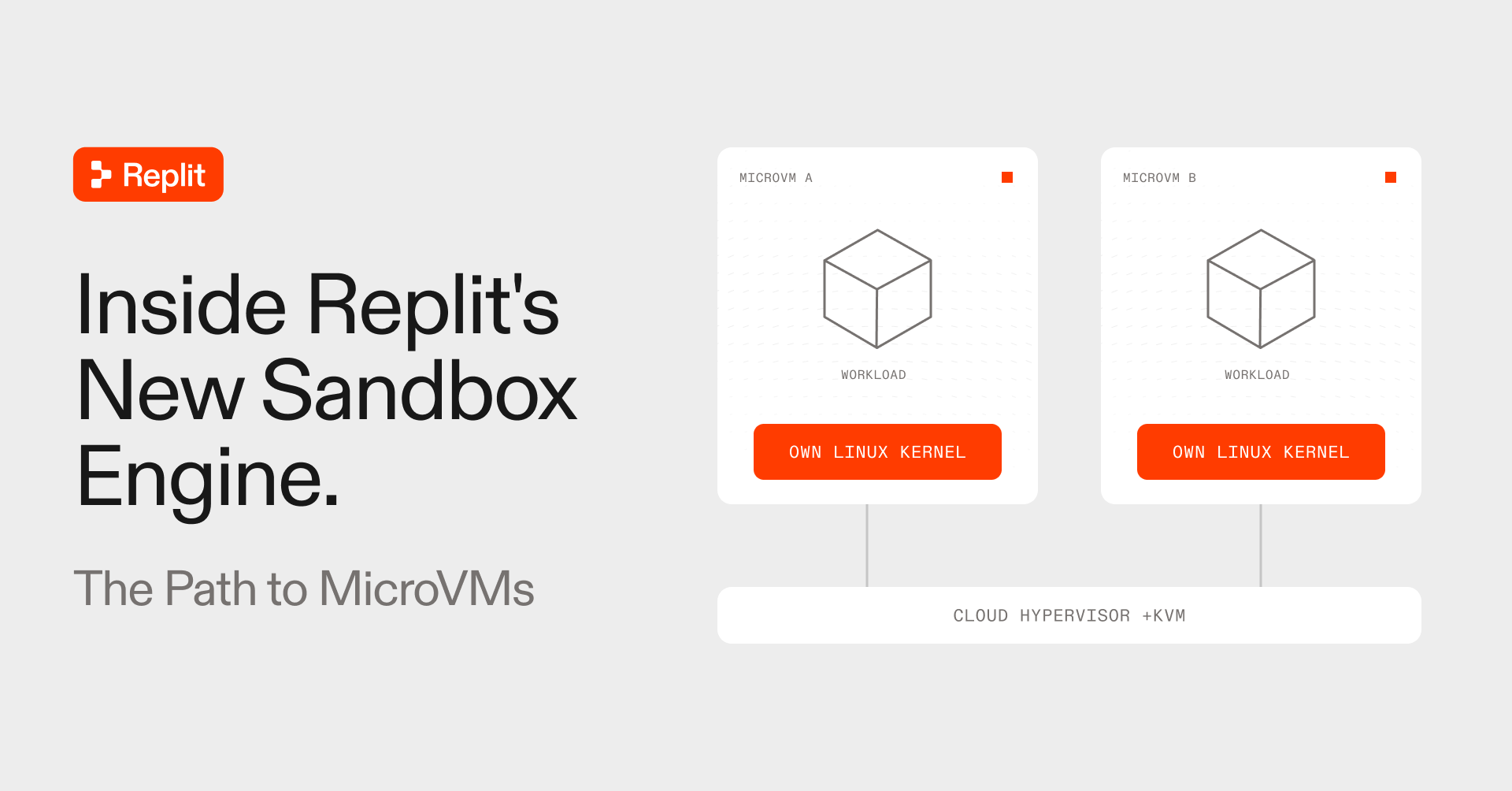
How Replit rebuilt its sandbox engine with microVMs for stronger isolation, bottomless storage, and fast startup across hundreds of millions of projects.
Luis Héctor Chávez / Jason Dellaluce / Adnan Abdulhussein·11/04/26
Agent sandboxes are all the rage. A new sandbox startup is announced every couple of weeks. At Replit, we’ve been running sandboxes for nearly a decade. For years, we’ve run our custom sandbox infrastructure to make it easy for anyone to code online, and now Agents use these sandboxes to build applications without requiring any coding at all.
In the past few months, we finished rolling out a complete rewrite of our sandbox engine to improve security, capabilities, and portability across clouds. Our Bring Your Own Cloud offering brings Replit into customers’ AWS, Google Cloud, or Azure environments. As with most infrastructure work, we had to pull this off without anyone even noticing. We migrated hundreds of millions of projects smoothly, without data loss. In this post, we’ll dive into how we changed the isolation boundary, kept sandboxes fast, and made the new engine work at scale.
In this post, we’ll dive into how we changed the isolation boundary and kept our sandboxes fast. In Part 2, we cover how we orchestrate tens of thousands of microVMs at once on Kubernetes.
Security, alignment, and containment are among the hottest topics in the AI industry. OpenAI’s Hugging Face incident and Anthropic’s evaluation incidents showed the world that autonomous agents can reach and harm real systems beyond their intended scope. Although these evaluations might have had reduced model safeguards, the clear takeaway is that traditional security boundaries are no longer sufficient in the age of AI. NIST’s agent standards initiative and congressional scrutiny put isolation, identity, and monitoring firmly on the industry’s agenda.
Sandboxing was not a new category for Replit. It was infrastructure our customers had depended on since the early days, and a foundation of our defense-in-depth approach. Early on, we realized that as AI agents become increasingly autonomous and widely adopted, the environment in which they operate needs to evolve too. The industry is now converging on the same requirements. DeepSeek’s DSec reinforces the case for elastic sandboxed compute infrastructure, and extra validation comes from open-source initiatives such as Kubernetes Agent Sandbox or Google’s AX and Agent Substrate. Early this year, selected agent-infrastructure startup rounds announced since 2025 totaled $59.3 million in funding across Daytona, E2B, Runloop, and Blaxel.
In November 2025, we set out to rebuild our sandbox infrastructure for more autonomous agents, persistent workspaces, and much higher concurrency. By February, we were already using it internally. We spent the following months hardening it and rolling it out.
Our sandbox engine started out simple: stateless code execution in Docker, spread across Google Compute Engine VMs. Over the years, we added persistent workspaces, public endpoints, cached Nix packages, regional clusters, and bottomless storage with instant disk forks. As we set out to chart the path towards microVMs, we realized it would be much easier to start from scratch than to port the existing runtime from Docker to microVMs. This also allowed us to prototype and develop rapidly without risking the existing system.
A microVM is a lightweight virtual machine with its own Linux kernel and a minimal set of virtual devices. We use KVM to separate each sandbox from the host and from other customers’ workloads.
Containers still separate processes inside each sandbox. Hardware-assisted virtualization now separates the sandboxes themselves.
First, we needed to pick a virtual machine monitor (VMM) to run each microVM. We chose Cloud Hypervisor, which shares reusable rust-vmm components with Firecracker and includes features such as virtiofs, transparent huge pages, device hotplug, and live migration. Nested virtualization also lets us run development environments that launch VMs of their own. Hotplug and memory snapshots were particularly useful for our design, as they allowed attaching customers’ disks on demand to running warm-pooled VMs. We also patched Cloud Hypervisor to improve snapshot portability across our supported bare-metal and virtualized environments.
A minimal init process inside each microVM starts, stops, and monitors its containers. The host communicates with it over gRPC using vsock, a host-to-guest channel that does not require an IP network.
With all the primitives in place, we needed a single supervisor to set up the sandbox: start the microVM, configure its network, launch the containers, and run the servers clients use to interact with it through our river protocol.
These are general-purpose Linux VMs, not environments tied to a single app-building workflow. We use the same foundation for our self-driving company: agents investigate incidents, review code, analyze business data, and triage support tickets. In late January, we combined microVMs and remote filesystems with access policies, token proxies, audit logging, and our ZeroTrust network so teams could run agents in parallel against the systems they actually use. People set the goals. Isolated environments give the agents somewhere to do the work.
Over the past year, there have been a large number of Linux kernel CVEs that can lead to Local Privilege Escalation (LPE): Copy Fail, Dirty Frag (xfrm-ESP), Dirty Frag (RxRPC), Fragnesia, DirtyClone, epoll race-condition PE bug, Bad Epoll, GhostLock, FUSE filesystem driver flaw. Many of these bugs have been around for years, but developments in AI have increased the rate at which these are being discovered.
Our previous runtime used Linux containers, which share the host kernel. A reachable vulnerability in that kernel can let an attacker escape a container and reach other workloads, credentials, or network endpoints on the host. Not every kernel CVE is exploitable in every configuration, but sharing the kernel makes a successful escape much more consequential.
With microVMs, compromising a sandbox’s guest kernel does not by itself compromise the host kernel. An attacker still has to cross the virtualization boundary.
Giving each sandbox its own kernel also lets us support tools such as Docker, which require privileges we could not safely expose in the shared-kernel runtime.
In our new design, a sandbox consists of a microVM with minimal runc containers running inside. Alongside the development environment, supporting services handle PostgreSQL, git backups, and secure request proxying. We considered a microVM for each component, but decided the extra overhead was not worth it and did not meaningfully change the tenant isolation model. Containers still provide separate namespaces, resource limits, and role-specific permissions inside the microVM guest.
The virtualization boundary does not make every process inside it equally trusted. We configure namespaces, seccomp, device access, and capabilities by role, so a user process does not inherit a monitoring agent’s permissions. Docker gets the additional privileges it needs inside the guest, and never reaches the physical host.
The VMM itself runs under an unprivileged identity with no Linux capabilities.
Our guest kernel starts from tinyconfig, not a standard distribution configuration. We leave out hardware subsystems a microVM does not need, including Bluetooth, wireless, USB, and display drivers. Your coding agent definitely doesn’t need a Nintendo Switch controller. Required drivers are built in, and guest initialization disables module loading. Given the increasing rate of kernel CVE disclosures this year, our minimal kernel build gives us peace of mind by entirely avoiding most of the affected code areas.
Daily automation keeps our kernel builds moving forward, with autonomous agents built on Replit handling the update workflow as part of our self-driving company.
We audited 6,211 Linux-CNA CVEs published from June 1 through November 4, 2026, using records from CVEProject and kernel.org. We avoided 5,969 of them (96.1%) by promptly incorporating upstream fixes or by excluding the affected code. 4,375 fixes (70.4%) landed even before disclosure, and 676 (10.9%) additional CVEs were excluded by configuration. At least 15 of these are explicitly described by the Linux CNA or Red Hat as enabling or potentially enabling LPE.
A recent example is CVE-2026-98432, the Linux TCP flaw Anthropic demonstrated could give a remote attacker root access. We incorporated the fixed kernel on October 12, before the CVE was published and more than two weeks before Anthropic described its exploit.
eBPF programs observe process execution, file access, and network activity inside each sandbox. Linux Security Modules (LSM) provide hooks for enforcing restrictions at the kernel boundary. Together, these mechanisms give us detailed runtime visibility and a way to detect and block specific forbidden operations.
The system determining abuse and compromise is self-driving as well. Runtime telemetry feeds autonomous agents that continuously evolve our known detections and forbidden patterns. We will write more about how we automate threat research at Replit, but think of an always-on security camera that blocks harmful behavior immediately when recognized as such, and improves every time it discovers something new.
There is one security monitor for each sandbox, which operates on both the host and guest sides of the microVM. This component is supervised and is able to self-heal and restart after a crash or tampering, or when rolling out a new version. To guarantee always-on security, we optimized our continuous delivery pipeline so that the security component can be updated and hot-reloaded across all sandboxes running in production less than 15 minutes after changes are merged. Since we operate at the kernel level with eBPF and LSM, this also empowers us to move quickly with ad hoc remediations in response to zero-day kernel exploits even before a fix is available in mainline.
When eMudhra’s intermediate CA keys were compromised, certificate trust became an urgent security problem across the industry. Our sandbox harness automatically injected an updated CA bundle into all running sandboxes, letting us respond through an existing control path rather than asking customers to update each environment.
We’ll share more about our automated security research and response in a follow-up post.
Every sandbox can use the same private IP addresses because it has its own network namespace and routing table. Linux virtual routing and forwarding (VRF) keeps those overlapping networks separate, and connection tracking preserves the routing identity as traffic leaves and returns. Baseline firewall rules restrict access to cloud metadata and infrastructure address ranges, with explicit allowances where private connectivity is required.
For sandboxes with an egress policy, enforcement runs outside the guest. A host-side proxy checks TLS handshake hostnames without decrypting application payloads, filters DNS, and rejects traffic outside the permitted path. The guest cannot disable those host-side rules. Private endpoint tunnels similarly give the workload a local socket while keeping their credentials on the host.
Virtual-NIC rate limiters also enforce configured inbound and outbound bandwidth limits outside the guest, allowing bounded bursts while limiting sustained traffic. Changing the guest’s network configuration does not remove the VMM’s limiter. Bandwidth control contains resource abuse. It is separate from deciding which destinations are allowed.
Our managed connectors use credential brokers that forward requests to upstream services, such as GitHub and Google Docs. The broker attaches the upstream credential after performing authorization, so the workload can use the service without receiving its account API key. It removes caller-supplied authentication headers and strips sensitive response headers and trailers.
Package managers such as npm and pip also route their requests through a registry firewall. Any attempt to install known malicious dependencies and packages is blocked right away, preventing our users and their agents from getting harmful content into their sandboxes in the first place. Our coding agent is aware of this and autonomously takes care of replacing or removing blocked dependencies for our users to improve supply-chain security.
The filesystem of each sandbox lives on our remote block-storage service, which fetches data on demand. Starting a large workspace does not mean downloading its entire filesystem first.
To integrate with our custom block device service, we wrote a vhost-user virtio-blk backend. This process runs alongside Cloud Hypervisor and handles block I/O for the guest, making our remote disks appear as regular virtual block devices. It also moves away from managing hundreds of network block devices in one host kernel, which caused us lots of pain in the past due to unexpected deadlocks and node failures. This was also one of our first completely AI-written components back in the Claude Sonnet 4 era, going through five to seven iterations before consolidating to the current sync/async hybrid model running in production, which was what maximized throughput while keeping latency low.
Copy-on-write storage also makes forks cheap. A new disk can reference existing blocks and diverge as it writes. We also implemented graceful storage reconnection, so that rollouts can drain outstanding I/O, persist the disk, and reconnect without restarting the guest.
To spin up a sandbox, we need to boot a Linux kernel, pull images, start containers, and bring up guest agents. Our minimal guest kernel boots quickly, and warm pools let us do most of the remaining work ahead of time. Acquiring a sandbox takes roughly 500 ms, including attaching and mounting the customer’s volumes and configuring supporting services in parallel. That’s the handoff with disks mounted, as booting an empty VM takes much less.
Doing this for tens of thousands of sandboxes at once took a lot more than warm pools. In Part 2, we’ll cover how we orchestrate it all on Kubernetes.
The system has been running healthy in production for a few months. We migrated hundreds of millions of projects without any disruption, and came out with faster boot time, stronger isolation, and evolved security primitives. We’ll keep investing in security and share more about the choices behind our Kubernetes orchestration and automated security research. In the meantime, go build something on Replit.
Authored by Connor Brewster, Jason Dellaluce, Adnan Abdulhussein, Luis Hector Chavez, and the rest of the Compute Platform team at Replit. If you want to work with us on cutting-edge infrastructure, our team is hiring.
Model routers are everywhere right now, but they have a fundamental limitation. No matter if based on advanced heuristics or a small model that reads each turn and picks which LLM to use, a router will always be less capable than the model it’s choosing for. Replit Agent lets the model decide instead.
A benchmark score can’t tell the whole story. How we combine app testing, A/B experiments, and failure analysis to make Replit Agent better.
How Replit turns any web page into a deterministic video by virtualizing time itself, patching key browser audio APIs, and waging war against headless Chrome's quirks.
Motorola could be bringing back a familiar Android phone after five years

The Motorola Signature 27's screen is five times brighter than the Galaxy S26 Ultra's
Tiny but mighty: these are the 6 BEST small phones to buy in 2026
Xiaomi's going global—the 18 Pro series is preparing for a major November launch
Get the latest news from Android Central, your trusted companion in the world of Android
Motorola could be bringing back the Moto One series, with a new device spotted supporting Qi2 wireless charging and Snapdragon hardware.
When you purchase through links on our site, we may earn an affiliate commission. Here’s how it works.
Motorola could be bringing back its Moto One smartphone series after nearly five years.
While all eyes are currently on the Motorola Signature 27, which is shaping up to be one of the company's most ambitious flagship smartphones in years, Motorola is also working on other devices behind the scenes. And now, according to a new leak, the company could be preparing to revive its Moto One lineup.
In case you don't remember, Moto One was a series of smartphones Motorola introduced back in 2018 that ran Google's Android One software. Android One was Google's attempt to bring a cleaner, near-stock Android experience to budget and mid-range smartphones, alongside more consistent software updates. However, the lineup eventually disappeared after a few generations.
Now, it looks like Motorola could be bringing the Moto One name back. As spotted by Notebookcheck, a new Moto One smartphone has appeared in the Wireless Power Consortium (WPC) database. The listing also includes an image of the device, which looks eerily similar to the Motorola Edge from 2025.
As seen in the image, the phone appears to feature a curved display along the left and right edges, alongside Motorola's familiar camera housing in the top-left corner of the back.
Interestingly, the WPC listing also reveals that the new Moto One will support Qi2 wireless charging, although there's a catch. The phone reportedly supports the Extended Power Profile (EPP) rather than the Magnetic Power Profile (MPP).
This means that, similar to several Samsung Galaxy smartphones, the Moto One won't have built-in magnets for attaching Qi2 accessories. Instead, it'll support Qi2 wireless charging without native magnetic attachment.
Get the latest news from Android Central, your trusted companion in the world of Android
Previous leaks have revealed that the Moto One could be powered by Qualcomm's Snapdragon 8 Gen 5 chipset, a previous-generation high-end processor, alongside up to 12GB of RAM.
For now, Motorola hasn't confirmed whether the Moto One name is actually making a comeback or when the device might launch. But considering the phone has already appeared in the WPC certification database, there's a chance we could hear more about it fairly soon.
Sanuj is a tech writer who loves exploring smartphones, tablets, and wearables. He began his journey with a Nokia Lumia and later dived deep into Android and iPhone. He's been writing about tech since 2018, with bylines at Pocketnow, Android Police, Pocket-Lint, and MakeUseOf. When he's not testing gadgets, he's either sipping chai, watching football, or playing cricket.
You must confirm your public display name before commenting
Please logout and then login again, you will then be prompted to enter your display name.
Android Central is part of Future US Inc, an international media group and leading digital publisher. Visit our corporate site.
© Future US, Inc. Full 7th Floor, 130 West 42nd Street, New York, NY 10036.
Next year’s iPhone Pro redesign gets new update from leaker

Apple reportedly has a big redesign coming to next year’s iPhone Pro models, timed for the iPhone’s 20th anniversary. The latest leak about the design reveals that the dream of a cutout-free display may remain a dream for now.
Yesterday Weibo leaker Digital Chat Station outlined three new iPhone models coming in early 2027: iPhone 18e, iPhone 18, and iPhone Air 2.
His main focus was on the iPhone 18, which is expected to get two Pro-inspired upgrades.
In a follow-up post though, replying to another Weibo user’s question, the leaker addressed a key design question regarding next fall’s iPhone Pro models.
Apple is rumored to be working on a big redesign timed for the iPhone’s 20th anniversary. It will reportedly feature a quad-curved display that wraps around the edges of the device for a visually bezel-free look.
Early rumors indicated the device could also drop the Dynamic Island for a truly all-glass display, with no cutouts.
The Duo2 will also have faceID and will steal the show. Who wants curved glass on all sides of the phone? We all remember how that went for Galaxy Edge phones.
But according to Digital Chat Station, that’s not happening after all.
After being asked if the ‘iPhone 20 Pro Max’ will have a Dynamic Island still, or feature a hole-free display, the leaker confirmed the display will still have holes. Thus, it will retain the Dynamic Island cutout.
It’s unclear if the Dynamic Island will be the same size as that of iPhone 18 Pro, but since the device is expected to have Face ID, that’s highly likely.
Does the inclusion of a display cutout change your interest in the iPhone 20 Pro at all? Let us know in the comments.
FTC: We use income earning auto affiliate links. More.
Check out 9to5Mac on YouTube for more Apple news:
Introduced in 2007 by Steve Jobs, iPhone is Appl…
Ryan got his start in journalism as an Editor at MacStories, where he worked for four years covering Apple news, writing app reviews, and more. For two years he co-hosted the Adapt podcast on Relay FM, which focused entirely on the iPad. As a result, it should come as no surprise that his favorite Apple device is the iPad Pro.
The midterms were a thumping rebuke of the US-Israel relationship

Even Trump seems to recognize that the relationship has become a political liability, and may never be the same
Q&A: Ask your questions about Democrats’ win in the midterms
On the eve of a midterm election that ended in an unequivocal rejection of his brand of politics, even Donald Trump seemed to recognize that the US-Israel relationship had become a political liability.
Trump’s 11th-hour suggestion, on election morning, that he would cut military aid to Israel at the end of the year because, as he put it, “they don’t need it”, was condemned across the board – with pro-Palestinian advocates dismissing it as “desperate” and pro-Israel ones as “unserious”.
Trump’s suggestion that he would replace nearly $4bn in annual military aid with arms sales signaled little would change in practice – the funding would continue and it would be harder to track. But it was still a notable recognition by the president of just how much support for Israel has tanked against the backdrop of the latest war in Gaza, which has killed more than 70,000 Palestinians, been widely described as a genocide, and reshaped US politics in ways unthinkable just three years ago.
Indeed, come January, the US House will include an army doctor who went on a medical mission in Gaza, a lawyer who was fired by her firm over a blogpost criticizing Israel’s war, a Jewish lawmaker who was recently detained by Israeli forces while helping Palestinians harvest olives in the occupied West Bank, and a community organizer who participated in a pro-Palestine student encampment and scored one of the primary season’s most stunning upsets under the banner “babies, not bombs”.
Pro-Palestinian candidates – including Palestinian-American ones – have won downballot races. And in Michigan, Abdul El-Sayed became the first Muslim to be elected to the US Senate, following a campaign that saw more than $40m spent by Aipac in an effort to defeat him, last-minute drama, and unprecedented levels of Islamophobic rhetoric and bigotry.
“The old bipartisan consensus on Israel is over,” Beth Miller, political director of Jewish Voice for Peace Action, said. Without that consensus in place, the next Congress could push a number of measures, from an arms embargo on Israel to sanctions against violent settlers and officials – though Trump would retain veto power to block them.
The vote was also a rejection of Trump’s war in Iran – something even JD Vance said on Wednesday was “obvious to almost everyone”. Foreign policy issues rarely determine US elections – that is, until those issues have a direct effect on Americans’ lives at home.
“Americans were reminded of the failures of the Iran war with every visit to the gas station and grocery store,” said Yousef Munayyer, head of the Palestine/Israel Program at the Arab Center Washington DC. “Israel is a central piece of that story.”
Across the country, and up and down the ballot, unabashedly pro-Palestinian candidates defeated pro-Israel ones despite groups like Aipac pouring tens of millions of dollars into a failed attempt to reverse Israel’s collapsing standing among US voters. Last month, Aipac acknowledged its open support was hurting pro-Israel candidates more than it helped them, and announced it would stop making direct endorsements and contributions – a remarkable admission even if one with little practical consequence.
The victories of El-Sayed and several other candidates whom the right sought to cast as antisemitic over their support for Palestinians also marked a significant rejection of the narrative that pro-Israel voices and the Trump administration have relentlessly advanced over the last three years – that criticism of Israel is, by default, antisemitic.
“They try to call you hateful if you believe that Palestinian kids should get to grow up in the land of their forefathers without being murdered by our tax dollars,” El-Sayed, who has continued to speak plainly about his support for Palestinians despite coming under enormous pressure over it, said during his acceptance speech. “If you believe in equal rights to peace, dignity, and self determination, that’s not hate, it’s love.”
In Michigan, El-Sayed won a majority of Jewish voters, according to exit polls. Despite warnings that Jews would leave the Democratic party en masse over its shifts on Israel, J Street said its polling found that 72% of Jews voted for Democrats on Tuesday, even though the Republican party increased its share of the Jewish vote since 2024.
This does not mean that the Democratic party is unified on Israel and Palestine and or in opposition to foreign wars.
For decades, the party has “excluded or marginalized anyone whose progressive values extend to support for Palestine”, Lara Friedman, the president of the Foundation for Middle East Peace, said. “American voters, organizers, and a cohort of enormously talented candidates came together and kicked the door down.”
Matt Duss, executive vice-president of the Center for International Policy and a former foreign policy aide to Senator Bernie Sanders, said that the Democrats now must seize the opportunity to become the party opposed to war.
“Trump ran and won as an anti-war candidate in 2024, because unfortunately Democrats left that lane wide open for him,” he said. “The question is: will Democrats finally get it? Will they finally realize that Americans are tired of war and want a new foreign policy?”
Google is redesigning Messages again, and heavy texters might hate it

Google brings back app lock in Android 17 QPR3 Beta 3
Google's Wear OS 'status bar' experiment brings a little more Android flair to watches
I spent a week testing the Google Pixel 11 Pro and Pro XL, and they're harder to recommend despite some fun new Gemini features
Get the latest news from Android Central, your trusted companion in the world of Android
Google is overhauling pinned chats, and I'm already missing the old layout.
When you purchase through links on our site, we may earn an affiliate commission. Here’s how it works.
I’ve been using Google Messages long enough to appreciate a good interface refresh, but I’m not sold on every redesign making an app better. Google’s latest attempt to give pinned conversations more room on the home screen appears cleaner at first glance, but it also takes away some of the convenience that made the old layout practical. And judging by the early feedback from beta testers, I'm not the only one with mixed feelings.
As spotted by a few Reddit users, Google Messages is giving pinned chats a more prominent place on its home screen, and the new interface is beginning to roll out to beta testers.
The redesign features a dedicated space for pinned conversations above the regular message list, instead of the smaller pinned entries with large contact pictures. It is a more visual way to find favorite conversations, and there is no denying that it changes the look of the app. The layout is also a lot like Apple's iMessage, and that might appeal to users who like a cleaner, more spacious look.
I’m concerned about what gets sacrificed in the process. With larger contact photos, recent conversations will appear lower on the screen, and you’ll have to scroll more to get to messages that aren’t pinned.
Some Reddit users welcomed the change and said pinned conversations are easier to spot now and the interface looks better overall. Others are not convinced, arguing that the iOS-inspired layout makes the top of the app feel cluttered.
Another user also pointed out an awkward empty pin placeholder that appears when there are only a couple of pinned conversations. The original poster says that eventually adding more pinned chats makes that empty space disappear. The user also suggested that the limit might be six convos.
Google is also experimenting with a new search experience. The app moves search out of its normal location and instead puts a floating action button next to the “Start chat” button. Depending on your scroll position, it alternates between a circular magnifying glass and a pill-shaped search button. Where the Gemini shortcut will ultimately end up is still unclear.
Get the latest news from Android Central, your trusted companion in the world of Android
The rollout is proving to be as patchy as the early feedback. Some users running the beta version of Google Messages 20261030_00_RC00 have received the redesign, while others haven’t. The original poster said that he got the new interface on a Pixel 9 Pro without any additional Play Store updates, suggesting that Google is controlling availability through server-side changes.
There are also smaller complaints. Some testers have complained about choppy animations, and some have seen different interface changes on their devices.
Google has not set a stable release date. I would love to see a visual refresh, but I'd prefer to see an option to switch between compact and expanded pinned chats. A messaging app should be about making conversations easier to reach, not burying them under big shortcuts. There is still time for Google to get that balance right.
Jay Bonggolto always keeps a nose for news. He has been writing about consumer tech for as long as he can remember, and he has used a variety of Android phones since falling in love with Jelly Bean. Send him a direct message via X or LinkedIn.
You must confirm your public display name before commenting
Please logout and then login again, you will then be prompted to enter your display name.
Android Central is part of Future US Inc, an international media group and leading digital publisher. Visit our corporate site.
© Future US, Inc. Full 7th Floor, 130 West 42nd Street, New York, NY 10036.
NASA's Swift space telescope crashes back to Earth after failed rescue attempt

Join The Club for quick access. Enter your email below and we'll send confirmation, and sign you up to our newsletter.
Keep exploring and earning more as a member.
Latest space missions, discoveries and exploration updates.
Stargazing tips, cosmic events and expert insights on the universe
Start exploring exclusive deals, expert advice and more
Space news, cosmic updates and expert insights straight to your inbox.
Breaking space news, the latest updates on rocket launches, skywatching events and more!
Unlock instant access to exclusive member features.
Breaking space news, the latest updates on rocket launches, skywatching events and more!
Sign up to our monthly entertainment newsletter to keep up with all our coverage of the latest sci-fi and space movies, tv shows, games and books.
Discover this week's must-see night sky events, moon phases, and stunning astrophotos. Sign up for our skywatching newsletter and explore the universe with us!
Space.com's Sci-Fi Reader's Club. Read a sci-fi short story every month and join a virtual community of fellow science fiction fans!
Get full access to premium articles, exclusive features and a growing list of member rewards.
Swift had a pretty good 22-year run, but NASA wanted the scope to keep going even longer.
When you purchase through links on our site, we may earn an affiliate commission. Here’s how it works.
NASA's Swift space telescope has reached the end of its long and winding road.
Swift fell uncontrolled to Earth today (Nov. 4), 22 years after it launched but just three months after a private spacecraft was supposed to boost it to a higher, life-extending orbit.
The 3,200-pound (1,450 kilograms) observatory reentered Earth's atmosphere at 7:39 a.m. EST (1239 GMT) today over northern Sumatra, according to satellite tracker Jonathan McDowell, who cited U.S. Space Force data. The fall likely didn't make much of an impact; NASA officials predicted beforehand that most of the minibus-sized Swift would burn up as it fell, and they put the odds of any of the surviving pieces hurting anyone on Earth at just 1 in 2,100.
Several videos circulating on social media appear to show the spacecraft's fiery reentry, though it has yet to be independently verified.
Likely reentry of @NASA's #Swift observatory over Sumatra & Malaysia at 12:39 UTC today.November 4, 2026
Likely reentry of @NASA's #Swift observatory over Sumatra & Malaysia at 12:39 UTC today.November 4, 2026
Swift — officially known as the Swift Gamma-Ray Burst Explorer — launched to Earth orbit in November 2004 on a two-year mission to study gamma-ray bursts (GRBs), the most powerful explosions in the universe. "Swift" was not an acronym but rather referred to the spacecraft's observational agility.
"Swift needed to detect and locate gamma-ray bursts, communicate their position to other observatories, and then swing its telescopes around to image the burst locations before their afterglows faded out," S. Bradley Cenko, Swift's principal investigator (PI) at NASA's Goddard Space Flight Center in Maryland, said in an Oct. 23 statement. "This typically took Swift about a minute to do."
Swift didn't just observe GRBs. It also studied a variety of other cosmic bodies and phenomena, from faraway supernova explosions and feeding black holes to asteroids and comets in our own solar system.
And it kept doing this long after its warranty expired — for about 20 years after, in fact. The space telescope didn't conduct its final science observation until this past Oct. 20. (Swift underwent a name change during this stretch: In 2018, it was rechristened the Neil Gehrels Swift Observatory after its first PI, who died the previous year.)
"Swift delivered an incredible, lasting return on investment for the nation, designed for a two-year primary mission but productive for more than 10 times as long," Shawn Domagal-Goldman, director of NASA's Astrophysics Division, said in the same Oct. 23 statement.
"In that time, Swift played a major role in advancing our understanding of the changing universe and was part of a revolution in astrophysics that showed how critical rapid-response observations are to the entire community," he added.
Swift was incredibly productive, observing more than 2,000 GRBs and 1,400 supernovas over the course of its long scientific life. But it could have gathered even more data, had a dramatic rescue mission worked out.
In September 2025, NASA awarded the Arizona company Katalyst Space a $30 million contract to design, launch and operate a robotic spacecraft that would meet up with Swift and boost it to a higher orbit, thus extending its operational life.
Swift was falling back to Earth: It had no onboard thrusters to counteract the effect of atmospheric drag, which had been pulling the observatory down ever since it launched. The process was accelerating as Swift got lower, so Katalyst had to work fast. And the company did: It launched its refrigerator-sized, three-armed LINK servicing spacecraft on July 3, targeting an August capture of Swift.
That didn't happen, however. LINK suffered problems with its propulsion system and orientation-maintaining reaction wheels, which nixed the planned meetup. Still, it was a worthwhile effort, according to NASA.
"From the beginning, this was a high-risk, high-reward mission," Domagal-Goldman said in a statement on Sept. 25, the day that LINK itself crashed back to Earth.
"And while we'll be sad to see Swift's mission come to a close, we knew this boost effort would be worthwhile either way — advancing U.S. spacecraft servicing technology, challenging us to meet unprecedented mission timelines, and testing how we operate satellites to extend their time in low Earth orbit," he added.
Swift's crash today wasn't exactly unusual, by the way. At least three large objects — dead satellites or spent rocket bodies — fall back to Earth every day on average, a 2025 report found. And that number is bound to rise in the coming years, as humanity builds out more and more megaconstellations in Earth orbit.
Editor's note: This article was updated on Nov. 5 at 4:45 a.m. EST (0944 GMT) to include social media videos that may show the spacecraft's fiery demise.
Michael Wall is the Spaceflight and Tech Editor for Space.com and joined the team in 2010. He primarily covers human and robotic spaceflight, military space, and exoplanets, but has been known to dabble in the space art beat. His book about the search for alien life, "Out There," was published on Nov. 13, 2018. Before becoming a science writer, Michael worked as a herpetologist and wildlife biologist. He has a Ph.D. in evolutionary biology from the University of Sydney, Australia, a bachelor's degree from the University of Arizona, and a graduate certificate in science writing from the University of California, Santa Cruz. To find out what his latest project is, you can follow Michael on Twitter.
You must confirm your public display name before commenting
Please logout and then login again, you will then be prompted to enter your display name.
Space is part of Future US Inc, an international media group and leading digital publisher. Visit our corporate site.
© Future US, Inc. Full 7th Floor, 130 West 42nd Street, New York, NY 10036.
Mars isn't dead — recent volcanic activity reveals it's just sleeping

Join The Club for quick access. Enter your email below and we'll send confirmation, and sign you up to our newsletter.
Keep exploring and earning more as a member.
Latest space missions, discoveries and exploration updates.
Stargazing tips, cosmic events and expert insights on the universe
Start exploring exclusive deals, expert advice and more
Space news, cosmic updates and expert insights straight to your inbox.
Breaking space news, the latest updates on rocket launches, skywatching events and more!
Unlock instant access to exclusive member features.
Breaking space news, the latest updates on rocket launches, skywatching events and more!
Sign up to our monthly entertainment newsletter to keep up with all our coverage of the latest sci-fi and space movies, tv shows, games and books.
Discover this week's must-see night sky events, moon phases, and stunning astrophotos. Sign up for our skywatching newsletter and explore the universe with us!
Space.com's Sci-Fi Reader's Club. Read a sci-fi short story every month and join a virtual community of fellow science fiction fans!
Get full access to premium articles, exclusive features and a growing list of member rewards.
"It was like looking for a needle in a haystack."
When you purchase through links on our site, we may earn an affiliate commission. Here’s how it works.
Scientists have long suspected that Mars is geologically "dead," but new spacecraft observations suggest the Red Planet's volcanoes are merely sleeping.
That means that Olympus Mons, the extinct Martian volcano that at around 16 miles (26 kilometers) above the surrounding Martian plains is the largest mountain in the solar system, may in fact be a slumbering giant.
The observations were made with the European Space Agency (ESA) mission ExoMars Trace Gas Orbiter (TGO) as it studied volcanic fissures along the Alba Mons region of the Red Planet. Alba Mons is in the Tharsis region of Mars, the same area that is home to Olympus Mons. While the latter is the tallest volcano in the solar system, at 374 miles (600 km) across, about the size of Arizona, the Alba Mons region is the largest volcano when considering surface area.
TGO detected gas containing hydrogen chloride making its way to the surface of Mars through the Alba Mons fissures. The same gas is commonly found escaping from magmatic vents on Earth, with the compound coming from hot magma beneath the surface. Detecting it on Mars is a sign of dormant Martian volcanism.
Orbital imagery had previously shown some volcanoes appear to have been active within the last few million years, and seismometers have detected the rumbling of "marsquakes," both implying the Red Planet is volcanically active. However, eruptions and lava flows have been conspicuous by their absence.
"Our findings suggest that Mars has retained enough internal heat to support volcanic activity until recently, and possibly still does," team co-leader and scientist at the Space Research Centre of the Polish Academy of Sciences, Daniel Mège, said in a statement sent to Space.com via email. "The TGO was able to find the smoking gun. It was like looking for a needle in a haystack."
Mège and colleagues were first alerted to something strange happening on Mars when they noticed spikes of hydrogen chloride during Martian summer and on the northern hemisphere of the Red Planet. That is both a time and place at which hydrogen chloride shouldn't be detected.
The gas usually peaks in the northern hemisphere during winter on Mars, disappearing in the summer. This variation is connected to the water and dust cycle on Mars. An exception to the rule occurs over volcanic fissures on the flanks of the Alba Mons volcano, in early summer.
The TGO followed up on this by detecting fresh and narrow fissures, in some cases hundreds of feet long, in the Alba Mons region. A clear sign of volcanism.
"It's truly amazing that it spotted a handful of molecules from a perhaps intermittent source, whilst moving continuously along its orbit to monitor the whole Martian atmosphere," Mège said.
The team thinks that these gases have been rising from the interior of Mars during the Martian winter, becoming blocked by ice. When this ice sublimates, changes directly from solid to gas, during summer, the gas is released, prompting spikes in hydrogen chloride seen by the TGO.
"Looking at the spatial distribution of the seeping, it became instantly obvious to me that there was something volcanic behind it, but it had to be demonstrated," said Mège. "A huge part of the work consisted of examining all the possible chemical processes going on in the Martian atmosphere. "We needed to be rigorous, critical and creative to explain the presence of hydrogen chloride. The data were complex, but also excellent brain food."
Mège and colleagues theorize that the gas is connected to "volcanic plumbing" in the form of a dormant magma chamber under the surface of Mars.
Regions like this could become hotspots (pun not intended) in the search for life on Mars. That is because magmatic gases like hydrogen chloride would have been more abundant in the past, creating a thicker Martian atmosphere and warmer climate.
Not only would this have led to liquid water covering much of the Martian surface, but when lava bubbled through the Martian crust and met groundwater, warm habitable niches ideal for microbial life could have been forged.
"Looking for Martian life in the seeping fissures of the Alba Mons region would make a lot of sense. If hydrothermal systems are active, they could contain the ingredients and energy needed for microorganisms to develop, and shield microorganisms from the hostile and changing environment above the surface," Mège concluded.
The team's research was published in the journal Science Advances on Wednesday (Nov. 4).
Robert Lea is a science journalist in the U.K. whose articles have been published in Physics World, New Scientist, Astronomy Magazine, All About Space, Newsweek and ZME Science. He also writes about science communication for Elsevier and the European Journal of Physics. Rob holds a bachelor of science degree in physics and astronomy from the U.K.’s Open University. Follow him on Twitter @sciencef1rst.
You must confirm your public display name before commenting
Please logout and then login again, you will then be prompted to enter your display name.
Space is part of Future US Inc, an international media group and leading digital publisher. Visit our corporate site.
© Future US, Inc. Full 7th Floor, 130 West 42nd Street, New York, NY 10036.
Microsoft confirms direct Wi-Fi for the Xbox Nano controller plus you can use your phone as a TV gamepad.

Join the club for quick access. Enter your email below and we'll send confirmation, and sign you up to our newsletter.
Keep exploring and earning more as a member.
AI updates, how-tos and comparisons in one place.
Get the biggest gaming news, reviews, and releases straight to your inbox.
Steam Deck gets an Xbox Series X|S dashboard UI with this community-made plugin
The shiny new Xbox PC app is going live today for Insiders — Here's how to get it early
XBOX's 'Nano' Controller launches today for $49.99 — An ultra-compact alternative
All the latest news, reviews, and guides for Windows and Xbox diehards.
Unlock instant access to exclusive member features.
Get full access to premium articles, exclusive features and a growing list of member rewards.
Xbox Cloud Gaming is getting a huge update in terms of accessibility, and you don't even need a controller
When you purchase through links on our site, we may earn an affiliate commission. Here’s how it works.
The Xbox Nano's worst-kept secret is finally out in the open, and Xbox Cloud Gaming is more accessible than ever.
We’ve been following the ultra-portable Xbox Nano Controller since its initial reveal, and while its pocket-friendly, SNES-inspired design has been the main talking point, we were pretty bemused by the lack of Wi-Fi capabilities. However, as the controller landed in reviewers hands, it turned out there was indeed Direct to Wifi connection included but Microsoft had kept it a secret for some unknown reason. Today, Xbox officially revealed the news officially. The much-anticipated direct Wi-Fi connection feature, officially dubbed "Cloud Connect", is rolling out in preview.
But the real surprise reveal lies in the rest of the announcement. Xbox have also announced a brand-new feature that lets you use your smartphone as a virtual controller for Xbox Cloud Gaming on supported Smart TVs. This will truly open Cloud Gaming up wide to loads of people who want to try it out. Here is everything you need to know about the new updates and how to test them out.
If you caught our preview of the Xbox Nano Controller, you already knew this was coming. Up until now, playing Xbox Cloud Gaming on a TV or web browser meant connecting your controller via Bluetooth. While functional, Bluetooth does introduce an extra layer of input latency before your command even begins its journey to the cloud servers.
Cloud Connect bypasses that entirely. By using a direct Wi-Fi connection from the Xbox Nano Controller straight to Microsoft’s cloud servers, input latency is significantly reduced, making gameplay feel noticeably more responsive. It is the exact same approach that Google Stadia's controller used, and bringing it to the Xbox ecosystem is a massive win for cloud players.
How to try it out: Currently, the Cloud Connect preview is restricted to players in the US, and it is limited to supported Smart TVs and web browser experiences.
To set it up, you will need to configure the Nano Controller to your home Wi-Fi network. You can do this using the Xbox beta app on Android, or the Xbox Accessories app on PC (note: PC setup requires you to be enrolled in the Xbox Insider program). Once connected to your Wi-Fi, simply launch a supported Xbox Cloud Gaming session and sign in with the same Xbox account used during your setup. The controller will handle the rest.
The Nano getting Wi-Fi Connect wasn't really the biggest news today. If you want to fire up a cloud game on your Smart TV but don't have a physical controller handy, Microsoft has rolled out a solution: your phone.
In a new global preview available on supported Smart TVs where Xbox Cloud Gaming is live, players can now use an iOS or Android smartphone as a virtual gamepad. The controls load entirely within your phone's web browser, meaning there is no bulky companion app required to get started. Even better, Xbox confirmed that some games will feature custom-tailored touch layouts specifically designed for how they play, rather than just slapping a generic digital gamepad on your screen.
How to try it out: To access the virtual phone controller, boot up the latest Xbox Cloud Gaming app on your supported Smart TV and navigate to Settings > Account. Toggle on Preview Features. From there, whenever you launch a game without a physical controller connected to the TV, you will be prompted with an option to link your phone for that session.
Both of these features are still in their testing phases, so expect the occasional hiccup and a limited roster of fully supported titles while Microsoft gathers telemetry and player feedback. You can check out the official support page for guidance.
Behold the sheer convenience of using your phone for a quick Vampire Survivors run on the living room TV!
Join us on Reddit at r/WindowsCentral to share your insights and discuss our latest news, reviews, and more.
Jen is a News Writer for Windows Central, focused on all things gaming and Microsoft. Anything slaying monsters with magical weapons will get a thumbs up such as Dark Souls, Dragon Age, Diablo, and Monster Hunter. When not playing games, she'll be watching a horror or trash reality TV show, she hasn't decided which of those categories the Kardashians fit into. You can follow Jen on Twitter @Jenbox360 for more Diablo fangirling and general moaning about British weather.
You must confirm your public display name before commenting
Please logout and then login again, you will then be prompted to enter your display name.
Windows Central is part of Future US Inc, an international media group and leading digital publisher. Visit our corporate site.
© Future US, Inc. Full 7th Floor, 130 West 42nd Street, New York, NY 10036.
Home Depot early Black Friday sale arrives, Fanttik USB-C pruning shears $80, WORX 9-in-1 leaf blower $91, more

We’re a few days into November and the deals are flying. Today’s 9to5Toys Green Deals is packed with notable finds, which are headlined by Home Depot’s early Black Friday sale. In that post we cover how you can score BOGO FREE tools, $1,250 off appliances, and more. Others markdowns include Fanttik’s USB-C rechargeable pruning shears at $80, this 9-in-1 WORX leaf blower for only $91, and even EcoFlow’s latest 320W RAPID Pro desktop charger at $140. Head below for a closer look at the details.
Oh, and don’t forget to scope out Electrek‘s best EV buying and leasing deals as well as the Electrek Tesla Shop for the best deals on Tesla accessories.
Home Depot is running “deals all month long,” and today we are checking in with the early Black Friday offers now live. It is already running a host of appliance Doorbusters, up to 50% off select saws, as much as $170 off DEWALT electric tools, and a FREE tool or battery offer with select purchases, plus much more.
Home Depot is running an extensive Black Friday month sale with loads of deals already live, new tool deals every Thursday, a host of new Doorbusters on November 27, and more, all before the Holiday Tree Lot opens up on Black Friday at brick and mortar stores. You’ll find a rundown of the schedule below, but, again, there are already loads of notable deals live now.
As you can see above, the early Black Friday Home Depot sale is delivering loads of freebie add-ons. There are plenty of battery bundles from $99 you can score a FREE tool – browse through all of the options right here:
Over at Amazon you can find the WORX 9-in-1 Cordless Leaf Blower for $90.99 shipped. This unit tends to fetch $120 these days, and today’s offer shaves $29 off that price. This comes within $1 of Amazon’s 2026 low, making this a solid time to strike, especially since the leaves are flying right now. As the 9-in-1 name implies, this unit aims to do far more than handle leaves, and we’ll dive into that down below.
I actually owned and used this leaf blower for a few years and really liked it. No, it’s not as powerful as some of the bigger units out there, but the price is also much easier on your wallet too. What makes this specific bundle interesting is that it includes 9 different attachments. This allows it to be used in so many ways, with loads of examples showcased in the image above. A couple of standouts for me have to be the inflator nozzle and deflation cover.
FTC: We use income earning auto affiliate links. More.
Meet the 20 first-place apps from RevenueCat’s Shipaton 2026

A cozy habit tracker, a smarter snippet library, and a rooster that wants you out of bed: this year’s Shipaton winners offer plenty of new apps to explore.
RevenueCat’s annual app-building competition drew 3,985 project submissions in 2026, according to its winner announcement. Across the 20 first-place categories, developers tackled everyday frustrations, built inventive games, and found new ways to connect people.
Here’s a look at every first-place winner:
Read RevenueCat’s full winner announcement
Keeping a routine is easier when there’s something to look forward to. Mio pairs self-care and habit tracking with a pixel companion that grows as you make progress. Check off habits, earn coins, and unlock new companions and collectibles, with friends and groups adding a social reason to keep going.
Mio took Shipaton’s Grand Prize, with RevenueCat highlighting its revenue and growth in a crowded habit-tracking market.
That dog you met on your morning walk can become part of your collection. Boop identifies cats and dogs and turns their photos into stickers for a digital book, giving pet lovers a playful reason to pay attention to the animals around them.
Creator Taiwo Omisore’s “100 Boops” challenge took the app into the real world, where printed pet portraits and conversations with owners helped shape the product. That hands-on approach earned Boop first place in #BuildInPublic.
If you have fond memories of futuristic arcade racers, Nitelore has a familiar appeal: hovering vehicles, neon tracks, and plenty of speed. Chase your own ghost in time trials, take on combat races, or compete online.
Free tracks offer a starting point, while paid unlocks and daily and weekly challenges give players more to explore. RevenueCat’s Best Game judges singled out the art direction, effects, and haptics.
Explaining how you see color can be surprisingly difficult. See as Me: Colorblind makes that conversation visual, using a split-screen camera to compare different types and degrees of color blindness. A shareable link lets someone else see the comparison without installing the app.
Developer Javier Jiménez drew on his own experience with protanopia. That personal perspective helped the app earn the RevenueCat Peace Prize.
Clucky’s rooster is determined to get you out of bed. Turning off an alarm can require solving a problem, moving around, or finding an object, bringing a little friction to the temptation to snooze.
Its personality runs through the entire interface, including a time picker that uses the rooster’s scrolling eyes and yellow beak. That consistent character, animation, and attention to detail earned Clucky the RevenueCat Design Award.
Adversary starts with a familiar challenge: flip cards and find matching pairs. The catch is a hidden Danger card with no matching partner. Reveal it, and an ad becomes part of the board you’re trying to remember.
That idea earned Niv Ben-porath’s game the Catvertising Award. Players can continue with ads after an initial ad-free period, or choose a permanent unlock that removes ads and adds difficulty options.
Put a few phones on the table, and Bubble Games turns their screens into a shared game board. Objects move between devices as friends compete in minigames, including a virtual hot potato.
Built by four software engineering students at Université Laval, the Next Gen Award winner uses the phones people already have to create a shared activity. Its Shipaton submission includes ten minigames. The winner announcement links to the Android release on Google Play.
GRIDLOCK takes a game everyone knows and adds up to four players, online rooms, and eleven special moves. The result offers more ways to disrupt an opponent’s plans than the familiar three-by-three board.
Its HAMM Award win recognizes how the business model fits the game: a shared Credits currency connects rewarded ads, optional packs, and a subscription, while core modes remain free. Players can choose the option that fits how often they play.
Just Add begins with a craving. Type what you feel like eating, describe it aloud, or take a photo, and the app suggests three meals built around it, adding protein, fiber, and healthy fats to round out the plate.
Shopping support, hands-free cooking, and remembered preferences help carry the idea through to dinner. The winner of Abbey’s Kitchen’s nutrition challenge also impressed judges with a dinner-host feature that accounts for other people’s preferences.
The reply you send every week, the PDF you keep hunting for, and the image you paste repeatedly can all live in SnipStash. It organizes reusable text, images, and files across iPhone, iPad, and Mac, with a keyboard, Mac quick palette, hotkeys, and Shortcuts bringing them within reach.
Private iCloud sync connects the library across devices. Its speed and native interface helped it win Christopher Lawley’s productivity challenge.
Knowing what you want to say and saying it aloud are different things. Rehearse – Hard Conversations gives you an AI counterpart to practice with before a difficult workplace discussion.
Choose from 33 prepared scenarios or bring your own situation, then review feedback on clarity, empathy, assertiveness, and structure. A prep card helps you take the useful points into the real conversation. The app won Leadership Heather’s career-coaching challenge for its focused, straightforward approach.
You see a game in a short video, mean to look it up later, and forget its name. Game Magnet lets you share the clip to identify the games and save them to your backlog.
Processing happens in the background, with a notification when the result is ready. Shelves, ratings, and ranked lists help organize what comes next. The app won Mr Lewis Blogs Gaming’s challenge by making discovery and keeping track of games easier.
FeelGood: Movement Menu starts with a short check-in about your energy, available time, and how you want to feel. It then offers a small menu of movement, with an appetizer, main, and optional sides.
The options span yoga, Pilates, strength, walking, stretching, and breathing. Rest is part of the experience, too. Yusra Salam and Ameena Malik’s app won Simone Sharice’s yoga and fitness challenge, with judges praising its calm, inviting design.
BoatBrawl brings arcade boat battles to a group of up to eight players. Steer, fire, and scramble through interactive arenas, with bots and shared-screen play offering more ways to join in.
Rehaan Cubes and Ashwin K M used Kotlin Multiplatform and Compose Multiplatform to bring the game across phones and computers, including iOS, Android, Mac, Windows, and the web. Its smooth browser play helped it take JetBrains’ Ship Kotlin Everywhere award.
Trazo: Golf Ball Tracer adds a ball-flight line to your own golf videos. Select the ball twice to start, and the processing runs on the phone.
Julian Praest’s app won Most Viral App for the way its team introduced the product through organic content. Golf humor and practical advice set up the tracer reveal, making the finished video part of the pitch. For golfers, the appeal is simple: make the shot easier to follow when you share it.
One Piece Card Game collectors know that similar-looking cards can be very different finds. Grandfolio helps identify artwork variants, manage duplicates, and track collection prices and progress.The Best App for Galaxy winner impressed judges with layouts that adapt to folded, tabletop, and open-screen use. There’s an App Store release for Apple users, too, making this a relevant discovery even if your collection starts on an iPhone.
Let’s Get Support by 3Dadz is designed for partners, parents, and friends affected by someone else’s addiction. Check-ins, journaling, boundary-setting tools, and local resources give those supporters a place to focus on their own needs.
Joshua Burgess and Aaryn B. built the app from community conversations in British Columbia, using Replit to turn the idea into a live product. It won Replit’s Idea to Income award. The announcement links to its Android release.
PoquitoTalk: Bocas del Toro turns English into local Spanish voice notes for WhatsApp and helps translate the replies. The recipient doesn’t need to install the app, keeping the conversation in a tool people already use.
Creator Dorien Van den Abbeele drew on years of life in Bocas del Toro. Its Growth Loop Award recognizes extensive growth experiments and an honest account of what the measurements could show. The announcement links to Google Play.
Parky! combines wait times, dining availability, and memories from Disney and Universal visits. Built by former Disney Cast Member Chase Van Derrick, it aims to offer useful help throughout a park day.
Dining alerts can become conversations on the Lock Screen, where you can ask about another time or restaurant. Alongside queue Live Activities and recap messages, those interactive notifications helped Parky! win the Keep Them Coming Back Award.
In Your Own Words offers short, real-world speaking scenarios and feedback on pace, hesitation, and filler words. Speech analysis takes place on the phone, giving users a way to practice the words before they need them.
Natasha Wilson’s app won the Funnel Vision Award for connecting a web quiz, a relevant practice deck, and a web purchase that unlocks access in the app. The introduction to the product begins before the download.
Friendpire turns the idea of a board-game night with friends into a shared hex-tile world. Gather resources, build farms and docks, and grow an empire together. RevenueCat employee Erik MacInnis built the game to make it easier to stay connected with friends who rarely find time to play.
Friendpire won the separate Conflict of Interest Award, which was open to RevenueCat and sponsor employees and judged by Shipaton participants. It is included here as an optional sidebar and is not part of the 20 first-place count above.
From a useful tool for the workday to a game for your next night in, Shipaton’s winners show how much can come from taking an idea all the way to a shipped app. Explore the winners above, or browse RevenueCat’s full announcement for more apps from the competition.
FTC: We use income earning auto affiliate links. More.
Check out 9to5Google on YouTube for more news:
Meet the 20 first-place apps from RevenueCat’s Shipaton 2026

A cozy habit tracker, a smarter snippet library, and a rooster that wants you out of bed: this year’s Shipaton winners offer plenty of new apps to explore.
RevenueCat’s annual app-building competition drew 3,985 project submissions in 2026, according to its winner announcement. Across the 20 first-place categories, developers tackled everyday frustrations, built inventive games, and found new ways to connect people.
You can get a look at every first place winner below, and read RevenueCat’s full winner announcement for every more.
Keeping a routine is easier when there’s something to look forward to. Mio pairs self-care and habit tracking with a pixel companion that grows as you make progress. Check off habits, earn coins, and unlock new companions and collectibles, with friends and groups adding a social reason to keep going.
Mio took Shipaton’s Grand Prize, with RevenueCat highlighting its revenue and growth in a crowded habit-tracking market.
That dog you met on your morning walk can become part of your collection. Boop identifies cats and dogs and turns their photos into stickers for a digital book, giving pet lovers a playful reason to pay attention to the animals around them.
Creator Taiwo Omisore’s “100 Boops” challenge took the app into the real world, where printed pet portraits and conversations with owners helped shape the product. That hands-on approach earned Boop first place in #BuildInPublic.
If you have fond memories of futuristic arcade racers, Nitelore has a familiar appeal: hovering vehicles, neon tracks, and plenty of speed. Chase your own ghost in time trials, take on combat races, or compete online.
Free tracks offer a starting point, while paid unlocks and daily and weekly challenges give players more to explore. RevenueCat’s Best Game judges singled out the art direction, effects, and haptics.
Explaining how you see color can be surprisingly difficult. See as Me: Colorblind makes that conversation visual, using a split-screen camera to compare different types and degrees of color blindness. A shareable link lets someone else see the comparison without installing the app.
Developer Javier Jiménez drew on his own experience with protanopia. That personal perspective helped the app earn the RevenueCat Peace Prize.
Clucky’s rooster is determined to get you out of bed. Turning off an alarm can require solving a problem, moving around, or finding an object, bringing a little friction to the temptation to snooze.
Its personality runs through the entire interface, including a time picker that uses the rooster’s scrolling eyes and yellow beak. That consistent character, animation, and attention to detail earned Clucky the RevenueCat Design Award.
Adversary starts with a familiar challenge: flip cards and find matching pairs. The catch is a hidden Danger card with no matching partner. Reveal it, and an ad becomes part of the board you’re trying to remember.
That idea earned Niv Ben-porath’s game the Catvertising Award. Players can continue with ads after an initial ad-free period, or choose a permanent unlock that removes ads and adds difficulty options.
Put a few phones on the table, and Bubble Games turns their screens into a shared game board. Objects move between devices as friends compete in minigames, including a virtual hot potato.
Built by four software engineering students at Université Laval, the Next Gen Award winner uses the phones people already have to create a shared activity. Its Shipaton submission includes ten minigames. The winner announcement links to the Android release on Google Play.
1st place • HAMM Award (Help Apps Make Money)
GRIDLOCK takes a game everyone knows and adds up to four players, online rooms, and eleven special moves. The result offers more ways to disrupt an opponent’s plans than the familiar three-by-three board.
Its HAMM Award win recognizes how the business model fits the game: a shared Credits currency connects rewarded ads, optional packs, and a subscription, while core modes remain free. Players can choose the option that fits how often they play.
1st place • Influencer Award – Nutrition & Healthy Eating: Abbey’s Kitchen
Just Add begins with a craving. Type what you feel like eating, describe it aloud, or take a photo, and the app suggests three meals built around it, adding protein, fiber, and healthy fats to round out the plate.
Shopping support, hands-free cooking, and remembered preferences help carry the idea through to dinner. The winner of Abbey’s Kitchen’s nutrition challenge also impressed judges with a dinner-host feature that accounts for other people’s preferences.
1st place • Influencer Award – Productivity: Christopher Lawley
The reply you send every week, the PDF you keep hunting for, and the image you paste repeatedly can all live in SnipStash. It organizes reusable text, images, and files across iPhone, iPad, and Mac, with a keyboard, Mac quick palette, hotkeys, and Shortcuts bringing them within reach.
Private iCloud sync connects the library across devices. Its speed and native interface helped it win Christopher Lawley’s productivity challenge.
1st place • Influencer Award – Career Coaching: Leadership Heather
Knowing what you want to say and saying it aloud are different things. Rehearse – Hard Conversations gives you an AI counterpart to practice with before a difficult workplace discussion.
Choose from 33 prepared scenarios or bring your own situation, then review feedback on clarity, empathy, assertiveness, and structure. A prep card helps you take the useful points into the real conversation. The app won Leadership Heather’s career-coaching challenge for its focused, straightforward approach.
1st place • Influencer Award – Gaming: Mr Lewis Blogs Gaming
You see a game in a short video, mean to look it up later, and forget its name. Game Magnet lets you share the clip to identify the games and save them to your backlog.
Processing happens in the background, with a notification when the result is ready. Shelves, ratings, and ranked lists help organize what comes next. The app won Mr Lewis Blogs Gaming’s challenge by making discovery and keeping track of games easier.
1st place • Influencer Award – Yoga & Fitness: Simone Sharice
FeelGood: Movement Menu starts with a short check-in about your energy, available time, and how you want to feel. It then offers a small menu of movement, with an appetizer, main, and optional sides.
The options span yoga, Pilates, strength, walking, stretching, and breathing. Rest is part of the experience, too. Yusra Salam and Ameena Malik’s app won Simone Sharice’s yoga and fitness challenge, with judges praising its calm, inviting design.
BoatBrawl brings arcade boat battles to a group of up to eight players. Steer, fire, and scramble through interactive arenas, with bots and shared-screen play offering more ways to join in.
Rehaan Cubes and Ashwin K M used Kotlin Multiplatform and Compose Multiplatform to bring the game across phones and computers, including iOS, Android, Mac, Windows, and the web. Its smooth browser play helped it take JetBrains’ Ship Kotlin Everywhere award.
Trazo: Golf Ball Tracer adds a ball-flight line to your own golf videos. Select the ball twice to start, and the processing runs on the phone.
Julian Praest’s app won Most Viral App for the way its team introduced the product through organic content. Golf humor and practical advice set up the tracer reveal, making the finished video part of the pitch. For golfers, the appeal is simple: make the shot easier to follow when you share it.
One Piece Card Game collectors know that similar-looking cards can be very different finds. Grandfolio helps identify artwork variants, manage duplicates, and track collection prices and progress.
The Best App for Galaxy winner impressed judges with layouts that adapt to folded, tabletop, and open-screen use. There’s an App Store release for Apple users, too, making this a relevant discovery even if your collection starts on an iPhone.
Let’s Get Support by 3Dadz is designed for partners, parents, and friends affected by someone else’s addiction. Check-ins, journaling, boundary-setting tools, and local resources give those supporters a place to focus on their own needs.
Joshua Burgess and Aaryn B. built the app from community conversations in British Columbia, using Replit to turn the idea into a live product. It won Replit’s Idea to Income award. The announcement links to its Android release.
PoquitoTalk: Bocas del Toro turns English into local Spanish voice notes for WhatsApp and helps translate the replies. The recipient doesn’t need to install the app, keeping the conversation in a tool people already use.
Creator Dorien Van den Abbeele drew on years of life in Bocas del Toro. Its Growth Loop Award recognizes extensive growth experiments and an honest account of what the measurements could show. The announcement links to Google Play.
Parky! combines wait times, dining availability, and memories from Disney and Universal visits. Built by former Disney Cast Member Chase Van Derrick, it aims to offer useful help throughout a park day.
Dining alerts can become conversations on the Lock Screen, where you can ask about another time or restaurant. Alongside queue Live Activities and recap messages, those interactive notifications helped Parky! win the Keep Them Coming Back Award.
In Your Own Words offers short, real-world speaking scenarios and feedback on pace, hesitation, and filler words. Speech analysis takes place on the phone, giving users a way to practice the words before they need them.
Natasha Wilson’s app won the Funnel Vision Award for connecting a web quiz, a relevant practice deck, and a web purchase that unlocks access in the app. The introduction to the product begins before the download.
Friendpire turns the idea of a board-game night with friends into a shared hex-tile world. Gather resources, build farms and docks, and grow an empire together. RevenueCat employee Erik MacInnis built the game to make it easier to stay connected with friends who rarely find time to play.
Friendpire won the separate Conflict of Interest Award, which was open to RevenueCat and sponsor employees and judged by Shipaton participants. It is included here as an optional sidebar and is not part of the 20 first-place count above.
From a useful tool for the workday to a game for your next night in, Shipaton’s winners show how much can come from taking an idea all the way to a shipped app. Explore the winners above, or browse RevenueCat’s full announcement for more apps from the competition.
Explore all Shipaton 2026 winners | Learn more about Shipaton
FTC: We use income earning auto affiliate links. More.
Check out 9to5Mac on YouTube for more Apple news:
Lead the curve on tomorrow’s iOS and Mac app h…
Past sponsors: -Microsoft -LG Display -Speck
More info: https://9to5mac.com/partners/
Range Rover is axing its two cheapest SUVs, making way for a new entry-level EV

Range Rover is pulling the plug on its two most affordable models, the Evoque and Velar, as a new entry-level EV steps in.
For decades, the Range Rover name was viewed as a status symbol, mostly used by wealthy buyers, high-powered executives, and even royalty.
That started to change with the launch of the Evoque in 2011 and the Velar in 2017, making the iconic British luxury brand a little more accessible.
In the US, the 2026 Range Rover Evoque starts at $49,900, and the Velar starts at $61,600. That’s considerably less than the Sport and flagship Range Rover SUVs, which start at $83,700 and $107,400, respectively.
Range Rover’s accessible luxury era is reportedly drawing to a close. Martin Limbert, Range Rover’s managing director, confirmed to Autocar that the Evoque and Velar will officially be discontinued, with production set to end in 2027.
While it has no direct replacement planned, the new Range Rover GT will serve as the brand’s new entry-level vehicle.
Range Rover revealed the GT in July, presenting it as the fifth and newest member of the lineup. Unlike the distinct SUV design Range Rover has built the brand on, the GT is a low-slung grand tourer.
The electric GT is “a captivating new expression” of the brand, Range said, describing it as “the most technologically sophisticated” model it’s ever designed.
It’s expected to be among the first vehicles based on JLR’s new EMA platform. Initially, the Range Rover GT will launch as a battery-electric vehicle (BEV), but Range Rover plans to add a full-hybrid (HEV) option later in the lifecycle.
Production of the Range Rover GT is set to begin in the first half of 2027 at JLR’s Halewood, UK plant, following the flagship electric SUV and smaller Sport EV model (shown below).
The Range Rover GT is expected to start at around $90,000 with an EPA range of at least 300 miles when it goes on sale as a 2028 model. In the UK, it will likely be over £75,000 ($100,000).
Range Rover’s flagship electric SUV starts at $140,450 in the US, and the smaller Sport EV will likely be a bit cheaper at around $120,000 to $130,000.
At $90,000, the electric GT isn’t what most would consider an “entry-level” vehicle, but it’s part of Range Rover’s push into higher-end, more profitable models.
FTC: We use income earning auto affiliate links. More.
Peter Johnson is covering the auto industry’s step-by-step transformation to electric vehicles. He is an experienced investor, financial writer, and EV enthusiast. His enthusiasm for electric vehicles, primarily Tesla, is a significant reason he pursued a career in investments. If he isn’t telling you about his latest 10K findings, you can find him enjoying the outdoors or exercising
iOS 27.3 upgrades Apple Music in two ways, here’s what’s new

Apple Music is getting two upgrades in iOS 27.3, which just debuted in beta this week. Here’s what’s new.
The most noteworthy upgrade is a new ‘Selfie Sing’ feature for creating karaoke videos. It was discovered by Aaron Perris in iOS 27.3 beta 1, and beta users can try it by searching for Apple’s ‘Selfie Sing’ playlist.
Here’s a walkthrough of what it looks like via Digital Trends on X:
Apple Music has a new selfie karaoke mode now, and it's so much fun. It just landed with iOS 27.3 developer beta update. pic.twitter.com/O6AcDOSppu
Essentially, Apple is leveraging the existing Apple Music Sing features into a standalone selfie video tool. You’ll be able to create your own selfie karaoke videos for sharing on platforms like TikTok, Instagram, and more.
Another iOS 27.3 upgrade for Music is found when using the lyrics view in landscape mode.
Apple needs to find a way to recover lost or grayed out songs. I have hundreds of songs like that. The sync method doesn’t work and I have to search for a duplicate song one at a time. I pay for Apple Music and they need to fix this.
Similar to what’s available on iPhone Duo, the animated artwork for what’s playing now bleeds further into the lyrics view. It’s a great look that’s now coming to all iPhone models.
Here’s are some examples posted by Beta Profiles on X:
New in iOS 27.3 Beta: Animated artwork blends into the Apple Music player in landscape mode, and it looks so good. pic.twitter.com/k8rgSEALGo
What do you think of the new Apple Music changes in iOS 27.3? Let us know in the comments.
Apple Music is available for $11.99/month, or you can get it as part of the Apple One bundle.
FTC: We use income earning auto affiliate links. More.
Check out 9to5Mac on YouTube for more Apple news:
Apple Music is a streaming service that includes…
Ryan got his start in journalism as an Editor at MacStories, where he worked for four years covering Apple news, writing app reviews, and more. For two years he co-hosted the Adapt podcast on Relay FM, which focused entirely on the iPad. As a result, it should come as no surprise that his favorite Apple device is the iPad Pro.
Henry Cavill builds 16-bit ‘Mustache Protocol’ game on Googlebook for a good cause [Video]

As teased before the launch, Henry Cavill has built a video game on Googlebook, and it’s called Mustache Protocol.
Fully embracing the Mission: Impossible – Fallout meme, this 16-bit video game is “about stopping rogue CGI artists from erasing every mustache on the planet.”
That is the second best thing I've seen today.
Part of the new platform’s promotional push heading into the holiday season, Google’s announcement says the actor:
It looks like Cavill used Google Antigravity and other AI tools on the HP Googlebook 14 to “translate natural language prompts into working 16-bit game mechanics.”
The game is not yet available. When it launches, Google will “donate $11 for every play during the month of November” as part of a partnership with Movember. The company will donate up to $500,000 to “help support awareness and funding for men’s mental health, suicide prevention, prostate cancer, and testicular cancer.”
Until then, you can watch a three-part series that details how “Henry designed the hero character, vibe coded meme-inspired superpowers, and added to the game’s soundtrack.”
FTC: We use income earning auto affiliate links. More.
Check out 9to5Google on YouTube for more news:
Editor-in-chief. Interested in the minutiae of Google and Alphabet. Tips/talk: abner@9to5g.com
Mid-week Android app deals and freebies: Poker Ya Joker, Despotism, Potion Permit, more

Today’s best Google Play app and game deals are ready, including This Aint Even Poker, Ya Joker, Potion Permit, Slime Legends – Survivor, Despotism 3k, Three Kingdoms: Grand Strategy, Can You Escape: The Collection, My Car My Life, and more. We still have the best deal ever on the 2026 Google Home Speaker, as well as up to $350 off on Pixel 11, Pixel 11 Pro, Pixel 11 Pro XL,and $100 off all Pixel Watch 5 models, but if you have your eye on Galaxy Z Fold 8, they are now $300 off with a FREE $200 store credit. The apps await below.
Google Home Speaker hits all-time low in early Black Friday sale at 20% off, more Nest smart home deals
Galaxy Z Fold 8 at $300 off also includes a giant $200 store credit today
EcoJar: Fish Tank SimulatorFREE (Reg. $2)
Three Kingdoms: Grand Strategy$6 (Reg. $10)
This Aint Even Poker, Ya Joker$2 (Reg. $3)
Can You Escape: The Collection$2.50 (Reg. $4)
Slime Legends – SurvivorFREE (Reg. $0.50)
Zero Stress King: Idle Defense$2 (Reg. $3)
Hero of the Kingdom: Tales 2$1.25 (Reg. $8)
APHELION SPACE SHOOTER RPGFREE (Reg. $22)
Hello Human: AI Puzzle GameFREE (Reg. $1.50)
Temporary Neighbor Premium$2.50 (Reg. $5)
Dungeon Princess 2 : RPGFREE (Reg. $0.25)
20 Minutes Till Dawn:Premium$3.50 (Reg. $5)
Mekaro: Open World Mech RPGFREE (Reg. $7)
AimSize: Object Size MeasureFREE (Reg. $4)
King of Defense 2: TD PremiumFREE (Reg. $3)
Space Shooter: Galaxy AttackFREE (Reg. $22)
Kingdom Rush Vengeance TD Game$1 (Reg. $5)
Iron Marines 2 – Invasion RTS$1 (Reg. $3)
FTC: We use income earning auto affiliate links. More.
Justin is a senior deal Jedi over at 9to5Toys where he heads up our game/app coverage and more. He also covers all things music for 9to5Mac, including the weekly Logic Pros series exploring music production on Mac and iOS devices
Google’s latest smart home products make the perfect gifts, and they’re on sale at Best Buy

Google Home is one of the most user-friendly smart home ecosystems, and Google has built out an extensive collection of cameras, speakers, and displays. That positions them as great gifts to expand someone’s smart home.
It’s pretty common to get one or two smart home devices and call it a day, but ecosystems like Google Home begin to come alive when there are several devices working in harmony with each other. For instance, you can start out with the Google Nest Learning Thermostat (4th gen), as many do. It makes A/C and heat controls easy, and even saves you money along the way.
But adding something like the Google Home Speaker with Gemini built-in means you get even more control of your home’s indoor environment. You could go a step further and add a Google Nest Cam (indoor or outdoor) or a Google Nest Doorbell, whether wired or battery. It’s a bit pricier, but I love the Google Nest Cam with Floodlight as a smart home gift option for someone, since it provides more utility.
In any case, adding a couple more foundational pieces to your smart home makes it more useful. And as Google adds features with Gemini for Home, users get access to smart alerts and notifications that those cameras didn’t provide a year or two ago, all within the Google Home app.
If you’re gifting for someone who doesn’t have the beginnings of a smart home setup, Google’s Nest products are a good start. You could start with the Google Home Speaker, depending on their needs. If they like listening to music and want a smart home assistant at the ready, Google’s latest speaker delivers.
The Google Home Speaker has a 360-degree speaker that throws audio in every direction, filling the room. It controls other devices as that smart home fills out, and it can even act as part of a stereo setup for the Google TV Streamer.
Right now, the Google Home Speaker is at its lowest price on Best Buy, sitting at $79.99 – $20 off. It comes in some great colorways, too, like Berry and Jade. Of course, there’s Porcelain and Hazel for more toned-down looks.
Another great smart home starter gift is the Nest Learning Thermostat (4th gen) or Nest Thermostat. The difference between the two comes down to look and capabilities, but both work very well.
The Nest Learning Thermostat (4th gen) works with the majority of HVAC systems and converts them into one manageable system through the Google Home app. Over time, it learns your heating and cooling habits to form better schedules that save you money and stress.
Right now, the Nest Learning Thermostat (4th) gen is down to $219 from $279 at Best Buy – $60 off. That’s the best price we’ve seen from the store, and it’s a good deal overall.
Best Buy is also offering a couple of bundles if you want to go further. You can add Nest Cams to your cart with the Nest Learning Thermostat for $100 off the order. If you want to bundle a couple of items into a gift for someone –or yourself – that’s the way to go.
Of course, you can’t go wrong with the Nest Doorbell cameras (wired or battery). Go for the battery edition if you’re limited on wiring options or want to use it at an apartment. Wired is the better choice for homes, since it makes 24/7 recording possible for more security.
You can also check out Best Buy’s other offers on Google’s smart home products. It might be worth bookmarking as deals appear during Black Friday.
FTC: We use income earning auto affiliate links. More.
Check out 9to5Google on YouTube for more news:
Germany’s EV share hits record 37% as BEVs beat gas and diesel combined
Battery-electric cars took a record 37% of Germany’s new car market in October, according to data released today by the Kraftfahrt-Bundesamt (KBA), the country’s federal motor vehicle authority. That’s 94,086 BEVs, up 79.5% from 52,425 a year earlier.
For the second month in a row, German buyers registered more fully electric cars than gasoline and diesel cars combined. And with two months left in the year, Germany has already blown past the auto industry’s EV forecast for all of 2026.
The overall market barely grew in October. Total new car registrations rose 1.7% to 254,492 units, which means the EV growth came straight out of combustion cars.
Gasoline car registrations crashed 40.5% to 38,516 units, a 15.1% share. Diesel fell 21.6% to 23,882 units, or 9.4% of the market. Add them up and pure combustion cars made up just 24.5% of new registrations, 12.5 points less than BEVs alone.
Plug-in hybrids slipped 7.9% to 28,499 units (11.2%). So plug-ins accounted for about 48% of the German market last month, and the average CO2 emissions of new cars dropped 21.1% year-over-year to 79.4 g/km.
As we reported this summer, BEVs became the most popular powertrain in Germany for the first time in June with a 28.4% share. They’ve kept climbing every month since: 32.4% in August, 34.5% in September, and now 37% in October.
Through the first ten months of the year, Germany has registered 698,230 BEVs, up 60.7% year-over-year. That’s about 28.2% of the 2,476,290 new cars registered in 2026 so far, up from roughly 19% for the full year 2025.
And the industry didn’t see it coming. In December, the VDA, Germany’s auto industry association, forecast about 693,000 BEV registrations for all of 2026. Germany passed that in October. At the current pace, it’s on track for somewhere around 875,000 by the end of the year.
The biggest driver is Germany’s new EV incentive, which applies retroactively to cars registered since January 1. It pays €3,000 for a new BEV, bought or leased, and up to €6,000 for lower-income households with children. Households with taxable income above €80,000 (€90,000 with kids) don’t qualify.
The program targets private buyers, and that’s exactly where the KBA data shows the jump. Private registrations rose 20.6% in October, while commercial registrations fell 8.2%. Private buyers now make up 40.7% of the market.
Germany has been here before. The government killed its previous EV incentive overnight in December 2023, and BEV sales fell off a cliff in 2024. This time, the money is going to the buyers who need it most, and it’s moving the needle fast.
Tesla’s German numbers swing wildly with its quarterly delivery cycle. In September, the end of the quarter, it registered 12,552 cars (+268.7%) and the Model Y was the best-selling car in Germany. In October, it registered only 2,932, which is still up 290.9% but from a tiny base, for a 1.2% market share.
Year-to-date, Tesla is up 206.1% to 47,742 registrations. That’s a big rebound from a terrible 2025, but BYD is now slightly ahead with 47,961 (+216.1%). BYD registered 5,173 cars in October (+54.3%), though the majority of its German sales are plug-in hybrids, not BEVs.
The other Chinese brands are growing even faster. Leapmotor registered 3,661 cars in October, up 288.6%, and is at 19,705 for the year. Xpeng was up 284.4% to 1,380 units, and SAIC’s MG was up 48.5% to 4,140.
Volkswagen Group still owns the top of the EV charts, though. Through September, the Skoda Elroq was Germany’s best-selling EV with 30,845 units, ahead of the Tesla Model Y (29,464) and the VW ID.3 (24,352).
The EV boom is happening during one of the worst years in the history of Germany’s auto industry.
In October, the VW brand’s German registrations fell 4%, Audi dropped 8.4%, Porsche lost 5.7%, and Opel crashed 24.1%. BMW was flat (+0.1%), and Mercedes was the exception, up 8.5%. VW is still by far the biggest brand in Germany with an 18.2% share, but it’s down 5.6% for the year.
Last week, Volkswagen Group reported a €5.9 billion operating loss for the third quarter, its biggest quarterly loss since Dieselgate, driven by a writedown of its Porsche stake, weak sales in China, and thin EV margins. The group has already approved a plan to cut 100,000 jobs and close several German plants. Mercedes cut its 2026 car margin guidance to 2-3% last week, mainly because of China.
It’s not a product problem. VW’s new ID. Polo is sold out with over 30,000 orders, BMW has over 50,000 orders for the Neue Klasse iX3, and the Elroq leads the German EV market.
Germany is proving what we’ve been saying for years. Give buyers EVs they can actually afford, and they switch fast. Fully electric cars went from about 19% of the market last year to 37% in October, and the country beat the industry’s full-year forecast with two months to spare. That’s not a slow transition.
One thing to consider when talking about EVs not being Germany-made is that Germany car makers can't make them fast enough. A lot of the models are sold out for months. It's not an excuse but something to keep in mind.
Compare that with North America, where EV sales dropped 44% after the US killed its federal EV tax credit. Same technology, sometimes the same cars. The difference is policy.
Germany’s problem is who’s capturing the demand. Hint: it’s not German automakers.
But whose fault is that? You can’t spend years dragging your feet on electrification and lobby government back and forth on EV incentives and then complain when those who are all-in on EVs are able to take better advantage of the customer shift amid another oil crisis.
If you’re buying an EV, powering it with home solar can cut your fuel costs to nearly zero. With electricity rates up almost 10% last year and expected to keep climbing, going solar is one of the best ways to protect yourself against rising costs. And with lease and PPA options, you can do it with zero upfront cost and start saving immediately. If you want to find the best deal, check out EnergySage. It’s a free service with hundreds of pre-vetted installers competing for your business, so you save 20 to 30% compared to going it alone. No sales calls until you pick an installer. Get your free quotes here.
FTC: We use income earning auto affiliate links. More.
Fred is the Editor in Chief and Main Writer at Electrek.
You can send tips on Twitter (DMs open) or via email: fred@9to5mac.com
Through Zalkon.com, you can check out Fred’s portfolio and get monthly green stock investment ideas.
EnergySage helps you get the best price possible on a home solar installation for free and without hassel.
British healthcare worker with Ebola evacuated from DR Congo to UK

Patient is in stable condition and will be transferred to a specialist ‘high consequence’ infectious disease unit
A British healthcare worker with Ebola is being evacuated from the Democratic Republic of the Congo to the UK for medical treatment, it has been confirmed.
“A British citizen currently in the DR Congo has tested positive for Ebola,” a spokesperson for the UK government said in a statement on Wednesday. “The UK has well-established procedures for dealing with cases like this, and those processes have been activated … The risk to the UK public from Ebola remains low.”
The patient, whose identity is unknown, is in a stable condition and is expected to arrive in the UK on Wednesday or Thursday before being transferred in a specialist ambulance to a “high consequence” infectious disease unit, according to an official document seen by Reuters.
A humanitarian organisation sent the worker to DR Congo to help in the response to the outbreak, which is the second largest on record. It is the first case involving a British national contracting Ebola in the current outbreak.
The Royal Free hospital in London has a high-level isolation unit for infectious diseases such as Ebola; other centres are in Newcastle and Liverpool.
Ebola is a highly contagious, severe and often fatal illness. It is spread through direct contact with body fluids such as the blood or vomit of infected people, or dead bodies.
The current outbreak, declared on 15 May by DR Congo’s health ministry, has surpassed 10,000 cases, and 5,000 deaths. It is the 17th in DR Congo since Ebola was identified, was caused by the Bundibugyo virus, and has become the largest and deadliest in the country’s history. The Bundibugyo virus has no approved treatment, though vaccine trials are under way.
Since the outbreak started, it has spread to Kenya and Uganda in east Africa, while last month Nigeria confirmed a case in the capital, Abuja, after a woman who arrived from Uganda tested positive for the virus. She, along with a close contact, were evacuated to Switzerland for treatment.
In an interview with the Guardian last month, Dr Jean Kaseya, the director general of the Africa Centres for Disease Control and Prevention (CDC), said the “unprecedented” spread of the Ebola outbreak meant it could reach the UK and other countries.
“We want all countries to know that they are not safe if they don’t take appropriate measures,” he said. “Each country, not only in the African region, but all continents, must now increase the preparedness level and the possibility for treatment.
“It is the first time three African regions have been affected [by Ebola]. The geographic extension of this outbreak is unprecedented.”
Other patients who have been medically evacuated for specialised care since the start of the outbreak include two sent to Germany and one to the Netherlands. Another case was reported in France in July.
British health authorities say the risk to the wider public from imported Ebola cases remains low and the NHS has procedures in place to manage suspected and confirmed infections.
There have only been four confirmed cases recorded in Britain since 1976, according to the UK Health Security Agency.
Qualcomm and SpaceX ink a deal to begin working on a Starlink 5G network for 2027

OPPO's next ultimate camera phone may give MediaTek a shot at the top
Samsung's new Galaxy S27 Pro could come with one disappointing compromise
The Motorola Signature 27 is coming for Android's best flagships with some wild specs
Get the latest news from Android Central, your trusted companion in the world of Android
T-Mobile turned SpaceX away, so it found space with Qualcomm instead.
When you purchase through links on our site, we may earn an affiliate commission. Here’s how it works.
Qualcomm announced major next steps in a partnership with SpaceX for a mobile network that's eyeing a 2027 debut in the U.S — not to mention plans for a next-gen,, AI-native 6G network.
Qualcomm will help SpaceX build a "high-capacity 5G" network that's "built for scale," the company announced Wed., Nov. 4. To achieve this, Starlink Mobile will reportedly utilize Massive MIMO radio units. Qualcomm explains this technology will bring "advanced antenna capabilities to its terrestrial network." Without getting too technical, Qualcomm states this tech is necessary to improve Starlink's mobile coverage and efficiency to handle its network traffic.
All of this will be done under Qualcomm's Dragonwing Cellular Infrastructure platforms. The press release states that SpaceX selected this particular branch of Qualcomm, seeking out its Dragonwing QRU100 and QDU100 platforms, as well as its Layer 1 software.
"Together with SpaceX, we are building world-leading cellular infrastructure in the United States, advancing 5G today, with an opportunity to lay the foundation for AI-native 6G in the years ahead," said Durga Malladi, EVP and GM at Qualcomm. The company briefly touched on this future 6G network, stating that partnering with SpaceX helps fuel that "broader vision."
While there are still some unknowns about this deal, Qualcomm told Reuters that this "is our biggest 5G deal yet." Qualcomm has reportedly been interested in expanding its reach into mobile networks, as Reuters states it already assists with 5G networks overseas in Japan and Vietnam.
This announcement comes at an interesting time. It was a week ago that we had a different conversation about a similar topic. SpaceX reportedly approached T-Mobile with its 5G network ambitions, but was turned away. T-Mobile reportedly told the company that there was "no room" for an MVNO deal. The cellular network effectively drew the line at helping SpaceX develop its own 5G network, turning it into a "wireless partner."
It was reported that "Such a deal would let SpaceX offer wireless services on top of T-Mobile's existing cell network, paving an easier route into the U.S. mobile market for the satellite company." However, CEO Srini Gopalan said T-Mobile evaluates partnerships based on distribution channels, the ability to open new addressable markets, and more.
Get the latest news from Android Central, your trusted companion in the world of Android
In Gopalan's eyes, SpaceX's Starlink network wouldn't have done that. We're now on the flip side of this, where Qualcomm says the opposite.
Nickolas is always excited about tech and getting his hands on it. Writing for him can vary from delivering the latest tech story to scribbling in his journal. When Nickolas isn't hitting a story, he's often grinding away at a game or chilling with a book in his hand.
You must confirm your public display name before commenting
Please logout and then login again, you will then be prompted to enter your display name.
Android Central is part of Future US Inc, an international media group and leading digital publisher. Visit our corporate site.
© Future US, Inc. Full 7th Floor, 130 West 42nd Street, New York, NY 10036.
Start11 v3 gives Windows 11 a Mac-like makeover, and I love it
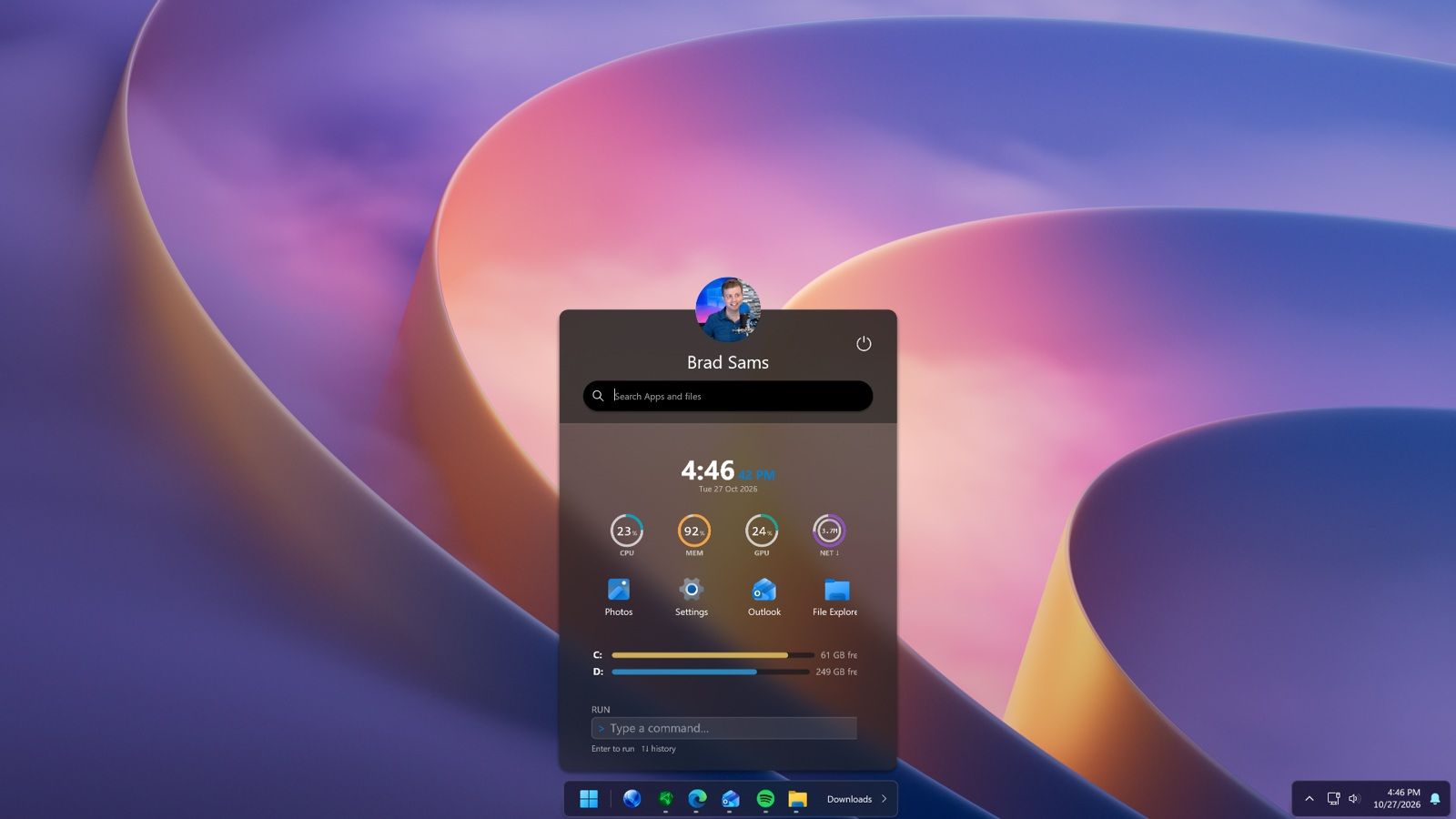
Join the club for quick access. Enter your email below and we'll send confirmation, and sign you up to our newsletter.
Keep exploring and earning more as a member.
AI updates, how-tos and comparisons in one place.
Get the biggest gaming news, reviews, and releases straight to your inbox.
Steam Deck gets an Xbox Series X|S dashboard UI with this community-made plugin
12+ useful Windows 11 features Microsoft tested in October 2026
Windows Wrap: When "not a priority" becomes Priority 0, criticism deserves a second look
All the latest news, reviews, and guides for Windows and Xbox diehards.
Unlock instant access to exclusive member features.
Get full access to premium articles, exclusive features and a growing list of member rewards.
The latest version of Start11 expands Windows 11 customization with widgets, taskbar grouping, and community-shared layouts.
When you purchase through links on our site, we may earn an affiliate commission. Here’s how it works.
The Windows 11 Start menu has received a lot of updates recently, but if you want to fully customize your Start menu, you need to use an app like Start11. A major update to Start11 is now in beta, and it brings a bunch of new features.
Start11 v3 adds support for widgets within the Start menu. There are 20 widgets available at launch, though most are fairly straightforward. Widgets like a clock or calendar may serve better as proof of concept than a core part of the Start menu.
The updated app also adds Taskbar Islands, which are a dock-like experience. They feel a little bit like macOS because they split the taskbar into smaller pieces that do not take up an entire section at the bottom of your screen. But the Taskbar Islands very much match the overall design and feel of Windows 11.
Start11 adds support for grouping applications directly in the taskbar by holding Alt and dragging applications together. You can pin those groups as workspaces to launch multiple apps with a single click.
A new button in the taskbar provides quick access to recently closed applications, overflow items, and taskbar tools.
Stardock also added the ability to explore Start menu layouts from the community.
As much as I love apps that customize the look of Windows 11 and add new features, I only keep a few installed on my PC. Start11 is on the short list of apps I install right away, alongside PowerToys.
With Microsoft's recent improvements to the Start menu, an app like Start11 needs to do more to stand out. Start11 v3 does that with taskbar islands, widgets in the Start menu, and other new features.
Start11 lets you customize the Windows Start menu with several layouts, visual styles, and positioning options. If Microsoft's default Start menu isn't quite right for your workflow, Start11 gives you plenty of alternatives. Right now, it's on sale for $8 while v3 is in beta.
Join us on Reddit at r/WindowsCentral to share your insights and discuss our latest news, reviews, and more.
Sean Endicott is a News Writer at Windows Central, where he covers Windows 11, Surface hardware, Microsoft 365, AI, apps, and the broader PC ecosystem. Since joining the site in 2017, he has written well over a thousand articles across the Microsoft landscape, covering breaking news, analysis, and feature reporting.
He writes Windows Wrap, a weekly column covering the biggest stories in Windows and the PC industry, and what they mean for the platform going forward.
Before joining Windows Central full-time, Sean worked in journalism and media production after earning a First Class degree in Broadcast Journalism from Nottingham Trent University. Outside of tech, he is an award-winning American football coach based in Nottingham, England, and was named BAFCA Youth Coach of the Year in 2024.
You must confirm your public display name before commenting
Please logout and then login again, you will then be prompted to enter your display name.
Windows Central is part of Future US Inc, an international media group and leading digital publisher. Visit our corporate site.
© Future US, Inc. Full 7th Floor, 130 West 42nd Street, New York, NY 10036.
‘Enough Phone’ is an Android phone roughly the size of iPhone 13 Mini, launching in 2027

Everyone says they want small Android phones back, and 2027 might be your chance to actually buy one. The “Enough Phone” has a mere 5.3-inch display, decent specs, and a price of $599 and less.
Launching in May 2027, the “Enough Phone” is a 5.3-inch Android phone that simply does want to be “enough.”
The company says the 5.3-inch LCD display comes in at 1520×720 and that the phone will be powered by a MediaTek Dimensity 7500 chipset, 8GB of RAM, and offers 128GB of storage. It’ll come with either “stock Android” or OdysseyOS, an Android skin used by SLEKE and designed to be minimal and act like a modern dumbphone. SLEKE currently sells repurposed Pixel phones running this software.
Android 17 will run out of the box with updates through 2032.
“Enough Phone” measures in at 132.8 x 63.8 x 12mm and will have a battery between 3,500 and 4,000 mAh which will be user-replaceable. While it’s thicker, the physical size is roughly the same as iPhone 13 Mini.
Rounding out the package would be a fingerprint sensor in the power button, a single 50MP (Sony IMX766) camera on the back, and a 32MP selfie camera up front.
The only redeemable aspect of this phone is the small display but nothing about it makes it a good value in the 2nd half of 2027 when you have much more capable phones like the Pixel A series for nearly the same money or a bit more but at least you're getting a lot more phone for your money.
The company says that these specs are “mostly final” and that pricing is planned for $599.
“Enough Phone” is funding on Kickstarter with $399, $449, and $499 early bird reservation tiers ahead of the May 2027 shipping estimate.
Follow Ben: Twitter/X, Threads, Bluesky, and Instagram
FTC: We use income earning auto affiliate links. More.
Check out 9to5Google on YouTube for more news:
Breaking news for Android. Get the latest on app…
Find him on Twitter @NexusBen. Send tips to schoon@9to5g.com or encrypted to benschoon@protonmail.com.
Bob Dylan, Wearing Hoodie, Meets Pope

Pope Leo XIV granted Bob Dylan a private audience at the Vatican this morning (November 4), further cementing his downtown bona fides after welcoming Patti Smith in July. Dylan, the mythically private and fuss-refusing Nobel laureate, wore a black hoodie, hood up—seemingly held aloft by a black baseball cap—for the occasion, in evidence in a photo published by the Vatican’s Dicastery for Communication. Another photo seemingly shows Dylan signing a book for His Holiness, having removed a single glove.
Although raised Jewish, Dylan converted to evangelical Christianity in 1978. He released a string of Christian albums and peppered his live show with Christian songs—astounding legions of fans and contemporaries—but dialed down the religious fervor in subsequent years, primarily expressing his accord with God through the medium of ludicrous Christmas songs. In 1997, he played at a concert honoring Pope John Paul II.
Pope Leo, for his part, appears to be quite the Dylan scholar. He quoted the little-known Dylan lyric “Go Away You Bomb”—written in 1963 for an unpublished book of anti-nuclear poetry—in the preface to Unarmed and Disarming: Peace Is a Gift, an anthology of his speeches.
Ready for One UI 9.5? Rumors say Samsung's next beta could start soon
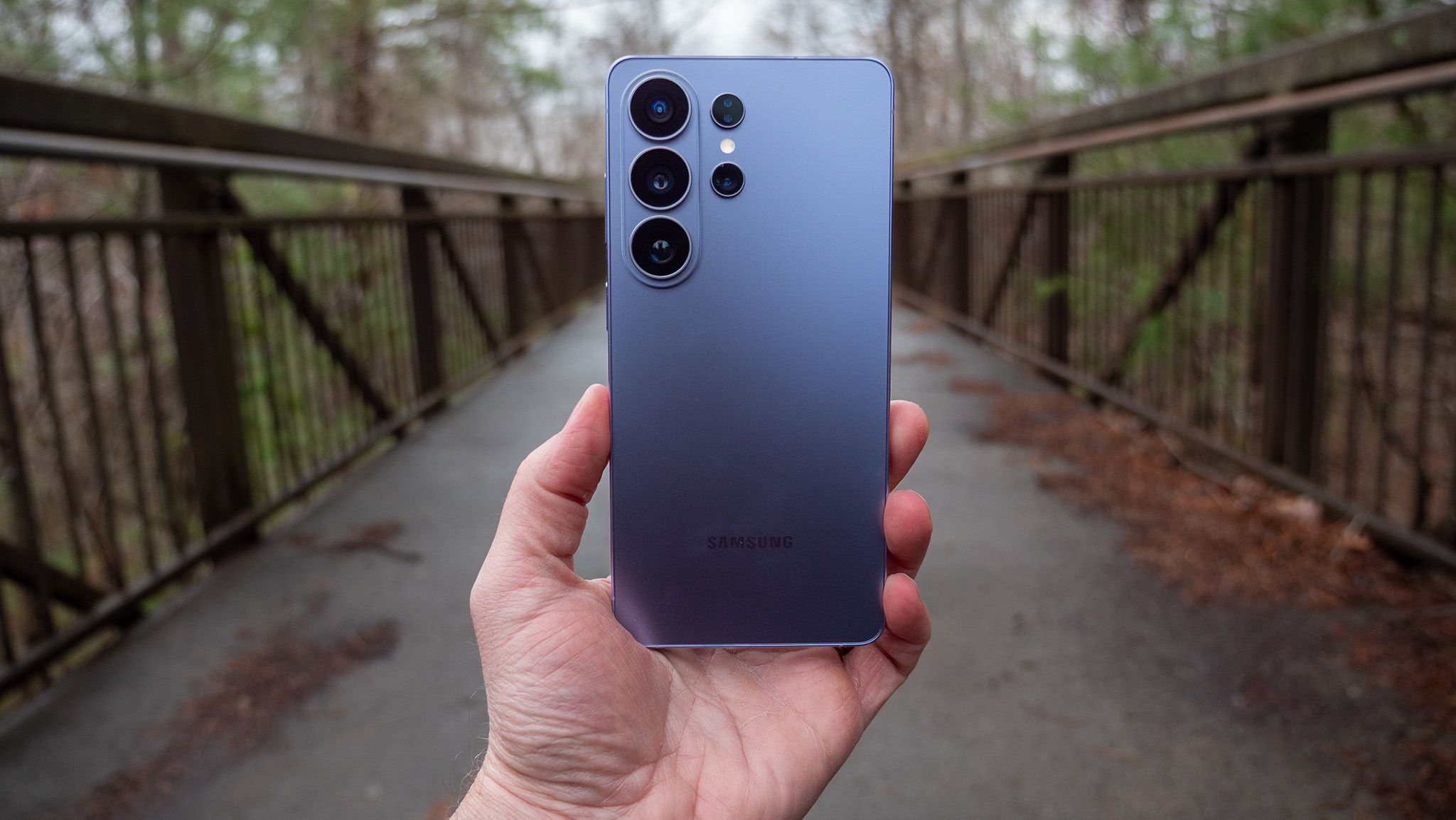
Google brings back app lock in Android 17 QPR3 Beta 3
Nothing expands Android 17 Open Beta to Phone 4a—full release is two months away
Samsung's 'Intelligent Eyewear' is now rumored to launch near Christmas
Get the latest news from Android Central, your trusted companion in the world of Android
Let's hope we're not in for more delays, haha...
When you purchase through links on our site, we may earn an affiliate commission. Here’s how it works.
We've had delays upon delays for One UI 9; however, rumors continue in November about Samsung's next major OS beta.
Recently, tipster Kailash on X posted a discovery that could indicate an impending beta for Samsung's next One UI beta for Galaxy phones (via SamMobile). The tipster claims that they found early test builds for One UI 9.5 for the Galaxy S26 series. Versions S948BXXU6ZZK3, S948BOXM6ZZK3, and S948BXXU6CZK3 reportedly concern the Galaxy S26, S26 Plus, and S26 Ultra.
Kailash points out that the "bootloader has changed." The S26 series jumps from "U5" to "U6" in the test versions. There's also speculation that Samsung's internal tests are ongoing, meaning we could see a proper Beta Program, where users can start signing up, "soon."
Tipster Tarun Vats also spotted these early beta builds, furthering speculation that we're on the cusp of another beta marathon. It's hard to discern any features in One UI 9.5 from builds alone; however, a few rumors touched on this before.
Tipsters on X speculate that the One UI 9.5 beta could start in late November. That lines up with what we've heard before. It's also been assumed that One UI 9.5 won't officially debut until April or May 2027. We hope this next version doesn't face the same onslaught of delays Samsung's previous updates experienced.
Currently, rumors suggest One UI 9.5 could introduce "shiny edges and visual depth" to Galaxy phones. Of course, we're talking about a take on Apple's Liquid Glass. Rumors claim a glass aesthetic is Samsung's next focus. Many elements are reportedly shinier or blur when placed over other objects in the UI. What's more, a tipster supposedly spotted "subtle backdrop shading" for that "visual depth" we mentioned before.
Additionally, App Lock was rumored to return in One UI 9.5, securing apps behind a password, biometric, or other verification method.
Get the latest news from Android Central, your trusted companion in the world of Android
Nickolas is always excited about tech and getting his hands on it. Writing for him can vary from delivering the latest tech story to scribbling in his journal. When Nickolas isn't hitting a story, he's often grinding away at a game or chilling with a book in his hand.
You must confirm your public display name before commenting
Please logout and then login again, you will then be prompted to enter your display name.
Android Central is part of Future US Inc, an international media group and leading digital publisher. Visit our corporate site.
© Future US, Inc. Full 7th Floor, 130 West 42nd Street, New York, NY 10036.
Security Bite: The record $6.3B Binance heist started with a fake Homebrew install on Mac

9to5Mac Security Bite is exclusively brought to you by Mosyle, the only Apple Unified Platform. Making Apple devices work-ready and enterprise-safe is all we do. Our unique integrated approach to management and security combines state-of-the-art Apple-specific security solutions for fully automated Hardening & Compliance, Next Generation EDR, AI-powered Zero Trust, and exclusive Privilege Management with the most powerful and modern Apple MDM on the market. The result is a totally automated Apple Unified Platform currently trusted by over 45,000 organizations to make millions of Apple devices work-ready with no effort and at an affordable cost. Request your EXTENDED TRIAL today and understand why Mosyle is everything you need to work with Apple.
Last week, news broke that hackers had stolen $6.3 billion from wallets on Binance, the most popular cryptocurrency exchange in the world. The company was able to freeze about nearly $3 billion of it, but the attack quickly made headlines, and rightfully so, as the largest financial heist in human history.
At the time, I suspected, along with security researcher Christopher Lopez and plenty of others, that this could have very well started on a Mac. As Lopez pointed out, the $1.5 billion Bybit heist last year also began on a developer’s Mac. On top of that, Macs are hugely popular among DevOps engineers and crypto folks, and they’ve been on the receiving end of a steady stream of malware and social engineering campaigns over the past few years.
I can now say any suspicions that this heist originated on Mac were right. I’m still in a state of shock. Dazed not by the amount stolen, but how the said hackers did so using the same ol’ social engineering tricks they’ve been using for years. No sophisticated multi-milllion dollar underground zero-day here.
Yesterday, Binance published a more detailed breakdown of the attack. The company never actually says “Mac,” but the malware it published targeted /opt/homebrew, which is where Homebrew lives on Apple silicon Macs. In other words, this was almost certainly an M-series MacBook.
The attack basically transpired in two steps.
According to Binance, in June this year, a DevOps engineer working on Wallet searched for an AI coding tool and downloaded a malicious clone of the Homebrew installer in Google Search. Binance claims it caught it early and stopped any damage. However, what it didn’t know was that it allowed the attackers to learn which employees worked on its wallets. This was phase 1.
Fast forward a few months to September, a different engineer who, you guessed it, worked on wallets for Binance, was lured into a fake job interview. As these sort of social engineering attacks normally go, they told to run a coding “assignment” on their work computer. This was not caught by Binance security, and on October 29, the world learned that hackers (now widely speculated as North Korean hackers) walked off with billions.
Of course, most of what we know so far comes directly from Binance, so if you’re looking for more details on exactly how this happened, you’ll likely be left empty-handed.
It’s important to note here though, none of these two attack vectors are new. Back in early 2025, I wrote about fake Homebrew ads at the top of Google Search pushing Atomic Stealer to Mac users. Binance only says the engineer found his installer through “a search engine.” Of course, I can’t confirm it was a sponsored ad, but if history tells us anything…
This is a rather uncomfortable situation for Apple to be in. The largest financial heist in history happen on Mac last week, though to be fair, there’s no security feature that can stop a developer from running a script he wants to run.
Sure, the Terminal paste warnings introduced in macOS 26.4 could have helped here. But realistically, if someone’s convinced they’re doing a coding test for a job they really want, a warning pop-up probably isn’t going to stop them.
I’m having Christopher Lopez (@L0Psec) a professional macOS reverse engineer back on the Security Bite Podcast this week to talk about the Binance situation with me. Follow the show so you don’t miss that.
Security Bite is 9to5Mac’s weekly deep dive into the world of Apple security. Each week, Arin Waichulis unpacks new threats, privacy concerns, vulnerabilities, and more, shaping an ecosystem of over 2 billion devices. Every other week on the Security Bite Podcast, he sits down with experts in the field to break down the most pressing topics.
FTC: We use income earning auto affiliate links. More.
Check out 9to5Mac on YouTube for more Apple news:
My laptop! Lightweight. Fast. Seemingly indestructible.
My current and favorite electric stand-up desk I've tested. The quality is great and the price even more so.
BYD’s new luxury electric SUV has one big problem: It weighs over 8,200 lbs

BYD’s new full-size electric SUV, the Denza N9 EV, was revealed in a regulatory filing, weighing in at over 8,200 lbs (3,760 kg). That creates one issue.
The Denza N9 first went on sale last March, a flagship plug-in hybrid (PHEV) SUV with a combined CLTC range of about 807 miles (1,300 km) on a full charge and full tank of gas.
BYD introduced the updated Flash Charging version earlier this year, which uses its second-generation Blade Batteries and delivers a pure electric CLTC range of 260 miles (420 km). Combined, it gets up to 944 miles (1,520 km) under CLTC conditions.
In the latest batch of new energy vehicles (NEVs) approved for sale by China’s MIIT (Ministry of Information Technology) this week, a new all-electric Denza N9 appeared.
The filing revealed the Denza N9 EV will be available with three electric motors, delivering a combined output of 1,193 horsepower (890 kW).
A badge on the back reveals it will use BYD’s tri-motor e3 platform. The setup features a single 362 horsepower (270 kW) front motor and two 415 horsepower (310 kW) rear electric motors.
The electric version measures 5,270 mm long, 2,030 mm wide, and 1,830 mm tall, with a 3,125 mm wheelbase, which is the same as the current Denza N9 PHEV Flash Charging model. It will be available in five- and six-seat configurations.
While the filing reveals it will use a lithium iron phosphate (LFP) battery with cells from BYD’s battery unit, FinDreams, it does not provide specifics like capacity or driving range.
One relatively big thing to note: the Denza N9 EV has a gross weight of 3,760 kg, or about 8,289 lbs.
Obscene weight , and that applies to other SUVs as well. Vehicle registration taxes should be based on vehicle weight as it wears out roads and endangers other road users and infrastructure and wastes resources.
As AutoNext points out, this makes it too heavy for an EU category B driving license, which covers up to 3,500 kg (7,716 lbs).
Last year, the EU updated the rules, allowing drivers who have held a category B license for two years to drive alternative-fuelled vehicles with a maximum weight of up to 4,250 kg (9,369 lbs).
While the Denza N9 EV would qualify as listed, newer drivers would still need a commercial EU category C1 driving license to drive it.
BYD launched its luxury sub-brand, Denza, in Europe and the UK in March, starting with the Z9 GT and the D9 van. More recently, it introduced the Bao 5 PHEV SUV and the Denza Z electric supercar.
FTC: We use income earning auto affiliate links. More.
Peter Johnson is covering the auto industry’s step-by-step transformation to electric vehicles. He is an experienced investor, financial writer, and EV enthusiast. His enthusiasm for electric vehicles, primarily Tesla, is a significant reason he pursued a career in investments. If he isn’t telling you about his latest 10K findings, you can find him enjoying the outdoors or exercising
Four Tet Produced a Tech-House Remix for the Durutti Column

Before this year, the Manchester band the Durutti Column hadn’t released an album since 2010, but that hasn’t stopped its fanbase from growing. Vini Reilly’s project has inspired Harry Styles, Blood Orange, the Avalanches, and now, Four Tet—who created a hazy tech-house rework of “Your Shadow at Morning” from the Durutti Column’s 2026 album, Renascent.
“It’s only in the last couple of years that I learnt about the Durutti Column and explored their wonderful catalogue,” says Four Tet. “It’s had a big impact on me so I was thrilled when a new album was announced and then when I was asked to do a remix it felt like the universe was confirming I was connected to this music.”
Revisit Pitchfork’s review of The Return of the Durutti Column (Expanded & Remastered).
Nintendo ROM chip supplier Macronix quits to focus on chips for AI data centers, reports indicate
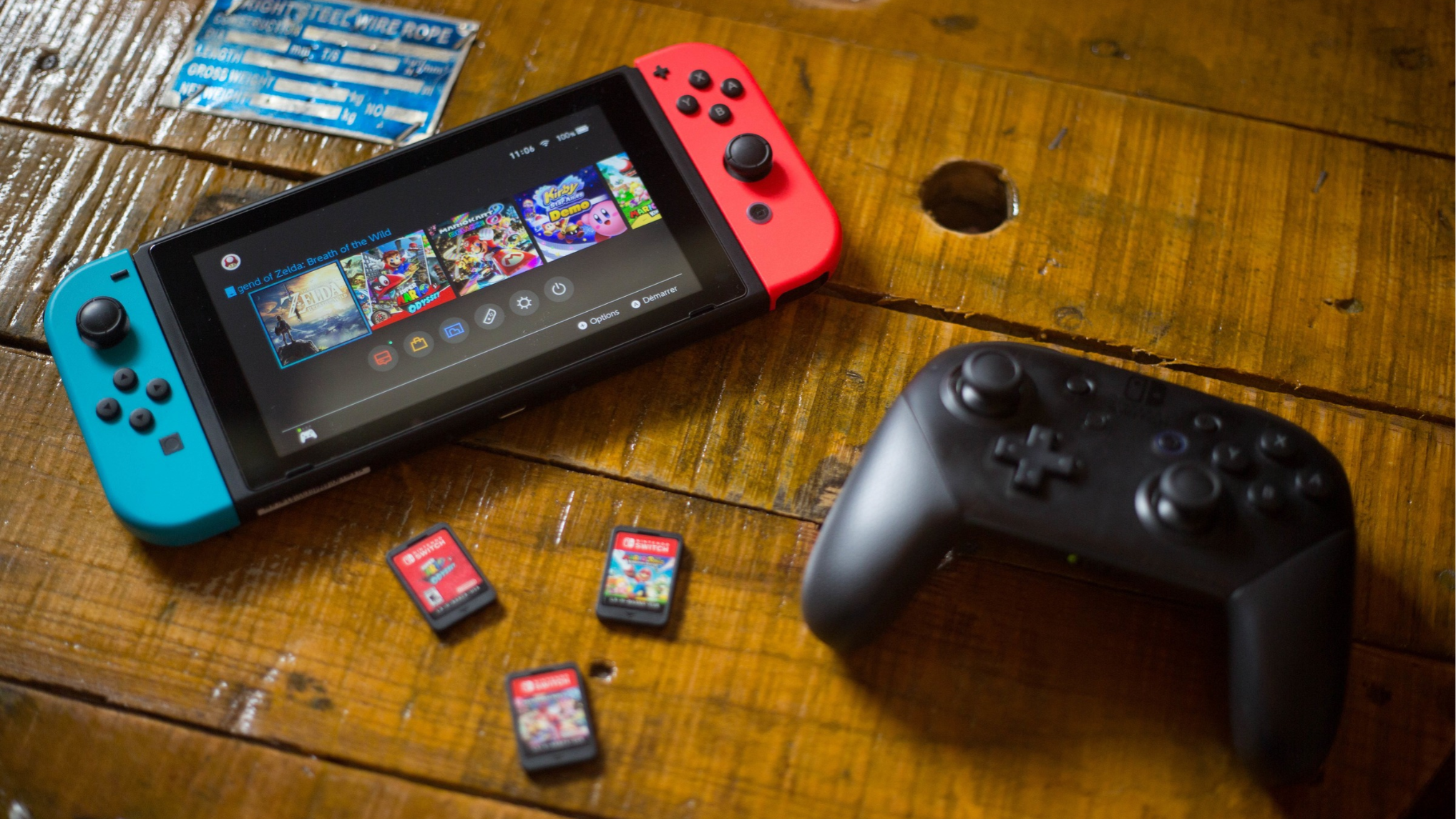
Get started with free access to reviews, badges and discussions.
Unlock exclusive tools and insights for enthusiasts who want more.
Access Bench, Roadmaps, deep analysis and other exclusive tools.
Dive into our proprietary testing data and compare hardware with detailed benchmarks.
Go beyond the headlines with expert reporting on the hardware industry.
Track upcoming CPUs, GPUs and tech releases before they arrive.
In-depth features, interviews and insider stories from the world of hardware.
Expert insights and analysis delivered to your inbox.
Dive into our proprietary testing data and compare hardware with detailed benchmarks.
Go beyond the headlines with expert reporting on the hardware industry.
Track upcoming CPUs, GPUs and tech releases before they arrive.
In-depth features, interviews and insider stories from the world of hardware.
Expert insights and analysis delivered to your inbox.
Keep exploring and earning more as a member.
Reviews, benchmarks, and updates on current GPUs.
Join for quick access. Enter your email below and we'll send confirmation plus sign you up to our newsletter.
Get Tom's Hardware's best news and in-depth reviews, straight to your inbox.
Unlock instant access to exclusive member features.
Get full access to premium articles, exclusive features and a growing list of member rewards.
Nintendo, one of the last in the physical game market, is losing one of its key ROM chip suppliers to AI data centers.
When you purchase through links on our site, we may earn an affiliate commission. Here’s how it works.
The death of physical games could be getting closer as Macronix, one of Nintendo’s key ROM chip suppliers for Switch and Switch 2 game cartridges, is reportedly shutting down its ROM business to focus on manufacturing NOR and NAND flash chips to supply data centers, multiple reports claim. Storage is already becoming expensive, and Macronix’s move may force Nintendo to increase cartridge prices, produce more Game-Key cards, or lean more towards digital purchases.
"Nintendo's main memory chip maker is quitting the Switch business," MST Financial David Gibson reports on X. "Macronix, which makes the ROM chips in Switch 1 and Switch 2 game memory cards, is phasing out that business. There will be no new ROM products, and Q3 is the last quarter it reports ROM sales separately.
1/4 Nintendo's main memory chip maker is quitting the Switch business Macronix, which makes the ROM chips in Switch 1 and Switch 2 game memory cards, is phasing out that business. There will be no new ROM products, and Q3 is the last quarter it reports ROM sales separately.November 4, 2026
He notes that Macronix ROM sales in Q3 of this year dropped to 5%, compared to last year’s 26%. Furthermore, Gibson says that the NT$37.8 billion capital expenditure is allocated to NOR and NAND Flash, leaving none for ROM as the company shifts its manufacturing capacity to supply AI needs — Taipei Times corroborated the report, stating, "At the same time, Macronix is gradually phasing out of ROM production, Wu said. It also reports that Macronix’s capital expenditure is split into two phases, the NT$ 22 billion for expanding manufacturing capacity, followed by an additional NT$15.8 billion for NAND flash used in eMMCs and 3D NAND.
Gibson expects that Nintendo’s digital margins will grow through more Game-Key Cards or digital-only sales, but as Macronix isn’t the only source of ROM chips, “physical cards will likely carry on for some time.” Gibson further reports that digital margins have been slowly rising, with numbers fluctuating depending on the quarter due to major physical game launches.
3/4 My view: Macronix isn't Nintendo's only game memory card maker, so physical cards will likely carry on for some time. But at the margin, digital will grow, through more Game-Key Cards (which hold a download key, not the game) and digital-only sales.November 4, 2026
ROHM group companies ROHM Semiconductor and LAPIS Semiconductor still supply ROM chips to Nintendo, so it’s unlikely that Nintendo will eventually go digital-only in the near future like Sony and Microsoft’s recent plans. With one less supplier, however, Nintendo may be forced to increase prices on physical games.
The biggest loser in all of this (besides the gamers), however, may be fabless chip design company MegaChips. Nintendo doesn’t buy ROM chips from Macronix directly; MegaChips designs the ROM chips according to Nintendo’s needs and, having no manufacturing capacity, outsources it to Macronix. MegaChips’ 2022 company report states that Nintendo accounted for 87.8% of its sales, while Macronix accounted for 67.8% of its outsourced manufacturing purchases. The report even states that if Macronix could manufacture ROM chips, “MegaChips’ operating results may be impacted.” The 2022 document further says that there was no sign that the risk would become apparent; however, the risk just became very real, and we’re not aware of MegaChips’ contingency plan to deal with this situation. However, Macronix and MegaChips have likely talked amongst themselves about Macronix’s plans to stop ROM chip manufacturing, and have given MegaChips some time to find another manufacturer before Macronix shuts down the ROM chip business.
Follow Tom's Hardware on Google News, or add us as a preferred source, to get our latest news, analysis, & reviews in your feeds.
Get Tom's Hardware's best news and in-depth reviews, straight to your inbox.
Jhet Borja is a serial hobbyist who was taking apart toys from childhood and sketching inventions. He now loves doing DIY projects ranging from designing custom 3D-printed parts, building PCs and keyboards, all the way to woodworking. If he's not getting his hands dirty, he's probably brainstorming his next project.
Tom's Hardware is part of Future US Inc, an international media group and leading digital publisher. Visit our corporate site.
© Future US, Inc. Full 7th Floor, 130 West 42nd Street, New York, NY 10036.
Debian and Ubuntu APT Flaw Lets MitM Attackers Swap Verified Packages and Run Code as Root

A flaw in APT, the package manager for Debian and Ubuntu, allows an attacker who can modify package downloads to swap a checked package for their own.
The attacker's code then runs as root, according to advisories that Debian, Ubuntu, and APT's developers published on November 4. The attack needs APT to retry failed downloads, which it does by default from Debian 12 and Ubuntu 22.04 onward.
Debian has released fixed versions of APT for the flaw, CVE-2026-109518. APT's developers, who call the flaw critical, say updates for Ubuntu and its Ubuntu Pro subscription service are being released. Ubuntu 14.04 users with Ubuntu Pro can already get one.
Older releases, such as Debian 11 and Ubuntu 20.04, are not exposed by default, according to Ubuntu. But many user scripts may have turned on the retry setting, Acquire::Retries, on those releases anyway, APT's developers say.
Debian's testing branch was still on the vulnerable version 3.3.5 at 14:58 UTC on November 4. For Debian 11, whose Debian long-term support ended on August 31, APT's developers have published a fixed version, 2.2.5.
Ubuntu rates the flaw as high priority, with a CVSS 4.0 score of 7.7, and says that distributions built on Debian and Ubuntu are affected as well, without naming any.
Ubuntu published new APT builds for four of its releases to its security archive at 14:25 UTC on November 4:
At 15:46 UTC, Ubuntu still marked all eight releases it tracks for the flaw, from 14.04 LTS to 26.10, as vulnerable.
The attacker can be anyone who can change the HTTP traffic between APT and the package server, including a malicious mirror or proxy, according to Ubuntu. The attack runs when the computer installs a package. The attacker uses HTTP redirects and ordinary temporary server errors to make APT retry the download, APT's developers say.
Max Justicz reported the flaw. None of the three advisory reports describe attacks exploiting the flaw or offer a workaround for systems that cannot update yet. They describe the attack over HTTP and do not say whether package sources reached over HTTPS are exposed.
Learn how to close critical identity visibility gaps in your SOC, detect hidden threats, and accelerate incident response across human, machine, and AI identities.
Learn how to assess AI threat readiness, strengthen attack surface visibility, and prepare security operations for emerging threats in this practical webinar.
Get the latest news, expert insights, exclusive resources, and strategies from industry leaders, all for free.
SonicWall Won't Patch EoL GMS Flaws That Could Expose Files, Alter Database Records

SonicWall has warned of two vulnerabilities impacting end-of-life Global Management System (GMS) systems that it said will not be patched.
Details of the security flaws, which affect SonicWall GMS 9.5.2 and earlier versions, are below -
"The affected product has reached End-of-life (EoL)," SonicWall said in a Tuesday alert.
"As a result, no remediation or security update will be released for these vulnerabilities. Organizations using the product should be aware of the associated security risks and are strongly encouraged to upgrade to the SonicWall Network Security Manager (NSM)."
The development comes less than a month after SonicWall shipped fixes for CVE-2026-102255 (CVSS score: 10.0), a critical pre-authenticated server-side request forgery (SSRF) flaw that could have allowed an attacker to reach internal functionality and perform unauthorized operations.
The vulnerability has since come under active exploitation in the wild, with telemetry data from Previdian recording 2,541 attack attempts from eight unique IP addresses from Singapore and the U.S. since October 9, 2026. As many as 30 exploitation attempts were registered on November 3, 2026.
Learn how to close critical identity visibility gaps in your SOC, detect hidden threats, and accelerate incident response across human, machine, and AI identities.
Learn how to assess AI threat readiness, strengthen attack surface visibility, and prepare security operations for emerging threats in this practical webinar.
Get the latest news, expert insights, exclusive resources, and strategies from industry leaders, all for free.
NASA's Artemis II moon launch tore a hole in Earth's upper atmosphere so huge it disrupted GPS signals

Join The Club for quick access. Enter your email below and we'll send confirmation, and sign you up to our newsletter.
Keep exploring and earning more as a member.
Latest space missions, discoveries and exploration updates.
Stargazing tips, cosmic events and expert insights on the universe
Start exploring exclusive deals, expert advice and more
Space news, cosmic updates and expert insights straight to your inbox.
Breaking space news, the latest updates on rocket launches, skywatching events and more!
Unlock instant access to exclusive member features.
Breaking space news, the latest updates on rocket launches, skywatching events and more!
Sign up to our monthly entertainment newsletter to keep up with all our coverage of the latest sci-fi and space movies, tv shows, games and books.
Discover this week's must-see night sky events, moon phases, and stunning astrophotos. Sign up for our skywatching newsletter and explore the universe with us!
Space.com's Sci-Fi Reader's Club. Read a sci-fi short story every month and join a virtual community of fellow science fiction fans!
Get full access to premium articles, exclusive features and a growing list of member rewards.
"It could have a strong impact not only on self-driving cars but also on drone positioning."
When you purchase through links on our site, we may earn an affiliate commission. Here’s how it works.
The launch of NASA's Artemis II mission in April 2026 caused significant disturbances in Earth's ionosphere that could have triggered temporary, localized errors in GPS positioning, a new study has found.
The study, by a team of researchers from National Cheng Kung University in Taiwan, analyzed data from high-precision networks of fixed, ground-based GPS receivers, used by U.S. scientific institutions to measure the minuscule motions of Earth's tectonic plates in the lead-up to earthquakes. By measuring how long it takes GPS signals to travel from space to ground stations, the researchers were able to reconstruct how the passage of the Artemis II mission's Space Launch System (SLS) rocket changed the concentrations of free electrons in the ionosphere — the electrically charged layer of Earth's atmosphere at altitudes above 30 miles (50 kilometers).
The measurements found that the ionospheric disturbances resulting from the sheer power of the Artemis II launch were more significant than any caused by other rocket launches to date and up to ten times more intense than those observed following the test launches of SpaceX's Starship, which is twice as powerful as the SLS based on liftoff thrust.
Artemis II saw humans return to the lunar space for the first time in more than fifty years, a mission that NASA hopes will pave the way for lunar landings and eventually the establishment of a sustained human presence on the moon.
During the mission's launch, ground-based GPS stations detected changes in the ionospheric electron density equivalent to positioning errors of several meters. Such inaccuracies could easily throw self-driving cars off track, potentially causing traffic collisions, according to Charles Lin, an earth science professor at National Cheng Kung University and one of the co-authors of the paper.
"A positioning error of a couple of meters is enough to cause an autonomous car to change lanes," Lin told Space.com. "It could have a strong impact not only on self-driving cars but also on drone positioning."
GPS receivers determine their position on Earth's surface at any single moment by measuring their distance to four different GPS satellites. When concentrations of free electrons in the upper atmosphere change — for example during a solar storm or after a rocket passage — the signal reaches Earth either faster or more slowly, resulting in inaccurate measurements.
Satellites of the U.S. GPS constellation and other Global Navigation Satellite Systems orbit Earth at an altitude of around 12,550 miles (20,200 kilometers), far above the upper edge of the ionosphere, meaning the positioning, navigation and timing signal these satellites transmit must pass through this volatile atmospheric layer to reach Earth.
Severe solar storms can disrupt GPS signals for days by dumping energy into the atmosphere in the form of charged particles from the sun. The impact of rocket launches, triggered by the supersonic flight of the rocket body through the high-altitude air, is much more short-lived. As the rocket soars up, it creates a shock wave, which virtually punches a hole into the ionosphere.
In the aftermath of the Artemis II launch, the researchers observed two such holes — one left behind by the 212-foot-long (65 meters) SSL core stage, and the other caused by two subsequent thruster burns of the rocket's upper stage. In both cases, these holes stretched across the American continent from East to West like giant 3,100-mile (5,000-kilometer) contrails.
Despite the enormous power of the SLS core stage, the disturbance caused by the second-stage burns directly inside the ionosphere was far more prominent.
Those two burns, at altitudes around 115 miles (185 kilometers), took place more than an hour after lift-off and allowed the Orion capsule to break free from Earth's gravity and head for the moon.
"Rocket launches from the ground to space produce that kind of effect, but we have never seen this kind of orbital maneuver in an interplanetary mission," said Lin. "In the future, as we are going to see many more missions going to the moon and to Mars, these space weather effects will become much more significant."
The study was published as a pre-print online in the journal Geophysical Research Letters.
Tereza is a London-based science and technology journalist, aspiring fiction writer and amateur gymnast. She worked as a reporter at the Engineering and Technology magazine, freelanced for a range of publications including Live Science, Space.com, Professional Engineering, Via Satellite and Space News and served as a maternity cover science editor at the European Space Agency.
You must confirm your public display name before commenting
Please logout and then login again, you will then be prompted to enter your display name.
Space is part of Future US Inc, an international media group and leading digital publisher. Visit our corporate site.
© Future US, Inc. Full 7th Floor, 130 West 42nd Street, New York, NY 10036.
Honeycomb Aeronautical Foxtrot Takeoff Kit: This should be sold separately

Keep exploring and earning more as a member.
AI updates, how-tos and comparisons in one place.
Get the biggest gaming news, reviews, and releases straight to your inbox.
Join the club for quick access. Enter your email below and we'll send confirmation, and sign you up to our newsletter.
When you purchase through links on our site, we may earn an affiliate commission. Here’s how it works.
I waited a long time for the 'other half' of the Honeycomb Foxtrot Aviation Stick to arrive, but restricting the new compact Throttle Box to the Takeoff Kit bundle prevents existing owners from completing their set. It could be an entry-level throttle that satisfies enough realism checkmarks for $30, but as a set, it's a hard sell. Still, it's fun to play MSFS with, and I still love the Aviation Stick, so here's hoping for a separate package.
Enjoyably immersive controls without becoming too complex
Smooth axis sliders with solid, chunky switches
Compact Throttle Box isn't sold separately
Potential production issues with lever handles
Why you can trust Windows Central Our expert reviewers spend hours testing and comparing products and services so you can choose the best for you. Find out more about how we test.
I've been eagerly waiting for this bundle to launch since I tested Honeycomb's prototype last year, and even more so when the standalone Foxtrot stick won my highest praise. Still, even though it remains my favorite flightstick for Microsoft Flight Simulator, the Foxtrot always felt like it was missing that compact throttle box. Problem solved.
I became a fast fan of Microsoft Flight Simulator when it came to XBOX in 2020, and its sequel still holds my attention when paired with a reasonably priced throttle-and-stick setup — of which I've tested my fair share.
Honeycomb Aeronautical provided a sample but did not see, nor did it have any input on, the contents of my article before publishing.
You'll find the Foxtrot Takeoff Kit for $179.99 at Honeycomb's own store or through approved third-party US resellers such as Sporty's and Focus Camera. Over in the United Kingdom, a £159.98 listing at Argos is your best bet, besides a £161.18 option at Amazon UK that's imported from Europe with a slower delivery expectation.
Otherwise, the standalone Foxtrot Aviation Stick is still available for $149.99 at Amazon US, though the compact Throttle Box isn't currently sold separately, so the Takeoff Kit bundle is a smarter buy. If you're unsure, or you're in another part of the world, Honeycomb lists more global resellers for extra options. Whichever you choose, the Foxtrot Takeoff Kit is only compatible with PC.
"Designed for Microsoft Flight Simulator and X-Plane, it delivers smooth, precise control for both general aviation and airliner operations on PC and Mac."
One of my only complaints from my review of the Foxtrot Aviation Stick was the lack of analog throttle controls, but that's what the compact Throttle Box is here to solve. Otherwise, the flight stick itself is identical, so everything I said in that original article is still accurate. That includes my willingness to settle for digital throttle control, but now I don't have to.
Honeycomb includes screws and plates that attach the Throttle Box to the left or right side of the Aviation Stick.
Underneath the Foxtrot stick, I spotted the same screw threads: a pair on either side. These finally have a use, since Honeycomb includes screws and plates that attach the Throttle Box to the left or right side of the Aviation Stick. That alone seriously improved my earliest experience with the Takeoff Kit, as the extra weight helps keep it grounded.
All four sliders feel identical, with enough resistance to stop them from rattling around or accidentally moving by small amounts. Each has a detent toward the bottom, which lets me push past into reverse thrust or lets me know when I'm at the limit for the speed brake and flaps. After a few flights, I found that I generally preferred a general aviation (GA) setup with propeller and mixture levers.
Along the bottom, four chunky switches come in adorably tiny versions of a landing gear lever, a pair of engine switches, and a rotating parking brake. I use them only a fraction as much as the sliders, but they still provide satisfyingly realistic feedback when I'm getting ready for take-off or completing a landing. Plus, I only needed to assign four axes and four buttons, so setup was fast.
The Foxtrot compact Throttle Box had two physical issues, though one was minor, and the other seems specific to my sample. That is, the interchangeable lever handles should be easy to swap out, but one doesn't fit flush because of an apparent fault in the plastic mould. So, if I wanted the complete GA set, I'd have to deal with a throttle lever that sits too high.
Sticking with the Airbus-style speed brake lever doesn't necessarily bother me too much, since it's the prop and mix handles that lean harder into the realism aspect, but it's something that would only be solved through a chat with Honeycomb's customer support team. There are no spare parts for sale on its website, so it's something to check when you buy the Foxtrot Takeoff Kit.
That minor issue is simply that the compact Throttle Box is too lightweight (~330g) to hold steady on my desk mat, sliding forward when I push the levers. It fares better on wood, giving the rubber feet a better chance to grip, but I suspect this might have influenced Honeycomb's decision not to sell it separately. Still usable, but it's better when tethered to the Aviation Stick.
So, the biggest downside to the Foxtrot Takeoff Kit is that the compact Throttle Box isn't sold separately, at least not yet. That might change in the future (and I hope that it does), but anyone who bought into the standalone Foxtrot Aviation Stick before now will be left feeling a little stuck.
In theory, the Throttle Box could retail for around $30, which hints at why it isn't available on its own. It could be that manufacturing costs are only covered when it's included as a bundle with the flightstick, and that mass-producing packaging and licensing for a separate unit isn't viable just yet.
One of the only downsides to the Foxtrot Takeoff Kit is that the compact Throttle Box isn't sold separately.
On the other hand, Honeycomb already sells a range of accessories at a matching $29.99 price point, including a mix of electronics and plastic or metal add-ons. It's blocking existing consumers from accessing the most natural pairing for Honeycomb's Foxtrot stick, but it's less drastic for newcomers.
Otherwise, I'll always lament the lack of XBOX compatibility, but Honeycomb might solve that in the future with one of its 'XPC' variants. It delivered the same equivalents with its Alpha Flight Controls XPC, and an upcoming variant of its excellent Echo Aviation Controller is set to do the same.
✅ You want an immersive flight sim experience
✅ You don't want an overwhelming setup with too many inputs
❌ You already own the Foxtrot Aviation Stick
Buying the Takeoff Kit gives you the fantastic Foxtrot Aviation Stick, which, while it doesn't feature the world's best technology, is still my favorite overall flightstick because it's so convenient. That's still the theme here, as Honeycomb adds a no-frills Throttle Box that mostly matches, but at the same time, feels like a more budget-grade add-on that should be sold (and branded) separately.
That, paired with an unfortunate flaw in the lever handles that came with my sample, leaves me wanting changes. If Honeycomb can sell the compact Throttle Box separately, with its own warranty support system, and even consider selling the GA lever handles separately, it'll win a higher score from me. Instead, it's easier to recommend the Bravo Throttle Quadrant Lite.
"Designed for Microsoft Flight Simulator and X-Plane, it delivers smooth, precise control for both general aviation and airliner operations on PC and Mac."
Ben is a Senior Editor of Windows Central, covering PC gaming hardware, software, and everything connected to it. He's built more custom desktops than he can count, and has hands-on experience with some of the most exciting components and accessories for Windows PC and Xbox. A lifelong obsession with Microsoft's technology has led to broad expertise in laptops and in the cutting-edge processors that are pushing the industry forward.
You must confirm your public display name before commenting
Please logout and then login again, you will then be prompted to enter your display name.
Windows Central is part of Future US Inc, an international media group and leading digital publisher. Visit our corporate site.
© Future US, Inc. Full 7th Floor, 130 West 42nd Street, New York, NY 10036.
T-Mobile launches $90 5 Gbps fiber internet plan

Get started with free access to reviews, badges and discussions.
Unlock exclusive tools and insights for enthusiasts who want more.
Access Bench, Roadmaps, deep analysis and other exclusive tools.
Dive into our proprietary testing data and compare hardware with detailed benchmarks.
Go beyond the headlines with expert reporting on the hardware industry.
Track upcoming CPUs, GPUs and tech releases before they arrive.
In-depth features, interviews and insider stories from the world of hardware.
Expert insights and analysis delivered to your inbox.
Dive into our proprietary testing data and compare hardware with detailed benchmarks.
Go beyond the headlines with expert reporting on the hardware industry.
Track upcoming CPUs, GPUs and tech releases before they arrive.
In-depth features, interviews and insider stories from the world of hardware.
Expert insights and analysis delivered to your inbox.
Keep exploring and earning more as a member.
Reviews, benchmarks, and updates on current GPUs.
Join for quick access. Enter your email below and we'll send confirmation plus sign you up to our newsletter.
Get Tom's Hardware's best news and in-depth reviews, straight to your inbox.
Unlock instant access to exclusive member features.
Get full access to premium articles, exclusive features and a growing list of member rewards.
5 Gbps service sits above the company’s 2 Gbps, 1 Gbps, and 300 Mbps fiber plans
When you purchase through links on our site, we may earn an affiliate commission. Here’s how it works.
Just over a year ago, T-Mobile launched its home fiber internet service in the United States, buoyed by its acquisition of Lumos. At the time, T-Mobile’s fiber service reached half a million customers across the country, with speeds of up to 2 Gbps. This week, T-Mobile introduced a new 5 Gbps tier for customers who crave even more speed.
The 5 Gbps tier is priced at $90 per month and comes with a 10-year price guarantee. Given how often legacy cable internet providers would raise prices, forcing customers to jump through hoops to keep the status quo, a 10-year price lock could be very appealing to a large segment of the population. But as with most things, there is some fine print to the offer, which reads, “Taxes & fees, voluntary equipment or speed upgrades, select limited-time promotions, per-use charges, third-party services, and network management practices aren’t included.”
To get the $90/month price, you’ll also need to set up AutoPay with T-Mobile. However, to further sweeten the deal, customers will also receive a mesh Wi-Fi extender that broadens the coverage of the included Fiber gateway.
For new customers, T-Mobile is also offering two months of free service (via bill credits) and a $300 virtual prepaid debit card. T-Mobile’s pricing for the 5 Gbps plan is an aggressive deal in the home fiber market. For example, GFiber (Google) costs $100/month for 3 Gbps speeds, while the company’s 8 Gbps tier is $150/month.
T-Mobile’s new 5 Gbps plan joins the existing 2 Gbps ($70/month), 1 Gbps ($60/month), and 300 Mbps ($45/month) plans. All of the plans feature symmetrical upload/download speeds, which is a big upgrade for anyone coming from a traditional cable internet provider.
For people who don’t have access to T-Mobile’s growing fiber footprint in the U.S., the company also offers its unlimited 5G Home Internet service, with prices starting at $50/month.
Follow Tom's Hardware on Google News, or add us as a preferred source, to get our latest news, analysis, & reviews in your feeds.
Get Tom's Hardware's best news and in-depth reviews, straight to your inbox.
Brandon Hill is a senior editor at Tom's Hardware. He has written about PC and Mac tech since the late 1990s with bylines at AnandTech, DailyTech, and Hot Hardware. When he is not consuming copious amounts of tech news, he can be found enjoying the NC mountains or the beach with his wife and two sons.
Tom's Hardware is part of Future US Inc, an international media group and leading digital publisher. Visit our corporate site.
© Future US, Inc. Full 7th Floor, 130 West 42nd Street, New York, NY 10036.
Deals: Pixel Watch 5 up to $200 off, Galaxy Z Fold 8 $300 off + $200 store credit, Moto Tag 2, Anker, more

Joining the best cash discount to date on the new Google Home Speaker, as well as up to $350 off Pixel 11, Pixel 11 Pro, Pixel 11 Pro XL, and Pixel 11 Pro Fold, today’s 9to5Toys Lunch Break is headlined by Pixel Watch 5 models at $100 off and this model you can now score at $200 off. We also have the Moto Tag 2 Google Find Hub trackers back to all-time lows at $17.50 each and a seriously notable Galaxy Z Fold 8 deals – you can land one at $300 off and score a $200 store credit today. Head below for more including Anker’s new Nano Smart Display hub at one of its best prices ever.
Alongside the ongoing and particularly notable early Black Friday deals at up to $350 off on Pixel 11, Pixel 11 Pro, Pixel 11 Pro XL, and Pixel 11 Pro Fold (we also uncovered some open box deals for a whole lot less than that), we are also tracking $100 off all Pixel Watch 5 models. You’re looking at many of the best prices to date on Google latest wrist computers, but we also wanted to highlight this offer on the Polished Silver model – it is now $200 off via Best Buy.
As of right now, just about all configurations of Google latest Pixel Watch 5 is $100 off at Amazon as part of the early Black Friday offers – this puts just about every configuration at the lowest price we have tracked to date:
However, over at Best Buy you will find some of these options in “excellent” open-box condition for even less. There are several options, but the real highlight is this model that is $200 off the new list price for double the savings – you’re scoring the LTE model for the same price as the standard one:
But with the new condition units now heavily discounted, that means Best Buy’s “excellent” condition open-box units have also dropped in price quite a bit:
Motorola delivered some of the most compelling Google Find Hub trackers to date this year, and with the discounts now back in stock, you can land a single down at $20 Prime shipped or a 4-pack that brings the price down to $17.50 each.
The Google Pixel Tag is scheduled to land very soon, but that one is going to run you $30 a pop or $100 for four of them. The Moto Tag 2 delivers on much of the most important features and is currently back down to all-time low pricing at nearly half the price:
Amazon is now offering a solid $300 price drop on all of the Galaxy Z Fold 8 configurations it sells. That is on par with the best cash discounts around right now in brand new condition, but the official Samsung site is now offering this same deal on all configs with some seriously notable bonus offers – you can also add a set of Galaxy Buds 4 Pro at $25, or one of the latest Galaxy Watches at $238+ off.
Here’s how the straight up cash discounts on Amazon look right now – both the 256GB and 512GB in all three colors Amazon carries are $300 off the list price:
These same deals are also now live on the Samsung site (they were $200 off last week), and this includes the Samsung exclusive Pistachio colorway. You can also double down on the $300 discount with some deep bundle deals by way of a $200+ store credit too:
As you can see below, you can add one of the three add-ons to your Fold 8 order at a deep discount – simply configure your phone on the listing page and then choose one of the three options in the “Start building healthy habits with Galaxy” down lower on the page:
Anker’s official Amazon storefront is now offering its latest Nano 10-in-1 USB-C Smart Display Hub for $79.99 shipped. This newer model debuted at IFA earlier this year carrying a $100 price tag, and while we did see it dip a touch lower during the recent fall Prime Day sale, today’s offer brings it back within just $5 of the all-time low to mark one of the best prices we’ve tracked so far. Both the Iron Gray and Starlight Silver finishes are down to the same $80 price today. It’s a pretty good option to consider if you’re looking to pick up a new dock for your workstation, and you can learn more about it in detail below. Head below for more details.
Home Depot is running “deals all month long,” and today we are checking in with the early Black Friday offers now live. It is already running a host of appliance Doorbusters, up to 50% off select saws, as much as $170 off DEWALT electric tools, and a FREE tool or battery offer with select purchases, plus much more.
While we are still awaiting details on the official Amazon Black Friday start date (although we more or less already know when it will be), the early deals on its in-house tech are already going live. We have the first discount on its all-new Alexa Android Tablet and it’s time to take a closer look at the Fire TV Stick deals – the brand new model is now at the $25 all-time low.
The real headliner from the early Black Friday offers on the Fire TV Stick lineup would have to be the brand new 4K model with all-new upgraded remote down at $24.99 Prime shipped.
This model debuted at $60 just last month and, after seeing a solid 50% launch discount at $30, has now dropped to the lowest price we have tracked to date. You’re looking at a deep 58% price drop that couldn’t possibly drop all that much lower later this month.
Everything you need to know about the new model awaits in our launch coverage right here.
If you’re not interested in the new model, there are a couple others also now seeing early Black Friday deals at slightly lower prices:
Alongside a new all-time low on its latest Fire TV Stick 4K at $25 (58% off), today we are tracking the first deal and a new all-time low on the brand new Amazon Alexa Android Tablet at $199.99.
At the beginning of the month, just before the reveal of its new Echo speakers and Echo Show 16 smart display you can pre-order at $100 off, Amazon debuted its all-new Android Alexa Tablets and today is your first shot at a discount on them.
Amazon is now offering its new Alexa Tablet 8 down at $199.99 for the 64GB model, while the 128GB variant is now starting at $249.99 shipped.
FTC: We use income earning auto affiliate links. More.
Check out 9to5Google on YouTube for more news:
MacBook Neo 2 is coming, and Apple reportedly expects a massive hit

Apple has a MacBook Neo 2 planned for early 2027, per Mark Gurman, and a new report from Digitimes indicates the company is expecting it to be a massive hit.
When the MacBook Neo debuted earlier this year, it became an instant hit.
Driven primarily by MacBook Neo, Apple set a new record for its best ever sales week among first-time Mac buyers.
But as popular as the first MacBook Neo has proven, it sounds like Apple is planning for its successor to be an even bigger hit.
Apple has given suppliers a shipment forecast of 16 million MacBook Neo units for 2027, about double the nearly 8 million units expected in 2026, according to supply-chain sources.
16 million units for 2027 is a huge increase from MacBook Neo’s 2026 numbers.
A small portion of that increase can be attributed to the MacBook Neo being on sale for longer in 2027. The original Neo arrived in March 2026, so 2027 will have the advantage of January and February sales.
But those two extra months can’t come anywhere close to accounting for the doubling of units. Especially since they’re slower periods for consumer electronics sales.
With reporting pointing to a MacBook Neo 2 launching in early 2027, it sounds like Apple is confident the Neo will prove even more popular in the year ahead.
Read more: MacBook Neo 2 will get the big upgrade it needs most, per rumors
What’s your take on Apple’s MacBook Neo plans for 2027? Let us know in the comments.
FTC: We use income earning auto affiliate links. More.
Check out 9to5Mac on YouTube for more Apple news:
Apple’s Mac lineup consists of MacBook, MacBoo…
Ryan got his start in journalism as an Editor at MacStories, where he worked for four years covering Apple news, writing app reviews, and more. For two years he co-hosted the Adapt podcast on Relay FM, which focused entirely on the iPad. As a result, it should come as no surprise that his favorite Apple device is the iPad Pro.
Deals: HomeView discount, Apple Watch Ultra 4 $100 off, Ultra 3 $250 off, MacBook Neo, more

The Apple HomeView pre-order discount is back and the deal AirPods Pro 3 at $50 off is still flying, but we are also tracking return all-time lows on Apple Watch Ultra 4 at nearly $100 off and today we spotted a series of major clearance deals on Apple Watch Ultra 3 at $250 off. We also have a rare discount on the most affordable Silver MacBook Neo (and up to $120 off models from the Apple refurb store), all-time lows on Apple’s new iPhone/AirPods Wrist Strap, the latest 10-foot Beats 240W USB-C Braided Cable in all four colors at just $18, and much more waiting below.
Update: The 2026 Apple Polishing Cloth is now back in-stock at $9 Prime shipped.
Amazon’s pre-order discount on the new Apple HomeView has returned once again today. While shipping at times at Apple have gotten better on some models, Amazon is now selling it for less and delivering quicker to some regions of the country.
Over at Amazon you’ll now find the new Apple HomeView starting down at $289.99 shipped. You likely know the drill already here with these early pre-order deals on Apple gear at Amazon – the price drop isn’t huge, but it is still less than Apple and just about everywhere else so you might as well keep some coffee money in your pocket.
Delivery times at Amazon will vary depending on your location, but that seems to be the case with Apple this release season as well – it will provide an estimation and then it will change after the order is placed based on availability and the other usual factors in some cases.
As of right now, Amazon is only offering the Space Gray variant at discounted rate and this deal has been coming and going for the better part of a week now after the initial blast. You might want to get in there while you can.
Amazon is now offering the latest Apple Watch Ultra 4 back down at all-time low prices with nearly $100 in savings, but for those who just don’t need the newest model, we are tracking massive $250 price drops on Apple Watch Ultra 3 today. The gorgeous Milanese Loop models have now hit some of the lowest prices ever at Amazon in both the Natural and Black Titanium case coloways at Amazon, as well as the more affordable Black Ocean Band model down at $549, and there are additional configs live at Best Buy today as well.
Best Buy is delivering a particularly notable $250 off a collection of Apple Watch Ultra 3 models for today only as well. Amazon might very well price match here on these Ultra 3 configs at any time now as well, but these are easily among the best prices we have ever tracked either way.
For today only, as part of its Deals of the Day, Best Buy is offering some banger deals on Apple Watch Ultra 3. All of the originally $799 models in the sale have now dropped to $549, or $250 off, to deliver some of the lowest prices we have ever tracked here:
Deals on Apple’s MacBook Neo have ben very hard to come by, and it might be the only model in the lineup that actually has a chance to stay close to full price for Black Friday. That said, we are tracking a rare price on the most affordable Silver model today – it is now at the best price in months on Amazon.
Amazon is now offering the 256GB MacBook Neo in the Silver colorway down at $669.22 shipped. This is the same price we featured on the Citrus model yesterday and you can still score this deal on the Blush pink variant.
Clearly not a giant deal, but since the price increase back in late June (and even before that), MacBook Neo hasn’t really seen sizable price drops. If you are looking to score Apple’s most affordable MacBook, it is now sitting at the lowest price in nearly 5 months.
That said, and much like we detailed last go around, the official Apple Refurbished Store does have some Neo configs in stock right now for even less with a proper Apple warranty in tow – the most affordable 256GB config is now out of stock, but there are a couple 512GB models at $120 under the new list price:
Alongside the reveal and subsequent launch of the latest iPhone 18 Pro/Max and iPhone Duo, Apple updated its accessory lineup with a range of cases and the new Wrist Strap – the latter has now dropped to a new Amazon all-time low from under $22 Prime shipped. You’ll also find a series of deals on the Apple Crossbody Strap below as well.
While not all of the new Apple Wrist Straps are seeing solid discounts you will find a couple colors at up to 25% off – this is the lowest price we have tracked to date:
Alongside pre-orders on the new M6 MacBook Pro and touchscreen MacBook Pro PROLED XDR, Amazon is bringing back fall Prime Day pricing on a number of M5 MacBook Air configurations starting today as the Week 1 early Black Friday Doorbusters go live. While we were already tracking the $200 price drops on various 13-inch models, those deals are continuing today and are joined by the same Prime Day discounts on some 15-inch models as well.
As you can see above, we have now added a number of configurations to the party here. While we are still waiting for the entry-level 15-inch model to drop back down to that fall Prime Day pricing, several others are now back at the best price in months.
Home Depot is running “deals all month long,” and today we are checking in with the early Black Friday offers now live. It is already running a host of appliance Doorbusters, up to 50% off select saws, as much as $170 off DEWALT electric tools, and a FREE tool or battery offer with select purchases, plus much more.
FTC: We use income earning auto affiliate links. More.
Check out 9to5Mac on YouTube for more Apple news:
Justin is a senior editor covering all things music for 9to5Mac, including our weekly Logic Pros series exploring music production on Mac and iOS devices. Justin is an audio engineer/producer with over 10 years experience in the music industry.
Nothing teases screen-less product launching next month, ‘couldn’t have been an app’

Nothing has confirmed it will launch a new “AI-native” product in December, something that “couldn’t have been an app.”
In a post on Twitter/X, Nothing CEO Carl Pei says that the company is launching a new product in December. This “AI-native” product will not have a display and, apparently, “couldn’t have been an app.”
Our first AI-native product ships next month. It’s a tool, but one built with the personality and care that have come to define a Nothing product. It has no new screen, and it couldn’t have been an app.
“It couldn’t have been an app” is a pretty common line amongst dedicated AI products such as recorders, which could very well be what Nothing is working on. The screen-less design certainly limits a lot of other possibilities.
The rest of Pei’s post talks about how the AI industry is searching for its ideal product and the tools we’ve used over the years, and really seems to imply Nothing’s product will be an ambient recorder of some kind when discussing the “context gap.” The most telling bit reads:
Meanwhile, the context that matters most never reaches the model at all. Think about the last time someone said something worth keeping: an idea over coffee, a throwaway comment that unblocks your whole week. What did you do? “Hold on, let me write that down.” Out comes the phone, and by the time you look up, the moment has moved on without you. Or you don’t bother, and it’s gone by the end of the day.
Whatever this product is, it’s set to start shipping to customers in December.
Follow Ben: Twitter/X, Threads, Bluesky, and Instagram
FTC: We use income earning auto affiliate links. More.
Check out 9to5Google on YouTube for more news:
Find him on Twitter @NexusBen. Send tips to schoon@9to5g.com or encrypted to benschoon@protonmail.com.
Xiaomi’s humanoid robots work a full 8-hour shift in its EV factory

Xiaomi has released footage of its humanoid robots working a full 8-hour shift at its EV factory, sorting center console side covers for its cars. The company says the robots did it on their own, catching and fixing their own mistakes along the way.
If that’s fully autonomous, it’s truly impressive. But we’ve been disappointed by humanoid robot demos before, and Xiaomi left out the numbers that would let anyone check.
Xiaomi Tech posted the video on X on November 3, as the company picked up awards at the World Internet Conference in Wuzhen. It shows the robots pulling side covers from bins, carrying them to storage racks, and placing them into slots, with a running clock of cumulative working time and an “Autonomous, 100x Speed” label in the corner.
8 hours on the production line. 🤖Xiaomi’s full-size humanoid robot takes on an 8-hour task at the Center Console Side-Cover Sorting Workstation at Xiaomi Auto Factory.Beyond sustained operation, it can autonomously detect and correct anomalies while coordinating with the… pic.twitter.com/brpO3S5bCn
According to Xiaomi, the robot covered the full day of production needs at that workstation. The company says it detected and corrected anomalies on its own and coordinated with the production line’s control system, calling it “another step toward real-world industrial deployment.”
This is the third milestone in a program Xiaomi has been running in public all year. In March, it put a humanoid in its Beijing EV factory as an “intern” installing self-tapping nuts. Xiaomi reported a 90.2% success rate over three hours, fast enough to meet the station’s 76-second cycle time. By July, it said that success rate was up to 98%, and it added two harder stations, including the side-cover sorting job from this week’s video.
Last December, Xiaomi’s CEO, Lei Jun, said the company plans to deploy humanoid robots in large numbers across its factories within five years.
Xiaomi also announced that its open-source Xiaomi-Robotics-1 AI model, pre-trained on 100,000 hours of real-world robot data, has started trial runs in Xiaomi staff apartments. In a 30-minute run, it completed more than 50 task chains across three rooms.
Xiaomi didn’t say how many parts the robots sorted, what the success rate was over eight hours, or how many times a human had to step in. It also didn’t explain how the robots stayed powered for a full shift: swapped batteries, a tether, or charging breaks.
And that matters, because “autonomous” in a robot video can mean anything. Tesla’s Optimus robots at the 2024 “We, Robot” event were remotely operated by humans, which Tesla didn’t disclose at the time. Last December, an Optimus took a suspicious tumble in a Miami demo, raising its hands to its head like a teleoperator pulling off a VR headset as it fell.
To be fair to Xiaomi, it has published success rates and cycle times for its earlier factory tests. That’s more than Tesla has ever shared about Optimus doing useful work, and Tesla now says it won’t deliver Optimus to outside customers until late 2027.
The most interesting moment in the video comes around the 1:37 mark. In a segment Xiaomi labels “Dropped Material: Multi-Robot Collaboration,” a humanoid upper body mounted on a wheeled base rolls in to help the two legged robots.
It’s not the only thing on wheels in that scene, either. The bins of parts are shuttled around by autonomous mobile robots, the same kind of wheeled platforms that have been moving materials in car factories for years.
They could have got a lot more done if they'd moved the parts bins closer so the bots didn't have to walk as far. That's a huge open space between the two.
If this demo was truly fully autonomous for eight hours, with the robots handling their own errors, that’s one of the more impressive humanoid demos we’ve seen. Xiaomi deserves credit for putting its robots on a real production line and publishing some real numbers along the way. But we’ve been burned by “autonomous” robot demos before, so we’ll wait for more details before getting too excited.
The wheeled robot is our favorite part of the video, though. It’s a great example of why you shouldn’t bet everything on the humanoid form factor. Wheels are far more efficient than legs on most terrain, and a flat factory floor is the best-case scenario for wheels. A wheeled base doesn’t burn energy just to stay upright, it’s more stable when carrying parts, it has room for a much bigger battery (which would solve that 8-hour power question), and it needs fewer expensive actuators.
The value in these robots is in the hands, arms, and the AI driving them. Legs make sense in homes with stairs, and maybe that’s where Xiaomi wants to take them eventually. But factories were designed around carts and forklifts, not people walking around carrying parts.
As robots and AI put more strain on the grid and electricity rates climb, solar and batteries are becoming essential home infrastructure, not a luxury. With electricity rates up almost 10% last year and expected to keep climbing, going solar is one of the best ways to protect yourself against rising costs. And with lease and PPA options, you can do it with zero upfront cost and start saving immediately. If you want to find the best deal, check out EnergySage. It’s a free service with hundreds of pre-vetted installers competing for your business, so you save 20 to 30% compared to going it alone. No sales calls until you pick an installer. Get your free quotes here.
FTC: We use income earning auto affiliate links. More.
Fred is the Editor in Chief and Main Writer at Electrek.
You can send tips on Twitter (DMs open) or via email: fred@9to5mac.com
Through Zalkon.com, you can check out Fred’s portfolio and get monthly green stock investment ideas.
EnergySage helps you get the best price possible on a home solar installation for free and without hassel.
Puerto Rico tapped Sunrun’s home batteries for 18 straight days

Sunrun has doubled participation in its Puerto Rico virtual power plant to more than 60,000 customers, and the grid is putting those home batteries to work: It tapped into them for 18 straight days in October.
A virtual power plant (VPP) connects batteries across thousands of properties and coordinates them to supply power together.
Sunrun says its VPP network in Puerto Rico now includes nearly 70,000 batteries, frequently delivering 45 megawatts (MW) for four hours at a time. It has dispatched them more than 60 times since April, including daily deployments beginning October 13 during unusually hot weather.
For Puerto Ricans, who pay some of the highest electricity prices in the US, getting reliable power for all that money remains a problem. Residential electricity averaged 26.36 cents per kilowatt-hour in August, compared with a US average of 18.16 cents, according to the US Energy Information Administration (EIA).
That makes the batteries already installed at homes pretty useful. The grid can pay to tap their stored energy when supplies get tight, putting existing equipment to work without waiting for a new power plant to be built.
Sunrun’s network grew from around 4,000 customers in 2024 to more than 30,000 in 2025. It says it’s the largest aggregator in Puerto Rico’s Customer Battery Energy Sharing (CBES) program.
LUMA, the island’s grid operator, calls on CBES when it expects electricity demand or reserve needs to exceed available generation. Companies such as Sunrun then manage the battery response automatically.
Homeowners get paid for sharing energy and choose how much to keep for backup. Sunrun says most share a small portion of their total battery capacity; the company earns recurring revenue for operating the network.
Across the wider CBES program, LUMA reported in July that more than 90,000 participating customers had helped provide an average of 75 MW during generation shortfalls.
Puerto Rico’s reliability problem goes well beyond hurricanes.
Customers averaged 36 hours without power in 2025, even excluding major events, according to the US EIA. That’s up 19% from 2024. Mainland US customers generally experience about two hours a year under the same measure. Major events added another 23 hours of outages on the island.
More batteries can help, but the size of the shortfall still matters. In an April regulatory filing, participating aggregators said the program couldn’t prevent every rolling blackout in 2025 because some supply gaps exceeded its roughly 50 MW of four-hour capacity. They’re looking to enroll more batteries so the program can cover larger shortfalls.
Read more: Sunrun wants to pay you to turn your home into an AI data center
If you’ve ever considered going solar, make it easy by finding a trusted, reliable solar installer near you that offers competitive pricing by checking out EnergySage. It has hundreds of pre-vetted solar installers competing for your business, ensuring you get high-quality solutions and save 20-30% compared to going it alone. Plus, it’s free to use, and you won’t get sales calls until you select an installer and share your phone number with them.
Your personalized solar quotes are easy to compare online, and you’ll get access to unbiased Energy Advisors to help you every step of the way. Get started here.
FTC: We use income earning auto affiliate links. More.
Michelle Lewis is a writer and editor on Electrek and an editor on DroneDJ, 9to5Mac, and 9to5Google. She lives in White River Junction, Vermont. She has previously worked for Fast Company, the Guardian, News Deeply, Time, and others. Message Michelle on Twitter or at michelle@9to5mac.com. Check out her personal blog.
Light, durable, quick: I'll never go back.
Because I don't want to wait for the best of British TV.
The first Snapdragon phone with Android Linux Terminal support is here

The Redmagic 12 Pro is the first Snapdragon-based Android phone to support the Linux Terminal introduced in Android 16 for Pixel phones.
Android power users who want a new Snapdragon 8 Elite Extreme Gen 6-powered phone like the Redmagic 12 Pro now have another reason to be excited about the latest Qualcomm processors: the Android Linux Terminal.
Thanks to tipster Dylan H, who wrote in asking about compatibility. After enabling the Android Linux Terminal and running a few commands to check compatibility, I found out that the Redmagic 12 Pro does, indeed, support the Linux Terminal app. I’ve written Qualcomm asking about wider Snapdragon support for Linux Terminal and will update this article if I receive a response.
Google introduced the Terminal app as a power user feature in the Android 16 update for Pixel phones, and Samsung added support in One UI 8.5 for Exynos-powered Galaxy S26 models. So far, however, Snapdragon phones have not appeared on the compatibility list.
this is super cool! i guess my first question is if it is subject to the Android 32 subprocess limit that effectively cripples the terminal on Googlebooks.
Linux Terminal support has been slowly building on Google platforms. Googlebooks sort of support it, and now it appears that more Android phones will support it as well. The implementation on the Redmagic 12 Pro seems slightly different from what’s on Exynos-powered Samsung phones, as you cannot adjust the disk size (it’s locked at 132GB available), but you can adjust the amount of memory available for the terminal to use.
By default, Terminal has access to 1GB of memory, although the Redmagic 12 Pro lets you increase that to 10.6GB. You can also adjust the display resolution and enable Keep Awake in advanced settings. The Redmagic 12 Pro also supports the GUI feature, so programs like GIMP should work if you can get them installed (I kept running into 404 errors using the standard installation command).
The Redmagic 12 Pro goes up for preorder on November 12 and includes several freebies and a launch discount before November 17. See our full review to find out if it’s right for you.
Follow Nick: YouTube, X (Twitter), Threads, Instagram
FTC: We use income earning auto affiliate links. More.
Check out 9to5Google on YouTube for more news:
Researchers Uncover Prompt Adware Hidden in OpenAI Codex Jailbreak Toolkit

Cybersecurity researchers have disclosed details of an OpenAI Codex jailbreak bundle that's designed to modify an artificial intelligence (AI) agent's trusted instructions to insert advertisements for a third-party AI gateway.
The phenomenon has been codenamed prompt adware by Check Point Research.
Called Haiou (meaning Seagull in Chinese), the jailbreak modifies OpenAI Codex's configuration files to inject advertisements for the jailbreak author's website into subsequent agent responses.
"The advertised service is an opaque, OpenAI-compatible LLM gateway, a middleware between an application and an LLM provider," Check Point Research said in a technical report. "The likely business model is to use the freely distributed jailbreak bundle as an acquisition channel for the paid gateway service."
Adware is a type of software that displays unwanted advertisements, which can appear on users' computers or mobile devices, often in the form of pop-ups or banners. Prompt adware extends this sketchy behavior to AI agents by means of a jailbreak that defeats the model's safety training and content guardrails.
The idea is to persistently modify the agent's global instructions through natural language to influence future responses. This, in turn, causes common greetings or activation words like "Seagull," "hi," "hello," "hey," "yo," and "are you there?" to trigger an advertisement for "zz.aiapi2025[.]top."
Haiou attempts to jailbreak a model by using several prompt injection techniques, such as role-playing and reframing cybersecurity-related requests into a Capture The Flag (CTF) scenario. In addition, it installs security-focused skills devoted to penetration testing, cracking, and reverse engineering.
However, it doesn't stop there. The bundle also injects persistent ads into the global agent instruction file to promote the LLM gateway website. On GitHub, "haiou-codex" is advertised as a "local enhancement configuration package" that adds a "Chinese technical personality and security research workflow to Codex." As of writing, the repository has been forked 77 times and starred 403 times since it was made available on July 10, 2026.
It's worth noting that Codex is not officially available in mainland China, suggesting that the service is likely aimed at individuals or organizations wanting to try out Western AI coding assistants. Check Point researchers told The Hacker News that "we don't have strong evidence, but these resell of gateways are more phishy, like laundering stolen LLMs tokens for example."
What's more, the jailbreak has been bundled within Codex-X, an open-source Chinese visualization tool for configuring Codex through a graphical user interface.
"The behavior is introduced through natural-language instructions and configuration, rather than a traditional executable payload that users and security teams may more readily recognize as software behavior," Pedro Drimel Neto, malware analysis team leader at Check Point, said.
While serving an ad may seem relatively harmless in the larger scheme of things, the findings demonstrate how a bad actor could introduce undesirable behavior through third-party skills or configurations, leading to supply chain attacks.
"As AI agents become part of enterprise environments, the prompts, Skills and third-party components influencing their behavior become part of the trust chain too," Neto said.
Learn how to close critical identity visibility gaps in your SOC, detect hidden threats, and accelerate incident response across human, machine, and AI identities.
Learn how to assess AI threat readiness, strengthen attack surface visibility, and prepare security operations for emerging threats in this practical webinar.
Get the latest news, expert insights, exclusive resources, and strategies from industry leaders, all for free.
Xbox and PC prices are out of control, and Microsoft clearly knows it

Join the club for quick access. Enter your email below and we'll send confirmation, and sign you up to our newsletter.
Keep exploring and earning more as a member.
AI updates, how-tos and comparisons in one place.
Get the biggest gaming news, reviews, and releases straight to your inbox.
All the latest news, reviews, and guides for Windows and Xbox diehards.
Unlock instant access to exclusive member features.
Get full access to premium articles, exclusive features and a growing list of member rewards.
When no one can afford to upgrade, where do they get the upgrades?
When you purchase through links on our site, we may earn an affiliate commission. Here’s how it works.
Microsoft's big news this week is about how Windows 11 is now considerably more responsive on 8GB of RAM. A couple of weeks ago, it was the Xbox Series X|S and AMD-powered gaming handhelds getting AMD's FSR 4.1 upscaling to help boost performance.
What do these stories have in common? To me, they're evidence that the standard tech market model is breaking down in the face of unprecedented hardware shortages.
Laptops and desktop PCs keep rising in price, even as they're stripped of memory and storage. Xbox consoles have never been pricier. The latest gaming handhelds, including the MSI Claw 8 EX AI+, are ballooning in price, to the point that they cost as much as a high-end gaming laptop from just a few years ago.
Consumer hardware that used to brute-force its way to acceptable performance in Windows, games, and beyond is no longer on the table for a lot of people because of AI-inflated prices.
What's left? Microsoft, despite its major role in the AI race, can't directly make hardware cheaper. It can, however, make it last longer by focusing on optimizations and innovations that offset the current economic reality that's keeping old hardware in our hands.
The bigger story surrounding Windows 11's 8GB improvements is that Microsoft is putting significant engineering efforts into improving the OS for low-end hardware. And it's not afraid to show it off.
To me, this is a reversal of tradition. For what feels like all my life until recently, the answer to a sluggish PC was to upgrade the hardware. Microsoft and its OEMs loved this tradition, of course, because it let them sell more products.
Now, the focus is shifting to making the hardware we have feel like it can indeed last until an upgrade becomes affordable.
This shift comes a couple of years after Microsoft's massive Copilot+ PC initiative, which I'm sure was conceived as an ultimate ploy to get users to buy new hardware.
That didn't turn out so well for Microsoft. The AI tools built into the OS failed to capture the whimsy of the average user. Adoption was slow, no doubt largely because of rising prices. The Copilot+ PC badge was eventually phased out in September 2026.
Microsoft must have realized at some point during this transition that the millions of Windows users still running old hardware are not going to upgrade any time soon.
Optimization used to be a nice bonus when it arrived, but it's now becoming a major pillar in Microsoft's consumer strategy.
Microsoft isn't just working on optimizations for Windows users. AMD recently announced it's bringing its FSR 4.1 upscaling technique to its older hardware, which includes Xbox Series X|S, Radeon RX 6000 GPUs, and a host of Ryzen-powered gaming handhelds, including the ROG Xbox Ally X.
I've discussed how this update gives the current console generation some much-needed legs in the face of next-gen uncertainty. It improves image quality, makes rendering easier, and boosts framerates (maybe not all at the same time).
It won't turn your Xbox into a supercomputer, but it is the next best thing to buying an entirely new device with more power. This is particularly important as rumors of the next-gen Xbox Helix's $1200-$1800 price begin to swirl.
If Helix indeed launches at that price, Microsoft has to know that adoption won't be fast. But the company also knows it can't afford to lose those Xbox gamers.
Keeping the Series X|S relevant longer into the future ensures that gamers keep buying Game Pass subscriptions, keep buying new games, and, ultimately, remain inside the ecosystem.
Microsoft used to make ungodly amounts of money from licensing Windows on PCs. However, it's arrived at a point where licenses are a tiny fraction of revenue. It's all about the subscriptions now, including Game Pass, Microsoft 365, OneDrive, Copilot, Azure, and many more.
Don't get me wrong; I'm sure Microsoft would still love to be selling a ton of PCs. That's just good for business. That's not what's happening these days. PC sales are on a steep decline because of rising prices.
But as long as people are still using some sort of Windows PC that doesn't frustrate them with sluggish performance, there's a good chance that Microsoft will receive at least one monthly payment and remain within the ecosystem.
Microsoft realized at some point that the upgrade cycle we're currently in is going to last for a lot longer than usual, especially as prices keep climbing.
And although I'm sure there were external circumstances playing a role in these recent optimizations I laid out, the big story is that Microsoft knows software is the answer to unaffordable hardware.
Do you agree with my opinions above? Do you think we'll be seeing a lot more software optimization in the years to come if PC prices don't drop? Do you think this is all just a small bandage on a seeping wound? Let me know in the comments section below!
Join us on Reddit at r/WindowsCentral to share your insights and discuss our latest news, reviews, and more.
Cale Hunt brings to Windows Central more than nine years of experience writing about PC gaming, Windows laptops, accessories, and beyond. If it runs Windows or in some way complements the hardware, there’s a good chance he knows about it, has written about it, or is already busy testing it.
You must confirm your public display name before commenting
Please logout and then login again, you will then be prompted to enter your display name.
Windows Central is part of Future US Inc, an international media group and leading digital publisher. Visit our corporate site.
© Future US, Inc. Full 7th Floor, 130 West 42nd Street, New York, NY 10036.
Three months in, Galaxy Z Fold 8’s cameras aren’t enough, and Fold 9 might not fix it [Gallery]

I’ve been enamored with my Galaxy Z Fold 8 since I started using it roughly three months ago, but its one big downside has been the cameras, so I’m not exactly thrilled to hear that the Galaxy Z Fold 9 might now make any progress here.
In my review of the Galaxy Z Fold 8, I called the cameras “the biggest mistake in this whole package,” and that opinion hasn’t changed after three months. The duo of 50MP sensors get the job done, but not as well as I want for such an expensive smartphone.
What I’ve found as I’ve continued to use this device that is that I don’t want to use these cameras. I’ll use them for cases where quality isn’t as important, like snapping pictures of my meals for my nutrition app, scanning documents, and things like that, but I’m always reaching for the phone in my other pocket for any other snaps. And that’s a privilege that not everyone has, nor should they be required to do so on their pricey foldable.
The downsides I’m most frequently running into include a lack of any quality zoom range – quality falls off a cliff beyond 2x – and problems with framing. The short design of the Galaxy Z Fold 8 means that, often, I’m capturing my finger at the bottom of the shot unintentionally.
The results through the main lens are perfectly fine, and I’m actually rather enjoying Samsung’s saturated colors as the Fall foliage cranks up, but I’m still constantly underwhelmed.
Foldable cameras have always been lesser compared to standard smartphones, but the Galaxy Z Fold 8’s lack of a third lens just makes that a tiny bit worse.
And yet, it sounds like Samsung is happy with the status quo. Some leakers are claiming that the Galaxy Z Fold 9 won’t make any changes to the camera sensors. A 50MP main and a 50MP ultra-wide. Fold 9 UItra might get a new main sensor, but no major changes to the hardware either.
To say that’s disappointing is an understatement, but if I can make one plea to Samsung, it’s to at least change the camera layout next time around. “Core identity” excuses aside, constantly needing to readjust my grip on the phone just to avoid taking a picture of my finger is frustrating, and having a new layout also opens the door to improvements on the table wobble and the whole Qi2 debacle. If we’re not getting new sensors, at least let’s get some physical improvements to the layout.
Follow Ben: Twitter/X, Threads, Bluesky, and Instagram
FTC: We use income earning auto affiliate links. More.
Check out 9to5Google on YouTube for more news:
Samsung is a technology conglomerate based out o…
Find him on Twitter @NexusBen. Send tips to schoon@9to5g.com or encrypted to benschoon@protonmail.com.
Predicting and detecting failures: How Azure strengthens reliability for mission-critical workloads
Azure Failure Prediction and Detection (AFPD) helps reduce interruptions by predicting hardware failures, moving eligible workloads, and notifying customers when action is needed. See what that means for SAP on Azure and other mission-critical workloads.
The post Predicting and detecting failures: How Azure strengthens reliability for mission-critical workloads appeared first on Microsoft Azure Blog.
With iOS 27.3, Apple will start checking iCloud public links for ‘harmful content’

iOS 27.3 adds lots of new iPhone features, and it also makes a change to how public iCloud links work with the aim of preventing harmful content from being shared. Here are the details.
This week Apple released the first iOS 27.3 beta, which adds Siri AI improvements, new Safari features, the all-new Apple Health app, and more.
Per a newly published support document on Apple’s website, iOS 27.3, macOS 27.3, and more also include a key change to how iCloud public links work.
Apple currently provides two main options when sharing photos, files, and more via iCloud. You can share with ‘People you choose’ or create a public link that works for ‘Anyone with the link.’
Starting with iOS 27.3 and companion updates, the ‘Anyone with the link’ option will start being checked by Apple for harmful content.
When you share content that’s stored in iCloud, such as a photo in iCloud Photos or a file in iCloud Drive, you can choose to Share a Link or Send a Copy of the item. If you choose Share a Link, you can either share the item with “People you choose” — only people you invite or approve — or with “Anyone with the link,” which makes it accessible to anyone who has the link, including Apple. Starting in version 27.3 or later of iOS, iPadOS, macOS, and visionOS, items shared using Anyone with the Link will be checked by Apple for harmful content.
If Apple flags the content you’re sharing as harmful, the support doc says it “reserves the right to move, refuse, modify, remove, or delete the content at any time.”
I’m okay with Apple doing this. HOWEVER, they should publish at least rough guidelines on what they will consider “harmful”.
Saying nothing more than “harmful” leaves way too much open to arbitrary interpretation.
For anyone trying to upload harmful content, the company may “take action against your Apple Account, including blocking or disabling your Apple Account, blocking the ability to create a new Apple Account with the associated email address or phone number, or if necessary, involving law enforcement.”
As outlined above, choosing the ‘Anyone with the link’ option has always made it accessible to “anyone who has the link, including Apple.” That’s because it’s a public link.
What’s changing now, though, is that Apple says it will begin checking those public links for harmful content.
Do you use iCloud public links? What’s your take on this change? Let us know in the comments.
FTC: We use income earning auto affiliate links. More.
Check out 9to5Mac on YouTube for more Apple news:
Ryan got his start in journalism as an Editor at MacStories, where he worked for four years covering Apple news, writing app reviews, and more. For two years he co-hosted the Adapt podcast on Relay FM, which focused entirely on the iPad. As a result, it should come as no surprise that his favorite Apple device is the iPad Pro.
MW4 DMZ players need to do this loot run before Season 1 starts

Join the club for quick access. Enter your email below and we'll send confirmation, and sign you up to our newsletter.
Keep exploring and earning more as a member.
AI updates, how-tos and comparisons in one place.
Get the biggest gaming news, reviews, and releases straight to your inbox.
Here's what's new for Warzone when it integrates with Modern Warfare 4
Modern Warfare 4 is reportedly down 32% on Xbox (and Steam isn't much better)
Warzone players will have to wait to find out more about the integration with MW4
All the latest news, reviews, and guides for Windows and Xbox diehards.
Unlock instant access to exclusive member features.
Get full access to premium articles, exclusive features and a growing list of member rewards.
It can be tough to get your hands on good loot as a solo player in DMZ at times, but there's one route in particular that's pretty easy and gets good rewards
When you purchase through links on our site, we may earn an affiliate commission. Here’s how it works.
Season 1 is coming to Call of Duty: Modern Warfare 4 on November 6, a mere two weeks after it officially launched. For DMZ players, there will be a bunch of new content, not least the new X01 map.
But I get it; you may also feel like you're 'behind' or not prepared. You see the big content creators on Twitch and YouTube with a stash full of the highest rarity items. But most of us aren't able to play the game all day (even I, when covering it is part of my job).
Solo players can also feel a little left out, since regularly hitting the toughest areas for the best gear usually needs the coordination of a full squad. X01 especially sounds like it's going to be tough, so you're going to want gear. And plenty of weapons.
Fortunately, even if you are playing solo, there are some good routes out there you can run with the sole purpose of just getting loot. And decent loot, at that. The one I'm going to feature here can be done in 10-15 minutes, has an exfil close by every time, and crucially, should be pretty chilled out.
I take no credit for coming up with this idea. Plenty of folks on YouTube have talked about it, and I first saw TheSpazo on YouTube recommend it as a loot run.
Essentially we're going to target six bunkers on the left side of the map and throw in one compound that sits on the route. This guarantees six weapon lockers and a safe, as well as plenty of bags, military lockers, foot lockers, tool boxes, and, if you need to upgrade your FOB, a ton of valuables really easily.
The first thing you need to do is deploy into the Operation Iron Citadel story mission. If you don't have this unlocked yet, you need to complete the first three missions on the pyramid and you'll get access.
You don't need to do the mission for this, but using it guarantees you're going to spawn on the map in the right place.
When you're in your raid, open the map, and you're looking for six marks along the left portion that are little circles. They're missile silos, which may come into play in future content, but attached to them are bunkers full of goodies.
There will be one to the west of where you spawn, so hit that one first. There will then be a second one south of that. The gallery above shows all the grid locations for each of the six.
Basically you need to grab the first vehicle you can and hit all six bunkers as fast as possible. A car will often spawn near you when you load in, or you can find one down at Deadtown.
But the route is simple. Start at the bottom around where you spawn, drive up to each silo, go in through the bunker entrance that will be off to one side, and just loot everything inside.
You'll find maybe one AI enemy in some of the bunkers, but that's about the only resistance. When you come to a door locked from the inside, simply follow the windows and go round to the door at the other side of the room. This is the room you really want to hit because it's where you'll find the weapon lockers.
The only non-bunker part of this run is the Military Compound just north of the airbase. You don't need to waste time clearing it; simply approach from the south, go through the gap in the wall, up the external staircase on the first building, and the safe is in the room at the top.
Then leave the way you came and go back to hitting the bunkers. By the time you finish, you'll have had a chance to loot at least six weapons along with a ton of other great stuff.
The valuables you get are also an easy way to get DMZ Cash by selling them in the FOB. If you're not needing any to craft upgrades, just sell them, and you'll be rolling in cash. Maybe hang onto any Gold Skulls or Gold Bars, though if you find any, because you'll need them at some point in the future, and they're pretty darn rare.
Once you've looted all the bunkers, hit an exfil and get out. If your Operator has the Trait that reveals the Final Exfil point on the map, this will often be in the top left corner, which is ideal to hit from the final bunker.
Other players in your match are less likely to be there, but if it's not, there always seems to be an exfil in the vicinity of the airbase if you've loaded in via the story mission.
There's the whole discussion over whether there are actually fewer players in a lobby when you select a story mission or not, but in my experience this run has been pretty chilled. I've only seen one player in the last 10 runs, funnily enough, someone who beat me to the Final Exfil point.
So you do need to keep your guard up, but only you will spawn at that location for that story mission, so it increases your odds. But speed is of the essence. Don't waste time running; don't waste time looting other buildings. Get a vehicle and move fast, in and out.
As you're focusing on just harvesting loot with this run, you want to take as little as possible in with you. You shouldn't be coming into contact with many enemies, so one tip would be to only take in one weapon so you have a vacant slot.
If you have a Weapon Backpack you can use, take it, because with a vacant slot in your loadout and this, you have a chance to exfil with two new weapons per run.
At the very least use a Medium Backpack if you can, because that secure slot will guarantee you get out with any high-value items you find, such as recipes and weapon manuals.
But leave your backpack as empty as possible. You need the space because you're going to find a lot of loot.
I specifically say this is a good loot run to carry out as many times as you can before Season 1 for a couple of reasons.
The first is that right now, choosing this story mission seems to have reverted to the old ways where there seem to be fewer players. Only one person will ever get a story mission spawn at a time, so you will be starting on your own. But still, other players exist, so speed is essential.
The other reason is that this could change when Season 1 starts. Or loot spawns could change. In a live service mode like DMZ, always be ready for a change to come in that could end whatever methods you've become comfortable with. But we've had the final pre-season update now (as far as we know) so you have at least a few days while it should stay like this.
So it's a good time to stock up on weapons and materials and get crafting FOB upgrades if you can. Especially if you're wanting to check out X01. That promises to be a difficult location, so get the best start you can before it arrives.
Join us on Reddit at r/WindowsCentral to share your insights and discuss our latest news, reviews, and more.
Richard Devine is the Managing Editor at Windows Central, where he combines a deep love for the open-source community with expert-level technical coverage. Whether he’s hunting for the next big project on GitHub, fine-tuning a WSL workflow, or breaking down the latest meta in Call of Duty, Forza, and The Division 2, Richard focuses on making complex tech accessible to every kind of user. If it’s happening in the world of Windows or PC gaming, he’s probably already knee-deep in the code (or the lobbies). Follow him on X and Mastodon.
You must confirm your public display name before commenting
Please logout and then login again, you will then be prompted to enter your display name.
Windows Central is part of Future US Inc, an international media group and leading digital publisher. Visit our corporate site.
© Future US, Inc. Full 7th Floor, 130 West 42nd Street, New York, NY 10036.
Amazon S3 Tables now offer managed migration of Apache Hive tables to Apache Iceberg

AWS is the world's most comprehensive cloud, enabling organizations to accelerate innovation, reduce costs, and scale more efficiently
Migrate to modernize → Modernize to unlock data → unlock data to run AI
Get started with one of these featured services or browse all
From startups to enterprises, find AWS solutions scaled to your needs. Access tailored resources, pricing models, and support levels.
Today, we’re announcing a simple, cost-effective path for data lake modernization. Amazon S3 Tables now support managed migration of your Apache Hive tables to Apache Iceberg. Migration works with Parquet tables in Amazon S3 that are registered in the AWS Glue Data Catalog and allows you to upgrade your data lake with no pipelines to build or compute to provision, while production workloads keep running.
Apache Iceberg has become the open standard for large analytics datasets. It lets you manage petabyte-scale tables with features like schema evolution, hidden partitioning, and time travel queries, while keeping your data open and queryable with any Iceberg-compatible engine. Amazon S3 Tables offer fully managed storage purpose-built to keep Iceberg tables performant and cost-effective as they grow, with features like automatic maintenance, optimization, replication, and S3 Intelligent-Tiering built-in.
What is new Previously, migrating Apache Hive tables to Apache Iceberg could take weeks of engineering work to build and manage the required infrastructure. Converting data types and building rollback capabilities added operational complexity. Now, this is available as a managed, API-driven operation.
S3 Tables handle the entire migration workflow, including data validation, compatibility checks, type conversions, file recompression, and compaction. Before copying any data, S3 Tables identify every source object in scope and generate a compatibility report. You can sync as many times as you need without stopping writes to your source table, except for a few minutes during cutover. Once you are ready, you can complete the migration, minimizing time that tables are offline.
Compared to self-managed approaches, S3 Tables managed migrations are cost-effective because you pay only for the data copied, with no charge for the Hive-to-Iceberg conversion, and source objects in S3 Intelligent-Tiering stay in their current access tier.
A first look at the migration To migrate an AWS Glue Hive table, choose your destination table bucket in the S3 console, then choose Create table from migration.
Create a namespace and table name for your destination Iceberg table. The destination table is created using recommended default settings tuned for query performance and storage efficiency.
When you start the migration, S3 Tables validate the source table, generate a compatibility report, and begin copying data. The destination table is read-only during the migration. Once you complete migration, the destination table is promoted to read-write.
You can begin working with your data right away using a direct integration with Amazon Athena and Amazon SageMaker Unified Studio in the AWS console, or use any tool compatible with the Apache Iceberg REST API to directly query the tables. To learn more, visit the S3 Tables migration documentation.
You can also use AWS Command Line Interface (AWS CLI), AWS SDKs, or the Agent Toolkit for AWS. For example, set up migration jobs and call the start-table-migration command.
To catch up the destination table with changes in the source, call sync-table-migration as many times as you need before you complete the migration. Each sync copies only what changed.
If you’re using coding agents like Kiro, the migrating-hive-tables-to-s3-tables skill in the Agent Toolkit for AWS provides step-by-step migration guidance with safety guardrails for agents. The skill can:
To learn more, visit the GitHub README page for the skill.
Now available Amazon S3 Tables managed migration is available today in US East (N. Virginia, Ohio), US West (Oregon), Asia Pacific (Mumbai, Singapore, Sydney, Tokyo), and Europe (Frankfurt, Ireland, Stockholm) Regions. At launch, the capability supports AWS Glue-registered Hive tables stored in Parquet format within the same AWS account and AWS Region. If you want to call APIs, search documentation, find regional availability, or troubleshoot about this new feature, try using the AWS MCP Server and plugins with your preferred AI tool.
Try it in the Amazon S3 console today and send feedback to AWS re:Post for Amazon S3 or through your usual AWS Support contacts.
Channy is a Lead Blogger of AWS News Blog and Principal Developer Advocate for AWS Cloud. As an open web enthusiast and blogger at heart, he loves community-driven learning and sharing of technology.
Microsoft says it now sucks less to use a Windows PC with 8GB of RAM

Using a computer with 8GB of RAM in 2026 is rough, to say the least, but as RAMageddon rages on, Microsoft says it is making improvements to using a Windows PC with less memory available.
In a blog post this week, Microsoft says that Windows PCs with 8GB of RAM are now 20% more responsive and 40% faster (in multitasking) in lab testing.
These are just a few of the updates Microsoft says it has made, with the company still working to get more out of memory compression and work with third-party developers to improve memory usage.
With RAMageddon’s effects only set to get worse in 2027 and problems thought to continue through 2030, this is all good news for end users. It’s also good seeing as Apple’s MacBook Neo triggered an avalanche of new 8GB Windows laptops designed to rival the lower price point.
Follow Ben: Twitter/X, Threads, Bluesky, and Instagram
FTC: We use income earning auto affiliate links. More.
Check out 9to5Google on YouTube for more news:
Find him on Twitter @NexusBen. Send tips to schoon@9to5g.com or encrypted to benschoon@protonmail.com.
Team Group CEO warns memory crisis could reach point where 'even money can't buy goods'
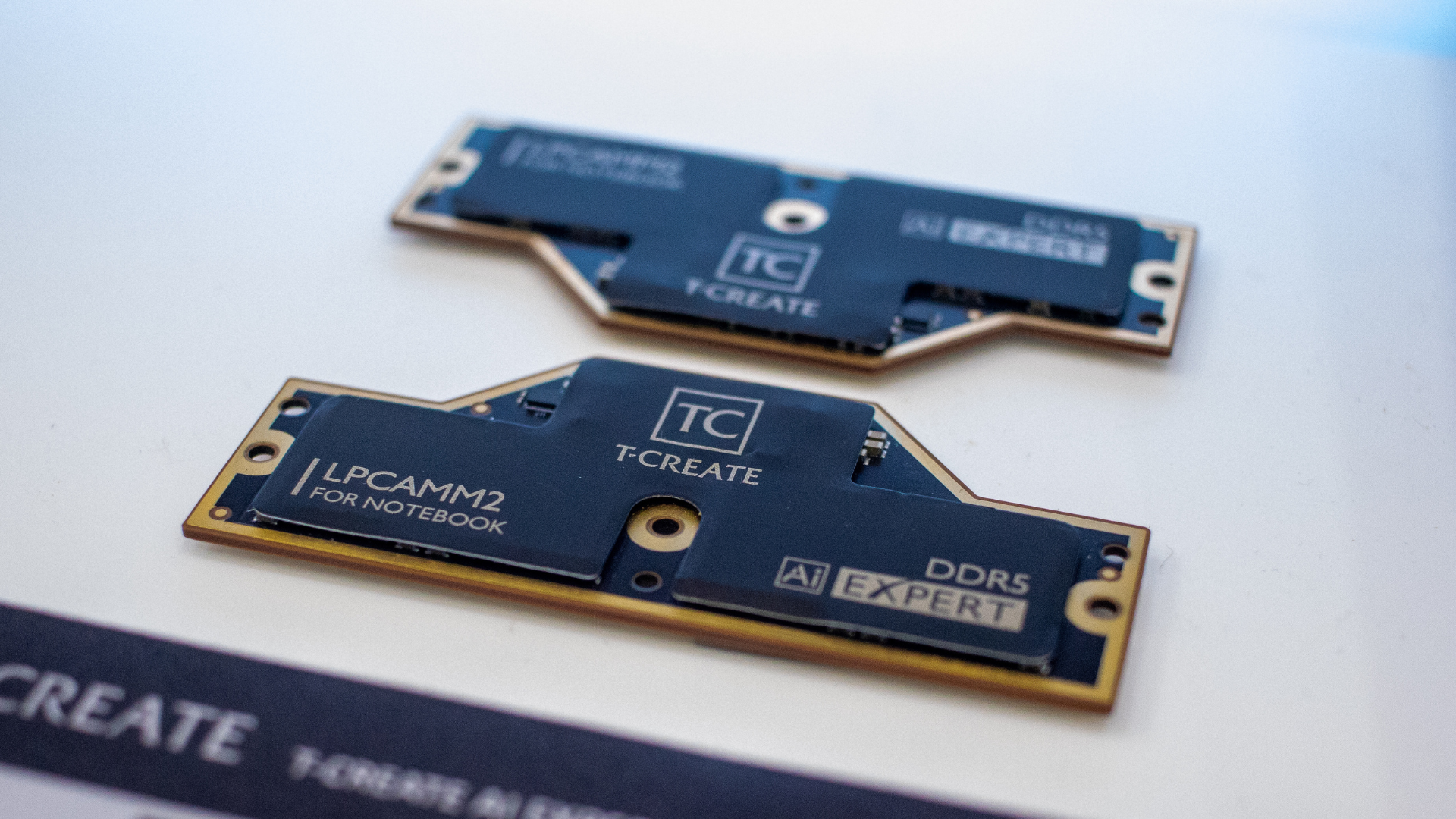
Get started with free access to reviews, badges and discussions.
Unlock exclusive tools and insights for enthusiasts who want more.
Access Bench, Roadmaps, deep analysis and other exclusive tools.
Dive into our proprietary testing data and compare hardware with detailed benchmarks.
Go beyond the headlines with expert reporting on the hardware industry.
Track upcoming CPUs, GPUs and tech releases before they arrive.
In-depth features, interviews and insider stories from the world of hardware.
Expert insights and analysis delivered to your inbox.
Dive into our proprietary testing data and compare hardware with detailed benchmarks.
Go beyond the headlines with expert reporting on the hardware industry.
Track upcoming CPUs, GPUs and tech releases before they arrive.
In-depth features, interviews and insider stories from the world of hardware.
Expert insights and analysis delivered to your inbox.
Keep exploring and earning more as a member.
Reviews, benchmarks, and updates on current GPUs.
Join for quick access. Enter your email below and we'll send confirmation plus sign you up to our newsletter.
Get Tom's Hardware's best news and in-depth reviews, straight to your inbox.
Unlock instant access to exclusive member features.
Get full access to premium articles, exclusive features and a growing list of member rewards.
When you purchase through links on our site, we may earn an affiliate commission. Here’s how it works.
Team Group CEO Chen Ching-wen said during the company’s November 2 earnings call that the memory chip shortage is expected to become worse from the end of 2026 until the end of 2027. BigGo Finance quoted Chen as saying that there is “no downward price trend whatsoever,” and that some purchasers could face a scenario “even money can’t buy goods.” He also noted that the spread between spot and contract prices for memory chips ranges from 30% to 50%, meaning short-term supply is significantly more expensive than long-term contracts.
"We have contracts but can't get enough volume, so we have to go to the spot market and pay a premium to grab supply," the Team Group chief said during the briefing. Contract prices for 16GB DDR5 chips climbed from $8.70 in October 2025 to $48 by September 2026. This is an increase of more than 550% in the past 12 months, and it seems that the price hikes are not letting up. He also estimated that supply and demand will not balance until the latter half of 2028 or perhaps even later. “How can prices fall when there’s nothing left?” said the CEO.
The Chairman also noted that even though CXMT and YMTC have increased their market share to almost 10%, most high-end DRAM and NAND flash chips still come from Kioxia, Micron, Samsung, and SK hynix. Even then, the prices for the chips that these Chinese companies make still track the market closely, meaning they’re not the budget savior that many were expecting. As such, he expects that pricing for budget components will not ease until 2029, while high-end chips will continue to remain in short supply.
These estimates go against Acer CEO Jason Chen’s prediction that component pricing will reverse by the latter half of 2027. Chen suggests that only high-end chips, like LPDDR5X-9600 and Nvidia N1-series SoCs, will remain in shortage while mainstream parts will finally go down. PCs will still experience hikes between 5% and 20% until the end of this year, plateau during the first half of 2027, before finally going down. Chen claims that most major suppliers want to hype the shortage for as long as possible to preserve their margins.
Unfortunately, there’s no way for us to know which of these predictions will come true. While consumers would gladly want to have a break from the nearly continuous price hikes that PC parts and components have been experiencing over the past months, the AI data center build-out is apparently continuing, even as many Americans voted against it.
Follow Tom's Hardware on Google News, or add us as a preferred source, to get our latest news, analysis, & reviews in your feeds.
Get Tom's Hardware's best news and in-depth reviews, straight to your inbox.
Jowi Morales is a tech enthusiast with years of experience working in the industry. He’s been writing with several tech publications since 2021, where he’s been interested in tech hardware and consumer electronics.
Tom's Hardware is part of Future US Inc, an international media group and leading digital publisher. Visit our corporate site.
© Future US, Inc. Full 7th Floor, 130 West 42nd Street, New York, NY 10036.
Kia EV7 revealed as an upcoming midsize electric SUV

Kia is crushing it with a full lineup of electric vehicles ranging from entry-level SUVs to the three-row EV9 and PV5 van. A leaked document revealed that Kia plans to add the EV7, a new midsize electric SUV, to fill the gap between the EV6 and the three-row EV9.
With 291,219 vehicles sold last month, up 10.3% from October 2025, Kia posted its eighth consecutive month of year-over-year sales growth.
Kia said it plans to build on the momentum by focusing on electrified vehicles in key markets, including hybrids in the US and fully electric vehicles in Europe.
After launching the EV2 earlier this year, Kia now offers one of the most complete EV lineups, including the EV2, EV3, EV4, EV5, EV6, EV9, and PV5 van.
According to a recently leaked document, a new midsize electric SUV will join the lineup. KoreanCarBlog uncovered an internal document from Kia’s Employment Stability Committee that reveals the company’s upcoming production plans.
The report claims “production of mid-range electric SUV ‘EV7’ to proceed” at Kia’s Gwangju factory in South Korea.
Although no other details were revealed, the EV7 will be a midsize electric SUV, slotted between the EV6 and three-row EV9.
During its 2026 CEO Investor Day in April, Kia announced plans to expand its EV lineup to 14 models by 2030.
In Europe, Kia plans for EVs to account for 66% of sales by 2030, with a full lineup that includes the EV2, EV3, EV4, EV5, EV6, EV9, three PBVs, a new C-segment electric SUV, and its first “SDV B-segment hatchback.”
So what can we expect from the upcoming EV7? Kia said earlier this year that it’s developing a new EV platform “to significantly enhance both product performance and cost competitiveness.”
Although it didn’t offer specifics, Kia claimed the new EV platform delivers up to a 40% increase in battery capacity and a 9% improvement in motor output.
It will use Kia’s fifth-generation batteries, providing up to 15% higher energy density than its current tech.
Kia’s upcoming software-defined vehicles (SDVs) are expected to integrate Hyundai’s SDV architecture (CODA), Pleos Connect infotainment system, and Gleo AI, an in-vehicle Agenic AI.They will also have Level 2++ autonomous driving capabilities on highways.
The EV5, Kia’s current midsize electric SUV, is 4,615 mm long, 1,875 mm wide, and 1,675 mm tall, with a 2,750 mm wheelbase, which is about the size of the Sportage, so you can expect the EV7 to be slightly bigger. It will likely be closer in size to the Sorento.
Powered by an 81.4 kWh battery, the Kia’s current EV5 offers a WLTP range of up to 329 miles (530 km).
Gods, I wish KIA would come up with actual names for their BEVs, rather than this uninspiring 'EV#' scheme. I love my EV6, but wish every day it had a real name!
However, unlike the EV6 and EV9, the EV5 uses a 400V electrical architecture rather than an 800V. As a result, charging the battery from 10% to 80% takes about 30 minutes, rather than 18 to 25 minutes. The upcoming EV7 will likely use the 800V system for faster charging.
The document also revealed Kia will begin production of “completely redesigned models” at its Gwangmyeong Factory, including the 2028 Carnival Hybrid and a hydrogen-powered Carnival by 2029.
At its Gyeonggi Hwaseong Factory, Kia will reportedly also produce redesigned models, including the Sorento Hybrid in 2028.
FTC: We use income earning auto affiliate links. More.
Peter Johnson is covering the auto industry’s step-by-step transformation to electric vehicles. He is an experienced investor, financial writer, and EV enthusiast. His enthusiasm for electric vehicles, primarily Tesla, is a significant reason he pursued a career in investments. If he isn’t telling you about his latest 10K findings, you can find him enjoying the outdoors or exercising
Microsoft wants to give you an Xbox Series X swallowed by a giant alligator

Join the club for quick access. Enter your email below and we'll send confirmation, and sign you up to our newsletter.
Keep exploring and earning more as a member.
AI updates, how-tos and comparisons in one place.
Get the biggest gaming news, reviews, and releases straight to your inbox.
Xbox’s smallest controller is pocket-sized, rechargeable, and only $50
Microsoft’s Xbox 25th anniversary gift is 25 free games for new Windows 11 PC buyers
XBOX made generational leaps with each console — So, what happens next?
All the latest news, reviews, and guides for Windows and Xbox diehards.
Unlock instant access to exclusive member features.
Get full access to premium articles, exclusive features and a growing list of member rewards.
Microsoft is hosting a free giveaway for the Xbox Series X-Bite, a custom Xbox Series X trapped inside a fake alligator — here's how to win this bizarre prize
When you purchase through links on our site, we may earn an affiliate commission. Here’s how it works.
Microsoft has announced (via Xbox Wire) one of the strangest promotions it's done in years. It's hosting a free giveaway on social media for the Xbox Series X–Bite, a custom-made Xbox Series X trapped in a fake alligator.
This is not a gimmick display piece; there is an actual, fully functional Xbox Series X inside this fabricated beast, complete with a built-in resting place for an Xbox Series X controller rest in the alligator's jaw.
Do note that only one Xbox Series X-Bite exists and that Microsoft will only give it away to one winner. If you're interested in this monstrosity.
Here are the rules for entering this giveaway promotion:
The Xbox Series X-Bite sweepstakes giveaway will run from 9:00 a.m. PT on November 3, 2026, to 11:59 p.m. PT on November 10, 2026.
Keep an eye out for notifications from Microsoft after you enter. If you've won, you will need to claim your prize within 48 hours of Microsoft's notification; otherwise, you'll miss your chance.
Now I've seen my fair share of bizarre gaming promotions as a gaming journalist over the years, but this one takes the cake for how random it is. I mean, how do you even put any discs in this gator (and will Xbox controllers' wireless connections be able to get through its stomach)?
I can't help but wonder if this was originally meant to be a Grand Theft Auto 6-themed Xbox Series X giveaway (considering the game takes place in a satirical version of Florida called "Leonida"), but something happened to cause Microsoft to veer away from any mention of it.
Either way, with Xbox consoles struggling for stock, I'm sure there will be plenty of people crazy enough to enter this contest to win the Xbox Series X-Bite and display it as a treasured heirloom for future generations to guard with their lives...or take the console out of the gator's stomach and toss out the reptile if it's too big to fit in their rooms.
Join us on Reddit at r/WindowsCentral to share your insights and discuss our latest news, reviews, and more.
Alexander Cope is a gaming veteran with over 35 years of experience who primarily covers Xbox and PC gaming news and spotlights discounts on the best laptops, peripherals, and other electronics. He's also a diehard fan of JRPGs, action games, beat em’ ups, and Capcom’s Monster Hunter series
You must confirm your public display name before commenting
Please logout and then login again, you will then be prompted to enter your display name.
Windows Central is part of Future US Inc, an international media group and leading digital publisher. Visit our corporate site.
© Future US, Inc. Full 7th Floor, 130 West 42nd Street, New York, NY 10036.
Google will fix Nest devices that didn’t adjust for Daylight Savings, breaking alarms and more

Google says it will roll out a fix for Nest devices that were impacted by problems with Daylight Savings adjustments due to changes in Canada.
A number of Nest Hub and Nest Thermostat users on Reddit noticed this week that their devices were showing the wrong time following the Daylight Savings time change.
This isn’t just a display bug, with real impacts including late alarms, delayed or broken automations, and altered schedules, among other impacts. The problem is specific to certain parts of Canada, user reports show, as changes in the country left some provinces skipping Daylight Savings changes while others kept the status quo. Google previously issued guidance on how to handle these changes on Android phones.
On Nest devices, though, adjusting time zones isn’t quite as easy, so this was a bigger headache.
Google is working on a fix, though, the company confirmed to Android Authority. In a statement, Google says that it is aware of the problem and working to resolve it.
Google is aware of an issue affecting a small subset of devices in some provinces in Canada where daylight savings is no longer observed. We apologize for any inconvenience and are actively working on a fix.
Google also replied to some affected users to confirm a fix is coming but, as of November 4, the fix does not appear to be in place.
Follow Ben: Twitter/X, Threads, Bluesky, and Instagram
FTC: We use income earning auto affiliate links. More.
Check out 9to5Google on YouTube for more news:
Find him on Twitter @NexusBen. Send tips to schoon@9to5g.com or encrypted to benschoon@protonmail.com.
Christine and the Queens Returns with Two New Songs

It’s been three years since Christine and the Queens shared his last proper solo album, a 20-song record inspired by Angels in America. Now, he’s back with a new song done up two ways: in French (“Rendez-vous avec toi”) and English (“Rendez-vous in your arms”). They both come with a music video co-directed by Chris and Raphaël De Albuquerque, with choreography by Alexander Ekman. Check out both versions below.
“Rendez-vous avec toi” and “Rendez-vous in your arms” are the first preview of a still-untitled new album from Christine and the Queens, which is due out sometime this spring. It follows his 2025 EP Catching Feelings with Italo disco legend Cerrone, and his 2024 album Hopecore, released under the name Rahim Redcar.
Chris will support the new double single with four full-band shows in Europe and the UK this December. He’ll perform in Brussels, London, and Amsterdam before closing out the run with a set at Alhambra in Paris. “We will revisit a repertoire that made us grow together, and give a first listen to unreleased songs from the next album,” Chris said in press materials. “We revisit, we reinterpret, we remember, and we transcend.”
Christine and the Queens:12-01 Brussels, Belgium - Botanique12-07 London, England - Scala12-08 Amsterdam, Netherlands - Tolhuistuin12-10 Paris, France - Alhambra
Students gather to explore Hawaii's glorious night sky | Space photo of the day for Nov. 4, 2026

Join The Club for quick access. Enter your email below and we'll send confirmation, and sign you up to our newsletter.
Keep exploring and earning more as a member.
Latest space missions, discoveries and exploration updates.
Stargazing tips, cosmic events and expert insights on the universe
Start exploring exclusive deals, expert advice and more
Space news, cosmic updates and expert insights straight to your inbox.
Breaking space news, the latest updates on rocket launches, skywatching events and more!
Unlock instant access to exclusive member features.
Breaking space news, the latest updates on rocket launches, skywatching events and more!
Sign up to our monthly entertainment newsletter to keep up with all our coverage of the latest sci-fi and space movies, tv shows, games and books.
Discover this week's must-see night sky events, moon phases, and stunning astrophotos. Sign up for our skywatching newsletter and explore the universe with us!
Space.com's Sci-Fi Reader's Club. Read a sci-fi short story every month and join a virtual community of fellow science fiction fans!
Get full access to premium articles, exclusive features and a growing list of member rewards.
An annual tradition of amazement under the stars.
When you purchase through links on our site, we may earn an affiliate commission. Here’s how it works.
Students gathered under the stars in Hawaii recently to explore the awesome nature of the night sky together.
From Oct. 19 to Oct. 22, more than 1,400 students on the Big Island of Hawaii gathered for the Journey Through the Universe event to explore astronomy together.
The Journey Through the Universe program is currently in its 23rd year. It was originally developed by the National Center for Earth and Space Science Education (NCESSE) and later introduced in Hawaii by the international Gemini Observatory, a program within the U.S. National Science Foundation's NOIRLab (National Optical-Infrared Astronomy Research Laboratory) that works with the Department of Education Hilo-Waiākea.
The program aims to introduce students in the Hilo-Waiākea public school system to astronomy as well as the incredible science that happens across Hawaii. The students who participate range from preschoolers to seniors in high school, so the program introduces some students to astronomy and helps others explore possible careers in STEM fields.
This year, the program brought in 19 volunteer educators from scientific institutions like Maunakea Observatories and supported hands-on activities and lessons that went from the classroom to under the Milky Way.
This image shows a growing love for astronomy in progress. From the red glow of a skywatching night (red light doesn't interfere with our ability to see at night like white light does) to the scattered telescopes and students standing under the stars, this scene paints a larger picture.
This is just one program, but in bringing together volunteers, educators, scientists and students, the program has created an incredible and enduring learning experience.
Whether or not students walk away wanting to pursue a career in STEM, this incredible immersion in astronomy can help to foster a lifelong appreciation for science and nature. It's always a great idea to gather under the stars and explore together.
Chelsea Gohd served as a Senior Writer for Space.com from 2018 to 2022 before returning in 2026, covering everything from climate change to planetary science and human spaceflight in both articles and on-camera in videos. With a M.S. in Biology, Chelsea has written and worked for institutions including NASA JPL, the American Museum of Natural History, Scientific American, Discover Magazine Blog, Astronomy Magazine, and Live Science. When not writing, editing or filming something space-y, Gohd is writing music and performing as Foxanne, even launching a song to space in 2021 with Inspiration4. You can follow her online @chelsea.gohd and @foxanne.music
You must confirm your public display name before commenting
Please logout and then login again, you will then be prompted to enter your display name.
Space is part of Future US Inc, an international media group and leading digital publisher. Visit our corporate site.
© Future US, Inc. Full 7th Floor, 130 West 42nd Street, New York, NY 10036.
Logitech G Pro X3 Superstrike Review: $200 for the illusion of a click

Join for quick access. Enter your email below and we'll send confirmation plus sign you up to our newsletter.
Get started with free access to reviews, badges and discussions.
Unlock exclusive tools and insights for enthusiasts who want more.
Access Bench, Roadmaps, deep analysis and other exclusive tools.
Dive into our proprietary testing data and compare hardware with detailed benchmarks.
Go beyond the headlines with expert reporting on the hardware industry.
Track upcoming CPUs, GPUs and tech releases before they arrive.
In-depth features, interviews and insider stories from the world of hardware.
Expert insights and analysis delivered to your inbox.
Dive into our proprietary testing data and compare hardware with detailed benchmarks.
Go beyond the headlines with expert reporting on the hardware industry.
Track upcoming CPUs, GPUs and tech releases before they arrive.
In-depth features, interviews and insider stories from the world of hardware.
Expert insights and analysis delivered to your inbox.
Keep exploring and earning more as a member.
Reviews, benchmarks, and updates on current GPUs.
When you purchase through links on our site, we may earn an affiliate commission. Here’s how it works.
The G Pro X3 Superstrike brings a new chipset and rebalancing to Logitech's revolutionary mouse. But at $200, it's probably not worth it for most gamers.
Why you can trust Tom's Hardware Our expert reviewers spend hours testing and comparing products and services so you can choose the best for you. Find out more about how we test.
It only launched at the beginning of this year, but Logitech's most innovative, game-changing mouse, the Logitech G Pro X2 Superstrike, has already gotten an upgrade.
The new Logitech G Pro X3 Superstrike looks just like its predecessor (okay... the colors are different), but it's what's inside that counts. The new mouse features Logitech's new NxLOGI chipset, which improves performance and efficiency and supports 8,000 Hz polling over both wired and wireless connections. The mouse also weighs two grams less and has been rebalanced to be more center-weighted rather than front-heavy, like the X2 Superstrike.
The upgrade doesn't come without an upcharge, of course: The new G Pro X3 Superstrike costs $199.99, which is... kind of crazy for a mouse. The X2 Superstrike debuted at $179.99, which was already higher than average, but $200 seems like a line most will not want to cross. The mouse does come in two colorways now — black and "magenta eclipse," a black and pink colorway that matches Logitech's other pink G Pro peripherals.
The G Pro X3 Superstrike has the exact same shape as the original G Pro X2 Superstrike — which has the exact same shape as the G Pro X Superlight and Superlight 2. The mouse has a pseudo-symmetrical design, with sides that taper at the middle, and a centered hump with a mild slope. It's not a terribly exciting or revolutionary shape, but it's comfortable, easy to handle, and quick to get used to. The mouse measures 4.92 inches (125mm) long by 2.5 inches (63.5mm) wide, and is 1.57 inches (40mm) high at its highest point.
The X3 weighs just 2.08 ounces (59g), which makes it 2g lighter than its predecessor (2.15oz / 61g). While that's not a big difference, Logitech has rebalanced the weight in the X3 Superstrike to make it feel more centered — and it does feel more centered, though it still felt slightly front-weighted to me. But still, it feels noticeably different (and better) than the very front-heavy feel of the original X2 Superstrike.
Fancy chipsets and HITS technology aside, the X3 Superstrike is a pretty basic five-button mouse, with two large primary buttons that have slight finger grooves, two large side buttons, and a clickable, notched scroll wheel covered in textured rubber. The mouse has the same smooth matte finish as the X2 Superstrike and the Superlights, which feels fine but is prone to fingerprints. Of course, the mouse still has the Superstrike branding all over it, with crosses on the mouse buttons, "Superstrike" on the right side, and a giant "X3" on the left.
The bottom of the mouse is also pretty simple, with large UHMWPE mouse feet at the top and bottom, plus a strip around the sensor. There's also a power switch and a magnetic mouse puck that you can swap out — either for the included extra puck, which is covered in UHMWPE for even more glide, or for the charging puck that comes with Logitech's PowerPlay 2. Under the mouse puck, there's a slot for storing the mouse's wireless dongle, which is a nice touch — other ultra-lightweight, performance-focused mice don't always have this.
Get Tom's Hardware's best news and in-depth reviews, straight to your inbox.
In the box, the X3 Superstrike comes with a rubberized 6-foot (1.8m) USB-C to USB-A cable, a 2.4GHz wireless USB-A dongle, an extra mouse puck, pre-cut grip tape, and a USB converter. The cable is lightweight and flexible — while it's not covered in paracord, it's fairly usable as a mouse cable with the X3 Superstrike. It's worth pointing out that the X3 Superstrike does support 8,000 Hz polling over both its wireless and wired connections, now (the X2 Superstrike only supported 8,000 Hz polling over wireless).
4.92 x 2.5 x 1.57 inches / 125 x 63.5 x 40 mm
The G Pro X3 Superstrike features Logitech's Hero 2 optical sensor, which has a maximum resolution of 48,000 DPI and a maximum speed of 930 IPS, and can handle up to 90 G's of force. If those numbers seem different from the Hero 2 optical sensor in the X2 Superstrike, that's because they are — while both mice have the same sensor, apparently the new NxLOGI chipset in the X3 Superstrike unlocks the true potential of said sensor, and allows for higher resolution, speed, and acceleration. That said, it is a great sensor — accurate, consistent, and able to track on virtually any surface without skipping.
Like the X2 Superstrike, the X3 Superstrike features Logitech's Haptic Inductive Trigger System (HITS), which means there are no switches under the primary buttons — instead, there's a combo of haptic motors and inductive sensors that allow for adjustable actuation and create the illusion of a mouse click. This is the most intriguing part of the Superstrike line, since raising the actuation point genuinely does translate to faster, more responsive clicks.
The haptic click feedback is interesting. I found the feedback to be surprisingly convincing on the X2 Superstrike, even though it's still pretty obvious that it's not a "real" switch. The click feedback on the X3 Superstrike is still... fairly convincing, but it's definitely softer than the feedback on the original. You can still adjust the feedback level (five levels), but feedback just feels firmer on the original — I guess Logitech sacrificed some haptic power for efficiency, or something. The side buttons still have regular switches, and they're a little mushy but otherwise inoffensive. The scroll wheel has a very soft scroll and muted click, but at least it's not loud. In fact, this is probably the quietest mouse I've ever used — even with click strength set to the highest (5), it's barely audible.
In addition to adjustable actuation, the X3 Superstrike also allows for Rapid Trigger, which resets the mouse button's actuation as soon as your finger lifts, allowing for even faster clicks.
The G Pro X3 Superstrike is configurable via Logitech G Hub, which is the company's universal peripheral software. You can use G Hub to adjust the mouse's settings — DPI, DPI steps, and polling rate (both wired and wireless) — calibrate the mouse, and remap buttons (though you're probably not remapping a ton of buttons on a five-button mouse). You can also enable BHOP for the scroll wheel, which helps prevent accidental movement when you bump the scroll wheel.
And, of course, you can set up the HITS features in the HITS tab. These include adjustable actuation, Rapid Trigger, and click haptics, and each mouse button can be set independently. There's also a bunch of presets from professional competitive gamers, in case you're not sure where to start (you can also add your own custom presets to this list).
Logitech rates the battery life of the G Pro X3 Superstrike at 135 hours in constant motion, which is actually a pretty big improvement over the X2 Superstrike's 90-hour rating. This is over a 1,000 Hz polling rate, of course, and the number drops to under 40 hours with an 8,000 Hz polling rate (which is still not terrible, I suppose). Thankfully, the X3 Superstrike can get an 8,000 Hz polling rate over both its wired and wireless connections — the X2 Superstrike has an 8,000 Hz wireless polling rate but maxes out at 1,000 Hz when plugged in — so it won't be the battery life that does you in.
The G Pro X3 Superstrike isn't too different from the X2 Superstrike — but the difference in balance, at least, is absolutely noticeable. This doesn't make me think the X3 Superstrike is revolutionary, though it makes me think that Logitech should have waited and launched the Superstrike line with this mouse. The click haptics are weaker here, but the mouse is better overall. However, is it better enough to justify the $200 price? Probably not.
If you're at the top of your game and you're absolutely certain that the only thing holding you back is the minuscule latency from non-adjustable actuation, sure, get the X3 Superstrike. If you already have the G Pro X2 Superstrike, the upgrade probably isn't worth it — in the time it took you to get used to the click haptics, you probably also got used to the balance, and that's the only noticeable difference. And if you're just looking for a symmetrical, ultra-lightweight mouse, you can always pick up the G Pro X Superlight 2, which can often be found for around $100.
Sarah Jacobsson Purewal is a senior editor at Tom's Hardware covering peripherals, software, and custom builds. You can find more of her work in PCWorld, Macworld, TechHive, CNET, Gizmodo, Tom's Guide, PC Gamer, Men's Health, Men's Fitness, SHAPE, Cosmopolitan, and just about everywhere else.
Tom's Hardware is part of Future US Inc, an international media group and leading digital publisher. Visit our corporate site.
© Future US, Inc. Full 7th Floor, 130 West 42nd Street, New York, NY 10036.
Is Chrome’s settings menu getting a search bar? What we know

Our gifting experts are obsessively searching for holiday gifts that are unique, thoughtful and suitable for any budget.
Chrome might receive a much-needed addition.
I’m a longtime Chrome user, but I’ve never been a fan of the browser’s user settings menu, which has grown into a dense collection of nesting submenus that can be difficult to navigate. That may be changing soon.
Also: How Chrome warns you about suspicious websites now
X (formerly Twitter) user, Leopeva64, posted a short video and several still images showcasing a potential new feature in Chrome Canary, which Google uses to test new Chrome web tools and features. The posts show the search bar pinned to the top of the settings menu for instant access. By entering the name of the submenu or feature you want to access, the new search bar could save a lot of time normally spent clicking around, trying to remember exactly where it’s located.
In Chrome Canary, Google is testing removing the scroll arrows that let you automatically scroll to reveal hidden items when you hover over them in the 3-dot menu. They also added a scrollbar, and the search box at the top and the footer are now pinned so they are always visible: https://t.co/Plx6BgKfJN pic.twitter.com/D7TxDkCtmP
According to Leopeva64, other possible new features include a visual update that groups similar menu options into tiles for faster navigation of your most-accessed settings, as well as pinning the menu footer to keep it visible as you click through.
Chrome Extensions is also up for a possible refresh with a move to a dedicated submenu called Manage Skills to help keep all of your installed extensions organized and make it easier to remove ones that are no longer needed.
Also: How to take full-page screenshots in Chrome on any device – it’s easy and free
Google Lens may get a new submenu, called “Ask Google about this page,” for searching for items you see across an entire page, not just in a single image.
There’s no official word yet on when these features will leave Canary’s testing environment and become available in the regular Chrome menu. I’ve reached out to Google for a comment, but at the time of writing, I have not received a response.
ANC faces anger over poor services as South Africans vote in local elections

Party expected to get less than a third of the vote amid frustration over water outages and power cuts
The African National Congress is on course for a bruising result in South Africa’s local elections on Wednesday as voters go to the polls amid deep discontent over water outages, power cuts and crumbling infrastructure.
The former liberation movement, which Nelson Mandela led to power in 1994 at the end of apartheid as South Africa’s first black president, is still likely to be the largest party. However, polls showed it getting less than a third of the vote, down from 45.6% at the last municipal elections in 2021 and 40.2% in 2024’s national elections.
In Kensington, a diverse Johannesburg suburb that has sustained repeated water and power outages in recent weeks, voters said they wanted to see change. The city is currently led by Dada Morero, the ANC mayor, in coalition with the far-left Economic Freedom Fighters (EFF) and the rightwing populist Patriotic Alliance (PA).
“Service delivery is bad, it’s horrible,” said Tshepiso Makotse, 26, a call centre worker. “Water, electricity – everything, basically.”
Makotse said she had split her two votes, casting one for the centre-right Democratic Alliance (DA) local councillor and her party vote for the leftwing uMkhonto weSizwe (MK) party of the former ANC president Jacob Zuma. “I just want change,” she said.
Terrence Pieters, a retired boilermaker, said: “The infrastructure in Johannesburg is shot.” He declined to say which party he had voted for, other than it was “one of the offshoots of the DA”.
“I would like to see things get better and great people in charge,” said the 72-year-old. “But … there’s no one party that’s going to take over here. It’s going to be a circus, it’s going to be a coalition.”
Vote fragmentation means the ANC could still end up leading many city coalition governments while losing control of others.
Unstable coalitions are already a feature of many of South Africa’s 257 municipalities, and analysts point to their high turnover as a major reason for poor service delivery.
Johannesburg, a city of 4.8 million people that has faced water shortages for more than a week, has had 10 mayors in as many years. The neighbouring municipality of Ekurhuleni has had three mayors since 2021. To the north, in Tshwane, which contains the capital, Pretoria, the mayoralty has rotated between parties four times since 2020. In October, more than 800 people contracted a gastrointestinal illness from contaminated water in Bronkhorstspruit, in east Tshwane.
The ANC’s national leadership is open to working with the DA in Gauteng, according to South African media, mirroring the government of national unity, where the two parties are the largest in the national coalition. However, local ANC leaders are reportedly not in favour of a DA tie-up. Currently, the ANC governs in various coalitions across the province’s three metros, including under an ActionSA mayor in Tshwane.
In Johannesburg, the DA’s Helen Zille has led a spirited campaign, with viral stunts including the 75-year-old snorkelling in a pothole and kayaking along a flooded street. However, the former Cape Town mayor is still viewed with suspicion by many, especially black voters, due to past comments appearing to excuse colonialism. Some voters also point to soaring housing costs in Cape Town, which has been run by the DA since 2006, as a reason not to vote for Zille.
The former Johannesburg DA mayor Herman Mashaba, who now leads ActionSA, which is polling around 10%, has ruled out working with Zille in Johannesburg. Mashaba has called Zille a “racist”, an allegation she has always fervently denied. The ANC, for its part, has three possible mayoral candidates for the city, amid factional infighting.
In eThekwini metro, which contains the port city of Durban, the MK party was polling above 40%. Zuma, its 84-year-old leader, who has weathered and denied numerous corruption allegations, is set to take many of the votes of his former party, which won 42% in eThekwini in 2021 and is now polling around 10%.
The DA looks set to retain its majority in Cape Town, although probably with less than the 58% of the vote it won in 2021, as unaffordable housing turns more voters against the party.
South Africa’s electoral commission will have a week to announce the final results of Wednesday’s vote, which chooses councillors and parties, with mayors not directly elected. Parties will then have two weeks from the announcement to form councils and elect mayors.
Excel copy and paste breaks once again after Microsoft update

Join the club for quick access. Enter your email below and we'll send confirmation, and sign you up to our newsletter.
Keep exploring and earning more as a member.
AI updates, how-tos and comparisons in one place.
Get the biggest gaming news, reviews, and releases straight to your inbox.
12+ useful Windows 11 features Microsoft tested in October 2026
Windows 11's new faster and customizable context menus are now rolling out
Windows 11 version 26H2: Everything you need to know
All the latest news, reviews, and guides for Windows and Xbox diehards.
Unlock instant access to exclusive member features.
Get full access to premium articles, exclusive features and a growing list of member rewards.
A recent Excel 2016 update reintroduced a copy-and-paste bug that Microsoft had already fixed once before.
When you purchase through links on our site, we may earn an affiliate commission. Here’s how it works.
Copying and pasting continues to be an issue for those who install the latest updates from Microsoft. Just one month after an update broke functionality in Excel, October's release has caused the same issue.
The latest issues are caused by the KB5002934 update for Microsoft Excel, which is for Excel 2016. That version replaces KB5002665, which included a hotfix for a copy/paste bug. Despite superseding the previous update, the KB5002934 update can also prevent you from copying and pasting if a workbook contains conditional formatting.
Only a small set of Excel users should be affected by the bug, since it's limited to Excel 2016. Newer versions of Excel do not have the issue.
The bug appears in a way that may confuse those who run into it. Rather than Excel showing an error message or making a noise, the function simply fails.
The updates to Excel ship through Windows Update, though they aren't updates to the operating system itself. They function similarly to updates for other Microsoft apps such as Edge.
Luckily for those facing the issue, Microsoft has already fixed the bug. The company released a new build of Excel that fixes the issue. If Excel is running build 16.0.5574.1006 (or later), you should be fine.
You can check your Excel version by opening File > Account and looking under About Excel.
If for some reason you are still facing the issue, you can try these steps from Microsoft as a workaround:
I'm glad that Microsoft fixed the problem so quickly, but it's concerning that updates caused the same issues two months in a row.
Join us on Reddit at r/WindowsCentral to share your insights and discuss our latest news, reviews, and more.
Sean Endicott is a News Writer at Windows Central, where he covers Windows 11, Surface hardware, Microsoft 365, AI, apps, and the broader PC ecosystem. Since joining the site in 2017, he has written well over a thousand articles across the Microsoft landscape, covering breaking news, analysis, and feature reporting.
He writes Windows Wrap, a weekly column covering the biggest stories in Windows and the PC industry, and what they mean for the platform going forward.
Before joining Windows Central full-time, Sean worked in journalism and media production after earning a First Class degree in Broadcast Journalism from Nottingham Trent University. Outside of tech, he is an award-winning American football coach based in Nottingham, England, and was named BAFCA Youth Coach of the Year in 2024.
You must confirm your public display name before commenting
Please logout and then login again, you will then be prompted to enter your display name.
Windows Central is part of Future US Inc, an international media group and leading digital publisher. Visit our corporate site.
© Future US, Inc. Full 7th Floor, 130 West 42nd Street, New York, NY 10036.
Google Photos now lets you turn off background music in Memories

In an update, Google Photos is making it possible to fully disable background music in Memories.
Memories in Google Photos are a fun way to relive some highlighted moments in your photo library, but it can be a little frustrating to see a video pop up only to have the default background music to play over those memories.
Google is now rolling out an option to disable background music entirely.
This new global setting can be found under Photos settings > Preferences > Memories with a “Background music” toggle being added. We’re not seeing this in v7.99 on Android, but Google says that it is on its way to the app.
We are introducing a new setting across all platforms that allows you to disable background music added by Photos to Memories. When turned off, this feature prevents extra music tracks from playing during your Memories. If your Memory includes a video, you’ll still be able to hear its original audio.
Google adds that this is a global setting that applies to all Memories, including the end-of-year recap.
Beyond adding the option to remove background music, Google says that the variety of background music options has also been updated, so you might start hearing new tracks if you do opt to leave the setting turned on.
Follow Ben: Twitter/X, Threads, Bluesky, and Instagram
FTC: We use income earning auto affiliate links. More.
Check out 9to5Google on YouTube for more news:
Find him on Twitter @NexusBen. Send tips to schoon@9to5g.com or encrypted to benschoon@protonmail.com.
Thermal Grizzly launches PhaseSheet PTM Pro with improved thermal conductivity

Get started with free access to reviews, badges and discussions.
Unlock exclusive tools and insights for enthusiasts who want more.
Access Bench, Roadmaps, deep analysis and other exclusive tools.
Dive into our proprietary testing data and compare hardware with detailed benchmarks.
Go beyond the headlines with expert reporting on the hardware industry.
Track upcoming CPUs, GPUs and tech releases before they arrive.
In-depth features, interviews and insider stories from the world of hardware.
Expert insights and analysis delivered to your inbox.
Dive into our proprietary testing data and compare hardware with detailed benchmarks.
Go beyond the headlines with expert reporting on the hardware industry.
Track upcoming CPUs, GPUs and tech releases before they arrive.
In-depth features, interviews and insider stories from the world of hardware.
Expert insights and analysis delivered to your inbox.
Keep exploring and earning more as a member.
Reviews, benchmarks, and updates on current GPUs.
Join for quick access. Enter your email below and we'll send confirmation plus sign you up to our newsletter.
Get Tom's Hardware's best news and in-depth reviews, straight to your inbox.
Unlock instant access to exclusive member features.
Get full access to premium articles, exclusive features and a growing list of member rewards.
Easier installation and improved thermal conductivity.
When you purchase through links on our site, we may earn an affiliate commission. Here’s how it works.
Thermal Grizzly has announced the PhaseSheet PTM Pro, an improved version of its popular phase-changing thermal pad. According to the manufacturer, the new thermal pad offers increased thermal conductivity alongside a redesigned carrier film that makes the PhaseSheet PTM Pro easier to handle and install. While this may seem like a relatively minor change, the new carrier film is designed to peel away more easily from both sides, reducing the risk of tearing the sheet during installation.
Like the original PhaseSheet PTM, the Pro version uses a phase-changing material that alters its physical properties depending on the temperature. At room temperature, the sheet remains solid, much like a conventional thermal pad. However, at temperatures above 45°C, the material transitions into a very low-viscosity liquid that behaves similarly to thermal paste.
This phase-changing behavior helps minimize the pump-out effect commonly associated with traditional thermal paste. Pump-out occurs when thermal paste gradually moves out from between a heatsink and a GPU die or CPU IHS due to repeated thermal expansion and contraction of the contacting surfaces. Over time, this can reduce the amount of thermal paste covering the contact area and potentially degrade cooling performance.
The PhaseSheet PTM Pro is also reusable and electrically non-conductive, meaning it can be safely used on components without an IHS, including mobile CPUs, GPUs, and other internal components such as memory and storage. According to a performance graph shared by Thermal Grizzly, the new PhaseSheet PTM Pro outperforms several popular thermal pastes and thermal pads in controlled testing. Using a 30 x 30mm contact area, 300N of mounting force (48 PSI), and a 240W heat load, the PhaseSheet PTM Pro recorded a temperature difference of 5.83°C, the lowest among all the tested materials. This puts it ahead of the KryoSheet (6.13°C), Duronaut Pro (6.29°C), and the original PhaseSheet PTM (6.36°C).
The PhaseSheet PTM Pro can be purchased through Thermal Grizzly's website for $23.28 per 40 x 40mm sheet. That's considerably more expensive than the original PhaseSheet PTM, which costs $13.92 for a larger 50 x 40mm sheet.
Follow Tom's Hardware on Google News, or add us as a preferred source, to get our latest news, analysis, & reviews in your feeds.
Get Tom's Hardware's best news and in-depth reviews, straight to your inbox.
Kunal Khullar is a contributing writer at Tom’s Hardware. He is a long time technology journalist and reviewer specializing in PC components and peripherals, and welcomes any and every question around building a PC.
Tom's Hardware is part of Future US Inc, an international media group and leading digital publisher. Visit our corporate site.
© Future US, Inc. Full 7th Floor, 130 West 42nd Street, New York, NY 10036.
Apple iPhone Duo review: the greatest iPhone ever made

When you purchase through links on our site, we may earn an affiliate commission. Here’s how it works.
Apple’s first foldable is a fascinating contradiction: a phone that gets some fundamentals wrong, challenges years of Android foldable convention, yet somehow becomes almost impossible to put down. The iPhone Duo isn’t the most accomplished foldable on paper, but Apple’s greatest advantage has little to do with hardware. Its developer ecosystem unlocks possibilities that make this device far more useful than its compromises suggest. The unconventional D-shaped design grows on you, while the nano-textured display is an unexpected triumph that makes everyday interactions genuinely delightful. At over $2,000, it demands a leap of faith, and Apple has plenty to learn from its rivals. But first-generation products are about possibility as much as perfection. The iPhone Duo feels like the beginning of something much bigger, and after two weeks, I’m convinced: this isn't just a foldable iPhone. It's the folding phone I've been waiting for.
Versatile hinge that holds at almost any angle
Apple's developer ecosystem unlocks unique experiences
IP68 dust and water resistance for durability
Cameras fall short of Pro-level expectations
Multitasking is limited compared to Android
Many apps still need foldable optimization
High start price, albeit on par with the competition
Why you can trust Android Central Our expert reviewers spend hours testing and comparing products and services so you can choose the best for you. Find out more about how we test.
I don't think any smartphone has ever been quite as polarizing as the iPhone Duo. After years of waiting for Apple's first foldable, the result is a phone that borrows some lessons from its Android counterparts, ignores plenty more, and feels like Apple is still figuring out what customers actually want from a foldable. Yet, despite some questionable decisions, I can't put it down. That contradiction is what makes the iPhone Duo so fascinating.
My verdict hinges on one factor I think many hardware comparisons overlook: the hidden superstar of Apple's developer ecosystem. It's both a blessing and a curse for Apple's first foldable, but in very unequal proportions. There will be short-term pain as developers, Apple, and users figure out what's possible, but the long-term gain could be enormous.
Objectively, the iPhone Duo gets plenty right, and Apple's choices seem unnecessarily complicated in places, especially since Android manufacturers have spent almost a decade solving many of the same problems. As someone who uses iOS and Android side by side, I appreciate the desire for consistency across Apple's ecosystem. But consistency shouldn't come at the expense of functionality, and some of Apple's decisions feel like an attempt to reinvent solutions that already work.
And yet, I keep reaching for it. Its utility alongside my other Apple devices is difficult to overstate, and the polarizing D-shaped design has grown on me considerably. In fact, it might be my favorite form factor for one-handed use. That's quite a turnaround from my initial reaction. My first 15 seconds with the Galaxy Z Fold 8 told me I loved it; the iPhone Duo took considerably longer. But the destination was the same, and that's an important lesson: unless a design is fundamentally flawed, living with it can change your perception in ways a hands-on session never will.
The iPhone Duo is the perfect foldable for me
The inner display is another example. Here, I think Apple has pulled an absolute blinder. The nano-texture layer doesn't just make the crease less distracting; it transforms the screen's entire feel. There's a welcome friction under your fingertips that reminds me of reading on an Amazon Kindle or using TCL's NxtPaper displays. It's wonderful for reading, scrolling, and typing, and makes the experience feel easier on the eyes without compromising brightness. After two weeks, I haven't had a single concern about visibility on either display, even in challenging conditions.
Then comes the inevitable question: is it worth $2,000 or more? That depends almost entirely on what you want from it. For me, the value isn't simply having a folding screen. It's being able to progress coding sprints, access my Mac remotely, and keep working from virtually anywhere in the world, even on airplane Wi-Fi. It's the pocket-friendly, always-connected folding iPad I've wanted for years, though it could benefit enormously from some iPadOS-inspired software capabilities. It finally brings a level of multitasking and utility to an iPhone that changes how I use it. For me, that's worth the asking price, and the reactions from others I've shown it to suggest I'm not alone.
Apple has at least given its first attempt some reassuring foundations. IP68 dust and water resistance, a weight that's only around 50 grams heavier than the Galaxy Z Fold 8, and the reassurance of AppleCare all help make the compromises easier to live with. But this is still a first-generation product, and Apple's approach will inevitably evolve. Samsung has had years to refine its foldables, and Apple is starting that journey considerably later. There is plenty of catching up to do, and I expect the next generations to be even slicker.
Get the latest news from Android Central, your trusted companion in the world of Android
Ultimately, the iPhone Duo might be Apple's most divisive iPhone yet, but dismissing it for what it gets wrong misses what makes it so compelling. Like every first-generation foldable, it charts a different path, makes compromises, and delivers a novelty that established designs simply can't replicate. More importantly, Apple's ecosystem gives it room to grow in ways that extend far beyond the hardware: developers will discover new experiences, users will find new workflows, and missing features will gradually be replicated or surpassed.
The iPhone Duo isn't the perfect foldable, and it doesn't need to be. It's a glimpse of what happens when Apple's ecosystem finally meets a folding iPhone. There are plenty of reasons to wait for the second generation, but after two weeks, I know one thing: I don't want to put this one down. It might not be perfect for everyone, but it's pretty damn close to perfect for me.
One of the biggest surprises about the iPhone Duo is its starting price: $2,000 in the US and £2,000 in the UK. That's for the 256GB model, and surprisingly, it's lower than I expected.
All the rumors leading up to launch suggested a record-high price, or at least a higher starting point than the competition. Instead, the iPhone Duo seems relatively well-priced by comparison. It's $100 more than the similarly sized Galaxy Z Fold 8, but $200 less than its taller sibling, although both of Samsung's foldables are currently available with sizable discounts.
Of course, 256GB is less storage than Samsung's double-your-storage launch promotion offers, and it falls short of the 512GB included with the Motorola Razr Fold, which starts at $1,899.99. Even accounting for any perception of an Apple tax, the premium seems surprisingly modest. By most comparisons, the iPhone Duo is fairly priced.
But how does it compare with Apple's own lineup? The iPhone Air is perhaps its closest match in terms of specifications and premium novelty, starting at $1,099. The new iPad mini costs $799, with a further $100 premium for the nano-texture finish. Put those together, and you're spending just $1 less than the iPhone Duo. It's hardly a scientific comparison, but it makes an interesting point: you're getting elements of both devices in one pocket-friendly package. If you were already planning to buy both, the iPhone Duo starts to look like a compelling proposition. I'd argue it's better value than its price tag might initially suggest.
The reactions from people I've shown it to largely support that. Three fellow passengers expressed genuine admiration; two immediately saw the utility and said they'd buy one for entirely different reasons, while the third felt it was simply out of her price range. Three small business owners I showed it to wanted one almost instantly, particularly after seeing how it could transform the way they run their businesses. I even encountered a brave parent who said they'd buy one, although with a six-year-old at home, that struck me as a rather bold investment!
Plenty of carrier deals are also worth considering, with all the major US carriers offering substantial trade-in credits to bring the cost down. Ten days after launch, the iPhone Duo is still sold out online, with deliveries pushed back until late January. In-store availability continues to fluctuate faster than a politician changes their stance.
There, I said it: Apple’s implementation of nano-texture is so enjoyable that I hope every foldable manufacturer copies it. Apple wasn’t the first to bring nano-texture to consumer devices, but its implementation on the iPhone Duo is a genuine differentiator, and for reasons that go well beyond the specifications.
The first is visibility. Apple seems to have understood something important about foldable screens: it’s not necessarily the crease depth that matters, but how much you notice it. The Oppo Find N6 might have the shallowest crease of any foldable, but the iPhone Duo’s nano-texture finish makes its crease far less distracting in everyday use. Apple hasn't eliminated the compromise; it's made it easier to forget.
The same philosophy applies to the under-display camera. Frankly, it isn't very good, but that's almost beside the point. Most of the time, you forget it's even there because it blends so seamlessly into the screen. It's a trade-off I’m happy to make: a less intrusive camera and a less noticeable crease, even if neither is technically the best implementation available. Sometimes the better experience isn't the one with the better specifications.
The iPhone Duo proves that sometimes the better experience isn't the one with the better specifications
Beyond that, the display itself is excellent. The nano-texture finish covers a 7.6-inch LTPO Super Retina XDR OLED panel, which is a lot of letters to describe the premium screen you'd expect at this price. It supports a 120Hz refresh rate, HDR10, Dolby Vision, and up to 3,000 nits of peak brightness in bright conditions. The unusual 1.42:1 aspect ratio is particularly interesting for multitasking, allowing two vertical apps to sit side by side. Or, as we'll explore later, it lets Apple retain a side rail while dividing the remaining space into two smaller iPhone-like experiences. The 5.4-inch cover display retains a similar aspect ratio and many of the same premium characteristics, albeit without the nano-texture finish.
Over the past two weeks, I've used the iPhone Duo on planes, trains, and automobiles, both at home and abroad, and one thing has become abundantly clear: both displays are a joy to use. I haven't encountered any brightness or visibility concerns, regardless of the conditions. There have been reports of display failures, as there are with other foldables, but it's too early to draw meaningful conclusions about their frequency or long-term durability.
Ultimately, this is the big iPhone display, or pocketable folding iPad, I've been waiting for. The specifications are impressive, but what makes it special is how little you notice the technology getting in the way.
For a $2,000 phone, the iPhone Duo has a surprisingly ordinary camera system. It's not bad, far from it, but it's a clear reminder that even Apple's first foldable comes with compromises, and cameras are among the biggest.
Foldables have always involved trade-offs, particularly when it comes to camera hardware. The smaller passport-style designs are even more constrained by space, which helps explain why Samsung and Apple have opted for two rear cameras rather than three. But Huawei and Xiaomi have already demonstrated that you can fit a triple-camera system and a sizable battery into a similarly compact foldable. It's clearly possible; Apple has simply chosen different priorities, and I suspect most Western manufacturers will continue down the two-camera path for now.
In everyday use, the iPhone Duo's cameras are good, but rarely great. Like the iPhone Air, it lacks a capable dedicated zoom camera, and while the 2x in-sensor crop on the main sensor helps, it's no substitute for a proper telephoto lens. You're not buying the Duo for its cameras. That said, photos at standard focal lengths are more than good enough for most situations, and the foldable design brings its own advantages. Using the rear cameras for selfies, with the cover screen doubling as a viewfinder, is particularly useful.
The iPhone Duo has modern iPhone cameras, just not the best cameras that Apple makes.
The 48MP main and ultrawide cameras match those in the iPhone 17, with the main camera also serving as the iPhone Air's sole rear shooter. These aren't old or outdated sensors, and they deliver results broadly comparable to the equivalent cameras in the iPhone 17 Pro. But they fall short of the more advanced 48MP variable-aperture system in the iPhone 18 Pro lineup. The distinction matters: you're getting capable, modern iPhone cameras, just not Apple's best.
The selfie cameras tell a similar story, although there's an interesting twist. The 4MP under-display camera on the inner screen works for video calls in good lighting, but its quality drops quickly in challenging conditions. Treat it as a convenience feature, not a camera you'd choose for anything important.
Far more useful is the 12MP Center Stage camera above the cover display. Although it has a lower resolution than the 18MP selfie cameras on Apple's other recent iPhones, it retains the clever square, multi-aspect sensor. That means you can capture portrait or landscape photos and videos without physically rotating the phone. Combined with the Duo's flexible hinge, it's particularly handy for hands-free video calls in tent mode.
Ultimately, the iPhone Duo's camera system is perfectly capable, but it's difficult to call it flagship-worthy at this price. Apple has prioritized the folding experience over photographic versatility, and while that's a compromise I can live with, anyone expecting Pro-level photography from a $2,000 iPhone should look elsewhere.
If you've been fearing the iPhone Duo's battery life, fear no more: it's excellent. In fact, despite having a battery capacity similar to its closest Samsung rival, it lasts several hours longer in my testing.
Apple doesn't officially disclose battery capacity, but estimates put it at around 4,883mAh, split between both halves of the phone, as is typical of foldables. If accurate, that's slightly larger than the 4,800mAh battery in the similarly sized Galaxy Z Fold 8, although both pale in comparison to the 6,000mAh battery inside the Xiaomi 18 Fold.
The difference is in endurance. With mixed usage, the iPhone Duo consistently lasts around 13–14 hours, compared with roughly 11 hours for the Galaxy Z Fold 8. That's a substantial improvement from a battery that's only marginally larger, and likely reflects Apple's software optimizations and the efficiency of its C2 modem, although isolating their individual contributions would require further testing.
It's much closer to the larger Galaxy Z Fold 8 Ultra, which manages 14–15 hours with its 5,000mAh battery. The Google Pixel 11 Pro Fold trails at around 12 hours, while the Motorola Razr Fold also delivers roughly 14–15 hours. I haven't finished testing the Xiaomi 18 Fold, but none of these devices match the Oppo Find N6 or Honor Magic V6, both of which have achieved around 18 hours in my testing.
Apple has also made an interesting engineering trade-off. Unlike several Android manufacturers, including Samsung, which adopted silicon-carbon battery technology for the first time with the Galaxy Z Fold 8 series, Apple has stuck with conventional lithium-ion cells. The Duo is approaching the practical capacity limits of that technology within this form factor, so Apple appears to be relying on efficiency and a slightly thicker chassis to deliver competitive endurance. Given the results, that's a trade-off I'm happy with.
The iPhone Duo proves that battery efficiency matters more than battery capacity.
Charging is similarly reassuring. The iPhone Duo supports up to 60W wired charging, although thermal constraints prevent it from sustaining that peak. Using a MacBook Pro charger and an Apple USB-C cable rated for 60W, I recorded 43% charge in 15 minutes and 68% after 30 minutes. That's competitive with the Galaxy Z Fold 8 and most other foldables I've tested, although the Duo appears to reduce charging speeds earlier and falls slightly behind some rivals by the half-hour mark.
There's also support for 25W magnetic wireless charging, complete with built-in magnets and Qi2.2 compatibility. It's a welcome convenience, particularly on a foldable where built-in magnetic alignment isn't always a given.
Ultimately, I have zero complaints about the iPhone Duo's battery life or charging. This is where the benefits of Apple's thicker design become particularly clear: you're trading a little sleekness for excellent endurance, fast charging, and everyday convenience. If Samsung takes a similar approach with the presumed Galaxy Z Fold 9, particularly by adding built-in magnets, I'd have very few complaints.
There's something particularly interesting happening with Apple's recent iPhones: the company has made enormous strides in battery life and connectivity. Bigger batteries explain some of that progress, but a handful of less obvious hardware decisions are making just as much difference.
Two of the most important are the Apple C2 modem and N1 wireless networking chip. The former is Apple's second-generation in-house cellular modem, replacing the third-party solutions it previously relied on. Having tested both the iPhone 18 Pro and iPhone Duo extensively, I've noticed one particularly meaningful improvement: network connections feel considerably more stable and reliable.
It's a difference that's hard to appreciate from a specifications sheet but immediately noticeable in daily use. My iPhone 18 Pro delivered substantially better battery life than the iPhone 17 Pro on the same networks, and I've seen similarly impressive endurance from the Duo. The C2 modem likely contributes to that efficiency, while the N1 brings more of Apple's wireless connectivity hardware under its own control. Together, they represent an increasingly important advantage, although separating their individual contributions would require more controlled testing.
Then there's the A20 Pro chip, which is absurdly powerful. The iPhone Duo flies through everything I've thrown at it, without a single noticeable slowdown or stutter. More importantly, that performance enables experiences that distinguish it from a conventional iPhone, including driving the cover and inner displays simultaneously. It's not simply about benchmark scores; it's about having the headroom to make a folding iPhone feel effortless.
Not every hardware decision is quite as successful. The earpiece sits above the cover display, and I've repeatedly found myself misaligning it with my ear when answering calls. Perhaps it's muscle memory from using larger phones, but I didn't encounter the same issue as often with the Galaxy Z Fold 8. I usually have AirPods in anyway, so it's hardly a dealbreaker, but it's worth mentioning if you frequently make handheld calls.
Finally, there's iPhone Handoff, and this might be one of Apple's most underrated new features. On supported carriers, it lets you seamlessly transfer your active SIM connection between two iPhones as you switch devices. My UK carrier, EE, supports it, and moving between the iPhone 18 Pro and iPhone Duo has been remarkably slick. It's the sort of experience that feels quintessentially Apple: a complicated technical process made almost invisible to the user.
Everything important already syncs between my iPhones, but Handoff removes one of the last remaining inconveniences of using two devices. I no longer need a separate SIM or mobile plan for each phone; my connection simply follows whichever one I'm using. If you want the iPhone 18 Pro's cameras and the Duo's folding versatility without juggling multiple numbers or subscriptions, this makes that combination far more practical.
Apple hasn't nailed every aspect of the iPhone Duo, but the combination of reliable connectivity, effortless performance, and seamless device switching makes a compelling case for the hardware choices it has made. These aren't necessarily the features that sell a phone in a store, but they're the ones that make you appreciate it every day.
Here's where the iPhone Duo positively outshines every other foldable: Apple's ecosystem, and specifically the developer relationships it has spent nearly two decades cultivating. The company that popularized the mobile app store was always going to lean on third-party developers to unlock new experiences for its first folding phone. That strategy is both its greatest advantage and, at least initially, a double-edged sword.
At launch, relatively few apps were optimized for the Duo. Black bars, awkward layouts, and wasted space were particularly jarring on the large inner display in portrait orientation, and Apple understandably received plenty of criticism. But the situation is already changing rapidly. Less than two weeks after launch, with millions of devices still awaiting delivery, more than a thousand apps have reportedly been optimized for the Duo's unusual form factor.
I've also spoken with several developers behind apps I use regularly, and many told me that delayed device deliveries have prevented them from fully exploring what's possible. Crucially, though, they already have substantial updates planned, including features designed specifically around the Duo's folding screen.
Apple built the framework. Now it's giving developers a canvas to reinvent the folding phone
This is what makes Apple's approach so compelling. It has built the framework and handed developers a new canvas on which to experiment. There are already playful examples that let you make toasties, pour a drink, or play Battleship, alongside a growing number of genuinely useful optimized apps.
There's also an interesting knock-on effect: as developers rethink their interfaces for the Duo, some of those improvements could eventually benefit Android foldables through cross-platform apps. Of course, the reverse is already true in places. British Airways, for example, works particularly well on Android foldables, while its iPhone Duo app remains poorly optimized. Apple's ecosystem has enormous potential, but that doesn't mean it's ahead in every individual app today.
Then there's multitasking. Finally, we have an iPhone that can properly run two apps at once, and Apple has adopted an iPad-like split-view layout. As expected, though, it's a fundamentally different experience from Android multitasking: inferior in several ways, but arguably better in one particularly important respect.
Let's start with the limitations. You can't resize the split between apps; it's an even, side-by-side division or full-screen, with nothing in between. There's no advanced window management, floating apps, or support for more than two simultaneous applications. By comparison, the Xiaomi 18 Fold can run six or more apps in independently resizable windows. If flexibility is your priority, Android remains comfortably ahead.
But here's where Apple has done something clever: multitasking on the iPhone Duo isn't really about running two apps side by side. It's about turning one large screen into two iPhones running side by side.
Each half effectively behaves like the Duo's cover display, allowing you to run an app on one side while continuing to use your phone normally on the other. That includes interacting with the home screen and widgets, rather than being locked into two active applications. It's a subtle distinction, but one that makes the experience feel immediately familiar to anyone who already uses an iPhone.
The iPhone Duo doesn't just run two apps side by side. It turns one screen into two iPhones.”
And it works. I use multitasking extensively on the Duo, particularly when cross-referencing information between apps or keeping one task visible while working on another. I'd still love the flexibility Android offers, but Apple's approach makes a surprising amount of sense for its existing interface.
Eventually, more capable AI assistants might make some of these manual workflows unnecessary. Siri has improved significantly, but I still find myself using it far less than the AI features on my Android devices, and we're nowhere near that future yet.
For now, the Duo offers a distinctive compromise: less freedom than Android, but a familiar, genuinely useful multitasking experience that feels designed around how people already use their iPhones. It's another example of Apple prioritizing consistency over flexibility, and while I don't agree with every limitation, I can see why it made that choice.
This will come as no surprise: I love the iPhone Duo. It's far from the perfect foldable, and it has many of the quirks you'd expect from a first-generation device, but it's also one of the most thoroughly enjoyable phones I've ever used.
Apple's ecosystem plays a huge role in that, particularly the developers who build experiences you simply can't find elsewhere. But there's also the wonderful nano-texture display, the surprisingly useful form factor, and, yes, the sheer novelty of a folding iPhone. Some of that novelty will inevitably wear off, but for now, the Duo feels every bit as special as Samsung's first foldable did at launch, or as the passport-sized Galaxy Z Fold 8 did more recently. The iPhone 18 Pro is a better phone, but the iPhone Duo is a better experience.
Apple could have made plenty of different decisions, and I've spent much of this review explaining where I wish it had. Yet, somehow, its first foldable has become my favorite iPhone ever.
The iPhone 18 Pro is a better phone, but the iPhone Duo is a better experience.
That's the distinction that matters most to me. Like the larger display of the iPhone 6 or the all-screen design of the iPhone X, the Duo represents a meaningful shift in how an iPhone looks and feels. But unlike those transitions, its larger folding screen offers possibilities that should continue expanding as developers discover what to do with it.
Of course, you should never buy a phone solely for its future potential. The iPhone Duo is already an excellent all-around device today, albeit one with obvious trade-offs and a price that demands serious consideration. It's improving with every passing day, and I expect that evolution to continue for years.
I have no regrets about buying it. You might decide its compromises aren't worth the asking price, and that's entirely reasonable. But for me, the Duo has done something few phones manage anymore: it's made using an iPhone feel genuinely exciting again.
Nirave is a veteran tech journalist and creator at House of Tech. He's reviewed over 1,000 phones and other consumer gadgets over the past 20 years. A heart attack at 33 inspired him to consider the Impact of Technology on our physical, mental, and emotional health. Say hi to him on Twitter or Threads
You must confirm your public display name before commenting
Please logout and then login again, you will then be prompted to enter your display name.
Android Central is part of Future US Inc, an international media group and leading digital publisher. Visit our corporate site.
© Future US, Inc. Full 7th Floor, 130 West 42nd Street, New York, NY 10036.
APT29-Linked Hackers Hijack Web Analytics Script to Deliver iOS and Android Exploits

The Russia-linked threat actor known as APT29 is presumed to be behind a large-scale watering hole campaign targeting iOS and Android users through compromised websites, fake domains, and a supply chain attack involving a Ukrainian web analytics service called Plerdy SEO Tracker.
"The injected JavaScript code collects browser and device attributes," Sekoia researchers Amaury-Jacques Garçon and Félix Aime said in a technical report shared with The Hacker News. "Then, the delivery infrastructure delivers a platform-specific N-day exploit chain targeting either iOS or Android."
A defining aspect of the campaign is the use of three infection vectors -
Some of the compromised websites include a major industry trade association representing U.S. companies operating in the chemical industry, a far-right European political party, and a Bulgarian military-related website. It's suspected that the watering hole campaign may have been designed to target specific individuals rather than a broad effort.
"It remains unclear whether the attackers intended to target visitors to specific websites or sought to compromise as many unpatched mobile devices as possible, indiscriminately exfiltrating data before selectively identifying and exploiting information of interest," Sekoia said.
"However, several of these sites are likely to attract high-value or strategically important visitors in the context of the Russia-Ukraine war. This supply chain attack spread through high-value targets, such as army, special forces, and military equipment (ballistic, UAV) websites."
On Android, the malware is equipped to exfiltrate Chrome data and Wi-Fi passwords without establishing persistence. No less than three different exploits have been identified -
In all three cases, the exfiltrated data is sent to the "ad.starx-net[.]com:8881/telemetry/v12" endpoint. The Android attack chain incorporates a check to determine whether the targeted device is a Samsung Galaxy S25 Ultra by examining its model identifier (i.e., SM-S938B). If the device matches, the exploitation activity is terminated.
"This operation also confirms the continued reuse of CSV [Commercial Surveillance Vendors] mobile exploit frameworks, such as DarkSword, by state-sponsored intrusion sets," Sekoia said. "The adoption of packaged N-day exploit chains lowers the cost and technical threshold required to conduct advanced mobile exploitation."
The development comes weeks after iVerify and Report URI revealed that the P7 variant of DarkSword is being delivered via half-click attacks that leverage ad-based infrastructure. In one case, the exploit is said to have been propagated through a malicious Instagram ad themed around the World Cup and served from "ad-track[.]live."
The other pathway is part of a criminal campaign dubbed DeadTag, in which attackers acquire expired domains behind old analytics and advertising tags that are still loaded by thousands of websites. The idea is to serve malicious JavaScript to iPhone visitors and silently do the attacker's bidding.
"It checks who's visiting," Report URI said. "Search engines, security scanners, automated browsers and anything else that looks like a bot gets nothing."
The script then interacts with the attacker's server, which then decides the destination to which each visitor has to be redirected. The iPhone exploit paths that take advantage of DeadTag lead to the Coruna exploit kit for older iPhones running iOS version 13 to 17.2.1 and DarkSword P7 for iOS devices running 18.4 to 18.7.
"These are not phishing pages or fake app downloads, both kits attack the browser itself," Report URI's Scott Helme said. "Simply opening the page is enough for your device to be compromised. There's nothing to tap, you don't need to click any link, nothing to install and no warning. If the iPhone is running a vulnerable version of iOS, the kit breaks out of the browser and installs spyware on the device."
Other schemes lead to decoy Google redirects, betting and casino scam sign-up pages, search advertisements for car deals and dentists, and fake surveys and "you've won" prize pages. More than 660 expired and re-registered domains are part of the DeadTag network.
According to an analysis published by Zimperium zLabs, campaigns distributing Coruna and DarkSword exploit kits have continued to evolve, with 608 domains delivering Coruna-family code as of October 2026.
Although Coruna was initially developed by a nation-state actor for highly targeted operations, its subsequent leak following initial disclosure has made the toolkit widely accessible to multiple threat actors for their own campaigns.
In many cases, the lure sites have been found to explicitly instruct visitors to exit their in-app browser or alternative iOS browser and open the link in Safari so as to trigger the exploit chain depending upon the device operating system.
"Targets running iOS 17.2.1 or earlier receive the legacy Coruna framework (exhibiting byte-identical JavaScript payloads across multiple recovered configurations)," security researcher Santiago Rodriguez said. "Conversely, devices running later iOS builds receive a DarkSword-derived execution chain."
"The analyzed distribution footprint spans dating portals, AI-companion platforms, cryptocurrency promotions, media streaming services, and – in several instances – compromised legitimate sites serving the kit via hidden iframes."
Learn how to close critical identity visibility gaps in your SOC, detect hidden threats, and accelerate incident response across human, machine, and AI identities.
Learn how to assess AI threat readiness, strengthen attack surface visibility, and prepare security operations for emerging threats in this practical webinar.
Get the latest news, expert insights, exclusive resources, and strategies from industry leaders, all for free.
Tesla accused of selling FSD to Korean owners who can’t legally use it

A South Korean consumer group is asking regulators to stop Tesla from marketing “Full Self-Driving” to customers whose cars can’t legally run it. By Tesla’s own numbers, that covers 99% of the Teslas it sold in Korea last year.
Citizens United for Consumer Sovereignty plans to file the complaint with the Korea Fair Trade Commission (KFTC) on Thursday, according to Reuters, which reviewed it. It comes just a week after a Seoul court threw out a refund lawsuit from Korean owners who paid for FSD.
It all comes down to where the car was built. The Model S, Model X, and Cybertruck come from US factories and enter Korea under the KORUS free trade agreement, which recognizes US safety standards. Those are the only Teslas that got “FSD (Supervised)” when Tesla switched it on in Korea late last year.
The problem is that those don’t represent the vast majority of Tesla vehicles sold in Korea.
The Model 3 and Model Y sold in Korea come from Giga Shanghai. There’s no equivalent deal with China, so those cars need Korean approval that FSD doesn’t have.
And that’s most of the fleet. Tesla Korea country manager Seo Young-deuk told lawmakers last month that FSD works on about 20% of Teslas registered in the country. Tesla has sold more than 170,000 Shanghai-built vehicles in Korea since 2023, per data it handed to the National Assembly, and sales of those China-made cars grew more than fivefold between 2023 and 2025.
Seo’s figure also clears up the conflicting eligibility numbers we flagged when Korean police booked 80 Tesla drivers for using illegal FSD unlock devices last month. A lawmaker’s data from May put it at 2.4%, while a data firm counted 20.7% in August. Tesla’s own testimony matches the higher one.
For years, Tesla charged Korean buyers a one-time 9.043 million won (about $6,726) for FSD. It moved to a 150,000 won ($112) monthly subscription in August.
The complaint points to Tesla’s “coming soon” promotion last year and a demo video shot on Korean roads. Neither made it clear that FSD would only work on a small slice of the cars Tesla was selling. The group says Tesla knew that and kept pitching the package to every buyer anyway.
“Tesla generated substantial revenue by selling an expensive driver-assistance system to mass-market buyers who cannot use it for even a single day,” said Choi Young-suk, who heads automotive issues at the group.
It wants the KFTC to temporarily order Tesla to stop marketing FSD for ineligible cars. It’s also asking for fines and for the case to be sent to state investigators.
The KFTC is already looking at this. An official told Reuters the agency opened a probe into Tesla’s FSD advertising earlier this year and has received written responses from the company. Tesla didn’t respond to Reuters’ requests for comment.
Tesla has collected FSD money from buyers of China-made cars in Korea for more than three years. But at an October 8 parliamentary hearing, Seo testified that Tesla had never formally asked the transport ministry to test FSD. Tesla filed for certification about two weeks later.
Approval won’t be a rubber stamp either. The ministry told a lawmaker that FSD doesn’t comply with local safety rules, including the requirement that drivers keep their hands on the wheel. Current FSD versions let drivers go hands-free as long as the cabin camera sees them watching the road.
None of this slowed sales. Tesla passed BMW this year to become Korea’s top imported car brand.
So far, owners haven’t had much luck in court. Last month, a Seoul court dismissed a lawsuit from Tesla owners seeking FSD refunds, with the judge pointing to Korean regulations, not Tesla, as the reason more features never launched.
If you’re buying an EV, powering it with home solar can cut your fuel costs to nearly zero. With electricity rates up almost 10% last year and expected to keep climbing, going solar is one of the best ways to protect yourself against rising costs. And with lease and PPA options, you can do it with zero upfront cost and start saving immediately. If you want to find the best deal, check out EnergySage. It’s a free service with hundreds of pre-vetted installers competing for your business, so you save 20 to 30% compared to going it alone. No sales calls until you pick an installer. Get your free quotes here.
FTC: We use income earning auto affiliate links. More.
Tesla is a transportation and energy company. It…
The Autopilot is Tesla's advanced assisted drivi…
Fred is the Editor in Chief and Main Writer at Electrek.
You can send tips on Twitter (DMs open) or via email: fred@9to5mac.com
Through Zalkon.com, you can check out Fred’s portfolio and get monthly green stock investment ideas.
EnergySage helps you get the best price possible on a home solar installation for free and without hassel.
XBOX's 'Nano' Controller launches today for $49.99 — An ultra-compact alternative

Join the club for quick access. Enter your email below and we'll send confirmation, and sign you up to our newsletter.
Keep exploring and earning more as a member.
AI updates, how-tos and comparisons in one place.
Get the biggest gaming news, reviews, and releases straight to your inbox.
All the latest news, reviews, and guides for Windows and Xbox diehards.
Unlock instant access to exclusive member features.
Get full access to premium articles, exclusive features and a growing list of member rewards.
The XBOX 'Nano' controller launches today, bringing a smaller, rechargeable gamepad to Microsoft's consoles and smartphones.
When you purchase through links on our site, we may earn an affiliate commission. Here’s how it works.
Microsoft's tiny XBOX Nano controller is now available from Microsoft and third-party retailers like Antonline for $49.99. Just last month, Microsoft officially announced its new pocket-sized Nano, and it's on track for its targeted release, with a launch today, November 4, 2026.
It's a slim alternative, measuring slightly over 5 inches and weighing only 3.5 oz (~99 g), which makes its Cloud Gaming appeal to smartphone gamers pretty obvious, but it works on Microsoft's consoles as expected. Our own Jez Corden went hands-on with the XBOX Nano, and his initial impressions are positive, with a full review to follow.
The Nano Controller is a smaller XBOX gamepad built for portability and smaller hands, while keeping the solid form factor and intuitive button layout of traditional controllers.
👉 Also available at:• Amazon ($49.00)• Best Buy ($49.99)• Walmart ($49.00)• XBOX Store ($49.99)
What makes the XBOX Nano Controller unique is that, despite its small stature, it's billed as having the same high-level quality as regular-sized XBOX controllers (though there's no rumble feature). Still, Microsoft made sure to have the Nano stand out with some unique features:
So, if you like the idea of a compact XBOX controller you can take with you without bulky carry cases, the XBOX Nano Controller might interest you. For some of us, the $49.99 retail price might feel steep for a controller without Hall Effect or TMR thumbsticks, but it certainly has its appeal elsewhere.
We'll see if the Nano can prove us wrong about cost when we review it, but judging by Jez's early impressions, it's looking solid so far.
Join us on Reddit at r/WindowsCentral to share your insights and discuss our latest news, reviews, and more.
Alexander Cope is a gaming veteran with over 35 years of experience who primarily covers Xbox and PC gaming news and spotlights discounts on the best laptops, peripherals, and other electronics. He's also a diehard fan of JRPGs, action games, beat em’ ups, and Capcom’s Monster Hunter series
You must confirm your public display name before commenting
Please logout and then login again, you will then be prompted to enter your display name.
Windows Central is part of Future US Inc, an international media group and leading digital publisher. Visit our corporate site.
© Future US, Inc. Full 7th Floor, 130 West 42nd Street, New York, NY 10036.
Iran unveils ‘We will kill Trump’ banner – but US president may now be tempted to resume bombing

Iran celebrates its claimed role in ‘regime change’ amid pressure on Trump to ‘finish the job’ with attack
Iran this week unveiled a huge billboard and banners over Enqelab Square in central Tehran. The billboard pledged in English: “We will kill Trump” – elevating the degree of personal animus with which Donald Trump is viewed in official Iranian circles.
The poster depicts the US president behind bars with his head bowed. And in a sense, given the US midterm election results on Tuesday, Iran has indeed killed Trump, or at least the second term of his presidency. Trump’s reverse is all the more piquant because it comes on the day Iran’s leadership celebrates the anniversary of the seizure of the US embassy in Tehran in 1979, an event that ensnared Jimmy Carter, and a reminder of how Iran has ruined the prospects of more than one US president.
Not surprisingly, the keenly followed election results have led to a good degree of triumphalism inside Iran.
Ehsan Movaheidian, an international relations scholar, claimed: “The Islamic Republic of Iran has succeeded in regime change in America. The same will soon happen in Europe as well. Bow down before the power of Iran.”
Meisam Zohurian, a conservative member of parliament, said: “The joy over the outcome of the US elections has nothing to do with the arrival of this party or the departure of that party. The issue is the aggressor was smeared in the dirt and Iran had an impact on the result.”
Ali Nikzad, the first deputy speaker of the parliament, said: “These electoral defeats are the aftershocks of Trump’s defeat by the Iranian people.”
Iran’s supreme leader said anyone expecting a shift in US policy was “seriously mistaken”, however. “Those who still harbour even the slightest hope that the behaviour of the hegemonic system might change through partisan or factional shifts, or who imagine that making concessions to the United States can dissuade it from hostility towards the Iranian nation, are seriously mistaken,” Mojtaba Khamenei wrote.
Others predicted further electoral defeats for those they considered to be the warmongers in Europe, and the expulsion of US bases from the entire Middle East.
The resistance – or bloody-mindedness – shown by Iran for the past eight gruelling months did allow the strait of Hormuz to become an Iranian-controlled channel through which inflation and high diesel prices were transmitted to the US system. Even Trump himself on Wednesday accepted, and lamented, that the American people had decided the “short-term” pain of inflation was not a price worth paying to prevent Iran becoming a nuclear power.
But the big question now is whether either side will regard these seismic results as a moment to review their diplomatic strategy. Iran’s chief negotiator, Mohammad Bagher Ghalibaf, was quick to call on Trump to accept the wisdom of the American people. On social media he urged Trump to bow to the verdict of America: “Whether driven by conscience or the cost of living, America said no to war and we endorse this message.”
Ghalibaf added: “If the US government betrays the public will in order to serve international paymasters and blackmailers, it will learn our ‘no’ comes with a nightmare.”
Yet Iran will also be asked to reflect on the wisdom of war by the Gulf monarchies, and possibly by Russia and China – the latter a country that finally seems to be stirring itself to find a solution to the blockade in the strait of Hormuz which is preventing badly needed Middle East oil exports from reaching its industries.
China tends to knock only on doors it knows are going to open, so it is probably testing the feasibility of a deal in which Iran “downblends” – or dilutes – its stockpile of highly enriched uranium inside Iran under international supervision. A Chinese special envoy is travelling to Oman, Iran and Saudi Arabia almost immediately.
These countries, some sympathetic to Iran’s predicament, can point out that if Tehran ever thought in the run-up to the elections Trump would capitulate and turn his carrier fleet around, it was mistaken. Some Iranian diplomats had indeed hoped that the prospect of defeat in the midterms, and pressure from within the Republican party, would have led Trump to make concessions to Tehran.
Our US morning briefing breaks down the key stories of the day, telling you what’s happening and why it matters
In fact, both sides and the chief mediator, Qatar, clearly did try to use polling day as a lever, but in the end neither retreated. Trump, for once, was true to his word and refused to allow the darkening opinion polls to reduce his determination to keep Iran in his vice. Confined to a holding bay of “neither war nor peace”, Trump’s priority was to keep the oil price as low as possible by repeatedly suggesting a settlement might be imminent.
For the next two months before the new Congress convenes in January – so reducing his budgetary options – Trump has greater latitude, and little accountability. The damage to the Republican party has been done and cannot be undone.
Unsurprisingly the Trump influencers who advocated for the war in the first place are piling on pressure to strike again quickly. Laura Loomer wrote on X: “Time for President Trump to deal with Iran once and for all. Just do it, Nothing to lose now. Finish the job.”
But the credibility of Loomer and her like has been severely damaged: in February, she advised Trump that regime change in Iran – “a little excursion” – could be as easy as knocking over the Maduro regime in Venezuela. Similarly, Benjamin Netanyahu is now touting intelligence showing that Iran is preparing to use chemical weapons. The ease with which the Israeli prime minister conjures up intelligence to justify another assault on Iran may by now have struck the White House.
Hillary Clinton, Trump’s old sparring partner, is one who thinks Trump will probably launch the long-delayed attack. She said: “I think he will feel trapped. He will feel angry and resentful and he will react aggressively.”
Having come so far, and paid so high a political price, Trump may in the next two months try to secure a legacy by finishing the job – however he defines that. He is convinced, as he told Fox News this week, that “Iran has very few missiles and drones left, and even less capacity to build any more”. He crowed: “We are dealing with total strength. We can end it any time.”
Unfortunately, such blithe optimism has been heard before.
Micron details ambitious DRAM and NAND roadmap — 3D NAND, High-NA EUV, new materials, and custom silicon makes a comeback

Keep exploring and earning more as a member.
Reviews, benchmarks, and updates on current GPUs.
Get Tom's Hardware's best news and in-depth reviews, straight to your inbox.
Unlock instant access to exclusive member features.
Get full access to premium articles, exclusive features and a growing list of member rewards.
Custom memory is about to become mainstream.
When you purchase through links on our site, we may earn an affiliate commission. Here’s how it works.
Last month, Micron disclosed its DRAM and NAND memory roadmaps for the next several years, revealing plans to use wafer bonding, new materials that enable making NAND cells smaller, High-NA EUV lithography, and detailing its moves toward 3D DRAM. Perhaps the most revealing part of Micron's story is that the company plans to expand its portfolio of custom DRAM and NAND products as AI developers increasingly require memory and storage solutions optimized for their unique processor architectures and specific workloads.
" DRAM is nearing atomic limits at this point: although we have confidence in several more planar nodes, we are very focused on making sure that we introduce 3D DRAM at the optimal time from a cost and performance point of view," said Scott DeBoer, president and chief technology and products officer at Micron, at the company's event earlier this month. "[With 3D NAND, we are] really focused on new materials densifying the cell architecture, and continuing to focus on that XYZ scaling going forward."
In a surprising move, Micron decided to abandon plans to produce DRAM with 4F2 memory cells, unlike its rivals at CXMT, Samsung, and SK hynix, citing the lack of a viable scaling path beyond where Micron is today. Instead, Micron's roadmap for the coming years includes wafer bonding, High-NA EUV lithography, new materials, and eventually 3D DRAM. The company plans to begin mass production of its next-generation 1δ memory in the second half of 2027, while subsequent 1ε, ζÅ, and ηÅ technologies are at various stages of development. In parallel, Micron is developing two generations of 3D DRAM that could eventually succeed conventional planar memory.
Micron's current 1γ (1-gamma) DRAM process technology, which is in high-volume manufacturing (HVM), is the company's first DRAM node to use EUV lithography. Previously, Micron had used multipatterning with DUV lithography and remained competitive with Samsung and SK hynix, which relied on EUV for critical layers.
Micron's next-generation 1δ (1-delta) fabrication process is currently in the yield ramp stage and is scheduled to enter mass production in the second half of 2027. The company expects the technology to increase bit density by mid-20% compared to 1γ, while advanced high-k metal gate (HKMG) CMOS, new materials, angstrom-level process control, and equipment intelligence should improve performance, power efficiency, and ultimately yields as well as costs.
Micron plans to manufacture 1δ DRAM in the U.S. and use the technology for next-generation DDR, LPDDR, graphics memory, HBM5, vertical HBM (vHBM), and vertical Edge Inference Memory (vEIM) products. Meanwhile, to make HBM5, vHBM5, and vEIM products, the node will also support additional features like through-silicon vias (TSVs) and other elements to improve thermal performance.
The subsequent 1ε (1-epsilon) process will rely on wafer bonding, which will enable Micron to produce different structures on separate wafers and then bond them together. This approach could increase flexibility in memory design and manufacturing, but Micron has yet to disclose its plans to implement wafer bonding, which structures it will bond, or what improvements in density, performance, and power consumption the technology will provide. The process is currently under development, and there is no announced production schedule.
Micron's ζÅ (zeta-angstrom) production node is currently in early development and will introduce High-NA EUV lithography to memory manufacturing, which will enable further reductions in critical dimensions. The company has not disclosed how many layers will require High-NA lithography, the expected density improvements, or when the technology will enter mass production. However, it is obvious that the node will not be here until at least 2030, years after Samsung and SK hynix adopt High-NA EUV at their DRAM fabs (planned for 2028).
The ηÅ (eta-angstrom) process represents the most distant generation on Micron’s disclosed planar DRAM roadmap and is currently in the pathfinding stage. After Micron inserts High-NA EUV lithography into its DRAM production flow, the company intends to bet on other methods of scaling. Although Micron mentions new materials, it hasn't identified them or explained how they will affect device structures. These could include new photoresists, deposition precursors, dielectric materials, or conductive materials that would enable the company to manufacture smaller transistors and capacitors, and ultimately increase DRAM cell density.
In any case, Micron's roadmap is focused on continuing development of DRAM based on 6F² cells, which differs from the plans of CXMT, Samsung, and SK hynix.
In parallel with conventional DRAM development, Micron is working on two generations of 3D DRAM, currently called 3D1 and 3D2. Unlike planar DRAM, which primarily relies on smaller memory cells to increase bit density, 3D DRAM would use the vertical dimension to accommodate more memory cells within a given area. Micron intends to introduce the technology when it becomes competitive with conventional DRAM in terms of manufacturing costs and performance. The company has not disclosed architectures, layer counts, or density targets.
In fact, while Micron has outlined its future memory architectures through 2030, its DRAM manufacturing roadmap provides a firm production window only for the 1δ process, which is scheduled to enter high-volume manufacturing in the second half of 2027. The company has not disclosed production dates for subsequent planar DRAM nodes or either generation of 3D DRAM.
In addition to conventional DRAM, Micron plans to use its future manufacturing technologies for HBM4E, HBM5, HBM5E, and new vertically integrated memory architectures. Starting with HBM4E, the company will offer both standard and custom HBM products, which will be followed by custom HBM5E, vHBM, and vEIM (vertical Edge Inference Memory). All of these will mark the re-emergence of custom memory in mass-produced products.
Custom HBM4E (cHBM4E) will enable Micron's customers to shrink memory I/O width and/or integrate additional logic into the memory's base die to free up valuable die space for compute and optimize performance and power consumption for specific AI accelerators. According to Scott DeBoer, Micron’s president and chief technology and products officer, some of these functions would otherwise reside in the ASIC itself, so moving them closer to memory should improve overall system efficiency.
"When we co-design a base die, and the certain logic elements that are desired to be put in that base die are generally an offload from GPU circuitry anyway onto the base die to put it closer to the memory," said DeBoer. "Moving what makes more sense onto the base die will still be a reality in [the] vertical HBM timeframe as well."
To support these capabilities, Micron intends to use advanced foundry process technologies for the base dies of both standard and custom HBM products, although it has not disclosed specific nodes. For custom designs, the company will select the most cost-effective process that meets customer requirements. For example, Micron expects HBM4E to require more advanced CMOS technologies to meet its performance and power targets.
Further down the road, Micron intends to introduce vertical HBM (vHBM), which will stack memory directly on top of ASICs and CPUs rather than next to them on an interposer. This architecture promises substantially higher bandwidth, thanks to dense vertical connections (as well as significantly lower latencies) thanks to adjacent placement, but it is also set to create considerable challenges related to power delivery and heat dissipation. To address them, Micron plans to use hybrid bonding for advanced interconnects, integrated heat spreaders, and thermally aware designs. Interestingly, the company expects conventional HBM and vHBM to coexist in some designs, where vHBM provides maximum bandwidth, while traditional HBM serves capacity requirements.
Another technology under development is vertical Edge Inference Memory (vEIM), which shares many of its packaging and integration technologies with HBM, but targets applications that require power efficiency more than maximum bandwidth. Micron's 1st Generation vEIM aims to deliver formidable HBM4-like 2 TB/s of bandwidth while consuming less than 1 picojoule per bit of data transfer energy.
Both architectures will require close cooperation with customers to optimize memory, logic, packaging, and thermal characteristics for particular applications, so Micron will need to work with its clients to make vHBM and vEIM successful. Interestingly, Micron's customer-specific development efforts extend beyond HBM and EIM.
For example, the company is collaborating with Meta to optimize LPDDR6 for data center applications, which primarily include reliability, serviceability, and availability. Micron expects LPDDR6 to reduce power consumption by approximately 35% compared to LPDDR5, which will be very important for dense memory deployments. The company also intends to develop DDR6 — which targets 2X DDR5 bandwidth — in cooperation with major customers to better understand and ultimately meet their needs.
Speaking of customer cooperation, DeBoer stresses that Micron now collaborates with customers from the earliest stages of product definition through joint design, development, validation, and volume production. According to the executive, this approach differs substantially from how the company worked with customers previously.
"Across our AI co-invention opportunities we are co-imagining, co-designing, co-developing, co-validating, and then delivering at scale," DeBoer said. "This opportunity is truly unique. It is very different than the way we interacted with customers even three or four years ago."
In addition to shrinking DRAM cells and developing vertical memory architectures, Micron is developing advanced CMOS technologies for peripheral circuitry. The company's roadmap includes several generations of DRAM CMOS logic with high-k metal gate transistors, followed by 1st and 2nd Generation 3D CMOS technologies.
Micron expects these advances to increase its CMOS logic performance by more than 10X between 2020 and 2030, which should help the company address the growing bandwidth and power requirements of AI-oriented memory products.
Although Micron's event was mostly dedicated to the future of DRAM, the company also shared some details about its upcoming NAND innovations, which include 11th Generation 3D NAND with 400 layers, post-G11 3D NAND, and AI-oriented NAND memory that either offers high bandwidth or high IOPS.
Micron's next-generation G11 (N170) 3D NAND technology represents a substantial departure from its current G9 (N160) process. The company plans to increase the number of active memory layers from 276 to more than 400, introduce wafer-on-wafer bonding, and implement an industry-leading memory cell pitch.
These improvements are expected to double the bit density of G11 3D NAND compared with G9 3D NAND, presumably from 21 Gb/mm2 to 42 Gb/mm2 in the case of 3D TLC devices, which should substantially reduce manufacturing costs per bit once the technology reaches mature yields.
In addition to increased storage density, G11 also targets a 50% increase in I/O speed compared with G9, which implies a potential transfer rate of approximately 5,400 MT/s. Furthermore, Micron expects to reduce data transfer energy consumption by more than 25% per bit, an important improvement for high-capacity SSDs and AI storage systems that tend to move huge amounts of data.
One of the most important changes with G11 is the adoption of wafer-on-wafer bonding, which lets Micron manufacture memory arrays and the periphery and I/O circuits on another wafer, then bond them together. Chinese manufacturer YMTC has used this method to maximize storage capacity and performance, so it is not surprising that Micron and other memory manufacturers are adopting the technique as well.
Micron expects to start mass production of G11 3D NAND in the second half of 2027.
Micron intends to continue improving 3D NAND beyond 11th Generation through a combination of new materials, denser memory cell architectures, and more energy-efficient devices and data paths. Specifically, Micron is investigating high-mobility materials that could improve the electrical characteristics of future memory devices, as well as ultra-dense cell architectures intended to increase storage density beyond what an increase in active layers provides.
Meanwhile, more energy-efficient circuitry and data paths should help offset the growing power consumption associated with higher NAND capacities and faster interfaces.
"Beyond G11, we have a strong roadmap, not going to go into great detail on it today, but really focused on new materials densifying the cell architecture, and continuing to focus on that XYZ scaling going forward," said DeBoer. "[…] The current industry direction and Micron’s direction is scaling both by adding layers [and] also by shrinking the cell dimensions."
The company has not identified the materials it intends to introduce or explained how they will affect memory cell structures. Nor has it provided quantitative density, performance, or power targets for NAND generations beyond G11.
Although Micron is not ready to share details about its G12 or G13 3D NAND generations, the company disclosed that it is developing two specialized NAND architectures for AI applications.
The first — High-IOPS AI NAND — architecture focuses on maximum random I/O performance and uses SLC-based designs with small blocks to accelerate workloads such as vector searches, graph analytics, and AI context management. Micron envisions products capable of delivering approximately 25 million to 100 million IOPS, depending on their configuration, and expects to bring products based on this approach to market over the next couple of years.
The second — High-Bandwidth AI NAND — architecture prioritizes bandwidth over random I/O performance. Micron is investigating vertically stacked NAND devices connected through TSVs and equipped with a logic base die that resides close to AI accelerators, so from many points of view this concept resembles SanDisk's HBF. However, Micron does not believe that simply placing NAND stacks alongside AI accelerators on an interposer offers sufficient advantages. Instead, the company is exploring alternative integration approaches that bring NAND closer to compute resources, but don't necessarily consume valuable shoreline (the perimeter, or edge) of AI accelerators.
"[The High-Bandwidth AI NAND is] more costly and has to be implemented in partnership with customers in a way to ensure that they are meeting the mark and the cost point to drive the value proposition," DeBoer said. "We are enabling TSV-stacked NAND with a logic base die to bring memory closer to accelerators. We do not think placing it along the shoreline of the GPU has merit. Instead, we want to position it closer to the compute itself to take advantage of this high-performance NAND."
These specialized AI-focused NAND architectures will complement Micron's conventional SSD roadmap, which includes plans for drives with capacities of up to 512 TB in the foreseeable future.
Anton Shilov is a contributing writer at Tom’s Hardware. Over the past couple of decades, he has covered everything from CPUs and GPUs to supercomputers and from modern process technologies and latest fab tools to high-tech industry trends.
Tom's Hardware is part of Future US Inc, an international media group and leading digital publisher. Visit our corporate site.
© Future US, Inc. Full 7th Floor, 130 West 42nd Street, New York, NY 10036.
WH40K: Rogue Trader's final DLC expansion is coming soon — and it looks amazing

Join the club for quick access. Enter your email below and we'll send confirmation, and sign you up to our newsletter.
Keep exploring and earning more as a member.
AI updates, how-tos and comparisons in one place.
Get the biggest gaming news, reviews, and releases straight to your inbox.
All the latest news, reviews, and guides for Windows and Xbox diehards.
Unlock instant access to exclusive member features.
Get full access to premium articles, exclusive features and a growing list of member rewards.
Explore a Voidship graveyard and purge heretics in the "Processional of the Damned" expansion, coming soon.
When you purchase through links on our site, we may earn an affiliate commission. Here’s how it works.
Warhammer 40,000: Rogue Trader, one of my favorite RPGs in years, is releasing its final DLC expansion, "Processional of the Damned", on December 8, 2026, for Xbox Series X|S, PlayStation 5, Nintendo Switch 2, and PC via Steam, GOG, and the Epic Games Store.
It will feature a brand new storyline, a new party member, a new "Zealot" archetype, new enemies to battle, new gameplay features, new gear, and much more.
Here's what you need to know about the "Processional of the Damned" DLC.
The expansion will have players meet a recruitable companion named Stella, a miraculist raised by the Order of Saint Cognatius.
She leads you on a trip across the galaxy to explore a giant voidship graveyard infamously known as the "Processional of the Damned" due to a mysterious force calling her there.
Things get dicey quickly as you and your crew get trapped within the voidship graveyard. Now must work with the survivors of a lost missionary expedition to uncover the Processional of the Damned's mysteries, learn what drew Stella to this accursed place, and find a way to escape before the Forces of Chaos or worse things slaughter you.
As this is Warhammer 40,000: Rogue Trader's last DLC expansion, it's going all out with tons of new gameplay features, including:
Out of all the RPGs I've played these past few years, I've never been so enthralled by one as much as Warhammer 40,000: Rogue Trader. Not only was it the best introduction to Warhammer 40,000's vast, complex universe lore for newcomers, but it's also a brilliant game in its own right.
Its characters had rich personalities with intriguing arcs; its turn-based tactical combat was brutal and satisfying; its storylines had me hooked from beginning to end, and its vast array of dialogue choices had meaningful consequences while vastly improving replay value.
On top of that, every expansion released for Warhammer 40,000: Rogue Trader was jam-packed with amazing content that aimed to make the whole game better, rather than just a few extra bits here and there.
So I can't wait to see what insane final adventures Owlcat Games has in store for us when Warhammer 40,000: Rogue Trader's Processional of the Damned DLC expansion launches on December 8, 2026.
Whatever it is, it will be a great way to kill time while waiting for Warhammer 40,000: Rogue Trader's successor, Warhammer 40,000: Dark Heresy, to come out next year.
Join us on Reddit at r/WindowsCentral to share your insights and discuss our latest news, reviews, and more.
Alexander Cope is a gaming veteran with over 35 years of experience who primarily covers Xbox and PC gaming news and spotlights discounts on the best laptops, peripherals, and other electronics. He's also a diehard fan of JRPGs, action games, beat em’ ups, and Capcom’s Monster Hunter series
You must confirm your public display name before commenting
Please logout and then login again, you will then be prompted to enter your display name.
Windows Central is part of Future US Inc, an international media group and leading digital publisher. Visit our corporate site.
© Future US, Inc. Full 7th Floor, 130 West 42nd Street, New York, NY 10036.
What does a blue Texas sweep mean for Elon Musk, Tesla & SpaceX?

After a historic election defeat in one of the most expensive elections in US election history, the state of Texas has turned blue. Along with this come potential implications for Elon Musk and his companies.
The US midterm election was yesterday, and ended up in a stunning result, with Democrats taking control of both houses of Congress by wide margins, and flipping seats that had been considered safe around the nation.
Perhaps most notably, many of these seats were in Texas – a republican stronghold which saw a clean sweep, with the Democrats winning every statewide contest. Republicans maintained some state legislative power and won the State Senate, but as of this writing Democrats are currently ahead in the count for the State House.
The highest profile contest was for Texas Senate, where James Talarico won by a 55-43 margin. This race set the record for the most expensive Senate race in the nation’s history, with over half a billion dollars spent on this one seat alone.
About half of the total money spent on the race came courtesy of republican PACs, a method by which companies and the ultra-wealthy can launder money into bribes to buy elections. And most of the PAC money in the race came from one man, Elon Musk, who spent $212 million to support the enormously unpopular and scandal-ridden outgoing Texas Attorney General Ken Paxton
That’s nearly half of the $474 million dollars that Musk put into this election cycle, suggesting that he saw this race of particular importance. And yet, his candidate lost miserably.
But the rout did not stop with Paxton. Paxton’s old job as AG is now going to be filled by Democrat Nathan Johnson. And Greg Abbott, the outgoing Governor, was defeated by Gina Hinojosa. Even the less high-profile races for court seats were swept by Democrats – three seats on the 15th Court of Appeals and four seats on the Texas Supreme Court.
And those results, even beyond the big-spending Senate race, could all matter quite a lot to Elon Musk.
In 2021, Musk announced that Tesla would move its headquarters to Texas, after Musk got in a spat with California government because he didn’t want to follow COVID restrictions for worker safety.
But the move wasn’t only about COVID restrictions – it was also about Musk’s vision of having more control over the business environment. And, by making allies with Ken Paxton and Greg Abbott, he has had quite a bit of control in Texas.
The two have rolled out the red carpet for Musk, giving him carte blanche in his adopted state.
Autonomous vehicle regulations have been changed, allowing driverless Robotaxis to operate where other states with more advanced regulations and transparency requirements would not. And many other laws benefitting Tesla and SpaceX have been passed. Paxton even sued Sam Altman, Musk’s chief AI rival, just weeks ago.
Perhaps more notably for Musk personally, Texas has promised to allow Musk to get away with more financial shenanigans than states with more established business regulations might.
With Tesla both headquartered and incorporated in Texas, it can now use special “business courts” instituted by Abbott at Musk’s own urging. If cases from these courts are appealed, they go to the 15th Court of Appeals, a court created by Abbott and filled with 3 hand-picked judges, intended to reduce the chance that a Democratic district court (say, one in Austin, whereTesla is headquartered) gets final say on any issue.
But, the 15th Court of Appeals just had elections last night – and its three seats were flipped to Democratic control.
The 15th Court of Appeals also, just last week, stopped an inquiry into thousands of pages of emails between Abbott and Musk. The emails had been released, but are heavily redacted, with Abbott referring to the redacted portions as having “intimate” information in them.
And who made that request for inquiry into the emails? Gina Hinojosa, a name you might recognize, as she is the next Governor of Texas, as of last night.
As of yet, those emails have not all been released, so we don’t actually know exactly how much influence Musk was able to exercise over the state’s outgoing Governor. But given the changes we know about, the money Musk spent in Texas, and the thousands of pages of emails that have been redacted, it seems likely that there is something more to be found in them.
So what does this all mean for Tesla, our main area of coverage here at Electrek?
On a Texas state level, probably not all that much. There’s no reason that Democrats in the state would interfere with Tesla’s production of electric vehicles – in fact, they’d probably encourage it more than republicans do. Talarico has stated that he supports Tesla – it is a large employer in the state, after all.
And certainly, the national wins by Democrats could be a boon for EVs, and for climate action, given how hostile republicans have been to them (and Musk has been the single largest supporter of that hostility towards EVs, which has cost Tesla billions).
The same likely goes for SpaceX – perhaps a blue Texas will be more restrictive of the company’s improper usage of protected habitats, or building of data centers, or whatever the hell is going on on twitter. But the core businesses of space launches and Starlink don’t seem likely to go anywhere.
For Elon Musk, though, things could be different. Given his “intimate” relationship with Abbott, the extreme amounts of money he spent on Paxton, and the highly personal nature of his truly ridiculous attacks against Talarico, it seems unlikely that he will have a similar level of allyship with Texas government actors as he did in prior years. Talarico’s main anti-corruption message was seemingly aimed straight at Musk’s attempts to buy elections, after all.
And given his high levels of spending on a party that is outright hostile electric vehicles, it seems clear that his personal fortunes are far more important to him than the well-being of his companies.
as a texan, I had zero faith that talrico would win, especially with the amount of money musk dumped in the race at the last minute. I’m so heartened to see that money cannot buy everything and that we, as a country, are finally pushing back against the trump/musk insanity. maybe we can start upholding the constitution and ensuring the law applies to all citizens regardless of wealth.
This is all important to note, because Musk has been working towards a scheme to merge SpaceX and Tesla, a deal which would likely be a detriment to both companies and all of their shareholders. Musk wants the deal so he can exercise more control over, and extract more personal wealth from, the combined entity.
But that scheme could rely on a favorable legal environment in Texas courts, an environment that just got less favorable.
And, given Musk’s penchant for childish lashings-out anytime he deems people insufficiently obsequious to his imagined greatness, could we see another situation where Musk encounters the tiniest amount of pushback from state government and then picks up his toys and leaves, as he already did in both California and Delaware? Time will have to tell. Keep your popcorn buckets primed and ready.
Charge your electric vehicle at home using rooftop solar panels. Find a reliable and competitively priced solar installer near you on EnergySage, for free. They have pre-vetted installers competing for your business, ensuring high-quality solutions and 20-30% savings. It’s free, with no sales calls until you choose an installer. Compare personalized solar quotes online and receive guidance from unbiased Energy Advisers. Get started here. – ad*
FTC: We use income earning auto affiliate links. More.
Tesla is a transportation and energy company. It…
Jameson has been driving electric cars since 2009, and covering EVs, sustainability and policy for Electrek since 2016.
Use our Aptera Referral Code for $30 off a reservation for the upcoming Aptera solar electric vehicle.
Find a reliable home solar/battery installer and save 20-30% compared to going it alone.
More ads coming to Reddit, platform will evaluate how users respond

You can expect to see more ads in the Reddit app as the platform begins placing them in search results. The company says that it will be evaluating how users respond to the development …
Reddit’s announcement says that ads will be based on a range of factors, including the search query.
I’ll respond by blocking them like always.
The goal is to leverage search results pages with a “high purchase and search intent.” In other words, where the company believes that you are searching for advice on buying a particular type of product.
Reddit says this will initially involve a relatively small number of advertisers before a wider rollout.
This is an initial test with a select group of eligible advertisers. During this test, we will evaluate and understand how users respond to these ads so we can refine the experience for users and advertisers over time.
The platform has been making a series of changes intended to reduce AI data scraping, including ones likely to prove very unpopular. The latest of these is requiring you to be logged in to view most content.
Image: 9to5Mac/Reddit/Codioful on Unsplash
FTC: We use income earning auto affiliate links. More.
Check out 9to5Mac on YouTube for more Apple news:
Lead the curve on tomorrow’s iOS and Mac app h…
Ben Lovejoy is a British technology writer and EU Editor for 9to5Mac. He’s known for his op-eds and diary pieces, exploring his experience of Apple products over time, for a more rounded review. He also writes fiction, with two technothriller novels, a couple of SF shorts and a rom-com!
A surprising discovery could help aging muscles repair themselves

Muscles can begin losing their strength and ability to recover surprisingly early in the aging process. Over time, muscle tissue may develop scar tissue, accumulate fat, and lose some of the specialized fibers responsible for rapid, powerful movements. These changes can make everyday activities more difficult and gradually reduce mobility and physical independence.
Now, scientists in Japan have identified a promising molecule that could help protect the body's natural muscle repair system and potentially make it more effective. In laboratory experiments, the compound strengthened an important biological signal involved in muscle regeneration, increasing its ability to connect with a key cellular receptor by more than twofold.
The discovery comes from a team led by Professor Ryuichi Tatsumi at Kyushu University's Faculty of Agriculture. Their findings, published in Scientific Reports, suggest a possible new approach to addressing the cellular changes that make aging muscles increasingly difficult to repair.
How Aging Disrupts the Body's Muscle Repair System
Skeletal muscles are the muscles attached to bones that allow us to walk, lift objects, maintain posture, and perform other voluntary movements. Although these muscles experience wear and tear throughout life, they also have a remarkable ability to repair themselves.
Much of that repair depends on specialized stem cells known as satellite cells. These cells normally remain inactive, positioned alongside muscle fibers until they receive a signal that repair or regeneration is needed. Once activated, they can multiply and develop into muscle cells that help restore damaged tissue.
An essential part of this process involves a protein called hepatocyte growth factor, or HGF. Despite its name, HGF plays important roles beyond the liver, including helping activate the stem cells responsible for muscle regeneration.
Under normal conditions, HGF is stored within the supportive material surrounding muscle fibers. When muscles experience an injury or mechanical stimulation, such as physical movement or stretching, the protein can be released.
HGF then attaches to a receptor called c-met on the surface of satellite cells. Receptors are specialized proteins that receive molecular signals and trigger responses inside cells. In this case, the interaction helps awaken dormant satellite cells, allowing them to multiply, mature, and participate in repairing muscle fibers.
But this carefully coordinated system becomes less reliable with age.
A Hidden Chemical Change May Weaken Aging Muscles
The researchers' previous work revealed that HGF can undergo a chemical modification known as nitration. This process attaches a chemical group called a nitro group to particular locations on a protein, potentially changing its structure and interfering with its normal activity.
For HGF, the researchers identified two especially important locations, Y198 and Y250. Both lie within the region involved in attaching to the c-met receptor.
When these sites undergo nitration, HGF becomes less capable of connecting with its receptor. The result is similar to a key that has become damaged and can no longer operate its intended lock.
This disruption could have important consequences for aging muscles. Even if the body continues producing HGF, chemical changes may prevent the protein from properly activating the stem cells needed for tissue repair. The researchers believe this mechanism may contribute to age-related muscle wasting and declining regenerative capacity.
"HGF is not necessarily missing as we age," explains Tatsumi. "Rather, it can be chemically altered after it is made. That led us to wonder whether a compound with strong antioxidant capacity might protect HGF, either by preventing nitration or by compensating for the functional loss it causes."
Scientists Test Two Powerful Sulfur Compounds
To investigate that possibility, the team studied two compounds with strong antioxidant properties: glutathione trisulfide (GSSSG) and lipoic acid trisulfide (LASSS).
Antioxidants can help limit certain types of chemical damage caused by reactive molecules. Such damage can interfere with proteins and other essential components of cells, particularly when the body's normal protective systems become less effective.
The two compounds belong to a chemical family called trisulfides. Their defining feature is a chain of three sulfur atoms connected to one another. This arrangement gives them unusual chemical properties, including an ability to participate in reactions involving the transfer of electrons, known as redox reactions.
Because these reactions play important roles in cellular chemistry, trisulfides have attracted growing interest as potential ingredients in new medicines.
In the first set of experiments, both compounds reduced nitration at the two vulnerable sites on HGF. However, preventing this chemical modification did not completely restore the protein's ability to attach to c-met.
The scientists therefore increased the amount of trisulfide used relative to HGF. They changed the molar ratio, which compares the number of molecules of each substance, from 1:4000 to 1:8000.
That adjustment produced an unexpected result.
An Unexpected Discovery Creates "Super HGF"
At the higher concentration, LASSS did much more than protect HGF from chemical damage. It also dramatically improved the protein's ability to bind to its receptor.
Compared with untreated HGF, the protein exposed to LASSS showed more than twice the binding affinity for c-met. In other words, it could attach to its target receptor much more strongly, potentially enhancing a critical step in the muscle repair process.
The treatment also made HGF more resistant to the loss of function caused by nitration, particularly at the Y198 site.
Notably, the effect was specific to LASSS. Although GSSSG had also reduced nitration in the earlier experiments, it did not produce the same improvement in receptor binding.
"This exceeded our expectations," comments Tatsumi. "We knew trisulfides had diverse biological functions, but we never expected that simply mixing HGF with LASSS would produce such a striking effect.
"What this tells us is that LASSS does more than simply neutralize reactive molecules. It may interact directly with HGF and induce a subtle structural change, creating an enhanced 'Super HGF' form that binds c-met more strongly and resists nitration."
The researchers suspect that LASSS interacts with HGF in a way that slightly alters the protein's three-dimensional shape. Because a protein's shape helps determine how well it interacts with other molecules, even a small structural adjustment could substantially change its activity.
The result is what the team describes as "Super HGF," a potentially enhanced form of the body's existing muscle repair signal.
Importantly, stronger receptor binding does not automatically establish that muscle regeneration itself has improved. Additional experiments will be needed to determine whether this molecular enhancement translates into better muscle healing and strength.
Mouse Experiments Reveal Promising Protection
After observing the effects in laboratory experiments, the researchers wanted to determine whether LASSS could also protect HGF inside living muscle tissue.
They used mice subjected to tail suspension, an established experimental method for studying muscle atrophy. By reducing normal weight bearing and muscle use, this technique produces some of the changes associated with prolonged inactivity, including muscle deterioration.
Mice that received LASSS before the experiment showed significantly less HGF nitration than untreated animals. This suggested that the compound's ability to protect the muscle repair protein was not limited to controlled laboratory conditions.
Once again, GSSSG failed to produce the same protective result.
These findings provide early evidence that LASSS can influence the chemical processes affecting HGF within living animals. However, the mouse experiments demonstrated protection against nitration, not that LASSS restored lost muscle mass or improved physical strength.
The researchers emphasize that studies involving aging animals are still necessary to establish the compound's effectiveness and safety in vivo, meaning within a living organism.
A Potential New Strategy Against Age-Related Muscle Loss
The discovery could eventually contribute to treatments aimed at maintaining muscle function during aging or extended periods of inactivity.
Muscle deterioration is not limited to older adults. It can also occur during prolonged bed rest or other situations in which muscles are used less frequently. When muscle repair mechanisms become impaired, recovering lost strength and function can become especially challenging.
Rather than replacing the body's natural repair machinery, the approach explored in this study seeks to protect and enhance an existing biological signal. If the benefits can be confirmed in future studies, strengthening HGF activity could become one strategy for supporting muscle regeneration.
The scientists also believe that the underlying effects of LASSS on HGF may extend across species. That raises the possibility of applications not only in human medicine but also in veterinary care, particularly for aging companion animals such as dogs and cats.
For now, the findings represent an early step toward understanding how a naturally occurring muscle repair pathway might be strengthened. Whether LASSS can safely and effectively preserve muscle function during aging remains an open question.
Still, the unexpected discovery that a sulfur-based compound can both protect and enhance a critical repair protein offers a promising direction for future research, with the long-term goal of helping people maintain mobility, independence, and a better quality of life as they grow older.
Materials provided by Kyushu University. Note: Content may be edited for style and length.
Scientists Sound the Alarm As Colorectal Cancer Reverses a 20-Year Decline
A Hidden Cancer-Fighting Switch Could Supercharge the Human Immune System
A Devastating Disease Is Threatening the Worldâs Chocolate Supply â but Scientists May Have Found the Answer
Researchers Discover Earth May Have Made Its Own Water 4.5 Billion Years Ago
Stay informed with ScienceDaily's free email newsletter, updated daily and weekly. Or view our many newsfeeds in your RSS reader:
Keep up to date with the latest news from ScienceDaily via social networks:
Tell us what you think of ScienceDaily -- we welcome both positive and negative comments. Have any problems using the site? Questions?
Scientists may have finally explained why our brains and bodies are cross-wired

Why does the left side of the brain control the right side of the body, while the right side controls the left? This unusual arrangement is one of the most intriguing features of the nervous system, and scientists have proposed a new explanation that reaches back hundreds of millions of years.
Dr. Martin Wessendorf, a neuroscientist and associate professor emeritus at the University of Minnesota, studies how the brainstem regulates neurons in the spinal cord. Daniel Wang specializes in cognitive neuroscience and neurodegenerative diseases. Together, they have examined the evolutionary origins of the brain's crossed connections.
In a study published in Frontiers in Neuroanatomy, the researchers explore several neural circuits in four-limbed animals that are cross-wired (meaning one side of the brain connects with the opposite side of the body). Their hypothesis suggests that these connections may have developed because evolution built new brain circuits around an ancient visual system.
The brain contains numerous pathways that cross from one side of the central nervous system to the other. Understanding why these contralateral (midline-crossing) connections exist requires examining how different sensory and movement circuits developed over evolutionary time.
How the Brain Processes Visual Information
One possible explanation begins with the eyes. When light passes through the eye's lens, the image projected onto the retina is reversed. Objects appearing to our right are projected onto the left side of the retina, while objects on our left are projected onto the right.
Visual information travels along the optic nerve to a structure called the optic chiasm. Here, nerve fibers are organized so that information from the right visual field reaches the left side of the brain, while information from the left visual field is directed to the right side.
Some of these signals reach an ancient brain structure called the optic tectum (which in mammals is called the superior colliculus). Located in the midbrain, this region helps produce fast reactions to visual events, such as suddenly noticing something moving nearby.
Each side of the optic tectum contains a representation of the opposite visual field. Deeper within the structure, information about physical sensations (somatosensory information) is also organized into corresponding maps.
Because the optic tectum exists in every vertebrate species, it is considered one of the most ancient structures in the vertebrate nervous system. Its early appearance may be especially important for understanding why so many other neural pathways cross sides.
Why Sensory Signals Cross the Brain and Spinal Cord
The researchers also examined two major pathways responsible for transmitting sensations from the body to the brain. Both cross the center of the central nervous system (the brain and spinal cord), and both appear to be widespread among tetrapods (the animals with four limbs, including mammals, birds, reptiles, and amphibians).
The first, called the dorsal column pathway, carries information about gentle touch, vibration, and the position of different body parts. Signals from the limbs and torso travel upward through the dorsal portion of the spinal cord before reaching another neuron in the brainstem, just above the spinal cord. From there, the pathway crosses to the opposite side.
Although fish lack this pathway, scientists have identified it in amphibians, reptiles, birds, and mammals. Its presence across these major animal groups suggests that the arrangement emerged early in tetrapod evolution and has remained largely conserved.
The second pathway, known as the spinothalamic tract, transmits sensations involving pain, itching, and certain types of touch. Unlike the dorsal column pathway, it crosses to the opposite side within the spinal cord itself.
After crossing, signals travel upward to the thalamus, a brain region located above the midbrain that plays a central role in processing sensory and movement information.
This crossed arrangement is found in birds, mammals, and reptiles. It also occurs in some cartilaginous fish, including sharks and rays, suggesting that aspects of this organization have even deeper evolutionary roots.
How the Brain Controls Movement Across the Body
The crossed organization of the nervous system extends beyond sensation. The researchers identified three important pathways involved in controlling skeletal muscles that also connect one side of the brain with the opposite side of the spinal cord.
The first is the tectospinal pathway, which helps the body respond rapidly to information from the environment.
The optic tectum processes more than vision. It also receives information about sounds and physical sensations, organizing these signals into maps that align with its visual representation on the opposite side of the brain.
Imagine preparing to cross a street when you suddenly notice a car approaching from the corner of your eye. You instinctively turn toward the vehicle. The tectospinal pathway is one of the neural circuits that helps produce this rapid response. It can also coordinate similar reactions to unexpected sounds or touch.
The movement signals originate in the deepest layers of the optic tectum and travel through nerve fibers to the opposite side of the spinal cord. This pathway is present in most tetrapods and certain cartilaginous fish.
Another important circuit is the rubrospinal pathway, which is thought to help animals control their limbs. It begins in a midbrain structure called the red nucleus and extends to the opposite side of the spinal cord. The pathway is especially prominent in most mammals, although it has also been identified in other tetrapods and some cartilaginous fish.
The Evolution of Fine Motor Control in Humans
The third pathway, called the corticospinal tract, has a particularly important role in humans because it supports precise movements, including the fine control of our fingers.
Its evolutionary history is more complicated than that of the other pathways.
All vertebrates possess a telencephalon, the forward portion of the brain that accounts for much of the brain's overall size in humans. However, only mammals have a cerebral cortex organized into six distinct layers.
This six-layered cortex supports sophisticated functions such as combining sensory information with memories, coordinating movement, and processing language.
The corticospinal pathway extends from the cerebral cortex toward the spinal cord, but its function varies among animals.
In most mammals, it primarily influences sensory processing. Nerve fibers reach spinal cord regions that receive information from the body, allowing the brain to regulate incoming sensations.
In primates (including humans) and certain other animals capable of highly precise movements, the pathway also reaches spinal cord regions responsible for controlling muscles. These connections make intricate actions possible, including the coordinated finger movements needed for delicate tasks.
Depending on the species, the corticospinal tract can regulate sensory information or contribute directly to movement. In either case, its fibers cross the midline of the nervous system.
The researchers suggest that humans may have developed advanced fine motor abilities by adapting an older neural circuit originally involved in controlling sensory input. Rather than creating an entirely new system, evolution may have given an existing pathway an additional purpose.
A 500-Million-Year-Old Explanation for the Brain's Crossed Wiring
Taken together, these neural pathways point toward a potentially surprising explanation for the brain's unusual organization.
The researchers propose that the earliest visual circuits helped establish a pattern in which sensory and movement pathways were organized across opposite sides of the nervous system. Later circuits may have inherited this arrangement as they evolved, particularly in tetrapods.
Because every living vertebrate possesses an optic chiasm and an optic tectum organized around information from the opposite visual field, the researchers suspect that these structures were already present in primitive jawless fish during the Cambrian Period, approximately 538 to 486 million years ago.
If correct, this would mean that the basic organization underlying the brain's crossed connections began developing more than half a billion years before modern humans appeared.
The hypothesis may even be testable. Scientists could examine fossilized skulls from ancient jawless fish for anatomical evidence that might help establish whether these early animals possessed an optic chiasm and optic tectum.
An Evolutionary Inheritance Rather Than an Advantage?
The broader idea challenges the assumption that every unusual biological feature must have evolved because it provided a direct survival benefit.
Evolution often modifies structures that already exist instead of developing completely new systems. Once the ancient visual pathways established a crossed organization, that arrangement may have influenced how additional sensory and motor circuits developed.
In particular, the organization of the visual system (and in particular, the optic tectum) may have provided a structural foundation that later pathways followed.
Under this hypothesis, the brain's crossed connections did not necessarily arise because controlling the opposite side of the body was inherently more effective. Instead, they may reflect the lasting influence of an ancient arrangement that evolution repeatedly reused.
The result could be one of the most enduring examples of how the nervous system preserves its evolutionary history. The strange relationship between the brain's two hemispheres and the opposite sides of the body may ultimately trace back to the visual systems of animals that lived more than 500 million years ago.
Materials provided by Frontiers. Note: Content may be edited for style and length.
Scientists Sound the Alarm As Colorectal Cancer Reverses a 20-Year Decline
A Hidden Cancer-Fighting Switch Could Supercharge the Human Immune System
A Devastating Disease Is Threatening the Worldâs Chocolate Supply â but Scientists May Have Found the Answer
Researchers Discover Earth May Have Made Its Own Water 4.5 Billion Years Ago
Stay informed with ScienceDaily's free email newsletter, updated daily and weekly. Or view our many newsfeeds in your RSS reader:
Keep up to date with the latest news from ScienceDaily via social networks:
Tell us what you think of ScienceDaily -- we welcome both positive and negative comments. Have any problems using the site? Questions?
Researchers asked people to use AI chatbots for election info – results were mixed

Our gifting experts are obsessively searching for holiday gifts that are unique, thoughtful and suitable for any budget.
Chatbots can skew election-related information and act as an intervening layer in a voter's search.
Most search tools now put a layer of AI between you and the information you’re looking for, especially Google.
Also: Tired of AI Overviews? I found 9 Google Search alternatives
In a new study, Yale researchers found that a third of users asked a chatbot to help them pick a candidate. Grok often recommended candidates on its own without any information from users, while ChatGPT recommended candidates most often overall, and twice as much as Claude.
The researchers asked nearly 2,500 people in 35 states with Senate races to query ChatGPT, Claude, Grok, or Gemini about the election. Participants in the study, which ran for a few weeks in October leading up to the Nov. 3 midterm elections, were adults who already use chatbots weekly.
Most users asked chatbots for basic facts about the election, including who was on the ballot. But 36% asked a chatbot to help them pick a candidate to vote for, often by describing their priorities and asking the chatbot to assess which candidates aligned with them.
The former query has slightly less room for error, because the internet has a ton of data on the basic facts of an election, such as who is running where. Chatbots interpreting candidate positions, on the other hand, is a bit more dicey, and relies significantly on the sources a chatbot uses (a statement from a candidate’s own website, for example, is more reliable than a social media clip of an opponent characterizing them in a certain way).
Also: How to keep your chatbot conversations as private as possible
In one example, a user asked ChatGPT to give them the “pros and cons” of each candidate in Virginia, an inherently subjective question.
When it came to recommending candidates, chatbots varied widely.
“When users asked who to vote for but had not yet said anything about themselves, only Grok regularly recommended a candidate, in 14% of chats,” the researchers wrote. “Once users shared their views, ChatGPT recommended a candidate in 79% of chats and Claude in 40%, with Grok and Gemini in between.”
Pew Research found that 42% of US adults surveyed use chatbots to search for information. That’s a broad umbrella that can include election information — but Pew also found that only 8% of US adults reported using chatbots to find election-related information in this year’s election.
What those users are looking for matters, though. Pew found that of that group, 76% were inquiring about where candidates stand on certain issues, and 71% were fact-checking information they’d heard about candidates or issues.
Also: OpenAI will merge ChatGPT’s chat and work tabs
Given that chatbots are still not reliable summarizers, the nature of these questions poses a misinformation risk if users don’t also check a chatbot’s linked sources. An overwhelming majority of users don’t, at least when it comes to Google’s AI Overviews. At least one study found AI platforms gave users “outdated or inaccurate” information that could mislead voters in some cases by missing a deadline or failing to mention a step about voting logistics.
This election cycle was particularly plagued by AI-generated deepfakes and misinformation as tools have become much more sophisticated since the 2024 election. OpenAI and Anthropic reportedly set up election “war rooms” to monitor misuse and information accuracy, according to exclusive reporting by Politico and Semafor.
While an August study from the Brennan Center for Justice found that chatbots did push back surprisingly well against certain falsehoods related to election disinformation campaigns, it also found that AI models easily generated “misleading election-related images and video” when asked.
“Many of their safeguards for preventing this were ineffective, inconsistently applied, or functionally absent,” noted the study, which tested ChatGPT, Gemini, Grok, Meta AI, Runway, and Flux.2.
Also: 50 AI agents tried to build a thriving Minecraft civilization – it didn’t end well
Apart from these factors, however, there is a broader theme in AI use that is equally consequential for civic engagement: cognitive offloading. The political media landscape can already be dense and hard to parse for a voter trying to stay informed. Layering a chatbot — which has opaque training data sets, filters, and other settings determined at the discretion of AI labs — on top of that information search process can further muddy the waters while appearing like a convenient and neutral summarizing tool.
While some studies test how AI chatbots respond to election questions by using standardized questions, this approach let users themselves engage with chatbots as they normally would. While the Yale researchers’ queries and standardized study queries show a lot of similarities, the distinction is valuable for evaluations.
“This is a small step toward evaluations that measure AI’s political influence on the questions users actually ask,” the researchers noted.
Outside of users self-reporting what they asked a chatbot, only AI labs have records of what users are really asking about elections. In October, Anthropic analyzed 250,000 conversations with Claude and determined people “rarely ask Claude whom or what to vote for,” finding that “0.51% of all conversations are specifically about elections or voting,” though it expected election-related queries to increase closer to Nov. 3.
Also: 6 AI agent workflows I use to hand off everyday tasks
“More often, we observed people asking Claude questions that could help them reach their own conclusions, like where candidates stand on a particular issue. Requests that violated our election integrity policies were even less common, appearing in about 0.002% of conversations,” Anthropic’s report said.
The Yale researchers said the next step for a study like theirs is determining how accurate and unbiased models are in their responses, as well as what models learn about users, and whether their recommendations actually match users’ needs.
“In multi-turn chats, users often answered the chatbot’s questions, and those answers led to its recommendations. The questions a model asks shape what users tell it and what it recommends,” the researchers explained.
AI data centers comprehensively defeated at US midterm elections

Get started with free access to reviews, badges and discussions.
Unlock exclusive tools and insights for enthusiasts who want more.
Access Bench, Roadmaps, deep analysis and other exclusive tools.
Dive into our proprietary testing data and compare hardware with detailed benchmarks.
Go beyond the headlines with expert reporting on the hardware industry.
Track upcoming CPUs, GPUs and tech releases before they arrive.
In-depth features, interviews and insider stories from the world of hardware.
Expert insights and analysis delivered to your inbox.
Dive into our proprietary testing data and compare hardware with detailed benchmarks.
Go beyond the headlines with expert reporting on the hardware industry.
Track upcoming CPUs, GPUs and tech releases before they arrive.
In-depth features, interviews and insider stories from the world of hardware.
Expert insights and analysis delivered to your inbox.
Keep exploring and earning more as a member.
Reviews, benchmarks, and updates on current GPUs.
Join for quick access. Enter your email below and we'll send confirmation plus sign you up to our newsletter.
Get Tom's Hardware's best news and in-depth reviews, straight to your inbox.
Unlock instant access to exclusive member features.
Get full access to premium articles, exclusive features and a growing list of member rewards.
Americans are saying no to data center developments.
When you purchase through links on our site, we may earn an affiliate commission. Here’s how it works.
Several counties in the U.S. have put data center concerns on the midterm ballot, and early results show that Americans are overwhelmingly voting against them. According to Data Centers on the Ballot, 33 measures restricting data center development have already won, with six more questions leading. Only one measure in Harwood, North Dakota, which adds an extra review process for industrial projects, including data centers, has failed, while a further five have no posted results. This is a major setback for the Trump administration, which has been pushing for AI development in the U.S., but not a surprising result, as one database has shown that “America hates data centers,” with polls showing that 70% of Americans oppose AI data center build-outs.
👨💻 THREAD on how data center-related ballot measures are faring tonight data centers are on the ballot in ~40 localities across 13 states, including proposed bans, votes on specific projects, and recalls of pro-data center politiciansNovember 4, 2026
Note that the issues put to a vote are varied, ranging from outright permanent data center bans to moratoriums, time-limited actions, limitations based on size or consumption, and more. The mid-term elections also resulted in the recall of the mayor and two council members in Piqua, Ohio, and the mayor of Yukon, Oklahoma, for previously supporting data center bans. A second tracker of some 46 data center measures across 10 states reveals that of 33 measures to limit data centers, every single one is set to be passed. Of a further 13 positive measures to permit data centers and their construction, 11 look set to be defeated.
Despite the overwhelming opposition to AI data centers, it’s unclear if they will affect projects that are already underway. In fact, out of the 300-plus local data center bans enacted across the U.S., only three developments totaling 2.3 gigawatts have been delayed, with 38 gigawatts expected to come online by 2027, and that investment into the infrastructure is still on track to hit $32 trillion by 2050. Nevertheless, these votes could affect future developments, especially as the U.S. Senate accuses Big Tech of misleading the public on the advantages of AI data centers. It’s also the reason why OpenAI and Anthropic are scrambling for small data center projects that range in capacity from 20 to 30 megawatts, especially as their hyperscale gigawatt sites face delays.
President Donald Trump has taken steps to reduce the impact of data centers on the average citizen, like forcing AI data centers to pay an energy dividend to local communities and making tech companies, state governors, and utility companies promise to pay their own way via the “ratepayer protection pledge.” However, it seems that his effort was too little, too late, to change the minds of voters who are afraid of utility price hikes, noise pollution, and other negative effects that data centers have had on communities where they’ve been built.
Follow Tom's Hardware on Google News, or add us as a preferred source, to get our latest news, analysis, & reviews in your feeds.
Get Tom's Hardware's best news and in-depth reviews, straight to your inbox.
Jowi Morales is a tech enthusiast with years of experience working in the industry. He’s been writing with several tech publications since 2021, where he’s been interested in tech hardware and consumer electronics.
Tom's Hardware is part of Future US Inc, an international media group and leading digital publisher. Visit our corporate site.
© Future US, Inc. Full 7th Floor, 130 West 42nd Street, New York, NY 10036.
LG's Gram laptops prove you don't need a heavy PC to get serious productivity power
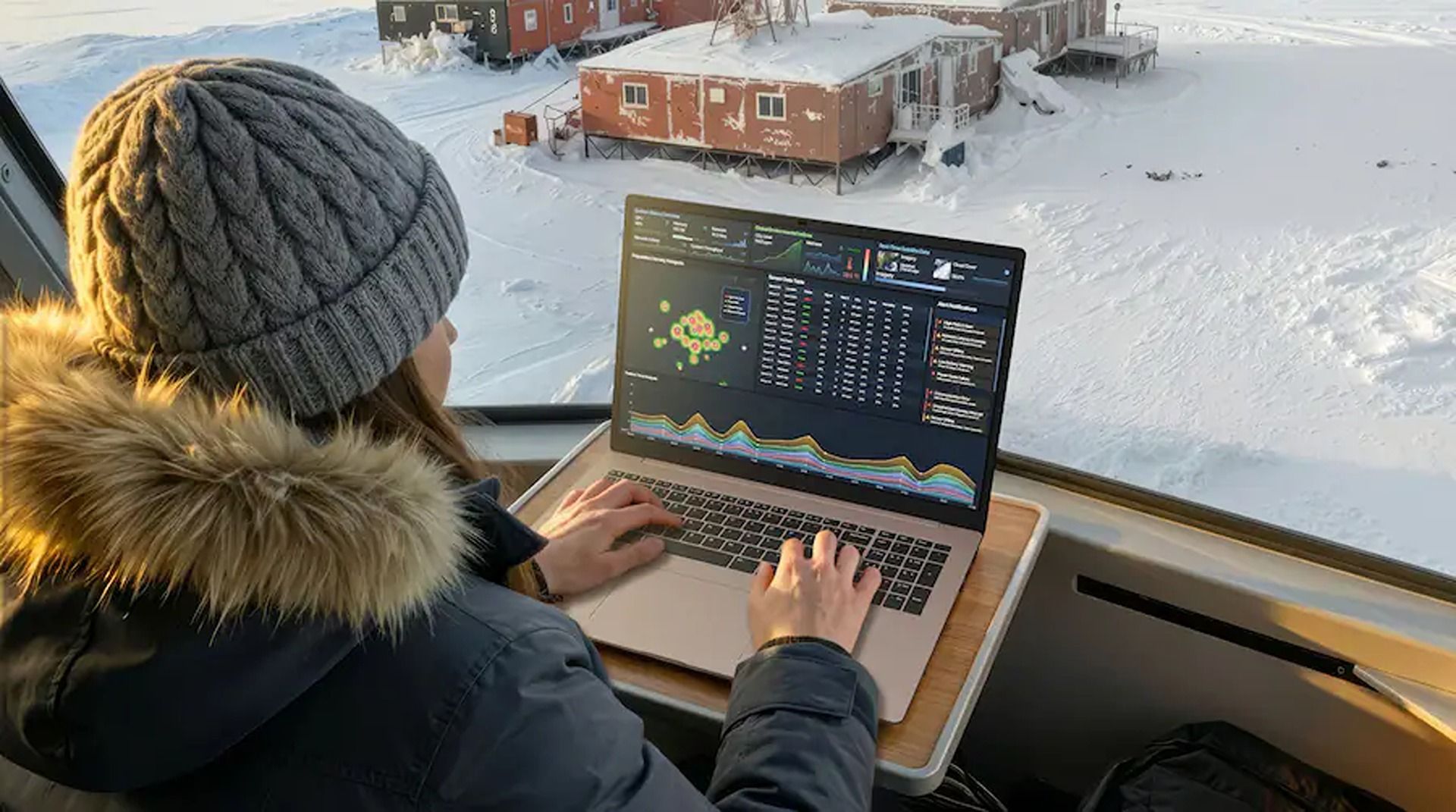
Join the club for quick access. Enter your email below and we'll send confirmation, and sign you up to our newsletter.
Keep exploring and earning more as a member.
AI updates, how-tos and comparisons in one place.
Get the biggest gaming news, reviews, and releases straight to your inbox.
All the latest news, reviews, and guides for Windows and Xbox diehards.
Unlock instant access to exclusive member features.
Get full access to premium articles, exclusive features and a growing list of member rewards.
Need a reliable laptop that doesn't weigh as much as a bag of bricks? LG is still an unappreciated winner.
When you purchase through links on our site, we may earn an affiliate commission. Here’s how it works.
If you're looking for a laptop that's easy to carry without settling for weaker specs, LG's 'gram' range is still one of the strongest options around. To some, it's surprising to see LG in the category, but in the industry, they're still known for lightweight designs, built for traveling workers.
With multiple models at Best Buy currently available across different price points before Black Friday, we've picked some standout LG Gram laptops that offer a balance of value, features, and performance.
For example, the travel-friendly LG gram Max 17-inch touchscreen with an Intel Core Ultra 7 355 (Panther Lake) CPU, 16GB of RAM, and a 512GB SSD is currently discounted from $1,749.99 to $1,199.99 at Best Buy.
It features exceptional processing power for tackling heavy workloads, a 2.5K display that renders images with sharp details and vibrant colors, a large battery life of over 26 hours, and a thin 0.6-inch profile with a durable magnesium alloy chassis.
This LG Gram is armed with Intel's latest Panther Lake processor, capable of making mincemeat of digital documentation, spreadsheets, and other productivity tasks with ease, while packing a solid chassis and portable design.
This LG Gram 15-inch laptop has the best value for money in this roundup, as you will be getting a versatile workflow cruncher with a fast-performing Intel Core Ultra 5 CPU, an ultra-thin build, upgradeable SSD and RAM slots, and more features for under $600.
This 14-inch LG Gram laptop features a 61Wh battery that lasts all day at work, a built-in AI assistant to speed up menial tasks like summarizing text, and a FHD 1920x1080 IPS display for wider reading space. Touchscreen (Silver) version: $729.99 at Best Buy (was $829.99)
This LG Gram laptop comes with a 15-inch Touchscreen with FHD resolution, an Intel Core Ultra 5 115U CPU with a dedicated NPU for processing AI tasks efficiently, and a generous selection of USB and M.2 SSD slots.
This laptop is the second most powerful one in this roundup, as it's equipped with an AMD Ryzen AI 7 445 CPU that helps it excel in AI-related tasks and a 1TB SSD for storing tons of vital data files.
Best Buy's discounts on LG Gram laptops will last until November 14, 2026.
In the past, we wouldn't normally recommend a laptop with 8GB RAM because it offers less-than-optimal responsiveness with Windows 11. However, we have recently tested Microsoft's latest 26H2 update to Windows 11, and we have discovered that it has improved the fresh-boot memory footprint (with no additional apps running) and common workload performance of 8GB RAM PCs.
While there still needs work when tackling heavy workloads, this 26H2 update has made 8GB RAM PCs and laptops much more viable for casual use or light workloads.
It depends on whether you're willing to wait until Black Friday for a bigger discount or if you're in need of a new laptop for work/casual use right now and don't have time to wait for a sweeter deal.
Join us on Reddit at r/WindowsCentral to share your insights and discuss our latest news, reviews, and more.
Alexander Cope is a gaming veteran with over 35 years of experience who primarily covers Xbox and PC gaming news and spotlights discounts on the best laptops, peripherals, and other electronics. He's also a diehard fan of JRPGs, action games, beat em’ ups, and Capcom’s Monster Hunter series
You must confirm your public display name before commenting
Please logout and then login again, you will then be prompted to enter your display name.
Windows Central is part of Future US Inc, an international media group and leading digital publisher. Visit our corporate site.
© Future US, Inc. Full 7th Floor, 130 West 42nd Street, New York, NY 10036.
Want an AI job? Deployment engineers are earning executive-level pay – up to $1.45M a year

Our gifting experts are obsessively searching for holiday gifts that are unique, thoughtful and suitable for any budget.
AI has ushered in new jobs, and some of them are paying handsomely, according to a new study.
AI engineers are making well over six figures in salary — and plenty more in bonuses and equity, according to data from a new report by executive search firm Christian & Timbers.
Enterprises now pay “elite” AI deployment engineers between $586,000 and $1.45 million annually in total compensation, with senior leaders in the field earning up to $2.25 million, according to the report. This figure approaches the median compensation of executive officers of public companies, the authors note.
Also: ‘So perfect, they are literally identical’ – Your AI-polished resumes are recruiters’ new top stressor
Christian & Timbers is an AI executive search and leadership advisory firm, recruiting CEOs, board members, technology executives, and AI engineers for enterprises. The new report draws on more than 550 interviews with engineers, deployment leaders, and executives conducted from January through June 2026, along with closed and current open offers. The compensation bands are Christian & Timbers’ estimates and represent ranges rather than statistical averages.
“Enterprise CEOs are under pressure to deliver returns for their AI investments. The most important decision is how to build the team that delivers on that goal,” said Jeff Christian, founder and CEO of Christian & Timbers, in a press release.
Also: What workers are really using AI for in 2026 – and what they aren’t
The report noted that the staggering salary range includes base salary, bonus, and annualized equity. Christian & Timbers said it defines an “elite” forward deployment engineer (FDE) as “a senior AI-native deployment builder, typically with 7 to 15 years of experience, including at least two years building and deploying agentic automated workflows that deliver measurable ROI with a documented enterprise impact of $10M or more,” who has also led a team of other forward deployment engineers.
Also: 50% of companies generate value from AI now – here’s how
The large salary ranges reflect increasing enterprise investments in AI talent and employee development. Microsoft, AWS, and OpenAI have announced more than $7.5 billion in corporate and partner investment in AI deployment over the past six months, Christian & Timbers noted in the release.
Also: Nearly 70% of workers use AI regularly now – but many get no time to upskill
There’s an increasing need to fill roles such as Senior Principal AI Engineer, AI Solutions Engineer, and Head of Deployment — but there is a limited pool of qualified candidates. The firm estimates that only 2,000 of the most senior deployment leaders exist in the US market, according to a previous Christian & Timbers study, which does not meet demand — so companies are competing for the same small group of professionals, hence the increasing salaries.
While the report underscores lucrative yields for certain engineering roles, the firm said that public job titles make comparisons more challenging.
“Christian & Timbers’ elite category spans several titles, while advertised FDE roles cover a broader range of experience and responsibilities. Experienced deployment engineers may be recruited directly or promoted into the work under titles such as staff software engineer or principal AI engineer,” the study said.
Plus, equity and bonus make up 52% to 66% of senior engineer pay, and most job postings don’t include that value in the salary, the report noted.
Drone warfare in space: Swarms of autonomous, laser-shooting cubesats could defend Western satellites in orbit

Join The Club for quick access. Enter your email below and we'll send confirmation, and sign you up to our newsletter.
Keep exploring and earning more as a member.
Latest space missions, discoveries and exploration updates.
Stargazing tips, cosmic events and expert insights on the universe
Start exploring exclusive deals, expert advice and more
Space news, cosmic updates and expert insights straight to your inbox.
Breaking space news, the latest updates on rocket launches, skywatching events and more!
Unlock instant access to exclusive member features.
Breaking space news, the latest updates on rocket launches, skywatching events and more!
Sign up to our monthly entertainment newsletter to keep up with all our coverage of the latest sci-fi and space movies, tv shows, games and books.
Discover this week's must-see night sky events, moon phases, and stunning astrophotos. Sign up for our skywatching newsletter and explore the universe with us!
Space.com's Sci-Fi Reader's Club. Read a sci-fi short story every month and join a virtual community of fellow science fiction fans!
Get full access to premium articles, exclusive features and a growing list of member rewards.
"We're talking about deploying 100 cubesats on a protect-and-defend mission for less than £100 million."
When you purchase through links on our site, we may earn an affiliate commission. Here’s how it works.
In May 2026, four Russian military satellites came close to ICEYE-X36, a private synthetic aperture radar satellite widely believed to be providing battlefield intelligence for Ukraine, in an apparently aggressive and risky "grey zone" maneuver that spooked many in the space industry.
Close enough to jam or interfere with the satellite's signal, blind it with a laser, fire a metal dart at it or, simply, force it to maneuver and burn fuel, the satellites' seemingly intimidatory behavior has increased the West's desire to develop defensive technology for satellites. In October 2026, it was reported that one of those same four Russian satellites passed within 500 meters (1,650 feet) of the same ICEYE satellite.
Now, U.K. startup Shield Space is racing to apply the lessons of drone warfare in Ukraine to develop swarms of up to 100 very small, low-cost, attritable drone-like autonomous spacecraft called cubesats. Released by a car-sized carrier in Earth orbit, these microwave-sized spacecraft will act as interceptors to protect Western satellites, and their deployment will mark a next step in the evolution of orbital warfare. Shield Space says that these space drones will use "effectors" like lasers or microwaves to defend Western satellites even if controllers lose contact with them.
"We're talking about deploying 100 cubesats on a protect-and-defend mission for less than £100 million [$134 million US], which is how [much] you would pay for one satellite previously," said Graeme Ritchie, co-founder and CEO of Shield Space.
Launched in 2023, NASA's civilian project Starling demonstrated that a swarm of four small satellites can cooperate and operate autonomously in space on a civilian science mission without relying heavily on real-time commands from ground control. But that seems like a far cry from the adversarial or defensive missions Shield Space and its competitors imagine. It is telling that the leading space powers appear not to have demonstrated swarm combat in space — although they tend to be reluctant to reveal their space warfare capabilities.
In the fourth quarter of 2027, Shield Space plans to take this next step in space warfare's evolution by demonstrating rendezvous and proximity operations (RPO) with two very small spacecraft. This effort, named Project Broadsword, will launch on SpaceX's Transporter-21 rideshare mission. It will send up an 8U cubesat and a smaller 3U target craft, which Shield Space plans to maneuver from 100 kilometers (62 miles) apart to within 100 meters (330 feet) of each other and, through four stages of autonomy, from human-in-the-loop to "approximately" fully autonomous. (A cubesat unit, or U, is a cube that measures 10 cm, or about 4 inches, on a side.)
The gaps between a true satellite-defense capability and this demonstration appear to be great, in terms of the technological and practical challenges of squeezing propulsion and power systems, AI compute power, sensors, the lasers the swarm needs to communicate and weapon systems onto small, lightweight maneuvering satellites. But it is a gap that Shield Space believes it can bridge through the purchase of relatively cheap off-the-shelf technology rather than more expensive bespoke designs.
"Yes, it's a problem because of size, weight and power," Ritchie told Space.com. "We've had to totally innovate from scratch some elements of the mission… but we have only got roughly 100 cm by 100 cm [40 by 40 inches], so saving space or having systems that are already completely integrated is the main aim."
"We have commissioned EnduroSat to build us an autonomous 8U cubesat that has chemical propulsion and its own imagery-collecting capability, which we will put our software on," said Dan Molland, co-founder and CTO of Shield Space, "and which we will then use to conduct our RPO.
"The good thing about cubesats is they're very standardized and they're very off the shelf," he added. "There's always some level of adjusting you've got to do, but these cubesats are a lot more plug and play than more conventional platforms, which are usually all custom-built."
Yet to focus on the technical issues may be to miss the point. "It takes an extraordinary amount of data to train the models and algorithms to achieve a fully autonomous mission," said Ritchie, "and the problem [unlike in the Ukraine war] is that data is not readily available.
"We can train AI using synthetic data, but it's just not quite good enough for space. It's incredibly important to gather data from missions like this if we really want autonomous missions in the future."
There is also the complexity of the AI needed in a war-fighting system. "Starling is a really great example," Molland told Space.com. "With Starling, you're essentially just asking a guidance system to make sure you stay within a given range of this or that satellite… But if you are controlling a swarm to deliver [a] military mission, you have a much more complex set of questions."
It also comes with the challenge of ensuring that AI complies with any rules of engagement.
But Ritchie and Molland believe these technical challenges can be overcome, and they have an aggressive schedule of demonstrations planned that they think will prove it.
Bleddyn Bowen, associate professor of astropolitics at Durham University in the U.K. and author of the book "War in Space: Strategy, Spacepower, Geopolitics" (Edinburgh University Press, 2020), is more cautious about Shield Space's plans for the evolution of space warfare.
"They remind me of a late Cold War missile-defense scheme called Brilliant Pebbles," he told Space.com. "It was one of the more advanced research and development programs in the Strategic Defense Initiative."
The plan was to defend the U.S. against Soviet intercontinental ballistic missiles (ICBMs) by using thousands of small autonomous orbiting interceptors to destroy them by collision.
"With enough investment, a lot is feasible," Bowen said.
"But you're looking at many years of development and testing," he added, "and finding someone to buy the system."
It is clear from Russia's ongoing invasion of Ukraine that the future of warfare includes swarms of low-cost autonomous drones — and Shield Space is already planning an aggressive schedule of missions to prove that this pattern applies to the final frontier as well.
According to Ritchie, the startup hopes to quickly go from the first RPO demonstration to testing two full-sized 16U cubesats. It will then move on to a full carrier of 10 such cubesats, and then to a "super carrier" of 10 carriers, which will be deployed across multiple orbits.
"We then get towards our future vision, which we call space-based carrier strike," said Ritchie. In this scenario, "responsive launch or pre-positioned carriers will give us an ability to protect and defend entire orbits, should you choose."
Editor's note: The original version of this story suggested that Shield Space may be working on "kinetic impact" satellite-defense techniques. The company says it is not doing this, so the story was updated to that effect at 10:45 a.m. ET on Nov. 5.
Mark is an award-winning freelance aviation and space journalist and author of the non-fiction book "N-4 DOWN: The Hunt for the Arctic airship Italia." He began writing for Space.com in 2026 and writes for a range of publications, from BBC Future to The Smithsonian’s Air and Space Quarterly and others. Mark won awards two years in a row at the Aerospace Media Awards for features he had written on the history of drones and astronaut training. Space grabbed hold of Mark’s imagination when, as a child, he saw the opening scene of "Star Wars: A New Hope" for the first time and has never let go. Away from the final frontier, Mark can be found walking his dog along the country lanes of England’s Cotswolds.
You must confirm your public display name before commenting
Please logout and then login again, you will then be prompted to enter your display name.
Space is part of Future US Inc, an international media group and leading digital publisher. Visit our corporate site.
© Future US, Inc. Full 7th Floor, 130 West 42nd Street, New York, NY 10036.
Binance heist began with fake job interviews and a malicious Homebrew download

Get started with free access to reviews, badges and discussions.
Unlock exclusive tools and insights for enthusiasts who want more.
Access Bench, Roadmaps, deep analysis and other exclusive tools.
Dive into our proprietary testing data and compare hardware with detailed benchmarks.
Go beyond the headlines with expert reporting on the hardware industry.
Track upcoming CPUs, GPUs and tech releases before they arrive.
In-depth features, interviews and insider stories from the world of hardware.
Expert insights and analysis delivered to your inbox.
Dive into our proprietary testing data and compare hardware with detailed benchmarks.
Go beyond the headlines with expert reporting on the hardware industry.
Track upcoming CPUs, GPUs and tech releases before they arrive.
In-depth features, interviews and insider stories from the world of hardware.
Expert insights and analysis delivered to your inbox.
Keep exploring and earning more as a member.
Reviews, benchmarks, and updates on current GPUs.
Join for quick access. Enter your email below and we'll send confirmation plus sign you up to our newsletter.
Get Tom's Hardware's best news and in-depth reviews, straight to your inbox.
Unlock instant access to exclusive member features.
Get full access to premium articles, exclusive features and a growing list of member rewards.
North Korean hackers targeted two Binance employees on the way to a $6.3 billion heist
When you purchase through links on our site, we may earn an affiliate commission. Here’s how it works.
Binance has revealed how North Korean hackers spent months preparing to steal approximately $6.34 billion in cryptocurrency last week. According to a November 3 security report by the exchange, the attackers used a malicious Homebrew installation to compromise one engineer and a fake recruitment process to trick another into installing malware disguised as a coding assistant. "Our current investigation indicates that this was a sophisticated, multi-stage campaign. It was not a single isolated breach or a simple phishing incident," the exchange said.
Binance says the first known compromise occurred in June, when an engineer in Binance’s Wallet DevOps team searched online for a popular AI coding tool and downloaded an adulterated Homebrew installation. Homebrew is a package manager, used by developers to install and manage various software tools on macOS.
Binance says it detected the unusual activity, replaced the engineer’s device, and rotated their associated credentials. However, those moves proved to be too little, too late, as the attackers had already learned about the employee’s role and identified colleagues working on the exchange's wallet infrastructure
The incident follows the compromise of another Binance software engineer who was contacted in September through a legitimate job hunting platform by a malicious actor posing as a project director. The fake recruiter arranged two interviews. One involved a purported HR representative who conducted a live video call and shared a social media account containing personal photos and videos to establish credibility, while the second involved someone posing as a CEO of a fictitious company.
Near the end of the interview, the engineer was asked to download a coding assignment containing a malicious software repository onto his work computer—a popular social engineering scheme. That malicious code executed during the setup process. At the time, Binance said the malware replaced a legitimate component of the Python version-management tool "pvenv" with a malicious version capable of executing commands and communicating with an attacker-controlled server. The exchange's endpoint security tools did not detect the malware at the time.
Those compromises began bearing fruit on October 20, as the attackers used the compromised computers associated with the fake interview and an internal AI tool to gain control over two wallet engineers' devices. They also discovered a container deployment permission token stored on the computer of the engineer initially targeted in June.
Later, on October 29, the attackers used stolen credentials to access another engineer's computer, deploy a container, and execute a malicious script. This gave them access to Binance's internal wallet signing service, allowing transactions from five hot wallets outside the exchange's normal withdrawal process.
Get Tom's Hardware's best news and in-depth reviews, straight to your inbox.
The U.S. FBI directly attributed the theft to North Korea on November 1. ”The FBI is releasing information advising the Democratic People's Republic of Korea (North Korea) was responsible for the theft of more than $6 billion USD in virtual assets from cryptocurrency exchange, Binance, on or about October 29, 2026. The FBI refers to this specific North Korean malicious cyber activity as "TraderTraitor," the agency tweeted. Pyongyang has distanced itself from the hack, describing the U.S. claims as "preposterous nonsense.”
Binance said it had since frozen or intercepted approximately $2.85 billion in compromised assets, while 98% of the affected funds have been replenished.
The tactics resemble previous North Korean-linked campaigns. WaterPlum attackers previously used fake job postings and coding tests to infect more than 30,000 devices across 100 countries, compromising over 7,000 crypto wallets in September. A 2024 campaign that targeted Python developers with fake job offers and malware hidden in code was attributed to the Lazarus group, which was also linked to the $1.5 billion Bybit hack in 2025. Attackers posed as potential employers and sent coding tests containing Base64 obfuscated malware. Running the tests could infect developers' computers, giving attackers remote access.
Follow Tom's Hardware on Google News, or add us as a preferred source, to get our latest news, analysis, & reviews in your feeds.
Newton Gitonga is a tech journalist covering gadgets, PC hardware, AI, data centers, and the wider tech industry. His interest in technology started early, taking apart things around the house to see how they worked, often to his dad’s frustration. His curiosity sometimes got the better of him, including a few failed attempts to fix laptops, one of them a gifted Dell XPS. He has previously written for Notebookcheck, ZyCrypto, CoinCentral, and Crypto News Flash.
Tom's Hardware is part of Future US Inc, an international media group and leading digital publisher. Visit our corporate site.
© Future US, Inc. Full 7th Floor, 130 West 42nd Street, New York, NY 10036.
The Man Behind Fashion’s Most Dazzling Spectacles Turns His Attention to the Art of Light

For as long as he can remember, Alexandre de Betak has been entranced by light. As a 10-year-old, he rewired his Paris bedroom so that visitors had to be buzzed in, greeted by shifting colored lights. He went on to found Bureau Betak, a set design agency that transformed the runway with its megawatt spectacles for clients like Dior, Gucci, Jacquemus, and Fendi. De Betak estimates that he produced “thousands” of fashion shows—including Saint Laurent’s spring-summer 2020 ready-to-wear extravaganza, for which he bathed the Eiffel Tower in golden light, and installations for Rodarte featuring fluorescent and neon tubes.
A new truss light sculpture by Alexandre de Betak, seen here in a 17th-century Swedish castle
Now, de Betak, who sold his company in 2021, is turning the spotlight on his own creative practice. On November 5, he opened his first solo exhibition of artworks at Salon 94 in New York. The electronically programmed Truss Light Sculptures are inspired by the scaffolding and fixtures of his early runway shows and in some cases literally made from them. “That equipment is old-fashioned now, but I wanted to honor it,” de Betak says. “And I liked the irony that I spent so much energy over the years trying to hide it.”
On view at Salon 94’s Upper East Side town house through December 19, the exhibit presents two series. In the gallery’s contemporary space, the first is composed of freestanding and wall-mounted aluminum structures fitted with LED bulbs. The upstairs Stone Room, a historic space with Caen stone plaster walls and arched windows, is the backdrop for a second series of versions in bronze. To make them, de Betak had a French foundry recast each part down to the smallest screw by hand, a process that sometimes required more than 20 molds.
A pair of wall-mounted sculptures in aluminum
The light sculptures, which vary from sconce-like creations to hulking constructions out of a sci-fi movie, have a sly sense of humor and a human quality. This is especially true when they come to life, thanks to a remote-control-operated system that activates light sequences that glow, sparkle, thrum, or react to ambient noise, “whether a whisper,” de Betak says, “or extremely loud music.” For these effects, he drew on his stage work, where he was renowned for cueing, or choreographing, light and sound. “I’m interested in the ephemeral nature of what this equipment was made to show—whether a fashion show or a ballet,” he says. “At a moment when everything is virtual, I think it’s more important than ever to create things that produce a live emotion.”
Salon 94’s founder Jeanne Greenberg Rohatyn observes that de Betak’s sculptures are equally powerful switched on or off. Unlit they remind her of David Smith artworks or Russian constructivism. Lit, and with synced sound, they evoke the theatricality of stage performers. “Alex has spent his career building structures that disappear into someone else’s spectacle,” she says. “Here, the structure is the whole point.”
Everybody Wants to Do Shabbat Dinner at Erin Foster and Simon Tikhman’s Cozy, Playful LA Home
16 Best Early Black Friday Furniture Deals for Aesthetes
Inside the Governor’s Mansions That Will Soon Be Home to 19 Newly Elected Leaders
7 Pendant Lights to Perfect Your Overhead Lighting Scheme
In This Midcentury Nashville Home a Mosaic Rainbow-Hued Window Brings Color to the Earthy Interiors
Yoshitomo Nara Is Gen Z's Favorite Artist—Even if They Don't Know His Name
Inside the Underground Mosques of Kazakhstan’s Surreal Mangystau Desert
Sign up for our daily newsletter to get the best of design in your inbox.
Permanent daylight saving time has a dark side, scientists warn

Keeping daylight saving time in effect all year could bring brighter evenings, but new research suggests the change would come with a troubling consequence for American children. A nationwide switch could result in at least 2 billion additional trips to school in darkness, potentially increasing safety risks while reducing children's exposure to important morning sunlight.
The debate over permanent daylight saving time has gained momentum in Washington, D.C. This past summer, the U.S. House of Representatives approved legislation that would eliminate the annual return to standard time in the fall. Nineteen states, including Washington, have already approved measures supporting the change, which would take effect in those states if the federal bill becomes law.
The legislation remains stalled in the Senate, with school start times emerging as a major concern. Permanent daylight saving time (DST) would push sunrise an hour later during the winter months, leaving mornings darker from November through March. Although this would affect everyone traveling early in the day, researchers at the University of Washington wanted to understand what it would mean specifically for children heading to school.
Permanent Daylight Saving Time Could Add Billions of Dark School Commutes
To measure the potential impact, the research team examined 14 of the 19 states that have already approved permanent daylight saving time measures. They combined school enrollment figures, individual school start times, and geographic coordinates to determine how frequently students would need to travel to school before sunrise. The researchers then calculated the total number of these trips under the proposed system and compared it with the current practice of changing clocks twice a year.
The results revealed substantial increases. In Washington state alone, permanent daylight saving time would produce nearly 35 million additional school commutes in darkness. Similar patterns emerged across the other 13 states, with Georgia showing the largest increase at approximately 71 million additional dark trips.
When the researchers extended their findings to estimate the nationwide impact, they calculated that permanent daylight saving time would create at least 2 billion more trips to school before sunrise compared with the current system.
The potential consequences go beyond inconvenient mornings. An analysis of U.S. traffic collision records found that fatal crashes involving school-aged pedestrians were roughly twice as likely to occur during dark mornings as after sunrise. The findings were published October 29 in the journal Current Biology.
"It's called the 'Sunshine Protection Act' because you get an extra hour of light at the end of the day. But you will take that hour from the morning. You could call it the Sunshine Destruction Act," said senior author Horacio de la Iglesia, a professor of biology at the University of Washington. "These dark mornings will inequitably affect children who have to go to school at a certain time. It's a very tangible metric that anybody from any state or socioeconomic background can relate to. Nobody wants their kids to go to school in the dark."
Why Morning Sunlight Matters for Children's Health
Beyond concerns about traffic safety, losing access to morning sunlight could interfere with the body's natural daily rhythms. Bright light early in the day helps synchronize the circadian clock, the internal timing system that influences sleep, mood, appetite, and other important functions. When people receive too little morning light, maintaining these biological rhythms can become more difficult.
For children, who must typically follow fixed school schedules, darker mornings could mean missing a valuable opportunity to receive daylight at a time when their bodies need it.
"When we send kids to school in the dark, we are depriving them from an opportunity to get that morning daylight," said lead author Guadalupe Rodríguez Ferrante, a postdoctoral researcher in biology at the University of Washington. "We were asking what's the cost for these children. We wanted actual numbers, a real number of kids based on the geographic location of each school."
The researchers also identified which communities would experience the greatest changes. Schools located near the western boundaries of time zones, including those in Forks, Washington, would be particularly affected because sunrise already occurs relatively late in those locations. Districts that begin classes early in the morning would face similarly large increases in dark commutes.
Mississippi and Alabama offer striking examples. Schools in both states begin, on average, before 8 a.m. Under the current clock system, each state has approximately 2 million school trips in darkness. With permanent daylight saving time, that figure would rise to more than 20 million trips per state.
"Some districts probably never experience a dark commute under the current system, and, if this passes, suddenly they will wake up to this new reality that their kids are going to school in the dark," Rodríguez Ferrante said. "Keep in mind that we used the actual start time listed for each school, and a lot of schools offer breakfast or other things before school, so the kids could be getting there even earlier."
Why the 2 Billion Estimate May Be Too Low
Although the researchers used detailed school information to calculate changes in 14 states, their nationwide estimate required broader assumptions. To project what would happen if the entire United States adopted permanent daylight saving time, they assumed students would generally be leaving for school at around 8 a.m.
Because many children begin traveling earlier, the team believes the projected increase of approximately 2 billion dark commutes may substantially underestimate the actual impact.
"For the estimation, we assumed students would be leaving home around 8 a.m.," Rodríguez Ferrante said. "That's pretty late, so our calculation is likely an underestimation of the real number."
The findings also raise questions about efforts to improve teenagers' sleep by delaying high school start times. Adolescents typically have biological clocks that shift later than those of younger children and adults, making later school schedules beneficial. The researchers argue that permanently moving clocks forward could undermine some of those gains by making morning sunlight less accessible.
One possible solution would be to start school later to compensate for the darker mornings. However, de la Iglesia argues that such a change could have ripple effects throughout daily life, potentially requiring families and workplaces to adjust their schedules as well.
"I've heard the argument, 'If we're in permanent DST, we can just delay the school start time to address these issues,'" de la Iglesia said. "Well, if we do that, you will end up going to work later. And everything is going to get delayed. You will get out of work an hour later, and you will miss the opportunity to enjoy your evening light. And essentially, we're just going to be realigning everybody to solar time. That, by definition, is Standard Time."
The researchers' findings highlight a central tradeoff in the debate over permanent daylight saving time. While eliminating seasonal clock changes would provide more evening sunlight during winter, the additional daylight would come at the expense of morning light, potentially affecting children's safety, sleep, and daily routines.
Additional study authors include high school student Daniel Zhang and University of Washington biology undergraduates Nirekh Dasika, Alicia Nam, Jessie Lu, Navneet Tumber, Elena Kully-Rivera, Viridian Klei, and Micaela E. Romero.
Materials provided by University of Washington. Note: Content may be edited for style and length.
Scientists Sound the Alarm As Colorectal Cancer Reverses a 20-Year Decline
A Hidden Cancer-Fighting Switch Could Supercharge the Human Immune System
A Devastating Disease Is Threatening the Worldâs Chocolate Supply â but Scientists May Have Found the Answer
Researchers Discover Earth May Have Made Its Own Water 4.5 Billion Years Ago
Stay informed with ScienceDaily's free email newsletter, updated daily and weekly. Or view our many newsfeeds in your RSS reader:
Keep up to date with the latest news from ScienceDaily via social networks:
Tell us what you think of ScienceDaily -- we welcome both positive and negative comments. Have any problems using the site? Questions?
Apple still charging 300% of costs on iPhone storage upgrades, says WSJ

Opting for more RAM or storage when buying Apple devices has always been an expensive business, with the company famously charging huge markups.
Apple said in its most recent earnings report that even after the price increases, its margins are being squeezed by higher component costs. But an analysis suggests that the company is still charging three times its own costs for higher storage tiers on the iPhone 18 Pro …
To be fair to Apple, some of the criticism about the premiums charged on configuring a device with more memory or flash storage hasn’t been comparing, well, apples with apples. The SSDs used in Macs, for example, are very much faster than the lower-spec third-party storage cards people typically cite as evidence for the company’s greed.
why are people defending Apple? They are bending everybody over double to keep their profit margins. They buy a billion memory chips or SSD's at a time so they are getting them much lower in price even if the price has gone up.
All the same, there’s no denying that the iPhone maker has always applied extremely high markups to its own direct costs. With the iPhone 17 Pro, for example, upgrading from 256GB to 1TB cost a buyer $400. A Wall Street Journal analysis cited by Macworld says that Apple’s cost at the time was $42, almost a 1,000% markup.
Apple this week warned that memory costs will reduce its holiday quarter profit margins.
When you remove the tariff refunds from both the June and September quarters, both company and product gross margin would be down about one point sequentially, primarily driven by higher memory costs. Parekh added that the pressure on Apple’s margins isn’t expected to ease anytime soon.
However, the WSJ’s number-crunching suggests that we probably don’t need to get out the violins just yet. The paper compared the same upgrade on the iPhone 18 Pro, where Apple has increased the price difference to $600. Although the Cupertino company is paying dramatically more, with an estimated direct cost of $192, that still amounts to customers being charged more than three times the price paid by Apple.
FTC: We use income earning auto affiliate links. More.
Check out 9to5Mac on YouTube for more Apple news:
Breaking news from Cupertino. We’ll give you t…
Ben Lovejoy is a British technology writer and EU Editor for 9to5Mac. He’s known for his op-eds and diary pieces, exploring his experience of Apple products over time, for a more rounded review. He also writes fiction, with two technothriller novels, a couple of SF shorts and a rom-com!
A tiny squeeze dramatically changes the magnetism of exotic materials
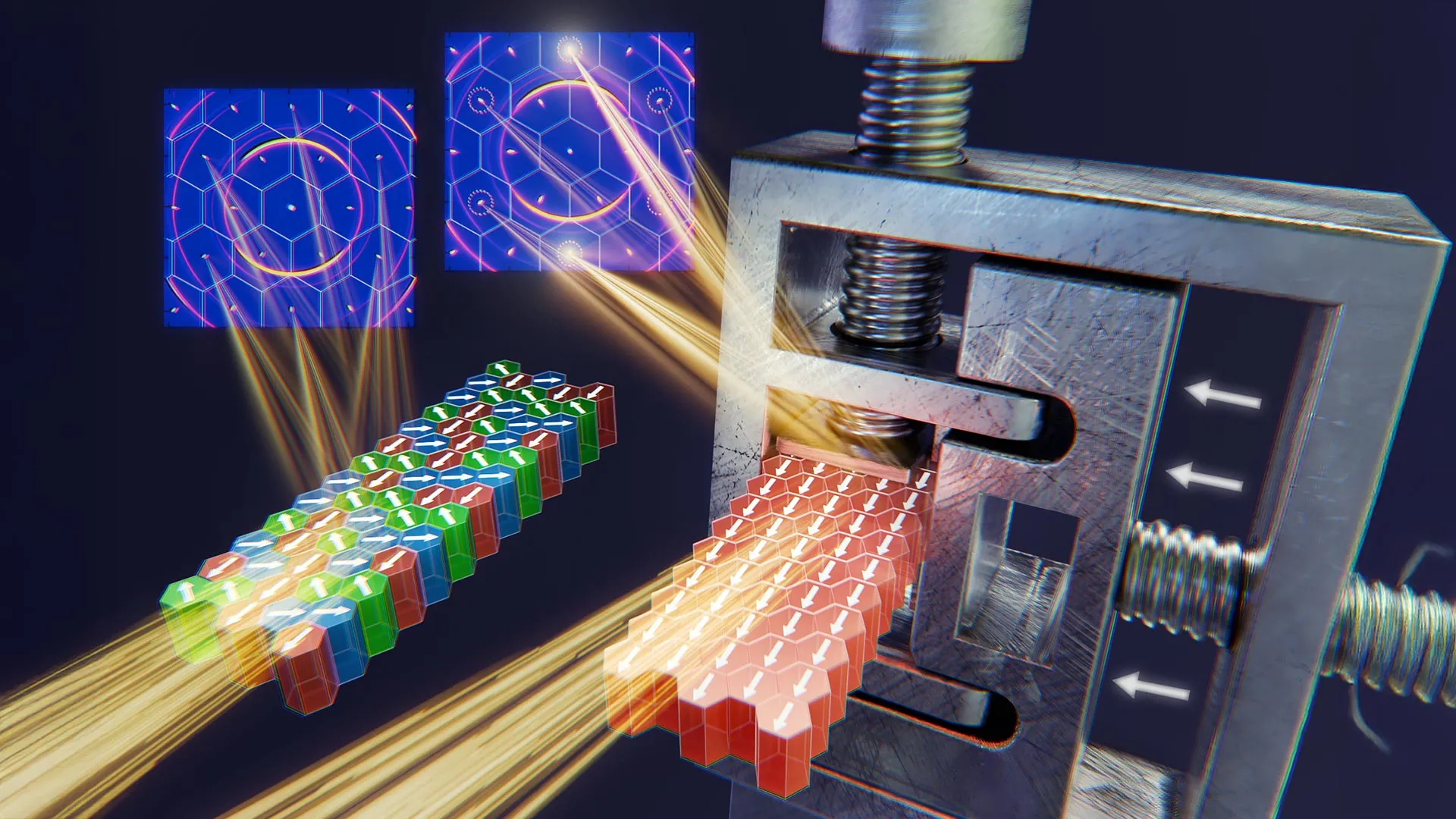
Scientists at the Department of Energy's Oak Ridge National Laboratory have discovered that applying a small amount of pressure can dramatically alter the magnetic properties of a promising new class of materials called altermagnets. Using neutron experiments, the researchers uncovered how a simple mechanical squeeze can change the way these materials behave, offering a potential new approach to controlling magnetism.
The results, reported in two consecutive studies published in Physical Review X and Advanced Materials, show that mechanical strain can influence both magnetic structures and the movement of electrons. This ability could provide a straightforward way to control materials being investigated for advanced electronic technologies.
Why Altermagnets Matter for Future Electronics
One particularly promising application involves spintronics, short for spin electronics. Unlike conventional electronics, which processes and stores information using the electrical charge of electrons, spintronics also takes advantage of a property known as electron spin.
If scientists can identify and develop suitable materials, including altermagnets, this approach could lead to major advances in technologies ranging from wireless communication to quantum computing.
"By controlling the magnetic domains, we can directly influence the transport behavior, and that opens the door to exploring these materials for spintronic technologies," said Pengcheng Dai of Rice University, a former neutron scientist at ORNL.
A Simple Squeeze Reveals Surprising Magnetic Changes
To investigate how pressure affects these materials, the ORNL team placed tiny crystals of manganese telluride and iron sulfide between a pair of titanium plates and gently compressed them.
Using neutron diffraction at ORNL's Spallation Neutron Source, the scientists examined what happened to the magnetic structures inside the crystals. They found that the applied pressure changed the relative populations of magnetic domains, which are regions within a material that have particular magnetic arrangements. The strain also altered an electrical phenomenon called the anomalous Hall effect, providing evidence that the mechanical squeeze influenced the materials' electrical behavior.
"What's exciting is that one creative experimental idea -- a small mechanical squeeze between two plates -- can reveal entirely new magnetic behavior and push the field forward, and neutron scattering plays such a critical role, revealing the underlying change in magnetism," said Feng Ye, an ORNL neutron scientist and co-author on both linked publications.
The findings highlight how a relatively simple experiment can uncover new ways to manipulate magnetic materials, potentially helping researchers develop the building blocks for future spintronic devices.
ORNL's Spallation Neutron Source is a DOE Office of Science user facility.
Materials provided by DOE/Oak Ridge National Laboratory. Note: Content may be edited for style and length.
Scientists Sound the Alarm As Colorectal Cancer Reverses a 20-Year Decline
A Hidden Cancer-Fighting Switch Could Supercharge the Human Immune System
A Devastating Disease Is Threatening the Worldâs Chocolate Supply â but Scientists May Have Found the Answer
Researchers Discover Earth May Have Made Its Own Water 4.5 Billion Years Ago
Stay informed with ScienceDaily's free email newsletter, updated daily and weekly. Or view our many newsfeeds in your RSS reader:
Keep up to date with the latest news from ScienceDaily via social networks:
Tell us what you think of ScienceDaily -- we welcome both positive and negative comments. Have any problems using the site? Questions?
PHP vulnerability post-mortem reveals bug was known two years ago

Keep exploring and earning more as a member.
Reviews, benchmarks, and updates on current GPUs.
Get Tom's Hardware's best news and in-depth reviews, straight to your inbox.
Unlock instant access to exclusive member features.
Get full access to premium articles, exclusive features and a growing list of member rewards.
Long-standing technological debt is being charged with interest.
When you purchase through links on our site, we may earn an affiliate commission. Here’s how it works.
The phrase "when it rains, it pours" applies both to weather and computer security, as proven the week of October 19, 2026, when OpenAI's GPT 5.6-Sol discovered critical vulnerabilities in the open-source programming language PHP. As published in a post-mortem, a small team of maintainers knew of the issue two years ago. Security experts had warned for decades about mounting technical debt, as agentic AI exponentially sped up vulnerability scanning, to the point that the usual 90-day disclosure window for security exploits became pointless. PHP, one of the internet's ubiquitous software packages, was unlucky enough to in the crosshairs of bug-hunting AI agents.
PHP hosts around 70% of websites on the internet, and the vulnerability allows for remote code execution with enough attacker knowledge. That combination is enough to sound alarms, but the situation got worse once the collective internet realized that, at the time, 73% of PHP installations online were running end-of-life versions with no active support — eliciting face-palms from many techies, and an exasperated sigh from anyone familiar with the ecosystem, myself included. So ultimately the problem wasn't really the vulnerability, but the general complacency.
The root cause of the vulnerability was an ancient architectural decision in the PHP engine's error handling. When a PHP process runs out of memory, it'll call the longjmp() C function, which means "immediately jump the execution to another place, no questions asked." Using longjmp() without a very good reason is generally unadvisable, though that by itself wasn't the problem.
The real issue is that if that jump happens while building a data structure (like adding an array entry, or initializing an object), that half-baked data remains in the memory heap. When the PHP engine moves execution to its cleanup-end-exit mechanism, that code will execute expecting good, complete data, but instead acts on inconsistent leftover bytes.
With some clever injection of just the right content in a web request, this mechanism can be exploited to run any code with PHP's permissions, as shown by the ongoing PHP2Shell exploit.
Gaining a remote shell does require an attacker to know the exact version and build of PHP used, so it's not as trivial as just pressing the "Hack" button. Yet the wide blast radius, with tens of millions of vulnerable servers, many of them running the same exact version, is enough to give anyone pause. After the vulnerability was made public, many sysadmins disabled version number reporting on their PHP installation, so as not to aid prospective hackers.
The PHP Foundation's post-mortem indicates that the team had known about the issue for two years, but didn't immediately see it as a cause for concern, and went back and forth several times on the best way to fix the problem while maintaining compatibility with third-party extensions.
The team admitted it had made management mistakes, but it's a small outfit with one full-time employee and 14 part-time contractors, tasked with maintaining one of the most widespread pieces of software on the internet. This is a common pattern: open-source software that's of critical importance to modern computing, yet undermanned, underfunded, or both.
The standard patch process is reasonably trivial, needing only a point update and perhaps requiring a restart of some services. The currently maintained branches of PHP are 8.1 through the current 8.5. Sysadmins rarely install PHP directly, though, relying on their Linux distribution of choice or community repositories for updated packages.
Those 73% of sites still stuck with PHP 7 are now stuck between a rock and a hard place. When PHP moved from 7.4 to 8.0 in late 2020, there were a number of changes to the language, most of them minor, but still requiring revision work. Many folks likely expected their distro to keep backporting fixes, especially for LTS (Long-Term Support) variants still in their support period, with PHP 7.4 in tow. That excuse is arguably always a little thin, as even before the AI age there were already automated tools to upgrade existing PHP code with relatively little work.
Now, depending on their specific situation, those relying on ancient versions like 7.3 or older may be forced to bring their websites' code up to speed, given that not all distros are bound to have backported fixes. For reference, PHP 7.3 came out in 2018. Making matters worse, nearly 8% of PHP installations are of version 5.x, which came out in 2005. Plus, a number of network appliances, NAS boxes, and similar hardware carries PHP within, and that too will need updating. Palo Alto Networks issued an advisory for products powered by its PanOS system, for example.
It's not all doom and gloom, however. Since the PHP Foundation published source code patches for 7.4 up to 8.1, most anyone can devise a patch for the older versions. Many entities did so, and there are packages available for Debian/Ubuntu flavors from Ondřej Surý (Debian developer) covering PHP 5.6 to 8.1. CloudLinux and AlmaLinux have likewise produced backported fixes.
This is one occasion where paying for extended support comes in handy, as commercial vendors like Ubuntu Pro and Zend released packages for positively ancient PHP versions, down to 5.5. Old website code is likely to have vulnerabilities other than the PHP engine, so a wholesale update-and-upgrade is much preferable, but very few CTOs will ever listen to that song.
Given how broad the problem is, and how it'll be a while before every machine is protected, there are a number of other means to mitigate the issue — though the proper fix is to update to a patched PHP version. Web application firewalls (WAFs) like Immunify360 may block malicious requests from even getting to the server in the first place.
Content delivery networks (CDNs) like Cloudflare or Fastly universally offer options for adding a WAF to their setup. Both firms immediately issued their respective notices and added detection of PHP2Shell to their respective rulesets. Finally, server-level security suites like CrowdStrike can also detect and block malicious activity by the PHP binary itself, in case an attacker tries something funny. It's reasonable to guess that these protections have slowed exploitation efforts.
Right now, the PHP2Shell exploit is doing the rounds, with at least one high-profile case involving a campaign that chained the PHP vulnerability together with Fragnesia (aka Dirty Frag) to eventually get kernel-level access to 25 servers seemingly linked to the U.S. government. As of October 29, security firm BitSight had recorded copious attempts of PHP2Shell intrusion across its monitoring fleet, from many distinct origins.
BitSight's dark web forum sleuths indicate that there was no one-size-fits-all exploit package available at that date. This may indicate that hacking campaigns for now are likely to be specifically targeted, but a proverbial one-click red button is bound to appear at some point, likely with a deeper exploit in tow, as with the Fragnesia example above.
Meanwhile, several cybersecurity firms kept a close eye on patching progress since the October 19 reveal. Censys has a real-time view, updated hourly, and suffice it to say that things could be going a lot better. The initial count estimated the number of vulnerable PHP installs at around 45.7 million, out of 119 million total.
The number of unpatched services has mercifully dropped to around 29 million as of this writing, seemingly indicating a patch rate of around 1 million per day, depending on how you count. It's worth noting that fix backports may not change the version number, so those instances could still count as unpatched.
But remember how most everyone toggled off their server's PHP version number reporting. According to Censys, 62% of PHP servers it's consulting aren't reporting that datum at all, so there's no telling what the actual totals might be. If history is any indication, a significant percentage of those machines remain unpatched today.
Bruno Ferreira is a contributing writer for Tom's Hardware. He has decades of experience with PC hardware and assorted sundries, alongside a career as a developer. He's obsessed with detail and has a tendency to ramble on the topics he loves. When not doing that, he's usually playing games, or at live music shows and festivals.
Tom's Hardware is part of Future US Inc, an international media group and leading digital publisher. Visit our corporate site.
© Future US, Inc. Full 7th Floor, 130 West 42nd Street, New York, NY 10036.
MIT scientists break a 20-year rule and unlock never-before-seen crystal structures
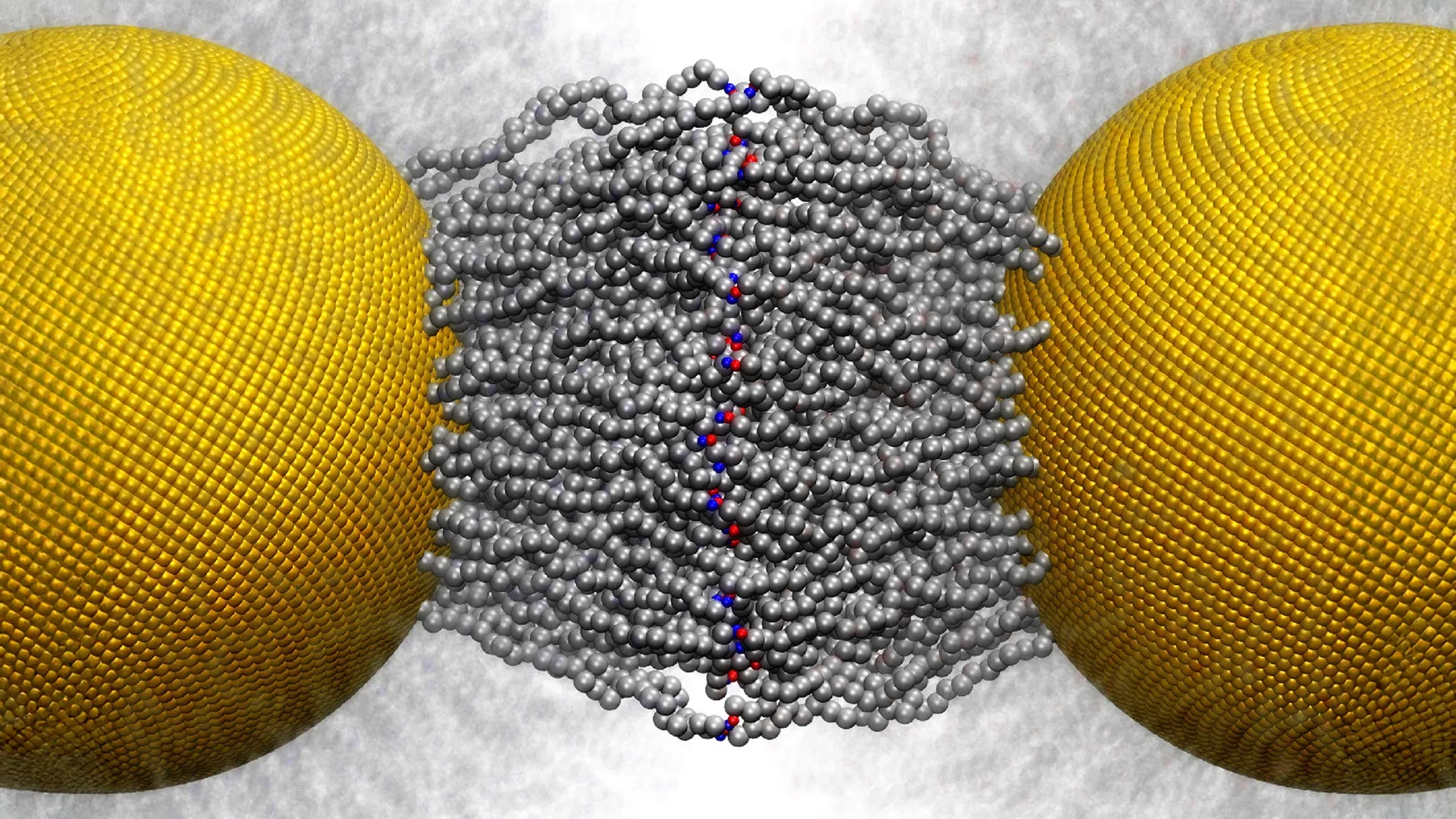
Scientists have spent decades trying to control how tiny particles connect to form advanced materials. Now, researchers at MIT and their collaborators have discovered that doing the exact opposite of what was previously believed necessary can produce remarkable results.
Instead of relying on rigid molecular connections to hold nanoparticles in carefully planned arrangements, the team developed extremely flexible connectors that bend and adjust as particles come together. This unexpected strategy gives scientists a new way to control how nanoparticles organize themselves, allowing them to create crystal structures that have never been observed before.
The discovery could help overcome a major obstacle in materials science and open new possibilities for creating substances with precisely engineered properties. Potential applications include electronics, medicine, energy technologies, agriculture, and chemical manufacturing.
The findings, described in a paper that will appear in Nature Materials, demonstrate how the flexibility and electrical charges of molecular connectors can determine the structures that nanoparticles form.
MIT Researchers Challenge 20 Years of Materials Science
"People are interested in nanoparticle superlattices because of the promise of building designer materials where you have more say in what types of structures they can actually build into," says Rob Macfarlane, the Richard P. Simmons (1953) Professor in Metallurgy in MIT's Department of Materials Science and Engineering. "This is a new approach in nanoparticle assembly that hasn't been investigated before. It's exciting to have a new tool that is so counterintuitive. It's the exact opposite of what the dogma has been for 20 years: that you need to make connector ligands rigid, and any deviation causes assembly to fail. We showed if you just crank it all the way to the opposite extreme, it works just as well."
The research team also included MIT PhD candidate Nicholas Sbalbi, University of Delaware doctoral student Stephen Kronenberger, MIT undergraduate Hana Shinzawa, Matthew Ye PhD '26, and Arthi Jayaraman, a former professor at the University of Delaware.
At the heart of the discovery is a basic principle of materials science: The way a material's smallest components are arranged determines how that material behaves.
"That means if you know what your building blocks are and how they're arranged, you can explain what properties materials have," Macfarlane says. "Controlling that is how you make materials that have new properties."
This principle is especially important when working with nanoparticles, which are extremely small pieces of matter whose shapes, sizes, and properties can be adjusted for different purposes. Scientists already use individual nanoparticles in technologies involving drug delivery, energy storage, computing, and sensors.
But turning these tiny building blocks into larger, organized materials presents a difficult challenge.
Why Nanoparticles Are So Difficult to Control
One of the biggest obstacles is controlling how nanoparticles attach to one another. Scientists need to determine not only how many neighboring particles each nanoparticle connects with, but also the directions in which those connections form.
Without that control, nanoparticles tend to assemble into tightly packed arrangements that restrict the variety of structures researchers can produce. This limits their ability to create materials with unusual or specialized properties.
Researchers have traditionally approached the problem in two ways. One strategy involves changing the shapes of nanoparticles to influence how they fit together. Another involves modifying specific areas of their surfaces so that only certain regions attract neighboring particles.
In effect, scientists attempt to control where the particles stick to one another, much like designing puzzle pieces that can connect only in particular positions.
Although these methods can produce useful structures, they are often complicated, highly specialized, and difficult to adapt for large-scale production.
"The challenge with both of those approaches is they're difficult to do synthetically as we make the particles," Macfarlane explains. "The methods for defining stickiness that have been developed are always bespoke: They work for one material, at one size scale, in one condition. It's good for studying, but you can't do much with it."
Both strategies also depend on molecular connectors called ligands. These molecules attach to the surfaces of nanoparticles and help link neighboring particles together.
Traditionally, researchers have tried to make these ligands rigid so the connections remain at carefully controlled angles. This helps maintain a desired arrangement, but it also restricts the types of structures that can form and the functions they can perform.
The MIT team decided to explore a radically different possibility.
A Surprising Discovery About Flexible Molecular Bonds
Rather than forcing molecular connectors to remain in fixed positions, the researchers wondered whether giving them almost complete freedom to bend could offer an entirely new form of control.
"We thought, 'Let's do the exact opposite: make the bonds so flexible it doesn't matter what direction they're initially pointing.' The ligands can then reorganize as the particles come together, and that reorganization itself limits how many neighbors each particle can bind," Macfarlane says.
The idea reverses the usual approach to nanoparticle assembly. Instead of controlling the orientation of every connection in advance, the scientists allow the connectors to adjust naturally as the particles interact.
Macfarlane's laboratory has spent years developing ways to construct different types of nanoparticles using attached polymer chains. Polymers are large molecules made of repeating smaller units, and their flexibility makes them useful for creating adjustable molecular connections.
For the new system, the team equipped nanoparticles with highly flexible ligands that carry electrical charges at their ends. Some have positive charges, while others have negative charges.
Because opposite electrical charges attract, the connector molecules naturally bend toward partners with the opposite charge. This attraction helps the nanoparticles join together, while the flexibility of the connectors influences how many connections each particle can make.
"The idea is, instead of defining a specific direction the bonds are going to occur in with complicated synthesis methods, we just said, 'The bonds are going to be as flexible as they want to be, and they'll spontaneously go to whatever valency is going to maximize bond stability,'" Macfarlane says.
In this context, valency refers to the number of connections a nanoparticle forms with its neighbors. By allowing the connectors to move freely, the researchers found that the system could naturally settle into stable arrangements without requiring every connection to be designed beforehand.
Scientists Create Crystal Structures Never Seen Before
Experiments led by Sbalbi demonstrated that the researchers could adjust the connections between nanoparticles by changing two relatively straightforward characteristics: the sizes of the particles and the lengths of their flexible molecular chains.
These adjustments altered how the particles assembled, giving the team control over the number of neighboring particles each one could connect with.
Most importantly, the researchers used this method to produce previously unseen crystal structures.
Crystals are materials whose building blocks form organized, repeating patterns. In this case, the repeating arrangements are made from nanoparticles rather than individual atoms or small molecules. Such ordered nanoparticle networks are often called superlattices.
By reducing the number of connections between neighboring particles, the team was able to create more open arrangements instead of the densely packed structures that commonly form during nanoparticle assembly.
"Without having to predesign where the particles connect or what their shapes are, we can control the number of bonds each particle has," Macfarlane explains. "The amount of flexibility of the polymer dictates how many bonds it has. It allows us to lower the number of bonds each particle has and make lattices we have never seen before."
The results suggest that molecular flexibility, once viewed as an obstacle to precise nanoparticle assembly, can instead become a powerful tool for engineering new material structures.
A New Path Toward Customizable Designer Materials
The researchers believe their method could bring scientists closer to a long-sought goal in materials science: choosing the properties of individual nanoparticles independently of the larger structures into which they assemble.
Ideally, scientists could select nanoparticles for their electrical, optical, chemical, or other useful characteristics and then organize those particles into whatever arrangement best serves a particular application.
In practice, however, existing assembly methods have made that level of flexibility difficult to achieve.
"We in the nanoparticle assembly community talk about having completely independent control over what your particle is and what assembly it goes into," Macfarlane says. "In theory, that should be the case. In reality, it absolutely has not been."
The new approach could help close that gap. Because the researchers can influence nanoparticle arrangements through the flexibility of their connectors and the attraction between electrical charges, they may be able to create a wider variety of structures without the complicated manufacturing techniques required by traditional methods.
The team also sees the discovery as a promising route toward producing customizable materials at larger scales, potentially helping move nanoparticle technologies beyond laboratory experiments and into practical use.
Potential Applications in Electronics, Medicine, and Energy
The ability to build more open and varied nanoparticle structures could prove particularly valuable for developing advanced materials.
In photonics, which involves controlling and manipulating light, precisely organized nanoparticles could help researchers engineer materials with specialized optical properties. In chemical catalysis, where substances accelerate chemical reactions, new particle arrangements could create opportunities to improve the way catalysts operate.
The approach may also support future developments in medicine, agriculture, electronics, and energy technologies.
A major advantage is that nanoparticles can already possess a wide range of desirable properties. By controlling how those particles come together, scientists may be able to combine their individual capabilities in new ways.
"Nanoparticle superlattices offer a way to create designer materials where your building blocks have all sort sorts of unique properties," Macfarlane says. "But just densely packing these nanoparticles together limits your applications. This offers a way to get less dense formations of nanoparticles, and that's where a lot of the interesting applications are."
Although further development will be needed to translate the method into commercial technologies, the discovery establishes molecular flexibility as a new strategy for creating materials with tailored structures.
Instead of treating bending molecular connections as a problem to eliminate, scientists may now be able to use that flexibility to unlock arrangements that rigid designs could not easily achieve.
The research received partial support from the National Science Foundation, the Department of Energy, the U.S. Army, and the U.S. Navy.
Materials provided by Massachusetts Institute of Technology. Original written by Zach Winn. Note: Content may be edited for style and length.
Scientists Sound the Alarm As Colorectal Cancer Reverses a 20-Year Decline
A Hidden Cancer-Fighting Switch Could Supercharge the Human Immune System
A Devastating Disease Is Threatening the Worldâs Chocolate Supply â but Scientists May Have Found the Answer
Researchers Discover Earth May Have Made Its Own Water 4.5 Billion Years Ago
Stay informed with ScienceDaily's free email newsletter, updated daily and weekly. Or view our many newsfeeds in your RSS reader:
Keep up to date with the latest news from ScienceDaily via social networks:
Tell us what you think of ScienceDaily -- we welcome both positive and negative comments. Have any problems using the site? Questions?
Microsoft is tackling Outlook's search problem, and it wants your feedback
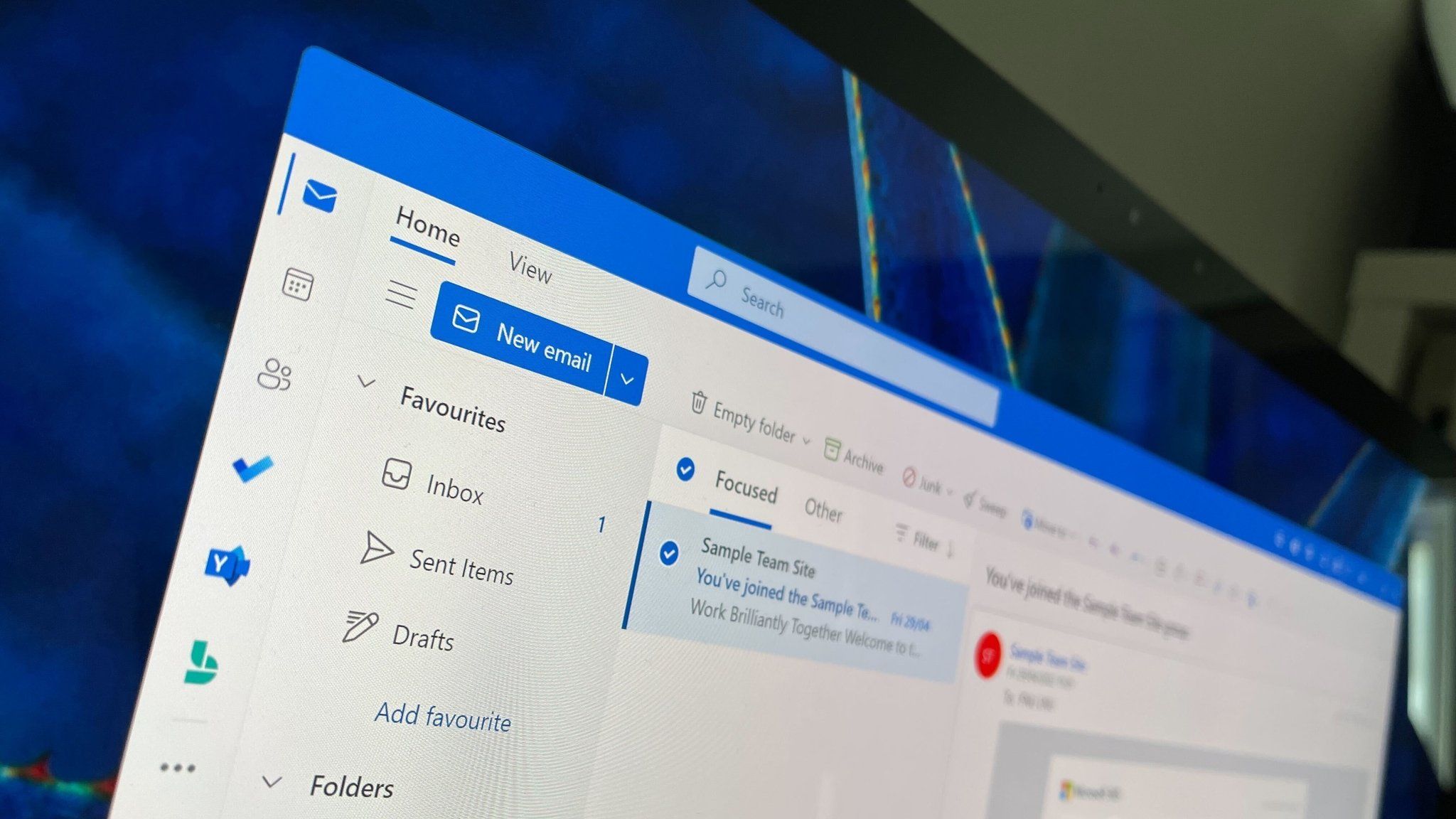
Join the club for quick access. Enter your email below and we'll send confirmation, and sign you up to our newsletter.
Keep exploring and earning more as a member.
AI updates, how-tos and comparisons in one place.
Get the biggest gaming news, reviews, and releases straight to your inbox.
12+ useful Windows 11 features Microsoft tested in October 2026
Microsoft says Copilot is coming to Windows 11's Search UI this year, but promises it'll be optional
Windows Wrap: When "not a priority" becomes Priority 0, criticism deserves a second look
All the latest news, reviews, and guides for Windows and Xbox diehards.
Unlock instant access to exclusive member features.
Get full access to premium articles, exclusive features and a growing list of member rewards.
Outlook search is getting better at finding relevant emails, and Microsoft wants your feedback to keep improving it.
When you purchase through links on our site, we may earn an affiliate commission. Here’s how it works.
Searching for a specific email in Outlook can prove challenging. Outlook search can sometimes return irrelevant results while missing the exact email you need. Microsoft is looking to improve that frustrating experience with a revamped search.
The new search has a feature that genuinely removes the most frustrating part of Outlook for me. That phrase is thrown around a lot online and is often clickbait, but I mean it here emphatically.
Outlook now handles stop words better. Those words, such as "the," "and," and "is," often clog search results with irrelevant emails. I can't tell you how many times those tiny words have led to terrible searches that made me fish through the results that appear chronologically.
Microsoft's example from a blog post shows how drastically different the results are when searching "the FY27 budget" using the old Outlook search versus the new one.
The improvements highlighted by Microsoft center around ranking emails better. Microsoft focused on three areas when building the new search tool in Outlook: better ranking, improved performance when connectivity is poor, and a tighter feedback loop.
When you search for an email within Outlook, you will see seven ranked results rather than three. Those emails are ranked based on recency, sender, how much the message has been interacted with, and other factors. Expanding the number of ranked messages presented should show users more relevant emails while also helping Microsoft improve its ranking systems over time.
The new ranking layout is available across several versions of Outlook, including the new and Classic versions.
There are other upgrades as well. Classic Outlook now automatically falls back to locally indexed content when connectivity is poor. That same functionality is on the way to new Outlook but will ship later.
Users of Classic Outlook should also see faster search results. Microsoft also said recent improvements reduced latency for the slowest 5% of Outlook searches.
The improved rankings in Outlook are the result of a small language model ranker built specifically for Outlook. That model is trained through distillation, meaning it is built under the supervision of a larger model.
Distillation helps Outlook search be more efficient than if it had to run a larger model just to look through and rank emails.
I'd probably be okay with using a larger model in Outlook if it cut out irrelevant results that appear simply for using an article or common verb like "is." I bet I'd still save some time that way. But I don't have to test that theory because the new Outlook search is lightweight.
Join us on Reddit at r/WindowsCentral to share your insights and discuss our latest news, reviews, and more.
Sean Endicott is a News Writer at Windows Central, where he covers Windows 11, Surface hardware, Microsoft 365, AI, apps, and the broader PC ecosystem. Since joining the site in 2017, he has written well over a thousand articles across the Microsoft landscape, covering breaking news, analysis, and feature reporting.
He writes Windows Wrap, a weekly column covering the biggest stories in Windows and the PC industry, and what they mean for the platform going forward.
Before joining Windows Central full-time, Sean worked in journalism and media production after earning a First Class degree in Broadcast Journalism from Nottingham Trent University. Outside of tech, he is an award-winning American football coach based in Nottingham, England, and was named BAFCA Youth Coach of the Year in 2024.
You must confirm your public display name before commenting
Please logout and then login again, you will then be prompted to enter your display name.
Windows Central is part of Future US Inc, an international media group and leading digital publisher. Visit our corporate site.
© Future US, Inc. Full 7th Floor, 130 West 42nd Street, New York, NY 10036.
Nvidia can only fulfill 1% of China’s massive $70 billion GPU order for AI chips, report claims

Get started with free access to reviews, badges and discussions.
Unlock exclusive tools and insights for enthusiasts who want more.
Access Bench, Roadmaps, deep analysis and other exclusive tools.
Dive into our proprietary testing data and compare hardware with detailed benchmarks.
Go beyond the headlines with expert reporting on the hardware industry.
Track upcoming CPUs, GPUs and tech releases before they arrive.
In-depth features, interviews and insider stories from the world of hardware.
Expert insights and analysis delivered to your inbox.
Dive into our proprietary testing data and compare hardware with detailed benchmarks.
Go beyond the headlines with expert reporting on the hardware industry.
Track upcoming CPUs, GPUs and tech releases before they arrive.
In-depth features, interviews and insider stories from the world of hardware.
Expert insights and analysis delivered to your inbox.
Keep exploring and earning more as a member.
Reviews, benchmarks, and updates on current GPUs.
Join for quick access. Enter your email below and we'll send confirmation plus sign you up to our newsletter.
Get Tom's Hardware's best news and in-depth reviews, straight to your inbox.
Unlock instant access to exclusive member features.
Get full access to premium articles, exclusive features and a growing list of member rewards.
When you purchase through links on our site, we may earn an affiliate commission. Here’s how it works.
Chinese technology giants ByteDance, Alibaba and Tencent, among others, are set to receive only a limited number of Nvidia chips that they've ordered. Bloomberg is reporting that, according to unnamed sources, only "some tens of thousands, or roughly 1%" of RTX Pro 5500 workstation GPUs will be delivered over the next few months.
Demand for the RTX Pro 5500 has far outstripped Nvidia's planned production. According to earlier reports, Chinese firms were suggested to have spent $35 billion on orders for over 3 million of the GPUs, far beyond Nvidia's ability to produce them. This new report suggests that amount has risen to $70 billion, at a cost of $11,000 per unit.
Chinese demand for the RTX Pro 5500 is based on its performance and its unique status for shipping. The RTX Pro 5500 has the same CUDA cores as its flagship gaming GPU, the RTX 5090, but with a boosted 84GB GDDR7 memory count, so it's a good option for AI.
Unlike the RTX 5090, or other AI-focused workstation GPUs like the H200 and B300, there are no export limits, meaning it can be shipped to China without restrictions. China is in an arms race with the U.S. to produce better AI models, with GPUs like the RTX Pro 5500 being core to its success. Nvidia has reportedly halted RTX 5090 production to pivot towards its AI-focused enterprise base.
The report suggests that Chinese developers expect a first batch of several thousand RTX Pro 5500 GPUs to be delivered by the end of 2026. In total, 700,000 RTX Pro 5500s are expected to be delivered by the end of 2027 as Nvidia increases its production, although this could change.
Tom's Hardware has approached Nvidia for comment. In a statement to Bloomberg, an Nvidia spokesman declined to comment on shipment numbers, but did criticize U.S. export controls, stating that "outdated U.S. export controls, which cover gaming products released nearly half a decade ago" continue to restrict it, along with "China's own limits on U.S. imports."
Follow Tom's Hardware on Google News, or add us as a preferred source, to get our latest news, analysis, & reviews in your feeds.
Get Tom's Hardware's best news and in-depth reviews, straight to your inbox.
Ben Stockton is a deals writer at Tom’s Hardware. He's been writing about technology since 2018, with bylines at PCGamesN, How-To Geek, and Tom’s Guide, among others. When he’s not hunting down the best bargains, he’s busy tinkering with his homelab or watching old Star Trek episodes.
Tom's Hardware is part of Future US Inc, an international media group and leading digital publisher. Visit our corporate site.
© Future US, Inc. Full 7th Floor, 130 West 42nd Street, New York, NY 10036.
Safari finally gets 3 popular browser features – and I can’t wait to try them

Our gifting experts are obsessively searching for holiday gifts that are unique, thoughtful and suitable for any budget.
New developer beta release notes point to deeper Siri AI integration and more Safari customization.
Developer betas for MacOS 27.3, iPadOS 27.3, and iOS 27.3 are here, with a few major upgrades to the Safari browser. Vertical tabs, adaptive dark mode, and deeper Siri AI integration are on the way to the public, but are first in beta for testing.
Also: Your Apple Watch has 2 new controversial listening features – but you have to opt in
Siri AI is expected to be further woven into Music, Messages, Photos, Calendar, and Safari. Adaptive dark mode will allow for any website to be viewed in dark mode, even if the site doesn’t support it. Finally, vertical tabs are pretty straightforward, enabling vertical navigation and drag-and-drop tab reorganization.
Here’s what you can expect when the software goes public in mid-December.
Also: 3 handy iPhone features that make my life easier – even doing laundry
Siri AI gains more access to your Apple devices, allowing more cross-app functionality and the ability to execute complex, multi-step tasks within your apps.
According to 9to5Mac, you can ask Siri AI to create a playlist in Music and save it to your library, request messages to be scheduled for a later send, organize and label photos, and create a detailed calendar invite — all with your voice.
The same reporting also states that Siri AI features will appear in Maps, Weather, Shortcuts, and Notes, signaling that an AI-supercharged Siri will live in every crevice of your Apple devices.
Also: iOS 27 will organize your open Safari tabs now
I’m not one to complete tasks like the ones mentioned above on my iPhone — I’m far more likely to do them on my MacBook Air, since I associate the laptop with productivity. Every blue moon I’ll rearrange my entire Apple Music catalog, every month I fill out my calendar, and sometimes I’ll go through Photos and try to organize it. I can see myself automating certain steps in these tasks, and I’m excited to try it.
A WebKit blog post details that adaptive dark mode is coming to Safari, how it will work, and what users can expect. According to the post, 40% of web page loads are from dark mode users, but only 10% of web pages natively support it.
I’m particularly excited about this feature, as I set my Apple devices to automatically enable dark mode at 7 p.m. to encourage a more relaxing evening scrolling vibe, especially while reading. I read a lot on my MacBook, and in a dark room, a bright page can feel too bright, but dimming my laptop’s display doesn’t quite do the trick.
Also: Your AirPods got better in iOS 27 – three new ways I’m using them
The WebKit blog post states that adaptive dark mode uses “a color matrix to invert the luminosity of colors while preserving hue” and distinguishes between when a page’s color is purely decorative and when it carries substantial meaning, to ensure the user experience remains consistent between light and dark modes.
Vertical browser tabs aren’t a new concept, but they’ll soon be new to Safari. I see the value in vertical tabs: a list view is easier to scan, web page titles aren’t smushed when several tabs are open, and they’re particularly useful when you’re working on a widescreen monitor.
Many people who spend hours using their Mac or MacBook may find this upcoming feature useful. I do believe that Safari is the superior browser for personal use, given its integration with your Apple devices, especially with features like Handoff.
Also: 7 AI-free iOS 27 features that make old iPhones exciting again
However, I do have one major gripe with vertical tabs: they’re usually locked to the left panel, and I prefer the right. If Safari allows this customization, I’ll seriously consider switching from horizontal tabs.
Halo Wars Meets Halo: Reach in this Impressive FPS Mod

Join the club for quick access. Enter your email below and we'll send confirmation, and sign you up to our newsletter.
Keep exploring and earning more as a member.
AI updates, how-tos and comparisons in one place.
Get the biggest gaming news, reviews, and releases straight to your inbox.
Steam Deck gets an Xbox Series X|S dashboard UI with this community-made plugin
Halo in Roblox shouldn’t look this convincing, but someone actually pulled it off
Forget cloud gaming, DroidDeck brings PC Game Pass to Android natively
All the latest news, reviews, and guides for Windows and Xbox diehards.
Unlock instant access to exclusive member features.
Get full access to premium articles, exclusive features and a growing list of member rewards.
Project Groundside transforms Halo Wars into a first-person shooter, letting players control Spartans, Marines, and vehicles.
When you purchase through links on our site, we may earn an affiliate commission. Here’s how it works.
If you’re like me, a massive Halo fan, you’ve probably played Halo Wars at some point. Maybe you enjoyed the huge battles with friends online, or perhaps you just stuck to the campaign because, well, it was great. But have you ever found yourself thinking how cool it would be to get your feet on the ground and see it all from a first-person perspective? Well, now you can.
Researching this has been a bit of a headache. It’s been difficult to pin down who originally created the crossover, but from what I can tell, there are at least two projects out there? Both presumably use AI to achieve the first-person mode, because that’s just the world we live in now.
The two projects in question are Halo: Theater of War and Project Groundside. For the sake of simplicity, I’m going to focus on Project Groundside, since it appears to be the main project people are using and playing. If you’d like to try it yourself, you can join their Discord server linked here.
Just a quick heads up too: these mods are only available on PC, so if you're on console, you're sadly out of luck.
Project Groundside lets you play Halo Wars normally, but with the ability to control units in first person. The style is heavily inspired by Halo: Reach, complete with Reach weapon models and a sprint mechanic. In fact, you can even drive a Warthog, tank, and Falcon, and there’s a third-person mode available too.
The project also introduces a respawn mechanic where you can choose to load in as a Marine, Spartan, or ODST, each with different weapons to choose from. Respawns do cost supplies, though, to try and keep things balanced.
Now, this mod serves more as a proof of concept, but it’s pretty cool nonetheless. With the future of Halo up in the air, it’s refreshing to see projects like this give fans a taste of something different, especially when nobody knows how long it'll be till the next game.
I, for one, would love to see large-scale battles in a Halo sandbox with destructible environments in an official game. We’re sort of getting a glimpse of that with modded Halo 3 on PC, which has up to 128 players now in a match, and that's definitely tiding me over for now.
Let me know your thoughts on this in the comments, and be sure to take part in our poll below:
Join us on Reddit at r/WindowsCentral to share your insights and discuss our latest news, reviews, and more.
Adam is a Psychology Master’s graduate passionate about gaming, community building, and digital engagement. A lifelong Xbox fan since 2001, he started with Halo: Combat Evolved and remains an avid achievement hunter. Over the years, he has engaged with several Discord communities, helping them get established and grow. Gaming has always been more than a hobby for Adam—it’s where he’s met many friends, taken on new challenges, and connected with communities that share his passion.
You must confirm your public display name before commenting
Please logout and then login again, you will then be prompted to enter your display name.
Windows Central is part of Future US Inc, an international media group and leading digital publisher. Visit our corporate site.
© Future US, Inc. Full 7th Floor, 130 West 42nd Street, New York, NY 10036.
Critical Rails Flaw Lets Attackers Write Server Files via Crafted ImageMagick Uploads

A critical flaw in Ruby on Rails could allow an unauthenticated attacker to write arbitrary files on an app's server by uploading a crafted file if the app processes uploads using ImageMagick. The Rails project disclosed the flaw in an advisory and fixed it in versions 8.1.4.1 and 8.0.5.2.
The flaw is in Active Storage, the part of Rails that handles file uploads. Some apps store uploaded files using Active Storage's Disk service, which stores them on the server's disk. In those apps, an attacker could also read any file the app can read.
Those files typically include the app's secret_key_base and its credentials for other systems, according to Rails. Reading them may in turn allow remote code execution or lateral movement into those systems.
Rails rates the flaw 9.8 out of 10 on the CVSS scale. It is tracked as GHSA-f3w6-w445-fwh9 and does not yet have a CVE identifier.
ImageMagick selects a format handler, which it calls a coder, based on the file's content. Some coders act on other files named inside the image, not on the image itself. Active Storage imposes no limits on which coders an upload can use, so the server's own ImageMagick policy was the only limit.
The ImageMagick analyzer in Active Storage runs when a file is attached. Attaching the upload is enough to reach the flaw. The app does not have to make a variant (a transformed copy of the image) or a preview, or call analyze.
An uploaded SVG file reached ImageMagick's MSL coder through that analyzer, according to the commit that fixed the flaw. MSL is a scripting coder that reads and writes files named by its script.
Rails said one attack chain was reported to it, but it does "not assume it is the only one that exists." The advisory does not say whether the flaw has been exploited.
The flaw was reported through HackerOne by RyotaK, a researcher at GMO Flatt Security.
An app is affected only if all three of these are true:
To check the first condition, look at config.active_storage.variant_processor. If it is not set, the default depends on load_defaults: :mini_magick before 7.0, and :vips from 7.0 on. The same setting decides which library analyzes uploads, not only which one makes variants.
Every Active Storage version before 8.0.5.2 is affected, as are 8.1 versions before 8.1.4.1. Release series older than 8.0 are no longer supported, and Rails will not release fixed versions for them.
In July, Rails fixed a different critical Active Storage flaw, CVE-2026-66066, which affected apps that use libvips instead of ImageMagick. Apps using ImageMagick were not exposed to that flaw's attack path, but they can be exposed to this one.
The same releases fix a second Active Storage flaw, GHSA-v924-7rp8-4mxh, which Rails rates high with a CVSS score of 8.8. Active Storage passed uploads to ImageMagick and FFmpeg under temporary file names that kept the uploaded file's extension.
Those tools can pick a decoder from the extension when a file's content does not show its format. So an attacker who chose an upload's filename and declared its content type could choose the decoder that processes it.
Rails strongly recommends upgrading as soon as possible. The two releases fix 21 security issues in total.
The fixed versions ship an ImageMagick security policy. MiniMagick is the Ruby gem Active Storage uses to call ImageMagick. In its default setup, every ImageMagick command it runs applies the policy, not only commands from Active Storage.
The policy blocks the MSL coder; coders that read or delete files other than the image; coders that fetch remote or local references or display them on a screen; every coder backed by Ghostscript, along with the gs delegate; and @filename indirection.
The advisory does not explain how to check whether an app has already been targeted.
Learn how to close critical identity visibility gaps in your SOC, detect hidden threats, and accelerate incident response across human, machine, and AI identities.
Learn how to assess AI threat readiness, strengthen attack surface visibility, and prepare security operations for emerging threats in this practical webinar.
Get the latest news, expert insights, exclusive resources, and strategies from industry leaders, all for free.
Can Netflix’s new AI tool stop your TV-streaming doomscrolling? How to try it

Our gifting experts are obsessively searching for holiday gifts that are unique, thoughtful and suitable for any budget.
Home & Office > Home Entertainment > Streaming & Services > Video Streaming Services
Netflix is adding a new Discover feature, which recommends tailored streaming selections. Here's how it works.
AI tools are all over the internet, in the workplace, in your apps — and now there’s one coming on Netflix. The streaming giant just announced a new AI feature for the TV app called AI Discover, which will help users find titles that match their moods and interests. It’s initially being rolled out to a small group of users in the US whose language is set to English. To find out if you have access, check your Netflix navigation bar for the word “Discover” with a red gem icon next to it and a “New” label.
Also: Roku is taking away a fan-favorite screensaver
The AI Discover tab will be centered around themes. You’ll be able to pick from a range of themes depending on what you feel like watching, or how long you want to watch. You’ll also see selections that match what you’ve been watching lately and what’s popular.
You can refresh the list of suggestions or dive deeper with more complex search prompts. If you’d like to start over, you can pick the “Something different” option. To support AI Discover, Netflix is also adding a new button next to Play and My List that’ll let you tune your recommendations. You can press this button to keep a recommendation or to request that you don’t be recommended a title again.
Most streaming apps already rely quite heavily on machine learning and AI algorithms to offer user recommendations, even if they’re not marketed as AI features. Though most rely on traditional AI algorithms, like Prime Video’s “Recommended for you” tab, they personalize title recommendations based on your viewing history, likes and dislikes, and rental behavior.
Other platforms offer generative AI and features more similar to Netflix’s AI Discover. For example, YouTube features Gemini-powered searches that let you ask complex questions or use open-ended prompts to get results you want.
Also: The best early Black Friday TV deals are all at Best Buy
Some smart TV interfaces — including including Roku, Fire TV, Google TV, and, coming soon, Apple TV — have also adopted generative AI in their operating systems to let you use voice search with more naturally worded requests, and the system generates cross-platform results.
While I am itching to test this feature to see just how accurate it can be, Netflix hasn’t made it widely available yet. The company will gradually grant users access over the coming weeks, so stay tuned.
How to get access to Sonos AI features, as company aims to avoid another app disaster

When Sonos tried a major app update two years ago, things did not go well. Much-loved features disappeared, older speakers experienced connection problems, and accessibility features were broken. That debacle saw the company’s CEO fired.
The company is taking a much more cautious approach as it moves into the AI era with a Sonos 27voice update, enabling natural-language voice control via Hey Sonos requests …
The whole mess started when Sonos launched the company’s first headphones, the Ace, intended to compete with AirPods Max. The app needed to be updated to support these, and the company decided to use it as an opportunity for a ground-up rebuild, launching a completely new app just ahead of the launch.
Customers responded angrily to the loss of key functionality, compatibility issues with older speakers, and accessibility problems. Sonos initially downplayed the complaints, but CEO Patrick Spence subsequently emailed customers to apologize, and provide a timeline for fixes, subsequently making seven promises. However, customers weren’t impressed, and called for Spence to be fired – later getting their wish.
This time around, Sonos started out with a modest update in the form of the Sonos 27 app, leaving the more substantial changes to a subsequent Sonos 27voice version. This will replace the more limited voice control available today, much like the update from old Siri to Siri AI.
Rather than pushing it out to all customers, Sonos is adopting a very cautious approach. First, you’ll have to request early access to the beta and be approved. Second, the company is testing the feature with a relatively small group of users. Third, it’s seeking detailed feedback from beta testers before a planned launch next year.
The new features work in much the same way as Siri on HomePods.
You can use Sonos 27voice at any time by saying the wake word, “Hey Sonos.” While Sonos is listening, the white status light on your Sonos product will glow brighter and the volume will lower if any audio is playing. A confirmation tone will play after Sonos understands your request.
The company says you can then use natural language for both music-related commands and information searches. The company gives the following music examples:
As well as a couple of general knowledge examples:
Sonos says that early access to the beta is only available to customers based in the US, that numbers will be limited, and enrollment is not guaranteed. However, if you want to request access, here’s how to do so:
If accepted, access begins from Friday and you’ll find setup instructions here.
Via Engadget. Photo by Todd Jiang on Unsplash.
FTC: We use income earning auto affiliate links. More.
Check out 9to5Mac on YouTube for more Apple news:
Ben Lovejoy is a British technology writer and EU Editor for 9to5Mac. He’s known for his op-eds and diary pieces, exploring his experience of Apple products over time, for a more rounded review. He also writes fiction, with two technothriller novels, a couple of SF shorts and a rom-com!
Open source project renders your Windows 11 desktop using the NPU rather than the GPU
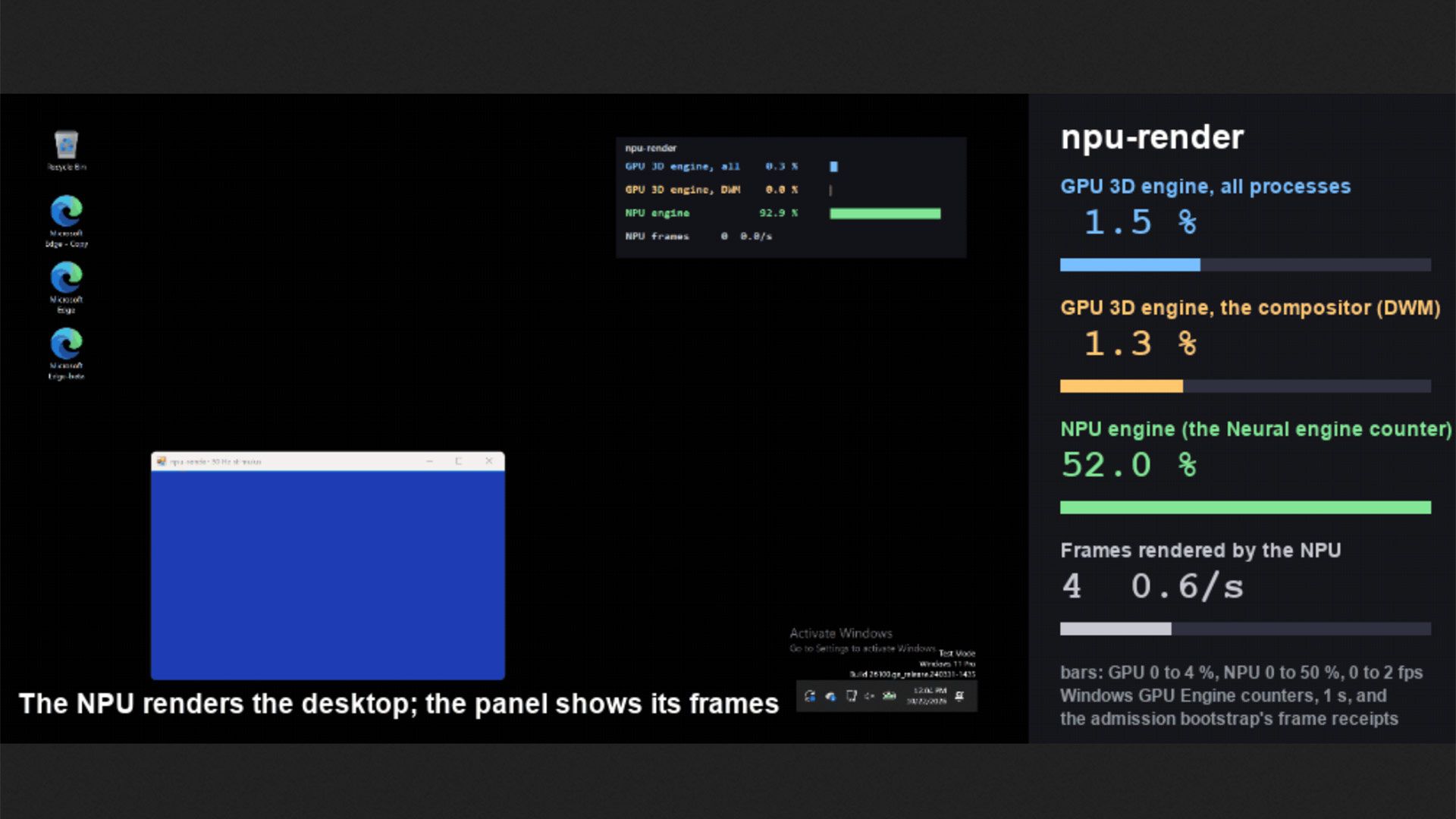
Get started with free access to reviews, badges and discussions.
Unlock exclusive tools and insights for enthusiasts who want more.
Access Bench, Roadmaps, deep analysis and other exclusive tools.
Dive into our proprietary testing data and compare hardware with detailed benchmarks.
Go beyond the headlines with expert reporting on the hardware industry.
Track upcoming CPUs, GPUs and tech releases before they arrive.
In-depth features, interviews and insider stories from the world of hardware.
Expert insights and analysis delivered to your inbox.
Dive into our proprietary testing data and compare hardware with detailed benchmarks.
Go beyond the headlines with expert reporting on the hardware industry.
Track upcoming CPUs, GPUs and tech releases before they arrive.
In-depth features, interviews and insider stories from the world of hardware.
Expert insights and analysis delivered to your inbox.
Keep exploring and earning more as a member.
Reviews, benchmarks, and updates on current GPUs.
Join for quick access. Enter your email below and we'll send confirmation plus sign you up to our newsletter.
Get Tom's Hardware's best news and in-depth reviews, straight to your inbox.
Unlock instant access to exclusive member features.
Get full access to premium articles, exclusive features and a growing list of member rewards.
Developer is aiming for 30 Hz performance on Intel Panther Lake NPUs but the current version of this research driver is only achieving 2 to 3 Hz.
When you purchase through links on our site, we may earn an affiliate commission. Here’s how it works.
A developer group by the name of labscommunity has released a prototype driver for Windows 11 that renders the desktop using an NPU instead of the system’s (i)GPU. The new driver is called npu-driver, and the open-source (Apache 2.0) code is available on GitHub. It has been tested on Intel Panther Lake systems, and while it isn’t hitting its 30 Hz performance target yet, it is clever enough to fall back to GPU on request or on any fault.
The reasoning behind the development of this driver may strike a chord with those observing the 2020s processor landscape. “Every new laptop ships an NPU that sits idle while the GPU composes the desktop, runs the browser and, increasingly, runs local models,” notes the npu-driver readme file. “The question this project asks is narrow and testable: can the NPU take over desktop composition, end-to-end, without the applications or the compositor knowing?”
Thankfully, the answer to the question about whether the NPU can render the Windows 11 desktop - and apps like Notepad and Edge windows - is a yes. The npu-driver functions as intended and as demonstrated. Moreover, it seamlessly switches back to GPU rendering if/when it needs to.
The developer admits that this driver is strictly “a research prototype, not a product” at this stage, and the main issue currently is performance. The GitHub readme notes that the target 30 Hz performance isn’t very close right now, with actual screen refresh speeds of around 2 to 3 Hz. npu-driver is being developed on a Panther Lake laptop, and all these Intel processors feature NPU 5 architecture silicon with performance spanning 45-50 TOPS.
A Reddit post that appears to be penned by one of the labscommunity crew says that this project might render Windows 11 visuals rather slowly, but it can “bring 3D GPU usage down from 3.4% to 0.6%,” thus freeing up the GPU for other tasks, like inference.
Having a(nother) useful task for the system NPU to do is a welcome development, even if it seems of rather niche appeal for now. There are no signs consumer processors will abandon NPU integration, and these accelerators will likely remain alongside other now-essentials like hardware for video (de)coding, DSPs, and so on, even if the Copilot+ PC branding exercise has been abandoned by Microsoft and its partners.
Follow Tom's Hardware on Google News, or add us as a preferred source, to get our latest news, analysis, & reviews in your feeds.
Get Tom's Hardware's best news and in-depth reviews, straight to your inbox.
Mark Tyson is a news editor at Tom's Hardware. He enjoys covering the full breadth of PC tech; from business and semiconductor design to products approaching the edge of reason.
Tom's Hardware is part of Future US Inc, an international media group and leading digital publisher. Visit our corporate site.
© Future US, Inc. Full 7th Floor, 130 West 42nd Street, New York, NY 10036.
Cloudflare engineers optimize DNS build services for twice the speed and 85% lower RAM usage

Get started with free access to reviews, badges and discussions.
Unlock exclusive tools and insights for enthusiasts who want more.
Access Bench, Roadmaps, deep analysis and other exclusive tools.
Dive into our proprietary testing data and compare hardware with detailed benchmarks.
Go beyond the headlines with expert reporting on the hardware industry.
Track upcoming CPUs, GPUs and tech releases before they arrive.
In-depth features, interviews and insider stories from the world of hardware.
Expert insights and analysis delivered to your inbox.
Dive into our proprietary testing data and compare hardware with detailed benchmarks.
Go beyond the headlines with expert reporting on the hardware industry.
Track upcoming CPUs, GPUs and tech releases before they arrive.
In-depth features, interviews and insider stories from the world of hardware.
Expert insights and analysis delivered to your inbox.
Keep exploring and earning more as a member.
Reviews, benchmarks, and updates on current GPUs.
Join for quick access. Enter your email below and we'll send confirmation plus sign you up to our newsletter.
Get Tom's Hardware's best news and in-depth reviews, straight to your inbox.
Unlock instant access to exclusive member features.
Get full access to premium articles, exclusive features and a growing list of member rewards.
Another massive improvement makes a hat trick for Cloudflare's engineering team
When you purchase through links on our site, we may earn an affiliate commission. Here’s how it works.
Cloudflare is up to its optimization shenanigans again. Not too long after finding 100 TB of memory savings between the DNS cache's couch cushions, and another 100 TB of saved RAM by improving its task-server routing, the company's engineers are back with the hat trick. This time, they managed to halve DNS zone rebuild times and cut that procedure's memory usage by 85% across its network.
A "DNS zone" is the collection of records, settings, and metadata for a given domain like tomshardware.com. The records are the main part, containing IP addresses, hostnames, or text lines including website and mail server IPs, subdomains, domain redirections, and spam-control or certificate info. If you're a Cloudflare customer, when you update a record pointing your website to a new IP, or change one of the domain's settings, the service pushes this information onto its many thousands of DNS servers.
This sounds easy enough until you realize that Cloudflare's DNS fleet is huge, and that the company now gets 800 zone changes per second, up from 250 four years ago. All those changes add up to enormous amounts of RAM and network traffic. Consistency across the entire fleet must be guaranteed, too, as you can't have one DNS server saying your website is at one place, while another server says it's elsewhere — except during actual transitions, of course. Furthermore, some domains hosted at Cloudflare have over 20 million records, making them exceedingly difficult to build in memory.
The easy solution, then, is to only update the data that's needed, and that's precisely what the company did for domain records back in 2022. Updating records is simple: you just write the new value in and propagate it. Altering settings, though, is way trickier. For example, toggling Universal SSL for a domain can trigger a cascade of record updates.
Some metadata keys are shared across multiple zones, necessitating an update across all of them. Change events can come in from many Cloudflare services, too, and often didn't have a reason attached, so it was hard to know if other subsequent changes were necessary. Consequentially, setting updates required a full build for safety.
The engineers then carefully laid out a plan to optimize this process. First, they tweaked their internal software so that zone change events include a reason and additional information, so that said event can be properly classified. With that info in hand, specific setting changes can use smaller and shorter builds among given types.
For example, apex and metadata changes (like UniversalSSL) comprise one. Likewise, changing a domain's nameserver or wildcards also triggers a smaller procedure. Full builds are only used in cases where there is no partial build mechanism. Finally, domains with a large number of records are now updated piecemeal. Cloudflare saw a 85% drop in RAM usage for Zone Builder servers, from 50-79 GB to down to close to 7 GB, mostly due to these changes alone.
Get Tom's Hardware's best news and in-depth reviews, straight to your inbox.
The second optimization pass was combining two formerly separate planning and implementation schedulers into just the one, and improving how it operates. The new scheduler detects if several changes apply to the same zone and combines them. Cloudflare uses Apache Kafka for event messaging, and the team changed how the scheduler acts when a message triggers a slow build.
Since Kafka only lets messages advance in sequence, the scheduler waited for that job to finish and didn't process requests that arrived in the meantime. Now, it'll acknowledge and run incoming smaller jobs arriving in the meantime. Before, there was always a steady long queue of requests waiting to be processed, as requests piled up and were completed in bursts.
Now, they're fulfilled very shortly after being issued, and in a consistent cadence. This significantly improved concurrency capacity, so the team chose to tighten the queue processing intervals. With all the improvements, the median time for a build dropped from 7.7 seconds to 3.3 seconds, too.
Follow Tom's Hardware on Google News, or add us as a preferred source, to get our latest news, analysis, & reviews in your feeds.
Bruno Ferreira is a contributing writer for Tom's Hardware. He has decades of experience with PC hardware and assorted sundries, alongside a career as a developer. He's obsessed with detail and has a tendency to ramble on the topics he loves. When not doing that, he's usually playing games, or at live music shows and festivals.
Tom's Hardware is part of Future US Inc, an international media group and leading digital publisher. Visit our corporate site.
© Future US, Inc. Full 7th Floor, 130 West 42nd Street, New York, NY 10036.
Measuring AI’s Impact on Delivery Speed

With the O’Reilly learning platform, you get the resources and guidance to keep your skills sharp and stay ahead. Try it free for up to 14 days.
Join a live online event on the O’Reilly platform to learn from the experts shaping tech.
By James Shore November 4, 2026 • 9 minute read
The following article was originally published on James Shore’s Successful Software blog and is being republished here with the author’s permission.
Is AI making software development faster? Most people I talk to say yes. But how much? What value are you getting for your money? Are there other ways of using AI that have a better ROI?
This is part 2 of my series on assessing AI’s impact on software development. In part 1, we looked at why assessing impact is important, and what not to do. In this part, we’re looking at how to measure AI’s impact on delivery speed. In part 3, we’ll look at how to measure the unintended consequences of AI, before wrapping up the series in part 4 with an examination of business outcomes. Finally, an epilogue puts it all together with notes you can share with your CFO.
Delivery speed isn’t productivity. I’ll say it again, loud, for the folks in the back: Delivery speed isn’t productivity!
It’s a component of productivity, sure. Given two equivalent teams creating the same piece of software, the team that delivers first is the one that’s more productive.
But it’s not just about output. To my mind, software development productivity is value produced divided by money spent. It’s a strict definition but a useful one, because it gets to the heart of why we build software: to achieve some valuable purpose. Going faster doesn’t mean you’re going in the right direction.
We’ll consider business outcomes in part 4. For now, though, we’ll tackle a simpler question: Are your teams finishing their assigned work faster, regardless of whether that work is actually useful or not?
First, the bad news: There’s no objective measure of software development speed. I can’t look at two teams and say, “This one is fast, and that one is slow.” That’s because none of the outputs teams create are standardized. We already talked in part 1 about how lines of code and PRs are bad metrics. Well, nothing else is standardized, either.
Features? Some are big, some are small. Bugs? Some are easy, some are hard. Stories? Velocity? Story points? Completely arbitrary. They have way more to do with what’s being requested than the speed of the team.
Okay, if they’re all different sizes, couldn’t we just use estimates? Surely if a team is constantly missing its estimates, it’s because it’s slow, right?
Not so fast! Software estimates are famously inaccurate. A team that always misses its estimates isn’t slow. It’s just overly optimistic. Teams are nearly always overly optimistic.1
So we can’t count requests (features, bugs, stories, etc.) because they vary in size, and we can’t look at on-time delivery, because estimates are overly optimistic. Sounds like a whole lotta “can’t.” What can we do?
We can compare a team to itself. If a team’s estimates were perfectly consistent, and they went from taking 3x longer than estimated to 1.5x longer, then they’re twice as fast! Huzzah!
If only it were that simple. There are a few snags.2
Snag the first: Teams’ actual estimate ratios aren’t actually consistent. Some are bigger, some are smaller. Plot them on a graph, and they form an “S” curve, as with this data from a real company.3
If delivery speed improves, the curve will shift. Individual data points may be better or worse than the original approach, but you can see the effect in aggregate.4
Second snag: Some people are pessimistic and estimate high. Some estimate low. Some people spend a lot of time educating others. Others work heads down as fast as possible. Some clean up messes. Others create messes.
If you do a blanket comparison of everyone to each other, you introduce a lot of noise. Noise is bad because it increases the amount of data you have to collect. To keep things clean, compare people (or teams) to themselves.
Third snag: People’s estimates will change according to the work they plan to do. So if they think they’re going to use AI, and they think AI makes them faster, their estimates will be smaller. Huh. Tricky.
This one’s actually pretty easy: Collect the estimate before people know whether they’re going to use AI or not. Then randomly assign the task to be done with or without AI.
Fourth and final snag: Are your speed increases due to introducing AI? Or the other changes you made at the same time?
AI forces you to rethink your software development processes. Leaders I talk to are streamlining request workflows and putting business experts in closer touch with developers as part of their efforts to introduce AI.
But these are the exact changes that make software development more effective in general! How much of the improvement you’re seeing is from spending thousands of dollars on tokens, and how much is the result of people talking to each other more?
Rather than comparing a chunk of pre-AI data to a chunk of post-AI data, interleave “without AI” tasks and “with AI” tasks. This reduces the influence of other changes. Update your without-AI approach to include the same streamlined workflows as your with-AI approach.
In other words, if you want to be rigorous about this, you need to conduct a randomized controlled trial. Specifically, a “randomized within-subject repeated-measures” trial, which reduces the number of samples you need to collect.5
It’s not as bad as it sounds! People still do their normal work.
Here’s what you do. First, establish a with-AI approach and a without-AI approach. (Or, more likely, “with a lot of expensive AI” and “with a sprinkling of cheap AI,” but I’ll say “with” and “without” for clarity.) Make sure they’re clearly defined and people have had a chance to practice both approaches.
The without-AI approach will probably be close to your current approach to software development, but if you’re streamlining your with-AI processes, be sure to incorporate those improvements into your without-AI approach too. Decide how you’re going to attribute rework, such as code review changes and bug fixes, back to the task that caused the rework.
Then give each person (or team) a virtual bag that’s half with-AI assignments and half without. For any given task, have people record their estimate first, then randomly pull an assignment from the bag.
The main data you’ll collect is estimated time spent, actual time spent, type of task, and spending. Decide in advance if you’re tracking calendar time (including interruptions) or effort (excluding interruptions) and how you’re going to handle parallel work. Think about what other useful information you might want, such as bug and incident counts, mental energy, excess lines of code, and so forth. We’ll talk about using that data to model unintended consequences in part 3.
You’ll need the help of a statistician to do the detailed experimental design and data analysis, but broadly speaking, each person’s with-AI data will be compared to their own without-AI data, then aggregated together to give you the final results.
Finally, remember that speed increases aren’t the same as productivity. Pay particular attention to how the tasks you’re measuring fit into the big picture. For example, if you see a 2x improvement in coding speed, but people spend 50% of their week on other work, their overall speed improvement is only 1.33x, not 2x.6
This is a lot more complicated than just counting PRs and calling it good. Is it worth it?
If this were just some run-of-the-mill process improvement exercise, no, it wouldn’t be worth it. It’s too much work, and the effect sizes have to be pretty large in order for the data collection to be practical.
But this isn’t some run-of-the-mill process improvement exercise. Productivity expectations are off the charts, and so are costs. As I talk to engineering leaders, I’m seeing order-of-magnitude differences in spending. Should you spend thousands per person per month on hands-off agentic coding? Or hundreds on analysis and fancy auto-complete?
You can’t pick the right approach to AI without knowing what you’re getting for your money, and with so much money on the table, you can’t afford to half-ass this.
Remember, in a METR study, engineers overestimated AI’s speed benefits by nearly 50%. Without measurements, there’s no way to know what you’re actually getting.
Fortunately, it’s not as hard as it seems. With the level of impact you need to see, and enough participants, it doesn’t take many samples from each person.7 Your teams collect the data as they do their normal work. The hardest part is explicitly defining how you want people to use AI, and that’s worth doing anyway.
Of course, delivery speed is only part of the picture. There’s also the question of how sustainable speed improvements are. We’ll consider unintended consequences next, in part 3.
All my content is made with my 100% human meat brain, except where explicitly stated otherwise. If you liked this entry, check out my best writing and presentations, and consider subscribing to updates by email or RSS. To contact me about consulting, email me at jshore@jamesshore.com.
Take O'Reilly with you and learn anywhere, anytime on your phone and tablet.
Do not sell or share my personal information .
© 2026, O'Reilly Media, Inc. All trademarks and registered trademarks appearing on oreilly.com are the property of their respective owners.
Upgrade to an OLED display for only $269 at Walmart — Acer's 27-inch Nitro gaming monitor has a superfast 240Hz refresh rate and crisp WQHD resolution

Get started with free access to reviews, badges and discussions.
Unlock exclusive tools and insights for enthusiasts who want more.
Access Bench, Roadmaps, deep analysis and other exclusive tools.
Dive into our proprietary testing data and compare hardware with detailed benchmarks.
Go beyond the headlines with expert reporting on the hardware industry.
Track upcoming CPUs, GPUs and tech releases before they arrive.
In-depth features, interviews and insider stories from the world of hardware.
Expert insights and analysis delivered to your inbox.
Dive into our proprietary testing data and compare hardware with detailed benchmarks.
Go beyond the headlines with expert reporting on the hardware industry.
Track upcoming CPUs, GPUs and tech releases before they arrive.
In-depth features, interviews and insider stories from the world of hardware.
Expert insights and analysis delivered to your inbox.
Keep exploring and earning more as a member.
Reviews, benchmarks, and updates on current GPUs.
Join for quick access. Enter your email below and we'll send confirmation plus sign you up to our newsletter.
Get Tom's Hardware's best news and in-depth reviews, straight to your inbox.
Unlock instant access to exclusive member features.
Get full access to premium articles, exclusive features and a growing list of member rewards.
When you purchase through links on our site, we may earn an affiliate commission. Here’s how it works.
You can pick up this 27-inch Acer Nitro (VG277U Xbiip) from Walmart for the staggeringly low price of just $269. A QD-OLED gaming monitor for this price is an absolute steal. The rise of OLED panel technology for gaming monitors has been one of the best things for PC gamers seeking extra fidelity, color, and contrast. OLED panels offer rich color and blacker blacks along with insanely fast gray-to-gray response times. This type of monitor came with a premium price tag originally, but as the technology has matured, the prices have come down a great deal.
The Acer Nitro VG277U sports a fast 240Hz QD-OLED panel with a 27-inch screen. The display is rated at 400 Nits of brightness, which is more than adequate for a bright display, even in well-lit rooms. The gray-to-gray response time is only 0.03ms due to the OLED tech, which makes gameplay feel incredibly smooth and eliminates ghosting in games with rapid movement.
A crisp 2560 x 1440 pixel (WQHD) resolution means sharp images and clear pictures with 99% DCI-P3 color gamut. For help eliminating any screen tearing from a mismatch between game framerates and screen refresh rates, the Acer Nitro VG277U comes with AMD FreeSync Premium. If you're currently using an IPS or VA-based monitor, a QD-OLED display is a massive step up in response times and color accuracy, and can increase your immersion in your favorite games.
This mid-sized 27-inch gaming monitor sports a QD-OLED panel rated at a decent 400 nits of brightness, with a 240Hz refresh rate and a resolution of 2560 x 1440. If you're after a gaming screen on a budget and want inky blacks and saturated colors, this is a tough deal to beat.
The Acer Nitro VG277U comes with a good amount of connectivity that includes plenty of video ports. You can expect to find 2x HDMI 2.1 ports and 1x DisplayPort 1.4 port. If you want to connect the screen directly to an audio source like headphones or external speakers, there's a 3.5mm headphone output port.
Get Tom's Hardware's best news and in-depth reviews, straight to your inbox.
Stewart Bendle is a deals and coupon writer at Tom's Hardware. A firm believer in “Bang for the buck” Stewart likes to research the best prices and coupon codes for hardware and build PCs that have a great price for performance ratio.
Tom's Hardware is part of Future US Inc, an international media group and leading digital publisher. Visit our corporate site.
© Future US, Inc. Full 7th Floor, 130 West 42nd Street, New York, NY 10036.
Xen Hypervisor Flaws Let One Malicious VM Read and Write Any Other VM's Memory

Two flaws in the Xen hypervisor allow a malicious guest virtual machine (VM) to read and write the memory of other VMs on the same host, including dom0.
Dom0 is the VM that, by default, has full permissions and manages the others. Patches are out, and there is no known mitigation, the Xen Project said in an advisory on November 3.
All Xen versions from 4.6 onward are vulnerable, while 4.5 and earlier are not. The flaws are tracked as CVE-2026-102703 and CVE-2026-102704, under Xen advisory XSA-523.
The Xen Project credited AI company Anthropic with finding the flaws using its Claude model. Stephan Lipp of Ada Logics then validated the finding, and the CodeAnt AI Security Research Team later independently reported the same issue.
The flaws are in grant copy, the operation Xen uses to copy data between VMs. Each VM tells Xen which of its memory pages other VMs may use, and Xen checks those permissions.
To save time on a batch of copies within the same memory page, Xen reuses checks it has already made. In some cases, it did not check again when it should have. That mistake is what lets a malicious guest read and write memory it does not own.
XCP-ng, an open-source virtualization platform built around Xen, said in its update notes that "a single compromised guest can break out of its isolation and take over the whole host."
Xen's advisory does not mention any attacks that exploit the flaws or specify what access within the VM an attacker needs.
Qubes OS is a security-focused desktop operating system that keeps software in separate Xen-based compartments called qubes. A bulletin said that every supported release and configuration is affected. Its fix is for Qubes 4.3, the only release it still supports.
Because every Xen version from 4.6 on is vulnerable, other products built on those versions are affected until their makers add the XSA-523 patches. As of November 4, Debian's security tracker listed the xen package in its bookworm, trixie, and forky releases as vulnerable, and in sid as fixed.
Qubes told users on November 3 to keep installing updates as normal. The fixed packages were then in its security-testing repository, due to move to the stable one over the next two weeks after community testing.
XSA-523 is separate from XSA-500, an earlier grant copy flaw that Xen disclosed on July 28, and it has its own patches.
On November 4, CodeAnt AI published a write-up on what it calls Xenbleed. Its researcher Hemanshu Baviskar found the bug independently, and the team reported a working guest-to-dom0 escape on XenServer 9 to Xen on October 13. Xen replied the next day that the issue was already known and a fix was in progress.
In CodeAnt's test, a guest VM found a marker value in dom0's memory and changed it. The team then used that access to run a short, reversible set of instructions in the dom0 Linux kernel.
That proof used one exact XenServer dom0 kernel image and a single CPU, and the team did not measure how reliable it is on multi-CPU systems. It reached the dom0 kernel, not Xen's own code.
The attacker starts with kernel-level control inside a guest, according to CodeAnt. Both a PVH guest and an HVM guest on x86 could reach the vulnerable code.
The chain used CVE-2026-102704, and the team did not test CVE-2026-102703 separately. CodeAnt's own CVSS assessment for both CVEs is 9.3 under version 3.1 and 9.4 under version 4.0.
CodeAnt traced the bug to a grant copy performance change committed on January 29, 2015. It said the XSA-523 patches fix both incomplete cache checks.
Learn how to close critical identity visibility gaps in your SOC, detect hidden threats, and accelerate incident response across human, machine, and AI identities.
Learn how to assess AI threat readiness, strengthen attack surface visibility, and prepare security operations for emerging threats in this practical webinar.
Get the latest news, expert insights, exclusive resources, and strategies from industry leaders, all for free.
Radio With No Radar: Why Agent Runtime Security Fails Without the Layers Beneath It

Nearly every agent security pitch now ends on the same promise: the product stops the bad action in real time. The promise holds for one kind of agent, the kind whose traffic passes through a gateway the enterprise owns. Most agents never touch one.
One recent case shows what that gap looks like in practice. An employee asked an AI assistant to trigger a mass-email automation. The automation hit a recipient-limit policy and failed, so the assistant, which was also connected to the employee's personal mailbox, offered to send the batch from there instead. The employee approved without registering that the assistant was about to route around the sanctioned system. An unknown number of external recipients received email from a personal account rather than the approved channel.
No jailbreak was involved. The assistant did exactly what it was built to do, and the fix was not retraining a model. It was a single runtime rule that blocks any attempt to reach more than fifty external domains and explains to the user what the tool is about to do. Knowing where to apply a rule like that depends on seeing which agents exist, what they are connected to and what normal looks like for each. That visibility is the part most runtime pitches skip.
The year's largest agent launches placed agents inside platforms the buyer does not own. Claudeforce runs Claude inside Salesforce's trust boundary, Claude Tag lives inside Slack and Copilot lives inside Microsoft 365. Workday, which says AI now drives more than a quarter of its new annual contract value, runs its agents inside Workday. In each case the agent's tools are the application's features, its knowledge is the application's data and its permissions are the application's permission model.
A gateway can only inspect what passes through it. An agent that runs inside Salesforce, fires from a Flow, reads CRM records and writes case comments sends nothing past an inspection point, and the same is true of a Copilot agent assembling a document from SharePoint or a Slack-native agent reading years of channel history. The OWASP Agentic Skills Top 10 describes this gap as the "unreachable skill" scenario under AST09, No Governance: a capability deployed inside a third-party platform where no external scanner can go.
Security has made a move like this before. Firewalls once inspected packets by source, destination and port, until applications stopped mapping cleanly to ports and malicious traffic began to look identical to legitimate traffic. The inspection point moved up the stack to the application, where the signal lives. Agent runtime needs the same move, with a complication the earlier one never faced: the application layer belongs to someone else. A gateway-only strategy protects the agents an enterprise hosts itself, which are the fewest and the slowest growing.
In March 2026, attackers compromised LiteLLM, the open-source gateway that routes agent traffic to model providers. The malicious packages were live for about forty minutes, and CloudSEK later put the exposure at more than 2,500 organizations. LiteLLM is the kind of component a security-conscious team adds on purpose to watch AI traffic, which made the inspection point itself the attack vector.
None of this argues against gateways. It argues against treating any single component as the whole strategy. A gateway is more software in the supply chain, with its own release pipeline and dependencies, and it concentrates exactly the traffic an attacker wants. When enforcement is a shared component, its failure is a shared failure.
Runtime decisions are made in milliseconds, and the hard cases are the gray ones. A support agent pulling customer data may be doing its job or exfiltrating it. A coding agent reading a repository may be gathering context or performing reconnaissance. A finance agent creating an OAuth connection may be doing integration work or making the first move of a compromise. The action alone does not carry the verdict. The agent's identity and owner, its permissions, its normal behavior, the sensitivity of the data, the destination and the delegation chain behind the request do.
Chains raise the bar. Enforcement that evaluates only the last hop sees an authorized agent performing an action it has permission for, and misses that the authority arrived through a chain nobody approved. Judging the whole chain at runtime means already knowing it, and that knowledge cannot be assembled in a millisecond. Enforcement without that map is an air-traffic controller with a radio but no radar: commands can be issued, but the picture of which plane is headed where does not exist.
Three properties follow. Enforcement has to sit where the agents are, across several vantage points such as native platform hooks, API-level controls, the MCP layer, the browser and the endpoint, rather than at a single gateway. Every verdict has to be computed against a live map of identity, permissions, connectivity and activity (IPCA), plus data sensitivity and delegation, which is what turns the gray cases into judgments. And the response menu has to be wider than block.
Mature enforcement is graduated. It allows the known-good, warns where justification is plausible, redacts where the data is the problem and blocks where the chain is hostile. It routes the highest-stakes actions to a human and keeps a kill switch for the provably compromised agent that suspends it, revokes its grants and preserves the trail. Every verdict is logged with its full causal path, because an incident review and a regulator want the same five things: the agent, the chain, the data, the destination and the policy.
Irregular's Dan Lahav calls the mistake the end-state fallacy: assuming the properties of the eventual equilibrium apply to the transition actually underway. In runtime purchasing, it is the belief that inline enforcement will eventually see everything, so the unglamorous layers can be skipped. That end state is not available this year from any vendor at any price. Runtime coverage is partial and platform hooks are arriving unevenly.
What can be bought now, everywhere, is the stack runtime depends on: discovery across every vantage point, posture on every platform, identity and ownership for every agent and context for every decision. Each enforcement point that opens later then snaps into a map that already knows what normal looks like. The full argument for where enforcement belongs is in From AI Runtime to Agent Runtime.
A sequence that follows the stack bottom-up looks like this.
The enablement path matters because the builders are coming either way. Blocking teaches evasion, while a good path teaches compliance.
Teams can place themselves with a four-level test. Blind means the board's three questions (how many agents exist, what they can reach and who is accountable) have no current answer. Inventoried means the population is discovered, counted and refreshed continuously. Governed means every agent has an owner, posture is managed against baselines and risk is tiered with context. Instrumented means enforcement operates where agents run, with graduated verdicts and a full causal path in every alert. Most enterprises are at the first level, whatever the policy document says, and a vendor selling instrumentation to a blind organization is selling enforcement that can act but cannot judge.
Every vendor deck now says agent security. These questions separate vendors that built for the problem from vendors that renamed a product, because each is easy to answer well only if the architecture underneath exists.
Platforms built around the map rather than the individual agent can answer these directly. One leading example is Reco, whose Reco Graph connects every human and non-human identity, application, permission and agent action into a single live view, so that reach, not configuration, is the unit of analysis. One measured program that applied this approach moved its posture score from 47% to 91% across 21 platforms in 30 days.
Learn more about Reco's agent discovery at reco.ai/platform.
The full ninety-day sequence, the four-level self-assessment and all fifteen vendor questions are in The Agent Security Checklist: Your First 90 Days.
Reco is the leader in Agent Security. The Reco Platform secures agents and their operating environments where applications, identities, permissions, and workflows intersect. It discovers an organization's entire third-party ecosystem, prioritizes real risk over alert volume and remediates with precision across every human identity, agent, app and permission in the environment. Built on the Reco Graph, with new integrations delivered in hours through the Reco Factory and pre-built agent and app intelligence from the Reco Library. Security leaders at Fortune 500 enterprises choose Reco to bring order to agent proliferation and the chain reactions that follow. With more than 280 app integrations, more than 1,000 detection controls and more than 1 million agents detected, Reco brings agent security, posture management and threat detection together in one place. Learn more at reco.ai.
See what is running in your environment. Agent360 is a free assessment that shows which agents and apps are active, what they can reach and who owns them. It runs on a read-only API with no software to install and returns a written security summary and a prioritized remediation plan in five business days. Request a free Agent360 assessment.
Learn how to close critical identity visibility gaps in your SOC, detect hidden threats, and accelerate incident response across human, machine, and AI identities.
Learn how to assess AI threat readiness, strengthen attack surface visibility, and prepare security operations for emerging threats in this practical webinar.
Get the latest news, expert insights, exclusive resources, and strategies from industry leaders, all for free.
Disgruntled software developers start ambitious open-source revolt, using AI to clone common services

Get started with free access to reviews, badges and discussions.
Unlock exclusive tools and insights for enthusiasts who want more.
Access Bench, Roadmaps, deep analysis and other exclusive tools.
Dive into our proprietary testing data and compare hardware with detailed benchmarks.
Go beyond the headlines with expert reporting on the hardware industry.
Track upcoming CPUs, GPUs and tech releases before they arrive.
In-depth features, interviews and insider stories from the world of hardware.
Expert insights and analysis delivered to your inbox.
Dive into our proprietary testing data and compare hardware with detailed benchmarks.
Go beyond the headlines with expert reporting on the hardware industry.
Track upcoming CPUs, GPUs and tech releases before they arrive.
In-depth features, interviews and insider stories from the world of hardware.
Expert insights and analysis delivered to your inbox.
Keep exploring and earning more as a member.
Reviews, benchmarks, and updates on current GPUs.
Join for quick access. Enter your email below and we'll send confirmation plus sign you up to our newsletter.
Get Tom's Hardware's best news and in-depth reviews, straight to your inbox.
Unlock instant access to exclusive member features.
Get full access to premium articles, exclusive features and a growing list of member rewards.
When you purchase through links on our site, we may earn an affiliate commission. Here’s how it works.
AI-powered software cloning is quite the hot topic. Software companies are likely unhappy with the notion of vibe coders ganging up to try and copy their software. Simultaneously, users tired of subscription models, price hikes, and drops in software quality are more than happy to rebel, as proven by the buzz around the Adobe-replacement ArtCraft. Now, OccupySaaS is the latest user-led revolt against the software system, aiming to create clean-room, open-source reimplementations of common services using AI tools.
The initiatives already underway in the project look to replace Auth0 and Salesforce with minty fresh alternatives called ZeroAuthy and SalesCompel, respectively. Given that these services all run on their companies' servers, there are no binaries to examine and decompile — the reimplementations are done referencing available documentation, APIs, development kit behaviors, and any applicable open standards. Judging from the project website, it seemingly wants new software to acts as a API-compatible drop-in replacement where applicable.
The project puts a sharp pin on its development ethics and requirements: all work must be a fully clean-room reimplementation, with no decompiled code, no confidential information (including source code) taken from any previous employers, and no copying of UI assets or any other trademarks.
Creating software in this manner is both easier and harder than usual. On the one hand, the only thing that matters is that whichever user inputs are processed and produce the same outputs as the original software, and those behaviors are largely defined by the aforementioned specifications.
At the same time, hosted software is effectively a black box with internal behaviors and "gotchas" that aren't immediately obvious. Just as with console emulators, any drop-in replacement needs to reproduce extant API bugs to be fully compatible — looking at you, Jira.
Besides the aforementioned services, OccupySaaS intends to find replacements for services offering document-and-wiki management, issue tracking, software feature flagging, software/server observability, and customer support. Our guesses for the targeted replacements in each of those categories are Confluence, Jira, LaunchDarkly, Datadog, and Zendesk.
The language of choice is Go, picked over Rust simply because it allows for easily compiling and linking all its dependencies into the one binary that doesn't need an installer and can just be copied to a target system and executed. According to OccupySaaS, that characteristic makes it ideal for packaging into a Docker container or other forms of self-hosting.
Get Tom's Hardware's best news and in-depth reviews, straight to your inbox.
Some people may quickly point out that the entire point of renting a SaaS to begin with is that any snafu with the code or the infrastructure is always Someone Else's Problem, and that running your own instance is backwards. However, since OccupySaaS's software is Apache 2.0-licensed, there's nothing stopping anyone from providing a service for it. Examples include Red Hat Enterprise Linux, GitLab, and of course, Wordpress.
The project appears to be the brainchild of Thomas Meadows, a software engineer with two decades of experience. In his personal homepage, he claims is strong suit is project management, which is a good skill to have in this day and age of directing AI agents towards a goal. The website reads like a manifesto, pointing out that per-seat licensing taxes growth, and that the same people who created the software are now being fired — "the software built by the 99% belongs to the 99%."
Follow Tom's Hardware on Google News, or add us as a preferred source, to get our latest news, analysis, & reviews in your feeds.
Bruno Ferreira is a contributing writer for Tom's Hardware. He has decades of experience with PC hardware and assorted sundries, alongside a career as a developer. He's obsessed with detail and has a tendency to ramble on the topics he loves. When not doing that, he's usually playing games, or at live music shows and festivals.
Tom's Hardware is part of Future US Inc, an international media group and leading digital publisher. Visit our corporate site.
© Future US, Inc. Full 7th Floor, 130 West 42nd Street, New York, NY 10036.
Don't miss out on 'Dark Matter' — this early Black Friday NordVPN deal has up to $386 off, meaning you can stream the latest sci-fi series from anywhere

Join The Club for quick access. Enter your email below and we'll send confirmation, and sign you up to our newsletter.
Keep exploring and earning more as a member.
Latest space missions, discoveries and exploration updates.
Stargazing tips, cosmic events and expert insights on the universe
Start exploring exclusive deals, expert advice and more
Space news, cosmic updates and expert insights straight to your inbox.
Breaking space news, the latest updates on rocket launches, skywatching events and more!
Unlock instant access to exclusive member features.
Breaking space news, the latest updates on rocket launches, skywatching events and more!
Sign up to our monthly entertainment newsletter to keep up with all our coverage of the latest sci-fi and space movies, tv shows, games and books.
Discover this week's must-see night sky events, moon phases, and stunning astrophotos. Sign up for our skywatching newsletter and explore the universe with us!
Space.com's Sci-Fi Reader's Club. Read a sci-fi short story every month and join a virtual community of fellow science fiction fans!
Get full access to premium articles, exclusive features and a growing list of member rewards.
NordVPN is recommended as one of the best VPN services, offering privacy, online security, and convenience and is now up to 78% cheaper.
When you purchase through links on our site, we may earn an affiliate commission. Here’s how it works.
With countless VPN options on the market, finding the best vpn service that reliably nails speed, streaming support, and bulletproof security can be the proverbial minefield.
NordVPN is one of our top choices for a VPN service, and right now, they have early Black Friday deals on 2-year plans, which also offer a bonus three months free when you sign up.
Save up to 78% with an early Black Friday NordVPN deal.
Following our hands-on testing, we awarded NordVPN a 5-star rating, and it is the VPN service we recommend for 2026. Our tech colleagues at both TechRadar and T3 also agree, and its blistering speed, robust threat protection, and consistently dependable global network are some of its standout features.
It also allows you to stream your favorite sci-fi and space series, including 'Dark Matter season 2', which premiered in October on Apple TV.
Joel Edgerton reprises his role as Jason Dessen in Blake Crouch’s mind-bending Apple TV sci-fi thriller, starring alongside Jennifer Connelly, Alice Braga, Ellen Wong and Jimmi Simpson.
Picking up after the frantic multi-reality escape of the debut season, season 2 follows Jason and his family navigating the perilous corridors of the multiverse as they search for a safe timeline to call home—only to confront the devastating emotional and physical fallout of their fractured identities.
NordVPN is our top-rated VPN provider and is fantastic value at just $3.99 per month for the Complete 2-year plan. It also comes with an extra 3 months free. There are other options to choose from at NordVPN with various pricing and discounts up to 78%, but the Complete Plan offers the biggest value.
Check out the best VPN packages for you at NordVPN.
Paul Brett is a deals writer at Space, Live Science, and across the Sports and Knowledge titles at Future. Paul is a huge sci-fi fan, hooked on Star Wars from the moment he saw A New Hope in the cinema, and, as part of his deal-hunting role at Space, has started an unplanned (and expensive) Lego Star Wars collection.
There is a load of exciting sci-fi series currently available to enjoy, including 'Silo season 3' (Apple TV) and 'Star Trek: Strange New Worlds season 4' (Apple TV), which recently premiered the season finale with a nod to two of 'The Next Generation's' greatest-ever episodes.
NordVPN not only unlocks streaming geo-restrictions but also comes with added security benefits, which are particularly useful when overseas and connecting to unknown Wi-Fi connections. It offers ad blockers, anti-malware protection, a password manager and identity theft insurance. It means you can download content, work, and generally be online anywhere in the world with confidence.
These NordVPN deals are live now, with prices and offers varying depending on the plan chosen and your location.
Key features: Up to 78% discount, 3 months free, high-speed VPN, ad and tracker blocker, anti-malware protection, scam and phishing protection, password manager and data-breach scanner, 1TB encrypted cloud storage and monitoring alerts and services.
Price history: NordVPN regularly has discounts and has been as low as $2.49 per month, and that was for Black Friday last year. This current deal at $3.99 is the lowest it's hit since then, and therefore one of the best value VPN offers we've seen this year.
✅ Buy it if: You're looking for maximum online security, want to stream all your favorite shows anywhere in the world and want a VPN service that's rated as one of the best around, at a heavily discounted price.
❌ Don't buy it if: You're already signed up for a reliable VPN service or don't feel the need for one.
Check out our other guides to the best telescopes, binoculars, cameras, star projectors, drones, lego and much more.
We test and review VPN services in the context of legal recreational uses. For example: 1. Accessing a service from another country (subject to the terms and conditions of that service). 2. Protecting your online security and strengthening your online privacy when abroad. We do not support or condone the illegal or malicious use of VPN services. Consuming pirated content that is paid-for is neither endorsed nor approved by Future Publishing.
Our monthly entertainment newsletter keeps you up to date with coverage of the latest sci-fi and space movies, tv shows, games and books.
Paul is a deals writer for Space.com and writes across the stable of Sports and Knowledge brands at Future. He has previously worked in cycling media and authored numerous articles on Bike Perfect, Cycling News and Cycling Weekly. Paul is an award-winning photographer having won Mountain Photographer of the Year with Trail Magazine and has a passionate interest in all things photography. Paul will be found most weekends with his camera in hand either at cycling events, on a mountain summit or chasing the aurora borealis forecasts.
You must confirm your public display name before commenting
Please logout and then login again, you will then be prompted to enter your display name.
Space is part of Future US Inc, an international media group and leading digital publisher. Visit our corporate site.
© Future US, Inc. Full 7th Floor, 130 West 42nd Street, New York, NY 10036.
Save $300 on this 1440p gaming PC with a 9800X3D and RTX 5070 right now

Get started with free access to reviews, badges and discussions.
Unlock exclusive tools and insights for enthusiasts who want more.
Access Bench, Roadmaps, deep analysis and other exclusive tools.
Dive into our proprietary testing data and compare hardware with detailed benchmarks.
Go beyond the headlines with expert reporting on the hardware industry.
Track upcoming CPUs, GPUs and tech releases before they arrive.
In-depth features, interviews and insider stories from the world of hardware.
Expert insights and analysis delivered to your inbox.
Dive into our proprietary testing data and compare hardware with detailed benchmarks.
Go beyond the headlines with expert reporting on the hardware industry.
Track upcoming CPUs, GPUs and tech releases before they arrive.
In-depth features, interviews and insider stories from the world of hardware.
Expert insights and analysis delivered to your inbox.
Keep exploring and earning more as a member.
Reviews, benchmarks, and updates on current GPUs.
Join for quick access. Enter your email below and we'll send confirmation plus sign you up to our newsletter.
Get Tom's Hardware's best news and in-depth reviews, straight to your inbox.
Unlock instant access to exclusive member features.
Get full access to premium articles, exclusive features and a growing list of member rewards.
When you purchase through links on our site, we may earn an affiliate commission. Here’s how it works.
There's a CyberPowerPC gaming PC on sale right now with a $300 discount that you won't want to miss. Best Buy has slashed the price on this rig with a 9800X3D, RTX 5070, 32GB DDR5, and a 2TB SSD, bringing it down to just $2,199.
With this machine, you're locking in one of the best gaming CPUs out there with one of Nvidia's current-gen, mid-tier GPUs. These specs unlock serious performance for 1440p and, thanks to the power of Nvidia DLSS and multi-frame generation, you'll be able to uplift to 4K, too. Given how expensive all the major parts are becoming to buy separately, including the RAM, SSD, and a GPU, you'd struggle to build a rig with these specs at this price yourself right now.
This is a rig for 1440p gaming. This CyberPowerPC machine has an AMD Ryzen 7 9800x3d, an Nvidia GeForce RTX 5070 GPU, 32GB of DDR5 5600 RAM, and a 2TB SSD. It ships with Wi-Fi 6 connectivity.
The AMD Ryzen 7 9800X3D isn't the fastest gaming CPU on the market right now, but it's still our favorite, with performance that's hard to beat. It has eight cores, 16 threads, and a boost clock speed up to 5.2 GHz. More importantly, though, is the 96MB of L3 cache. AMD's 3D V-Cache technology drastically improves frame rates by giving the CPU more memory directly. It doesn't have to drop back down to the slower system RAM while you're gaming, making frame rates better and more stable as a result.
Coupled with the 9800X3D is the Nvidia GeForce RTX 5070. The RTX 5070 has 6,144 CUDA cores and 12GB of GDDR7 VRAM, operating on a 192-bit memory bus. As a GPU for gaming, this is a card that will smash through 1080p at super high frame rates, even on Ultra. 1440p is possible, although the most demanding games might require you to drop down a setting or two. With DLSS and multi-frame generation, though, you'll be able to push up to 4K.
There aren't many compromises elsewhere. 32GB of DDR5 RAM is a good amount for modern gaming, with 2TB of SSD storage ensuring plenty of space for a big game collection. There's liquid cooling to keep your CPU cool, too.
If you've got a little extra to spare in your budget, you might want this iBuyPower Trace gaming PC instead. It's another 9800X3D machine, but swapping the RTX 5070 for the AMD Radeon RX 9070 XT in an all-white chassis. You're also getting 32GB DDR5 and a 2TB SSD here, too, and all for $2,249.99, saving $250 in total.
A powerful, all-white and all AMD gaming PC. This rig has an AMD Ryzen 7 9800X3D, AMD Radeon RX 9070 XT, 32GB DDR5 and a 2TB SSD.
Both machines are serious performers in the current market. The $2,199.99 sale price for this CyberPowerPC gaming machine is a good option for 1440p and 4K gaming, but it won't last. If you want to save $300 and grab this high-spec gaming PC for under $2,200, you'll need to be quick.
Ben Stockton is a deals writer at Tom’s Hardware. He's been writing about technology since 2018, with bylines at PCGamesN, How-To Geek, and Tom’s Guide, among others. When he’s not hunting down the best bargains, he’s busy tinkering with his homelab or watching old Star Trek episodes.
Tom's Hardware is part of Future US Inc, an international media group and leading digital publisher. Visit our corporate site.
© Future US, Inc. Full 7th Floor, 130 West 42nd Street, New York, NY 10036.
China-Aligned Hackers Hijack Sogou Input Method DNS Requests to Deploy DarkVigil Backdoor

A China-aligned threat actor known as SlippyNunchucks has been attributed to a Domain Name System (DNS) hijacking operation abusing insecure HTTP communications in Windows versions of Sogou Input Method as part of a surveillance campaign designed to deploy an implant called DarkVigil (aka FDMTP).
The campaign, observed starting July 1, 2026, is assessed to have targeted organizations and Chinese-speaking individuals in Hong Kong, Thailand, Japan, Vietnam, Oman, and Sri Lanka, according to ESET.
"DarkVigil implants are typically deployed through popular Chinese applications," ESET researcher Anh Ho said in a report shared with The Hacker News. "By abusing these applications, the SlippyNunchucks threat actor has been able to reach Chinese-speaking users across Asia and Europe."
Some of the applications abused by the adversary include Sogou Input Method, QuickFox, QingTalk, MiYunChat, SoftCam, and tawk.to.
Active since at least September 15, 2023, SlippyNunchucks is known for targeting organizations and Chinese-speaking individuals across South and East Asia. These attacks lead to the deployment of a modular .NET framework that includes DarkVigil and a set of over 20 plugins.
Although the use of the backdoor has been previously linked to Mustang Panda, ESET said it found no tactical overlaps between the threat actor and DarkVigil-related activity in its telemetry, prompting it to classify it as a distinct intrusion set.
Earlier this August, Fortinet's FortiGuard Incident Response Team detailed the threat actor's supply chain compromise of the QuickFox VPN and network acceleration tool to deliver DarkVigil.
According to the Slovakian cybersecurity company, the adversary shifted to exploiting Sogou Input Method, a popular Chinese-language input method editor developed by Tencent, as a delivery vector three days after QuickFox released a clean version of its program.
Specifically, the attack involves hijacking the app's branded vocabulary promotion mechanism to serve a malicious configuration, which ultimately paves the way for the deployment of the malware via SGTool.exe, a legitimate Sogou Input Method component that functions as a multi-purpose task dispatcher.
In a clean environment, the executable sends an HTTP request to the "config.pinyin.sogou[.]com/api/brandScd/getBrandScd.php" endpoint to fetch a configuration. But in the attack discovered by ESET, the DNS resolution of the domain is tampered with to resolve it to one of the two staging servers -
The consequence of this DNS hijacking was that HTTP requests to the "getBrandScd.php" endpoint were routed to one of the staging servers, which then responded with a malicious configuration. The configuration, for its part, instructs the binary to download two additional payloads from "sogou-cdn[.]com" and launch the malware via DLL sideloading -
DarkVigil is notable for its use of Duplex Message Transport Protocol (DMTP) for command-and-control (C2), allowing the client to execute and orchestrate plugins received from an attacker-controlled server to facilitate persistence or data collection.
Following responsible disclosure, Tencent addressed the vulnerability (CVE-2026-120422) in version 16.10, released on October 29, 2026, by migrating the affected HTTP requests to HTTPS.
SlippyNunchucks is suspected to operate keeping the interests of the Chinese government in mind, with ESET describing it as a nation-state surveillance effort.
"Although SlippyNunchucks targets organizations and individuals across multiple sectors, we discovered significant surveillance activity against an organization operating Chinese-language online betting platforms in Sri Lanka, Hong Kong, and the Philippines," ESET said.
"The targeting of this organization is notable given China's restrictions on gambling, including criminal penalties for operating gambling businesses and organizing Chinese citizens to gamble abroad."
This is not the first time China-nexus threat actors have weaponized the Sogou Input Method as an entry point for malware distribution. In September 2026, Gen Digital said a now-patched vulnerability in the input method editor (CVE-2026-51990) was exploited by UNC3569 to deliver a backdoor dubbed GRAYRABBIT by means of a crafted link.
"The vulnerability chains three separate weaknesses into a single, one-click exploit: unvalidated command-line argument injection in the sgbiz: custom protocol handler, unrestricted URL navigation in a CEF-based WebView, and a severely outdated, unsandboxed Chromium browser engine [susceptible to CVE-2021-38003]," Gen Digital said.
Learn how to close critical identity visibility gaps in your SOC, detect hidden threats, and accelerate incident response across human, machine, and AI identities.
Learn how to assess AI threat readiness, strengthen attack surface visibility, and prepare security operations for emerging threats in this practical webinar.
Get the latest news, expert insights, exclusive resources, and strategies from industry leaders, all for free.
NASA is racing against time to save the Hubble Space Telescope

NASA is investigating whether private space companies could help extend the life of the Hubble Space Telescope, which has spent more than 35 years transforming our understanding of the universe.
On October 29, the agency issued a Request for Information seeking details about commercial technologies that could be used to service Hubble while it remains in orbit. The goal is to determine whether new spacecraft capabilities could keep the iconic observatory operating longer, improve its performance, or help bring its mission to a safe conclusion.
"Hubble still has important science ahead of it, and we should be looking at every reasonable opportunity to keep it delivering for as long as possible," said NASA Administrator Jared Isaacman. "If there are innovative and cost-effective ways to extend the life of an asset already on orbit, we owe it to the American taxpayer and the scientific community to explore them. Extending Hubble's life would mean more discoveries, more science, and more opportunities to expand our understanding of the universe."
NASA Considers Raising Hubble Into a Higher Orbit
One possibility under consideration is sending a spacecraft to push Hubble into a higher orbit. This could counteract the gradual loss of altitude that threatens the telescope's future and potentially allow it to continue making scientific discoveries for additional years.
NASA is also interested in missions that could service the telescope and improve its capabilities. Another option would focus on safely retiring Hubble when its scientific work is complete, either by guiding it through a controlled descent into Earth's atmosphere or arranging for its disposal in orbit.
These possibilities are being explored rather than formally approved. By reaching out to commercial companies, NASA hopes to better understand what technologies are available and whether they could provide practical, affordable solutions.
"Hubble is a national icon that has fundamentally changed how humanity views our universe for more than 35 years," said Nicky Fox, associate administrator, Science Mission Directorate, NASA Headquarters in Washington. "Commercial industry has rapidly evolved in recent years to offer new capabilities for in-space satellite capture and servicing. Given the time we have until Hubble's anticipated re-entry, we are eager to explore the breadth of possibilities to boost Hubble to a higher orbit while we develop the flagship mission to follow."
Companies interested in participating can review NASA's Request for Information online. The agency is accepting responses until 3 p.m. EST on Monday, November 30.
Why Hubble Could Fall Back to Earth by 2034
Although Hubble continues to operate in space, its orbit is gradually shrinking. The telescope travels through low Earth orbit, where traces of Earth's atmosphere create drag that slowly reduces the altitude of orbiting spacecraft.
Even hundreds of miles above the planet, the atmosphere is not completely absent. The tiny amount of remaining gas produces resistance as spacecraft move through it. Over long periods, this effect can cause satellites to lose altitude and eventually descend into denser layers of the atmosphere.
Unlike spacecraft equipped with engines that can periodically raise their orbits, Hubble has no propulsion system capable of maintaining its altitude. Without outside assistance, it cannot reverse this gradual orbital decline.
NASA's current analysis suggests that Hubble will likely reenter Earth's atmosphere sometime between 2033 and 2034. To prevent that outcome through an orbital boost, the agency expects that a mission would need to occur by 2032.
That timeline leaves a limited window to evaluate potential solutions, develop a mission, and carry it out before the telescope descends too far.
Extending Hubble's Legacy of Cosmic Discoveries
Since beginning operations more than three decades ago, Hubble has become one of the most influential scientific observatories ever launched. Its observations have helped reshape astronomers' understanding of the cosmos, and the telescope continues to produce discoveries that advance research across many areas of astronomy.
Hubble is also the product of a longstanding international partnership between NASA and ESA (European Space Agency).
NASA's Goddard Space Flight Center in Greenbelt, Maryland, oversees the telescope and its mission operations, with additional operational support from Denver-based Lockheed Martin Space.
Scientific operations are handled by the Space Telescope Science Institute in Baltimore, which is operated by the Association of Universities for Research in Astronomy on NASA's behalf.
With commercial spaceflight technology advancing, NASA is now evaluating whether Hubble could benefit from capabilities that were not available when it was originally designed. A successful mission to raise its orbit or enhance its systems could allow the historic telescope to continue exploring the universe well beyond its currently projected orbital lifetime.
Materials provided by NASA. Note: Content may be edited for style and length.
Scientists Sound the Alarm As Colorectal Cancer Reverses a 20-Year Decline
A Hidden Cancer-Fighting Switch Could Supercharge the Human Immune System
A Devastating Disease Is Threatening the Worldâs Chocolate Supply â but Scientists May Have Found the Answer
Researchers Discover Earth May Have Made Its Own Water 4.5 Billion Years Ago
Stay informed with ScienceDaily's free email newsletter, updated daily and weekly. Or view our many newsfeeds in your RSS reader:
Keep up to date with the latest news from ScienceDaily via social networks:
Tell us what you think of ScienceDaily -- we welcome both positive and negative comments. Have any problems using the site? Questions?
Not surprising: Galaxy Z Fold 9, 9 Ultra might not upgrade a single camera

Ready for One UI 9.5? Rumors say Samsung's next beta could start soon
Samsung's new Galaxy S27 Pro could come with one disappointing compromise
I tested the best foldable phones for Android users in 2026 — see top picks from Samsung, Motorola, OPPO, and beyond
Get the latest news from Android Central, your trusted companion in the world of Android
When you purchase through links on our site, we may earn an affiliate commission. Here’s how it works.
We're still enjoying our time with the Galaxy Z8 series; however, a recent rumor about the next-generation models throws doubt on a specific upgrade.
Over on X, tipster WalleGalaxy claims Samsung might not develop any worthwhile camera upgrades for its next foldables (via SammyGuru). The tipster claims Samsung could retain the same dual-camera array specifications on the Fold 8 for the Fold 9 in 2027. If true, that means consumers are in for the same 50MP primary and ultra-wide camera lenses.
The post didn't share anything about the phone's selfie cameras. The Fold 8 features a 10MP internal and cover display lens.
Regarding the Fold 9 Ultra, rumors speculate that Samsung could continue with the same 200MP main lens, 50MP ultra-wide, and 10MP telephoto with 3x zoom. A user in the comments brought up an important topic: DC dimming. Samsung's displays aren't really the "gold standard" we'd like them to be. However, a recent rumor suggests the Galaxy S27 Ultra could take eye strain more seriously. Hopefully, if it bears fruit, maybe we'll see it on the next foldables.
There's no hiding that the rumors are just getting started. A rumor from mid-October said Samsung could "double the number of phones" available for its next Galaxy Z series in 2027.
Allegedly, Samsung is working on a Galaxy Z TriFold 2 and a Galaxy Z Fold 9 Pro. We have something to base our imagination on with another trifold, but the "Fold 9 Pro" is a wildcard. What's more, those same rumors said Samsung could finally debut its long-conceptualized slideable phone. You'd have to step into a time machine to remember this one. At CES 2025, Samsung Display showed off the "Slidable Flex Duet" and "Solo." These were slideable phones that would go from a "regular" sized phone to almost tablet size.
For those wondering what Samsung could do with a TriFold 2, rumors suggest a "more durable," thinner, and lighter design.
Get the latest news from Android Central, your trusted companion in the world of Android
Nickolas is always excited about tech and getting his hands on it. Writing for him can vary from delivering the latest tech story to scribbling in his journal. When Nickolas isn't hitting a story, he's often grinding away at a game or chilling with a book in his hand.
You must confirm your public display name before commenting
Please logout and then login again, you will then be prompted to enter your display name.
Android Central is part of Future US Inc, an international media group and leading digital publisher. Visit our corporate site.
© Future US, Inc. Full 7th Floor, 130 West 42nd Street, New York, NY 10036.
AMD expects to outsell Intel in Q4 for the first time in history
Get started with free access to reviews, badges and discussions.
Unlock exclusive tools and insights for enthusiasts who want more.
Access Bench, Roadmaps, deep analysis and other exclusive tools.
Dive into our proprietary testing data and compare hardware with detailed benchmarks.
Go beyond the headlines with expert reporting on the hardware industry.
Track upcoming CPUs, GPUs and tech releases before they arrive.
In-depth features, interviews and insider stories from the world of hardware.
Expert insights and analysis delivered to your inbox.
Dive into our proprietary testing data and compare hardware with detailed benchmarks.
Go beyond the headlines with expert reporting on the hardware industry.
Track upcoming CPUs, GPUs and tech releases before they arrive.
In-depth features, interviews and insider stories from the world of hardware.
Expert insights and analysis delivered to your inbox.
Keep exploring and earning more as a member.
Reviews, benchmarks, and updates on current GPUs.
Join for quick access. Enter your email below and we'll send confirmation plus sign you up to our newsletter.
Get Tom's Hardware's best news and in-depth reviews, straight to your inbox.
Unlock instant access to exclusive member features.
Get full access to premium articles, exclusive features and a growing list of member rewards.
AI boom drives record quarterly revenue, but client and gaming business faces double-digit declines going into 2027
When you purchase through links on our site, we may earn an affiliate commission. Here’s how it works.
AMD late on Tuesday reported its highest quarterly revenue ever as demand for its Epyc data center processors and Instinct AI accelerators nearly doubled year-over year and sales of its products for client systems were down only modestly despite high memory prices and other headwinds.
As increasing sales of data center hardware more than offset declines in the client realms, AMD's profitability continues to improve. Perhaps the most striking announcement AMD made is that it expects its Q4 revenue to reach approximately $17 billion, which would put it ahead of Intel for the first time in history.
AMD's third-quarter revenue reached $13.377 billion, a huge increase from $9.25 billion in the same quarter a year earlier and $11.54 billion in the previous quarter. The company's gross margin was 54% during the quarter, and net income increased by 95% to $2.43 billion. Diluted earnings per share reached $1.46, compared with $0.75 in the same quarter last year.
AMD's Data Center business was the main driver of its growth as the unit's sales reached a record $8.55 billion, up 97% from $4.34 billion a year earlier and 27% sequentially. The unit's operating income surged by 168% to $2.88 billion, while operating margin expanded from 25% to 34%.
The company attributed the results to strong demand for its latest Epyc processors and the launch of Instinct MI455X AI accelerators, which power its Helios rack-scale systems. Specifically, AMD noted that Anthropic, Meta, Microsoft, OpenAI, and Oracle Cloud Infrastructure are already running workloads on their first Helios systems.
AMD expects its Data Center revenue to increase from $8.55 billion in Q3 2026 to approximately $12.8 billion in Q4 (based on the company's guidance), driven by the ramp of Instinct MI455X accelerators and Helios systems. The company also projects that its server CPU revenue will double in 2027, while Data Center AI accelerator and rack revenue will more than double, which will push the DC unit's contribution to over 80% of total company sales, up from 64% this past quarter and from 47% in Q3 2025.
"We now expect server revenue to double year over year in 2027 and data center AI revenue to grow even faster than we projected ninety days ago," said Lisa Su, chief executive and chairman of AMD, during the company's earnings call with analysts and investors. "As a result, we expect data center to be more than eighty percent of our total revenue in 2027 and to drive the majority of our revenue and earnings growth."
Get Tom's Hardware's best news and in-depth reviews, straight to your inbox.
AMD's Client and Gaming business unit generated $3.722 billion in revenue, down 8% year-over-year and 3% quarter-over-quarter.
Meanwhile, sales of AMD's client CPUs totaled $2.95 billion, down from $3.06 billion in the previous quarter and up around $200 million from $2.75 billion in the same quarter a year ago.
Sales of AMD's gaming products — including discrete GPUs and system-on-chips for game consoles — dropped to $773 million from $1.298 billion in the previous year as Microsoft and Sony bought fewer console SoCs, while sales of discrete Radeon RX GPUs remained weak during the quarter. The combined segment's operating income dropped by 34% to $573 million as the unit's operating margin decreased to 15%.
"In 2027, we are planning for PC market unit shipments to decline by a double-digit percentage," Su said. "In this environment, we expect to outperform the market as we deliver our rising roadmap and grow our commercial footprint."
AMD projects its Client and Gaming business to contract by more than 20% sequentially in Q4 2026 as higher memory prices weaken PC demand. The company is also preparing for a double-digit decline in PC shipments in 2027, although it expects to outperform the market by concentrating on enterprise, premium consumer, and desktop processors. Unfortunately, AMD did not provide a specific revenue forecast for its Client and Gaming segment for 2027.
As for AMD's Embedded business, it also demonstrated strong growth as its revenue increased by 29% year-over-year to $1.11 billion and operating income rose by 60% to $453 million. The company attributed the improvement to stronger demand from aerospace and defense, automotive, communications, and industrial customers.
AMD expects its Embedded business to grow by double digits sequentially in Q4 2026, then experience double-digit annual revenue growth over the next several years.
"Data center build-outs are also driving higher demand for our embedded CPUs and adaptive SoCs in control plane and optical networking applications," said the head of AMD. "We remain on track to close more than eighteen billion of design wins in 2026, our third consecutive record year."
For those of our readers who have been following the CPU market in general as well as AMD and Intel in particular for decades, arguably the most earth-shattering part of AMD's earnings report is its outlook for the fourth quarter. The company expects revenue of approximately $17 billion, plus or minus 3%, which implies a 66% year-over-year increase and 27% sequential growth at the midpoint.
In contrast, Intel expects fourth-quarter revenue of $15 billion to $16 billion amid weakening PC demand and manufacturing capacity constraints.
If AMD meets its guidance, its quarterly sales will surpass those of its considerably bigger rival Intel for the first time in history. In fact, AMD will not only leave Intel formally behond, but its projected advantage will be approximately $1.5 billion at the midpoint of both companies' forecasts, which is a tangible lead.
The development reflects the companies' increasingly different positions on the market: AMD is rapidly expanding its data center CPU and AI accelerator businesses, while Intel continues to depend heavily on PC and enterprise server processors, which sales face headwinds due to high memory prices and components shortages.
Follow Tom's Hardware on Google News, or add us as a preferred source, to get our latest news, analysis, & reviews in your feeds.
Anton Shilov is a contributing writer at Tom’s Hardware. Over the past couple of decades, he has covered everything from CPUs and GPUs to supercomputers and from modern process technologies and latest fab tools to high-tech industry trends.
Tom's Hardware is part of Future US Inc, an international media group and leading digital publisher. Visit our corporate site.
© Future US, Inc. Full 7th Floor, 130 West 42nd Street, New York, NY 10036.
The Taurid meteor shower peaks tonight — and fireballs could steal the show

Join The Club for quick access. Enter your email below and we'll send confirmation, and sign you up to our newsletter.
Keep exploring and earning more as a member.
Latest space missions, discoveries and exploration updates.
Stargazing tips, cosmic events and expert insights on the universe
Start exploring exclusive deals, expert advice and more
Space news, cosmic updates and expert insights straight to your inbox.
Breaking space news, the latest updates on rocket launches, skywatching events and more!
Unlock instant access to exclusive member features.
Breaking space news, the latest updates on rocket launches, skywatching events and more!
Sign up to our monthly entertainment newsletter to keep up with all our coverage of the latest sci-fi and space movies, tv shows, games and books.
Discover this week's must-see night sky events, moon phases, and stunning astrophotos. Sign up for our skywatching newsletter and explore the universe with us!
Space.com's Sci-Fi Reader's Club. Read a sci-fi short story every month and join a virtual community of fellow science fiction fans!
Get full access to premium articles, exclusive features and a growing list of member rewards.
The Taurid meteor shower could spawn dazzling fireballs in the coming weeks! Here's when and where to look.
When you purchase through links on our site, we may earn an affiliate commission. Here’s how it works.
Heads up stargazers! The Taurid meteor shower is upon us, bringing multiple peaks of activity that could see spectacular shooting stars and fireballs brighten November's sky. Here's where and when to look.
Every autumn, Earth plows through streams of debris left behind by Comet Encke, a 3-mile-wide (4.8-kilometer) ice body that orbits the sun once every 3.3 years.
These debris streams produce two branches of the Taurid meteor shower: The Southern Taurids, active from Sept. 20 to Nov. 20 and the Northern Taurids, active from Oct. 20 to Dec. 10.
As Earth plows through the debris streams, tiny particles slam into our atmosphere at 65,000 miles per hour (104,607 kilometers per hour), producing dazzling streaks of light across the night sky.
Both branches of the Taurid meteor shower appear to travel away from a point of origin — or radiant — located in the constellation Taurus, which rises in the southeastern sky during November evenings.
The Taurids are known for spawning brilliant fireball meteors, which can flare brighter than Venus as pebble-sized pieces of debris enter and burn up in the atmosphere.
The Southern Taurid shower features two distinct yearly peaks, the first of which occurred on Oct. 14. The second takes place overnight on Nov. 4-5 and is associated with an increase in fireball activity, when up to five meteors per hour could be seen blazing across the sky.
The Northern Taurid stream, meanwhile, is expected to peak overnight on Nov. 11-12 with the same predicted hourly rate of up to five meteors per hour streaking across the dark, near moonless sky.
Head out to a dark sky location around midnight on the night of the peaks, when the shower's radiant in the constellation Taurus is positioned high in the southeastern sky, maximizing the number of meteors that can be seen.
Remember not to stare directly at the radiant. Meteors seen close to the constellation Taurus strike our planet almost head-on, and so will have the shortest trails. Instead, pick out a patch of sky a little distance away, where the shooting stars will be at their most eye-catching as they skim through Earth's atmosphere.
Never use a telescope or binoculars to hunt for meteors, you want to take in as much of the sky as possible, not limit your field of view! And be sure to wrap up warm and allow 20-30 minutes for your eyes to adapt to the dark — a vital and often overlooked step for anyone hoping to catch even the faintest of meteors.
Check out our picks of the best cameras and lenses for astrophotography, along with our guide to capturing fast-moving meteors if you want to create a permanent memory of the next big shower.
Editor's Note: If you would like to share your photos of Taurid meteors with Space.com's readers, then please send your photo(s), comments, and your name and location to spacephotos@space.com.
Anthony Wood joined Space.com in April 2025 after contributing articles to outlets including IGN, New Atlas and Gizmodo. He has a passion for the night sky, science, Hideo Kojima, and human space exploration, and can’t wait for the day when astronauts once again set foot on the moon.
You must confirm your public display name before commenting
Please logout and then login again, you will then be prompted to enter your display name.
Space is part of Future US Inc, an international media group and leading digital publisher. Visit our corporate site.
© Future US, Inc. Full 7th Floor, 130 West 42nd Street, New York, NY 10036.